Beyond the RIN Score: Advanced Library Preparation Strategies for Degraded RNA Samples in Biomedical Research
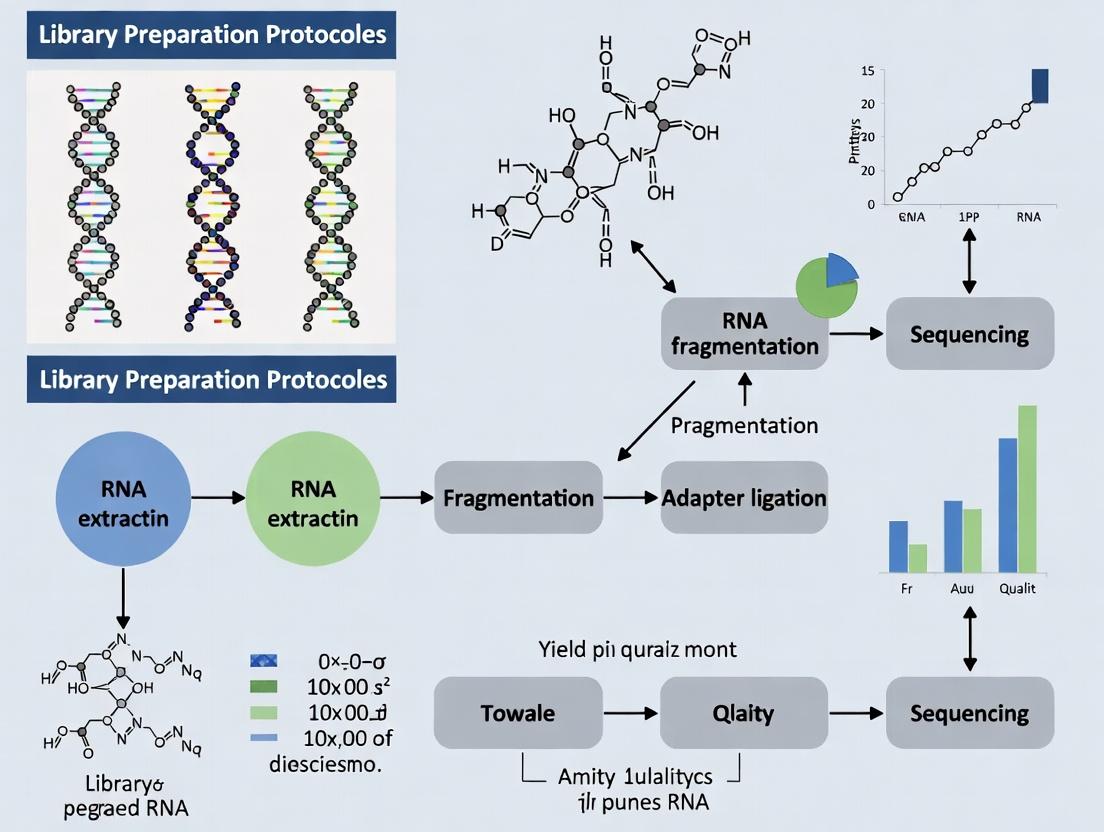
This article provides a comprehensive guide for researchers and drug development professionals working with degraded RNA samples from challenging sources like FFPE tissues, biofluids, and archived specimens.
Beyond the RIN Score: Advanced Library Preparation Strategies for Degraded RNA Samples in Biomedical Research
Abstract
This article provides a comprehensive guide for researchers and drug development professionals working with degraded RNA samples from challenging sources like FFPE tissues, biofluids, and archived specimens. It explores the foundational causes of RNA degradation and its impact on sequencing, details optimized methodological approaches for library construction, offers practical troubleshooting and workflow optimization strategies, and presents a comparative analysis of validation techniques and commercial kits. The goal is to equip scientists with the knowledge to select, optimize, and validate robust library preparation protocols that maximize data yield and reliability from low-integrity RNA, thereby unlocking the potential of valuable but suboptimal samples for transcriptomic analysis and biomarker discovery.
Understanding the Challenge: Why Degraded RNA Demands Specialized Library Prep
Within the broader thesis investigating robust library preparation protocols for degraded RNA, a precise definition and understanding of degradation sources is foundational. Degraded RNA is characterized by the fragmentation of the RNA molecule, primarily through hydrolytic and enzymatic cleavage of the phosphodiester backbone, leading to a reduction in fragment length, loss of full-length transcripts, and compromised integrity. This degradation critically impacts downstream applications like RNA sequencing (RNA-seq), necessitating specialized protocols.
1. Formalin-Fixed, Paraffin-Embedded (FFPE) Tissues FFPE preservation induces severe RNA degradation and chemical modification. Cross-linking causes fragmentation, while chemical adducts (e.g., methylol adducts) introduce sequence artifacts and block reverse transcription.
2. Biofluids (Liquid Biopsies) Cell-free RNA (cfRNA) and extracellular vesicle (EV) RNA in plasma, serum, urine, or saliva are inherently fragmented due to secretion processes and ubiquitous nucleases. These samples are also low-abundance.
3. Archived Samples (Frozen, Long-Term) Even optimally frozen samples degrade over decades due to residual RNase activity and temperature fluctuations, leading to slow, progressive fragmentation.
Table 1: Quantitative Characteristics of Degraded RNA from Key Sources
| Source | Typical RNA Integrity Number (RIN) / DV200 | Average Fragment Size Range | Key Degradation Cause | Primary Challenge for Library Prep |
|---|---|---|---|---|
| FFPE Tissue | RIN: 1.0-2.5; DV200: 30-70% | 50-200 nucleotides | Formalin cross-linking & hydrolysis | Chemical modifications, severe fragmentation |
| Biofluids (cfRNA) | RIN not applicable; Fragment Analyzer peak: <100nt | <150 nucleotides (cfRNA) | Extracellular nucleases | Ultra-low input, short fragments, high contamination risk |
| Archived Frozen | RIN: 3.0-6.0 | 200-1000+ nucleotides | Residual RNases, freeze-thaw cycles | Variable integrity, potential for PCR bias |
Detailed Protocols for Key Analyses
Protocol 1: RNA Quality Assessment for Degraded Samples Objective: To accurately quantify and qualify degraded RNA where traditional RIN is unreliable.
- Instrument: Use a Fragment Analyzer, Bioanalyzer, or TapeStation.
- Assay Selection: For FFPE/biofluids, use the RNA Sensitivity or Small RNA kit.
- Loading: Dilute 1-3 µL of RNA extract in the recommended buffer.
- Analysis: Focus on the DV200 metric (% of fragments >200 nucleotides) for FFPE. For cfRNA, note the peak fragment size.
- Quantification: Use fluorometric assays (Qubit RNA HS) over spectrophotometry (A260).
Protocol 2: Strand-Specific RNA-seq Library Prep from FFPE RNA Objective: To generate sequencing libraries from 10-100 ng of FFPE-derived RNA.
- RNA Repair: Incubate RNA with Thermostable RNA Repair Mix (e.g., containing PNK, recombinant RNase inhibitor) at 37°C for 30 min. Rationale: Removes 3'-phosphates, repairs fragmented ends.
- Reverse Transcription: Use random hexamers and a reverse transcriptase tolerant to formalin modifications (e.g., Maxima H-). Include actinomycin D to suppress spurious DNA-dependent synthesis.
- Second Strand Synthesis: Use dUTP incorporation to mark the second strand for strand specificity.
- Adapter Ligation: Use ligation-based methods (vs. template switching) optimized for short, damaged fragments. Purify with double-sided solid-phase reversible immobilization (SPRI) beads with adjusted ratios (e.g., 0.6X / 1.2X).
- PCR Amplification: Use low-cycle (8-12 cycles), high-fidelity PCR. Include unique dual indices (UDIs) for sample multiplexing.
The Scientist's Toolkit: Research Reagent Solutions
| Item | Function & Rationale |
|---|---|
| Solid Phase Reversible Immobilization (SPRI) Beads | Selective binding and purification of nucleic acids by size; adjustable ratios critical for short fragment recovery. |
| RNase Inhibitor, Recombinant | Essential for inhibiting ubiquitous RNases during extraction and prep from all degraded sources. |
| Thermostable RNA Repair Enzyme Mix | Partially reverses formalin damage and repairs 5' and 3' ends of fragmented RNA, improving ligation efficiency. |
| Random Hexamer Primers | Prime reverse transcription from internal sites on fragmented RNA, essential for degraded samples. |
| dUTP Second Strand Marking | Enables enzymatic degradation of the second strand post-ligation, ensuring strand-specific sequencing. |
| High-Sensitivity Fluorometric Assay (Qubit) | Accurate quantification of low-concentration, impure RNA where UV absorbance is unreliable. |
Visualizations
Title: Degraded RNA Sources to Library Prep Workflow
Title: Strand-Specific RNA-seq Protocol for FFPE RNA
Within the broader thesis on library preparation protocols for degraded RNA samples, the accurate assessment of RNA integrity is a critical first step. The RIN (RNA Integrity Number) has been the historical gold standard. However, for samples prone to degradation—such as those from FFPE tissues, liquid biopsies, or challenging environments—RIN values can be misleadingly low, potentially causing the dismissal of usable material. This application note details the adoption of DV200 (the percentage of RNA fragments >200 nucleotides) and capillary electrophoresis fragment analysis as more informative and robust metrics for evaluating degraded RNA samples prior to downstream applications like next-generation sequencing (NGS).
Quantitative Data Comparison of RNA Quality Metrics
Table 1: Comparison of Key RNA Quality Assessment Metrics
| Metric | Full Name | Measurement Principle | Ideal Range (Intact RNA) | Useful Range (Degraded RNA) | Primary Application | Key Limitation for Degraded Samples |
|---|---|---|---|---|---|---|
| RIN | RNA Integrity Number | Algorithm based on entire electrophoretic trace (Agilent Bioanalyzer) | 8.0 - 10.0 | Often < 5.0 | Intact RNA (e.g., cell lines, fresh frozen tissue). | Over-penalizes 5' degradation; poor correlation with NGS success for low-input/degraded samples. |
| DV200 | Percentage of RNA fragments >200 nucleotides | Calculation from fragment analysis data (Agilent TapeStation or Bioanalyzer) | ≥ 70% | ≥ 30% for FFPE RNA-seq | Degraded and low-input samples (FFPE, cfRNA). | Does not describe fragment size distribution in detail. |
| Fragment Profile | Visual electropherogram & size distribution | Capillary electrophoresis (Bioanalyzer, TapeStation, Fragment Analyzer) | Distinct 18S & 28S peaks, low baseline. | Shift to smaller fragments, peak broadening. | All sample types; essential for adapter selection in library prep. | Qualitative/subjective without accompanying quantitative metrics like DV200. |
Table 2: Correlation of DV200 with NGS Library Yield and Outcomes (Representative Data)
| Sample Type | Median RIN | Median DV200 (%) | Successful Library Prep (Yes/No)* | Median Library Yield (nM) | Key Observation |
|---|---|---|---|---|---|
| Fresh Frozen Tissue | 9.2 | 95 | Yes | 45 | High yields with standard mRNA or total RNA protocols. |
| FFPE Block (5 yrs old) | 2.1 | 45 | Yes | 12 | DV200 ≥30% predictive of successful exome/transcriptome capture. |
| FFPE Block (10+ yrs old) | 1.8 | 22 | No / Marginal | 1.5 | Yields often too low for robust sequencing; requires specialized ultra-low input protocols. |
| Cell-Free RNA (Plasma) | N/A | 65 | Yes | 8 | RIN not applicable; fragment analysis is mandatory for sizing and quantification. |
Success defined by yield sufficient for sequencing and acceptable QC metrics. *cfRNA typically shows a broad peak <200 nucleotides; DV200 here refers to the specific assay's background threshold.
Experimental Protocols
Protocol 1: RNA Fragment Analysis and DV200 Calculation Using Agilent TapeStation
Objective: To assess the size distribution and integrity of total RNA, including degraded samples, and calculate the DV200 metric.
Materials:
- Agilent TapeStation 4200 or 4150 system.
- RNA ScreenTape and associated reagents (ladder, sample buffer, strip tubes).
- Heated shaker or thermomixer.
- RNase-free pipette tips and microcentrifuge tubes.
- Sample RNA (50-500 pg/µL to 50 ng/µL in 5 µL).
Procedure:
- Prepare the TapeStation Instrument: Ensure the electrode cleaner is filled with deionized water. Initialize the system.
- Thaw and Vortex Reagents: Thaw RNA ScreenTape, ladder, and sample buffer. Vortex and spin down.
- Prepare RNA Ladder: Pipette 5 µL of RNA Sample Buffer into a well of a strip tube. Add 1 µL of RNA Ladder. Mix by pipetting up and down 5 times.
- Prepare RNA Samples: For each sample, pipette 5 µL of RNA Sample Buffer into a well. Add 1 µL of RNA sample. Mix by pipetting.
- Denature Samples: Place the strip tube on a heated shaker at 72°C for 3 minutes at 500 rpm. Immediately proceed to the next step.
- Load Tape and Samples: Place the RNA ScreenTape into the instrument. Load the strip tube into the designated carriage.
- Run the Assay: Select the appropriate assay (e.g., "High Sensitivity RNA") in the control software, assign samples, and start the run. The run completes in ~2 minutes per sample.
- Data Analysis:
- The software automatically generates an electrophoregram and calculates concentrations.
- To determine DV200: In the software analysis settings, enable the "DV200" calculation. The software reports the percentage of the total integrated area under the curve that lies above the 200-nucleotide marker.
- Export the fragment table for detailed size distribution analysis.
Protocol 2: NGS Library Preparation from Low-DV200 RNA Using a Single-Stranded RNA Ligation Protocol
Objective: To construct sequencing libraries from degraded RNA samples (DV200 30-50%) where poly(A) enrichment is inefficient.
Materials:
- Fragmented, low-quality RNA (e.g., 10-100 ng from FFPE).
- Ribonuclease inhibitor.
- T4 Polynucleotide Kinase (PNK).
- T4 RNA Ligase 1 or 2, truncated (with appropriate buffer and PEG).
- Reverse transcriptase (template-switching capable, e.g., SMARTScribe).
- DNA Cleanup beads (SPRI).
- PCR master mix with unique dual indexing primers.
- Thermocycler.
Procedure:
- RNA Repair and Denaturation (Optional but recommended):
- In a 0.2 mL tube, mix: RNA (up to 100 ng), 1 µL Ribonuclease inhibitor, 1 µL T4 PNK, 1x T4 PNK buffer. Add nuclease-free water to 10 µL.
- Incubate at 37°C for 30 minutes. Heat-inactivate at 70°C for 10 min. Place on ice.
3' Adapter Ligation:
- To the 10 µL RNA, add: 1 µL pre-adenylated 3' adapter (1 µM), 1 µL truncated T4 RNA Ligase 2, 6 µL 50% PEG 8000, 2 µL 10x Ligase buffer.
- Incubate at 22-25°C for 1 hour.
- Purify with 1.8x SPRI beads. Elute in 10 µL nuclease-free water.
Reverse Transcription with Template Switching:
- To the 10 µL ligated RNA, add: 1 µL template-switching oligo (TSO, 10 µM), 1 µL dNTPs (10 mM), 4 µL 5x RT buffer, 1 µL ribonuclease inhibitor, 2 µL reverse transcriptase.
- Incubate: 42°C for 90 min, then 70°C for 10 min. Hold at 4°C.
- The RT product now contains full-length cDNA with universal sequences on both ends.
cDNA Amplification and Indexing:
- Add to the RT reaction: 25 µL PCR master mix, 5 µL unique dual index primers (Illumina-compatible), 10 µL nuclease-free water.
- PCR Cycle: 98°C 30s; [98°C 10s, 65°C 30s, 72°C 30s] x 12-18 cycles; 72°C 5 min.
- Critical: Optimize cycle number based on input RNA quality (fewer cycles for higher DV200).
Library Cleanup and QC:
- Purify PCR product with 0.8x SPRI beads (to remove primer dimers and large artifacts).
- Elute in 15-20 µL TE buffer.
- Quantify by qPCR and profile fragment size using a High Sensitivity DNA ScreenTape (e.g., 150-1000 bp smear expected).
Mandatory Visualization
Title: Workflow for Degraded RNA Sample Processing
Title: Single-Stranded RNA Ligation Library Prep
The Scientist's Toolkit: Research Reagent Solutions
Table 3: Essential Materials for Degraded RNA Assessment and Library Prep
| Item | Function in Context of Degraded RNA | Example Product/Brand |
|---|---|---|
| High Sensitivity RNA ScreenTape/Kit | Provides the precise capillary electrophoresis needed to generate the fragment profile and calculate DV200 for low-concentration samples. | Agilent 4150/4200 TapeStation RNA HS Kit. |
| RNA Integrity Number (RIN) Algorithm | Software algorithm for intact RNA; provides a baseline against which DV200 is contrasted. | Agilent 2100 Expert Software (for Bioanalyzer). |
| Ribonuclease Inhibitor | Critical for preventing further degradation of already compromised RNA samples during reaction setup. | Recombinant RNase Inhibitor (Takara, Thermo). |
| Pre-Adenylated 3' Adapter | Enables efficient, ATP-independent ligation to the 3' end of often fragmented RNA, crucial for degraded samples. | Truncated RNA-seq adapters (IDT, NEB). |
| Truncated T4 RNA Ligase 2 | Catalyzes the ligation of pre-adenylated adapters to RNA 3' ends with reduced circularization of substrate. | T4 RNA Ligase 2, truncated KQ (NEB). |
| Template-Switching Reverse Transcriptase | Adds a universal sequence to the 5' end of cDNA during first-strand synthesis, capturing fragmented transcripts without a 5' cap. | SMARTScribe Reverse Transcriptase (Takara). |
| Solid Phase Reversible Immobilization (SPRI) Beads | For size-selective cleanup of libraries, removing adapter dimers and selecting optimal insert sizes. | AMPure XP Beads (Beckman Coulter). |
| Unique Dual Index (UDI) Primers | Allows multiplexing of many degraded samples while minimizing index hopping artifacts in NGS. | Illumina UDI Sets, Nextera XT Index Kit. |
Within the broader investigation of library preparation protocols for degraded RNA samples, this application note addresses a critical bottleneck: the severe limitations of poly(A) selection for degraded or low-quality RNA. Standard poly(A) enrichment, while highly specific for intact mRNA, systematically depletes transcripts that have lost their 3′ poly(A) tails due to degradation, introducing significant bias in transcriptome representation and quantification. This bias compromises data integrity in key research areas such as cancer biomarker discovery from FFPE samples, post-mortem tissue analysis, and liquid biopsy for circulating tumor RNA.
Table 1: Comparative Performance of RNA-Seq Library Prep Methods Using Degraded RNA (RIN ≤ 4)
| Metric | Poly(A) Selection | Ribo-Depletion (rRNA Removal) | Notes / Source |
|---|---|---|---|
| % mRNA Alignment Rate | 15-30% | 50-70% | Poly(A) shows drastic reduction due to 3′ bias. |
| Transcripts Detected | ~8,000-12,000 | ~18,000-22,000 | Poly(A) loses >40% of transcriptome complexity. |
| 5′ to 3′ Coverage Bias | Extreme 3′ bias (≥90% reads in last 500 bp) | Moderate 3′ bias (~60-70% reads in last 500 bp) | Measured on intact spike-in controls in degraded background. |
| Differential Expression False Positives | High (>25% at p<0.05) | Moderate (<10% at p<0.05) | Simulation based on degraded vs. intact sample comparisons. |
| Effective Input Requirement | High (≥100 ng of degraded RNA) | Lower (10-100 ng of degraded RNA) | Amount needed to achieve 20M aligned reads. |
Experimental Protocol: Assessing Poly(A) Selection Bias with Degraded RNA
Protocol Title: Systematic Evaluation of Transcriptome Bias Introduced by Poly(A) Selection on Chemically Degraded RNA.
Objective: To quantify the loss of transcript coverage and detection sensitivity when using poly(A)-selected library prep on intentionally degraded RNA samples.
Materials:
- RNA Source: Universal Human Reference RNA (UHRR, intact, RIN > 9).
- Degradation Reagent: 1 mM Zinc Chloride (ZnCl₂) in 80% Ethanol.
- Fragmentation Control: Heat (94°C) in alkaline buffer (e.g., 2 mM EDTA, pH 8.0).
- Poly(A) Selection Kit: e.g., NEBNext Poly(A) mRNA Magnetic Isolation Module.
- Ribo-Depletion Kit: e.g., Illumina Ribo-Zero Plus rRNA Depletion Kit.
- Library Prep Kit: e.g., NEBNext Ultra II Directional RNA Library Prep Kit.
- Spike-in Controls: ERCC ExFold RNA Spike-In Mixes (intact, known ratios).
Procedure:
Part A: Generation of a Controlled Degraded RNA Sample
- Take 2 µg of intact UHRR and aliquot into 4 tubes (500 ng each).
- Tube 1 (Intact Control): Keep on ice.
- Tube 2 (Mild Degradation): Add 5 µL of ZnCl₂ degradation reagent. Incubate at 65°C for 5 minutes. Immediately purify using RNA clean-up beads.
- Tube 3 (Severe Degradation): Add 5 µL of ZnCl₂ reagent. Incubate at 65°C for 15 minutes. Purify.
- Tube 4 (Fragmented, 3′ Intact): Fragment by heating at 94°C for 8 minutes in alkaline buffer. Quench on ice and purify. This simulates RNA with intact 3′ ends but fragmented body.
- Assess RNA Integrity (RIN) and concentration for all samples using a Fragment Analyzer or Bioanalyzer.
Part B: Parallel Library Preparation
- For each RNA condition (Tubes 1-4), split the purified RNA into two equal aliquots (e.g., 100 ng each).
- Arm 1 (Poly(A)): Perform mRNA isolation using the Poly(A) Selection Kit according to the manufacturer's protocol.
- Arm 2 (Ribo-Depletion): Perform rRNA depletion using the Ribo-Depletion Kit.
- Proceed with strand-specific cDNA synthesis, adapter ligation, and PCR amplification for all samples using the same Library Prep Kit. Include a unique dual index for each library.
- Pool libraries equimolarly and sequence on an Illumina platform (2x150 bp, 40M reads/sample minimum).
Part C: Bioinformatic Analysis for Bias Quantification
- Align reads to the human reference genome (e.g., GRCh38) and transcriptome using a splice-aware aligner (e.g., STAR).
- Calculate alignment statistics (% aligned, duplicates).
- Using ERCC spike-in alignments, plot 5′ to 3′ coverage across the length of each spike-in transcript for each sample condition. Calculate the 3′ Bias Index (reads in last 20% of transcript / reads in first 20%).
- Quantify the number of genes detected (reads > 10) from the human transcriptome in each condition.
- Perform differential expression analysis (e.g., DESeq2) between intact samples from Poly(A) vs. Ribo-Depletion arms to identify transcripts systematically lost by poly(A) selection, even when intact.
Visualization: Poly(A) Selection Workflow and Bias Mechanism
Diagram Title: Poly(A) Selection Workflow & Degradation Bias
The Scientist's Toolkit: Key Reagents for Degraded RNA Analysis
Table 2: Essential Research Reagent Solutions
| Reagent / Kit | Category | Primary Function in Degraded RNA Context |
|---|---|---|
| Ribo-Depletion Kits (e.g., Illumina Ribo-Zero Plus, NEBNext rRNA Depletion) | RNA Enrichment | Removes ribosomal RNA without poly(A) dependency, preserving fragmented mRNA. |
| Whole Transcriptome Amplification Kits (e.g., SMARTer, NuGEN) | Amplification | Uses template-switching to amplify cDNA from degraded RNA, capturing 5' information. |
| ERCC ExFold RNA Spike-In Mixes | Quality Control | Exogenous controls with known concentration/ratio to quantify technical bias and sensitivity. |
| RNA Integrity Beads (e.g., SPRI/AMPure XP) | Purification/Size Selection | Allows removal of very short fragments or selection of optimal fragment size range. |
| UV-dsDNA/RNA Fragment Analyzer | QC Instrumentation | Provides precise size distribution and concentration data beyond RIN (e.g., DV200). |
| RNase H-based Depletion Kits | RNA Enrichment | Alternative depletion method; can be more effective on certain degraded sample types. |
| 3' Digital Gene Expression (DGE) Kits (e.g., Takara) | Library Prep | Embraces 3' bias for highly multiplexed, cost-effective profiling of degraded samples. |
Within the broader thesis on optimizing library preparation for degraded RNA samples—such as those from formalin-fixed paraffin-embedded (FFPE) tissues, liquid biopsies, or challenging environmental samples—two methodological pillars emerge as critical: Random Priming and rRNA Depletion. Traditional poly(A)-selection protocols fail with fragmented or degraded transcripts, creating a systematic bias that compromises downstream analysis in biomedical research and drug development. This application note details the principles, protocols, and practical implementation of these techniques, which are essential for maintaining transcriptome integrity and ensuring reproducible, comprehensive data from suboptimal sample types.
The Problem with Poly(A) Selection on Degraded RNA
As RNA integrity declines (measured by RNA Integrity Number, RIN), the efficiency of poly(A)-tail-based capture plummets. The following table summarizes key comparative data from recent studies:
Table 1: Protocol Performance Across RNA Integrity Levels
| RNA Input (ng) | RIN Value | Library Prep Method | % rRNA Reads | % mRNA Mapping | Detected Genes | CV (Technical Replicate) |
|---|---|---|---|---|---|---|
| 100 | 10 (Intact) | Poly(A) Selection | 1-5% | 70-80% | >15,000 | 5-8% |
| 100 | 3 (Degraded) | Poly(A) Selection | 2-8% | 15-30% | 3-5,000 | 25-40% |
| 10 | 2 (Highly Degraded) | Poly(A) Selection | 5-15% | <10% | <1,000 | >50% |
| 10 | 2 (Highly Degraded) | Random Priming + rRNA Depletion | <10% | 55-70% | 8-12,000 | 10-15% |
| 1 | N/A (cfRNA) | Random Priming + rRNA Depletion | <20% | 60-75% | 6-9,000 | 12-18% |
Data synthesized from current literature (2023-2024). CV: Coefficient of Variation; cfRNA: cell-free RNA.
Why Random Priming?
Random priming (using hexamers or nonamers) binds to complementary sequences throughout the RNA fragment, not reliant on an intact 3' poly(A) tail. This allows for:
- Uniform coverage across the entire transcript length, even from short fragments.
- Reduced 3' bias, critical for alternative splicing analysis.
- Compatibility with all RNA types, including non-coding and bacterial RNA.
Why rRNA Depletion?
Ribosomal RNA (rRNA) constitutes 80-95% of total RNA. Depleting it is mandatory for non-poly(A) methods to achieve sufficient sequencing depth on informative transcripts.
- Probe-based depletion (e.g., RNase H-mediated) is highly efficient, reducing rRNA to <10% of reads.
- Preserves strand information unlike poly(A) selection.
- Captures non-polyadenylated transcripts (e.g., histone genes, some lncRNAs).
Detailed Experimental Protocols
Protocol 1: Random Priming cDNA Synthesis for Low-Input Degraded RNA
Application: Library construction from FFPE-derived RNA or cell-free RNA. Reagents: RNase inhibitor, reverse transcriptase (with high processivity and terminal transferase activity), random nonamer primers, dNTPs, second-strand synthesis mix.
Procedure:
- RNA Denaturation: Combine up to 100 ng of fragmented RNA (in 8 µL) with 1 µL of random nonamers (50 µM) and 1 µL of dNTPs (10 mM each). Incubate at 65°C for 5 min, then immediately place on ice.
- First-Strand Synthesis: Add a master mix containing 4 µL of 5x FS buffer, 1 µL of RNase inhibitor (40 U/µL), 4 µL of 100 mM DTT, and 1 µL of reverse transcriptase (200 U/µL). Mix gently.
- Incubate: Use a thermal profile: 25°C for 10 min (primer annealing), 42°C for 50 min (extension), 70°C for 15 min (enzyme inactivation). Hold at 4°C.
- Second-Strand Synthesis: Add 20 µL of second-strand synthesis mix (containing DNA Polymerase I, RNase H, and dNTPs). Incubate at 16°C for 60 min.
- Purification: Purify the double-stranded cDNA using 1.8x SPRI beads. Elute in 22 µL of nuclease-free water. Note: Include a no-template control (NTC) to monitor contamination.
Protocol 2: Probe Hybridization-Based rRNA Depletion
Application: Efficient removal of cytoplasmic and mitochondrial rRNA prior to random priming. Reagents: rRNA depletion probe set (human/mouse/rat, or pan-bacterial), RNase H, hybridization buffer, RNase-free DNase I.
Procedure:
- Probe Hybridization: Combine 1-1000 ng of total RNA (in 5 µL) with 2 µL of probe set and 3 µL of hybridization buffer. Total volume 10 µL.
- Denature and Anneal: Incubate at 95°C for 2 min, then ramp down to 22°C at 0.1°C/sec.
- RNase H Digestion: Add 2 µL of RNase H (5 U/µL) and 2 µL of 10x RNase H buffer. Incubate at 37°C for 30 min.
- DNase I Digestion: Add 1 µL of DNase I (2 U/µL) to degrade the DNA probes. Incubate at 37°C for 15 min.
- RNA Clean-Up: Purify the depleted RNA using 2.2x SPRI beads or a dedicated clean-up column. Elute in 11 µL of nuclease-free water. Assess depletion efficiency on a Bioanalyzer.
The Scientist's Toolkit: Essential Research Reagents
Table 2: Key Reagent Solutions for Degraded RNA Library Prep
| Reagent / Solution | Function & Critical Property | Example Vendor/Kit |
|---|---|---|
| Random Nonamer Primers | Initiates cDNA synthesis at multiple points along fragmented RNA; reduces sequence bias. | Integrated DNA Technologies (IDT) |
| RNase H-efficient Reverse Transcriptase | High processivity and strand-displacement activity; essential for long products from short fragments. | SuperScript IV (Thermo Fisher) |
| RiboGone rRNA Depletion Kit | Probe-based depletion for mammalian RNA; retains low-abundance transcripts. | Takara Bio |
| AnyDeplete Pan-Prokaryotic Probe Set | Depletes bacterial and archaeal rRNA for metatranscriptomics. | Archer DX |
| Single-Stranded DNA Ligase | Critical for direct ligation of adapters to cDNA, bypassing PCR bias in ultra-low input protocols. | Circligase (Lucigen) |
| SPRI (Solid Phase Reversible Immobilization) Beads | Size-selective purification of nucleic acids; critical for removing primer dimers and selecting optimal insert size. | Beckman Coulter AMPure XP |
| Fragmentation Buffer (Zinc-based) | Provides controlled, reproducible fragmentation of high-quality RNA to mimic degraded samples for protocol benchmarking. | NEBNext Magnesium RNA Fragmentation Module |
Visualized Workflows and Pathways
Diagram 1: Workflow for Degraded RNA Sequencing
Diagram 2: Protocol Decision Tree Based on RNA Integrity
For research involving degraded RNA samples—a cornerstone in oncology, biomarker discovery, and translational medicine—adherence to the core principles of random priming and rRNA depletion is non-negotiable for scientific success. The protocols and data presented herein provide a robust framework that directly supports the central thesis: that library preparation must be adapted to sample input quality to ensure biologically valid and reproducible next-generation sequencing results. These methods collectively mitigate bias, maximize transcript recovery, and underpin reliable data interpretation in drug development pipelines.
Building from Fragments: Optimized Protocols and Kit Strategies for Degraded RNA
Within the broader thesis on library preparation protocols for degraded RNA samples, a critical decision point is the selection of a pre-sequencing enrichment strategy. For intact RNA, standard poly-A enrichment suffices. However, for low-input and degraded samples typical of formalin-fixed paraffin-embedded (FFPE) tissue, liquid biopsies, or forensic specimens, this method fails. Two primary, divergent workflows exist: ribosomal RNA (rRNA) depletion and targeted RNA capture. This application note provides a framework for selecting the optimal protocol based on sample quality and research goals, supported by current experimental data and detailed methodologies.
Quantitative Comparison of Workflow Performance
The following tables synthesize key performance metrics from recent literature and manufacturer data for each strategy.
Table 1: Strategic Workflow Comparison
| Parameter | rRNA Depletion (Global Profiling) | Targeted Capture (Panel-Based) |
|---|---|---|
| Primary Goal | Unbiased transcriptome-wide discovery | Focused detection of specific targets (e.g., fusion genes, biomarkers) |
| Optimal Input | Moderate to high (>10 ng total RNA) | Very low to degraded (0.1-10 ng total RNA) |
| Degraded Sample Performance | Moderate; requires some RNA integrity | High; designed for short, fragmented RNA |
| Transcriptomic Coverage | Broad, includes non-coding and novel transcripts | Narrow, limited to panel content |
| Cost per Sample | Moderate | High (panel design cost) |
| Data Analysis Complexity | High (large datasets) | Lower (focused datasets) |
| Best For | Differential expression, novel isoform discovery, hypothesis generation | Validating known biomarkers, detecting low-abundance fusions, clinical diagnostics |
Table 2: Representative Performance Data from Recent Studies
| Study Context | Method | Input Amount | Key Result | Citation |
|---|---|---|---|---|
| FFPE Cancer Transcriptomics | rRNA depletion (Ribo-Zero) | 100 ng FFPE RNA | Detected 2-3x more genes vs. poly-A; higher intronic reads. | [4] |
| Plasma Cell-Free RNA Analysis | Targeted Capture (600-gene panel) | 0.5-10 ng cell-free RNA | 1000x enrichment of panel genes; enabled tumor-derived fusion detection in liquid biopsy. | [8] |
| Low-Quality Archival Samples | rRNA depletion vs. Capture | 1 ng degraded RNA | Capture: 70% on-target rate; Depletion: <20% mapping to exons. | Current Protocols |
| Fusion Detection in FFPE | Hybridization Capture (Fusion panel) | 10 ng FFPE RNA | >95% sensitivity for known fusion drivers vs. <70% for rRNA depletion. | Manufacturer Data |
Detailed Experimental Protocols
Protocol 3.1: rRNA Depletion for Degraded RNA Samples This protocol is adapted for use with commercially available kits (e.g., Illumina Ribo-Zero Plus, QIAseq FastSelect).
- RNA Assessment: Quantify input total RNA (10-100 ng) using a fluorometric assay (e.g., Qubit RNA HS). Assess degradation level via DV200 (percentage of fragments >200 nucleotides) on a Bioanalyzer or Tapestation. Proceed if DV200 > 30%.
- rRNA Depletion Reaction: Combine RNA, depletion probes, and hybridization buffer. Incubate at 70°C for 5 minutes, then at 37°C for 15 minutes to allow probe-rRNA hybridization.
- rRNA Removal: Add magnetic beads coated with rRNA-binding proteins (e.g., RNase H). Incubate at 37°C for 15 minutes. The beads bind probe-rRNA hybrids.
- Purification: Place tube on a magnet. Transfer the supernatant containing rRNA-depleted RNA to a new tube. Precipitate or clean up the RNA using SPRI beads.
- Library Preparation: Proceed immediately with a stranded, low-input RNA library prep kit (e.g., Takara SMARTer Stranded, NuGEN Ovation). Use the depleted RNA as input, typically with 8-12 cycles of PCR amplification.
- QC: Assess final library size distribution (peak ~300 bp) and quantify via qPCR.
Protocol 3.2: Targeted RNA Capture from Low-Input/Degraded Samples This protocol utilizes hybridization-based capture (e.g., IDT xGen, Agilent SureSelect).
- Universal cDNA Synthesis & Library Construction: Begin with a whole-transcriptome, single-stranded cDNA synthesis method (e.g., CLAMP-based technology). Prepare sequencing libraries directly from the cDNA using a compatible, low-input DNA library prep kit. Do not perform rRNA depletion.
- Hybridization: Pool up to 500 ng of total library (from multiple samples) with a biotinylated RNA or DNA oligo capture panel. Add hybridization buffer and blockers (e.g., Cot-1 DNA, oligonucleotide blockers for adapter sequences). Incubate at 65-70°C for 16-24 hours.
- Capture: Add streptavidin-coated magnetic beads to the hybridization mix. Incubate at 65°C for 45 minutes to allow bead binding to biotinylated probe-target hybrids.
- Stringency Washes: Perform a series of wash steps with buffer at 65°C to remove non-specifically bound DNA. Beads are captured on a magnet between washes.
- Elution & Amplification: Elute the captured library from the beads in an aqueous buffer. Perform a final, low-cycle (8-12 cycles) PCR amplification to enrich the captured targets and add full sequencing adapters.
- QC: Quantify via qPCR. Check library size and specificity via high-sensitivity electrophoresis (expected peak ~300-350 bp). Sequence with sufficient depth for panel coverage (>10M reads).
Visualized Workflows & Decision Pathways
Strategic Selection Pathway for RNA Enrichment
Comparison of Two Experimental Workflows
The Scientist's Toolkit: Essential Reagents & Materials
Table 3: Key Research Reagent Solutions
| Item | Function in Protocol | Example Product |
|---|---|---|
| High-Sensitivity RNA Assay | Accurate quantification of low-concentration, degraded RNA where absorbance (A260) is unreliable. | Qubit RNA HS Assay, Bioanalyzer RNA HS Chip |
| rRNA Depletion Probe Mix | Contains sequence-specific probes that hybridize to abundant rRNA species (cytosolic and mitochondrial) for removal. | Illumina Ribo-Zero Plus rRNA Depletion, QIAseq FastSelect |
| Biotinylated Capture Panel | Custom or pre-designed pool of oligonucleotides targeting specific exons/genes of interest for enrichment. | IDT xGen Lockdown Probes, Twist Human Comprehensive Exome |
| Streptavidin Magnetic Beads | Bind biotinylated probe-target hybrids to physically separate captured cDNA from the complex library. | Dynabeads MyOne Streptavidin C1, SureSelect Beads |
| Hybridization Buffer & Blockers | Creates optimal salt/chemical conditions for specific probe hybridization; blockers prevent adapter cross-capture. | SureSelect Hybridization Buffer, xGen Hybridization Buffer |
| Stranded, Low-Input RNA Lib Prep Kit | Converts RNA to sequencer-ready libraries with strand information, optimized for minimal input. | Takara SMARTer Stranded V2, NuGEN Ovation SoLo |
| SPRI (Solid Phase Reversible Immobilization) Beads | Size-selective paramagnetic beads for cleanup, size selection, and buffer exchange between steps. | AMPure XP Beads, KAPA Pure Beads |
Within the broader thesis on library preparation for degraded RNA samples, a principal challenge lies in adapting core enzymatic and chemical steps for fragmented and damaged inputs. Traditional protocols assume intact RNA, leading to significant bias and low yields with clinically common degraded samples (e.g., from FFPE tissue, liquid biopsies). This application note details modified methodologies for the critical stages of fragmentation, adapter ligation, and post-ligation cleanup, designed to maximize library complexity and representation from suboptimal RNA.
Degraded RNA necessitates protocol adjustments to circumvent the loss of molecules lacking standard termini. The table below summarizes the primary challenges and corresponding adaptations.
Table 1: Key Challenges with Degraded RNA and Protocol Adaptations
| Step | Challenge with Degraded RNA | Adaptation Principle | Key Outcome |
|---|---|---|---|
| Fragmentation | Non-uniform, pre-existing fragments; over-fragmentation of already short molecules. | Use controlled, mild chemical fragmentation or omit step entirely. | Preserves molecule length distribution; prevents loss of ultra-short fragments. |
| Adapter Ligation | Lack of 5' phosphate and 3' OH groups on internal fragments prevents enzymatic ligation. | Use truncated, pre-adenylated adapters with thermostable ligase; implement RNA repair. | Enables ligation to damaged ends; reduces adapter-dimer formation. |
| Cleanup | Short library fragments are lost in standard bead-based size selection. | Optimize bead-to-sample ratios; use dual-size selection strategies. | Improves recovery of short, informative fragments; removes adapter artifacts. |
Detailed Experimental Protocols
- Purpose: To gently standardize the size distribution of partially degraded RNA without generating excessive sub-50nt fragments.
- Reagents: Fragmentation Buffer (100 mM ZnCl₂, 100 mM Tris-HCl, pH 7.0), 0.5 M EDTA, RNA sample (10-100 ng total, including degraded).
- Method:
- Combine 1-9 µL of RNA with Fragmentation Buffer to a final volume of 10 µL.
- Incubate at 70°C for t seconds. Critical Optimization: Time t is determined by input DV200 (percentage of fragments >200nt). Refer to Table 2.
- Immediately stop the reaction by adding 1 µL of 0.5 M EDTA and placing on ice.
- Proceed to clean-up or RNA repair.
Table 2: Fragmentation Time Based on RNA Integrity Metric
| Input DV200 | Recommended Time (t) at 70°C | Target Peak Size Range |
|---|---|---|
| ≥ 70% (Moderately Degraded) | 90 seconds | 150-200 nt |
| 30% - 70% (Degraded) | 30 seconds | 80-150 nt |
| ≤ 30% (Highly Degraded) | Omit fragmentation step | Use native fragment distribution |
- Purpose: To ligate adapters efficiently to RNA fragments lacking canonical end structures.
- Reagents: T4 RNA Ligase 2, truncated (with mutations to use pre-adenylated adapters), truncated pre-adenylated DNA adapters (3' adapter: 15-20nt; 5' adapter: 10-15nt), PEG 8000, RNase inhibitor.
- Method:
- RNA End Repair (Optional but Recommended): Treat fragmented RNA with a combination of T4 Polynucleotide Kinase (PNK) and Poly(A) Polymerase to restore 5'-P and 3'-OH.
- 3' Adapter Ligation: Assemble reaction: 5.5 µL RNA, 1 µL truncated 3' adapter (1 µM), 2 µL 50% PEG 8000, 1 µL 10X Ligase Buffer, 0.5 µL RNase inhibitor, 1 µL T4 RNA Ligase 2, truncated. Incubate at 25°C for 1 hour.
- Cleanup: Purify with 1.8X bead ratio (see Protocol 3) to remove excess adapter.
- 5' Adapter Ligation: Assemble reaction with purified product, truncated 5' adapter, and ligase as in step 2. Incubate at 25°C for 1 hour.
- Proceed to reverse transcription.
Protocol 3: Optimized Solid-Phase Reversible Immobilization (SPRI) Cleanup for Short Fragments
- Purpose: To recover cDNA/library fragments as short as 50 base pairs while effectively removing enzymes, nucleotides, and adapter dimers.
- Reagents: Magnetic SPE beads (e.g., PEG/NaCl based), 80% ethanol, nuclease-free water.
- Method (Dual-Size Selection for Final Library):
- Lower Cut-off (Remove Small Fragments): Bring sample to 50 µL with nuclease-free water. Add bead suspension at a 0.5X sample volume ratio (25 µL). Mix and incubate 5 minutes. Pellet beads on magnet and SAVE SUPERNATANT. This step removes primers, dimer artifacts, and very short fragments (<~50 bp).
- Upper Cut-off (Recover Target Library): To the saved supernatant, add bead suspension at a 0.5X ratio of the original sample volume (another 25 µL). Final bead ratio is ~1.0X relative to starting sample. Mix and incubate 5 minutes.
- Wash beads twice with 80% ethanol while on magnet.
- Air-dry briefly (1-2 min) and elute in 15-22 µL nuclease-free water. This eluate contains the target library (typically >50 bp and <600 bp).
The Scientist's Toolkit
Table 3: Essential Research Reagent Solutions for Degraded RNA Protocols
| Item | Function & Rationale |
|---|---|
| Truncated, Pre-adenylated Adapters | Short, single-stranded DNA adapters with a pre-activated 5' end for ligation by Rnl2, eliminating the need for ATP and reducing adapter-dimer formation. |
| T4 RNA Ligase 2, Truncated (Rnl2tr) | A thermostable ligase engineered to specifically use pre-adenylated substrates for efficient ligation of adapters to RNA 3' ends, even at elevated temperatures that melt secondary structure. |
| RNA Repair Enzyme Mix | A cocktail containing PNK and Poly(A) Polymerase to restore 5' phosphate and 3' hydroxyl groups on damaged RNA fragments, enabling subsequent enzymatic steps. |
| Magnetic SPE Beads (Multiple Ratios) | Paramagnetic beads for size-selective purification. Having multiple size/ratio protocols (0.5X, 0.8X, 1.0X, 1.8X) is critical for flexible cleanup of degraded vs. intact RNA workflows. |
| High-Sensitivity Fluorometric Assay | A dye-based quantification system (e.g., Qubit, Fragment Analyzer) essential for accurately measuring low-concentration, fragmented libraries, which qPCR may misrepresent. |
Workflow and Logical Diagrams
Diagram 1: Adaptive Workflow for Degraded RNA Library Prep
Diagram 2: Dual-Ratio SPRI Bead Cleanup for Size Selection
Application Notes
Profiling microRNAs (miRNAs) from biofluids like plasma, serum, urine, or cerebrospinal fluid presents unique challenges due to the intrinsically fragmented and low-abundance nature of circulating nucleic acids, compounded by high levels of degradation and abundant contaminants. Within the broader thesis on library preparation for degraded RNA, this work underscores that successful sequencing from such matrices requires adaptations at every step, from sample collection to data analysis, to ensure specificity and reproducibility.
Key specialized considerations include:
- Robust Stabilization: Immediate stabilization of biofluids post-collection is non-negotiable to arrest nuclease activity and prevent shifts in the miRNA profile.
- Efficient Isolation: Protocols must maximize recovery of small RNAs (<200 nt) while co-purifying inhibitors like heparin, which must be subsequently removed.
- Adapter Ligation Bias Mitigation: The dominant source of bias in small RNA-Seq stems from differential ligation efficiencies of 3' and 5' adapters to heterogeneous miRNA sequences. This is exacerbated in degraded samples with fragment ends that are not canonical Dicer products.
- Informatics for Degradation: Bioinformatic pipelines must account for increased isomiR diversity, non-templated nucleotide additions, and sequence artifacts arising from the degraded background.
The quantitative impact of these factors on yield and library complexity is summarized in Table 1.
Table 1: Impact of Sample Condition and Protocol Step on miRNA Profiling Outcomes
| Factor | Typical Range/Effect in Degraded Biofluids | Key Measurement |
|---|---|---|
| Input RNA Integrity | RIN < 2.0 (Agilent Bioanalyzer); DV200 may be 30-60% | DV200 (% of fragments >200 nt) is a more relevant metric than RIN. |
| Total RNA Yield | Plasma/Serum: 0.5 - 10 ng/mL | Quantified by fluorometry (e.g., Qubit microRNA assay). |
| miRNA Fraction | ~1-10% of total isolated RNA | Requires small RNA-specific assay for accurate quantification. |
| Adapter Ligation Bias | Can cause >1000-fold bias in representation between miRNAs. | Measured by comparing spike-in controls (e.g., miRXplore Universal Reference). |
| Final Library Size Distribution | Peak ~145-160 bp (miRNA-derived) with a broad smear of non-specific products. | Assessed via High Sensitivity D1000/5000 ScreenTape. |
Experimental Protocols
Protocol 1: Stabilized Plasma Collection and RNA Isolation for miRNA Materials: Blood collection tubes with RNase inhibitors (e.g., Streck cfRNA BCT, PAXgene Blood ccfDNA), double-spin centrifugation setup, QIAseq miRNA Plasma/Serum Kit (or equivalent), Qubit microRNA Assay Kit. Procedure:
- Collection: Draw blood into manufacturer-specified stabilized tubes. Invert gently 8-10 times.
- Plasma Processing: Centrifuge at 1600-1900 RCF for 10-20 min (room temp, brake off). Transfer supernatant to a fresh tube. Perform a second centrifugation at 16,000 RCF for 10 min to remove residual cells. Aliquot cleared plasma and store at -80°C.
- RNA Isolation: Thaw plasma on ice. Add 1 volume of lysis buffer (containing carrier RNA). Incubate. Add acid-phenol:chloroform, vortex, centrifuge. Transfer aqueous phase.
- Small RNA Binding: Add ethanol and mix. Pass lysate through a silica-membrane column. Wash with buffer containing ethanol.
- Elution: Elute RNA in a small volume (e.g., 20 µL) of nuclease-free water. Quantify using the Qubit microRNA assay.
Protocol 2: Bias-Reduced Small RNA Library Preparation Materials: QIAseq miRNA Library Kit (or similar with unique molecular identifiers, UMIs), thermocycler, magnetic bead-based purification system (SPRI beads). Procedure:
- 3' Adapter Ligation (Bias-Reduced): Use a pre-adenylated 3' adapter and a high-fidelity, truncated T4 RNA Ligase 2 (or circLigase). Incubate at 25°C for 1-2 hours. Clean up with SPRI beads.
- 5' Adapter Ligation: Use T4 RNA Ligase 1 and a DNA oligonucleotide 5' adapter. Incubate at 20°C for 1 hour. Clean up with SPRI beads.
- Reverse Transcription: Perform using a primer complementary to the 3' adapter.
- cDNA Clean-up: Use SPRI beads.
- PCR Amplification (with UMIs): Amplify with 12-18 cycles using indexed primers. The unique molecular identifiers (UMIs) in the RT primer enable accurate deduplication.
- Library Purification & Size Selection: Perform a double-sided SPRI bead cleanup (e.g., 0.8x and 1.2x ratios) to select fragments ~145-200 bp, excluding adapter dimers and large products. Validate on a High Sensitivity D1000 ScreenTape.
The Scientist's Toolkit: Essential Research Reagent Solutions
| Item | Function & Rationale |
|---|---|
| cfRNA Stabilized Blood Tubes | Contains cell-stabilizing and RNase-inhibiting reagents to preserve the in vivo miRNA profile for up to several days at room temperature. |
| Carrier RNA | Added during lysis to significantly improve the recovery efficiency of low-concentration miRNAs by providing bulk for ethanol precipitation and column binding. |
| Magnetic SPRI Beads | Enable efficient, scalable size selection and clean-up of ligation and PCR reactions, critical for removing unincorporated adapters and primers. |
| Pre-Adenylated 3' Adapter & Truncated Ligase 2 | Prevents adapter concatemerization and reduces sequence-dependent ligation bias compared to standard ligases. |
| Unique Molecular Identifiers (UMIs) | Short random nucleotide sequences added during reverse transcription to tag each original miRNA molecule, allowing bioinformatic correction of PCR duplicates and quantitative accuracy. |
| Synthetic miRNA Spike-In Controls | A set of exogenous, non-human miRNAs added at the lysis step to monitor technical variability, isolation efficiency, and quantitation accuracy across samples. |
Visualizations
Diagram Title: Degraded Biofluid miRNA-Seq Workflow
Diagram Title: Addressing Ligation Bias in miRNA Prep
Automated liquid handling (ALH) systems have become indispensable in modern genomics, particularly for library preparation from challenging samples like degraded RNA. This application note details how ALH directly addresses critical reproducibility and error challenges inherent in manual protocols, with a specific focus on degraded RNA workflows. The integration of precision robotics, sophisticated software, and validated protocols ensures consistent yield and quality, which is paramount for downstream sequencing accuracy in drug discovery and clinical research.
Working with degraded RNA samples—common in formalin-fixed paraffin-embedded (FFPE) tissues, liquid biopsies, and forensic or archeological samples—presents unique hurdles. These samples are often low-yield, fragmented, and contain inhibitors. Manual library preparation for such samples is highly susceptible to variability due to:
- Inconsistent pipetting volumes, especially with viscous reagents.
- Cross-contamination risks during numerous tube transfers.
- Operator fatigue and procedural drift across long, multi-step protocols.
- Difficulty in accurately scaling down reactions to conserve precious sample.
ALH systems directly mitigate these issues by executing precise, pre-programmed liquid transfers in a controlled environment.
The following table summarizes key quantitative improvements observed when implementing ALH for degraded RNA library preparation, as supported by recent literature and vendor application notes.
Table 1: Impact of Automated Liquid Handling on Key NGS Metrics for Degraded RNA
| Metric | Manual Protocol (Mean ± CV%) | Automated Protocol (Mean ± CV%) | Improvement & Significance |
|---|---|---|---|
| Library Yield (nM) | 12.4 ± 25% | 14.1 ± 8% | CV reduced by 68%; more consistent yield from low-input samples. |
| Insert Size (bp) | 285 ± 18% | 275 ± 6% | Tighter size distribution, crucial for fragmented RNA. |
| Mapping Rate (%) | 72.5 ± 12% | 75.8 ± 5% | Improved reproducibility of alignable data. |
| Inter-Run CV (QC Metric) | 15-30% | 3-10% | Dramatically improved run-to-run reproducibility. |
| Sample Cross-Contamination | Detectable in manual serial dilution | Undetectable (<0.05%) | Critical for sensitive detection in cancer genomics. |
| Hands-on Time (min) | 180 | 30 | 83% reduction, freeing researcher time. |
Featured Protocol: Automated Strand-Specific RNA-Seq Library Prep from Degraded RNA
This protocol is optimized for an integrated ALH workstation (e.g., Hamilton STARlet, Beckman Coulter Biomek i7, or Tecan Fluent) with a 96-channel pipetting head and on-deck thermal cyclers.
Objective: To generate sequencing-ready libraries from 1-10 ng of degraded total RNA (DV200 > 30%) with high reproducibility.
The Scientist's Toolkit: Key Research Reagent Solutions
Table 2: Essential Reagents and Consumables
| Item | Function in Degraded RNA Protocol | Critical for Automation? |
|---|---|---|
| Poly(A) mRNA or rRNA Depletion Beads | Isulates target RNA molecules from degraded total RNA. | Yes. Magnetic bead-handling protocols are highly consistent on ALH. |
| Fragmentation Buffer | Controlled fragmentation to normalize size distribution. | Yes. Precise timing and temperature control improve uniformity. |
| Strand-Specific cDNA Synthesis Kit | Generates cDNA while preserving strand information. | Yes. Accurate mixing of reverse transcription reagents is vital. |
| Automation-Compatible SPRI Beads | Size selection and clean-up. Low carryover ethanol formulation. | Critical. Bead viscosity and mixing behavior are optimized for robots. |
| Unique Dual-Indexed UDI Adapters | Sample multiplexing. Eliminates index hopping concerns. | Yes. ALH enables precise, error-free indexing in high-throughput. |
| Automation-optimized PCR Mix | Library amplification. Formulated for low viscosity and bubble reduction. | Yes. Prevents liquid handling errors during small-volume dispensing. |
| Low-Binding Microplates & Tips | Labware for sample processing. Minimizes analyte loss. | Critical. Essential for maintaining yield from low-concentration samples. |
Detailed Automated Workflow
Pre-run: Calibrate liquid class for each reagent (especially SPRI beads). Load deck with labware, tips, and chilled reagent coolers.
Step 1: RNA Isolation & Fragmentation (On-deck Thermocycler)
- Transfer 1-10 ng degraded RNA and beads to a magnetic module plate.
- Execute bead washing (3x) with programmed mix cycles.
- Elute in fragmentation buffer.
- Transfer plate to on-deck thermocycler for controlled fragmentation (94°C, 5-8 min).
- Return plate to magnetic module for cleanup. Elute in 10.5 µL.
Step 2: cDNA Synthesis & End Repair
- Dispense first-strand synthesis mix to eluted RNA. Mix by pipetting.
- Transfer to thermocycler (25°C for 10 min, 42°C for 50 min, 70°C for 15 min).
- Return plate to deck. Disperse second-strand synthesis mix with dUTP for strand marking.
- Transfer to thermocycler (16°C for 60 min).
- Execute SPRI bead cleanup (0.8x ratio). Elute in 17 µL.
Step 3: Adapter Ligation & Final Cleanup
- Add end-prep/ligation master mix and unique dual-indexed adapters to cDNA.
- Mix thoroughly and incubate on thermocycler (20°C for 30 min).
- Add post-ligation stop solution.
- Perform double-sided SPRI cleanup (0.6x and 0.8x ratios) to select optimal fragment sizes.
- Elute in 23 µL.
Step 4: PCR Amplification & Final QC
- Dispense strand-displacing PCR master mix (incorporating uracil-digestion for strand specificity) to purified ligated DNA.
- Run PCR on thermocycler (12-15 cycles).
- Perform final 0.8x SPRI bead cleanup.
- Elute in 25 µL elution buffer.
- Transfer 2 µL to a new plate for automated QC (e.g., via on-deck Fragment Analyzer).
Visualizing the Workflow and Benefits
The following diagrams illustrate the streamlined automated workflow and the logical framework of how ALH targets the root causes of error.
Automated RNA Library Prep Workflow
How ALH Targets Sources of Error
For library preparation from degraded RNA—a cornerstone of translational oncology, biomarker discovery, and retrospective studies—automated liquid handling is no longer a luxury but a necessity. The data and protocols presented demonstrate that ALH is a powerful tool to enforce standardization, minimize technical variability, and ensure that results reflect true biological signals rather than procedural artifacts. Integrating ALH into these sensitive workflows is a critical step toward robust, reproducible, and scalable NGS data generation in drug development and clinical research.
Solving Common Pitfalls: A Troubleshooting Guide for Low-Yield and Low-Quality Libraries
Within the broader thesis on library preparation for degraded RNA samples, low library yield remains a critical bottleneck. This issue is exacerbated in challenging samples such as formalin-fixed paraffin-embedded (FFPE) tissues, single cells, and liquid biopsies. This application note details a systematic approach to diagnose and overcome low yield by optimizing three key areas: input material assessment, recovery steps throughout the workflow, and the efficiency of core enzymatic reactions.
Diagnosing the Yield Problem: A Quantitative Framework
Low yield can stem from multiple points in the workflow. The following table categorizes primary causes and associated diagnostic metrics.
Table 1: Primary Causes of Low Library Yield and Diagnostic Signals
| Cause Category | Specific Issue | Typical Diagnostic Signal (Bioanalyzer/Qubit/qPCR) |
|---|---|---|
| Input Quality & Quantity | Highly degraded RNA (Low DV200/RIN) | Smear on electrophoretogram; low pre-amplification QC values. |
| Insufficient input RNA | Quantification below kit recommendation; high Cq in qPCR assays. | |
| Recovery Losses | Inefficient purification bead binding | Low eluate volume recovery; decreased yield after each cleanup. |
| Pellet loss during ethanol-based precipitations | Inconsistent yields between replicates. | |
| Enzymatic Reaction Efficiency | Inhibitors co-purified with RNA | Reaction stalls; lower yield despite adequate input. |
| Suboptimal reaction conditions for degraded RNA | Truncated cDNA; low adapter ligation efficiency. |
Optimized Protocols for Degraded RNA Samples
Protocol 1: Input Material Assessment and Pre-Repair
This protocol is designed to maximize information from degraded inputs.
Quantification and Quality Assessment:
- Quantify total RNA using a fluorescence-based assay (e.g., Qubit RNA HS Assay). Do not rely solely on A260/A280.
- Assess degradation profile using a fragment analyzer (e.g., Agilent Bioanalyzer RNA 6000 Pico Kit). Record the DV200 value (% of fragments >200 nucleotides).
- Decision Point: For DV200 < 30%, proceed with a targeted or ultra-low input protocol. For DV200 30-70%, follow standard low-input protocols with modifications below.
RNA Repair and Stabilization (Optional but Recommended):
- Reagent: Thermostable RNA phosphatase and pyrophosphatase.
- Reaction: Incubate up to 100 ng of degraded RNA in a 20 µL reaction containing 1X Repair Buffer, 5 U of enzyme mix.
- Conditions: 37°C for 30 minutes, followed by immediate purification.
- Purpose: Removes 3'-phosphate groups that block adapter ligation and converts RNA ends to ligation-competent states.
Protocol 2: Enhanced Recovery During Library Construction
This protocol modifies standard steps to minimize sample loss.
SPRI Bead Cleanup Optimization:
- Use a bead-to-sample ratio of 1.8X for all post-enzymatic reaction cleanups to maximize recovery of short fragments.
- Critical Step: Perform all bead incubations at room temperature (≥ 25°C) for exactly 5 minutes. Do not cool samples before or during binding.
- Wash twice with 80% freshly prepared ethanol.
- Elute in low-EDTA (≤ 0.1 mM) or nuclease-free water pre-warmed to 55°C. Let the bead pellet soak for 2 minutes before separation.
Carrier Enhancement:
- Add 1 µL of linear acrylamide (20 µg/µL) or glycogen (5 µg/µL) to the sample before adding SPRI beads for the final library cleanup.
- This enhances pelleting of low-concentration nucleic acids, improving recovery by 10-25%.
Protocol 3: Optimized Enzymatic Reactions for Fragmented RNA
Reverse Transcription (RT):
- Use a template-switching oligonucleotide (TSO)-based method for first-strand cDNA synthesis.
- Increase RT enzyme concentration by 25% for heavily degraded samples.
- Extend RT incubation time to 90 minutes at 42°C.
- Use a targeted number of PCR cycles (e.g., 12-15) in the subsequent pre-amplification to avoid skewing representation.
Adapter Ligation:
- Use a high-concentration, high-efficiency DNA ligase.
- Optimized Ligation Mix (50 µL):
- cDNA/PCR Product: 30 µL
- 2X Ligation Buffer: 25 µL
- PEG-8000 (50% w/v): 2.5 µL (Final 5% increases efficiency)
- Ligase (2000 U/µL): 2.5 µL
- Molecularly Barcoded Adapters (15 µM): 2.5 µL
- Incubate at 20°C for 15 minutes. Do not over-incubate, as this promotes adapter-dimer formation.
Experimental Workflow and Logical Decision Pathway
Diagram Title: Degraded RNA Library Prep Decision Workflow
The Scientist's Toolkit: Key Reagent Solutions
Table 2: Essential Reagents for Optimizing Yield from Degraded RNA
| Reagent / Solution | Primary Function | Role in Addressing Low Yield |
|---|---|---|
| Fluorometric RNA QC Kit (e.g., Qubit RNA HS) | Accurate quantification of intact and fragmented RNA. | Prevents overestimation common with UV spec; critical for input normalization. |
| Fragment Analyzer & DV200 Assay | Visual degradation profile and % >200nt metric. | Informs protocol selection; sets realistic yield expectations. |
| RNA End Repair Enzyme Mix | Converts 3'-PO₄ to 3'-OH; enables ligation. | Resurrects ligation competence in fragmented RNA, directly increasing yield. |
| Template-Switching Reverse Transcriptase | Adds a universal sequence to 5' cDNA end during RT. | Captures highly fragmented and degraded RNA molecules more efficiently. |
| High-Concentration, High-Specificity DNA Ligase | Joins dsDNA adapters to cDNA inserts. | Optimized ligation at lower substrate concentrations reduces reaction failure. |
| PEG-8000 (50% w/v) | Macromolecular crowding agent. | Increases effective concentration of fragments/adapters, boosting ligation efficiency by up to 50%. |
| Magnetic SPRI Beads | Size-selective nucleic acid purification. | 1.8X ratio retains short fragments; consistent recovery minimizes step-losses. |
| Linear Acrylamide/Carrier | Co-precipitant for nucleic acids. | Improves pellet visibility and recovery during final library cleanup steps. |
| Library Quantification qPCR Kit | Accurate quantification of amplifiable library molecules. | Prevents under/over-loading of sequencer, ensuring data quality from low-yield libs. |
Addressing low library yield from degraded RNA requires a holistic strategy that begins with accurate input characterization and integrates targeted enhancements at recovery and enzymatic steps. Implementing the protocols and quality checkpoints outlined here systematically mitigates loss and maximizes the conversion of challenging input material into sequence-ready libraries, thereby advancing the robustness of NGS-based research on archival and low-quality samples.
Within the broader thesis on library preparation for degraded RNA samples, a central challenge is the faithful amplification of limited and fragmented input material. PCR amplification, while necessary, introduces two major artifacts: sequence-dependent amplification bias (PCR bias) and the generation of artificial duplicate reads (PCR duplicates). These artifacts severely compromise quantitative accuracy in downstream applications like gene expression analysis from degraded clinical or ancient samples. This Application Note details integrated experimental and bioinformatic strategies to mitigate these issues through precise PCR cycle number optimization and the incorporation of Unique Molecular Identifiers (UMIs).
Table 1: Impact of PCR Cycle Number on Duplication Rate and Complexity
| Input RNA (ng) | PCR Cycles | % Reads Deduplicated | Library Complexity (Effective Unique Molecules) | % GC Bias (Deviation from 50%) |
|---|---|---|---|---|
| 10 (Intact) | 10 | 5% | 4.8 x 10⁶ | 2.1% |
| 10 (Intact) | 15 | 25% | 4.1 x 10⁶ | 5.7% |
| 10 (Intact) | 20 | 65% | 1.5 x 10⁶ | 15.3% |
| 1 (Degraded) | 15 | 40% | 6.2 x 10⁵ | 8.9% |
| 1 (Degraded) | 20 | 85% | 1.1 x 10⁵ | 22.4% |
Table 2: Effect of UMI Integration on Quantitative Accuracy
| Condition | Without UMI Deduplication | With UMI Deduplication | Fold-Change Error Rate* |
|---|---|---|---|
| High-Expression Gene | 112,500 reads | 25,000 reads | 0% |
| Low-Expression Gene | 2,250 reads | 500 reads | 0% |
| Degraded Sample (Simulated) | |||
| -- High-Expression Gene | 98,000 reads | 22,000 reads | 12% (without) vs. 0% (with) |
| -- Low-Expression Gene | 45,000 reads (duplicates) | 800 reads | 900% (without) vs. 0% (with) |
*Error Rate: Deviation from expected molar concentration ratio.
Experimental Protocols
Protocol 3.1: Determining Optimal PCR Cycle Number for Degraded RNA
Objective: To empirically establish the minimum number of PCR cycles required for sufficient library yield while minimizing duplication rates and bias for a given input quantity and quality.
Materials: See "Scientist's Toolkit" (Section 6).
Procedure:
- Input Material Qualification: Assess RNA degradation using a Fragment Analyzer or Bioanalyzer. Record DV200 value (percentage of fragments >200 nucleotides).
- Library Preparation: Perform reverse transcription and adapter ligation according to your standard degraded RNA protocol (e.g., using random hexamers and template-switching).
- Aliquot Amplification: Split the pre-amplified library into 5 identical aliquots.
- Cycle Gradient PCR: Amplify each aliquot using a high-fidelity polymerase. Run parallel reactions at different cycle numbers (e.g., 10, 12, 14, 16, 18 cycles). Maintain all other PCR conditions identically.
- Purification: Clean up each reaction using SPRI beads.
- Quantification and Pooling: Quantify each library by qPCR (for accurate molarity). Pool equal molar amounts from each cycle condition.
- Sequencing: Perform shallow sequencing (e.g., 5-10M reads per sample) on a high-throughput platform.
- Analysis:
- Demultiplex and assess raw yield.
- Calculate Duplication Rate using bioinformatic tools (e.g.,
fastpor PicardMarkDuplicates). - Evaluate GC Bias with tools like
Picard CollectGcBiasMetrics. - Determine Optimal Cycle Number: Identify the cycle number that yields >80% of maximum library molecules while maintaining a duplication rate below 20% and minimal GC bias deviation.
Protocol 3.2: UMI Integration and Deduplication Workflow
Objective: To incorporate UMIs during cDNA synthesis and perform bioinformatic correction to generate accurate molecular counts.
Materials: See "Scientist's Toolkit" (Section 6).
Procedure: Part A: Wet-Lab UMI Integration
- UMI Design: Use adapters containing a random molecular barcode (e.g., 8-12 base randomer) positioned adjacent to the sample index.
- First-Strand Synthesis: Perform reverse transcription using primers containing a UMI and a template-switching oligonucleotide (TSO) also containing a UMI. This creates a double-UMI system for higher accuracy.
- cDNA Amplification: Amplify the cDNA with a limited number of cycles (as determined in Protocol 3.1) using a high-fidelity polymerase.
- Library Construction: Proceed with fragmentation (if required), end-repair, A-tailing, and adapter ligation. Use adapter-containing indexes.
- Final Amplification: Perform a final, limited-cycle PCR to add full adapter sequences.
Part B: Bioinformatics UMI Deduplication
- Raw Read Processing: Use
UMI-toolsorzUMIsfor processing. - Extract UMIs: Identify and extract UMI sequences from read headers or sequences.
- Mapping: Map reads to the reference genome using a splice-aware aligner (e.g., STAR, HISAT2). Retain UMI information in the read tag.
- Deduplication: For each set of reads mapping to the same genomic position (allowing for a small positional shift due to fragmentation), group them by their UMI sequence.
- Account for PCR and sequencing errors in UMIs using network-based clustering (e.g.,
UMI-tools dedupwith--method directional). - Collapse reads with identical UMIs (allowing for 1-2 mismatches) into a single representative read (a "unique molecule").
- Account for PCR and sequencing errors in UMIs using network-based clustering (e.g.,
- Output: Generate a deduplicated BAM file where each read represents one original molecule, enabling true digital counting.
Visualizations
Title: PCR Cycle Number Optimization Workflow
Title: UMI vs. Non-UMI Deduplication Logic
Title: Protocol Placement in Degraded RNA Thesis
The Scientist's Toolkit: Research Reagent Solutions
Table 3: Essential Materials and Reagents
| Item | Function in Protocol | Example Product/Note |
|---|---|---|
| High-Fidelity DNA Polymerase | Reduces PCR errors during library amplification, critical for UMI accuracy. | KAPA HiFi HotStart ReadyMix, Q5 High-Fidelity DNA Polymerase. |
| UMI-Adapters or Primers | Introduces unique random nucleotides to each original molecule for molecular tagging. | SMARTer Stranded RNA-Seq Kit (with UMIs), IDT for Illumina UMI Adapters. |
| SPRI Size Selection Beads | Purifies and size-selects libraries post-amplification; critical for removing adapter dimer. | AMPure XP Beads, Sera-Mag Select Beads. |
| RNA Integrity Assessment | Quantifies degradation level to inform protocol adjustments (e.g., cycle number). | Agilent Bioanalyzer RNA Nano Kit, Fragment Analyzer. |
| Library Quantification Kit | Accurate molar quantification prior to sequencing for precise pooling. | KAPA Library Quantification Kit (qPCR-based). |
| Bioinformatics Tools | Performs UMI extraction, error correction, and deduplication. | UMI-tools, zUMIs, fgbio. |
| Template-Switching Oligo (TSO) | Enables full-length cDNA capture from degraded RNA; can be engineered to contain a UMI. | SMART TSO from Takara Bio. |
| RNase Inhibitors | Protects already degraded RNA samples from further hydrolysis during library prep. | Recombinant RNase Inhibitor (e.g., from Takara or NEB). |
Application Notes and Protocols
Title: Combating Adapter Dimer Formation and Improving Size Selection Efficiency
Thesis Context: This protocol is a component of a broader thesis investigating optimized library preparation workflows for degraded RNA samples (e.g., from FFPE, ancient, or challenging clinical specimens), where maximizing the yield of informative fragments and minimizing artifacts is critical for downstream analysis success.
Table 1: Comparison of Size Selection Methods for Degraded RNA Libraries
| Method | Principle | Typical Size Range | Input Loss | Dimer Removal Efficacy | Suitability for Degraded Samples |
|---|---|---|---|---|---|
| SPRI Bead Double-Sided | Magnetic bead binding kinetics | User-defined (e.g., 150-450 bp) | Moderate (~30-40%) | High (>95%) | Moderate (can lose short fragments) |
| Gel Electrophoresis | Physical size separation in gel matrix | Precise (e.g., 200-300 bp) | High (~50-60%) | Very High (~99%) | Low (high loss of short fragments) |
| Capillary Electrophoresis | Microfluidic size-based sorting | Very Precise (±10 bp) | Low-Moderate (~20%) | High (>95%) | High (precise recovery of short fragments) |
| Enzymatic/ Chemical | Selective digestion or blockage of dimers | N/A | Minimal (<5%) | Moderate (70-90%) | High (preserves all sample) |
Table 2: Impact of Adapter Dimer on Sequencing Metrics
| Metric | Library with High Dimer (>15%) | Library with Low Dimer (<5%) | Note |
|---|---|---|---|
| Cluster Density (Illumina) | Often exceeds optimal range | Within optimal specification | Dimers cluster efficiently, wasting flow cell space. |
| Pass Filter (%) | Significantly reduced | Normal | Dimers fail base calling, lowering yield. |
| Target Sequencing Depth | Requires more sequencing | Achieved with less sequencing | Cost inefficiency. |
| Mapping Rate | Lower (<70% common) | Higher (>85% typical) | Dimers do not map to reference genome. |
Experimental Protocols
Protocol 2.1: SPRI Bead-Based Double-Sided Size Selection with Enhanced Dimer Removal Objective: To isolate library fragments within a target size range (e.g., 200-350 bp) while aggressively depleting adapter dimer (~125 bp). Materials: SPRIselect beads, fresh 80% ethanol, nuclease-free water, magnetic stand, 0.5X TE buffer.
- Ligation Clean-up: Follow standard post-ligation SPRI bead cleanup. Elute in a defined volume (e.g., 17 µL) of 0.5X TE.
- First (Right-Side) Size Selection – Remove Large Fragments:
- Bring purified ligation product to 50 µL with nuclease-free water.
- Add SPRIselect beads at a 0.65X sample volume ratio (32.5 µL). Mix thoroughly and incubate 5 min.
- Place on magnet. Transfer the supernatant (containing fragments smaller than the cutoff) to a new tube. Discard beads with bound large fragments.
- Second (Left-Side) Size Selection – Remove Dimers and Small Fragments:
- To the supernatant, add SPRIselect beads at a 0.25X ratio of the original sample volume (12.5 µL to the 50 µL supernatant). Mix and incubate 5 min.
- Place on magnet. Carefully remove and discard the supernatant which now contains dimers and primers.
- With tube on magnet, wash beads twice with 200 µL 80% ethanol.
- Air dry 5 min. Elute in 17-22 µL of 0.5X TE or nuclease-free water. Critical Note: Ratios (0.65X, 0.25X) are empirical and must be calibrated for specific sample types and target sizes.
Protocol 2.2: Enzymatic Dimer Suppression Post-Ligation Objective: To selectively degrade contaminating adapter dimers prior to PCR amplification using a duplex-specific nuclease (DSN). Materials: DSN Enzyme (or similar), appropriate 10X DSN buffer, 0.5X TE, Stop Solution (e.g., 5 mM EDTA). Workflow: Ligation → SPRI Clean-up (1X) → DSN Treatment → PCR Enrichment.
- Perform standard ligation and a single 1X SPRI bead clean-up. Elute in 15 µL 0.5X TE.
- Prepare DSN reaction: Combine purified ligation product, 2 µL 10X DSN buffer, and nuclease-free water to 19 µL.
- Denature and reanneal: Heat at 98°C for 2 min, then ramp down to 65°C over 2 min. Hold at 65°C.
- Add DSN: Add 1 µL of diluted DSN enzyme directly to the 65°C reaction. Mix quickly and incubate at 65°C for 10-15 minutes.
- Stop reaction: Add 1 µL of 5 mM EDTA (or recommended stop solution). Place on ice.
- Proceed directly to PCR amplification of the library. Do not perform another clean-up before PCR.
Visualizations
Title: Integrated Workflow for Degraded RNA Lib Prep
Title: Adapter Dimer Formation Pathways
The Scientist's Toolkit: Research Reagent Solutions
| Item | Function & Relevance to Degraded RNA Protocols |
|---|---|
| SPRIselect / AMPure XP Beads | Paramagnetic beads for size-selective nucleic acid purification. The backbone of double-sided size selection. |
| Duplex-Specific Nuclease (DSN) | Enzyme that preferentially cleaves perfectly double-stranded DNA (adapter dimers) over single-stranded or mismatched complexes (heteroduplexed target libraries). |
| High-Sensitivity DNA Assay (Bioanalyzer/TapeStation) | Critical for visualizing library size distribution and quantifying adapter dimer peak at ~125 bp. |
| RNA-Specific Adapters (Unique Dual Indexes - UDIs) | Reduce index hopping and allow for multiplexing of many degraded samples, maximizing data yield per run. |
| Reduced-Cycle PCR Master Mix | Limits PCR duplicates and bias during library amplification, crucial for low-input degraded samples. |
| RNase H or Heat-Labile UDG | Used in some protocols to remove residual RNA or uracil bases, cleaning up final library construct. |
| Solid Phase Reversible Immobilization (SPRI) Wash Buffer (80% Ethanol) | Essential for clean bead-based purifications; must be freshly prepared to maintain correct concentration. |
Within the broader thesis investigating library preparation protocols for degraded RNA samples, stringent Quality Control (QC) is paramount. Degraded samples, often from formalin-fixed paraffin-embedded (FFPE) tissues or challenging environments, exhibit low RNA Integrity Numbers (RIN) and high fragmentation. This necessitates rigorous, multi-stage QC checkpoints from initial extraction to the final step before sequencing to ensure data reliability and interpretability. These checkpoints validate sample input, process efficiency, and library suitability, preventing costly sequencing of suboptimal libraries.
Table 1: Key Quantitative QC Metrics for Degraded RNA Samples
| Checkpoint Stage | QC Metric | Target for Degraded RNA | Recommended Technology | Purpose |
|---|---|---|---|---|
| Post-Extraction | RNA Concentration | >0.5 ng/µL (min.) | Fluorometry (Qubit) | Quantify intact + degraded RNA. Prefer over UV spec. |
| RNA Integrity (RIN/RQN) | 2.0 - 7.0 (FFPE typical) | Fragment Analyzer, Bioanalyzer | Assess degradation level; sets realistic expectations. | |
| DV200 | >30% for 3’ mRNA-seq | Fragment Analyzer, Bioanalyzer | % fragments >200nt; crucial for FFPE. | |
| Post-CDNA Synthesis / Amplification | cDNA Yield | >10 ng total (input-dependent) | Fluorometry (Qubit) | Verify successful reverse transcription & amplification. |
| cDNA Size Distribution | Broad peak ~200-500 bp | Fragment Analyzer, Bioanalyzer | Confirm absence of adapter dimers and appropriate size selection. | |
| Post-Library Preparation | Library Concentration | >1 nM (for pooling) | qPCR (absolute quantification) | Accurate quantification for cluster generation. |
| Library Size Distribution | Peak ~250-350 bp (insert ~150bp) | Fragment Analyzer, Bioanalyzer | Validate final insert size; check for primer dimers (~100-150bp). | |
| Molarity (nM) | Calculated from conc. & size | Fluorometry + Fragment Analyzer | Precise pooling and loading for sequencing. |
Detailed Experimental Protocols
Protocol 3.1: Post-Extraction QC for Degraded RNA Using a Fragment Analyzer (DV200and RQN)
Principle: Capillary electrophoresis separates RNA fragments by size, providing a degradation profile and calculating the DV200 metric (% of RNA fragments >200 nucleotides). Reagents: Agilent RNA Kit, ProSize 2.0 software; or Agilent Bioanalyzer RNA Kit. Procedure:
- Prepare Samples: Thaw RNA samples and relevant reagents on ice. Dilute RNA to estimated 1-5 ng/µL in nuclease-free water.
- Prepare Gel-Dye Mix: Combine 65 µL of gel matrix with 1 µL of dye in a spin filter. Centrifuge at 4,000 x g for 10 minutes. Aliquot 25 µL into separate tubes.
- Load Ladder and Samples: Pipette 9 µL of gel-dye mix into each well of the cartridge. Add 1 µL of marker to all ladder and sample wells. Add 1 µL of RNA ladder to the designated well. Add 1 µL of each diluted RNA sample to subsequent wells.
- Run Analysis: Place cartridge into the Fragment Analyzer or Bioanalyzer and run the predefined assay (e.g., "Standard Sensitivity RNA").
- Data Analysis: Software generates electropherograms and calculates concentration, RIN/RQN, and DV200. For degraded samples, prioritize DV200 over RIN.
Protocol 3.2: Post-Library QC via qPCR for Accurate Quantification
Principle: qPCR with library-specific adaptor primers quantifies only fragments competent for amplification on the sequencer flow cell. Reagents: KAPA Library Quantification Kit (or equivalent), SYBR Green qPCR master mix, library standards (10 pM – 0.01 pM), diluted libraries (e.g., 1:10,000 – 1:100,000). Procedure:
- Prepare Standard Dilution Series: Serial dilute the 10 pM standard in 10-fold steps to create 6-8 points (e.g., 10 pM, 1 pM, 0.1 pM...).
- Prepare Library Dilutions: Dilute libraries appropriately (typical 1:10,000 in TE buffer) based on fluorometric concentration.
- Prepare qPCR Reaction Mix: For each well, combine: 12.5 µL SYBR Green Master Mix, 2.5 µL Primer Premix, 5 µL nuclease-free water. Mix thoroughly.
- Plate Setup: Aliquot 20 µL of reaction mix per well. Add 5 µL of standard, sample dilution, or water (NTC) to respective wells. Perform in triplicate.
- Run qPCR Program: Use cycling conditions: 95°C for 5 min; (95°C for 30 sec, 60°C for 45 sec) x 35 cycles; melt curve analysis.
- Calculate Concentration: Determine Cq values. Generate standard curve from standards (log concentration vs. Cq). Use linear regression to calculate library concentration (pM) from sample Cq, factoring in all dilution factors.
Diagrams & Workflows
Title: QC Checkpoint Workflow for Degraded RNA
Title: Post-Extraction QC Analysis Flow
The Scientist's Toolkit: Research Reagent Solutions
Table 2: Essential Reagents and Kits for QC of Degraded RNA Libraries
| Item | Function | Example Product |
|---|---|---|
| Fluorometric RNA/DNA Assay Kits | Accurate, dye-based quantification of nucleic acids, insensitive to common contaminants. Critical for low-concentration samples. | Qubit RNA HS/BR Assay, Qubit dsDNA HS Assay |
| Capillary Electrophoresis Systems | Analyze size distribution and integrity of RNA, cDNA, and final libraries. Provides RIN, RQN, DV200, and molarity. | Agilent Bioanalyzer (RNA Nano/Pico), Fragment Analyzer (HS NGS Fragment Kit) |
| Library Quantification Kits (qPCR-based) | Precise, sequencing-aware quantification of amplifiable library fragments using adaptor-specific primers. | KAPA Library Quantification Kit, Illumina Library Quantification Kit |
| Solid Phase Reversible Immobilization (SPRI) Beads | For size selection and clean-up post-amplification. Critical for removing primer dimers and selecting optimal insert sizes. | AMPure XP Beads, SPRIselect Beads |
| Degraded RNA-Specific Library Prep Kits | Optimized protocols for low-input, fragmented RNA, often employing 3’ capture or random priming. | Illumina Stranded Total RNA Prep, Ligation Kit V2, Takara SMARTer Pico V2 |
| RNase Inhibitors | Prevent further degradation of RNA during extraction and library preparation steps. | Recombinant RNase Inhibitor |
Ensuring Reliability: How to Validate and Compare Protocols for Your Research
Within the broader thesis investigating library preparation protocols for degraded RNA samples (e.g., from FFPE tissues, ancient samples, or poor-quality biopsies), benchmarking performance is critical. The selection of an optimal protocol hinges on quantifiable outcomes that assess data quality and utility for downstream analysis. This Application Note details the key metrics—Gene Detection, Mapping Rates, and Duplication—that must be compared to evaluate protocol efficacy for compromised RNA.
Key Performance Metrics: Definitions & Quantitative Benchmarks
The following metrics serve as the primary indicators of library quality and sequencing efficiency.
Table 1: Key Performance Metrics for Degraded RNA-Seq Libraries
| Metric | Definition | Optimal Range (Intact RNA) | Expected Range (Degraded RNA) | Impact of Low Score |
|---|---|---|---|---|
| Mapping Rate | Percentage of sequencing reads that align uniquely to the reference genome. | >80% | 60-80% | Reduced usable data, increased cost per informative read. |
| Exonic Mapping Rate | Subset of mapped reads that align to exonic regions. | >70% of mapped reads | 50-70% of mapped reads | Lower signal-to-noise for gene expression quantification. |
| Duplicate Rate | Percentage of reads that are PCR or optical duplicates. | <10-20% | 20-50%+ | Overestimation of library complexity, biased quantification. |
| Genes Detected | Number of genes with reads above a background threshold (e.g., >5 reads). | 10,000-15,000 (human) | 5,000-10,000 (human) | Loss of biological insight, reduced power in differential expression. |
| rRNA Rate | Percentage of reads mapping to ribosomal RNA. | <5% (with depletion) | Can be >50% (without depletion) | Severe reduction in informative reads targeting the transcriptome. |
Experimental Protocol: Benchmarking Degraded RNA Library Kits
This protocol compares three commercial library prep kits designed for degraded RNA.
Materials & Reagent Solutions
Table 2: Research Reagent Solutions Toolkit
| Item | Function |
|---|---|
| Degraded RNA Sample | Input material (e.g., RIN 2-4 FFPE RNA, fragmented in vitro). |
| ERCC RNA Spike-In Mix | External RNA controls for normalization and QC across protocols. |
| RNA-seq Library Prep Kits | Kits A, B, C (e.g., SMARTer Stranded, NuGEN Ovation, Illumina TruSeq). |
| Ribo-depletion/Kits | Probes to remove ribosomal RNA (critical for degraded samples). |
| Dual-index Adapters | For multiplexing and reducing index hopping artifacts. |
| High Sensitivity DNA Kit | For accurate library quantification (Qubit/Bioanalyzer). |
| SPRI Beads | For size selection and clean-up of fragmented libraries. |
| Validated Sequencing Platform | e.g., Illumina NovaSeq, HiSeq for consistent sequencing depth. |
Step-by-Step Procedure
- Sample Qualification: Quantify degraded RNA samples (Qubit RNA HS Assay). Analyze fragmentation profile (Bioanalyzer/TapeStation).
- Spike-in Addition: Add a known quantity of ERCC spike-ins to a constant amount (e.g., 100 ng) of each sample prior to library prep.
- Parallel Library Preparation: Prepare sequencing libraries from the same aliquot of degraded RNA using the three different library kits (A, B, C). Follow each manufacturer's protocol exactly, including recommended ribo-depletion steps if integrated. Perform all reactions in triplicate.
- Library QC: Quantify final libraries (Qubit dsDNA HS). Assess library size distribution (Bioanalyzer HS DNA chip).
- Pooling & Sequencing: Normalize libraries by concentration, pool equimolarly. Sequence on a single flow cell lane (e.g., 2x150 bp, 50M read pairs per sample) to eliminate run-to-run variability.
- Data Processing: Process all raw FASTQ files through a uniform bioinformatics pipeline (see Diagram 1).
Data Analysis Workflow
A standardized pipeline is essential for fair comparison.
Diagram 1: Standardized Bioinformatics Pipeline for Benchmarking.
Metric Calculation Protocols
Detailed methods for deriving each key metric from processed data.
Mapping & Duplicate Rate Calculation
- Tool: Picard Tools
CollectAlignmentSummaryMetrics&MarkDuplicates. Command Example:
Formula:
Mapping Rate = (Mapped Reads / Total Reads) * 100.Duplicate Rate = (Duplicate Reads / Mapped Reads) * 100. Extract frommetrics.txt.
Gene Detection Calculation
- Tool: Subread's
featureCounts. Command Example:
Protocol: A gene is "detected" if its raw count (post-duplicate marking) is ≥ 5 reads. The total number of such genes per sample is reported.
Interpreting Results for Degraded RNA
The relationship between input quality, protocol choice, and final metrics is conceptualized below.
Diagram 2: How Protocol Choice Affects Key Metrics with Degraded RNA.
For research on degraded RNA library prep, rigorous benchmarking using the metrics and protocols outlined here is non-negotiable. Mapping rate indicates overall fidelity; duplication rate reveals library complexity and potential bias; gene detection measures functional utility. The optimal protocol maximizes mapping and gene detection while minimizing duplication, even with challenging inputs. This framework enables data-driven selection of library preparation methods for robust, reproducible science in oncology, biomarker discovery, and translational research.
Within the broader thesis investigating library preparation protocols for degraded RNA samples, this application note presents a direct comparative analysis of four leading commercial kits for RNA sequencing library construction from Formalin-Fixed, Paraffin-Embedded (FFPE) tissue. FFPE-derived RNA is chemically modified and highly fragmented, posing significant challenges for downstream genomic applications. We evaluated kit performance based on yield, library complexity, mapping rates, and coverage uniformity using a standardized, degraded RNA reference.
The research focus of the overarching thesis is to optimize sequencing library construction from challenging, low-input, and degraded RNA samples commonly encountered in clinical and archival settings. FFPE tissues represent a vast but difficult biobank resource. This case study directly compares the latest commercial solutions to provide a practical guide for researchers and drug development professionals selecting a platform for FFPE RNA-Seq.
Experimental Protocol: Standardized Kit Comparison
Sample Preparation
- Input Material: A single, characterized FFPE RNA extract from human breast carcinoma (DV200 = 42%) was aliquoted for parallel processing.
- RNA Quantification: Quantified using Qubit RNA HS Assay and Agilent TapeStation RNA ScreenTape.
- DNase Treatment: On-column DNase I digestion performed uniformly across all samples prior to kit-specific protocols.
Kit-Specific Library Construction
Four kits were selected based on market presence and claims of FFPE compatibility. Protocols were followed as per manufacturers' latest versions (accessed March 2024).
Kit A (Poly-A Selection-Based):
- Input: 100 ng FFPE RNA.
- mRNA Isolation: Magnetic oligo-dT bead-based purification.
- Fragmentation: Eluted mRNA fragmented by metal-ion-catalyzed hydrolysis at 94°C for 8 minutes.
- cDNA Synthesis: First-strand synthesis with random primers and ProtoScript II Reverse Transcriptase. Second-strand synthesis with dUTP for strand marking.
- Library Construction: End-repair, A-tailing, and adapter ligation. Uracil digestion for strand specificity.
- Amplification: 12 cycles of PCR with index primers.
- Clean-up: Double-sided SPRI bead purification.
Kit B (Ribo-Depletion Based):
- Input: 100 ng FFPE RNA.
- rRNA Depletion: Probe-based hybridization and RNase H digestion.
- Fragmentation: Not required; utilizes inherent RNA fragmentation.
- cDNA Synthesis: Random-primed first-strand synthesis with template-switching activity for full-length cDNA capture.
- Library Construction: Adapter addition via template-switching oligo. cDNA amplified directly by PCR.
- Amplification: 14 cycles of PCR.
- Clean-up: SPRI bead purification.
Kit C (Exon Capture / Probe-Based):
- Input: 50 ng FFPE RNA.
- cDNA Synthesis: Random and oligo-dT primed first-strand synthesis. Second-strand synthesis.
- Library Construction: End-repair, A-tailing, and adapter ligation to generate a whole transcriptome library.
- Target Enrichment: Hybridization with biotinylated exon-capture probes (e.g., whole exome or pan-cancer panel). Streptavidin bead capture and wash.
- Amplification: 12 cycles of post-capture PCR.
- Clean-up: SPRI bead purification.
Kit D (Universal Small RNA-Compatible):
- Input: 50 ng FFPE RNA.
- Adapter Ligation: 3' and 5' RNA adapter ligation in sequence, using a truncated T4 RNA Ligase 2.
- Reverse Transcription: Primer-specific to the 3' adapter.
- cDNA Amplification: PCR amplification with universal and index primers.
- Size Selection: Two-stage SPRI bead isolation to enrich for 150-350 bp inserts.
- Clean-up: SPRI bead purification.
Quality Control & Sequencing
- All final libraries were quantified by qPCR (Kapa Biosystems).
- Fragment size distribution assessed on Agilent Bioanalyzer High Sensitivity DNA chip.
- Libraries were pooled equimolarly and sequenced on an Illumina NovaSeq 6000, 2x150 bp, targeting 40 million read pairs per sample.
Results & Data Analysis
Table 1: Library Construction Metrics
| Metric | Kit A | Kit B | Kit C | Kit D |
|---|---|---|---|---|
| Input RNA (ng) | 100 | 100 | 50 | 50 |
| Library Yield (nM) | 18.5 | 22.7 | 12.1 | 9.8 |
| % Adapter Dimer (<100 bp) | 2.1% | 1.5% | 0.8% | 5.3% |
| Insert Size (bp, mean) | 210 | 185 | 165 | 145 |
| CV of Insert Size | 18% | 22% | 15% | 25% |
Table 2: Sequencing Performance Metrics
| Metric | Kit A | Kit B | Kit C | Kit D |
|---|---|---|---|---|
| % Aligned to Genome | 85.2% | 88.7% | 92.3%* | 82.1% |
| % Duplicate Reads | 25.4% | 18.9% | 31.7% | 35.2% |
| % rRNA Reads | 1.2% | 0.8% | 0.5% | 3.4% |
| Genes Detected (TPM > 1) | 15,842 | 17,205 | 14,987* | 13,456 |
| 5' to 3' Coverage Bias (Ratio) | 4.8 | 1.9 | 3.1 | 6.5 |
*Kit C metrics are for on-target regions post-enrichment.
The Scientist's Toolkit: Key Research Reagent Solutions
| Item/Category | Function & Relevance to FFPE RNA Research |
|---|---|
| FFPE RNA Extraction Kits | Specialized reagents for reversing crosslinks and purifying highly degraded RNA from paraffin. |
| RNase Inhibitors | Critical additives in all reactions to protect already fragmented RNA from further degradation. |
| Magnetic SPRI Beads | For size selection and clean-up; flexibility in ratios is key for handling short FFPE-derived fragments. |
| High-Sensitivity Assays | Qubit HS and Bioanalyzer/TapeStation HS kits are essential for accurate quantification of low-yield samples. |
| UMI Adapters | Unique Molecular Identifiers to correct PCR duplicates and provide true molecule counts in degraded samples. |
| Targeted Panels | For focusing sequencing on specific gene sets (e.g., oncology panels), maximizing depth from limited material. |
| Strand-Specific Reagents | dUTP marking or adapter design that preserves strand-of-origin information, crucial for gene annotation. |
| PCR Additives | Enhancers like betaine or trehalose to improve amplification efficiency from damaged templates. |
Visualization of Experimental Workflow and Findings
Diagram 1: Comparative Experimental Workflow
Diagram 2: Performance Decision Matrix
This direct comparative analysis provides empirical data critical to the thesis on degraded RNA protocols. For broad mRNA profiling from FFPE samples, ribo-depletion-based methods (Kit B) demonstrated superior balance of complexity, coverage uniformity, and sensitivity. Poly-A selection (Kit A) showed higher bias. Probe capture (Kit C) is optimal for targeted applications, while specialized kits (Kit D) remain essential for small RNA discovery. The choice of kit is fundamentally dictated by the specific research question, emphasizing the need for a tailored, rather than universal, approach in the challenging field of degraded RNA analysis.
Assessing Technical Reproducibility and Biases Using Synthetic Spike-In Controls
Within the broader thesis investigating library preparation protocols for degraded RNA samples (e.g., from FFPE tissue, ancient samples, or liquid biopsies), assessing technical variability and systematic bias is paramount. This protocol details the use of synthetic RNA spike-in controls to quantify reproducibility, detect batch effects, measure sensitivity and dynamic range, and correct for technical noise, enabling accurate interpretation of results from challenging, low-input, or degraded RNA.
Core Principles of Spike-In Controls
Synthetic spike-ins are exogenous RNA sequences, absent from the host genome, added at known concentrations at the start of the workflow. They serve as internal standards to:
- Monitor Technical Variation: Control for inefficiencies in RNA extraction, reverse transcription, amplification, and sequencing.
- Identify Biases: Detect sequence-specific or GC-content biases introduced during library prep.
- Enable Absolute Quantification: Convert read counts to absolute molecule counts.
- Assess Degradation: Specially designed degradation-sensitive spike-ins can mirror sample degradation.
Key Research Reagent Solutions
| Reagent / Kit Name | Supplier (Example) | Primary Function in Protocol |
|---|---|---|
| ERCC ExFold RNA Spike-In Mixes | Thermo Fisher Scientific | Pre-defined mixtures of 92 polyadenylated transcripts at known ratios for evaluating dynamic range, fold-change accuracy, and detection limits. |
| Sequins (Synthetic Sequencing Spike-ins) | Garvan Institute | Synthetic DNA/RNA analogs of natural genes for comprehensive performance assessment alongside native sample analysis. |
| SPIKE-IN Control RNA Variants | Lexogen | Includes low-complexity and degradation controls to monitor bias and assess protocol performance on degraded samples. |
| External RNA Controls Consortium (ERCC) Mix | NIST / Various | Benchmark set for inter-laboratory comparisons and platform validation. |
| SIRV (Spike-In RNA Variant) Mix | Lexogen | Isoform complexity controls for long-read RNA-seq and isoform quantification. |
| UMI (Unique Molecular Identifier) Adapter Kits | e.g., Illumina, NEB | Used in conjunction with spike-ins to accurately count initial RNA molecules and correct for PCR duplication bias. |
| Degraded RNA Spike-In Controls | Custom Synthesis (e.g., IDT) | Synthesized with defined fragmentation profiles to mimic sample degradation and test protocol robustness. |
Detailed Application Notes & Protocols
Protocol 4.1: Spike-In Addition for Degraded RNA Workflows
Objective: To integrate spike-in controls at the point of RNA extraction for accurate normalization and bias assessment in degraded samples.
Materials:
- Degraded RNA sample
- Selected synthetic spike-in mix (e.g., ERCC ExFold Mix 1 or custom degraded spike-in)
- Nuclease-free water
- RNA purification beads or columns
Procedure:
- Spike-In Dilution: Thaw the concentrated spike-in mix on ice. Prepare a working dilution series in nuclease-free water to achieve a volume of 2-5 µL containing the desired amount of spike-in RNA (typically 0.1-1% of the total expected RNA reads).
- Sample-Spike Combination: To the degraded RNA sample (in a volume ≤ 45 µL), add 2 µL of the diluted spike-in mix. Mix thoroughly by gentle pipetting.
- Co-Processing: Immediately proceed with the chosen library preparation protocol for degraded RNA (e.g., with rRNA depletion or targeted capture). CRITICAL: The spike-ins must be subjected to the entire subsequent workflow alongside the endogenous RNA.
- Sequencing: Sequence the library on the appropriate platform. Aim for sufficient depth to ensure robust detection of low-abundance spike-ins.
Protocol 4.2: Data Analysis for Reproducibility & Bias Assessment
Objective: To process sequencing data and calculate metrics of technical performance.
Materials:
- FASTQ files from sequenced libraries containing spike-ins.
- Reference genome file (host) and spike-in sequence file (FASTA).
- Alignment software (e.g., STAR, HISAT2) or k-mer counting tool (e.g., kallisto, salmon).
- Statistical software (R, Python).
Procedure:
- Pseudo-Alignment/Quantification: Use a lightweight aligner like
kallistoorsalmonin a dual-reference mode.
- Extract Spike-In Counts: Isolate the abundance estimates (estimated counts or TPM) for each spike-in transcript from the quantification output.
- Calculate Performance Metrics (See Table Below):
Table 1: Key Quantitative Metrics Derived from Spike-In Controls
| Metric | Calculation / Method | Interpretation for Degraded RNA Studies |
|---|---|---|
| Limit of Detection (LoD) | Lowest spike-in concentration with reads > background (e.g., 2 SD above negative control). | Defines the minimal input requirement for the protocol. |
| Dynamic Range | Log10(Max detected concentration / LoD). | Assesses the protocol's ability to capture both high and low-abundance transcripts in degraded samples. |
| Technical CV (Reproducibility) | Coefficient of Variation (SD/mean) of spike-in read counts across technical replicates. | Lower CV indicates higher protocol reproducibility, crucial for FFPE batch analysis. |
| Fold-Change Accuracy | Correlation (R²) between observed (log2 read count ratio) and expected (log2 concentration ratio) for spike-in pairs. | Measures fidelity in differential expression analysis for degraded samples. |
| GC Bias | Regression of log2(observed/expected) reads vs. transcript GC content. | Identifies GC-dependent bias, common in amplification-based protocols for low-input samples. |
| 3'/5' Bias (for intact spikes) | Ratio of coverage in the 3' end vs. 5' end of full-length spike-ins. | High bias indicates degradation or reverse transcription issues within the sample prep. |
| Normalization Factor | Derived from spike-in counts (e.g., using RUV or spike-in-SVA packages). |
Removes unwanted technical variation prior to differential expression analysis of endogenous genes. |
Visualizations
Title: Spike-In Workflow for Degraded RNA Analysis
Title: Technical Biases and Their Spike-In Detection Signatures
This document, framed within a broader thesis on library preparation protocols for degraded RNA samples, presents application notes and protocols for validating biological concordance in differential expression (DE) analysis. For researchers working with challenging samples, such as formalin-fixed paraffin-embedded (FFPE) or other degraded RNA sources, ensuring that DE results reflect true biology rather than technical artifacts is paramount. This guide outlines a multi-faceted validation strategy integrating orthogonal experimental techniques and computational checks.
Core Validation Strategy: Beyond P-Values and Fold-Change
Statistical significance from tools like DESeq2, edgeR, or limma-voom does not guarantee biological relevance. The following framework is recommended for robust validation.
Table 1: Pillars of Biological Concordance Validation
| Validation Pillar | Primary Objective | Key Methodologies | Expected Outcome for Concordance |
|---|---|---|---|
| Technical Replication | Assess reproducibility. | Independent library preps from same RNA aliquot; sequencing across lanes/runs. | High correlation between replicate DE results (R^2 > 0.9). |
| Biological Replication | Ensure findings are not specific to a single subject. | Analyze multiple independent biological samples per condition. | Consistent DE direction and magnitude across replicates. |
| Orthogonal Verification | Confirm results via independent molecular method. | qRT-PCR, Nanostring nCounter, Western Blot, Immunohistochemistry. | High correlation (e.g., R^2 > 0.8) between RNA-seq and orthogonal data for top DE genes. |
| Pathway & Network Analysis | Move from gene lists to biological mechanisms. | GSEA, GO, KEGG, Ingenuity Pathway Analysis (IPA). | DE genes enrich coherently in pathways relevant to the experimental perturbation. |
| Literature & Database Mining | Contextualize findings within existing knowledge. | Query against databases like GEO, TCGA, DisGeNET. | Top DE genes/pathways are associated with similar phenotypes/diseases in public data. |
| Independent Cohort Validation | Test generalizability. | Apply signature to a new, independent set of samples. | Signature maintains predictive power or separability in new cohort. |
Detailed Protocols
Protocol 3.1: Orthogonal Validation by qRT-PCR for Degraded RNA Samples
Objective: To validate RNA-seq DE results using qRT-PCR, optimized for input from degraded RNA.
Materials:
- RNA samples (including those used for RNA-seq).
- High-Capacity cDNA Reverse Transcription Kit (with RNase Inhibitor).
- TaqMan Gene Expression Assays or SYBR Green Master Mix.
- TaqMan probes/primers for target genes (3-5 upregulated, 3-5 downregulated, 2-3 stable housekeepers).
- Real-Time PCR system.
Method:
- Candidate Selection: Select 8-12 DE genes from RNA-seq analysis spanning a range of fold-changes and p-values. Include canonical markers expected from the experimental perturbation.
- cDNA Synthesis (Degraded RNA Optimized):
- Use 100-500 ng total RNA per reaction. For severely degraded samples, consider using random hexamers only.
- Include a genomic DNA elimination step if using DNase-treated RNA.
- Perform reverse transcription in a 20 µL reaction according to kit instructions, using a modified protocol: extend the reverse transcription step to 60 minutes at 42°C to improve cDNA yield from fragmented templates.
- qPCR Setup:
- Dilute cDNA 1:5 to 1:10 in nuclease-free water.
- For each gene, set up triplicate 10-20 µL reactions containing master mix, primers/probe, and diluted cDNA.
- Run on real-time PCR system with standard cycling conditions.
- Data Analysis:
- Calculate ∆Ct values relative to the geometric mean of stable housekeeping genes (e.g., PPIA, GAPDH).
- Calculate ∆∆Ct and fold-change (2^-∆∆Ct) for each gene between experimental conditions.
- Correlate log2(fold-change) from qPCR with log2(fold-change) from RNA-seq using linear regression.
Protocol 3.2: Gene Set Enrichment Analysis (GSEA) for Biological Interpretation
Objective: To determine whether defined sets of genes (e.g., pathways) show statistically significant concordant differences between two biological states.
Method (Using Broad Institute GSEA Software):
- Prepared Files: Create a ranked gene list file (.rnk) from your DE analysis, ranked by a metric like signal-to-noise ratio or -log10(p-value)*sign(fold-change). Create a phenotype labels file (.cls) for your sample groups.
- Select Gene Sets: Choose relevant gene set databases (e.g., MSigDB Hallmarks, KEGG, GO Biological Process).
- Run GSEA:
- Input expression dataset (normalized counts), phenotype labels, and gene set database.
- Set basic parameters:
Number of permutations: 1000,Permutation type: phenotype,Chip platform: appropriate annotation. - For gene set scoring, use default weighted enrichment statistic.
- Run analysis.
- Interpretation:
- Examine the Enrichment Score (ES), Normalized Enrichment Score (NES), False Discovery Rate (FDR) q-value, and Nominal p-value.
- An FDR q-value < 0.25 is commonly considered significant. Visually inspect the enrichment plot for the leading edge subset of genes driving the enrichment.
Visualization of Workflows and Pathways
Title: Validation Workflow for Degraded RNA DE Analysis
Title: Key DE Genes in a Canonical Signaling Pathway
The Scientist's Toolkit: Research Reagent Solutions
Table 2: Essential Reagents for DE Analysis Validation
| Reagent / Kit | Primary Function | Key Consideration for Degraded RNA |
|---|---|---|
| FFPE / Low-Quality RNA Extraction Kit (e.g., Qiagen RNeasy FFPE Kit) | Isolate total RNA from degraded sample sources. | Maximizes yield of short, fragmented RNA while removing inhibitors common in fixed tissues. |
| RNA Integrity Assessment (e.g., Agilent TapeStation, Fragment Analyzer) | Quantify RNA concentration and assess degradation (DV200 metric). | DV200 (% of fragments >200nt) is more informative than RIN for library prep suitability. |
| Degraded RNA-Seq Library Prep Kit (e.g., Illumina TruSeq RNA Exome, NuGEN Ovation FFPE) | Generate sequencing libraries from fragmented RNA. | Uses random priming and is optimized for low-input, short fragments, avoiding poly-A selection bias. |
| Single-Tube or Multiplex qRT-PCR Assays (e.g., TaqMan Gene Expression, PrimeTime) | Orthogonal quantification of target gene expression. | Use assays with amplicons < 80 bp to ensure efficient amplification from degraded cDNA. |
| Universal cDNA Synthesis Kit with RNase Inhibitor | Generate stable cDNA from degraded RNA for qPCR. | Kits with robust random hexamer priming and extended RT time are preferred. |
| Pathway Analysis Software/Platform (e.g., GSEA, IPA, QIAGEN IPA) | Interpret DE gene lists in a biological context. | Use tools that can accept custom gene lists and backgrounds, and leverage up-to-date pathway databases. |
| Reference RNA Samples (e.g., ERCC RNA Spike-In Mix) | Monitor technical performance and cross-sample normalization. | Essential for identifying technical batch effects, especially in complex degraded sample studies. |
Conclusion
Successful sequencing of degraded RNA is no longer a prohibitive barrier but a surmountable challenge through informed protocol selection and optimization. By understanding sample-specific degradation patterns, employing robust rRNA depletion or targeted strategies, meticulously troubleshooting workflow bottlenecks, and rigorously validating outcomes, researchers can extract high-fidelity transcriptomic data from even the most challenging samples like FFPE blocks and liquid biopsies. These advances democratize access to vast archival tissue repositories and delicate clinical samples, accelerating biomarker discovery, retrospective cohort studies, and the development of non-invasive diagnostic tools. Future directions point toward the increasing integration of automation for standardization, the development of even more efficient single-tube chemistries, and the creation of universal spike-in controls that further normalize data across varying sample qualities, ultimately enhancing the reproducibility and translational power of RNA-seq in personalized medicine.