Bulk RNA Sequencing for Fusion Gene Detection: A Comprehensive Guide for Researchers and Clinicians
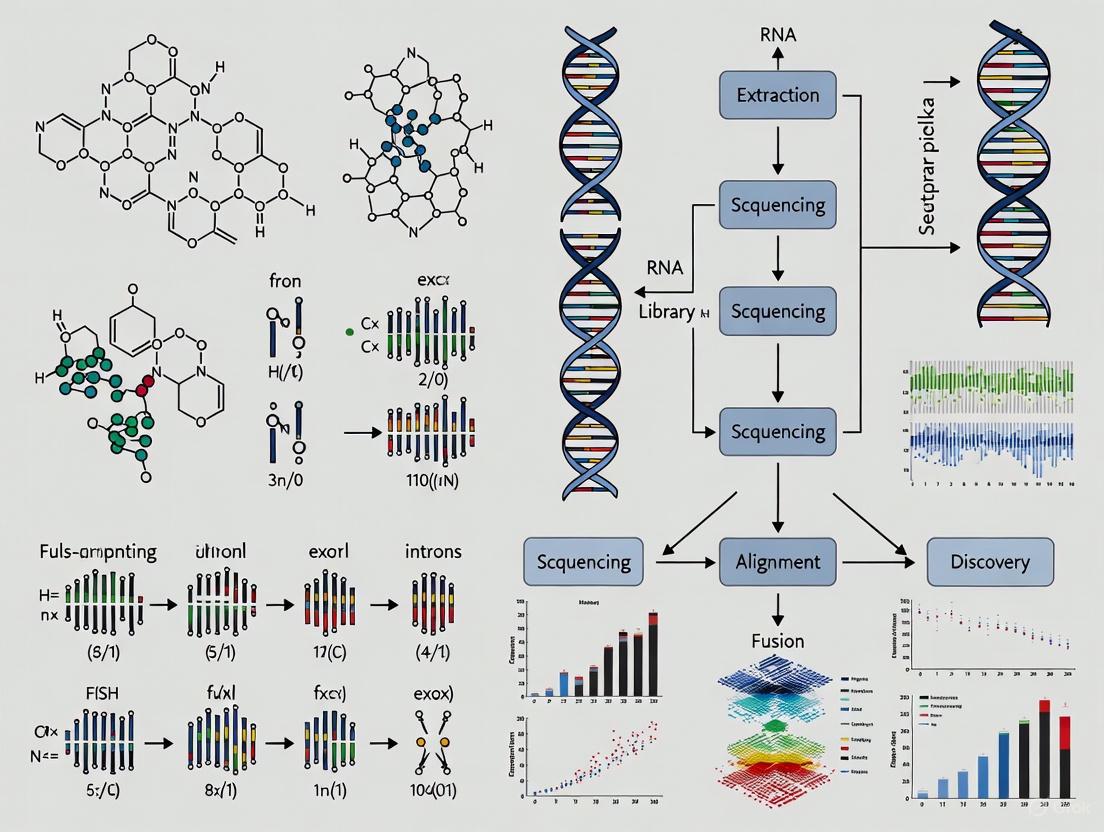
Fusion genes are critical drivers in cancer and other diseases, serving as vital diagnostic biomarkers and therapeutic targets.
Bulk RNA Sequencing for Fusion Gene Detection: A Comprehensive Guide for Researchers and Clinicians
Abstract
Fusion genes are critical drivers in cancer and other diseases, serving as vital diagnostic biomarkers and therapeutic targets. This article provides a comprehensive overview of using bulk RNA sequencing (RNA-seq) for fusion gene detection, addressing the needs of researchers and drug development professionals. We explore the foundational principles of RNA-seq technology, detail robust methodological workflows and computational tools, address common challenges with optimization strategies, and present rigorous validation frameworks. By comparing bulk RNA-seq with emerging technologies like single-cell and long-read sequencing, this guide serves as a definitive resource for implementing accurate and clinically relevant fusion detection pipelines in both research and diagnostic settings.
Understanding Fusion Genes and the Role of Bulk RNA-seq
The Biological Significance of Fusion Genes in Cancer and Disease
Fusion genes are aberrant hybrid genes formed from the concatenation of two previously separate genes, typically resulting from chromosomal rearrangements such as translocations, interstitial deletions, or chromosomal inversions [1]. These genetic alterations are now recognized as pivotal players in cancer development, with their products functioning as key drivers of tumorigenesis in a wide spectrum of malignancies [2] [3]. The hybrid genes resulting from these rearrangements often display altered functions, leading to uncontrolled proliferation, evasion of cell death, and enhanced metastatic potential [3].
The discovery of fusion genes has revolutionized cancer diagnostics, allowing for more precise classification and prognostic assessments [3]. From a therapeutic perspective, fusion genes represent valuable targets for drug development, with targeted therapies significantly improving survival rates in specific cancers such as chronic myeloid leukemia and non-small cell lung cancer compared to traditional chemotherapy [3]. The advent of advanced sequencing technologies and sophisticated bioinformatics tools has dramatically accelerated the identification and characterization of these genetic anomalies, paving the way for their utilization in precision medicine approaches [2] [4].
Biogenesis and Functional Mechanisms
Fusion genes arise through several distinct molecular mechanisms, each with profound implications for their functional consequences. Chromosomal translocations represent the classic mechanism, where breaks in two different chromosomes lead to an exchange of genetic material, potentially placing an oncogene under the control of a strong promoter or creating a novel chimeric protein with oncogenic properties [1]. Interstitial deletions involve the loss of an internal chromosomal segment, potentially fusing two genes that were previously separated, while chromosomal inversions occur when a chromosome segment breaks and reinserts in reverse orientation, potentially creating novel gene fusions within the same chromosome [1].
The functional consequences of fusion gene formation are equally diverse. Many oncogenic fusion genes, such as BCR-ABL in chronic myeloid leukemia, result in constitutive activation of kinase domains that drives uncontrolled cellular proliferation [2] [1]. Alternatively, fusion events can place an oncogene under the control of a strong promoter or enhancer element from the partner gene, leading to significant overexpression of the oncogene [1]. Some fusion genes, particularly those involving transcription factors like PML-RARα in acute promyelocytic leukemia, can create chimeric transcription factors that disrupt normal differentiation programs [2].
Prevalence Across Cancer Types
Fusion genes demonstrate remarkable diversity in their distribution across cancer types, with varying prevalence rates that reflect tissue-specific susceptibilities to particular chromosomal rearrangements. The table below summarizes the prevalence of clinically relevant fusion genes across selected cancer types.
Table 1: Prevalence of Fusion Genes Across Cancer Types
| Cancer Type | Key Fusion Genes | Prevalence | Clinical Significance |
|---|---|---|---|
| Head and Neck Cancer | FGFR3-TACC3, EGFR fusions, NRG1 fusions | 2.57% (66/2564 cases) [5] | Therapeutic target with TKIs |
| Prostate Cancer | TMPRSS2-ERG | ~50% of cases [6] | Diagnostic and prognostic marker |
| Soft Tissue Tumors | ASPSCR1-TFE3 (in sarcomas) | ~33% of cases [6] | Marker for specific sarcoma subtypes |
| Leukemias | BCR-ABL, PML-RARα | Varies by subtype [2] | Paradigm for targeted therapy |
| Lung Cancer | EML4-ALK | 3-7% of NSCLC [2] | Target for ALK inhibitors |
In head and neck squamous cell carcinomas (HNSCC), a comprehensive analysis of over 13,000 tumors identified clinically relevant gene fusions in approximately 2.8% of cases, with the oropharynx representing the most common anatomical site (25 out of 66 fusion-positive cases) [5]. The most frequently observed fusions involved FGFR3 (19 cases), EGFR (6 cases), FGFR2 (6 cases), and NRG1 (5 cases) [5]. Notably, 72.7% of these fusions were characterized as "Oncogenic" or "Likely Oncogenic" according to the OncoKB database, highlighting their potential clinical relevance [5].
Table 2: Distribution of Fusion Genes by Anatomical Site in HNSCC
| Anatomical Site | Number of Fusion Genes | Most Common Fusion Types |
|---|---|---|
| Oropharynx | 25 | FGFR3, EGFR fusions |
| Oral Cavity | 20 | FGFR3, FGFR2 fusions |
| Larynx | 17 | Various |
| Other Sites | 4 | Various |
Detection Methodologies and Experimental Protocols
The accurate detection and characterization of fusion genes present significant technical challenges that have driven the development of specialized methodologies and computational tools. The limitations of conventional short-read sequencing for fusion detection are particularly pronounced in repeat-rich genomic regions and for determining complex fusion isoforms [6]. Third-generation sequencing technologies, such as PacBio's Single Molecule Real Time (SMRT) sequencing, offer unique advantages through their long read lengths (>40,000 bp with average length around 10,000-15,000 bp), enabling more comprehensive characterization of fusion events [1] [6].
Hybrid Sequencing Approach (IDP-fusion)
The IDP-fusion method represents an innovative hybrid sequencing approach that integrates third-generation sequencing long reads with second-generation sequencing short reads to detect fusion genes, determine fusion sites, and identify and quantify fusion isoforms [1]. This method addresses the limitations of each individual technology by combining the long-range information from PacBio sequencing with the accuracy of Illumina short reads.
Table 3: Key Computational Tools for Fusion Gene Detection
| Tool Name | Sequencing Data Type | Key Features | Applications |
|---|---|---|---|
| IDP-fusion | Hybrid (Long + Short reads) | Determines fusion sites at single-nucleotide resolution; identifies and quantifies isoforms [1] | Bulk RNA-seq |
| Anchored-fusion | Bulk and single-cell RNA-seq | High sensitivity for driver fusions; deep learning-based false positive filtering [4] | Low sequencing depth cases; scRNA-seq |
| pbfusion | PacBio Iso-Seq long reads | Flags reads spanning multiple genes; annotates transcriptional oddities [6] | Bulk and single-cell Iso-Seq data |
| STAR-Fusion | RNA-seq short reads | Optimized for sensitivity and specificity; widely used in large cohorts [5] | Large-scale cohort studies |
| Arriba | RNA-seq short reads | Fast visualization; high performance in benchmarking [5] | Clinical RNA-seq data |
Protocol: IDP-fusion for Fusion Gene Detection
Library Preparation and Sequencing:
- Prepare both PacBio long-read and Illumina short-read libraries from the same RNA sample.
- For PacBio sequencing, aim for sufficient coverage to detect rare fusion events (recommended minimum: 500,000 reads per sample).
- For Illumina sequencing, standard RNA-seq library preparation protocols apply, with recommended sequencing depth of at least 50 million read pairs per sample.
Fusion Gene Detection by Genome-wide Long Read Alignments:
- Align PacBio long reads to the reference genome (e.g., hg19) using GMAP.
- Examine all fragment alignments and define fusion gene candidates meeting these criteria:
- Both aligned fragments >100 bp in length.
- Fragments mapped to different chromosomes OR same chromosome with minimum distance of 100 kb OR different annotated genes.
- No significant overlap (>100 bp) between aligned fragments.
- No significant unaligned region (>100 bp) between aligned fragments.
- Filter ambiguous alignments by requiring consistent transcription strands and significant alignment identity differences (<0.2) between best and second-best alignments.
Precise Fusion Site Determination by Short Read Alignments:
- Construct Artificial Reference Sequences (ARSs) by extending each fragment alignment region by 2000 bp beyond alignment ends and concatenating.
- Align Illumina short reads to ARSs using splice-aware aligners.
- Identify precise fusion sites at single-nucleotide resolution based on spanning reads.
Fusion Isoform Identification and Quantification:
- Apply modified IDP (Isoform Detection and Prediction) to fusion gene models.
- Identify significantly expressed fusion isoforms using expression threshold (e.g., RPKM ≥10).
- Quantify isoform-level abundance for each fusion gene.
Anchored-fusion Protocol for Sensitive Detection
Anchored-fusion is a highly sensitive fusion gene detection tool designed for both bulk and single-cell RNA sequencing data, particularly valuable for cases with low sequencing depths or when targeting known driver fusion events [4].
Protocol: Anchored-fusion for Targeted Fusion Search
Data Preprocessing:
- Process raw RNA-seq data through standard quality control steps (FastQC) and adapter trimming.
Anchored Fusion Detection:
- Specify a "gene of interest" often involved in driver fusion events.
- The algorithm anchors this gene and recovers non-unique matches of short-read sequences typically filtered out by conventional algorithms.
- Apply the hierarchical view learning and distillation (HVLD) deep learning module to filter false positive chimeric fragments generated during sequencing while maintaining true fusion genes.
Output and Validation:
- Review fusion calls with supporting read counts and fusion sequence details.
- For clinical applications, prioritize fusions with known oncogenic potential or those classified as "Oncogenic" or "Likely Oncogenic" in databases like OncoKB.
Workflow Visualization
The following diagram illustrates the key decision points and methodologies in fusion gene detection:
Signaling Pathways and Therapeutic Targeting
Oncogenic fusion genes typically exert their effects through the dysregulation of critical signaling pathways that control cellular growth, differentiation, and survival. The most well-characterized mechanisms involve constitutive activation of kinase signaling, transcriptional dysregulation, and altered regulatory circuits.
The BCR-ABL fusion gene, resulting from the Philadelphia chromosome translocation, produces a chimeric protein with constitutively active tyrosine kinase activity that drives chronic myeloid leukemia [1]. This aberrant kinase activity activates multiple downstream pathways including JAK-STAT, MAPK, and PI3K-AKT, leading to uncontrolled proliferation and resistance to apoptosis [1]. Similarly, the EML4-ALK fusion in non-small cell lung cancer creates a cytoplasmic protein with constitutive ALK kinase activity that activates similar growth and survival pathways [2].
The following diagram illustrates key signaling pathways dysregulated by oncogenic fusion genes:
Therapeutic Implications and Clinical Translation
The unique nature of fusion genes makes them ideal tumor-specific drug targets [1]. The development of imatinib (Gleevec), which targets the BCR-ABL fusion protein in chronic myeloid leukemia, represents a paradigm of successful targeted therapy and has transformed CML from a fatal disease to a manageable chronic condition for many patients [1]. Similarly, ALK inhibitors such as crizotinib have demonstrated remarkable efficacy in patients with ALK fusion-positive lung cancers [2].
In head and neck cancers, the identification of targetable fusions presents new therapeutic opportunities. FGFR3 fusions, particularly FGFR3-TACC3, represent the most common targetable fusion class in HNSCC, with several FGFR inhibitors currently in clinical development or approved for other indications [5]. Notably, gain-of-function EGFR fusions have been identified in HNSCC, with literature evaluation showing that among 17 patients with various EGFR fusion-positive cancers who received EGFR TKI therapy, 15 achieved partial responses, one had a complete response, and one had stable disease [5].
The Scientist's Toolkit: Essential Research Reagents and Materials
Successful investigation of fusion genes requires carefully selected reagents and methodologies. The following table details essential materials and their applications in fusion gene research.
Table 4: Essential Research Reagents and Materials for Fusion Gene Studies
| Category | Specific Reagents/Tools | Function/Application |
|---|---|---|
| Sequencing Kits | PacBio Iso-Seq library prep kits, Illumina RNA-seq library prep kits | Generation of sequencing libraries for long-read and short-read approaches [1] [6] |
| Computational Tools | IDP-fusion, Anchored-fusion, pbfusion, STAR-Fusion, Arriba | Detection of fusion genes from various sequencing data types [4] [1] [5] |
| Reference Databases | RefSeq, OncoKB, GENIE | Annotation of fusion events and determination of clinical relevance [1] [5] [6] |
| Cell Lines | MCF-7 breast cancer cells, known fusion-positive cell lines | Positive controls for method validation [1] |
| Targeted Inhibitors | Imatinib (BCR-ABL), Crizotinib (ALK), FGFR inhibitors | Functional validation of fusion gene oncogenicity and therapeutic applications [1] [5] |
Fusion genes represent critical molecular events in carcinogenesis with profound basic science and clinical implications. Their study has been revolutionized by advanced sequencing technologies and sophisticated computational tools that enable comprehensive characterization of these complex genetic alterations. The biological significance of fusion genes extends from their roles as drivers of oncogenic processes to their potential as highly specific therapeutic targets.
Future research directions will likely focus on overcoming current challenges, including the functional characterization of novel fusion events, understanding their interactions with tumor microenvironments, and elucidating mechanisms of resistance to fusion-targeted therapies. The continued refinement of therapeutic strategies through next-generation inhibitors and rational combination therapies tailored to specific genetic alterations will further enhance the clinical impact of fusion gene research. As the landscape of cancer treatment evolves, fusion genes stand at the forefront of precision medicine, offering new hope for patients through the transformation of genetic anomalies into therapeutic opportunities.
In the field of precision oncology, accurate detection of gene fusions is critical for diagnosis, prognosis, and selection of targeted therapies. While DNA sequencing (DNA-seq) has been the traditional approach for identifying genomic rearrangements, bulk RNA sequencing (RNA-seq) provides distinct advantages for capturing transcript-level evidence that more accurately reflects functional gene expression [7]. This Application Note examines the comparative strengths of bulk RNA-seq and DNA-seq for fusion gene detection, providing detailed protocols and data-driven insights for researchers and drug development professionals.
Gene fusions are hybrid genes formed from the rearrangement of previously separate genes, often serving as drivers in various cancers [8]. These molecular events can lead to the production of oncogenic proteins that promote tumor growth and survival. The detection of these fusions is complicated by biological and technical factors, including diverse breakpoint locations, variable expression levels, and the limitations of different detection platforms [9] [10].
Bulk RNA-seq bridges the critical gap between DNA mutations and protein expression by directly sequencing the transcriptome, thus confirming whether a genomic rearrangement is actually expressed [7]. This transcript-level evidence is particularly valuable for clinical decision-making, as it focuses on functionally relevant alterations that are more likely to be therapeutically actionable.
Technical Comparison: Bulk RNA-seq vs. DNA Sequencing
Fundamental Differences in Approach
DNA sequencing identifies structural variants and breakpoints at the genomic level, providing information about the potential for gene fusions to occur. It detects rearrangements regardless of whether the altered gene is transcribed or expressed [7]. Common DNA-based approaches include whole-genome sequencing (WGS), whole-exome sequencing, and targeted DNA panels. However, DNA-seq has limitations in fusion detection due to unpredictable breakpoint locations, large intronic regions, and the inability to distinguish expressed fusions from silent rearrangements [9].
Bulk RNA sequencing directly sequences the transcriptome, capturing only expressed gene fusions. This provides functional evidence of the fusion's activity and often enables more straightforward detection of the resulting chimeric transcript [8]. RNA-seq can identify fusion transcripts even when genomic breakpoints occur in difficult-to-sequence regions, as the intronic sequences are spliced out during mRNA processing [11].
Comparative Performance Data
Recent studies have quantitatively compared the performance of DNA-seq and RNA-seq for fusion detection in clinical samples. The table below summarizes key performance metrics from published studies:
Table 1: Comparative Performance of DNA-seq and RNA-seq in Fusion Detection
| Study Context | DNA-seq Detection Rate | RNA-seq Detection Rate | Concordance | Key Findings | Citation |
|---|---|---|---|---|---|
| RET fusions in NSCLC (n=39) | 100% (by selection) | 79.5% (WTS), additional cases with targeted RNA-seq | 92.3% between DNA-seq and RNA-seq | Targeted RNA-seq identified additional RET+ cases missed by WTS | [9] |
| Gene fusions in solid tumors (n=60) | 93.4% concordance with previous results | 86.9% concordance with previous results | 100% after integrating both methods | DNA and RNA results complemented each other, reducing false negatives | [11] |
| Acute leukemia (n=467) | N/A (OGM used instead) | 9.4% uniquely identified by RNA-seq | 88.1% overall concordance | RNA-seq better for fusions from intrachromosomal deletions | [10] |
| Expressed mutation detection | Varied by panel design | Identified clinically relevant variants missed by DNA-seq | N/A | RNA-seq uniquely identified variants with significant pathological relevance | [7] |
The data demonstrate that DNA-seq and RNA-seq have complementary strengths, with integrated approaches achieving the most comprehensive fusion detection. RNA-seq particularly excels in confirming the functional expression of fusion events and identifying those that may be missed by DNA-based methods due to technical or biological factors.
Advantages of Bulk RNA-seq for Transcript-Level Evidence
Functional Relevance: RNA-seq directly sequences the transcriptome, confirming that a fusion gene is expressed and likely to produce a functional protein [7]. This is crucial for clinical decision-making, as not all genomic rearrangements lead to expressed fusion transcripts.
Simplified Detection: By sequencing spliced mRNAs, RNA-seq avoids the challenges of large intronic regions and complex genomic architectures that complicate DNA-based fusion detection [11]. The breakpoints in cDNA are typically more concentrated and predictable.
Enhanced Sensitivity for Certain Fusions: Some gene fusions are more readily detected at the RNA level, particularly those involving large intronic regions or complex rearrangements [9]. Targeted RNA-seq approaches can provide particularly sensitive detection of expressed fusions.
Comprehensive Transcript Information: Beyond fusion detection, RNA-seq provides additional information about expression levels, alternative splicing, and sequence variants within the fusion transcript [8].
Experimental Protocols
Integrated DNA-RNA Sequencing Protocol for Fusion Detection
This protocol describes a validated approach for simultaneous DNA and RNA sequencing from formalin-fixed, paraffin-embedded (FFPE) samples, enabling complementary fusion detection [11].
Table 2: Key Research Reagent Solutions
| Reagent/Kit | Function | Application Note |
|---|---|---|
| QIAamp DNA FFPE Tissue Kit (Qiagen) | Genomic DNA extraction from FFPE samples | Ensures high-quality DNA despite cross-linking from fixation |
| KAPA Hyper Prep Kit (KAPA Biosystems) | NGS library preparation for DNA sequencing | Compatible with degraded FFPE-derived DNA |
| GeneseeqPrime 425-gene panel | Targeted DNA sequencing | Covers known fusion partners and cancer-related genes |
| Archer Analysis Software v6.2.7 | Fusion transcript identification | Specifically designed for targeted RNA-seq data |
Workflow Steps:
Nucleic Acid Extraction:
- Extract genomic DNA from FFPE samples using the QIAamp DNA FFPE Tissue kit [9].
- Extract total RNA from adjacent sections or the same sample, assessing RNA quality and integrity.
DNA Sequencing Library Preparation:
RNA Sequencing Library Preparation:
- Convert total RNA to cDNA using reverse transcriptase.
- Prepare libraries using targeted approaches (e.g., anchored multiplex PCR) that capture known and novel fusion partners [10].
- Sequence on Illumina platforms with sufficient depth for transcript quantification.
Bioinformatic Analysis:
- For DNA-seq: Align reads to reference genome (hg19/GRCh37) using BWA-MEM [9]. Call structural variants and fusions using tools like Delly [9].
- For RNA-seq: Identify fusion transcripts using specialized algorithms (Archer, CTAT-LR-Fusion, or DEEPEST) [10] [8].
- Integrate results from both approaches to validate fusions and reduce false positives/negatives.
Validation:
- Confirm novel or questionable fusions using orthogonal methods such as Sanger sequencing, FISH, or RT-PCR [11].
Integrated DNA-RNA Sequencing Workflow
Targeted RNA-seq Protocol for Expressed Mutation Detection
Targeted RNA-seq offers enhanced sensitivity for detecting expressed mutations and fusions, making it particularly valuable for clinical applications [7].
Workflow Steps:
Sample Preparation:
- Generate high-quality single-cell suspensions from fresh or frozen tissue using enzymatic or mechanical dissociation [12].
- Assess cell viability and count using trypan blue exclusion or automated cell counters.
- Extract total RNA, ensuring minimal degradation (RIN > 7 for optimal results).
Library Preparation with Targeted Enrichment:
- Use targeted RNA-seq panels (e.g., Afirma Xpression Atlas, 108-gene heme panel) designed with exon-exon junction covering probes [7] [10].
- Employ anchored multiplex PCR (AMP) chemistry that uses unidirectional gene-specific primers to capture novel fusion partners [10].
- Incorporate unique molecular identifiers (UMIs) to correct for amplification biases and enable accurate quantification.
Sequencing:
- Sequence on Illumina platforms with appropriate read length (2x150bp recommended) and depth (minimum 20M reads per sample for targeted approaches).
- Include control samples with known fusion status for quality assessment.
Bioinformatic Analysis for Fusion Detection:
- Align reads to reference transcriptome using optimized splice-aware aligners (STAR, HISAT2).
- Implement specialized fusion detection algorithms (Archer, JAFFAL, FusionCatcher) with stringent filtering.
- Annotate fusions with clinical relevance and known drug targets.
- Control false positive rates using known negative position lists and statistical filtering [7].
Advanced Applications and Emerging Technologies
Complementary Approaches for Comprehensive Fusion Detection
While bulk RNA-seq provides critical transcript-level evidence, the most comprehensive fusion detection strategies integrate multiple complementary technologies:
Table 3: Multi-Modal Approaches to Fusion Detection
| Technology | Strengths | Limitations | Complementary Role with RNA-seq |
|---|---|---|---|
| DNA-seq | Identifies genomic breakpoints; detects fusions regardless of expression | May miss fusions in complex genomic regions; cannot confirm expression | Provides genomic confirmation of RNA-identified fusions |
| RNA-seq | Confirms functional expression; avoids intronic complexity | Limited by gene expression levels; RNA degradation in FFPE | Primary method for detecting expressed fusions |
| FISH | Visual confirmation; single-cell resolution; works well on FFPE | Low throughput; limited to known targets | Validates fusions in tissue context; confirms rearrangement |
| OGM | Genome-wide view; detects structural variants | Cannot confirm transcription | Identifies rearrangements that may be missed by targeted approaches |
Recent studies demonstrate that combining DNA-seq and RNA-seq significantly improves fusion detection sensitivity and specificity. In one study of solid tumors, an integrated DNA-RNA sequencing approach achieved 100% sensitivity and specificity, identifying additional fusions missed by either method alone [11]. Similarly, in acute leukemia, combining targeted RNA-seq with optical genome mapping (OGM) provided the most comprehensive assessment of gene rearrangements, with each method uniquely identifying clinically significant events [10].
Computational Tools for Fusion Detection
Advanced computational methods are critical for accurate fusion detection from RNA-seq data. Emerging tools address specific challenges in fusion identification:
- CTAT-LR-Fusion: Detects fusion transcripts from long-read RNA-seq data, providing improved resolution of fusion isoforms [13].
- Anchored-fusion: A highly sensitive tool that anchors genes of interest to recover sequences typically filtered out by conventional algorithms, particularly useful for low-abundance fusions [14].
- DEEPEST: A statistical framework that minimizes false positives while maintaining sensitivity in bulk RNA-seq data [8].
These tools can be integrated into comprehensive pipelines that combine short-read and long-read sequencing data to maximize fusion detection sensitivity and accuracy.
Computational Fusion Detection Pipeline
Bulk RNA-seq provides critical advantages over DNA sequencing for obtaining transcript-level evidence of gene fusions in cancer research. By directly sequencing expressed transcripts, RNA-seq confirms the functional relevance of fusion events and enables detection of clinically actionable alterations that may be missed by DNA-based methods alone. The integrated protocol presented here, combining DNA and RNA sequencing approaches, offers researchers a comprehensive strategy for fusion detection with enhanced sensitivity and specificity.
As precision medicine continues to evolve, multi-modal approaches that leverage the complementary strengths of DNA and RNA sequencing will become increasingly important for patient stratification and therapeutic selection. The experimental frameworks and computational tools outlined in this Application Note provide researchers with practical methodologies for implementing these integrated approaches in both basic research and clinical translation contexts.
Gene fusions, arising from genomic rearrangements such as translocations, insertions, deletions, or inversions, are a critical class of molecular alterations in cancer [15]. They result in chimeric proteins that can act as potent oncogenic drivers, promoting tumorigenesis and cancer progression. The identification of these fusion events has moved to the forefront of precision oncology, as they serve not only as diagnostic and prognostic biomarkers but also as high-value therapeutic targets for targeted therapies [15] [16]. The advent of RNA sequencing (RNAseq) technologies has been instrumental in systematically profiling these fusion genes across various cancer types, offering a comprehensive view of their landscape and clinical potential [8].
Fusion Genes as Diagnostic and Prognostic Biomarkers
The presence of specific gene fusions can define distinct molecular subtypes of cancer, providing critical information for diagnosis, prognosis, and disease stratification.
Clinical Significance Across Cancers
Recurrent fusion genes have been successfully established as biomarkers in several malignancies. In acute myeloid leukemia, the RUNX1–RUNX1T1 fusion is a key diagnostic tool, while the TMPRSS2–ERG fusion serves as a prognostic biomarker in prostate cancer [8]. In colorectal cancer, a study detected the known KANSL1-ARL17A/B fusion in 69% of patients, highlighting a frequently occurring event [16].
Recent research has expanded this understanding to other solid tumors. In HR+/HER2– breast cancer, the presence of fusion genes is significantly associated with poorer clinical outcomes, including shorter overall survival (OS), recurrence-free survival (RFS), and distant metastasis-free survival (DMFS) [15]. Similarly, in advanced melanoma, a high tumor fusion burden (TFB-H) is correlated with a poor response to immune checkpoint blockade (ICB), reduced overall survival, and an increased mortality risk (Hazard Ratio = 2, P < 0.01) [17].
Association with Genomic Instability
The prognostic power of fusion genes often stems from their association with underlying genomic instability. In HR+/HER2– breast cancer, fusion-positive tumors are correlated with a higher mutation frequency of TP53, increased tumor mutation burden (TMB), a higher Ki67 index, and elevated homologous recombination deficiency (HRD) scores [15]. These tumors also show enrichment in gene sets related to DNA damage repair, cell cycle regulation, and inflammatory responses [15]. In melanoma, a high tumor fusion burden is strongly associated with chromosomal instability (β = 0.72, P < 0.01), heightened proliferation, and diminished immune cytolytic activity, suggesting a phenotype conducive to immune evasion [17].
Table 1: Prognostic Value of Gene Fusions in Different Cancers
| Cancer Type | Key Fusion Gene(s) | Prognostic Association |
|---|---|---|
| HR+/HER2– Breast Cancer | Various (e.g., KAT6B::ADK) | Shorter OS, RFS, and DMFS [15] |
| Advanced Melanoma | High Tumor Fusion Burden (TFB-H) | Poor response to ICB, reduced OS, increased mortality risk (HR=2) [17] |
| Colorectal Cancer | KANSL1-ARL17A/B | Detected with high frequency (69%) [16] |
Fusion Genes as Therapeutic Targets
Oncogenic fusion genes, particularly those involving kinases, represent a class of "druggable" targets, leading to the development of highly effective, targeted therapies.
Established Targeted Therapies
The paradigm of targeting fusion genes in cancer therapy is well-established. Fusion-driven cancers often exhibit oncogene addiction, making them particularly vulnerable to targeted inhibition. Notable examples include:
- EML4::ALK fusions in ~4% of lung cancers, targeted by ALK inhibitors (crizotinib, brigatinib, lorlatinib, alectinib) [15] [16].
- NTRK fusions in up to ~1% of solid tumors, targeted by larotrectinib and entrectinib, which are approved for pancancer, tissue-agnostic use [15].
- FGFR2 fusions in cholangiocarcinoma, targeted by infigratinib and pemigatinib [16].
- RET fusions, targeted by selpercatinib and pralsetinib in solid tumors [16].
Emerging Therapeutic Targets
Research continues to uncover new targetable fusions. In melanoma, fusions such as KIAA1549::BRAF represent therapeutic opportunities, potentially with novel type II RAF inhibitors [17]. A groundbreaking study in HR+/HER2– breast cancer identified ADK fusion genes as novel and recurrent drivers. The most common, KAT6B::ADK, was found to enhance metastatic potential and confer tamoxifen resistance [15]. Mechanistically, KAT6B::ADK activates ADK kinase activity through liquid–liquid phase separation, triggering the integrated stress response pathway [15]. Crucially, patient-derived organoids (PDOs) harboring KAT6B::ADK demonstrated increased sensitivity to ADK inhibitors, establishing ADK fusions as a compelling new therapeutic target [15].
Table 2: Selected Therapeutically Actionable Gene Fusions and Targeted Drugs
| Fusion Gene | Cancer Type | Targeted Therapy |
|---|---|---|
| EML4::ALK | Non-Small Cell Lung Cancer | Crizotinib, Alectinib, Lorlatinib [16] |
| NTRK | Various Solid Tumors (Pancancer) | Larotrectinib, Entrectinib [15] [16] |
| FGFR2 | Cholangiocarcinoma | Infigratinib, Pemigatinib [16] |
| RET | Various Solid Tumors | Selpercatinib, Pralsetinib [16] |
| KIAA1549::BRAF | Melanoma | Type II RAF inhibitors (in research) [17] |
| KAT6B::ADK (ADK fusions) | HR+/HER2– Breast Cancer | ADK inhibitors (in research) [15] |
Detection Methodologies and Experimental Protocols
Accurate detection of fusion genes is paramount for their clinical application. RNA sequencing (RNAseq) has emerged as a powerful tool for this purpose, capable of revealing gene fusions, splicing variants, and mutations in a single test [8].
Bulk RNA Sequencing for Fusion Detection
Bulk RNAseq provides an average global gene expression profile from a tissue or cell population and is the most widely used technology for fusion discovery [8]. It can be tailored for different purposes: single-end short sequencing is cost-effective for differential gene expression, while paired-end longer sequencing on rRNA-depleted libraries offers more comprehensive information on alternative splicing, novel transcripts, and gene fusions [8].
Standard Bulk RNAseq Wet-Lab Protocol
The following is a generalized protocol for bulk RNA sequencing, adapted from experimental methods [18] [16]:
- Sample Collection and Preservation: Tissue samples are collected and either freshly frozen in RNA stabilizing solution (e.g., RNAlater) or formalin-fixed and paraffin-embedded (FFPE). For FFPE samples, a standardized formalin fixation time (e.g., 16 hours) is recommended [16].
- RNA Extraction: Total RNA is extracted from tissue slices using a commercial kit (e.g., QIAGEN RNeasy Kit), following the manufacturer's protocol [16].
- Library Preparation: Libraries are constructed using a kit such as the KAPA RNA Hyper with rRNA Erase kit for ribosomal RNA depletion. Samples are multiplexed using different adaptors [16].
- Quality Control: Library concentration is measured (e.g., using Qubit dsDNA HS Assay kit), and quality is assessed (e.g., with Agilent Tapestation) [16].
- Sequencing: Sequencing is performed on a platform such as the Illumina NovaSeq6000 for paired-end sequencing, typically with a read length of 75bp or 100bp, aiming for at least 15 million reads per sample [18] [16].
Computational Analysis Protocol
The bioinformatic detection of fusions from bulk RNAseq data involves a multi-step process [19]:
- Read Mapping and Gene Quantification: Raw sequencing reads (FASTQ files) are processed using a aligner like STAR with a reference transcriptome (e.g., GRCh38) and transcript annotation (e.g., Gencode) [19] [16].
- Fusion Calling: Fusion transcripts are detected using specialized software such as STAR-Fusion [16]. Identified candidates are typically filtered based on supporting evidence, requiring, for example, either a
JunctionReadCount > 1or aSpanningFragCount > 1[16]. - Differential Expression Analysis: Read counts are used for differential gene expression analysis between experimental groups using tools like DESeq2, with an adjusted p-value < 0.05 and a log2fold change considered significant [18].
Advancing Detection: Newer Sequencing Technologies and Algorithms
While bulk RNAseq is powerful, it has limitations, including an inability to resolve cellular heterogeneity. Single-cell RNA sequencing (scRNAseq), such as the 10X Genomics Chromium system, can dissect intra-tumor heterogeneity and identify rare cell populations expressing drug-resistant fusion variants [8]. Furthermore, long-read isoform sequencing (e.g., PacBio, Oxford Nanopore) enables the detection of fusion transcripts at unprecedented resolution in both bulk and single-cell samples [20]. Tools like CTAT-LR-Fusion have been developed to leverage long-read data, maximizing the detection of fusion splicing isoforms and fusion-expressing tumor cells [20].
To address speed and sensitivity in clinical settings, new computational algorithms are being created. Fuzzion2, a gene fusion pattern-matching program, uses fuzzy pattern matching to analyze unmapped RNA-seq samples in minutes with high accuracy, facilitating rapid clinical turnaround [21].
FFPE vs. Fresh Frozen Samples
A critical consideration in clinical diagnostics is the use of FFPE tissues, where RNA is heavily degraded. A landmark study comparing matched FFPE and freshly frozen (FF) colorectal cancer samples found no statistically significant difference in the number of chimeric transcripts detected by RNAseq, validating the use of widely available FFPE archives for fusion detection [16].
Diagram 1: Clinical significance of gene fusions, illustrating their dual role as biomarkers and targets leading to improved patient outcomes through informed treatment selection.
Successful fusion gene research relies on a suite of wet-lab and computational tools.
Table 3: Research Reagent Solutions for Fusion Gene Analysis
| Item / Resource | Function / Application | Example Products / Tools |
|---|---|---|
| RNA Stabilization Reagent | Preserves RNA integrity in fresh tissues prior to extraction. | RNAlater (Ambion) [16] |
| RNA Extraction Kit | Isolves high-quality total RNA from tissues (FFPE or fresh). | QIAGEN RNeasy Kit [16] |
| RNAseq Library Prep Kit | Constructs sequencing libraries; often includes rRNA depletion. | KAPA RNA Hyper with rRNA Erase kit [16] |
| Sequencing Platform | Generates high-throughput RNA sequencing data. | Illumina NovaSeq6000 [18] |
| Alignment & Fusion Caller | Maps RNAseq reads and identifies chimeric fusion transcripts. | STAR aligner, STAR-Fusion [16] |
| Differential Expression Tool | Statistically analyzes gene expression changes. | DESeq2 R package [18] [19] |
| Long-Read Fusion Caller | Detects fusion transcripts from long-read sequencing data. | CTAT-LR-Fusion [20] |
| Rapid Pattern-Matching Tool | Expedited fusion detection for clinical turnaround. | Fuzzion2 [21] |
Diagram 2: Multi-Omics Profiling Workflow, showing the integrated genomic, transcriptomic, and functional pipeline from sample to clinical or research application.
Market Perspective and Future Directions
The critical role of gene fusions in oncology is reflected in the growing diagnostic and therapeutic markets.
The global gene fusion testing market was valued at US$ 0.7 billion in 2024 and is projected to grow at a CAGR of 12.1% to reach US$ 2.5 billion by 2035 [22]. This growth is driven by the increasing incidence of cancer and rising demand for personalized medicine. Next-generation sequencing (NGS) is the dominant technology segment, holding a 42.1% market share in 2024 due to its ability to perform comprehensive genomic profiling [22].
Concurrently, the market for fusion-targeted therapies is also expanding. The NRG1 fusion-targeted therapy market, for instance, is projected to grow from USD 133.1 million in 2025 to approximately USD 242.9 million by 2035, at a CAGR of 6.2% [23]. This underscores the transition of fusion genes from research discoveries to integral components of clinical oncology, guiding the use of targeted treatments in specific patient populations.
Future directions will likely involve the broader integration of multi-omics profiling (genomic, transcriptomic, proteomic) to fully characterize the functional impact of fusions [15], the increased use of single-cell and spatial RNA sequencing to understand fusion heterogeneity within the tumor microenvironment [8], and the continuous development of more potent and selective inhibitors against fusion-driven cancers.
The detection of fusion genes is a critical component of precision oncology, as many represent actionable therapeutic targets or valuable diagnostic biomarkers [16]. Bulk RNA sequencing (RNA-seq) has emerged as a powerful tool for this purpose, capable of revealing gene fusions, splicing variants, and mutations within a single test [8]. However, the utility of bulk RNA-seq is constrained by two fundamental limitations: the obscuring nature of cellular heterogeneity and the technical challenges affecting detection sensitivity. This application note details these challenges and provides structured experimental protocols to enhance the reliability of fusion gene detection in research and drug development.
Key Challenges in Bulk RNA-Seq for Fusion Detection
The Problem of Cellular Heterogeneity
Bulk RNA-seq utilizes a tissue or cell population as starting material, resulting in an averaged gene expression profile from the entire sample [8]. This averaging effect presents a significant challenge in fusion detection.
Table 1: Impact of Cellular Heterogeneity on Fusion Detection
| Challenge | Consequence for Fusion Detection | Potential Solution |
|---|---|---|
| Averaged Expression Profile | Signals from rare cell populations (e.g., a small subclone harboring a fusion) are diluted, potentially falling below the detection threshold [8]. | Complement with single-cell RNA-seq (scRNA-seq) on selected samples [24]. |
| Obscured Cell-Type Specificity | Difficulty in determining whether a fusion is present in all tumor cells or a specific subtype, complicating biological interpretation [12]. | Computational deconvolution using single-cell reference maps [12]. |
| Stromal Contamination | High levels of RNA from non-tumor cells (e.g., immune or stromal cells) can mask fusion transcripts originating from tumor cells [8]. | Enrich for target cell populations (e.g., via flow sorting) prior to RNA extraction. |
The primary issue is that bulk RNA-seq provides a population-level average, meaning a fusion transcript expressed in a rare subpopulation of cells may be diluted by the RNA from non-expressing cells, rendering it undetectable [8]. This is particularly problematic for detecting fusions in minor subclones that may be responsible for therapeutic resistance.
Limitations in Detection Sensitivity
Sensitivity in bulk RNA-seq is influenced by multiple experimental and computational factors, from sample quality to data analysis.
Table 2: Factors Affecting Detection Sensitivity and Specificity
| Factor | Impact on Sensitivity/Specificity | Quantitative Consideration |
|---|---|---|
| Sample Quality (FFPE vs. Fresh Frozen) | FFPE RNA is heavily degraded, theoretically reducing sensitivity. However, one study found no statistically significant difference in the number of chimeric transcripts detected between matched FFPE and Fresh Frozen samples [16]. | Read length of 75 bp can be sufficient for fusion detection in FFPE samples [16]. |
| Sequencing Depth | Low sequencing depth may not provide sufficient coverage to detect rare fusion transcripts. | In one study, an average of 15 million raw reads per sample was used for successful fusion detection [16]. |
| Bioinformatic Tools | Different fusion detection tools show a "degree of discrepancy," and false positives are a known challenge [16]. | Tools like DEEPEST can minimize false positives and improve sensitivity [8]. Use tools like STAR-Fusion with thresholds (e.g., JunctionReadCount >1) [16]. |
A major concern has been the use of Formalin-Fixed Paraffin-Embedded (FFPE) samples, where RNA is heavily degraded. However, recent research indicates that with modern protocols, fusion detection from FFPE RNA can be as effective as from freshly frozen tissue, a critical finding for leveraging vast clinical archives [16].
Experimental Protocols for Robust Fusion Detection
Protocol: RNA-Seq from Matched FFPE and Fresh Frozen Tissues
This protocol is adapted from a study that successfully detected fusions in colorectal cancer samples without significant performance loss in FFPE material [16].
The Scientist's Toolkit: Key Research Reagents
| Reagent / Tool | Function in the Protocol |
|---|---|
| RNAlater Stabilizing Solution | Preserves RNA integrity in fresh tissues immediately after surgery. |
| QIAGEN RNeasy Kit | For extraction of total RNA from both FFPE slices and stabilized fresh tissue. |
| KAPA RNA Hyper with rRNA Erase Kit | For library construction and ribosomal RNA depletion (essential for FFPE RNA). |
| STAR-Fusion Software | A key bioinformatic tool for identifying chimeric transcripts from RNA-seq data. |
| ChimerDB Database | A curated database for classifying detected fusions as novel or known. |
Workflow Diagram
Methodology:
- Sample Collection: For each patient, split tumor tissue post-surgery. Place one portion in RNAlater solution and store at -70°C (Fresh Frozen, FF). Fix the other portion in formalin for a standardized duration (e.g., 16 hours) and embed in paraffin (FFPE) [16].
- RNA Extraction: Extract total RNA from both FFPE slices and stabilized fresh tissue using the QIAGEN RNeasy Kit or equivalent, following the manufacturer's protocol.
- Library Preparation and Sequencing: Perform library construction and ribosomal RNA depletion using the KAPA RNA Hyper with rRNA Erase kit. Multiplex libraries and sequence on a platform such as an Illumina system for paired-end reads (e.g., 75 bp length) [16].
- Computational Fusion Detection: Process FASTQ files with a dedicated fusion detection tool like STAR-Fusion [16]. Apply a minimum threshold (e.g., JunctionReadCount > 1 or SpanningFragCount > 1) to filter results.
- Fusion Annotation and Validation: Classify fusions as known or novel by querying databases like ChimerDB and the Mitelman Database. Potentially clinically actionable fusions, such as those involving kinase genes, should be prioritized for experimental validation (e.g., by RT-PCR or Sanger sequencing) [16].
Protocol: A Computational Approach to Enhance Biomarker Discovery
Intra-tumor heterogeneity can lead to poor reproducibility of RNA-seq-based biomarkers. This protocol outlines a computational strategy to select more robust prognostic gene signatures.
Workflow Diagram
Methodology:
- Data Analysis: Analyze multiple bulk RNA-seq datasets from patient cohorts (e.g., lung cancer). For each gene, assess its expression homogeneity within individual tumors, independent of high inter-tumor variability [8].
- Signature Selection: Prioritize genes that demonstrate homogeneous expression within tumors for building a prognostic signature. Research indicates that such genes often "encode expression modules of cancer cell proliferation and are often driven by DNA copy-number gains" [8].
- Validation: Test the resulting gene signature in independent patient cohorts. Signatures built on homogeneously expressed genes have been shown to minimize sampling bias and offer more robust prognostic performance [8].
Concluding Remarks
While bulk RNA-seq remains a powerful and cost-effective tool for fusion gene discovery, its limitations regarding cellular heterogeneity and detection sensitivity must be actively managed. The experimental protocols detailed herein provide a framework to enhance the rigor and reproducibility of fusion detection. By implementing careful sample processing, leveraging modern computational tools, and adopting robust biomarker selection strategies, researchers can more reliably uncover therapeutically actionable genomic events, thereby accelerating oncology research and drug development.
Implementing a Robust Bulk RNA-seq Fusion Detection Pipeline
Within the field of cancer genomics, the detection of fusion genes via bulk RNA sequencing (bRNA-seq) has become indispensable for diagnosis, subtyping, and targeted therapeutic interventions [14]. The reliability of such analyses, however, is profoundly dependent on a rigorously designed experiment. Choices made during the experimental design phase—specifically regarding biological replicates, sequencing depth, and read length—directly determine the sensitivity, specificity, and overall statistical power of a study. A poorly designed experiment can lead to false negatives, failing to detect critical driver fusions, or false positives, misdirecting research and clinical decisions. This Application Note details the critical steps in designing a robust bRNA-seq experiment for fusion gene detection, providing structured protocols and data standards to guide researchers and drug development professionals.
The Scientist's Toolkit: Essential Reagents and Materials
Successful execution of a bRNA-seq experiment for fusion detection requires a suite of specific reagents and analytical tools. The following table catalogues the essential components.
Table 1: Essential Research Reagent Solutions for Fusion Detection bRNA-seq
| Item Name | Function/Description | Application Notes |
|---|---|---|
| Poly(A) Selection or rRNA Depletion Kits | Enrichment for messenger RNA (mRNA) from total RNA. | Poly(A) selection is standard for most whole-transcriptome applications. rRNA depletion is necessary for degraded RNA or when including non-polyadenylated transcripts [25]. |
| Stranded RNA Library Prep Kit | Creates a sequencing library that preserves the original strand orientation of the transcript. | Crucial for accurately determining the orientation of fusion partners, which is essential for validating the fusion transcript structure [26]. |
| ERCC RNA Spike-In Controls | Exogenous RNA controls mixed with the sample RNA in known concentrations. | Allows for monitoring of technical performance and can aid in the quantification of absolute transcript abundance [25]. |
| Anchored-Fusion Software | A computational tool designed for highly sensitive fusion gene detection. | Particularly useful for detecting fusions involving genes with high sequence homology or in data with low sequencing depth by anchoring on a gene of interest [14]. |
| STAR Aligner | A splice-aware aligner for mapping RNA-seq reads to the reference genome. | The standard aligner in many processing pipelines, including the ENCODE Uniform Processing Pipeline for bRNA-seq [25] [26]. |
| Salmon | A tool for transcript quantification using pseudoalignment. | Provides fast and accurate quantification of transcript abundance, which can be integrated with alignment-based workflows for improved count matrices [26]. |
Core Experimental Parameters: Protocols and Data Standards
Biological Replicates and Statistical Power
Detailed Protocol:
- Experimental Design: For a standard case-control experiment, a minimum of three biological replicates per condition is considered the baseline. Biological replicates are defined as RNA samples extracted from different specimens or cultures (e.g., tumors from different patients or different primary cell cultures) representing the same biological condition [25].
- Sample Randomization: Process replicates in a randomized order across different library preparation batches and sequencing lanes to avoid confounding technical batch effects with biological effects.
- Quality Control Metric: Following data processing, calculate the Spearman correlation of gene-level quantification (e.g., FPKM or TPM) between all pairs of replicates. The ENCODE consortium standards require a Spearman correlation of >0.9 between isogenic replicates to demonstrate high replicate concordance [25].
Justification: Biological replicates account for the natural variation within a population. Without an adequate number of replicates, statistical tests for differential expression of the fusion gene or its downstream targets will be underpowered, leading to unreliable conclusions. The high correlation threshold ensures that the observed gene expression profiles are consistent and reproducible.
Sequencing Depth (Read Depth)
Sequencing depth, or the number of reads per sample, is a primary determinant for the sensitivity of fusion detection, as it affects the ability to capture low-abundance transcripts.
Detailed Protocol:
- Define Project Aims: The required read depth is directly tied to the goals of the study. Refer to Table 2 for specific recommendations.
- Calculate Total Reads: Determine the total number of reads needed by multiplying the reads per sample by the total number of samples. For example, 30 samples sequenced at 40 million reads each requires a total of 1.2 billion reads.
- Sequencing Lane Allocation: Divide the total reads required by the output of your chosen sequencing flow cell (e.g., an Illumina NovaSeq S4 flow cell produces ~4-5 billion reads) to determine how many lanes to allocate for your project [27].
Table 2: Recommended Sequencing Depth for bRNA-seq Applications
| Experimental Goal | Recommended Reads per Sample | Rationale |
|---|---|---|
| Targeted Fusion Panel | ~3 million reads | Panels like the TruSight RNA Pan Cancer are highly multiplexed and target specific genes, requiring far fewer reads [27]. |
| Gene Expression Profiling | 5 - 25 million reads | Sufficient for a snapshot of highly expressed genes but may miss low-expression transcripts and fusions [27]. |
| Standard Whole-Transcriptome (incl. Fusion Detection) | 30 - 60 million reads | The typical range for most published bRNA-seq studies. Provides a global view of gene expression and allows for the detection of medium- to high-abundance fusion transcripts [27]. |
| In-depth Fusion Discovery & Transcript Assembly | 100 - 200 million reads | Necessary for comprehensive detection of low-abundance fusions, novel transcript discovery, and accurate alternative splicing analysis [27]. |
| ENCODE Project Standard | Minimum 30 million aligned reads | The updated ENCODE standard for bulk RNA-seq of long RNAs to ensure robust gene quantification [25]. |
Read Length
Detailed Protocol:
- Library Type Determination: For fusion detection and general transcriptome analysis, paired-end (PE) sequencing is mandatory. Single-end data is not recommended for differential expression or fusion analysis, as paired-end reads provide information from both ends of a fragment, greatly improving mapping accuracy and the ability to identify splice junctions [26].
- Read Length Selection:
- For gene expression quantification, shorter paired-end reads (e.g., PE 50 bp or PE 75 bp) are often sufficient to minimize reading across multiple splice junctions while counting all RNAs [27].
- For novel transcriptome assembly, annotation, and robust fusion detection where precise breakpoint identification is key, longer paired-end reads (e.g., 2x100 bp or 2x150 bp) are beneficial. They enable more complete coverage of transcripts and better identification of novel variants and splice sites [27] [28].
Justification: Longer reads are more likely to span the unique sequences on either side of a fusion breakpoint, providing direct evidence of the fusion event and simplifying computational detection compared to shorter reads, which may require complex and error-prone assembly to reconstruct the fusion transcript [28].
Integrated Experimental Workflow
The following diagram synthesizes the critical steps and decision points in designing a bRNA-seq experiment for fusion gene detection, from sample preparation to data analysis.
The rigorous detection of fusion genes in bulk RNA-seq data is a cornerstone of modern cancer research and drug development. This protocol has outlined the non-negotiable pillars of a robust experimental design: sufficient biological replicates to ensure statistical power, adequate sequencing depth to capture the dynamic range of transcript expression—particularly for low-abundance fusion events—and the use of paired-end reads of appropriate length to accurately resolve transcript structures. By adhering to these established standards and leveraging specialized tools like Anchored-fusion, researchers can generate high-quality, reliable data capable of uncovering novel oncogenic drivers and informing critical therapeutic decisions.
RNA Extraction and Quality Control for Optimal Library Preparation
The reliable detection of fusion genes—hybrid genes formed from chromosomal rearrangements—is critical for cancer diagnosis, prognosis, and therapeutic decision-making [28] [29]. In bulk RNA sequencing (RNA-Seq) research, the success of fusion detection assays is profoundly dependent on the quality and integrity of the input RNA [30]. Suboptimal RNA quality can lead to false negatives, particularly for lowly expressed or novel fusion transcripts, thereby compromising research conclusions and potential clinical applications [28]. This application note details standardized protocols for RNA extraction and quality control, specifically tailored to support robust fusion gene detection within a bulk RNA-Seq research framework.
RNA Quality Thresholds for Successful Fusion Detection
The performance of whole transcriptome sequencing (WTS) assays for fusion gene detection is intrinsically linked to RNA quality. Establishing and adhering to strict quality thresholds is essential for ensuring assay sensitivity and specificity.
Table 1: Quality Control Thresholds for Fusion Gene Detection Assays
| Quality Metric | Minimum Threshold | Optimal Performance Range | Measurement Instrument |
|---|---|---|---|
| RNA Degradation (DV200) | ≥ 30% [30] | ≥ 50% [30] | Agilent 2100 Bioanalyzer |
| RNA Input (FFPE) | 100 ng [30] | 10-200 ng [31] | Qubit Fluorometer |
| Fusion Transcript Input | 40 copies/ng [30] | >40 copies/ng [30] | - |
| Mapped Reads | 80 Million reads [30] | ~25 Gigabases data [30] | Sequencing Output |
| RNA Integrity Number (RIN) | Not specified for FFPE | Assessed via DV200 [31] | Agilent 2100 Bioanalyzer |
Formalin-fixed paraffin-embedded (FFPE) samples, a common source for oncology research, present specific challenges due to RNA degradation. Studies validating WTS assays for fusions have defined a DV200 value of ≥ 30% as the threshold for acceptable RNA degradation [30]. For samples with DV200 ≥ 50%, the fragmentation step during library preparation can be skipped, leading to improved outcomes [30]. The input requirements and sequencing depth are also critical; for example, one validated assay requires a minimum of 80 million mapped reads to achieve a sensitivity of 98.4% for known fusions [30].
RNA Extraction and QC Experimental Protocol
RNA Extraction from FFPE Samples
The following protocol is adapted from methods used in validated fusion detection studies [31] [30].
Materials:
- Tissue Material: 10 sections of a 5 x 5 mm² FFPE tissue block with tumor content exceeding 20% [30].
- Extraction Kit: RNeasy FFPE Kit (Qiagen) or AllPrep DNA/RNA FFPE Kit (Qiagen) [31] [30].
- Equipment: Microtome, water bath, centrifuge, vortex mixer, NanoDrop 8000, Qubit Fluorometer, and Agilent TapeStation 4200 or Bioanalyzer [31].
Procedure:
- Sectioning: Cut 10 serial sections of 5-10 µm thickness from the FFPE block using a microtome.
- Deparaffinization:
- Add 1 mL of xylene (or a suitable xylene substitute) to the samples and vortex vigorously.
- Centrifuge at full speed for 5 minutes. Carefully remove the supernatant without disturbing the pellet.
- Repeat the xylene wash step once.
- Ethanol Wash:
- Wash the pellet twice with 1 mL of 100% ethanol, vortexing and centrifuging each time. Ensure the pellet is fully dislodged during washing.
- After the final wash, air-dry the pellet briefly (5-10 minutes) to ensure all ethanol has evaporated.
- RNA Extraction:
- Follow the manufacturer's instructions for the RNeasy FFPE Kit. This typically involves:
- Digesting the tissue with proteinase K to reverse formalin cross-links.
- Binding RNA to a silica membrane column.
- Washing with appropriate buffers.
- Eluting RNA in nuclease-free water.
- Follow the manufacturer's instructions for the RNeasy FFPE Kit. This typically involves:
- Storage: Store purified RNA at -80°C if not used immediately.
RNA Quality Control Assessment
A multi-perspective QC strategy is recommended, assessing RNA at the sample, raw read, and alignment levels [32].
Procedure:
- Quantification and Purity:
- Integrity and Size Distribution:
- Pre-sequencing Library QC: After library preparation, assess the library's concentration, average fragment size, and profile using the Qubit and LabChip GX Touch or similar systems [31] [30].
Diagram Title: RNA Extraction and QC Workflow for Fusion Detection
The Scientist's Toolkit: Essential Research Reagents
The following reagents and kits are fundamental for executing the RNA extraction and library preparation workflows required for sensitive fusion gene detection.
Table 2: Key Research Reagent Solutions for RNA-Seq in Fusion Detection
| Item | Function/Application | Example Product/Catalog |
|---|---|---|
| RNA Extraction Kit (FFPE) | Purifies RNA from formalin-fixed, paraffin-embedded tissues, reversing cross-links. | RNeasy FFPE Kit (Qiagen) [31] [30] |
| rRNA Depletion Kit | Removes abundant ribosomal RNA to enrich for mRNA and other RNA species, crucial for FFPE samples. | NEBNext rRNA Depletion Kit (Human/Mouse/Rat) [30] |
| Stranded RNA Library Prep Kit | Prepares sequencing libraries that preserve strand orientation of transcripts, improving fusion breakpoint accuracy. | Illumina Stranded Total RNA Prep [33], NEBNext Ultra II Directional RNA Library Prep Kit [30] |
| RNA Integrity Assessment | Determines RNA quality (DV200, RIN) via electrophoretic separation; critical for sample QC. | Agilent 2100 Bioanalyzer System [31] [30] |
| RNA Spike-in Controls | Adds synthetic RNA transcripts to monitor technical variability and quantification accuracy. | ERCC RNA Spike-In Mix [29] |
| Targeted Enrichment Panels | Biotinylated probes to enrich for genes involved in fusions, increasing detection sensitivity. | SureSelect XTHS2 RNA Kit [31] |
The rigorous application of the RNA extraction and quality control protocols outlined in this document forms the foundation for successful fusion gene detection in bulk RNA-Seq research. By adhering to the defined quality thresholds—particularly the DV200 metric for FFPE samples—and utilizing the appropriate toolkit, researchers can significantly enhance the sensitivity and reliability of their assays, thereby ensuring the generation of robust and actionable data for cancer research and drug development.
Within the field of cancer genomics, the detection of fusion genes from bulk RNA sequencing (RNA-seq) data has become an indispensable component of both research and clinical diagnostics. Gene fusions, hybrid genes formed from the combination of two previously independent genes, are pivotal drivers in tumorigenesis and serve as critical diagnostic biomarkers and therapeutic targets in numerous cancers [28]. The computational identification of these events from sequencing data presents significant challenges, necessitating robust, standardized workflows to ensure accuracy and reproducibility. This document outlines a comprehensive computational protocol for detecting gene fusions from bulk RNA-seq data, from initial quality control of raw sequencing reads to the final calling of high-confidence fusion events. The workflow is framed within the context of advancing fusion gene detection research, providing researchers, scientists, and drug development professionals with a detailed methodological guide that integrates current best practices and emerging computational tools.
The journey from raw sequencing data to a validated list of gene fusions involves multiple, interconnected computational stages. Each stage is designed to address specific challenges, such as data quality, alignment ambiguity, and the high false-positive rate inherent in fusion detection algorithms. The overarching goal is to maximize sensitivity for true positive fusions while rigorously filtering out technical artifacts. The principal stages of the workflow are (1) Raw Read Trimming and Quality Control, (2) Sequence Alignment and Expression Quantification, (3) Fusion Calling and Initial Filtering, and (4) Downstream Validation and Interpretation. Adherence to this structured workflow is essential for generating reliable, analytically valid results that can inform downstream biological insights and potential clinical applications. The following sections provide a detailed, step-by-step protocol for each stage, including specific software recommendations, parameters, and data handling procedures.
Detailed Experimental Protocols
Raw Read Trimming and Quality Control
The initial processing of raw sequencing reads in FASTQ format is critical for the success of all subsequent analyses. This stage assesses data quality and removes technical sequences that could interfere with alignment.
- Procedure:
- Quality Assessment: Run FastQC on the raw FASTQ files to generate a comprehensive quality report for each sample. Key metrics to examine include per-base sequence quality, sequence duplication levels, adapter contamination, and overrepresented sequences [34].
- Adapter Trimming: Use Trimmomatic to remove adapter sequences and low-quality bases from the reads. A typical command for paired-end data is: This command removes Illumina adapters, trims low-quality bases from the start and end of reads, and discards reads shorter than 36 base pairs [34].
- Post-Trimming QC: Re-run FastQC on the trimmed FASTQ files to confirm that quality issues have been resolved.
- Aggregate Reports: Use MultiQC to aggregate FastQC and Trimmomatic reports from all samples into a single, unified HTML report, facilitating a cohort-level assessment of data quality [34].
Sequence Alignment and Expression Quantification
Following quality control, the trimmed reads are aligned to a reference genome, and gene expression is quantified. This step provides the aligned data necessary for fusion detection and can also be used for expression-based filtering of results.
- Procedure:
- Genome Alignment with STAR: Perform spliced alignment of the trimmed reads to a reference genome (e.g., GRCh38) using the STAR aligner. STAR is a splice-aware aligner that is widely used in RNA-seq pipelines and is effective for fusion detection [26] [35]. The two-pass alignment method is recommended for improved detection of novel junctions, which is crucial for finding fusion events [35].
- Expression Quantification with Salmon: For expression quantification, the pseudo-alignment tool Salmon is recommended for its speed and accuracy in handling transcript-level ambiguity [26]. Salmon can be run in alignment-based mode using the BAM file generated by STAR. The resulting transcript abundance estimates (TPM, counts) are vital for subsequent filtering of fusion candidates based on the expression levels of the partner genes [26].
Fusion Calling and Initial Filtering
This is the core analytical step where potential fusion events are identified from the aligned RNA-seq data. Given that no single tool is perfect, employing a consensus-based approach is highly advisable.
- Procedure:
- Multi-Tool Fusion Calling: Run at least two fusion detection algorithms on the STAR-aligned BAM files. Popular and effective tools include:
- JAFFAL: Identifies fusions from long-read data but has also been adapted for short-read; it is effective at finding known and novel fusions [28] [36].
- Arriba or STAR-Fusion: These are specialized, high-performance tools designed for fusion detection from STAR-aligned RNA-seq data.
- Anchored-fusion: A highly sensitive tool useful for targeted searches of specific driver genes, even in low-depth data [14].
- Generate Consensus Calls: Compare the outputs of the different fusion callers to create a high-confidence set of candidates. Fusions detected by multiple independent algorithms are more likely to be genuine.
- Apply Systematic Filtering: Implement a rigorous filtering strategy to remove common artifacts. Key filters include [28]:
- Read Support: Require a minimum number of supporting reads (e.g., ≥ 3 spanning or split reads).
- Gene Types: Exclude fusions involving non-relevant genes such as mitochondrial, ribosomal, HLA, or pseudogenes.
- Strand Consistency: Remove fusions with incompatible strand orientations for the partner genes.
- Recurrence: Flag or remove fusions that are recurrent across an unusually high percentage of samples in a cohort, as they may represent systematic artifacts.
- Expression Filtering: Filter out fusion candidates where the partner genes show very low expression, as these are less likely to be functional or real.
- Multi-Tool Fusion Calling: Run at least two fusion detection algorithms on the STAR-aligned BAM files. Popular and effective tools include:
Downstream Validation and Interpretation
The final stage involves validating the high-confidence fusion candidates and interpreting their potential biological and clinical significance.
- Procedure:
- Manual Inspection: Visualize the aligned reads supporting the fusion breakpoints using a tool like IGV (Integrative Genomics Viewer). This allows for manual verification of the split-read and spanning-read evidence.
- Experimental Validation: Where possible, confirm high-priority fusion events using an orthogonal method such as RT-PCR followed by Sanger sequencing or by using a targeted DNA- and RNA-based NGS panel [11].
- Functional Annotation: Annotate the validated fusions for their potential functional impact. This includes determining if the fusion is in-frame, assessing the retention of key functional protein domains, and cross-referencing with known fusion databases (e.g., Mitelman Database, ChimerDB) to determine if it is a known, recurrent event [36].
- Clinical Actionability: For clinically oriented studies, interpret the findings in the context of available targeted therapies. For example, fusions involving genes like ALK, ROS1, RET, and NTRK are often directly actionable [11].
The Scientist's Toolkit
Table 1: Essential Research Reagents and Computational Tools for Fusion Detection
| Item Name | Function/Brief Explanation |
|---|---|
| STAR Aligner | Splice-aware aligner for mapping RNA-seq reads to a reference genome; its two-pass mode is crucial for sensitive novel junction discovery [26] [35]. |
| Salmon | Fast and accurate tool for transcript-level expression quantification from RNA-seq data; expression estimates are used to filter low-confidence fusion candidates [26]. |
| JAFFAL | Fusion detection tool effective for identifying both known and novel gene fusions; frequently used in benchmarking studies [28] [36]. |
| Anchored-fusion | A highly sensitive fusion detection tool that anchors a gene of interest, recovering non-unique matches often filtered out by other algorithms; ideal for targeted searches [14]. |
| GFvoter | A fusion caller for long-read data that uses a multivoting strategy with multiple aligners and tools to achieve high accuracy, demonstrating the power of consensus approaches [36]. |
| Trimmomatic | A flexible and efficient pre-processing tool for removing adapters and trimming low-quality bases from raw RNA-seq reads [34]. |
| FastQC & MultiQC | Tools for quality control; FastQC analyzes individual samples, and MultiQC aggregates results across all samples for a project-level view [34]. |
| Reference Standards | Commercially available DNA/RNA samples with validated fusions (e.g., from GeneWell) used to technically validate the entire workflow's accuracy and sensitivity [11]. |
Workflow Visualization
The following diagram illustrates the logical flow and dependencies between the key stages of the computational workflow.
Computational Workflow for Fusion Calling
Performance Benchmarks and Data Presentation
Evaluating the performance of different fusion detection tools is essential for selecting appropriate methods. The following table summarizes the precision and recall of several tools as benchmarked on real and simulated datasets.
Table 2: Performance Comparison of Fusion Detection Tools on Real and Simulated Datasets (adapted from [36])
| Tool | Average Precision (%) | Average Recall (%) | Average F1 Score | Key Strength / Context |
|---|---|---|---|---|
| GFvoter | 58.6 | Varies by dataset | 0.569 | Superior precision-recall balance; uses multivoting strategy [36]. |
| LongGF | 39.5 | Varies by dataset | 0.407 | Effective for long-read sequencing data analysis [36]. |
| JAFFAL | 30.8 | Varies by dataset | 0.386 | Capable of finding known and novel fusions; used in combined workflows [28] [36]. |
| FusionSeeker | 35.6 | Varies by dataset | 0.291 | Identifies fusions and reconstructs transcript sequences [36]. |
Note: Performance metrics are highly dependent on the specific dataset, sequencing platform, and tumor type. The F1 score, the harmonic mean of precision and recall, provides a single metric for overall performance comparison. A consensus approach that integrates calls from multiple tools often outperforms any single tool.
Gene fusions are hybrid genes formed by the juxtaposition of two previously independent genes, typically resulting from genomic rearrangements such as chromosomal translocations, deletions, or inversions [37]. These chimeric transcripts play significant roles as diagnostic biomarkers and therapeutic targets in oncology, with approximately 16.5% of cancer cases harboring at least one driving RNA fusion event [38]. The detection of fusion genes has evolved substantially with the advent of next-generation sequencing technologies, particularly RNA sequencing (RNA-seq), which provides a sensitive and efficient approach for identifying novel fusion events [39].
The clinical importance of fusion detection is underscored by numerous examples where fusion genes drive oncogenesis. Well-characterized fusions include BCR-ABL1 in chronic myeloid leukemia, EML4-ALK in non-small cell lung cancer, and TMPRSS2-ERG in prostate cancer [40] [37]. These discoveries have immediate therapeutic implications, as many gene fusions can be targeted with specific drugs. For instance, patients with NTRK fusions can be treated effectively with larotrectinib, while ALK fusions respond to crizotinib, ceritinib, and alectinib [41] [11].
RNA-seq has emerged as the primary method for fusion detection due to several advantages over DNA-based approaches. By focusing on the transcribed portion of the genome, RNA-seq avoids the challenges associated with large intronic regions and provides direct evidence of functionally expressed fusion events [39] [42]. However, fusion detection from RNA-seq data presents computational challenges, including distinguishing true positive fusions from artifacts introduced during library preparation, sequencing, and alignment [43] [41].
Computational Approaches for Fusion Detection
Algorithm Classifications and Strategies
Fusion detection algorithms employ distinct strategies to identify chimeric transcripts from RNA-seq data. Based on their alignment approaches, these tools can be categorized into three main classes [43]:
- Whole paired-end approach: Tools such as deFuse and FusionHunter align full-length paired-end reads to a reference genome and use discordant alignments to generate putative fusion events, which are subsequently filtered using additional information.
- Paired-end + fragmentation approach: Tools including TopHat-fusion, ChimeraScan, and Bellerophontes first identify discordant alignments from full-length paired-end reads, then create a pseudo-reference containing putative fusion events. Unaligned reads are fragmented and realigned to this pseudo-reference to identify junction-spanning reads.
- Direct fragmentation approach: Methods like MapSplice, FusionMap, and FusionFinder fragment every read before alignment and identify fusion candidates by aligning these fragments directly to a genomic reference.
Table 1: Classification of Fusion Detection Algorithms by Alignment Strategy
| Alignment Approach | Representative Tools | Key Characteristics |
|---|---|---|
| Whole Paired-End | deFuse, FusionHunter | Uses discordant alignments of full-length paired-end reads; applies filtering to select candidates |
| Paired-End + Fragmentation | TopHat-fusion, ChimeraScan, Bellerophontes | Two-step process: identifies discordant alignments, then creates pseudo-reference for realigning unaligned reads |
| Direct Fragmentation | MapSplice, FusionMap, FusionFinder | Fragments all reads before alignment; aligns fragments to reference genome to find fusion candidates |
Critical Filtering Strategies
To reduce false positives, fusion detection tools implement various filtering strategies. The most commonly employed filters include [43]:
- Paired-end information filter: Uses distance between paired-end tags to validate fusion alignments
- Anchor length filter: Removes junction-spanning reads with insufficient nucleotides overlapping each side of the breakpoint
- Read-through transcripts filter: Eliminates RNA molecules formed by exons of adjacent genes
- Junction-spanning reads filter: Discards fusion events supported by fewer than a threshold number of junction-spanning reads
- Homology-based filter: Removes candidates with high reads in homologous or repetitive regions
- Quality-based filters: Uses metrics like entropy and base quality to compute fusion quality
Table 2: Filter Implementation Across Fusion Detection Tools [43]
| Filter Type | FusionFinder | TopHat-Fusion | MapSplice | FusionMap | FusionHunter | deFuse | Bellerophontes | ChimeraScan |
|---|---|---|---|---|---|---|---|---|
| Pair distance | X | X | X | X | X | |||
| Anchor length | X | X | X | X | ||||
| Read-through | X | X | X | X | X | X | ||
| Junction-spanning | X | X | X | |||||
| PCR artifact | X | X | X | |||||
| Homology | X | X | X | |||||
| Quality | X | X |
Performance Benchmarking of Fusion Detection Tools
Comparative Studies on Short-Read RNA-seq Tools
Multiple studies have comprehensively evaluated the performance of fusion detection algorithms using synthetic and real datasets. A 2013 study compared eight tools (FusionHunter, FusionMap, FusionFinder, MapSplice, deFuse, Bellerophontes, ChimeraScan, and TopHat-fusion) and found significant variability in sensitivity and specificity [43]. On synthetic datasets, five of the eight tools detected 40 out of 50 fusions, while ChimeraScan detected only nine. However, on real datasets (Edgrenset and Bergerset), ChimeraScan performed better, detecting 19 out of 27 fusions in the correct orientation [43].
The ICGC-TCGA DREAM Somatic Mutation Calling in RNA (SMC-RNA) challenge represented a comprehensive crowd-sourced effort to benchmark fusion detection methods, evaluating 77 entries from various tools [38]. This challenge identified Arriba and STAR-Fusion as top performers, with both methods using the STAR aligner and employing sophisticated filters to distinguish true fusions from background artifacts [38].
A 2021 study further validated Arriba's performance, demonstrating its high sensitivity and short runtime compared to six other commonly used algorithms (deFuse, FusionCatcher, InFusion, PRADA, SOAPfuse, and STAR-Fusion) [41]. Arriba detected 88 of 150 simulated fusions at the fivefold expression level, all synthetic fusions in spike-in experiments, 78 validated fusions in the MCF-7 cell line, and 55 TMPRSS2-ERG fusions in a prostate cancer cohort—representing a sensitivity surplus of 57%, 25%, 13%, and 6% respectively compared to the next best method [41].
Table 3: Performance Comparison of Modern Fusion Detection Tools [41] [38]
| Tool | Sensitivity (Simulated) | Sensitivity (Spike-in) | Sensitivity (MCF-7) | Runtime | Key Strengths |
|---|---|---|---|---|---|
| Arriba | 88/150 (58.7%) | 100% | 78 fusions | <1 hour | High speed, sensitive detection of low-expression fusions |
| STAR-Fusion | High (specific data not provided) | High | High | Moderate | Robust performance, good balance of sensitivity/specificity |
| FusionCatcher | Moderate | Moderate | Moderate | Hours to days | Comprehensive filtering |
| deFuse | Moderate | Moderate | Moderate | Hours | Established method |
| SOAPfuse | Moderate | Moderate | Moderate | Hours | Good performance on simulated data |
Emerging Methods for Long-Read Transcriptome Sequencing
With the development of long-read sequencing technologies (PacBio and Oxford Nanopore), new computational approaches have emerged specifically designed for fusion detection in long-read transcriptome data. GFvoter is a recently developed method that employs a multivoting strategy, calling two aligners (Minimap2 and Winnowmap2), two fusion detection tools (LongGF and JAFFAL), and a novel scoring mechanism [36]. When evaluated on both simulated and real cell line datasets, GFvoter achieved superior performance compared to existing tools, with the highest average precision (58.6%) across nine datasets and the best F1 score (0.569) [36]. Notably, GFvoter detected the RPS6KB1:VMP1 fusion in the MCF-7 cell line that other tools missed [36].
For single-cell RNA-seq data, scFusion has been developed to address the unique challenges of high noise levels and technical artifacts in scRNA-seq data [40]. This tool employs a statistical model (zero-inflated negative binomial distribution) to account for overdispersion and excessive zeros in the data, combined with a bidirectional Long Short-Term Memory network (bi-LSTM) to filter artifacts based on sequence patterns around fusion junctions [40]. In evaluations, scFusion effectively detected known fusions like the invariant TCR recombinations in mucosal-associated invariant T cells and the IgH-WHSC1 fusion in multiple myeloma [40].
Experimental Protocols for Fusion Detection
Integrated DNA and RNA Sequencing Approach
Recent advances have demonstrated the utility of integrating DNA and RNA-based next-generation sequencing for improved fusion detection. One study developed a custom-designed panel targeting 16 therapy-related genes that simultaneously analyzes both DNA and RNA from formalin-fixed, paraffin-embedded (FFPE) solid tumor samples [11]. The protocol involves:
- DNA and RNA co-extraction: Simultaneous isolation of DNA and RNA from FFPE tumor samples
- Library preparation: Separate library construction for DNA and RNA using targeted capture probes
- Sequencing: Next-generation sequencing on platforms such as Illumina
- Bioinformatic analysis: Separate alignment and variant calling for DNA and RNA data, followed by integrated analysis
This integrated approach demonstrated 100% sensitivity and 96.9% specificity in clinical validation using 60 solid tumor samples [11]. The DNA and RNA components complemented each other, with DNA-based detection missing four fusions that RNA detected, and RNA-based detection missing eight fusions that DNA detected [11]. The assay could reliably detect fusions at 5% mutational abundance for DNA and 250-400 copies/100ng for RNA [11].
Targeted RNA Sequencing Assay
The FoundationOneRNA assay is a hybrid-capture-based targeted RNA sequencing test designed to detect fusions in 318 genes and measure expression of 1,521 genes [44] [42]. The analytical validation followed CAP/CLIA guidelines and demonstrated:
- Accuracy: 98.28% positive percent agreement (PPA) and 99.89% negative percent agreement (NPA) compared to orthogonal assays
- Sensitivity: Detection limits ranging from 1.5ng to 30ng RNA input and 21 to 85 supporting reads
- Reproducibility: 100% concordance for 10 pre-defined target fusions across replicates
The assay successfully identified a low-level BRAF fusion missed by orthogonal whole transcriptome RNA sequencing, subsequently confirmed by FISH [44]. This highlights the utility of targeted RNA sequencing for clinical fusion detection, particularly for low-abundance transcripts.
Figure 1: Experimental Workflows for Different Fusion Detection Approaches
Table 4: Essential Research Reagents for Fusion Detection Studies
| Reagent/Resource | Specifications | Application | Examples/References |
|---|---|---|---|
| Reference Standards | Commercial fusion spike-ins with known breakpoints | Assay validation, limit of detection studies | GeneWell reference standards (10 fusions across ALK, ROS1, RET, NTRK) [11] |
| Cell Lines | Well-characterized cancer cell lines with known fusions | Method development and validation | MCF-7 (breast cancer), COLO-829 (melanoma), K-562 (leukemia) [43] [41] |
| RNA Extraction Kits | High-quality RNA from FFPE and fresh tissues | Sample preparation | Methods compatible with degraded RNA from archival samples [11] [42] |
| Library Prep Kits | RNA-seq library preparation with mRNA enrichment | Library construction | Illumina TruSeq, kits compatible with degraded RNA [11] |
| Hybrid Capture Panels | Targeted gene panels for fusion detection | Clinical testing | FoundationOneRNA (318 fusion genes), custom panels [44] [11] |
| Orthogonal Validation | FISH, RT-PCR, Sanger sequencing | Results confirmation | Fluorescence in situ hybridization, reverse transcription PCR [44] [11] |
The field of fusion detection has evolved significantly with advancements in sequencing technologies and computational methods. Current best practices recommend using tools like Arriba and STAR-Fusion for short-read RNA-seq data, while emerging methods like GFvoter show promise for long-read data. For clinical applications, integrated DNA-RNA approaches provide complementary information that enhances detection sensitivity and specificity. The continued development of single-cell fusion detection methods will further enable researchers to investigate fusion heterogeneity and its functional consequences at cellular resolution. As fusion genes continue to be recognized as important diagnostic and therapeutic biomarkers, robust detection methods remain essential for both basic research and clinical oncology.
Integrating DNA and RNA NGS for Complementary Fusion Detection
Gene fusions, arising from chromosomal rearrangements such as translocations, deletions, or inversions, are pivotal drivers in oncogenesis [45]. These hybrid genes can create oncoproteins with constitutive activity or novel functions, serving as critical diagnostic, prognostic, and predictive biomarkers in precision oncology [45] [29]. The detection of fusion genes, however, presents significant technical challenges. False positives from transcriptomic data and the inability of DNA-level analysis alone to confirm expression necessitate a integrated approach [46].
The combination of DNA and RNA Next-Generation Sequencing (NGS) provides a powerful solution to these limitations. DNA-NGS identifies the underlying genomic structural variants (SVs), while RNA-NGS confirms the expression of the resulting fusion transcript [46]. This application note details protocols and analytical frameworks for integrating these complementary data types, enhancing the accuracy and clinical utility of fusion gene detection in cancer research and drug development.
Performance Comparison of Fusion Detection Platforms
No single technology perfectly addresses all requirements for fusion gene detection. The table below summarizes the key characteristics of current diagnostic and NGS-based methods.
Table 1: Comparison of Fusion Gene Detection Platforms
| Technology | Typical Sample Input | Key Advantage | Primary Limitation | Best Application |
|---|---|---|---|---|
| FISH (Fluorescence In Situ Hybridization) [47] [29] | Tissue Sections | High sensitivity for known fusions; single-cell resolution | Low throughput; cannot identify novel partners or breakpoints; single-plex | Validation of known, pre-specified fusions |
| RT-PCR [47] [29] | RNA | High sensitivity and speed for known isoforms | Limited to targeted, known fusion sequences; false negatives from primer mismatches | Rapid detection of a limited set of known fusions |
| IHC (Immunohistochemistry) [48] | Tissue Sections | Low cost, rapid; detects fusion proteins | Indirect measurement; can lack specificity due to antibody cross-reactivity | Cost-effective initial screening for specific fusions |
| RNA-NGS (Targeted/Whole-Transcriptome) [29] | RNA | Discovers novel fusions; confirms expression; nucleotide resolution | False positives; misses fusions in lowly expressed genes | Genome-wide discovery of expressed fusion transcripts |
| DNA-NGS (Whole-Genome) [46] | DNA | Identifies genomic breakpoints; reveals rearrangement mechanisms | Cannot confirm expression or protein-coding potential | Determining genomic architecture and breakpoints of rearrangements |
Integrated DNA-RNA NGS Analysis Protocol
This protocol outlines a method for validating RNA-seq-derived fusion transcripts in matched Whole-Genome Sequencing (WGS) data, significantly reducing false positives [46].
Sample Preparation and Sequencing
- Input Material: Matched tumor DNA and RNA from the same patient sample.
- RNA-seq Library Prep: Use either total RNA (with rRNA depletion) or enriched mRNA for whole-transcriptome library preparation [49]. For enhanced sensitivity, consider targeted RNA-seq panels using biotinylated probes to enrich for hundreds of fusion-related genes prior to sequencing [29].
- WGS Library Prep: Standard whole-genome sequencing library preparation is sufficient.
Computational Fusion Detection and Validation
The following workflow leverages the strengths of both data types.
Diagram 1: Integrated DNA-RNA fusion detection workflow.
Step 1: Fusion Transcript Calling from RNA-seq
- Tools: Utilize fusion detection algorithms such as STAR-Fusion [45] or FusionCatcher [29]. For increased sensitivity, especially in low-depth data, consider newer tools like Anchored-fusion [4].
- Execution:
- Output: A list of candidate fusion transcripts with genomic coordinates of the fusion junctions.
Step 2: DNA-Level Validation with WGS Data
A specialized pipeline uses the RNA-derived fusion junctions to interrogate WGS data for supporting evidence [46].
- Define Search Regions: For each candidate fusion, define genomic search regions based on the fusion junction coordinates.
- 5' Partner: From the fusion junction coordinate to the end of the gene, plus 500 bp padding downstream and 2 kb beyond the gene end.
- 3' Partner: From the start of the gene to the fusion junction coordinate, plus 500 bp padding upstream and 2 kb beyond the gene start [46].
- Extract Discordant Read Pairs: Using tools like SAMtools, extract read pairs from the 5' search region where the mate maps to the 3' search region, and vice versa.
- Filtering: Discard intrachromosomal read pairs with insert sizes ≤ 4 kb (likely non-fusion events) and PCR duplicates [46].
- Identify Genomic Breakpoints:
- Soft-clipped Reads: Extract reads with soft-clipped ends (partial alignments) within the defined search regions.
- Validation: The soft-clipped sequence should align to the partner gene region. Filter out soft-clips shorter than 6 bp or with low base quality (average quality < 15) [46].
This focused approach is faster and more sensitive for validating specific candidate fusions than genome-wide structural variant callers like Manta or BreakDancer [46].
Quantitative Analytical Performance
The integrated approach offers significant gains in diagnostic accuracy and sensitivity, as quantified in validation studies.
Table 2: Analytical Performance of Integrated NGS vs. Conventional Methods
| Metric | Conventional FISH/RT-PCR [29] | Targeted RNA-Seq Only [29] | Integrated DNA-RNA NGS [46] |
|---|---|---|---|
| Diagnostic Rate | 63% | 76% | Not Explicitly Stated (Increases Confidence) |
| Sensitivity (Limit of Detection) | High for targeted fusion | ~50% detection at 2 pM spike-in; 100% at 8 pM [29] | Enhanced by combined evidence |
| False Positive Rate | Very Low | Variable, requires filtering | Drastically Reduced |
| Breakpoint Resolution | No nucleotide resolution | Nucleotide resolution of transcript junction | Nucleotide resolution of both genomic and transcript breakpoints |
| Ability to Detect Novel Fusions | No | Yes | Yes, with genomic confirmation |
The Scientist's Toolkit: Essential Reagents and Computational Tools
Successful implementation of this integrated protocol relies on a suite of wet-lab and computational resources.
Table 3: Key Research Reagent Solutions and Tools
| Item Name | Function / Principle | Example Use Case in Protocol |
|---|---|---|
| CTAT Genome Library [45] | Pre-built reference package for STAR-Fusion containing genome sequences, annotations, and known fusion data. | Essential for the alignment and annotation steps of fusion calling from RNA-seq data. |
| Targeted RNA-seq Panels (e.g., for hematological or solid tumors) [29] | Biotinylated oligonucleotide probes that enrich sequencing libraries for transcripts of hundreds of fusion-related genes. | Increases sequencing coverage on target genes, improving sensitivity for detecting lowly expressed fusions. |
| RNA Spike-in Controls (e.g., ERCC, Fusion Sequins) [29] | Synthetic RNA molecules added to the sample in known concentrations. | Used to quantitatively assess enrichment efficiency, sensitivity, and limit of detection in targeted RNA-seq. |
| STAR Aligner [45] | Spliced aligner for RNA-seq data that can also detect chimeric (fusion) junctions during alignment. | Generates the Chimeric.out.junction file used as direct input for STAR-Fusion. |
| FusionCatcher [29] | A second algorithm for fusion detection from RNA-seq data. | Used in conjunction with STAR-Fusion to improve specificity; fusions detected by both callers are considered high-confidence. |
| SAMtools/BEDTools [46] | Versatile utilities for manipulating and analyzing aligned sequencing data (BAM files). | Used in the DNA-validation pipeline to extract discordant read pairs and soft-clipped reads from specific genomic regions. |
The integration of DNA and RNA NGS data provides a robust framework for fusion gene detection, mitigating the inherent limitations of each method when used in isolation. This synergistic approach delivers a comprehensive view, from the initiating genomic rearrangement to the expressed and potentially oncogenic transcript, culminating in a high-confidence list of fusion events [46].
For the research and drug development community, this integrated protocol offers a reliable path for biomarker discovery and validation. It directly informs the development of targeted therapies, such as TRK inhibitors for NTRK fusions and crizotinib for EML4-ALK [29] [48]. As the field moves towards liquid biopsy for non-invasive monitoring, the principles of multi-omic validation will remain paramount. Furthermore, the growing adoption of comprehensive genomic profiling panels that simultaneously assess fusions, mutations, and other alterations from a single sample exemplifies the clinical translation of this integrated philosophy, ensuring that patients receive precise diagnoses and effective personalized treatments [22] [48].
Overcoming Challenges and Enhancing Detection Accuracy
Addressing Technical Variation and Batch Effects in Library Preparation
In bulk RNA sequencing research, particularly in fusion gene detection for oncology and drug development, technical variation introduced during library preparation presents a significant challenge. Batch effects are systematic technical variations that can occur when samples are processed in different groups or "batches" due to logistical constraints. These non-biological variations can arise from differences in reagent lots, personnel, instrumentation, processing times, and laboratory environmental conditions [50]. In the context of fusion gene detection, where identifying low-frequency but clinically relevant fusion transcripts is critical, uncontrolled batch effects can obscure true biological signals, generate false positives, or mask genuine fusion events, ultimately compromising research validity and therapeutic decision-making.
The integration of RNA sequencing with whole exome sequencing has demonstrated substantial improvements in detecting clinically relevant alterations in cancer, including enhanced fusion gene detection [31]. However, this integrated approach also introduces additional technical considerations for managing batch effects across multiple sequencing modalities. This application note provides detailed methodologies for addressing technical variation and batch effects specifically within the context of bulk RNA sequencing library preparation for fusion gene detection research.
Experimental Design Strategies for Batch Effect Minimization
Strategic Sample Randomization and Balancing
Proper experimental design represents the most effective approach for managing batch effects, as prevention is superior to correction. For bulk RNA-seq experiments focused on fusion detection, implement these key strategies:
- Complete Block Design: Ensure each experimental batch contains samples from all biological conditions and treatment groups. This balanced distribution allows statistical methods to separate batch effects from biological signals more effectively [51].
- Randomization: Randomly assign samples to processing batches rather than grouping by experimental condition. This prevents confounding of technical artifacts with biological effects of interest [51] [50].
- Batch Size Consistency: Maintain consistent batch sizes throughout the study to avoid introducing additional variability from processing different numbers of samples simultaneously [51].
- Reference Samples: Include identical control reference samples (e.g., commercial RNA controls, pooled samples, or cell line references) across all batches to monitor technical variation [51]. These references serve as quality control indicators and can facilitate batch effect correction.
Replication Strategies
Appropriate replication is essential for distinguishing technical from biological variation and for enabling statistical batch effect correction:
Table: Replication Strategies for Batch Effect Management
| Replicate Type | Purpose | Recommendation for Fusion Detection Studies |
|---|---|---|
| Biological Replicates | Account for natural biological variation between samples | Minimum 3-5 independent samples per condition; increased numbers enhance statistical power for detecting rare fusion events [51] |
| Technical Replicates | Measure technical variation introduced during library prep | Include at least 2 technical replicates per batch using reference materials; helps distinguish library prep artifacts from true biological variation [51] |
| Inter-batch Replicates | Enable batch effect correction algorithms | Split identical biological samples across different processing batches to provide anchors for computational correction methods [50] |
Control Materials and Spike-in Ins
Incorporating standardized control materials provides critical benchmarks for technical performance and enables more robust batch effect correction:
- Spike-in RNA Controls: Synthetic RNA controls with known sequences and concentrations (e.g., SIRVs, ERCCs, Sequin) added to each sample before library preparation enable measurement of technical performance across batches [52] [51]. These controls assess sensitivity, dynamic range, and detection accuracy specifically relevant to fusion detection.
- Reference RNA Pools: Create large batches of well-characterized reference RNA (e.g., from cell lines with known fusion events) that can be included in each processing batch to monitor technical consistency [51].
- Positive Fusion Controls: When available, include synthetic fusion RNA controls or cell lines with known fusion transcripts to specifically monitor fusion detection sensitivity across batches.
Batch Effect Detection and Quality Control
Pre-correction Assessment Workflow
Before applying any batch correction methods, systematically assess the presence and magnitude of batch effects in your RNA-seq data:
Table: Batch Effect Detection Methods and Interpretation
| Assessment Method | Procedure | Interpretation |
|---|---|---|
| Principal Component Analysis (PCA) | Reduce dimensionality of gene expression data and color samples by batch | Samples clustering primarily by batch rather than biological condition indicates substantial batch effects [50] |
| Hierarchical Clustering | Cluster samples based on global expression profiles | Dendrogram branches separating by batch rather than biological group suggest batch effects are dominating signal |
| Differential Expression Analysis | Test for genes differentially expressed between batches of identical biological samples | Large numbers of significantly differentially expressed genes between technical replicates indicate strong batch effects |
| Correlation Analysis | Calculate correlation between samples within and between batches | Lower correlation between batches than within batches suggests batch-specific technical variation |
Quality Control Metrics Specific to Fusion Detection
For fusion detection studies, implement additional QC measures to assess technical variation specifically impacting fusion calling:
- Fusion Positive Control Performance: Monitor detection sensitivity and quantitative accuracy of known fusion controls across batches.
- Fusion Detection Consistency: Assess consistency of fusion calls across technical replicates processed in different batches.
- Background Signal Monitoring: Track rates of putative false-positive fusion calls that may increase with specific batch-related artifacts.
Computational Batch Effect Correction Methods
Method Selection and Performance Comparison
When batch effects are detected despite preventive experimental design, computational correction methods are required. Multiple approaches have been developed with different strengths and limitations:
Table: Batch Effect Correction Methods for Bulk RNA-seq Data
| Method | Underlying Algorithm | Strengths | Limitations | Suitability for Fusion Detection |
|---|---|---|---|---|
| ComBat-seq [53] | Empirical Bayes with negative binomial model | Preserves integer count data; handles additive and multiplicative effects; widely validated | Requires known batch information; may underperform with highly dispersed batches | High - maintains count structure important for fusion detection |
| ComBat-ref [53] | Reference batch selection with negative binomial model | Superior statistical power; excellent performance with dispersed batches; controls FDR effectively | Requires one batch as reference; newer method with less extensive validation | High - enhanced sensitivity beneficial for rare fusion detection |
| limma removeBatchEffect [50] | Linear modeling | Fast; integrates with differential expression workflows; handles known batch effects | Assumes additive effects; requires known batch information | Medium - effective but may not capture complex batch effects |
| SVA [50] | Surrogate variable analysis | Identifies hidden batch effects; doesn't require pre-specified batch labels | Risk of removing biological signal; complex implementation | Medium - useful when batch information is incomplete |
Implementation Protocol: ComBat-ref for Fusion Detection Studies
Based on recent benchmarking studies, ComBat-ref demonstrates superior performance for batch correction in RNA-seq data, particularly important for maintaining sensitivity in fusion detection [53]. Below is a detailed implementation protocol:
Step 1: Input Data Preparation
- Format data as raw count matrix (genes × samples) without normalization
- Include batch identification metadata for each sample
- Retain spike-in control measurements as separate entries
- Preserve fusion call data as complementary dataset
Step 2: Parameter Estimation
- Estimate batch-specific dispersion parameters using negative binomial models
- Automatically identify the batch with smallest dispersion as reference batch
- Calculate model parameters: global expression (αg), batch effect (γig), and biological condition effect (βcjg)
Step 3: Data Adjustment
- Adjust non-reference batches toward reference batch using the model:
log(μ̃ijg) = log(μijg) + γ1g - γigwhere μ̃ijg is adjusted expression, μijg is observed expression, γ1g is reference batch effect, and γig is batch effect for batch i [53] - Set adjusted dispersion to reference batch dispersion (λ̃i = λ1)
- Compute adjusted counts by matching cumulative distribution functions
Step 4: Validation and Quality Assessment
- Verify that batch effects are reduced in PCA visualization
- Confirm that biological groups cluster appropriately
- Ensure known positive control fusions remain detectable
- Validate that spike-in controls show consistent behavior across batches
Integrated Experimental and Computational Workflow
The following workflow diagram illustrates the comprehensive approach to addressing technical variation and batch effects in library preparation for fusion detection studies:
Research Reagent Solutions for Batch Effect Management
Table: Essential Research Reagents and Materials
| Reagent/Material | Function | Application in Batch Effect Management |
|---|---|---|
| Spike-in RNA Controls (ERCC, SIRV, Sequin) [52] [51] | External RNA controls with known sequences and concentrations | Enable normalization across batches; monitor technical sensitivity and dynamic range |
| Commercial Reference RNAs (e.g., Universal Human Reference RNA) | Well-characterized RNA mixtures from diverse tissues | Provide consistent reference material across batches for quality control and normalization |
| Cell Lines with Known Fusion Events | Biological positive controls for fusion detection | Monitor fusion detection sensitivity and specificity across different processing batches |
| Standardized Library Prep Kits | Consistent reagent formulations | Minimize technical variation by maintaining consistent library preparation chemistry |
| Quality Control Assays (Bioanalyzer, TapeStation, Qubit) | Nucleic acid quantification and quality assessment | Standardize input material quality across batches to minimize preparation artifacts |
| Unique Molecular Identifiers (UMIs) [54] | Molecular barcodes that tag individual RNA molecules | Reduce PCR amplification biases and enable more accurate transcript quantification |
Validation and Reporting Framework
Post-correction Validation Metrics
After applying batch correction methods, comprehensive validation is essential to ensure technical artifacts have been addressed without removing biological signals:
- Visual Assessment: Generate PCA and clustering plots of corrected data to confirm samples now group by biological condition rather than batch [50].
- Quantitative Metrics: Calculate batch effect metrics such as Average Silhouette Width (ASW), Local Inverse Simpson's Index (LISI), or kBET to quantitatively measure batch integration [50].
- Biological Signal Preservation: Verify that established biological knowledge (e.g., known differentially expressed genes between conditions, expected fusion events) remains detectable after correction.
- Spike-in Control Performance: Confirm that spike-in controls show consistent behavior across batches after correction.
Reporting Standards for Reproducibility
Comprehensive reporting of batch effect management strategies is essential for research reproducibility:
- Document all batch variables (processing dates, reagent lots, personnel, instrument IDs)
- Report pre- and post-correction visualizations and metrics
- Detail the specific correction methods and parameters used
- Disclose any potential limitations or residual batch effects
- Provide raw and corrected data to enable reanalysis
Effective management of technical variation and batch effects in library preparation is particularly critical for bulk RNA sequencing applications in fusion gene detection, where sensitivity and specificity directly impact research conclusions and potential clinical applications. By implementing robust experimental designs, incorporating appropriate controls, applying validated computational corrections, and conducting comprehensive validation, researchers can significantly enhance the reliability and reproducibility of their fusion detection studies. The integrated experimental and computational framework presented here provides a standardized approach for addressing these technical challenges specifically within the context of oncology research and drug development.
Strategies for Improving Detection in Low-Purity or FFPE Samples
Formalin-fixed paraffin-embedded (FFPE) tissues represent one of the most abundant and valuable resources in clinical oncology research, with over a billion samples archived worldwide in hospitals and tissue banks [55]. These specimens are routinely collected during diagnostic procedures and are often linked to comprehensive clinical data, making them indispensable for translational research, biomarker discovery, and retrospective studies. However, the very preservation process that makes FFPE samples so valuable for histopathology also presents significant challenges for molecular analyses, particularly for fusion gene detection using bulk RNA sequencing.
The detection of fusion genes is crucial in modern cancer research and clinical practice, as many represent actionable therapeutic targets or important diagnostic and prognostic biomarkers. For instance, in non-small cell lung cancer (NSCLC) alone, potentially actionable fusions occur in genes including ALK, ROS1, RET, and NTRK, effectively guiding targeted treatment decisions [30]. Similarly, specific fusions define distinct cancer entities in WHO classifications and serve as diagnostic biomarkers for various sarcoma subtypes [30]. However, reliable detection of these clinically significant fusions in FFPE material remains technically challenging due to RNA degradation, formalin-induced cross-linking, and the frequent presence of only small amounts of tumor material.
This application note outlines comprehensive, evidence-based strategies to overcome these limitations, providing researchers with optimized protocols for maximizing fusion detection sensitivity in FFPE and low-purity samples. By implementing these integrated approaches across the entire workflow—from sample preparation to bioinformatic analysis—researchers can unlock the tremendous potential of archival FFPE specimens for fusion gene discovery and validation.
Understanding FFPE-Related Challenges and Quality Assessment
The formalin fixation process introduces multiple molecular challenges that directly impact RNA sequencing quality and fusion detection sensitivity. Formalin causes protein-RNA and RNA-RNA cross-linking, leading to RNA fragmentation and chemical modifications that impair downstream enzymatic reactions during library preparation [55] [56]. These effects are often compounded by variable pre-analytical factors including ischemia time, fixation duration, storage conditions, and extraction methods.
Unlike fresh-frozen tissue where RNA Integrity Number (RIN) is a reliable quality metric, FFPE-derived RNA requires alternative assessment parameters. The DV200 value (percentage of RNA fragments >200 nucleotides) has emerged as the most reliable predictor of successful library construction from FFPE samples [30] [56]. Studies indicate that a DV200 value ≥30% serves as a critical threshold for determining whether FFPE samples are suitable for RNA sequencing, with values below this threshold significantly compromising fusion detection sensitivity [30] [57]. While the DV200 threshold of 30% is considered the minimum, optimal performance is typically achieved with values above 50% [30].
Table 1: Quality Control Metrics for FFPE RNA Samples
| Quality Parameter | Threshold Value | Clinical/Research Utility | Measurement Method |
|---|---|---|---|
| DV200 | ≥30% (minimum)≥50% (optimal) | Predicts successful library construction; correlates with fusion detection sensitivity | Agilent Bioanalyzer or TapeStation |
| RNA Input | >100 ng | Ensures sufficient material for library prep | Fluorometric methods (Qubit) |
| Tumor Content | >20% | Minimizes false negatives in fusion detection | Histopathological assessment |
| RNA Concentration | Varies by platform | Meets minimum requirements for library prep | Fluorometric methods (preferred over absorbance) |
| Mapping Rate | >80% | Induces successful sequencing and alignment | Bioinformatic analysis (STAR, HISAT2) |
Importantly, studies have demonstrated that FFPE specimens can yield fusion detection rates comparable to matched fresh-frozen samples when appropriate quality thresholds are met and optimized protocols are implemented. A direct comparison study using matched colorectal cancer samples found no statistically significant difference in the number of chimeric transcripts detected between FFPE and freshly frozen tissue [16]. This finding underscores the potential of FFPE samples for reliable fusion detection when proper methodologies are employed.
Optimized Sample Preparation and RNA Extraction Protocols
Pre-Analytical Considerations
Pre-analytical variables significantly impact the quality of RNA obtainable from FFPE samples. Cold ischemia time (the time between tissue resection and fixation) should be minimized, with studies indicating that ischemia times up to 12 hours at 4°C have little impact on DV200 values [56]. Fixation duration represents another critical factor, with optimal results achieved with 16-48 hours of fixation in neutral-buffered formalin at room temperature [16] [56]. Prolonged fixation beyond 72 hours contributes to increased RNA fragmentation and should be avoided when possible [56].
Sampling methodology also affects RNA quality and yield. Studies demonstrate that sampling from FFPE scrolls rather than sections provides superior RNA quality, likely because scrolls minimize air exposure and oxidation [56]. When sections must be used, researchers should cut sections immediately before RNA extraction and avoid using the outermost layers that have been most exposed to air.
RNA Extraction Optimization
Systematic comparisons of commercial RNA extraction kits have revealed significant differences in both the quantity and quality of RNA recovered from FFPE samples [55]. Among seven commercially available kits evaluated, the ReliaPrep FFPE Total RNA Miniprep System (Promega) provided the best combination of both quantity and quality across multiple tissue types [55]. The Roche High Pure FFPE RNA Isolation Kit also demonstrated superior quality recovery, though with slightly lower yields [55].
Table 2: Comparison of Commercial FFPE RNA Extraction Kits
| Extraction Kit | Performance Characteristics | Optimal Use Cases | Technical Notes |
|---|---|---|---|
| ReliaPrep FFPE Total RNA Miniprep (Promega) | Highest yield with good quality (RQS, DV200) | When RNA quantity is limiting; multiple downstream applications | Uses proprietary lysis buffers with proteinase K |
| Roche High Pure FFPE RNA Isolation Kit | Superior quality with moderate yield | When highest quality RNA is prioritized | Includes DNase digestion step |
| AllPrep DNA/RNA FFPE (Qiagen) | Simultaneous DNA/RNA extraction | Integrated genomics studies; limited sample material | Enables both RNA-seq and DNA sequencing from same sample |
| RNAstorm Kit (Celldata) | Good performance across tissue types | Standard FFPE processing; research settings | Effective crosslink reversal |
Effective crosslink reversal is essential for successful RNA extraction from FFPE samples. Most high-performing kits utilize a combination of proteinase K digestion to digest proteins and break crosslinks, and specialized lysis buffers that may include components to reduce Schiff bases formed during formalin fixation [55]. Some protocols additionally incorporate heat-induced epitope retrieval (HIER) techniques, which involve heating samples in specific buffers to help reverse formalin crosslinks [55].
For low-purity tumor samples, macrodissection or laser capture microdissection is recommended to enrich tumor content prior to RNA extraction. This approach is particularly valuable when tumor content falls below the 20% threshold, significantly improving the probability of detecting tumor-specific fusions present only in the malignant cell population [58].
Library Preparation and Sequencing Strategies
Library Preparation Method Selection
Library preparation methodology dramatically impacts the success of fusion detection from FFPE-derived RNA. Recent comparative studies have evaluated the performance of different commercially available stranded RNA-seq library preparation kits specifically designed for FFPE material [58]. The TaKaRa SMARTer Stranded Total RNA-Seq Kit v2 demonstrates particular advantage for limited samples, achieving comparable gene expression quantification to the Illumina Stranded Total RNA Prep Ligation with Ribo-Zero Plus while requiring 20-fold less RNA input (as low as 5ng) [58]. This characteristic makes it ideally suited for small biopsies or samples where macrodissection has further reduced available RNA.
Both kits effectively deplete ribosomal RNA (rRNA), which typically constitutes a large proportion of sequencing reads without providing useful information about fusion transcripts. However, important differences exist in their performance characteristics: while the Illumina kit demonstrates better alignment performance and lower duplication rates, the Takara kit achieves comparable gene coverage despite increased rRNA content and duplication rates [58].
For standard RNA input amounts (≥100ng), both kits produce highly reproducible gene expression profiles and demonstrate approximately 85-92% concordance in differentially expressed gene identification [58]. This suggests that the choice between kits should be guided primarily by available RNA quantity and specific research requirements rather than fundamental differences in data quality.
Targeted RNA Sequencing Approaches
When analyzing FFPE samples with particularly low RNA quality or quantity, targeted RNA sequencing approaches offer significantly improved fusion detection sensitivity compared to whole transcriptome sequencing. These methods use probe-based enrichment to focus sequencing on specific genes of interest, dramatically increasing the depth of coverage for potential fusion partners while reducing required sequencing depth and cost.
The Single Primer Enrichment Technology (SPET) represents one such targeted approach, enabling highly efficient fusion detection even when only one fusion partner is targeted [59]. In comparative studies, SPET-based targeting of 401 known cancer fusion genes identified fusion transcripts with as few as 1.6 million sequencing reads—approximately 80-fold fewer reads than required for equivalent detection sensitivity with standard RNA-seq [59]. This increased efficiency makes targeted approaches particularly valuable for screening large cohorts of FFPE samples or when working with extremely limited or degraded material.
Targeted sequencing also demonstrates enhanced capability to detect fusions expressed at low levels or present in limited tumor cell populations, a common scenario in low-purity samples. By concentrating sequencing power on clinically relevant genes, these methods can achieve the depth necessary to identify fusions that might be missed by whole transcriptome approaches at equivalent sequencing depths [59].
Bioinformatics and Data Analysis Considerations
Specialized Normalization Methods for FFPE Data
The unique characteristics of FFPE-derived RNA sequencing data necessitate specialized bioinformatic processing approaches. Standard normalization methods developed for fresh-frozen RNA-seq data may perform suboptimally with FFPE samples due to their distinct fragmentation patterns and increased technical variability. Recently developed normalization pipelines specifically address these challenges through multi-step approaches that include: filtering out non-protein coding genes; excluding zero count data; calculating sample-specific 75th percentile values; normalizing by both upper quartile and gene size; and implementing careful handling of low-expression values [57].
These specialized normalization methods have demonstrated improved performance with FFPE data, effectively reducing technical variability while preserving biological signals. The implementation includes replacing negative log2 values with zero after rescaling data to a global median, which avoids artificially inflating standard deviations and fold changes associated with very low expression values—a common issue in FFPE datasets [57]. This approach facilitates more reliable differential expression analysis and improves fusion detection accuracy in degraded samples.
Fusion Calling and Artifact Filtering
Fusion detection from FFPE RNA-seq data requires robust bioinformatic pipelines capable of distinguishing true fusion transcripts from artifactual calls resulting from RNA degradation and formalin-induced damage. The STAR-Fusion algorithm has been successfully applied to FFPE data, with studies demonstrating its effectiveness when used with appropriate filtering thresholds (JunctionReadCount >1 or SpanningFragCount >1) [16].
To minimize false positives, researchers should implement a reportable genes list that focuses analysis on clinically relevant fusion partners. This approach typically reduces the number of genes analyzed from approximately 22,000 in the whole transcriptome to 500-600 genes with known relevance in cancer, dramatically improving specificity without sacrificing sensitivity for biologically meaningful fusions [30]. This targeted filtering strategy has demonstrated 98.4% sensitivity and 100% specificity in validation studies when applied to FFPE samples meeting quality thresholds [30].
For whole genome sequencing approaches, tools like FFPErase—a machine learning framework specifically designed to filter FFPE artifacts—can significantly improve variant calling accuracy [60]. In validation studies, FFPErase demonstrated 99% sensitivity compared to FDA-approved panel tests while reporting 24% more clinically relevant findings, highlighting the value of FFPE-specific bioinformatic tools [60].
Integrated Workflow and The Scientist's Toolkit
Complete Optimized Workflow for FFPE Fusion Detection
Implementing a successful fusion detection strategy for FFPE samples requires careful integration of optimized steps across the entire workflow:
Sample Selection and QC: Select FFPE blocks with >20% tumor content that have been fixed for 16-48 hours and stored at 4°C when possible. Assess RNA quality using DV200 metric, proceeding with samples meeting the ≥30% threshold.
RNA Extraction: Use high-performance extraction kits (e.g., Promega ReliaPrep or Roche High Pure) following manufacturer protocols with inclusion of all recommended digestion steps to reverse formalin crosslinks.
Library Preparation: Select appropriate library prep method based on available RNA input—Takara SMARTer for low input (5-50ng) or Illumina Stranded Total RNA Prep for standard input (≥100ng). Consider targeted approaches (SPET) for precious samples with limited quantity or quality.
Sequencing: Adjust sequencing depth based on approach—whole transcriptome sequencing typically requires 80-100 million reads per sample for sensitive fusion detection, while targeted approaches may achieve better sensitivity with 5-10 million reads.
Bioinformatic Analysis: Implement FFPE-specific normalization methods and fusion calling with STAR-Fusion using appropriate filtering thresholds. Apply reportable genes list to focus on clinically relevant fusions and reduce false positives.
Research Reagent Solutions
Table 3: Essential Research Reagents for FFPE RNA Studies
| Reagent/Kits | Specific Function | Application Notes |
|---|---|---|
| ReliaPrep FFPE Total RNA Miniprep (Promega) | High-quality RNA extraction from FFPE | Optimal balance of yield and quality; includes deparaffinization solutions |
| Takara SMARTer Stranded Total RNA-Seq Kit v2 | Library prep from low-input FFPE RNA | Requires only 5ng input; effective with degraded samples |
| Illumina Stranded Total RNA Prep with Ribo-Zero Plus | High-quality library preparation | Superior alignment rates; ideal when sufficient RNA is available |
| Ovation Fusion Panel Target Enrichment System | Targeted fusion detection | SPET technology; covers 401 cancer genes; highly sensitive |
| NEBNext rRNA Depletion Kit | Ribosomal RNA removal | Critical for maximizing informative reads in whole transcriptome approaches |
| AllPrep DNA/RNA FFPE Kit (Qiagen) | Simultaneous DNA/RNA extraction | Enables integrated genomic analyses from limited samples |
FFPE and low-purity samples present significant but surmountable challenges for fusion gene detection using bulk RNA sequencing. Through implementation of integrated strategies addressing each step of the workflow—from optimized RNA extraction methods and library preparation choices to targeted sequencing approaches and specialized bioinformatic processing—researchers can reliably detect clinically relevant fusions even in suboptimal samples.
The key success factors include: rigorous quality control using DV200 metrics; appropriate selection of extraction and library preparation methods based on sample characteristics; consideration of targeted sequencing approaches for challenging samples; and implementation of FFPE-specific bioinformatic pipelines. By adopting these evidence-based strategies, researchers can leverage the vast resource of archival FFPE tissues to advance our understanding of fusion genes in cancer biology and therapeutic development.
These protocols enable the research community to overcome the traditional limitations of FFPE samples, transforming these abundant archival resources from challenging specimens into valuable assets for precision oncology research.
Computational Optimization for Speed and Reproducibility
Within bulk RNA sequencing (RNA-seq) research for fusion gene detection, computational optimization is paramount for balancing the competing demands of analytical speed and result reproducibility. Fusion genes are hybrid entities formed from the juxtaposition of two previously separate genes, often acting as powerful drivers in diverse adult and pediatric cancers [20] [8]. Their accurate identification is thus critical for clinical diagnostics, prognostics, and guiding therapeutic development [20]. However, the high-dimensional and heterogeneous nature of transcriptomics data poses significant challenges for downstream analysis [61]. Furthermore, studies frequently operate with underpowered cohort sizes due to practical and financial constraints, which can severely limit the replicability of findings [61]. This application note provides detailed protocols and benchmarks to optimize computational workflows, enhancing both the efficiency and reliability of fusion gene detection in bulk RNA-seq data.
Performance Benchmarking of Fusion Detection and Differential Expression Tools
Selecting and configuring the appropriate computational tools is a foundational step in optimizing a fusion detection pipeline. The performance of these tools can vary significantly based on the data and parameters used.
Table 1: Key Computational Tools for Fusion Gene Detection from Bulk RNA-seq Data
| Tool Name | Primary Data Input | Core Methodology | Notable Features |
|---|---|---|---|
| CTAT-LR-Fusion [20] | Long-read RNA-seq (± short-reads) | Split-read mapping | Exceeds accuracy of alternative methods; applicable to bulk and single-cell transcriptomes. |
| INTEGRATE [62] | RNA-seq + Whole Genome Sequencing (WGS) | Split-read mapping with fusion equivalence class (FEQ) | Integrates orthogonal WGS and RNA-seq data to minimize false positives. |
| Fuseq-WES [63] | Whole-Exome Sequencing (WES) | Discordant/split-read extraction and FEQ | Detects fusion genes at the DNA level; requires high coverage (≥75x) for accuracy. |
| DEEPEST [8] | Bulk RNA-seq | Data-Enriched Efficient PrEcise STatistical fusion detection | Algorithm designed to minimize false positives and improve detection sensitivity. |
Recent advancements highlight the power of integrating multiple sequencing technologies. For instance, the CTAT-LR-Fusion tool demonstrates that combining long-read and short-read RNA-seq data maximizes the detection of fusion splicing isoforms, leveraging the high sensitivity of long reads and the accuracy of short reads [20]. Similarly, the INTEGRATE method uses WGS data to provide orthogonal validation for fusion candidates called from RNA-seq, effectively weeding out false positives that may arise from transcriptional noise or mapping artifacts [62].
Table 2: Replicability of Differential Expression Analysis Based on Cohort Size
| Replicates per Condition | Expected Replicability | Expected Precision | Recommendation |
|---|---|---|---|
| < 5 | Low | Variable (can be high) | Interpret with extreme caution; results unlikely to replicate [61]. |
| 5-7 | Moderate | Moderate | Minimal recommendation for robust DEG detection [61]. |
| ≥ 10 | High | High | Recommended to achieve ≥80% statistical power and identify majority of DEGs [61]. |
Beyond fusion detection, the reliability of the broader RNA-seq analysis, such as differential gene expression (DGE), is highly sensitive to experimental design. A survey of 100 RNA-seq studies found that about 50% with human samples used six or fewer replicates per condition [61]. Subsampling experiments reveal that results from such underpowered studies are unlikely to replicate well, though they may still achieve high precision in some datasets [61]. Employing a simple bootstrapping procedure on one's own data can help estimate the expected level of replicability and precision.
Detailed Experimental Protocols
Protocol 1: Optimized Bulk RNA-seq Analysis for Differential Expression
This protocol is designed for a standard bulk RNA-seq differential expression analysis, with an emphasis on parameter tuning for accuracy and reproducibility [64].
1. RNA Library Preparation and Sequencing
- Isolate high-quality RNA (RIN > 7.0) from your samples [49].
- Prepare cDNA libraries using a stranded mRNA kit (e.g., Illumina TruSeq) [49].
- Sequence on a platform such as the Illumina NovaSeq 6000, aiming for a minimum of 8 million uniquely aligned reads per sample for murine models [49].
2. Quality Control (QC) and Trimming
- Tool Recommendation: Use
fastpfor its rapid analysis and effectiveness in enhancing base quality [64]. - Action: Trim low-quality nucleotides and adapter sequences. Parameters should be set based on the QC report of the original data. For instance, specify the number of bases to be trimmed from the 5' and 3' ends by identifying positions where quality drops (e.g., FOC - First Overlapping Column) [64].
- Quality Check: Post-trimming, the proportion of Q20 and Q30 bases should significantly increase.
3. Alignment and Quantification
- Alignment: Align reads to the appropriate reference genome (e.g., mm10 for mouse, hg38 for human) using a splice-aware aligner such as STAR or TopHat2 [49] [31].
- Quantification: Generate a raw counts table for genes using a tool like HTSeq, aligning reads with the Ensembl gene annotation [49].
4. Differential Expression Analysis
- Tool: Perform analysis using a negative binomial model in
edgeR[49]. - Filtering: Apply low-count filtering to reduce noise.
- Replicability Assessment: If cohort size is small (n < 10), employ a bootstrapping procedure to estimate the expected replicability and precision of the DEG results [61].
Protocol 2: Fusion Gene Detection Using CTAT-LR-Fusion
This protocol leverages long-read sequencing for superior fusion transcript resolution, with optional short-read integration for maximal accuracy [20].
1. Library Preparation and Sequencing
- Starting Material: Bulk transcriptomes from tumor cell lines or patient samples.
- Sequencing: Perform long-read isoform sequencing (e.g., PacBio or Nanopore). For combined short-read and long-read strategies, prepare libraries for both platforms.
2. Data Processing with CTAT-LR-Fusion
- Input: Processed long-read RNA-seq data, with or without companion short-read data.
- Execution: Run the CTAT-LR-Fusion tool according to its documentation. The tool is specifically designed to handle long-read data at bulk or single-cell resolution.
- Output: The tool will report fusion transcripts, including details on fusion splicing isoforms.
3. Benchmarking and Validation
- Action: The performance of CTAT-LR-Fusion can be benchmarked against simulated and genuine long-read RNA-seq datasets, where it has been shown to exceed the accuracy of alternative methods [20].
- Application: Apply the tool to bulk transcriptomes of tumor cell lines or patient samples to identify fusion-expressing cells.
The Scientist's Toolkit: Research Reagent Solutions
A robust fusion detection pipeline relies on a suite of well-established computational reagents and biological materials.
Table 3: Essential Research Reagents and Resources
| Item Name | Function/Description | Example or Specification |
|---|---|---|
| Reference Genome | Baseline sequence for read alignment. | GRCh38 (hg38) for human; GRCm39 (mm39) for mouse [31]. |
| Gene Annotation File | Defines genomic coordinates of genes and transcripts. | GTF file from Ensembl or GENCODE [63]. |
| Alignment Software | Maps sequencing reads to the reference genome. | STAR, HISAT2, or BWA [63] [31]. |
| Fusion Caller | Core tool for identifying fusion candidates from aligned reads. | CTAT-LR-Fusion (long-read), DEEPEST (bulk RNA-seq) [20] [8]. |
| Validation Cell Lines | Positive controls for benchmarking fusion detection. | Well-characterized cell lines like HCC1395 [62]. |
| Integrated DNA/RNA Assay | Provides orthogonal validation for discovered fusions. | Tumor Portrait assay or similar combined WES/RNA-seq protocols [31]. |
Concluding Remarks
Optimizing computational workflows for speed and reproducibility is not a luxury but a necessity in the rigorous field of fusion gene research. As demonstrated, this involves careful tool selection, adherence to validated protocols, and a keen understanding of how experimental design—especially cohort size—impacts the reliability of results. The integration of orthogonal data types, such as long-read RNA-seq or WGS, provides a powerful means to enhance specificity. By adopting these optimized application notes and protocols, researchers and drug development professionals can generate more robust, reproducible, and clinically actionable findings in the pursuit of novel oncogenic drivers and therapeutic targets.
Parameter Tuning and Tool Selection for Species-Specific Analysis
Gene fusions are critical genomic alterations formed by the juxtaposition of parts of two independent genes, often resulting from chromosomal rearrangements such as translocations, deletions, or inversions [36]. These hybrid genes play significant roles in cancer development and progression, with research indicating they drive tumorigenesis in approximately 16.5% of all cancer cases [36]. The detection of fusion genes has become indispensable in clinical oncology for diagnosis, patient subtyping, and selecting targeted therapies [14]. Bulk RNA sequencing (RNA-seq) has emerged as a powerful, unbiased method for detecting fusion transcripts, but its effectiveness depends heavily on appropriate tool selection, parameter optimization, and species-specific considerations.
The fundamental computational principle behind fusion detection in RNA-seq data involves identifying chimeric reads—sequence fragments that align to two different genes—which indicate potential fusion events [40]. This process typically detects both split reads (single reads spanning fusion junctions) and discordant read pairs (paired-end reads where each mate aligns to a different gene) [40]. However, several challenges complicate this process, including sequencing artifacts, alignment errors in regions with high sequence homology, and the low abundance of fusion transcripts in heterogeneous samples [14]. This application note provides a structured framework for selecting and optimizing fusion detection tools, with specific protocols for species-specific analysis suitable for researchers and drug development professionals.
Tool Selection and Performance Benchmarking
Comparative Analysis of Fusion Detection Tools
Selecting an appropriate fusion detection tool requires careful consideration of multiple factors, including sequencing technology, experimental design, and biological context. The table below summarizes key characteristics and performance metrics of recently developed tools:
Table 1: Comparison of Fusion Gene Detection Tools
| Tool | Sequencing Type | Key Features | Strengths | Reported Performance |
|---|---|---|---|---|
| Anchored-fusion [14] | Bulk & Single-cell RNA-seq | - Targeted detection of specific genes of interest- Deep learning-based false positive filter (HVLD)- Recovers non-unique matches typically filtered out | High sensitivity in low-depth sequencing; Ideal for clinical samples with known driver fusions | Outperformed other tools in simulated data, bulk, and scRNA-seq data |
| GFvoter [36] | Long-read RNA-seq (PacBio, Nanopore) | - Multivoting strategy combining multiple aligners and callers- Novel scoring mechanism- Leverages Minimap2 & Winnowmap2 | Superior performance on long-read data; Best precision-recall balance | Highest average precision (58.6%) and F1 score (0.569) across 9 datasets |
| FindDNAFusion [65] | DNA-based NGS panels | - Combinatorial pipeline integrating multiple callers- Blacklist for filtering artifacts- Designed for intron-tiled bait probes | Effective when RNA is unavailable; Optimized for DNA panels | 98.0% detection accuracy for intron-tiled genes |
| scFusion [40] | Single-cell RNA-seq | - Statistical model (ZINB) & deep learning (bi-LSTM)- Controls for technical artifacts in scRNA-seq- Joint analysis across multiple cells | Detects fusion heterogeneity; Identifies rare fusion-positive cells | High sensitivity and precision in simulation; Low false discovery rate |
Performance Considerations and Trade-offs
Each tool exhibits distinct performance characteristics that guide selection for specific research scenarios. GFvoter demonstrates exceptional balanced performance on long-read data, achieving the highest F1 score (0.569) across nine experimental datasets compared to competing methods like LongGF (0.407), JAFFAL (0.386), and FusionSeeker (0.291) [36]. For clinical applications with limited sequencing depth, Anchored-fusion provides superior sensitivity by avoiding over-filtering of reads with non-unique mappings, a common limitation in conventional algorithms [14]. FindDNAFusion exemplifies how combinatorial approaches significantly enhance detection accuracy, improving from 94.1% with the best individual caller to 98.0% detection accuracy through integrated pipeline design [65].
The integration of machine learning components has become a notable trend in reducing false positives. Anchored-fusion incorporates a hierarchical view learning and distillation (HVLD) deep learning module, while scFusion employs both statistical modeling (zero-inflated negative binomial distribution) and bi-directional Long Short-Term Memory (bi-LSTM) networks to filter technical artifacts [14] [40]. These computational advancements address the critical challenge of distinguishing true biological fusions from sequencing and amplification artifacts, particularly important in single-cell analyses where technical noise is substantial [40].
Experimental Protocol for Fusion Detection
Bulk RNA-Seq Wet Lab Procedures
The following protocol outlines the standard workflow for bulk RNA-seq library preparation and sequencing for fusion detection:
Table 2: Essential Research Reagent Solutions
| Reagent/Kit | Manufacturer | Function | Key Considerations |
|---|---|---|---|
| AllPrep DNA/RNA Mini Kit | Qiagen | Simultaneous extraction of DNA and RNA from fresh frozen tissue | Maintains nucleic acid integrity; suitable for integrated DNA-RNA assays |
| AllPrep DNA/RNA FFPE Kit | Qiagen | Extraction from formalin-fixed paraffin-embedded tissue | Optimized for cross-linked, degraded samples common in clinical archives |
| TruSeq stranded mRNA kit | Illumina | Library construction from fresh frozen tissue RNA | Maintains strand orientation; improves transcript identification |
| SureSelect XTHS2 (DNA & RNA) | Agilent | Library construction from FFPE tissue | Specifically designed for challenging, degraded samples |
| SureSelect Human All Exon V7 + UTR | Agilent | Exome capture for RNA sequencing | Includes UTR regions important for fusion detection |
Procedure:
- Nucleic Acid Isolation: Extract total RNA from biological replicates using the RNeasy Mini Kit (Qiagen) or equivalent [66]. For integrated DNA-RNA approaches, use the AllPrep DNA/RNA Mini Kit for fresh frozen (FF) tissues or the AllPrep DNA/RNA FFPE Kit for formalin-fixed paraffin-embedded (FFPE) tissues [31].
- Quality Control: Assess RNA quantity and quality using Qubit 2.0 Fluorometer, NanoDrop OneC spectrophotometer, and TapeStation 4200 or Bioanalyzer. Ensure RNA Integrity Number (RIN) > 7.0 for optimal results [31].
- mRNA Enrichment: Perform poly(A) selection to enrich for messenger RNA using oligo(dT) magnetic beads [66].
- Library Preparation: Prepare strand-specific cDNA libraries using the TruSeq stranded mRNA kit for FF tissues or SureSelect XTHS2 RNA kit for FFPE tissues [31]. For integrated DNA-RNA approaches, prepare matching DNA libraries using SureSelect XTHS2 DNA kit with the SureSelect Human All Exon V7 exome probe [31].
- Sequencing: Perform sequencing on the Illumina NovaSeq 6000 platform to generate 150 bp paired-end reads with a minimum of 50 million reads per sample for adequate fusion detection sensitivity [31] [66].
Computational Analysis Workflow
The computational protocol for fusion detection consists of sequential steps that require specific parameter optimization:
Fusion Detection Computational Workflow
Detailed Computational Steps:
Quality Control
- Tool: FastQC (v0.11.9), FastqScreen (v0.14.0)
- Parameters: Standard parameters typically suffice. For FFPE-derived libraries, expect lower quality scores and adjust filtering thresholds accordingly.
- Species-specific consideration: Include the relevant species in the FastqScreen configuration file to detect contamination.
Read Alignment
- Short-read tools: STAR (v2.4.2+) [31] [40] is recommended for its efficient splice-aware alignment and built-in chimera detection. BWA (v0.7.17) is suitable for DNA alignment in integrated workflows [31].
- Long-read tools: Minimap2 (v2.24+) or Winnowmap2 are optimal for PacBio and Nanopore data [36].
- Reference genome: Use the most recent assembly (e.g., hg38 for human, mm39 for mouse) with corresponding gene annotation (GENCODE or Ensembl). For non-model organisms, ensure annotations include comprehensive gene boundaries.
Fusion Calling
- Tool-specific parameters:
- Anchored-fusion: Use the
--anchor_geneparameter to specify genes of clinical interest. Adjust--homology_filterfor genes with high sequence similarity [14]. - GFvoter: For long-read data, use default parameters which implement the multi-voting strategy automatically [36].
- FindDNAFusion: When analyzing DNA-seq data, configure the blacklist to exclude recurrent artifacts specific to your sequencing platform [65].
- Anchored-fusion: Use the
- Species-specific consideration: For non-human species, carefully validate the tool's compatibility, as some algorithms are optimized for human gene annotations.
- Tool-specific parameters:
False Positive Filtering
- Apply tool-specific built-in filters (e.g., HVLD in Anchored-fusion, bi-LSTM in scFusion) [14] [40].
- Implement additional manual filtering:
- Exclude fusions involving pseudogenes, long non-coding RNAs (unless biologically relevant), and genes without approved symbols [40].
- Filter fusions with extremely disproportionate discordant to split-read ratios (>10:1) [40].
- Remove genes appearing in an excessive number of fusion candidates (>5), indicating possible misalignment due to homology [40].
Functional Annotation
- Annotate putative fusions with:
- Frame consistency (in-frame vs. out-of-frame)
- Protein domain retention
- Known oncogenic potential (e.g., from COSMIC, Mitelman database)
- Recurrence across samples in your dataset
- Annotate putative fusions with:
Visualization and Reporting
- Generate integrative genomic viewer (IGV) plots for manual validation of supporting reads.
- Create circos plots or similar visualizations for complex rearrangements.
- Report fusion candidates following established guidelines [31], including read counts, breakpoints, and functional annotations.
Parameter Optimization Strategies
Critical Parameters for Performance Tuning
Optimizing fusion detection requires careful adjustment of several key parameters that significantly impact sensitivity and specificity:
Table 3: Key Parameters for Fusion Detection Optimization
| Parameter Category | Specific Parameters | Recommended Settings | Performance Impact |
|---|---|---|---|
| Sequencing Depth | Total reads per sample | 50-100 million reads (bulk RNA-seq) | Higher depth increases sensitivity for low-abundance fusions |
| Read Length | Paired-end read length | 100-150 bp | Longer reads improve junction spanning and alignment accuracy |
| Alignment | Mismatch allowance, Gap penalties | Tool-dependent: STAR --outFilterMismatchNmax 10 | Strict settings reduce false positives but may miss divergent fusions |
| Fusion Calling | Minimum supporting reads | 3-5 split reads + discordant reads | Higher thresholds increase specificity but reduce sensitivity |
| Annotation-based Filtering | Allowed gene types, Database matching | Exclude pseudogenes, lncRNAs (optional) | Significant reduction in false positives; may filter true positives |
Species-Specific Adaptation
For non-human analyses, several critical adaptations are necessary:
Reference Preparation: Obtain or assemble a high-quality reference genome with comprehensive gene annotations. The quality of the reference significantly impacts fusion detection accuracy [36].
Tool Validation: Verify that your chosen tools can handle the specific annotation format of your target species. Some tools are optimized for human gene nomenclature and may require modification [40].
Parameter Adjustment: For species with less well-annotated genomes, relax filters that depend on high-quality annotations (e.g., gene biotype filters) while implementing more stringent read-based filters [14].
Artifact Identification: Establish a set of known false positives specific to your species and sequencing platform by analyzing normal control samples. Incorporate these into a custom blacklist [65].
Validation and Clinical Application
Orthogonal Validation Methods
Robust validation of fusion candidates is essential, particularly in clinical settings:
RT-PCR and Sanger Sequencing: Design primers spanning the fusion junction and confirm through amplification and sequencing.
Fluorescence In Situ Hybridization (FISH): Validate chromosomal rearrangements at the DNA level, particularly for fusions with diagnostic significance [65].
Integrated DNA-RNA Analysis: Combine RNA-seq findings with whole exome sequencing (WES) or targeted DNA panels to confirm genomic rearrangements. Integrated approaches have been shown to improve detection of clinically actionable alterations in up to 98% of cases [31].
Clinical Implementation Framework
For clinical applications, implement a comprehensive validation framework:
Analytical Validation: Use reference samples with known fusion status to establish sensitivity, specificity, and limit of detection [31].
Orthogonal Testing: Compare results with validated clinical methods (e.g., FISH, PCR) on patient samples [31].
Clinical Utility Assessment: Demonstrate improved patient outcomes through detection of therapeutically relevant fusions [31].
The combined RNA-DNA exome assay validated across 2230 clinical tumor samples provides a template for clinical implementation, enabling direct correlation of somatic alterations with gene expression and recovering variants missed by DNA-only testing [31].
Effective fusion gene detection in bulk RNA-seq data requires careful tool selection, parameter optimization, and species-specific adaptations. The emerging generation of tools like Anchored-fusion and GFvoter demonstrate improved sensitivity and specificity through innovative computational approaches, including deep learning-based false positive filtering and multi-tool consensus strategies. For clinical applications, integrated DNA-RNA approaches provide the most comprehensive detection of actionable alterations, while targeted methods offer viable alternatives when resources are limited. By following the protocols and optimization strategies outlined in this application note, researchers can implement robust fusion detection pipelines suitable for both basic research and clinical applications across diverse species.
Establishing a Reliable Limit of Detection (LoD) for Clinical Utility
In precision oncology, the detection of gene fusions via bulk RNA sequencing (RNA-seq) is essential for diagnosing and treating cancer patients. However, the transition of these assays from research to clinical practice depends on the rigorous determination of a Limit of Detection (LoD). The LoD defines the lowest level of an analyte that can be reliably detected by an assay and is foundational for its analytical validity [67]. Establishing a robust LoD ensures that clinically significant fusion transcripts are not missed, thereby directly impacting patient eligibility for targeted therapies.
This application note details the experimental frameworks and key parameters for establishing a reliable LoD for fusion gene detection assays, providing a protocol for clinical validation.
Quantitative LoD Benchmarks from Validated Assays
Data from analytically validated assays provide critical benchmarks for LoD targets. The summarized findings illustrate the performance ranges achievable across different technological approaches.
Table 1: Established LoD Metrics from Clinically Validated RNA-seq Assays
| Assay Type / Study | Target | Established LoD | Key Performance Metrics |
|---|---|---|---|
| Integrated DNA/RNA NGS [11] | Gene Fusions (e.g., EML4::ALK) | DNA: 5% mutational abundanceRNA: 250–400 copies/100 ng | 100% sensitivity and specificity in clinical samples after resolving a false-negative. |
| Targeted RNA-seq (FoundationOneRNA) [67] [44] | Gene Fusions | Input: 1.5–30 ng RNASupporting Reads: 21–85 chimeric reads | PPA: 98.28%; NPA: 99.89%. 100% reproducibility for 10 pre-defined fusions. |
| Whole Transcriptome Sequencing (WTS) [30] | Gene Fusions & MET exon 14 skipping | Input: >100 ng RNAExpression: >40 copies/ngMapped Reads: >80 Million | Sensitivity of 98.4% (62/63 known fusions); Specificity of 100%. |
| RNA-seq for FFPE Tumors [68] | Gene Fusions | RNA input down to 10% dilution from reference cell line | 83.3% sensitivity vs. DNA panel; identified a false-negative MET fusion. |
Experimental Protocol for LoD Determination
A standardized approach to determining LoD ensures consistent and reliable results.
Sample Preparation and Titration
The foundation of a robust LoD study is a well-characterized reference material.
- Recommended Materials: Use commercially available fusion reference standards (e.g., GeneWell company [11]) or RNA extracted from fusion-positive cell lines (e.g., H2228 for EML4::ALK [68]).
- Titration Series: Create a dilution series of the positive RNA material into fusion-negative background RNA (e.g., from cell lines or fusion-negative FFPE tissue). The series should span expected LoD concentrations.
- Input Titration: Determine the minimum required RNA input mass. FoundationOneRNA tested inputs from 1.5 ng to 30 ng [67].
- Variant Allele Frequency/Expression Titration: Dilute fusion-positive RNA to define the lowest detectable transcript concentration. One study used dilutions down to 10% of input RNA from a positive cell line [68].
Assay Execution and Data Analysis
- Replication: Perform a minimum of five repeated detections at each dilution level to ensure statistical power [11].
- Defining the LoD: The LoD is the lowest concentration at which the fusion is detected with ≥95% accuracy across all replicates [67]. The following workflow outlines the key steps for determining LoD.
Key Parameters Influencing LoD
Several technical and bioinformatic factors directly impact the final LoD of an assay.
- RNA Quality and Input: RNA Integrity Number (RIN) or DV200 values are critical. One WTS assay defined DV200 ≥ 30% as the threshold for acceptable RNA degradation [30]. The minimum input mass must be empirically determined.
- Sequencing Depth: The FoundationOneRNA assay required a minimum of 21 to 85 supporting chimeric reads for fusion detection, varying by the specific fusion [67]. A WTS assay targeted >80 million mapped reads for optimal sensitivity [30].
- Bioinformatic Stringency: Filtering based on mapping quality, read support, and annotation against paralogous sequences is essential to minimize false positives while maintaining sensitivity [63].
The Scientist's Toolkit: Essential Research Reagents
Successful implementation of a clinical-grade fusion detection assay relies on specific, high-quality reagents and controls.
Table 2: Key Research Reagent Solutions for LoD Validation
| Reagent / Material | Function in LoD Establishment | Examples & Specifications |
|---|---|---|
| Fusion Reference Standards | Provides a ground truth with known fusions for accuracy and LoD studies. | Commercial standards spiked with 10 fusions (e.g., ALK, ROS1, RET, NTRK) [11]. |
| Fusion-Positive Cell Lines | Serves as a source of biologically relevant RNA for titration and precision studies. | H2228 (EML4::ALK) [68]; other characterized lines for NTRK fusions [11]. |
| RNA Extraction Kits (FFPE optimized) | Isals high-quality, amplifiable RNA from challenging clinical specimens. | RNeasy FFPE Kit (Qiagen); AllPrep DNA/RNA FFPE Kit (Qiagen) [31] [30]. |
| rRNA Depletion & Library Prep Kits | Ensures efficient capture of relevant mRNA transcripts, including fusion partners. | NEBNext rRNA Depletion Kit; NEBNext Ultra II Directional RNA Library Prep Kit [30]. |
| Bioinformatic Pipelines | Accurately identifies fusion transcripts from chimeric RNA-seq reads. | STAR-Fusion [63]; Custom proprietary pipelines (e.g., FoundationOneRNA) [67]. |
| Orthogonal Validation Methods | Confirms true positives and investigates discordant results. | Sanger Sequencing [11] [68]; FISH [67]; RT-PCR [68]. |
Establishing a reliable LoD is a critical step in demonstrating the analytical validity of a fusion detection assay. The process requires careful experimental design using standardized materials, a titration series with sufficient replication, and stringent bioinformatic analysis. The quantitative benchmarks and detailed protocol provided here serve as a guide for researchers and laboratories to validate their own bulk RNA-seq assays, ensuring that the results are sufficiently robust to guide clinical decision-making in precision oncology.
Validating Findings and Comparing Detection Platforms
In the field of cancer genomics, the accurate detection of fusion genes is critical for diagnosis, prognosis, and therapeutic decision-making. While bulk RNA sequencing has emerged as a powerful discovery tool, clinical application requires rigorous validation of putative fusions using established orthogonal methods. The integration of fluorescence in situ hybridization (FISH), reverse transcription polymerase chain reaction (RT-PCR), and Sanger sequencing forms a cornerstone of this validation framework, each technique contributing unique and complementary information. This protocol outlines the application of these orthogonal methods to verify fusion genes identified through RNA sequencing, ensuring results meet the stringent requirements for clinical interpretation and drug development decisions.
Each method offers distinct advantages and limitations: FISH provides spatial context and visual confirmation of genomic rearrangements without requiring prior knowledge of fusion partners; RT-PCR delivers exceptional sensitivity for detecting specific fusion transcripts; and Sanger sequencing delivers definitive confirmation of fusion junctions at nucleotide resolution. When used in concert, these techniques provide a robust validation system that mitigates the limitations inherent in any single methodology, creating a foundation for reliable fusion gene detection in both research and clinical settings.
Performance Characteristics of Orthogonal Methods
The selection of appropriate validation methods requires understanding their performance characteristics, including sensitivity, specificity, and operational attributes. The following table summarizes these key parameters for each orthogonal method:
Table 1: Performance Comparison of Orthogonal Validation Methods
| Method | Sensitivity | Specificity | Key Advantages | Primary Limitations |
|---|---|---|---|---|
| FISH | Varies with probe design and tumor purity | High, but false positives possible from probe design [69] | Visual confirmation, does not require prior knowledge of partner gene, works on FFPE | Limited resolution, cannot identify novel partners or exact breakpoints |
| RT-PCR | High (detects 2pM fusion sequins in optimized assays) [29] | High with specific primer design | Excellent sensitivity, quantitative potential, high-throughput capability | Requires prior knowledge of fusion partners, susceptible to RNA degradation |
| Sanger Sequencing | Lower than RT-PCR (requires abundant PCR product) | Very High (considered gold standard) | Definitive breakpoint confirmation, nucleotide-level resolution | Low throughput, requires high-quality template, not quantitative |
Data from recent studies demonstrates how these methods perform in real-world validation scenarios. In salivary gland tumors, a comparison between FISH and targeted RNA sequencing revealed a 27.3% discordance rate (6/22 cases), emphasizing the need for orthogonal approaches [70]. In three cases, FISH results were negative while RNA sequencing identified fusion transcripts that were subsequently confirmed with RT-PCR and Sanger sequencing. Conversely, three other cases showed positive FISH with negative RNA sequencing, potentially indicating technical limitations in either approach [70].
In soft tissue tumor diagnostics, one-step RT-PCR demonstrated notably high positive rates for specific fusions: 95.4% for SYT-SSX in synovial sarcoma (62/65 cases), 88.6% for PAX3-FOXO1 in alveolar rhabdomyosarcoma (31/35 cases), and 100% for ASPSCR1-TFE3 in alveolar soft part sarcoma (10/10 cases) [71]. These performance characteristics make it particularly valuable for validating common, clinically significant fusions.
Experimental Protocols
Fluorescence In Situ Hybridization (FISH)
Principle
FISH utilizes fluorescently labeled DNA probes to detect chromosomal rearrangements at the genomic level. Break-apart probes are commonly employed for fusion detection, where separate fluorescent signals indicate rearrangement of a target gene, regardless of its fusion partner [69].
Protocol
- Sample Preparation: Use formalin-fixed paraffin-embedded (FFPE) tissue sections (4-5 μm) mounted on charged slides. Deparaffinize in xylene and dehydrate through ethanol series.
- Pretreatment: Incubate slides in pretreatment solution (e.g., 1M sodium thiocyanate) at 80°C for 10-30 minutes. Digest with proteinase K (0.25 mg/mL) at 37°C for 15-30 minutes.
- Probe Hybridization: Apply break-apart FISH probes (e.g., Abbott Molecular, Empire Genomics) to target regions. Denature at 73°C for 5 minutes, then hybridize at 37°C for 12-16 hours in a humidified chamber.
- Post-Hybridization Washes: Wash slides in 2× SSC/0.1% NP-40 at 73°C for 2 minutes, then in 2× SSC at room temperature for 1 minute.
- Counterstaining and Analysis: Counterstain with DAPI (125 ng/mL) and visualize using a fluorescence microscope with appropriate filters. Score a minimum of 50-100 non-overlapping interphase nuclei.
Table 2: Key FISH Probes for Fusion Gene Detection
| Probe Type | Target Genes | Clinical Utility | Commercial Sources |
|---|---|---|---|
| Break-apart | KAT6A, CREBBP, EWSR1, ALK | Detects rearrangements regardless of partner | Abbott Molecular, Oxford Gene Technologies |
| Dual-fusion | FGFR3/IGH, BCR/ABL1 | Confirms specific partner pairs | Abbott Molecular, Empire Genomics |
| Single-fusion | EML4-ALK, CBFB-MYH11 | Validates known recurrent fusions | Multiple manufacturers |
Interpretation Guidelines
- Positive Result: >15% of cells show split signals (break-apart) or colocalized signals (fusion)
- Negative Result: <10% of cells show abnormal signal pattern
- Equivocal Result: 10-15% of cells show abnormal pattern - requires confirmation by alternative method
Reverse Transcription PCR (RT-PCR)
Principle
RT-PCR detects fusion genes at the transcript level by reverse transcribing RNA into cDNA followed by PCR amplification using primers spanning the fusion junction. One-step RT-PCR formats that combine both processes in a single reaction offer improved sensitivity and reduced contamination risk [71].
One-Step RT-PCR Protocol
- RNA Extraction: Isolate total RNA from fresh frozen or FFPE tissue using TRIzol reagent (Invitrogen) or commercial kits. Assess RNA quality (A260/A280 ratio ~2.0) and quantity.
- Reaction Setup: Prepare 25 μL reaction mixture containing:
- 5× RT-PCR buffer: 5.0 μL
- dNTP mix (10 mM each): 1.0 μL
- Forward primer (10 μM): 0.6 μL
- Reverse primer (10 μM): 0.6 μL
- One-step enzyme mix: 0.5 μL
- RNA template: 2.0 μg
- RNase-free water to 25.0 μL
- Thermal Cycling:
- Reverse transcription: 50°C for 30 minutes
- Initial denaturation: 95°C for 15 minutes
- Amplification (35-40 cycles): 94°C for 30 seconds, 55-60°C for 30 seconds, 72°C for 1 minute
- Final extension: 72°C for 10 minutes
- Product Analysis: Separate amplified products by 2% agarose gel electrophoresis with ethidium bromide. Visualize under UV light and document band sizes.
Table 3: Example Primer Sequences for Fusion Gene Detection [71]
| Fusion Gene | Primer Name | Sequence (5'→3') | Product Size |
|---|---|---|---|
| PAX3-FOXO1 | PAX3 | TACAGACAGCTTTGTGCCTC | 114 bp |
| FOXO1 | AACTTGCTGTGTAGGGACAG | ||
| SYT-SSX | SSX | TTTGTGGGCCAGATGCTTC | 98 bp |
| SYT | CCAGCAGAGGCCTTATGGATA | ||
| EWSR1-FLI1 | EWS exon 7 | TCCTACAGCCAAGCTCCAAGTC | 150-277 bp |
| FLI1 exon 9 | ACTCCCCGTTGGTCCCCTCC |
Quality Control Measures
- Include positive control (sample with known fusion) and negative control (no template) in each run
- For FFPE samples, assess RNA integrity by amplifying a housekeeping gene (e.g., GAPDH, β-actin)
- For low-level fusions, consider nested PCR approaches with a second round of amplification
Sanger Sequencing
Principle
Sanger sequencing provides definitive confirmation of fusion junctions by determining the exact nucleotide sequence of RT-PCR products, verifying the in-frame nature of the fusion and excluding artifacts.
Protocol
- PCR Product Purification: Clean amplified products from RT-PCR using commercial purification kits (e.g., QIAquick PCR Purification Kit) to remove primers, enzymes, and salts.
- Sequencing Reaction Setup: Prepare 10 μL reaction containing:
- Purified PCR product: 1-10 ng (depending on product size)
- Sequencing primer (3 μM): 1 μL
- BigDye Terminator v3.1 Ready Reaction Mix: 1-2 μL
- 5× Sequencing Buffer: 1.8 μL
- Nuclease-free water to 10 μL
- Thermal Cycling:
- 25 cycles of: 96°C for 10 seconds, 50°C for 5 seconds, 60°C for 2-4 minutes
- Product Purification and Analysis:
- Purify sequencing reactions to remove unincorporated dyes
- Analyze on capillary sequencer (e.g., Applied Biosystems 3500 Series)
- Analyze chromatograms using sequencing analysis software (e.g., Sequencher, Geneious)
Data Interpretation
- Align sequences to reference sequences of both partner genes
- Identify exact breakpoint position and reading frame
- Verify the fusion is in-frame and preserves functional domains
- Check for single nucleotide polymorphisms or mutations near the junction
Integrated Validation Workflow
The following diagram illustrates the strategic integration of these methods into a comprehensive validation pipeline for fusion genes identified through RNA sequencing:
Case Studies in Validation Discordance
Hematologic Malignancies
In plasma cell leukemia, standard FGFR3/IGH dual fusion FISH assay detected fusion signals that were initially interpreted as FGFR3-positive leukemia. However, subsequent RNA sequencing identified NSD2::IGH as the true fusion, revealing the limitation of FISH probes that may include neighboring genes in their design [69]. Similarly, in a pediatric acute lymphoblastic leukemia case, break-apart FISH indicated PDGFRB rearrangement, while NGS detected MEF2D::CSF1R fusion [69]. These cases highlight how FISH signal interpretation can be complicated by genomic proximity of unrelated genes.
Sarcoma Diagnostics
In soft tissue tumors, the one-step RT-PCR method demonstrated exceptional performance for detecting known fusions, with positive rates of 80% for FUS-DDIT3 in myxoid liposarcomas (4/5 cases) and 66.7% for COL1A1-PDGFB in dermatofibrosarcoma protuberans (8/12 cases) [71]. The methodology also proved valuable for confirming novel fusions initially discovered through RNA sequencing, such as PTCH1-PLAG1 in angiofibroma of soft tissue [71].
Acute Myeloid Leukemia
A compelling example of methodological limitations emerged in AML diagnostics, where a case with morphological features suggesting KAT6A-CREBBP fusion was analyzed using multiple approaches. While FISH indicated the presence of a KAT6A/CREBBP chimera and RT-PCR with Sanger sequencing confirmed the chimeric transcript, two different RNA-seq fusion detection algorithms (FusionMap and FusionFinder) failed to identify this pathogenic fusion among hundreds of other candidates [72]. This case illustrates that even advanced sequencing approaches can miss clinically relevant fusions, emphasizing the irreplaceable value of orthogonal validation.
Research Reagent Solutions
Table 4: Essential Research Reagents for Orthogonal Fusion Validation
| Category | Specific Product | Application Notes | Commercial Sources |
|---|---|---|---|
| FISH Probes | Break-apart probes (ALK, RET, ROS1) | Ideal for initial screening of common rearrangements | Abbott Molecular, Oxford Gene Technologies |
| RNA Extraction | TRIzol Reagent | Effective for both fresh frozen and FFPE samples | Invitrogen, Thermo Fisher |
| One-Step RT-PCR | QIAGEN One-Step RT-PCR Kit | Combines reverse transcription and PCR in single tube | QIAGEN |
| PCR Enzymes | Kapa HyperPrep kits | High-fidelity amplification for sequencing | Roche Diagnostics |
| Sequencing | BigDye Terminator v3.1 | Standard for Sanger sequencing | Applied Biosystems |
| NGS Validation | TruSight Fusion Panel | Targeted RNA-seq for confirmation | Illumina |
The orthogonal validation of fusion genes using FISH, RT-PCR, and Sanger sequencing represents a methodological cornerstone in translational cancer research and molecular diagnostics. Each technique contributes unique strengths that, when integrated into a systematic validation pipeline, provide a robust framework for verifying RNA sequencing findings. FISH offers visual confirmation of genomic rearrangements, RT-PCR delivers sensitive transcript detection, and Sanger sequencing provides definitive nucleotide-level resolution of fusion junctions.
The cases of discordance between methods highlighted in this protocol underscore the necessity of this multifaceted approach. Even as RNA sequencing technologies evolve, with targeted approaches demonstrating 76% diagnostic rates compared to 63% with conventional methods [29], the role of orthogonal validation remains critical. This is particularly true for novel fusions, rare variants, and cases where technical artifacts may complicate interpretation.
For researchers and drug development professionals, implementing this comprehensive validation strategy ensures the reliability of fusion gene data supporting basic research findings, biomarker discovery, and clinical trial outcomes. The protocols detailed herein provide a standardized framework adaptable to various research contexts while maintaining the rigor required for translational science.
Within the field of bulk RNA sequencing (RNA-seq) for fusion gene detection in cancer research, rigorously assessing assay performance is paramount for clinical translation and therapeutic development. Fusion genes are major drivers of oncogenesis in numerous cancers, including acute leukemia, and their accurate identification is essential for diagnosis, prognosis, and guiding targeted treatment strategies [73]. While conventional diagnostics like karyotyping, FISH, and reverse transcription PCR are widely used, they are limited in detecting the diverse and novel fusions included in modern cancer classifications [73]. RNA-seq offers a powerful, high-throughput alternative, but its utility in clinical and drug development settings depends on a thorough understanding and validation of its precision, sensitivity, and specificity. This document outlines the critical performance metrics and provides detailed protocols for validating a bulk RNA-seq assay for fusion gene detection, framed within the broader thesis that integrating RNA-seq into diagnostic workflows enables earlier, more precise therapeutic decisions and improves patient outcomes [73] [31].
Performance Metrics for Fusion Detection
The analytical performance of an RNA-seq fusion detection assay is primarily characterized by its sensitivity, specificity, and precision. These metrics should be calculated using a validated bioinformatics pipeline and compared against orthogonal methods, such as conventional diagnostics, on a well-characterized sample set.
Table 1: Key Performance Metrics for Fusion Detection Assays
| Metric | Definition | Calculation | Benchmark from Literature |
|---|---|---|---|
| Sensitivity | The ability to correctly identify true positive fusion events. | (True Positives) / (True Positives + False Negatives) | 83.3% compared to conventional diagnostics (FISH, karyotyping, RT-PCR) [73] |
| Specificity | The ability to correctly avoid detecting fusions that are not present. | (True Negatives) / (True Negatives + False Positives) | Requires analytical validation; high accuracy ensured via FPR control [7] |
| Accuracy | The overall correctness of the assay. | (True Positives + True Negatives) / Total Samples | 80.8% concordance with conventional diagnostics [73] |
| False Positive Rate (FPR) | The rate at which non-existent fusions are reported. | (False Positives) / (True Negatives + False Positives) | Controlled by adjusting parameters in bioinformatics pipelines [7] |
| Detection Rate | The proportion of samples in which one or more fusions are identified. | (Number of Fusion-Positive Samples) / (Total Samples Tested) | 50.5% (51/101) in acute leukemia patients [73] |
Factors Influencing Performance
Several technical and biological factors directly impact these performance metrics:
- Transcript Abundance: Fusions with low transcript expression levels are frequently missed by RNA-seq, representing a major cause of false negatives [73].
- Bioinformatics Pipelines: The choice of alignment tools and fusion callers significantly affects accuracy. Tools like CTAT-LR-Fusion have been developed to exceed the fusion detection accuracy of alternative methods, including for short-read data [20].
- Sample Quality: RNA integrity, as measured by metrics like RNA Integrity Number (RIN), is critical for successful library preparation and sensitive detection.
- Tumor Purity and Heterogeneity: The proportion of tumor cells in the sample and regional variations in gene expression can influence detection sensitivity [7].
Experimental Protocols
This section provides a detailed methodology for validating a bulk RNA-seq assay for fusion gene detection, from nucleic acid isolation to bioinformatic analysis.
Sample Preparation and Library Construction
A robust RNA-seq workflow begins with high-quality input material.
Protocol: RNA Isolation and Library Preparation for Fusion Detection
| Step | Reagent/Instrument | Details and Parameters |
|---|---|---|
| 1. Nucleic Acid Isolation | AllPrep DNA/RNA FFPE Kit (Qiagen) or equivalent | Isolate RNA from formalin-fixed paraffin-embedded (FFPE) or fresh frozen (FF) tumor samples. For FFPE, assess DNA and RNA quantity and quality using Qubit 2.0 and TapeStation 4200 [31]. |
| 2. RNA Quality Control (QC) | TapeStation 4200 (Agilent) | Measure RNA concentration and integrity (RIN score). Samples with low RIN (<7.0) may yield poor results and should be used with caution [49]. |
| 3. Library Preparation | Illumina Stranded mRNA Prep kit [73] or TruSeq stranded mRNA kit [31] | Convert 10-200 ng of extracted RNA into a sequencing library. This involves mRNA enrichment, cDNA synthesis, fragmentation, adapter ligation, and PCR amplification. |
| 4. Library QC | Qubit 2.0, TapeStation 4200 | Assess the final library's concentration, size distribution, and quality before sequencing. |
| 5. Sequencing | NovaSeq 6000 (Illumina) | Sequence the libraries to a sufficient depth (e.g., 50-100 million paired-end reads per sample) to ensure adequate coverage for fusion detection. |
Bioinformatics Analysis for Fusion Calling
The computational identification of fusions requires a specialized workflow.
Protocol: Bioinformatics Pipeline for Fusion Transcript Identification
| Step | Tool/Software | Parameters and Commands |
|---|---|---|
| 1. Quality Control | FastQC, RSeQC | Assess raw read quality, nucleotide distribution, and potential contaminants. |
| 2. Alignment | STAR aligner v2.4.2 | Map RNA-seq reads to the human reference genome (hg38). Use parameters that enable chimeric alignment for fusion detection. STAR --genomeDir /path/to/GRCh38 --readFilesIn sample.fastq --outFileNamePrefix sample_aligned --chimSegmentMin 15 --chimJunctionOverhangMin 15 |
| 3. Fusion Calling | CTAT-LR-Fusion [20] or similar (e.g., STAR-Fusion, Arriba) | Execute the fusion detection tool on the aligned BAM file. For CTAT-LR-Fusion: CTAT-LR-Fusion --bam sample_aligned.bam --genome_lib_dir /path/to/ctat_genome_lib --output sample_fusion_results |
| 4. Filtration & Annotation | Custom Scripts | Filter raw fusion calls to remove common artifacts, fusions with low supporting read counts, and those found in normal databases. Annotate remaining fusions with known oncogenic status. |
The Scientist's Toolkit
Table 2: Essential Research Reagent Solutions for RNA-seq Fusion Detection
| Item | Function/Application | Example Product |
|---|---|---|
| Nucleic Acid Extraction Kit | Simultaneous isolation of high-quality DNA and RNA from challenging FFPE or fresh frozen samples. | AllPrep DNA/RNA FFPE Kit (Qiagen) [31] |
| Stranded mRNA Library Prep Kit | Preparation of sequencing libraries that preserve strand orientation of transcripts, improving accurate gene annotation and fusion detection. | Illumina Stranded mRNA Prep kit [73] |
| Exome Capture Probe Set | For targeted RNA-seq panels, these probes enrich for sequences of interest, allowing for deeper coverage of genes with potential somatic mutations and fusions. | SureSelect XTHS2 RNA kit (Agilent Technologies) [31] |
| Reference Standard | Commercially available or custom-generated samples with known fusion status, essential for analytical validation and determining sensitivity/specificity. | Cell lines with characterized fusion genes [31] |
| Bioinformatics Tool for Fusion Calling | A computational tool specifically designed to accurately identify fusion transcripts from aligned RNA-seq data. | CTAT-LR-Fusion [20] |
Workflow and Data Analysis Visualization
The following diagram illustrates the complete end-to-end workflow for the detection and validation of fusion genes using bulk RNA sequencing, from sample preparation to clinical reporting.
Figure 1: Bulk RNA-seq fusion detection and validation workflow.
The analysis of RNA-seq data extends beyond fusion detection to include differential expression, which can provide additional biological context. The following diagram outlines the key steps for processing raw sequencing data into a list of differentially expressed genes (DEGs), which can be correlated with fusion events.
Figure 2: RNA-seq differential expression analysis workflow.
In the field of transcriptomics, two principal methodologies have emerged for profiling gene expression: bulk RNA sequencing (bulk RNA-seq) and single-cell RNA sequencing (scRNA-seq). While both techniques leverage next-generation sequencing to measure transcript levels, they offer fundamentally different perspectives on biological systems [12]. Bulk RNA-seq provides a population-level average of gene expression across all cells in a sample, analogous to viewing an entire forest from a distance. In contrast, scRNA-seq enables the resolution of individual cellular transcriptomes, offering a detailed view of every tree within that forest [12]. This distinction becomes particularly critical when studying complex, heterogeneous tissues such as tumors, where understanding cellular subpopulations can reveal mechanisms of disease progression, drug resistance, and identify novel therapeutic targets.
The choice between these methodologies carries significant implications for experimental design, data interpretation, and biological insight. Bulk RNA-seq remains a powerful, cost-effective tool for identifying transcriptomic differences between sample groups, such as diseased versus healthy tissues or treated versus control conditions [12]. However, its averaging effect masks cellular heterogeneity, potentially obscuring rare but biologically important cell populations. scRNA-seq overcomes this limitation by capturing the transcriptome of individual cells, enabling the identification of novel cell types, characterization of developmental trajectories, and dissection of complex cellular ecosystems [12] [74]. Within the specific context of fusion gene detection—a crucial application in cancer research—both approaches offer complementary strengths, with bulk RNA-seq providing sensitive detection of fusion transcripts present across cell populations, and scRNA-seq revealing which specific cellular subpopulations harbor these oncogenic drivers.
Technical Comparison of Bulk and Single-Cell RNA-seq
Fundamental Methodological Differences
The core distinction between bulk and single-cell RNA-seq lies in their starting material and initial processing steps. In bulk RNA-seq, the biological sample—whether tissue, organ, or sorted cell population—is processed as a whole, with RNA extracted from the entire cellular pool [12]. This approach yields a composite gene expression profile representing the average transcript levels across all constituent cells. The workflow involves digesting the sample to extract total RNA, followed by conversion to complementary DNA (cDNA), library preparation, and sequencing [12] [75]. A critical quality control step often involves ribosomal RNA depletion or polyA selection to enrich for messenger RNA, which constitutes only a small fraction of total RNA [75].
Single-cell RNA-seq, however, requires the initial dissociation of tissue into viable single-cell suspensions, followed by precise partitioning of individual cells into reaction vessels [12] [74]. The 10x Genomics Chromium platform, for instance, accomplishes this through gel beads-in-emulsion (GEM) technology, where single cells are isolated in microfluidic chambers containing barcoded beads [12]. Within these GEMs, cells are lysed, and their RNA is captured and tagged with cell-specific barcodes, ensuring that transcripts can be traced back to their cell of origin after sequencing [12]. This barcoding strategy is fundamental to scRNA-seq, enabling the deconvolution of complex mixture sequencing data into single-cell resolution transcriptomes.
Comparative Analysis of Capabilities and Limitations
The table below summarizes the key technical and practical differences between bulk and single-cell RNA-seq approaches, highlighting their respective strengths and limitations for various research applications.
Table 1: Comprehensive Comparison of Bulk RNA-seq vs. Single-Cell RNA-seq
| Feature | Bulk RNA-seq | Single-Cell RNA-seq |
|---|---|---|
| Resolution | Population-level average [12] | Single-cell level [12] |
| Cost per Sample | Lower [12] | Higher [12] |
| Sequencing Depth | Lower requirements [12] | Deeper sequencing often needed [12] |
| Sample Preparation | Simpler; direct RNA extraction [12] | Complex; requires single-cell suspension [12] |
| Data Complexity | Lower; more straightforward analysis [12] | Higher; specialized computational tools required [12] [74] |
| Detection of Heterogeneity | Cannot resolve cellular heterogeneity [12] | Excellent for revealing cellular heterogeneity [12] |
| Identification of Rare Cell Types | Masks rare cell populations [12] | Capable of identifying rare cell types [12] |
| Applications | Differential gene expression, biomarker discovery, pathway analysis [12] | Cell type identification, developmental trajectories, tumor microenvironment mapping [12] [76] |
| Sensitivity to Low-Abundance Transcripts | Good for average expression [12] | Variable; can miss lowly expressed genes due to dropout [74] |
| Throughput | High for samples, but low for cellular resolution | High for cells (thousands to millions per run) [77] [74] |
From a practical perspective, bulk RNA-seq offers advantages in cost-effectiveness and analytical simplicity, making it suitable for large cohort studies, biobank projects, and establishing baseline transcriptomic profiles [12]. However, its fundamental limitation lies in the loss of cellular resolution, which can obscure biologically significant patterns in heterogeneous samples. scRNA-seq addresses this limitation but introduces challenges related to technical complexity, higher costs, and more sophisticated computational requirements for data analysis and interpretation [12] [74]. Recent technological advances are gradually mitigating these barriers through improved protocols, reduced sequencing costs, and more user-friendly analytical tools [12] [77].
Experimental Protocols and Workflows
Bulk RNA-seq Standardized Protocol
The bulk RNA-seq workflow follows a well-established pathway from sample collection to data analysis. According to standardized protocols, the process begins with RNA extraction from approximately 50-100 mg of tissue or 1-5 million cells using kits such as the RNeasy Mini Kit [66]. Following RNA quantification and quality assessment, mRNA enrichment is typically performed via poly(A) selection to capture coding transcripts while excluding ribosomal RNA [75] [66]. Strand-specific cDNA libraries are then prepared using Illumina-compatible kits, with quality control steps ensuring appropriate fragment size distribution and concentration [66].
Sequencing is conventionally performed on Illumina platforms such as the NovaSeq to generate 150 bp paired-end reads, providing sufficient coverage for accurate transcript quantification [66]. The subsequent data processing pipeline includes read alignment to a reference genome, transcript assembly, and generation of count matrices quantifying gene expression levels. For differential expression analysis, tools like DESeq2 are employed to normalize counts and identify statistically significant changes between experimental conditions, typically using thresholds such as fold change > 2 and false discovery rate (FDR) < 0.05 [66]. Functional enrichment analysis of differentially expressed genes can then be performed using platforms such as ShinyGO to identify affected biological pathways and processes [66].
Table 2: Essential Research Reagents and Solutions for Bulk RNA-seq
| Reagent/Kit | Manufacturer | Function |
|---|---|---|
| RNeasy Mini Kit | QIAGEN | Total RNA extraction from cells and tissues [66] |
| Poly(A) Selection Kit | Various | mRNA enrichment from total RNA [75] [66] |
| Strand-Specific RNA Library Prep Kit | Illumina | cDNA library preparation for sequencing [66] |
| DESeq2 Software | Bioconductor | Differential gene expression analysis [66] |
| ShinyGO Platform | Bioinformatics.sdstate.edu | Functional enrichment analysis [66] |
Single-Cell RNA-seq Step-by-Step Workflow
The scRNA-seq workflow entails more specialized procedures focused on maintaining cellular integrity and enabling single-cell resolution. The process begins with tissue dissociation using enzymatic or mechanical methods to generate viable single-cell suspensions, with critical attention to cell viability (>80-90%) and minimization of debris and doublets [12] [74]. For nuclei isolation from difficult-to-dissociate or frozen samples, snRNA-seq protocols can be applied as an alternative approach [74].
Following quality control, single cells are partitioned using microfluidic devices such as the 10x Genomics Chromium X series instrument, which employs gel beads-in-emulsion (GEM) technology to isolate individual cells [12]. Within each GEM, gel beads dissolve to release oligonucleotides containing unique barcodes, while simultaneously lysing the cell to allow RNA capture and barcoding [12]. Reverse transcription occurs within the droplets, producing cDNA tagged with cell-specific barcodes and unique molecular identifiers (UMIs) that enable accurate digital counting of transcripts while correcting for PCR amplification biases [74].
After breaking the emulsion, barcoded cDNA is purified and amplified before library construction. Sequencing is typically performed on Illumina platforms with modified conditions to adequately capture cell barcodes and UMIs alongside transcript sequences [12]. The data analysis pipeline includes quality control, cell calling, demultiplexing, alignment, and generation of count matrices using specialized tools designed to process the unique structure of scRNA-seq data [74]. Downstream analyses may include dimensionality reduction, clustering, cell type annotation, differential expression, and trajectory inference using tools such as Seurat and Monocle3 [76] [74].
Diagram 1: Single-Cell RNA-seq Experimental Workflow. This diagram illustrates the key steps in scRNA-seq, from tissue dissociation to data analysis outcomes.
Application to Fusion Gene Detection in Cancer Research
Bulk RNA-seq Approaches for Fusion Detection
In the context of fusion gene detection, bulk RNA-seq provides a comprehensive method for identifying expressed fusion transcripts across the entire transcriptome. This approach is particularly valuable for detecting known and novel fusion events without prior knowledge of potential partners [20] [78]. Standard fusion detection pipelines analyze RNA-seq data for chimeric reads that span breakpoints, discordant read pairs, and expression outliers [20]. More recently, methods based on coverage imbalance analysis of 5' and 3' exons of potential oncogenes have demonstrated enhanced accuracy in detecting clinically actionable fusions, such as RET rearrangements in solid tumors [78].
The coverage imbalance approach capitalizes on the characteristic expression pattern of oncogenic fusions, where the 3' portion of the kinase gene (containing the catalytic domain) exhibits markedly higher expression than the 5' region due to its fusion with a highly expressed partner gene [78]. This methodology has shown exceptional performance in screening 1,327 solid tumor RNA-seq profiles, achieving 100% sensitivity and specificity for RET fusions when using optimized thresholds [78]. Such approaches are particularly valuable in clinical settings where accurate fusion detection directly informs therapeutic decisions, as with RET inhibitors selpercatinib and pralsetinib in RET fusion-positive cancers [78].
Single-Cell Resolution of Fusion Expression
While bulk RNA-seq identifies the presence of fusion transcripts, scRNA-seq enables the precise mapping of these oncogenic events to specific cellular subpopulations within complex tissues. This capability is crucial for understanding tumor heterogeneity, identifying fusion-bearing cell types, and characterizing the transcriptomic consequences of fusion expression at single-cell resolution [20]. Recent methodological advances now enable fusion detection from both short-read and long-read scRNA-seq data, with computational tools like CTAT-LR-Fusion specifically designed to identify fusion transcripts in single-cell datasets [20].
The integration of long-read sequencing technologies with scRNA-seq has further enhanced fusion detection sensitivity by enabling the capture of full-length fusion transcripts, which facilitates more accurate breakpoint mapping and isoform characterization [20]. In studies of metastatic cancers, this approach has revealed heterogeneous expression of fusion transcripts across tumor cells, providing insights into subclonal architecture and tumor evolution [20]. When combined with companion short-read data, long-read scRNA-seq maximizes the detection of fusion splicing isoforms and fusion-expressing tumor cells, offering a powerful tool for dissecting the functional impact of oncogenic fusions within the complex ecosystem of tumor microenvironments [20].
Diagram 2: RET Fusion Oncogenic Signaling Mechanism. This diagram illustrates how RET fusions lead to ligand-independent activation of downstream proliferative signaling pathways.
Integrated Approaches for Enhanced Detection
The most robust approach to fusion detection often involves integrating multiple methodologies to leverage their complementary strengths. Targeted RNA-seq panels, such as the Afirma Xpression Atlas, offer deeper coverage of specific genes of interest, improving detection sensitivity for mutations and fusions in clinically relevant genes [7]. These panels are particularly valuable when analyzing samples with limited material or when focusing on established therapeutic targets.
Recent research demonstrates that combining DNA-seq and RNA-seq data provides orthogonal validation of fusion events, helping distinguish driver mutations from passenger events [7]. While DNA-seq identifies structural variants at the genomic level, RNA-seq confirms their expression and functional impact at the transcript level [7]. This integrated approach is especially powerful in clinical oncology, where confirming the expression of targetable fusions ensures that therapeutic decisions are based on biologically relevant events. Studies have revealed that a significant proportion (up to 18%) of DNA-identified somatic variants are not transcribed, suggesting limited clinical relevance despite their genomic presence [7]. This underscores the critical importance of RNA-level validation in precision oncology.
Bulk and single-cell RNA-seq offer complementary approaches for transcriptome profiling, each with distinct advantages for specific research contexts. Bulk RNA-seq remains a powerful, cost-effective tool for population-level differential expression analysis, particularly in contexts where cellular heterogeneity is limited or when analyzing large sample cohorts [12]. However, its inability to resolve cellular heterogeneity represents a fundamental limitation for studying complex tissues and diseases. Single-cell RNA-seq overcomes this constraint by enabling detailed characterization of cellular diversity, identification of rare populations, and reconstruction of developmental trajectories [12] [74].
In the specific context of fusion gene detection, both methodologies contribute valuable insights. Bulk RNA-seq, particularly when enhanced with coverage imbalance analysis and targeted approaches, provides sensitive detection of fusion transcripts and is well-suited for clinical screening applications [78]. Single-cell RNA-seq offers the unique advantage of mapping fusion events to specific cellular subpopulations, revealing their distribution within heterogeneous tumors and enabling correlation with phenotypic states [20]. The emerging integration of long-read sequencing technologies further enhances fusion detection capabilities in both bulk and single-cell contexts [20].
For researchers and drug development professionals, the choice between these technologies should be guided by specific research questions, sample characteristics, and resource constraints. As both approaches continue to evolve, their synergistic application will undoubtedly advance our understanding of cellular heterogeneity in health and disease, ultimately accelerating the development of targeted therapies and personalized treatment strategies.
The Rise of Long-Read Sequencing for Complex Fusion Discovery
Gene fusions, arising from the juxtaposition of partial sequences of two independent genes, are critical drivers in oncogenesis and have become essential diagnostic biomarkers and therapeutic targets in cancer. It is estimated that fusions drive the development of 16.5% of cancer cases, playing a unique driving role in more than 1% of cases [36]. Traditional short-read sequencing technologies, while valuable, have inherent limitations in read length that hinder the comprehensive detection and full-length characterization of fusion transcripts [79]. The emergence of long-read sequencing technologies, also known as third-generation sequencing, from Pacific Biosciences (PacBio) and Oxford Nanopore Technologies (ONT), has revolutionized this field by enabling the sequencing of complete transcript isoforms in single reads [80]. This technological shift provides researchers with an unprecedented ability to discover complex fusions, accurately determine breakpoints, and fully resolve the structure of fused transcripts, thereby opening new avenues for precision oncology [6].
Advantages of Long-Read Sequencing for Fusion Detection
Long-read sequencing technologies offer several distinct advantages for fusion gene detection that address specific limitations of short-read approaches:
- Full-Length Transcript Coverage: Long reads can encompass entire transcript sequences, allowing most fusion transcripts to be covered by a single read and avoiding the need for complex computational assembly [36]. This provides the complete sequence readout of fusion transcripts, which is essential for interpreting functional consequences [6].
- Resolution of Complex Regions: The extended read length is particularly advantageous for analyzing genomic regions with complex structures, repetitive elements, or atypical GC content that are often inaccessible to short-read technologies [36] [80].
- Direct RNA Sequencing: ONT technology specifically enables direct RNA sequencing without reverse transcription, capturing RNA modifications and avoiding artifacts introduced during cDNA synthesis [81].
- Comprehensive Variant Detection: Long reads facilitate the detection of complex structural variants and phasing of mutations, providing a more complete understanding of the genomic context surrounding fusion events [79] [80].
Performance Benchmarking of Fusion Detection Tools
The development of specialized computational tools has been essential for leveraging long-read data for fusion detection. Recent benchmarking studies have evaluated the performance of these tools across both simulated and real datasets.
Table 1: Performance Comparison of Long-Read Fusion Detection Tools on Simulated Datasets
| Tool | Sequencing Type | Recall (%) | Precision (%) | F1 Score | Key Strength |
|---|---|---|---|---|---|
| FusionSeeker | PacBio Iso-Seq | 95.56 | 93.89 | 94.71 | Excellent intronic fusion detection (94.67% recall) |
| FusionSeeker | Nanopore | 99.11 | 87.65 | 93.03 | Comprehensive fusion identification |
| LongGF | PacBio Iso-Seq | 82.22 | 96.14 | 88.58 | High precision for exonic fusions |
| JAFFAL | PacBio Iso-Seq | 51.11 | 82.73 | 63.15 | Effective false-positive filtering |
| GFvoter | Multiple | N/A | N/A | High | Superior precision-recall balance |
For intronic fusion detection—a particular challenge in fusion discovery—FusionSeeker demonstrated remarkable capability, identifying 94.67% of intronic events in Iso-Seq data compared to only 14.67% for JAFFAL and 54.67% for LongGF [82]. This is significant because intronic fusions represent an important category of potentially functional events that are frequently missed by other methods.
Table 2: Performance on Real Cancer Cell Line Datasets
| Tool | Dataset | Reported Fusions | Known Fusions | Precision (%) |
|---|---|---|---|---|
| GFvoter | PacBio MCF-7 | 9 | 5 | 55.6 |
| JAFFAL | ONT MCF-7 | 100 | 13 | 13.0 |
| FusionSeeker | PacBio MCF-7 | 1 | 1 | 100.0 |
| GFvoter | ONT MCF-7 | 16 | 10 | 62.5 |
In evaluations across nine experimental datasets, GFvoter, which employs a multivoting strategy combining multiple aligners and fusion detection tools, achieved the highest average F1 score (0.569) compared to JAFFAL (0.386), LongGF (0.407), and FusionSeeker (0.291) [36]. This demonstrates its superior balance between precision and recall in real-world applications. Notably, GFvoter successfully identified the RPS6KB1:VMP1 gene fusion in the MCF-7 breast cancer cell line, which was missed by all other tools tested [36].
Detailed Experimental Protocols
Protocol 1: Fusion Detection Using GFvoter
Principle: GFvoter employs a multivoting strategy that integrates results from multiple alignment and fusion detection tools to improve accuracy [36].
Step-by-Step Workflow:
- Input: Long-read transcriptome sequencing data in FASTQ format.
- Alignment: Simultaneously align reads using both Minimap2 and Winnowmap2 to generate multiple alignment perspectives.
- Fusion Calling: Process alignments through LongGF and JAFFAL to generate initial fusion candidates.
- Multivoting Integration: Apply a novel scoring mechanism to integrate results from all components in a sequential voting process.
- Output: Generate a high-confidence list of gene fusions with supporting read counts and quality metrics.
Key Applications: Ideal for research settings where maximum sensitivity and specificity are required, particularly for detecting novel or complex fusion events.
Protocol 2: Fusion Detection with JAFFAL
Principle: JAFFAL uses a double-alignment approach to minimize false positives and includes breakpoint refinement based on exon boundaries [81].
Step-by-Step Workflow:
- Transcriptome Alignment: Align long reads to a reference transcriptome using the noise-tolerant aligner Minimap2.
- Candidate Selection: Extract reads with sections aligning to different genes as potential fusion candidates.
- Genome Alignment: Re-align candidate reads to the reference genome using Minimap2 for validation.
- Breakpoint Refinement: Adjust breakpoints to exon boundaries when detected within 20 bp, clustering other breakpoints by genomic position.
- Confidence Filtering: Classify fusions as "High Confidence" (≥2 reads with exon boundary breakpoints), "Low Confidence" (≥2 reads without exon boundaries), or "Potential Trans-Splicing" (single read with exon boundaries).
Key Applications: Particularly effective for clinical applications where false positive minimization is critical, and for samples with moderate sequencing error rates.
Protocol 3: Fusion Characterization with FusionSeeker
Principle: FusionSeeker comprehensively characterizes fusions and reconstructs accurate fused transcript sequences using partial order alignment [82].
Step-by-Step Workflow:
- Candidate Detection: Scan read alignments for split-read patterns where a single read aligns to two distinct genes with minimum 100 bp alignment on each gene.
- Clustering: Group candidate fusions by gene pairs and cluster using DBSCAN algorithm (max distance 20-40 bp depending on read accuracy).
- Filtering: Remove calls with insufficient supporting reads using adaptive threshold (Nmin = Ncan/50,000 + 3).
- Transcript Reconstruction: Perform partial order alignment (POA) of fusion-supporting reads to generate consensus transcript sequences.
- Breakpoint Refinement: Align consensus sequences to reference genome to determine precise breakpoint positions at single-base-pair resolution.
Key Applications: Essential for functional studies requiring complete fusion transcript sequences and precise breakpoint information, particularly for intronic fusions.
Clinical Applications and Implementation
Long-read sequencing for fusion detection has demonstrated significant utility across multiple clinical contexts:
- Comprehensive Fusion Screening: A 2025 study demonstrated a workflow combining targeted panel-based and whole-transcriptome long-read sequencing for glioma samples. This approach identified 20 candidate fusions in panel-negative samples that were absent from current fusion databases, all of which were experimentally validated [83].
- Rare Disease Diagnosis: Long-read sequencing has proven valuable for identifying pathogenic mutations in rare diseases, with applications in resolving short tandem repeat expansion disorders and complex structural variants [79].
- Biomarker Discovery: In sarcoma research, application of the pbfusion tool to PacBio Iso-Seq data revealed 23 known and 99 novel fusions, including the ASPSCR1-TFE3 fusion, a known marker of sarcomas [6].
- Single-Cell Fusion Detection: JAFFAL has been successfully applied to long-read single-cell sequencing data, demonstrating the ability to recover known fusions at the level of individual cells and even identifying a complex fusion (BMPR2-TYW5-ALS2CR11) spanning three genes in H838 non-small-cell lung cancer cells [81].
The Scientist's Toolkit: Essential Research Reagents and Solutions
Table 3: Key Research Reagents and Platforms for Long-Read Fusion Detection
| Category | Product/Platform | Key Features | Application in Fusion Detection |
|---|---|---|---|
| Sequencing Platforms | PacBio Revio System | HiFi reads with >Q30 accuracy, up to 360 Gb/day | High-confidence fusion detection with minimal false positives |
| ONT PromethION | Grid of nanopores, real-time sequencing, adaptive sampling | Fusion discovery in complex genomic regions | |
| Library Prep Kits | PacBio Iso-Seq | Full-length transcript capture without fragmentation | Complete fusion isoform sequencing |
| ONT Direct RNA Sequencing | RNA modification detection, no cDNA synthesis | Elimination of reverse transcription artifacts | |
| Computational Tools | GFvoter | Multivoting strategy, multiple aligner integration | High-precision fusion calling in diverse sample types |
| JAFFAL | Double-alignment approach, exon-boundary adjustment | Effective false-positive filtering for clinical applications | |
| FusionSeeker | Partial order alignment, transcript reconstruction | Complete fusion transcript sequence determination | |
| Reference Databases | Mitelman Database | Curated collection of gene fusions in cancer | Validation and clinical interpretation of fusion events |
Workflow Visualization
Diagram 1: Generalized workflow for fusion detection from long-read RNA-seq data, highlighting key filtering steps that ensure high-confidence results.
Diagram 2: Comparative strengths of major long-read fusion detection tools, highlighting their distinctive advantages for different research applications.
Long-read sequencing technologies have fundamentally transformed the landscape of fusion gene discovery, moving beyond the limitations of short-read approaches to enable comprehensive characterization of fusion transcripts and their complex isoforms. The development of specialized computational tools like GFvoter, JAFFAL, and FusionSeeker has been instrumental in leveraging the full potential of these technologies, each offering unique strengths for different research contexts. As these methods continue to mature and sequencing costs decrease, long-read approaches are poised to become the gold standard for fusion detection in both research and clinical settings. The ability to obtain complete molecular profiles of fusion events will undoubtedly accelerate the discovery of novel therapeutic targets and enhance our understanding of cancer biology, ultimately advancing the era of precision oncology.
In the field of bulk RNA sequencing for fusion gene detection, researchers are faced with a critical strategic decision: whether to employ a comprehensive, discovery-oriented whole-transcriptome approach or a focused, hypothesis-driven targeted RNA-seq panel. Fusion genes, which arise from chromosomal rearrangements that juxtapose two different genes, are recognized drivers of approximately 20% of human cancer morbidity and serve as important diagnostic, prognostic, and therapeutic biomarkers [29]. The accurate detection of these genetic aberrations is therefore essential for advancing cancer research and precision medicine.
This application note provides a detailed cost-benefit analysis of these competing RNA sequencing technologies, presenting structured quantitative data, detailed experimental protocols, and practical guidance to inform researchers' experimental design decisions within the context of fusion gene detection. The recommendations are framed specifically for researchers, scientists, and drug development professionals working in oncogenomics and molecular pathology.
Technical Comparison and Cost-Benefit Analysis
Defining the Technologies
Whole-transcriptome sequencing (WTS) provides an unbiased, global view of the transcriptome by sequencing the entire RNA content of a sample. This approach captures both coding and non-coding RNA species, enabling comprehensive profiling of gene expression, alternative splicing, novel isoforms, and fusion genes without prior knowledge of specific targets [84] [85]. WTS typically employs random priming during cDNA synthesis, distributing sequencing reads across the entire length of transcripts, which requires higher sequencing depth to achieve sufficient coverage for confident fusion detection [85].
Targeted RNA-seq panels utilize probe-based enrichment or amplicon-based strategies to focus sequencing resources on a predefined set of genes or transcripts of interest. By selectively capturing target regions, these panels achieve deeper coverage of specific genes while reducing sequencing of non-target transcripts, resulting in enhanced sensitivity for detecting low-abundance fusion events and reduced per-sample costs [86] [29]. The Archer FusionPlex Sarcoma Panel and Illumina TruSight RNA Fusion Panel are examples of commercially available targeted panels that have demonstrated utility in clinical fusion detection [87] [29].
Quantitative Performance and Economic Comparison
Table 1: Comparative Analysis of RNA-seq Approaches for Fusion Gene Detection
| Parameter | Whole-Transcriptome Sequencing | Targeted RNA-seq Panels |
|---|---|---|
| Sensitivity for Low-Abundance Fusions | Moderate; limited by sequencing depth and background [29] | High; 50% detection at 2 pM input, 100% detection at 8 pM-31 nM range demonstrated with spike-ins [29] |
| Fusion Diagnostic Rate | Varies with sequencing depth and tumor purity | 76% in clinical cohort (vs. 63% with FISH/RT-PCR) [29] |
| Cost Per Sample | Higher sequencing and analysis costs [88] [89] | Reduced by ~30-50% compared to WTS; more cost-effective for focused studies [86] [88] |
| Sample Throughput | Lower due to higher sequencing requirements per sample [90] | Higher; enables larger cohort studies [90] |
| Multiplexing Capacity | Virtually unlimited [88] | Typically 500-1,000 genes per panel [89] |
| Data Analysis Complexity | High; requires extensive bioinformatics resources [84] [88] | Moderate; simplified by focused target space [90] [88] |
| Novel Fusion Discovery | Excellent; identifies previously uncharacterized fusions [84] | Limited to targeted genes; some ability to identify novel partners of targeted genes [29] |
| Additional Information Captured | Full transcriptome information including alternative splicing, novel isoforms, non-coding RNAs [85] | Can include supplemental content (immune repertoire, expression quantitation) while remaining focused [29] |
Table 2: Economic Modeling in Non-Small Cell Lung Cancer (NSCLC)
| Testing Approach | Cost Per Patient (USD) | Median Overall Survival | Actionable Alterations Identified |
|---|---|---|---|
| No Genomic Testing | Baseline | Baseline | 0% |
| Sequential Single-Gene Tests | +$14,602 vs. WES/WTS [91] | Minimal benefit vs. WES/WTS [91] | Limited by sequential approach |
| WES/WTS (DNA + RNA) | $8,809 reduction vs. no testing [91] | 3.9-month increase vs. no testing [91] | 2.3%-13.0% increase across fusion prevalence range [91] |
The economic advantage of comprehensive approaches like whole-exome/whole-transcriptome sequencing (WES/WTS) is demonstrated in Table 2, which shows significant cost savings compared to both no testing and sequential single-gene testing in NSCLC, while simultaneously improving clinical outcomes [91]. For research settings with constrained budgets, targeted panels offer a more accessible entry point while maintaining high sensitivity for known fusion events.
Figure 1: Decision Framework for Selecting RNA-seq Approaches in Fusion Gene Detection. This workflow guides researchers through key considerations when choosing between whole-transcriptome and targeted RNA-seq methods, highlighting the distinct advantages of each approach.
Experimental Protocols
Whole-Transcriptome Sequencing for Fusion Detection
3.1.1 Library Preparation Protocol
The recommended workflow for whole-transcriptome fusion detection involves the following key steps:
RNA Extraction and QC: Extract total RNA using TRIzol or magnetic bead-based methods. Assess RNA integrity using Bioanalyzer or TapeStation, with RIN (RNA Integrity Number) >7.0 recommended for optimal results [86]. For degraded samples such as FFPE tissue, use specialized extraction kits designed for cross-linked RNA.
rRNA Depletion: Remove abundant ribosomal RNA using probe-based depletion methods (e.g., RiboZero, NEBNext rRNA Depletion Kit). This preserves non-coding RNAs and avoids 3'-bias associated with poly-A selection [85].
Library Preparation: Utilize stranded RNA-seq library prep kits such as KAPA Stranded mRNA-Seq kit or CORALL Total RNA-Seq. Fragment RNA to 100-500bp fragments, followed by first-strand cDNA synthesis with random primers to ensure uniform coverage across transcripts [92] [85].
Sequencing: Sequence on Illumina platforms (NovaSeq, NextSeq) with recommended depth of 100-200 million paired-end reads (2×150 bp) per sample for confident fusion detection. Increase depth to 300 million reads for samples with low tumor purity or complex backgrounds [29].
3.1.2 Bioinformatics Analysis
The computational pipeline for fusion detection from whole-transcriptome data should include:
- Quality Control: FastQC for read quality assessment, Trim Galore for adapter trimming.
- Alignment: STAR aligner for splice-aware mapping to reference genome [87].
- Fusion Calling: Implement multiple algorithms to reduce false positives:
- Filtering: Remove common artifacts, germline events, and low-confidence calls.
Targeted RNA-seq Panel Workflow
3.2.1 Laboratory Protocol
The targeted RNA-seq approach utilizes probe-based enrichment to focus sequencing on genes of interest:
RNA Extraction: Extract total RNA with methods appropriate for sample type (FFPE, fresh frozen, etc.). For FFPE samples, use RecoverALL Total Nucleic Acid Isolation Kit with DV200 >30% recommended [87].
Library Preparation and Hybridization Capture:
- Synthesize cDNA from total RNA using random priming and reverse transcription.
- Hybridize with biotinylated oligonucleotide probes targeting fusion-related genes (e.g., 188 genes for hematological malignancies, 241 genes for solid tumors) [29].
- Implement double-capture protocol with streptavidin magnetic beads to increase on-target rate to >90% [29].
- Amplify captured libraries with 10-12 PCR cycles to maintain representation.
Sequencing: Sequence on Illumina MiSeq or NextSeq platforms with 3-5 million reads per sample sufficient for confident fusion detection due to enrichment [87] [29].
3.2.2 Bioinformatics Analysis
The targeted approach simplifies analysis while increasing sensitivity:
- Alignment: Map reads to reference genome using STAR aligner.
- Fusion Calling: Use panel-optimized tools like Archer Analysis or customized STAR-Fusion pipelines.
- Quantification: Calculate transcripts per million (TPM) for expression analysis of targeted genes.
Figure 2: Targeted RNA-seq Workflow for Fusion Gene Detection. This protocol highlights the probe-based enrichment process that enables high-sensitivity detection of fusion events even in challenging sample types like FFPE tissue.
The Scientist's Toolkit: Essential Research Reagents
Table 3: Essential Research Reagents for RNA-seq Fusion Detection
| Reagent/Category | Specific Examples | Function in Fusion Detection |
|---|---|---|
| RNA Extraction Kits | RecoverALL Total Nucleic Acid Isolation Kit (FFPE), TRIzol (fresh tissue), RNeasy Kit | Maintain RNA integrity from challenging samples; crucial for FFPE material with potential degradation [87] [86] |
| Targeted Panels | Illumina TruSight RNA Fusion Panel (507 genes), Archer FusionPlex Sarcoma Panel | Probe-based enrichment of fusion-related genes; determines scope of detectable fusions [87] [29] |
| Library Prep Kits | KAPA Stranded mRNA-Seq, CORALL Total RNA-Seq, QuantSeq 3' mRNA-Seq | Convert RNA to sequenceable libraries; impact coverage uniformity and fusion junction detection [85] |
| Capture Reagents | Biotinylated oligonucleotide probes, Streptavidin magnetic beads | Enable targeted enrichment in panel-based approaches; critical for sensitivity [86] [29] |
| Quality Control Tools | Agilent Bioanalyzer/TapeStation, Qubit Fluorometer | Assess RNA integrity (RIN/DV200) and quantity; predict library success [87] [86] |
| Spike-in Controls | ERCC RNA Spike-in Mix, Fusion Sequins | Quantify sensitivity, specificity, and detection limits; essential for assay validation [29] |
| Enzymes | Reverse transcriptases, High-fidelity DNA polymerases | cDNA synthesis and library amplification; impact library complexity and coverage [86] |
Strategic Application in Drug Development
The selection between whole-transcriptome and targeted RNA-seq approaches has significant implications throughout the drug development pipeline. Each method offers distinct advantages at different stages of therapeutic development.
Target Discovery and Validation
In early discovery phases, whole-transcriptome sequencing provides the unbiased approach necessary to identify novel fusion genes and their prevalence across cancer types. The comprehensive nature of WTS enables researchers to detect previously uncharacterized fusion events and understand their functional consequences through simultaneous analysis of alternative splicing and gene expression changes [90]. This discovery power was demonstrated in a sarcoma and carcinoma study where RNA sequencing identified additional fusions in 22% of cases that were not detected by conventional methods, with 5% of cases having management-altering findings [87].
Once candidate fusion genes are identified, targeted panels offer a cost-effective approach for validating these biomarkers across larger patient cohorts. The superior sensitivity of targeted approaches confirms the relevance and frequency of potential therapeutic targets before committing substantial resources to drug development programs [90].
Clinical Translation and Companion Diagnostics
As therapeutic programs advance, targeted RNA-seq panels provide the robustness, scalability, and cost-effectiveness required for clinical application. The simplified workflow and analysis of targeted approaches make them suitable for clinical laboratory implementation, while their high sensitivity enables reliable detection even in samples with low tumor purity or degraded RNA from FFPE tissue [29].
Targeted panels can be optimized as companion diagnostics to identify patients eligible for fusion-targeted therapies. For example, in non-small cell lung cancer, comprehensive genomic profiling that includes RNA sequencing has been shown to identify 2.3%-13.0% more patients with actionable alterations compared to DNA-only testing, directly impacting treatment decisions [91]. The economic modeling in NSCLC demonstrates that this comprehensive approach reduces costs by $8,809 per patient compared to no testing and by $14,602 compared to sequential single-gene testing while improving survival outcomes [91].
The choice between targeted RNA-seq panels and whole-transcriptome approaches for fusion gene detection requires careful consideration of research goals, budgetary constraints, and sample characteristics. Whole-transcriptome sequencing offers unparalleled discovery power for identifying novel fusions and comprehensive transcriptome characterization, making it ideal for exploratory research phases. Targeted RNA-seq panels provide enhanced sensitivity for detecting low-abundance fusions in a cost-effective framework, better suited for validation studies and clinical applications where specific genes are of interest.
For drug development professionals, a strategic combination of both approaches often yields optimal results: using whole-transcriptome sequencing for initial target discovery and mechanism of action studies, followed by targeted panels for large-scale validation, clinical trial enrollment, and companion diagnostic development. This integrated approach leverages the respective strengths of each technology to advance fusion-targeted therapeutics from basic research to clinical impact.
Conclusion
Bulk RNA-seq remains a powerful, cost-effective, and well-established method for fusion gene detection, particularly valuable for providing averaged expression profiles across cell populations. Its successful application hinges on rigorous experimental design, careful workflow optimization, and thorough validation using orthogonal methods. The future of fusion detection lies in integrative approaches that combine the broad profiling capability of bulk RNA-seq with the cellular resolution of single-cell technologies and the superior mappability of long-read sequencing for complex genomic regions. As bioinformatic tools continue to evolve, the implementation of optimized, multi-modal pipelines will be crucial for unlocking novel biological insights and accelerating the translation of fusion discoveries into precise diagnostic and therapeutic applications in clinical oncology and beyond.
References
- 1. Characterization of fusion genes and the significantly ... [https://pmc.ncbi.nlm.nih.gov/articles/PMC4605286/]
- 2. Fusion genes in cancers: Biogenesis, functions, and ... [https://www.sciencedirect.com/science/article/pii/S235230422500025X]
- 3. The role of fusion genes in cancer development and ... [https://ecancer.org/en/news/26643-the-role-of-fusion-genes-in-cancer-development-and-treatment]
- 4. Anchored-fusion enables targeted fusion search in bulk ... [https://pubmed.ncbi.nlm.nih.gov/38503288/]
- 5. Prevalence and biological impact of clinically relevant ... [https://www.nature.com/articles/s41698-025-00889-7]
- 6. The power of accurate long-read RNA sequencing for ... [https://www.pacb.com/blog/the-power-of-accurate-long-read-rna-sequencing-for-fusion-gene-detection-in-cancer-research/]
- 7. Augmenting precision medicine via targeted RNA-Seq ... [https://www.nature.com/articles/s41698-025-00993-8]
- 8. From bulk, single-cell to spatial RNA sequencing [https://www.nature.com/articles/s41368-021-00146-0]
- 9. Characterization of RET fusions via integrated DNA and ... [https://pmc.ncbi.nlm.nih.gov/articles/PMC12605241/]
- 10. Comparative Analysis of Targeted RNA-Seq and Optical ... [https://www.mdpi.com/2072-6694/17/21/3458]
- 11. An accurate DNA and RNA based targeted sequencing ... [https://www.nature.com/articles/s41598-025-91640-6]
- 12. Bulk vs. single cell RNA-seq: Experimental differences and ... [https://www.10xgenomics.com/blog/bulk-vs-single-cell-RNA-seq-experimental-differences-and-advantages-of-single-cell-resolution]
- 13. Accurate fusion transcript identification from long- and short ... [https://pmc.ncbi.nlm.nih.gov/articles/PMC12047241/]
- 14. Anchored-fusion enables targeted fusion search in bulk ... [https://www.sciencedirect.com/science/article/pii/S2667237524000584]
- 15. Landscape of gene fusions in hormone receptor-positive ... [https://www.nature.com/articles/s41421-025-00830-z]
- 16. Detection of fusion events by RNA sequencing in FFPE ... [https://www.frontiersin.org/journals/molecular-biosciences/articles/10.3389/fmolb.2024.1448792/full]
- 17. Evaluating Gene Fusions as Prognostic Biomarkers and ... [https://pubmed.ncbi.nlm.nih.gov/40737104/]
- 18. Bulk RNA sequencing [https://www.protocols.io/view/bulk-rna-sequencing-cw6exhbe.html]
- 19. Bulk RNA sequencing analysis [https://www.protocols.io/view/bulk-rna-sequencing-analysis-cqgkvtuw.html]
- 20. and short-read isoform sequencing at bulk or single-cell ... [https://pubmed.ncbi.nlm.nih.gov/40086881/]
- 21. Expedited and accurate detection of targeted gene fusions ... [https://www.stjude.org/research/progress/progress-pulse/2025/expedited-and-accurate-detection-of-targeted-gene-fusions-with-stjude-fuzzion2.html]
- 22. Gene Fusion Testing Market Size, Share & Forecast to 2035 [https://www.transparencymarketresearch.com/gene-fusion-testing-market.html]
- 23. NRG1 Fusion-Targeted Therapy Market [https://www.futuremarketinsights.com/reports/nrg1-fusion-targeted-therapy-market]
- 24. Challenges and Considerations in Bulk RNA-seq [https://alitheagenomics.com/blog/challenges-and-considerations-in-bulk-rna-seq]
- 25. Bulk RNA-seq Data Standards and Processing Pipeline [https://www.encodeproject.org/data-standards/rna-seq/long-rnas/]
- 26. [Tutorial] Bulk RNA-seq DE analysis [https://informatics.fas.harvard.edu/resources/tutorials/differential-expression-analysis/]
- 27. Considerations for RNA Seq read length and coverage [https://knowledge.illumina.com/library-preparation/rna-library-prep/library-preparation-rna-library-prep-reference_material-list/000001243]
- 28. Combining panel-based and whole-transcriptome-based ... [https://pmc.ncbi.nlm.nih.gov/articles/PMC12461587/]
- 29. Diagnosis of fusion genes using targeted RNA sequencing [https://www.nature.com/articles/s41467-019-09374-9]
- 30. Development and application of a whole transcriptome ... [https://pmc.ncbi.nlm.nih.gov/articles/PMC12063385/]
- 31. Clinical and analytical validation of a combined RNA ... [https://www.nature.com/articles/s43856-025-00934-3]
- 32. An RNA-Seq QC Overview [https://www.rna-seqblog.com/an-rna-seq-qc-overview/]
- 33. RNA Sequencing | RNA-Seq methods & workflows [https://www.illumina.com/techniques/sequencing/rna-sequencing.html]
- 34. nf-rnaSeqCount – a Nextflow pipeline for obtaining raw ... [https://www.rna-seqblog.com/nf-rnaseqcount-a-nextflow-pipeline-for-obtaining-raw-read-counts-from-rna-seq-data/]
- 35. Variant calling from RNA-Seq data reveals allele-specific ... [https://www.nature.com/articles/s43856-025-00901-y]
- 36. Gene fusion detection in long-read transcriptome sequencing ... [https://bmcgenomics.biomedcentral.com/articles/10.1186/s12864-025-11866-6]
- 37. GFusion: an Effective Algorithm to Identify Fusion Genes ... [https://www.nature.com/articles/s41598-017-07070-6]
- 38. A community challenge to evaluate RNA-seq, fusion ... [https://pmc.ncbi.nlm.nih.gov/articles/PMC8376800/]
- 39. Fusion Transcript Detection from Short-Read RNA-Seq [https://pubmed.ncbi.nlm.nih.gov/39900758/]
- 40. Single-cell gene fusion detection by scFusion [https://www.nature.com/articles/s41467-022-28661-6]
- 41. Accurate and efficient detection of gene fusions from RNA ... [https://pmc.ncbi.nlm.nih.gov/articles/PMC7919457/]
- 42. Analytical validation (accuracy, reproducibility, limit of ... [https://journals.plos.org/plosone/article?id=10.1371/journal.pone.0329697]
- 43. State-of-the-Art Fusion-Finder Algorithms Sensitivity ... - PMC [https://pmc.ncbi.nlm.nih.gov/articles/PMC3595110/]
- 44. Analytical validation (accuracy, reproducibility, limit of ... [https://pubmed.ncbi.nlm.nih.gov/40938919/]
- 45. How to Analyze RNAseq Data for Absolute Beginners Part 16 [https://ngs101.com/how-to-analyze-rnaseq-data-for-absolute-beginners-part-16-a-comprehensive-tutorial-on-identifying-fusion-genes/]
- 46. Fast and sensitive validation of fusion transcripts in whole ... [https://bmcbioinformatics.biomedcentral.com/articles/10.1186/s12859-023-05489-5]
- 47. Gene Fusion Testing Market Analysis and Forecast (2025- ... [https://uk.finance.yahoo.com/news/gene-fusion-testing-market-analysis-080800968.html]
- 48. Global Gene Fusion Testing Market to Surge to USD 2.5 ... [https://www.openpr.com/news/4291604/global-gene-fusion-testing-market-to-surge-to-usd-2-5-billion]
- 49. A Beginner's Guide to Analysis of RNA Sequencing Data [https://pmc.ncbi.nlm.nih.gov/articles/PMC6096346/]
- 50. Why You Must Correct Batch Effects in Transcriptomics Data? [https://www.metwarebio.com/transcriptomics-batch-effect-correction/]
- 51. RNA-Seq Experimental Design Guide for Drug Discovery [https://www.lexogen.com/blog/planning-for-success-a-strategic-design-guide-for-rna-seq-experiments-in-drug-discovery/]
- 52. A systematic benchmark of Nanopore long-read RNA ... [https://www.nature.com/articles/s41592-025-02623-4]
- 53. Highly effective batch effect correction method for RNA-seq ... [https://pmc.ncbi.nlm.nih.gov/articles/PMC11718288/]
- 54. Data normalization for addressing the challenges in the ... [https://bmcgenomics.biomedcentral.com/articles/10.1186/s12864-024-10364-5]
- 55. Systematic comparison of quantity and quality of RNA ... [https://translational-medicine.biomedcentral.com/articles/10.1186/s12967-024-05890-5]
- 56. Optimization of FFPE preparation and identification of gene ... [https://pmc.ncbi.nlm.nih.gov/articles/PMC10830353/]
- 57. Reliable RNA-seq analysis from FFPE specimens as a means ... [https://pmc.ncbi.nlm.nih.gov/articles/PMC12011225/]
- 58. Comparative analysis of library preparation approaches for ... [https://www.nature.com/articles/s41598-025-12992-7]
- 59. An Efficient Method for Identifying Gene Fusions by Targeted ... [https://journals.plos.org/plosone/article?id=10.1371/journal.pone.0128916]
- 60. Enabling whole genome sequencing analysis from FFPE ... [https://www.nature.com/articles/s41467-025-65654-7]
- 61. Replicability of bulk RNA-Seq differential expression and ... [https://pmc.ncbi.nlm.nih.gov/articles/PMC12077797/]
- 62. INTEGRATE: gene fusion discovery using whole genome ... [https://pmc.ncbi.nlm.nih.gov/articles/PMC4691743/]
- 63. Fusion Gene Detection Using Whole-Exome Sequencing ... [https://www.frontiersin.org/journals/genetics/articles/10.3389/fgene.2022.820493/full]
- 64. A comprehensive workflow for optimizing RNA-seq data analysis [https://bmcgenomics.biomedcentral.com/articles/10.1186/s12864-024-10414-y]
- 65. Regular article FindDNAFusion: An Analytical Pipeline with ... [https://www.sciencedirect.com/science/article/pii/S1525157823002751]
- 66. Bulk RNA-seq and data analysis [https://www.protocols.io/view/bulk-rna-seq-and-data-analysis-dsev6be6.html]
- 67. Analytical validation (accuracy, reproducibility, limit of ... [https://pmc.ncbi.nlm.nih.gov/articles/PMC12431237/]
- 68. Development and Validation of an RNA Sequencing Assay ... [https://www.sciencedirect.com/science/article/pii/S1525157820305791]
- 69. RNASeq Analysis for Accurate Identification of Fusion ... [https://pmc.ncbi.nlm.nih.gov/articles/PMC10874141/]
- 70. Comparison of gene fusion detection methods in salivary ... [https://pubmed.ncbi.nlm.nih.gov/35183572/]
- 71. Detection of various fusion genes by one-step RT-PCR and ... [https://pmc.ncbi.nlm.nih.gov/articles/PMC10446835/]
- 72. Comparison between Karyotyping-FISH-Reverse ... [https://journals.plos.org/plosone/article?id=10.1371/journal.pone.0096570]
- 73. Detection of Fusion Genes Using RNA Sequencing in ... [https://pubmed.ncbi.nlm.nih.gov/41093603/]
- 74. Navigating single-cell RNA-sequencing: protocols, tools ... [https://genomicsinform.biomedcentral.com/articles/10.1186/s44342-025-00044-5]
- 75. Bulk RNA Sequencing (RNA-seq) [https://science.nasa.gov/biological-physical/data/osdr/bulk-rna-sequencing-rna-seq/]
- 76. Integrated analysis of single-cell RNA-seq and bulk RNA-seq ... [https://pmc.ncbi.nlm.nih.gov/articles/PMC12548165/]
- 77. New Single cell Methods Guide 2025 [https://www.rna-seqblog.com/new-single-cell-methods-guide-2025/]
- 78. Accurate RET Fusion Detection in Solid Tumors Using ... [https://www.mdpi.com/1422-0067/26/23/11300]
- 79. The application of long-read sequencing in clinical settings [https://pmc.ncbi.nlm.nih.gov/articles/PMC10410870/]
- 80. Long-read human genome sequencing and its applications [https://pmc.ncbi.nlm.nih.gov/articles/PMC7877196/]
- 81. JAFFAL: detecting fusion genes with long-read ... [https://pmc.ncbi.nlm.nih.gov/articles/PMC8739696/]
- 82. Gene Fusion Detection and Characterization in Long-Read ... [https://pmc.ncbi.nlm.nih.gov/articles/PMC9812290/]
- 83. Combining panel-based and whole-transcriptome ... [https://pubmed.ncbi.nlm.nih.gov/40695274/]
- 84. RNAseq and Whole Transcriptome Sequencing [https://blog.championsoncology.com/blog/rnaseq-vs-wts]
- 85. Whole Transcriptome vs 3' mRNA-Seq: How to Choose ... [https://www.lexogen.com/blog/choosing-between-whole-transcriptome-total-rna-seq-and-3-mrna-seq/]
- 86. Targeted RNA Sequencing: Unraveling the Detection ... [https://www.cd-genomics.com/resource-targeted-rna-seq-principle-workflow-application.html]
- 87. Clinical Implications of a Targeted RNA-Sequencing Panel ... [https://pmc.ncbi.nlm.nih.gov/articles/PMC12179502/]
- 88. Genome-wide RNA-Seq vs. NanoString nCounter® ... [https://blog.crownbio.com/choosing-the-right-rna-analysis-methods]
- 89. Limitations of RNA-Seq [https://www.biospyder.com/rnaseq-limitations]
- 90. Whole Transcriptome vs. Targeted Gene Expression Profiling [https://missionbio.com/company/blog/comparison-whole-transcriptome-vs-targeted-gene-expression-profiling/]
- 91. Costs and Benefits of Whole-Exome, Whole-Transcriptome ... [https://pmc.ncbi.nlm.nih.gov/articles/PMC12184969/]
- 92. Whole transcriptome analysis with sequencing: methods ... [https://pmc.ncbi.nlm.nih.gov/articles/PMC6233721/]