eQTL Mapping: From Foundational Concepts to Advanced Applications in Drug Discovery
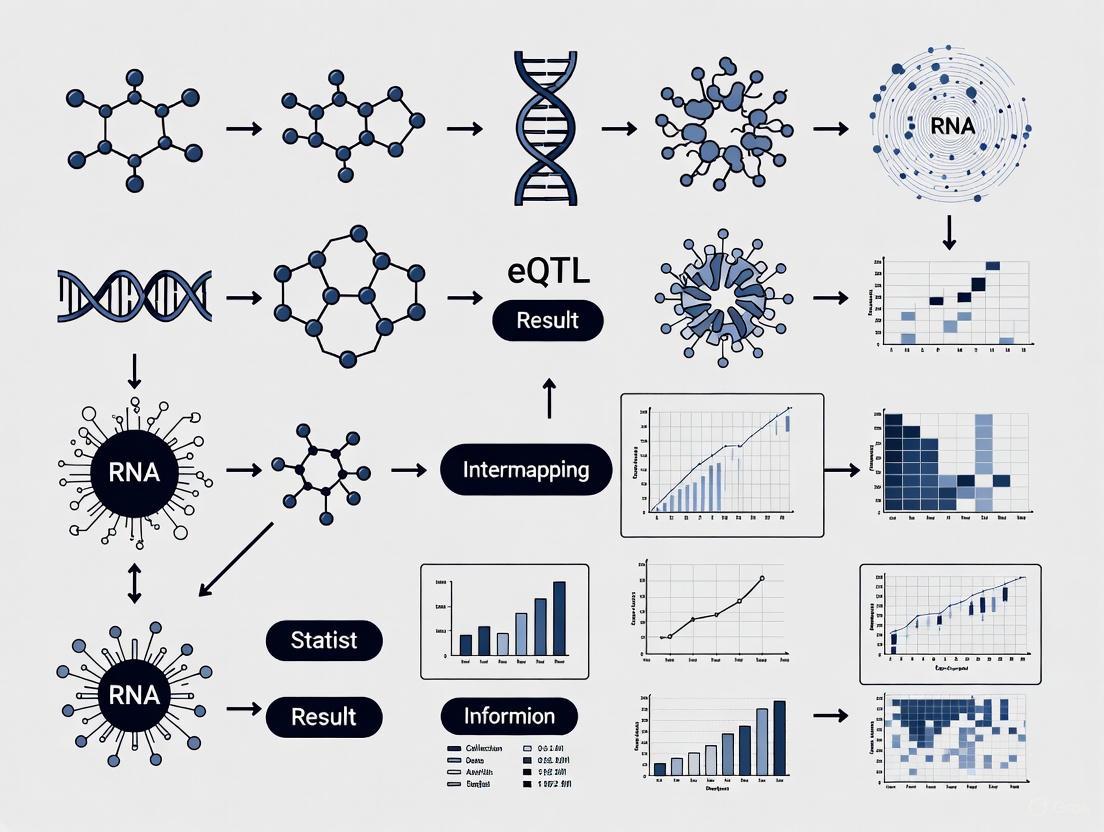
This comprehensive review explores expression quantitative trait loci (eQTL) mapping as a pivotal methodology bridging genetic variation and gene expression.
eQTL Mapping: From Foundational Concepts to Advanced Applications in Drug Discovery
Abstract
This comprehensive review explores expression quantitative trait loci (eQTL) mapping as a pivotal methodology bridging genetic variation and gene expression. We cover foundational principles of cis- and trans-eQTLs, detailed methodological workflows from genotype quality control to advanced regression models, and address key troubleshooting challenges including overdispersion in RNA-seq data and false discovery control. Highlighting cutting-edge advances in single-cell eQTL mapping and multi-omics integration, we demonstrate how refined eQTL effect sizes facilitate transcriptome-wide association studies and colocalization analyses to pinpoint causal genes for complex traits. This resource provides researchers and drug development professionals with both practical guidance and strategic insights into the evolving landscape of genetic regulation studies.
Understanding eQTLs: Bridging Genetic Variation and Gene Regulation
Expression Quantitative Trait Loci (eQTLs) are genomic loci that explain variation in expression levels of mRNAs or proteins [1]. In essence, they are genetic variants—most commonly single nucleotide polymorphisms (SNPs)—that are significantly associated with the quantitative trait of gene expression abundance [2] [1]. The fundamental principle underlying eQTL mapping is that gene expression itself can be treated as a quantitative trait that is genetically regulated, allowing researchers to identify specific genetic variants that influence how much of a particular gene's transcript is produced [2]. This approach has become a powerful tool for bridging the gap between genetic associations and functional biology, particularly for interpreting the mechanisms through which non-coding genetic variants identified in genome-wide association studies (GWAS) influence disease susceptibility and complex traits [2] [3].
The biological significance of eQTLs lies in their ability to elucidate the functional consequences of genetic variation. While GWAS have successfully identified thousands of genetic variants associated with various diseases and traits, the majority of these variants fall within non-coding regions of the genome, making their biological mechanisms difficult to interpret [2] [4]. eQTL studies address this challenge by connecting these non-coding variants to changes in gene expression, thereby providing crucial insights into the molecular pathways through which genetic variants exert their effects on phenotype [3]. This approach has proven particularly valuable for understanding complex polygenic diseases, where multiple genetic factors interact with environmental influences to determine disease risk and progression [2].
Classification and Characteristics of eQTLs
Fundamental Types of eQTLs
eQTLs are primarily categorized based on their genomic position relative to their target genes, which provides important clues about their potential mechanisms of action. The table below summarizes the key characteristics of these primary eQTL types.
Table 1: Classification of Expression Quantitative Trait Loci
| eQTL Type | Genomic Position | Mechanism of Action | Detection Power |
|---|---|---|---|
| cis-eQTL | Proximal to gene (typically within 1 Mb) [3] | Direct effects on regulatory elements (promoters, enhancers) [3] | Higher (due to strong effect sizes) |
| trans-eQTL | Distant from gene (different chromosomal regions) [3] | Indirect effects via upstream regulators (transcription factors, signaling pathways) [3] | Lower (due to weaker effect sizes) |
| cis-acting | Within or near the gene [1] | Affects expression through local regulatory variants | Moderate to high |
| trans-acting | Does not coincide with gene location [1] | Encodes trans-acting factors like transcription factors | Low to moderate |
Key Characteristics and Context Specificity
Beyond their genomic position, eQTLs exhibit several important characteristics that influence their biological interpretation. Effect size varies considerably among eQTLs, with cis-eQTLs typically showing stronger effects than trans-eQTLs due to their direct interaction with local regulatory elements [2]. The allele frequency of eQTL variants also impacts their detection, with rare variants often requiring larger sample sizes to achieve statistical significance [5]. Additionally, eQTL effects demonstrate remarkable context specificity, meaning their influence on gene expression can vary substantially across different tissues, cell types, developmental stages, and environmental conditions [2].
The GTEx study revealed that eQTL tissue detection follows a U-shaped curve, wherein eQTLs tend to be either highly specific to certain tissues or broadly shared across many tissues [2]. This pattern suggests distinct molecular mechanisms underlying tissue-shared versus tissue-specific regulatory effects. Beyond tissue specificity, researchers have identified dynamic eQTLs whose effects change in response to various stimuli, including immune challenges [2], drug treatments [2], cellular stress [2], and disease states [2]. This context dependency highlights the importance of studying eQTLs across diverse biological conditions to fully capture their regulatory potential.
Biological Significance and Mechanisms of Action
Molecular Mechanisms of Gene Regulation
eQTLs influence gene expression through diverse molecular mechanisms that operate at multiple levels of gene regulation. cis-eQTLs typically function by altering sequences in regulatory elements such as promoters, enhancers, silencers, or insulator elements [3]. These variants may create or disrupt transcription factor binding sites, modify chromatin accessibility, or affect DNA methylation patterns, ultimately leading to changes in transcriptional initiation or efficiency. For example, a cis-eQTL located in a promoter region might directly affect the binding affinity of RNA polymerase or specific transcription factors, thereby modulating the rate of transcription initiation for the nearby gene.
trans-eQTLs operate through more indirect mechanisms, often involving the regulation of upstream factors that control the expression of target genes [3]. These may include genes encoding transcription factors, RNA-binding proteins, chromatin-modifying enzymes, or components of signaling pathways [3]. When genetic variation affects the expression or function of these regulatory molecules, it can create cascading effects on multiple downstream target genes, potentially distributed across different chromosomes. The complex regulatory networks coordinated by trans-eQTLs enable systems-level coordination of gene expression programs in response to genetic variation [3].
Relationship to Complex Traits and Diseases
eQTLs play a crucial role in translating genetic associations into biological insights for complex diseases and traits. Studies have consistently shown that SNPs reproducibly associated with complex disorders through GWAS are significantly enriched for eQTLs [1], suggesting that many disease-associated variants exert their effects by modulating gene expression rather than altering protein structure. This enrichment provides a powerful approach for prioritizing candidate genes and understanding biological pathways involved in disease pathogenesis.
In the context of autoimmune diseases such as spondyloarthropathies, eQTL analyses have helped elucidate the functional mechanisms underlying genetic associations in key immune pathways [3]. For example, eQTLs affecting genes in the IL-23/IL-17 axis have been identified as important regulators of immune function in these conditions [3]. Similarly, eQTLs near the HLA-B27 locus have provided insights into how this well-established genetic risk factor contributes to disease development through effects on antigen presentation and processing [3]. By connecting non-coding GWAS variants to specific gene expression changes, eQTL mapping enables researchers to move beyond mere statistical associations toward mechanistic understanding of disease biology.
Experimental Design and Methodological Framework
Core Data Requirements and Quality Control
Conducting a robust eQTL analysis requires careful integration of two primary data types: genotype data and gene expression data. The table below outlines the essential components and quality control steps for each data type.
Table 2: Data Requirements and Quality Control for eQTL Studies
| Data Type | Sources & Tools | Quality Control Metrics | Common Software |
|---|---|---|---|
| Genotype Data | Whole-genome sequencing, SNP arrays with imputation [5] | Missingness, Hardy-Weinberg equilibrium, minor allele frequency, relatedness, population stratification [5] | PLINK, VCFtools, GATK, BCFtools [5] |
| Expression Data | RNA-sequencing, microarrays [5] [6] | Normalization, outlier removal, count distribution, batch effects [5] [6] | edgeR, DESeq2, TMM normalization [6] |
Quality control represents a critical foundation for reliable eQTL discovery. For genotype data, this involves both sample-level QC (assessing missingness, gender mismatches, relatedness) and variant-level QC (evaluating Hardy-Weinberg equilibrium, minor allele frequency, missingness) [5]. Population stratification must be carefully addressed through methods such as principal component analysis, as systematic differences in ancestry can create spurious associations if not properly accounted for in the statistical model [5]. For expression data, normalization approaches must be carefully selected based on the technology used, with methods such as TMM normalization commonly employed for RNA-seq data [6]. Additional covariates such as age, sex, batch effects, and cellular heterogeneity should be incorporated into the statistical model to reduce confounding and improve power.
Statistical Analysis Frameworks
The core statistical approach for eQTL mapping involves testing associations between each genetic variant and each gene's expression level, typically using linear regression models [5] [6]. However, specific implementations vary based on the nature of the data and research question. For cis-eQTL mapping, the analysis is usually restricted to variants within a predefined window around each gene (typically 1 megabase upstream and downstream of the transcription start site), reducing the multiple testing burden compared to genome-wide analysis [5]. For RNA-seq data, which produces count-based measurements that do not follow a normal distribution, researchers must choose between data transformation approaches (such as inverse normal transformation) [6] or methods specifically designed for count data, such as negative binomial models implemented in edgeR or DESeq2 [6].
The following diagram illustrates the complete eQTL analysis workflow from raw data to biological interpretation:
Figure 1: eQTL Analysis Workflow. This diagram outlines the key steps in expression quantitative trait loci analysis, from quality control of raw genotype and expression data through statistical testing to biological interpretation.
More advanced statistical frameworks continue to be developed to address specific challenges in eQTL mapping. For bulk RNA-seq data, where expression measurements represent averages across potentially heterogeneous cell populations, methods have been developed to estimate and account for cell-type composition [4]. For single-cell RNA-seq data, specialized approaches can leverage the increased resolution to identify cell-type-specific eQTLs, though these analyses must contend with technical artifacts and sparsity inherent to single-cell technologies [2] [4]. Integration methods that combine bulk and single-cell data, such as the IBSEP framework, show promise for enhancing cell-type-specific eQTL prioritization by leveraging the advantages of both data types [4].
Advanced Applications and Integrative Approaches
Integration with GWAS and Colocalization Analysis
One of the most powerful applications of eQTL data lies in its integration with GWAS results through colocalization analysis. This approach tests whether the same genetic variant is responsible for both the expression variation (eQTL signal) and the complex trait association (GWAS signal), providing evidence that the trait-associated variant may exert its effect by regulating gene expression [7]. Successful colocalization not only prioritizes candidate genes underlying GWAS loci but also suggests potential mechanisms of action. For example, colocalization analysis between vitamin D levels in the UK Biobank and molecular QTLs from the eQTL Catalogue revealed that most GWAS loci colocalized with both eQTLs and splicing QTLs, with visual inspection of QTL coverage plots helping to distinguish primary splicing effects from secondary consequences of large-effect expression changes [7].
The biological interpretation of colocalization results can be enhanced by examining the specific nature of the regulatory effect. For instance, eQTLs affecting alternative splicing (sQTLs) can be distinguished from those affecting overall expression levels through visualization of RNA-seq read coverage patterns [7]. These QTL coverage plots display normalized read coverage across gene regions stratified by genotype, allowing researchers to characterize whether a genetic association reflects changes in transcript initiation, splicing, or polyadenylation [7]. This level of mechanistic insight significantly advances our understanding of how non-coding genetic variants contribute to disease susceptibility.
Single-Cell and Context-Specific eQTLs
Recent technological advances have enabled the mapping of eQTLs at single-cell resolution (sc-eQTLs), revealing regulatory effects that are specific to particular cell types or states [2]. Traditional bulk RNA-seq approaches average expression across all cells in a sample, potentially obscuring regulatory effects that occur only in specific cell subpopulations. Single-cell RNA sequencing overcomes this limitation by enabling unbiased quantification of gene expression while preserving intercellular variability [2]. This approach has identified thousands of cell-type-specific and dynamic eQTLs in various tissues, including blood, brain, lung, and induced pluripotent stem cells [2].
Notable single-cell eQTL initiatives include the OneK1k project, which analyzed scRNA-seq data from 1.27 million peripheral blood mononuclear cells from 982 donors and identified numerous cell-type-specific eQTLs, 19% of which shared the same causal locus as a GWAS risk association [2]. Other studies have leveraged single-cell approaches to identify regulatory variants linked to COVID-19 severity [2] and metabolic dysfunction-associated steatotic liver disease [2]. These context-specific eQTLs provide unprecedented resolution into the cellular contexts where disease-associated genetic variants exert their functional effects, offering valuable insights for developing targeted therapeutic interventions.
Successful eQTL research relies on both high-quality experimental materials and sophisticated computational tools. The table below catalogues essential research reagents and resources that support various stages of eQTL studies.
Table 3: Essential Research Reagents and Resources for eQTL Studies
| Resource Category | Specific Examples | Primary Function | Access Information |
|---|---|---|---|
| Data Repositories | eQTL Catalogue [8], GTEx Portal [2], eQTLGen [2] | Publicly available summary statistics | https://www.ebi.ac.uk/eqtl/ [8], https://gtexportal.org/ [2] |
| Genotype Calling | GATK [5], BCFtools [5], DeepVariant [5] | Variant detection from sequencing data | Open source tools |
| Quality Control | PLINK [5], VCFtools [5] | Genotype and sample QC | Open source tools |
| eQTL Mapping | Matrix eQTL [1], edgeR [6] | Association testing | Open source packages |
| Functional Validation | CRISPR-based perturbations [3], ChIP-seq [3] | Mechanistic follow-up | Experimental methods |
The eQTL Catalogue deserves particular emphasis as a comprehensive resource that provides uniformly processed gene expression and splicing QTLs from all available public studies on humans [8] [7]. This resource focuses specifically on cis-eQTLs and splicing QTLs (sQTLs) and has proven particularly useful for statistical geneticists exploring GWAS results who wish to associate non-coding GWAS SNP associations with molecular mechanisms such as perturbed gene expression or splicing [8]. The Catalogue is continuously updated, with recent enhancements including the addition of X chromosome QTLs, improved quantification of splicing and promoter usage QTLs using LeafCutter, and fine-mapping-based filtering to identify independent genetic signals [7]. These developments significantly improve the utility of the resource for interpreting complex trait associations.
The field of eQTL research continues to evolve rapidly, with several emerging trends likely to shape future investigations. Multi-omic QTL mapping represents an important frontier, with researchers increasingly integrating eQTLs with other molecular QTL types such as protein QTLs (pQTLs), methylation QTLs (meQTLs), and chromatin QTLs (caQTLs) to build comprehensive models of how genetic variation influences molecular phenotypes across multiple regulatory layers [5]. Increased diversity in study populations represents another critical direction, as most eQTL studies to date have focused primarily on individuals of European ancestry, creating disparities in the applicability of findings across human populations [2]. Expanding eQTL mapping to underrepresented populations will improve the equity and generalizability of genetic insights.
Therapeutic applications of eQTL findings continue to grow, with drug target prioritization emerging as a particularly promising area. Notably, genes harboring paternal eQTLs show significant enrichment for drug targets [9], suggesting that parent-of-origin effects may have important implications for pharmaceutical development. Additionally, context-specific eQTLs identified in disease-relevant tissues and conditions offer opportunities for developing targeted interventions that account for both genetic background and environmental context [2]. As eQTL resources expand and methodologies refine, the integration of genetic regulatory information into therapeutic development pipelines will likely become increasingly routine.
In conclusion, eQTL mapping has transformed our understanding of the functional consequences of genetic variation and continues to provide crucial insights into the molecular mechanisms underlying complex traits and diseases. From fundamental concepts to advanced applications, the study of expression quantitative trait loci represents an essential framework for bridging the gap between statistical genetic associations and biological mechanism. As technologies advance and datasets grow, eQTL approaches will undoubtedly remain central to efforts to decipher the complex relationship between genotype and phenotype in human health and disease.
Expression quantitative trait loci (eQTL) mapping has become an indispensable tool for interpreting the regulatory mechanisms of disease-associated genetic variants identified through genome-wide association studies (GWAS) [10] [11]. eQTLs are genomic loci where genetic variation, typically single nucleotide polymorphisms (SNPs), is associated with changes in gene expression levels [12]. These regulatory associations are broadly categorized into two classes based on the genomic proximity between the variant and the target gene: cis-eQTLs and trans-eQTLs [12]. Understanding the distinct characteristics, detection methodologies, and biological mechanisms of these two eQTL classes is fundamental to elucidating how genetic variation shapes transcriptional networks and complex disease phenotypes [13].
cis-eQTLs represent "local" regulation, where the genetic variant is located near the gene it influences, typically within a 1 megabase (Mb) window from the transcription start site [10] [12]. In contrast, trans-eQTLs represent "distant" regulation, where the variant is located far from the target gene (>5 Mb) or on a different chromosome [10] [12]. This fundamental distinction in genomic proximity underlies critical differences in their effect sizes, detection power, replication rates, and underlying biological mechanisms, which will be explored in detail throughout this application note.
Fundamental Distinctions Between cis- and trans-eQTLs
Definition and Genomic Proximity
The primary distinction between cis- and trans-eQTLs lies in their spatial relationship to their target genes. The following table summarizes their core defining characteristics:
Table 1: Core Characteristics of cis- vs. trans-eQTLs
| Feature | cis-eQTL | trans-eQTL |
|---|---|---|
| Genomic Distance | Within 1 Mb of the target gene [12] | >5 Mb from the target gene or on a different chromosome [10] [12] |
| Presumed Mechanism | Direct, local effects on promoter/enhancer function [10] | Indirect, often mediated by intermediary molecules like transcription factors [13] [14] |
| Typical Effect Size | Stronger [10] [15] | Weaker [10] [15] |
| Detection Power | Requires smaller sample sizes [10] | Requires very large sample sizes (e.g., N > 30,000) [10] |
| Tissue Specificity | Often conserved across tissues [10] [12] | Frequently tissue- or cell-type-specific [12] [16] |
Detection Rates and Sample Size Requirements
Large-scale consortium efforts have quantified the striking differences in detection rates between cis- and trans-eQTLs. In a meta-analysis of 31,684 individuals through the eQTLGen Consortium, cis-eQTLs were detected for 88% (16,987) of tested genes, demonstrating their pervasive nature [10]. In contrast, distal trans-eQTLs were identified for only 37% of the 10,317 trait-associated variants tested, affecting 6,298 genes [10]. This disparity stems primarily from the typically smaller effect sizes of trans-eQTLs, necessitating substantially larger sample sizes for their detection [10] [14]. The largest previous trans-eQTL meta-analysis in blood (N=5,311) identified trans-eQTLs for only 8% of tested SNPs, highlighting how increased sample size dramatically improves detection power for these subtle effects [10].
Diagram 1: Detection Power for eQTL Types
Underlying Regulatory Mechanisms
cis-eQTL Mechanisms
cis-eQTLs are thought to exert their effects through direct, local mechanisms by altering DNA sequence elements that directly influence gene transcription. They typically involve polymorphisms within regulatory regions such as promoters, enhancers, or other cis-regulatory elements that affect transcription factor binding, chromatin accessibility, or epigenetic modifications [10]. Evidence from capture Hi-C data indicates that lead cis-eQTL SNPs located more than 100 kb from the transcription start site show a significant 2.0-fold enrichment in overlapping with physical chromatin contacts, suggesting that long-range cis-eQTLs can function through direct chromosomal looping interactions that bring distal regulatory elements into proximity with their target genes [10].
trans-eQTL Mechanisms
trans-eQTLs operate through more complex, indirect mechanisms. A predominant mechanism identified through mediation analysis is cis-mediation, where a genetic variant first regulates the expression of a local gene (a cis-eQTL), and the product of that gene (e.g., a transcription factor or RNA-binding protein) subsequently regulates the expression of a distal target gene (the trans-eGene) [13] [14]. For example, in an analysis of dorsolateral prefrontal cortex tissue, over 60% of trans-eQTL variants showed evidence that a cis-eGene acted as a mediator for the trans-eQTL's effect on the trans-eGene [13]. This creates a regulatory cascade where the trans-effect is mechanistically explained by an intermediate cis-effect.
Diagram 2: cis-Mediation in trans-eQTL Mechanism
These mediated trans-effects often form trans-eQTL hotspots, where a single genomic region regulates the expression of multiple distant genes [13] [15]. These hotspots frequently involve key regulatory genes such as transcription factors, and their effects can be highly specific to environmental contexts, such as exposure to toxins like lead [15].
Experimental Protocols for eQTL Mapping
Bulk Tissue eQTL Mapping Protocol
The following protocol outlines a standard pipeline for genome-wide cis- and trans-eQTL mapping from bulk tissue RNA-seq data, based on methodologies from large consortia like eQTLGen and PsychENCODE [10] [13].
Table 2: Key Research Reagent Solutions for eQTL Mapping
| Reagent/Resource | Function | Example Specifications |
|---|---|---|
| Genotype Data | Provides genetic variant information for association testing | Whole-genome sequencing or SNP array data, imputed to reference panels (e.g., Haplotype Reference Consortium) [13] |
| RNA-seq Data | Quantifies genome-wide gene expression levels | Bulk tissue: 30-50 million reads per sample; Single-cell: 50,000 reads per cell [13] [16] |
| Covariates | Controls for technical and biological confounding | Genotype PCs, sex, study batch, PEER factors [13] |
| QTL Mapping Software | Performs association testing between genotypes and expression | QTLtools [13], Matrix eQTL, FastQTL |
Sample Preparation and Sequencing
- Genotype Data Processing: Process genomic DNA using standard whole-genome sequencing or SNP array protocols. Impute genotypes to a reference panel (e.g., Haplotype Reference Consortium) using the Michigan Imputation Server [13]. Apply standard quality control filters: sample call rate >98%, SNP call rate >95%, Hardy-Weinberg equilibrium P > 1×10⁻⁶, and minor allele frequency >1%.
- RNA Sequencing: Extract total RNA from target tissue (e.g., whole blood, prefrontal cortex). Prepare stranded RNA-seq libraries using poly-A selection. Sequence to a minimum depth of 30 million reads per sample on an Illumina platform. Process raw sequencing data through a standardized pipeline for adapter trimming, quality control, and alignment to a reference genome (e.g., STAR aligner).
Expression Quantification and Normalization
- Gene Expression Quantification: Generate raw count matrices from aligned BAM files using featureCounts or similar tools. Filter out lowly expressed genes not detected in at least 10% of samples [13].
- Expression Normalization: Normalize raw counts using a two-step approach. First, apply quantile normalization to account for technical variation. Follow with inverse quantile normalization to map expression values to a standard normal distribution, effectively removing outliers and ensuring expression values are normally distributed for subsequent linear modeling [13].
Covariate Selection and Correction
- Covariate Selection: Calculate potential covariates including:
- Genotype principal components (PCs) to account for population stratification (typically 3-5 PCs) [13].
- Probabilistic estimation of expression residuals (PEER) factors to capture hidden confounders (e.g., 50 PEER factors for N~1,400 samples) [13].
- Technical factors (sequencing batch, RIN) and biological factors (sex, age).
- Covariate Regression: Regress out the selected covariates from the normalized expression matrix to generate residual expression values for QTL testing.
QTL Association Testing
- cis-eQTL Mapping: For each gene, test all SNPs within a 1 Mb window of the gene's transcription start site. Use linear regression with an additive genetic model. In QTLtools, this is implemented with the
ciscommand [13]. - trans-eQTL Mapping: For each gene, test all SNPs located >5 Mb from the gene or on different chromosomes. Due to the massive multiple testing burden (trillions of tests), prioritize testing for trans-eQTLs by focusing on previously identified GWAS hits or using conditional methods [10].
Multiple Testing Correction
- Permutation Testing: Perform 1,000 permutations per gene by shuffering expression labels to establish null distributions of association statistics [10].
- FDR Control: Apply Benjamini-Hochberg False Discovery Rate (FDR) correction to identify significant eQTLs at a desired threshold (e.g., FDR < 5% for cis-eQTLs, FDR < 25% for trans-eQTLs given lower power) [10] [13].
Single-Cell eQTL Mapping Protocol
Single-cell RNA sequencing (scRNA-seq) enables the identification of cell-type-specific eQTLs masked in bulk tissue analyses [16]. The following protocol adapts the bulk approach for scRNA-seq data.
Single-Cell Data Generation and Processing
- Cell Processing and Multiplexing: Use a pooled multiplexing strategy to profile cells from hundreds of individuals simultaneously [16]. For gastric tissue, 399,683 cells from 203 individuals represents an appropriate scale [16].
- Cell-type Identification: Perform clustering based on gene expression patterns to identify distinct cell types. Use canonical markers to annotate cell populations (e.g., parietal cells express ATP4A) [16].
Expression Matrix Creation
- Pseudobulk Creation: For each individual and each cell type, aggregate raw counts across all cells of that type to create a pseudobulk expression profile. This approach increases power by reducing sparsity and enabling use of bulk QTL methods [17].
- Normalization: Normalize pseudobulk counts using the same two-step quantile normalization approach as for bulk data.
Cell-type-specific QTL Mapping
- Stratified Analysis: Run independent cis-eQTL mappings for each cell type using the pseudobulk expression matrices and standard cis-eQTL pipeline.
- Meta-Analysis: For increased power, perform a weighted meta-analysis across multiple single-cell datasets. Optimal weights can be based on the average number of molecules detected per cell, which outperforms simple sample-size weighting [17].
Diagram 3: Single-Cell eQTL Workflow
Applications in Disease Gene Prioritization
eQTL data, particularly trans-eQTLs, provides a powerful approach for prioritizing putative causal genes at disease-associated loci identified by GWAS. The following table demonstrates how different eQTL integration strategies contribute to gene discovery for complex traits:
Table 3: eQTL Applications in Disease Gene Discovery
| Application | Approach | Findings |
|---|---|---|
| Polygenic Score Correlation | Correlate polygenic scores for 1,263 phenotypes with gene expression (eQTS analysis) | Expression of 13% (2,568) of genes correlated with polygenic scores, pinpointing potential driver genes for complex traits [10] |
| trans-eQTL Colocalization | Colocalization between trans-eQTLs and schizophrenia GWAS loci | Linked an additional 23 GWAS loci and 90 risk genes beyond what was possible using only cis-eQTLs [13] |
| Cell-type-specific TWAS | Integrate scRNA-seq eQTLs with GWAS using transcriptome-wide association study (TWAS) | Identified 15 gastric cancer risk genes with cell-type-specific regulation, including MUC1 upregulation in parietal cells associated with decreased cancer risk [16] |
| Network-based Mapping | Trans-PCO method maps trans effects of variants on gene networks | Identified 14,985 trans-eSNP-module pairs in blood, revealing how trait-associated variants affect biological pathways [18] |
cis- and trans-eQTLs represent distinct paradigms of gene regulation with profound implications for understanding the functional consequences of genetic variation. cis-eQTLs act locally with stronger effects and are more readily detectable, providing a direct link between genetic variants and proximal gene expression. In contrast, trans-eQTLs operate through complex, often mediated mechanisms with weaker effects, requiring massive sample sizes for detection but revealing extensive regulatory networks that connect genetic variation to systemic transcriptional changes. The integration of both cis- and trans-eQTL information, particularly with emerging single-cell technologies and advanced network analysis methods, provides a more complete picture of the regulatory architecture of complex traits and diseases. These approaches are illuminating the path from genetic variation to phenotype, offering new opportunities for understanding disease mechanisms and identifying therapeutic targets.
eQTLs as Functional Interpreters of GWAS Findings in Disease Loci
Genome-wide association studies (GWAS) have successfully identified thousands of genetic variants associated with complex diseases. However, a significant challenge remains in moving from these statistical associations to biological understanding, as the majority of disease-associated variants reside in non-coding regions of the genome [19] [20]. Expression quantitative trait loci (eQTL) mapping has emerged as a powerful approach to address this interpretation gap by identifying genetic variants that influence gene expression levels. These eQTLs serve as crucial functional interpreters that can mechanistically link non-coding GWAS variants to their potential target genes and regulatory pathways [19] [21]. This application note provides a comprehensive framework for integrating eQTL data with GWAS findings to elucidate the functional consequences of disease-associated genetic variants, with detailed protocols for analysis, visualization, and interpretation suited for researchers and drug development professionals.
Background and Significance
The Interpretation Gap in GWAS Findings
Despite the success of GWAS in identifying disease-associated loci, approximately 90% of these variants fall within non-coding regions, making their functional characterization challenging [21]. These non-coding variants likely influence disease susceptibility through the regulation of gene expression rather than through direct protein alteration. This creates a critical interpretation gap where statistical associations are identified without clear mechanistic understanding of how these variants contribute to disease pathogenesis [19] [20].
eQTLs as Functional Bridges
Expression quantitative trait loci (eQTLs) represent genomic regions that regulate gene expression levels either in cis (proximal to the gene) or in trans (distal to the gene, often on different chromosomes) [19]. Cis-eQTLs typically influence gene expression by directly affecting regulatory elements such as promoters and enhancers located near the gene, while trans-eQTLs exert their effects indirectly by modulating upstream regulators including transcription factors, signaling pathways, or chromatin-modifying proteins [19]. The fundamental premise of using eQTLs to interpret GWAS findings is that if a GWAS variant associated with a disease also influences gene expression levels, it provides compelling evidence for a mechanistic link between that gene and the disease pathology [20].
Table 1: Classification of eQTL Types and Their Characteristics
| eQTL Type | Genomic Position | Mechanism of Action | Detection Power | Interpretive Value |
|---|---|---|---|---|
| cis-eQTL | Proximal to gene (<1Mb) | Direct effects on promoters/enhancers | High | Straightforward gene assignment |
| trans-eQTL | Distant from gene (any chromosome) | Modulation of upstream regulators | Lower (requires larger sample sizes) | Reveals regulatory networks |
| Cell-type-specific eQTL | Any location | Context-dependent regulatory effects | Variable (depends on cell type availability) | High biological specificity |
Advancements in eQTL Methodologies
Recent methodological advances have significantly enhanced the resolution and context specificity of eQTL mapping. The emergence of single-cell eQTL (sc-eQTL) mapping has enabled the identification of cell-type-specific regulatory effects that were previously obscured in bulk tissue analyses [21] [17]. Additionally, novel computational approaches such as the JOBS (Joint model of bulk eQTLs as a weighted sum of sc-eQTLs) method have improved detection power by integrating bulk and single-cell eQTL data [21]. These advancements are particularly relevant for complex diseases where cellular heterogeneity may mask important biological signals.
Experimental Protocols and Workflows
Fundamental eQTL Mapping Protocol
The core protocol for eQTL mapping involves systematic analysis of correlations between genetic variants and gene expression levels across individuals. The following detailed methodology can be applied across various study designs and tissue types:
Data Collection and Quality Control
- Genotype Data: Perform standard GWAS quality control including filtering for call rate (>95%), Hardy-Weinberg equilibrium (p > 1×10⁻⁶), and minor allele frequency (>1%). Impute missing genotypes using reference panels (e.g., 1000 Genomes) [22].
- Expression Data: Process RNA-seq data with standard pipelines. Filter for genes with sufficient expression (e.g., >0.1 TPM in >20% of samples). Normalize for technical covariates and transform as needed [23] [22].
- Covariate Data: Collect and process potential confounding variables including age, sex, batch effects, and population structure (genetic principal components).
Cis-eQTL Mapping Analysis
- Define a cis-window for each gene (typically ±1 Mb from the transcription start site).
- For each gene-SNP pair within cis-windows, perform association testing using linear regression:
Expression ~ Genotype + Technical Covariates + Genetic Principal Components[22] [20]. - Apply multiple testing correction using Bonferroni correction or false discovery rate (FDR) control. A standard threshold is FDR < 0.05 or 0.10 [17].
- For enhanced power in small sample sizes, utilize permutation testing (1,000-3,000 permutations) to establish empirical significance thresholds [22].
Validation and Replication
- Split data into discovery and replication sets, or replicate findings in independent cohorts.
- Perform sensitivity analyses to assess robustness to covariate adjustment and normalization methods.
Colocalization Analysis Protocol
Colocalization analysis determines whether the same underlying genetic variant is responsible for both GWAS and eQTL signals, providing evidence for a causal relationship:
Data Preparation
- Extract GWAS summary statistics for the region of interest, including p-values, effect sizes, and standard errors for all variants.
- Obtain eQTL summary statistics from relevant tissues or cell types, formatted with consistent variant identifiers [20].
- Calculate or obtain linkage disequilibrium (LD) matrices for the population of interest.
Colocalization Testing
- Implement statistical colocalization tests (e.g., COLOC, eCAVIAR) to assess whether one shared variant explains both signals.
- Set prior probabilities for shared associations (typical defaults: p1 = 1×10⁻⁴, p2 = 1×10⁻⁴, p12 = 1×10⁻⁵).
- Compute posterior probabilities for five hypotheses: (1) no association with either trait, (2) association with GWAS only, (3) association with eQTL only, (4) association with both, different variants, (5) association with both, shared variant.
Interpretation and Validation
- Consider colocalization supported when posterior probability for shared variant (H4) > 0.70-0.80.
- Perform sensitivity analyses to assess robustness to prior specifications.
- Visually inspect regional association plots to confirm colocalization [20].
Table 2: Key Software Tools for eQTL and Colocalization Analysis
| Tool Name | Primary Function | Input Requirements | Output | Access |
|---|---|---|---|---|
| eQTpLot | Visualization of eQTL-GWAS colocalization | GWAS and eQTL summary statistics | Integrated plots showing colocalization | https://github.com/RitchieLab/eQTpLot [20] |
| JOBS | Joint analysis of bulk and single-cell eQTLs | Bulk and single-cell eQTL data | Enhanced power eQTL detection | Custom implementation [21] |
| METAL | Weighted meta-analysis of eQTL studies | Summary statistics from multiple studies | Combined effect estimates | https://github.com/statgen/METAL [17] |
| COLOC | Bayesian colocalization analysis | GWAS and eQTL summary statistics | Posterior probabilities for colocalization | R package [20] |
Single-Cell eQTL Meta-Analysis Protocol
Single-cell RNA sequencing enables eQTL mapping at cellular resolution but presents challenges for meta-analysis due to technical variability and smaller sample sizes. The following protocol outlines best practices for single-cell eQTL meta-analysis based on recent methodological developments:
Dataset Processing and Harmonization
- Process each single-cell dataset individually using standardized pipelines (e.g., CellRanger, Seurat).
- Generate pseudobulk expression profiles by aggregating counts per donor per cell type.
- Perform cis-eQTL mapping separately for each dataset using pseudobulk profiles [17].
Weighted Meta-Analysis Implementation
- Extract summary statistics (effect sizes, standard errors, p-values) from each dataset.
- Apply weighted meta-analysis using optimal weights. Recent evidence suggests:
- Combine statistics using inverse-variance weighted fixed-effects models:
β_meta = Σ(w_i * β_i) / Σ(w_i)wherew_i = 1 / (SE_i)².
Significance Evaluation and Multiple Testing Correction
- Perform 1,000 gene-level permutations to establish empirical null distributions.
- Apply Benjamini-Hochberg FDR correction to the top eQTL per gene.
- Consider associations significant at FDR < 10% [17].
Data Presentation and Visualization
Structured Data Presentation
Effective presentation of eQTL and GWAS integration results requires clear organization of complex multidimensional data. The following tables provide standardized formats for reporting key findings:
Table 3: Summary of Significant Colocalization Results Between GWAS and eQTL Signals
| GWAS Trait | Genomic Locus | Candidate Gene | Lead SNP | GWAS p-value | eQTL p-value | Colocalization Posterior Probability | Tissue/Cell Type | Potential Mechanism |
|---|---|---|---|---|---|---|---|---|
| Ankylosing Spondylitis | 1p31.3 | IL23R | rs11209026 | 3.2×10⁻¹² | 2.1×10⁻¹⁰ | 0.92 | CD4+ T cells | IL-23/IL-17 axis dysregulation [19] |
| Inflammatory Bowel Disease | 2q37.1 | ERAP1 | rs27434 | 6.8×10⁻⁰⁹ | 4.3×10⁻⁰⁸ | 0.87 | Monocytes | Antigen processing and presentation [19] |
| Rheumatoid Arthritis | 12q15 | TYK2 | rs34536443 | 2.4×10⁻¹⁰ | 7.9×10⁻⁰⁹ | 0.79 | Multiple immune cells | Cytokine signaling threshold modulation [19] |
Table 4: Comparison of eQTL Meta-Analysis Weighting Strategies
| Weighting Strategy | Use Case | Mathematical Formulation | *Relative Performance | Implementation Considerations |
|---|---|---|---|---|
| Sample Size | Homogeneous datasets with similar quality | wi = √Ni | Baseline | Simplest to implement [17] |
| Standard Error | Datasets with variable precision | wi = 1 / (SEi)² | Best for multiple datasets (+50% eGenes) | Requires sharing standard errors [17] |
| Counts Per Cell | Single-cell pairwise meta-analysis | w_i = mean(UMIs/cell) | Excellent for pairwise analyses (+36% eGenes) | Captures technical quality [17] |
| Average Number of Cells | Single-cell studies with variable coverage | w_i = mean(cells/donor) | Excellent for pairwise analyses | Reflects cellular resolution [17] |
*Performance metrics relative to sample size weighting based on benchmark studies [17]
Advanced Visualization Techniques
Visualization is critical for interpreting the complex relationships between GWAS and eQTL signals. The eQTpLot R package provides specialized visualization capabilities [20]:
Colocalization Visualization
- Generate scatter plots showing -log10(p-values) for GWAS (y-axis) against eQTL (x-axis) associations.
- Color points by linkage disequilibrium with the lead variant to highlight regional patterns.
- Overlay smoothed curves indicating the strength of association across the genomic region.
Direction of Effect Visualization
- Implement the "congruence" parameter to divide variants into:
- Congruous: Same direction of effect on gene expression and GWAS trait.
- Incongruous: Opposite directions of effect.
- Use contrasting colors (e.g., blue vs. red) to visually distinguish these categories [20].
- Implement the "congruence" parameter to divide variants into:
Multi-Tissue Visualization
- For pan-tissue or multi-tissue analyses, implement the "CollapseMethod" parameter with options:
- "min": Selects the smallest eQTL p-value across tissues.
- "mean"/"median": Averages p-values and normalized effect sizes (NES) across tissues.
- "meta": Performs sample-size-weighted meta-analysis across tissues [20].
- For pan-tissue or multi-tissue analyses, implement the "CollapseMethod" parameter with options:
The Scientist's Toolkit
Table 5: Key Research Reagent Solutions for eQTL Studies
| Reagent/Resource | Category | Specifications | Application | Example Sources |
|---|---|---|---|---|
| Population scRNA-seq Datasets | Data Resource | 10X Genomics V2/V3, Smart-seq2 | Cell-type-specific eQTL mapping | OneK1K, eQTLGen [21] [17] |
| Bulk Tissue eQTL References | Data Resource | Large sample sizes (>30,000) | Benchmarking and power assessment | eQTLGen, GTEx [20] [17] |
| eQTL Analysis Software | Computational Tool | R/Python implementations | Statistical analysis and visualization | eQTpLot, mashr, fastSTRUCTURE [20] [24] |
| Quality Control Pipelines | Computational Tool | Standardized processing | Data harmonization and normalization | CellRanger, Seurat, STAR [17] |
| GWAS Summary Statistics | Data Resource | Disease-specific associations | Colocalization analysis | GWAS Catalog, disease consortia [19] [20] |
Applications in Drug Discovery and Development
The integration of eQTL data with GWAS findings has profound implications for drug discovery and development, enabling:
Target Prioritization and Validation
- eQTL colocalization provides orthogonal evidence for causal gene identification, enhancing confidence in potential drug targets.
- Direction of effect analysis helps predict whether therapeutic intervention should increase or decrease target activity [20].
Drug Repurposing Opportunities
- Integration of eQTL data with knowledge bases can identify existing drugs that modulate expression of candidate genes.
- The JOBS framework has demonstrated successful identification of novel drug classes for autoimmune diseases through this approach [21].
Clinical Trial Enrichment
eQTL analysis has transformed from a specialized genetic approach to an essential tool for functional interpretation of GWAS findings. The protocols and applications outlined in this document provide researchers with a comprehensive framework for integrating eQTL data into their disease genomics workflow. As single-cell technologies and advanced meta-analysis methods continue to evolve, the resolution and utility of eQTL mapping for drug discovery will further increase, solidifying its role as a cornerstone of functional genomics in the coming years.
Expression quantitative trait loci (eQTL) mapping has revolutionized our understanding of how genetic variation influences gene expression, thereby bridging the gap between genotype and phenotype. An eQTL is a genomic locus that explains variation in the expression levels of mRNAs [25]. eQTLs are categorized based on their genomic position relative to their target gene: cis-eQTLs are located proximal to the gene they regulate, typically affecting regulatory elements such as promoters and enhancers, while trans-eQTLs exert their effects distantly, often through intermediate regulators like transcription factors or signaling pathways [19] [2]. The identification of eQTLs provides a powerful biological mechanism to interpret findings from genome-wide association studies (GWAS), particularly for variants in non-coding regions with previously unknown functions [19] [2].
The functional interpretation of most statistically associated variants from GWAS has been a significant challenge. eQTL analysis addresses this by directly linking genetic variants to changes in gene expression, thereby elucidating the molecular genetic pathways that contribute to complex traits [2]. This approach is particularly valuable for understanding the genetic architecture of immune-mediated diseases, where context-specific gene regulation plays a crucial role in disease pathogenesis.
The IL-23/IL-17 Axis: A Prime Example from eQTL Research
The IL-23/IL-17 axis represents a pivotal pro-inflammatory signaling pathway that plays a central role in host defense, autoimmune diseases, and chronic inflammation [26] [27] [28]. This axis centers on the function of T helper 17 (Th17) cells, a distinct subset of CD4+ T cells. IL-23, a heterodimeric cytokine composed of p40 and p19 subunits, is produced primarily by dendritic cells and macrophages [19] [26]. It promotes the differentiation, expansion, and maintenance of Th17 cells, which subsequently produce effector cytokines including IL-17A, IL-17F, TNF-α, and IL-6 [26] [27].
IL-17A (commonly referred to as IL-17) is the most prominent family member and functions as a highly versatile proinflammatory cytokine. The IL-17 family comprises six structurally related cytokines (IL-17A through IL-17F) that signal through a five-member receptor family (IL-17RA through IL-17RE) [28]. IL-17A and IL-17F activate downstream signaling primarily through IL-17RA and IL-17RC heterodimers, initiating a cascade that leads to the production of antimicrobial peptides, chemokines, and other inflammatory mediators [27] [28].
Table 1: Key Cytokines and Receptors in the IL-23/IL-17 Axis
| Component | Type | Function in the Pathway |
|---|---|---|
| IL-23 | Heterodimeric cytokine (p40/p19) | Drives Th17 cell differentiation, expansion, and maintenance [26] |
| IL-17A | Effector cytokine | Induces inflammatory mediators; stimulates keratinocyte proliferation [27] |
| IL-17F | Effector cytokine | Shares functions with IL-17A but with reduced potency [28] |
| IL-17RA | Receptor subunit | Common signaling subunit for multiple IL-17 family cytokines [28] |
| IL-17RC | Receptor subunit | Forms heterodimer with IL-17RA for IL-17A/F signaling [28] |
| IL-23R | Receptor subunit | Confers specificity for IL-23 binding and signaling [19] |
Genetic Regulation of the Axis by eQTLs
eQTL studies have been instrumental in elucidating how genetic variation influences the IL-23/IL-17 axis and contributes to inflammatory disease susceptibility. Several key genes in this pathway are regulated by identified eQTLs:
IL23R eQTLs: Multiple studies have identified cis-eQTLs that modulate IL23R expression, particularly in immune cell subsets such as CD4+ T cells. These regulatory variants contribute to dysregulated IL-23-mediated signaling in genetically predisposed individuals [19]. The identification of these eQTLs provides a biological mechanism for the strong genetic association between IL23R polymorphisms and inflammatory diseases.
TYK2 eQTLs: Genetic variants in TYK2, which encodes a tyrosine kinase essential for IL-23 signal transduction, have been shown to influence cytokine signaling thresholds. This ultimately impacts Th17 cell differentiation and effector function, demonstrating how eQTLs can fine-tune signaling pathways [19].
Cell-Type Specificity: A crucial finding from eQTL research is that these regulatory effects often show significant cell-type specificity. For instance, cis-eQTLs for IL23R and TYK2 are active in CD4+ T cells but may be absent in other cell types, highlighting the importance of examining eQTLs in relevant cellular contexts for understanding disease mechanisms [19].
The following diagram illustrates the core IL-23/IL-17 signaling pathway and its key genetic regulators identified through eQTL studies:
Methodological Framework for eQTL Mapping
Core Experimental Protocols
The standard workflow for eQTL mapping involves integrating genotype data with gene expression data from the same individuals to identify statistically significant associations. The following protocol outlines the key steps:
1. Study Design and Sample Collection
- Recruit a sufficient number of participants (typically hundreds to thousands) to achieve adequate statistical power [2] [17].
- Collect appropriate tissue or cell samples relevant to the biological question. For immune-mediated diseases like those involving the IL-23/IL-17 axis, peripheral blood mononuclear cells (PBMCs) or specific immune cell subsets are commonly used [19] [17].
- For cell-type-specific eQTLs, consider single-cell RNA sequencing or sorted cell populations to avoid confounding effects from cellular heterogeneity [2].
2. Genotyping and Quality Control
- Perform genome-wide genotyping using microarray technologies or whole-genome sequencing.
- Apply standard quality control filters: exclude samples with high missing genotype rates, remove SNPs with low minor allele frequency (typically <5%), and test for deviations from Hardy-Weinberg equilibrium [22] [25].
3. Gene Expression Profiling
- Extract total RNA from samples using standardized protocols.
- Perform RNA sequencing using platforms such as Illumina NovaSeq, generating sufficient sequencing depth (typically 50-100 million reads per sample for bulk RNA-seq) [25].
- Align reads to a reference genome (e.g., GRCh38) using aligners like STAR.
- Quantify gene-level counts using tools such as featureCounts [25].
- Filter lowly expressed genes (e.g., total read count <200 or zero counts in many samples).
- Normalize expression data using methods such as Variance Stabilizing Transformation (VST) in DESeq2 or the TMM method [25].
4. Covariate Adjustment
- Account for technical covariates (e.g., batch effects, sequencing platform) and biological covariates (e.g., age, sex) that might confound eQTL associations.
- Use principal component analysis (PCA) or PEER factors to account for hidden confounders [29] [17].
5. Statistical Association Testing
- For cis-eQTL mapping, typically test SNPs within a 1 Mb window around the transcription start site of each gene.
- Perform regression analysis with genotype as the predictor and normalized expression as the response variable.
- For bulk RNA-seq data, linear regression or non-parametric methods can be used. For single-cell data, specialized methods accounting for zero-inflation are recommended [2] [17].
- Correct for multiple testing using False Discovery Rate (FDR) methods, with significance typically defined as FDR <5% [17] [25].
6. Validation and Functional Characterization
- Replicate significant eQTLs in independent cohorts.
- Perform colocalization analysis to determine if GWAS and eQTL signals share the same causal variant [19] [29].
- Use functional assays such as CRISPR-based perturbations or chromatin immunoprecipitation sequencing (ChIP-seq) to validate regulatory mechanisms [19].
Advanced Methodological Considerations
Recent methodological advances have enhanced the resolution and accuracy of eQTL mapping:
Single-Cell eQTL Mapping: The advent of single-cell RNA sequencing (scRNA-seq) has enabled the identification of cell-type-specific eQTLs that were previously masked in bulk tissue analyses [2]. Specialized computational approaches are required to account for the unique characteristics of scRNA-seq data, including sparsity (dropouts), technical noise, and complex count distributions [2] [17].
Meta-Analysis Approaches: For increased statistical power, researchers often combine eQTL summary statistics from multiple studies through meta-analysis. Weighted meta-analysis (WMA) approaches optimally integrate results across datasets, with weights based on sample size, standard error, or single-cell-specific parameters such as average number of cells per donor or molecules detected per cell [17].
Multi-omics Integration: Integrating eQTL data with other molecular QTLs, such as methylation QTLs (mQTLs) and protein QTLs (pQTLs), through methods like summary-data-based Mendelian randomization (SMR) provides a more comprehensive understanding of causal pathways from genetic variation to disease [29].
The following workflow diagram illustrates the key steps in a modern eQTL mapping study:
Essential Research Reagents and Tools
Table 2: Key Research Reagent Solutions for eQTL Studies
| Reagent/Platform | Specific Function | Application in eQTL Research |
|---|---|---|
| Illumina NovaSeq 6000 | High-throughput sequencing | RNA sequencing for gene expression profiling [25] |
| Illumina TruSeq RNA Sample Prep Kit | cDNA library preparation | Construction of sequencing libraries from RNA [25] |
| QIAzol Lysis Reagent | RNA isolation | Total RNA extraction from tissue samples [25] |
| 10X Genomics Chromium | Single-cell partitioning | Single-cell RNA sequencing for cell-type-specific eQTLs [17] |
| Smart-seq2 | Full-length scRNA-seq | Alternative platform for single-cell eQTL studies [17] |
| SOMAscan Platform | Proteomic profiling | Protein quantification for pQTL studies [29] |
| Olink Explore Platform | Multiplex protein detection | Validation of protein-level associations [29] |
Concluding Perspectives
eQTL mapping has transformed our understanding of how genetic variation regulates gene expression in the IL-23/IL-17 pathway and other key biological systems. The methodological framework outlined here provides researchers with robust tools to identify context-specific regulatory variants and elucidate their functional consequences. As single-cell technologies and multi-omics integration continue to advance, eQTL studies will offer increasingly precise insights into disease mechanisms and identify novel therapeutic targets for immune-mediated disorders.
Tissue and Cell Type Specificity in eQTL Effects
Expression quantitative trait locus (eQTL) mapping has emerged as a powerful approach for elucidating the functional consequences of genetic variants and unraveling the causal mechanisms underlying complex diseases [11]. While traditional eQTL studies conducted in bulk tissues have identified numerous genetic variants regulating gene expression, they mask the substantial heterogeneity present within complex tissues. Tissue and cell type specificity in eQTL effects represents a critical layer of biological complexity that must be resolved to accurately connect genetic associations to molecular mechanisms. This application note frames this specificity within the broader context of eQTL mapping research, providing detailed protocols and analytical frameworks for researchers investigating genetic regulation across diverse cellular environments.
Recent advances in single-cell RNA sequencing (scRNA-seq) have enabled the detection of eQTLs at unprecedented resolution, revealing that a substantial fraction of genetic regulatory effects operate in a cell-type-specific manner [30] [16]. These findings have profound implications for understanding disease pathogenesis, particularly for complex traits where specific cell types mediate genetic risk. The integration of single-cell eQTL mapping with genome-wide association studies (GWAS) now provides a powerful framework for identifying cell-type-specific susceptibility genes and understanding how genetic variants exert their effects in precise cellular contexts.
Key Concepts and Definitions
eQTL Fundamentals
An expression quantitative trait locus (eQTL) refers to a genetic variation associated with the expression level of a specific gene [11]. eQTLs are classified based on their genomic position relative to the target gene: cis-eQTLs are located near the gene (typically within 1 Mb), while trans-eQTLs are located on different chromosomes or far from the target gene. The primary goal of eQTL mapping is to explain the regulatory mechanisms linking genetic variations to complex traits or diseases.
Cellular Specificity in Genetic Regulation
Cell-type-specific eQTLs are genetic variants whose effects on gene expression are detectable only in certain cell types, even when those cell types coexist within the same tissue environment. This specificity arises from differences in cellular context, including:
- Cell-type-specific chromatin accessibility and epigenetic states
- Presence of cell-type-specific transcription factors
- Differences in signaling pathway activity
- Variation in cellular maturation or activation states
The biological significance of cell-type-specific eQTL effects lies in their ability to reveal the precise cellular contexts through which genetic variants influence disease risk, thereby providing critical insights for targeted therapeutic development.
Quantitative Evidence for Cell-Type-Specific eQTL Effects
Recent Single-Cell eQTL Studies
Table 1: Key Findings from Recent Single-Cell eQTL Studies Demonstrating Cell-Type-Specific Effects
| Study Focus | Sample Size | Cell Types Analyzed | Key Finding on Specificity | Publication |
|---|---|---|---|---|
| HERV regulation in immune cells | 981 donors, 1.2M cells | 9 immune cell types from PBMCs | Identified 3,463 conditionally independent eQTLs linked to retroviral elements, majority showing cell-type-specific effects [30] | Nature Communications (2025) |
| Gastric cancer susceptibility | 203 individuals, 399,683 cells | 19 gastric cell subpopulations | 81% (6,909/8,498) of independent eQTLs exhibited cell-type-specific effects [16] | Cell Genomics (2025) |
| Immune cell eQTLs | Publicly available OneK1K dataset | PBMCs from healthy donors | HERV expression patterns showed markedly lower similarity across cell types compared to gene expression profiles [30] | Nature Communications (2025) |
Magnitude of Specificity Effects
The quantitative evidence from recent large-scale studies demonstrates the substantial proportion of eQTLs with cell-type-specific effects. In gastric tissue, Bian et al. (2025) discovered that the vast majority (81%) of independent eQTLs showed specificity for particular cell types [16]. Similarly, in immune cells, the regulation of human endogenous retroviruses (HERVs) was found to be highly cell-type-specific, with distinct genetic variants influencing HERV expression in different immune cell populations [30].
These findings highlight that cellular context dramatically shapes how genetic variants influence gene expression, with implications for understanding the mechanistic basis of disease associations. The cell-type-specific eQTLs identified in these studies were frequently linked to disease-associated genetic variants, providing functional interpretation for GWAS hits.
Experimental Protocols for Cell-Type-Specific eQTL Mapping
Single-Cell RNA Sequencing with Multiplexed Designs
Purpose: To capture gene expression heterogeneity across cell types while maintaining donor identity for genetic analyses.
Workflow:
Sample Preparation and Pooling
- Obtain fresh tissue samples (e.g., gastric mucosa, PBMCs) from genotyped donors
- Process tissues to single-cell suspensions using appropriate dissociation protocols
- Implement a pooled multiplexing strategy, labeling cells from individual donors with distinct barcodes (e.g., 203 individuals across 27 pools) [16]
- Include technical replicates (e.g., 30 replicates from 9 individuals) for quality control
Library Preparation and Sequencing
- Generate scRNA-seq libraries using 3' or 5' counting methods (10X Genomics)
- Sequence to sufficient depth (typically 50,000 reads per cell)
- Include genotype-based sample demultiplexing to assign cells to individual donors
Quality Control and Filtering
- Remove doublets and low-quality cells using tools like Scrublet
- Apply stringent QC filters: minimum genes/cell, maximum mitochondrial percentage
- Retain only high-quality singlets for downstream analysis (e.g., 399,683 cells from 203 individuals) [16]
Cell-Type-Specific eQTL Mapping Analysis
Purpose: To identify genetic variants that regulate gene expression in specific cell types.
Methodology:
Cell Type Annotation
- Perform dimensionality reduction (PCA, UMAP) on filtered gene expression matrix
- Identify cell clusters using graph-based methods (Louvain, Leiden)
- Annotate cell types using canonical marker genes defined in previous studies [16]
- For immune cells: CD4+ T cells (CD4), CD8+ T cells (CD8), B cells (MS4A1), NK cells, monocytes
- For gastric epithelium: mucous neck cells (MUC6), pit cells (MUC5AC), chief cells (PGA4), parietal cells (ATP4A)
Expression Matrix Preparation
- For each cell type, create pseudobulk expression profiles by aggregating counts per donor
- Normalize expression data to account for technical covariates (sequencing depth, batch effects)
- Filter lowly expressed genes/HERVs (e.g., require expression in >20 cells) [30]
eQTL Mapping
- Perform genotyping quality control and imputation
- Test association between genetic variants and gene expression separately for each cell type
- Use linear models adjusting for relevant covariates (age, sex, genetic ancestry, technical factors)
- For cis-eQTL mapping, test variants within 1 Mb of gene transcription start site
- Apply multiple testing correction (Bonferroni or false discovery rate)
Specificity Assessment
- Compare eQTL effect sizes across cell types using statistical tests for heterogeneity
- Classify eQTLs as cell-type-specific when significant in only one cell type or showing significantly different effects across types
Integration with Disease Associations
Purpose: To connect cell-type-specific eQTLs with disease pathogenesis.
Approach:
Co-localization Analysis
- Test for shared causal variants between eQTL signals and GWAS risk loci
- Use statistical methods (e.g., COLOC) to calculate posterior probabilities of co-localization
- Identify cell types where disease-associated variants likely exert regulatory effects
Transcriptome-Wide Association Study (TWAS)
- Build genetic prediction models of gene expression using eQTL reference panels
- Test associations between predicted expression and disease risk
- Identify genes whose genetically regulated expression is associated with disease in specific cell types
The Scientist's Toolkit: Essential Research Reagents and Materials
Table 2: Key Research Reagent Solutions for Cell-Type-Specific eQTL Mapping
| Reagent/Material | Function | Application Example | Considerations |
|---|---|---|---|
| Single-cell RNA-seq kits (10X Genomics) | Capturing transcriptome of individual cells | Profiling 399,683 gastric cells from 203 individuals [16] | Choose 3' vs 5' based on need for immune receptor sequencing |
| Cell hashing antibodies (TotalSeq) | Sample multiplexing by labeling cells from different donors | Processing 233 samples across 27 pools [16] | Enables dramatic cost reduction through sample pooling |
| Cell dissociation kits (tissue-specific) | Tissue processing to single-cell suspensions | Preparing PBMCs or gastric mucosa cells [30] [16] | Optimization needed to preserve RNA quality and cell viability |
| GENCODE annotations | Reference transcriptome for read alignment | Distinguishing independent HERV transcription from host genes [30] | Regular updates incorporate new gene models |
| UCSC Genome Browser annotations | Genomic element annotation | Obtaining HERV annotations (GRCh38/hg38) [30] | Includes repetitive elements not in standard gene annotations |
| CellRanger software | Processing scRNA-seq data | Aligning reads to combined gene-HERV reference [30] | Configure for unique mapping reads to handle repetitiveness |
Visualization and Data Interpretation
Analytical Workflow for Cell-Type-Specific eQTL Discovery
Interpretation Guidelines
When interpreting cell-type-specific eQTL results, several key considerations emerge:
Technical Artifacts vs. Biological Specificity: Ensure that cell-type-specific effects are not driven by differences in cell type abundance, power variations, or technical artifacts. Use balanced designs and include relevant covariates in statistical models.
Multiple Testing Burden: The number of statistical tests increases substantially when analyzing multiple cell types. Implement stringent correction methods while maintaining sensitivity to detect true effects.
Functional Validation: Prioritize cell-type-specific eQTLs for experimental follow-up based on strength of association, linkage to disease, and potential biological relevance. CRISPR-based editing in specific cell types can provide definitive evidence of causality.
Biological Mechanism: Explore potential mechanisms underlying specificity through integration with epigenomic data (ATAC-seq, ChIP-seq) from purified cell types, focusing on cell-type-specific transcription factor binding and chromatin accessibility.
Application to Disease Mechanism Elucidation
The power of cell-type-specific eQTL mapping lies in its ability to illuminate disease mechanisms. In gastric cancer, this approach identified 15 genes associated with GC risk through cell-type-specific expression, including MUC1 upregulation exclusively in parietal cells linked to decreased GC risk [16]. For autoimmune diseases, single-cell eQTL mapping of human endogenous retroviruses revealed these elements as important mediators of genetic effects in specific immune cell types [30].
These findings demonstrate how cell-type-specific eQTL analyses can pinpoint precise cellular contexts where disease-associated genetic variants operate, providing direct insights for therapeutic targeting and personalized medicine approaches. The integration of these regulatory maps with disease genetics continues to transform our understanding of complex trait architecture.
eQTL Mapping Workflows: From Data Processing to Advanced Models
Expression Quantitative Trait Locus (eQTL) mapping represents a powerful methodology that identifies genetic variants influencing gene expression levels, serving as a crucial bridge between genomic variation and phenotypic manifestation [19] [11]. This technique correlates two fundamental data types—genotype information (genetic variation) and expression data (molecular phenotype)—to elucidate how genetic differences regulate gene expression across individuals, tissues, and cell types [31]. The resulting insights are transforming our understanding of complex disease mechanisms, particularly for immune-mediated disorders, cancers, and other polygenic conditions [19] [32]. As single-cell technologies advance, eQTL mapping has expanded to reveal previously undetectable cell-type-specific regulatory effects, offering unprecedented resolution into the genetic architecture of gene regulation [17] [31]. This application note details the essential data components, processing methodologies, and analytical frameworks required for robust eQTL mapping, providing researchers with practical protocols for implementation within modern genetic research programs.
Core Data Components for eQTL Mapping
Successful eQTL mapping requires the integration of two primary data modalities: genotype data capturing genetic variation across individuals, and expression data quantifying transcriptional activity. The quality, scale, and processing of these datasets directly determine analytical power and resolution.
Table 1: Essential Genotype Data Components and Specifications
| Data Component | Description | Processing Requirements | Quality Metrics |
|---|---|---|---|
| Genetic Variants | Single nucleotide polymorphisms (SNPs), insertions/deletions (indels) from genome-wide arrays or sequencing [33] | Imputation using reference panels (e.g., 1000 Genomes), stringent quality control filters [33] | Call rate >98%, Hardy-Weinberg equilibrium p > 1×10⁻⁶, minor allele frequency >1% |
| Genotype Format | Individual-level genetic data in PLINK, VCF, or BGEN formats with sample identifiers [33] | Phasing to determine haplotype structure, alignment to reference genome | Genotype concordance >99%, phasing accuracy >95% |
| Sample Metadata | Donor demographics, ancestry, technical batches, sample collection protocols [33] | Covariate adjustment for population stratification, batch effects | Complete phenotypic information, documented processing steps |
Table 2: Expression Data Modalities and Considerations
| Expression Data Type | Description | Advantages | Limitations |
|---|---|---|---|
| Bulk RNA-Sequencing | Gene expression measured from tissue homogenate or cell populations [33] | High sequencing depth, established protocols, cost-effective for large cohorts | Cellular heterogeneity masks cell-type-specific signals [17] |
| Single-Cell/Nucleus RNA-Seq | Expression profiling at individual cell resolution using cellular barcoding [17] [31] | Identifies cell-type-specific eQTLs, reveals rare cell population effects | Lower genes detected per cell, higher technical noise, increased cost [17] |
| Microarray Expression | Fluorescent hybridization-based expression quantification [33] | Lower cost, rapid processing, established normalization methods | Limited dynamic range, pre-defined gene set, lower sensitivity |
Experimental Design and Data Processing Workflows
Sample Collection and Study Design Considerations
eQTL mapping study designs fall into two primary categories: population-based studies sampling natural variation, and experimental crosses controlling genetic background [31]. Population studies typically involve hundreds to thousands of unrelated individuals, capturing natural genetic diversity but requiring careful control for population stratification [33]. Family-based or experimental cross designs reduce heterogeneity but may limit generalizability. Recent innovations include "cell village" approaches that pool genetically distinct cell lines for single-cell eQTL mapping, though resolution remains limited by donor number rather than cell count [31]. For disease-focused applications, sampling relevant tissues and cell types under appropriate conditions significantly increases detection of biologically meaningful eQTLs [32].
Genotype Processing Protocol
- Quality Control: Apply stringent filters to genetic variants: remove SNPs with call rate <98%, Hardy-Weinberg equilibrium p < 1×10⁻⁶, and minor allele frequency <1% in the study population [33].
- Imputation: Perform genotype imputation using reference panels (e.g., 1000 Genomes Phase 3) to infer missing genotypes and increase variant resolution [33]. Use software such as Minimac4 or IMPUTE2.
- Phasing: Determine haplotype phases using tools like SHAPEIT or Eagle to reconstruct chromosome segments inherited from each parent.
- Population Stratification: Calculate principal components of genetic relationship matrix to correct for ancestry differences among samples.
Expression Data Processing Protocol
- RNA-Seq Alignment: Process raw sequencing reads through quality control (FastQC), adapter trimming, and alignment to reference transcriptome (STAR or HISAT2).
- Quantification: Generate gene-level counts using featureCounts or transcript-level estimates with salmon/kallisto.
- Normalization: Apply normalization methods appropriate for downstream eQTL mapping, such as TMM for bulk RNA-seq or specialized methods for single-cell data to address technical artifacts [33].
- Quality Assessment: Filter low-quality samples based on alignment rates, ribosomal RNA content, and expression correlation with other samples. Remove genes expressed in too few samples or cells.
eQTL Mapping Methodologies and Analysis
Statistical Framework and Implementation
The core statistical approach tests for association between each genetic variant and expression phenotype while controlling for potential confounders. The basic model can be represented as:
E = βG + ΣγᵢCᵢ + ε
Where E represents normalized expression, G is genotype dosage, β is the effect size of the eQTL, Cᵢ are covariates, and γᵢ their coefficients [17]. Covariate selection is critical and typically includes:
- Technical factors: sequencing batch, processing date, quality metrics
- Biological confounders: age, sex, ancestry principal components
- Expression-specific factors: cellular composition, RNA integrity, mitochondrial content
For single-cell eQTL mapping, pseudobulk approaches aggregate counts across cells for each donor and cell type before applying standard eQTL methods, while mixed models can directly incorporate the single-cell count structure [17].
Meta-Analysis Approaches for Multi-Study Integration
As sample size limitations constrain statistical power, particularly in single-cell studies, meta-analysis approaches that combine summary statistics across datasets have become essential [17]. Federated meta-analysis methods address privacy concerns by sharing only summary statistics rather than individual-level data.
Table 3: Weighting Strategies for eQTL Meta-Analysis
| Weighting Scheme | Application Context | Advantages | Limitations |
|---|---|---|---|
| Sample Size | Square root of cohort sample size [17] | Simple implementation, requires minimal information | Does not account for study-specific quality differences |
| Standard Error | Inverse variance weighting using effect size precision [17] | Optimal statistical properties when effects are consistent | Requires sharing standard errors, increasing data sharing burden |
| Single-Cell Metrics | Average cells per donor, molecules per cell, total molecules per cohort [17] | Captures single-cell-specific quality parameters, outperforms sample size in some contexts | May introduce bias if metrics correlate with technical artifacts rather than biological signal |
Recent benchmarking demonstrates that standard error-based weighting generally outperforms sample size weighting, detecting approximately 50% more eGenes in multi-dataset analyses [17]. However, single-cell-specific metrics like counts per cell and average number of cells per donor show promise, particularly for pairwise meta-analyses where they identified 36% more eGenes compared to sample-size weighting [17].
Advanced Applications and Integration
Colocalization Analysis: Integration of eQTL results with genome-wide association studies (GWAS) through colocalization tests determines whether trait-associated genetic variants and expression QTLs share causal mechanisms [32]. Recent large-scale evaluations indicate that 34-50% of GWAS hits colocalize with eQTLs, with higher rates in disease-relevant cell types [32]. Notably, over 50% of colocalizations are detected in only one cell type, highlighting the importance of context-specific eQTL mapping [32].
Fine Mapping: Advanced statistical methods compute credible sets of putative causal variants by leveraging linkage disequilibrium structure and effect size estimates [33]. Fine-mapping precision improves with large sample sizes and diverse ancestral backgrounds, though most current eQTL resources remain predominantly European [33].
The Scientist's Toolkit: Research Reagent Solutions
Table 4: Essential Research Reagents and Computational Tools for eQTL Mapping
| Resource Category | Specific Tools/Databases | Application Purpose | Key Features |
|---|---|---|---|
| eQTL Repositories | eQTL Catalogue [33], eQTLGen [32], GTEx Portal [33] | Access standardized summary statistics across tissues and cell types | Uniform processing, REST API access, >100 datasets in eQTL Catalogue |
| Colocalization Tools | COLOC [32], fastENLOC [32] | Statistical integration of eQTL and GWAS signals | Bayesian framework, accounts for multiple causal variants |
| Quality Control | FastQC, PLINK, QTLtools [33] | Data quality assessment and preprocessing | Comprehensive QC metrics, genotype and expression concordance checks |
| eQTL Mapping Software | FastQTL [33], Matrix eQTL, TensorQTL [17] | Rapid association testing between genotypes and expression | Permutation-based FDR control, efficient matrix operations |
| Functional Validation | CRISPR screening, ChIP-seq, DHS assays [19] | Experimental verification of putative regulatory mechanisms | Direct manipulation of candidate variants, epigenetic profiling |
Robust eQTL mapping requires meticulous attention to data quality, appropriate statistical methodologies, and careful consideration of biological context. The integration of genotype and expression datasets continues to evolve with technological advancements, particularly through single-cell genomics and multi-omic approaches. As demonstrated by large-scale resources like the eQTL Catalogue, standardized processing pipelines significantly enhance reproducibility and comparability across studies [33]. Future methodological developments will need to address the challenges of cellular heterogeneity, context-specific regulation, and multi-ancestry representation to fully realize the potential of eQTL mapping for elucidating disease mechanisms and identifying therapeutic targets. The protocols and resources outlined here provide a foundation for researchers implementing eQTL analyses in both discovery and translational research contexts.
Quality Control Pipelines for Genotype and RNA-seq Data
Expression quantitative trait locus (eQTL) mapping research aims to identify genetic variants that regulate gene expression, providing crucial insights into the molecular mechanisms underlying complex traits and diseases [2]. The reliability of these findings is fundamentally dependent on the quality of the underlying genotype and RNA-seq data. This protocol details comprehensive quality control (QC) pipelines tailored for eQTL studies, enabling researchers to detect and correct technical artifacts, ensure data integrity, and maximize the statistical power of their analyses. The procedures outlined herein are framed within the context of a broader thesis on eQTL mapping, emphasizing the critical role of robust QC in connecting genetic variation to gene expression and, ultimately, to phenotypic outcomes.
Genotype Data Quality Control Pipeline
Objectives and Common Artifacts
The primary objective of genotype QC is to ensure that the genetic variant data used for association testing is accurate and free from technical biases. Common artifacts include batch effects, genotyping errors, and population stratification, which can lead to spurious associations if not properly addressed.
Step-by-Step Protocol
Procedure 1: Standard Genotype QC and Ancestry Estimation
This procedure covers the initial quality control of genotype data and the estimation of genetic ancestry, a critical covariate in eQTL studies to control for population stratification.
- Input Data: Prepare your genotype data in PLINK format (BED/BIM/FAM) or VCF format.
- Variant-level QC: Use PLINK v1.9 [34] to filter genetic variants based on the following thresholds:
--maf 0.05: Remove variants with Minor Allele Frequency (MAF) below 5%.--hwe 1e-6: Remove variants significantly violating Hardy-Weinberg Equilibrium (HWE).--geno 0.05: Exclude variants with more than 5% missing call rates.
- Sample-level QC:
- Use PLINK to remove samples with excessive missing data (e.g.,
--mind 0.05for >5% missingness). - Identify and remove related individuals (e.g., second-degree relatives or closer) using identity-by-descent (IBD) estimation in PLINK (
--genome).
- Use PLINK to remove samples with excessive missing data (e.g.,
- Genetic Ancestry Estimation:
- Merge your study samples with reference populations from the 1000 Genomes Project [34].
- Prune the merged dataset for linkage disequilibrium (LD) using PLINK (
--indep-pairwise 50 5 0.2). - Run ADMIXTURE [34] on the pruned dataset for a predefined number of ancestral populations (K). The output will provide individual ancestry proportions (e.g., African, European, Asian) for each sample.
- Output: A high-quality, curated set of genetic variants and samples, accompanied by ancestry proportion estimates to be used as covariates in eQTL mapping.
Procedure 2: Genetic Ancestry Estimation from RNA-seq Data (When Germline DNA is Unavailable)
In studies where germline DNA is unavailable, genetic ancestry can be approximated from RNA-seq data, preserving sample size and statistical power [34].
- Input Data: Processed RNA-seq data in FASTA or FASTQ format from archival tissues like Formalin-Fixed Paraffin-Embedded (FFPE) samples.
- Variant Calling from Transcriptomic Data:
- Align RNA-seq reads to a human reference genome (e.g., GRCh38) using a splice-aware aligner like HISAT2 [34].
- Sort the resulting SAM file using SAMtools [34].
- Call single nucleotide polymorphisms (SNPs) using BCFtools [34]
mpileup. - Convert the called variants (VCF) to PLINK format using PLINK v1.9 [34].
- Quality Control for RNA-seq-derived SNPs:
- FFPE Artifacts: Perform a sensitivity analysis by removing C→T and G→A mutations, which are common degradation artifacts in FFPE tissue [34].
- Intronic SNP QC: During alignment, disable multi-mapping and increase the validity score threshold for alignment (
-kand--score-minin HISAT2) to retain only high-quality intronic SNPs.
- Ancestry Calculation: Follow Step 4 of Procedure 1 to merge the RNA-seq-derived genotypes with the 1000 Genomes reference panel and run ADMIXTURE.
- Output: Estimates of global genetic ancestry proportions for each sample, derived from RNA-seq data. Correlations with germline-derived ancestry typically range between 0.76-0.94 [34].
Table 1: Key Software for Genotype Data QC and Ancestry Estimation
| Tool | Function | Key Parameters/Usage |
|---|---|---|
| PLINK v1.9 [34] | Data management and QC filtering | --maf, --hwe, --geno, --mind, IBD estimation |
| BCFtools [34] | Variant calling from sequence data | mpileup command |
| SAMtools [34] | File format conversion and sorting | sort command |
| ADMIXTURE [34] | Unsupervised clustering for ancestry estimation | K (number of populations) |
| HISAT2 [34] | Splice-aware alignment of RNA-seq reads | -k 1 (disable multi-mapping), --score-min (increase alignment stringency) |
Figure 1: Workflow for Genotype Data Quality Control and Ancestry Estimation.
RNA-seq Data Quality Control Pipeline
Objectives and Context Specificity
RNA-seq QC ensures that gene expression quantification is accurate and unbiased. In eQTL studies, it is vital to account for context-specific factors such as cellular heterogeneity and technical batch effects, which can obscure genuine genetic signals. Recent advancements highlight the importance of cell-type-specific effects, with single-cell eQTL (sc-eQTL) analyses revealing that a substantial majority (e.g., 81% in gastric tissue) of regulatory effects are specific to individual cell types [35].
Step-by-Step Protocol
Procedure 3: Bulk RNA-seq QC with a Focus on Allele-Specific Expression
This procedure utilizes the ASET pipeline [36] for end-to-end QC, alignment, and quantification of RNA-seq data, with particular attention to minimizing reference allele alignment bias for allele-specific analysis.
- Input Data: Prepare a sample sheet with paths to raw RNA-seq FASTQ files and a parameter configuration file. Obtain a VCF file of known SNPs for each sample.
- Read QC and Trimming:
- SNP-tolerant Alignment (Choose one method):
- Alignment Post-processing:
- Filter alignments based on mapping quality.
- Remove PCR duplicates using GATK MarkDuplicates [36].
- Split the deduplicated BAM file by strand.
- Allele-specific Read Counting:
- Run GATK ASEReadCounter [36] on the strand-separated BAM files to generate allele counts at all provided SNP positions.
- Contamination Estimation:
- Calculate the average non-reference allele frequency at homozygous SNP sites as a sample-level cross-contamination metric [36].
- Output: A comprehensive, SNP-level allele-specific expression count table, annotated with gene information and contamination estimates.
Procedure 4: Single-Cell RNA-seq QC for eQTL Mapping
This procedure is designed for scRNA-seq data from pooled "cell village" experiments [31] or from specific tissues [35], focusing on the accurate quantification of expression at the single-cell level to enable cell-type-specific eQTL discovery.
- Input Data: Raw scRNA-seq FASTQ files from a multiplexed pool of donors.
- Alignment and Expression Quantification:
- Cell Calling and Quality Filtering:
- Use CellRanger's cell-calling algorithm or other tools (e.g., EmptyDrops) to generate a whitelist of high-quality barcodes representing real cells.
- Filter out cells with low unique molecular identifier (UMI) counts, high mitochondrial gene percentage (indicating apoptosis), or an unusually high number of detected genes (potential doublets).
- Donor Demultiplexing:
- Utilize tools like
vireoordemuxletto assign each cell to its donor of origin by comparing the scRNA-seq-derived SNP genotypes with known donor genotype data [31].
- Utilize tools like
- Doublet Detection:
- Run doublet detection algorithms (e.g.,
Scrublet) to identify and remove multiplets—libraries containing two or more cells—which are common in pooled designs.
- Run doublet detection algorithms (e.g.,
- Normalization:
- Normalize gene expression counts to account for varying sequencing depth per cell (e.g., using log(CP10K) or similar approaches) [30].
- Cell-type Annotation:
- Output: A demultiplexed, annotated scRNA-seq count matrix where each cell is associated with a donor genotype and a cell type label, ready for cell-type-specific eQTL mapping.
Table 2: Key Software for RNA-seq Data QC and Analysis
| Tool / Pipeline | Application | Key Features |
|---|---|---|
| ASET [36] | Bulk RNA-seq ASE analysis | End-to-end pipeline; multiple bias-free alignment options; contamination estimation |
| CellRanger [30] | scRNA-seq processing | Standardized pipeline for 10x Genomics data; unique read filtering for repetitive elements |
| STAR + WASP [36] | Bulk RNA-seq alignment | Gold-standard for GTEx; removes allelic alignment bias |
| Nimble [37] | Supplemental sc/bulk RNA-seq | Targeted quantification for complex regions (e.g., MHC); customizable scoring |
| GATK ASEReadCounter [36] | Allele-specific counting | Flexible read counting at heterozygous sites |
| Vireo / demuxlet [31] | scRNA-seq donor demultiplexing | Assigns cells to donors using genotype information |
Figure 2: Workflow for Bulk RNA-seq Quality Control and Allele-specific Expression Analysis.
The Scientist's Toolkit: Research Reagent Solutions
Table 3: Essential Research Reagents and Tools for eQTL Mapping QC
| Item | Function/Description | Application in Protocol |
|---|---|---|
| Reference Genomes | Species-standard genomic sequence (e.g., GRCh38 for human). | Baseline for all read alignment and variant calling [34] [36]. |
| 1000 Genomes Project Dataset [34] | Curated panel of genotypes from diverse global populations. | Reference panel for genetic ancestry estimation and imputation [34]. |
| GENCODE Annotations [30] | High-quality, comprehensive gene annotation for the genome. | Used for defining gene models during RNA-seq read quantification [30]. |
| SNP Dataset (e.g., dbSNP) | Catalog of known human single nucleotide polymorphisms. | Used for SNP-aware alignment and defining positions for ASE counting [36]. |
| Custom Gene Annotation (e.g., HERVs) [30] | Specialized annotation of repetitive or variable genomic elements. | Added to reference for quantifying expression of specific element families [30]. |
| Custom Gene Spaces / Panels [37] | Focused sets of reference sequences for complex gene families (e.g., MHC). | Used with tools like nimble for targeted, accurate quantification of difficult regions [37]. |
Concluding Remarks
The quality control pipelines described in this application note form the foundation of robust and reproducible eQTL mapping research. As the field progresses towards larger multi-center studies and more complex single-cell designs, maintaining stringent QC standards is paramount. Emerging challenges, such as ensuring data privacy in collaborative projects, are being addressed by novel tools like privateQTL for secure, federated eQTL mapping [38]. By rigorously applying these protocols, researchers can mitigate technical artifacts, uncover genuine cell-type-specific regulatory mechanisms, and confidently translate genetic associations into biological insights and therapeutic targets.
In gene expression quantitative trait loci (eQTL) mapping, linear models provide a foundational statistical framework for identifying genetic variants that influence gene expression levels. These models test for associations between genetic polymorphisms (typically single nucleotide polymorphisms, or SNPs) and quantitative measures of gene expression while accounting for technical and biological confounding factors through covariate adjustment. The core linear model for eQTL analysis can be represented as ( Y = X\beta + G\gamma + \epsilon ), where ( Y ) is the normalized gene expression vector, ( X ) is the matrix of covariates, ( G ) is the genotype vector, ( \beta ) and ( \gamma ) are effect sizes, and ( \epsilon ) is the error term. This approach has been extensively applied across diverse study designs, from bulk tissue analyses to cutting-edge single-cell resolution studies, enabling the discovery of genetic regulators of gene expression underlying complex traits and diseases.
Table 1: Core Components of Linear Models in eQTL Mapping
| Component | Symbol | Description | Role in eQTL Mapping |
|---|---|---|---|
| Response Variable | ( Y ) | Gene expression values | The quantitative trait being analyzed |
| Genotype Matrix | ( G ) | Genetic variant dosages (0,1,2) | Primary variable of interest |
| Covariate Matrix | ( X ) | Technical/biological confounders | Controls for spurious associations |
| Effect Size | ( \gamma ) | Magnitude of genetic effect | Measures variant influence on expression |
| Error Term | ( \epsilon ) | Unexplained variance | Captures residual noise |
Statistical Foundations and Model Formulations
Basic Linear Model Specification
The standard linear model for cis-eQTL mapping (testing variants near genes) assumes a continuous, normally distributed expression phenotype. After appropriate normalization (e.g., inverse rank normalization or log transformation), the model is fitted for each gene-SNP pair: ( E[Y] = \beta0 + \beta1C1 + ... + \betapCp + \gamma G ), where ( C1,...,Cp ) represent covariates such as genotyping principal components, batch effects, age, sex, and hidden confounding factors. The significance of the genetic association is tested by evaluating the null hypothesis ( H0: \gamma = 0 ) using t-statistics, with multiple testing correction applied across all tested variant-gene pairs [2].
Covariate Selection and Adjustment Strategies
Effective covariate adjustment is critical for maintaining proper type I error control and reducing false positive associations in eQTL studies. Key covariates include:
- Technical factors: Sequencing batch, sequencing depth, RNA quality metrics
- Biological confounders: Age, sex, ethnicity
- Population structure: Genetic principal components (typically 3-15 PCs)
- Cell type composition: Especially critical for bulk tissue analyses where heterogeneity exists
Advanced methods such as PEER (Probabilistic Estimation of Expression Residuals) factor analysis automatically infer hidden confounders from the expression data itself, capturing unmeasured technical and biological sources of variation [2]. In single-cell eQTL studies, covariates must additionally account for cell-level metadata (e.g., cell cycle stage, mitochondrial percentage) and donor-level effects when using pseudobulk approaches.
Figure 1: Logical relationships in eQTL linear models showing how genetic variants and covariates jointly influence gene expression.
Model Extensions for Single-Cell Data
While traditional linear models assume normally distributed residuals, single-cell RNA-seq data exhibits characteristic overdispersion and excess zeros that violate these assumptions. Recent approaches like jaxQTL address this by implementing negative binomial generalized linear models (GLMs) that better capture the count-based nature of scRNA-seq data: ( \log(E[Y]) = \beta0 + \beta1C1 + ... + \betapC_p + \gamma G + \log(L) ), where ( L ) represents library size offsets [39]. Simulation studies demonstrate that negative binomial models outperform linear models on transformed counts for single-cell eQTL mapping, particularly for lowly expressed genes, while maintaining calibrated type I error rates [39].
Table 2: Performance Comparison of eQTL Mapping Models
| Model Type | Data Transformation | Best Use Case | Power for Low Expression | Type I Error Control |
|---|---|---|---|---|
| Linear Model | Inverse Normal Rank | Bulk RNA-seq | Moderate | Good |
| Linear Model | Log Transformation | High-coverage data | Moderate | Good |
| Negative Binomial GLM | Raw Counts | Single-cell/sparse data | High | Good |
| Poisson GLM | Raw Counts | Uniform coverage | Low | Over-conservative |
Experimental Protocols
Protocol 1: Cis-eQTL Mapping in Bulk Tissue
Experimental Workflow
This protocol describes cis-eQTL mapping from bulk RNA-seq data using linear models, applicable to resources like the GTEx consortium [2].
Input Requirements:
- Genotype data (SNP arrays or whole-genome sequencing) for all samples
- RNA-seq data (minimum 50-100 samples for reasonable power)
- Sample metadata (age, sex, batch information, etc.)
Step-by-Step Procedure:
- Quality Control and Preprocessing
- Genotype data: Perform standard QC (call rate >95%, HWE p>1×10⁻⁶, MAF>1%)
- Expression data: Filter lowly expressed genes (TPM>0.1 in >20% samples)
- Normalize expression data using TPM or FPKM followed by inverse rank transformation
Covariate Selection
- Calculate genetic principal components (PCs) from genotype data
- Calculate PEER factors from expression data (15-35 factors recommended)
- Compile covariate matrix including: 3-15 genetic PCs, 15-35 PEER factors, sex, age, sequencing platform/batch
Association Testing
- For each gene, test all SNPs within 1Mb window of transcription start site
- Fit linear model:
expression ~ genotypes + covariates - Compute association statistics (effect size, standard error, p-value) for each SNP-gene pair
Significance Thresholding
- Apply multiple testing correction (Bonferroni or Benjamini-Hochberg FDR)
- Define significant eQTLs at FDR < 0.05
Downstream Analysis
- Identify lead eQTLs (most significant SNP per eGene)
- Perform fine-mapping to identify causal variants
- Annotate eQTLs with functional genomic data (chromatin states, TF motifs)
Figure 2: Bulk tissue eQTL analysis workflow showing key stages from data preprocessing to statistical testing and interpretation.
Protocol 2: Single-Cell eQTL Mapping with Pseudobulk
Experimental Workflow
This protocol describes sc-eQTL mapping using pseudobulk aggregation and linear mixed models to account for cellular heterogeneity [39] [30].
Input Requirements:
- Single-cell RNA-seq data (minimum 50 donors, 100 cells per cell type)
- Genotype data for all donors
- Cell type annotations for all cells
Step-by-Step Procedure:
- Pseudobulk Creation
- For each donor and cell type, sum raw counts across all cells of that type
- Filter pseudobulk profiles: minimum 20 cells per donor-cell type combination
- Calculate library size factors for normalization
Model Specification
- For negative binomial models:
counts ~ genotypes + covariates + offset(log(library_size)) - Include random effects for donor identity if using mixed models
- Key covariates: donor age, sex, genetic PCs, cell type composition (for cross-cell type analyses)
- For negative binomial models:
Computational Optimization
- Use efficient testing procedures (score tests) for genome-wide scans
- Leverage parallel computing architectures (CPUs/GPUs)
- Implement multiple testing correction across genes and cell types
Cell Type Specificity Assessment
- Compare effect sizes across cell types using heterogeneity tests
- Identify context-specific eQTLs through interaction models:
expression ~ genotype*cell_type + covariates
The Scientist's Toolkit
Table 3: Essential Research Reagents and Computational Tools for eQTL Mapping
| Resource Type | Name | Function | Application Context |
|---|---|---|---|
| Software Package | tensorQTL [39] | Bulk cis-/trans-eQTL mapping | Optimized for GPU acceleration, large sample sizes |
| Software Package | jaxQTL [39] | Single-cell eQTL mapping | Negative binomial models for count data, JAX-based |
| Software Package | SAIGE-QTL [39] | Mixed model eQTL mapping | Accounts for relatedness, population structure |
| Data Resource | GTEx Portal [2] | Reference eQTL database | 54 tissues, >1000 donors, bulk tissue eQTLs |
| Data Resource | OneK1K [39] [30] | sc-eQTL reference | PBMCs from 982 donors, 1.27M cells |
| Data Resource | eQTLGen Consortium [2] | Blood eQTL database | 31,684 individuals, cis and trans-eQTLs |
| Quality Control | CellRanger [30] | scRNA-seq alignment | Quantifies gene/transcript expression |
| Normalization Tool | PEER [2] | Hidden factor estimation | Infers unmeasured confounders from expression data |
Applications in Disease Research
Linear models with covariate adjustment have enabled numerous insights into the genetic architecture of gene regulation and its role in human disease. Single-cell eQTL studies using these approaches have identified cell-type-specific regulatory effects that were masked in bulk tissues, illuminating disease mechanisms in autoimmune disorders, neuropsychiatric conditions, and cancer [30] [2]. For example, sc-eQTL analysis in T cells successfully nominated IL6ST as a candidate gene for rheumatoid arthritis, a finding missed by bulk tissue eQTL studies [39]. Similarly, analysis of HERV (human endogenous retrovirus) expression in PBMCs revealed 3,463 conditionally independent eQTLs linked to retroviral elements, highlighting their potential role in mediating genetic risk for autoimmune diseases [30].
These approaches have also demonstrated that sc-eQTLs explain substantially more SNP-heritability for immune traits (9.90 ± 0.88%) compared to bulk-eQTLs (6.10 ± 0.76%), partially bridging the missing link between GWAS risk loci and functional molecular mechanisms [39]. The continued refinement of linear modeling frameworks, particularly through the incorporation of improved covariate adjustment strategies and distributional assumptions that reflect the characteristics of single-cell data, promises to further enhance our understanding of genetic regulation across cellular contexts and its relationship to human disease.
Expression quantitative trait loci (eQTL) mapping aims to identify genetic variants that regulate gene expression levels, providing crucial insights into the mechanistic pathways linking genetic variation to complex traits and diseases. Conventional eQTL studies predominantly rely on linear regression (LR) models that test for associations between genotypes and the conditional mean of gene expression. However, this approach faces significant limitations when analyzing RNA-sequencing (RNA-seq) data, which often exhibits challenging characteristics such as overdispersion and excessive dropout events (zero expression values for genuinely expressed genes). These characteristics result in non-Gaussian, heavy-tailed expression distributions that violate the fundamental assumptions of LR, leading to increased Type I and Type II errors [40].
Quantile regression (QR) represents a robust alternative that directly addresses these limitations. Unlike LR, which models the conditional mean, QR estimates the conditional quantiles of the response variable. This property makes it particularly suitable for eQTL mapping because it does not assume normally distributed errors and is inherently robust to outliers and extreme values [40] [41]. By applying QR, researchers can obtain more reliable and accurate eQTL discoveries, especially for genes with a high degree of overdispersion or a large number of dropouts, without resorting to transformations that distort effect size interpretation [40].
Theoretical Foundation and Advantages
Mathematical Formulation of Regression Models for eQTL
In a standard eQTL analysis, the relationship between expression levels and genetic variation is typically modeled for n samples using a multiple linear regression framework:
Y = β₀ + X_gβ_g + X_pβ_p + ε
Here, Y represents the normalized expression levels across samples, X_g is the dosage of the variant genotype (values 0-2), and X_p represents a set of p covariates, such as genotyping principal components, sex, or hidden confounders [40]. The coefficient β_g is the effect size of the genetic variant.
The different regression optimizers are distinguished by their loss functions:
- Ordinary Least Squares (OLS): Minimizes the sum of squared residuals
∑(Y_i - Ŷ_i)²[40]. - Quantile Regression (QR): Minimizes the quantile loss function
∑ρ_τ(Y_i - Ŷ_i), whereρ_τ(u) = u(τ - I(u < 0))andτis the target quantile (e.g.,τ=0.5for the median) [40].
Comparative Advantages of Quantile Regression
Quantile regression offers several distinct advantages for eQTL mapping in challenging scenarios:
- Robustness to Violations of Normality: QR does not assume a specific error distribution, making it suitable for RNA-seq data with heavy-tailed expression distributions or excessive zeros [40] [41]. Simulation studies show that QR maintains desired statistical power and controls Type I error rates even when the error distribution is Cauchy, a heavy-tailed distribution where LR performance deteriorates [41].
- Invariance to Monotonic Transformations: Results from QR are invariant to monotonic transformations (e.g., log-transformation) of the gene expression trait. This ensures that conclusions are not dependent on the choice of data transformation, a critical limitation of LR which often requires rank-based inverse normal transformation (INT) that can lead to information loss and uninterpretable effect sizes [40] [41].
- Detection of Heterogeneous Genetic Effects: QR can identify genetic variants whose effects vary across different quantiles of the expression distribution. A variant might influence only the upper quantiles of expression (e.g., in a high-expression subgroup) without affecting the median or mean. LR, which focuses solely on the average effect, would lack power to detect such localized associations [41].
Table 1: Comparison of Linear Regression and Quantile Regression for eQTL Mapping.
| Feature | Linear Regression (OLS) | Quantile Regression (QR) |
|---|---|---|
| Target of Inference | Conditional Mean | Conditional Quantiles (e.g., Median) |
| Error Distribution Assumption | Gaussian errors assumed | No distributional assumptions |
| Robustness to Outliers/Dropouts | Low | High |
| Effect Size Interpretation | Change in mean expression | Change in quantile of expression |
| Trait Transformation | Requires INT for normality | Invariant; uses raw or log-transformed values |
| Heterogeneous Effects | Captures only mean effects | Can capture effects across quantiles |
Application Notes and Protocol for eQTL Mapping
This protocol outlines the implementation of quantile regression for a cis-eQTL analysis using RNA-seq and genotyping data, detailing the workflow from data preprocessing to statistical testing.
Experimental Workflow and Data Preprocessing
The following diagram illustrates the key stages of the eQTL analysis workflow.
Protocol Steps:
Input Data Preparation:
- Gene Expression: Obtain raw gene-level counts or Transcripts Per Million (TPM) from RNA-seq data.
- Genotypes: Obtain genotype dosages (0, 1, 2) for all genetic variants within the cis-window of each gene (e.g., 1 Mb upstream and downstream of the transcription start site).
- Covariates: Prepare a matrix of technical and biological covariates, which may include genotyping principal components, sequencing platform, sex, and hidden confounders inferred by tools like PEER [40].
Expression Quantification and Normalization:
- Filter out lowly expressed genes. A common threshold is to keep only genes with TPM > 0.1 in at least 10 samples [40].
- Normalize expression values across samples to account for library size and other technical artifacts. The protocol used in the GTEx project is recommended:
- Calculate a normalization factor for each sample k using the geometric mean of TPMs across all genes.
- Generate normalized TPMs by dividing the raw TPMs by this factor [40].
- Apply a log-transformation to the normalized TPMs:
log2(TPM + 1). This step is beneficial for QR, and a zero expression value remains zero after transformation [40].
Core Quantile Regression Analysis
The analytical process for testing each gene-SNP pair is detailed below.
Protocol Steps:
Model Fitting:
- For a given gene-SNP pair, fit the quantile regression model using the log-transformed, normalized expression as the response variable. The model for a specific quantile
τis:Q_Y(τ | X_g, X_p) = X_g β_g(τ) + X_p α(τ)whereQ_Yis the conditional quantile of the expressionY[41]. - The model is fit by minimizing the pinball loss function. For the median, this is equivalent to Least Absolute Deviation (LAD) regression [40].
- For a given gene-SNP pair, fit the quantile regression model using the log-transformed, normalized expression as the response variable. The model for a specific quantile
Statistical Testing:
- The null hypothesis is that the genetic effect size is zero at quantile
τ:H₀: β_g(τ) = 0. - A robust and efficient method for inference is the rank score test [41]. The test statistic is calculated as:
S_QRank,j,τ = n^(-1/2) ∑ X*_ij ϕ_τ(Y_i - C_i α(τ))whereϕ_τ(u) = τ - I(u < 0)is the derivative of the pinball loss, andX*is the genotype residual after regressing out covariates [41]. - Under the null, the test statistic is asymptotically normally distributed, providing a valid p-value.
- The null hypothesis is that the genetic effect size is zero at quantile
Multiple Quantile Analysis:
- To perform a comprehensive genome-wide scan, it is recommended to fit QR models at multiple quantiles (e.g., τ = 0.1, 0.2, ..., 0.9).
- The p-values from these multiple quantiles can be combined into a single aggregated p-value for each gene-SNP pair using methods like the Cauchy combination test [41].
Performance Assessment and Validation
Table 2: Key Scenarios for Applying Quantile Regression in eQTL Mapping.
| Scenario | Challenge | Quantile Regression Advantage |
|---|---|---|
| Overdispersed Expression | Variance of expression is greater than expected under a standard model (e.g., Poisson). Heavy-tailed distributions violate LR assumptions. | QR is robust to overdispersion and does not require a specific mean-variance relationship, leading to better error control [40]. |
| Excessive Dropouts | A high frequency of zero counts for genes that are expressed in the population. Zeros create a point mass that distorts the mean. | The median and other quantiles are less sensitive to an excess of zeros at the lower end of the distribution compared to the mean [40]. |
| Heterogeneous Effects | A genetic variant regulates gene expression only in a specific context or subgroup (e.g., only in high-expressing cells). | QR can detect associations specific to the upper or lower quantiles, which would be diluted in a mean-based analysis [41]. |
The Scientist's Toolkit: Research Reagent Solutions
Table 3: Essential Software and Packages for Implementing Quantile Regression in eQTL Studies.
| Resource Name | Type | Function in Analysis | Implementation Example |
|---|---|---|---|
R quantreg package |
Software Library | Provides functions for fitting and inferring quantile regression models. Includes the rq() function for fitting. |
Used in simulation studies for performance evaluation [40]. |
Python StatsModels |
Software Library | Python module that contains the QuantReg class for fitting quantile regression models. |
Used for real-data cis-eQTL analysis in research [40]. |
| QRank R package | Software Library | Specifically implements the rank score test for quantile regression, enabling fast hypothesis testing in large-scale genetic analyses [41]. | Ideal for performing the statistical test on the genotype coefficient β_g(τ) in GWAS/eQTL settings. |
| UK Biobank Data | Reference Dataset | Large-scale resource with genotype and phenotype data. Used for method validation and discovery of novel associations using QR [41]. | Serves as a benchmark for testing the scalability and performance of QR at biobank scale. |
Expression Quantitative Trait Locus (eQTL) mapping establishes links between genetic variants and gene expression changes, serving as a powerful tool for interpreting genome-wide association study (GWAS) findings. Traditional bulk RNA-sequencing approaches average expression signals across all cells in a sample, obscuring cell-type-specific regulatory mechanisms. Single-cell eQTL (sc-eQTL) mapping overcomes this limitation by capturing gene expression and genetic variation at individual cell resolution, enabling the discovery of context-specific genetic effects masked in bulk analyses [16]. This refined resolution is crucial because most disease-associated genetic variants identified by GWAS reside in non-coding genomic regions and likely influence gene regulation in specific cell types and states [42] [43].
The capacity to dissect cellular heterogeneity has revealed that a substantial fraction of eQTLs exhibit cell-type-specific effects. For instance, a landmark sc-eQTL study of human gastric tissue identified 8,498 independent eQTLs, 81% of which (6,909) showed activity restricted to specific cell types [16] [35]. Similarly, studies of human endogenous retroviruses (HERVs) in peripheral blood mononuclear cells (PBMCs) found that most of the 3,463 conditionally independent eQTLs linked to these elements displayed cell-type-specific regulation [30]. These findings underscore that cellular context is fundamental to genetic regulation and highlight the limitations of bulk tissue approaches for elucidating the precise mechanisms by which genetic variants contribute to complex diseases.
Key Advances and Quantitative Evidence
Recent technological and methodological innovations have significantly expanded the scope and power of sc-eQTL mapping. One major advance involves improved modeling of cellular responses to perturbations. A novel framework analyzing single-cell data after pathogen perturbations (Influenza A virus, Candida albicans, Pseudomonas aeruginosa, and Mycobacterium tuberculosis) used a continuous perturbation score instead of a binary (unstimulated/perturbed) state. This approach identified, on average, 36.9% more response eQTLs (reQTLs) than standard discrete models, powerfully demonstrating that accounting for single-cell heterogeneity enhances the detection of context-dependent genetic regulation [44].
Methodological developments also focus on increasing statistical power. The JOBS method jointly analyzes single-cell and bulk eQTL data, modeling bulk eQTL signals as a weighted sum of cell-type-specific effects. This integration identified 586% more eQTLs and matched the statistical power achieved by a fourfold larger sample size using single-cell data alone [42]. Furthermore, scalable methods are emerging that profile recombinant gametes from heterozygous individuals. This approach efficiently pairs recombined haplotypes with gene expression estimates from single nuclei, facilitating eQTL mapping in specific cell types with reduced sample size requirements [31].
Table 1: Key Quantitative Findings from Recent Single-cell eQTL Studies
| Study Context / Tissue | Key Finding | Quantitative Result | Reference |
|---|---|---|---|
| Gastric Tissue | Proportion of cell-type-specific eQTLs | 81% (6,909 of 8,498 eQTLs) | [16] [35] |
| Pathogen Perturbation (PBMCs) | Increased reQTL detection with continuous vs. discrete model | 36.9% more reQTLs on average | [44] |
| JOBS Method (Power Increase) | Additional eQTLs identified vs. sc-eQTL alone | 586% more eQTLs | [42] |
| Autoimmune Disease (JOBS) | Increased GWAS locus colocalization vs. bulk or sc-eQTL alone | ~30% more loci colocalized | [42] |
| HERV Expression (PBMCs) | Conditionally independent eQTLs linked to retroviral elements | 3,463 eQTLs identified | [30] |
| COVID-19 Infection (PBMCs) | Independent cis-eQTLs across 15 cell types | 2,607 independent cis-eQTLs | [45] [46] |
Table 2: Cell-Type-Specific eQTLs Identified in Disease Contexts
| Disease Context | Cell Type | Example Gene(s) | Function / Implication | Reference |
|---|---|---|---|---|
| Alzheimer's Disease | Microglia | PABPC1 | Novel candidate causal gene; variant in astrocyte-active enhancer | [43] |
| Gastric Cancer | Parietal Cells | MUC1 | Upregulation associated with decreased gastric cancer risk | [16] [35] |
| COVID-19 / Infection | Classical Monocytes | NAPSA, ZGLP1 | Candidate COVID-19 risk genes with eQTLs in monocytes | [46] |
| COVID-19 / Infection | CD4+ T Cells | REL | Infection-specific eQTL; associated with rheumatoid arthritis | [45] [46] |
| ICI Therapy in NSCLC | CD8+ T Cells | PRF1, GZMB | Cytotoxic mediators; baseline eQTLs associated with therapy response | [47] |
| Autoimmune Disease | B Cells | RPS26 | reQTL effect stronger in B cells after perturbation | [44] |
Experimental Protocols and Workflows
Core Single-cell eQTL Mapping Protocol
A generalized, robust workflow for single-cell eQTL mapping encompasses the following key stages [30] [16] [43]:
Single-Cell Library Preparation and Sequencing: Isolate single cells or nuclei from fresh or frozen tissue samples (e.g., PBMCs, gastric mucosa, brain cortex). Construct barcoded scRNA-seq libraries using platforms such as the 10x Genomics 3' assay. Sequence libraries to a sufficient depth to confidently quantify gene expression and call genetic variants from aligned reads.
Genotype Data Processing: Process genome-wide genotype data from all donors. Perform standard quality control: exclude single-nucleotide polymorphisms (SNPs) with low minor allele frequency (e.g., < 0.05), low call rate (e.g., < 95%), or deviation from Hardy-Weinberg equilibrium. Impute genotypes to a reference panel to increase variant density. Retain biallelic SNPs for subsequent analysis.
Single-Cell Data Processing and Cell-Type Annotation: Map sequencing reads to the reference genome using tools like CellRanger (v7.1.0). Perform quality control to remove low-quality cells based on metrics like unique molecular identifier (UMI) counts, detected genes, and mitochondrial read percentage. Normalize cell-specific counts and scale to the total cellular UMI count. Identify highly variable genes, perform dimensionality reduction (e.g., PCA, UMAP), and cluster cells. Annotate cell types using canonical marker genes.
Donor Demultiplexing and Pseudobulk Creation: For pooled studies, assign individual cells to their donor of origin using genetic variants detected in the scRNA-seq data (e.g., with tools like
vireo). For eQTL mapping, aggregate single-cell gene expression counts by donor and cell type to create pseudobulk expression profiles. This step is critical for stabilizing expression estimates. Filter out lowly expressed genes.Covariate Correction and eQTL Testing: For each cell type, correct the pseudobulk expression data for potential technical and biological confounders. Common covariates include donor genotype principal components (PCs), expression PCs, sample processing batch, sex, and age. For cis-eQTL mapping, test for associations between each SNP and the corrected expression of genes located within a defined window (typically 1 Mb upstream and downstream of the gene's transcription start site) using linear regression models (e.g., via
MatrixEQTL). Adjust for multiple testing using false discovery rate (FDR) control.
Advanced Protocol: Mapping Response eQTLs (reQTLs) with a Continuous Perturbation Score
This protocol details an advanced method for identifying genetic variants whose effect on expression changes following a perturbation, incorporating single-cell heterogeneity in the response [44].
Perturbation and Single-Cell Profiling: Apply an experimental perturbation (e.g., viral or fungal infection, drug treatment) to cells from genotyped donors. Include unperturbed control samples. Profile the transcriptomes of all cells using scRNA-seq.
Calculate a Continuous Perturbation Score: To quantify the per-cell degree of perturbation response, use a penalized logistic regression model. The model predicts the log odds of a cell belonging to the perturbed cell pool, using corrected expression principal components (hPCs) as independent variables. The resulting perturbation score serves as a continuous surrogate for the cell's response state, better reflecting heterogeneity than a simple binary classification.
Integrate Score into eQTL Testing: Model gene expression in single cells using a generalized linear model (e.g., a Poisson mixed-effects model) that includes:
- Genotype (
G) - Discrete perturbation state (
Discrete) - Interaction between genotype and discrete state (
G x Discrete) - Continuous perturbation score (
Score) - Interaction between genotype and the continuous score (
G x Score) - Relevant random effects and batch covariates.
To identify reQTLs, assess the joint significance of the
G x DiscreteandG x Scoreinteraction terms using a likelihood ratio test against a null model containing only the main effects.
- Genotype (
Protocol for eQTL Integration with GWAS for Drug Repurposing
This protocol leverages sc-eQTLs to bridge the gap between genetic association signals and therapeutic candidates [42] [43].
Colocalization Analysis: Integrate significant sc-eQTLs with GWAS summary statistics for a disease of interest. Use Bayesian colocalization methods (e.g.,
COLOC) to calculate the posterior probability that the same underlying causal variant is responsible for both the eQTL and GWAS signals. This step prioritizes disease-relevant genes whose expression is genetically regulated in specific cell types.Pathway and Network Analysis: Input the colocalized, cell-type-specific candidate causal genes into protein-protein interaction (PPI) databases (e.g., STRING). Perform pathway enrichment analysis to identify biological processes (e.g., ERK1/2 signaling, cytotoxic T cell differentiation) dysregulated in the disease context.
Drug Target Prioritization: Cross-reference the prioritized gene list with drug-target databases (e.g., Drug Signatures Database, DSigDB). Classify genes into tiers based on strength of genetic evidence and druggability. Construct a drug-target gene network to visualize potential therapeutic candidates, including repurposing opportunities for existing drugs (e.g., imatinib mesylate for Alzheimer's disease) [43].
The Scientist's Toolkit: Essential Research Reagents and Materials
Successful execution of single-cell eQTL studies relies on a suite of specialized reagents, computational tools, and datasets.
Table 3: Essential Reagents and Resources for sc-eQTL Mapping
| Category / Item | Specific Example(s) | Function / Application | Reference |
|---|---|---|---|
| Single-cell Platform | 10x Genomics 3' Single-Cell Kit | Barcoding, cDNA synthesis, and library prep for thousands of single cells | [31] |
| Cell Sorting | Fluorescence-Activated Cell Sorting (FACS) | Isolation of specific cell populations or nuclei (e.g., pollen nuclei, PBMCs) | [31] |
| Reference Genome | GRCh38/hg38 (human), TAIR12 (Arabidopsis) | Read alignment and expression quantification | [30] [31] |
| Alignment & Quantification | CellRanger (v7.1.0), Seurat | Processing scRNA-seq data, demultiplexing, cell clustering, annotation | [30] [43] |
| eQTL Mapping Software | MatrixEQTL, Poisson Mixed Effects models | Statistical testing for genotype-expression associations | [44] [43] |
| Perturbation Modeling | Penalized Logistic Regression (e.g., glmnet) | Calculation of continuous perturbation score for reQTL mapping | [44] |
| Colocalization Tool | COLOC, SMR | Bayesian colocalization of eQTL and GWAS signals | [43] |
| Network Analysis | WGCNA, SCENIC, STRING | Co-expression network analysis, regulon inference, PPI networks | [42] [47] |
| Key Public Datasets | OneK1K, COMBAT, GTEx, MetaBrain | Reference datasets for discovery and validation | [30] [45] [46] |
Application Notes and Disease Relevance
Single-cell eQTL mapping has provided pivotal insights into the cellular mechanisms of human diseases, offering a path toward novel therapeutic strategies.
In Alzheimer's disease (AD), integrative analysis of brain cell-type-specific eQTLs with large-scale GWAS identified 28 candidate causal genes. Microglia contributed the highest number, reinforcing their central role in AD pathogenesis. The variant associated with the novel candidate gene PABPC1 in astrocytes was found within enhancers specific to that cell type, revealing a previously unknown astrocytic regulatory mechanism [43].
In infectious disease, a sc-eQTL analysis of PBMCs from COVID-19 patients identified infection-specific eQTLs for genes like REL, IRF5, and TRAF1—established risk genes for autoimmune diseases—that were absent in data from healthy controls. This suggests infection can unmask specific genetic regulatory effects, potentially explaining shared biology between infectious and inflammatory diseases [45] [46].
In oncology, sc-eQTL mapping in non-small cell lung cancer (NSCLC) patients undergoing immunotherapy revealed a cytotoxic gene network (including PRF1 and GZMB) in CD8+ T cells. The activity of this network, potentially regulated by the TBX21-EOMES axis, was associated with non-durable clinical benefit, providing a genetic signature for stratifying patient response to immune checkpoint inhibitors [47].
Furthermore, the JOBS framework, which integrates bulk and single-cell eQTL data, has been extended into a drug-repurposing pipeline. By creating a refined atlas of sc-eQTLs for 14 immune-mediated diseases, this approach has successfully identified novel drug classes with potential efficacy, some of which have been validated using real-world data [42].
Bulk and Single-cell Integration with Axis-QTLs
Within the field of gene expression quantitative trait loci (eQTL) mapping research, a significant challenge has been the functional interpretation of non-coding genetic variants identified by genome-wide association studies (GWAS) for complex traits [48] [19]. While bulk tissue eQTL studies have provided valuable insights, they often fail to detect regulatory effects specific to rare or individual cell types [48] [49]. Conversely, single-cell eQTL (sc-eQTL) studies capture this cell-type-specific regulation but are often limited by statistical power due to smaller sample sizes and higher costs [48] [49]. To address these limitations, the BASIC framework (Bulk And Single cell expression quantitative trait loci Integration across Cell states) was developed to integrate bulk and single-cell eQTL data through "axis quantitative trait loci" (axis-QTLs), which decompose bulk-tissue effects along orthogonal axes of cell-type expression [48]. This approach enhances power for detecting cell-type-specific regulatory effects and improves the identification of target genes for complex brain-related traits [48].
Key Concepts and Analytical Framework
The BASIC Framework: Core Principles
The BASIC framework relies on two fundamental insights for integrating bulk and single-cell eQTL data. First, it recognizes that cell states exist along a continuous spectrum rather than in discrete clusters. BASIC employs principal component analysis (PCA) of sc-eQTL effects across cell types, using these principal components (PCs) as proxies for continuous cell states [48]. Biologically similar cell types naturally cluster together in this PC space, allowing for the identification of shared regulatory programs.
Second, BASIC mathematically models bulk eQTLs (bk-eQTLs) as weighted averages of axis-eQTLs [48]. This compositional relationship enables the method to leverage the large sample sizes of bulk eQTL studies to improve the inference of cell-type-specific effects. The "axis-QTLs" generated by this framework represent the projection of sc-eQTL effects onto the orthogonal PC axes, effectively decomposing regulatory effects along major axes of variation in cell-type expression patterns [48].
Performance Advantages of BASIC
Applying BASIC to analyze single-cell eQTLs from Bryois et al. with cortex bulk data from MetaBrain demonstrated substantial improvements in detection power. The method identified 5,644 additional genes with quantitative trait loci (a 74.5% increase), equivalent to increasing the sample size by 76.8% [48]. When integrated with 12 brain-related traits, BASIC improved colocalization rates by 53.5% compared to single-cell studies alone and by 111% compared to bulk studies [48].
Table 1: Performance Comparison of eQTL Mapping Methods
| Method | eSNPs Detected | eGenes Detected | Key Advantage |
|---|---|---|---|
| BASIC | 808,976 | 8,597 | Highest power; identifies shared and cell-type-specific effects |
| JOBS | 38.19% fewer than BASIC | 22.22% fewer than BASIC | Integrates sc- and bk-eQTLs but doesn't model shared effects |
| mashr-sc | 79% to 764% fewer eSNPs than JOBS | N/A | Applied to sc-eQTLs only |
| mashr-sc+bk | 73% to 978% fewer eSNPs than JOBS | N/A | Jointly analyzes single-cell and bulk eQTLs |
| sc-eQTL alone | 304% to 1085% fewer eSNPs than JOBS | N/A | Baseline method for comparison |
Table 2: Axis-QTL Distribution Across Principal Components
| Principal Component | eSNPs Associated | eGenes Associated | Biological Interpretation |
|---|---|---|---|
| PC1 | 20,775 | 589 | Separates barrier cells (pericytes, endothelial) from glial/neuronal cells |
| PC2 | 13,554 | 364 | Distinguishes barrier cells from glial/neuronal cells |
| PC3 | 18,714 | 349 | Separates glial cells from neurons |
| PC4 | 17,295 | 338 | Distinguishes neuronal subtypes |
| PC5 | 9,600 | 206 | Further separation of neuronal subtypes |
Application Notes and Protocols
Protocol: Implementing the BASIC Framework
Objective: To integrate bulk and single-cell eQTL datasets using the BASIC framework to identify cell-type-specific regulatory effects with enhanced power.
Pre-requisites:
- Bulk eQTL summary statistics or individual-level genotype and expression data
- Single-cell eQTL summary statistics or single-cell RNA-seq data with genotype information
- Computational resources for large-scale genomic analyses
Procedure:
Data Preparation and Quality Control (QC)
- For genotype data: Perform standard QC including variant and sample filtering based on missingness, Hardy-Weinberg equilibrium (HWE p-value < 10⁻⁶), and minor allele frequency (MAF > 0.05) [5].
- For expression data: Normalize using appropriate methods (e.g., TMM normalization for bulk RNA-seq, cell-type-specific normalization for scRNA-seq) [43].
- Calculate principal components from genotype data to account for population structure [5].
Single-cell eQTL Meta-analysis (if needed)
Principal Component Analysis of sc-eQTL Effects
- Extract effect sizes for significant eQTLs across all cell types from the meta-analyzed sc-eQTL dataset.
- Perform PCA on the matrix of sc-eQTL effects (variants × cell types) to identify major axes of variation [48].
- Retain the top k PCs (typically k=5) that explain meaningful biological variance.
Projection of sc-eQTLs onto Axis-QTLs
- Project the sc-eQTL effects onto the identified PCs to generate "axis-QTLs" [48].
- These axis-QTLs represent how regulatory effects vary along continuous axes of cell-type expression variation.
Integration with Bulk eQTL Data
- Model bulk eQTLs as weighted averages of the axis-eQTLs, leveraging the compositional relationship [48].
- Use multivariate adaptive shrinkage (Mash) models to improve effect size estimates by sharing information across datasets and eQTLs [33].
- Jointly model bk-eQTLs and axis-QTLs to improve power for detecting regulatory effects.
Statistical Testing and Multiple Testing Correction
Downstream Analysis
Figure 1: Workflow for implementing the BASIC framework, showing key steps from data preparation through integration to biological interpretation.
Protocol: Cell Type-specific eQTL Analysis for Alzheimer's Disease
Objective: To identify cell-type-specific eQTLs in Alzheimer's disease (AD) brain samples using deconvolution methods and single-cell RNA-seq data.
Pre-requisites:
- Bulk RNA-seq data from AD brain tissues (e.g., cortex regions)
- Single-nuclei RNA-seq (snRNA-seq) reference data from similar tissues
- Genotype data for all samples
Procedure:
Reference-based Deconvolution of Bulk RNA-seq Data
- Utilize methods like EPIC-unmix, bMIND, or BayesPrism to estimate cell-type-specific expression profiles from bulk data [49].
- Input required: bulk expression matrix and snRNA-seq reference data.
- EPIC-unmix employs a two-step empirical Bayesian approach that accounts for differences between reference and target datasets [49].
Gene Selection Strategy
- Combine multiple sources to select genes amenable to deconvolution:
- External brain snRNA-seq data
- Cell-type-specific marker genes from literature
- Marker genes inferred from internal snRNA-seq datasets
- Agreement among snRNA-seq and bulk RNA-seq data [49]
- Example gene counts per cell type: 1,003 (microglia), 1,916 (excitatory neurons), 764 (astrocytes), 548 (oligodendrocytes) [49].
- Combine multiple sources to select genes amenable to deconvolution:
Cell Type-specific eQTL Mapping
- Generate pseudobulk expression profiles for each cell type by summing UMI counts per gene across all cells within each individual [43].
- Filter low-expression genes using the 'filterByExpr' function from edgeR with default parameters [43].
- Normalize counts using the trimmed mean of M-values (TMM) method [43].
- Perform cis-eQTL mapping within 1 Mb of transcription start sites using MatrixEQTL or similar tools [43].
- Include top genotype PCs and expression PCs as covariates to account for population structure and technical variation [43].
Integration with AD GWAS
- Apply Summary Data-Based Mendelian Randomization (SMR) and Bayesian colocalization (COLOC) to integrate AD GWAS summary statistics with cell-type-specific eQTLs [43].
- Prioritize candidate causal genes based on colocalization evidence.
Functional Validation
- Examine overlap of identified variants with cell-type-specific enhancer marks (H3K27ac, ATAC-seq) [43].
- Perform protein-protein interaction and pathway enrichment analyses.
Table 3: Research Reagent Solutions for eQTL Studies
| Reagent/Resource | Function | Example Sources/References |
|---|---|---|
| GTEx eQTL Data | Reference bulk tissue eQTL effects | GTEx Portal [33] |
| eQTL Catalogue | Uniformly processed QTL summary statistics | https://www.ebi.ac.uk/eqtl [33] |
| PLINK | Genotype QC and processing | https://www.cog-genomics.org/plink/ [5] |
| VCFtools | VCF file processing and filtering | https://vcftools.github.io/ [5] |
| GATK | Variant calling from sequencing data | Broad Institute [5] |
| Matrix eQTL | Fast eQTL analysis | R package [43] |
| MetaBrain | Brain bulk eQTL reference | [48] [43] |
| ROSMAP snRNA-seq | Single-nuclei RNA-seq reference for brain | [49] [43] |
| PsychENCODE | Brain scRNA-seq reference | [49] |
Figure 2: Workflow for cell type-specific eQTL analysis in Alzheimer's disease, showing from data input through deconvolution to functional validation.
Technical Considerations and Methodological Insights
Quality Control and Data Processing
Robust quality control is essential for both genotype and expression data in eQTL studies. For genotype data, sample-level QC should include checking for missingness, gender mismatches, and relatedness between samples [5]. Variant-level QC should exclude SNPs with high missingness, significant deviation from Hardy-Weinberg equilibrium (HWE p-value < 10⁻⁶), and low minor allele frequency (MAF) [5]. Population stratification should be assessed using principal component analysis of genotype data, and these PCs should be included as covariates in eQTL models [5].
For expression data from single-cell or single-nuclei RNA-seq, specific challenges include high dropout rates, technical variance, and low capture efficiency [49]. Normalization methods such as trimmed mean of M-values (TMM) are recommended for bulk RNA-seq, while specialized methods are needed for single-cell data [43]. When generating pseudobulk expression for eQTL mapping, counts should be summed across cells within individuals for each cell type, followed by appropriate normalization and covariate adjustment [43].
Comparative Performance of Deconvolution Methods
In comprehensive simulations using human brain and blood tissues, EPIC-unmix demonstrated superior performance compared to alternative deconvolution methods [49]. When applied to ROSMAP human brain data with a selected gene set, EPIC-unmix achieved up to 187.0% higher median Pearson Correlation Coefficient (PCC) and 57.1% lower median Mean Squared Error (MSE) across cell types compared to competing methods [49]. The method also showed less loss in prediction accuracy when using external reference data, indicating greater robustness to differences between reference and target datasets [49].
Table 4: Comparison of Deconvolution Methods for Cell Type-specific Expression Inference
| Method | Approach | Key Features | Limitations |
|---|---|---|---|
| EPIC-unmix | Two-step empirical Bayesian | Accounts for reference-target differences; best performance in simulations | Requires cell type fraction estimates |
| bMIND | Bayesian framework | Uses prior from sc/snRNA-seq reference | Sensitive to reference-target differences |
| TCA | Frequentist approach | Uses only cell type fractions, no reference needed | Cannot leverage external single-cell references |
| CIBERSORTx | Machine learning (non-negative least squares) | Groups samples by shared composition and signatures | Unstable with different datasets |
| BayesPrism | Bayesian (multinomial likelihood) | Jointly infers fractions and expression profiles | Computationally intensive |
Applications in Disease Research and Therapeutic Development
Insights into Brain-related Disorders
Integration of axis-QTLs with brain-related traits has demonstrated substantial improvements in identifying putative causal genes and mechanisms. For Alzheimer's disease, BASIC analysis identified risk genes including DEDD and suggested drug candidates such as cabergoline [48]. A separate multi-omics analysis that integrated cell-type-level and bulk-level eQTLs with AD GWAS identified 28 candidate causal genes, with 12 uniquely detected at the cell-type level, 9 exclusive to the bulk level, and 7 detected in both [43]. Among the 19 cell-type-level candidate genes, microglia contributed the highest number, followed by excitatory neurons, astrocytes, inhibitory neurons, oligodendrocytes, and oligodendrocyte precursor cells (OPCs) [43].
For spondyloarthropathies (SpA), eQTL studies have revealed cell-type-specific regulatory effects in immune cells for key genes including IL23R, ERAP1, TYK2, RUNX3, and B3GNT2 [19]. These findings underscore the importance of immune context in genetic regulation of these conditions and highlight potential therapeutic targets in the IL-23/IL-17 pathway [19].
Implications for Drug Discovery and Repurposing
The enhanced resolution of cell-type-specific eQTL effects enables more precise drug target identification and prioritization. For Alzheimer's disease, candidate causal genes identified through integrated eQTL-GWAS analyses can be classified into drug tiers and connected to known compounds [43]. For example, imatinib mesylate has emerged as a key candidate for drug repurposing in AD based on these analyses [43].
The BASIC framework's ability to improve colocalization between GWAS signals and eQTLs by 111% compared to bulk studies alone significantly enhances the identification of potential drug targets [48]. This approach facilitates the transition from genetic associations to actionable therapeutic hypotheses by pinpointing specific genes and cell types through which disease-associated variants likely operate.
Addressing eQTL Analysis Challenges: Robust Methods and False Discovery Control
In gene expression quantitative trait loci (eQTL) mapping research, identifying genetic variants that regulate gene expression is fundamental to understanding the molecular basis of complex traits and diseases. However, the accurate detection of expression quantitative trait loci depends heavily on robust statistical handling of RNA-seq data, which is frequently plagued by two major technical challenges: overdispersion (variance exceeding the mean) and excessive zeros (a high proportion of genes with zero counts) [50] [51]. These artifacts, if unaddressed, can severely distort biological signal, reduce statistical power, and increase false discoveries in downstream analyses.
The emergence of single-cell RNA-sequencing (scRNA-seq) has exacerbated these challenges while simultaneously enabling cell-type-specific eQTL mapping [30] [16]. In single-cell data, excessive zeros arise not only from genuine biological absence but also from technical artifacts like inefficient reverse transcription or amplification failure (so-called "drop-out" events) [50]. Meanwhile, overdispersion persists due to both biological heterogeneity and technical variability. This Application Note details standardized protocols to mitigate these challenges within the context of eQTL research, ensuring more reliable identification of genetic regulators of gene expression.
Understanding the Data Challenges
The Nature and Impact of Excessive Zeros
In single-cell RNA-seq data, zero counts can originate from three distinct scenarios: (1) genuine zeros representing biological non-expression; (2) sampled zeros from genes expressed at very low levels; and (3) technical zeros where transcripts from expressed genes fail to be captured or amplified ("drop-outs") [50]. Current evidence suggests that cell-type heterogeneity is a major driver of zeros observed in 10X UMI data, contrary to the prevailing notion that zeros are largely technical artifacts [50].
The implications for eQTL mapping are significant. When zeros are inappropriately handled through imputation or aggressive filtering, meaningful biological information about cell-type-specific expression is lost. Ironically, the most desirable marker genes—such as those exclusively expressed in rare cell types—may be obscured by standard pre-processing steps designed to handle zero inflation [50].
The Problem of Overdispersion
Overdispersion in RNA-seq data refers to the phenomenon where the variance of count data exceeds the theoretical mean-variance relationship assumed by simple Poisson models. This excess variability stems from multiple sources, including:
- Biological heterogeneity: Genuine variation in gene expression between cells or individuals
- Technical artifacts: Batch effects, library preparation biases, and sequencing depth variations
- Donor effects: Unaccounted variation between biological replicates that can generate false discoveries if not properly modeled [50]
In eQTL studies, failure to account for overdispersion leads to inflated test statistics and an excess of false positive associations, fundamentally compromising the reliability of identified variant-gene pairs.
Statistical Frameworks and Computational Solutions
Emerging Methods for Addressing Both Challenges
To simultaneously handle overdispersion and excessive zeros, specialized statistical frameworks have been developed. The table below summarizes key methodological approaches:
Table 1: Statistical Frameworks for Handling Overdispersion and Excessive Zeros
| Method | Underlying Model | Zero Handling Approach | Overdispersion Control | eQTL Application |
|---|---|---|---|---|
| GLIMES [50] | Generalized Poisson/Binomial Mixed-Effects | Models zero proportions explicitly | Mixed-effects modeling of UMI counts | Demonstrated in single-cell case studies |
| Bulk RNA-seq Tools (DESeq2, edgeR) [51] | Negative Binomial | Feature selection/filtering | Dispersion shrinkage estimators | Widely used in bulk eQTL studies |
| scRNA-seq Specific | Zero-inflated models | Technical vs biological zeros | Component-specific variance | Emerging in single-cell eQTL [30] |
The GLIMES framework represents a recent advancement by leveraging UMI counts and zero proportions within a unified model, using absolute RNA expression rather than relative abundance to improve sensitivity and reduce false discoveries [50]. This approach specifically addresses the limitations of normalization procedures that can obscure biological signals.
Normalization Considerations
Normalization approaches profoundly impact how both overdispersion and zeros are handled in eQTL mapping. Standard methods each present distinct limitations:
- CPM (Counts Per Million): Converts UMI data to relative abundance, erasing information about absolute RNA content and potentially obscuring biological differences between cell types [50]
- Variance Stabilizing Transformation (sctransform): Can transform zeros to negative values, altering their statistical properties [50]
- Batch Effect Correction: Often reduces gene numbers substantially, potentially removing informative features for eQTL mapping [50]
For eQTL studies specifically, protocols that preserve absolute quantification while accounting for technical covariates are recommended, particularly those utilizing UMI counts directly without relative normalization [50].
Experimental Protocols for Robust eQTL Mapping
Protocol 1: Single-Cell eQTL Mapping with HERV Integration
This protocol is adapted from recent work on single-cell eQTL mapping of human endogenous retroviruses, highlighting approaches for handling sparse expression data [30].
Experimental Workflow:
Figure 1: Single-cell eQTL workflow for HERV analysis, emphasizing unique mapping to handle repetitive elements.
Key Reagents and Resources:
Table 2: Essential Research Reagents for Single-Cell eQTL Mapping
| Reagent/Resource | Specification | Function in Protocol |
|---|---|---|
| Peripheral Blood Mononuclear Cells (PBMCs) | From 981 donors (OneK1K dataset) [30] | Source of genetic and transcriptional variation |
| CellRanger | Version 7.1.0 [30] | Processing scRNA-seq data with unique molecular identifiers |
| Reference Genome | GRCh38/hg38 assembly | Alignment scaffold for sequencing reads |
| HERV Annotations | UCSC Table Browser [30] | Defining genomic coordinates of retroviral elements |
| GENCODE Annotations | Version 43 [30] | Protein-coding gene definitions |
| Cell Type Markers | Canonical immune cell signatures [30] | Annotation of cell populations |
Methodological Details:
Reference Construction: Merge HERV annotations from UCSC Table Browser with GENCODE v43 protein-coding gene annotations using CellRanger's "mkref" function [30]
Read Mapping and Filtering: Configure alignment to retain only uniquely mapping reads to minimize artifacts from HERV repetitiveness, with most HERVs exhibiting >95% unique reads [30]
Expression Quantification: Process 1.2 million single cells with stringent quality control, followed by normalization against total counts to mitigate sequencing depth effects [30]
Feature Filtering: Apply lenient threshold (>20 cells) to retain biologically relevant HERVs that may have low expression but contribute to cell-type-specific regulation [30]
Cell-type-specific eQTL Mapping: Conduct association testing within annotated immune cell populations (CD4-T cells, CD8-T cells, B cells, NK cells, etc.) to identify context-specific genetic regulation [30]
Protocol 2: Scalable eQTL Mapping Using Gamete Sequencing
This protocol, adapted from Parker et al. (2025), demonstrates a cost-effective approach for eQTL mapping in recombinant gametes, particularly useful for studying haploid-specific expression patterns [31].
Experimental Workflow:
Figure 2: Scalable eQTL mapping workflow using single-nucleus RNA sequencing of pollen gametes.
Key Reagents and Resources:
Table 3: Essential Research Reagents for Gamete eQTL Mapping
| Reagent/Resource | Specification | Function in Protocol |
|---|---|---|
| Arabidopsis F1 Hybrids | Col-0 crossed with Db-1, Kar-1, Ms-0, Rubezhnoe-1, Tsu-0 [31] | Source of genetic diversity and recombinant gametes |
| Fluorescence Activated Cell Sorter | Standard instrumentation | Isolation of individual nuclei for sequencing |
| 10X 3' Single-Cell RNA-seq Kit | Commercial platform | Barcoding and sequencing library preparation |
| Parental Genotype References | High-quality genome assemblies for each accession [31] | Haplotype inference and read mapping |
| snRNA-seq Data | 1,394 high-quality nuclei after filtering [31] | Expression quantification per recombinant gamete |
Methodological Details:
Population Design: Generate F1 hybrids by crossing Col-0 Arabidopsis with five different accessions to create genetic diversity [31]
Nuclei Preparation: Collect mature pollen from F1 hybrids, pool samples, isolate nuclei using fluorescence-activated cell sorting, and perform snRNA-seq with the 10X 3' protocol [31]
Haplotype Inference: Use parental genotypes and variants identified in snRNA-seq reads to infer recombinant haplotypes of individual gametes [31]
Expression Coupling: Pair inferred haplotypes with gene expression estimates from the same nuclei to perform association testing [31]
eQTL Detection: Identify both cis- and trans-eQTLs, including potential master regulators of gene expression in specific cell types [31]
Implementation Guidelines for Robust eQTL Analysis
Quality Control and Preprocessing
Effective handling of overdispersion and zeros begins with rigorous quality control:
- For bulk RNA-seq: Utilize FastQC for quality assessment and Trimmomatic for adapter removal and quality trimming [51]
- For single-cell RNA-seq: Implement cell barcode whitelisting, unique molecular identifier (UMI) deduplication, and nuclei quality filtering [31]
- Expression Filtering: Apply feature selection thresholds balanced to retain biological signals (e.g., >20 cells for HERV analysis) while removing technical noise [30]
Normalization Strategy Selection
Choice of normalization method should align with research goals and data characteristics:
- For absolute quantification: Preserve UMI counts without size factor normalization when comparing absolute expression levels across cell types [50]
- For cross-sample comparison: Use DESeq2's median of ratios or edgeR's TMM normalization when analyzing relative expression changes [51]
- For batch correction: Implement harmony, Seurat's CCA, or other integration methods when combining datasets, while being mindful of potential signal attenuation [50]
Statistical Modeling Considerations
- Donor Effects: Account for within-sample correlation and donor effects using mixed models to reduce false discoveries [50]
- Cell-type-specificity: Test eQTLs within homogeneous cell populations rather than aggregated data to capture context-specific genetic regulation [16]
- Multiple Testing: Apply false discovery rate control (e.g., Benjamini-Hochberg) appropriate for the high-dimensional nature of eQTL mapping [51]
Addressing overdispersion and excessive zeros in RNA-seq data is particularly crucial for eQTL mapping studies, where accurate effect size estimation and statistical power directly impact biological interpretation. The protocols and frameworks presented here emphasize preservation of biological signals through careful handling of zeros and appropriate modeling of overdispersed count data. As single-cell technologies continue to advance, methods that explicitly model these features while enabling cell-type-specific resolution will be essential for unraveling the genetic architecture of gene regulation across diverse cellular contexts and disease states.
Quantile Regression vs. Inverse Normal Transformation for Heavy-Tailed Distributions
Gene expression quantitative trait loci (eQTL) mapping represents a powerful approach for elucidating the genetic architecture underlying complex traits and diseases. However, this field faces significant methodological challenges when analyzing RNA sequencing (RNA-seq) data characterized by heavy-tailed distributions, overdispersion, and excessive dropouts. This application note provides a comprehensive comparison between two principal statistical approaches for handling non-normal data in eQTL mapping: quantile regression (QR) and inverse normal transformation (INT). We demonstrate that QR offers superior robustness and biological interpretability for challenging cases of eQTL identification, particularly in single-cell RNA-seq (scRNA-seq) contexts where distributional heterogeneity is pronounced. Through structured protocols, performance comparisons, and implementation guidelines, we equip researchers with practical frameworks for selecting and applying these methods to advance precision medicine initiatives.
Expression quantitative trait loci (eQTL) mapping has emerged as an indispensable tool for interpreting the functional consequences of genetic variation, revealing how single-nucleotide polymorphisms (SNPs) influence gene expression and ultimately contribute to complex traits and diseases [52]. The advent of high-throughput sequencing technologies, particularly RNA-seq and single-cell RNA-seq (scRNA-seq), has dramatically expanded our capacity to investigate these regulatory relationships at unprecedented resolution.
Despite these technological advances, eQTL mapping confronts substantial analytical challenges stemming from the intrinsic properties of sequencing data. RNA-seq data frequently exhibit:
- Heavy-tailed distributions where gene expression values violate Gaussian assumptions
- Overdispersion where variance exceeds mean expression levels
- Excessive dropouts where zero counts reflect technical artifacts rather than biological absence
- Heteroskedasticity where variability differs across expression levels
Traditional linear regression approaches for eQTL detection assume normally distributed errors, an assumption frequently violated in practice. This mismatch between model assumptions and data structure leads to increased Type I (false positive) or Type II (false negative) errors [53]. Consequently, researchers must select appropriate statistical methods that accommodate these data characteristics while preserving biological interpretability.
This application note examines two contrasting methodological frameworks for addressing non-normality in eQTL mapping: inverse normal transformation (INT) and quantile regression (QR). INT attempts to force expression values into a normal distribution, while QR directly models conditional quantiles without distributional assumptions. Within the broader context of eQTL research, the choice between these approaches carries significant implications for discovery power, interpretability, and biological insight.
Theoretical Foundations
The Challenge of Non-Normal Data in eQTL Mapping
Heavy-tailed distributions in RNA-seq data arise from multiple sources, including technical artifacts, true biological heterogeneity, and the presence of multiple cell populations in bulk samples. The conventional linear model for eQTL mapping employs the framework:
[ Yi = \beta0 + \betag Gi + \betac Ci + \varepsilon_i ]
where (Yi) represents gene expression for sample (i), (Gi) is genotype, (Ci) denotes covariates, and (\varepsiloni \sim N(0,\sigma^2)). When the normality assumption is violated, estimates of (\beta_g) and their standard errors become unreliable, compromising both false discovery control and power [53].
Single-cell RNA-seq (scRNA-seq) introduces additional complexities through zero-inflation and increased heterogeneity. Traditional bulk eQTL methods relying on averaged gene expression across potentially heterogeneous cell mixtures can obscure underlying regulatory mechanisms [54]. While pseudo-bulk approaches aggregate cells per individual for each cell type, they forfeit the rich distributional information contained in single-cell data [54].
Inverse Normal Transformation (INT)
INT applies a rank-based transformation to force expression values to follow a normal distribution. For a vector of expression values (Y = (y1, y2, ..., y_n)), the transformed values are computed as:
[ Y{INT,i} = \Phi^{-1}\left(\frac{r(yi) - 0.5}{n}\right) ]
where (r(yi)) denotes the rank of (yi), (\Phi^{-1}) is the quantile function of the standard normal distribution, and (n) is the sample size. This transformation ensures that the resulting values approximately follow a standard normal distribution regardless of the original distribution's shape.
Limitations of INT: While INT successfully normalizes data, it discards information about the original scale and distribution of expression values. This loss has critical implications for eQTL interpretation:
- Biological effect sizes become difficult to interpret as they reference transformed rather than actual expression values
- The relationship between genotype and expression variability is obscured
- Transformation artifacts can emerge when the relationship between expression and cell type proportions becomes nonlinear after transformation [55]
- INT can induce spurious associations in cell type-specific eQTL mapping [55]
Quantile Regression (QR)
Quantile regression, introduced by Koenker and Bassett (1978), models conditional quantiles of the response variable without requiring distributional assumptions [56]. For a given quantile (\tau \in (0,1)), the QR estimator (\hat{\beta}(\tau)) is obtained by solving:
[ \hat{\beta}(\tau) = \arg\min{\beta \in \mathbb{R}^p} \sum{i=1}^n \rho\tau(yi - x_i^\top\beta) ]
where (\rho\tau(u) = u(\tau - I(u < 0))) is the check function, (yi) is the gene expression value, and (x_i) is the vector of covariates including genotype [56] [57].
Unlike linear regression which models the conditional mean, QR provides a comprehensive view of how covariates influence the entire response distribution, including its tails. This property is particularly valuable for eQTL mapping where genetic effects may differentially affect low, medium, and high expression levels.
Advantages of QR for eQTL mapping:
- Robustness to heavy-tailed distributions and outliers
- No distributional assumptions about error terms
- Comprehensive modeling of genetic effects across expression distribution
- Natural handling of heteroskedasticity without requiring transformation
- Direct interpretability of effect sizes on the original expression scale
Comparative Performance Analysis
Type I Error and Power Considerations
Simulation studies provide critical insights into the relative performance of QR versus INT-based approaches for eQTL mapping. Under controlled conditions with known ground truth, we can evaluate both false positive control and detection power across methodological approaches.
Table 1: Performance Comparison of INT and QR in Simulation Studies
| Method | Type I Error Rate | Power | Effect Size Interpretability | Robustness to Outliers | Handling of Dropouts |
|---|---|---|---|---|---|
| INT with Linear Model | Inflated in cell-type specific analysis [55] | Moderate (reduced with low expression) [55] | Poor (transformed scale) [53] | Low [53] | Poor [53] |
| Quantile Regression | Controlled at nominal level [53] | High, especially for tail quantiles [53] | Excellent (original scale) [53] [56] | High [53] [56] | Excellent [53] |
| Distributional Methods (distQTL) | Well-controlled [54] | High for distributional shifts [54] | Good (distributional) [54] | High [54] | Good [54] |
Notably, INT-based approaches demonstrate concerning Type I error inflation in cell type-specific eQTL mapping. Research shows that in scenarios with varying baseline expression across cell types, INT can produce "leaking" of eQL effects from one cell type to another, creating false associations [55]. This problem is particularly pronounced when cell type-specific gene expression is low or when cell type proportions lack substantial variation across samples.
Computational Considerations
The computational demands of eQTL mapping scale with sample size, number of genes, and genetic variants tested. The following table compares practical implementation aspects:
Table 2: Computational and Implementation Characteristics
| Characteristic | INT with Linear Model | Quantile Regression | Distributional Methods |
|---|---|---|---|
| Computational Speed | Fast | Moderate | Slow to Moderate |
| Memory Requirements | Low | Moderate | High for large datasets |
| Implementation Complexity | Low | Moderate | High |
| Scalability to Large Samples | Excellent | Good with distributed computing [56] [57] | Moderate |
| Software Availability | Widely available | Specialized packages (quantreg, qr) [58] | Limited (distQTL) [54] |
For massive-scale datasets, distributed computing frameworks for QR have been developed that employ divide-and-conquer strategies [56] [57]. These approaches partition datasets across multiple servers, compute local estimates, and aggregate results efficiently, making QR feasible for biobank-scale data.
Experimental Protocols
Protocol 1: Quantile Regression eQTL Mapping
This protocol outlines the steps for implementing quantile regression in eQTL mapping studies using RNA-seq data.
Preprocessing and Quality Control
- Genetic data preprocessing: Perform standard quality control on genotype data, including filtering for call rate (>95%), Hardy-Weinberg equilibrium (p > 1×10⁻⁶), and minor allele frequency (>1% for discovery studies)
- Expression data processing: Normalize raw count data using TPM (transcripts per million) or similar approaches that account for sequencing depth
- Covariate selection: Include relevant technical (batch effects, processing date) and biological (age, sex, genotype principal components) covariates
Model Specification
For each gene-SNP pair, fit the quantile regression model at multiple quantiles (typically τ = 0.25, 0.5, 0.75):
[ Q{Yi}(\tau | Gi, Ci) = \beta0(\tau) + \betag(\tau) Gi + \betac(\tau) C_i ]
where (Q{Yi}(\tau | Gi, Ci)) represents the τ-th conditional quantile of gene expression given genotype (Gi) and covariates (Ci).
Implementation Code
The following R code demonstrates basic implementation:
Alternative Python implementation is available through specialized repositories [58].
Significance Testing and Multiple Testing Correction
- Extract p-values for (\beta_g(\tau)) at each quantile
- Apply multiple testing correction across quantiles (e.g., Bonferroni)
- For genome-wide studies, further correct for all tested gene-SNP pairs using false discovery rate (FDR) methods
Protocol 2: Inverse Normal Transformation eQTL Mapping
Transformation Implementation
Interpretation Considerations
- Recognize that effect sizes ((\beta_g)) reference normalized expression units rather than actual expression levels
- Exercise caution when comparing effect sizes across genes with different expression distributions
- In cell type-specific analyses, be aware of potential effect "leaking" between cell types [55]
Protocol 3: Cell Type-Specific eQTL Mapping with CSeQTL
For single-cell RNA-seq data, the CSeQTL method provides robust cell type-specific eQTL mapping without transformation-induced artifacts [55].
Input Data Preparation
- Cell type proportions: Estimate using reference-based (e.g., CIBERSORTx) or reference-free (e.g., NMF) deconvolution methods
- Bulk RNA-seq data: Raw count data without transformation
- Genotype data: Phased genotypes for allele-specific expression analysis
Model Specification
CSeQTL jointly models total read count (TReC) and allele-specific read count (ASReC) using negative binomial and beta-binomial distributions respectively:
[ TReCi \sim NB(\mui, \phi) ] [ ASReCi \sim BB(ni, p_i, \gamma) ]
where parameters (\mui) and (pi) depend on genotype, cell type proportions, and covariates through link functions [55].
Workflow Diagram
Advanced Applications and Emerging Methods
Distributional QTL Mapping with Fréchet Regression
Beyond quantile regression, novel methods are emerging that model entire expression distributions rather than specific quantiles. The distQTL approach uses Fréchet regression to identify distribution QTLs (distQTLs) using population-scale scRNA-seq data [54].
Key advantages of distributional approaches:
- Capture expression level, variability, and stochasticity in a unified framework
- Provide omnibus inference beyond first and second moments
- Identify genetic effects that alter distribution shape without affecting mean
In application to the OneK1K cohort (982 donors, ~1.27 million PBMCs), distQTL identified more cell type-specific eQTLs than pseudo-bulk methods while maintaining computational feasibility (<0.1 seconds per model) [54].
Trans-eQTL Mapping in Specific Contexts
Trans-eQTL mapping presents unique challenges due to smaller effect sizes and multiple testing burden. Recent large-scale trans-eQTL meta-analyses in lymphoblastoid cell lines (LCLs) have identified robust regulatory networks, such as the USP18 locus associated with interferon response dysregulation in systemic lupus erythematosus [59].
For trans-eQTL studies, QR offers particular advantages in detecting associations that affect expression tails rather than means, potentially revealing genetic regulators of extreme expression states.
The Scientist's Toolkit
Table 3: Key Reagents and Resources for eQTL Method Implementation
| Category | Resource | Description | Application Context |
|---|---|---|---|
| Software Packages | quantreg (R) | Comprehensive quantile regression package | General QR eQTL mapping |
| eQTL-mapping (Python) [58] | Demo implementation for QR eQTL | Method development and prototyping | |
| distQTL (R) [54] | Fréchet regression for distributional QTL | Advanced distributional analysis | |
| CSeQTL [55] | Cell type-specific eQTL method | scRNA-seq and deconvolution studies | |
| Data Resources | GTEx Portal | Reference bulk tissue eQTL database | Method benchmarking and comparison |
| eQTL Catalogue [59] | Standardized eQTL summary statistics | Meta-analysis and replication | |
| OneK1K Cohort [54] | scRNA-seq data from 982 donors | Single-cell eQTL discovery | |
| Computational Methods | Distributed QR [56] [57] | Divide-and-conquer for massive datasets | Biobank-scale data analysis |
| Renewable Estimation [56] | Online updating for streaming data | Continuous data integration | |
| GPADMMQR [57] | Decentralized optimization for QR | Privacy-preserving distributed analysis |
Implementation Decision Framework
The following diagram illustrates the method selection process for different eQTL mapping scenarios:
The choice between quantile regression and inverse normal transformation for eQTL mapping involves fundamental trade-offs between robustness, interpretability, and implementation complexity. For challenging cases with heavy-tailed distributions, overdispersion, or excessive zeros, QR provides superior statistical properties and more biologically interpretable results. INT-based approaches, while computationally efficient, introduce interpretation challenges and potential artifacts in cell type-specific analyses.
Emerging methods that directly model expression distributions—including distQTL and CSeQTL—offer promising avenues for capturing the full complexity of gene regulation. As eQTL studies scale to larger sample sizes and incorporate single-cell resolution, distributed computing frameworks for QR will become increasingly essential.
For researchers prioritizing biological interpretability and robustness to distributional violations, quantile regression represents the method of choice. In scenarios where computational efficiency dominates and effect size interpretation is secondary, INT may still offer practical advantages. Ultimately, method selection should align with specific research questions, data characteristics, and interpretation needs within the broader context of genetic investigation of gene regulation.
Grouped Hypothesis Testing and Gene-Level FDR Control Methods
Expression quantitative trait locus (eQTL) analysis aims to detect genetic variants that influence gene expression levels, forming a critical bridge between genomic variation and functional consequences [60] [61]. In typical eQTL studies, the analysis involves testing associations between numerous single nucleotide polymorphisms (SNPs) and gene expression levels, creating a massive multiple testing problem. Grouped hypothesis testing emerges as a natural strategy in this context, where each gene forms a group with its local SNPs corresponding to individual hypotheses [60]. This hierarchical organization aligns with biological intuition, as SNPs local to a gene (cis-eQTLs) often have clear regulatory relationships with that gene.
The fundamental challenge in grouped eQTL testing lies in controlling false discoveries while maintaining statistical power. Traditional approaches to control family-wise error rate (FWER) or false discovery rate (FDR) for group testing may not be powerful or easily applicable to eQTL data [60] [61]. Structured alternatives that leverage the biological context of eQTL data can enable researchers to avoid overly conservative approaches and improve detection of true regulatory relationships.
Table 1: Key Concepts in Grouped eQTL Testing
| Term | Definition | Biological Context |
|---|---|---|
| Gene-level null hypothesis (H₀i) | No eQTL exists for the ith gene | All SNPs local to the gene have no association with its expression |
| Gene-SNP level null hypothesis (H₀ij) | No eQTL at the jth SNP for the ith gene | A specific SNP has no association with the gene's expression |
| cis-eQTL | Local regulatory variant typically within ±1Mb of gene | Proximal regulation with clear mechanistic interpretation |
| False Discovery Rate (FDR) | Expected proportion of false discoveries among all rejected hypotheses | Balance between statistical stringency and discovery power |
The REG-FDR Framework: Methodology and Implementation
Theoretical Foundation and Model Assumptions
The Random Effects model and testing procedure for Group-level FDR control (REG-FDR) operates within an empirical Bayesian framework to address the grouped hypothesis testing problem in eQTL studies [60]. This approach models the heterogeneity of effect sizes across different groups by introducing a random effects component, effectively capturing the biological reality that genetic regulatory effects vary in strength across genes and contexts.
The REG-FDR method relies on two key assumptions. First, for any gene under the alternative hypothesis (i.e., having at least one eQTL), there exists a single causal SNP that influences its expression [60]. While this is a simplification of the biological reality, empirical evidence from large eQTL studies supports that most genes with eQTLs have a primary local eQTL, with other loci typically having much smaller effect sizes. Second, each of the mi SNPs local to a gene has equal prior probability to be the causal SNP [60]. This assumption can be modified to incorporate prior biological knowledge when available.
The core of the REG-FDR method involves calculating the local false discovery rate (lfdr) for each gene-level hypothesis:
λi(Yi, X(i)) = P(H₀i | Yi, X(i))
where Yi represents the expression data for gene i and X(i) represents the genotype data for SNPs local to gene i [60]. The lfdr represents the posterior probability that the gene-level null hypothesis is true given the observed data.
Adaptive Thresholding Procedure for FDR Control
REG-FDR controls the FDR at a target level α through an adaptive thresholding procedure [60]. This procedure involves:
- Ordering genes by their lfdr values: λi₁ ≤ λi₂ ≤ ⋯ ≤ λiN
- Identifying the largest index L such that the average lfdr for the top L genes satisfies: (1/L) ∑l=1L λil ≤ α
- Rejecting the null hypotheses for genes i₁ through iL
This procedure is valid for both "oracle" scenarios where true model parameters are known and "data-driven" scenarios where parameters are consistently estimated from data [60]. The theoretical foundation rests on the Averaging Theorem, which states that for a rejection region R, the FDR is given by FDR(R) = P(H₀ | Z ∈ R) = E(lfdr(Z) | Z ∈ R) [60].
Z-REG-FDR: An Efficient Approximation
For practical applications with large-scale genomic data, the authors propose Z-REG-FDR, an approximate version of REG-FDR that uses only Z-statistics of association between genotype and expression for each gene-SNP pair [60] [61]. This approximation maintains similar statistical performance to the full REG-FDR method while offering significantly improved computational efficiency, making it feasible for biobank-scale datasets.
Simulation studies demonstrate that Z-REG-FDR performs favorably compared to other methods in terms of statistical power and FDR control [60]. The method's practical utility is enhanced by its ability to work with summary statistics, which are often more readily available and shareable than individual-level data due to privacy considerations.
Experimental Protocols for eQTL Mapping and FDR Control
Quality Control Procedures for Genotype and Expression Data
Robust eQTL mapping requires rigorous quality control (QC) of both genotype and expression data to ensure reliable results and minimize technical artifacts [5]. The following protocols outline essential QC steps:
Genotype Data QC should be performed at two levels [5]:
- Sample-level QC: Identify and remove samples with excessive missing genotypes (using VCFtools or PLINK), detect gender mismatches by examining homozygosity rates on the X chromosome (PLINK --check-sex), and assess relatedness between samples using kinship coefficients (estimated with KING, SEEKIN, or similar tools).
- Variant-level QC: Remove variants with high missingness rates (PLINK --geno or VCFtools --max-missing), exclude variants violating Hardy-Weinberg equilibrium (p-value < 10⁻⁶), and filter based on minor allele frequency (MAF) thresholds appropriate for the study sample size.
Expression Data QC involves [5]:
- Normalization: Apply conditional quantile normalization (CQN) for gene-level counts using gene length and GC content as covariates, followed by inverse normal transformation.
- Batch effect correction: Account for technical covariates and incorporate principal components from both genotype and expression data to control for unmeasured confounders.
Association Testing Workflow
The standard workflow for eQTL association testing involves [62]:
- Covariate selection: Include the first six principal components from genotype data and the first six principal components from expression data as covariates to account for population structure and technical variation.
- Association testing: Test all variants within ±1Mb of each gene's transcription start site using linear regression, accounting for covariates.
- Summary statistics: Compute Z-statistics or t-statistics for each gene-SNP association, which can be used for downstream FDR control methods.
Table 2: Multiple Testing Correction Methods in eQTL Studies
| Method | Approach | Advantages | Limitations |
|---|---|---|---|
| Bonferroni | Controls FWER by dividing α by number of tests | Simple implementation, strong error control | Overly conservative due to LD between variants |
| Benjamini-Hochberg (BH) | Controls FDR under independence assumption | More powerful than FWER methods | May be invalid under correlated tests |
| Benjamini-Yekutieli (BY) | Modifies BH to accommodate correlations | Valid under arbitrary correlation structures | More conservative than BH procedure |
| Permutation-based | Empirical null distribution via sample shuffling | Accounts for complex correlation structure | Computationally intensive, requires many permutations |
| Hierarchical procedures | Two-stage testing: variants then genes | Redimensionalizes multiple testing problem | Implementation complexity |
| REG-FDR/Z-REG-FDR | Empirical Bayes with random effects | Models effect heterogeneity, uses summary statistics | Requires model assumptions |
Implementation Protocol for REG-FDR/Z-REG-FDR
The step-by-step protocol for implementing the REG-FDR method includes:
- Input preparation: Organize summary statistics (Z-scores) for all gene-SNP pairs, with genes as groups and SNPs as individual hypotheses within groups [60].
- Model specification: Define the random effects model that accounts for heterogeneity in effect sizes across genes, incorporating the assumption that under the alternative hypothesis, each gene has a single causal SNP [60].
- Parameter estimation: Estimate model parameters using empirical Bayes methods, either from full data (REG-FDR) or from Z-statistics only (Z-REG-FDR) [60] [61].
- lfdr calculation: Compute the local false discovery rate for each gene-level hypothesis using the estimated model parameters.
- Adaptive thresholding: Apply the adaptive thresholding procedure to control FDR at the desired level (e.g., 5%).
- Output interpretation: Report the set of genes with significant eQTL signals after FDR control, along with effect size estimates and measures of uncertainty.
For computational efficiency with large datasets, the Z-REG-FDR approximation is recommended, as it demonstrates similar performance to the full REG-FDR method with substantially faster computation times [60].
The Scientist's Toolkit: Research Reagent Solutions
Table 3: Essential Computational Tools for eQTL Analysis
| Tool/Resource | Function | Application Context |
|---|---|---|
| PLINK/VCFtools | Genotype quality control and filtering | Initial data processing, sample and variant QC |
| QTLtools | Comprehensive QTL mapping | Primary association testing, supports various molecular phenotypes |
| GENCODE | Reference transcript annotations | Defining gene models for expression quantification |
| 1000 Genomes Project | Reference haplotype data | Genotype imputation, LD reference |
| eQTL Catalogue | Standardized eQTL results | Method comparison, replication across datasets |
| FastQTL | Efficient QTL mapping | Rapid permutation testing, large dataset handling |
| susieR | Statistical fine-mapping | Credible set construction for causal variant identification |
| REG-FDR/Z-REG-FDR | Group-level FDR control | Gene-level false discovery rate control in eQTL studies |
Advanced Considerations and Future Directions
Context-Specific eQTL Mapping
Recent advances in eQTL mapping have revealed the context-dependent nature of genetic regulation, where eQTL effects can vary across cell types, environmental conditions, and disease states [63]. Single-cell eQTL (sc-eQTL) analysis has emerged as a powerful approach to dissect this complexity, enabling researchers to identify genetic effects on gene expression in specific cell types and states [63].
The integration of sc-eQTL with other omics data layers, including chromatin accessibility, transcription factor binding, and protein abundance, provides unprecedented opportunities to unravel the regulatory mechanisms linking genetic variants to gene expression [63]. These multi-omics approaches are particularly valuable for interpreting disease-associated variants identified through genome-wide association studies (GWAS).
Trans-eQTL Analysis and Network Approaches
While most eQTL studies focus on cis-regulatory effects, there is growing interest in trans-eQTLs—genetic variants that influence the expression of distant genes [64]. Trans-eQTL analysis presents substantial statistical challenges due to the enormous multiple testing burden and typically weaker effect sizes compared to cis-eQTLs.
Aggregative methods like ARCHIE (Aggregative tRans assoCiation to detect pHenotype specIfic gEne-sets) have been developed to identify sets of genes that are trans-regulated by groups of trait-associated variants [64]. These methods use sparse canonical correlation analysis to detect trait-specific patterns of trans-association, potentially illuminating downstream pathways through which genetic effects on complex traits are mediated.
Privacy-Preserving eQTL Mapping
As eQTL studies increasingly involve multi-center collaborations and sensitive human data, privacy-preserving methods for association mapping have become essential. Novel frameworks like privateQTL leverage secure multi-party computation to enable federated eQTL analysis without sharing individual-level data across sites [38]. These approaches maintain statistical power while protecting participant privacy, addressing important ethical and legal considerations in genomic research.
The continued development of statistical methods for grouped hypothesis testing and FDR control, combined with advances in single-cell technologies, multi-omics integration, and privacy-preserving computation, will further enhance our ability to decipher the genetic architecture of gene expression and its role in complex traits and diseases.
Sample Size Considerations and Statistical Power Optimization
Expression quantitative trait loci (eQTL) mapping represents a pivotal methodology for identifying genetic variants that regulate gene expression, thereby bridging the gap between genomic variation and complex phenotypic traits [11] [2]. The fundamental goal of eQTL analysis is to treat gene expression as a quantitative trait and statistically associate its variation with genetic markers across the genome [2]. As researchers increasingly apply eQTL studies to understand disease mechanisms and identify therapeutic targets, optimizing statistical power through appropriate sample size considerations has become a critical methodological focus [2] [65].
Statistical power in eQTL mapping determines the probability of detecting true regulatory relationships between genetic variants and gene expression levels. Power optimization remains challenging due to the substantial multiple testing burden, context-specificity of regulatory effects, and technical variability in expression measurements [2] [65]. Recent advances in single-cell technologies and integrative analysis methods have further complicated sample size planning while offering new opportunities for enhanced detection power [2] [48]. This application note provides comprehensive guidance on sample size considerations and power optimization strategies for eQTL mapping studies, synthesizing current methodologies and empirical findings from major consortia.
Current Landscape of eQTL Study Designs
Scale of Contemporary eQTL Studies
Table 1: Sample Sizes in Major eQTL Mapping Efforts
| Project/Resource | Sample Size | Tissues/Cell Types | Key Findings |
|---|---|---|---|
| GTEx Consortium [2] | >1,000 individuals | 54 non-diseased tissues | Established tissue specificity; U-shaped distribution of eQTL effects |
| eQTLGen Consortium [2] | 31,684 individuals | Blood tissue | Comprehensive catalog of cis- and trans-eQTLs in blood |
| OneK1K Project [2] [30] | 982 donors (1.27M PBMCs) | 9 immune cell types | Identified thousands of cell-type-specific eQTLs; 19% shared causal loci with GWAS |
| Metabrain [2] | 8,613 RNA-seq samples | Multiple brain regions | Large-scale eQTL meta-analysis across brain regions and ancestries |
| BASIC Method [48] | Integrated bulk and single-cell | 7 brain cell types | 74.5% more eGenes identified versus single-cell studies alone |
Statistical Power Considerations by Study Design
Statistical power in eQTL studies is influenced by multiple factors beyond simple sample size, including cell type abundance, expression level of target genes, and minor allele frequency of variants [65]. Recent methodological work has demonstrated that:
For single-cell eQTL mapping, power is substantially affected by the number of cells sequenced per individual and the abundance of specific cell types [65]. Rare cell types (e.g., plasma cells) require greater overall sample sizes to achieve comparable power to more abundant types (e.g., CD4+ T cells) [65].
Lowly expressed genes require larger sample sizes for eQTL detection, with negative binomial models showing particular advantage for these genes [65]. The jaxQTL framework identified 11-16% more eGenes compared to linear model approaches, primarily driven by improved detection of lowly expressed genes [65].
Context-specific eQTLs (e.g., disease-state, developmental stage) often require focused sampling strategies. Studies of metabolic dysfunction-associated steatotic liver disease (MASLD) identified eQTLs exclusively active in patients but not controls, suggesting these context-dependent effects necessitate careful sample selection [2].
Power Optimization Strategies
Methodological Approaches
Table 2: Statistical Methods for Power Optimization in eQTL Mapping
| Method/Approach | Key Features | Power Advantages | Implementation Considerations |
|---|---|---|---|
| jaxQTL [65] | Negative binomial model for count-based pseudobulk data | 11-16% more eGenes identified; improved detection of lowly expressed genes | Efficient computation using JAX framework; optimized for large single-cell datasets |
| BASIC [48] | Integrates bulk and single-cell eQTLs via axis-QTLs | 74.5% more eGenes equivalent to 76.8% sample size increase | Decomposes bulk effects along orthogonal axes of cell-type expression |
| Count-based models [65] | Direct modeling of RNA-seq count data | Better power for sparse count data; calibrated type I error | Requires specialized software (e.g., jaxQTL); more computationally intensive |
| Linear models [65] | Standard approach with transformed data | Computationally efficient; widely implemented | Reduced power for lowly expressed genes; suboptimal for sparse data |
| JOBS/IBSEP [48] | Joint analysis of single-cell and bulk eQTLs | 304%-1085% more eSNPs vs. sc-eQTLs alone | Does not model shared effects across cell types |
Sample Size Recommendations by Context
Empirical results from recent large-scale studies provide guidance for sample size planning:
For bulk tissue eQTL studies, the GTEx project demonstrated that hundreds of samples per tissue are sufficient to detect common, large-effect eQTLs, but thousands may be needed for comprehensive detection of tissue-specific and trans-eQTLs [2].
For single-cell eQTL mapping, the OneK1K project (982 donors) identified substantial cell-type-specific effects, but simulations suggest that samples sizes of 200+ donors provide reasonable power for abundant cell types, while rarer cell types may require 500+ donors [65].
For context-specific eQTLs (e.g., disease states), studies have successfully identified specific eQTLs with sample sizes around 300 donors [2], though power depends strongly on effect size and context penetrance.
Integrative methods like BASIC can effectively increase power without additional data collection, demonstrating equivalent power gains to a 76.8% sample size increase through sophisticated modeling of existing bulk and single-cell data [48].
Experimental Protocols
Protocol 1: Standard Bulk Tissue eQTL Mapping
Materials and Reagents:
- High-quality RNA extraction kit (e.g., Qiagen RNeasy)
- Genotyping array or whole-genome sequencing services
- RNA sequencing library preparation kit
- Computational resources for large-scale association testing
Procedure:
- Sample Collection and Preparation: Collect tissue samples from all donors using standardized protocols to minimize technical variation [2]. For the GTEx project, 54 tissue types were collected from over 1,000 postmortem donors under strict quality control measures [2].
Genotype and Expression Profiling: Perform genome-wide genotyping using appropriate platform (array or sequencing). Conduct RNA sequencing with sufficient depth (recommended ≥30 million reads per sample for robust quantification) [2] [66].
Quality Control and Normalization: Apply stringent QC filters to both genotype and expression data. Remove samples with call rates <95% and genes expressed in <50% of samples [66]. Normalize expression data accounting for library size and technical covariates.
Association Testing: Perform cis-eQTL mapping testing variants within 1 Mb of gene start/end sites. Use efficient matrix-based methods (e.g., Matrix eQTL, tensorQTL) to handle the computational burden of millions of tests [65] [48].
Multiple Testing Correction: Apply false discovery rate (FDR) control (e.g., Benjamini-Hochberg) with significance threshold of FDR < 0.05, or genome-wide suggestive threshold (α = 1) as used in sweet potato eQTL study [66].
Figure 1: Bulk Tissue eQTL Mapping Workflow
Protocol 2: Single-Cell eQTL Mapping with Power Optimization
Materials and Reagents:
- Single-cell RNA sequencing platform (10x Genomics recommended)
- Viable cell suspension with >90% viability
- Genotyping data for all donors
- High-performance computing resources
- jaxQTL or similar specialized software [65]
Procedure:
- Single-Cell Library Preparation: Prepare single-cell libraries using appropriate technology (e.g., 10x Genomics) targeting 5,000-10,000 cells per donor for adequate cell type representation [2] [30].
Cell Type Annotation: Perform quality control and cluster cells using standard methods (Seurat, Scanpy). Annotate cell types using canonical marker genes as demonstrated in the OneK1K project [30].
Pseudobulk Creation: Aggregate counts for each donor within cell types to create pseudobulk expression profiles. This approach balances single-cell resolution with statistical power [65].
Count-Based Association Testing: Apply negative binomial models implemented in jaxQTL for improved power with sparse count data [65]. Test for associations between genotypes and pseudobulk expression.
Cell Type Specificity Assessment: Evaluate sharing of eQTL effects across cell types using methods like meta-regression or cross-celltype comparison [48].
Figure 2: Single-Cell eQTL Mapping Workflow
Protocol 3: Integrative Analysis to Enhance Power
Materials and Reagents:
- Existing bulk tissue eQTL data
- Single-cell eQTL data (even with smaller sample size)
- BASIC software package [48]
- Computational resources for integrative modeling
Procedure:
- Data Collection and Harmonization: Collect summary statistics from bulk and single-cell eQTL studies. Harmonize genomic coordinates and effect size estimates [48].
Axis-QTL Decomposition: Apply BASIC to decompose bulk eQTL effects along orthogonal axes representing continuous cell states [48]. This identifies shared and cell-type-specific regulatory effects.
Power-Enhanced Detection: Leverage the compositional relationship between bulk and axis-eQTLs to improve detection power. BASIC has demonstrated identification of 74.5% more eGenes compared to single-cell studies alone [48].
Biological Interpretation: Project refined eQTL effects onto principal components to reveal clusters of cell types with shared biology (e.g., barrier cells vs. neuronal cells) [48].
The Scientist's Toolkit
Table 3: Essential Research Reagents and Computational Tools
| Category | Item/Resource | Function/Purpose | Key Features |
|---|---|---|---|
| Computational Tools | jaxQTL [65] | sc-eQTL mapping | Negative binomial model; efficient JAX backend; optimized for sparse counts |
| tensorQTL [65] | Bulk eQTL mapping | Efficient linear mixed models; GPU acceleration; widely used in large consortia | |
| BASIC [48] | Integrative analysis | Combines bulk and single-cell data; axis-QTL decomposition; power enhancement | |
| CellRanger [30] | scRNA-seq processing | Demultiplexing; alignment; unique molecular identifier counting | |
| SAIGE-QTL [65] | Mixed model eQTL | Accounts for relatedness; good for cohort data with family structure | |
| Data Resources | GTEx Portal [2] | Reference eQTLs | 54 tissues; >1,000 donors; gold standard for tissue-specific regulation |
| eQTLGen [2] | Blood eQTLs | 31,684 individuals; comprehensive cis/trans catalog in blood | |
| OneK1K [2] [30] | sc-eQTL reference | 982 donors; 1.27M cells; immune cell types; cell-type-specific effects | |
| Metabrain [2] | Brain eQTLs | 8,613 samples; multiple brain regions; ancestry-specific datasets | |
| Experimental Reagents | 10x Genomics | scRNA-seq platform | High-throughput; cell barcoding; standardized workflow |
| Unique Molecular Identifiers | mRNA quantification | Molecular counting; reduction of amplification bias | |
| Quality Control Kits | Sample QC | RNA integrity assessment; viability staining; ensure data quality |
Optimizing statistical power in eQTL mapping requires careful consideration of sample size, study design, and analytical methods. While larger sample sizes generally improve power, recent methodological advances demonstrate that sophisticated modeling approaches can substantially enhance detection capability without additional data collection. The integration of bulk and single-cell data through frameworks like BASIC, along with count-based modeling methods like jaxQTL, represents the cutting edge of power optimization in eQTL studies. As the field moves toward increasingly complex contextual analyses—including dynamic eQTLs across development, disease states, and environmental exposures—these power optimization strategies will be essential for unraveling the genetic architecture of gene regulation and its role in human disease.
Population Stratification and Relatedness Adjustment Techniques
In expression quantitative trait loci (eQTL) mapping, which identifies genetic variants that regulate gene expression levels, controlling for confounding factors is essential for producing statistically robust and biologically meaningful results [1]. Population stratification (systematic differences in ancestry among study subjects) and cryptic relatedness (unaccounted genetic relatedness between individuals) represent two major sources of spurious associations in genomic studies [67]. If not properly addressed, these confounders can produce false positive findings or mask genuine biological signals, ultimately compromising the interpretation of eQTL studies and their downstream applications in therapeutic development [68] [67].
This application note provides detailed methodologies for detecting and correcting for population stratification and relatedness in eQTL mapping studies. We present a structured framework of adjustment techniques, quantitative comparisons of different methods, specific experimental protocols, and essential computational tools to assist researchers in implementing these critical statistical controls.
Core Adjustment Techniques
Technical Background and Definitions
Population stratification occurs when study samples originate from multiple source populations with differing allele frequencies due to non-genetic reasons [67]. This structure can create spurious associations if both genotype and phenotype vary across subpopulations. Cryptic relatedness refers to unknown familial relationships among study participants that violate statistical independence assumptions [67]. In eQTL mapping, where gene expression is treated as the quantitative trait, these confounders can significantly impact both cis- and trans-regulatory associations [68].
Structured Framework of Adjustment Methods
Table 1: Classification of Adjustment Techniques for Population Stratification and Relatedness
| Technique Category | Underlying Principle | Primary Use Cases | Key Advantages | Important Limitations |
|---|---|---|---|---|
| Principal Component Analysis (PCA) | Captures major ancestry patterns via covariance decomposition of genotype data [68] | General ancestry adjustment in relatively homogeneous cohorts [5] [68] | Computationally efficient; widely implemented; requires no prior population labels | May miss complex admixture patterns; requires sufficient genetic diversity |
| Global Ancestry Adjustment | Uses genome-wide ancestry proportions typically derived from PCA [68] | Initial screening; cohorts with distinct subpopulations [68] | Averages background effects across genome; standardized in major consortia (GTEx) [68] | Does not account for locus-specific ancestry effects |
| Local Ancestry Adjustment | Models ancestry at each specific genomic locus [68] | Admixed populations (e.g., African American, Latino) [68] | Increased power for association detection in admixed groups; reduces false positives [68] | Computationally intensive; requires reference panels; potential estimation errors |
| Linear Mixed Models (LMM) | Incorporates genetic relatedness matrix as random effect [69] | Pedigree and related samples; cryptic relatedness adjustment [69] [67] | Directly models sample structure; flexible for various relatedness patterns | Computationally demanding for large sample sizes |
| Genomic Control | Uses genome-wide inflation factor to adjust test statistics [67] | Secondary correction; quality control metric [67] | Simple implementation; minimal assumptions about population structure | Reduced power when stratification is severe; less precise |
Quantitative Performance Comparisons
Table 2: Empirical Performance of Ancestry Adjustment Methods in admixed GTEx Samples
| Adjustment Method | eQTL Discovery Power | False Positive Control | Computational Requirements | Colocalization Accuracy with GWAS |
|---|---|---|---|---|
| Global Ancestry (PCA) | Baseline reference | Adequate for homogeneous groups | Low | High concordance in most loci |
| Local Ancestry | Increased (6/7 tissues) [68] | Superior for admixed populations [68] | High | 31 loci showed differential colocalization [68] |
| Combined Local/Global | Highest reported | Optimal control | Very High | Most comprehensive approach |
Detailed Experimental Protocols
Protocol 1: Two-Step Mixed Model for Population Structure and Relatedness
This protocol combines linear mixed models and linear regression to correct for both population structure and relatedness in eQTL mapping [69].
Reagents and Equipment
- Genotype data (PLINK, VCF, or IMPUTE2 format)
- Gene expression data (RNA-seq TPM or FPKM values)
- Covariate information (technical and biological)
- Software: R/Bioconductor, ProbABEL, MatrixEQTL, GEMMA
Step-by-Step Procedure
Quality Control and Preprocessing
- Perform standard QC on genotype data: exclude variants with high missingness (>5%), low MAF (<5%), and deviations from Hardy-Weinberg equilibrium (P < 10⁻⁶) [5].
- Prune variants for linkage disequilibrium (LD) using PLINK (
--indep-pairwise 50 5 0.2) [5]. - Quantile-normalize gene expression data and transform if necessary.
Kinship Matrix Estimation
- Calculate a genetic relationship matrix (GRM) using LD-pruned genotypes with MAF >5% and imputation quality score INFO >0.8 [69].
- Use GEMMA or equivalent tool to estimate the kinship matrix K.
Primary Regression (Expression Residualization)
- Regress raw expression values on technical covariates (GC content, insert size mode) as fixed effects [69].
- Include batch effects (primer index, RNAseq date) as random effects.
- Incorporate the kinship matrix K as a random effect to account for relatedness.
- Save the residuals (y) of this regression for all genes.
Secondary Regression (eQTL Testing)
- Test association between expression residuals (y) and genotypes using MatrixEQTL.
- Include relevant biological covariates (hours fasting, BMI, age, time of day) as fixed effects [69].
- For GxE interactions, use model: Y = SNP + E + SNP×E + C, where E is the environmental variable and C represents remaining covariates.
Significance Thresholding
- Apply multiple testing correction accounting for the number of tested gene-SNP pairs.
- Use Bonferroni correction for focused studies or false discovery rate (FDR) control for genome-wide analyses.
Figure 1: Two-Step Mixed Model Workflow for eQTL Analysis with Confounder Adjustment
Protocol 2: Local Ancestry Adjustment in Admixed Populations
This protocol specifically addresses eQTL mapping in admixed populations using local ancestry inference [68].
Specialized Reagents
- Reference panels for ancestral populations (e.g., 1000 Genomes, HapMap)
- Local ancestry estimation software (RFMix, LAMP, or MOSAIC)
- High-quality imputed genotypes (INFO > 0.8)
Step-by-Step Procedure
Identify Admixed Individuals
- Perform PCA on genotypes combined with reference populations.
- Identify individuals with >10% admixture based on PCA coordinates [68].
Local Ancestry Inference
- Run RFMix or equivalent tool with appropriate reference panels.
- Estimate local ancestry tracts for each admixed individual.
- Quality check: ensure ancestry transitions are biologically plausible.
eQTL Mapping with Local Ancestry Covariates
- Include local ancestry proportions at each test SNP as covariates.
- Alternatively, stratify analysis by local ancestry.
- Compare results with global ancestry (PCA) adjustment.
Differential Expression Analysis by Ancestry
- Test for genes whose expression correlates with local ancestry.
- Identify genes where local ancestry explains significant expression variance.
Colocalization Analysis
- Integrate with GWAS results using COLOC or FINEMAP.
- Compare colocalization results between local and global ancestry adjustments.
The Scientist's Toolkit
Table 3: Essential Research Reagents and Computational Tools
| Tool/Resource | Primary Function | Application Context | Key Features |
|---|---|---|---|
| PLINK | Genotype data QC and processing [5] | Standardized preprocessing pipeline | Data filtering, LD pruning, basic association testing |
| VCFtools | VCF file manipulation and QC [5] | Handling sequencing-based genotypes | Variant filtering, missingness calculations |
| GATK | Variant discovery from sequencing data [5] | Generating genotype data from NGS | Industry standard for variant calling |
| RFMix | Local ancestry inference [68] | Admixed population studies | Rapid and accurate ancestry tract estimation |
| GEMMA | Linear mixed models for association [69] | Relatedness correction in diverse samples | Efficient GRM estimation and LMM implementation |
| MatrixEQTL | Fast eQTL analysis [69] | Genome-wide screening | Efficient linear model implementation for large datasets |
| privateQTL | Privacy-preserving federated eQTL mapping [38] | Multi-center studies with privacy concerns | Secure multi-party computation |
| SMuGLasso | Multi-task group lasso for stratified populations [70] | Population-specific association testing | Identifies global and population-specific effects |
Advanced Applications and Emerging Methods
Single-Cell eQTL Mapping with Confounder Adjustment
Recent advances in single-nucleus RNA sequencing (snRNA-seq) enable eQTL mapping at cellular resolution but introduce additional stratification challenges [31] [30]. The following protocol adjustments are recommended:
- Cell-type specific clustering: Pre-define cell populations before eQTL mapping to avoid cell composition confounding [30].
- Donor deconvolution: In pooled designs, assign cells to donors using genetic fingerprints before ancestry correction [31].
- Mixed models for nested data: Incorporate random effects for donor identity within ancestry groups.
Figure 2: Single-Cell eQTL Mapping with Confounder Adjustment Workflow
Federated eQTL Mapping with Privacy Protection
For multi-center studies where data sharing is restricted, privacy-preserving methods like privateQTL enable federated analysis without centralizing sensitive genetic data [38]. This approach uses secure multi-party computation to perform eQTL mapping across sites while maintaining participant privacy and correcting for batch effects and population stratification across cohorts.
Appropriate adjustment for population stratification and relatedness is not merely a statistical formality but a fundamental requirement for robust eQTL discovery. The choice of specific methods should be guided by study population characteristics, sample size considerations, and available computational resources. As eQTL studies expand to diverse populations and single-cell resolutions, continued development and refinement of these adjustment techniques will remain essential for advancing our understanding of genetic regulation and its role in human health and disease.
Translating eQTL Discoveries: Validation, Colocalization, and Therapeutic Insights
Genome-wide association studies (GWAS) have successfully identified hundreds of thousands of genetic variants associated with complex diseases and traits. The NHGRI-EBI GWAS Catalog now contains over 15,000 traits and 625,000 lead associations from nearly 7,000 publications [71] [72]. However, approximately 90% of disease-associated variants map to non-coding regions of the genome, complicating the identification of their molecular mechanisms and causal genes [73] [74]. This gap between statistical association and biological understanding represents a critical bottleneck in translating genetic discoveries into therapeutic insights.
Colocalization analysis addresses this challenge by testing whether the same underlying causal variant influences both a complex trait (from GWAS) and a molecular phenotype, most commonly gene expression (from expression quantitative trait locus [eQTL] studies) [75]. This integration provides a powerful statistical framework for prioritizing genes whose regulation is affected by risk variants, thereby moving from genomic intervals to candidate causal genes with potential roles in disease pathogenesis. The ability to accurately identify causal genes has profound implications for drug development, as genetically supported targets have demonstrated substantially greater clinical success rates [73].
Methodological Foundations of Colocalization
Core Principles and Statistical Framework
Colocalization methods fundamentally assess whether two genetic association signals—typically from GWAS and eQTL studies—share a common causal variant. The underlying assumption is that if a genetic variant influences both disease risk and gene expression, and does so through the same causal mechanism, then the patterns of association should be consistent within a genomic region due to linkage disequilibrium [75].
Standard colocalization approaches test multiple hypotheses about the relationship between traits:
- H0: No association with either trait
- H1: Association with trait 1 only
- H2: Association with trait 2 only
- H3: Association with both traits, with different causal variants
- H4: Association with both traits, with a shared causal variant
A high posterior probability for H4 provides evidence that the signals colocalize, suggesting the gene is a plausible causal mediator of the GWAS signal.
Advanced Methodological Extensions
Recent methodological innovations have expanded beyond standard colocalization approaches. SigNet, a Bayesian method, integrates information both within and across loci by combining gene distance and eQTL evidence with protein-protein and gene regulatory interaction networks [75]. This approach shares information across loci to improve causal gene prioritization, particularly at loci lacking strong functional annotation.
For analyzing complex cellular systems, novel computational frameworks like the Phasor Mixing Coefficient (PMC) offer enhanced quantification of biological association. PMC leverages multispectral imaging and phasor analysis to measure precise mixing of fluorescent signals in each pixel, providing a global measure of color mixing and homogeneity with less sensitivity to signal-to-noise ratio and background signal compared to canonical methods [76].
Table 1: Key Computational Methods for Colocalization and Causal Gene Prioritization
| Method | Approach | Key Features | Applications |
|---|---|---|---|
| Standard Colocalization | Bayesian testing of shared causal variants | Tests multiple hypotheses about trait associations | Initial gene prioritization at GWAS loci |
| SigNet | Bayesian data integration across loci | Combines eQTL evidence with interaction networks | Prioritizing genes at information-poor loci |
| Phasor Mixing Coefficient | Multispectral imaging and phasor analysis | Measures signal mixing at pixel level; less sensitive to noise | Spatial association analysis in cellular systems |
| privateQTL | Federated QTL mapping via secure computation | Enables cross-institutional analysis without data sharing | Privacy-preserving collaborative eQTL mapping |
Experimental Design and Protocols
Context-Specific eQTL Mapping in Stimulated Immune Cells
Many regulatory variants function in highly specific cellular contexts that may not be captured by baseline eQTL studies. The MacroMap project established a comprehensive protocol for mapping eQTLs across 24 stimulation conditions in iPSC-derived macrophages to identify response eQTLs (reQTLs) [74].
Protocol: Macrophage Stimulation and eQTL Mapping
- iPSC Differentiation: Differentiate iPSCs from 209 donors to macrophages using a standardized protocol
- Stimulation Panel: Apply 10 different immune stimuli (IFNβ, IFNγ, IL-4, R848, Poly I:C, sLPS, Pam3CSK4, CD40 ligand+IFNγ+sLPS, IL-10+sLPS, MBP) at 6 and 24-hour timepoints
- RNA Sequencing: Profile transcriptomes using low-input RNA-seq protocol (4698 libraries after quality control)
- QTL Mapping: Identify cis-eQTLs within ±1Mb of transcription start sites using matrix eQTL with FDR 5%
- Response QTL Analysis: Apply mashr model to identify reQTLs with significant effect size differences from baseline
This approach identified that 76% of eQTLs detected in stimulated conditions were also found in naive cells, while condition-specific reQTLs provided unique insights into disease mechanisms [74].
Single-Cell Framework for Response eQTL Mapping
Bulk RNA-seq approaches cannot capture cellular heterogeneity in perturbation responses. A novel single-cell framework accounts for this by modeling per-cell perturbation states [44].
Protocol: Single-Cell reQTL Mapping with Continuous Perturbation Scores
- Cell Preparation: Process 299,879 PBMCs from 89 donors and 475,333 PBMCs from 120 donors under various stimulations (IAV, CA, PA, MTB)
- Perturbation Scoring:
- Compute corrected expression principal components (hPCs)
- Apply penalized logistic regression to predict log odds of being perturbed
- Generate continuous perturbation score for each cell
- QTL Mapping:
- Use Poisson mixed effects model (PME) of gene expression
- Model genotype interactions with both discrete and continuous perturbation terms
- Apply two degree-of-freedom likelihood ratio test for significance
This method identified on average 36.9% more reQTLs compared to standard discrete models by accounting for single-cell heterogeneity [44].
Figure 1: Single-Cell Response eQTL Mapping Workflow. This framework models both discrete and continuous perturbation states to enhance detection of context-dependent genetic regulation [44].
Applications in Drug Discovery and Target Validation
Benchmarking Genetic Evidence in Clinical Outcomes
The practical utility of colocalization for drug target identification was systematically evaluated by benchmarking predictions against actual drug trial outcomes. A comprehensive analysis integrated data from 445 GWAS with 14,958 target-indication pairs from clinical trials [73].
Table 2: Performance of Causal Gene Prioritization Methods in Predicting Drug Approval
| Method | Odds Ratio (95% CI) | Key Findings |
|---|---|---|
| Nearest Gene | 3.08 (2.25-4.11) | Simple heuristic performed surprisingly well |
| L2G Score | 3.14 (2.31-4.28) | Similar performance to nearest gene method |
| eQTL Colocalization | 1.61 (0.92-2.83) | Not statistically significant for drug approval |
| eQTL Colocalization (without nearest genes) | 0.33 (0.05-2.41) | Substantially lower approval likelihood |
This analysis revealed that eQTL colocalization alone did not significantly predict drug approval success. When colocalization disagreed with the nearest gene method, it identified only one launched drug target out of thirty-five prioritized candidates [73]. This suggests limitations in current eQTL colocalization approaches for therapeutic target identification.
Enhancing Disease Gene Discovery Through Context-Specific reQTLs
Despite limitations in drug prediction, context-specific reQTLs provide unique insights into disease mechanisms. The MacroMap study demonstrated that reQTLs are overrepresented among disease-colocalizing eQTLs, nominating an additional 21.7% of disease effector genes at GWAS loci [74]. Notably, 38.6% of these genes were not found in the Genotype-Tissue Expression (GTEx) catalogue, highlighting the value of stimulus-specific regulatory mapping for elucidating disease mechanisms.
Cell-type-specific reQTL effects further enhance biological insights. For example, the reQTL effect for RPS26 was stronger in B cells, while MX1 showed an increased eQTL effect in CD4+ T cells after influenza A virus perturbation [44]. Such cell-type-specific effects provide nuanced understanding of how genetic variation influences disease risk in specific physiological contexts.
Emerging Technologies and Future Directions
Scalable eQTL Mapping with Single-Nucleus RNA-seq
Novel approaches are addressing the scalability challenges of eQTL mapping. A groundbreaking method uses single-nucleus RNA-sequencing of recombinant gametes from heterozygous individuals, inferring haplotypes from parental genotypes and pairing them with gene expression estimates from individual nuclei [31]. This approach enables both cis- and trans-eQTL mapping in specific cell types with enhanced resolution, as demonstrated in Arabidopsis pollen nuclei where it identified a master regulator of sperm cell development affecting hundreds of genes [31].
Privacy-Preserving Federated QTL Mapping
The privateQTL framework enables federated eQTL mapping across institutions without compromising data privacy through secure multiparty computation (MPC) [77]. This approach allows multiple research institutions to collaboratively perform eQTL analysis on raw genotype and phenotype data without revealing individual inputs. privateQTL recovers 93.2% of eGenes identified by conventional analysis—significantly outperforming meta-analysis (76.1%)—while maintaining data confidentiality [77]. This framework facilitates the large-scale collaborations needed to detect context-specific genetic effects.
The Scientist's Toolkit: Essential Research Reagents and Solutions
Table 3: Key Research Reagents and Solutions for Colocalization Studies
| Reagent/Solution | Function | Application Example |
|---|---|---|
| iPSC-derived macrophages | Model system for immune response eQTL mapping | Mapping context-specific reQTLs across 24 stimulation conditions [74] |
| PBMCs from genotyped donors | Primary cells for single-cell eQTL studies | Analyzing cellular heterogeneity in perturbation responses [44] |
| 10x 3' single-cell RNA-seq reagents | High-throughput single-cell transcriptomics | Profiling gene expression in thousands of individual cells [31] |
| ZetaView system with multi-channel fluorescence | Quantitative colocalization analysis | Precise measurement of biomarker overlap in complex samples [78] |
| PrivateQTL software framework | Privacy-preserving federated analysis | Multi-institutional eQTL mapping without data sharing [77] |
Figure 2: Integrated Colocalization Analysis Workflow for Therapeutic Target Identification. This pipeline incorporates context-specific regulatory data to prioritize causal genes at disease-associated loci.
Colocalization analysis represents a powerful approach for bridging the gap between statistical associations from GWAS and causal genes with biological mechanisms. While standard eQTL colocalization has shown limitations in predicting successful drug targets, emerging methodologies that capture cellular context, environmental responses, and single-cell heterogeneity significantly enhance the biological insights gained from genetic association studies. The integration of continuous perturbation scores, stimulus-specific reQTL mapping, and privacy-preserving federated analysis creates a robust framework for elucidating the functional consequences of genetic variation in disease-relevant contexts. As these approaches mature and scale, they hold promise for accelerating the translation of genetic discoveries into therapeutic interventions with validated mechanistic support.
Expression quantitative trait locus (eQTL) mapping has emerged as a foundational technique for bridging the gap between genetic association studies and functional genomics. By identifying genetic variants that influence gene expression levels, eQTL analysis provides crucial insights into the regulatory mechanisms underlying complex traits and diseases [5] [11]. The standard eQTL approach tests for associations between individual single-nucleotide polymorphisms (SNPs) and gene expression traits, typically using linear regression models [79]. However, moving from these statistical associations to validated biological mechanisms requires sophisticated experimental and computational validation strategies. This application note provides detailed protocols for functional validation of eQTL findings, enabling researchers to translate statistical signals into biologically meaningful insights with direct relevance to drug development.
Experimental Workflow and Methodologies
The following diagram illustrates the comprehensive workflow from initial eQTL mapping through to functional validation of identified associations:
Core Protocol: Quality Control Procedures
Objective: Ensure data quality for robust eQTL mapping by removing problematic samples and variants [5] [80].
Genotype Data QC
Table 1: Genotype Quality Control Parameters
| QC Step | Tool | Parameters | Threshold | Purpose |
|---|---|---|---|---|
| Sample Missingness | PLINK (--mind) / VCFtools (--missing-indv) |
Missing genotype rate | <5% | Remove low-quality samples |
| Gender Check | PLINK (--check-sex) |
X chromosome homozygosity | Match reported sex | Identify gender mismatches |
| Relatedness | KING / SEEKIN / PLINK (--indep-pairwise) |
Kinship coefficient | <0.044 | Remove related individuals |
| Variant Missingness | PLINK (--geno) |
Missingness rate | <5% | Remove poor-quality variants |
| HWE Violation | PLINK (--hwe) |
Chi-squared test | p<10⁻⁶ | Filter genotyping errors |
| MAF Filtering | PLINK (--maf) |
Minor allele frequency | >0.01-0.05 | Remove rare variants |
Procedure:
- Sample-level QC: Begin by calculating missing genotype rates using PLINK's
--mindoption or VCFtools'--missing-indv. Remove samples exceeding 5% missingness. Verify gender consistency by examining X chromosome homozygosity with PLINK's--check-sexcommand [5]. - Relatedness Estimation: Perform linkage disequilibrium (LD) pruning using PLINK's
--indep-pairwisecommand with parameters 50 5 0.2 to remove variants in strong LD. Calculate kinship coefficients using specialized tools such as KING or SEEKIN. Remove one individual from each pair with kinship coefficient >0.044, indicating third-degree or closer relatedness [5]. - Variant-level QC: Remove variants with high missingness (>5%) using PLINK's
--genooption. Filter out variants significantly deviating from Hardy-Weinberg Equilibrium (HWE) with p-value <10⁻⁶. Exclude variants with minor allele frequency (MAF) below study-specific thresholds (typically 1-5%) using PLINK's--mafoption to ensure sufficient statistical power [5]. - Population Stratification: Perform principal component analysis (PCA) on the LD-pruned dataset to identify and account for population structure. Include the top principal components as covariates in the eQTL model to minimize false positives [5].
Expression Data QC
Procedure:
- Normalization: Apply appropriate normalization methods (e.g., TPM for RNA-seq, RMA for microarray) to account for technical variability.
- Batch Effect Correction: Identify and adjust for batch effects using methods such as ComBat or including batch as a covariate in the model.
- Outlier Removal: Filter out samples with poor RNA quality metrics and genes with low expression across samples.
Core Protocol: eQTL Mapping and Fine-Mapping
Objective: Identify genetic variants associated with gene expression and prioritize causal variants [5] [79].
Procedure:
- Association Testing: For each gene-SNP pair, test for association using linear regression with the following model:
Expression ~ Genotype + PC1 + PC2 + ... + PCk + other covariates
Where genotype is coded as 0, 1, or 2 copies of the alternative allele, and PCs are principal components from genotype data to account for population structure [5].
Fine-Mapping: Apply statistical fine-mapping methods such as SuSiE to identify credible sets of causal variants. Focus on variants with posterior inclusion probability (PIP) ≥50% for downstream validation [81].
Group-wise eQTL Mapping: Implement multi-layer linear-Gaussian models to identify associations between sets of SNPs and sets of genes, capturing coordinated regulatory effects [79].
Advanced Protocol: Functional Validation of eQTL Mechanisms
Objective: Experimental validation of putative causal variants and their target genes.
Procedure:
- Variant Prioritization: Filter fine-mapped variants to focus on those in regulatory regions (enhancers, promoters) with high PIP scores. Annotate variants using chromatin state information and transcription factor binding data.
- Enhancer-Gene Linking: Use chromatin interaction data (Hi-C, ChIA-PET) or computational predictions to link regulatory variants to their potential target genes.
- Enrichment Analysis: Calculate enrichment of fine-mapped eQTL variants in predicted enhancers using the formula:
Enrichment = (fraction of eQTL variants with PIP≥50% overlapping enhancers) / (fraction of all 1000G SNPs overlapping enhancers) [81]
- In Silico Functional Analysis: Assess whether variants disrupt transcription factor binding motifs or alter chromatin accessibility patterns.
The Scientist's Toolkit: Research Reagent Solutions
Table 2: Essential Research Reagents and Resources for eQTL Studies
| Category | Item | Specification/Example | Function/Purpose |
|---|---|---|---|
| Genotype Data | SNP Arrays | Illumina Infinium, Affymetrix Axiom | Genome-wide variant profiling |
| Whole Genome Sequencing | Illumina NovaSeq, PacBio HiFi | Comprehensive variant discovery | |
| Imputation Reference | 1000 Genomes, gnomAD, UK Biobank | Enhancing variant coverage | |
| Expression Data | RNA Sequencing | Illumina Stranded mRNA Prep | Transcriptome quantification |
| Microarrays | Affymetrix GeneChip, Illumina BeadChip | Gene expression profiling | |
| Analysis Tools | Variant Callers | GATK, BCFtools, DeepVariant | Identifying genetic variants from sequencing data |
| QC Tools | PLINK, VCFtools | Quality control of genotype data | |
| eQTL Software | HASE, Matrix eQTL, FastQTL | Association testing between variants and expression | |
| Fine-mapping Tools | SuSiE, FINEMAP | Identifying causal variants | |
| Reference Data | eQTL Catalogs | eQTLGen, GTEx, eQTL Catalogue | Comparative benchmarking and replication |
| Regulatory Annotations | ENCODE, Roadmap Epigenomics | Functional annotation of variants |
Data Analysis and Interpretation
Benchmarking Enhancer-Gene Predictions
Objective: Evaluate the performance of enhancer-gene regulatory predictions in linking eQTL variants to their target genes.
Procedure:
- Calculate Performance Metrics:
- Enrichment: Measure the fold-enrichment of fine-mapped eQTL variants in predicted enhancers compared to background SNPs [81].
- Recall (Linking): Calculate the fraction of eVariant-eGene pairs where the variant overlaps a predicted enhancer linked to the correct eGene [81].
- Recall (Total): Compute the fraction of all eVariant-eGene pairs where the variant overlaps any predicted enhancer [81].
- Generate Performance Visualizations:
- Create enrichment-recall curves across the full range of prediction score thresholds.
- Plot enrichment and recall heatmaps across different eQTL and prediction biosamples.
- Compare performance across different eGene-eVariant distance strata [81].
Advanced Analytical Framework
The following diagram illustrates the multi-layer analytical approach for identifying both individual and group-wise eQTL associations:
This model incorporates two types of hidden variables: one capturing group-wise associations between SNP sets and gene sets, and another modeling confounding factors. The coefficient matrices A, B, and C are regularized with ℓ₁-norm to induce sparsity, reflecting the biological reality that only a small fraction of SNPs regulate any given gene [79].
Implementation Considerations
Computational Requirements
For optimal performance of the eQTL benchmarking pipeline, the following computational resources are recommended [81]:
- Memory: 32+ GB RAM
- Software Environment: Linux systems with Python≤3.11, Mamba=1.5.11, Snakemake=7
- Scheduling System: Slurm, PBS/TORQUE, or SGE support
Consortium-Scale Analysis
For large-scale consortium studies such as eQTLGen Phase II, the HASE (Hessian Approximated Sparse Eigenvectors) method enables genome-wide eQTL mapping while preserving participant privacy [80]. This approach:
- Calculates matrices of aggregate statistics (partial derivatives) instead of full summary statistics
- Uses encoded genotype and expression matrices to prevent individual-level data sharing
- Shifts computational burden to the central analysis site
- Allows adaptive covariate adjustment in meta-analyses [80]
This application note provides comprehensive protocols for moving from statistical eQTL associations to validated biological mechanisms. The integrated approach combining rigorous quality control, advanced statistical fine-mapping, and functional enrichment analysis enables researchers to prioritize causal variants and understand their mechanistic impact on gene regulation. The provided workflows, reagent solutions, and analytical frameworks offer a standardized yet flexible foundation for functional validation of eQTL findings, ultimately accelerating the translation of genetic discoveries into biological insights and therapeutic targets.
Expression quantitative trait locus (eQTL) mapping has emerged as a fundamental genomic tool for identifying genetic variants that regulate gene expression levels [11]. By serving as a critical bridge between genome-wide association studies (GWAS) and functional mechanisms, eQTL analysis enables researchers to move beyond mere statistical associations to uncover the causal genes and biological pathways underlying complex diseases [11] [2]. This application note details integrated eQTL-GWAS methodologies and provides explicit protocols for identifying and validating novel therapeutic targets in two key therapeutic areas: autoimmune disorders and brain diseases. The protocols emphasize recent advances in single-cell eQTL mapping and multi-omics integration that have significantly enhanced the resolution and translational potential of genetic discovery efforts.
Application Case Studies
Case Study 1: Autoimmune Disorders
Recent large-scale studies have demonstrated the power of integrating single-cell eQTL (sc-eQTL) mapping with autoimmune disease genetics. The JOBS (Joint model viewing bulk eQTLs as a weighted sum of sc-eQTLs) method represents a significant methodological advancement that substantially improves power for identifying cell-type-specific regulatory effects in immune-mediated diseases [82].
Key Findings and Applications
Table 1: Autoimmune Disease Target Discovery via sc-eQTL Mapping
| Study Component | Finding | Impact |
|---|---|---|
| Methodology | JOBS integration of OneK1K sc-eQTL & eQTLGen bulk data | 586% more eQTLs identified, equivalent to 4× sample size increase [82] |
| Cell-Type Specificity | Identification of CD4+ T cell activation-dependent eQTLs | Dynamic regulatory effects discovered during immune cell stimulation [83] |
| Disease Integration | Atlas creation for 14 immune-mediated disorders | 29.9-32.2% more GWAS loci colocalized versus single-modality approaches [82] |
| Therapeutic Discovery | Drug-repurposing pipeline via biclustering | Identification of hyoscyamine for UC/RA and cromoglicic acid for RA [82] |
| Novel Mechanisms | HERV eQTL mapping in PBMCs | 3,463 conditionally independent retroviral element eQTLs linked to autoimmunity [30] |
The JOBS method leverages the fundamental insight that bulk eQTL effects can be represented as a weighted sum of cell-type-specific effects [82]. When applied to peripheral blood mononuclear cells (PBMCs), this approach identified CD4+ naive and central memory T cells as bearing the strongest weight (32.0%) in bulk blood eQTL signals, corresponding to their abundance in peripheral blood [82]. This refined mapping enabled the identification of context-specific regulatory dynamics, such as genetic effects that only manifest during T cell activation [83].
Therapeutic Translation
The enhanced sc-eQTL atlas facilitated the development of a novel drug-repurposing pipeline that identifies compounds based on their ability to reverse disease-associated gene expression patterns in relevant cell types [82]. This approach successfully clustered known anti-inflammatory drugs with new candidate compounds suitable for long-term use with potentially fewer side effects than current standard therapies [82].
Case Study 2: Brain and Neurological Disorders
In brain disorders, cell-type-specific eQTL mapping has proven essential for deciphering the complex cellular underpinnings of neurological disease risk. Multi-omics integration has enabled the prioritization of high-confidence causal genes with therapeutic potential.
Key Findings and Applications
Table 2: Brain Disorder Target Discovery via Multi-omics Integration
| Disorder/Domain | Gene Targets | Validation Approach | Therapeutic Potential |
|---|---|---|---|
| Migraine | NR1D1, THRA, NCOR2, CHD4, BACE2 | SMR/HEIDI + colocalization + PheWAS [84] | 41 repurposable drugs predicted; favorable safety profiles [84] |
| Cognitive Performance | ERBB3, CYP2D6, SPEG, ATP2A1 | Two-sample MR + multi-tissue colocalization [85] | 13 druggable genes identified; effects on brain structure confirmed [85] |
| Alzheimer's Disease | PABPC1 (astrocytes), BIN1, PICALM | SMR + COLOC + enhancer activity (H3K27ac/ATAC-seq) [43] | Microglia-specific genes dominate; imatinib mesylate repurposing candidate [43] |
| General Brain Health | 72 druggable genes (41 blood, 31 brain) | Druggable genome-wide MR + brain imaging phenotypes [85] | Causal effects on white matter integrity and cortical structure [85] |
The migraine study exemplified a comprehensive translational pipeline, beginning with summary-data-based Mendelian randomization (SMR) across multiple brain regions and whole blood, followed by rigorous colocalization and phenome-wide association studies (PheWAS) to establish causal relationships and evaluate potential side effects [84]. This systematic approach prioritized targets based on druggability, protein-protein interaction networks, and favorable safety profiles [84].
In Alzheimer's disease, a multi-GWAS integration approach combining five independent studies with bulk and single-cell eQTL datasets revealed that microglia contribute the highest number of candidate causal genes, followed by excitatory neurons and astrocytes [43]. The discovery of PABPC1 as a novel astrocyte-specific risk gene demonstrated how cell-type-specific regulation can reveal previously unappreciated therapeutic targets [43].
Experimental Protocols
Protocol 1: Advanced eQTL Mapping with JOBS Integration
This protocol details the JOBS method for integrating single-cell and bulk eQTL data to enhance power for cell-type-specific target discovery [82].
Input Data Requirements
- sc-eQTL summary statistics: Effect estimates (beta) and standard errors for variant-gene pairs across defined cell types, preferably from large-scale studies (e.g., OneK1K: 982 donors, 14 cell types) [82]
- bulk eQTL summary statistics: Corresponding effects and standard errors from large bulk tissues (e.g., eQTLGen: 31,684 individuals) [82]
- Cell type proportions: Estimated fractions of each cell type in bulk samples (optional but recommended for validation) [82]
Computational Procedure
Weight Estimation: For each cell type, estimate weights by minimizing the squared differences between bulk eQTL effects and the weighted sum of sc-eQTL effects using all cis variants across genes:
- Objective function: min┬w〖∑(βbulk-∑wc β_sc)^2 〗
- Constraint: ∑w_c=1
- Theoretical basis: Weights approximate normalized read counts ratio per cell type [82]
Joint Modeling: Implement the JOBS model to obtain refined sc-eQTL estimates:
- Model: βbulk=∑wc β_sc
- Output: Best linear unbiased estimators (BLUE) for cell-type-specific effects with minimal variance [82]
Statistical Fine-mapping: Apply colocalization methods (e.g., COLOC) to identify shared causal variants between refined eQTLs and GWAS signals [82] [43]
Power Assessment: Compare eGene discovery rates before and after JOBS integration (anticipated: 586% increase in eQTLs) [82]
Validation Steps
- Verify weight estimates correlate with experimental cell type proportions (expected: Pearson r > 0.89) [82]
- Assess variance reduction in sc-eQTL effect sizes post-integration
- Confirm specificity through conditional analysis and permutation testing
Protocol 2: Multi-omics Causal Gene Prioritization for Neurological Disorders
This protocol outlines the SMR-based causal gene prioritization pipeline validated in migraine and cognitive dysfunction studies [84] [85].
Data Collection and Harmonization
- GWAS Summary Statistics: Obtain disease-relevant GWAS data with sufficient sample size (>100,000 recommended)
- Multi-tissue eQTL Resources: Acquire cis-eQTL data from relevant tissues:
- Druggable Genome Annotation: Map genes to druggable genome database (e.g., 4,302 druggable genes) [85]
SMR and HEIDI Analysis
Summary-data-based Mendelian Randomization:
HEIDI Test for Pleiotropy:
- Null hypothesis: Single causal variant explains both eQTL and GWAS signals
- Threshold: HEIDI p-value > 0.05 indicates no significant pleiotropy [84]
- Exclusion: Variant-gene pairs failing HEIDI test are discarded
Multi-dimensional Validation
- Colocalization Analysis: Apply Bayesian methods (e.g., COLOC) to quantify posterior probability of shared causal variants (PP4 > 0.8 recommended) [43]
- PheWAS Interrogation: Assess pleiotropic effects of candidate genes across medical phenome to evaluate potential side effects [84]
- Protein Interaction Mapping: Construct PPI networks to identify hub genes and biologically coherent target communities [84]
Protocol 3: Single-cell eQTL Mapping for Novel Regulatory Element Discovery
This protocol specializes in detecting genetic regulation of non-coding elements, including human endogenous retroviruses (HERVs), with relevance to autoimmune disease mechanisms [30].
Specialized Library Preparation and Sequencing
Custom Reference Construction:
- Obtain HERV annotations from UCSC Table Browser (GRCh38/hg38)
- Merge with GENCODE (v43) protein-coding gene annotations
- Exclude HERV loci overlapping gene exons to ensure autonomous regulatory activity assessment [30]
scRNA-seq Processing:
- Platform: 10x Genomics Chromium recommended for large-scale studies
- Alignment: Use CellRanger (v7.1.0) with combined reference
- Mapping stringency: Retain only unique mapping reads to address HERV repetitiveness [30]
- Quality control: Filter cells with >20% mitochondrial reads, <200 genes detected
HERV Expression Quantification and Normalization
Expression Matrix Generation:
- Count unique molecular identifiers (UMIs) for each HERV locus per cell
- Apply lenient threshold: Retain HERVs expressed in >20 cells to maximize detection sensitivity [30]
- Normalize against total counts to address sequencing depth variation
Cell Type Annotation:
- Cluster cells based on canonical gene expression markers
- Identify major immune populations: CD4+ T cells, CD8+ T cells, B cells, NK cells, monocytes, etc. [30]
sc-eQTL Mapping and Disease Integration
- Pseudobulk Creation: Aggregate expression counts for each donor-cell type combination
- cis-eQTL Mapping: Test variants within 1Mb of HERV transcriptional start sites
- Covariates: Include genotype PCs, expression PCs, and relevant technical factors
- Significance threshold: Bonferroni correction for multiple testing [30]
- Disease Enrichment: Test enrichment of HERV eQTLs in autoimmune GWAS loci using conditional FDR approaches
Visualization of Workflows
JOBS Integration Methodology
Multi-omics Causal Inference Pipeline
The Scientist's Toolkit
Table 3: Essential Research Reagents and Computational Resources
| Resource Category | Specific Tools/Datasets | Application Purpose | Key Features |
|---|---|---|---|
| eQTL Datasets | OneK1K (sc-eQTL), eQTLGen (bulk), GTEx, PsychENCODE | Primary regulatory effect discovery | Cell-type specificity, large sample sizes, multiple tissues [82] [84] |
| Analysis Software | JOBS framework, quasar, tensorQTL, SMR/HEIDI | eQTL mapping and causal inference | Specialized for single-cell data, mixed models, colocalization [82] [86] |
| GWAS Resources | NHGRI-EBI GWAS Catalog, disease-specific consortia | Genetic association signals | Large sample sizes, diverse phenotypes, standardized formats [43] |
| Annotation Databases | DGIdb, Druggable Genome, UCSC Genome Browser | Target prioritization and interpretation | Druggability classifications, genomic context, functional elements [84] [85] |
| Experimental Validation | H3K27ac ChIP-seq, ATAC-seq, Perturb-seq | Functional confirmation of targets | Enhancer activity, chromatin accessibility, causal validation [43] |
The integration of eQTL mapping with disease genetics has evolved from bulk tissue analyses to sophisticated single-cell and context-specific approaches that dramatically enhance our ability to identify causal disease mechanisms and therapeutic targets. The protocols outlined herein provide a roadmap for leveraging these advanced methodologies in both autoimmune and neurological disorders. As single-cell technologies continue to scale and multi-omics integration methods become increasingly refined, the translational potential of eQTL-guided drug discovery will continue to accelerate, offering new opportunities for targeting the precise cellular and molecular pathways that drive human disease.
Expression quantitative trait loci (eQTL) mapping, which links genetic variants to gene expression changes, is fundamental for interpreting disease-associated genetic variations from genome-wide association studies (GWAS) [44] [19]. The field has evolved from bulk tissue analyses to sophisticated single-cell resolution and federated approaches, necessitating robust frameworks for comparing methodological performance in real-world applications. This Application Note provides a structured comparative framework and detailed protocols for assessing eQTL method performance, enabling researchers to select optimal strategies for specific experimental contexts. We focus on benchmarking metrics, experimental designs, and analytical workflows that facilitate direct comparison across diverse methodological approaches, from single-cell resolution to privacy-preserving federated mapping.
Performance Benchmarking Framework
Key Performance Metrics for eQTL Methods
Table 1: Key Performance Metrics for eQTL Method Evaluation
| Metric Category | Specific Metric | Definition | Interpretation |
|---|---|---|---|
| Discovery Power | Number of eGenes/eQTLs | Count of unique genes/variants with significant associations | Higher values indicate greater detection sensitivity |
| Proportion of context-specific eQTLs | Percentage of eQTLs active only in specific conditions/cell types | Measures context dependency capture | |
| Replication & Validation | F1* Score | Adaptation of F1 score accounting for power discordance between studies [17] | Balanced measure of precision and recall (0-1, poor-good) |
| Colocalization with GWAS loci | Percentage of eQTLs overlapping disease-associated variants [44] [19] | Functional relevance assessment | |
| Computational Efficiency | Runtime | Computational time required for analysis | Practical implementation feasibility |
| Memory usage | Computational resources consumed | Scalability assessment | |
| Statistical Robustness | False discovery rate (FDR) | Proportion of false positives among significant findings | Statistical control assessment |
| Effect size estimation accuracy | Correlation between estimated and true effect sizes [38] | Parameter estimation reliability |
Comparative Performance of Current Methodologies
Table 2: Method Performance in Real Data Applications
| Method Category | Specific Approach | Key Performance Findings | Application Context |
|---|---|---|---|
| Single-cell reQTL Mapping | 2df-model (continuous perturbation) | Detected 36.9% more response eQTLs than discrete models [44] | Viral/bacterial infection responses in PBMCs |
| Pseudobulk aggregation | Standard approach; lower power for context-specific effects [44] | Baseline comparison for single-cell methods | |
| Meta-analysis Strategies | Standard-error weighting | Detected 50% more eGenes than sample-size weighting [17] | PBMC datasets with 10X Genomics chemistry |
| Counts-per-cell weighting | 36% improvement in eGenes identified versus sample-size [17] | Cross-technology integration (10X vs Smart-Seq2) | |
| Average-cells-per-donor weighting | 0.112 F1* score improvement [17] | PBMC and monocyte-specific analyses | |
| Federated Mapping | privateQTL framework | Recovered 93.2% of eGenes vs 76.1% with meta-analysis [38] [77] | Multi-center studies with privacy constraints |
| Traditional meta-analysis | Lower accuracy with batch effects; 118.6h runtime [38] | Privacy-sensitive multi-center collaborations | |
| Joint Modeling Methods | HC-ranking + joint modeling | Improved trans-eQTL discovery; reduced computational burden [87] | Genome-wide cis/trans-eQTL mapping |
Detailed Experimental Protocols
Protocol 1: Single-cell Response eQTL (reQTL) Mapping with Continuous Perturbation Scoring
Application: Identifying context-dependent genetic regulation in perturbation experiments [44]
Experimental Workflow:
Diagram 1: Single-cell reQTL mapping with perturbation scoring
Step-by-Step Procedure:
Data Collection and Preprocessing
- Generate single-cell RNA sequencing data from PBMCs under baseline and perturbation conditions (e.g., influenza A virus, Candida albicans stimulation) [44]
- Collect genome-wide genotype data for all donors
- Perform standard QC: remove low-quality cells, normalize expression counts, impute genotypes
Continuous Perturbation Score Calculation
- Correct expression principal components (PCs) to remove technical artifacts
- Apply penalized logistic regression with corrected expression PCs as independent variables
- Predict log odds of belonging to perturbed cell pool to generate per-cell perturbation score
- Validate score by correlation with known response markers (e.g., ISG15, IFI6 for interferon response) [44]
Statistical Modeling for reQTL Detection
- Implement Poisson mixed effects model (PME) with terms for:
- Genotype (G)
- Genotype × discrete perturbation interaction (G×Discrete)
- Genotype × continuous perturbation score interaction (G×Score)
- Covariates (batch, ancestry, etc.)
- Perform two-degree-of-freedom likelihood ratio test against null model without interactions
- Apply multiple testing correction (Q value < 0.05) to identify significant reQTLs
- Implement Poisson mixed effects model (PME) with terms for:
Cell-type-specific Analysis
- Repeat PME modeling within specific cell types (CD4+ T cells, CD8+ T cells, monocytes, etc.)
- Assess cell-type-specific reQTL effects through interaction terms
- Compare effect sizes across cell types for shared reQTLs
Performance Assessment:
- Compare reQTL discovery count against discrete model (1df-discrete)
- Calculate proportion of reQTLs unique to continuous approach
- Perform power analysis through donor and cell downsampling [44]
Protocol 2: Optimized Weighted Meta-Analysis for Single-cell eQTLs
Application: Integrating eQTL summary statistics across multiple single-cell datasets [17]
Experimental Workflow:
Diagram 2: Weighted meta-analysis for single-cell eQTLs
Step-by-Step Procedure:
Dataset-specific eQTL Mapping
- Perform cis-eQTL mapping independently for each dataset (pseudobulk profiles)
- Restrict to SNPs and genes present in all datasets and reference datasets
- Apply standard pipeline: normalization, covariate adjustment, linear mixed models
Weight Calculation Strategies
- Calculate dataset-specific weights:
- Sample size (number of donors)
- Average number of cells per donor
- Average molecules detected per cell
- Total number of cells per cohort
- Total molecules detected per cohort
- Calculate eQTL-specific weights: standard error of effect size
- Calculate dataset-specific weights:
Weighted Meta-Analysis Implementation
- Apply weighted Z-score method for combining summary statistics
- For each SNP-gene pair, compute meta-analysis Z-score: [ Z{meta} = \frac{\sum{i=1}^{k} wi Zi}{\sqrt{\sum{i=1}^{k} wi^2}} ] where ( wi ) are dataset-specific weights and ( Zi ) are cohort Z-scores
- Alternative: Use METAL software with inverse variance weighting [17]
Performance Benchmarking
- Compare against large reference datasets (eQTLGen, OneK1K)
- Calculate number of unique eGenes detected
- Compute F1* score for replication performance: [ F1* = 2 \cdot \frac{precision \cdot recall}{precision + recall} ] considering eQTLs as true positives if identified in reference and ≥1 sc-eQTL WMA
- Compare performance across weighting strategies
Optimal Weight Recommendations [17]:
- For similar technologies (10X V2/V3): Standard error weighting preferred
- For cross-technology integration: Counts per cell or average cells per donor
- When standard errors unavailable: Average number of cells per donor
Protocol 3: Federated eQTL Mapping with Privacy Preservation
Application: Multi-center eQTL studies with privacy constraints [38] [77]
Experimental Workflow:
Diagram 3: Federated eQTL mapping with secure computation
Step-by-Step Procedure:
Framework Selection and Setup
- Choose privateQTL implementation based on privacy requirements:
- privateQTL-I: Genomic data confidential, transcriptomic data shareable
- privateQTL-II: Both genomic and transcriptomic data confidential [38]
- Establish secure multiparty computation (MPC) infrastructure between sites
- Standardize pre-processing steps across sites (reference genome, annotation)
- Choose privateQTL implementation based on privacy requirements:
Data Standardization and Covariate Correction
- Apply consistent normalization across datasets:
- Quantile normalization (QN) for cross-study integration
- Relative log expression (RLE) for within-study normalization
- Correct for population structure in genotypes using PCA
- Adjust for batch effects in expression data across sites
- Apply consistent normalization across datasets:
Federated eQTL Mapping
- Implement distributed computation of association statistics
- Maintain data privacy through cryptographic techniques
- Aggregate results across sites without sharing individual-level data
Performance Validation
- Compare eGene recovery rate against traditional meta-analysis
- Assess computational efficiency (runtime comparison)
- Evaluate effect size estimation accuracy against gold-standard combined analysis
- Test robustness to batch effects and study heterogeneity
Performance Benchmarks [38]:
- privateQTL recovers 93.2% of eGenes vs. 76.1% with meta-analysis
- Runtime: 18.26-60.1 hours vs. 118.60 hours for meta-analysis
- Superior performance with batch effects and heterogeneous data
The Scientist's Toolkit: Essential Research Reagents and Materials
Table 3: Essential Research Reagents and Computational Tools for eQTL Method Assessment
| Category | Item/Resource | Specification/Version | Application Purpose |
|---|---|---|---|
| Biological Samples | Human PBMCs | 100+ donors recommended [44] | Primary cell source for eQTL mapping |
| Stimulation reagents | IAV, CA, PA, MTB preparations [44] | Perturbation experiments for reQTL mapping | |
| Sequencing Technologies | 10X Genomics Single Cell | 3' RNA-seq v2/v3 chemistry [17] | Single-cell transcriptome profiling |
| Smart-seq2 | Full-length transcript protocol [17] | Higher gene detection per cell | |
| Genotyping Platforms | Genome-wide SNP arrays | Illumina Infinium Global Screening Array | Genotype data generation |
| Imputation reference | TOPMed or 1000 Genomes Phase 3 | Genotype imputation accuracy | |
| Computational Tools | eQTL mapping software | TensorQTL, FastQTL, privateQTL [38] | Statistical association testing |
| Meta-analysis tools | METAL, custom WMA pipelines [17] | Cross-study integration | |
| Single-cell analysis | CellRanger (v7.1.0), Seurat, Scanpy [30] | Single-cell data processing | |
| Reference Datasets | eQTLGen | 31,684 individuals whole blood [17] | Benchmarking reference |
| GTEx | 838 samples across multiple tissues [77] | Tissue-specific benchmarking | |
| OneK1K | 1.2 million single cells from 981 donors [30] | Single-cell eQTL reference |
This comparative framework provides standardized approaches for assessing eQTL method performance in real data applications. The protocols enable direct comparison across methodological strategies, from single-cell resolution to federated analyses. Key findings indicate that continuous perturbation modeling in single-cell data significantly enhances reQTL discovery [44], optimized weighting improves meta-analysis power [17], and privacy-preserving federated methods outperform traditional meta-analysis in multi-center studies [38]. Researchers should select methods based on specific experimental contexts, considering sample size, cellular resolution, data privacy requirements, and computational resources. As eQTL methods continue evolving, this framework provides a foundation for rigorous performance assessment in diverse biological contexts.
Artificial Intelligence and Machine Learning in eQTL Prediction
Expression quantitative trait loci (eQTL) mapping has emerged as a fundamental genomic approach for identifying genetic variants that influence gene expression levels, thereby providing critical insights into the functional consequences of genetic variation and the molecular mechanisms underlying complex traits and diseases [88]. Traditional eQTL mapping methods correlate genome-wide genetic data with transcriptomic profiles to pinpoint regulatory regions, but these approaches face significant challenges in handling high-dimensional data, capturing non-linear relationships, and accounting for context-specific effects [89] [5]. The emergence of artificial intelligence (AI) and machine learning (ML) provides powerful alternatives that enable more accurate trait prediction, robust marker-trait associations, and efficient feature selection in eQTL studies [89]. These computational advances are particularly valuable for elucidating the genetic architecture of gene regulation and bridging the gap between disease-associated variants and their molecular mechanisms, ultimately accelerating the discovery of potential therapeutic targets.
The integration of AI and ML in eQTL mapping has become increasingly important as the scale and complexity of genomic datasets continue to grow. Modern studies now incorporate multi-omics data, single-cell resolutions, and diverse environmental contexts, generating datasets that exceed the analytical capabilities of traditional statistical methods [31] [45]. AI-driven approaches can efficiently process these complex datasets, uncover hidden patterns, and improve the prediction of regulatory relationships, making them particularly well-suited for advancing eQTL research and its applications in precision medicine [90].
AI and ML Techniques for eQTL Analysis
ML encompasses a range of algorithms capable of learning patterns from data to perform classification, regression, and clustering tasks in eQTL studies. Several families of ML models have shown particular promise for different aspects of eQTL analysis, each with distinct strengths and limitations [89].
Table 1: Machine Learning Models for eQTL Mapping and Their Applications
| ML Model | Main Use in eQTL Studies | Strengths | Limitations |
|---|---|---|---|
| LASSO Regression | Feature selection, SNP prioritization | Simple, interpretable; reduces overfitting | Assumes linear relationships |
| ElasticNet | Handling correlated features | Balances LASSO and Ridge regression benefits | Requires careful tuning |
| Random Forest (RF) | Classification, regression, SNP ranking | Nonlinear modeling, robust to noise | Prone to overfitting, less interpretable |
| Gradient Boosting (GB) | Trait prediction | High predictive accuracy | Sensitive to hyperparameters |
| Support Vector Machines (SVM) | Binary classification, regression | Effective in high-dimensional spaces | Limited interpretability; slower training |
| Convolutional Neural Networks (CNNs) | Image-based phenotyping | Learns hierarchical features | Requires large, labeled datasets |
| Deep Neural Networks (DNNs) | Multi-omics integration, trait prediction | Learns complex nonlinearities | "Black box" nature; high computational cost |
| Graph Neural Networks (GNNs) | Gene-gene or multi-omics network analysis | Captures topological interactions | Still emerging in plant sciences |
Model Selection for Specific eQTL Tasks
The choice of ML algorithm in eQTL mapping depends heavily on the specific research objective. For feature selection and marker prioritization, LASSO Regression and ElasticNet are particularly effective due to their embedded feature selection capabilities, which can identify key single nucleotide polymorphisms (SNPs) associated with target traits by shrinking irrelevant coefficients to zero [89]. For trait prediction and genomic selection, Gradient Boosting, Random Forest, and Support Vector Regression (SVR) have demonstrated superior performance in genomic prediction tasks where accuracy is prioritized over interpretability [89]. When working with multi-omics and network-based integration, Graph Neural Networks (GNNs) and Bayesian networks are especially suited for modeling complex biological relationships, enabling the analysis of gene regulatory networks, metabolite-gene interactions, and other multilayer data integrations [89].
Practical considerations for model selection include dataset size, computational resources, and interpretability requirements. Tree-based and regularized linear models typically perform well on smaller datasets, while deep learning approaches require larger sample sizes to achieve optimal performance [89]. In terms of interpretability, linear models and Random Forest offer more transparency, while deep learning models may require additional explanation methods such as SHAP (SHapley Additive exPlanations) or LIME (Local Interpretable Model-Agnostic Explanations) to interpret which genetic variants most strongly influence expression predictions [89].
Experimental Protocols for AI-Driven eQTL Mapping
Protocol 1: Bulk Tissue eQTL Mapping with Machine Learning
This protocol outlines a standard workflow for conducting eQTL mapping from bulk RNA-sequencing data using ML approaches for feature selection and association testing.
Step 1: Data Acquisition and Quality Control
- Obtain genotype data from whole-genome sequencing or SNP arrays combined with genotype imputation [5]. Variant calling can be performed using tools such as Genome Analysis Toolkit (GATK), BCFtools, or DeepVariant [5].
- Conduct quality control of genotype data using PLINK or VCFtools, including:
- Sample-level QC: Remove samples with excessive missing genotypes (>5%), check gender mismatches using X chromosome homozygosity, and assess relatedness between samples using kinship coefficients [5].
- Variant-level QC: Filter out variants with high missingness (>5%), significant deviations from Hardy-Weinberg Equilibrium (P < 10⁻⁶), and low minor allele frequency (MAF < 0.01-0.05 depending on sample size) [5].
- Process RNA-seq data to obtain gene expression counts, followed by normalization and correction for technical covariates.
Step 2: Population Structure Correction
- Perform linkage disequilibrium (LD) pruning to remove variants in strong correlation using PLINK (
--indep-pairwisecommand) [5]. - Conduct principal component analysis (PCA) on the LD-pruned genotype data to identify population structure [5].
- Incorporate significant principal components as covariates in the eQTL model to adjust for population stratification.
Step 3: AI-Enhanced eQTL Association Testing
- For initial screening, apply linear mixed models that account for relatedness and population structure [5].
- Implement ML-based feature selection using LASSO or ElasticNet regression to identify the most predictive SNPs for each gene's expression, reducing dimensionality and focusing on likely causal variants [89].
- Validate associations through cross-validation, dividing the dataset into training and test sets to assess model performance and prevent overfitting.
Step 4: Colocalization Analysis with GWAS Hits
- Integrate significant eQTLs with genome-wide association study (GWAS) results using colocalization analysis to determine if expression and trait associations share causal variants [91].
- Apply Bayesian colocalization methods (e.g., COLOC) to compute posterior probabilities for shared genetic signals [91].
- Prioritize eQTLs that colocalize with disease-associated variants, as these are more likely to represent biologically relevant regulatory relationships.
Protocol 2: Single-Cell eQTL Mapping in Disease Contexts
This protocol describes an advanced approach for identifying context-specific eQTLs using single-cell RNA sequencing (scRNA-seq) data from patient samples, enabling the discovery of cell-type-specific genetic effects that may be modified by disease states.
Step 1: Single-Cell Data Generation and Processing
- Generate scRNA-seq data from genetically diverse individuals under different conditions (e.g., healthy vs. diseased) [45].
- Process raw sequencing data to obtain gene expression counts per cell, including quality control steps to remove low-quality cells and doublets.
- Perform standard scRNA-seq analysis including normalization, clustering, and cell-type annotation.
Step 2: Genotype Imputation and Assignment
- For each cell, extract and count allele-specific reads at known SNP positions [45].
- Assign cells to their donor of origin based on SNP profiles, or for recombinant gametes, infer haplotypes of individual gametes using parental genotypes [31].
Step 3: Cell-Type Specific eQTL Mapping
- For each cell type, test associations between genotypes and gene expression levels using mixed models that account for the hierarchical structure of the data [45].
- Include relevant covariates such as batch effects, cell cycle stage, and technical confounding factors.
- Implement ML approaches such as Random Forest or Gradient Boosting to detect non-linear relationships and interaction effects that might be missed by linear models.
Step 4: Identification of Context-Modified eQTLs
- Test for interaction effects between genotype and disease status or environmental context using appropriate statistical models [45].
- Apply stringent multiple testing corrections, considering the number of tested genes, variants, and cell types.
- Validate context-specific eQTLs in independent datasets or through functional experiments.
Visualization of AI-Enhanced eQTL Workflow
The following diagram illustrates the integrated workflow for AI-enhanced eQTL mapping, incorporating both traditional and single-cell approaches:
AI-Enhanced eQTL Mapping Workflow
Research Reagent Solutions for eQTL Studies
Table 2: Essential Research Reagents and Computational Tools for eQTL Mapping
| Reagent/Tool | Function | Application Notes |
|---|---|---|
| GATK (Genome Analysis Toolkit) | Variant discovery from sequencing data | Industry standard for identifying genetic variants; outputs VCF files [5] |
| PLINK | Genotype data quality control and processing | Performs sample and variant filtering, relatedness estimation, LD pruning [5] |
| VCFtools | Processing VCF files | Calculates missingness rates, filters variants based on various criteria [5] |
| KING/SEEKIN | Relatedness estimation | Identifies related individuals in datasets to prevent false positives [5] |
| Single-cell RNA-seq platforms | Cell-type specific expression profiling | Enables eQTL mapping in rare cell populations and disease contexts [45] |
| COLOC/finemapping tools | Colocalization analysis | Determines if GWAS and eQTL signals share causal variants [91] |
| scRNA-seq donor assignment tools | Cell to donor assignment in pooled designs | Links cells to their genetic donors in multi-individual single-cell studies [31] |
Applications and Case Studies
Disease-Specific eQTL Mapping in COVID-19
A recent large-scale study demonstrated the power of single-cell eQTL mapping for identifying disease-specific genetic regulation in the context of COVID-19 infection [45]. Researchers analyzed single-cell transcriptomic and genome-wide genetic data from approximately 500,000 cells and 76 donors of European ancestry with varying severity of COVID-19 infection. Across 15 immune cell types, they identified 2,607 independent cis-eQTLs in high linkage disequilibrium (R² > 0.8) with 48 infectious and 386 inflammatory disease-associated risk variants [45]. Notably, the study revealed infection-specific eQTLs absent from general population datasets, including key immune regulators such as REL, IRF5, and TRAF, all of which were differentially regulated by infection and whose variants are associated with rheumatoid arthritis and inflammatory bowel disease [45]. This approach exemplifies how context-aware eQTL mapping can uncover disease-relevant genetic regulation that would be missed by traditional approaches.
Scalable eQTL Mapping with Single-Nucleus RNA Sequencing
An innovative approach for cost-effective eQTL mapping utilizes single-nucleus RNA sequencing of recombined gametes from a small number of heterozygous individuals [31]. This method leverages patterns of inherited polymorphisms to infer the recombinant genomes of thousands of individual gametes and identify how different haplotypes correlate with variation in gene expression. Applied to Arabidopsis pollen nuclei, this approach successfully uncovered both cis- and trans-eQTLs, ultimately mapping variation in a master regulator of sperm cell development that affects the expression of hundreds of genes [31]. This establishes single-nucleus RNA-sequencing as a powerful, cost-effective method for addressing scalability challenges in eQTL analysis and enabling eQTL mapping in specific cell types that would be difficult to profile using bulk approaches.
Future Directions and Challenges
Despite significant advances, several challenges remain in the application of AI and ML to eQTL prediction. Model interpretability continues to be a concern, particularly for deep learning approaches that function as "black boxes" [89]. Ongoing developments in explainable AI (XAI) methods such as SHAP and LIME are helping to address this limitation by providing insights into how models make their predictions [89]. Biological validation of computational predictions also remains essential, as even robust statistical associations require experimental confirmation to establish causal relationships [91]. Additionally, computational scalability presents an ongoing challenge as dataset sizes continue to grow, necessitating efficient algorithms and high-performance computing infrastructure [89].
Future research directions likely to shape the field include the development of multi-view learning approaches that can integrate diverse data types including genomics, transcriptomics, epigenomics, and proteomics [89]. Advances in high-throughput phenotyping technologies will also provide richer input data for predictive models, while improved methods for capturing gene-environment interactions will enhance our understanding of context-specific genetic effects [89] [45]. As these technologies mature, AI-driven eQTL mapping is poised to become an increasingly powerful tool for unraveling the genetic architecture of gene regulation and advancing precision medicine approaches for complex diseases.
Conclusion
eQTL mapping has evolved from a fundamental genetic tool into an indispensable resource for deciphering complex trait architecture and advancing precision medicine. The integration of robust statistical methods that handle RNA-seq complexities, combined with emerging single-cell technologies and multi-omics approaches, has dramatically improved our ability to detect context-specific genetic regulation. These advances are directly translating into therapeutic insights, as demonstrated by the identification of master regulators in pollen development and risk genes for Alzheimer's disease. Future directions will likely focus on expanding cell-type-specific maps across diverse tissues and conditions, refining effect size estimations for translational applications, and developing more powerful computational frameworks to integrate the growing complexity of multi-omic datasets. For drug development professionals, these developments offer an increasingly precise roadmap from genetic association to biological mechanism and ultimately to targeted therapeutic strategies.
References
- 1. Expression Quantitative Trait Loci - an overview [https://www.sciencedirect.com/topics/biochemistry-genetics-and-molecular-biology/expression-quantitative-trait-loci]
- 2. Role of expression quantitative trait loci (eQTL) in ... [https://pmc.ncbi.nlm.nih.gov/articles/PMC12357303/]
- 3. Decoding eQTLs: unraveling their role in ... [https://www.frontiersin.org/journals/immunology/articles/10.3389/fimmu.2025.1624263/full]
- 4. A unified framework for cell-type-specific eQTL ... [https://www.sciencedirect.com/science/article/pii/S0002929724004609]
- 5. A brief guide to analyzing expression quantitative trait loci [https://pmc.ncbi.nlm.nih.gov/articles/PMC11600780/]
- 6. Robust identification of regulatory variants (eQTLs) using a ... [https://jasbsci.biomedcentral.com/articles/10.1186/s40104-023-00861-0]
- 7. eQTL Catalogue 2023: New datasets, X chromosome QTLs ... [https://pmc.ncbi.nlm.nih.gov/articles/PMC10538656/]
- 8. Project < eQTL Catalogue < EMBL-EBI [https://www.ebi.ac.uk/eqtl/]
- 9. Abundant Parent-of-origin Effect eQTL: The Framingham ... [https://elifesciences.org/reviewed-preprints/107920]
- 10. and trans-eQTL analyses identify thousands of genetic loci ... [https://pmc.ncbi.nlm.nih.gov/articles/PMC8432599/]
- 11. eQTL analysis: A bridge from genome to mechanism [https://www.sciencedirect.com/science/article/pii/S2352304225003393]
- 12. Expression quantitative trait loci [https://en.wikipedia.org/wiki/Expression_quantitative_trait_loci]
- 13. Illuminating links between cis-regulators and trans-acting ... [https://pmc.ncbi.nlm.nih.gov/articles/PMC9685876/]
- 14. Mediation Analysis Demonstrates That Trans-eQTLs Are Often ... [https://journals.plos.org/plosgenetics/article?id=10.1371/journal.pgen.1004818]
- 15. Lead Modulates trans- and cis-Expression Quantitative ... [https://www.frontiersin.org/journals/genetics/articles/10.3389/fgene.2018.00395/full]
- 16. Single-cell eQTL mapping reveals cell-type-specific genes ... [https://pmc.ncbi.nlm.nih.gov/articles/PMC12008807/]
- 17. Optimized summary-statistic-based single-cell eQTL meta- ... [https://www.nature.com/articles/s41598-025-08808-3]
- 18. Trans-eQTL mapping in gene sets identifies network effects ... [https://www.sciencedirect.com/science/article/pii/S2666979X24000946]
- 19. Decoding eQTLs: unraveling their role in spondyloarthropathies pathogenesis and potential therapeutics - PMC [https://pmc.ncbi.nlm.nih.gov/articles/PMC12420213/]
- 20. eQTpLot: a user-friendly R package for the visualization of ... [https://biodatamining.biomedcentral.com/articles/10.1186/s13040-021-00267-6]
- 21. An atlas of single-cell eQTLs dissects autoimmune disease genes and identifies novel drug classes for treatment - PubMed [https://pubmed.ncbi.nlm.nih.gov/40154479/]
- 22. 2.6. eQTL Analysis [https://bio-protocol.org/exchange/minidetail?id=10029236&type=30]
- 23. eQTL Analysis: Methods and Protocols [https://link.springer.com/book/10.1007/978-1-0716-0026-9]
- 24. Software [https://stephenslab.uchicago.edu/software.html]
- 25. Identification of Expression Quantitative Trait Loci (eQTL) ... [https://www.mdpi.com/2076-2615/15/21/3082]
- 26. Interleukin-17 and Interleukin-23: A Narrative Review of ... [https://pmc.ncbi.nlm.nih.gov/articles/PMC8019008/]
- 27. The IL-23/IL-17 Pathway in Inflammatory Skin Diseases [https://www.frontiersin.org/journals/immunology/articles/10.3389/fimmu.2020.594735/full]
- 28. The IL-17 family in diseases: from bench to bedside [https://www.nature.com/articles/s41392-023-01620-3]
- 29. Multi-omics analysis reveals novel causal pathways in ... [https://translational-medicine.biomedcentral.com/articles/10.1186/s12967-025-06099-w]
- 30. Single-cell eQTL mapping of human endogenous ... [https://www.nature.com/articles/s41467-025-62779-7]
- 31. Scalable eQTL mapping using single-nucleus RNA-sequencing of recombined gametes from a small number of individuals | PLOS Biology [https://journals.plos.org/plosbiology/article?id=10.1371/journal.pbio.3003085]
- 32. Design and interpretation of eQTL-GWAS colocalisation ... [https://www.medrxiv.org/content/10.1101/2025.11.20.25340664v1.full-text]
- 33. A compendium of uniformly processed human gene expression and splicing quantitative trait loci | Nature Genetics [https://www.nature.com/articles/s41588-021-00924-w]
- 34. An analytic pipeline to obtain reliable genetic ancestry ... [https://pmc.ncbi.nlm.nih.gov/articles/PMC12340684/]
- 35. Single-cell eQTL mapping reveals cell-type-specific genes ... [https://www.sciencedirect.com/science/article/pii/S2666979X25000680]
- 36. ASET: an end-to-end pipeline for quantification and ... [https://bmcbioinformatics.biomedcentral.com/articles/10.1186/s12859-025-06282-2]
- 37. An immune-focused supplemental alignment pipeline ... [https://www.frontiersin.org/journals/immunology/articles/10.3389/fimmu.2025.1596760/full]
- 38. Secure and federated quantitative trait loci mapping with ... [https://www.sciencedirect.com/science/article/pii/S2666979X25000254]
- 39. Efficient count-based models improve power and ... [https://www.medrxiv.org/content/10.1101/2025.01.18.25320755v2.full-text]
- 40. Quantile regression for challenging cases of eQTL mapping [https://pmc.ncbi.nlm.nih.gov/articles/PMC7673343/]
- 41. Genome-wide discovery for biomarkers using quantile ... [https://www.nature.com/articles/s41467-024-50726-x]
- 42. An atlas of single-cell eQTLs dissects autoimmune disease ... [https://www.sciencedirect.com/science/article/pii/S2666979X2500076X]
- 43. Multi-omics analysis for identifying cell-type-specific and bulk ... [https://translational-medicine.biomedcentral.com/articles/10.1186/s12967-025-06739-1]
- 44. Modeling heterogeneity in single-cell perturbation states ... [https://www.nature.com/articles/s41588-025-02344-6]
- 45. Single-cell eQTL mapping identifies disease-specific ... [https://www.medrxiv.org/content/10.1101/2025.06.30.25330463v1]
- 46. Single-cell eQTL mapping identifies disease-specific ... [https://www.medrxiv.org/content/10.1101/2025.06.30.25330463v1.full-text]
- 47. Single‐cell‐eQTL mapping in circulating immune cells reveals ... [https://pmc.ncbi.nlm.nih.gov/articles/PMC12479124/]
- 48. Integrating axis quantitative trait loci looks beyond cell ... [https://www.nature.com/articles/s41467-025-65643-w]
- 49. Cell type-specific inference from bulk RNA-sequencing ... [https://pmc.ncbi.nlm.nih.gov/articles/PMC12636229/]
- 50. Exploring and mitigating shortcomings in single-cell ... [https://genomebiology.biomedcentral.com/articles/10.1186/s13059-025-03525-6]
- 51. RNA-Seq Data Analysis - PMC - NIH [https://pmc.ncbi.nlm.nih.gov/articles/PMC12125953/]
- 52. Role of expression quantitative trait loci (eQTL) in ... [https://pubmed.ncbi.nlm.nih.gov/40684919/]
- 53. for challenging cases of Quantile regression eQTL mapping [https://pubmed.ncbi.nlm.nih.gov/31688892/]
- 54. distQTL: Distribution Quantitative Trait Loci Identification by ... [https://pmc.ncbi.nlm.nih.gov/articles/PMC12026582/]
- 55. A computational method for cell type-specific... | Nature Communications [https://www.nature.com/articles/s41467-023-38795-w?error=cookies_not_supported&code=0f518564-faa6-4fad-be16-0af0539419f7]
- 56. A Selective Overview of Quantile Regression for Large- ... [https://www.mdpi.com/2227-7390/13/5/837]
- 57. Distributed quantile regression in decentralized optimization [https://www.sciencedirect.com/science/article/abs/pii/S0020025523008447]
- 58. GitHub - bsun0802/ eQTL - mapping : "Demos for eQTL - mapping in..." [https://github.com/bsun0802/eQTL-mapping]
- 59. Trans-eQTL mapping prioritises USP18 as a negative ... [https://www.nature.com/articles/s41467-025-63856-7]
- 60. Control of false discoveries in grouped hypothesis testing for ... [https://bmcbioinformatics.biomedcentral.com/articles/10.1186/s12859-024-05736-3]
- 61. Control of false discoveries in grouped hypothesis testing for ... [https://pubmed.ncbi.nlm.nih.gov/38605284/]
- 62. Methods < eQTL Catalogue < EMBL-EBI [https://www.ebi.ac.uk/eqtl/Methods/]
- 63. Unveiling genetic signatures of immune response in ... [https://www.nature.com/articles/s41467-025-61192-4]
- 64. Aggregative trans-eQTL analysis detects trait-specific ... [https://www.nature.com/articles/s41467-022-31845-9]
- 65. Efficient count-based models improve power and robustness ... [https://pmc.ncbi.nlm.nih.gov/articles/PMC11908335/]
- 66. Genome-wide analysis of expression quantitative trait loci ... [https://www.nature.com/articles/s41438-020-0314-4]
- 67. Overview of techniques to account for confounding due ... [https://www.nature.com/articles/hdy201091]
- 68. Impact of admixture and ancestry on eQTL analysis and ... [https://genomebiology.biomedcentral.com/articles/10.1186/s13059-020-02113-0]
- 69. Correction for population structure and eQTL analysis [https://bio-protocol.org/exchange/minidetail?id=6401021&type=30]
- 70. Sparse multitask group Lasso for genome-wide association ... [https://pmc.ncbi.nlm.nih.gov/articles/PMC12448984/]
- 71. GWAS Catalog [https://www.ebi.ac.uk/gwas/]
- 72. The NHGRI-EBI GWAS Catalog: standards for reusability ... [https://pubmed.ncbi.nlm.nih.gov/39530240/]
- 73. Benchmarking genome-wide association study causal ... [https://www.medrxiv.org/content/10.1101/2025.09.23.25336370v1.full-text]
- 74. Gene expression QTL mapping in stimulated iPSC-derived ... [https://www.nature.com/articles/s41467-025-61670-9]
- 75. Prioritization of causal genes from genome-wide ... [https://pubmed.ncbi.nlm.nih.gov/39774334/]
- 76. Redefining colocalization analysis with a novel Phasor ... [https://pubmed.ncbi.nlm.nih.gov/41277400/]
- 77. Overcoming collaboration barriers in quantitative trait loci ... [https://pmc.ncbi.nlm.nih.gov/articles/PMC11872532/]
- 78. Colocalization Analysis with Particle Metrix ZetaView [https://www.particle-metrix.com/pages/technology-colocalization-analysis]
- 79. Fast and robust group-wise eQTL mapping using sparse ... [https://pmc.ncbi.nlm.nih.gov/articles/PMC4387667/]
- 80. eQTLGen phase II cookbook [https://eqtlgen.github.io/eqtlgen-web-site/eQTLGen-p2-cookbook.html]
- 81. EngreitzLab/eQTLEnrichment [https://github.com/EngreitzLab/eQTLEnrichment]
- 82. An atlas of single-cell eQTLs dissects autoimmune disease ... [https://pmc.ncbi.nlm.nih.gov/articles/PMC12008810/]
- 83. Immune disease risk variants regulate gene expression ... [https://www.nature.com/articles/s41588-022-01066-3]
- 84. Precision Target Discovery for Migraine: An Integrated GWAS ... [https://pmc.ncbi.nlm.nih.gov/articles/PMC12526371/]
- 85. Identification of novel therapeutic targets for cognitive ... [https://www.nature.com/articles/s41398-025-03437-w]
- 86. Flexible and efficient count-distribution and mixed-model ... [https://www.medrxiv.org/content/10.1101/2025.07.17.25331702v1]
- 87. Effective SNP Ranking Improves the Performance of eQTL ... [https://pmc.ncbi.nlm.nih.gov/articles/PMC7725394/]
- 88. Revealing the architecture of gene regulation [https://pmc.ncbi.nlm.nih.gov/articles/PMC2583071/]
- 89. Harnessing Artificial Intelligence and Machine Learning for ... [https://pmc.ncbi.nlm.nih.gov/articles/PMC12158181/]
- 90. Leveraging artificial intelligence and machine learning for ... [https://www.the-innovation.org/article/doi/10.59717/j.xinn-med.2025.100154]
- 91. Design and interpretation of eQTL-GWAS colocalisation ... [https://www.medrxiv.org/content/10.1101/2025.11.20.25340664v1.full]