Overcoming the Low RNA Input Challenge: Strategies for Robust Transcriptome Studies in Biomedical Research
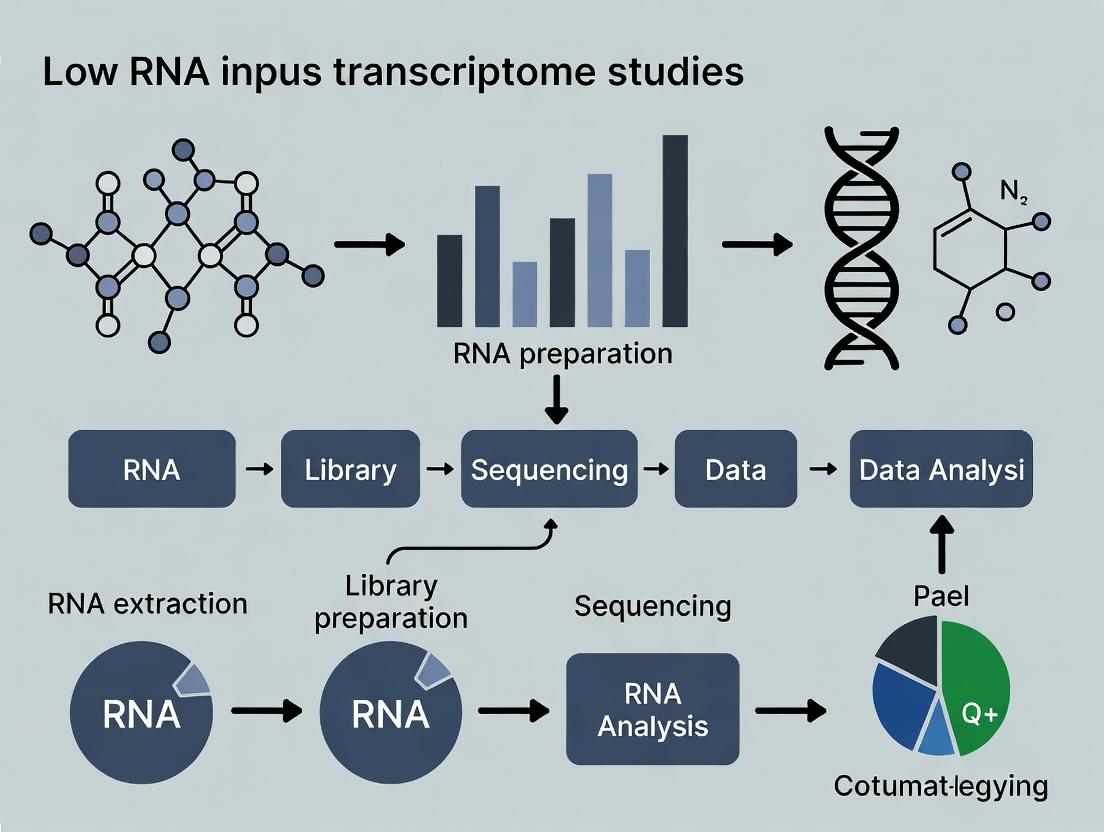
Transcriptome studies are fundamentally limited by the quantity and quality of input RNA, presenting significant challenges for researchers working with scarce, degraded, or spatially resolved samples.
Overcoming the Low RNA Input Challenge: Strategies for Robust Transcriptome Studies in Biomedical Research
Abstract
Transcriptome studies are fundamentally limited by the quantity and quality of input RNA, presenting significant challenges for researchers working with scarce, degraded, or spatially resolved samples. This article provides a comprehensive framework for understanding and addressing the challenges of low RNA input, targeting researchers, scientists, and drug development professionals. It explores the foundational causes of data bias and noise from limited starting material. The article then details current methodological innovations, including ultra-sensitive library preparation, long-read sequencing protocols, and spatial transcriptomics. A dedicated troubleshooting section offers practical guidance on RNA quality assessment, experimental design, and bioinformatic correction. Finally, it examines validation frameworks, quality metrics, and comparative analyses essential for ensuring the reliability of low-input studies in both basic research and clinical applications.
Understanding the Core Challenge: How Low RNA Input Compromises Data Fidelity and Biological Insight
Within the broader thesis on the challenges of low RNA input in transcriptome studies, a precise definition of the problem's origins is critical. Low RNA input—insufficient quantity and/or quality of RNA for standard transcriptomic analyses—compromises data accuracy, reproducibility, and biological interpretation. This whitepaper details the primary sources of this issue in both research and clinical environments, providing a technical foundation for mitigation.
The etiologies of low RNA input can be categorized by the stage of sample processing. The quantitative impact of these sources is summarized in Table 1.
These are intrinsic factors determined by the biological specimen itself or its in vivo context.
- Limited Starting Material: Single-cell analyses, fine-needle aspirates, rare cell populations (e.g., circulating tumor cells), and microdissected tissue regions inherently yield minuscule RNA.
- Cell State and Type: Quiescent cells or specific cell types (e.g., platelets, enucleated cells) have low transcriptional activity or RNA content.
- Degradation in Vivo: Apoptotic or necrotic processes within the tissue prior to collection lead to RNA degradation.
- Clinical Sample Constraints: Pediatric samples, non-invasive liquid biopsies (cfRNA), and precious longitudinal biopsies are often volume-limited.
Collection & Preservation Artifacts
Improper handling immediately post-collection is a major contributor to RNA loss and degradation.
- Delayed Stabilization: Failure to immediately freeze or immerse tissue in RNA-stabilizing reagents (e.g., RNAlater) allows endogenous RNases to degrade RNA.
- Inappropriate Fixatives: Formalin-fixation and paraffin-embedding (FFPE), while routine for histopathology, causes RNA fragmentation, cross-linking, and chemical modification, drastically reducing yield and quality.
- Temperature Fluctuations: Repeated freeze-thaw cycles of stabilized samples accelerate degradation.
RNA Extraction & Isolation Inefficiencies
The extraction protocol must be matched to the sample type to maximize recovery.
- Protocol-Sample Mismatch: Using a column-based kit designed for large tissue masses on a single-cell sample results in overwhelming loss via non-specific binding.
- Carrier RNA Omission: In ultra-low input protocols, carrier RNA (like poly-A RNA) is often essential to improve ethanol precipitation or column-binding efficiency but is sometimes omitted.
- Inhibitor Co-purification: Polysaccharides (from plants), pigments, or heparin can co-purify, inhibiting downstream enzymatic steps and effectively reducing functional RNA input.
Downstream Processing Losses
Losses compound during library preparation for next-generation sequencing (NGS).
- Library Preparation Kit Requirements: Most standard RNA-seq kits require 100 ng – 1 µg of total RNA. Input below this threshold leads to inefficient adapter ligation, PCR amplification bias, and increased duplicate reads.
- Amplification Bias: The necessary amplification for low-input samples can skew transcript representation, obscuring true biological variation.
Table 1: Quantitative Impact of Low RNA Input Sources
| Source Category | Specific Source | Typical RNA Yield/Loss Impact | Key Affected Metric |
|---|---|---|---|
| Biological | Single Cell | 1-50 pg total RNA | Input Quantity |
| Biological | FFPE Tissue (vs. Fresh Frozen) | 50-90% reduction, fragmented | RNA Integrity Number (RIN) |
| Collection | 24-hour delay at RT (Tissue) | RIN drop from 8+ to <4 | RIN |
| Extraction | Column-based kit on single cell | >90% loss | Recovery Efficiency |
| Downstream | Standard Illumina kit (min input) | Requires ≥100 ng | Detection Limit |
| Downstream | High PCR cycles (low input) | >40% duplicate reads | PCR Duplication Rate |
Detailed Experimental Protocol: Assessing RNA Integrity from FFPE Samples
A critical protocol for evaluating a major source of low-quality RNA input.
Objective: To evaluate the extent of RNA fragmentation in FFPE tissue sections compared to matched fresh-frozen tissue.
Reagents & Equipment:
- FFPE tissue block (5-10 µm sections) and matched fresh-frozen tissue.
- Xylene, 100%, 95%, 70% Ethanol.
- Proteinase K, DNase I (RNase-free).
- Commercial FFPE RNA extraction kit (e.g., Qiagen RNeasy FFPE Kit).
- Commercial fresh-frozen RNA extraction kit (e.g., Qiagen RNeasy Mini Kit).
- Agilent 2100 Bioanalyzer with RNA 6000 Nano and RNA 6000 Pico kits.
- Thermocycler, microcentrifuge, spectrophotometer (NanoDrop or Qubit).
Procedure:
- Deparaffinization: Cut 3-5 x 10 µm FFPE sections. Add 1 ml xylene, vortex, incubate 5 min at 55°C. Centrifuge 2 min at full speed. Remove xylene. Wash twice with 1 ml 100% ethanol. Air dry pellet.
- Proteinase K Digestion: Resuspend pellet in 150 µl buffer containing 15 µl Proteinase K. Incubate at 56°C for 15 min, then 80°C for 15 min.
- DNase Treatment: Add 10 µl DNase I (provided in kit) directly to lysate. Incubate at room temp for 15 min.
- RNA Purification: Follow manufacturer's instructions for the FFPE RNA kit. Elute in 20-30 µl RNase-free water.
- Control Extraction: Extract RNA from ~10 mg matched fresh-frozen tissue using the standard kit.
- Quality Control:
- Quantify using a fluorescence-based assay (Qubit RNA HS Assay) for accuracy.
- Assess integrity on the Bioanalyzer:
- Use the RNA 6000 Nano kit for fresh-frozen RNA (expected RIN >7).
- Use the RNA 6000 Pico kit for FFPE RNA (expected DV200 >30%, but low RIN).
Visualizing the Low RNA Input Problem Landscape
Title: Sources and Consequences of Low RNA Input
Workflow for Low-Input RNA-Seq Library Preparation
A generalized workflow for proceeding with low-input samples, highlighting critical decision points.
Title: Low-Input RNA-Seq Experimental Workflow
The Scientist's Toolkit: Research Reagent Solutions
Table 2: Essential Reagents for Low RNA Input Studies
| Reagent/Material | Primary Function | Key Consideration for Low Input |
|---|---|---|
| RNA Stabilization Reagent (e.g., RNAlater) | Rapidly permeates tissue to inhibit RNases, preserving RNA in situ prior to extraction. | Critical for field/clinical collection. Prevents pre-extraction degradation. |
| Carrier RNA (e.g., Poly-A RNA, Glycogen) | Improves precipitation efficiency and provides a "bulk" matrix for column binding during extraction of pg-level RNA. | Essential for ethanol precipitation protocols. Use nuclease-free, defined carriers. |
| Solid-Phase Reversible Immobilization (SPRI) Beads | Magnetic beads for size-selective nucleic acid clean-up and size selection post-amplification. | More efficient than columns for recovering low concentrations; ratio optimization is key. |
| Template Switching Oligo (TSO) | Enzyme used in Smart-seq2-type protocols; enables full-length cDNA amplification from single cells by adding a universal primer site. | Allows amplification from minimal RNA without fragmenting. Reduces 3' bias. |
| Unique Molecular Identifiers (UMIs) | Short random barcodes added to each original molecule during reverse transcription. | Enables computational removal of PCR duplicates, crucial for accurate quantitation after high amplification. |
| ERCC RNA Spike-In Mix | A set of synthetic RNA molecules at known concentrations added to the sample pre-extraction or pre-amplification. | Serves as an internal control for assessing technical variation, sensitivity, and dynamic range. |
| Single-Cell/Low-Input Library Prep Kit (e.g., Smart-seq3, Clontech) | Integrated reagent systems optimized for picogram RNA inputs, often incorporating TSO and pre-amplification. | Minimizes protocol steps and hands-on time, reducing sample loss and contamination risk. |
Within the broader thesis on challenges of low RNA input in transcriptome studies, the limitation of starting material presents a fundamental technical constraint. This constraint directly and systematically biases three core dimensions of transcriptomic data: transcriptome coverage, detection sensitivity, and quantitative dynamic range. These biases compromise biological conclusions, especially in fields like rare cell analysis, early embryogenesis, and liquid biopsy, where input is inherently scarce. This guide details the technical origins, quantitative impacts, and methodological strategies to mitigate these biases.
Core Biases: Technical Origins and Impacts
Limited RNA input (often < 100 pg to 10 ng) necessitates pre-amplification steps before sequencing. This requirement is the primary source of bias, as amplification efficiency is not uniform across all transcripts.
Bias in Coverage
Coverage refers to the fraction of the transcriptome reliably detected. With low input, stochastic sampling effects dominate. During reverse transcription and initial PCR cycles, the random selection of which molecules are amplified leads to significant "dropout" events, where low-abundance transcripts are entirely missed. The result is an incomplete and non-reproducible transcriptome profile.
Bias in Sensitivity
Sensitivity is the ability to detect low-abundance transcripts. Limited material reduces the absolute number of input molecules, pushing many transcripts below the effective detection limit. Pre-amplification can recover some signal, but its noise introduction and non-linear amplification diminish the confidence in detecting true low-expression genes.
Bias in Dynamic Range
Dynamic range is the ability to quantify both high- and low-abundance transcripts accurately. Pre-amplification protocols exhibit sequence-dependent efficiency, often favoring shorter, higher GC-content transcripts. This compresses the true biological expression range, inflating low signals and plateauing high signals, thus distorting fold-change measurements.
Table 1: Impact of RNA Input Amount on Key NGS Metrics
| Input RNA (ng) | % Genes Detected (Protein-Coding) | Technical CV (%) | Dynamic Range (Log10) | Library Complexity (Million Unique Fragments) |
|---|---|---|---|---|
| 10 | 95-98% | 10-15% | 4.5-5.0 | 8-12 |
| 1 | 85-90% | 20-30% | 3.5-4.0 | 3-6 |
| 0.1 | 65-75% | 35-50% | 2.5-3.5 | 0.5-1.5 |
| 0.01 | 40-55% | >50% | 2.0-2.5 | 0.1-0.3 |
Data synthesized from current SMART-Seq, Tang et al., and commercial kit technical notes (2023-2024). CV: Coefficient of Variation.
Table 2: Comparison of Leading Low-Input RNA-Seq Protocols
| Protocol/Kit | Minimum Input | Preamplification Method | Key Bias Correction Feature | Reported Duplicate Rate (10 pg input) |
|---|---|---|---|---|
| SMART-Seq v4 | 10 pg total RNA | Template-switching & LD PCR | Locked Nucleic Acid primers | 40-60% |
| CEL-Seq2 | 100 pg total RNA | In vitro transcription (IVT) | Unique Molecular Identifiers (UMIs) | 20-35% |
| Quartz-Seq2 | Single-cell (~10 pg) | PolyA-switching & PCR | UMIs & ERCC spike-ins | 30-50% |
| MATQ-Seq | 10 pg total RNA | Tn5 tagmentation & PCR | UMIs & molecular tagging | 15-30% |
| BD Rhapsody | Single-cell | Molecular barcoding on beads | High-plex UMIs | 10-25% |
Detailed Experimental Protocols
Protocol 3.1: High-Sensitivity Library Prep with UMIs
Objective: To generate an RNA-seq library from ≤100 pg total RNA while preserving quantitative accuracy via UMIs.
Materials: See "The Scientist's Toolkit" below. Procedure:
- RNA Isolation & QC: Use a column-based or SPRI bead-based kit designed for low elution volumes (≤11 µL). Assess integrity via Bioanalyzer RNA Pico chip (RINe not typically reported for low input).
- Reverse Transcription with Barcoding:
- Prepare RT master mix: Template-switch oligo (TSO), locked UMI-barcoded oligo-dT primer, dNTPs, DTT, RNase inhibitor, and a high-efficiency reverse transcriptase (e.g., Maxima H-).
- Incubate: 42°C for 90 min, then 70°C for 5 min.
- cDNA Preamplification:
- Add PCR mix: High-fidelity polymerase, ISPCR primer.
- Cycle: Initial denaturation 98°C, 3 min; then 12-18 cycles (98°C 15s, 65°C 30s, 68°C 4 min); final extension 68°C, 5 min. Optimize cycle number to minimize duplication.
- Library Construction:
- Fragment cDNA using Covaris shearing or tagmentation (Tn5).
- Perform end-repair, A-tailing, and adapter ligation using a commercial low-input library kit.
- UMI Processing & Sequencing:
- In silico: Use tools like
UMI-toolsorzUMIsto group reads by UMI, correct errors, and deduplicate before alignment. - Sequence on Illumina platform with paired-end reads (≥ 2x75 bp).
- In silico: Use tools like
Protocol 3.2: Spike-In Normalization for Dynamic Range Calibration
Objective: To monitor and correct for technical bias in amplification efficiency and recovery.
Procedure:
- Spike-In Selection: Use an exogenous RNA spike-in mix (e.g., ERCC from Thermo Fisher or SIRV from Lexogen) with known, varying abundances across a >6 log10 range.
- Addition: Spike in before the RT reaction (0.01-0.05% of total expected RNA mass) to control for the entire workflow.
- Bioinformatic Analysis:
- Map reads to a combined reference genome (target organism + spike-in sequences).
- Plot observed vs. expected spike-in concentrations.
- Fit a non-linear (e.g., LOESS) regression model to generate a correction function.
- Apply this function to the endogenous gene counts to recover a more accurate expression distribution.
Visualizations
Diagram 1: Logical flow from low input to analytical biases.
Diagram 2: Low-input RNA-seq workflow with key controls.
The Scientist's Toolkit
Table 3: Key Research Reagent Solutions for Low-Input RNA Studies
| Reagent/Material | Function & Rationale | Example Product |
|---|---|---|
| UMI Barcoded Oligo-dT Primers | Uniquely tags each mRNA molecule during RT to enable accurate PCR duplicate removal and absolute molecule counting. | SMARTer PCR UMI Oligos (Takara) |
| Template-Switching Reverse Transcriptase | Enables full-length cDNA synthesis and adds a universal primer binding site via terminal transferase activity, improving 5' coverage. | Maxima H- Minus RT (Thermo) |
| High-Efficiency, Low-Bias Polymerase | For pre-amplification; minimizes sequence-dependent amplification differences to preserve dynamic range. | KAPA HiFi HotStart ReadyMix |
| Exogenous RNA Spike-In Mixes | Known-concentration external RNA controls added prior to RT to monitor technical variation and calibrate expression measurements. | ERCC ExFold RNA Spike-In Mixes |
| Single-Tube/Low-Elution Volume Cleanup Beads | Solid-phase reversible immobilization (SPRI) beads optimized for small fragment recovery and low sample loss in minute volumes. | AMPure XP or RNAClean XP beads |
| Low-Input Library Prep Kit | Integrated reagents optimized for minimal loss during end-prep, adapter ligation, and library amplification. | Nextera XT Low Input, Clontech SMART-Seq v4 |
| Sensitive Nucleic Acid QC System | Analyzes pg/µL concentrations and fragment size distribution of precious pre-library products. | Agilent High Sensitivity DNA/RNA Bioanalyzer chips |
Within the broader challenge of low-input transcriptome studies, RNA integrity emerges as a foundational and often confounding variable. Degraded RNA can produce artifactual transcriptional profiles that are erroneously interpreted as biological signal, compromising gene expression studies, biomarker discovery, and drug development pipelines. This guide details the mechanisms, detection, and mitigation of RNA degradation artifacts.
The Impact of Degradation on Data Fidelity
RNA degradation is a non-random process influenced by ribonuclease activity, storage conditions, and extraction methods. In low-input scenarios, the reduced absolute number of intact molecules amplifies the relative impact of degraded fragments, skewing quantitative measurements.
Quantitative Data on Degradation Artifacts
Table 1: Effects of RNA Integrity Number (RIN) on Transcriptome Data Quality
| RIN Value | Qualitative Description | % of Genes with >2-fold Expression Bias | False Differential Expression Rate (vs. RIN 10) | Usability in Low-Input Protocols |
|---|---|---|---|---|
| 10 - 9.0 | Intact | < 2% | < 1% | Excellent |
| 8.9 - 8.0 | Slightly Degraded | 5-8% | 3-5% | Good (with caution) |
| 7.9 - 7.0 | Moderately Degraded | 10-15% | 10-15% | Problematic |
| < 7.0 | Severely Degraded | > 25% | > 25% | Not recommended |
Table 2: Common Artifacts from Degraded RNA in Low-Input Studies
| Artifact Type | Mechanism | Consequence |
|---|---|---|
| 3' Bias | Preferential loss of 5' transcripts; capture of 3' fragments during library prep. | False quantification; masking of true 5' transcriptional start sites. |
| Gene Length Bias | Longer transcripts more susceptible to internal cleavage. | Under-representation of long genes (e.g., structural proteins). |
| False Differential Expression | Variable degradation between samples masquerading as regulation. | Erroneous biomarker identification; failed validation. |
| Increased Technical Noise | Stochastic capture of degraded fragments in low-input protocols. | Reduced statistical power; inflated false discovery rates. |
Experimental Protocols for Assessing and Controlling RNA Integrity
Protocol 1: Standardized RNA Integrity Assessment (Bioanalyzer/Tapestation)
- Instrument Calibration: Use the appropriate sensitivity assay (e.g., RNA Nano, RNA ScreenTape).
- Sample Preparation: Dilute 1 µL of RNA sample in nuclease-free buffer to the recommended concentration (e.g., 500 pg/µL - 50 ng/µL).
- Denaturation: Heat sample at 70°C for 2 minutes, then immediately chill on ice.
- Loading: Pipette the sample into the designated wells alongside an RNA ladder and gel-dye mix.
- Analysis: Run the assay. The software calculates the RIN or RNA Quality Number (RQN). Critical Step: For low-input samples, note the shift in the electropherogram baseline; increased baseline "hump" indicates small fragment contamination.
- Interpretation: Inspect the electropherogram peaks for the 18S and 28S ribosomal RNA subunits. A sharp decline in the 5’ to 3’ ratio signals degradation.
Protocol 2: RT-qPCR Integrity Assay for Low-Input Samples
This protocol uses 3'/5' assays to detect degradation bias.
- Primer Design: Design two primer sets for a housekeeping gene (e.g., GAPDH): one amplifying a 5' region (~100-150 nt from the transcription start site) and one amplifying a 3' region (~100-150 nt from the poly-A tail).
- Reverse Transcription: Perform cDNA synthesis from a limited input (e.g., 10 pg – 1 ng total RNA) using a poly-dT primer to exaggerate 3' bias.
- qPCR: Run duplicate qPCR reactions for both the 5' and 3' assays on the same cDNA sample.
- Calculation: Compute the ∆Cq (Cq5' – Cq3'). A ∆Cq > 1.5 suggests significant 5' degradation. This assay is more sensitive for low-input samples than capillary electrophoresis.
Visualizing the Impact and Pathways
Diagram 1: How Degradation Leads to Misinterpreted Data
Diagram 2: Integrity-Centric Low-Input RNA Workflow
The Scientist's Toolkit: Essential Research Reagent Solutions
Table 3: Key Reagents for Protecting RNA Integrity in Low-Input Studies
| Item | Function & Rationale | Example Product Types |
|---|---|---|
| RNase Inhibitors | Inactivate ubiquitous RNases during cell lysis and extraction. Critical for low-input where losses are impactful. | Recombinant ribonuclease inhibitors (e.g., murine, porcine). |
| Stabilization Buffers | Chemically stabilize cellular RNA immediately upon collection, freezing RNase activity. | RNA-later, proprietary collection tube buffers. |
| Solid-Phase Extraction Beads | For clean, efficient recovery of minimal RNA quantities; reduce shearing from organic phases. | Silica-coated magnetic beads (SPRI). |
| RNA-Specific Dyes for QC | Enable accurate fluorometric quantitation of picogram levels without DNA contamination. | Ribogreen, Quant-iT RiboGreen. |
| Template-Switching Reverse Transcriptases | Mitigate 3' bias in cDNA synthesis from degraded or low-input RNA by adding a universal adapter sequence. | SMARTScribe, Maxima H-minus. |
| Single-Cell/Small RNA Library Prep Kits | Optimized for minimal RNA input, often incorporating degradation-resistant protocols. | SMART-Seq v4, Takara PicoPrep. |
| Exogenous RNA Spike-In Controls | Add at lysis to monitor extraction efficiency, amplification bias, and detect global degradation. | ERCC (External RNA Controls Consortium) spikes. |
| Nuclease-Free Consumables | Certified free of RNases to prevent sample loss during handling. | Tubes, tips, and water treated with diethyl pyrocarbonate (DEPC). |
In low-input transcriptomics, RNA integrity is not merely a quality checkpoint but a central determinant of data validity. Degradation artifacts systematically distort quantification and can generate compelling but false biological narratives. A rigorous, multi-stage workflow incorporating physical and computational integrity assessments is non-negotiable for generating reliable, reproducible data in biomarker and drug discovery research.
Transcriptome analysis from low-input and spatially resolved samples (e.g., laser-capture microdissected cells, fine-needle aspirates, single cells, or tissue sub-regions) is a cornerstone of modern biomedical research. A central thesis in this field posits that the challenge of low RNA input is compounded by the uncharacterized spatial heterogeneity of RNA integrity within a tissue. The traditional gold standard, the bulk RNA Integrity Number (RIN), provides an average measure for a homogenized sample, obscuring critical local variations in RNA quality that can drastically bias differential expression analysis, biomarker discovery, and therapeutic target identification. This guide details the evidence for this heterogeneity, methodologies to assess it, and solutions to mitigate its impact on data fidelity.
The Evidence: Documenting Spatial Heterogeneity
Recent studies using quantitative, spatially-aware techniques have systematically demonstrated that RNA degradation is not uniform across tissue architectures.
Table 1: Documented Sources and Scales of RNA Quality Heterogeneity
| Spatial Scale | Tissue/Model System | Key Finding on RNA Integrity | Measurement Method | Impact on Transcriptome |
|---|---|---|---|---|
| Macro-regional (mm-cm) | Human brain (post-mortem) | RIN varies significantly between brain regions (e.g., hippocampus vs. cortex) due to differential RNase expression and agonal state effects. | Bulk RIN per region, qRT-PCR for 3'/5' ratios. | Regional bias in gene expression profiles, over-representation of shorter transcripts in degraded regions. |
| Micro-anatomical (µm) | Formalin-Fixed Paraffin-Embedded (FFPE) tumor sections | Necrotic core and hypoxic zones exhibit severe degradation compared to viable tumor rim. RNA quality gradients exist over distances of <500 µm. | Digital Spatial Profiling (DSP), RNAscope with degradation probes. | False-negative detection of long, clinically relevant oncogenic transcripts in degraded zones. |
| Cellular | Complex tissues (e.g., kidney, spleen) | RNA integrity differs by cell type; immune cells often have higher endogenous RNase activity than neighboring parenchymal cells. | Single-cell RNA-seq (scRNA-seq) metrics (e.g., % mitochondrial reads, reads in peaks). | Cell-type specific bias in scRNA-seq datasets, under-representation of sensitive cell populations. |
| Subcellular | Polarized cells (e.g., neurons, epithelia) | mRNA localization machinery and differential stability in soma vs. processes can be misrepresented by degradation. | smFISH with probe sets targeting different transcript regions. | Altered apparent spatial expression patterns due to asymmetric degradation. |
Experimental Protocols for Assessing Spatial RNA Quality
Protocol 1: RNA Integrity Mapping via Multiplexed FluorescentIn SituHybridization (FISH)
This protocol uses probe sets targeting the 5' and 3' ends of the same reference transcripts to create a spatial integrity index.
- Tissue Preparation: Fresh-frozen tissue sections (10 µm) are fixed in 4% PFA for 15 min at 4°C.
- Probe Design & Hybridization: Design ~20-30 oligonucleotide probes conjugated to distinct fluorophores for both the 5' and 3' regions of 3-5 housekeeping genes (e.g., GAPDH, ACTB). Use a commercial FISH system (e.g., RNAscope, ViewRNA) according to manufacturer instructions for multiplexed detection.
- Imaging & Analysis: Acquire high-resolution confocal or widefield images. For each cell or region of interest (ROI), calculate a Spatial Integrity Score (SIS):
SIS = (Mean Fluorescence Intensity 3' probe) / (Mean Fluorescence Intensity 5' probe)A score of ~1 indicates intact RNA; <1 indicates 5' degradation.
Protocol 2: GeoMx Digital Spatial Profiler (DSP) RNA Quality Assessment
This protocol leverages the DSP platform for spatially resolved, NGS-based quality metrics.
- Region of Interest (ROI) Selection: On an FFPE or frozen tissue section, stain with morphology markers (e.g., PanCK, CD45). Select multiple ROIs representing different histological zones.
- UV Cleavage & Collection: Use the DSP instrument to selectively release oligonucleotide-tagged RNA from each ROI via UV photolysis. Collect the material into separate wells.
- Library Prep & Sequencing: Process collections with ultra-low-input RNA-seq libraries. Sequence to a moderate depth (~5-10 million reads per ROI).
- Data Analysis: Calculate ROI-specific quality metrics:
- 3'/5' Gene Body Coverage Ratio: Plot coverage for a set of long genes.
- Transcript Integrity Number (TIN) Score: Computationally derived per-ROI score.
- Compare these metrics across ROIs within the same slide to map heterogeneity.
Protocol 3: Single-Cell RNA-seq QC Metric Analysis
This protocol uses standard scRNA-seq output to infer cell-specific RNA quality.
- Single-Cell Isolation & Sequencing: Perform standard scRNA-seq (e.g., 10x Genomics) on a dissociated tissue suspension.
- Bioinformatic Quality Metrics Extraction: For each cell barcode, compute:
- Ratio of Exonic to Intronic Reads: Lower ratios suggest degraded nuclear RNA.
- Percentage of Mitochondrial (mt) RNA Reads: Elevated percentages (>20%) often indicate cytoplasmic RNA degradation.
- Number of Genes Detected: Correlates with overall RNA content and integrity.
- Spatial Mapping (if possible): If coupled with spatial transcriptomics or known cell-type markers, cluster cells by type and compare median QC metrics to identify degradation biases.
Visualization of Concepts and Workflows
Diagram 1: Bulk vs Spatial RNA Quality Assessment Workflow
Diagram 2: Causes & Consequences of Local RNA Degradation
The Scientist's Toolkit: Research Reagent Solutions
Table 2: Essential Reagents & Kits for Spatial RNA Quality Research
| Item Name | Provider Examples | Function & Relevance |
|---|---|---|
| RNase Inhibitors (e.g., Recombinant RNasin, SUPERase•In) | Promega, Thermo Fisher | Critical for low-input protocols. Inactivates RNases during tissue dissection, LCM, and cell lysis, preserving native spatial integrity patterns. |
| RNAstable or RNA Later | Biomatrica, Thermo Fisher | Spatial preservation. RNAstable allows room-temperature tissue stabilization, potentially "freezing" in situ RNA quality. RNA Later penetrates tissue slowly, useful for small biopsies. |
| Single-Cell/Low-Input RNA-Seq Kits (SMART-Seq v4, Chromium Next GEM) | Takara Bio, 10x Genomics | Enable transcriptome from minute, spatially-defined inputs. Incorporate template-switching and unique molecular identifiers (UMIs) to mitigate biases from degraded templates. |
| Multiplexed FISH Reagents (RNAscope, ViewRNA) | ACD Bio, Thermo Fisher | Direct spatial visualization of RNA integrity. Allow simultaneous detection of 5' and 3' transcript regions or full-length vs. truncated targets. |
| GeoMx DSP RNA/Optical Cleavage Oligo Kits | NanoString | Facilitate NGS-based quality mapping. Oligo-tags are ligated to RNA in situ; collection by ROI allows parallel sequencing and integrity metric calculation for each region. |
| Degradation-Resistant Probes (QuantiGene FlowRNA) | Thermo Fisher | Robust detection in degraded samples. Use branched DNA (bDNA) signal amplification, which is less affected by RNA fragmentation than RT-PCR, for quantification in low-quality extracts. |
| Solid-Phase Reversible Immobilization (SPRI) Beads | Beckman Coulter, DIY | Size-selective cleanup. Critical for removing short degradation fragments to enrich for intact mRNA prior to library prep for low-input samples. |
This technical guide explores a critical challenge within the broader thesis on low RNA input in transcriptome studies: systematic misquantitation. Accurate quantification of transcripts is foundational for all downstream analyses, including differential expression, pathway analysis, and biomarker discovery. Low-input and single-cell RNA-seq (scRNA-seq) protocols, while revolutionary, introduce significant technical noise and bias that distort the measured abundance of genes, isoforms, and rare transcripts. This misquantitation propagates through analytical pipelines, leading to erroneous biological conclusions, wasted resources, and compromised drug discovery pipelines.
Mechanisms of Misquantitation in Low-Input Contexts
Misquantitation arises from non-biological technical artifacts amplified under low RNA input conditions.
1. Amplification Bias: Global amplification (e.g., via PCR or in vitro transcription) is required from minute starting material but is non-linear and sequence-dependent. GC-content, secondary structure, and fragment length cause uneven amplification, skewing true abundance ratios.
2. Inefficient Capture and Conversion: The initial reverse transcription step is stochastic and incomplete. Rare transcripts may be entirely missed ("drop-outs"), and 3' bias becomes pronounced in common protocols like 10x Genomics or SMART-seq.
3. Transcript Ambiguity and Multi-Mapping Reads: Short reads from complex transcriptomes cannot be uniquely assigned to specific isoforms of a gene. This leads to "quantification blurring," where expression is incorrectly distributed among isoforms, severely impacting alternative splicing analyses.
4. Background Noise and Contamination: Low signal-to-noise ratios allow ambient RNA or reagent contaminants to constitute a substantial portion of sequenced libraries, falsely inflating counts for certain genes or creating artifactual "rare" transcripts.
Quantitative Impact on Downstream Analyses
The downstream consequences are multifaceted and severe, as summarized in Table 1.
Table 1: Impact of Misquantitation on Key Downstream Analyses
| Downstream Analysis | Primary Impact of Gene-Level Misquantitation | Primary Impact of Isoform/Rare Transcript Misquantitation | Typical Error Magnitude (Low-Input vs. Bulk) |
|---|---|---|---|
| Differential Expression (DE) | High false positive/false negative rates; inflated log2 fold changes. | Missed isoform-switching events; incorrect assignment of DE to wrong isoform. | False Discovery Rate (FDR) increase of 15-30%. |
| Pathway & Enrichment Analysis | Distorted pathway activation scores; identification of biologically irrelevant pathways. | Inability to detect pathways regulated by specific isoforms (e.g., kinase-active vs. inactive). | ~40% of top enriched pathways may be artifacts. |
| Biomarker Discovery | Identification of unreliable candidate biomarkers that fail validation. | Overlooking critical isoform-specific or rare transcript biomarkers (e.g., oncogenic fusion variants). | Validation success rate can drop below 10%. |
| Trajectory Inference (e.g., Pseudotime) | Incorrect ordering of cells; spurious branch points. | Erroneous inference of differentiation events driven by supposed isoform expression. | Topology error rates increase by >25%. |
| Gene Co-Expression Networks | Edges (connections) reflect technical covariance rather than biological regulation. | Networks fail to capture isoform-specific regulatory modules. | Module preservation scores drop by 30-50%. |
Detailed Experimental Protocols for Mitigation and Validation
To diagnose and correct for misquantitation, the following experimental and computational protocols are essential.
Protocol 1: Spike-In Normalization for Absolute Quantification
- Purpose: To control for amplification bias and enable absolute molecule counting.
- Materials: External RNA Controls Consortium (ERCC) spike-in mix or Sequins synthetic RNA standards.
- Procedure:
- Spike-In Addition: Add a known, fixed amount of spike-in RNA (e.g., 1 µL of 1:100,000 diluted ERCC mix) to the cell lysis buffer before any amplification steps.
- Library Preparation: Proceed with standard low-input or single-cell protocol (e.g., SMART-seq2).
- Sequencing & Alignment: Sequence library and align reads to a combined reference genome (organism + spike-in sequences).
- Quantification: Quantify reads mapping to spike-ins. The variance in spike-in counts across samples directly measures technical noise.
- Normalization: Use spike-in derived size factors (e.g., via
Rpackagescran) to normalize cellular transcript counts, mitigating bias from global transcriptional changes.
Protocol 2: Unique Molecular Identifier (UMI) Deduplication for Correcting Amplification Bias
- Purpose: To count original molecules rather than amplified reads.
- Materials: Library preparation kits incorporating UMIs (e.g., 10x Genomics, Parse Biosciences).
- Procedure:
- Library Construction: Use a protocol where oligo-dT primers or capture probes contain random UMI sequences (8-12 bp).
- PCR Amplification: Amplify library as normal. Each original molecule is tagged with a unique UMI.
- Bioinformatic Processing: Align reads. For reads aligning to the same genomic location, group those with identical UMIs. Count one transcript molecule per UMI group, regardless of the number of PCR duplicates (reads).
Protocol 3: Long-Read Sequencing for Isoform Resolution
- Purpose: To definitively characterize full-length isoforms and validate short-read quantifications.
- Materials: Oxford Nanopore Technologies (ONT) PromethION or Pacific Biosciences (PacBio) Revio system.
- Procedure:
- Sample Preparation: Generate full-length cDNA using a protocol like PacBio's Iso-Seq or ONT's cDNA-PCR sequencing.
- Size Selection: Perform rigorous size selection (e.g., with BluePippin) to include long transcripts.
- Sequencing: Run on appropriate platform to generate reads spanning multiple exon junctions.
- Analysis: Cluster reads into consensus isoforms using tools like
Cupcake(PacBio) orFLAIR(ONT). Use these high-confidence isoforms as a reference to benchmark short-read quantifiers (e.g.,Salmon,kallisto).
Visualizing the Impact and Workflows
Title: Cascade of Technical Bias to Erroneous Conclusions
Title: Integrated Workflow for Quantification Accuracy
The Scientist's Toolkit: Key Research Reagent Solutions
Table 2: Essential Reagents and Materials for Accurate Low-Input Quantification
| Item | Function & Rationale | Example Product/Brand |
|---|---|---|
| Synthetic Spike-In RNAs | Precisely quantified exogenous RNA controls added to the sample lysate. Distinguishes technical noise from biological variation and enables absolute quantification. | ERCC Spike-In Mix (Thermo Fisher), Sequins (Garvan Institute) |
| UMI-Adapters/Primers | Oligonucleotides containing random molecular barcodes. Tags each original cDNA molecule to allow bioinformatic correction for PCR amplification bias. | SMART-seq2 with UMIs, 10x Barcoded Gel Beads |
| High-Efficiency Reverse Transcriptase | Enzyme with high processivity and strand-displacement activity. Maximizes capture efficiency of full-length transcripts, especially from degraded or low-input samples. | SuperScript IV, Maxima H Minus |
| Reduced-Amplification Kits | Library prep protocols minimizing PCR cycles. Reduces sequence-dependent amplification bias and chimera formation. | NuGEN Ovation, Takara SMART-Seq v4 |
| Long-Read Sequencing Kit | Kits for generating full-length cDNA sequences on PacBio or ONT platforms. Provides ground truth for isoform structure and rare transcript discovery. | PacBio Iso-Seq, ONT cDNA-PCR Sequencing Kit |
| RNA Integrity Protection Reagents | Stabilizers that inhibit RNase activity and prevent degradation during sample handling. Preserves the already-limited starting material. | RNAlater, DNA/RNA Shield (Zymo) |
| Single-Cell/Low-Input Validated Buffers | Lysis and wash buffers optimized for minimal RNA loss and compatibility with downstream enzymatic steps. | 10x Genomics Cell Lysis Buffer, Takara Dilution Buffer |
Advanced Protocols and Technologies: Pushing the Boundaries of Low-Input Transcriptomics
Within the broader context of transcriptome research, the challenge of working with low-input and low-quality RNA samples remains a significant bottleneck. This is particularly critical in fields such as single-cell analysis, liquid biopsy, early embryonic development, and rare cell population studies. The evolution of ultra-sensitive library preparation kits aims to circumvent these limitations by enabling robust sequencing libraries from minute amounts of starting material, often in the sub-nanogram and even picogram range. This technical guide provides an in-depth comparison of current commercial solutions, their underlying technologies, and detailed experimental protocols for low-input RNA-seq.
Core Technologies in Ultra-Sensitive Library Preparation
Modern ultra-sensitive kits employ several key strategies to overcome input limitations:
- Template-Switching Mechanisms: Used in Smart-seq-based protocols, this method utilizes a reverse transcriptase with terminal transferase activity to add non-templated nucleotides to cDNA, allowing for full-length cDNA amplification.
- In Vitro Transcription (IVT) Amplification: Employed in methods like the NuGEN Ovation system, it uses T7 RNA polymerase to linearly amplify antisense RNA from cDNA.
- Pre-Amplification PCR: Strategic PCR amplification of the cDNA library prior to final library construction to increase material.
- Molecular Tagging & Duplex Sequencing: Incorporating Unique Molecular Identifiers (UMIs) to correct for PCR amplification bias and errors, enabling accurate digital counting of original mRNA molecules.
- Carrier RNA/Molecules: The use of inert RNA or other molecules to improve enzymatic reaction efficiency and reduce surface adsorption losses.
Comparison of Commercial Ultra-Sensitive Library Prep Kits
The following table summarizes key quantitative data for leading commercial kits, based on current manufacturer specifications and published literature.
Table 1: Comparison of Ultra-Sensitive RNA Library Preparation Kits
| Kit Name (Manufacturer) | Minimum Input Requirement (Total RNA) | Recommended Input Range | Technology Core | UMI Included? | Approximate Hands-on Time | Key Application Focus |
|---|---|---|---|---|---|---|
| SMART-Seq v4 Ultra Low Input Kit (Takara Bio) | 1-10 cells (~10 pg) | 1 cell - 10 ng | Template-switching, pre-amplification PCR | No | ~6 hours | Full-length transcriptome, single-cell, low-input bulk. |
| Chromium Next GEM Single Cell 3' Kit v3.1 (10x Genomics) | 1 cell (captured) | 500 - 10,000 cells | Gel bead-in-emulsion (GEM), template switching, 3’ counting | Yes | ~8 hours | High-throughput single-cell 3’ sequencing. |
| NEBNext Single Cell/Low Input RNA Library Prep Kit (Illumina) | 1-100 cells (10 pg - 1 ng) | 1 cell - 10 ng | Template-switching, PCR amplification | Optional | ~6.5 hours | Flexible single-cell/low-input bulk, compatible with plate-based workflows. |
| Clontech SMART-Seq HT Kit (Takara Bio) | 100 pg | 100 pg - 10 ng | Template-switching, PCR amplification | No | ~5 hours | High-throughput, automated low-input RNA-seq. |
| QIAseq UPX 3' Transcriptome Kit (Qiagen) | 1 pg - 10 ng | 1 pg - 100 ng | 3’ capture, UMIs, PCR amplification | Yes | ~5 hours | Ultra-low input and degraded RNA (e.g., FFPE, liquid biopsy). |
| NuGEN Ovation SoLo RNA-Seq System (Tecan) | 500 pg - 50 ng | 500 pg - 50 ng | rRNA depletion, duplex sequencing with UMIs | Yes | ~7 hours | Accurate quantification for low-input, standardizes variable inputs. |
Detailed Experimental Protocol: Low-Input RNA-Seq Using a UMI-Based Kit
This protocol is a generalized workflow for kits such as the QIAseq UPX or NuGEN Ovation SoLo.
A. Pre-Lab Preparation
- Equipment: PCR workstation with UV decontamination, calibrated pipettes (including P2, P10), centrifuge with plate rotor, thermal cycler with heated lid, magnetic stand, Qubit fluorometer, Bioanalyzer/TapeStation.
- Key Step: Clean all surfaces and equipment with RNase decontamination solution. Use filter tips for all liquid handling.
B. cDNA Synthesis & Amplification
- Primer Annealing: Combine RNA sample (1 pg - 10 ng in ≤ 8 µL) with 3’ SMART-Seq CDS Primer (or kit-specific primer). Incubate at 72°C for 3 minutes, then immediately place on ice for 2 minutes.
- First-Strand Synthesis: Add reverse transcriptase, template-switching oligonucleotide (TSO), dNTPs, and buffer. Incubate:
- 42°C for 90 minutes.
- 70°C for 10 minutes (enzyme inactivation).
- Hold at 4°C.
- cDNA Amplification: Add amplification primers, high-fidelity DNA polymerase, and PCR mix to the first-strand reaction.
- PCR Cycle:
- 98°C for 3 min (initial denaturation).
- Cycle (18-22x): 98°C for 15 sec, 65°C for 30 sec, 72°C for 3 min.
- 72°C for 5 min (final extension).
- 4°C hold.
- PCR Cycle:
C. Library Construction & UMI Deduplication
- Fragmentation & End Repair: Purify amplified cDNA. Use enzymatic or acoustic shearing to fragment cDNA to ~300 bp. Repair ends to generate blunt ends.
- Adapter Ligation: Ligate platform-specific Y-shaped adapters containing sample index sequences (and UMIs if not added earlier) to the repaired ends. Purify ligated product.
- Library Amplification: Perform a limited-cycle (8-12 cycles) PCR to enrich for adapter-ligated fragments and add full-length adapter sequences.
- Library Clean-up & QC: Purify the final library using double-sided SPRI bead clean-up. Quantify using Qubit (dsDNA HS Assay) and assess size distribution using a Bioanalyzer (High Sensitivity DNA chip). Expected peak: ~350-450 bp.
- Bioinformatic UMI Deduplication: After sequencing, process data through the kit’s dedicated pipeline (e.g., QIAseq UPX Deduplication pipeline). Steps include:
- UMI Extraction: Identify and extract UMI sequences from read headers.
- Read Alignment: Map reads to the reference genome/transcriptome.
- Grouping: Group reads that have the same UMI and align to the same genomic location (allowing for small positional shifts due to PCR/sequencing errors).
- Consensus Building: For each group, create a consensus read. This corrects for errors introduced during amplification and sequencing.
- Deduplication: Count each consensus read as a single original molecule, generating a digital count matrix.
Workflow and Pathway Diagrams
Diagram 1: Ultra-Sensitive RNA-Seq with UMI Deduplication Workflow
Diagram 2: Template-Switching for Full-Length cDNA Synthesis
The Scientist's Toolkit: Essential Research Reagents & Materials
Table 2: Key Reagents for Ultra-Sensitive RNA Library Prep
| Item | Function in Low-Input Protocols | Critical Notes |
|---|---|---|
| RNase Inhibitor | Protects precious RNA samples from degradation during reaction setup. | Use a high-concentration, recombinant version. Add fresh to each reaction. |
| High-Fidelity DNA Polymerase | Amplifies cDNA with minimal bias and errors during pre-amplification. | Essential for accuracy. Kits often include proprietary blends. |
| Template-Switching Oligo (TSO) | Provides a universal binding site for full-length cDNA amplification. | Sequence design (e.g., locked nucleic acids) affects efficiency. |
| UMI-Adapters | Adapters containing random molecular barcodes to tag original molecules. | Enables digital counting and error correction. |
| SPRI (Solid Phase Reversible Immobilization) Beads | Magnetic bead-based purification and size selection of nucleic acids. | Minimizes sample loss versus column-based methods. Ratio is critical for size selection. |
| RNA Spike-In Controls (e.g., ERCC) | Artificial RNA molecules added at known concentrations. | Assesses technical sensitivity, accuracy, and dynamic range of the assay. |
| Carrier RNA | Inert RNA (e.g., poly-A, tRNA) added to picogram-scale samples. | Improves enzymatic reaction kinetics and reduces surface adsorption. May interfere with QC. |
| Low-Binding Tubes & Tips | Plasticware treated to minimize nucleic acid adhesion. | Crucial for preventing sample loss in sub-nanogram workflows. |
Within the broader thesis on the challenges of low RNA input in transcriptome studies, a central hurdle remains the accurate and comprehensive characterization of transcriptome complexity from limited biological samples. This is critical in fields like single-cell analysis, liquid biopsy, and rare cell populations. The advent of long-read sequencing (LRS) platforms, primarily from PacBio and Oxford Nanopore Technologies (ONT), promises to resolve isoform-level complexity but introduces new methodological challenges when input is scarce. This guide evaluates three principal LRS protocol strategies for low-input applications: Direct RNA sequencing, full-length cDNA sequencing, and PCR-amplified approaches, providing a technical framework for researchers and drug development professionals.
Core Protocol Methodologies
Direct RNA Sequencing (ONT)
This protocol sequences native RNA molecules directly through nanopores.
- Input Requirements: Typically 50-500 ng poly(A)+ RNA. Ultra-low input protocols aim for <50 ng total RNA.
- Poly(A) Tail Selection: RNA is bound to oligo(dT)-coated beads (e.g., Dynabeads).
- Adapter Ligation: A 3' poly(dA)-tailed sequencing adapter (RMX) is ligated to the poly(A) tail using T4 DNA ligase. A motor protein adapter (RTA) is then added at the 5' end.
- Sequencing: The prepared library is loaded onto a primed FLO-MIN106 (or successor) flow cell. The motor protein unwinds the RNA, and the translocating strand modulates an ionic current, decoding the sequence.
- Key Advantage: No reverse transcription or amplification, avoiding associated biases. Retains RNA base modifications.
- Key Low-Input Challenge: Low molecule capture efficiency; input scarcity directly limits data output.
Full-Length cDNA Sequencing (PacBio & ONT)
This approach focuses on generating full-length cDNA copies for sequencing.
- Template Switching: Used in protocols like PacBio's Iso-Seq and ONT's PCR-cDNA. For low input, a reverse transcriptase (e.g., Maxima H Minus, SMARTScribe) synthesizes first-strand cDNA. Upon reaching the 5' cap, the enzyme adds a few non-templated nucleotides, enabling a "template-switching oligo" (TSO) to bind, thus capturing the complete 5' end.
- cDNA Amplification: The single-stranded cDNA is PCR-amplified using primers matching the TSO and the oligo(dT) primer. For ultra-low input, the number of PCR cycles is optimized (typically 12-18) to minimize duplicate reads.
- Library Preparation: For PacBio: cDNA is size-selected, SMRTbell adapters are ligated, and the library is sequenced on the Sequel IIe/Revio system. For ONT: cDNA is amplified with tailed primers to attach sequencing adapters directly via PCR or ligated separately.
- Key Advantage: Captures full-length transcripts, enabling precise isoform identification.
- Key Low-Input Challenge: PCR amplification can introduce duplicates and skew representation.
PCR-Amplified cDNA Approaches (Targeted & Whole-Transcriptome)
These protocols use targeted primers or transposase-based fragmentation to enable sequencing from very low inputs.
- Low-Input ONT Protocol (e.g., Ligation Sequencing): Amplified cDNA or directly amplified RNA (using a PCR step after reverse transcription) is fragmented, often via transposase (e.g., Nextera). Sequencing adapters are ligated to the fragments.
- Targeted Amplification: Gene-specific primers or multiplex PCR are used to enrich regions of interest from minute RNA amounts, followed by LRS library prep.
- Key Advantage: Can work with inputs as low as single-cell levels (<10 pg total RNA). Higher library yield from scarce material.
- Key Low-Input Challenge: Amplification biases, incomplete coverage, and loss of long-range phasing information if fragmentation is used.
Quantitative Data Comparison
Table 1: Comparative Analysis of Low-Input Long-Read Sequencing Protocols
| Feature | Direct RNA (ONT) | Full-Length cDNA (PacBio/ONT) | PCR-Amplified cDNA (ONT) |
|---|---|---|---|
| Typical Min. Input | 50 ng poly(A)+ RNA | 1-10 ng total RNA (with PCR) | <1 pg - 100 pg total RNA |
| Amplification | None | Yes, PCR (Limited Cycles) | Yes, PCR (Required) |
| Reads per Cell/Input | Very Low (Input-Limited) | Moderate (1K-10K reads/cell) | High (10K-50K reads/cell) |
| Primary Bias Source | Poly(A) Tail Capture | Reverse Transcription, PCR Duplicates | PCR Amplification & Fragmentation |
| Isoform Fidelity | Highest (Direct Measure) | High (Full-Length Capture) | Reduced (Fragmentation Loss) |
| Base Modifications | Detectable (e.g., m6A) | No (cDNA) | No (cDNA) |
| Typimal Read Length | Variable, matches transcript | Full-Length Transcript | Short to Medium (Fragmented) |
| Key Application | Epitranscriptomics, Direct RNA Analysis | De Novo Isoform Discovery, Fusion Detection | Low-Input/ Single-Cell Screening |
Table 2: Performance Metrics from Recent Studies (2023-2024)
| Protocol (Platform) | Input Amount | Mean Read Length (kb) | Full-Length Reads (%) | Genes Detected (vs. Short-Read) | Reference (Example) |
|---|---|---|---|---|---|
| Direct RNA (ONT V14) | 50 ng HEK RNA | ~1.2 | N/A | ~70% | Singh et al., 2024 |
| Iso-Seq (PacBio Revio) | 10 ng UHRR | 2.8 | >85% | >95% | PacBio App Note |
| PCR-cDNA (ONT) | Single-Cell | 1.5 | ~50% | ~80% | Garcia et al., 2023 |
| MAS-Seq (PacBio) | 1 ng Total RNA | 3.0 | >80% | >90% | Bolisetty et al., 2023 |
Visualization of Workflows and Relationships
Low-Input LRS Protocol Decision Pathway
Protocol Decision Logic for Low Input
The Scientist's Toolkit: Essential Research Reagent Solutions
Table 3: Key Reagents and Kits for Low-Input Long-Read Sequencing
| Item | Function in Low-Input Context | Example Product(s) |
|---|---|---|
| Poly(A) Magnetic Beads | Selection of polyadenylated RNA from limited total RNA; critical for enriching mRNA from rRNA. | NEBNext Poly(A) mRNA Magnetic Isolation Module, Dynabeads mRNA DIRECT Purification Kit |
| Template Switching Reverse Transcriptase | Generates full-length cDNA from low-concentration RNA; adds defined sequence for amplification. | Maxima H Minus Reverse Transcriptase, SMARTScribe v2 |
| Single-Cell/Low-Input cDNA Kits | Integrated kits optimized for minute RNA inputs, incorporating template switching and pre-amplification. | PacBio MAS-Seq Kit, ONT PCR-cDNA Barcoding Kit, SMART-Seq v4 |
| Long-Range PCR Polymerase | Amplifies full-length or near-full-length cDNA with high fidelity and processivity from low-template reactions. | Q5 High-Fidelity DNA Polymerase, KAPA HiFi HotStart ReadyMix |
| Methylated Adapter Systems | For PacBio: Maintain strand integrity during SMRTbell library prep from low-input, amplified material. | SMRTbell Prep Kit 3.0 |
| Ligation Adapters & T4 DNA Ligase | For ONT: Efficient ligation of sequencing adapters to limited amounts of double-stranded DNA library. | ONT Ligation Sequencing Kit (SQK-LSK114), Rapid Barcoding Kit |
| RNase Inhibitor | Protects precious RNA templates from degradation during all enzymatic steps. | Recombinant RNasin Ribonuclease Inhibitor |
| High-Sensitivity DNA/RNA Assay Kits | Accurate quantification of nanogram/picogram concentrations of input RNA and final libraries. | Qubit dsDNA HS/RNA HS Assay Kits, Agilent High Sensitivity DNA/RNA Bioanalyzer/TapeStation Kits |
A central thesis in modern genomics posits that low RNA input presents a fundamental challenge for transcriptome studies, limiting sensitivity, introducing amplification bias, and obscuring rare isoforms and low-abundance transcripts critical for understanding disease mechanisms and drug response. Within this framework, targeted enrichment strategies are indispensable for overcoming these limitations, enabling focused, deep interrogation of specific genomic regions or transcripts of interest. This technical guide provides an in-depth comparison of two powerful, yet philosophically distinct, enrichment methodologies: established Hybridization Capture and emerging Nanopore Adaptive Sampling (NAS).
Core Technology Principles
Hybridization Capture
This method involves solution- or array-based hybridization of fragmented genomic DNA or cDNA to biotinylated oligonucleotide probes (e.g., xGen Lockdown Probes, IDT SureSelect), followed by pull-down with streptavidin-coated magnetic beads. The enriched targets are then amplified and sequenced on short-read platforms (Illumina). It is a robust, in vitro chemical process performed prior to sequencing.
Nanopore Adaptive Sampling
NAS is a real-time, software-controlled enrichment method exclusive to Oxford Nanopore Technologies (ONT) sequencing platforms. During sequencing, as a DNA strand translocates through the nanopore, its initial ~400 bp sequence is rapidly base-called. If this sequence matches a predefined panel of targets (a "reference"), voltage is maintained to continue reading. If it is an off-target, the voltage is reversed to eject the molecule, freeing the pore for another. This is an in silico, kinetic selection process.
Quantitative Comparison of Key Parameters
The following table synthesizes current performance data from recent literature and manufacturer specifications.
Table 1: Performance Comparison of Hybridization Capture vs. Nanopore Adaptive Sampling
| Parameter | Hybridization Capture | Nanopore Adaptive Sampling |
|---|---|---|
| Typical Enrichment Fold | 100-10,000x | 5-100x (Highly sample/target dependent) |
| On-Target Rate | 40-80% | 10-70% (Increases with longer fragments) |
| Input DNA Requirement | 10-1000 ng (≥50 ng recommended) | 1 ng - 1 µg (Effective from ultralow input) |
| Hands-on Time | 12-24 hours | <1 hour (Setup only; selection is in software) |
| Wet-Lab Complexity | High (multiple purification, hybridization, capture steps) | Low (standard library prep) |
| Ability to Detect Base Modifications | No (requires special protocols) | Yes (native DNA/RNA sequencing) |
| Read Length | Short-read dictated (≤ 600 bp) | Full-length, ultra-long (reads > 100 kb possible) |
| Major Source of Bias | Hybridization efficiency, GC-content, amplification | Voltage reversal kinetics, fragment length |
| Best for | Maximizing depth on small targets (< 5 Mb), validated panels | Large targets (> 5 Mb), structural variants, haplotype phasing, low-input native sequencing |
Table 2: Suitability for Low-Input RNA/Transcriptome Studies
| Challenge | Hybridization Capture (via cDNA) | Nanopore Adaptive Sampling (direct RNA/cDNA) |
|---|---|---|
| Amplification Bias | High (PCR required post-capture) | Lower (PCR-free protocols possible) |
| Full-Length Isoform Recovery | Poor (fragmentation loses isoform linkage) | Excellent (sequences entire cDNA/RNA molecule) |
| Input Requirement | 10-100 ng cDNA (challenging from low RNA) | <10 ng cDNA demonstrated; direct RNA from low nanograms |
| Detection of RNA Modifications | No | Yes (direct RNA sequencing) |
| Throughput for Rare Transcripts | High depth on target | Moderate depth; excels in length and modification context |
Detailed Experimental Protocols
Protocol: Hybridization Capture for Low-Input RNA-Seq
This protocol adapts the IDT xGen Hybridization and Wash v2 protocol for low-input scenarios.
Library Preparation:
- Convert total RNA (as low as 1-10 ng) to double-stranded cDNA using a SMART-Seq or similar single-tube, whole-transcriptome amplification kit to minimize loss.
- Fragment the amplified cDNA via acoustic shearing (Covaris) to ~300 bp.
- Perform end-repair, A-tailing, and adapter ligation using a low-input Illumina-compatible library prep kit (e.g., KAPA HyperPrep). Use dual-indexed adapters to enable multiplexing.
- Amplify the library with 8-12 PCR cycles. Clean up with SPRI beads.
Hybridization and Capture:
- Pool up to 500 ng of total library (may require concentrating multiple low-input preps).
- Mix with xGen Universal Blockers and a custom xGen Lockdown Probe Panel (designed against your target transcripts/exons).
- Denature at 95°C for 10 min, then hybridize at 65°C for 4-16 hours in a thermal cycler.
- Add streptavidin magnetic beads, incubate at 65°C for 45 min to bind probe-target hybrids.
- Wash beads stringently with agitation at 65°C (2x) and room temperature (3x) to remove off-targets.
Elution & Amplification:
- Elute captured DNA in NaOH, neutralize, and clean.
- Perform a final low-cycle PCR (8-10 cycles) to amplify the enriched library. Quantify via qPCR.
Protocol: Nanopore Adaptive Sampling for Targeted cDNA Enrichment
This protocol uses the ONT cDNA-PCR Sequencing Kit with real-time adaptive sampling.
Library Preparation (PCR-based):
- Generate first-strand cDNA from total RNA (≥ 5 ng) using gene-specific or poly-dT primers and reverse transcriptase.
- Synthesize second strand to create dsDNA.
- Perform a short-cycle PCR (≤ 12 cycles) using primers with ONT-compatible overhang adapters (PCR Barcoding Expansion Kit).
- Clean up PCR product with SPRI beads. Do not fragment.
Sequencing Adapter Ligation:
- Repair ends and ligate ONT sequencing adapters (SQK-LSK114) to the amplicon pool.
- Clean up with beads and elute in Elution Buffer.
Sequencing with Adaptive Sampling:
- Load the library onto a MinION or PromethION flow cell (R10.4.1 or later recommended).
- In the MinKNOW software, select "Adaptive Sampling" mode.
- Upload a BED file defining the genomic coordinates of your target transcripts. Set the "enrichment" mode to sequence targets and unblock off-targets.
- Begin sequencing. The software will perform real-time basecalling and enrichment decisions.
Visualizations
Hybridization Capture Wet-Lab Workflow
Nanopore Adaptive Sampling Real-Time Workflow
Low-Input RNA Challenges & Enrichment Solutions
The Scientist's Toolkit: Research Reagent Solutions
Table 3: Essential Reagents and Materials for Targeted Enrichment Studies
| Item | Function | Example Products (Non-exhaustive) |
|---|---|---|
| Low-Input RNA-to-cDNA Kits | Maximizes cDNA yield from minimal RNA input, critical for both strategies. | SMART-Seq v4, Takara Bio SMARTer Stranded, NuGEN Ovation |
| Hybridization Capture Probe Panels | Biotinylated oligonucleotide baits designed to hybridize to genomic targets of interest. | IDT xGen Lockdown Probes, Agilent SureSelect, Twist Bioscience Target Enrichment |
| Streptavidin Magnetic Beads | Solid-phase capture of biotinylated probe-target complexes for wash and elution. | Dynabeads MyOne Streptavidin C1, Streptavidin T1, Sera-Mag beads |
| ONT cDNA Sequencing Kit | Provides all enzymes and buffers for preparing PCR-cDNA libraries for Nanopore sequencing. | SQK-PCS114 (PCR-cDNA) or SQK-DCS114 (Direct cDNA) |
| ONT Flow Cells | The consumable containing nanopores for sequencing. R10.4.1+ offers improved accuracy. | MinION Flow Cell (R10.4.1), PromethION Flow Cell (R10.4.1) |
| BED File Template | A simple text file defining genomic coordinates (chrom, start, end) for NAS targets. | Custom-generated from UCSC Table Browser or bedtools. |
| SPRI Size Selection Beads | For universal cleanup, size selection, and buffer exchange during library prep. | Beckman Coulter AMPure XP, MagBio HighPrep PCR |
| High-Sensitivity DNA Assay | Accurate quantification of low-concentration libraries pre-sequencing. | Qubit dsDNA HS Assay, Agilent TapeStation HS D1000 |
A central thesis in modern transcriptomics research is that low RNA input and capture efficiency fundamentally constrain biological insight. This is acutely true in spatial transcriptomics, where the goal is to map gene expression within the morphological context of intact tissue sections. The inherent limitations—degradation during handling, inefficient transfer from tissue to capture surface, and the low abundance of many transcripts—result in sparse gene detection, reduced dynamic range, and compromised data quality. This whitepaper examines recent technical innovations designed to overcome these barriers by systematically enhancing RNA capture efficiency, thereby increasing the sensitivity and resolution of spatial genomics.
Core Innovations and Quantitative Comparison
Recent advancements focus on improving every step from tissue preparation to library construction. Key innovations are summarized in the table below.
Table 1: Innovations in Spatial Transcriptomics for Enhanced RNA Capture Efficiency
| Innovation Area | Specific Technology/Method | Key Mechanism for Efficiency Gain | Reported Quantitative Improvement (vs. Standard Visium) | Key Limitation Addressed |
|---|---|---|---|---|
| Capture Surface Chemistry | Visium CytAssist | Physical alignment tool enabling use of high-efficiency RNA-binding capture slides from bulk RNA-seq (e.g., Illumina RiboCop). | ~5-10x increase in median genes per spot (e.g., from ~3,000 to ~15,000+ genes in mouse brain). | Manual tissue alignment and transfer inefficiency. |
| In Situ Sequencing & Amplification | Stereo-seq | DNA nanoball (DNB) patterned array with subcellular (~220 nm) feature size and high-density in situ amplification. | ~50,000 genes detected per cell-equivalent 10 μm bin in mouse embryo; spots/cm² in the billions. | Computational complexity due to enormous data volume. |
| Molecular & Enzymatic Enhancements | Slide-tissue Hybridization (STH) | Prolonged hybridization of tissue to capture probes with tissue RNAse inhibition. | 2-3x increase in unique molecular identifiers (UMIs) per spot in human breast cancer. | On-slide RNA degradation during long incubation. |
| Tissue Pre-treatment & Permeabilization | Protease-Enhanced Permeabilization | Controlled protein digestion to reduce extracellular matrix barriers without fragmenting tissue. | Up to 2x increase in UMIs/spot in fibrous tissues (e.g., heart, tumor stroma). | Over-digestion leading to tissue loss and spatial diffusion. |
| Probe Design & Chemistry | High-Efficiency Ligation Probes | Use of templated ligation (e.g., from MERFISH) to reduce probe dimerization and increase specificity. | >60% capture efficiency per transcript in situ vs. ~10-20% for reverse transcription-based capture. | Requires sophisticated probe sets and imaging infrastructure. |
Detailed Experimental Protocols
Protocol: Visium CytAssist-Enhanced Spatial Gene Expression
This protocol modifies the standard 10x Genomics Visium workflow using the CytAssist instrument to utilize high-efficiency capture slides.
Tissue Preparation & Staining:
- Fresh-frozen or FFPE tissue sections (4-10 μm) are placed on a standard glass microscopy slide.
- Tissue is stained with H&E and imaged at high resolution.
- The slide is then dehydrated and stored dry at -80°C until use.
CytAssist-Mediated Transfer:
- The stained tissue slide and a Visium CytAssist Spatial Gene Expression Slide (with barcoded oligos optimized for RNA capture) are loaded into the CytAssist instrument.
- The instrument precisely aligns the tissue section on the source slide with the capture areas on the destination slide.
- A proprietary buffer is added, and the instrument facilitates the transfer and simultaneous permeabilization of the tissue, allowing released RNA to bind to the spatially barcoded capture probes on the destination slide directly.
On-Slide Library Construction:
- The destination slide with captured RNA undergoes on-slide reverse transcription to create spatially barcoded cDNA.
- The cDNA is released, collected, and amplified by PCR to construct a sequencing library.
- The library is sequenced, and data is aligned using the tissue image for spatial mapping.
Protocol: Protease-Enhanced Permeabilization for Fibrous Tissues
This protocol optimizes permeabilization for challenging, RNAse-rich tissues.
Cryosectioning and Fixation:
- Flash-frozen tissue is cryosectioned at 10 μm onto a Visium Spatial Tissue Optimization Slide or equivalent.
- Sections are immediately fixed in pre-chilled methanol at -20°C for 30 minutes.
Protease Optimization (Titration Required):
- A gradient of protease (e.g., Protease XXIV, 0.1-0.5 U/mL) in PBS is applied to different tissue sections for 10-20 minutes at 37°C.
- The reaction is stopped by immersion in cold PBS with 0.1% BSA.
RNAse Inhibition and Permeabilization:
- Tissue is treated with an RNAse inhibitor (e.g., 0.2 U/μL SUPERase•In) for 5 minutes.
- Standard permeabilization enzyme (e.g., Visium Enzyme) is applied for the determined optimal time.
Capture and Processing:
- Released RNA fragments are captured by surface-bound oligo-dT probes.
- Standard steps for reverse transcription, second-strand synthesis, and cDNA harvest follow.
Visualization of Workflows and Concepts
Title: Standard vs Enhanced Spatial Workflow
Title: Problem-Solution Framework for RNA Capture
The Scientist's Toolkit: Key Research Reagent Solutions
Table 2: Essential Reagents for High-Efficiency Spatial Transcriptomics
| Item | Function in Enhancing Efficiency | Example Product/Category |
|---|---|---|
| High-Efficiency Capture Slides | Surface-coated with high-density, high-affinity oligo-dT or gene-specific probes to maximize binding of released RNA. | 10x Genomics Visium CytAssist Gene Expression Slide; Stereo-seq DNB patterned array. |
| RNAse Inhibitors | Critical for preserving RNA integrity during extended tissue hybridization or permeabilization steps, reducing degradation losses. | SUPERase•In RNase Inhibitor; recombinant ribonucleoside vanadyl complexes. |
| Matrix-Degrading Enzymes | Enzymes that selectively digest collagen (collagenase) or general proteins (protease) to reduce physical barriers to RNA diffusion. | Protease XXIV; Collagenase Type III. |
| Optimized Permeabilization Buffers | Buffers with precise detergent concentrations and ions to lyse cells effectively without destroying tissue architecture or inhibiting reverse transcription. | 10x Genomics Visium Permeabilization Enzyme; proprietary buffers in MERFISH/STARmap protocols. |
| Template-Switching Oligos & High-Fidelity Polymerases | Enzymes and primers that ensure efficient and faithful amplification of the low-input, spatially barcoded cDNA library. | SMART-Seq v4 Oligos; Template Switching Oligo (TSO); Takara PrimeSTAR GXL DNA Polymerase. |
| Fluorescently Tagged Nucleotides & Imaging Reagents | For in situ sequencing methods, these enable cyclic detection of barcoded probes with high signal-to-noise ratio. | Cy3/Cy5-labeled dNTPs; imaging buffers with oxygen scavenging systems. |
The advent of next-generation sequencing revolutionized transcriptomics, yet a fundamental challenge persists: the accurate profiling of samples with extremely low starting RNA. Bulk RNA-seq averages expression across thousands to millions of cells, obscuring cellular heterogeneity and rendering rare cell populations invisible. This is particularly problematic in fields like neurobiology, oncology, and developmental biology, where critical cellular subtypes are few, exist in complex microenvironments, or are difficult to isolate. Single-cell RNA sequencing (scRNA-seq) and its derivative, single-nuclei RNA sequencing (snRNA-seq), have emerged as paradigm-shifting solutions. They directly address the low-input challenge by enabling transcriptome-wide analysis at the resolution of individual cells or nuclei, transforming our ability to deconvolute complex tissues, identify novel cell states, and understand disease mechanisms at an unprecedented granular level.
Core Paradigms: scRNA-seq vs. snRNA-seq
The choice between scRNA-seq and snRNA-seq is dictated by biological question, sample type, and practical constraints. Both convert the minute RNA content of a single unit into a sequencer-compatible library, but they target different cellular components.
Single-Cell RNA-seq (scRNA-seq) profiles the transcriptome of intact, whole cells. It captures both cytoplasmic and nuclear transcripts, providing a comprehensive view of a cell's transcriptional state. However, it requires fresh, viable, dissociated cells, which can be a major limitation for many clinical, archived, or difficult-to-dissociate tissues (e.g., heart, brain, adipose).
Single-Nuclei RNA-seq (snRNA-seq) profiles the transcriptome from isolated nuclei. It primarily captures nascent and nuclear-retained transcripts, with less representation of mature cytoplasmic mRNA. Its principal advantage is its applicability to frozen, archived, or mechanically/chemically tough tissues where whole-cell dissociation is impractical or would introduce major bias.
Table 1: Comparative Analysis of scRNA-seq and snRNA-seq Paradigms
| Feature | Single-Cell RNA-seq (scRNA-seq) | Single-Nuclei RNA-seq (snRNA-seq) |
|---|---|---|
| Starting Material | Fresh, viable, dissociated single cells. | Fresh or frozen tissue; isolated nuclei. |
| Transcriptome Coverage | Full-length (cytoplasmic + nuclear). Biased towards abundant cytoplasmic mRNA. | Nuclear-enriched. Captures nascent transcription, unprocessed RNA, and non-polyadenylated transcripts. |
| Cell Throughput | High (10X Genomics: ~10,000 cells; SeqWell: ~100,000 cells). | Moderate to High (10X Genomics: ~10,000 nuclei; DroNc-seq: similar). |
| Sensitivity (Genes/Unit) | Higher (~1,000-10,000 genes/cell). | Lower (~500-5,000 genes/nucleus). |
| Key Technical Challenges | Cell viability, dissociation bias, stress responses, large cell size for microfluidics. | Nuclear isolation quality, cytoplasmic contamination, lower RNA content. |
| Ideal Applications | Immune profiling, suspension cells, cultured cells, fresh tissues (e.g., spleen, lymph node). | Complex/frozen tissues (brain, heart, tumor biopsies), formalin-fixed paraffin-embedded (FFPE) samples. |
Detailed Methodological Protocols
Protocol for High-Throughput Droplet-Based scRNA-seq (e.g., 10X Genomics Chromium)
Principle: Individual cells are partitioned into nanoliter-scale droplets with a gel bead coated with unique barcodes and oligo-dT primers. Within each droplet, cell lysis and reverse transcription occur, tagging all cDNA from a single cell with the same cell barcode.
Detailed Steps:
- Cell Preparation: Generate a single-cell suspension with >90% viability. Filter through a 40µm flow cell strainer. Quantify and assess viability (e.g., Trypan Blue, AO/PI on automated counter).
- Target Cell Recovery: Dilute cell suspension to the target concentration (e.g., 700-1,200 cells/µL) to achieve optimal droplet occupancy (aiming for ~10,000 cells per run).
- Droplet Generation: Load cells, gel beads, partitioning oil, and master mix into a Chromium chip. The microfluidic controller generates gel bead-in-emulsions (GEMs), each containing a single cell, a single barcoded bead, and RT reagents.
- Reverse Transcription: GEMs are transferred to a PCR tube. Within each droplet, cells are lysed, and polyadenylated RNA is reverse-transcribed into barcoded, full-length cDNA. A program is run: 53°C for 45 min, 85°C for 5 min, hold at 4°C.
- Cleanup & Amplification: Droplets are broken, and pooled cDNA is recovered using DynaBeads MyOne SILANE beads. cDNA is then amplified via PCR (98°C for 3 min; [98°C for 15s, 67°C for 20s, 72°C for 1 min] x 12 cycles; 72°C for 1 min).
- Library Construction: Amplified cDNA is fragmented, end-repaired, A-tailed, and ligated to sample index adaptors via a second, shorter PCR (98°C for 45s; [98°C for 20s, 54°C for 30s, 72°C for 20s] x 14 cycles; 72°C for 1 min).
- Quality Control & Sequencing: Libraries are quantified (Qubit, Bioanalyzer) and sequenced on an Illumina platform (e.g., NovaSeq). Typical read length: 28bp Read1 (cell barcode + UMI), 91bp Read2 (transcript).
Protocol for Droplet-Based snRNA-seq (e.g., 10X Genomics Chromium Nuclei Isolation)
Principle: Similar to scRNA-seq but nuclei replace whole cells. A gentle nuclei isolation protocol preserves nuclear integrity and minimizes cytoplasmic contamination.
Detailed Steps:
- Nuclei Isolation from Frozen Tissue: Place 25-50 mg frozen tissue in a Dounce homogenizer on ice. Add 2mL of cold Lysis Buffer (e.g., 10mM Tris-HCl pH 7.4, 10mM NaCl, 3mM MgCl2, 0.1% Nonidet P-40, 1U/µL RNase Inhibitor, 1mM DTT). Dounce with loose pestle (10-15 strokes), then tight pestle (10-15 strokes). Filter homogenate through a 40µm strainer.
- Nuclei Purification: Pellet nuclei at 500 rcf for 5 min at 4°C. Gently resuspend pellet in 1mL Wash Buffer (PBS, 1% BSA, 1U/µL RNase Inhibitor). Count nuclei using a hemocytometer (stain with Trypan Blue or DAPI). Adjust concentration to 1,000-10,000 nuclei/µL.
- Droplet Generation & Library Prep: Load nuclei suspension into the Chromium system in place of cells. Follow the standard 10X Chromium Single Cell 3' v3.1 or v4 protocol from the GEM generation step onward, as described for scRNA-seq. The lower RNA content per nucleus typically results in fewer genes detected per barcode.
Visualizing Workflows and Analysis Pathways
Title: scRNA-seq vs snRNA-seq Experimental Workflow
The Scientist's Toolkit: Essential Research Reagents & Solutions
Table 2: Key Reagents and Materials for scRNA-seq and snRNA-seq
| Item | Category | Function in Protocol | Example/Note |
|---|---|---|---|
| RNase Inhibitor | Enzyme | Prevents degradation of low-input RNA during all pre-sequencing steps. | Recombinant RNaseIN, SUPERase-IN. Critical for snRNA-seq. |
| Live/Dead Cell Stain | Viability Assay | Distinguishes live cells (for scRNA-seq) from dead cells/debris. | AO/PI, DAPI, Calcein AM/Propidium Iodide. Used in FACS or counting. |
| Gentle Dissociation Kit | Tissue Processing | Enzymatically dissociates tissue into single cells while preserving RNA integrity and surface markers. | Multi-tissue dissociation kits (Miltenyi, GentleMACS). |
| Nuclei Isolation Buffer | Lysis Buffer | Gently lyses plasma membrane while keeping nuclear membrane intact for snRNA-seq. | Contains non-ionic detergent (NP-40, IGEPAL), salts, RNase inhibitor. |
| Magnetic Beads (SPRI) | Nucleic Acid Cleanup | Size-selects and purifies cDNA and final libraries; removes primers, enzymes, and small fragments. | AMPure XP, SpeedBeads. Used in multiple cleanup steps. |
| Barcoded Gel Beads & Partitioning Oil | Core Consumable | Forms the basis of droplet-based partitioning. Beads contain cell barcode, UMI, and oligo-dT. | 10X Genomics Chromium Barcoded Beads, Partitioning Oil. |
| Single Cell 3' Library Kit | Library Prep | Contains all enzymes and buffers for RT, amplification, fragmentation, and indexing. | 10X Chromium Single Cell 3' v3.1/v4 Kit. Platform-specific. |
| Dual Index Kit Set A | Library Indexing | Provides unique combinatorial indexes for sample multiplexing (pooling) prior to sequencing. | Enables running multiple samples on one lane. |
| High-Sensitivity DNA Assay | QC Instrument | Accurately quantifies low-concentration cDNA and final libraries (in pg/µL range). | Qubit dsDNA HS Assay, TapeStation High Sensitivity D1000. |
Title: Bioinformatic Analysis Pipeline for sc/snRNA-seq Data
The scarcity of high-quality, high-quantity RNA from precious clinical samples (e.g., tumor biopsies, longitudinal liquid biopsies, rare disease tissues) represents a critical bottleneck in translational research. The broader thesis contends that low RNA input fundamentally compromises transcriptome studies by introducing amplification bias, reducing detection sensitivity for low-abundance transcripts, and preventing multi-omic integration. Integrated DNA-RNA assays emerge as a powerful solution, enabling the simultaneous analysis of genomic and transcriptomic information from a single, limited sample. This co-profiling maximizes the informational yield from irreplaceable cohorts, providing a more coherent view of genotype-phenotype relationships while conserving material.
Technical Foundations & Current Methodologies
Integrated assays work by partitioning a single sample aliquot into DNA and RNA fractions or, more commonly, by creating sequencing libraries that capture both nucleic acid types from a single reaction mixture. Recent advancements focus on streamlined, low-input protocols.
Key Integrated Assay Platforms
Table 1: Comparison of Current Integrated DNA-RNA Assay Methods
| Method Name | Core Principle | Min. Input (Cells) | DNA Targets | RNA Targets | Key Advantage |
|---|---|---|---|---|---|
| DR-seq | Physical separation of DNA/RNA from lysate, parallel library prep. | ~1000 | Whole genome | Poly-A+ transcriptome | Early proof-of-concept. |
| G&T-seq | Bead-based separation of single-cell genomic DNA and mRNA. | Single-cell | Whole genome | Poly-A+ transcriptome | True physical separation for single-cells. |
| GUIDE-seq | Simultaneous in-situ tagmentation of DNA and RNA. | ~10,000 | Open chromatin (ATAC) & genotype | Whole transcriptome (including non-polyA) | Fast, from fixed cells/tissues. |
| DR-IFT (DNA-RNA Integrated Functional Tagging) | Multi-omic profiling from fixed, stained, and sorted cells. | ~5,000 | Somatic variants, Copy Number | Gene expression | Compatible with clinical FACS workflows. |
| TRIO-seq | Bisulfite conversion followed by separate library builds. | ~10,000 | Methylome & genotype | Transcriptome | Includes epigenomic layer. |
| Commercial Kits (e.g., Illumina DNA Prep, Tagmentation) | Combined tagmentation and cDNA synthesis workflows. | ~1,000-10,000 | Whole exome/genome | Whole transcriptome | Standardized, user-friendly. |
Detailed Experimental Protocol: Combined DNA-RNA Extraction & Library Prep for Low-Input FFPE
This protocol is adapted from recent studies (2023-2024) optimizing co-extraction from formalin-fixed, paraffin-embedded (FFPE) cores.
Materials: See Scientist's Toolkit below. Workflow:
Sample Lysis & Co-Extraction:
- Deparaffinize two 10µm FFPE curls (or one macro-dissected curl) with xylene/ethanol.
- Lyse tissue pellet in 200µL of Dual-lysis Buffer (containing Proteinase K and β-mercaptoethanol) at 56°C for 3 hours, vortexing intermittently.
- Split lysate into two equal aliquots (~100µL each) in separate tubes.
Nucleic Acid Partitioning & Purification:
- DNA Aliquot: Add 1µL of RNase A to one aliquot. Incubate 2 min at RT. Proceed with magnetic bead-based DNA cleanup (e.g., SPRI beads). Elute in 21µL EB buffer.
- RNA Aliquot: To the other aliquot, add 350µL of RLT Plus buffer (with 1% β-ME). Mix thoroughly. Pass through a genomic DNA eliminator spin column. Add 1 vol. of 70% ethanol to flow-through and bind RNA to a silica-membrane column. Perform on-column DNase I digestion. Elute RNA in 15µL nuclease-free water.
Parallel Library Preparation:
- DNA Library: Use 20µL of eluted DNA for a hyperplexed PCR-based library prep (e.g., Swift Accel-NGS 2S), targeting a 100-200 gene pan-cancer panel. Include unique dual indices (UDIs). Perform 12-14 PCR cycles.
- RNA Library: Quantify RNA by Qubit HS RNA assay. Use 5-10ng total RNA for library prep with a universal cDNA synthesis kit (e.g., NuGEN Ovation). Amplify with 12-14 cycles. Use the same UDI set as the matched DNA sample for sample pairing post-sequencing.
Sequencing & Analysis:
- Pool libraries equimolarly. Sequence on an Illumina platform. Aim for median coverage of >500x for DNA and >5M reads per sample for RNA.
- Use integrated bioinformatics pipelines (e.g., DRAGEN Bio-IT or SOPHIA GENETICS DDM) that jointly align reads, call DNA variants (SNVs, indels), and quantify gene expression (TPM) from the same sample, flagging discordant reads.
Diagram 1: Integrated DNA-RNA Assay Workflow for FFPE.
The Scientist's Toolkit
Table 2: Essential Research Reagent Solutions for Integrated DNA-RNA Assays
| Item | Function & Relevance | Example Product/Kit |
|---|---|---|
| All-in-One Lysis Buffer | Simultaneously releases and stabilizes both DNA and RNA from complex samples (FFPE, cells). Minimizes hands-on time and loss. | Qiagen AllPrep, Zymo Quick-DNA/RNA Miniprep |
| Magnetic Beads (SPRI) | Size-selective purification and cleanup of nucleic acids. Essential for fragment size selection post-tagmentation or PCR. | Beckman Coulter AMPure XP, KAPA Pure Beads |
| Dual-Index UMI Adapters | Unique Molecular Identifiers (UMIs) correct PCR/sequencing errors; dual indices enable high-level multiplexing and accurate DNA-RNA pairing. | Illumina TruSeq UD Indexes, IDT for Illumina UDI |
| Multi-omic Commercial Kits | Integrated, optimized wet-lab protocols that ensure compatibility between DNA and RNA library steps. | Illumina TruSight Oncology 500 (TSO500), Takara Bio SMARTer DNA-Seq |
| Targeted Hybridization Panels | Custom panels that capture exonic DNA and corresponding transcript regions from the same library, boosting sensitivity for low-input. | Agilent SureSelect XT HS2, Twist Bioscience NGS Panels |
| Universal cDNA Synthesis Kit | Designed for degraded/low-input RNA, often using template-switching technology, to generate robust sequencing libraries. | Takara Bio SMART-Seq v4, NuGEN Ovation Solo |
| Bioinformatics Pipeline | Software that jointly processes DNA and RNA reads from the same sample, enabling integrated variant/expression analysis. | Illumina DRAGEN, Sophia DDM, QIAGEN CLC Genomics |
Data Analysis & Integration Strategies
The power of integrated assays is realized in bioinformatics. Key steps include:
- Joint Alignment: Mapping all reads to a combined reference (genome + transcriptome) or using splice-aware aligners (STAR) in 2-pass mode.
- Sequencing Artifact Correction: Using UMIs to collapse PCR duplicates across DNA and RNA reads from the same starting molecule.
- Variant Calling & Phasing: Calling somatic/germline variants from DNA reads, then checking for allele-specific expression (ASE) in the RNA reads.
- Fusion Detection: Corroborating DNA-level structural variants (breakpoints) with RNA-level fusion transcript evidence.
Diagram 2: Integrated DNA-RNA Data Analysis Pipeline.
Integrated DNA-RNA assays directly address the core thesis challenge of low RNA input by eliminating the need to split a precious sample for separate genomic and transcriptomic analyses. By providing coupled data from the same cellular material, these methods enhance detection power, reveal mechanistic connections (e.g., ASE), and ultimately maximize the scientific and clinical insights gleaned from limited and irreplaceable patient cohorts. The ongoing development of more sensitive, robust, and standardized wet-lab and computational workflows will further cement integrated profiling as a cornerstone of precision oncology and translational research.
From Bench to Bioinformatics: A Practical Guide to Optimizing Low-Input Experiments
The reliability of transcriptomic data in research and drug development is fundamentally dependent on the quality of the input RNA. A primary thesis in modern omics research posits that the challenges of low RNA input—such as amplification bias, loss of rare transcripts, and increased technical noise—are often exacerbated by suboptimal pre-analytical handling. This guide details evidence-based practices during the sample collection, stabilization, and storage phases to ensure maximal preservation of RNA integrity and yield, thereby mitigating downstream analytical challenges inherent in low-input studies.
Sample Collection: Minimizing Ribonuclease Activity
The immediate post-collection period is critical. RNases are ubiquitous and can degrade RNA within minutes.
Key Practices:
- Rapid Processing: Freeze samples in liquid nitrogen or place in stabilization reagent immediately. The delay time should be minimized and meticulously documented.
- Aseptic Technique: Use RNase-free consumables (tips, tubes, blades) and change gloves frequently.
- Temperature Control: Maintain cold conditions (4°C) if immediate stabilization/freezing is not possible, but do not rely on this for extended periods.
Sample Stabilization: Chemical and Thermal Inhibition
Chemical stabilization is the gold standard for preserving the in vivo transcriptome profile at the moment of collection.
Detailed Protocol for Tissue Stabilization:
- Dissect tissue sample to dimensions not exceeding 0.5 cm in any direction.
- Immerse the sample completely in 5-10 volumes of commercial RNase-inactivating stabilization reagent (e.g., RNAlater).
- Incubate at 4°C overnight to allow complete penetration of the reagent into the tissue.
- After incubation, remove the reagent and store the stabilized sample at -80°C or proceed to RNA extraction.
Alternative for Blood/ Biofluids: Use dedicated evacuated blood collection tubes containing RNase inhibitors and white cell lysis reagents. Invert tubes 8-10 times immediately after collection.
Storage Conditions: Maintaining Long-Term Integrity
Improper storage leads to incremental RNA degradation, directly impacting the success of low-input applications.
Quantitative Data on Storage Conditions:
Table 1: Impact of Storage Temperature on RNA Integrity Number (RIN)
| Sample Type | Storage Condition | Duration | Average RIN Post-Storage | Key Findings |
|---|---|---|---|---|
| Stabilized Solid Tissue | -20°C | 1 year | 7.2 ± 0.8 | Moderate degradation; suitable for some qPCR but not sensitive RNA-Seq. |
| Stabilized Solid Tissue | -80°C | 1 year | 8.5 ± 0.3 | Minimal degradation; recommended for long-term biobanking. |
| Liquid Nitrogen | -196°C | 1 year | 8.7 ± 0.2 | Optimal preservation; highest integrity for rare or archived samples. |
| PAXgene Blood RNA Tube | 4°C | 5 days | 8.0 ± 0.5 | Stable for short-term transport. |
| PAXgene Blood RNA Tube | -80°C | 2 years | 8.3 ± 0.4 | Long-term stability for whole blood RNA. |
Table 2: Effect of Freeze-Thaw Cycles on RNA Yield and Quality
| Number of Freeze-Thaw Cycles | RNA Yield (% of Baseline) | RIN Value | Observation |
|---|---|---|---|
| 0 | 100% | 8.9 | Baseline. |
| 1 | 95% ± 3 | 8.5 | Minor impact. |
| 3 | 78% ± 7 | 7.1 | Significant yield loss and degradation; avoid. |
| 5 | 60% ± 10 | 5.8 | Severe degradation; RNA may be unusable for sequencing. |
Best Practice Protocol for Storage:
- Aliquot RNA after purification into low-binding, nuclease-free tubes to avoid repeated freeze-thaw of the master stock.
- Use -80°C freezers with continuous temperature monitoring and backup systems.
- For shipping, use dry ice in sufficient quantity (>3 kg per day of transit) in approved containers.
Workflow Visualization
Title: RNA Preservation Workflow and Control Points
Title: RNA Degradation and Stabilization Mechanisms
The Scientist's Toolkit: Research Reagent Solutions
Table 3: Essential Reagents and Materials for RNA Preservation
| Item/Category | Function & Rationale | Example Products/Brands |
|---|---|---|
| RNase Inactivation Reagents | Penetrate tissue to denature RNases immediately post-collection, freezing the transcriptome. | RNAlater, RNAstable, Allprotect |
| Stabilized Blood Collection Tubes | Contain RNA-stabilizing reagents that lyse cells and inhibit RNases upon blood draw. | PAXgene Blood RNA Tube, Tempus |
| Liquid Nitrogen | Provides ultra-rapid cooling to -196°C, instantly halting all enzymatic activity including degradation. | N/A |
| Nuclease-Free Consumables | Tubes, tips, and blades certified free of RNases to prevent introduction of contaminants during handling. | Ambion, Thermo Fisher, various |
| Denaturing Lysis Buffers | Contain chaotropic salts (guanidinium thiocyanate) to inactivate RNases during homogenization and initial extraction. | TRIzol, Qiazol, RA1 Buffer (NucleoSpin) |
| RNA-Specific Storage Tubes | Low-binding tube surfaces minimize adsorption of low-concentration RNA, preserving yield. | LoBind tubes (Eppendorf), Silicone-coated tubes |
| Portable Cooling Equipment | Enables maintenance of cold chain during sample transport from collection site to lab. | Cool boxes, wet ice, bio-transport shippers |
| Continuous Temperature Monitors | Data loggers provide documentation of storage/transport conditions, critical for QA/QC. | TinyTag, LogTag, Elpro |
Within the critical challenge of low-input transcriptome studies, accurate RNA quality assessment is paramount. Traditional measures like the RNA Integrity Number (RIN) fail to distinguish between intact mRNA and the overwhelming background of non-coding or structural RNAs, especially when sample is limited. This whitepaper details the implementation of two advanced assays—the selective RIN (sRIN) and the 5':3' assay—which together form "RNA Quality Assessment 2.0." These mRNA-specific integrity metrics are essential for ensuring reliable data from precious, low-yield samples common in clinical biopsies, single-cell analyses, and archival materials, where misleading quality metrics can invalidate costly downstream sequencing or expression analyses.
Core Concepts and Rationale
The Limitation of Traditional RIN
The conventional RIN, derived from microcapillary electrophoresis (e.g., Agilent Bioanalyzer), assesses total RNA degradation by analyzing the 18S and 28S ribosomal RNA peaks. However, mRNA constitutes only 1-5% of total RNA. In low-input scenarios, degradation of the abundant rRNA can skew the RIN, while the mRNA pool—the target of transcriptomics—may remain usable, or vice versa. This disconnect risks the unnecessary discard of valuable samples or the generation of biased sequencing libraries.
sRIN: mRNA-Seq Specific Integrity
The selective RIN (sRIN) algorithm, developed by , repurposes standard RNA-Seq data to compute an integrity score specific to mRNA. It calculates the median coverage uniformity across a curated set of long, constitutively expressed genes. A perfect intact mRNA yields uniform coverage; degradation leads to 5'->3' coverage bias. sRIN translates this into a familiar 1-10 scale.
5':3' Assay: A Quantitative PCR-Based Proxy
For pre-sequencing assessment, the 5':3' assay uses quantitative PCR (qPCR) to measure the integrity of specific mRNA targets. It compares the amplification efficiency of an amplicon near the 5' end of a transcript to one near the polyA tail (3' end). In intact mRNA, the ratio is ~1. Degradation, which often proceeds 5'->3', causes a drop in the 5' amplicon yield, lowering the ratio.
Experimental Protocols
Protocol 1: Deriving sRIN from RNA-Seq Data
This protocol is applied post-sequencing to diagnose sample quality.
Input: Standard FASTQ files from polyA-selected RNA-Seq libraries. Software Requirements: sRIN tool (available on GitHub), alignment software (STAR, HISAT2), and Python.
Method:
- Alignment: Align sequencing reads to the reference genome using a splice-aware aligner (e.g., STAR) with standard parameters.
- Gene Coverage Calculation: Using the sRIN script, calculate read depth at each position for a predefined set of "sentinel" genes (long, constitutively expressed, with low variance).
- Coverage Profile Analysis: For each sentinel gene, the tool generates a 5'->3' coverage profile. Normalize coverage per gene.
- Uniformity Score Calculation: Compute the median 5' coverage proportion (e.g., coverage in first 25% of gene length vs. entire gene) across all sentinel genes.
- sRIN Assignment: Map the aggregate uniformity score to the sRIN 1-10 scale via a logistic transformation calibrated against known intact/degraded samples.
Protocol 2: Performing the 5':3' qPCR Integrity Assay
This protocol is for pre-library preparation quality control of low-input mRNA samples.
Primer Design:
- Select 3-5 reference genes (e.g., GAPDH, ACTB, HPRT1) known to be stable in the target tissue.
- For each gene, design two primer pairs:
- 5' Assay: Amplicon within 200-300 nucleotides of the transcription start site.
- 3' Assay: Amplicon within 200-300 nucleotides of the polyadenylation site.
- Validate primer pair efficiency to be near 100% (±10%) and amplicon size to be similar.
qPCR Workflow:
- Reverse Transcription: Synthesize cDNA from ≤100 ng total RNA using an oligo(dT) primer to ensure mRNA-specific amplification.
- Parallel qPCR: Run separate qPCR reactions for the 5' and 3' assays for each gene. Use a sensitive fluorescent dye chemistry (e.g., SYBR Green). Perform in triplicate.
- Cq Determination: Record the quantification cycle (Cq) for each reaction.
- Ratio Calculation: For each gene, compute the 5':3' ratio using the ΔΔCq method: Ratio = 2^(Cq5' - Cq3'). A ratio significantly below 1.0 indicates 5' degradation.
- Integrity Score: Report the mean 5':3' ratio across all assayed genes as the sample's mRNA Integrity Index (MII).
Data Presentation
Table 1: Comparison of RNA Integrity Metrics
| Feature | Traditional RIN (Bioanalyzer) | sRIN (RNA-Seq Based) | 5':3' Assay (qPCR Based) |
|---|---|---|---|
| Target Analyte | Total RNA (primarily rRNA) | mRNA only | mRNA only (specific targets) |
| Sample Input | High (≥50 ng) | Post-sequencing; any input that yields RNA-Seq data | Very Low (≤10 ng) |
| Throughput | Low (samples serial) | High (batch analysis post-run) | Medium (96-well plate scale) |
| Cost per Sample | Low | Marginal (uses existing data) | Moderate |
| Primary Application | General RNA QC | Post-hoc QC for low-input seq. | Pre-library QC for low-input |
| Output Scale | 1-10 | 1-10 | Ratio (0-~1.2) |
| Key Advantage | Instrument-standardized | mRNA-specific, no extra wet-lab work | Extreme sensitivity, low input |
| Key Limitation | Poor mRNA correlation | Requires sequencing data first | Requires priori gene targets |
| Sample Type | Total RNA Input | RIN | Mean 5':3' Ratio (MII) | Outcome in RNA-Seq |
|---|---|---|---|---|
| Fresh Frozen (Ideal) | 100 ng | 9.5 | 1.05 | Excellent library complexity |
| FFPE Archive (Moderate) | 50 ng | 2.1 | 0.65 | Usable; 3' bias manageable |
| FFPE Archive (Severe) | 20 ng | 1.8 | 0.15 | Failed; insufficient coverage |
| Single-Cell Lysate | 1 ng | N/A | 0.85 | Proceed with library prep |
Mandatory Visualizations
Title: RNA Quality Assessment 2.0 Workflow for Low-Input Studies
Title: sRIN Algorithm Logic from RNA-Seq Data
Title: mRNA Degradation Impact on 5':3' Assay Signal
The Scientist's Toolkit: Research Reagent Solutions
| Item | Function in RNA Quality 2.0 | Example Product/Brand |
|---|---|---|
| Oligo(dT) Primer | For mRNA-specific reverse transcription in the 5':3' assay; primes at polyA tail to ensure 3' amplicon generation. | ThermoFisher Scientific SuperScript IV kits. |
| High-Sensitivity qPCR Master Mix | Essential for robust amplification from low-input cDNA in 5':3' assays; reduces Cq variation. | Bio-Rad iTaq Universal SYBR Green Supermix. |
| RNA-Seq Library Prep Kit for Low Input | Enables sequencing from minimal RNA after positive 5':3' QC. | Takara Bio SMART-Seq v4, NuGEN Ovation RNA-Seq System V2. |
| sRIN Software Package | Open-source algorithm to calculate mRNA-specific integrity from BAM files. | Available on GitHub (e.g., "sRIN" repository). |
| Automated Electrophoresis System | For initial total RNA assessment (RIN) when sample is not limiting. | Agilent Bioanalyzer 2100, TapeStation. |
| Pre-Designed 5':3' Assay Primers | Validated primer sets for common reference genes, ensuring comparable efficiency. | Qiagen QuantiTect Primer Assays (custom). |
Within the broader thesis addressing the challenges of low RNA input in transcriptome studies, experimental design is the critical determinant of success. Low-input protocols, often dealing with <100 ng of total RNA or single-cell quantities, introduce substantial technical noise, increased variability, and heightened risk of amplification bias. This in-depth guide examines the three foundational pillars of robust low-input experimental design: appropriate replication, the use of spike-in controls, and a priori power analysis. These elements are non-negotiable for generating biologically meaningful and statistically valid conclusions from scarce and precious samples.
The Replication Imperative in Low-Input Studies
Technical variability is exponentially magnified in low-input and single-cell RNA-seq workflows due to inefficient RNA capture, stochastic amplification, and library construction artifacts. Biological replication—using multiple independent biological samples per condition—is the only way to distinguish this technical noise from true biological signal.
Key Quantitative Guidelines:
- Bulk Low-Input RNA-seq (<100 ng): A minimum of 5-6 biological replicates per condition is considered essential for robust differential expression analysis, with 8-12 being ideal for detecting subtle expression changes .
- Single-Cell/Nuclei RNA-seq: Here, the definition of a "replicate" shifts. The goal is to profile a sufficient number of cells to capture population heterogeneity. Current standards recommend:
- Per sample/condition: 10,000 - 50,000 high-quality cells for discovery studies.
- Per cell type: A minimum of 50-100 cells per cluster for basic detection, but 500+ cells are needed for reliable within-cluster differential expression.
Table 1: Recommended Replication Strategies for Low-Input Modalities
| Modality | Minimum Biological Replicates | Key Rationale | Common Pitfall |
|---|---|---|---|
| Bulk, Ultra-Low Input (1-10 ng) | 6-8 | Mitigates high technical variance from pre-amplification. | Confusing technical replicates (aliquots) for biological replicates. |
| Bulk, Standard Low Input (10-100 ng) | 5-6 | Balances detection power with practical sample acquisition limits. | Underpowering experiments due to cost, leading to false negatives. |
| Single-Cell RNA-seq (per condition) | 3-4 independent biological samples, each with high cell numbers. | Controls for individual variation and batch effects. | Pooling all cells from one individual into a single "pseudoreplicate." |
| Single-Nucleus RNA-seq | 3-4 independent biological samples. | Accounts for variability in nuclear isolation and ambient RNA. | Assuming nuclei from one source are independent replicates. |
Spike-In Controls: Calibrating the Unreliable
Spike-in controls are exogenous, synthetic RNA molecules added to each sample in a known, fixed quantity before library preparation. They are indispensable for low-input studies as they provide an internal standard to normalize technical variation that endogenous housekeeping genes cannot.
Detailed Protocol: External RNA Controls Consortium (ERCC) Spike-In Usage
- Selection & Dilution: Use the ERCC ExFold RNA Spike-In Mix (Thermo Fisher). Thaw the mix on ice and prepare a large, master working dilution in RNase-free buffer (e.g., 1:100 or 1:1000 in TE buffer with 0.1 µg/µL tRNA) sufficient for the entire study to minimize pipetting error. Aliquot and store at -80°C.
- Spiking: Add a precise, fixed volume (e.g., 1 µL) of the working dilution to each cell lysate or purified RNA sample at the very beginning of the protocol, before any cDNA synthesis or amplification step. The volume should contain ~0.5-1 million molecules per cell equivalent.
- Processing: Proceed with your standard low-input or single-cell protocol (e.g., SMART-Seq, 10x Genomics).
- Data Normalization: During bioinformatic analysis, align reads to a combined reference genome (organism + ERCC sequences). Use spike-in counts for normalization methods like
RUVg(Remove Unwanted Variation using controls) orscran(for single-cell) to factor out technical noise.
Power Analysis: Designing with Rigor
Conducting a power analysis before sample collection is ethical and economical. It estimates the sample size needed to detect an effect of a given size with a certain probability (power), preventing wasted resources on underpowered studies.
Methodology for A Priori Power Analysis in Low-Input RNA-seq:
Define Parameters:
- Effect Size (Δ): The minimum fold-change (e.g., 1.5x or 2x) you wish to detect. Smaller effects require more replicates.
- Significance Threshold (α): False positive rate (typically 0.05 after multiple-testing correction).
- Desired Power (1-β): Probability of detecting the effect if real (typically 80% or 90%).
- Baseline Dispersion: Estimate of technical + biological variability. This must be derived from pilot data or published low-input datasets with similar sample types and protocols.
Perform Calculation: Use specialized tools that model RNA-seq count data:
PROPER(R package): A comprehensive tool for power estimation in RNA-seq using simulation.Scotty(Web tool): User-friendly interface for bulk and single-cell RNA-seq power analysis.powsimR(R package): Flexible simulation-based tool for designing bulk and single-cell experiments.
Iterate and Plan: Run analyses across a range of effect sizes and replicate numbers. Generate a power curve to visualize the trade-offs and inform your final experimental design.
Table 2: Example Power Analysis Outcomes for Low-Input Bulk RNA-seq
| Target Fold-Change | Dispersion (from pilot) | Significance (α) | Power Target | Minimum Replicates Needed |
|---|---|---|---|---|
| 2.0 | High (0.5) | 0.05 (FDR-adjusted) | 80% | 8 |
| 2.0 | Moderate (0.2) | 0.05 (FDR-adjusted) | 80% | 5 |
| 1.5 | High (0.5) | 0.05 (FDR-adjusted) | 80% | 18 |
| 1.5 | Moderate (0.2) | 0.05 (FDR-adjusted) | 80% | 9 |
Visualizing the Integrated Experimental Strategy
Diagram Title: Low-Input RNA-seq Experimental Design Workflow
The Scientist's Toolkit: Research Reagent Solutions
Table 3: Essential Reagents and Kits for Low-Input Experimental Design
| Item | Function | Example Product(s) |
|---|---|---|
| ERCC Spike-In Mix | Exogenous RNA controls for normalization and QC. | Thermo Fisher ERCC ExFold Spike-In Mix. |
| SMARTer Ultra-Low Input Kits | Template-switching technology for amplifying minimal RNA (picogram levels). | Takara Bio SMART-Seq v4 Ultra Low Input Kit. |
| Single-Cell/Library Prep Kit | Microfluidics or well-based systems for capturing single cells/nuclei and barcoding. | 10x Genomics Chromium Next GEM, Parse Biosciences Evercode. |
| RNA Extraction Beads | Solid-phase reversible immobilization (SPRI) beads for clean-up and size selection. | Beckman Coulter AMPure XP, Sigma CleanNGS. |
| High-Fidelity PCR Mix | Low-bias, high-fidelity polymerase for cDNA amplification and library PCR. | NEB Next Ultra II Q5, KAPA HiFi HotStart ReadyMix. |
| Unique Dual Indexes (UDIs) | Multiplexing oligonucleotides that minimize index hopping and allow sample pooling. | Illumina IDT for Illumina UDIs, Nextera DNA UD Indexes. |
| RNase Inhibitor | Protects low-abundance RNA samples from degradation during processing. | Lucigen RNAsin, NEB RNase Inhibitor. |
| qPCR Assay for QC | Validating RNA integrity (RIN) and cDNA amplification efficiency pre-sequencing. | Agilent TapeStation, Bioanalyzer; KAPA Library Quant Kit. |
Confronting the challenges of low RNA input requires a design-first philosophy that prioritizes statistical rigor from the outset. The interdependent strategies of sufficient biological replication, diligent use of spike-in controls, and pre-experimental power analysis form an essential triad. By embedding these principles into the experimental workflow, researchers can transform data from scarce, noisy samples into reliable, actionable biological insights, advancing drug discovery and fundamental research in areas where sample material is inherently limited.
Modern transcriptome studies increasingly demand high-fidelity data from limited biological samples, such as single cells, fine-needle aspirates, or circulating tumor cells. The core challenge lies in the stochastic losses encountered during RNA isolation, reverse transcription, and amplification. These losses introduce technical noise, bias expression estimates, and obscure true biological variation. This whitepaper provides an in-depth technical guide to wet-lab optimization strategies—enzymatic amplification, carrier molecules, and systematic loss minimization—to ensure robust and reproducible results from low-input and single-cell RNA-seq workflows.
Enzymatic Amplification: Fidelity and Efficiency
The choice of enzymatic systems dictates the accuracy, coverage, and dynamic range of the amplified cDNA library.
Reverse Transcription (RT) Optimization
The first-strand synthesis is the most critical point of loss. Key parameters include:
- Template-Switching vs. Poly(A) Tailing: Template-switching oligo (TSO)-based methods, used in protocols like Smart-seq2, offer higher efficiency by cap-dependent initiation, capturing full-length transcripts.
- Enzyme Selection: Modern RTases (e.g., Maxima H-, Superscript IV) offer higher thermostability and reduced RNase H activity, improving yield and transcript length.
- Reaction Volume & Time: Miniaturization to sub-microliter scales in dedicated microfluidic chambers or oil-emulsion droplets reduces dilutional losses and increases effective concentration.
Protocol: Optimized First-Strand Synthesis for Single Cells (Smart-seq2 derived)
- Lysis & Capture: Transfer a single cell in 2.5 µL of lysis buffer (0.2% Triton X-100, 2 U/µL RNase inhibitor, 2.5 mM dNTPs, 2.5 µM oligo-dT30VN) to a PCR tube. Incubate at 72°C for 3 minutes, then immediately place on ice.
- RT Master Mix: Add 7.5 µL of RT mix per reaction:
- 2.0 µL 5x RT buffer
- 2.0 µL 5M Betaine
- 0.5 µL 1M MgCl2
- 0.5 µL 100 mM DTT
- 1.0 µL 10 µM Template-Switch Oligo (TSO)
- 1.0 µL 20 U/µL RNase Inhibitor
- 0.5 µL 200 U/µL Maxima H- RTase
- Incubation: Run the RT reaction: 42°C for 90 min, 10 cycles of (50°C for 2 min, 42°C for 2 min), 85°C for 5 min. Hold at 4°C.
- Cleanup: Purify cDNA using 1.8x SPRI beads, eluting in 12 µL of low-EDTA TE buffer.
Pre-Amplification PCR
A limited-cycle PCR amplifies the cDNA library to a mass sufficient for library construction.
- Cycle Number: Typically 18-22 cycles. Excess cycles increase duplication rates and amplify background.
- Polymerase: Use a high-fidelity, hot-start polymerase to minimize errors and primer-dimer formation.
- Additives: Betaine or trehalose can improve amplification efficiency of GC-rich regions.
Table 1: Comparison of Key Enzymatic Systems for Low-Input RNA-seq
| Component | Option A (Template Switching) | Option B (Poly(A) Tailing) | Key Consideration |
|---|---|---|---|
| Reverse Transcriptase | Maxima H-, Superscript IV | Moloney Murine Leukemia Virus (M-MLV) | Processivity & thermostability |
| Amplification Method | PCR after template switching | In Vitro Transcription (IVT) | Amplification bias & yield |
| Typical Input | 1-10 cells, 1-10 pg total RNA | 10-100 pg total RNA | Sensitivity threshold |
| Major Advantage | Full-length coverage, high fidelity | Linear amplification, reduces PCR bias | Impact on 3' bias |
| Major Disadvantage | PCR amplification bias | 3'-biased, shorter fragments | Protocol complexity |
Carrier Molecules: Guardians of Micro-Scale Reactions
Carriers are inert molecules added to stabilize enzymes, prevent surface adsorption, and maintain reaction efficiency at low template concentrations.
Table 2: Common Carrier Molecules and Their Applications
| Carrier Molecule | Typical Concentration | Primary Function | Notes & Caveats |
|---|---|---|---|
| Glycogen | 20-40 µg/mL | Nucleic acid co-precipitant, prevents tube adhesion | Must be RNase-free; can inhibit some enzymes if in excess. |
| RNA Carrier (e.g., Yeast tRNA) | 20-100 ng/µL | Competes for surface binding sites, stabilizes RNA during precipitation | Risk of sequence contamination; must be distinct from target organism. |
| BSA (RNase-Free) | 0.1-0.5 µg/µL | Stabilizes enzymes, blocks nonspecific binding to plastic/glass | Essential for dilute enzyme reactions in low-input protocols. |
| PEG 8000 | 0.5-2.5% (w/v) | Molecular crowding agent, increases effective concentration of reactants | Optimize concentration carefully; high levels can increase viscosity and inhibit. |
| Betaine | 0.5-1.5 M | Reduces secondary structure in GC-rich regions, evens out PCR amplification | Commonly used in both RT and PCR steps. |
A Systematic Approach to Minimizing Loss
Losses are cumulative. A holistic strategy must address every step from cell to sequencer.
- Sample Preparation: Use adhesive, low-binding plasticware (e.g., LoBind tubes). Minimize all transfer steps. Implement "one-tube" protocols where possible.
- Nucleic Acid Binding: For SPRI bead-based cleanups, use a defined beads-to-sample ratio (typically 1.8x) in a consistent PEG/NaCl environment. Elute in low-ionic-strength buffer (e.g., 10 mM Tris-HCl, pH 8.0) heated to 55°C.
- Quantification & QC: Use fluorescence-based assays (e.g., Qubit, Fragment Analyzer) over UV spectrophotometry, which is insensitive and unreliable at low concentrations.
- Contamination Control: Dedicate workspace, use UV-irradiated consumables, and include negative controls (no-template and no-RT) to monitor background.
The Scientist's Toolkit: Essential Research Reagent Solutions
| Reagent / Material | Function | Example Product / Note |
|---|---|---|
| RNase Inhibitor | Protects RNA integrity during lysis and RT | Protector RNase Inhibitor (Roche), RNasin Plus (Promega) |
| High-Fidelity RTase | Ensures efficient, full-length first-strand cDNA synthesis | Maxima H Minus Reverse Transcriptase (Thermo), SuperScript IV (Invitrogen) |
| Template-Switching Oligo (TSO) | Enables cap-dependent amplification; anchors PCR primer for full-length cDNA | Defined sequence (e.g., AAGCAGTGGTATCAACGCAGAGTACATGGG), often with modified nucleotides |
| Low-Bind Microtubes & Tips | Minimizes adsorption of nucleic acids and enzymes to plastic surfaces | Eppendorf LoBind, Axygen Low-Retention |
| SPRI Beads | Size-selective purification and cleanup of nucleic acids | AMPure XP (Beckman Coulter), SpeedBeads (GE Healthcare) |
| High-Fidelity PCR Polymerase | Accurate, low-bias pre-amplification of cDNA | KAPA HiFi HotStart ReadyMix (Roche), Q5 Hot Start (NEB) |
| Fluorometric DNA/RNA Assay | Accurate quantification of low-concentration nucleic acids | Qubit dsDNA HS/RNA HS Assay (Invitrogen) |
| Molecular Biology Grade PEG | Critical component for SPRI bead binding efficiency | Polyethylene Glycol 8000 |
Visualizing Workflows and Relationships
Title: Optimization Steps for Low-Input RNA Workflows
Title: Detailed Low-Input RNA-seq Experimental Workflow
The analysis of transcriptomes from limited biological material, such as single cells, fine-needle biopsies, or circulating tumor cells, is central to modern biomedical research and drug development. A fundamental challenge in these studies is the high technical noise and pervasive dropout events (false zero counts) introduced during library preparation from low RNA input. These artifacts obscure true biological signals, complicate differential expression analysis, and hinder the identification of meaningful biomarkers or therapeutic targets. This whitepaper provides an in-depth technical guide to bioinformatic methodologies designed to correct and impute missing data, thereby enhancing the reliability of downstream analyses.
Core Concepts: Technical Noise vs. Biological Variation
Distinguishing technical artifacts from genuine biological heterogeneity is paramount.
- Technical Noise: Includes amplification bias, batch effects, sequencing depth variation, and stochastic dropouts. Dropouts occur when a transcript expressed in a cell is not captured or amplified during library prep, leading to a zero count.
- Biological Variation: Represents true differences in gene expression between cells or samples due to cell state, type, or response to stimuli.
Methodological Framework and Tool Categories
Tools for addressing noise and dropouts can be broadly categorized by their algorithmic approach. The table below summarizes key contemporary tools and their characteristics.
Table 1: Overview of Bioinformatics Tools for Noise Correction and Imputation
| Tool Name | Primary Method | Input Type | Key Strength | Key Limitation |
|---|---|---|---|---|
| MAGIC (Markov Affinity-based Graph Imputation) | Data diffusion via a Markov process on a cell-cell similarity graph. | scRNA-seq (count matrix) | Recovers gene-gene relationships; smooths data effectively. | Can over-smooth, blurring distinct cell populations. |
| SAVER (Single-cell Analysis Via Expression Recovery) | Bayesian-based recovery using a gene-specific prior from the observed data. | scRNA-seq (raw counts) | Provides uncertainty estimates for imputed values; is model-based. | Computationally intensive for very large datasets. |
| scImpute | Statistical model identifying likely dropouts via a mixture model and imputing only those values. | scRNA-seq (raw or normalized) | Selective imputation avoids altering true biological zeros. | Performance depends on accurate initial clustering. |
| DrImpute | Imputation via averaging across similar cells identified by multiple clustering methods. | scRNA-seq (normalized) | Consensus clustering improves robustness. | Similar to scImpute, sensitive to cluster definition. |
| DCA (Deep Count Autoencoder) | Deep learning autoencoder with a count loss (e.g., Zero-Inflated Negative Binomial) to model noise. | scRNA-seq (raw counts) | Explicitly models count distribution and complex noise structures. | Requires significant data for training; "black box" nature. |
| Alra (Adaptive Low-Rank Approximation) | Singular value decomposition (SVD) followed by adaptive thresholding to recover dropout values. | scRNA-seq (log-transformed) | Mathematics transparent; preserves zero-inflation structure well. | Assumes data has an underlying low-rank structure. |
| knn-smoothing | Pooling counts from nearest neighbors in a pre-defined gene expression space. | scRNA-seq (raw counts) | Conceptually simple and fast. | Can also over-smooth population boundaries. |
Detailed Experimental Protocols for Key Methods
Protocol: Implementing scImpute for Dropout-Aware Imputation
This protocol details the use of scImpute to selectively impute likely technical dropouts.
1. Input Data Preparation:
- Start with a raw count matrix (genes x cells). Ensure that cell barcodes and gene identifiers are correctly formatted.
- Save the matrix as a
.csvfile, or keep it readily accessible in R memory.
2. Environment Setup (in R):
3. Running scImpute:
4. Output Interpretation:
- The function generates a file named
scimpute_count.csvin the specified output directory. - This matrix contains the original counts for genes not flagged as dropouts and imputed values for genes identified as likely dropouts.
Protocol: Running DCA (Deep Count Autoencoder) for Model-Based Denoising
This protocol uses the command-line interface for DCA.
1. Environment Setup (via conda):
2. Data Preparation:
- Prepare a
.csvor.h5ad(AnnData) file containing the raw count matrix (cells x genes).
3. Model Training and Denoising:
4. Output Interpretation:
- The primary output is
mean.tsvin the output directory, representing the denoised (imputed) expression matrix. - The model also outputs dispersion and dropout probability estimates.
Signaling Pathway Analysis Workflow Post-Imputation
After data correction, identifying active signaling pathways is a crucial step in drug discovery. The workflow involves differential expression, gene set enrichment, and network analysis.
Diagram Title: Workflow for Signaling Pathway Analysis After Imputation.
The Scientist's Toolkit: Research Reagent & Material Solutions
Table 2: Essential Materials for Low-Input RNA-seq and Subsequent Analysis
| Item | Function/Application in Low-Input Studies |
|---|---|
| SMART-Seq v4 / SMARTer Ultra Low Input Kits | Provides template-switching technology for high-efficiency cDNA synthesis and amplification from pg-level RNA, minimizing 3' bias and reducing dropout rates at the wet-lab stage. |
| 10x Genomics Chromium Single Cell 3' or 5' Kits | Enables high-throughput droplet-based single-cell RNA-seq, generating libraries where dropout correction tools (like DCA, MAGIC) are essential for analysis. |
| ERCC (External RNA Controls Consortium) Spike-in Mix | Synthetic RNA controls added at known concentrations to the sample. Used to quantitatively assess technical noise, amplification efficiency, and absolute sensitivity, informing bioinformatic models. |
| UMI (Unique Molecular Identifier) Adapters | Short random nucleotide sequences added to each molecule during reverse transcription. Allows bioinformatic correction for amplification bias by collapsing PCR duplicates to original molecule count, reducing noise before imputation. |
| RNase Inhibitors & High-Fidelity Reverse Transcriptases | Critical for preserving low-abundance RNA during library prep, reducing technical variation that would otherwise need computational correction. |
| Cell Hash Tagging Antibodies (e.g., BioLegend TotalSeq) | Antibody-conjugated oligonucleotides used to label cells from different samples prior to pooling. Allows multiplexing, reduces batch effects, and simplifies demultiplexing before downstream noise correction. |
Quantitative Comparison of Tool Performance
Performance evaluation typically uses gold-standard datasets (e.g., spike-ins, cell mixtures) and metrics like correlation with true expression, clustering accuracy, and preservation of biological variance.
Table 3: Benchmarking Metrics for Imputation Tools (Hypothetical Data from a Spike-in Study)
| Tool | Correlation with qPCR Validation (Pearson's r) | Improvement in Cluster Seperation (Silhouette Score) | Preservation of Biological Zeros (% Recovery) | Runtime on 10k Cells (Minutes) |
|---|---|---|---|---|
| Raw Data (No Imputation) | 0.65 | 0.15 | 100% | N/A |
| MAGIC | 0.82 | 0.28 | 75% | 25 |
| SAVER | 0.85 | 0.23 | 92% | 120 |
| scImpute | 0.80 | 0.25 | 88% | 30 |
| DCA | 0.87 | 0.30 | 80% | 90 (GPU) |
| Alra | 0.78 | 0.20 | 95% | 15 |
The selection of a bioinformatic correction tool is contingent upon the experimental design, data characteristics, and biological question. For drug development pipelines focused on identifying key driver genes from patient biopsies (extremely low input), model-based tools like SVER or DCA that provide robust uncertainty estimates are recommended. For exploratory single-cell atlas generation where discovering continuous trajectories is key, graph-diffusion methods like MAGIC may be beneficial, albeit with caution against over-smoothing. A best practice is to perform critical analyses with and without imputation to assess the robustness of conclusions. Integrating wet-lab advancements (UMIs, spike-ins) with sophisticated computational correction forms a synergistic strategy to overcome the fundamental challenges of low RNA input, yielding more translatable and reliable results for target discovery and validation.
Ensuring Reliability: Validation Frameworks and Comparative Analysis for Low-Input Data
Establishing Analytical Validation for Clinical Low-Input Assays
The transition of transcriptomic analysis to clinical settings presents a formidable challenge when sample material is limited. Within the broader thesis on the challenges of low RNA input in transcriptome studies, establishing robust analytical validation is not merely a technical hurdle but a critical prerequisite for generating clinically actionable data. Low-input assays, often dealing with <100 ng of total RNA from sources like fine-needle aspirates, liquid biopsies, or archived specimens, are highly susceptible to technical noise, amplification bias, and batch effects. This whitepaper provides an in-depth technical guide to establishing a rigorous analytical validation framework for such assays, ensuring they meet the stringent requirements for clinical application.
Key Validation Parameters for Low-Input Assays
Analytical validation for clinical assays must systematically evaluate parameters that are uniquely stressed under low-input conditions. The following table summarizes the core parameters, their specific challenges in low-input contexts, and proposed acceptance criteria.
Table 1: Core Analytical Validation Parameters for Low-Input Transcriptomic Assays
| Validation Parameter | Definition & Low-Input Specific Challenge | Typical Acceptance Criteria |
|---|---|---|
| Limit of Detection (LoD) | The lowest RNA input quantity at which a target (e.g., gene, transcript) is detected with ≥95% probability. Challenge: Stochastic sampling of minimal transcripts leads to high variability. | LoD established at input level where CV < 25% and detection rate ≥95% for essential targets. |
| Precision (Repeatability & Reproducibility) | Repeatability: Intra-assay variability. Reproducibility: Inter-assay, inter-operator, inter-site variability. Challenge: Amplification noise disproportionately affects low-abundance targets. | CV < 15% for medium-high abundance targets; CV < 20-25% for low-abundance targets across replicates. |
| Accuracy/Bias | Agreement with a reference standard or method. Challenge: Lack of true gold-standard for low-input; amplification bias significantly skews representation. | Correlation coefficient (e.g., Spearman's ρ) > 0.90 vs. high-input reference on dilution series. |
| Input Linearity & Dynamic Range | Ability to provide proportional output across a range of RNA inputs. Challenge: Non-linear amplification effects at the extreme low end. | Linear response (R² > 0.98) across a defined low-input range (e.g., 1-100 ng). |
| Robustness/RNA Integrity Number (RIN) Tolerance | Performance under deliberate, small variations in pre-analytical conditions (e.g., RIN, incubation time). Challenge: Degraded samples yield less amplifiable material. | Defined minimum RIN (e.g., ≥5) for which all validation parameters still pass. |
| Specificity | Ability to distinguish and measure the intended target amidst background. Challenge: Increased off-target amplification during whole-transcriptome amplification. | ≤5% false positive rate in no-template controls or non-target regions. |
Detailed Experimental Protocols for Validation
Protocol for Establishing Limit of Detection (LoD)
Objective: To determine the minimum RNA input that reliably detects expressed genes. Materials: Serial dilutions of high-quality reference RNA (e.g., Universal Human Reference RNA) in RNase-free water. Procedure:
- Prepare a dilution series spanning the expected low-input range (e.g., 100 pg, 10 pg, 1 pg, 100 ng as high-input control) in triplicate.
- Include a no-template control (NTC) in triplicate.
- Process all samples through the identical low-input library preparation workflow (e.g., SMART-Seq v4, Takara Bio).
- Sequence on a designated platform (e.g., Illumina NextSeq 2000) to a minimum depth of 5 million reads per sample.
- Analysis: For a defined panel of housekeeping and clinically relevant target genes, calculate the detection rate (% of replicates where TPM > 0 or counts > background) and coefficient of variation (CV) at each input level.
- LoD Determination: The LoD is the lowest input level where the detection rate is ≥95% and the CV for expression level is ≤25%.
Protocol for Assessing Amplification Bias and Accuracy
Objective: To quantify systematic distortion introduced by whole-transcriptome amplification (WTA). Materials: A single source of reference RNA. Procedure:
- Aliquot a single reference RNA sample.
- Process one aliquot using a standard, high-input RNA-Seq protocol (e.g., TruSeq Stranded mRNA, 100 ng input). This serves as the "gold-standard" reference.
- Process parallel aliquots using the low-input WTA protocol at the intended low-input level (e.g., 10 ng) in at least n=5 technical replicates.
- Sequence all libraries in the same run to minimize batch effects.
- Analysis: Perform differential expression analysis between the high-input reference and the mean of low-input replicates. Genes with significant false differential expression (FDR < 0.05) indicate amplification bias. Calculate Spearman correlation of gene ranks or expression levels between the reference and low-input mean.
Diagram 1: Experimental workflow for assessing amplification bias.
The Scientist's Toolkit: Essential Research Reagent Solutions
Table 2: Key Reagents for Low-Input RNA-Seq Validation
| Reagent / Kit | Primary Function in Low-Input Context |
|---|---|
| SMART-Seq v4 / HT (Takara Bio) | Utilizes template-switching for superior full-length cDNA amplification from single cells or low RNA inputs, improving detection of long transcripts and isoforms. |
| Ovation RNA-Seq System V2 (NuGEN) | Employs a single-primer isothermal amplification method, effective for degraded or FFPE-derived low-input samples. |
| RNA Clean & Concentrator Kits (Zymo Research) | Critical for purifying and concentrating diluted low-input samples prior to library preparation, minimizing sample loss. |
| ERCC RNA Spike-In Mix (Thermo Fisher) | A set of exogenous, predefined RNA transcripts at known concentrations. Used to quantitatively assess sensitivity, dynamic range, and technical variability. |
| Qubit RNA HS Assay (Thermo Fisher) | A highly sensitive fluorescence-based quantitation method essential for accurately measuring sub-nanogram RNA concentrations. |
| Agilent High Sensitivity DNA Kit (Agilent) | Used with a Bioanalyzer/TapeStation to assess the size distribution and quality of amplified cDNA and final libraries, crucial for low-input QC. |
| Unique Dual Indexes (UDIs, Illumina) | Minimizes index hopping and sample misidentification in multiplexed low-input runs, where sample identity is paramount. |
Integrating Validation into a Clinical Workflow
A validated low-input assay must be embedded within a controlled end-to-end workflow. This includes stringent pre-analytical sample QC, a locked-down wet-lab protocol, and a bioinformatic pipeline with curated quality metrics.
Diagram 2: Clinical low-input assay workflow with integrated validation checkpoints.
Establishing analytical validation for clinical low-input assays demands a paradigm shift from standard high-input validation. It requires a focus on stochasticity, amplification artifacts, and the development of stringent, fit-for-purpose acceptance criteria. By systematically implementing the protocols and frameworks outlined herein, researchers and drug development professionals can generate transcriptomic data from limiting samples that meets the rigor required for clinical decision-making, thereby advancing personalized medicine in oncology, immunology, and beyond.
This systematic comparison is framed within the broader thesis on the significant challenges posed by low RNA input in transcriptome studies. A primary bottleneck in single-cell RNA sequencing (scRNA-seq), liquid biopsy, and spatially resolved transcriptomics is the accurate and reproducible profiling of samples with minimal starting material. This whitepaper provides an in-depth technical guide to benchmarking the platforms and protocols designed to overcome this challenge, focusing on performance metrics critical for research and drug development.
Key Performance Metrics for Low-Input RNA Protocols
Effective benchmarking requires a standardized set of quantitative metrics. The following criteria are paramount when evaluating platforms for low-input and single-cell transcriptomics.
Table 1: Core Performance Evaluation Metrics
| Metric | Definition | Impact on Low-Input Studies |
|---|---|---|
| Gene Detection Sensitivity | Number of genes detected per cell or sample. | Crucial for capturing full transcriptional landscape from limited material. |
| Technical Noise (CV) | Coefficient of variation for technical replicates. | Determines reproducibility; high noise obscures biological signals. |
| Transcript Capture Efficiency | % of input RNA molecules converted to sequenceable library. | Directly impacts sensitivity and cost-effectiveness of rare samples. |
| 3’/5’ Bias | Uniformity of coverage along transcript length. | Affects isoform detection and quantitative accuracy. |
| Multiplexing Capacity | Number of samples/cells processed in a single run. | Throughput and cost per sample for large-scale studies. |
| Doublet Rate | % of libraries containing transcripts from multiple cells. | Critical for single-cell data integrity, especially in high-throughput protocols. |
Systematic Comparison of Major Platforms & Protocols
Based on current literature and manufacturer specifications, the performance of leading solutions varies significantly. The data below summarizes findings from recent benchmarking studies (2023-2024).
Table 2: Platform & Protocol Performance Comparison
| Platform/Protocol (Vendor) | Input Range | Avg. Genes/Cell (HEK293) | Sensitivity (Capture Eff.) | Key Strengths | Key Limitations |
|---|---|---|---|---|---|
| 10x Genomics Chromium Next GEM | 1-10x10^3 cells | 3,500-5,000 | High (~65%) | High throughput, robust chemistry, rich ecosystem. | Cost, fixed cell throughput per kit. |
| Parse Biosciences Evercode | 1-1x10^6 cells | 3,000-4,500 | Medium-High | Scalable, fixed post-split pooling, no specialized instrument. | Longer hands-on time for library prep. |
| Nanopore Direct RNA-seq (Oxford) | >10 pg total RNA | N/A (bulk) | Low-Medium (<20%) | Long reads, direct RNA, no amplification bias. | High input requirement, lower throughput. |
| Smart-seq3 (Full-length) | Single cell | 5,000-7,000 | Very High (>70%) | Full-length coverage, high sensitivity. | Low throughput, high cost per cell. |
| BD Rhapsody with WTA | 1-10x10^3 cells | 2,800-4,000 | Medium | Flexible sample tagging, high multiplexing. | Lower gene detection vs. leading competitors. |
| ICELL8 cx (Takara Bio) | 1-10x10^3 cells | 2,500-3,800 | Medium | Cell picking/image integration, low doublet rate. | Lower throughput, complex setup. |
Detailed Experimental Protocols for Benchmarking
Protocol A: Sensitivity and Capture Efficiency using ERCC Spike-Ins
- Objective: Quantify the technical sensitivity and mRNA capture efficiency of a protocol.
- Materials: See The Scientist's Toolkit below.
- Method:
- Spike-in Preparation: Serially dilute External RNA Controls Consortium (ERCC) spike-in RNA molecules across a known concentration range (e.g., 10^6 to 10^1 copies) into a constant background of low-input (e.g., 100 pg) high-quality reference RNA (e.g., Universal Human Reference RNA).
- Library Preparation: Process each dilution replicate (n>=3) using the protocol/platform under test. Include a no-spike-in control.
- Sequencing: Sequence all libraries to a sufficient depth (>200M reads for bulk, >50k reads/cell for single-cell) on an Illumina NovaSeq or equivalent.
- Analysis: Align reads to a combined reference (human + ERCC). For each spike-in transcript, plot the number of detected reads versus the input copy number. Fit a linear model. The slope indicates capture efficiency. The limit of detection is defined as the lowest copy number where the transcript is detected in all replicates.
Protocol B: Single-Cell Profiling Benchmark using Cell Mixtures
- Objective: Assess cell-type resolution, doublet rate, and gene detection sensitivity.
- Materials: Distinct, identifiable cell lines (e.g., human (HEK293) and mouse (NIH3T3) cells).
- Method:
- Cell Mixing: Create a defined mixture of cells from two species (e.g., 50% human, 50% mouse). The known species origin serves as a ground truth label.
- Processing: Load the mixture onto the single-cell platform (10x, Parse, BD Rhapsody, etc.) following manufacturer guidelines, targeting a specific recovery number (e.g., 5,000 cells).
- Bioinformatic Analysis:
- Doublet Identification: Identify droplets/cells with significant expression from both human and mouse genomes. The percentage of such events is the observed doublet rate.
- Sensitivity: Calculate the median number of genes detected per cell for each species separately.
- Classification: Perform clustering; clusters should separate perfectly by species origin. Any cross-species cluster indicates protocol-induced ambiguity or high doublet rates.
Visualization of Benchmarking Workflow & Analysis
Title: Benchmarking Workflow for RNA-seq Platforms
The Scientist's Toolkit: Essential Research Reagents & Materials
Table 3: Key Reagent Solutions for Low-Input RNA Benchmarking
| Item | Function & Role in Benchmarking | Example Vendor/Product |
|---|---|---|
| ERCC Spike-In Mix | Artificial RNA controls of known concentration. Allows absolute quantification of sensitivity, dynamic range, and capture efficiency. | Thermo Fisher Scientific, ERCC ExFold RNA Spike-In Mixes |
| Universal Human Reference (UHR) RNA | Consistent, complex background RNA from multiple human cell lines. Provides a standardized baseline for comparing protocol performance. | Agilent Technologies, Stratagene UHRR |
| Cell Line Mixtures (e.g., Human/Mouse) | Provides ground truth for assessing multiplet rates, cell-type discrimination, and species-specific bias in single-cell protocols. | ATCC (HEK293, NIH3T3) |
| RNase Inhibitors | Critical for preserving ultra-low input and single-cell RNA samples during all preparation steps. | Promega, RNasin Ribonuclease Inhibitors |
| High-Fidelity Reverse Transcriptase | Enzyme for cDNA synthesis. Fidelity and processivity directly impact yield and bias, especially for full-length protocols. | Thermo Fisher Scientific, SuperScript IV |
| Unique Molecular Index (UMI) Reagents | Oligonucleotides containing random molecular barcodes. Essential for accurate digital counting and removing PCR duplication bias. | Integrated DNA Technologies (IDT) |
| Magnetic Bead Cleanup Kits | For size selection and purification of libraries. Efficiency is critical for retaining low-abundance molecules. | Beckman Coulter, SPRIselect |
| Viability Stains | To assess cell integrity and RNA quality before loading onto single-cell platforms (e.g., for droplet-based systems). | Bio-Rad, Trypan Blue; Thermo Fisher, LIVE/DEAD |
| Library Quantification Kits | Accurate quantification of final sequencing libraries is essential for balanced pooling and optimal sequencing. | Thermo Fisher Scientific, Qubit dsDNA HS Assay |
Within the broader thesis on the challenges of low RNA input in transcriptome studies, standard quality control (QC) metrics often fail to capture the unique artifacts and biases introduced during the handling of scarce material. This guide defines the essential, advanced quality metrics critical for robust experimental design and data interpretation in low-input and single-cell RNA-seq workflows.
Beyond Standard Metrics: A Quantitative Framework
Standard QC (e.g., total reads, alignment rate) assesses general data integrity but is insufficient for low-input studies. The following advanced metrics are pivotal for evaluating library complexity, bias, and technical noise.
Table 1: Core Advanced Quality Metrics for Low-Input RNA-seq
| Metric | Description | Ideal Range (Low-Input) | Interpretation |
|---|---|---|---|
| PCR Duplication Rate | Percentage of reads originating from PCR amplification of identical fragments. | < 50% (input-dependent) | High rates indicate low library complexity and excessive amplification bias. |
| Genes Detected | Number of genes with at least one mapped read. | Compare to expected from spike-ins or similar studies. | Low counts suggest mRNA loss or inefficient capture. |
| Reads Mapping to Exons | Percentage of reads mapping to exonic regions. | > 60% (poly-A enriched) | Low percentages indicate high intronic/intergenic reads, suggesting genomic DNA contamination or RNA degradation. |
| 3'/5' Bias (for Poly-A Protocols) | Ratio of coverage at the 3' end vs. the 5' end of transcripts. | < 3-5x (protocol dependent) | High bias indicates partial RNA fragmentation or capture inefficiency. |
| Spike-in RNA Correlation | Correlation between expected and observed quantities of exogenous spike-in RNAs (e.g., ERCC). | R² > 0.9 | Low correlation indicates non-linear amplification or technical batch effects. |
| UMI Saturation (for UMI-based protocols) | Fraction of observed UMIs relative to total possible unique molecules. | > 50% (input-dependent) | Low saturation suggests shallow sequencing; high saturation indicates adequate depth for complexity. |
| Mitochondrial RNA Percentage | Percentage of reads mapping to the mitochondrial genome. | Variable; use as a comparitive control. | Elevated levels can indicate cellular stress or cytoplasmic RNA loss. |
Detailed Experimental Protocols for Key Metrics
Protocol 1: Assessing Library Complexity Using UMIs
Objective: Quantify true molecular counts and PCR duplication.
- Library Prep: Use a UMI-containing adapter during reverse transcription or ligation.
- Sequencing: Perform paired-end sequencing. Read 1 contains the cDNA insert; Read 2 contains the UMI and cell barcode (if applicable).
- Data Processing:
- Extract UMIs and barcodes using tools like
UMI-toolsorzUMIs. - Align reads to the reference genome (STAR, HiSAT2).
- Group reads by genomic coordinates and UMI sequence, allowing for a 1-2 base mismatch to correct UMI sequencing errors.
- Collapse UMI groups into a single count per unique molecule.
- Extract UMIs and barcodes using tools like
- Calculation: Complexity = (Number of deduplicated UMI counts / Total read count) * 100.
Protocol 2: Quantifying 3'/5' Bias Using RNA Integrity Metrics
Objective: Evaluate transcript coverage uniformity.
- Data Generation: Generate a mapped BAM file from your low-input RNA-seq data.
- Gene Selection: Select a set of long, highly expressed housekeeping genes (e.g., GAPDH, ACTB) or use all genes with sufficient length and coverage.
- Coverage Calculation: Using
RSeQCor a custom script:- Divide each transcript into 100 bins from 5' to 3'.
- Calculate the mean read coverage for each bin across all selected transcripts.
- Visualization & Metric: Plot the average coverage profile. Calculate the 3'/5' bias ratio as (mean coverage of last 20 bins) / (mean coverage of first 20 bins).
Protocol 3: Spike-in RNA Calibration for Absolute Quantification
Objective: Control for technical variation and estimate absolute molecule counts.
- Experimental Design: Select a defined mixture of exogenous spike-in RNAs (e.g., ERCC, SIRV) with known concentrations spanning a wide dynamic range.
- Sample Preparation: Add a constant volume (e.g., 1 µL) of the spike-in mix to each cell lysate or purified RNA sample before cDNA synthesis.
- Library Prep & Sequencing: Proceed with your standard low-input protocol.
- Analysis:
- Create a combined reference genome of your target organism and the spike-in sequences.
- Align reads and separate counts.
- Plot Log2(Observed Spike-in Counts) vs. Log2(Expected Spike-in Concentration).
- Calculate the linear regression R² value and slope. Deviation from linearity indicates amplification bias.
Visualization of Key Concepts
Title: Low-Input RNA-seq QC and Decision Workflow
Title: Origins of 3' Bias in Low-Input RNA-seq
The Scientist's Toolkit: Essential Research Reagent Solutions
Table 2: Key Reagents for Robust Low-Input RNA-seq
| Item | Function in Low-Input Context |
|---|---|
| ERCC or SIRV Spike-in Mixes | Defined RNA cocktails added pre-capture to monitor technical sensitivity, amplification linearity, and for absolute quantification. |
| UMI Adapters (Template-Switching or Ligation) | Unique Molecular Identifiers (UMIs) embedded in adapters to tag each original mRNA molecule, enabling precise PCR duplicate removal and digital counting. |
| RNase Inhibitors (e.g., Recombinant RNasin) | Critical for protecting the already scarce RNA template from degradation during cell lysis and reverse transcription. |
| High-Efficiency Reverse Transcriptases (e.g., Maxima H-, SmartScribe) | Engineered for high processivity and yield from minimal template, often with template-switching capability for whole-transcript capture. |
| Reduced-Cycle Amplification Kits (e.g., KAPA HiFi) | High-fidelity PCR kits designed for minimal cycle amplification (10-15 cycles) to preserve library complexity and minimize duplication artifacts. |
| Magnetic Bead-Based Cleanup Systems (SPRI) | Enable precise size selection and cleanup with minimal sample loss (sub-microgram recovery) at various library prep stages. |
| Cell Lysis/Binding Buffers with RNA Stabilizers | Specialized buffers that immediately lyse cells and inactivate RNases while stabilizing RNA for subsequent capture, often used in single-cell protocols. |
Within the broader thesis on the challenges of low RNA input in transcriptome studies, accurate transcript-level quantification remains a critical bottleneck. Precise identification and quantification of isoforms and low-abundance genes are essential for understanding cellular heterogeneity, disease mechanisms, and drug target discovery. This whitepaper provides a technical comparison of leading RNA-seq quantification tools, with a focus on their performance under constraints typical of low-input protocols, such as increased technical noise and reduced library complexity.
Quantification Tools: Core Algorithms and Input Considerations
The accuracy of quantification tools is fundamentally tied to their algorithmic approach to read assignment, which becomes increasingly error-prone with low-abundance transcripts and degraded samples from low-input workflows.
- Pseudoalignment-Based Tools: Kallisto and Salmon utilize k-mer indexing and pseudoalignment for rapid transcript abundance estimation without full alignment. This speed is advantageous for iterative protocol optimization in low-input studies.
- Alignment-Based Tools: StringTie2 and featureCounts rely on pre-aligned BAM files from aligners like STAR or HISAT2. This can provide more context in complex genomic regions but is computationally intensive.
- Unique Molecular Identifier (UMI) Aware Quantification: Tools like UMI-tools and alevin (in the Salmon suite) are specifically designed to account for PCR duplicates by leveraging UMIs, a critical step for accurate counting in single-cell and ultra-low-input RNA-seq where amplification bias is profound.
Experimental Protocols for Benchmarking
Protocol 1: Benchmarking with Spiked-In Control Data (e.g., SEQC, MAQC Consortium)
- Sample Preparation: Use commercially available RNA spike-in mixes (e.g., ERCC ExFold RNA Spike-In Mixes). These consist of known concentrations of exogenous transcripts spanning a wide dynamic range (e.g., 6 logs).
- Library Preparation: Spike the control mix into a complex background RNA (e.g., 10-100 ng of human total RNA). Perform library preparation using both standard and low-input protocols (with and without pre-amplification).
- Sequencing: Sequence on a platform of choice (Illumina recommended) to a minimum depth of 30 million paired-end reads per sample.
- Quantification: Process raw FASTQ files through each target quantification tool's standard workflow (Kallisto, Salmon, StringTie2, etc.).
- Validation Metric: Calculate correlation (Pearson/Spearman), mean absolute error (MAE), and root mean square error (RMSE) between the known spike-in concentration (log scale) and the estimated transcript abundance (TPM/FPKM).
Protocol 2: Isoform Resolution Validation using Simulated Data
- Data Simulation: Use a simulator like Polyester or RSEM-sim to generate in silico RNA-seq reads from a reference transcriptome (e.g., GENCODE). Introduce known isoforms and vary expression levels, specifically creating challenging scenarios with overlapping exons and low-abundance isoforms.
- Sequencing Artifact Introduction: Model artifacts common in low-input data, including non-uniform coverage, increased sequencing errors, and 3' bias.
- Quantification & Analysis: Run the simulated reads through each pipeline. Assess isoform-level accuracy using metrics such as precision/recall for isoform detection, and error in relative isoform proportion (ψ estimate) for alternative splicing events.
Comparative Performance Data
Table 1: Accuracy Metrics for Low-Abundance Gene Detection (Simulated Data)
| Tool | Algorithm Type | Spearman Correlation (<1 TPM) | F1-Score (Detection) | Runtime (Minutes) | Memory (GB) |
|---|---|---|---|---|---|
| Salmon (selective) | Pseudoalignment | 0.87 | 0.76 | 22 | 8 |
| Kallisto | Pseudoalignment | 0.85 | 0.73 | 18 | 7 |
| StringTie2 | Alignment-based | 0.82 | 0.71 | 95* | 16* |
| featureCounts | Alignment-based | 0.79 | 0.68 | 30* | 5* |
| alevin (w/ UMIs) | UMI-aware | 0.89 | 0.81 | 25 | 10 |
*Excludes time and memory for prior read alignment.
Table 2: Isoform Resolution Accuracy (Simulated Complex Locus)
| Tool | Transcript Recall | False Discovery Rate (FDR) | Mean Absolute Error in Δψ |
|---|---|---|---|
| Salmon | 0.92 | 0.08 | 0.12 |
| Kallisto | 0.90 | 0.09 | 0.14 |
| StringTie2 | 0.95 | 0.10 | 0.09 |
| Cufflinks2 | 0.88 | 0.15 | 0.18 |
Visualizations
Workflow for Major RNA-Seq Quantification Approaches
Low-Input RNA-Seq Challenges Impacting Quantification
The Scientist's Toolkit: Research Reagent Solutions
| Item | Function in Low-Input/Quantification Studies |
|---|---|
| ERCC RNA Spike-In Mixes | Defined concentration controls for assessing dynamic range, sensitivity, and accuracy of quantification pipelines. |
| SMARTer Ultra Low Input Kits | Enzymatic template-switching technology for cDNA generation and amplification from minimal RNA, preserving strand information. |
| UMI Adapters (e.g., from 10x Genomics) | Unique Molecular Identifiers ligated to each molecule pre-amplification to enable accurate digital counting and removal of PCR duplicates. |
| RiboCop/Ribo-Zero Kits | Efficient ribosomal RNA depletion to increase informative reads from limited total RNA, improving detection of low-abundance transcripts. |
| High-Sensitivity DNA/RNA Assay Kits | Accurate quantification and quality control of minute amounts of input RNA and final library pre-sequencing. |
| Phusion High-Fidelity DNA Polymerase | Low-error-rate PCR enzyme for amplification steps in library prep, minimizing sequence bias and errors. |
The choice of quantification tool significantly impacts the resolution of isoforms and detection of low-abundance genes, a decision that is compounded by the technical artifacts introduced in low RNA-input studies. Pseudoalignment tools like Salmon and Kallisto offer an excellent balance of speed and accuracy for standard differential expression. For the highest precision in ultra-low-input or single-cell contexts, UMI-aware quantification (alevin) is indispensable. Meanwhile, alignment-based assemblers like StringTie2 remain valuable for novel isoform discovery in well-powered experiments. Researchers must align their tool selection with their experimental constraints, prioritizing UMIs and spike-in controls to ensure quantitative rigor in low-input transcriptomics.
The challenge of low RNA input in transcriptome studies—common in single-cell sequencing, rare cell populations, and fine-needle biopsies—introduces significant noise, bias, and technical artifacts. Amplification steps, whether in RNA-Seq library preparation or qPCR, can distort true expression levels. Therefore, reliance on a single transcriptomic readout is insufficient. Orthogonal validation, using independent methodological principles, is essential to confirm biological conclusions. This guide details strategies to correlate next-generation sequencing (NGS) data with qPCR, protein expression, and functional assays, establishing a robust framework for credible research and drug development.
Core Validation Strategies: A Technical Framework
Correlation with Quantitative PCR (qPCR)
qPCR remains the gold standard for quantitative mRNA measurement. It validates NGS findings by targeting specific genes of interest with high sensitivity and dynamic range.
Detailed Protocol: Post-NGS qPCR Validation
- Sample: Use the same original biological samples that were subjected to NGS, processed in parallel or from aliquots stored in appropriate RNA stabilization reagent.
- RNA Isolation & QC: For ultra-low input, use silica-membrane columns or magnetic beads specifically designed for recovery of trace RNA. Measure RNA Integrity Number (RIN) or equivalent.
- Reverse Transcription: Use the same priming method (oligo-dT or random hexamers) as used in the NGS library prep for consistent cDNA representation. Use a high-efficiency reverse transcriptase (e.g., SuperScript IV).
- Primer Design: Design amplicons 70-150 bp to match the fragmented nature of NGS libraries. Ensure primers span an exon-exon junction to avoid genomic DNA amplification. Validate primer efficiency (90-110%).
- qPCR Reaction: Use a SYBR Green or probe-based master mix on a 384-well platform for efficiency. Run triplicate technical replicates. Include a standard curve from a serial dilution of a high-quality cDNA pool for absolute or relative quantification.
- Data Analysis: Calculate expression (Cq values). Normalize to the same stable reference genes used in the NGS bioinformatics pipeline (e.g., GAPDH, ACTB). Perform correlation analysis (Pearson/Spearman) between NGS FPKM/TPM values and qPCR ∆Cq or log2(Relative Quantity).
Table 1: Expected Correlation Metrics Between NGS and qPCR Data
| Gene Expression Level (from NGS) | Minimum Recommended Sample Size (n) | Acceptable Spearman's ρ Range | Common Pitfalls & Mitigations |
|---|---|---|---|
| High Abundance (TPM > 100) | 6-8 biological replicates | 0.85 - 0.95 | Low dynamic range; include low-expressing targets. |
| Medium Abundance (10 < TPM < 100) | 10-12 biological replicates | 0.75 - 0.90 | Impact of amplification bias; match RT priming. |
| Low Abundance (TPM < 10) | 15+ biological replicates | 0.60 - 0.80 | Stochastic sampling in NGS; use digital PCR for superior validation. |
Orthogonal Validation: NGS to qPCR Workflow
Correlation with Protein Expression
mRNA levels often poorly correlate with protein abundance due to post-transcriptional regulation. Protein-level validation confirms the functional relevance of transcriptional changes.
Detailed Protocol: Western Blot or Immunofluorescence Validation
- Sample Preparation: Generate protein lysates from sister cell cultures or adjacent tissue sections from the same source used for RNA. For low-input, use lysis buffers compatible with concentrated measurements (e.g., single-cell Western blot).
- Target Selection: Prioritize proteins with antibodies of known high specificity. Include positive and negative controls.
- Quantification: For Western blot, use fluorescent secondary antibodies and imaging on a Li-Cor or Typhoon system for wide linear range. Normalize to a stable loading control (e.g., Vinculin, GAPDH). For Immunofluorescence (IF), use confocal microscopy with consistent acquisition settings and quantify mean fluorescence intensity in relevant cellular compartments.
- Data Analysis: Perform correlation analysis between NGS TPM values and normalized protein signal intensity. Expect moderate correlations (ρ ~0.4-0.7) for most genes.
Table 2: Protein Correlation Methods for Low-Input Studies
| Method | Sensitivity | Throughput | Key Requirement | Best For |
|---|---|---|---|---|
| Western Blot (Microfluidic) | High (single-cell) | Low-Moderate | Validated, specific antibody | Phospho-proteins, low abundance targets. |
| Immunofluorescence / ICC | High | Low | Antibody works in fixed cells | Spatial localization, heterogeneous samples. |
| Proximity Extension Assay (PEA) | Very High | High | Multiplex panel availability | Validating many targets from one sample. |
| Mass Cytometry (CyTOF) | High | High | Metal-tagged antibodies | Validating at single-cell level with NGS. |
Correlation with Functional Assays
The ultimate validation is linking gene expression changes to a phenotypic outcome.
Detailed Protocol: siRNA/CRISPR Knockdown Followed by Functional Readout
- Gene Perturbation: Design 2-3 independent siRNAs or sgRNAs targeting the mRNA of interest validated by NGS. Include non-targeting controls. Transfect/transduce cells under conditions matching the original study.
- Efficacy Check: 48-72 hours post-perturbation, harvest cells for qPCR to confirm mRNA knockdown (≥70% efficiency).
- Functional Assay: Perform an assay relevant to the biological pathway indicated by NGS.
- Proliferation: Use real-time cell analysis (RTCA) or Incucyte.
- Apoptosis: Measure Caspase-3/7 activity or Annexin V staining by flow cytometry.
- Migration: Perform a transwell or wound healing assay.
- Data Analysis: Correlate the degree of mRNA change (from NGS) with the magnitude of the functional phenotype. Use rescue experiments (overexpression of a cDNA resistant to knockdown) to confirm specificity.
Functional Validation Pathway from NGS Data
The Scientist's Toolkit: Essential Reagent Solutions
Table 3: Key Research Reagents for Low-Input Orthogonal Validation
| Reagent / Kit | Primary Function | Key Consideration for Low-Input |
|---|---|---|
| SMART-Seq v4 Ultra Low Input Kit | cDNA synthesis & amplification for NGS. | Provides high fidelity and full-length coverage for single cells/rare RNA. |
| TaqMan Gene Expression Master Mix / Assays | Probe-based qPCR quantification. | Superior specificity and sensitivity for validating low-abundance targets. |
| CellTiter-Glo Luminescent Viability Assay | Functional assay for cell proliferation/metabolic activity. | Extremely sensitive, suitable for low cell numbers in 384-well plates. |
| Duolink Proximity Ligation Assay (PLA) | Protein-protein interaction validation. | Allows detection of endogenous proteins at single-cell resolution. |
| Cellular RNA Isolation Kit (e.g., from Cytiva) | RNA extraction from low cell numbers (10-1000 cells). | Maximizes yield and purity from minute samples before qPCR. |
| Anti-Flag M2 Magnetic Beads | Immunoprecipitation for rescue experiments. | Efficient pull-down of tagged rescue constructs for functional confirmation. |
| BD Cytofix/Cytoperm Kit | Cell fixation/permeabilization for intracellular staining. | Preserves cellular RNA and protein for multi-omic correlation studies. |
Conclusion
Navigating the challenges of low RNA input requires a holistic strategy that integrates careful sample handling, informed choice of cutting-edge sequencing methodologies, and rigorous bioinformatic validation. Foundational understanding of how input limitations bias data is crucial for experimental design and interpretation. The methodological landscape is rich with options, from targeted long-read sequencing to high-efficiency spatial capture, each with specific optimization requirements. Successful troubleshooting hinges on modern RNA integrity assays and robust experimental controls. Finally, establishing rigorous, context-specific validation frameworks is non-negotiable for generating reliable, biologically meaningful insights, especially in translational and clinical research. Future directions point towards the development of more efficient, amplification-free protocols, integrated multi-omic approaches for scarce samples, and AI-driven tools for enhanced data analysis from limited inputs, ultimately empowering researchers to extract maximum discovery potential from even the most challenging samples.