The Programmable Droplet
How DNA and RNA Are Becoming the Code for Liquid Life
Imagine a tiny, self-assembling droplet that can concentrate molecules, kick-start reactions, and communicate with neighbors—all programmed with DNA and RNA.
Imagine a tiny, self-assembling droplet, no wider than a human hair, that can concentrate specific molecules, kick-start chemical reactions, and even communicate with its neighbors. Now, imagine you can design these droplets on a computer, programming them with the same code that runs life itself: DNA and RNA. This isn't science fiction; it's the cutting edge of biotechnology, and it's opening the door to creating bespoke micro-factories, artificial cells, and smart therapeutic delivery systems.
The Secret Language of Liquid Condensates
For decades, biologists viewed the inside of a cell as a mostly uniform soup. But recent discoveries have revealed a world of stunning organization. Key to this organization are biomolecular condensates—membrane-less droplets that form inside cells, concentrating specific proteins and nucleic acids to perform dedicated tasks, like organizing DNA or synthesizing RNA.
Think of a bustling city without any buildings. How would a baker find all the flour, ovens, and customers? They'd be lost in the chaos. Condensates act as dynamic, temporary "workshops" or "hubs" that bring the right tools and people together at the right time.
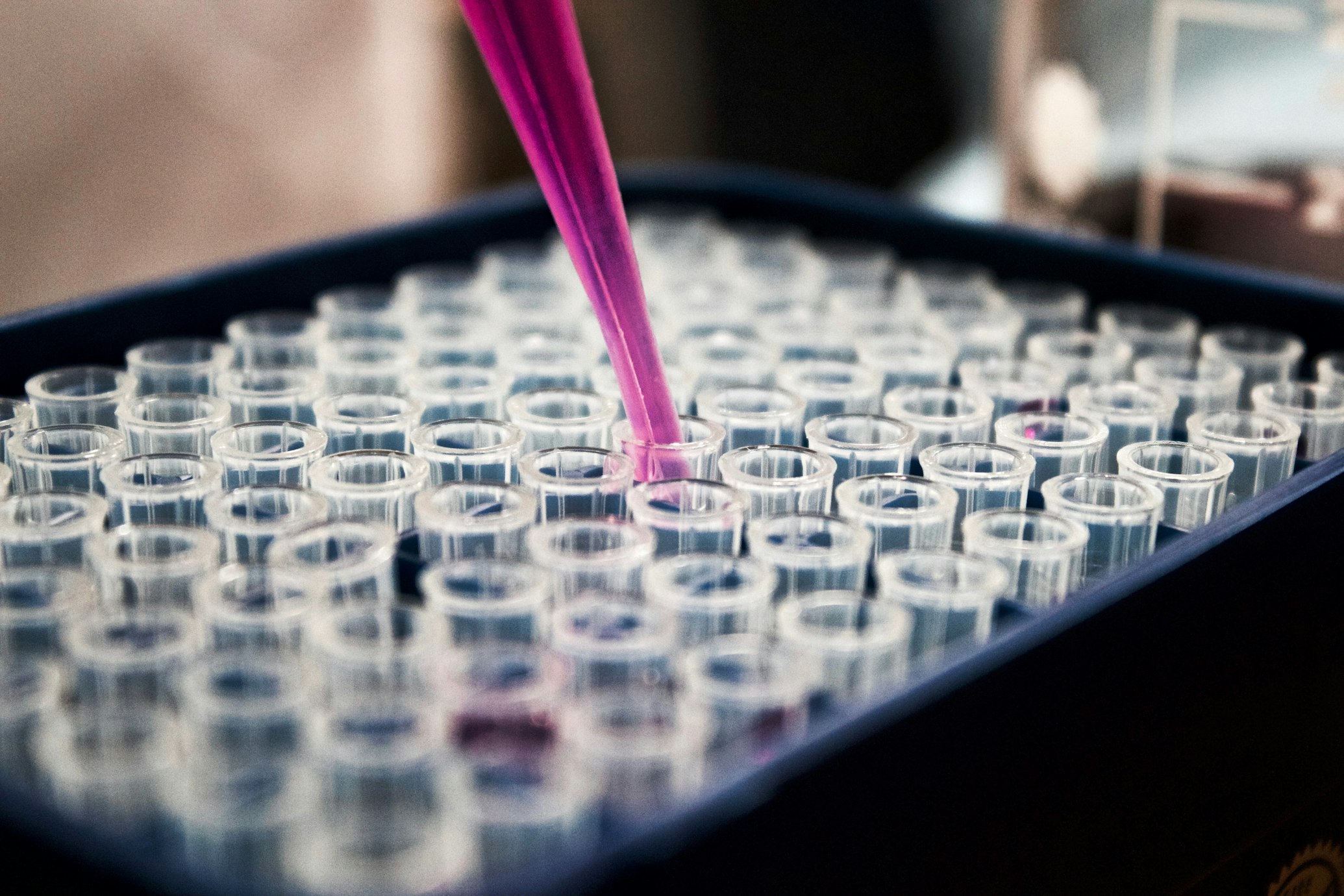
Visualization of cellular organization showing compartmentalization
Scientists, inspired by this natural phenomenon, asked a revolutionary question: Can we build our own condensates from scratch, and program them to do our bidding? The answer lies in the most programmable molecules we know: nucleic acids.
Coding with A, T, G, and C: The Architecture of a Designer Droplet
The magic behind synthetic nucleic-acid droplets is a process called liquid-liquid phase separation (LLPS). This is simply the same phenomenon that causes oil to form droplets in vinegar. In our case, the "oil" is a soup of specially designed DNA or RNA strands.
Multivalency
A single DNA strand might have several "sticky" ends. When many strands with multiple sticky ends are mixed, they form a sprawling, dynamic network.
Programmable Interactions
The "stickiness" is based on precise nucleotide base pairing. By writing specific genetic sequences, scientists dictate molecular interactions.
Dynamic Stability
Unlike solids, these DNA networks remain fluid. Molecules can enter, leave, and rearrange within droplets, enabling complex chemistry.
By mixing different "DNA programs," researchers can create droplets with custom properties—some might be excellent at concentrating enzymes, while others are designed to fuse only when triggered by a specific signal.
Engineering a Communicating Droplet Network
Let's dive into a pivotal experiment that demonstrates the power of this platform. The goal was to create two distinct populations of droplets that could "communicate" and trigger a color change in response to a specific molecular message.
Methodology: A Step-by-Step Guide to Building a Microliquid
Design and Synthesis
Scientists designed three main types of DNA strands on a computer:
- Scaffold Strands (A): Long, "multi-armed" DNA molecules that form the primary network of the droplet.
- Receiver Droplet Strands (B): These contain a protected, inactive strand that can produce a green fluorescent signal. The protection is a "lock" that can be removed by a specific key.
- Sender Droplet Strands (C): These contain the "key"—a DNA strand programmed to seek out and unlock the receiver.
Droplet Formation
- The Scaffold Strands (A) were mixed in a test tube with buffer solution. Through multivalent interactions, they spontaneously separated from the solution, forming a population of clear, stable droplets.
- To create the Receiver Droplets, the protected signal strand (B) was added to the scaffold mix.
- To create the Sender Droplets, the key strand (C) was added to a separate scaffold mix.
The Trigger and Observation
- The two populations of droplets (Sender and Receiver) were combined in the same chamber.
- A chemical trigger was added to the solution, which caused the Sender Droplets to release their "key" strands.
- The key strands diffused through the solution, found the Receiver Droplets, and unlocked the protected signal strand.
- The entire process was observed under a fluorescence microscope.
Results and Analysis: A Conversation in Color
The results were striking. Initially, the microscopic view showed only dark droplets. Minutes after the trigger was added, the Receiver Droplets began to glow with a bright green fluorescence, while the Sender Droplets remained dark.

Fluorescence microscopy visualization of communicating droplets
Scientific Importance
This experiment proved that synthetic droplets can be more than just inert blobs. They can be engineered as a system capable of one-way communication. The Sender Droplet acts as a signal generator, the solution as the transmission medium, and the Receiver Droplet as a sensor and reporter. This lays the groundwork for building complex, programmable chemical circuits inside artificial cells or for creating diagnostic systems where a disease biomarker triggers a visible signal from a droplet .
Data Tables: Quantifying the Droplet World
Droplet Stability Under Different Conditions
This table shows how the physical integrity of the DNA droplets changes with temperature, a key factor for practical applications.
| Condition | Average Droplet Diameter (µm) | Observation (After 1 Hour) |
|---|---|---|
| 25°C (Room Temp) | 5.2 ± 0.8 | Stable, no fusion |
| 37°C (Body Temp) | 5.0 ± 0.7 | Stable, slight shrinkage |
| 65°C (High Temp) | N/A | Complete dissolution |
| 4°C (Cold) | 5.5 ± 1.1 | Stable, occasional fusion |
Cargo Capture Efficiency
This measures how effectively different types of "cargo" molecules are concentrated inside the droplets from the surrounding solution.
| Cargo Type | Enrichment Factor |
|---|---|
| Dye Molecule | 12.5x |
| Small Protein | 8.1x |
| Target DNA Strand | 25.3x |
Dye Molecule: 12.5x
Small Protein: 8.1x
Target DNA Strand: 25.3x
Communication Experiment Results
This quantifies the success of the sender-receiver communication experiment.
| Droplet Type | % of Droplets Responding |
|---|---|
| Sender Droplets | 0% |
| Receiver Droplets | 92% |
| Control Droplets (No Key) | 2% (background) |
The Scientist's Toolkit: Essentials for Bioprogramming
To build these microscopic worlds, researchers rely on a specific set of molecular tools.
Programmable DNA/RNA Strands
The "code" and building blocks. Their sequence dictates how they interact and what structures they form.
Buffers and Salts
Provide the ideal chemical environment (pH, ionic strength) to promote correct base-pairing and droplet stability.
Fluorescent Tags/Dyes
Act as "lights" to make the invisible droplets visible under a microscope and to report on internal activity.
Enzymes
Molecular machines that can cut, join, or replicate DNA/RNA strands inside droplets, enabling dynamic, life-like behaviors.
Microfluidic Device
A tiny "lab-on-a-chip" used to create droplets of incredibly uniform size and composition for high-throughput experimentation.
Fluorescence Microscope
Essential for visualizing and analyzing droplet formation, interaction, and communication in real time.
Conclusion: A New Frontier in Micro-Engineering
Synthetic nucleic-acid droplets represent a paradigm shift. We are no longer just observing the rules of biology; we are using its fundamental language—the genetic code—to write our own instructions for matter. This "bioprogramming" platform allows us to design the behavior of liquids from the bottom up.
Smart Therapeutics
Intelligent drug capsules that release payloads only at disease sites like tumors.
Micro-Factories
Droplets that synthesize complex chemicals with unparalleled efficiency.
Synthetic Cells
Building the first truly functional synthetic cells from non-living components.
The potential applications are vast. We are learning to speak liquid, and the conversation has just begun .