Validating GlycoRNA: A Mass Spectrometry Guide for Discovery and Biomarker Development
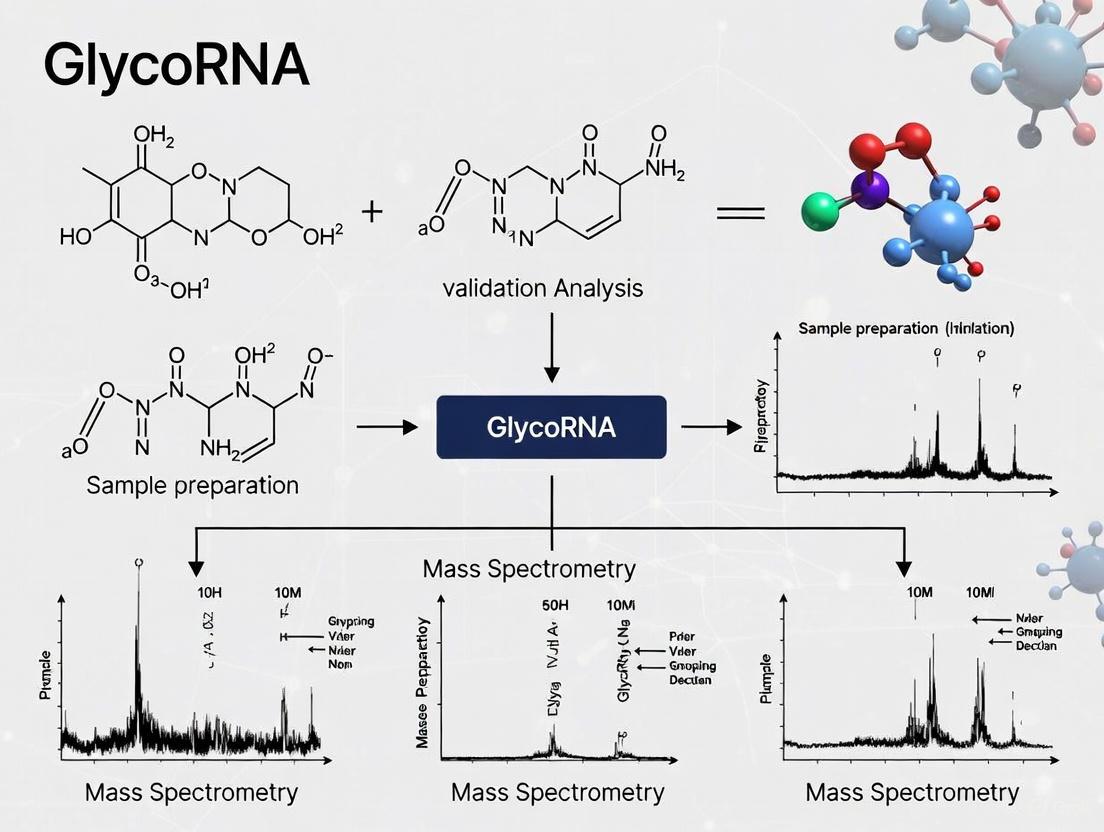
This article provides a comprehensive guide for researchers and drug development professionals on the application of mass spectrometry (MS) for the validation of glycosylated RNA (glycoRNA).
Validating GlycoRNA: A Mass Spectrometry Guide for Discovery and Biomarker Development
Abstract
This article provides a comprehensive guide for researchers and drug development professionals on the application of mass spectrometry (MS) for the validation of glycosylated RNA (glycoRNA). Covering foundational principles to advanced applications, we explore the pivotal role of MS in confirming the existence and structure of this newly discovered biomolecule. The content details specialized methodologies like rPAL and Ac₄ManNAz labeling coupled with LC-MS/MS and SWATH-MS, addresses critical troubleshooting for low-abundance analysis, and establishes frameworks for methodological validation. With glycoRNA emerging as a potential player in immune regulation and a source for cancer biomarkers, this resource synthesizes cutting-edge techniques to empower robust and reproducible glycoRNA research, accelerating its path from fundamental discovery to clinical translation.
GlycoRNA Unveiled: Establishing a New Biomolecule with Mass Spectrometry
The recent discovery of glycosylated RNA (glycoRNA) has fundamentally expanded the scope of glycobiology, challenging the long-standing paradigm that glycosylation exclusively modifies proteins and lipids. This finding revealed that conserved small noncoding RNAs bear sialylated glycans and are present on mammalian cell surfaces, suggesting a direct interface between RNA biology and glycobiology [1]. The initial report faced justifiable skepticism, as it proposed a previously unrecognized category of biomolecule. However, subsequent research has developed increasingly sophisticated validation methods, culminating in the identification of the precise molecular attachment site and solidifying glycoRNA as a genuine entity worthy of further investigation [2]. This Application Note details the key experimental protocols and analytical techniques, particularly mass spectrometry, that have been central to validating and characterizing glycoRNA, providing a framework for researchers embarking on this novel field of study.
Critical Experimental Workflows for GlycoRNA Analysis
Metabolic Labeling and Biochemical Enrichment
The initial detection of glycoRNA relied on a robust protocol for metabolic labeling and stringent RNA purification to eliminate confounding signals from glycoproteins and glycolipids.
- Workflow Overview: The multi-stage process ensures the specific isolation of glycosylated RNA molecules.
- Key Validation Steps: RNase sensitivity and glycan-dependent enrichment are critical controls to confirm the RNA-glycan conjugate.
Table 1: Key Reagents for Metabolic Labeling and Enrichment
| Research Reagent | Function in Protocol | Key Consideration |
|---|---|---|
| Ac₄ManNAz (Peracetylated N-azidoacetylmannosamine) | Metabolic precursor for incorporating clickable azide-modified sialic acid into nascent glycans [1]. | Concentration and exposure time must be optimized for different cell types [1]. |
| DBCO-Biotin (Dibenzocyclooctyne-Biotin) | Bioorthogonal probe for copper-free click chemistry conjugation with azide-labeled glycans, enabling streptavidin-based enrichment and detection [1]. | Copper-free chemistry prevents RNA degradation and copper-induced toxicity. |
| Proteinase K (PCR Grade) | Digests and removes protein contaminants from RNA preparations [1]. | A subsequent silica column purification is crucial post-digestion to remove residual glycopeptides [3]. |
| TRIzol Reagent | Standard for RNA extraction via acid phenol-guanidinium thiocyanate phase separation [1] [3]. | Effectively separates RNA from DNA and proteins in the initial isolation. |
| Silica Spin Columns (e.g., Zymo Research) | For desalting and further purifying RNA after TRIzol extraction and proteinase K treatment [3]. | Essential for removing unconjugated click chemistry reagents and metabolites. |
Figure 1: Core workflow for glycoRNA isolation and analysis, highlighting key steps for removing contaminants.
In Situ Imaging with ARPLA
The ARPLA (sialic acid aptamer and RNA in situ hybridization-mediated proximity ligation assay) technique was a major advancement, allowing for the direct visualization of specific glycoRNAs on the surface of single cells with high sensitivity and selectivity [4].
- Principle: ARPLA uses dual recognition of the glycan moiety (via a Neu5Ac aptamer) and the RNA sequence (via a DNA in situ hybridization probe) to trigger an in situ ligation and rolling circle amplification (RCA) event, generating a fluorescent signal only when both targets are in immediate proximity [4].
- Validation: The specificity of ARPLA was rigorously confirmed through controls including RNase treatment, glycosidase treatment, glycosylation inhibitors, and the use of scrambled or irrelevant aptamers, which all resulted in significant signal reduction [4].
Table 2: Essential Reagents for ARPLA Imaging
| Research Reagent | Function in Protocol | Key Consideration |
|---|---|---|
| Neu5Ac Aptamer | High-affinity binder (Kd ≈ 91 nM) to sialic acid on glycoRNA [4]. | Superior affinity compared to lectins (Kd = 1–10 μM); critical for low-background signal. |
| RISH DNA Probe | Single-stranded DNA probe complementary to the target RNA sequence (e.g., U1 RNA) [4]. | Confers sequence specificity to the imaging assay. |
| Connector Oligos | DNA strands that hybridize to linkers on the aptamer and RISH probe, enabling circularization for RCA [4]. | Proximity-dependent ligation prevents false-positive signals from non-colocalized targets. |
| Phi29 DNA Polymerase | Enzyme for Rolling Circle Amplification (RCA), generating a long, repetitive DNA product from the circular template [4]. | RCA dramatically amplifies the signal, enabling detection of single molecules. |
| Fluorophore-labeled ssDNA Reporters | Oligonucleotides complementary to the RCA product, generating a detectable fluorescent focus [4]. | Allows for visualization via standard fluorescence microscopy. |
Mass Spectrometry in GlycoRNA Validation
Mass spectrometry has been instrumental in the glycoRNA validation cascade, primarily applied to characterize the glycan moiety and, more recently, to confirm the RNA-glycan linkage.
Glycan Composition and Linkage Analysis
Following enrichment of glycoRNA, the glycans can be released and analyzed by mass spectrometry to determine their composition and structure.
- Workflow: GlycoRNA samples are subjected to glycan release (e.g., via PNGase F treatment), separation, purification, and often derivatization before analysis by nano-liquid chromatography–tandem mass spectrometry (nano-LC-MS/MS) [5].
- Findings: This approach revealed that glycoRNAs are enriched in sialic acid and fucose and their assembly depends on the canonical N-glycan biosynthetic machinery, suggesting a familiar glycosylation pathway applied to a novel scaffold [1].
Defining the RNA-Glycan Attachment Site
The most definitive validation came from mass spectrometry-based strategies that pinpointed the exact site of glycan attachment on the RNA.
- The Discovery of acp3U: A recent study identified the non-canonical RNA base 3-(3-amino-3-carboxypropyl)uridine (acp3U) as the attachment site for N-glycans in glycoRNA [2]. This provided the crucial molecular evidence connecting the glycan to a specific, modified nucleotide on the RNA backbone.
- Methodology: This likely involved MS analysis of glycoRNA-derived nucleosides or glycopeptide/RNA hybrid fragments, allowing for the precise determination of the modified base that serves as the glycan attachment point.
Figure 2: Mass spectrometry strategies for glycoRNA characterization, focusing on glycan composition and the critical RNA-glycan attachment site.
A Validated Framework and Future Perspectives
The journey from skepticism to validation for glycoRNA has been propelled by a series of complementary and increasingly rigorous technical approaches. The convergence of evidence from biochemical enrichment, sensitive imaging, and definitive mass spectrometry has established a compelling case for the existence of glycoRNAs. The identification of acp3U as the glycan attachment site represents a watershed moment, providing a concrete molecular foothold for the entire field [2]. For drug development professionals and researchers, the emerging role of cell-surface glycoRNAs as potential ligands for Siglec family receptors opens a new avenue for therapeutic intervention in immunology and oncology [1] [4]. As mass spectrometry technologies continue to advance, particularly in sensitivity and the analysis of complex heteropolymers, they will undoubtedly remain at the forefront of unraveling the biosynthesis, structural diversity, and functional mechanisms of this novel class of biomolecules.
The recent discovery of glycoRNA—a novel class of biomolecules comprising small noncoding RNAs modified with complex N-glycans—has unveiled an unexpected intersection between RNA biology and glycobiology. These glycosylated RNAs are presented on the cell surface where they participate in critical biological processes, including immune recognition and cell-cell communication [6]. Despite initial evidence supporting covalent linkage between RNA and glycans, the precise chemical nature of this connection remained elusive until recent breakthroughs identified 3-(3-amino-3-carboxypropyl)uridine (acp3U), a modified uridine nucleoside, as the direct attachment site for N-glycans in mammalian cells [6] [7]. First described five decades ago, acp3U has now been revealed as a pivotal component in the glycoRNA architecture, bridging the gap between nucleic acids and complex carbohydrate structures in a previously unrecognized molecular partnership [7].
The identification of acp3U as the glycan attachment site represents a fundamental advancement in our understanding of post-transcriptional RNA modifications. Unlike conventional RNA modifications that typically involve small chemical groups, the attachment of entire glycan structures to RNA suggests a new dimension of regulatory potential with implications for cellular communication, immune responses, and disease pathogenesis [7]. This application note details the experimental approaches and methodological considerations for validating acp3U as the core glycan attachment site in glycoRNA, with particular emphasis on mass spectrometry-based workflows suitable for researchers investigating RNA glycosylation.
Methodological Approaches for GlycoRNA Analysis
RNA-Optimized Periodate Oxidation and Aldehyde Ligation (rPAL)
The rPAL methodology represents a significant technical advancement for detecting and characterizing native glycoRNAs without requiring metabolic labeling. This approach leverages periodate-mediated oxidation of vicinal diols in sialic acid residues within native RNA samples, converting them into aldehydes that subsequently ligate with amine-containing reagents for detection and enrichment [6] [7]. Compared to earlier metabolic labeling approaches using peracetylated N-azidoacetylmannosamine (Ac4ManNAz), rPAL demonstrates a 1503-fold increase in signal sensitivity and a 25-fold improvement in signal recovery per RNA mass, enabling identification of low-abundance glycoRNA species that were previously undetectable [7].
The rPAL protocol involves several critical steps:
- RNA Preparation: Extract RNA using standard TRIzol protocols, followed by additional silica column purification (Zymo-Spin IC columns) to remove potential contaminants [3].
- Periodate Oxidation: Resuspend purified RNA in oxidation buffer containing 10 mM sodium periodate and incubate in darkness for 1 hour at 4°C.
- Aldehyde Ligation: Add amine-containing probes (e.g., biotin hydrazide) to the oxidized RNA and incubate for 2 hours at room temperature.
- Purification: Remove excess probes through ethanol precipitation or silica column purification.
- Detection/Analysis: Detect labeled glycoRNAs via northern blotting, streptavidin probes, or proceed to mass spectrometry analysis.
Table 1: Comparative Analysis of GlycoRNA Detection Methods
| Method | Principle | Sensitivity | Advantages | Limitations |
|---|---|---|---|---|
| Metabolic Labeling (Ac4ManNAz) | Incorporation of azide-modified sialic acids | Baseline | Compatible with click chemistry | Inefficient labeling; limited to metabolically active cells |
| rPAL | Periodate oxidation of vicinal diols | 1503x improvement over metabolic labeling | Detects native structures; no metabolic bias | Requires sialic acid residues |
| GlycanDIA | Mass spectrometry with data-independent acquisition | High for structural characterization | Comprehensive glycan profiling | Specialized instrumentation required |
Mass Spectrometry Approaches for Structural Validation
Sequential Window Acquisition of All Theoretical Mass Spectra (SWATH-MS) has emerged as a powerful tool for characterizing the direct linkage between glycans and the acp3U nucleoside. This data-independent acquisition method provides comprehensive fragmentation data for all detectable ions within a sample, enabling retrospective analysis without predefined target lists [6]. When applied to glycoRNA research, SWATH-MS facilitates identification of nucleoside modifications and their associated glycan moieties through several analytical strategies:
- Nucleoside Analysis: Digest RNA to individual nucleosides using nuclease P1 and alkaline phosphatase prior to MS analysis.
- Heavy Water Labeling: Incorporate heavy oxygen (^18^O) during enzymatic digestion to track mass shifts indicative of glycan conjugation.
- Retention Time Alignment: Compare experimental samples with synthesized acp3U standards to validate identification.
- Fragmentation Pattern Analysis: Use MS/MS spectra to confirm structural identity through characteristic fragmentation patterns.
Application of these approaches to HEK293 and K562 cells led to the identification of 34 unique nucleosides, with acp3U showing distinctive mass shifts and fragmentation patterns consistent with glycan modification [7]. Treatment with PNGase F, an enzyme that releases N-glycans from proteins, successfully cleaved glycosylated acp3U from RNA, further confirming its role as a direct glycan attachment site [7].
Experimental Validation of acp3U as the Glycan Attachment Site
Biochemical and Genetic Evidence
Multiple lines of experimental evidence support acp3U as the authentic glycan attachment site in glycoRNA:
- Enzymatic Release: PNGase F treatment of glycoRNA results in the specific release of glycosylated acp3U, leaving carboxyl residues on the RNA [7]. Although this treatment doesn't significantly diminish overall rPAL signal intensity, it produces a substantial molecular weight shift, consistent with removal of N-glycan structures [7].
- Genetic Knockout Studies: Generation of DTWD2 knockout clones (U2OS cells) - targeting the enzyme critical for acp3U installation - results in decreased levels of both acp3U and dihydrouridine (acp3D), accompanied by significantly reduced rPAL signal intensity [7]. This genetic evidence underscores the essential role of DTWD2 in acp3U RNA modification and subsequent glycoRNA formation.
- Biosynthetic Requirements: GlycoRNA formation depends on functional glycosyltransferases and related enzymes, as demonstrated through inhibitor studies using P-3FAX-Neu5Ac, NGI-1, and kifunensine, which reduce rPAL signal intensity and alter molecular weight distribution [7].
Table 2: Key Experimental Findings Supporting acp3U as Glycan Attachment Site
| Experimental Approach | Key Finding | Biological System | Interpretation |
|---|---|---|---|
| SWATH-MS Analysis | Identification of 34 unique nucleosides; acp3U with glycan-induced mass shifts | HEK293, K562 cells | Direct evidence of glycan conjugation to acp3U |
| PNGase F Treatment | Release of glycosylated acp3U from RNA | HeLa cell RNA | acp3U serves as substrate for N-glycosylation |
| DTWD2 Knockout | Reduced acp3U levels and rPAL signal | U2OS cells | DTWD2 required for acp3U installation and glycoRNA formation |
| Glycosyltransferase Inhibition | Reduced rPAL signal and altered MW | HeLa cells | GlycoRNA formation depends on glycosylation machinery |
Methodological Considerations and Contaminant Exclusion
Recent investigations highlight the importance of rigorous controls in glycoRNA studies, as glycoproteins can co-purify with RNA preparations using standard protocols [3]. Glycosylated molecules in RNA samples may show resistance to RNase A/T1 treatment but sensitivity to proteinase K digestion under denaturing conditions [3]. Liquid chromatography-mass spectrometry-based proteomics has identified various proteins, including the glycosylated membrane protein LAMP1, that co-purify with small RNA preparations [3]. These findings emphasize the critical need for:
- Denaturing Conditions: Use proteinase K treatment under denaturing conditions (e.g., with SDS and 2-mercaptoethanol) to effectively remove contaminating glycoproteins.
- Proteomic Controls: Implement mass spectrometry-based proteomic analysis to screen for co-purifying proteins in glycoRNA preparations.
- Multiple Purification Strategies: Employ complementary purification methods, including silica column purification both before and after enzymatic treatments.
Research Reagent Solutions for GlycoRNA Studies
Table 3: Essential Research Reagents for GlycoRNA Investigation
| Reagent/Category | Specific Examples | Function/Application | Considerations |
|---|---|---|---|
| Detection Reagents | rPAL reagents; Biotin hydrazide | Labeling native glycoRNAs; superior to metabolic labeling | 1503x sensitivity improvement over metabolic labeling |
| Enzymatic Tools | PNGase F; Sialidase; Proteinase K | Releasing N-glycans; Removing sialic acid; Eliminating protein contaminants | Use denaturing conditions for proteinase K |
| MS Standards | Synthetic acp3U; Heavy water (H₂^18^O) | Reference standard; Metabolic labeling for linkage confirmation | Enables retention time alignment and mass shift tracking |
| Glycosylation Inhibitors | P-3FAX-Neu5Ac; NGI-1; Kifunensine | Disrupting glycan biosynthesis; Probing biosynthetic pathways | Reduces rPAL signal intensity and alters MW distribution |
| Purification Systems | Zymo-Spin IC/IIIC columns; TRIzol extraction | RNA purification; Removing contaminants | Critical for eliminating co-purifying glycoproteins |
Visualizing GlycoRNA Biogenesis and Experimental Workflow
Biochemical Pathway of GlycoRNA Formation
Experimental Workflow for acp3U Validation
Implications for Biomedical Research and Therapeutic Development
The identification of acp3U as the core glycan attachment site in glycoRNA opens new avenues for therapeutic intervention and diagnostic development. Emerging evidence suggests that glycoRNAs participate in pathological processes including neutrophil recruitment to inflammatory sites [8] and ulcerative colitis, where O-linked glycans on RNA from colon organoids derived from patients exhibit higher sialylation levels compared to healthy controls [9]. These disease associations position glycoRNA and its biosynthetic machinery as potential targets for novel therapeutic strategies.
From a technical perspective, the rPAL methodology provides a robust platform for investigating glycoRNA in disease contexts, enabling researchers to:
- Map glycoRNA expression patterns in pathological versus healthy tissues
- Identify specific glycoRNA species that are dysregulated in disease states
- Develop targeted interventions that modulate glycoRNA biosynthesis or function
- Explore glycoRNA as biomarkers for diagnostic applications
Future methodological developments, particularly in single-cell spatial transcriptomics and RNA in situ hybridization-mediated proximity ligation assays (ARPLA), will further enhance our ability to visualize glycoRNA interactions within tissues and map their expression and function in various pathological contexts [7]. As the field advances, the precise chemical understanding of the acp3U-glycan linkage provides a foundational framework for manipulating this novel biochemical pathway for therapeutic benefit.
The recent discovery of glycoRNAs—glycosylated RNAs present on the cell surface—has introduced a new dimension to molecular biology, revealing a previously unrecognized layer of cellular regulation [10] [11]. Unlike traditional glycoconjugates (glycoproteins and glycolipids), glycoRNAs represent a hybrid biopolymer where complex glycans, including N-glycans typical of the secretory pathway, are covalently attached to RNA molecules [11]. Initial studies relying on metabolic labeling with clickable sugars (e.g., Ac₄ManNAz) provided indirect evidence for these structures but fell short of characterizing the fundamental chemical linkage between the glycan and RNA moieties [10] [12].
Establishing this covalent bond presents significant analytical challenges. The inherent structural complexity of glycans, combined with the low abundance and potential lability of glycoRNAs, demands highly sensitive and specific methodologies. Within this context, advanced mass spectrometry (MS) techniques have emerged as the definitive tool for confirming the existence and elucidating the precise nature of the RNA-glycan covalent bond [13] [12]. This Application Note details the integrated protocols and data interpretation strategies that leverage mass spectrometry to provide unambiguous proof of this novel linkage, with a specific focus on the identified modified nucleoside 3-(3-amino-3-carboxypropyl)uridine (acp3U) as an attachment site for N-glycans [12].
Experimental Protocols
Sample Preparation for GlycoRNA Analysis
The sensitivity and success of mass spectrometric analysis are critically dependent on sample preparation. The goal is to obtain high-purity glycoRNA free from contaminating glycoproteins and glycolipids.
- Cell Lysis and RNA Extraction: Use TRIzol or RNAzol RT for total RNA extraction. These reagents effectively remove proteins and hydrophobic contaminants like lipids while preserving small RNAs, which constitute a significant fraction of glycoRNAs [10] [12].
- RNA Purification: Following initial extraction, further purify RNA using column-based clean-up kits (e.g., Zymo Research RNA Clean & Concentrator). Include a digestion step with Proteinase K to eliminate any residual glycopeptides that could adhere to the RNA and confound results [10].
- Enzymatic Validation (Optional): To pre-validate samples, treat an aliquot of purified RNA with RNase A and/or sialidase. A true glycoRNA signal should be abolished by RNase and show altered mobility or signal loss with sialidase, confirming the sialic acid-containing glycan component [12].
- rPAL Labeling for Enhanced Detection: For subsequent northwestern blot analysis or enrichment, the RNA-optimized Periodate oxidation and Aldehyde Labeling (rPAL) protocol is recommended. This method selectively oxidizes the vicinal diols on sialic acids (at physiological pH and short reaction times) over the 2',3'-diols on the 3' terminal ribose of RNA. The generated aldehydes are then ligated to amine- or aminooxy-biotin reagents for detection. This protocol offers a >25-fold increase in sensitivity compared to metabolic labeling with Ac₄ManNAz [12].
Mass Spectrometric Analysis of GlycoRNAs
The core of the confirmatory workflow relies on advanced LC-MS/MS techniques to analyze the intact glycoRNA or its digested products.
- Instrumentation: A high-resolution tandem mass spectrometer (e.g., Q-TOF, Orbitrap) coupled with nanoflow or capillary liquid chromatography is essential.
- Chromatography: Use a Porous Graphitic Carbon (PGC) column. PGC is highly effective for separating native glycans and their isomers based on molecular size, hydrophobicity, and polar interactions, thereby reducing co-elution and simplifying MS/MS spectra [13].
- Data Acquisition – The GlycanDIA Workflow: For comprehensive and reproducible analysis, a Data-Independent Acquisition (DIA) strategy is superior to traditional Data-Dependent Acquisition (DDA).
- Fragmentation: Apply Higher Energy Collisional Dissociation (HCD) with a Normalized Collision Energy (NCE) of 20%. This energy optimizes the generation of sequence-defining glycosidic fragments while minimizing over-fragmentation [13].
- MS Scan Range: Set the MS1 scan range to m/z 600–1800 to cover the majority of glycan precursors [13].
- DIA Window Scheme: Implement a staggered DIA window method with 24 m/z windows across the full scan range. This scheme provides a balance between specificity and cycle time, ensuring sufficient data points (~10) across the chromatographic peak for reliable quantification [13].
- Data Acquisition – SWATH-MS: An alternative DIA method, known as Sequential Window Acquisition of All Theoretical Mass Spectra (SWATH-MS), has been successfully used to identify natural glyconucleosides, including the acp3U-modified species [12].
- Data Analysis: Process the complex DIA data using a specialized search engine like GlycanDIA Finder, which incorporates iterative decoy searching for confident glycan identification. The analysis should focus on identifying signature fragment ions that span the glycan-nucleoside linkage [13].
Table 1: Key Mass Spectrometry Acquisition Parameters for GlycoRNA Analysis
| Parameter | Recommended Setting | Rationale |
|---|---|---|
| Chromatography | Porous Graphitic Carbon (PGC) Column | Superior separation of glycan isomers; reduces spectral complexity [13] |
| Ionization Mode | Positive Electrospray Ionization | Comprehensive profile of various glycan subtypes, including sialylated forms [13] |
| Fragmentation | HCD at 20% NCE | Optimal yield of sequence-defining fragment ions [13] |
| Acquisition Mode | Data-Independent Acquisition (DIA) | Unbiased fragmentation of all precursors; improves detection of low-abundance species [13] [12] |
| MS1 Range | m/z 600 - 1800 | Covers the mass range of most N-glycan precursors [13] |
| DIA Window Setup | 24 m/z staggered windows | Balances specificity and scan cycle time; ensures ~10 data points across chromatographic peak [13] |
Data Analysis and Bioinformatics
- Fragment Ion Analysis: Manually inspect MS2 spectra for key fragments. The identification of B- and Y-type glycosidic fragments still attached to a nucleoside mass unit provides direct evidence of the covalent bond. For acp3U, specific mass shifts corresponding to the modified nucleoside and its attached glycan fragments are diagnostic [12].
- Library Matching: Compare acquired MS2 spectra against in-silico generated spectral libraries of proposed glycoRNA structures, focusing on the linkage region.
- Pathway and Network Visualization: For a systems-level view, graph embedding and other bioinformatics techniques can be used to visualize and interpret the complex relationships between glycoRNAs, RBPs, and other cellular components in network graphs [14].
Results and Data Interpretation
Key Evidence for the Covalent Bond
Mass spectrometry provides multiple, mutually reinforcing lines of evidence to confirm the covalent RNA-glycan bond.
- Identification of the Glycan-Acp3U Linkage: The most definitive evidence comes from the application of rPAL combined with SWATH-MS, which identified the modified RNA base acp3U as a direct site of attachment for N-glycans [12]. The MS data revealed specific fragment ions that encompass the glycan covalently linked to the acp3U nucleoside.
- Signature MS/MS Fragment Ions: In a typical MS/MS spectrum of a released glycoRNA, the presence of fragment ions that contain sugar moieties (e.g., HexNAc, Neu5Ac) with a mass increment corresponding to a nucleoside (e.g., uridine or acp3U) rather than a typical peptide or aglycone core is a key indicator. The GlycanDIA workflow facilitates the detection of these low-abundance but information-rich fragments [13] [12].
- Retention Time and Mass Alignment: In the LC-MS data, the co-elution of a species with a mass consistent with a defined glycan composition and an RNA oligomer (or nucleoside) provides supporting evidence for a single molecule.
- Enzymatic Control Correlations: The mass spectrometric signal for the putative glycoRNA should be eliminated upon pretreatment of the sample with RNase, confirming the RNA component is integral to the structure [12].
Table 2: Characteristic GlycoRNA Features Identified by Mass Spectrometry
| Feature | Description | Experimental MS Evidence |
|---|---|---|
| Attachment Site | The specific atom on the RNA and glycan involved in the bond. | acp3U base identified as an N-glycan attachment site via rPAL & SWATH-MS [12]. |
| Glycan Composition | The type and number of monosaccharides in the conjugated glycan. | N-glycan compositions (e.g., HexNAc, Man, Fuc, Neu5Ac) identified from fragment ions in HCD-MS/MS [13] [15]. |
| RNA Carrier Type | The class of RNA molecule that is glycosylated. | Predominantly small non-coding RNAs (e.g., snRNAs, snoRNAs) inferred from size selection and Northern blot [12] [11]. |
| Molecular Weight | The intact mass of the glycoRNA molecule. | Determined from LC-MS analysis, showing a mass consistent with a specific RNA + glycan combination [13]. |
Visualizing the Experimental Workflow
The following diagram illustrates the integrated protocol from sample preparation to mass spectrometric confirmation of the RNA-glycan bond.
The Scientist's Toolkit: Essential Reagents and Materials
Table 3: Key Research Reagent Solutions for GlycoRNA Mass Spectrometry
| Reagent / Material | Function / Application | Example/Catalog |
|---|---|---|
| Ac₄ManNAz | Metabolic chemical reporter; incorporates azide-modified sialic acid into glycans for initial detection and enrichment via click chemistry. | Click Chemistry Tools, #1084 [10] [12] |
| DBCO-PEG₄-Biotin | Used in copper-free click chemistry with Ac₄ManNAz-labeled glycans for biotinylation and subsequent pull-down or detection. | Sigma-Aldrich, #760749 [10] |
| rPAL Reagents | For direct labeling of native sialic acids on glycoRNAs via periodate oxidation and oxime ligation, offering high sensitivity. | N/A [12] |
| Proteinase K | Critical enzyme for digesting residual proteins/glycopeptides during RNA purification to minimize contamination. | Roche, #3115836001 [10] |
| PGC LC Columns | Stationary phase for separating glycan isomers prior to MS injection, reducing co-fragmentation. | Available from various vendors [13] |
| TRIzol/RNAzol RT | Reagents for simultaneous RNA extraction and deproteinization, preserving small RNA species. | Invitrogen #15596-018 [10] [12] |
Discussion
The confirmation of a covalent bond between RNA and glycans fundamentally expands the scope of glycosylation beyond proteins and lipids. The methodologies outlined here, centered on advanced mass spectrometry, provide an unambiguous toolkit for the scientific community to validate and explore this new class of biomolecules.
The identification of acp3U as a glycosylation site is a pivotal discovery, as it provides a specific molecular target for further investigation into the biogenesis and function of glycoRNAs [12]. The GlycanDIA and SWATH-MS approaches are particularly powerful because they offer a comprehensive and unbiased recording of the sample's fragment ion information, which is crucial for discovering novel linkages and for reproducible quantification across multiple samples [13] [12].
From a technical perspective, the combination of PGC chromatography for isomer separation and sensitive DIA workflows addresses the core challenges of glycan analysis: structural complexity and low abundance. The high sensitivity of these methods is paramount for applications such as analyzing the glycan profile of RNA samples, which have been historically underrepresented due to their low abundance [13].
Functionally, the presence of glycoRNAs on the cell surface, often in specific domains with RNA-binding proteins, suggests roles in immune regulation and cellular communication [11] [8]. The ability to rigorously confirm their chemical identity using these protocols is the first step toward manipulating these structures to understand their biological significance and potential as therapeutic targets in diseases such as cancer and autoimmune disorders [15] [8].
GlycoRNAs represent a groundbreaking discovery in molecular biology, challenging the long-standing paradigm that glycosylation was exclusive to proteins and lipids. First definitively characterized in 2021, glycoRNAs are small RNA molecules covalently modified with glycans and displayed on the surface of living cells [16] [17]. This discovery has expanded the functional repertoire of RNA into extracellular and immunological realms, establishing glycoRNAs as novel mediators in cell-cell communication and immune regulation [16].
The discovery timeline reveals how our understanding has evolved. In the 1990s-2000s, scientists sporadically detected RNA-binding proteins like nucleolin (NCL) on cell surfaces, but these findings were often dismissed as artifacts [17]. The paradigm truly shifted in 2021 when Ryan A. Flynn's team at Stanford University published landmark evidence confirming that small RNAs could be glycosylated with N-glycans and presented on mammalian cell surfaces [16] [17]. Subsequent research in 2024 identified the specific modified nucleotide acp³U (3-(3-amino-3-carboxypropyl)uridine) as the key attachment site for N-glycans on RNA [16] [17]. These discoveries have opened an entirely new frontier at the intersection of RNA biology and glycobiology.
Biological Significance of GlycoRNA in Immune Recognition
Interaction with Siglec Receptors
GlycoRNAs play a crucial role in immune regulation through their interactions with Siglec receptors (sialic acid-binding immunoglobulin-like lectins). These immune regulatory proteins recognize sialic acid-terminated glycans presented on glycoRNAs, creating a mechanism for tuning immune activation, tolerance, and inflammatory responses [16] [18]. This interaction positions glycoRNAs as RNA-based immune modulators that help prevent autoimmunity while maintaining appropriate immune surveillance [16].
Recent studies using the drFRET (dual recognition Förster resonance energy transfer) technique have demonstrated that glycoRNAs on small extracellular vesicles (sEVs) specifically interact with Siglec proteins, which is critical for sEV cellular internalization [19]. This interaction represents a novel pathway through which extracellular vesicles communicate with immune cells, potentially influencing immune responses in both health and disease states.
Regulation of Neutrophil Recruitment and Inflammation
GlycoRNAs contribute significantly to inflammatory processes by regulating neutrophil recruitment to inflammatory sites. Research has shown that glycoRNAs enhance neutrophil recruitment through their interaction with P-selectin on endothelial cells [19] [20]. This interaction facilitates the adhesion and migration of neutrophils to inflammatory sites, a critical step in the innate immune response.
The functional expression of glycoRNAs in this context depends on Sidt genes, which appear to regulate both the expression and function of glycoRNAs in neutrophil recruitment [19]. This connection provides important insights into how glycoRNAs may contribute to inflammatory disorders and offers potential therapeutic targets for modulating excessive inflammation.
Role in Immune Evasion and Cancer
Emerging evidence suggests that glycoRNAs may play a role in immune evasion mechanisms, particularly in cancer. GlycoRNAs appear to contribute to immune escape by masking immunogenic RNA bases such as acp³U, thereby preventing activation of Toll-like receptors (TLR3 and TLR7) that would normally recognize foreign or abnormal RNA [21]. This masking effect may represent a mechanism by which cancer cells suppress immune recognition and create a more permissive tumor microenvironment.
Table 1: GlycoRNA Functions in Immune Regulation
| Immune Function | Molecular Mechanism | Biological Significance |
|---|---|---|
| Immune Modulation | Interaction with Siglec receptors [16] [18] | Tunes immune activation and prevents autoimmunity |
| Neutrophil Recruitment | Binding to P-selectin on endothelial cells [19] | Enhances neutrophil migration to inflammatory sites |
| Immune Evasion | Masking immunogenic RNA bases (acp³U) from TLR3/TLR7 [21] | Prevents detection by innate immune system |
| Extracellular Vesicle Signaling | sEV glycoRNAs interact with Siglec proteins [19] | Facilitates sEV uptake and intercellular communication |
GlycoRNA in Cell Signaling Mechanisms
Formation of Surface Nanoclusters with RNA-Binding Proteins
GlycoRNAs form specialized membrane domains called glycoRNA-csRBP clusters on the cell surface [17]. These nanoscale structures consist of glycoRNAs assembled with RNA-binding proteins (RBPs) into precisely organized domains that facilitate specific signaling functions. Recent research has revealed that these clusters play a critical role in regulating the entry of cell-penetrating peptides (CPPs) into cells [16] [17].
The formation of these nanoclusters represents a previously unrecognized organizational principle of the cell surface, where RNA molecules serve as structural and functional components alongside proteins and lipids. This discovery significantly expands our understanding of cell surface architecture and its functional implications for cellular communication.
Regulation of Cell-Penetrating Peptide Entry
One of the most significant functional roles of surface glycoRNA complexes is their regulation of cell-penetrating peptide entry. The HIV-1 TAT protein, one of the best-characterized CPPs, utilizes these glycoRNA-csRBP domains as entry gateways into cells [17]. Experimental evidence demonstrates that removing RNA from the cell surface substantially reduces TAT's ability to enter cells, as does blocking TAT's RNA-binding capacity [17].
This mechanism has profound implications for viral infection pathways and drug delivery systems. Many viruses and therapeutic agents rely on CPPs for cellular entry, and the presence of glycoRNA-csRBP clusters appears to be a critical determinant of entry efficiency. This discovery opens new avenues for developing enhanced delivery systems for therapeutic macromolecules.
Extracellular Vesicle-Mediated Communication
GlycoRNAs are present on small extracellular vesicles (sEVs), where they contribute to intercellular communication [19]. These vesicle-associated glycoRNAs can be profiled using advanced detection methods like drFRET, which has shown remarkable diagnostic potential with 100% accuracy in distinguishing cancer versus control cases and approximately 90% accuracy in subclassifying cancer types within patient cohorts [16] [19].
The presence of glycoRNAs on sEVs extends their functional reach beyond the cell of origin, allowing them to influence distant cells and tissues. This systemic dimension of glycoRNA signaling represents an important mechanism for coordinating immune responses and other physiological processes across multiple cell types and tissues.
Diagram 1: GlycoRNA Signaling Pathways in Immune Recognition. This diagram illustrates the molecular interactions between glycoRNAs and immune receptors, and their functional consequences in immune regulation.
Mass Spectrometry-Based Validation of GlycoRNA
Advanced Mass Spectrometry Workflows
Mass spectrometry has been instrumental in validating the existence and characterizing the composition of glycoRNAs. Advanced workflows like GlycanDIA have been developed specifically to address the challenges of analyzing low-abundance glycoRNAs [22] [13]. This data-independent acquisition (DIA) method combines higher energy collisional dissociation (HCD)-MS/MS with staggered windows for enhanced sensitivity in identification and accuracy in quantification compared to conventional data-dependent acquisition (DDA)-based methods [13].
The GlycanDIA workflow has enabled researchers to profile N-glycans on RNA quantitatively across tissues, revealing that glycoRNA glycans differ significantly in composition from protein-bound glycans and exhibit tissue-specific abundance patterns [16] [13]. These tissue-specific differences suggest that glycoRNA levels vary based on cellular context and physiological state, adding another layer of regulatory complexity to their biological functions.
Structural Characterization and Attachment Site Identification
Mass spectrometry has been crucial for identifying the structural basis of glycoRNAs. A pivotal study using MS approaches identified the modified nucleotide acp³U (3-(3-amino-3-carboxypropyl)uridine) as the key site for N-glycan attachment on tRNAs and related RNAs [16]. This modification is commonly present in eukaryotes and bacteria, suggesting an evolutionarily conserved mechanism [16].
Researchers have proposed a 3-step model for RNA glycosylation: first, acp³U is introduced during tRNA maturation in the nucleus/cytosol; then the tRNA enters the secretory pathway, allowing the N-glycosylation machinery to attach sialylated glycans; finally, the resulting glycoRNAs are displayed on the cell surface [16]. This pathway reveals how classical protein-focused glycosylation machinery also extends its reach to RNA substrates.
Addressing Technical Challenges and Controversies
The study of glycoRNAs faces significant technical challenges, primarily due to their low abundance and potential contamination from co-purifying glycoproteins. A recent study highlighted that glycoproteins can copurify with RNA using current glycoRNA isolation protocols, representing a considerable source of glycans in glycoRNA samples [3]. These contaminants showed resistance to RNase A/T1 treatment but were sensitive to proteinase K digestion under denaturing conditions [3].
To address these challenges, rigorous controls and optimized protocols are essential. The mass spectrometry community has developed specific approaches for glycoRNA analysis, including:
- Enhanced purification methods to remove co-purifying glycoproteins
- Denaturing proteinase K treatments to eliminate protein contaminants
- Orthogonal validation using multiple detection techniques
- Improved MS sensitivity through techniques like GlycanDIA [22] [13]
Table 2: Mass Spectrometry Methods for GlycoRNA Analysis
| Method | Key Features | Applications in GlycoRNA Research |
|---|---|---|
| GlycanDIA | Data-independent acquisition with HCD-MS/MS and staggered windows [13] | Sensitive identification and quantification of low-abundance RNA glycans |
| Conventional DDA | Data-dependent acquisition selecting top N precursors for MS/MS [13] | General glycan profiling but limited for low-abundance species |
| Liquid Chromatography-MS/MS | Combines separation with tandem mass spectrometry [21] | Structural characterization and glycan composition analysis |
| rPAL with MS | RNA-optimized periodate oxidation and aldehyde ligation coupled with MS [16] | Detection of native glycoRNA linkages with high sensitivity |
Experimental Protocols for GlycoRNA Research
Metabolic Labeling and Detection Protocols
Metabolic labeling represents a foundational approach for glycoRNA detection. The standard protocol involves:
Metabolic Labeling: Cells are incubated with 100 μM Ac₄ManNAz (N-azidoacetylmannosamine-tetraacylated) for 24-40 hours to incorporate azide-modified sialic acid into nascent N-glycans [21] [19].
RNA Extraction: RNA is extracted using TRIzol or similar reagents, followed by ethanol precipitation and desalting through purification columns [19] [3].
Click Chemistry: Incorporation of azido glycans is detected using copper-free click chemistry with DBCO-PEG4-biotin (25°C), followed by denaturation with formamide at 65°C [19].
Analysis: The resulting products are separated using denaturing gel electrophoresis and analyzed by blotting or other detection methods [19].
This approach enables in vivo incorporation of azido glycans onto newly synthesized RNA and allows enrichment via biotin-streptavidin affinity for sequencing or LC-MS analysis [21]. It is particularly recommended for live-cell or dynamic metabolic studies.
Advanced Detection Techniques
Several advanced techniques have been developed specifically for glycoRNA detection, each with unique advantages:
rPAL (RNA-optimized periodate oxidation and aldehyde ligation): This technique exploits periodate to oxidize vicinal diols within RNA, creating aldehydes that can be ligated to tagging molecules. Compared to metabolic labeling, rPAL provides approximately 25-fold increase in sensitivity and better signal recovery [16].
drFRET (dual recognition Förster resonance energy transfer): This method uses two distinct DNA probes - one as an N-acetylneuraminic acid (Neu5Ac) probe for glycan recognition, and the other as an in situ hybridization probe for detecting glycoRNAs. drFRET enables ultrasensitive detection of glycoRNAs in biofluids from as little as 10 μL of biofluid and has shown remarkable diagnostic performance in clinical studies [19].
Lectin-based proximity labeling: This approach uses lectins such as Wheat Germ Agglutinin (which binds sialic acid/GlcNAc) to enrich glycoRNAs for downstream analysis [16].
Diagram 2: Experimental Workflow for GlycoRNA Analysis. This diagram outlines the key steps in glycoRNA detection and characterization, highlighting alternative approaches for different sample types.
Integrated Multi-Method Approaches
For comprehensive glycoRNA characterization, integrated approaches combining multiple techniques are most effective:
Sequencing-Mass Spectrometry Integration: Combining glycoRNA-seq with glycan-targeted mass spectrometry provides both sequence information and structural characterization [21]. Small RNA sequencing of glycosylated fractions, combined with glycan-specific enrichment (lectins, click chemistry, or rPAL), reveals exactly which RNAs are glycosylated [16].
Orthogonal Validation: Given the technical challenges and potential artifacts, orthogonal validation using multiple detection methods is essential. This includes combining metabolic labeling with northwestern blotting, MS analysis, and enzymatic treatments with appropriate controls [3].
Functional Assays: To connect glycoRNA identification to biological function, researchers are incorporating functional assays such as immune cell recruitment studies, sEV uptake experiments, and cell-penetrating peptide entry assays [19] [17].
The Scientist's Toolkit: Essential Reagents and Methods
Table 3: Research Reagent Solutions for GlycoRNA Studies
| Reagent/Method | Function | Application Notes |
|---|---|---|
| Ac₄ManNAz | Metabolic chemical reporter that introduces azide-modified sialic acid into nascent N-glycans [21] [19] | Used at 100 μM for 24-40 hours; enables click chemistry detection |
| rPAL (RNA-optimized periodate oxidation and aldehyde ligation) | Chemical labeling method that oxidizes vicinal diols in RNA for tagging [16] | Provides 25x higher sensitivity than metabolic labeling; suitable for purified RNA |
| Lectin Affinity Reagents | Proteins that bind specifically to carbohydrate structures (e.g., WGA for sialic acid/GlcNAc) [16] | Used for enrichment of glycoRNAs; requires optimization for specificity |
| drFRET Probes | Dual DNA probes for simultaneous glycan and RNA recognition [19] | Enables ultrasensitive detection in biofluids; requires specialized instrumentation |
| GlycanDIA MS Workflow | Data-independent acquisition MS for comprehensive glycan analysis [22] [13] | Optimal for low-abundance samples; requires specialized bioinformatics |
| Proteinase K (denaturing conditions) | Protease for eliminating glycoprotein contaminants [3] | Essential control for specificity; must use denaturing conditions for effectiveness |
GlycoRNAs represent a significant expansion of our understanding of RNA biology and its intersection with glycobiology and immunology. Once considered impossible due to the chemical properties of nucleotides, RNA glycosylation is now established as a genuine biological phenomenon with important implications for immune recognition, cell signaling, and intercellular communication.
The validation of glycoRNAs through advanced mass spectrometry techniques has been crucial to establishing this field. Methods like GlycanDIA have enabled researchers to overcome the challenges of low abundance and potential contamination, providing robust evidence for the existence and characteristics of glycoRNAs [22] [13]. These technical advances continue to drive our understanding of glycoRNA structure, biosynthesis, and function.
As research progresses, glycoRNAs offer promising translational opportunities, particularly in diagnostic applications and therapeutic development. The remarkable diagnostic performance of sEV glycoRNA profiles in distinguishing cancer types highlights their potential as biomarkers [19]. Similarly, the role of glycoRNA-csRBP clusters in regulating cell-penetrating peptide entry suggests possibilities for improving drug delivery systems [17].
Future research will need to address remaining questions about glycoRNA biosynthesis, trafficking, and precise mechanisms of action, while continuing to refine detection methods and controls. As these questions are answered, glycoRNAs may well emerge as important targets for therapeutic intervention and diagnostic innovation across a range of diseases.
Analytical Workflows: MS Techniques for GlycoRNA Detection and Characterization
The discovery of glycosylated RNA (glycoRNA) has introduced a new paradigm in molecular biology, revealing an unexpected intersection between the transcriptome and the glycome [23]. These molecules, primarily composed of small non-coding RNAs modified with sialylated glycans, have been detected on the cell surface and implicated in critical biological processes such as immune recognition and neutrophil recruitment [10] [23]. However, the low abundance and unique structural properties of glycoRNAs present significant analytical challenges. This application note provides a detailed comparison of two fundamental methodological approaches for glycoRNA detection and validation: metabolic labeling with Ac₄ManNAz and the direct chemical labeling strategy of RNA-optimized Periodate oxidation and Aldehyde Labeling (rPAL). We frame this technical comparison within the context of mass spectrometry-based validation, providing researchers with clear protocols and decision-making frameworks for their glycoRNA research.
Table 1: Core Characteristics of Ac₄ManNAz and rPAL Methods
| Characteristic | Ac₄ManNAz (Metabolic Labeling) | rPAL (Direct Chemical Labeling) |
|---|---|---|
| Fundamental Principle | Incorporation of azido-sugars via salvage pathway [24] | Periodate oxidation of native sialic acid 1,2-diols [23] |
| Target Epitope | Azido-functionalized sialic acid (SiaNAz) | Native sialic acid |
| Labeling Specificity | Labels newly synthesized glycans during incubation | Reports on existing, native sialylated glycans |
| Typical Incubation | 40-48 hours [3] [10] | 1-2 hours (post-RNA extraction) [23] |
| Key Readout | Northwestern blot, enrichment for MS/sequencing | Northwestern blot, enrichment for MS/sequencing |
| Compatibility | Live cells, requires metabolic incorporation | Purified RNA samples |
Metabolic Labeling with Ac₄ManNAz: Protocol and Optimization
The Ac₄ManNAz (2-[(2-Azidoacetyl)amino]-2-deoxy-D-mannopyranose-1,3,4,6-tetraacetate) method exploits the cellular salvage pathway to incorporate azide-modified sialic acid into nascent glycoRNAs [25] [24]. This bioorthogonal handle then enables highly specific conjugation via click chemistry for detection and enrichment.
Figure 1: The Ac₄ManNAz Metabolic Labeling and Detection Workflow.
Table 2: Research Reagent Solutions for Ac₄ManNAz Labeling
| Reagent / Kit | Function / Description | Example Supplier / Reference |
|---|---|---|
| Ac₄ManNAz | Cell-permeable metabolic precursor for azido-sialic acid [25] | Tocris Bioscience, Click Chemistry Tools |
| DBCO-PEG4-Biotin | Cyclooctyne-biotin conjugate for copper-free click chemistry [10] | Sigma-Aldrich |
| TRIzol Reagent | Monophasic solution for simultaneous RNA/protein isolation [3] [10] | Invitrogen |
| RNA Clean & Concentrator Kits | Silica-column based purification and desalting of RNA [10] | Zymo Research |
| Proteinase K | Serine protease for digesting contaminating glycoproteins [3] | Roche |
| High Sensitivity Streptavidin-HRP | Chemiluminescent detection for northwestern blot [10] | Pierce |
| SYBR Gold Nucleic Acid Stain | Fluorescent RNA gel stain for loading control [10] | Invitrogen |
Detailed Step-by-Step Protocol
Step 1: Metabolic Labeling of Cells.
- Seed cells (e.g., Ba/F3, HEK293, or NIH3T3) at an appropriate density (e.g., ( 4.9 \times 10^6 ) cells in a T175 flask) and allow to adhere overnight [3] [10].
- Prepare labeling medium: standard growth medium supplemented with 100 µM Ac₄ManNAz, 100 µM GalNAc, and 10 µM D-Galactose [3]. The peracetylated form enhances cell permeability.
- Replace the standard medium with the labeling medium. Incubate cells for 40-48 hours at 37°C with 5-7.5% CO₂ [3] [10].
- Critical Consideration: Concentration optimization is crucial. While 100 µM is standard, a study suggests that 10 µM may be sufficient for labeling with minimal perturbation to core cellular functions like energy generation and channel activity, while 50 µM showed significant effects [26].
Step 2: RNA Extraction and Purification.
- Aspirate the medium and wash adherent cells once with phosphate-buffered saline (PBS).
- Lyse cells directly in the culture flask using TRIzol reagent (e.g., 10 mL for a T175 flask) and incubate for 10 minutes at ambient temperature [3]. The use of TRIzol effectively removes proteins and lipids, reducing background.
- Add 0.2 volumes of chloroform, shake vigorously, and centrifuge at 4,000×g for 10 minutes for phase separation.
- Transfer the aqueous (upper) phase to a new tube and mix with 1.1 volumes of 100% isopropanol to precipitate RNA. Incubate at -20°C for 1 hour, then pellet RNA by centrifugation at 4,000×g for 2 hours [3].
- Wash the pellet with 80% ethanol, air-dry, and solubilize in ultrapure water overnight [3].
- Purification and DNase Digestion: Further purify the RNA using a silica-column-based kit (e.g., Zymo Research RNA Clean & Concentrator) according to the manufacturer's instructions. This step is critical for removing metabolites and unconjugated click chemistry reagents [10]. Include an on-column DNase I digestion step to remove genomic DNA contamination.
Step 3: Proteinase K Digestion (To Minimize Contamination).
- A significant concern in glycoRNA analysis is the co-purification of glycoproteins. To mitigate this, treat the purified RNA with Proteinase K [3].
- For rigorous treatment, incubate the RNA sample with Proteinase K (1 µg per 25 µg of RNA) in a denaturing Tris buffer (containing SDS and 2-mercaptoethanol) for 45 minutes at 37°C. This denaturing condition enhances protein unfolding and enzymatic activity, ensuring efficient degradation of contaminating glycoproteins like LAMP1 [3].
Step 4: Biotin Conjugation via Click Chemistry.
- To the purified RNA, add DBCO-PEG4-Biotin (final concentration ~100 µM) [10].
- Incubate the reaction mixture for 1-2 hours at room temperature or 37°C. This copper-free strain-promoted azide-alkyne cycloaddition (SPAAC) is efficient and avoids RNA degradation.
- Re-purify the biotin-labeled RNA using a silica column to remove excess DBCO-biotin.
Step 5: Detection and Enrichment.
- Northwestern Blot: Separate the biotin-labeled RNA on a denaturing agarose or polyacrylamide gel. Transfer to a nitrocellulose membrane. Crosslink the RNA to the membrane, then block with EveryBlot blocking buffer or Intercept (PBS) blocking buffer. Probe with High-Sensitivity Streptavidin-HRP and develop with a chemiluminescent substrate [10].
- Enrichment for Downstream Analysis: For mass spectrometry or sequencing validation, incubate the biotinylated RNA with streptavidin-coated magnetic beads. Wash stringently and elute the captured glycoRNAs for subsequent analysis.
Direct Chemical Labeling with rPAL: Protocol and Optimization
The rPAL method bypasses metabolic incorporation by directly targeting the cis-diol structure of native sialic acid on purified glycoRNAs via periodate oxidation [23]. This approach reports on the endogenous glycoRNA landscape without the potential cellular perturbations associated with metabolic labeling and captures glycoRNAs that were synthesized prior to the experiment.
Figure 2: The rPAL Direct Chemical Labeling Workflow.
Detailed Step-by-Step Protocol
Step 1: RNA Isolation.
- Isolate total RNA from cells or tissues using the TRIzol method, as described in Section 2.2, Step 2. This is the preferred starting point to ensure removal of protein and lipid contaminants [23].
- Purify the RNA using silica columns. Accurate quantification is essential for the subsequent chemical steps.
Step 2: Periodate Oxidation.
- Prepare an oxidation reaction with the purified RNA (e.g., 1-5 µg) using sodium periodate (e.g., 1-10 mM final concentration) in an appropriate buffer (e.g., sodium acetate buffer, pH 5.5) [23].
- Incubate the reaction in the dark for 1 hour on ice. This mild oxidation step specifically cleaves the sialic acid carbon-carbon bond between the 8 and 9 positions, generating an aldehyde group on the 7-carbon fragment while leaving the rest of the glycan structure intact.
Step 3: Biotin Conjugation.
- Remove excess periodate from the RNA sample, for instance, by using a desalting column.
- React the oxidized RNA with an aminooxy-functionalized biotin probe (e.g., aminooxy-PEG4-biotin). The reaction is typically carried out in an acidic buffer (e.g., 100 mM sodium acetate, pH 5.5) for 1-2 hours at 37°C [23].
- Under these conditions, the aminooxy group reacts with the aldehyde on the oxidized sialic acid to form a stable oxime bond.
Step 4: Post-Labeling Purification and Analysis.
- Purify the biotin-labeled RNA away from the unconjugated probe using a silica-column-based clean-up kit.
- The resulting RNA can be analyzed by northwestern blot (as in Section 2.2, Step 5) or enriched with streptavidin beads for downstream mass spectrometric analysis to characterize the RNA carriers and their associated glycan structures.
Mass Spectrometric Validation and Cross-Verification
Mass spectrometry (MS) serves as the gold standard for validating glycoRNA discoveries made with either Ac₄ManNAz or rPAL. The validation strategy typically involves several key steps after enrichment of biotinylated glycoRNAs. First, the RNA component can be identified by deep sequencing of the enriched material, revealing the specific small non-coding RNAs (e.g., Y RNAs, snRNAs, snoRNAs) that are glycosylated [23] [27]. Second, the glycan structures can be characterized by releasing the glycans from the enriched RNA-protein complex (e.g., by hydrolysis) and analyzing them via LC-MS/MS. Advanced methods like glycanDIA (Data-Independent Acquisition) can profile N- and O-glycans released from small RNAs, identifying sialylated and fucosylated species [9]. Finally, to unambiguously confirm the covalent linkage, researchers can use techniques like rPAL combined with high-sensitivity MS to identify the specific modified nucleotide that serves as the glycan attachment site, which has been shown to be 3-(3-amino-3-carboxypropyl)uridine (acp3U) [23].
A critical consideration for MS validation is the growing understanding that O-glycosylation may contribute significantly to the glycoRNA landscape. One study using rPAL found that knockout of key N-glycosylation enzymes (STT3A/B) did not significantly reduce labeling signal, whereas knockout of O-glycosylation enzymes (COSMC, C1GALT1) led to a ~75% loss of signal [9]. This suggests that O-linked glycans may constitute a major portion of sialoglycoRNAs in certain cell types, a factor that must be considered when designing validation experiments and interpreting MS data.
The choice between Ac₄ManNAz and rPAL is strategic and depends on the specific research question. The table below summarizes the key decision factors.
Table 3: Strategic Method Selection for Different Research Objectives
| Research Objective | Recommended Method | Rationale |
|---|---|---|
| Studying dynamics of nascent glycoRNA synthesis | Ac₄ManNAz | Temporal control via pulse-chase labeling; reports on de novo synthesis. |
| Profiling the steady-state, native glycoRNA landscape | rPAL | Labels endogenous sialylation without metabolic interference. |
| Live-cell imaging and tracking | Ac₄ManNAz | Compatible with cell-surface labeling using fluorescent DBCO probes. |
| Screens involving genetic (KO) or pharmacological perturbations | rPAL | Avoids confounding effects of altered metabolism on sugar analog uptake. |
| Cross-validation and rigorous confirmation | Both Methods | Using both approaches provides the strongest supporting evidence. |
In conclusion, both Ac₄ManNAz metabolic labeling and rPAL provide powerful, complementary pathways for the detection and validation of glycoRNAs. Ac₄ManNAz is ideal for dynamic studies in living systems, while rPAL excels at capturing the native state of these enigmatic molecules. A thorough understanding of their respective protocols, advantages, and limitations, as detailed in this application note, will empower researchers to effectively probe the biology of glycoRNAs and validate their findings with the rigorous support of mass spectrometry.
The emerging field of glycoRNA research has unveiled a previously unrecognized layer of biological complexity: glycosylated RNA molecules present on cell surfaces. This discovery necessitates advanced analytical technologies for structural validation and functional studies. High-resolution mass spectrometry, particularly Liquid Chromatography-Tandem Mass Spectrometry (LC-MS/MS) and Sequential Window Acquisition of all Theoretical Mass Spectra (SWATH-MS), has become indispensable for elucidating the precise chemical structures of these conjugates. These techniques provide the sensitivity, specificity, and throughput required to characterize this low-abundance modification, overcoming traditional analytical challenges [12] [21].
The structural elucidation of glycoRNA represents a significant analytical challenge due to the inherent differences between glycan and RNA chemistry. Glycans are highly hydrophilic and require soft ionization techniques, while RNA is negatively charged and prone to degradation. LC-MS/MS bridges this divide by coupling high-efficiency separations with sensitive mass detection, enabling researchers to separate complex mixtures and obtain detailed structural information through fragmentation patterns. SWATH-MS enhances this capability by providing a comprehensive, untargeted data acquisition method that fragments all detectable ions within specific mass windows, creating permanent digital maps of samples that can be retrospectively mined for specific glycoRNA features [12].
This application note details standardized protocols leveraging LC-MS/MS and SWATH-MS for glycoRNA characterization, with a specific focus on validating the attachment of N-glycans to the modified RNA base 3-(3-amino-3-carboxypropyl)uridine (acp3U). We provide detailed methodologies, data interpretation frameworks, and reagent solutions to accelerate research in this nascent field [12] [8].
Analytical Workflows and Instrumentation
Core LC-MS/MS Platform Configuration for GlycoRNA Analysis
A robust LC-MS/MS platform for glycoRNA analysis requires specific configurations to address the unique properties of these conjugates. The system should combine high-resolution separation with mass spectrometry capable of multiple fragmentation stages (MSⁿ). The recommended base configuration includes:
- Chromatography System: Reversed-phase liquid chromatography (RPLC) system with capability for nano-flow or capillary flow rates to enhance sensitivity. The use of C18 or C8 columns (1.7-2.1 mm internal diameter, 50-150 mm length) provides optimal separation for both glycan and nucleoside components [28].
- Mass Spectrometer: High-resolution mass spectrometer (Orbitrap or TOF-based) with negative ion mode capability. The system must support MS² and MS³ fragmentation to enable detailed structural annotation of complex GIPC series and their glycan moieties [28].
- Fragmentation Techniques: Collision-induced dissociation (CID) or higher-energy collisional dissociation (HCD) for glycan fragmentation, complemented by electron-activated dissociation (EAD) for detailed ceramide side-chain analysis when necessary [28].
Cross-platform validation using systems such as ZenoTOF 7600 and Agilent Infinity 1290 has demonstrated consistent glycan annotation and elution profiles, confirming method robustness across different instrument platforms. This reproducibility is essential for comparative glycosphingolipidomics across plant species or tissue types [28].
SWATH-MS Data Acquisition for Comprehensive GlycoRNA Profiling
SWATH-MS represents a significant advancement for glycoRNA analysis by providing a complete record of all ionizable compounds in a sample. This data-independent acquisition (DIA) method differs from traditional data-dependent acquisition (DDA) by systematically fragmenting all ions within sequential mass windows across the entire mass range of interest.
For glycoRNA analysis, the recommended SWATH-MS parameters include:
- Mass range: 100-2000 m/z for comprehensive coverage
- Window size: 25 Da windows to balance specificity and coverage
- Collision energies: Ramped energy (25-40 eV) to generate diverse fragment ions
- Cycle time: ~3 seconds to ensure sufficient data points across chromatographic peaks
This approach was pivotal in the identification of acp3U as the N-glycan attachment site on RNA, demonstrating the power of SWATH-MS for discovery applications in complex biological samples [12].
Table 1: Key MS Instrument Parameters for GlycoRNA Analysis
| Parameter | LC-MS/MS Configuration | SWATH-MS Configuration |
|---|---|---|
| Ionization Source | Electrospray Ionization (ESI) | Electrospray Ionization (ESI) |
| Polarity Mode | Negative ion mode preferred | Negative ion mode preferred |
| Mass Resolution | >60,000 (FTMS) | >30,000 (TOF) |
| Fragmentation | CID/HCD with MS³ capability | Variable energy HCD |
| Mass Accuracy | <5 ppm with internal calibration | <5 ppm with internal calibration |
| Dynamic Range | 4-5 orders of magnitude | 4-5 orders of magnitude |
Experimental Protocols
Protocol 1: rPAL Labeling for Native SialoglycoRNA Detection
The RNA-optimized Periodate oxidation and Aldehyde Labeling (rPAL) technique enables sensitive detection of native sialoglycoRNAs without metabolic labeling. This protocol leverages the differential reactivity of sialic acid diols versus ribose diols under mild oxidation conditions [12].
Materials:
- RNAzol RT or TRIzol reagent for RNA extraction
- Sodium periodate (freshly prepared at 10 mM in 0.1 M sodium acetate, pH 5.5)
- Aminooxy-biotin or aminooxy-alkyne reagents (5 mM in DMSO)
- Mucinase enzyme for glycan accessibility
- Silica column purification kits (Zymo Spin IC or IIICG columns)
- Quench solution: 100 mM aspartic acid in PBS
Procedure:
- RNA Extraction and Purification:
- Extract total RNA from cells using RNAzol RT according to manufacturer's protocol.
- Perform silica column purification with three washing steps: once with RNA Prep Buffer, twice with 80% ethanol.
- Elute RNA with ultrapure water and quantify by NanoDrop spectroscopy [3].
Pre-blocking Step:
- Incubate RNA samples with a free aldehyde reagent (e.g., 10 mM formaldehyde) for 15 minutes at room temperature to reduce background signal.
- Purify RNA using silica columns to remove excess reagent [12].
Periodate Oxidation and Ligation:
- Prepare reaction mixture: 5-10 μg RNA in 50 μL of 0.1 M sodium acetate buffer (pH 5.5).
- Add sodium periodate to final concentration of 1 mM.
- Incubate for 45 minutes at 4°C in the dark.
- Add aminooxy-biotin or aminooxy-alkyne to final concentration of 0.5 mM.
- Incubate for 2 hours at room temperature.
- Add quench solution (10% volume) to stop the reaction [12].
Post-labeling Purification:
- Purify labeled RNA using silica columns with adjusted RNA binding buffer (equal parts RNA binding buffer and 100% ethanol).
- Elute with ultrapure water and proceed to MS analysis or downstream applications.
Validation: Confirm labeling efficiency by treating aliquots with sialidase (VC sialidase, 0.1 U/μL) for 15-60 minutes at 37°C, which should eliminate high molecular weight signals corresponding to sialoglycoRNAs [12].
Protocol 2: SWATH-MS for acp3U-Glycan Conjugate Characterization
This protocol details the application of SWATH-MS to identify and characterize the direct linkage between N-glycans and the modified RNA base acp3U in glycoRNA molecules.
Materials:
- LC-MS grade solvents: water, acetonitrile, methanol
- Ammonium acetate or formic acid (MS grade)
- C16-lactosyl ceramide internal standard (or similar for quantification)
- Protease and nuclease-free reagents
- KOH solution (0.1 M in methanol) for hydrolysis when needed
Procedure:
- Sample Preparation:
- Isolate glycoRNA using rPAL labeling or metabolic labeling with Ac₄ManNAz.
- Digest with mucinase (1-2 μg enzyme per 10 μg RNA) for 2 hours at 37°C to improve glycan accessibility.
- For lipid removal, apply alkaline hydrolysis with 0.1 M KOH in methanol to disrupt the starchy matrix and reduce desludging/gelatinization, especially in complex samples [28].
- Purify samples using silica columns and quantify.
LC-MS/MS System Setup:
- Column: Reversed-phase C18 column (2.1 mm × 150 mm, 1.7-1.8 μm particle size)
- Mobile Phase A: 0.1% formic acid in water
- Mobile Phase B: 0.1% formic acid in acetonitrile
- Gradient: 2-35% B over 30 minutes, 35-95% B over 5 minutes, hold at 95% B for 5 minutes
- Flow rate: 0.3 mL/min
- Column temperature: 40°C [28]
SWATH-MS Data Acquisition:
- Ion source parameters: ESI voltage -1500 V, source temperature 300°C, nebulizer gas 40 psi
- Mass range: 100-2000 m/z for TOF-MS survey scans
- SWATH windows: 25 Da windows covering 400-1250 m/z
- Collision energy: 25 ± 15 eV rolling collision energy
- Cycle time: 3.0 seconds (including 100 ms survey scan)
- Resolution: >30,000 for TOF-MS scans [12]
Data Processing and Analysis:
- Use specialized software (e.g., Skyline, MarkerView) to process SWATH-MS data
- Extract ion chromatograms for expected fragments of acp3U-glycan conjugates
- Identify diagnostic ions: IP fragments at m/z 259 and 241 for glycan branching detection
- For acp3U identification, monitor for specific fragmentation patterns indicating the 3-(3-amino-3-carboxypropyl)uridine modification [12]
Research Reagent Solutions
Successful glycoRNA analysis requires carefully selected reagents and standards to ensure accurate identification and quantification. The following table outlines essential research reagents for glycoRNA studies using LC-MS/MS and SWATH-MS approaches.
Table 2: Essential Research Reagents for GlycoRNA MS Analysis
| Reagent/Category | Specific Examples | Function & Application |
|---|---|---|
| Metabolic Labeling Reagents | Ac₄ManNAz (peracetylated N-azidoacetylmannosamine) | Introduces azide-modified sialic acid into nascent N-glycans for click chemistry-based enrichment and detection [12] [21] |
| Chemical Labeling Reagents | rPAL (RNA-optimized Periodate oxidation and Aldehyde Ligation) reagents | Enables labeling of native sialoglycoRNAs without metabolic precursors; >25x increased sensitivity vs. metabolic labeling [12] |
| Internal Standards | C16-lactosyl ceramide | Structurally similar to GIPCs; corrects for extraction variability and instrument losses in semiquantitative comparisons [28] |
| Isotopic Labeling Reagents | PFBHA-d₂, isotopic methylamine, Girard's P reagents | Enable multiplexed quantification via stable isotope incorporation; enhance ionization efficiency and quantification accuracy [29] |
| Enzymatic Tools | Mucinase, Sialidase (VC sialidase), PNGase F | Improve glycan accessibility; validate glycan-dependent signals; confirm sialic acid presence [12] |
| Chromatography Materials | Porous graphitized carbon (PGC), HILIC columns | Alternative separation mechanisms for improved isomer separation; complement standard RPLC methods [29] [28] |
Data Interpretation and Analysis
Key Spectral Features for acp3U-Glycan Identification
Mass spectrometric analysis of glycoRNA focuses on identifying characteristic fragmentation patterns that confirm the presence of glycans attached to the acp3U RNA base. In negative ion mode MS² and MS³ spectra, key diagnostic ions include:
- Glycan branching indicators: Instead of standard IP fragments at m/z 259 and 241, branched glycans show new diagnostic ions at m/z 403 and 421, indicating a hexose directly linked to the inositol ring [28].
- acp3U-specific fragments: The 3-(3-amino-3-carboxypropyl)uridine modification produces distinctive fragmentation patterns that differentiate it from standard uridine bases in RNA sequences.
- Sialic acid signatures: Terminal sialic acids produce characteristic fragments that can be confirmed through sialidase sensitivity controls [12].
Contamination Considerations and Validation Controls
Recent studies highlight the importance of rigorous controls in glycoRNA analysis, as glycoproteins can copurify with small RNA preparations using current protocols. Key validation experiments include:
- RNase/Proteinase Sensitivity Testing: Treat samples with RNase A/T1 and proteinase K under denaturing conditions. Authentic glycoRNA signals should be RNase-sensitive but proteinase-resistant under native conditions [3] [30].
- Inhibitor Studies: Confirm the dependence on glycosylation machinery using inhibitors such as NGI-1 (oligosaccharyltransferase inhibitor), P-3FAX-Neu5Ac (sialic acid biosynthesis inhibitor), and Kifunensine (α-mannosidase-I inhibitor), which should reduce genuine glycoRNA signals [12].
- Cross-platform Validation: Analyze subsets of samples on different LC-MS platforms (e.g., ZenoTOF 7600 and Agilent Infinity 1290) to confirm consistent annotation and elution profiles [28].
Workflow Visualization
The following diagrams illustrate the core experimental workflows for glycoRNA analysis using LC-MS/MS and SWATH-MS approaches.
Diagram 1: rPAL Labeling and SWATH-MS Workflow for GlycoRNA Analysis
Diagram 2: LC-MS/MS Platform for GlycoRNA Structural Elucidation
The recent discovery that RNA can be modified by glycans represents a paradigm shift in molecular biology, expanding the universe of glycosylated molecules beyond the traditional scope of proteins and lipids. These glycosylated RNAs (glycoRNAs) have been detected on the cell surface where they may serve as ligands for lectins and participate in immune recognition. However, their low abundance and the novelty of the RNA-glycan linkage present significant analytical challenges. Mass spectrometry has emerged as a cornerstone technology for glycoRNA validation research, providing the sensitivity and structural specificity required to characterize these unconventional biopolymers. This application note details standardized protocols for the comprehensive characterization of N-linked and O-linked glycans on RNA molecules, enabling researchers to reliably validate and explore this emerging class of biomolecules.
Analytical Challenges in GlycoRNA Characterization
The characterization of glycans on RNA presents unique challenges distinct from conventional glycoprotein analysis. GlycoRNAs are notably low-abundance species, requiring highly sensitive detection methods. The RNA-glycan linkage chemistry differs fundamentally from protein-glycan bonds, necessitating specialized release and analysis strategies. Furthermore, the potential for co-purifying glycoproteins represents a significant confounding factor, as traditional extraction protocols may isolate glycoproteins alongside RNA, leading to false positives. The structural diversity of glycans themselves, including the presence of isomers and modifications, further complicates analysis. These challenges collectively demand optimized protocols specifically tailored for glycoRNA work.
Table 1: Key Challenges in GlycoRNA Characterization and Mitigation Strategies
| Challenge | Impact on Analysis | Mitigation Strategy |
|---|---|---|
| Low Abundance | Under-representation in mass spectrometric analysis | DIA-based workflows (GlycanDIA); metabolic labeling with Ac4ManNAz [3] [13] |
| Co-purifying Glycoproteins | False positive glycan signals attributed to RNA | Rigorous enzymatic controls (RNase A/T1, Proteinase K with denaturation) [3] |
| Unconventional Linkage | Resistance to standard release enzymes | Chemical release methods; adapted enzymatic approaches [31] [32] |
| Structural Isomers | Incomplete structural characterization | PGC chromatography; advanced fragmentation (EThcD) [13] [32] |
Experimental Protocols for GlycoRNA Analysis
Metabolic Labeling and GlycoRNA Enrichment
Metabolic labeling provides a strategic approach for tagging and subsequently isolating glycoRNAs for downstream analysis.
- Procedure:
- Cell Culture and Labeling: Culture mammalian cells (e.g., HeLa, NIH3T3) to ~80% confluence. Replace medium with labeling medium containing 100 µM Ac4ManNAz (a bioorthogonal precursor to sialic acid), 100 µM GalNAc, and 10 µM D-Gal. Incubate for 40 hours under standard conditions (37°C, 5-7.5% CO₂) [3].
- RNA Extraction: Lyse cells directly in culture flasks using TRIzol reagent. After homogenization and incubation, perform phase separation with chloroform. Precipitate RNA from the aqueous phase with isopropanol. Pellet RNA by centrifugation, wash with 80% ethanol, and air-dry [3].
- Size Fractionation and Purification: Desalt total RNA using silica columns (e.g., Zymo Spin). To isolate the small RNA fraction (<200 nucleotides), load total RNA onto a column. Retain the large RNA fraction in the column and precipitate the small RNA from the flow-through for subsequent analysis [3] [33].
- Click Chemistry and Capture: Perform a copper-free, strain-promoted azide-alkyne cycloaddition (SPAAC) reaction to conjugate biotin to the metabolically incorporated azide moiety. Incubate the biotinylated RNA with streptavidin-coated beads to capture glycoRNAs. Wash stringently to remove non-specifically bound material [3].
Solid-Phase Chemoenzymatic Capture of O-Linked GlycoRNAs (TnORNA Method)
For O-linked glycoRNAs, a chemoenzymatic method has been developed for specific capture and identification.
- Procedure:
- Solid-Phase Immobilization: Covalently immobilize oxidized glycoRNAs on a solid support.
- Enzymatic Release with GalNAcEXO: Treat the immobilized glycoRNAs with GalNAcEXO, an enzyme that selectively releases Tn-containing O-glycosylated RNAs (TnORNA).
- Downstream Analysis: The released TnORNA can be used for sequencing to identify the RNA species or for mass spectrometric analysis to characterize the O-glycan structures [31].
Mass Spectrometric Analysis of Released Glycans
Mass spectrometry is critical for definitive glycan identification. The GlycanDIA workflow offers significant advantages for low-abundance samples.
- Glycan Release:
- Chemical Release: For O-glycans, use methods like β-elimination or the EZGlyco O-glycan Prep Kit based on eliminative oximation to release intact glycans with minimal peeling byproducts [32].
- Enzymatic Release: For N-glycans, PNGase F is commonly used. However, its efficiency on the non-canonical acp3U attachment site in glycoRNA requires further validation [34].
- LC-MS/MS Analysis with GlycanDIA:
- Chromatography: Use a Porous Graphitic Carbon (PGC) column for LC separation, which effectively resolves glycan isomers.
- Mass Spectrometry: Employ a Data-Independent Acquisition (DIA) strategy on an Orbitrap instrument. The recommended setup uses staggered windows (24 m/z) covering a precursor range of 600-1800 m/z.
- Fragmentation: Apply Higher Energy Collisional Dissociation (HCD) with a normalized collision energy of 20% to generate sequence-defining fragments without over-fragmentation [13].
- Data Analysis: Process the complex DIA data using the GlycanDIA Finder search engine, which incorporates an iterative decoy search strategy for confident glycan identification [13].
Data Interpretation and Validation
Controlling for Glycoprotein Contamination
A critical step in glycoRNA analysis is verifying that detected glycans are genuinely attached to RNA and do not originate from co-purifying glycoproteins.
- Procedure:
- Differential Nuclease/Protease Digestion: Split the purified sample into aliquots.
- Treat one aliquot with RNase A/T1 and another with Proteinase K. For Proteinase K treatment, include a denaturing condition (e.g., with SDS and 2-mercaptoethanol) to ensure complete protein digestion, as glycosylated proteins can be resistant to proteolysis under native conditions [3].
- Compare glycan signals across treatments. A genuine glycoRNA signal should be sensitive to RNase but resistant to Proteinase K under denaturing conditions. Resistance to Proteinase K without denaturation is not sufficient evidence, as glycoproteins can withstand this treatment [3].
Glycan Quantification and Structural Elucidation
Mass spectrometry data provides both quantitative and structural information.
- Relative Quantification: Express individual glycan abundances as a percentage of the total glycan signal in the profile. This approach is useful for highlighting major changes but can be skewed by abundant species [35] [36].
- Absolute Quantification: For more precise measurement, use a standard curve generated with well-characterized permethylated oligosaccharide standards. Permethylation enhances ionization efficiency and standardizes response factors across different glycan structures, making absolute quantification reproducible [35].
- Isomer Differentiation: Leverage the separation power of PGC chromatography and analyze diagnostic fragment ions in the MS/MS spectra to distinguish between isomeric glycan structures [13].
Table 2: Quantitative Performance of Glycan Analysis Methods
| Method | Quantification Type | Key Advantage | Throughput | Ionization Efficiency |
|---|---|---|---|---|
| MALDI-TOF MS | Relative (%) | High sensitivity & speed | High | Enhanced by permethylation [35] |
| LC-ESI-MS (DDA) | Relative (%) | Rich structural MS/MS data | Medium | Enhanced by permethylation [35] [36] |
| GlycanDIA (DIA) | Absolute & Relative | Comprehensive, unbiased data | Medium-High | Good for native glycans [13] |
| HPLC-Fluorescence | Absolute | Direct quantification via calibration | High | Independent of structure [35] |
The Scientist's Toolkit: Research Reagent Solutions
Table 3: Essential Reagents for GlycoRNA Research
| Reagent / Tool | Function | Application in GlycoRNA Analysis |
|---|---|---|
| Ac4ManNAz | Metabolic labeling | Incorporates azide-modified sialic acid into nascent glycans for bioorthogonal tagging [3] |
| PNGase F | Enzymatic release | Cleaves N-glycans from glycoproteins; efficiency on glycoRNA requires validation [34] |
| GalNAcEXO | Enzymatic release | Selectively releases Tn-containing O-glycosylated RNAs (TnORNA) [31] |
| OpeRATOR | Protease | Cleaves at O-glycosylated Ser/Thr residues; useful for mapping glycosylation sites on peptides [32] |
| Proteinase K (with Denaturant) | Control experiment | Digests co-purifying proteins under denaturing conditions to validate RNA-specific glycan signal [3] |
| PGC Chromatography Column | LC Separation | Resolves glycan isomers by size, hydrophobicity, and polar interactions prior to MS [13] |
| GlycanDIA Finder | Bioinformatics | Automated identification and quantification of glycans from DIA-MS data [13] |
| PONglyRNA | Bioinformatics | Online tool for predicting glycosylated RNAs from sequence data [31] |
The characterization of N-linked and O-linked glycans on RNA demands carefully optimized and validated workflows to overcome challenges of low abundance and potential contamination. The integration of metabolic labeling, rigorous biochemical controls, and advanced mass spectrometry techniques like the GlycanDIA workflow provides a robust foundation for glycoRNA validation. The protocols and considerations outlined here offer researchers a comprehensive strategy to confidently identify and quantify these novel biomolecules, paving the way for functional studies into their roles in immune regulation, cell surface biology, and disease pathogenesis. As the field evolves, further refinement of these methods and the development of RNA-specific release enzymes will undoubtedly enhance our understanding of the glycoRNA landscape.
Glycosylated RNAs (glycoRNAs) represent a groundbreaking discovery at the intersection of RNA biology and glycoscience, challenging the long-standing paradigm that glycosylation modifications occur exclusively on proteins and lipids. These novel biomolecules consist of small, non-coding RNAs modified with N-glycans and have been identified on the cell surface, suggesting significant roles in intercellular communication and immune recognition [23] [37]. Their emergence introduces a new layer of complexity to our understanding of molecular interactions in cancer biology, positioning them as promising targets for innovative diagnostic and therapeutic strategies.
The unique feature of glycoRNAs lies in their sialic acid and fucose-rich N-glycan structures, which enable specific molecular interactions [23]. Notably, these glycosylated molecules have been confirmed to exist on the cell surface, suggesting their potential involvement in critical processes such as immune surveillance [23] [37]. Recent evidence indicates that cell surface glycoRNAs are essential for neutrophil recruitment and function, underscoring their broad immunological significance beyond cancer [23]. The arrangement of glycoRNA complexes with cell-surface RNA-binding proteins (csRBPs) on the cell surface appears critical not only for immune modulation but also for broader structural functions on the cell membrane [23].
GlycoRNA Biogenesis and Molecular Mechanisms
Biosynthetic Pathways
The biosynthetic pathway of glycoRNAs remains an active area of investigation, though significant progress has been made in understanding key components. Current evidence suggests that N-glycans on small RNA molecules are synthesized via the endoplasmic reticulum-Golgi pathway, a process dependent on the oligosaccharyltransferase (OST) complex [23] [37]. This discovery directly links glycoRNA to the N-linked glycosylation machinery, distinct from O-GlcNAc modification catalyzed by O-GlcNAc transferase (OGT) [23].
A pivotal advancement in understanding glycoRNA biogenesis came with the identification of 3-(3-amino-3-carboxypropyl)uridine (acp3U) as a critical RNA modification site for N-glycan linkage [7]. This modified uridine, primarily found in tRNAs, serves as an attachment point for glycans. Enzymes such as DTW domain-containing 2 (DTWD2) are essential for acp3U formation, and their absence significantly alters glycoRNA biosynthesis, reducing glycoRNA display on cell surfaces [7]. The discovery of acp3U bridges glycobiology and RNA biology, potentially redefining our understanding of cellular communication and function.
Membrane Localization and Surface Display
The presence of glycoRNAs on the cell surface presents a topological paradox, as RNA molecules are not typically localized within the ER-Golgi system where glycosylation occurs. Several hypotheses have been proposed to explain this phenomenon. Certain RNA-binding proteins (RBPs) may chaperone RNAs into or near the ER/Golgi compartments, facilitating access to enzymatic glycosylation machinery [37]. Alternatively, atypical trafficking routes may allow RNA or RNA-containing complexes to transiently interact with ER/Golgi-associated glycosylation enzymes [37]. Recent research has highlighted unconventional vesicular transport, RNA-RBP complexes, and even localized translation of RBPs as potential mechanisms guiding RNA to glycosylation sites [37].
Diagram Title: GlycoRNA Biogenesis and Function Pathway
GlycoRNA Alterations in Cancer
Expression Patterns Across Malignancies
GlycoRNA expression demonstrates significant alterations across various cancer types, presenting opportunities for diagnostic exploitation. Recent studies using sialic acid aptamers and RNA in situ hybridization-mediated proximity ligation assays (ARPLA) have revealed that surface glycoRNA levels are inversely associated with tumor malignancy and metastasis in cancer cell lines [37]. Specifically, non-tumorigenic breast cells exhibited higher glycoRNA abundance compared to malignant and metastatic breast cancer cells, which showed progressively lower glycoRNA signals [37]. This suggests that decreased glycoRNA expression may be linked to increased tumor aggressiveness.
In glioma research, glycoRNAs have been found to be particularly abundant, with studies identifying specific small nuclear RNAs (U2 and U4) as predominant glycoRNA species in glioma cell lines [38]. Functional investigations demonstrated that depletion of cell-surface glycoRNAs significantly inhibited glioma cell viability and proliferation without altering cell adhesion or apoptosis levels, underscoring their critical role in tumor growth mechanisms [38].
GlycoRNA-Based Cancer Classification
The diagnostic potential of glycoRNAs extends to precise cancer classification, as demonstrated by a recent investigation utilizing a dual recognition Förster resonance energy transfer (drFRET) strategy. This approach enabled sensitive, selective profiling of glycoRNAs on small extracellular vesicles (sEVs) from minimal biofluid samples (10 μl initial biofluid) [39]. In a 100-patient cohort encompassing six cancer types and non-cancer controls, sEV glycoRNA profiles achieved 100% accuracy in distinguishing cancers from non-cancer cases and 89% accuracy in classifying specific cancer types [39].
Table 1: GlycoRNA Alterations in Human Cancers
| Cancer Type | GlycoRNA Alteration | Detection Method | Functional Significance |
|---|---|---|---|
| Breast Cancer | Decreased levels in malignant vs. non-tumorigenic cells | ARPLA [37] | Inverse association with metastasis |
| Glioma | Abundant U2 and U4 snRNAs | Metabolic labeling, Northern blot [38] | Promotes cell viability and proliferation |
| Multiple Cancers (6 types) | Distinct sEV glycoRNA profiles | drFRET [39] | 89% accuracy in cancer type classification |
| Various Cancers | Interaction with Siglec receptors | rPAL, BLI [23] [37] | Potential immune evasion mechanism |
Mass Spectrometry Approaches for GlycoRNA Detection
RNA-Optimized Periodate Oxidation and Aldehyde Labeling (rPAL)
The rPAL method represents a significant advancement in glycoRNA detection, enabling sensitive identification without metabolic labeling. This technique leverages the unique reactivity of 1,2-diols in sialic acids, where periodate oxidation generates aldehyde groups that form stable oxime bonds with aminooxy-functionalized solid-phase supports, enabling specific labeling of glycoRNAs [23]. Compared to metabolic labeling methods using Ac4ManNAz, rPAL achieves a 1,503-fold increase in signal sensitivity and a 25-fold improvement in signal recovery per RNA mass [7]. This remarkable sensitivity allows identification of low-abundance glycoRNAs, opening new avenues for studying RNA glycosylation in clinical samples.
When combined with high-sensitivity mass spectrometry, rPAL has been instrumental in identifying acp3U as a key nucleotide anchoring site for glycan attachment [23] [7]. Treatment with PNGase F successfully releases glycosylated acp3U from RNA, indicating that this modified nucleotide is a direct target of glycosylation [7]. Although PNGase F treatment does not significantly diminish overall rPAL signal intensity, it results in a substantial molecular weight shift, reinforcing the role of acp3U in N-glycan attachment [7].
Metabolic Labeling and Click Chemistry Approaches
Metabolic labeling represents an established alternative for glycoRNA detection, utilizing azide-modified sugar precursors such as N-azidoacetylmannosamine-tetraacylated (Ac4ManNAz) that cells incorporate into glycans as sialic acid mimetics [10]. Following metabolic incorporation, copper-free click chemistry enables conjugation with detection tags (e.g., DBCO-biotin) for subsequent analysis via northwestern blot or mass spectrometry [10] [39].
This approach has been successfully applied to detect glycoRNAs in multiple systems, including small extracellular vesicles (sEVs) from cancer cell lines and clinical serum samples [39]. The presence of glycoRNAs on sEVs is particularly significant for diagnostic applications, as these vesicles can be isolated from minimally invasive biofluids and carry tumor-specific molecular signatures.
Diagram Title: GlycoRNA MS Detection Workflows
Quantitative Mass Spectrometry Methodologies
Quantitative analysis of glycoRNAs presents unique challenges that require specialized mass spectrometry approaches. The use of a mass spectrometer in quantitative analysis exploits its exquisite selectivity and sensitivity as a detector, allowing a signal to be ascribed to a particular chemical entity with high certainty, even when present in a sample at low concentration [40]. Selected reaction monitoring (SRM) and multiple reaction monitoring (MRM) techniques are particularly valuable for targeted quantification of specific glycoRNA species [40].
For absolute quantification, the internal standard calibration curve method is frequently used in quantitative mass spectrometry [40]. This approach involves adding a chemical mimic of the analyte to all samples and standards at a fixed and known concentration, then measuring the signals for both the analyte and internal standard. The ratio of these responses versus concentration is plotted for all standards, yielding a calibration curve that enables determination of target analyte concentrations in unknowns [40].
Table 2: Mass Spectrometry Methods for GlycoRNA Analysis
| Method | Principle | Sensitivity | Applications | Key Reagents |
|---|---|---|---|---|
| rPAL [23] [7] | Periodate oxidation of sialic acid diols | 1,503-fold increase vs. metabolic labeling | Discovery studies, site identification | Aminooxy-functionalized solid supports |
| Metabolic Labeling [10] [39] | Incorporation of azide-modified sugars | Suitable for cell culture systems | Functional studies, vesicle analysis | Ac4ManNAz, DBCO-biotin |
| LC-SWATH-MS [7] | Data-independent acquisition MS | High for modified nucleosides | Comprehensive profiling, biomarker discovery | acp3U standards, enzymatic digests |
| MRM/SRM [40] | Targeted mass spectrometry | High for predefined targets | Validation, quantitative assays | Stable isotope standards |
Integrated Protocol for GlycoRNA Detection and Quantification
Sample Preparation and RNA Extraction
Proper sample preparation is critical for reliable glycoRNA detection, with particular attention to eliminating contamination from glycoproteins and glycolipids. The following protocol outlines a comprehensive approach for glycoRNA analysis from cell cultures:
Cell Culture and Metabolic Labeling: Culture cells in appropriate medium supplemented with 100 μM Ac4ManNAz for 36 hours [10] [39]. Include untreated controls for background subtraction. For cell lines with unknown glycoRNA levels or Ac4ManNAz tolerance, optimize treatment duration and concentration.
RNA Extraction: Extract RNA using TRIzol reagent to remove proteins and hydrophobic contaminants while preserving small RNAs [10]. Perform additional purification using RNA Clean & Concentrator kits to ensure high-purity RNA preparations. Treat samples with high-concentration proteinase K (e.g., recombinant proteinase K powder from Roche) to eliminate residual protein contamination [10].
Quality Assessment: Determine RNA concentration and purity using spectrophotometry (A260/A280 ratios of 1.8-2.0 indicate high RNA purity) [38]. Calculate protein-to-RNA concentration ratios to confirm minimal protein contamination (target ratios <0.0001) [38].
GlycoRNA Enrichment and Labeling
Click Chemistry Reaction: Resuspend purified RNA in appropriate buffer and incubate with DBCO-PEG4-biotin conjugate (25°C, with rotation) for copper-free click chemistry [10]. Optimize DBCO-biotin concentration and reaction time based on empirical testing.
Enrichment of GlycoRNAs: Use streptavidin magnetic beads to capture biotinylated glycoRNAs [38]. Validate enrichment efficiency through control experiments with non-metabolically labeled samples. For specific glycoRNA species, develop sequence-specific RNA-capture magnetic bead systems using complementary probes [38].
Enzymatic Validation: Treat separate aliquots of enriched glycoRNAs with specific enzymes to confirm glycan composition: sialidase (for sialic acid removal), PNGase F (for N-glycan release), and endoglycosidases F2/F3 [38]. Significant reduction in signal following enzyme treatment validates the glycan component.
Mass Spectrometry Analysis
Sample Preparation for MS: Digest RNA to nucleosides using appropriate nucleases. For heavy water labeling, perform enzymatic digestion in the presence of H218O to observe mass shifts that confirm glycan conjugation [7].
LC-MS/MS Analysis: Utilize liquid chromatography coupled with tandem mass spectrometry, preferably using sequential window acquisition of all theoretical mass spectra (SWATH-MS) for comprehensive profiling [7]. Employ synthesized acp3U standards to validate retention times and fragmentation patterns [7].
Quantification: Implement internal standard calibration with stable isotope-labeled analogs when available. For relative quantification across samples, use label-free approaches based on peak areas of extracted ion chromatograms.
Data Analysis and Interpretation
GlycoRNA Identification: Process raw MS data using appropriate software to identify modified nucleosides. Focus on mass shifts corresponding to glycan modifications, particularly those associated with acp3U [7].
Statistical Analysis: Perform quantitative comparisons between sample groups using appropriate statistical tests. For biomarker discovery, employ multivariate analysis and machine learning algorithms to identify discriminatory glycoRNA signatures.
Validation: Confirm findings using orthogonal methods such as northwestern blotting [10] or drFRET [39] when possible. For putative biomarkers, validate in independent sample cohorts.
Research Reagent Solutions for GlycoRNA Studies
Table 3: Essential Research Reagents for GlycoRNA Investigation
| Reagent Category | Specific Examples | Function | Application Notes |
|---|---|---|---|
| Metabolic Labeling Agents | Ac4ManNAz, Ac4GalNAz [10] [39] | Incorporates azide groups into glycans for detection | Concentration typically 100 μM, 24-36 hour incubation |
| Click Chemistry Reagents | DBCO-PEG4-biotin conjugate [10] | Copper-free click reaction with azide-labeled glycans | Enables streptavidin-based detection and capture |
| Enrichment Systems | Streptavidin magnetic beads [38] | Captures biotinylated glycoRNAs | Critical for isolating low-abundance species |
| Sequence-Specific Capture | Custom oligonucleotide probes [38] | Enriches specific glycoRNA species (e.g., U2, U4) | Magnetic bead conjugation enables targeted studies |
| Enzymatic Tools | Sialidase, PNGase F, Endo F2/F3 [38] | Characterizes glycan composition and linkage | Sensitivity to these enzymes validates genuine glycoRNAs |
| MS Standards | Synthetic acp3U [7] | Validates identification of key glycosylation site | Essential for accurate MS identification and quantification |
| Detection Dyes | SYBR Gold, Diamond nucleic acid dye [10] | Visualizes RNA loading in gels | Optimize dilution (SYBR Gold at >1:10,000 suggested) |
GlycoRNAs represent a novel class of biomolecules with significant potential for cancer diagnostics and therapeutics. Their position at the interface of RNA biology and glycoscience, combined with their cell surface localization and altered expression in malignancies, makes them uniquely positioned as cancer biomarkers. The development of sensitive mass spectrometry methods such as rPAL and metabolic labeling approaches has enabled robust detection and quantification of these low-abundance molecules in both cellular models and clinical specimens.
As the field advances, key challenges remain in standardizing detection protocols, understanding the precise biosynthetic pathways, and elucidating the full scope of glycoRNA functions in cancer biology. The integration of glycoRNA profiling with other omics technologies will likely yield comprehensive molecular signatures for precision oncology applications. With continued methodological refinements and validation in larger clinical cohorts, glycoRNA-based diagnostics hold promise for transforming cancer detection, classification, and monitoring in the era of personalized medicine.
Overcoming Challenges: Optimizing MS for Low-Abundance GlycoRNA Analysis
The discovery of glycosylated RNA (glycoRNA) has unveiled a new category of biomolecule at the intersection of RNA biology and glycobiology, presenting unique challenges for analytical detection and validation. These molecules, predominantly comprising small non-coding RNAs modified with N-glycans rich in sialic acid and fucose, exist at exceptionally low abundance compared to traditional glycoconjugates [23]. Their characterization is further complicated by potential co-purification with glycoproteins, which can represent a significant source of contamination and lead to false positives if not properly addressed [3]. This application note provides detailed protocols and strategies to overcome these challenges, enabling reliable mass spectrometry-based validation of glycoRNAs through enhanced enrichment, contamination control, and detection sensitivity.
Critical Considerations in GlycoRNA Sample Preparation
The GlycoRNA Contamination Challenge
Recent investigations have revealed that glycoproteins represent a considerable source of glycans in preparations initially presumed to be pure glycoRNA. Studies demonstrate that glycosylated molecules in small RNA preparations can show resistance to RNase A/T1 treatment but sensitivity to proteinase K digestion under denaturing conditions, indicating proteinaceous contamination [3]. Liquid chromatography-mass spectrometry-based proteomics has identified various contaminating proteins, including the glycosylated membrane protein LAMP1, which co-purifies with small RNA preparations using current glycoRNA isolation methods [3]. This contamination profile necessitates rigorous purification controls and specific digestion protocols to ensure authentic glycoRNA detection.
Key Research Reagent Solutions
Table 1: Essential Research Reagents for GlycoRNA Enrichment and Detection
| Reagent | Function | Application Context |
|---|---|---|
| Ac4ManNAz (Peracetylated N-azidoacetylmannosamine) | Metabolic labeling introducing clickable azido-sialic acid to nascent N-glycans [23] [38] | Enables bioorthogonal conjugation (e.g., with DBCO-biotin) for glycoRNA capture and detection |
| PNGase F | Glycosidase enzyme that cleaves N-linked glycans between asparagine and GlcNAc [3] | Controls for protein-derived glycan contamination; authentic glycoRNAs may show partial resistance |
| Proteinase K | Serine protease that digests contaminating proteins [3] | Essential for depleting glycoprotein contaminants; requires denaturing conditions for complete efficacy |
| SUGAR Tags (Isobaric Multiplex Reagents) | Hydrazide-containing tags for carbonyl-containing compounds [41] | Enables multiplexed quantification of released glycans via hydrazide chemistry with reducing ends |
| APTS (8-aminopyrene-1,3,6-trisulfonic acid) | Fluorescent derivatization agent for carbohydrates [42] | Capillary electrophoresis analysis of released glycans; enhanced labeling efficiency with citric acid catalyst |
| Solid-Phase Capture Beads | Streptavidin magnetic beads or silica columns [23] [38] | Enrichment of biotin-conjugated glycoRNAs or specific RNA sequences after metabolic labeling |
Comprehensive Experimental Workflows
Integrated GlycoRNA Enrichment and Validation Platform
The following workflow integrates metabolic labeling, rigorous contamination control, and sensitive detection for comprehensive glycoRNA analysis:
Metabolic Labeling and RNA Extraction Protocol
Principle: Incorporation of azide-modified sialic acids via metabolic labeling enables bioorthogonal conjugation for specific glycoRNA capture [23] [38].
Procedure:
- Cell Culture and Metabolic Labeling:
RNA Extraction:
- Aspirate medium and wash cells once with phosphate-buffered saline (PBS)
- Add TRIzol reagent directly to cells (10 mL for T175 flask) and incubate 10 minutes at ambient temperature
- Transfer homogenized lysate to tube, incubate additional 10 minutes at 37°C
- Add chloroform (0.2× volumes), shake vigorously, centrifuge at 4,000g for 10 minutes
- Transfer aqueous phase to fresh tube, add isopropanol (1.1× volumes)
- Precipitate RNA at -20°C for 1 hour, pellet at 4,000g (4°C) for 2 hours
- Wash pellet with 80% ethanol, air-dry, and solubilize in ultrapure water overnight
Size Fractionation:
- Separate small (<200 nt) and large (>200 nt) RNAs using silica columns with adjusted RNA binding buffer [3]
- Mix total RNA with binding buffer/ethanol mixture, load to column
- Retain large RNA fraction in column, precipitate flow-through (small RNA) with isopropanol
- Purify small RNA fraction on separate spin column
GlycoRNA Enrichment and Contamination Control
Principle: Sequential purification with contamination digestion ensures specific isolation of authentic glycoRNAs [3] [38].
Procedure:
- Click Chemistry Conjugation:
- React RNA samples with DBCO-biotin (0.1 mM final concentration) in PBS for 2 hours at room temperature
- Remove excess biotin using silica column purification
Streptavidin Magnetic Bead Enrichment:
- Wash streptavidin magnetic beads twice with binding buffer (10 mM Tris-HCl, pH 7.5)
- Incubate biotinylated RNA with beads for 30 minutes with gentle rotation
- Collect beads magnetically, wash 3× with wash buffer (1 M NaCl, 10 mM Tris-HCl, pH 7.5)
- Elute bound RNA with 5 mM biotin in elution buffer or directly proceed to digestion steps
Rigorous Contamination Control:
- Proteinase K Treatment (Denaturing Conditions):
- Prepare denaturing Tris buffer (375 mM Tris-HCl pH 6.8, 9% SDS, 10% 2-mercaptoethanol)
- Mix RNA samples with proteinase K (1 µg enzyme per 25 µg RNA) in denaturing buffer
- Incubate 45 minutes at 37°C to digest contaminating glycoproteins [3]
- PNGase F Control:
- Treat parallel samples with PNGase F (1:50 enzyme-to-substrate ratio) in 0.5 M TEAB buffer
- Incubate overnight at 37°C to remove N-glycans from potential glycoprotein contaminants
- Proteinase K Treatment (Denaturing Conditions):
Validation by Northern Blot:
- Separate RNA samples by gel electrophoresis, transfer to membrane
- Probe with streptavidin-HRP for biotin signal detection
- Confirm RNA nature by RNase sensitivity controls [38]
Advanced Mass Spectrometry Detection with Boost-SUGAR Strategy
Principle: Signal enhancement via isobaric labeling with a "boosting" channel dramatically improves low-abundance glycan detection [41].
Table 2: Boost-SUGAR Strategy for Enhanced Glycan Detection
| Parameter | Standard Approach | Boost-SUGAR Enhancement | Impact on Sensitivity |
|---|---|---|---|
| Labeling Multiplexity | 4-plex SUGAR tags | 12-plex with neutron encoding (NeuCode) | 3× increased sample throughput without sensitivity loss |
| Boosting:Study Ratio | N/A | Up to 10:1 carrier-to-study channel | >5× signal amplification for low-abundance glycans |
| AGC Target | Standard (1e6) | Optimized for carrier-enhanced signals | Prevents under-sampling of intense signals |
| Injection Time | Fixed (e.g., 50 ms) | Dynamic range adjustment | Ensures optimal detection of both abundant and rare species |
| Glycome Coverage | Limited low-abundance species | Expanded identification | 30-50% increase in glycan identifications |
Procedure:
- N-Glycan Release via FANGS:
- Dissolve samples in 0.5 M TEAB buffer with 25 mM TCEP, heat-denature
- Transfer to 30 kDa MWCO filters, perform buffer exchange with 0.5 M TEAB
- Add PNGase F (1:50 enzyme-to-protein ratio), incubate overnight at 37°C
- Wash filters with 0.5 M TEAB, collect released glycans
- Treat with 1% acetic acid (4 hours, room temperature) to convert glycosylamines to free reducing ends
SUGAR Tag Labeling:
- Mix released N-glycans with 1 mg SUGAR tag in 100 μL methanol with 2% formic acid
- Incubate 15 minutes, dry in vacuo, repeat with 1% formic acid in methanol
- Add 100 μL reductive buffer (1 M NaBH₃CN in DMSO:acetic acid, 7:3 v/v)
- React at 70°C for 2 hours
- Remove excess tags with Oasis HLB cartridge purification
Boost-SUGAR Sample Pooling:
- Combine boosting channel (high-abundance reference, 10× amount) with study samples (1× each)
- Maintain final boosting-to-study (B/S) ratio of 10:1 for optimal signal enhancement
- Desalt samples using HILIC solid-phase extraction
LC-MS/MS Analysis with FAIMS:
- Chromatography: Nano-LC system with 75 μm id column, 200 nL/min flow rate
- Gradient: 2-35% acetonitrile in 0.1% formic acid over 120 minutes
- Ion Mobility: FAIMS with stepped compensation voltages (-40 V to -60 V)
- MS Parameters:
- Resolution: 120,000 (MS1), 30,000 (MS2)
- AGC target: Customized for boosted signals
- HCD fragmentation: 28-32% normalized collision energy
Troubleshooting and Optimization Strategies
Methodological Validation Controls
- Specificity Controls: Include RNase-treated, DNase-treated, and no-labeling controls in every experiment [38]
- Enzyme Specificity: Validate PNGase F activity with standard glycoprotein substrates
- Contamination Monitoring: Calculate protein-to-RNA concentration ratios; values should be <1e-04 in purified samples [3]
- Linearity Assessment: Perform spike-recovery experiments with known glycoRNA standards
Quantitative Data Analysis
Table 3: Performance Metrics of Enhanced GlycoRNA Detection Methods
| Method | Detection Limit | Quantitative Precision | GlycoRNA Types Detected | Throughput |
|---|---|---|---|---|
| Northern Blot (Standard) | ~1-5 pmol | Semi-quantitative (CV>25%) | Abundant species only | Low (1-2 samples/day) |
| drFRET Imaging | ~100 fmol [23] | Qualitative | Cell-surface glycoRNAs in sEVs | Medium (cellular resolution) |
| rPAL Method | ~50 fmol [23] | Quantitative (CV~15%) | acp3U-modified glycoRNAs | Medium |
| Boost-SUGAR MS | ~10-20 fmol [41] | Highly quantitative (CV<10%) | Comprehensive glycoRNA profiling | High (12-plex) |
Application Notes
Glioma GlycoRNA Profiling
In glioma research, these methods have revealed that U87 and LN229 cells are enriched in glycoRNAs, predominantly small RNAs with U2 and U4 being particularly abundant. These glycoRNAs primarily contain fucosylated and sialylated complex glycans, and their depletion significantly inhibits glioma cell viability and proliferation [38].
Immune Function Studies
For immune regulation research, these protocols enable investigation of glycoRNA interactions with Siglec receptors and P-selectin, which are implicated in neutrophil recruitment to inflammatory sites and various immunoregulatory processes [23].
The strategies outlined herein provide a comprehensive framework for sensitive enrichment and detection of low-abundance glycoRNAs, enabling rigorous validation of these novel biomolecules and facilitating their investigation in cancer, immunology, and other therapeutic areas.
The discovery of glycosylated RNAs (glycoRNAs) represents a paradigm-shifting development at the intersection of RNA biology and glycobiology, revealing a previously unrecognized layer of post-transcriptional modification [1]. These biomolecules, predominantly comprising small noncoding RNAs such as Y RNAs and small nuclear RNAs decorated with sialylated and fucosylated glycans, have been implicated in critical biological processes including immune recognition and cell surface signaling [1] [38]. However, the emerging field of glycoRNA research faces significant technical challenges, particularly concerning artifact generation during sample preparation. Recent investigations have demonstrated that conventional glycoRNA isolation protocols can co-purify glycoproteins, representing a considerable source of potential contamination and false positives [3]. This application note provides detailed methodologies and best practices to minimize artifacts during sample preparation and handling for mass spectrometry-based glycoRNA validation, ensuring research integrity and reproducibility for scientists and drug development professionals.
Sample Preparation Protocols for GlycoRNA Analysis
Metabolic Labeling and RNA Extraction
Metabolic labeling with azide-functionalized sugars enables specific tagging and subsequent enrichment of glycoRNAs, providing a foundation for targeted analysis while maintaining molecular integrity.
Detailed Protocol: Metabolic Labeling with Ac₄ManNAz
- Cell Culture Labeling: Culture cells (HeLa, H9, K562, or primary cells) in complete medium supplemented with 100 μM peracetylated N-azidoacetylmannosamine (Ac₄ManNAz) for 24-48 hours [1] [38]. Optimal labeling duration varies by cell type; hematopoietic lines typically show robust incorporation within 24 hours.
- RNA Extraction with TRIzol: Aspirate culture medium and wash adherent cells once with phosphate-buffered saline (PBS). Add TRIzol reagent directly to cells (10 mL for T175 flask) and incubate for 10 minutes at ambient temperature [3]. Transfer lysate to 15 mL reaction tubes and incubate for an additional 10 minutes at 37°C to enhance lysis efficiency.
- Phase Separation: Add 0.2 volumes of 100% chloroform to the homogenized lysate, mix thoroughly by shaking, and centrifuge at 4,000 × g for 10 minutes [3]. Carefully transfer the aqueous phase containing RNA to a fresh tube.
- RNA Precipitation: Mix the aqueous phase with 1.1 volumes of 100% isopropanol and precipitate at -20°C for 1 hour. Pellet RNA by centrifugation at 4,000 × g for 2 hours at 4°C [3]. Wash pellet once with 80% ethanol and air-dry in a laminar flow hood.
- Silica Column Purification: Resuspend dried RNA in ultrapure water and mix with two volumes of RNA binding buffer. Add one volume of 100% isopropanol, mix by vortexing, and incubate briefly on ice. Load samples to Zymo Spin IICG columns (for RNA quantities up to 350 μg) and centrifuge for 30 seconds at 16,000 × g [3]. Perform three wash steps: once with 400 μL RNA Prep Buffer (30 sec centrifugation), once with 700 μL 80% ethanol (30 sec centrifugation), and once with 400 μL 80% ethanol (60 sec centrifugation). Elute RNA with ultrapure water.
Critical Steps for Contamination Control
Proteinase K Digestion Under Denaturing Conditions
- Prepare denaturing Tris buffer (DTB) containing 375 mM Tris-HCl (pH 6.8), 9% SDS, 10% 2-mercaptoethanol, 50% glycerol, and 0.003% bromophenol blue [3].
- Add proteinase K (1 μg per 25 μg RNA) to RNA samples in ultrapure water. Add DTB to final concentration of 97.2 mM Tris-HCl, 2.3% SDS, 2.8% 2-mercaptoethanol, 15.6% glycerol [3].
- Incubate at 37°C for 45 minutes to digest contaminating proteins.
- Repurify treated RNA using silica columns as described above.
Size Fractionation for Small RNA Enrichment
- Mix total RNA with two volumes of adjusted RNA binding buffer (equal parts RNA binding buffer and 100% ethanol) [3].
- Load to silica column and centrifuge; large RNA fraction (>200 nt) is retained in column.
- Collect flow-through containing small RNA fraction (<200 nt) and mix with equal volume of 100% isopropanol.
- Purify small RNA fraction using a separate spin column with identical wash conditions as above.
Table 1: Troubleshooting Common Artifacts in GlycoRNA Preparation
| Problem | Potential Cause | Solution | Validation Method |
|---|---|---|---|
| Glycan signal persists after RNase treatment | Glycoprotein contamination | Implement proteinase K digestion with denaturing conditions (SDS, 2-mercaptoethanol) [3] | SDS-PAGE with glycan staining |
| High molecular weight smear in Northern blot | Incomplete removal of genomic DNA | Incorporate DNase I treatment (RNase-free) during purification | PCR analysis of RNA prep |
| Inconsistent glycoRNA recovery between replicates | Variable efficiency in small RNA fractionation | Standardize binding buffer ratios; pre-clear columns | Spike-in control RNAs |
| Low signal-to-noise in MS analysis | Residual salt and metabolites | Implement multiple silica column purifications with extended wash steps | Conductivity measurement of eluate |
Validation Strategies for Authentic GlycoRNA Signals
Enzymatic Digestion Controls
Rigorous enzymatic controls are essential to distinguish authentic glycoRNAs from co-purifying contaminants and establish true RNA-glycan conjugates.
Comprehensive Enzyme Sensitivity Profiling
- RNase Sensitivity Test: Treat purified RNA samples with RNase Cocktail (RNase A and T1) for 15 minutes at 37°C. Include control samples pre-incubated with SUPERaseIn RNase inhibitor [1]. Authentic glycoRNA signals should be abolished by active RNase treatment but preserved with RNase inhibition.
- DNase Control: Treat samples with DNase I (RNase-free) for 30 minutes at 37°C to eliminate potential DNA contamination [38]. GlycoRNA signals should remain unaffected.
- Glycanase Susceptibility: Incubate samples with sialidase (to remove sialic acids), PNGase F (to cleave N-glycans), or endo F2/F3 (for specific glycan structures) [38]. Authentic glycoRNAs show significantly reduced signals post-treatment.
- Proteinase K Under Denaturing Conditions: As described above, this critical control identifies glycoprotein contamination. Samples treated with proteinase K in denaturing buffer should show complete loss of signal if derived from glycoproteins [3].
Mass Spectrometry Validation with GlycanDIA
The GlycanDIA workflow represents a significant advancement for glycoRNA validation, combining data-independent acquisition mass spectrometry with optimized computational analysis for enhanced sensitivity and accuracy.
Detailed GlycanDIA Protocol
- Sample Preparation: Release N-glycans from purified RNA samples using PNGase F. For low-abundance samples, permethylation can enhance detection sensitivity [22] [43].
- Liquid Chromatography: Utilize porous graphitized carbon (PGC) chromatography for superior separation of glycan isomers. Employ a gradient optimized for native glycans.
- Mass Spectrometry Parameters: Implement staggered DIA windows (24 m/z) across 600-1800 m/z range [22]. Use higher energy collisional dissociation (HCD) with normalized collision energy set to 20% for optimal fragmentation.
- Data Analysis: Employ GlycanDIA Finder with iterative decoy searching for confident identification and quantification [22]. Use both MS1-centric (precursor ion extraction) and MS2-centric (signature fragment ion) strategies for validation.
Table 2: Key Research Reagent Solutions for GlycoRNA Studies
| Reagent/Category | Specific Examples | Function & Application | Considerations |
|---|---|---|---|
| Metabolic Labelers | Ac₄ManNAz | Azide-functionalized sialic acid precursor for bioorthogonal tagging | Concentration (100 μM) and duration (24-48 hr) optimization required [1] |
| Click Chemistry Reagents | DBCO-biotin | Strain-promoted azide-alkyne cycloaddition for biotin conjugation | Use copper-free conditions to preserve RNA integrity [1] |
| Enrichment Matrices | Streptavidin magnetic beads, Lectin arrays | Selective capture of tagged glycoRNAs | Varying specificity; lectins target specific glycan epitopes [27] |
| Enzymatic Tools | PNGase F, Sialidase, Endo F2/F3 | Glycan modification and removal for structural validation | Buffer compatibility with RNA; includes appropriate controls [38] |
| Nuclease Controls | RNase A/T1, DNase I, SUPERaseIn | Specificity verification through degradation experiments | Essential for confirming RNA-based signals [1] |
| MS Standards | Isotopically labeled glycans | Internal standards for mass spectrometry quantification | Critical for low-abundance glycoRNA quantification [22] |
Analytical Workflow Integration for Artifact Minimization
Implementing a comprehensive, integrated workflow with multiple orthogonal validation steps is essential for distinguishing authentic glycoRNAs from methodological artifacts.
This integrated workflow emphasizes critical validation points, particularly the denaturing proteinase K digestion and comprehensive enzymatic controls, which are essential for authenticating bona fide glycoRNAs. The implementation of orthogonal analytical methods throughout the workflow provides multiple checkpoints for artifact identification and elimination.
The validation of glycoRNAs as legitimate biological entities rather than methodological artifacts requires meticulous attention to sample preparation protocols and rigorous implementation of control experiments. The methodologies detailed in this application note provide a framework for minimizing contamination and false positives, with particular emphasis on proteinase K treatment under denaturing conditions, comprehensive enzymatic profiling, and advanced mass spectrometry approaches like GlycanDIA. As glycoRNA research advances toward potential therapeutic applications and biomarker development, establishing standardized, artifact-free preparation protocols will be fundamental to generating reproducible and biologically meaningful data. The integration of these best practices will enable researchers to confidently explore the functional significance of these novel biomolecules in health and disease.
Glycosylated RNA (glycoRNA) represents a groundbreaking discovery in molecular biology, establishing RNA as a third target for glycosylation alongside proteins and lipids. These molecules are small non-coding RNAs—including snRNAs, snoRNAs, and miRNAs—decorated with N-glycan structures rich in sialic acid and fucose components [23]. Notably, glycoRNAs localize to the cell surface, where they function as potential ligands for Siglec family receptors and participate in critical biological processes like immune recognition and intercellular communication [23]. Their discovery opens novel avenues for understanding cancer biology and developing precision therapies, with studies confirming their presence in multiple human cell lines and their homology to disease-associated small RNAs [23].
The structural complexity of glycoRNAs presents unique analytical challenges for researchers. Each molecule comprises an RNA sequence with potentially heterogeneous modifications coupled to a glycan moiety that may itself exhibit structural diversity. This creates a spectral complexity that demands advanced analytical strategies, particularly through mass spectrometry (MS), which serves as the cornerstone for glycoRNA validation and characterization [44]. This Application Note provides detailed protocols and data analysis frameworks to navigate this complexity, enabling researchers to confidently identify and characterize these novel biomolecules within the context of glycoRNA validation research.
Mass Spectrometry Platforms for GlycoRNA Analysis
Fundamental MS Principles and Instrument Selection
Mass spectrometry operates on the fundamental principle of ionizing molecules and separating them according to their mass-to-charge ratio (m/z) using electric and/or magnetic fields [44]. For glycoRNA analysis, the choice of instrumentation depends on the specific research question, with different mass analyzers offering complementary strengths:
- Magnetic Sector MS: Utilizes magnetic deflection to separate ions based on m/z. These instruments provide high measurement accuracy for determining elemental compositions [44].
- Quadrupole MS: Employs four parallel rods with oscillating electric fields to filter ions based on their stability trajectories. Known for robustness and quantitative capabilities, often used in tandem MS configurations [44].
- Ion Trap Spectrometry: Traps ions in electromagnetic fields for extended analysis, enabling multiple stages of fragmentation (MSⁿ) for detailed structural elucidation [44].
- Time-of-Flight (TOF) MS: Separates ions based on their velocity after acceleration, with lighter ions reaching the detector first. Particularly valuable for analyzing large molecules like glycoRNAs due to its high mass accuracy and sensitivity [44].
Table 1: Mass Spectrometry Platforms for GlycoRNA Analysis
| Platform | Mass Analyzer Type | Key Strengths | Optimal Application in GlycoRNA Research |
|---|---|---|---|
| MALDI-TOF/MS | Time-of-Flight | High sensitivity for large molecules, minimal fragmentation | Molecular weight determination, initial glycoRNA profiling [44] |
| Quadrupole-TOF | Hybrid (Quadrupole + TOF) | High resolution, tandem MS capability | Structural characterization, modification mapping |
| Ion Trap MS | Ion Trap | Multiple fragmentation stages (MSⁿ) | Detailed glycan moiety structural elucidation [44] |
| Magnetic Sector | Magnetic Sector | High measurement accuracy | Precise mass determination for elemental composition [44] |
MALDI-TOF MS: Workflow and Protocol for GlycoRNA
Matrix-Assisted Laser Desorption/Ionization Time-of-Flight (MALDI-TOF) MS has emerged as a particularly powerful technology for glycoRNA analysis, overcoming limitations of traditional identification methods [44]. The technique allows ionization of large molecules without significant fragmentation, preserving the integrity of the glycoRNA structure for accurate analysis [44].
Experimental Protocol: MALDI-TOF MS Analysis of GlycoRNA
Sample Preparation (1-2 hours)
- Extraction: Isolate glycoRNAs using rigorous chemical and enzymatic methods combined with RNA extraction kits. Include RNase inhibitors throughout the process [39].
- Purification: Extract RNA using warm TRIpure (containing acid phenol and guanidine salts), followed by ethanol precipitation and desalting through FastPure RNA columns [39].
- Deproteinization: Remove protein contamination via high-concentration proteinase K digestion, followed by repurification over columns [39].
- Matrix Preparation: Prepare a saturated solution of appropriate matrix (e.g., 2,5-dihydroxybenzoic acid for glycan analysis or 3-hydroxypicolinic acid for RNA) in 50% acetonitrile/0.1% trifluoroacetic acid.
- Spotting: Mix 1 µL of purified glycoRNA sample with 1 µL of matrix solution on the MALDI target plate. Allow to air dry completely.
Instrumental Analysis (30 minutes per sample)
- Loading: Insert the target plate into the MALDI-TOF mass spectrometer.
- Ionization: Irradiate samples with a pulsed UV laser (typically 337 nm for nitrogen lasers), triggering ablation and desorption of the sample and matrix material [44].
- Acceleration: Apply high voltage (typically 20 kV) to accelerate the resulting ions (typically singly protonated [M+H]⁺) into the flight tube [44].
- Detection: Measure the time taken for ions to travel through the flight tube to the detector. Convert time-to-mass using calibration standards.
Data Processing and Analysis (1-2 hours)
- Generate mass spectra by plotting relative ion abundance against m/z ratio.
- Deconvolute complex spectra to identify potential glycoRNA species based on mass differences corresponding to known RNA bases and glycan moieties.
- Perform database searches against RNA modification and glycan databases for preliminary assignments.
Diagram: MALDI-TOF MS Workflow for GlycoRNA Analysis. The process begins with sample preparation, progresses through ionization and separation, and concludes with data analysis and structural validation.
Complementary Detection Methodologies
Dual-Recognition FRET (drFRET) Imaging
While mass spectrometry provides structural information, the dual-recognition Förster resonance energy transfer (drFRET) strategy enables sensitive, selective profiling of glycoRNAs on small extracellular vesicles (sEVs) from minimal biofluid samples (as little as 10 μL) [39]. This methodology leverages the non-radiative energy transfer through dipole-dipole coupling from an excited-state donor fluorophore to a ground-state acceptor when proximity requirements are met, effectively preventing false-positive signals [39].
Experimental Protocol: drFRET for sEV GlycoRNA Detection
Probe Design and Preparation (4-6 hours)
- Glycan Recognition Probes (GRPs): Design nucleic acid probes targeting N-acetylneuraminic acid (Neu5Ac), a predominant sialic acid in glycoRNA structures [39].
- In Situ Hybridization Probes (ISHPs): Design complementary DNA probes for specific glycoRNA sequences of interest.
- Fluorophore Conjugation: Label GRPs with donor fluorophores (e.g., Cy3) and ISHPs with acceptor fluorophores (e.g., Cy5) using standard conjugation chemistry.
Sample Processing and Labeling (3 hours)
- sEV Isolation: Harvest sEVs from cell culture supernatants or patient biofluids using differential ultracentrifugation (e.g., 100,000 × g for 70 minutes) [39].
- Probe Incubation: Incubate sEV samples with both GRP and ISHP probes (50 nM each) in hybridization buffer for 60 minutes at 37°C.
- Washing: Remove unbound probes through centrifugal filtration (100,000 × g for 30 minutes).
Imaging and Data Acquisition (2 hours per sample)
- FRET Imaging: Transfer labeled sEVs to imaging chambers and acquire images using a confocal microscope with appropriate laser excitation and emission filters.
- Signal Validation: Confirm FRET efficiency through acceptor photobleaching methods or spectral unmixing.
- Quantification: Calculate FRET efficiency values for individual sEVs using image analysis software (e.g., ImageJ with FRET plugins).
Table 2: drFRET Analysis of sEV GlycoRNAs in Cancer Diagnosis
| Cancer Type | Number of Patient Samples | Detection Accuracy | Key GlycoRNA Biomarkers | Clinical Utility |
|---|---|---|---|---|
| Multiple Cancers | 100-patient cohort | 100% (Cancer vs. Non-cancer) | 5 prevalent sEV glycoRNAs | Cancer screening and diagnosis [39] |
| Specific Cancer Types | 6 cancer types | 89% (Type Classification) | GlycoRNA profiles | Cancer type identification [39] |
| Inflammatory Models | In vivo studies | Significant neutrophil recruitment | P-selectin interacting RNAs | Inflammation and immune response tracking [39] |
Metabolic Labeling and Click Chemistry
Metabolic labeling provides a powerful approach for detecting and characterizing glycoRNAs by incorporating modified sugar precursors into cellular glycosylation pathways:
Experimental Protocol: Metabolic Labeling with Ac4ManNAz
Metabolic Incorporation (36 hours)
- Cell Culture: Grow HeLa cells or other relevant cell lines in standard culture conditions.
- Labeling: Treat cells with 100 μM Ac4ManNAz (N-azidoacetylmannosamine-tetraacylated), an azide-modified sialic acid precursor, for 36 hours to allow metabolic incorporation into glycoRNA structures [39].
- Harvesting: Collect cells and culture media for subsequent analysis.
Click Chemistry Detection (3 hours)
- GlycoRNA Isolation: Extract RNA using warm TRIpure followed by ethanol precipitation and column purification [39].
- Click Reaction: Incubate RNA samples with DBCO-PEG4-biotin (dibenzocyclooctyne-polyethylene-glycol-4-biotin) via copper-free click chemistry at 25°C for 60 minutes [39].
- Detection: Separate biotinylated RNA species using denaturing gel electrophoresis, transfer to membranes, and detect with streptavidin-conjugated reporters [39].
Diagram: Metabolic Labeling Workflow for GlycoRNA Detection. This approach utilizes metabolic incorporation of tagged sugar precursors followed by click chemistry for specific detection.
Advanced Analytical Techniques
RNA-Optimized Periodate Oxidation and Aldehyde Ligation (rPAL)
The rPAL method represents a significant advancement in glycoRNA analysis, enabling more sensitive enrichment, isolation, and characterization [23]. This technique leverages the unique reactivity of 1,2-diols in sialic acids, where periodate oxidation generates aldehyde groups that form stable oxime bonds with aminooxy-functionalized solid-phase supports, enabling specific labeling of glycoRNAs [23].
Experimental Protocol: rPAL for GlycoRNA Enrichment
Oxidation and Capture (4 hours)
- Sample Preparation: Isolate RNA samples using rigorous purification methods to maintain RNA integrity.
- Periodate Oxidation: Treat RNA with sodium periodate (1-5 mM) in dark conditions for 30-60 minutes to oxidize sialic acid residues.
- Solid-Phase Capture: Incubate oxidized RNA with aminooxy-functionalized solid supports (e.g., beads or plates) for 2 hours to capture glycoRNAs specifically.
- Stringent Washing: Remove non-specifically bound RNA through multiple washing steps.
Analysis and Characterization (Variable)
- Mass Spectrometry: Subject enriched glycoRNAs to MALDI-TOF MS or LC-MS/MS for structural characterization.
- Sequencing: Implement next-generation sequencing to identify glycoRNA sequences.
- Functional Studies: Utilize enriched fractions for binding assays with Siglec receptors or other glycan-binding proteins.
Aptamer and RNA In Situ Hybridization-Mediated Proximity Ligation Assay (ARPLA)
The ARPLA technique, developed by Ma et al., facilitates high-sensitivity and high-selectivity visualization of glycoRNAs at the single-cell level [23]. This method employs dual recognition of glycans and RNA to trigger an in situ ligation reaction, followed by rolling circle amplification of complementary DNA and signal output via fluorescently labeled oligonucleotides [23].
Experimental Protocol: ARPLA for Spatial Imaging
Probe Design and Validation (1 week)
- Aptamer Selection: Identify or develop high-affinity aptamers targeting specific glycan epitopes on glycoRNAs.
- ISH Probe Design: Design oligonucleotide probes complementary to target RNA sequences.
- Validation:
- Test probe specificity using control cell lines with known glycoRNA expression.
- Optimize hybridization conditions to minimize background signal.
Sample Processing and Imaging (2 days)
- Cell Preparation: Culture cells on chambered slides under appropriate conditions.
- Dual Probe Incubation: Simultaneously apply aptamer and ISH probes in optimized hybridization buffer.
- Proximity Ligation: Initiate ligation reaction when both probes bind in close proximity.
- Rolling Circle Amplification: Amplify ligated circles to enhance detection sensitivity.
- Fluorescence Detection: Detect signals using fluorescently labeled oligonucleotides and confocal microscopy.
The Scientist's Toolkit: Essential Research Reagents
Table 3: Essential Research Reagents for GlycoRNA Studies
| Reagent Category | Specific Examples | Function and Application | Key Characteristics |
|---|---|---|---|
| Metabolic Reporters | Ac4ManNAz, Ac4GalNAz | Incorporate azide tags into glycoRNAs for bioorthogonal chemistry [39] | Cell-permeable, metabolically active |
| Click Chemistry Reagents | DBCO-PEG4-biotin | Covalently link reporter molecules to metabolically labeled glycans [39] | Copper-free, specific azide binding |
| Mass Spectrometry Matrices | 2,5-DHB, 3-HPA | Facilitate soft ionization of glycoRNAs in MALDI-TOF MS [44] | Optimal for glycan/RNA analysis, high vacuum stable |
| Specific Binding Probes | Siglec-Fc chimeras | Detect and characterize glycoRNA-protein interactions [23] | High affinity for sialylated glycans |
| RNA Preservation Reagents | RNase inhibitors, TRIpure | Maintain RNA integrity during extraction and analysis [39] | Effective RNase inhibition, compatible with glycan analysis |
| Enrichment Supports | Aminooxy-functionalized beads | Selective capture of oxidized glycoRNAs in rPAL method [23] | High binding capacity, specific for aldehydes |
| FRET Probes | Cy3/Cy5-labeled DNA probes | Enable dual detection of RNA and glycan epitopes in drFRET [39] | High quantum yield, photostable |
Data Integration and Analytical Framework
Navigating spectral complexity in glycoRNA analysis requires integrating data from multiple complementary techniques. The following framework provides a structured approach to data interpretation:
- Mass Spectrometry Data Deconvolution: Begin with high-resolution MS data to determine molecular weights of intact glycoRNAs. Use fragmentation patterns (MS/MS) to identify RNA sequences and glycosylation sites simultaneously.
- Orthogonal Validation: Correlate MS findings with drFRET imaging data to confirm cell surface localization and relative abundance [39].
- Binding Affinity Assessment: Employ surface plasmon resonance or isothermal titration calorimetry to quantify interactions between glycoRNAs and potential receptors like Siglecs [23].
- Bioinformatic Integration: Utilize specialized software for RNA modification mapping and glycan structure prediction to build comprehensive structural models.
This multi-faceted approach enables researchers to overcome the significant analytical challenges presented by glycoRNAs and fully characterize these complex molecules for advancing our understanding of their biological functions and therapeutic potential.
The discovery of glycosylated RNA (glycoRNA) has introduced a novel category of biomolecule, yet the field faces significant challenges in validation and reproducibility. Recent studies highlight that glycoproteins can co-purify with RNA, representing a considerable source of contamination and potential false positives in glycoRNA samples [3]. Implementing rigorous, multi-layered quality control (QC) protocols is therefore paramount for distinguishing authentic glycoRNA signals from artifacts and for generating reliable, reproducible data. This application note details standardized QC procedures within the context of mass spectrometry (MS)-based glycomics, providing a foundational framework for researchers validating glycoRNA identity, composition, and function.
Key QC Challenges in GlycoRNA Analysis
The complex nature of glycoRNA isolation and analysis introduces specific vulnerabilities that QC protocols must address:
- Protein Contamination: Glycoproteins are a persistent contaminant in RNA preparations isolated via standard glycoRNA protocols. These contaminants show resistance to RNase but sensitivity to proteinase K under denaturing conditions, necessitating stringent enzymatic validation [3].
- Incomplete Metabolic Labeling: The use of metabolic chemical reporters (MCRs) like Ac4ManNAz suffers from sub-stoichiometric and biased incorporation, potentially leading to an incomplete picture of the glycoRNA landscape [12].
- Sample Degradation: The labile nature of both glycan and RNA components requires strict control of processing conditions to prevent degradation that could skew results.
- Method-Dependent Artifacts: Sensitivity to enzymatic treatments can vary depending on specific purification steps, particularly silica column purification performed after enzymatic digestion [3].
Standardized QC Workflows for GlycoRNA Validation
Sample Preparation and Purity Assessment
Robust sample preparation is the first critical barrier against artifacts. The following workflow ensures sample integrity and purity for subsequent MS analysis.
Protocol 3.1.1: RNA Extraction and Decontamination
- Objective: To obtain high-purity RNA samples free of contaminating glycoproteins.
- Materials: TRIzol or RNAzol RT, proteinase K (PCR grade), silica column purification kits (e.g., Zymo-Spin IC), Dulbecco's Phosphate Buffered Saline (PBS), denaturing Tris buffer (DTB).
- Procedure:
- Cell Lysis and Extraction: Homogenize cells in TRIzol reagent (10 mL for T175 flask) and incubate for 10 min at ambient temperature, followed by 10 min at 37°C to increase lysis efficiency [3].
- Phase Separation: Add 0.2x volumes of chloroform, mix thoroughly, and centrifuge at 4,000g for 10 min. Transfer the aqueous phase to a fresh tube.
- RNA Precipitation: Mix the aqueous phase with 1.1x volumes of 100% isopropanol. Precipitate at -20°C for 1 h, pellet by centrifugation at 4,000g for 2 h, and wash with 80% ethanol [3].
- Proteinase K Decontamination: Treat RNA with proteinase K (1 µg per 25 µg RNA) for 45 min at 37°C. For rigorous decontamination, perform treatment in denaturing Tris buffer (DTB: 375 mM Tris-HCl pH 6.8, 9% SDS, 10% 2-mercaptoethanol, 50% glycerol) to provoke protein unfolding and enhance enzymatic activity [3].
- Silica Column Purification: Mix sample with 2 volumes RNA binding buffer and 1 volume 100% isopropanol. Load to Zymo-Spin column, centrifuge (30 s, 16,000g). Wash with 400 µL RNA Prep Buffer, then 700 µL and 400 µL of 80% ethanol. Elute with ultrapure water [3].
- QC Checkpoints:
Protocol 3.1.2: Enzymatic Validation of GlycoRNA Identity
- Objective: To confirm the covalent RNA-glycan linkage by enzymatic sensitivity profiling.
- Materials: RNase A/T1 cocktail, DNase I, proteinase K, sialidase (e.g., from Vibrio cholerae), PNGase F, Endo F2, Endo F3.
- Procedure:
- Aliquot purified RNA samples into 5 equal portions for differential digestion.
- Treat aliquots separately with:
- RNase A/T1 cocktail
- DNase I
- Proteinase K (in DTB)
- Sialidase
- PNGase F/Endo F mix [38]
- Incubate according to enzyme manufacturer specifications.
- Re-purify digested samples using silica columns to remove enzymes and digestion products [3].
- Proceed to downstream analysis (e.g., Northern blot, MS).
- QC Acceptance Criteria:
Mass Spectrometry Analysis and Quantitation
Mass spectrometry provides definitive structural validation but requires careful standardization for glycoRNA applications.
Protocol 3.2.1: Glycan Characterization via MS
- Objective: To characterize the glycan moiety released from glycoRNA.
- Materials: LC-MS/MS system (e.g., ESI-MS/MS, MALDI-TOF), hydrophilic interaction liquid chromatography (HILIC) column, permethylation or procainamide derivatization reagents.
- Procedure:
- Glycan Release: Release N-glycans from purified glycoRNA using PNGase F. For putative O-glycans, use chemical release (β-elimination).
- Derivatization: Label released glycans with fluorescent tags (e.g., procainamide) or perform permethylation to improve ionization efficiency and detection [45].
- LC-MS/MS Analysis:
- Separation: Use UHPLC with HILIC for glycan separation, effective for resolving isomeric forms [45].
- Ionization: Apply ESI-MS for detailed structural characterization or MALDI-TOF for high-throughput screening [45].
- Fragmentation: Implement HCD (Higher-energy Collisional Dissociation) MS/MS for detailed fragmentation data to distinguish isomeric glycans and elucidate glycosylation patterns [45].
- Data Analysis: Use specialized software (e.g., GlycoWorkbench) to interpret complex fragmentation spectra and assign structures.
- QC Acceptance Criteria:
Protocol 3.2.2: RNA Base Modification Analysis via SWATH-MS
- Objective: To identify the specific RNA nucleoside serving as the glycan attachment site.
- Materials: Sequential Window Acquisition of all Theoretical Mass Spectra (SWATH-MS) system, RNA-optimized periodate oxidation and aldehyde ligation (rPAL) reagents.
- Procedure:
- Native GlycoRNA Enrichment: Use rPAL for sensitive, MCR-independent enrichment of native sialoglycoRNAs, offering >25-fold increased sensitivity versus Ac4ManNAz [12].
- Digestion to Nucleosides: Enzymatically digest enriched glycoRNA to individual nucleosides.
- SWATH-MS Analysis: Perform data-independent acquisition (DIA) to fragment and analyze all detectable ions, enabling comprehensive characterization of modified nucleosides [12].
- Data Analysis: Search MS data for characteristic mass shifts corresponding to known RNA modifications, particularly 3-(3-amino-3-carboxypropyl)uridine (acp3U), identified as an N-glycan attachment site [12].
- QC Acceptance Criteria:
- Confident identification of acp3U-glycan conjugates or other modified nucleosides.
- Demonstration of sensitivity to glycosidase treatments.
Functional Assay Validation
Beyond biochemical characterization, functional assays provide orthogonal validation.
Protocol 3.3.1: Cell-Surface Localization Verification
- Objective: To confirm the cell-surface presentation of glycoRNA, a key functional characteristic.
- Materials: Live cells, non-cell-permeable sialidase (e.g., from Vibrio cholerae), PBS, RNA extraction reagents.
- Procedure:
- Treat live cells with VC-sialidase in culture medium for 15-60 min [12].
- Wash cells with PBS to remove enzyme.
- Extract RNA immediately using standardized protocols.
- Analyze for glycoRNA via Northern blot or rPAL.
- QC Acceptance Criteria: Significant reduction in glycoRNA signal after live-cell sialidase treatment confirms external surface localization [12].
The Scientist's Toolkit: Essential Research Reagents and Materials
Table 1: Key Research Reagent Solutions for GlycoRNA QC and Analysis
| Reagent/Material | Function in QC & Analysis | Key Considerations |
|---|---|---|
| Ac4ManNAz [39] [38] | Metabolic chemical reporter for labeling sialic acid-containing glycans. | Can incorporate with bias; sub-stoichiometric; requires metabolic activity. |
| Proteinase K [3] | Critical decontamination agent to digest co-purifying glycoproteins. | Must be used under denaturing conditions (with DTB) for complete efficacy. |
| rPAL Reagents [12] | RNA-optimized periodate oxidation/aldehyde ligation for MCR-independent native glycoRNA enrichment. | Offers superior sensitivity (>25x vs Ac4ManNAz); enables work with archived samples. |
| Sialidase (VC) [12] | Validates surface localization and sialic acid dependence via live-cell treatment. | Must be non-cell-permeable for surface-specific validation. |
| PNGase F & Endo F Enzymes [38] | Confirm N-glycan presence and type on RNA via glycan removal and MW shift analysis. | Sensitivity confirms N-glycan structure. |
| Zymo-Spin IC/IIICG Columns [3] | Silica-based columns for post-digestion RNA clean-up and size-selective RNA separation. | Binding efficiency of glycosylated molecules post-RNase is method-critical. |
| UHPLC-ESI-MS/MS with HILIC [45] | High-resolution separation and structural characterization of glycan isomers from glycoRNA. | Provides superior separation of isomeric glycans vs. MALDI-MS. |
Standardized Data Reporting and QC Documentation
To ensure reproducibility across laboratories, the following minimum dataset should be reported with all glycoRNA experimental results:
Table 2: Mandatory QC Metrics and Reporting Standards
| QC Category | Specific Metric(s) | Reporting Standard |
|---|---|---|
| Sample Purity | A260/A280 Ratio; Protein:RNA Ratio | Report exact values; minimum A260/A280 of 1.8 required [38]. |
| Enzymatic Validation | RNase, Proteinase K, Glycosidase Sensitivity | Include blot/MS data showing differential sensitivity for core validation [3] [38]. |
| MS Instrumentation | MS Type (MALDI, ESI), Resolution, Mass Accuracy | State mass accuracy in ppm; specify LC method (e.g., HILIC) [45]. |
| Glycan Composition | Sialylation, Fucosylation, Complex/High-Mannose | Report relative abundances of major glycan types identified [38]. |
| Localization | Live-Cell Sialidase Sensitivity | Quantitative signal reduction after treatment [12]. |
Workflow Visualization: Integrated QC Pathway for GlycoRNA Validation
The following diagram summarizes the sequential QC stages essential for rigorous glycoRNA analysis, from sample preparation to final validation.
This structured, multi-layered approach to quality control—encompassing rigorous sample preparation, orthogonal analytical techniques, and standardized reporting—provides a robust foundation for validating the existence, structure, and function of glycoRNAs. Implementing these protocols will be instrumental in advancing glycoRNA research from initial discovery to reproducible biological insight and therapeutic application.
Ensuring Rigor: Validation Frameworks and Comparative MS Method Assessment
Glycosylated RNA (glycoRNA) represents a groundbreaking discovery in molecular biology, where small non-coding RNAs are modified with complex glycans and presented on the external surface of mammalian cells [46] [9]. These biomolecules, predominantly modified with sialylated N- and O-glycans, have been implicated in critical cellular processes including immune regulation and cell-cell communication [4] [8]. The primary structural linkage for N-glycoRNA has been identified as the modified uridine base 3-(3-amino-3-carboxypropyl)uridine (acp3U), which serves as a direct attachment point for glycans [7].
The establishment of rigorous validation methodologies is paramount in glycoRNA research due to the molecule's inherent characteristics: low natural abundance, structural heterogeneity from combined glycan and RNA variability, and the challenge of distinguishing true glycoRNA signals from non-specific background in analytical techniques. Mass spectrometry has emerged as a cornerstone technology for addressing these challenges, particularly when enhanced with spike-in standards and orthogonal validation methods to ensure analytical precision and biological relevance.
Strategic Framework for GlycoRNA Validation
Core Validation Principles
Effective glycoRNA validation rests upon three foundational principles: orthogonal verification using technically distinct methodologies, internal standardization with spike-in reference molecules, and quantitative correlation across complementary detection platforms. This multi-layered approach ensures that identifications reflect true biological phenomena rather than analytical artifacts.
The validation strategy must address both compositional accuracy (correct identification of the RNA sequence, glycan structure, and their attachment site) and quantitative reliability (precise measurement of abundance changes under different biological conditions). This is particularly crucial for exploring the functional significance of glycoRNA in disease contexts such as cancer and inflammation, where glycoRNA abundances have been observed to correlate with pathological states [46] [4].
Comparative Methodologies for GlycoRNA Detection and Validation
Table 1: Methodologies for GlycoRNA Detection and Validation
| Method | Key Features | Applications in Validation | Limitations |
|---|---|---|---|
| rPAL (RNA-optimized Periodate oxidation and Aldehyde Labeling) | Label-free; utilizes periodate oxidation of sialic acid vicinal diols; 1503-fold increase in signal sensitivity over metabolic labeling [7] | Detection of native sialoglycoRNA structures without metabolic alteration; enrichment for downstream MS analysis | Limited to sialylated species; requires optimized oxidation conditions |
| ARPLA (Aptamer and RNA in situ Hybridization-mediated Proximity Ligation Assay) | Dual recognition of glycan (via aptamer) and RNA moiety; proximity ligation with rolling circle amplification for signal enhancement [4] | Spatial validation of cell surface glycoRNA; colocalization studies with other membrane components | Requires specific aptamers; optimized fixation conditions to preserve epitopes |
| Metabolic Labeling (Ac4ManNAz) | Incorporation of azide-modified sialic acid precursors via biosynthetic pathways; enables click chemistry conjugation [9] | Pulse-chase studies of glycoRNA turnover; correlation with functional assays | Metabolic perturbation possible; sub-stoichiometric labeling efficiency |
| SPIED-DIA (Spike-in Enhanced Detection in DIA) | Heavy isotope-labeled synthetic spike-in peptides; beacon-assisted detection of low-abundance endogenous counterparts [47] | Quantitative accuracy in mass spectrometry; normalization across samples and experimental batches | Requires synthesis of stable isotope-labeled standards; specialized data analysis |
Spike-in Enhanced Mass Spectrometry Approaches
SPIED-DIA Methodology for Quantitative Glycoproteomics
The SPIED-DIA (Spike-in Enhanced Detection in Data Independent Acquisition) approach represents a significant advancement for quantitative glycoRNA analysis by combining the comprehensive coverage of global proteomics with the sensitivity of targeted methods [47]. This method employs synthetic heavy stable isotope-labeled phosphopeptides spiked into complex biological samples prior to LC-MS analysis, serving as internal references for both identification and quantification.
The SPIED-DIA protocol involves:
- Spike-in Standard Preparation: Synthesis of custom heavy stable isotope-labeled reference peptides covering a wide range of signaling pathways relevant to glycosylation processes.
- Sample Processing: Addition of spike-in standards to glycoRNA samples at a consistent ratio prior to enrichment and cleanup steps.
- LC-MS/MS Analysis: Data acquisition using data-independent acquisition methods that fragment all ions within predetermined m/z windows.
- Data Processing: Computational alignment of endogenous light peptides with their heavy spike-in counterparts using retention time and ion mobility for precise identification and quantification.
This approach improves detection rates of low-abundance glycoRNA-derived peptides up to threefold and enhances quantitative accuracy by enabling ratio-based quantification across samples [47]. The spike-in peptides serve a dual purpose: as detection beacons for identifying correct retention time and ion mobility of corresponding endogenous peptides, and as internal references for normalized quantification across samples.
Experimental Protocol: SPIED-DIA for GlycoRNA Analysis
Table 2: Step-by-Step SPIED-DIA Protocol for GlycoRNA Validation
| Step | Procedure | Parameters | Quality Control |
|---|---|---|---|
| Spike-in Standard Preparation | Resynthesize or commercially obtain heavy isotope-labeled glycopeptide standards; quantify by amino acid analysis | 13C/15N-labeled lysine or arginine; purity >95% | Verify integrity by MS; confirm concentration by absorbance |
| Sample Standardization | Add fixed amount of spike-in standard to each experimental sample prior to any enrichment steps | 1:1 to 1:10 ratio (sample:standard); consistent across all samples | Document exact amounts added; prepare standard curve for quantification |
| GlycoRNA Enrichment | Implement rPAL or metabolic labeling enrichment; maintain standard throughout | rPAL: 2mM periodate, 30min, 4°C [7] | Include no-periodate control for background subtraction |
| Mass Spectrometry Acquisition | DIA method with m/z windows covering target glycopeptides | 4m/z precursor isolation windows; 100-1500m/z scan range | Monitor spike-in intensity consistency across runs |
| Data Processing | Use DIA-NN or similar software with spike-in facilitated detection | Relaxed precursor confidence for targets (0.01 FDR) | Compare with traditional workflow for sensitivity gains |
Figure 1: SPIED-DIA workflow for glycoRNA validation, integrating spike-in standards at the initial processing stage to enable precise quantification throughout subsequent analytical steps.
Orthogonal Validation Methodologies
ARPLA: Spatial Imaging of GlycoRNA
The Aptamer and RNA in situ Hybridization-mediated Proximity Ligation Assay (ARPLA) provides spatial validation of glycoRNA localization through dual recognition of the glycan and RNA moieties [4]. This method employs a sialic acid aptamer for glycan binding with dissociation constant (Kd) of 91 nM, offering superior affinity compared to traditional lectins (Kd = 1-10 μM), combined with a DNA probe for specific RNA hybridization.
The ARPLA protocol consists of:
- Dual Probe Hybridization: Simultaneous incubation with glycan-binding aptamer and RNA-specific DNA probe on fixed cells.
- Proximity Ligation: Connector oligonucleotides hybridize to both probes when in close proximity (<40 nm), enabling circular DNA formation through ligation.
- Signal Amplification: Rolling circle amplification generates repetitive DNA sequences for fluorescence detection.
- Imaging and Analysis: Confocal laser-scanning microscopy with quantitative analysis of membrane localization.
ARPLA validation includes critical controls: RNase treatment (88-90% signal reduction), glycosidase digestion (89-93% signal reduction with PNGase-F or neuraminidase A), and glycosylation inhibition (86-91% reduction with NGI-1, kifunensine, or swainsonine) [4]. This methodology has demonstrated inverse correlation between surface glycoRNA abundance and tumor malignancy in breast cancer models, establishing its utility for functional validation in disease contexts.
Enzymatic and Genetic Validation Approaches
Orthogonal validation of glycoRNA identity requires systematic enzymatic and genetic approaches that probe both the RNA and glycan components:
Enzymatic Digestion Series:
- RNase Sensitivity: Treatment with RNase A or RNase T1 should eliminate >85% of detection signal across methods [4].
- Glycosidase Profiling: PNGase F sensitivity confirms N-glycan involvement, while O-glycosidase resistance indicates specific glycan types.
- Sialidase Treatment: Vibrio cholerae neuraminidase removes terminal sialic acids, validating sialylation detection.
Genetic Perturbation Validation:
- Glycosyltransferase Knockouts: COSMC knockout (Core-1 O-glycan synthesis) reduces rPAL signal by ~75%, while STT3A/B knockout (N-glycan synthesis) shows minimal impact, demonstrating O-glycan predominance in glycoRNA [9].
- acp3U Biosynthesis Disruption: DTWD2 knockout decreases acp3U modification and correspondingly reduces glycoRNA signal [7].
Integrated Workflow for Comprehensive Validation
Research Reagent Solutions for GlycoRNA Analysis
Table 3: Essential Research Reagents for GlycoRNA Validation
| Reagent Category | Specific Examples | Function in Validation | Considerations |
|---|---|---|---|
| Spike-in Standards | Heavy isotope-labeled glycopeptides; Synthetic acp3U-nucleoside standards [47] [7] | Quantitative normalization; Retention time calibration; Fragmentation pattern matching | Requires custom synthesis; Isotope purity verification |
| Enzymes | PNGase F; Neuraminidase A; O-glycosidase; RNase A/T1 [4] [9] | Glycan composition analysis; Specificity controls; Epitope mapping | Enzyme purity critical; Concentration optimization needed |
| Aptamers/Probes | Neu5Ac aptamer (Kd=91nM); Scrambled sequence controls; RISH DNA probes [4] | Spatial detection; Specificity validation; Background determination | Specificity validation required; Binding affinity measurement |
| Glycosylation Inhibitors | NGI-1 (N-linked glycosylation); Kifunensine (α-mannosidase I); Swainsonine (α-mannosidase II) [4] | Biosynthetic pathway interrogation; Specific glycoform assessment | Cytotoxicity monitoring; Treatment duration optimization |
Quality Assessment and Data Interpretation
Robust validation requires systematic quality assessment throughout the analytical workflow. For mass spectrometry data, this includes monitoring spike-in recovery rates (target: 80-120%), intensity correlation between light and heavy forms (R² > 0.9), and retention time alignment (<0.5 minute drift). For imaging approaches like ARPLA, key parameters include signal-to-background ratio (>3:1), specificity controls (>10-fold reduction with component omission), and biological reproducibility across replicates (CV < 20%).
Data interpretation should follow a tiered evidence approach:
- Primary Identification: MS1 mass accuracy (<10 ppm), MS/MS spectral matching (FDR < 1%).
- Orthogonal Confirmation: Correlation across detection platforms (MS, ARPLA, enzymatic sensitivity).
- Biological Validation: Genetic perturbation effects, correlation with functional assays, and disease-relevant expression patterns.
Figure 2: Orthogonal validation framework for glycoRNA research, integrating multiple technically distinct methodologies to establish high-confidence identifications.
The establishment of rigorous validation frameworks incorporating spike-in standards and orthogonal methodologies represents a critical advancement for the emerging field of glycoRNA biology. The integrated approaches described herein—combining sensitive mass spectrometry with spatial imaging, enzymatic characterization, and genetic validation—provide a roadmap for distinguishing true glycoRNA molecules from analytical artifacts.
As the field progresses, validation strategies will need to evolve to address increasingly complex questions about glycoRNA biogenesis, function, and therapeutic potential. Emerging areas requiring methodological development include single-cell glycoRNA analysis, dynamic turnover measurements, and structural characterization of native glycoRNA complexes. The implementation of robust validation frameworks will accelerate biological discovery while ensuring the reproducibility and reliability that form the foundation of scientific advancement.
The methodologies outlined in this protocol not only establish ground truth for glycoRNA identification but also provide a template for rigorous biomarker validation in precision medicine contexts, particularly for cancer and inflammatory diseases where glycoRNA dysregulation may offer new diagnostic and therapeutic opportunities.
The recent discovery of glycosylated RNA (glycoRNA), a novel class of cell-surface biomolecules where sialylated and fucosylated N-glycans modify small non-coding RNAs, has created an urgent need for robust analytical validation techniques [23]. GlycoRNAs have been detected in multiple human cell lines and show potential as disease biomarkers and therapeutic targets, particularly in cancer and immune regulation [23]. However, their unique structural characteristics—featuring an RNA backbone modified with complex glycans—present significant analytical challenges that transcend conventional biomolecular analysis. This application note provides a comprehensive benchmarking of three principal analytical methodologies—mass spectrometry (MS), dual-recognition FRET (drFRET), and sequencing techniques—for the identification, characterization, and validation of glycoRNAs within research and drug development contexts. We present detailed experimental protocols, performance comparisons, and practical implementation guidelines to enable researchers to select optimal strategies for their specific glycoRNA research objectives.
Core Analytical Platforms for GlycoRNA Investigation
Mass Spectrometry platforms for glycan analysis include MALDI-MS, ESI-MS, and various tandem MS (MS/MS) configurations, often coupled with separation techniques like UHPLC or ion mobility spectrometry (IMS) [45]. MS provides detailed structural information about glycan composition, including monosaccharide sequence, linkage patterns, and modifications. Recent advances such as the GlycanDIA workflow employ data-independent acquisition (DIA) with staggered mass windows to enhance sensitivity and precision for low-abundance glycans, including those found in glycoRNA preparations [48]. Specialized software tools like GlycoSeq implement heuristic iterated algorithms for automated glycan sequencing from tandem mass spectra, employing rules of glycosidic linkage as defined by glycan synthetic pathways to eliminate improbable structures [49].
Dual-Recognition FRET (drFRET) is an advanced imaging technology that enables visualization of glycoRNAs through simultaneous recognition of both the RNA component and the attached glycan moiety [23]. This technique provides spatial information about glycoRNA distribution and interactions within biological systems, particularly valuable for studying their cell-surface localization and interactions with binding partners like Siglec receptors and P-selectin [23]. Unlike conventional FRET, drFRET employs dual recognition events to trigger fluorescence resonance energy transfer, offering high specificity for detecting the complete glycoRNA structure rather than its individual components.
Sequencing Techniques for glycoRNA analysis include specialized methods that identify both the RNA sequence and the site of glycan attachment. A significant breakthrough came with the development of RNA-specific periodate oxidation and aldehyde labeling (rPAL), which enables enrichment, isolation, and characterization of glycoRNAs [23]. This technique leverages the unique reactivity of 1,2-diols in sialic acids, where periodate oxidation generates aldehyde groups that form stable oxime bonds with aminooxy-functionalized solid-phase supports, enabling specific labeling of glycoRNAs [23]. Through this approach combined with high-sensitivity mass spectrometry, researchers identified 3-(3-amino-3-carboxypropyl)uridine (acp3U) as the key nucleotide anchoring site for glycan attachment on RNA [23] [2].
Comparative Performance Analysis
Table 1: Technical Performance Benchmarking of GlycoRNA Analysis Methods
| Performance Metric | Mass Spectrometry | drFRET | Sequencing Techniques |
|---|---|---|---|
| Sensitivity | High (fmol-amol with modern instrumentation) | Moderate to High (single-molecule detection possible) | Moderate (requires enrichment strategies) |
| Structural Resolution | Excellent (composition, linkages, modifications) | Limited (confirms presence and localization) | Excellent (precise attachment site identification) |
| Throughput | Moderate to High (compatible with multiplexing) | High (suitable for imaging applications) | Low to Moderate (multi-step process) |
| Quantitative Capability | Excellent (wide dynamic range with DIA) | Good (relative quantification possible) | Moderate (semi-quantitative with enrichment) |
| Spatial Information | None (requires tissue extraction) | Excellent (subcellular localization) | None (requires tissue extraction) |
| Key Strength | Comprehensive structural characterization | Visualization of interactions and localization | Identification of precise modification sites |
| Primary Limitation | Requires specialized instrumentation and expertise | Limited structural detail on glycan component | Cannot determine full glycan structure |
Table 2: Application-Specific Method Recommendations
| Research Objective | Recommended Primary Method | Complementary Techniques |
|---|---|---|
| Discovery & Characterization | Mass Spectrometry (GlycanDIA) | Sequencing (rPAL for attachment sites) |
| Cellular Localization & Trafficking | drFRET | MS validation of structures |
| Interaction Studies (e.g., with Siglecs) | drFRET | BLI/SPR for binding kinetics |
| Biomarker Identification | Mass Spectrometry | drFRET for tissue imaging |
| Biosynthesis Pathway Analysis | Sequencing + MS | Genetic approaches (CRISPR) |
Detailed Experimental Protocols
Mass Spectrometry with GlycanDIA Workflow
Principle: The GlycanDIA method employs data-independent acquisition mass spectrometry with staggered windows to achieve comprehensive fragmentation of all eluting glycans, enabling sensitive identification and precise quantification of glycoRNA-derived glycans [48].
Sample Preparation Protocol:
- GlycoRNA Isolation: Extract RNA using TRIzol reagent with phase separation. For T175 flasks, use 10 ml TRIzol, incubate for 10 min at ambient temperature, then 10 min at 37°C. Add 0.2× volumes chloroform, centrifuge at 4,000g for 10 min. Transfer aqueous phase, mix with 1.1× volumes isopropanol, precipitate at -20°C for 1 h, pellet at 4,000g, 4°C for 2 h [3].
- Purification: Desalt using Zymo Spin silica columns. Mix sample with 2 volumes RNA binding buffer + 1 volume isopropanol, load to column, centrifuge 30s at 16,000g. Wash with 400 μl RNA Prep Buffer, 700 μl ethanol (80%), and 400 μl ethanol (80%) with centrifugation steps. Elute with ultrapure water [3].
- Proteinase K Treatment (Critical Control): Treat with proteinase K (1 μg per 25 μg RNA) for 45 min at 37°C under denaturing conditions using denaturing Tris buffer (375 mM Tris-HCl pH 6.8, 9% SDS, 10% 2-mercaptoethanol, 50% glycerol) to remove contaminating glycoproteins [3].
- Glycan Release: Utilize PNGase F (500,000 units/ml) for N-glycan release from glycoRNA. Incubate at 37°C for 3-18 hours in appropriate buffer conditions [49].
- Cleanup and Enrichment: Use solid-phase extraction or click chemistry-based enrichment for released glycans.
LC-MS Analysis:
- Chromatography: Employ porous graphitic carbon (PGC) chromatography for superior separation of glycan isomers. Use gradient elution with water/acetonitrile containing 0.1% formic acid.
- Mass Spectrometry: Operate in positive ionization mode with the following DIA parameters:
- Mass Range: 600-1800 m/z
- Window Scheme: 24 m/z staggered windows (50 total windows)
- Fragmentation: HCD with 20% normalized collision energy
- Resolution: 60,000 for MS1, 30,000 for MS2
- Data Processing: Use GlycanDIA Finder with iterative decoy searching for confident identification [48].
Diagram 1: GlycanDIA workflow for glycoRNA analysis
Dual-Recognition FRET (drFRET) Protocol
Principle: drFRET enables visualization of intact glycoRNAs through simultaneous recognition of RNA and glycan components, triggering a FRET signal only when both elements are present in close proximity [23].
Probe Design and Preparation:
- Glycan Recognition Element: Utilize sialic acid-binding probes such as Siglec-Fc chimeras or selective lectins conjugated to donor fluorophores (e.g., Cy3).
- RNA Recognition Element: Employ sequence-specific nucleic acid probes (e.g., DNA oligonucleotides) complementary to target glycoRNA sequences, conjugated to acceptor fluorophores (e.g., Cy5).
- Fluorophore Selection Criteria: Choose fluorophore pairs with appropriate spectral overlap (e.g., Cy3-Cy5). Implement triplet state quenching strategies using agents like Trolox, COT, and NBA to maintain FRET efficiency under elevated illumination [50].
Staining and Imaging Protocol:
- Cell Preparation: Culture cells in labeling medium containing 100 μM Ac4ManNAz, 100 μM GalNAc, and 10 μM D-Gal for 40 h at 37°C for metabolic labeling of glycans [3].
- Fixation: Fix cells with 4% paraformaldehyde for 15 min at room temperature. Avoid methanol-based fixation to preserve membrane integrity.
- Permeabilization (Optional): For intracellular imaging, permeabilize with 0.1% Triton X-100 for 5 min.
- Blocking: Incubate with 3% BSA in PBS for 1 h to reduce nonspecific binding.
- Probe Hybridization:
- Apply RNA probe (100 nM in hybridization buffer) and incubate at 37°C for 2 h.
- Wash 3× with saline-sodium citrate buffer.
- Glycan Detection:
- Incubate with glycan recognition probe (10 μg/ml in PBS with 1% BSA) for 1 h at room temperature.
- Wash 3× with PBS.
- Image Acquisition:
- Use TIRF or confocal microscopy with appropriate laser lines.
- For quantitative FRET efficiency (E) calculations, use: [E = \frac{IA}{IA + γID}] where (IA) and (I_D) are corrected acceptor and donor intensities, and γ is the correction factor for quantum yield and detection efficiency differences [50].
- Maintain illumination intensity below 0.64 kW cm⁻² to minimize triplet state accumulation [50].
Diagram 2: drFRET workflow for glycoRNA visualization
Sequencing-Based Attachment Site Mapping
Principle: The rPAL method exploits periodate oxidation of sialic acid diols to specifically label and enrich glycoRNAs, enabling precise mapping of glycan attachment sites [23].
rPAL Protocol:
- Periodate Oxidation:
- Resuspend purified glycoRNA in 100 mM sodium acetate buffer (pH 5.5).
- Add 10 mM sodium periodate and incubate in dark for 1 h at 4°C.
- Quench reaction with 10 mM sodium sulfite for 15 min.
- Enrichment:
- Incubate oxidized samples with aminooxy-functionalized solid supports (e.g., beads) for 4 h at room temperature to form stable oxime bonds.
- Wash extensively with high-salt buffers to remove non-specifically bound RNA.
- Elution:
- Release bound glycoRNA using acid hydrolysis or enzymatic cleavage.
- Precipitate RNA and proceed to library preparation.
- Library Construction and Sequencing:
- Use reverse transcription with specialized primers to accommodate modified bases.
- Construct sequencing libraries using standard protocols compatible with your sequencing platform.
- Data Analysis:
- Map sequencing reads to reference genomes.
- Identify modification sites through mutation signature analysis or read truncation patterns.
- Confirm acp3U as the primary modification site through cross-referencing with known modification databases.
The Scientist's Toolkit: Essential Research Reagents
Table 3: Key Research Reagents for GlycoRNA Analysis
| Reagent/Category | Specific Examples | Function/Application |
|---|---|---|
| Metabolic Labeling Reagents | Ac4ManNAz, GalNAc, D-Gal | Incorporates click-compatible sugars into nascent glycans for detection and enrichment [3] |
| Enrichment Materials | Aminooxy-functionalized beads, Click chemistry reagents | Selective capture of glycoRNAs from complex mixtures [23] |
| Enzymes | PNGase F, Proteinase K | Releases N-glycans from core structure; removes contaminating proteins [49] [3] |
| Mass Spec Standards | Stable isotope-labeled glycan standards | Enables absolute quantification in mass spectrometry [45] |
| FRET Fluorophores | Cy3-Cy5 pairs, LD555-LD655 self-healing dyes | Donor-acceptor pairs for distance measurements; specialized dyes with reduced triplet state accumulation [50] |
| Photostabilizing Agents | Trolox, COT, NBA, β-mercaptoethanol | Quenches triplet states to maintain FRET efficiency under illumination [50] |
| Recognition Elements | Siglec-Fc chimeras, Sequence-specific DNA probes | Target glycan and RNA components respectively in drFRET [23] |
Integrated Analytical Strategy for GlycoRNA Validation
Given the analytical challenges and potential artifacts in glycoRNA research—including persistent glycoprotein contamination that resists standard RNase treatment [3]—we recommend a triangulation approach combining orthogonal methodologies:
- Initial Discovery: Employ GlycanDIA MS for comprehensive structural characterization of glycan components, providing definitive evidence of authentic N-glycans in RNA preparations.
- Spatial Validation: Apply drFRET imaging to confirm cell-surface localization and interaction with putative receptors like Siglecs.
- Mechanistic Confirmation: Utilize rPAL-based sequencing to definitively map glycan attachment sites, with particular focus on acp3U modification sites.
This integrated framework ensures rigorous validation of glycoRNA findings while mitigating the risk of analytical artifacts that have complicated this emerging field. Through appropriate selection and implementation of these complementary techniques, researchers can advance our understanding of glycoRNA biology and their potential applications in biomarker discovery and therapeutic development.
The emergence of glycoRNA—a novel class of glycosylated RNA molecules—represents a frontier in mass spectrometry (MS) research, requiring exceptionally high confidence in data analysis. The non-template-driven biosynthesis of glycans, combined with the analytical challenges of RNA-modified species, generates datasets of immense complexity and sparsity [51] [52]. Community-wide standards for computational analysis are not merely beneficial but essential to ensure that findings are reproducible, quantitatively accurate, and biologically interpretable. This document establishes best practices for the computational mass spectrometry data analysis pipeline, from raw data processing to statistical interpretation and visualization, with a specific focus on applications in glycoRNA validation. Adherence to these standards mitigates the risks of data misinterpretation, facilitates cross-laboratory validation, and accelerates the discovery of robust glycoRNA biomarkers.
Best Practice Framework for Computational MS Data Analysis
Foundational Data Processing and Curation
The initial data processing stage is critical, as errors introduced here propagate through the entire analytical workflow. Best practices focus on transparency, data quality control, and the management of inherent data sparsity.
Automated and Transparent Curation: Manual data curation is a known bottleneck and source of irreproducibility, especially in high-throughput studies. Tools like GlycoDash, an R Shiny-based web application, should be employed to automate and visually assist the curation of label-free LC-MS data [53]. Its functions include:
- Quality Metric Application: Systematically filter out spectra and analytes of insufficient quality based on user-defined thresholds for signal-to-noise ratio, mass accuracy, and retention time stability.
- Metadata Linking: Ensure robust linkage between measurement data and sample metadata, which is crucial for clinical cohort-scale analyses.
- Reproducibility Assessment: Integrate repeatability metrics and normalization procedures to generate a final, machine-readable dataset ready for statistical analysis. The process must be fully documented, with tools capable of generating reports that document all curation settings [53].
Managing Data Sparsity and Non-Independence: Glycan and glycoRNA datasets are characteristically sparse, with many glycoforms absent from individual measurements. Furthermore, structurally similar glycans are not independent, violating assumptions of many statistical tests. To address this:
- Employ tools like GlyCompareCT, which uses a command-line interface to decompose quantified glycan structures into a minimal set of non-redundant substructures (glycomotifs) [51].
- This decomposition quantifies hidden biosynthetic relationships, decreases data sparsity, and increases the statistical power for downstream comparative analyses by making glycan profile interdependence explicit [51].
Statistical Analysis and Bioinformatics
Once a curated and processed dataset is obtained, rigorous statistical practices must be applied to derive biological insights.
Increasing Statistical Power: The use of decomposed data (e.g., glycomotif abundances from GlyCompareCT) is strongly recommended over direct glycan abundance analysis. Studies demonstrate that this transformation consistently results in decreased data sparsity (KS-tests, p < 0.02) and increased correlation between profiles (KS-tests, p < 0.001), thereby enhancing the ability to detect statistically significant trends and differences between sample groups [51].
Glycoproteomic Data Identification and Quantification: For site-specific analysis (e.g., glycopeptides or novel glycoRNA conjugates), use established search algorithms and quantification frameworks.
- Database Search: Utilize algorithms like Mascot, Sequest, and X! Tandem to identify glycopeptides by matching experimental MS/MS spectra against theoretical spectra from protein and glycan sequence databases [54].
- Quantitative Analysis: Apply both label-free methods (e.g., spectral counting, intensity-based) and isotope-labeling techniques (e.g., SILAC, iTRAQ) for relative and absolute quantification across sample conditions [54].
- Functional Interpretation: Use bioinformatics tools such as DAVID or Metascape for pathway and functional enrichment analysis to place identified glycoproteins or glycoRNA-binding partners into a biological context [54].
Data Visualization and Reporting
Accurate visualization is the final, crucial step for correct data interpretation and communication.
Perceptually Uniform and CVD-Friendly Colormaps: The use of rainbow colormaps (e.g.,
jet) is prohibited for heatmap generation in MSI data or any quantitative visualization [55].- Rationale: Rainbow colormaps are not perceptually uniform; the same change in signal intensity produces different perceptual color changes across the gradient. They also contain arbitrary extrema of brightness that misdirect attention and are inaccessible to individuals with color vision deficiencies (CVDs) [55].
- Recommended Colormaps: Use scientifically derived, perceptually linear colormaps such as
cividis,viridis, orinferno.cividisis specifically optimized to be perceptually uniform and easily interpretable across all common forms of CVD [55]. Greyscale is always a superior alternative to rainbow colormaps.
Adherence to FAIR Principles: All curated data and analysis scripts should be managed according to the FAIR (Findable, Accessible, Interoperable, Reusable) principles. This includes using standardized data formats, rich metadata, and deposition in public repositories where applicable [53].
Table 1: Summary of Key Computational Tools and Their Applications in GlycoRNA Research.
| Tool Name | Primary Function | Key Advantage for GlycoRNA | Citation |
|---|---|---|---|
| GlycoDash | Automated, visual curation of LC-MS glycopeptide data | Streamlines high-throughput data quality control, essential for novel analyte validation | [53] |
| GlyCompareCT | Decomposes glycan abundances into substructures | Reduces data sparsity and increases statistical power for rare glycoRNA species | [51] |
| Skyline / LaCyTools | MS1-level quantitation of glycopeptides | Provides a robust, open-source platform for targeted quantitation | [53] [52] |
| Cividis Colormap | Perceptually uniform data visualization | Ensures accurate and accessible interpretation of spatial distribution data | [55] |
Detailed Experimental Protocol: A Standard Workflow for GlycoRNA MS Data Analysis
This protocol outlines a standardized workflow for the computational analysis of mass spectrometry data derived from glycoRNA validation experiments.
Objective: To provide a step-by-step, reproducible framework for processing raw MS data from glycoRNA samples into statistically validated and visually accurate results.
Pre-analysis Setup and Data Preparation
Software Environment Setup:
- GlycoDash: Install via the provided Docker container to ensure version and dependency control. The container requires ~4 GB of disk space and 16 GB of RAM is recommended for optimal performance [53].
- GlyCompareCT: Download the precompiled executable for your operating system (Mac, Linux, Windows) from Zenodo or GitHub. Alternatively, set up a Python 3.8+ environment using Conda and the provided
environment.ymlfile for script-based execution [51]. - R/Python Environment: For custom statistical analysis and visualization, establish a project-specific R or Python environment using
renvorconda, respectively, to document all package versions.
Input Data Preparation:
- Ensure raw data from tools like Skyline or LaCyTools is formatted according to the requirements of downstream tools. For GlycoDash, this typically requires columns for
Protein name(or RNA identifier),Peptide(or glycoRNA sequence/glycan name),Precursor Charge,Isotope Dot Product,Average Mass Error PPM, andTotal Area MS1[53].
- Ensure raw data from tools like Skyline or LaCyTools is formatted according to the requirements of downstream tools. For GlycoDash, this typically requires columns for
Step-by-Step Procedure
Step 1: Automated Data Curation with GlycoDash
- Action: Load the raw quantitative output (e.g., from LaCyTools) into the GlycoDash application.
- Parameters:
- Apply a minimum Isotope Dot Product threshold of
> 0.8to ensure high spectral similarity. - Set a maximum mass error threshold of
± 10 ppm. - Link the sample metadata file to the measurement data.
- Visually inspect the chromatographic peaks and spectral quality for a subset of analytes to confirm automated curation decisions.
- Apply a minimum Isotope Dot Product threshold of
- Output: A curated, high-quality abundance table of glycopeptides or glycoRNA species, saved in a machine-readable format (e.g.,
.csv). Generate and save the HTML report to document the curation process [53].
Step 2: Data Transformation with GlyCompareCT
- Action: Process the curated glycan abundance table from Step 1 using GlyCompareCT.
- Command:
- Parameters: Use default parameters initially (
-d 0.5 -y 0.5). Tuning may be required for specific datasets. - Output: A new abundance table where the features are the decomposed glycomotifs, which is less sparse and has higher inter-profile correlation [51].
Step 3: Statistical Analysis
- Action: Import the glycomotif abundance table and sample metadata into R/Python.
- Tests:
- Perform multivariate analysis (e.g., Principal Component Analysis (PCA)) to visualize global clustering of sample groups.
- Conduct univariate hypothesis testing (e.g., Student's t-test, ANOVA for group-wise comparisons; apply false discovery rate (FDR) correction for multiple testing).
- Use correlation analysis (e.g., Spearman's rank) to identify associations between glycomotif abundances and clinical or experimental variables.
- Output: A list of significantly altered glycomotifs or glycoRNA species with associated p-values and effect sizes.
Step 4: Data Visualization and Reporting
- Action: Create publication-quality figures.
- Guidelines:
- For heatmaps (e.g., of significant glycomotifs), use the
cividisorviridiscolormap in your plotting library (e.g.,ggplot2in R,matplotlibin Python). Never usejetor similar rainbow schemes [55]. - For bar plots and scatter plots, choose color palettes that are distinguishable for all readers, considering common CVDs.
- Compile all results, including the raw/curated data, analysis scripts, and visualizations, into a final report adhering to FAIR principles.
- For heatmaps (e.g., of significant glycomotifs), use the
Table 2: Essential Research Reagent Solutions for Computational MS Analysis.
| Reagent / Resource | Function / Description | Example / Specification |
|---|---|---|
| Glycan Abundance Table | Primary input data; a matrix of quantified glycan or glycoRNA species per sample. | Output from Skyline, LaCyTools, or similar quantitation software. |
| Sample Metadata File | Links sample IDs to experimental conditions; critical for statistical grouping. | Tab-separated file (.tsv) with columns: SampleID, Condition, Batch, etc. |
| Glycomotif Reference | A predefined set of glycan substructures used for decomposition. | Portable reference file included with GlyCompareCT. |
| Curation Quality Metrics | Numerical thresholds to automatically filter low-quality data. | Isotope Dot Product > 0.8; Mass Error < 10 ppm. |
| Perceptually Uniform Colormap | A lookup table for mapping data values to colors accurately. | cividis, viridis, inferno (available in matplotlib, seaborn, ggplot2). |
Troubleshooting
- Low Feature Count Post-Curation: If too many analytes are filtered out by GlycoDash, re-inspect the raw data and consider relaxing quality thresholds (e.g., mass error to
± 15 ppm) in a tiered sensitivity analysis. - High Memory Usage with GlyCompareCT: For very large datasets, memory usage increases with sample number. Use the precompiled executables for optimized memory performance, or run analyses on a server if local resources are exceeded [51].
- Non-informative Decomposition: If GlyCompareCT does not reduce sparsity, the input glycan table may already be dominated by non-redundant structures. Verify the input data and consider adjusting the decomposition parameters (
-d,-y) [51].
Workflow and Pathway Visualizations
Standard Computational MS Data Analysis Workflow
The diagram below outlines the core sequential workflow for the computational analysis of MS data from glycoRNA studies, as described in the protocol.
Data Curation and Transformation Logic
This diagram details the logical decision process within the critical data curation and transformation steps (encompassing Steps 1 and 2 of the protocol).
The recent discovery of glycosylated RNA (glycoRNA) has expanded the canon of glycosylated biomolecules beyond proteins and lipids, revealing a novel interface between RNA biology and glycobiology [1]. These molecules, predominantly composed of small non-coding RNAs modified with sialylated glycans, have been identified on cell surfaces and are implicated in intercellular communication and immune responses [1] [4]. This emerging field necessitates robust, cross-platform validation methods to confirm the existence and biological significance of glycoRNAs, particularly in the context of small extracellular vesicles (sEVs).
This application note details a framework for the cross-platform validation of glycoRNA on sEVs, contextualized within a broader mass spectrometry-based research thesis. We provide detailed protocols and data analysis techniques aimed at confirming the presence and composition of glycoRNAs, enabling researchers to overcome current methodological challenges and advance this nascent field.
Background and Significance
GlycoRNA Biology and Detection Challenges
GlycoRNAs are conserved small noncoding RNAs, including Y RNA, small nuclear RNA (snRNA), and tRNA, that bear sialylated glycans [1]. The majority of glycoRNAs are present on the cell surface and can interact with Siglec family receptors, suggesting a role in extracellular communication [1]. A critical development in the field is the confirmed presence of glycoRNAs on sEVs—nanoscale phospholipid membrane-enclosed vesicles secreted by cells that play crucial roles in intercellular communication [39]. This localization positions glycoRNAs as potential mediators of sEV-based cellular interactions and promising biomarkers for disease diagnostics.
However, glycoRNA research faces significant methodological challenges. Current purification protocols may co-isolate glycoproteins, potentially leading to false positives [3]. Meanwhile, detection methods often require intricate experimental designs and lack the sensitivity for comprehensive spatial and sequence analysis [39] [4]. This application note addresses these challenges through a multi-platform validation strategy.
Key Research Reagents for GlycoRNA Studies
Table 1: Essential Research Reagents for GlycoRNA Investigation
| Reagent Category | Specific Examples | Function and Application |
|---|---|---|
| Metabolic Labeling Sugars | Ac4ManNAz (N-azidoacetylmannosamine-tetraacylated), Ac4GalNAz | Serve as clickable precursors incorporated into nascent glycans, enabling bioorthogonal conjugation for detection and enrichment [39] [10]. |
| Bioorthogonal Chemistry Probes | DBCO-PEG4-biotin (Dibenzocyclooctyne-Polyethylene-Glycol-4-Biotin) | Reacts specifically with azide-labeled glycans via copper-free click chemistry, facilitating detection and pull-down [39] [10]. |
| Nucleic Acid Stains | SYBR Gold, Diamond Nucleic Acid Dye | Enable visualization and quantification of RNA loading in gels after electrophoresis, critical for data normalization [10]. |
| Glycosylation Inhibitors | NGI-1, Kifunensine, Swainsonine | Disrupt N-glycan biosynthesis; used to confirm the glycan moiety of glycoRNA is N-linked [4]. |
| Enzymes for Specificity Controls | Proteinase K, RNase A/T1, PNGase F, Neuraminidase | Validate the hybrid RNA-glycan nature of glycoRNA and cleave specific moieties [39] [3] [4]. |
Experimental Protocols for GlycoRNA Validation
Protocol 1: Metabolic Labeling and Northwestern Blot for sEV GlycoRNA Detection
This protocol is adapted from established methods [10] [1] and optimized for sEVs [39].
Step 1: Metabolic Labeling of Cells
- Culture cells (e.g., HeLa, Ba/F3) in medium supplemented with 100 µM Ac4ManNAz for 36-48 hours. Include controls without Ac4ManNAz.
- Note: Tolerance to Ac4ManNAz varies by cell type; optimization of treatment duration and concentration may be necessary [10].
Step 2: sEV Isolation and RNA Extraction
- Isolate sEVs from cell culture supernatant or biofluids using differential ultracentrifugation or size-exclusion chromatography. Preserve RNA integrity by including RNase inhibitors in all buffers [39].
- Extract total RNA from purified sEVs using TRIzol reagent. To ensure high-purity RNA critical for eliminating glycoprotein contaminants, perform the following rigorous purification:
- Precipitate RNA from the aqueous phase with isopropanol.
- Desalt using silica columns (e.g., Zymo Research RNA Clean & Concentrator kits).
- Digest potential protein contaminants with proteinase K (1 µg per 25 µg RNA, 45 min at 37°C) [3] [10].
- Repurify the RNA over a second silica column to remove enzymes and salts.
Step 3: Biotin Labeling via Click Chemistry
- React 5-10 µg of purified RNA with 50 µM DBCO-PEG4-biotin in a buffer containing 50% formamide at 55°C for 1-2 hours [10].
- Remove unconjugated DBCO-biotin using a final silica column purification.
Step 4: Denaturing Electrophoresis and Northwestern Blot
- Denature the labeled RNA in formamide-based loading dye at 65°C before loading.
- Separate RNA via denaturing agarose gel electrophoresis.
- Transfer RNA to a nitrocellulose membrane.
- Critical Note: Use an appropriate RNA dye (e.g., SYBR Gold at a dilution more concentrated than 1:10,000) for accurate assessment of equal RNA loading, as poor staining can lead to erroneous conclusions [10].
- Block the membrane with EveryBlot or Intercept blocking buffer for optimal signal-to-noise ratio.
- Detect biotinylated glycoRNAs with high-sensitivity streptavidin-HRP and chemiluminescent substrate.
Protocol 2: ARPLA for Spatial Imaging of sEV GlycoRNAs
The Aptamer and RNA in situ Hybridization-mediated Proximity Ligation Assay (ARPLA) enables sensitive, sequence-specific imaging of glycoRNAs on sEVs or cell surfaces [4].
Step 1: Probe Design and Preparation
- Glycan Probe: Conjugate a Neu5Ac-binding DNA aptamer (Kd ~91 nM) with a spacer and a DNA linker (Linker G).
- RNA Probe: Design a DNA oligonucleotide complementary to the target glycoRNA sequence (e.g., U1 snRNA), followed by a spacer and a second DNA linker (Linker R).
Step 2: Sample Preparation and Staining
- Immobilize sEVs or fix cells without permeabilization to preserve surface structures.
- Incubate samples with a mixture of the glycan probe and RNA probe to allow dual recognition of the glycoRNA target.
Step 3: Proximity Ligation and Signal Amplification
- Add two connector oligonucleotides that hybridize to Linker G and Linker R only when both probes are bound in close proximity.
- Perform in situ ligation to circularize the connector DNA, forming a template for Rolling Circle Amplification (RCA).
- Initiate RCA to generate a long, repetitive DNA product.
- Hybridize fluorophore-labeled DNA probes complementary to the RCA product to generate a bright, localized fluorescent signal.
Step 4: Specificity Controls
- Validate assay specificity by omitting individual probes, using scrambled aptamer sequences, or pre-treating samples with RNase or glycosidases (e.g., Neuraminidase) [4].
Data Presentation and Analysis
Quantitative Profiling of sEV GlycoRNAs for Cancer Diagnostics
The application of the drFRET strategy to sEVs has demonstrated the diagnostic potential of glycoRNA profiling. The table below summarizes quantitative data from a validation study involving a 100-patient cohort.
Table 2: Diagnostic Performance of sEV GlycoRNA Profiling in a 100-Patient Cohort [39]
| Cancer Type | Detection Accuracy | Notes on GlycoRNA Profile |
|---|---|---|
| Overall Cancer vs. Non-Cancer | 100% (95% Confidence Interval) | The unweighted sum of five prevalent sEV glycoRNAs achieved perfect separation in this cohort. |
| Specific Cancer Type Classification | 89% Accuracy | Profile successfully distinguished between six different cancer types. |
| Technical Performance | Requires minimal biofluid (10 µL) | The drFRET platform enables high-sensitivity profiling from limited sample volumes, enhancing clinical applicability. |
Functional Validation: sEV GlycoRNA in Cellular Internalization
Functional studies using drFRET and ARPLA have begun to elucidate the biological role of sEV glycoRNAs. Key findings indicate that sEV glycoRNAs act as ligands for Siglec proteins and P-selectin [39] [4]. This interaction is critical for the cellular internalization of sEVs, suggesting a fundamental mechanism by which glycoRNAs mediate intercellular communication and potentially influence processes such as immune recruitment and tumor progression [39]. The following pathway diagram illustrates this functional mechanism and a key experimental workflow for its validation.
Integrated Workflow for Mass Spectrometry Validation
The following workflow integrates the described protocols with mass spectrometry to form a comprehensive cross-validation pipeline, which is central to a rigorous thesis on glycoRNA verification.
The integrated validation framework presented here—combining metabolic labeling, northwestern blot, ARPLA imaging, and mass spectrometry—provides a robust foundation for confirming the presence and function of glycoRNAs on sEVs. The consistency of results across these platforms is critical for validating findings in this emerging field, particularly in light of challenges such as potential glycoprotein contamination [3].
The confirmed presence of glycoRNAs on sEVs and their demonstrated role in interactions with Siglec proteins and P-selectin open new avenues for understanding intercellular communication [39]. Furthermore, the remarkable diagnostic accuracy of sEV glycoRNA profiles highlights their immediate translational potential [39]. As the field progresses, the application of these validated protocols will be essential for uncovering the biogenesis, precise molecular structures, and full functional repertoire of glycoRNAs in health and disease. This cross-platform approach, with mass spectrometry as a cornerstone, sets a rigorous standard for future glycoRNA research.
Conclusion
Mass spectrometry has proven indispensable in transitioning glycoRNA from a contested concept to a validated, novel class of biomolecule with significant implications for biology and medicine. The synergy of advanced labeling chemistries like rPAL, high-resolution MS platforms, and robust validation frameworks provides a powerful toolkit for the field. Key takeaways include the critical need for optimized sample preparation to handle glycoRNA's low abundance, the importance of using orthogonal methods like FRET for functional correlation, and the emerging potential of glycoRNAs as sensitive biomarkers for cancer diagnostics. Future directions must focus on standardizing analytical protocols across labs, fully elucidating the enzymatic pathways of glycoRNA biogenesis, and expanding translational research to exploit glycoRNA's role in immune regulation for therapeutic and diagnostic applications. As methodologies mature, glycoRNA analysis is poised to become a cornerstone of integrative glycobiology and transcriptomics.
References
- 1. Small RNAs are modified with N-glycans and displayed on the ... [https://pmc.ncbi.nlm.nih.gov/articles/PMC9097497/]
- 2. The modified RNA base acp3U is an attachment site for N- ... [https://www.sciencedirect.com/science/article/pii/S0092867424008389]
- 3. Proteins are a source of glycans found in preparations ... [https://www.nature.com/articles/s12276-025-01575-1]
- 4. Spatial imaging of glycoRNA in single cells with ARPLA [https://pmc.ncbi.nlm.nih.gov/articles/PMC10663388/]
- 5. Advances in mass spectrometry-based glycomics [https://pubs.rsc.org/en/content/articlehtml/2025/cc/d5cc03137k?page=search]
- 6. The modified RNA base acp3U is an attachment site for N ... [https://pubmed.ncbi.nlm.nih.gov/39173631/]
- 7. a uridine RNA modification drives glycoRNA biogenesis [https://www.nature.com/articles/s41392-024-02056-z]
- 8. The emerging role of GlycoRNAs in immune regulation and ... [https://www.sciencedirect.com/science/article/pii/S0165247825000811]
- 9. O-glycosylation contributes to mammalian glycoRNA biogenesis [https://pmc.ncbi.nlm.nih.gov/articles/PMC11384000/]
- 10. Protocol for detecting glycoRNAs using metabolic labeling ... [https://pmc.ncbi.nlm.nih.gov/articles/PMC11426122/]
- 11. RNA-binding proteins and glycoRNAs form domains on the ... [https://www.sciencedirect.com/science/article/abs/pii/S0092867425001096]
- 12. The modified RNA base acp3U is an attachment site for N- ... [https://pmc.ncbi.nlm.nih.gov/articles/PMC11571744/]
- 13. Development and application of GlycanDIA workflow for ... [https://www.nature.com/articles/s41467-025-61473-y]
- 14. Graph embedding on mass spectrometry- and sequencing ... [https://bmcbioinformatics.biomedcentral.com/articles/10.1186/s12859-023-05612-6]
- 15. Integration of RNAseq transcriptomics and N-glycomics reveal ... [https://pubs.rsc.org/en/content/articlehtml/2025/sc/d5sc00467e]
- 16. Introducing GlycoRNAs, a new frontier in small RNA biology. [https://www.revvity.com/blog/introducing-glycornas-new-frontier-small-rna-biology]
- 17. Cell Surface glycoRNA: A New Role That Subverts Traditional ... [https://www.bioglyco.com/blog/cell-surface-glycorna-a-new-role-that-subverts-traditional-biology.html]
- 18. The emerging role of GlycoRNAs in immune regulation and ... [https://pubmed.ncbi.nlm.nih.gov/40451487/]
- 19. FRET imaging of glycoRNA on small extracellular vesicles ... [https://pmc.ncbi.nlm.nih.gov/articles/PMC11985951/]
- 20. GlycoRNA Insights: Latest Research and Applications [https://www.creative-biolabs.com/anti-glycan-antibodies/glycorna-insights.htm]
- 21. RNA Glycosylation Sequencing and Mass Spectrometry [https://rna.cd-genomics.com/rna-glycosylation.html]
- 22. Development and application of GlycanDIA workflow for ... [https://pmc.ncbi.nlm.nih.gov/articles/PMC10980037/]
- 23. GlycoRNA, a novel RNA modification - PMC - PubMed Central [https://pmc.ncbi.nlm.nih.gov/articles/PMC12494505/]
- 24. Design and synthesis of metabolic chemical reporters for the ... [https://pubs.rsc.org/en/content/articlehtml/2021/cb/d1cb00010a]
- 25. Ac 4 ManNAz [https://www.tocris.com/products/ac4mannaz_7479]
- 26. Physiological Effects of Ac4ManNAz and Optimization ... [https://pmc.ncbi.nlm.nih.gov/articles/PMC5399584/]
- 27. GlycoRNA Sequencing Service: Map Glycosylated RNAs ... [https://www.creative-proteomics.com/ptms-proteomics/glycorna-sequencing.htm]
- 28. LC–MSⁿ Workflow Enhances High-Throughput Structural ... [https://www.chromatographyonline.com/view/lc-ms-workflow-enhances-high-throughput-structural-analysis-of-plant-gipcs-for-glycosphingolipidomics]
- 29. Recent Advances in Labeling‐Based Quantitative Glycomics [https://pmc.ncbi.nlm.nih.gov/articles/PMC11735667/]
- 30. Proteins are a source of glycans found in preparations ... [https://pubmed.ncbi.nlm.nih.gov/41233558/?utm_source=FeedFetcher&utm_medium=rss&utm_campaign=None&utm_content=1fqLZM0XwJj5UKhGudwTej7mhJPs6vFCCElSsxIct6M1StS9AL&fc=None&ff=20251114024656&v=2.18.0.post22+67771e2]
- 31. O-Glycosylated RNA Identification and Prediction by Solid ... [https://pubmed.ncbi.nlm.nih.gov/40626766/]
- 32. Analysis Strategy for Identifying the O-Linked Glycan ... [https://www.mdpi.com/1420-3049/30/10/2141]
- 33. Tools to investigate the cell surface: proximity as a central ... [https://pmc.ncbi.nlm.nih.gov/articles/PMC11193615/]
- 34. Mass Spectrometry of Glycans - PMC - PubMed Central - NIH [https://pmc.ncbi.nlm.nih.gov/articles/PMC4104780/]
- 35. Mass Spectrometric Quantification of N-Linked Glycans ... [https://pmc.ncbi.nlm.nih.gov/articles/PMC5501980/]
- 36. QUANTITATIVE CLINICAL GLYCOMICS STRATEGIES [https://pmc.ncbi.nlm.nih.gov/articles/PMC8601598/]
- 37. GlycoRNA: A new player in cellular communication - PMC [https://pmc.ncbi.nlm.nih.gov/articles/PMC12034019/]
- 38. GlycoRNAs are abundant in glioma and involved in ... [https://www.nature.com/articles/s41389-025-00570-5]
- 39. FRET imaging of glycoRNA on small extracellular vesicles ... [https://www.nature.com/articles/s41467-025-58490-2]
- 40. Quantifying Small Molecules by Mass Spectrometry [https://www.chromatographyonline.com/view/quantifying-small-molecules-mass-spectrometry-1]
- 41. Boosting Quantification of N-glycans by Enhanced Isobaric ... [https://pmc.ncbi.nlm.nih.gov/articles/PMC12450061/]
- 42. IMPROVED SAMPLE PREPARATION METHOD FOR ... [https://pmc.ncbi.nlm.nih.gov/articles/PMC2898890/]
- 43. Updates of the current strategies of labeling for N-glycan ... [https://www.sciencedirect.com/science/article/abs/pii/S157002322400076X]
- 44. Spectrometry and Its Application for the Detection of RNA ... [https://pmc.ncbi.nlm.nih.gov/articles/PMC12328249/]
- 45. What are the Mass Spectrometry-based techniques for ... [https://aspariaglycomics.com/blog/mass-spectrometry-technique-glycans/]
- 46. GlycoRNA, a novel RNA modification [https://pubmed.ncbi.nlm.nih.gov/41042418/]
- 47. Spike-in enhanced phosphoproteomics uncovers synergistic ... [https://pmc.ncbi.nlm.nih.gov/articles/PMC12106795/]
- 48. Development and application of GlycanDIA workflow for ... [https://pmc.ncbi.nlm.nih.gov/articles/PMC12317082/]
- 49. Automated glycan sequencing from tandem mass spectra ... [https://pmc.ncbi.nlm.nih.gov/articles/PMC4899231/]
- 50. Recovering true FRET efficiencies from smFRET ... [https://www.nature.com/articles/s41592-024-02293-8]
- 51. Preparing glycomics data for robust statistical analysis with ... [https://pmc.ncbi.nlm.nih.gov/articles/PMC10025275/]
- 52. Recent Advances in the Mass Spectrometry Methods for ... [https://pmc.ncbi.nlm.nih.gov/articles/PMC6200424/]
- 53. GlycoDash: automated, visually assisted curation of ... [https://pmc.ncbi.nlm.nih.gov/articles/PMC11961463/]
- 54. Glycoproteomics Techniques and Data Analysis [https://www.creative-proteomics.com/resource/glycoproteomics-techniques-and-data-analysis.htm]
- 55. On the importance of color in mass spectrometry imaging [https://pmc.ncbi.nlm.nih.gov/articles/PMC9944061/]