A Comprehensive Protocol for Enhancing RNA Yield from Low-Input Samples: From Single Nuclei to Single Cells
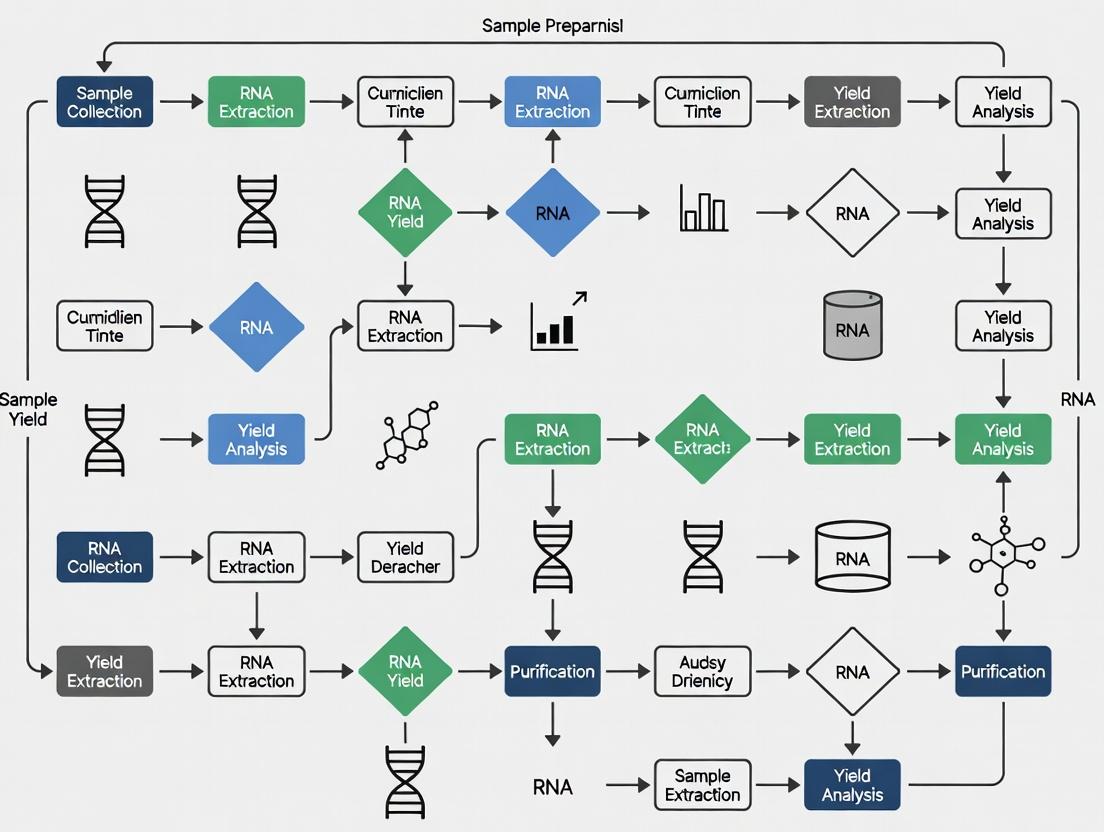
This article provides a complete guide for researchers and drug development professionals on optimizing RNA yield from precious, low-input biological samples.
A Comprehensive Protocol for Enhancing RNA Yield from Low-Input Samples: From Single Nuclei to Single Cells
Abstract
This article provides a complete guide for researchers and drug development professionals on optimizing RNA yield from precious, low-input biological samples. It covers the foundational challenges of working with limited material, details step-by-step protocols for nuclei isolation and RNA-seq library preparation, offers troubleshooting for common extraction issues, and presents comparative analyses of different methodologies. The goal is to empower scientists to obtain high-quality transcriptomic data from samples as small as single cells or 15 mg of cryopreserved tissue, enabling research in oncology, neuroscience, and other fields where sample quantity is a critical limiting factor.
Understanding the Core Challenges: Why Low-Input RNA Workflows Demand Specialized Protocols
The Critical Need for High-Quality RNA from Limited Samples
In modern biomedical research, including single-cell analysis, liquid biopsy, and rare cell studies, scientists are frequently constrained by extremely limited biological samples. The success of downstream applications like RNA sequencing, qPCR, and microarray analysis is fundamentally dependent on the initial yield, purity, and integrity of the isolated RNA. This application note details protocols and solutions for maximizing the recovery of high-quality RNA from low-input samples, a cornerstone for reliable data generation in diagnostics and drug development.
Challenges in Low-Input RNA Isolation
Working with low-input samples (e.g., < 10,000 cells, laser-capture microdissected tissue, or biofluids) introduces significant challenges:
- Low RNA Yield: Insufficient material for library construction or repeated assays.
- Increased Contamination Bias: Residual genomic DNA or kit reagents disproportionately impact downstream reactions.
- Degradation Risk: Increased surface area-to-volume ratios and necessary handling accelerate RNase-mediated degradation.
- Amplification Bias: Lower starting RNA requires amplification, which can skew transcript representation.
Quantitative Comparison of RNA Isolation Methods for Low-Input Samples
Table 1: Performance Comparison of Commercial RNA Isolation Kits for Low-Input Samples
| Kit/Method Name | Principle | Recommended Input | Average Yield (from 1000 cells) | RIN (RNA Integrity Number) | Key Advantage for Low Input | Downstream Application Suitability |
|---|---|---|---|---|---|---|
| Silica-Membrane Spin Column | Binding in high-salt, elution in low-salt | 10 - 100,000 cells | 4 - 10 ng | 8.5 - 9.5 | High purity, fast | qPCR, microarray |
| Magnetic Bead-Based | Poly-A or total RNA binding to beads | 1 - 10,000 cells | 6 - 15 ng | 8.0 - 9.0 | Scalable, automatable | RNA-Seq, qPCR |
| Acid-Phenol:Guanidine (TRIzol) | Phase separation | 100 - 10^6 cells | 15 - 25 ng | 7.5 - 9.0 | High yield, flexible | All, but requires cleanup |
| Solid-Phase Reversible Immobilization (SPRI) | Size-selective binding to carboxyl beads | Single-cell to 1000 cells | Varies with amplification | N/A (post-amplification) | Integrates with cDNA synthesis | Single-cell RNA-Seq |
| Column-Based with Carrier RNA | Silica membrane with inert RNA carrier | 1 - 1000 cells | 1 - 5 ng (net) | 8.0 - 9.0 | Prevents adsorption loss | Sensitive qPCR, NanoString |
Table 2: Impact of Sample Preservation on RNA Quality from Limited Samples
| Preservation Method | Time to Stabilization | RNA Integrity Post-24h RT | Suitability for FFPE | Protocol Complexity | Cost per Sample |
|---|---|---|---|---|---|
| Flash Freezing (LN₂) | Minutes | Poor (RIN < 5) | No | Low | Low |
| RNAlater Immersion | Seconds to Hours (tissue-dependent) | Excellent (RIN > 8.5) | No | Medium | Medium |
| PAXgene Tissue System | Immediate fixation | Excellent (RIN > 8) | Yes, with processing | High | High |
| Ethanol-Based Fixatives | Hours | Moderate (RIN 6-8) | Yes | Medium | Low |
| Dried RNA Cards (FTA) | Immediate on drying | Good (RIN > 7.5) | No | Low | Low |
Detailed Protocols
Protocol 1: High-Yield Total RNA Isolation from ≤ 10,000 Cultured Cells Using Magnetic Beads
Principle: Cells are lysed under strongly denaturing conditions. RNA is selectively bound to paramagnetic beads with a surface chemistry optimized for high-affinity RNA binding in the presence of specific concentrations of alcohol and salt. Beads are washed, and high-purity RNA is eluted in nuclease-free water.
Materials: See "The Scientist's Toolkit" below. Procedure:
- Cell Lysis: Pellet ≤ 10,000 cells. Resuspend thoroughly in 200 µL of Lysis Buffer containing 1% β-mercaptoethanol. Vortex vigorously for 10 seconds.
- Binding: Add 200 µL of 70% ethanol. Mix by pipetting. Transfer entire lysate to a tube containing 20 µL of pre-washed magnetic beads. Incubate at room temperature for 5 minutes with gentle mixing.
- Capture: Place tube on a magnetic stand for 2 minutes until supernatant clears. Carefully aspirate and discard supernatant.
- Washes:
- Wash A: Add 500 µL of Wash Buffer I (high-salt). Remove from magnet, resuspend beads fully, and return to magnet. Aspirate supernatant.
- Wash B: Add 500 µL of Wash Buffer II (low-salt/ethanol). Repeat resuspension and aspiration.
- Drying: Briefly air-dry bead pellet (2-3 minutes) to evaporate residual ethanol.
- Elution: Remove tube from magnet. Add 15-30 µL of Nuclease-Free Water. Resuspend beads and incubate at 55°C for 2 minutes. Place on magnet, and transfer the eluted RNA supernatant to a fresh tube.
- QC: Quantify yield via fluorometry (e.g., Qubit RNA HS Assay) and assess integrity (e.g., TapeStation RNA ScreenTape).
Protocol 2: RNA Isolation from Laser Capture Microdissected (LCM) FFPE Sections with DNase Treatment
Principle: Deparaffinization is followed by proteinase K digestion to reverse formaldehyde crosslinks and release nucleic acids. RNA is purified via binding to a silica membrane in a high-salt buffer, with an on-column DNase I digestion step to eliminate genomic DNA contamination.
Materials: See "The Scientist's Toolkit" below. Procedure:
- Deparaffinization: Place LCM cap with captured cells in a tube. Add 200 µL of xylene (or xylene substitute). Incubate at RT for 3 minutes. Centrifuge briefly. Remove xylene. Repeat once.
- Ethanol Washes: Wash with 200 µL of 100% ethanol. Incubate 30 seconds. Remove ethanol. Repeat with 200 µL of 70% ethanol.
- Digestion: Air-dry cap for 1-2 minutes. Add 50 µL of Digestion Buffer containing 2 mg/mL Proteinase K. Incubate at 55°C for 1-3 hours (or overnight at 40°C for best yield).
- Binding: Add 100 µL of Binding Buffer and 100 µL of 100% ethanol to the digest. Mix. Load entire mixture onto a silica spin column. Centrifuge at 11,000 x g for 30 seconds. Discard flow-through.
- DNase Treatment: Add 80 µL of DNase I incubation mix (10 µL DNase I + 70 µL Reaction Buffer) directly to the column membrane. Incubate at RT for 15 minutes.
- Washes:
- Add 500 µL of Wash Buffer I. Centrifuge. Discard flow-through.
- Add 500 µL of Wash Buffer II. Centrifuge. Discard flow-through. Repeat wash with Wash Buffer II.
- Centrifuge empty column for 2 minutes to dry membrane.
- Elution: Transfer column to a fresh collection tube. Apply 15 µL of Nuclease-Free Water directly to the membrane. Incubate at RT for 2 minutes. Centrifuge at 11,000 x g for 1 minute to elute RNA.
Visualizations
Title: Workflow for High-Quality RNA from Limited Samples
Title: RNA Degradation Pathways and Protective Barriers
The Scientist's Toolkit: Essential Reagents & Materials
Table 3: Key Research Reagent Solutions for Low-Input RNA Work
| Item | Function & Rationale for Low-Input Samples |
|---|---|
| Guanidine Thiocyanate-Based Lysis Buffer | Powerful chaotropic agent that denatures proteins (including RNases) immediately upon cell disruption, protecting RNA integrity. |
| Recombinant RNase Inhibitors | Proteins that bind and inhibit a broad spectrum of RNases. Critical when processing samples over extended periods. |
| Inert Carrier RNA (e.g., Poly-A, tRNA) | Adds mass to prevent adsorption of picogram quantities of sample RNA to tube surfaces, increasing recovery. |
| Magnetic Beads with High RNA Affinity | Enable flexible scaling and minimal handling losses. Beads stay in solution, maximizing binding surface area for dilute RNA. |
| Solid-Phase Reversible Immobilization (SPRI) Beads | Allow precise size selection to remove primers, dimer, and other contaminants after cDNA amplification from low-input RNA. |
| DNase I, RNase-free | Essential for removing trace genomic DNA that would otherwise dominate and confound sensitive downstream assays like qPCR. |
| RNA Stabilization Reagent (e.g., RNAlater) | Penetrates tissues/cells to inactivate RNases immediately upon collection, preserving RNA quality during sample transport. |
| High-Sensitivity Fluorometric Assay Kits (Qubit) | Accurately quantifies ng/pg levels of RNA without interference from common contaminants (unlike absorbance at 260nm). |
| Automated Liquid Handling System | Reduces manual pipetting error and improves reproducibility when processing many low-volume, precious samples. |
| Nuclease-Free, Low-Binding Tubes & Tips | Minimizes adsorption of nucleic acids to plastic surfaces, a significant source of loss in low-input protocols. |
The term "low-input" in molecular biology and genomics lacks a universal quantitative threshold. Its definition is operationally tied to the limitations of the prevailing technology and the specific analyte of interest. In the context of RNA analysis, "low-input" spans a broad range, from single cells to milligram quantities of tissue, where sample scarcity poses significant challenges for conventional protocols. This application note frames low-input RNA work within a thesis focused on optimizing protocols for maximal yield and fidelity, acknowledging that yield is a function of both extraction efficiency and subsequent amplification performance.
Quantitative Spectrum of 'Low-Input' for RNA
Table 1: Defining the 'Low-Input' Spectrum for RNA-Seq and qPCR
| Sample Type | Approximate Total RNA Mass | Approximate Cell Number | Key Technological Challenges |
|---|---|---|---|
| Single Cell | 1-50 pg | 1 | Capture efficiency, amplification bias, stochastic noise. |
| Ultra-Low Input | 50 pg - 1 ng | 10 - 200 | Minimal amplification cycles, library complexity. |
| Low Input | 1 ng - 10 ng | 200 - 2,000 | Library prep efficiency, rRNA depletion. |
| Micro-dissected Tissue | 10 ng - 100 ng (~1-10 mg tissue) | 2,000 - 20,000 | Contamination, degradation, stromal dilution. |
| Conventional Input | 100 ng - 1 µg+ | 20,000+ | Standardized, high-reproducibility protocols. |
Key Research Reagent Solutions (The Scientist's Toolkit)
Table 2: Essential Reagents for Low-Input RNA Workflows
| Reagent / Kit Category | Example Product(s) | Primary Function in Low-Input Context |
|---|---|---|
| Cell Lysis & Stabilization | QIAzol Lysis Reagent, RNALater | Immediate inactivation of RNases, especially critical for small tissues. |
| RNA Isolation & Cleanup | Qiagen RNeasy Micro Kit, Zymo RNA Microprep Kit | Silica-membrane or bead-based purification optimized for sub-µg elution volumes. |
| Poly-A Based Amplification | SMART-Seq v4 Ultra Low Input Kit, Clontech SMARTer Kit | Template-switching and PCR for full-length cDNA amplification from single cells/low RNA. |
| Whole Transcriptome Amplification | NuGEN Ovation RNA-Seq System V2, WT | Linear isothermal amplification using SPIA technology for picogram inputs. |
| RNA/ cDNA Quantification | Qubit RNA HS Assay, Agilent High Sensitivity DNA Kit | Fluorometric/qPCR-based quantification essential for low-concentration samples. |
| rRNA Depletion | NEBNext rRNA Depletion Kit (Human/Mouse/Rat) | Critical for enriching mRNA from total RNA where poly-A selection fails at low inputs. |
| Dual-Indexed UMI Adapters | Illumina TruSeq RNA UD Indexes, IDT for Illumina | Unique Molecular Identifiers (UMIs) to correct for amplification bias and duplicates. |
Detailed Protocols
Protocol 4.1: RNA Extraction from Laser-Capture Microdissected (LCM) Tissue (1-10 mg equivalent)
Objective: To obtain high-integrity RNA from ~10-50 cryosections of 10 µm thickness. Principle: Combine rapid phenol-guanidine lysis with silica-membrane purification. Materials: Cryostat, PEN membrane slides, LCM system, QIAzol Lysis Reagent, RNeasy Micro Kit (Qiagen), β-mercaptoethanol, RNase-free water, 100% ethanol.
- Tissue Preparation & LCM: Stain frozen sections briefly with Histogene or similar rapid stain. Microdissect target cells into a sterile microfuge tube cap containing 50 µL of QIAzol + 1% β-ME. Cap and vortex immediately.
- Lysis & Phase Separation: Transfer lysate to a Phase Lock Gel (Heavy) tube. Add 10 µL chloroform, shake vigorously for 15 sec. Centrifuge at 12,000 x g for 15 min at 4°C.
- RNA Binding: Transfer the upper aqueous phase to a new tube. Add 1.5 volumes of 100% ethanol. Mix and apply entire sample to an RNeasy MinElute spin column.
- Wash & Elution: Follow kit protocol with on-column DNase I digestion. Perform all washes (RWT, RPE). Elute RNA in 14 µL of RNase-free water by centrifugation.
- QC: Use Qubit RNA HS assay and Agilent Bioanalyzer RNA Pico Chip.
Protocol 4.2: Full-Length cDNA Synthesis and Preamplification for Single Cells
Objective: Generate robust cDNA for sequencing or qPCR from a single cell. Principle: Template-switching oligonucleotides (TSO) and long-distance PCR. Materials: SMART-Seq v4 Ultra Low Input Kit (Takara), single-cell suspension in lysis buffer, RNase inhibitor, magnetic bead clean-up system.
- Cell Lysis & Reverse Transcription: Transfer a single cell (in 1 µL) to a tube containing 1 µL lysis buffer and 1 µL RNase inhibitor. Incubate at 72°C for 3 min, then place on ice. Add Master Mix (SMARTER IIA oligonucleotide, dNTPs, buffer, DTT, RNase inhibitor, and SMARTScribe Reverse Transcriptase). Incubate: 90 min at 42°C, then 10 cycles of (50°C for 2 min, 42°C for 2 min). Inactivate at 70°C for 10 min.
- PCR Amplification: Add PCR Mix (Advantage 2 Polymerase Mix, primer IIA, dNTPs). Cycle: 1 min at 95°C; X cycles (15 sec at 95°C, 30 sec at 65°C, 4 min at 68°C); final extension 5 min at 68°C. Cycle number (X) optimization is critical: Start with 18 cycles for 1 cell.
- Purification: Clean up amplified cDNA using a paramagnetic bead-based system (e.g., AMPure XP beads) at a 0.8x bead-to-sample ratio. Elute in 20 µL.
- QC: Use Agilent High Sensitivity DNA Kit to assess cDNA size distribution and concentration.
Visualizations
Diagram 1: Low-Input RNA-Seq Workflow Decision Tree
Diagram 2: Key Protocol for Yield Enhancement Thesis Context
Within a broader thesis on enhancing RNA yield from low-input samples, identifying and mitigating sources of RNA loss and degradation is foundational. Minimal samples, such as those from single cells, fine-needle aspirates, laser-capture microdissected tissues, or circulating tumor cells, present unique challenges. The inherently low starting material amplifies the impact of any loss or degradation, compromising downstream applications like RNA sequencing or qPCR. This application note details the primary sources of RNA loss and provides targeted protocols to preserve RNA integrity and maximize yield.
Endogenous RNases
Cellular RNases (e.g., RNase A, RNase T1) are released immediately upon cell lysis and remain highly active. In minimal samples, the low RNA mass-to-RNase activity ratio makes degradation exceptionally rapid.
Exogenous RNase Contamination
Ubiquitous RNases from skin, dust, or contaminated surfaces, tubes, and reagents can be introduced during sample handling. Their impact is disproportionately large in low-input workflows.
Physical Adsorption to Surfaces
RNA molecules, especially at low concentrations, can non-specifically bind to the walls of collection tubes, pipette tips, and storage vessels, leading to significant volumetric loss.
Inefficient Cell Lysis and RNA Capture
Incomplete lysis of cells or suboptimal binding of RNA to purification matrices (e.g., silica membranes) fails to liberate and recover the full RNA complement.
Oxidative Damage
Reactive oxygen species can cause base modification (e.g., 8-oxoguanosine) and strand breaks, particularly problematic for long or non-coding RNAs.
Freeze-Thaw Cycles
Repeated freezing and thawing of minimal RNA eluates can promote degradation and exacerbate surface adsorption losses.
Inadequate Inhibition During Reverse Transcription
Residual RNase activity or inhibitors carried over from the RNA isolation step can severely reduce cDNA synthesis efficiency, functionally representing a loss of RNA information.
Table 1: Quantitative Impact of RNA Loss Sources in Low-Input Contexts
| Source of Loss/Degradation | Estimated Yield Loss Range | Key Influencing Factors |
|---|---|---|
| Endogenous RNase Activity | 20-90% | Time from collection to lysis, temperature, tissue type |
| Exogenous RNase Contamination | 5-50% | Technique, reagent/labware RNase-free status |
| Surface Adsorption | 10-60% | RNA concentration, tube polymer (e.g., PP vs. LoBind), solution ionic strength |
| Inefficient Lysis/Binding | 15-70% | Lysis buffer composition, sample type (e.g., fibrous vs. cells), protocol fit |
| Oxidative Damage | 5-30% | Presence of antioxidants, storage conditions |
| Freeze-Thaw Cycles (3x) | 10-40% | Elution buffer, RNA concentration, tube type |
| Inefficient cDNA Synthesis | 20-80% | Reverse transcriptase robustness, RNA purity, inhibitor removal |
Detailed Experimental Protocols
Protocol 1: Rapid, Integrated Lysis and Stabilization for Single Cells
Objective: To immediately inactivate RNases at the point of sample collection. Materials: RNase-free tubes, guanidinium thiocyanate-based lysis/stabilization buffer, RNase inhibitor. Procedure:
- Pre-load 20 µL of ice-cold lysis/stabilization buffer (e.g., containing 4M guanidinium thiocyanate, 1% β-mercaptoethanol) into a 0.2 mL PCR tube.
- Immediately transfer a single cell (in < 1 µL volume) via micromanipulation or FACS sorting directly into the buffer. Cap and vortex vigorously for 10 seconds.
- Incubate on ice for 5 minutes.
- Proceed directly to RNA purification or store at -80°C for up to one week.
Protocol 2: Silica-Membrane Column Purification with Carrier RNA
Objective: To maximize binding efficiency and minimize surface adsorption. Materials: Commercial column-based kit (e.g., RNeasy Micro), glycogen or linear acrylamide carrier, 100% ethanol, RNase-free water, β-mercaptoethanol. Procedure:
- Combine the stabilized lysate from Protocol 1 with 1 µL of a 5 ng/µL solution of purified carrier RNA (e.g., MS2 RNA) or 1 µL of linear acrylamide (20 µg/µL). Mix.
- Add an equal volume of 70% ethanol. Mix thoroughly by pipetting. Do not centrifuge.
- Apply the entire mixture to a silica-membrane column. Centrifuge at ≥ 8000 x g for 15 seconds. Discard flow-through.
- Perform two washes with the provided buffer (e.g., RW1). Centrifuge as above.
- Perform two washes with the provided ethanol-based buffer (e.g., RPE). Centrifuge as above.
- Dry the column by centrifuging at full speed for 2 minutes.
- Elute RNA in 10-14 µL of RNase-free water by centrifugation. Pre-heating the water to 55°C can increase elution efficiency.
Protocol 3: Assessment of RNA Integrity Post-Isolation
Objective: To evaluate RNA degradation without traditional electrophoresis. Materials: Agilent Bioanalyzer RNA Pico chips, Qubit Fluorometer with RNA HS Assay. Procedure:
- Quantify total RNA yield using the Qubit RNA HS Assay per manufacturer's instructions.
- Assess RNA Integrity Number (RIN) or equivalent using the Agilent Bioanalyzer 2100 with RNA Pico chips.
- For minimal samples, a "virtual gel" electropherogram is generated. A RINe (RNA Integrity Number equivalent) above 7.0 is generally acceptable for most downstream assays.
Visualizations
Diagram 1: Primary Sources of RNA Loss in Minimal Samples
Diagram 2: Optimized Workflow for Low-Input RNA Recovery
The Scientist's Toolkit: Key Research Reagent Solutions
Table 2: Essential Materials for Minimal Sample RNA Work
| Item | Function/Benefit | Example Products/Types |
|---|---|---|
| Guanidinium-Based Lysis Buffer | Denatures proteins and RNases instantly upon cell rupture. | QIAzol, TRIzol, Homogenization buffers from kit systems. |
| RNase Inhibitors | Protein-based inhibitors that bind and neutralize RNases. | Recombinant RNasin, SUPERase•In, PROTECTOR RNase Inhibitor. |
| Carrier RNA | Inert RNA (e.g., yeast tRNA, MS2 RNA) that improves binding efficiency and reduces surface adsorption. | Included in many kits, or available purified. |
| Surface-Treated Tubes | Tubes with polymer coatings that minimize nucleic acid adsorption. | Eppendorf LoBind, Axygen Low-Retention tubes. |
| Silica-Membrane Columns | Provide a high-surface-area, specific binding matrix for RNA. | RNeasy Micro columns, RNA Clean & Concentrator columns. |
| Magnetic Beads (SPRI) | Paramagnetic particles coated with a carboxyl group for size-selective binding; reduce tube transfers. | AMPure XP, RNAClean XP beads. |
| Reducing Agents | Scavenge ROS and help maintain RNA integrity. | β-Mercaptoethanol, DTT. |
| DNase I (RNase-Free) | Removes genomic DNA contamination during purification. | Turbo DNase, rDNase. |
| High-Efficiency Reverse Transcriptase | Enzymes engineered for robust cDNA synthesis from low-input and degraded RNA. | SuperScript IV, Maxima H Minus. |
| RNA-Specific Dyes | For accurate quantification of low-concentration RNA without DNA interference. | Qubit RNA HS dye, RiboGreen dye. |
Application Notes
Recent advancements in low-input RNA amplification and library preparation are critical for profiling limited biological material, such as single cells and rare clinical samples (e.g., circulating tumor cells, fine-needle aspirates, early embryos). The primary challenge is generating sufficient sequencing material from picogram quantities of total RNA while minimizing technical noise and bias. Current methodologies focus on whole transcriptome amplification (WTA) through template-switching and PCR or in vitro transcription (IVT)-based amplification.
Table 1: Comparison of Current Low-Input RNA-Seq Methodologies
| Method Principle | Protocol Name/Kit | Optimal Input Range | Key Advantage | Reported Duplicate Rate* | Gene Detection Sensitivity* |
|---|---|---|---|---|---|
| Template-Switching & PCR | 10x Genomics 3' v4 | 1-10,000 cells | High-throughput, cell multiplexing | 5-15% (per cell) | ~3,000-5,000 genes/cell |
| Template-Switching & PCR | SMART-Seq2 (single-cell) | 1-100 cells | Full-length transcript, high sensitivity | 10-25% | ~5,000-8,000 genes/cell |
| IVT-based (aRNA) | NuGEN Ovation V2 | 0.1-10 ng RNA | Robust from degraded samples | 20-35% | ~7,000-10,000 genes/sample |
| Ligation-based | STAR*Protocol for LCM cells | 10-100 cells | Low amplification bias | 15-30% | ~4,000-6,000 genes/sample |
| Direct Tagmentation | ATAC-seq/RNA-seq Co-assay | 500-10,000 cells | Multiomic integration | N/A | Context-dependent |
*Values are representative ranges from recent literature; actual performance depends on sample quality and sequencing depth.
These protocols are foundational for the broader thesis on enhancing RNA yield, as they represent the downstream application benchmark. Improvements in initial RNA capture efficiency and reverse transcription fidelity directly translate to higher sensitivity and lower noise in these workflows.
Experimental Protocols
Protocol 1: High-Sensitivity Single-Cell RNA Sequencing Using a Modified SMART-Seq2 Workflow
This protocol optimizes cDNA yield from individual cells for full-length sequencing.
Materials:
- Lysis buffer: 0.2% Triton X-100, RNase inhibitor (2 U/µL), dNTPs (1 mM)
- Reverse Transcription Mix: SMARTScribe Reverse Transcriptase, Template-switching oligo (TSO), Betaine (1 M)
- PCR Amplification Mix: KAPA HiFi HotStart ReadyMix, ISPCR primer
- Purification Agent: AMPure XP beads
Procedure:
- Cell Lysis & RNA Capture: Isolate a single cell into 2.5 µL lysis buffer in a 0.2 mL PCR tube. Immediately freeze on dry ice or proceed. Incubate at 72°C for 3 minutes, then immediately place on ice.
- Reverse Transcription & Template Switching: Add 7.5 µL RT Mix (containing RT enzyme, TSO, and buffers). Mix gently. Run the following thermocycler program:
- 42°C for 90 minutes (RT)
- 10 cycles of: 50°C for 2 minutes, 42°C for 2 minutes
- 70°C for 10 minutes (enzyme inactivation)
- Hold at 4°C.
- cDNA PCR Preamplification: Add 20 µL PCR Mix and 5 µL nuclease-free water to the 10 µL RT reaction. Run PCR:
- 98°C for 3 minutes
- 24 cycles of: 98°C for 20s, 67°C for 15s, 72°C for 4 minutes
- 72°C for 5 minutes
- Hold at 4°C. Critical: Cycle number may be adjusted (18-26) based on input; lower cycles for higher input to reduce duplication rates.
- cDNA Purification: Add 45 µL AMPure XP beads (0.6x ratio) to the PCR product. Purify per manufacturer's instructions. Elute in 22 µL elution buffer.
- Quality Control & Library Prep: Quantify cDNA yield via fluorometry (expect 5-20 ng). Fragment and prepare sequencing libraries using a standard tagmentation-based kit (e.g., Nextera XT). Use 150 pg – 1 ng input cDNA.
Protocol 2: Ultra-Low-Input RNA-Seq from Rare Clinical Samples (e.g., CTCs)
This protocol is designed for 10-100 fixed cells, often isolated by fluorescence-activated cell sorting (FACS) or micromanipulation.
Materials:
- Cell Fixation Buffer: 4% Paraformaldehyde in PBS
- Permeabilization Buffer: 0.1% Triton X-100 in PBS
- Commercial Ultra-Low Input Kit: (e.g., SMART-Seq V4 or similar)
- RNase Inhibitor
Procedure:
- Sample Fixation & Storage: Immediately after isolation, resuspend cells in 100 µL Fixation Buffer. Incubate at 4°C for 30 minutes. Pellet cells (500g, 5 min), wash 2x with PBS. Cells can be stored in 70% ethanol at -80°C for weeks.
- Cell Permeabilization: Centrifuge stored sample. Resuspend pellet in 50 µL Permeabilization Buffer. Incubate on ice for 10 minutes.
- On-Bead Reverse Transcription: Transfer cells to a tube containing pre-washed oligo-dT magnetic beads. Bind poly-A RNA for 5 minutes at room temperature.
- In-Situ cDNA Synthesis & Amplification: Perform RT and PCR amplification directly on the beads using the commercial kit components, strictly following its low-input protocol. Typically involves on-bead template-switching and 18-21 cycles of PCR.
- Bead Removal & Cleanup: Separate supernatant containing amplified cDNA from beads. Perform double-sided AMPure bead cleanup (0.6x and 1.2x ratios) to remove primers and short fragments.
- Library Construction & Sequencing: Use 1-2 ng of purified cDNA for tagmentation-based library prep. Sequence with at least 5 million paired-end reads per sample.
Diagrams
Workflow for Low-Input RNA-Seq Analysis
Template Switching Mechanism for Full-Length cDNA
The Scientist's Toolkit: Research Reagent Solutions
Table 2: Essential Reagents for Low-Input RNA Applications
| Item | Example Product/Brand | Primary Function in Protocol |
|---|---|---|
| RNase Inhibitor | Protector RNase Inhibitor (Roche) | Prevents degradation of scant RNA during lysis and RT steps. |
| Template Switching Oligo (TSO) | Custom DNA/RNA hybrid oligo (e.g., AAGCAGTGGTATCAACGCAGAGTGAATrGrGrG) | Provides a universal sequence for primer binding during RT, enabling full-length capture. |
| High-Fidelity Reverse Transcriptase | SMARTScribe (Takara) or Maxima H- | Efficient first-strand synthesis with high processivity and template-switching activity. |
| Single-Cell Lysis Buffer | Commercial (Clontech) or homemade (Triton X-100 based) | Disrupts membrane while preserving RNA and inactivating endogenous RNases. |
| Magnetic Oligo-dT Beads | Dynabeads mRNA DIRECT Purification Kit | Efficient poly-A RNA capture from lysates, allowing buffer exchanges. |
| Ultra-Low Input Amplification Kit | SMART-Seq v4 (Takara), Clontech | Optimized, pre-tested reagent mixes for maximum yield from minimal input. |
| High-Fidelity PCR Master Mix | KAPA HiFi HotStart ReadyMix | Accurate, efficient amplification of cDNA with minimal bias during limited cycles. |
| Double-Sided Size Selection Beads | AMPure XP (Beckman Coulter) | Removes primers, dNTPs, and short fragments; selects optimal cDNA size for sequencing. |
| Tagmentation Library Prep Kit | Nextera XT (Illumina) | Efficient, fast library construction from low-mass cDNA inputs. |
| High-Sensitivity QC Assay | Qubit dsDNA HS, Bioanalyzer HS DNA | Accurate quantification and sizing of precious, low-concentration cDNA/libaries. |
Step-by-Step Guide: Optimized Protocols for Nuclei Isolation and RNA Library Prep
Within the broader thesis on enhancing RNA yield from low-input samples, this protocol addresses the critical challenge of obtaining high-quality nuclear RNA from limited, cryopreserved tissue archives. Traditional whole-cell isolation often fails with low-input, frozen samples due to cell lysis and RNA degradation. This protocol provides a robust method for isolating intact nuclei, the starting point for nuclear RNA-seq and single-nucleus assays, maximizing molecular yield from precious samples.
Key Materials and Reagents
Research Reagent Solutions
Table 1: Essential Materials for Low-Input Nuclei Isolation
| Item | Function | Example/Note |
|---|---|---|
| Cryopreserved Tissue Sample | Starting material. Low-input defined as <30 mg. | Store at -80°C; avoid thaw-cycles. |
| Dounce Homogenizer (loose & tight pestles) | Mechanical tissue disruption while preserving nuclei integrity. | Use glass; keep cold. |
| Nuclei Isolation Buffer (NIB) | Isotonic, detergent-containing buffer to lyse plasma membranes but not nuclear envelopes. | Contains NP-40 or Triton X-100, RNase inhibitors, and stabilizers. |
| RNase Inhibitor | Prevents degradation of nuclear RNA during isolation. | Use a broad-spectrum, recombinant inhibitor. |
| Bovine Serum Albumin (BSA) | Reduces non-specific nuclei binding to tubes and pipettes. | Use nuclease-free grade. |
| Sucrose Cushion Solution | Density medium for pelleting nuclei and removing debris via centrifugation. | Typically 1.8 M sucrose. |
| Fluorescent Nuclear Stain (DAPI/Propidium Iodide) | Allows for nuclei counting and viability assessment via hemocytometer or flow cytometry. | Essential for QC. |
| Nuclease-free Water & Buffers | Prevents exogenous RNase contamination in all steps. | Critical for RNA integrity. |
| 40 μm Cell Strainer | Removes large tissue aggregates and clusters. | Use pre-wet with BSA-containing buffer. |
Detailed Protocol
Part A: Pre-Isolation Preparation
- Pre-cool Equipment: Chill centrifuges to 4°C. Place Dounce homogenizer, pestles, and microcentrifuge tubes on ice.
- Buffer Preparation: Prepare fresh, cold Nuclei Isolation Buffer (NIB): 10 mM Tris-HCl (pH 8.0), 146 mM NaCl, 1 mM CaCl2, 21 mM MgCl2, 0.01% BSA, 0.2% NP-40, and 1 U/μL RNase inhibitor. Filter through a 0.22 μm membrane.
- Sample Retrieval: Retrieve cryopreserved tissue specimen (5-30 mg) from -80°C storage and keep on dry ice until ready for homogenization.
Part B: Tissue Homogenization & Nuclei Release
- Initial Mincing: On a pre-chilled petri dish, mince the frozen tissue into fine pieces using a scalpel. Do not allow tissue to thaw.
- Dounce Homogenization: Transfer tissue pieces to the chilled Dounce homogenizer containing 2 mL of NIB.
- Perform 15-20 strokes with the loose pestle (A).
- Perform 10-15 strokes with the tight pestle (B). Monitor homogenate consistency.
- Filtration: Filter the homogenate through a pre-wet 40 μm cell strainer into a 15 mL conical tube on ice.
Part C: Nuclei Purification & Quality Control
- Debris Removal: Centrifuge the filtered lysate at 500 x g for 5 minutes at 4°C to pellet large debris. Carefully transfer the supernatant (containing nuclei) to a new tube.
- Sucrose Cushion Purification: Underlay the supernatant with 1 mL of ice-cold 1.8 M sucrose cushion buffer. Centrifuge at 12,000 x g for 30 minutes at 4°C. The nuclei will form a pellet; contaminants remain at the interface.
- Wash: Gently decant the supernatant. Resuspend the pellet in 1 mL of NIB (without detergent). Centrifuge at 500 x g for 5 min at 4°C.
- Final Resuspension: Resuspend the purified nuclei pellet in 100-200 μL of storage/resuspension buffer (e.g., 1x PBS with 1% BSA and RNase inhibitor). Keep on ice.
Part D: Quantification & QC
- Staining: Mix 10 μL of nuclei suspension with 10 μL of DAPI stain (1 μg/mL).
- Counting: Load onto a hemocytometer. Count intact, round, DAPI-positive nuclei under a fluorescence microscope.
- Yield & Viability Assessment: Calculate concentration and total yield. Assess morphology; intact nuclei appear smooth and round. Proceed immediately to downstream RNA extraction or single-nucleus sequencing.
Table 2: Expected Nuclei Yield and RNA Integrity from Low-Input Cryopreserved Tissues
| Tissue Type (Input: 10 mg) | Expected Nuclei Yield | Viability (DAPI+) | Nuclear RNA Integrity Number (RIN) |
|---|---|---|---|
| Mouse Cortex | 45,000 - 65,000 | >95% | 8.2 - 9.1 |
| Human Heart (FFPE-adjacent) | 15,000 - 30,000 | 85 - 92% | 7.5 - 8.5 |
| Tumor Biopsy (PDAC) | 20,000 - 50,000 | 80 - 90% | 7.0 - 8.0 |
| Liver Tissue | 50,000 - 80,000 | >90% | 8.0 - 9.0 |
Visualized Workflow and Pathway
Workflow Title: Low-Input Cryopreserved Tissue Nuclei Isolation Protocol
Diagram Title: Protocol Role in Thesis on Enhancing RNA Yield
Within the broader thesis on protocols for enhancing RNA yield from low-input samples, this application note details a refined methodology for the isolation of high-quality RNA from single nuclei. This is critical for sequencing applications involving archived or difficult-to-disaggregate tissues, where cytoplasmic RNA is often degraded. The protocol emphasizes nuclear integrity, genomic DNA removal, and inhibitor clean-up to maximize yield and RNA Integrity Number (RIN) equivalents from minute starting material.
Single-nucleus RNA sequencing (snRNA-seq) has become indispensable for profiling complex, frozen, or fixed tissues. However, the low abundance of nuclear RNA presents significant challenges for yield and quality. This protocol outlines a robust, detergent-based nuclear isolation followed by RNA extraction and purification, specifically optimized to overcome these limitations and produce reliable data for downstream transcriptomic analysis.
Key Research Reagent Solutions
| Reagent/Material | Function |
|---|---|
| Nuclei Isolation Buffer (NIB) | A sucrose-based, detergent-containing buffer that lyses the plasma membrane while preserving nuclear envelope integrity. |
| RNase Inhibitor (e.g., Protector RNase Inhibitor) | Immediately inactivates RNases released during tissue homogenization, protecting the fragile nuclear RNA. |
| DNase I (RNase-free) | Digests genomic DNA contamination, which is particularly abundant in nuclear preparations and can interfere with library construction. |
| Magnetic Beads (Solid Phase Reversible Immobilization, SPRI) | Enable size-selective purification of RNA, removing salts, inhibitors, and short fragments. |
| dithiothreitol (DTT) | A reducing agent that helps dissociate nucleic acids from nuclear matrices and inhibits RNases. |
| Ethanol (Molecular Biology Grade) | Used in conjunction with magnetic beads for RNA binding and wash steps. |
Detailed Experimental Protocol
Single Nuclei Isolation
- Tissue Preparation: Quickly mince 20-50 mg of frozen tissue on dry ice. Keep samples frozen.
- Dounce Homogenization: Transfer tissue to a pre-chilled Dounce homogenizer containing 2 mL of ice-cold NIB with 1x RNase inhibitor. Homogenize with 15-20 strokes of the loose pestle (A), followed by 10-15 strokes of the tight pestle (B), on ice.
- Filtration & Centrifugation: Filter the homogenate through a 40 μm cell strainer into a low-binding microcentrifuge tube. Centrifuge at 500 x g for 5 minutes at 4°C.
- Nuclear Pellet Resuspension: Carefully discard supernatant. Gently resuspend the nuclear pellet in 1 mL of ice-cold NIB with RNase inhibitor by pipetting. Count nuclei using a hemocytometer.
RNA Extraction and Purification
- Lysis: To the nuclear suspension (≈10,000 nuclei), add 1 mL of TRIzol LS reagent and 200 μL of chloroform. Vortex vigorously for 15 seconds.
- Phase Separation: Incubate at room temperature for 3 minutes. Centrifuge at 12,000 x g for 15 minutes at 4°C.
- RNA Precipitation: Transfer the aqueous phase to a new tube. Add 1.5 volumes of 100% ethanol and mix. Do not centrifuge.
- DNase Treatment: Transfer the entire mixture to a column-based RNA purification kit binding column. After a wash step, apply 80 μL of DNase I solution directly to the column matrix. Incubate at room temperature for 15 minutes.
- Final Wash & Elution: Perform two additional wash steps as per kit instructions. Elute RNA in 15-20 μL of nuclease-free water. Store at -80°C.
Table 1: Comparison of RNA Yield and Quality from Different Starting Materials
| Tissue Type (Frozen) | Number of Nuclei Input | Average RNA Yield (pg/nucleus) | RINe (Bioanalyzer) | % of Reads Mapping to Exonic Regions |
|---|---|---|---|---|
| Prefrontal Cortex | 10,000 | 0.8 - 1.2 | 7.5 - 8.2 | 85-92% |
| Cardiac Muscle | 10,000 | 0.5 - 0.9 | 6.8 - 7.5 | 80-88% |
| Tumor (Breast) | 10,000 | 1.0 - 1.5 | 7.0 - 7.8 | 82-90% |
Table 2: Impact of DNase I Treatment on Library Metrics
| Condition | cDNA Yield (ng) | % of Reads Aligning to Introns | % PCR Duplicates |
|---|---|---|---|
| With DNase I | 5.8 | 15-25% | 18% |
| Without DNase I | 9.2* | 60-75% | 45% |
*Yield inflated by genomic DNA contamination.
Visualized Workflows
Choosing and Implementing an Effective rRNA Removal Strategy
Within the broader thesis on protocols for enhancing RNA yield from low-input samples, the removal of ribosomal RNA (rRNA) is a critical pre-analytical step. In total RNA from eukaryotes and prokaryotes, rRNA can constitute >80-95% of the mass, obscuring the detection of low-abundance messenger and non-coding RNAs. Effective depletion maximizes the informational yield from precious, limited samples, ensuring that sequencing resources capture biologically relevant transcripts.
Core Strategies for rRNA Removal
Current strategies exploit the hybridization of complementary oligonucleotides to rRNA sequences, followed by physical removal. The choice between poly-A enrichment and rRNA depletion is sample-dependent; for non-polyadenylated transcripts (e.g., bacterial RNA, degraded FFPE RNA, or non-coding RNA), depletion is mandatory.
Quantitative Comparison of Major Commercial Kits
Data sourced from current manufacturer specifications and recent comparative studies (2023-2024).
Table 1: Comparison of Leading rRNA Depletion Kits for Low-Input Samples
| Kit Name (Manufacturer) | Principle | Recommended Input Range | Claimed Depletion Efficiency | Protocol Duration | Compatible with FFPE? |
|---|---|---|---|---|---|
| Ribo-Zero Plus (Illumina) | Probe hybridization & magnetic bead capture | 1 ng – 1 µg | >99% (human/mouse/rat) | ~2.5 hours | Yes |
| NEBNext rRNA Depletion (NEB) | RNase H digestion & probe removal | 10 ng – 1 µg | >97% (human/mouse/rat) | ~3 hours | Yes (with modification) |
| FastSelect (Qiagen) | Probe hybridization & bead capture | 10 ng – 1 µg | >99% (human) | ~1 hour | Yes |
| RiboCop (Lexogen) | Probe hybridization & bead capture | 10 ng – 1 µg | >98% (various species) | ~1.5 hours | Yes |
| ANYDeplete (Tecan) | Universal probes & bead capture | 100 pg – 100 ng | >90% (any species) | ~2 hours | Yes |
Detailed Protocols for Low-Input Samples
Protocol A: Depletion Using Hybridization & Magnetic Beads (Ribo-Zero Plus Workflow)
Objective: To deplete rRNA from 10 ng of total RNA derived from low-input cell sorting. Materials: See "Research Reagent Solutions" below. Procedure:
- RNA Integrity Assessment: Verify RNA on a Bioanalyzer or Fragment Analyzer. A DV200 > 30% is recommended for optimal depletion.
- Probe Hybridization:
- In a nuclease-free PCR tube, combine: 10 ng total RNA (3.5 µL), 1 µL Ribo-Zero Probe Solution, and 3.5 µL Hybridization Buffer.
- Mix gently and incubate in a thermal cycler at 68°C for 5 minutes, then hold at 22°C for 5 minutes.
- rRNA Capture & Removal:
- Add 15 µL of pre-washed magnetic beads to the hybridization mix. Pipette to mix thoroughly.
- Incubate at room temperature for 5 minutes. Place on a magnetic stand for 2 minutes to separate.
- Supernatant Recovery: Carefully transfer the supernatant (~20 µL) containing the depleted RNA to a new tube. This is the depleted RNA fraction.
- Cleanup: Purify the depleted RNA using a compatible RNA Cleanup Bead system (e.g., RNAClean XP). Elute in 12 µL nuclease-free water.
- QC: Assess depletion efficiency using a Bioanalyzer Eukaryote Total RNA Pico chip. The dominant 18S/28S peaks should be drastically reduced.
Protocol B: RNase H-Based Depletion (NEBNext Workflow for Degraded RNA)
Objective: To deplete rRNA from 20 ng of fragmented RNA (e.g., from FFPE or stressed cells). Procedure:
- RNA Preparation: Dilute RNA to 20 ng in 8 µL of nuclease-free water.
- Probe Hybridization: Add 1 µL of Species-Specific rRNA Probe Set and 1 µL of Hybridization Buffer. Incubate at 95°C for 2 minutes, then hold at 22°C for 5 minutes.
- RNase H Digestion: Add 1 µL of RNase H and incubate at 37°C for 30 minutes.
- DNase Digestion & Probe Removal: Add 1 µL of DNase I and incubate at 37°C for 30 minutes to degrade DNA probes.
- Cleanup: Purify the reaction using the provided Bead Cleanup Mix. Elute in 15 µL.
- QC: Analyze on a Bioanalyzer. A smear with diminished ribosomal hump indicates successful depletion.
Visualizing Workflow & Strategy Selection
Title: rRNA Removal Strategy Decision Workflow
The Scientist's Toolkit: Research Reagent Solutions
Table 2: Essential Materials for rRNA Depletion from Low-Input Samples
| Item | Function & Critical Note |
|---|---|
| High-Sensitivity RNA Assay (e.g., Bioanalyzer Pico/Fragment Analyzer) | Pre- and post-depletion QC. Critical for accurately quantifying low-input RNA and assessing DV200. |
| Nuclease-Free Water & Tubes | All dilutions and reactions. Prevents sample degradation. |
| Magnetic Stand (96-well or 8-tube) | For separating probe-bound rRNA during bead-based capture protocols. |
| RNA Cleanup Beads (e.g., SPRI/RNAClean XP) | For post-depletion purification and buffer exchange. Size selection can be adjusted. |
| Species-Specific Depletion Probes | Target-specific oligonucleotide sets. Must match the sample's biological origin (Human, Mouse, Bacterial, etc.). |
| Universal Depletion Probes (e.g., ANYDeplete) | For samples of unknown or mixed species origin. Efficiency may be lower than specific kits. |
| Thermal Cycler with Heated Lid | For precise incubation steps during probe hybridization. |
| qPCR Assay for Residual rRNA (e.g., RPLP1, 18S) | Ultra-sensitive functional QC post-depletion, more sensitive than electrophoresis. |
| RNA Storage Buffer (with RNase inhibitors) | For storing input and depleted RNA if not proceeding immediately. |
Application Notes
In the context of enhancing RNA yield and library quality from low-input samples (< 1 ng total RNA), significant methodological innovations have been developed. Low-input RNA-seq is critical for single-cell analysis, rare cell populations, and micro-dissected clinical samples. The core challenge lies in efficient cDNA synthesis and amplification with minimal bias and high reproducibility. This note compares leading protocols, focusing on the SHERRY method, within the broader research objective of optimizing yield and data fidelity from limiting material.
Key Protocol Comparison Table 1: Comparison of Low-Input RNA-seq Library Preparation Methods
| Protocol | Key Principle | Recommended Input | Key Advantage | Reported Duplication Rate | Reference |
|---|---|---|---|---|---|
| SHERRY | Tn5 transposase tagmentation of cDNA after second-strand synthesis. | 0.1-10 ng (or single-cell) | Low hands-on time, high throughput, minimal purification steps. | ~50% (for single-cell) | (Chen et al., 2019) |
| Smart-seq2 | Template-switching for full-length cDNA amplification, followed by tagmentation or fragmentation. | Single-cell to 10 pg | Full-length transcript coverage, excellent for isoform detection. | Variable, lower for high-quality cells | (Picelli et al., 2014) |
| CEL-seq2 | In vitro transcription (IVT) for linear mRNA amplification. | Single-cell to 10 pg | High UMI efficiency, reduced amplification noise. | ~15-25% | (Hashimshony et al., 2016) |
| QUARTZ-seq | PCR-based amplification with selective primer suppression. | Single-cell | Low cost, high sensitivity. | ~30-40% | (Sasagawa et al., 2018) |
| SPLiT-seq | Combinatorial barcoding in fixed cells/samples. | Thousands of single cells (ultra-high throughput) | Extremely low cost per cell, works on fixed samples. | Higher due to fragmentation method | (Rosenberg et al., 2018) |
Detailed Experimental Protocols
Protocol A: The SHERRY Protocol (Summarized and Adapted)
Title: SHERRY: A Single-cell High-efficiency RNA recovery and Y-seq method.
Principle: Reverse transcription with a template-switching oligo (TSO) is followed directly by second-strand synthesis. The resulting double-stranded cDNA is then tagmented (fragmented and tagged) in the same reaction tube using a Tn5 transposase pre-loaded with sequencing adapters, drastically reducing hands-on time and material loss.
Materials (Research Reagent Solutions):
- Cell Lysis Buffer: Contains detergent and RNase inhibitor.
- Reverse Transcription Mix: Includes SmartScribe Reverse Transcriptase, template-switching oligo (TSO), and oligo-dT primer.
- Second-Strand Synthesis Mix: Contains DNA Polymerase I, RNase H, and dNTPs.
- Tagmentation Mix: Custom-loaded Tn5 transposase with sequencing adapters.
- PCR Amplification Mix: High-fidelity PCR mix with indexed primers.
Procedure:
- Lysis & Reverse Transcription: Combine low-input RNA/cell lysate with RT mix. Incubate (42-54°C for 90 min, then 70°C for 15 min).
- Second-Strand Synthesis: Add Second-Strand Synthesis Mix directly to the RT reaction. Incubate (16°C for 60 min).
- Tn5 Tagmentation: Add the pre-loaded Tn5 transposase directly to the previous reaction. Incubate (55°C for 10 min). Add SDS to stop the reaction.
- Library Amplification: Add PCR mix with indexed primers. Perform PCR (12-16 cycles).
- Clean-up: Purify amplified libraries using SPRI beads. Quality control via Bioanalyzer and qPCR.
Protocol B: Smart-seq2 (Key Steps Highlighted)
Principle: Full-length cDNA amplification via template-switching and PCR, followed by library construction via tagmentation.
Critical Steps:
- Reverse Transcription: As in SHERRY, uses a locked nucleic acid (LNA) containing TSO for efficient template switching.
- cDNA Preamplification: PCR amplification of full-length cDNA using an ISPCR primer.
- Library Construction: The purified full-length cDNA is quantified and used as input for a standard tagmentation-based library prep (e.g., Nextera XT).
Visualizations
Diagram Title: Decision Workflow for Low-Input RNA-seq Protocols
Diagram Title: SHERRY Protocol Simplified Workflow
The Scientist's Toolkit
Table 2: Essential Research Reagent Solutions for Low-Input RNA-seq
| Reagent/Kit | Function in Protocol | Key Consideration |
|---|---|---|
| RNase Inhibitor | Prevents degradation of input RNA during lysis and RT. | Critical for maintaining RNA integrity; use a potent, recombinant inhibitor. |
| Template-Switching Reverse Transcriptase | Synthesizes cDNA and adds a universal sequence via TSO. | High processivity and terminal transferase activity are essential (e.g., SmartScribe). |
| Pre-loaded Tn5 Transposase | Simultaneously fragments (tagments) dsDNA and adds sequencing adapters. | Commercial or custom-loaded; reduces steps and bias. Critical for SHERRY. |
| Single-Cell/Low-Input Library Prep Kit | Integrated solutions (e.g., 10x Genomics, Takara Bio, NEB). | Streamlines workflow but can be platform-specific. Balance cost, throughput, and data needs. |
| SPRI (Solid Phase Reversible Immobilization) Beads | Size-selective purification and clean-up of cDNA and libraries. | Workhorse of NGS prep. Ratio adjustment is key for size selection and yield recovery. |
| Unique Molecular Identifiers (UMIs) | Short random barcodes to tag each original molecule. | Enables accurate digital counting, removing PCR duplication bias. Integrated in primers. |
| High-Fidelity PCR Mix | Amplifies cDNA/library with minimal errors. | Essential for accurate representation after many amplification cycles. |
Critical Considerations for Sample Submission and Shipping
Within the broader research thesis focused on enhancing RNA yield from low-input samples, the integrity of the starting material is paramount. The pre-analytical phase of sample submission and shipping is a critical determinant of downstream success. Inadequate handling during transit can lead to irreversible RNA degradation, confounding experimental results and compromising the validity of high-sensitivity applications in drug development and biomarker discovery. This application note details protocols and considerations to preserve sample integrity from collection to receipt.
Quantitative Data: Impact of Shipping Conditions on RNA Integrity
The following tables summarize key quantitative findings on factors affecting RNA quality during shipment.
Table 1: Effect of Temperature Delay on RNA Integrity Number (RIN) of Whole Blood
| Sample Type | Hold at 22°C for 24h | Hold at 4°C for 24h | Immediate Stabilization at -80°C |
|---|---|---|---|
| PAXgene Blood RNA Tube | RIN: 8.5 ± 0.3 | RIN: 9.1 ± 0.2 | RIN: 9.3 ± 0.1 |
| EDTA Tube (Unstabilized) | RIN: 2.1 ± 0.5 | RIN: 5.4 ± 0.7 | RIN: 8.9* |
*Requires immediate processing. Data synthesized from PreAnalytiX and Biobanking studies.
Table 2: RNase Activity Relative Units at Various Temperatures
| Condition | Relative RNase Activity | Recommended Max Duration |
|---|---|---|
| Room Temp (22-25°C) | 100% | ≤ 1 hour for unstabilized tissues |
| Wet Ice (4°C) | ~15% | 24-48 hours for stabilized samples |
| Dry Ice (-78°C) | ~0% | Long-term shipping standard |
| LN₂ Vapor (-150°C) | 0% | Gold standard for long-term preservation |
Experimental Protocol: Validating Shipment Conditions for Low-Input Tissue Samples
This protocol is designed to empirically validate shipping conditions for low-input needle biopsy samples intended for RNA extraction.
Objective: To compare RNA yield and quality from low-input tissue samples subjected to simulated shipping conditions.
Materials:
- Murine liver needle biopsies (≤ 10 mg) or equivalent human tissue samples.
- RNAlater Stabilization Solution or comparable nucleic acid stabilizer.
- Cryovials, pre-labeled.
- Insulated shipping containers.
- Gel ice packs (pre-conditioned at -20°C) or Dry Ice.
- Temperature data logger.
- RNA extraction kit (e.g., column-based with carrier RNA).
- Bioanalyzer or TapeStation system.
Methodology:
- Sample Preparation: Immediately upon collection, place each biopsy into a pre-labeled cryovial containing 1mL of RNAlater. Ensure tissue is fully immersed. Incubate at 4°C overnight for stabilization.
- Condition Simulation:
- Group A (Optimal Cold): Store vials at -80°C (control). Ship simulated by placing in insulated container with dry ice for 48h.
- Group B (Ambient Fail): After stabilization, remove RNAlater. Place tissue in empty tube. Ship simulated in insulated container with gel packs for 48h.
- Group C (Delayed Chill): Stabilize as in step 1. Place in insulated container with preconditioned gel packs for 48h to simulate "cold chain" shipping.
- Monitoring: Include a temperature data logger in each container to record conditions every 15 minutes.
- Post-Shipment Processing: Upon simulation completion, extract total RNA from all groups using the specified kit, incorporating carrier RNA as per protocol for low-input samples.
- QC Analysis: Quantify RNA yield (ng/mg tissue) via fluorometry. Assess quality via RIN or DV200 (percentage of RNA fragments >200 nucleotides).
Visualizations
Diagram Title: Sample Stabilization and Shipping Decision Workflow
Diagram Title: Primary Pathways of RNA Degradation During Shipping
The Scientist's Toolkit: Essential Reagents & Materials
| Item | Function & Critical Feature |
|---|---|
| RNAlater Stabilization Solution | Penetrates tissue to rapidly stabilize and protect cellular RNA, inactivating RNases at ambient temperatures for short periods. |
| PAXgene Blood RNA Tubes | Contains lysing/precipitating reagents for immediate blood cell lysis and RNA stabilization upon collection. |
| CryoSafe Dry Ice Shipper | Lightweight, DOT-approved containers designed for 5-10 day dry ice retention, ensuring consistent ultra-cold environment. |
| Temperature Data Logger | Digital device recording temperature (and sometimes shock) throughout transit; essential for validating chain of custody. |
| RNAstable Tubes | Desiccant-based technology that chemically protects and stabilizes RNA at room temperature for long-term storage/shipment. |
| Carrier RNA | Co-precipitated with low-concentration samples during extraction to dramatically improve binding efficiency and yield. |
| Phase Lock Gel Tubes | During extraction, separates organic and aqueous phases more cleanly, critical for maximizing recovery from minute samples. |
| RNaseZap / RNase Away | Surface decontaminant spray or wipes to eliminate RNases from work surfaces, tools, and equipment prior to handling. |
Troubleshooting Guide: Solving Common Problems in Low-Yield RNA Extraction
This application note, framed within a broader thesis on enhancing RNA yield from low-input samples, addresses a critical bottleneck in molecular biology and drug development: low total RNA yield. Efficient RNA extraction is paramount for downstream applications like qRT-PCR, RNA-seq, and microarray analysis. This document delineates the primary causes of low yield and provides validated, detailed protocols to mitigate this issue, incorporating the latest research and reagents.
Common Causes of Low RNA Yield
The following table summarizes the major contributors to suboptimal RNA recovery, particularly from challenging samples (e.g., low-cell-number, fine-needle aspirates, laser-capture microdissected tissue, or archived samples).
Table 1: Primary Causes of Low Total RNA Yield and Their Impact
| Cause Category | Specific Factor | Typical Impact on Yield | Most Affected Sample Types |
|---|---|---|---|
| Sample Quality & Origin | Low starting cell number (<10,000 cells) | Yield < 10 ng | Fine-needle aspirates, rare cells |
| Excessive tissue fibrosis or fat | Reduction of 30-70% | Tumor, adipose, heart tissue | |
| RNase degradation post-collection | Can lead to complete loss | All, especially clinical samples | |
| Lysis & Homogenization | Incomplete cell/tissue disruption | Reduction of 50-95% | Plant, fungal, bacterial, tough tissue |
| Improper lysis buffer-to-sample ratio | Reduction of 20-60% | All sample types | |
| Binding & Elution | RNA not efficiently bound to silica membrane | Reduction of 20-50% | All sample types |
| Inadequate washing leading to carryover inhibition | Reduction of 10-30% | All sample types | |
| Small elution volume or low elution efficiency | Reduction of 15-40% (concentration) | All sample types, low-input | |
| Inhibitor Co-Purification | Polysaccharide or polyphenol contamination | Reduction of 40-90% | Plant, soil, blood |
| Proteoglycan contamination | Reduction of 20-50% | Cartilage, extracellular matrix |
Detailed Experimental Protocols
Protocol 3.1: Enhanced Lysis for Low-Input/Challenging Samples
This protocol is optimized for samples with <10,000 cells or fibrous tissues.
Materials:
- Pre-chilled (-80°C) RLT Plus Buffer (Qiagen) with 1% β-mercaptoethanol added fresh.
- QIAshredder homogenizer columns (Qiagen).
- Phase Lock Gel Heavy tubes (Quantabio).
- GlycoBlue Coprecipitant (15 µg/mL final concentration, Thermo Fisher).
- DNase I, RNase-free.
Method:
- Sample Preparation: Snap-freeze tissue in liquid N₂. Pulverize using a cryomill. For cells, pellet and wash with cold PBS.
- Lysis: Immediately add 350 µL of RLT Plus/β-ME buffer to the sample. Vortex vigorously for 30 seconds.
- Homogenization: Pass the lysate through a QIAshredder column by centrifugation at 16,000 x g for 2 min at 4°C. This ensures complete mechanical disruption.
- Optional Phenol Cleanup (for high inhibitor samples): Add 1 volume of acid phenol:chloroform (pH 4.5) to the homogenized lysate in a Phase Lock Gel tube. Mix thoroughly. Centrifuge at 16,000 x g for 5 min at 4°C.
- Precipitation: Transfer the upper aqueous phase to a new tube. Add 1 µL GlycoBlue and 0.5 volumes of 100% ethanol. Mix. Incubate at -80°C for 30 min.
- Binding: Proceed to silica membrane column binding per manufacturer's instructions (e.g., RNeasy MinElute column).
- DNase Treatment: Perform on-column DNase I digestion for 15 min at RT.
- Elution: Elute RNA in 14 µL of nuclease-free water pre-warmed to 55°C. Apply to column membrane, incubate for 2 min, then centrifuge.
Protocol 3.2: Carrier-Enhanced RNA Recovery
For ultra-low-input samples (<1,000 cells), use of inert carrier RNA maximizes binding efficiency.
Materials:
- RNase-free glycogen (e.g., from Thermo Fisher) or linear polyacrylamide (LPA).
- Commercial carrier RNA (e.g., from Qiagen or Thermo Fisher protocols).
- Ethanol, molecular biology grade (100% and 80%).
Method:
- Carrier Addition: After lysis and homogenization (Step 3 of Protocol 3.1), add 1 µL of carrier RNA (or 20 µg of glycogen/LPA) to the lysate. Mix gently.
- Binding: Add 1 volume of 70% ethanol to the lysate-carrier mixture. Mix immediately by pipetting. Do not centrifuge.
- Column Loading: Transfer the entire mixture to a silica membrane column. Allow to bind by gravity flow for 2 minutes, then centrifuge at ≥8,000 x g for 30 seconds.
- Wash & Elution: Wash columns as standard. Elute in a minimal volume (8-10 µL). The carrier co-elutes with the target RNA but does not interfere with most enzymatic assays.
The Scientist's Toolkit: Key Research Reagent Solutions
Table 2: Essential Reagents for Enhancing RNA Yield from Low-Input Samples
| Reagent/Solution | Function & Rationale | Example Product/Brand |
|---|---|---|
| RLT Plus Buffer | A guanidine-thiocyanate-based lysis buffer that immediately inactivates RNases and provides optimal conditions for RNA binding to silica. | Qiagen RLT Plus Buffer |
| β-Mercaptoethanol | A reducing agent added to lysis buffer to denature proteins and RNases by breaking disulfide bonds. Critical for tough tissues. | Sigma-Aldrich |
| Silica Membrane Columns | Selective binding of RNA in high-salt conditions, enabling efficient washing and elution. MiniElute formats allow low-elution volumes. | Qiagen RNeasy MinElute; Zymo Research RNA Clean & Concentrator |
| DNase I, RNase-free | Removes genomic DNA contamination during purification, critical for sensitive downstream applications like qPCR. | Qiagen RNase-Free DNase; Thermo Fisher TURBO DNase |
| GlycoBlue Coprecipitant | A visible dye conjugated to glycogen. Enhances precipitation efficiency and allows visualization of the nearly invisible RNA pellet. | Thermo Fisher GlycoBlue |
| Carrier RNA | Inert RNA (e.g., poly-A, MS2 RNA) that improves binding efficiency of picogram amounts of target RNA to silica membranes by occupying non-specific sites. | Qiagen Carrier RNA |
| Phase Lock Gel Tubes | A gel barrier that separates organic and aqueous phases cleanly during phenol extraction, maximizing aqueous phase recovery and minimizing inhibitor carryover. | Quantabio MaXtract High Density |
| RNAstable or RNAprotect | Reagents for stabilizing RNA at room temperature at the point of sample collection, preventing degradation before extraction. | Biomatrica RNAstable; Qiagen RNAlater |
Visualized Workflows and Pathways
Diagram Title: Enhanced RNA Extraction Workflow for Low Yield Samples
Diagram Title: Cause and Solution Relationships for Low RNA Yield
Poor RNA Quality (Degradation) – Prevention and Salvage
Within the framework of a thesis on enhancing RNA yield from low-input samples, RNA integrity is the critical prerequisite. High yield is meaningless if the RNA is degraded. Degradation introduces bias in downstream applications (e.g., qRT-PCR, RNA-seq), skewing gene expression profiles and compromising data reliability. This document outlines proactive prevention strategies and post-hoc salvage protocols to ensure the highest possible RNA quality from precious, limited samples.
Prevention: Proactive Measures to Maintain RNA Integrity
Fundamental Principles & Environmental Control
RNases are ubiquitous and stable. Prevention is a systemic practice, not a single step.
- Dedicated RNase-Free Workspace: Use a clean, clutter-free bench area decontaminated with RNase-inactivating reagents (e.g., 0.1% Diethyl pyrocarbonate (DEPC)-treated water or commercial RNase decontamination sprays).
- Personal Protective Equipment (PPE): Always wear gloves (changed frequently) and a lab coat dedicated to RNA work.
- RNase-Free Consumables: Use certified RNase-free filter tips, microcentrifuge tubes, and reaction vessels. Autoclaving alone does not inactivate all RNases.
Key Research Reagent Solutions for Prevention
Table 1: Essential Reagents for RNA Degradation Prevention
| Reagent/Solution | Primary Function | Key Considerations |
|---|---|---|
| RNase Inhibitors | Proteinaceous enzymes that non-covalently bind and inhibit RNase activity (e.g., RNase A, B, C). | Essential for RT and PCR reactions. Not effective against all RNase types. |
| Guanidinium Thiocyanate | Chaotropic agent that denatures proteins (RNases) and stabilizes RNA simultaneously. Found in lysis buffers. | Core component of monophasic lysis reagents (e.g., TRIzol). |
| β-Mercaptoethanol | Reducing agent that disrupts RNase disulfide bonds, denaturing them. Used in lysis buffers. | Add fresh; volatile and oxidizes. Can be replaced by newer, less toxic agents. |
| Acidic Phenol-Chloroform | During phase separation, RNA partitions into the aqueous phase, separating it from DNA, proteins, and lipids. | pH 4.5-5.0 favors RNA partition. Use proper fume hood precautions. |
| DNase I (RNase-free) | Removes contaminating genomic DNA post-RNA isolation without degrading the RNA sample. | Requires a dedicated incubation step, often with Mg²⁺. Must be inactivated. |
| RNase Decontamination Solution | Chemical blend (often acidic or oxidative) for decontaminating surfaces and equipment. | More effective than ethanol alone. Wipe down centrifuges, pipettes, racks. |
Protocol: Optimized Tissue Homogenization for Low-Input Samples
Goal: Rapid and complete lysis to release RNA while instantly inactivating RNases.
- Pre-chill equipment on dry ice or liquid nitrogen.
- Flash-freeze tissue sample immediately after collection in liquid nitrogen. Store at -80°C.
- Pre-fill a homogenization tube containing 500µL - 1mL of ice-cold, appropriate lysis buffer (e.g., Guanidinium-based) with RNase inhibitor.
- Without thawing, transfer the frozen tissue into the lysis buffer and homogenize immediately using a rotor-stator homogenizer (probe cleaned with RNase decontaminant and DEPC-water) for 15-30 seconds.
- Proceed directly to RNA isolation or store homogenate at -80°C (for guanidinium buffers).
Salvage: Assessing and Mitigating Partially Degraded RNA
Assessment of RNA Integrity
Table 2: Quantitative Metrics for RNA Quality Assessment
| Method | Metric | Ideal Value (High Quality) | Degraded Indicator | Sample Input |
|---|---|---|---|---|
| Bioanalyzer/TapeStation | RNA Integrity Number (RIN) or RQN | RIN ≥ 8.0 (mammalian) | RIN < 7.0 | 50-500 pg |
| Fragment Analyzer | DV200 (% >200nt) | DV200 ≥ 70% (FFPE) | DV200 < 30% | Varies |
| qRT-PCR | 3’:5’ Amplification Ratio (e.g., GAPDH) | Ratio ≈ 1 | Ratio > 3 or < 0.3 | Low |
| UV Spectrophotometry | A260/A280, A260/A230 | ~2.0, ~2.0-2.2 | A260/A280 < 1.8 | 50 ng |
Diagram 1: RNA Quality Assessment Decision Workflow
Protocol: RNA Salvage for Low-Input FFPE or Degraded Samples
Goal: Generate sequencing-ready libraries from degraded RNA (RIN 2.0-5.0).
Method: rRNA Depletion followed by Random Priming and SMALL RNA Library Prep
- Assess Input: Quantify RNA by fluorometry (e.g., Qubit RNA HS Assay). Use 10-100 ng total RNA.
- rRNA Depletion: Perform ribosomal RNA depletion using probe-based kits (e.g., Ribo-Zero Plus) designed for degraded RNA. Do not use poly(A) selection.
- RNA Fragmentation (Optional): If RNA fragments are inconsistently sized, use controlled metal-ion catalyzed fragmentation (e.g., Mg²⁺, 94°C, 1-5 min). Quench with EDTA.
- Library Preparation: Use a library prep kit specifically validated for low-input and degraded RNA.
- End Repair & 3' Adenylation: Standard steps.
- Adapter Ligation: Use truncated, pre-annealed double-stranded adapters to improve efficiency on short fragments.
- Reverse Transcription: Use random hexamer priming (not oligo-dT) and a robust, processive reverse transcriptase (e.g., Template Switching RT).
- PCR Amplification: Use a minimal number of PCR cycles (8-12) to limit bias. Use dual-indexed primers for multiplexing.
- Clean-up & QC: Purify library using bead-based size selection (e.g., SPRI beads) to remove adapter dimers. Assess library size distribution on a Bioanalyzer (broad smear expected) and quantify by qPCR.
Pathway: Molecular Decision-Making for Degraded RNA Analysis
Diagram 2: Salvage Pathway Based on Research Goal
The Scientist's Toolkit: Key Materials for Salvage Experiments
Table 3: Essential Toolkit for Working with Degraded RNA
| Item | Function in Salvage Protocol | Example Product/Brand |
|---|---|---|
| Fluorometric Quantitation Kit | Accurate quantitation of low-concentration, impure RNA. Essential for input normalization. | Qubit RNA HS Assay; Quant-iT RiboGreen |
| Ribosomal RNA Depletion Kit | Removes abundant rRNA from degraded samples where poly(A) tails are absent. | Illumina Ribo-Zero Plus; NEBNext rRNA Depletion |
| Random Hexamer Primers | Primes cDNA synthesis from any RNA sequence fragment, critical for degraded RNA. | Integrated into most RT kits. |
| Template Switching Reverse Transcriptase | High processivity and strand-displacement activity; improves cDNA yield from short/fragmented templates. | SMARTScribe; Maxima H Minus |
| Truncated / Pre-annealed Adapters | Increases ligation efficiency for short RNA/cDNA fragments in NGS library prep. | IDT for Illumina TruSeq; Bioo Scientific NEXTflex |
| Single-Tube / Single-Reaction RT-PCR Mix | Minimizes hands-on time and sample loss for low-input targets. Combines RT and PCR. | TaqMan Fast Virus 1-Step; OneTaq One-Step |
| Solid-State RNase Decontaminant | For irreversible decontamination of metal surfaces (e.g., homogenizer probes). | RNaseZap; RNase AWAY |
Within the broader thesis on enhancing RNA yield from low-input samples, achieving complete and selective RNA precipitation during phase separation methods is a critical bottleneck. Incomplete or inconsistent precipitation leads to significant, variable yield loss, particularly problematic when dealing with limited starting material. This application note details the underlying causes and provides optimized protocols to address these issues.
Table 1: Comparison of RNA Recovery Efficiency Using Modified Ethanol Precipitation Protocols.
| Precipitation Condition | Carrier Type | Concentration | Mean RNA Recovery (from 10 ng input) | Coefficient of Variation (CV) | Notes |
|---|---|---|---|---|---|
| Standard Ethanol (EtOH) | None | - | 35% | 25% | High loss, high variability. |
| EtOH + Glycogen | Glycogen | 20 µg/mL | 65% | 15% | Improves pellet visibility. |
| EtOH + Linear Polyacrylamide (LPA) | LPA | 10 µg/mL | 85% | 8% | Optimal for low-input. Inert, does not interfere with downstream assays. |
| Isopropanol (IPA) | None | - | 70% | 20% | Pellet harder to redissolve, may co-precipitate salts. |
| IPA + Sodium Acetate (High) | NaOAc | 0.5 M | 75% | 18% | Increased salt carryover. |
| Optimized Protocol (LPA + Selective Salt) | LPA + Lithium Chloride (LiCl) | 10 µg/mL + 0.1 M | 92% | 5% | LiCl reduces co-precipitation of DNA and carbohydrates, enhancing purity and yield. |
Detailed Experimental Protocols
Protocol 3.1: Optimized Phase Separation and RNA Precipitation for Low-Input Samples
Objective: To maximize RNA recovery and minimize variability after acid-phenol:chloroform phase separation.
Materials: See "The Scientist's Toolkit" below.
Procedure:
- Sample Lysis & Phase Separation: After initial sample lysis in a monophasic solution (e.g., TRIzol), add 0.2 volumes of chloroform. Vortex vigorously for 15 seconds.
- Centrifugation: Centrifuge at 12,000 x g for 15 minutes at 4°C for complete phase separation. The upper aqueous phase typically contains ~50% of the total volume of the original lysate.
- Aqueous Phase Transfer: Carefully transfer the upper aqueous phase to a new RNase-free tube. Critical Step: Avoid pipetting any material from the interphase or organic layer. Leave a small (~10 µL) portion of the aqueous phase behind to ensure purity.
- Precipitant Mix Preparation: Add the following to the aqueous phase in order:
- Carrier: 10 µg/mL final concentration of Linear Polyacrylamide (LPA). (Alternative: 20 µg/mL glycogen).
- Salt: 0.1 M final concentration of Lithium Chloride (LiCl). (Alternative: 0.3 M sodium acetate, pH 5.2).
- Alcohol: 2.5 volumes of 100% ethanol. Mix thoroughly by inversion.
- Precipitation: Incubate at -80°C for a minimum of 1 hour. For maximal recovery from samples <100 ng total RNA, overnight incubation is recommended.
- Pelletting: Centrifuge at >12,000 x g for 30 minutes at 4°C.
- Wash: Carefully decant supernatant. Wash pellet with 500 µL of freshly prepared 80% ethanol. Centrifuge at 12,000 x g for 5 minutes at 4°C.
- Redissolution: Air-dry the pellet for 2-5 minutes (do not over-dry). Redissolve RNA in RNase-free water or TE buffer (pH 7.0) by gentle pipetting and incubation at 55°C for 5 minutes.
Visualizations
Title: Optimized RNA Precipitation Workflow & Problem Points
Title: Mechanism of Carrier Molecules in RNA Precipitation
The Scientist's Toolkit: Key Reagent Solutions
Table 2: Essential Materials for Reliable Low-Input RNA Precipitation.
| Reagent / Material | Function & Rationale | Key Considerations for Low-Input |
|---|---|---|
| Linear Polyacrylamide (LPA) | Inert nucleic acid carrier. Provides a physical scaffold for RNA entanglement during ethanol precipitation, dramatically improving pelleting efficiency. | Does not inhibit enzymatic reactions (unlike glycogen in some assays). Optimal at 5-20 µg/mL. |
| Lithium Chloride (LiCl) | Precipitation salt. Selectively precipitates RNA while leaving many carbohydrates and some DNA in solution, enhancing purity. | Use at 0.1-0.3 M final concentration. Avoid if precipitating small RNAs (<200 nt). |
| RNase-Free Glycogen | Alternative carrier. Increases pellet mass and visibility. | Can interfere with some downstream applications (e.g., spectrophotometry, enzymatic assays). Use high-quality, nuclease-free grade. |
| High-Purity Ethanol (100%) | Precipitation solvent. Reduces RNA solubility in the aqueous environment, driving it out of solution. | Use molecular biology grade. Prepare fresh 80% ethanol solution for washing to prevent dilution effects. |
| RNase-Free TE Buffer (pH 7.0) | Resuspension buffer. Stabilizes RNA and aids dissolution. The slightly basic pH of Tris helps dissolve the pellet. | Preferable to water for long-term storage. EDTA chelates Mg2+ to inhibit RNases. |
| Phase Lock Gel Tubes | Physical barrier. Forms a seal during centrifugation, preventing interphase contamination during aqueous phase recovery. | Crucial for maximizing aqueous phase recovery when processing multiple samples or after large-volume separations. |
Within the thesis framework focused on enhancing RNA yield from low-input samples (e.g., laser-capture microdissected cells, fine-needle aspirates, single cells), assessing RNA purity is not merely a final quality check. It is a critical diagnostic step that informs the success of upstream isolation protocols. The A260/A280 ratio, measured via UV spectrophotometry, provides a primary indicator of protein or organic solvent contamination. In low-input workflows, where the total RNA mass is minute, even trace contaminants carried over from small-volume purification reagents can drastically skew this ratio, leading to inaccurate quantification and downstream assay failures (e.g., RT-qPCR, RNA-Seq). Maintaining an optimal A260/A280 ratio is thus intrinsically linked to the reliability of yield-enhancement strategies.
Table 1: Interpretation of A260/A280 Ratios for RNA Purity Assessment
| A260/A280 Ratio | Typical Interpretation | Common Causes in Low-Input Protocols | Impact on Downstream Applications |
|---|---|---|---|
| 1.8 - 2.0 (Ideal) | High-purity RNA, minimal contamination. | Effective purification, clean elution. | Optimal for cDNA synthesis, sequencing. |
| < 1.8 | Protein or phenol contamination. | Incomplete removal of lysis reagents, carrier protein (e.g., RNase-free BSA) interference, column overloading. | Inhibits reverse transcriptase and polymerases; increases assay variability. |
| > 2.0 | Potential guanidine thiocyanate carryover or RNA degradation. | Insufficient washing of silica membranes, elution in low-ionic-strength buffer, partial hydrolysis of RNA. | Fluorometric quantification is preferred; degraded RNA affects integrity number. |
Table 2: Effect of Common Low-Input Protocol Modifications on A260/A280
| Protocol Modification | Goal | Risk to A260/A280 | Mitigation Strategy |
|---|---|---|---|
| Carrier RNA/Protein Addition | Increase binding efficiency and yield. | May increase protein contamination (ratio ↓). | Use glycogen or strictly RNase-free carriers; include extra wash steps. |
| Increased Ethanol % in Wash Buffers | Improve removal of salts and organics. | May lead to overdrying of membrane, affecting elution efficiency. | Precisely time membrane drying; elute with pre-warmed nuclease-free water. |
| Reduced Elution Volume | Increase final concentration. | Concentrates any co-eluted contaminants, skewing ratio. | Perform two sequential elutions; use a dedicated low-binding elution buffer. |
| Post-Isolation RNA Precipitation | Concentrate diluted samples, remove impurities. | Introduces salt contamination if not washed thoroughly (ratio ↓). | Wash pellet with 70-80% ethanol multiple times; air-dry completely. |
Detailed Experimental Protocols for Assessment and Mitigation
Protocol 3.1: Accurate A260/A280 Measurement for Low-Concentration RNA Samples Objective: To obtain a reliable purity assessment for RNA eluted in small volumes (e.g., 10-14 µL) typical of low-input protocols. Materials: NanoDrop or similar microvolume spectrophotometer, low-binding pipette tips, nuclease-free water. Procedure:
- Instrument Initialization: Clean the spectrophotometer pedestal with lint-free tissue and nuclease-free water. Perform a blank measurement using 1.5 µL of the elution buffer used in your RNA isolation (e.g., nuclease-free water or TE buffer).
- Sample Measurement: Pipette 1.5 µL of the isolated RNA sample onto the measurement pedestal. Execute the measurement in triplicate.
- Data Analysis: Record the A260/A280 ratio. Use the average of the three readings. A valid measurement should have a smooth spectral curve from 230nm to 300nm.
- Post-Measurement: Recover the sample if volume permits. Clean the pedestal thoroughly.
Protocol 3.2: Solid-Phase Reversible Immobilization (SPRI) Bead Clean-Up for Ratio Correction Objective: To purify and concentrate RNA samples with suboptimal A260/A280 ratios (<1.8 or >2.1) derived from low-input extractions. Materials: RNase-free SPRI beads (e.g., AMPure RNA Clean Beads), 80% ethanol (freshly prepared in nuclease-free water), nuclease-free water, magnetic rack, low-binding tubes. Procedure:
- Binding: Combine the RNA sample with SPRI beads at a recommended sample:bead ratio of 1:1.8 (v/v) to remove small fragments and salts. Mix thoroughly by pipetting. Incubate for 5 minutes at room temperature.
- Capture: Place the tube on a magnetic rack for 5 minutes or until the supernatant is clear.
- Washing: Carefully remove and discard the supernatant. With the tube on the magnet, add 200 µL of freshly prepared 80% ethanol. Incubate for 30 seconds, then remove and discard the ethanol. Repeat this wash step twice for a total of three washes. Ensure all ethanol is removed after the final wash.
- Elution: Air-dry the bead pellet for 2-5 minutes (do not over-dry). Remove the tube from the magnet. Elute the RNA in 10-12 µL of nuclease-free water by pipetting up and down. Incubate for 2 minutes.
- Final Recovery: Place the tube back on the magnetic rack for 2 minutes. Transfer the purified RNA supernatant to a new low-binding tube. Re-measure the A260/A280 ratio (Protocol 3.1).
Visualizations
Low-Input RNA Purity Assessment & Remediation Workflow
How Protein Lowers A260/A280 Ratio
The Scientist's Toolkit: Key Reagent Solutions
Table 3: Essential Reagents for Maintaining RNA Purity in Low-Input Workflows
| Reagent/Material | Function & Rationale | Key Consideration for Purity |
|---|---|---|
| RNase-free Glycogen | Acts as an inert carrier to precipitate nanogram quantities of RNA, improving yield without affecting A260/A280. | Preferred over protein carriers (e.g., BSA) which absorb at 280 nm and depress the ratio. |
| SPRI (AMPure) Beads | Magnetic beads for post-isolation clean-up. Selectively bind RNA by size to remove salts, organics, and short fragments. | Correct bead-to-sample ratio is critical to avoid RNA loss. Removes guanidine salts that elevate A260. |
| Nuclease-Free Water (Low TE Buffer) | Elution and dilution buffer. TE buffer (Tris-EDTA) stabilizes RNA but absorbs at 230nm. Low-ionic water is preferable for purity metrics. | Always use the same buffer for blanking and elution. Avoid DEPC-treated water if it affects downstream assays. |
| High-Purity Ethanol (80%) | Wash solution for silica-column and precipitation protocols. Removes salts and organic contaminants. | Must be freshly diluted with nuclease-free water. Old or improperly stored ethanol can develop organic acids. |
| Spectrophotometer Calibration Kit | Validates instrument performance across UV wavelengths. | Essential for ensuring accurate A260/A280 readings, especially on microvolume instruments. |
| Low-Binding Microtubes & Tips | Minimize surface adhesion of low-concentration RNA samples during handling and elution. | Prevents selective loss of sample, which can concentrate contaminants and skew ratios. |
Within the broader research thesis on enhancing RNA yield from low-input samples, such as laser-capture microdissected cells, fine-needle aspirates, or single cells, protocol optimization is paramount. The strategies of buffer component ratio adjustment, effective homogenization, and step minimization are critical to maximizing recovery, preserving integrity, and ensuring data reliability. These strategies directly combat the challenges of increased surface adsorption, rapid degradation, and cumulative losses inherent to low-input RNA workflows.
Table 1: Impact of Lysis Buffer to Sample Volume Ratios on RNA Yield
| Sample Type | Low Ratio (2:1) Yield (pg) | Optimal Ratio (10:1) Yield (pg) | High Ratio (30:1) Yield (pg) | Purity (A260/A280) |
|---|---|---|---|---|
| Single Cells (n=10) | 45 ± 12 | 98 ± 15 | 101 ± 18 | 1.95 ± 0.10 |
| Tissue Section (5µm) | 520 ± 45 | 1150 ± 120 | 1180 ± 110 | 2.05 ± 0.05 |
| FACS Sorted (1000) | 5800 ± 650 | 12500 ± 950 | 9800 ± 800* | 2.02 ± 0.03 |
Note: Excessive dilution at 30:1 ratio led to reduced yield in column-based purification due to binding saturation. Optimal homogenization was maintained.
Table 2: Step Minimization vs. RNA Integrity Number (RIN)
| Protocol Variant | Number of Liquid Transfers | Cumulative Time (min) | Mean RIN (Low-Input) | Yield Recovery (%) |
|---|---|---|---|---|
| Standard Silica-Column Protocol | 12 | 75 | 7.2 ± 0.8 | 100 (Reference) |
| Direct Lysis-to-Beads (Minimized) | 5 | 40 | 8.5 ± 0.5 | 135 ± 15 |
| Homogenization + In-Batch DNase | 8 | 55 | 8.8 ± 0.3 | 128 ± 12 |
Experimental Protocols
Protocol 1: Optimized Buffer Ratio and Homogenization for Low-Input Tissue
Objective: To isolate total RNA from low-input formalin-fixed paraffin-embedded (FFPE) or fresh-frozen tissue sections with maximum yield. Materials: See "The Scientist's Toolkit" below. Procedure:
- Microdissection & Lysis: Transfer ≤10,000µm² of laser-capture microdissected tissue directly into 100µL of optimized, pre-heated (65°C for FFPE) lysis buffer containing 1% β-mercaptoethanol.
- Vortex-Homogenization: Vortex at maximum speed for 15 seconds. Immediately pulse-spin to collect droplets.
- Incubate: Heat at 65°C (FFPE) or 37°C (fresh) for 10 minutes. Vortex vigorously for 10 seconds at the 5-minute mark.
- Proteinase K Digestion (Optional for FFPE): Add 20µL of Proteinase K solution. Incubate at 45°C for 30 minutes.
- Centrifugal Clearing: Centrifuge at 12,000 x g for 5 minutes at 4°C. Carefully transfer the supernatant (avoiding pellet) to a fresh DNase/RNase-free tube.
- Direct Binding: Add 1.5 volumes of ethanol (96-100%) to the cleared lysate. Mix by pipetting. Proceed immediately to magnetic bead binding (Protocol 2, Step 1).
Protocol 2: Minimized-Step Magnetic Bead Purification with On-Bead DNase
Objective: To purify RNA from a cleared lysate with minimal handling loss. Procedure:
- Bead Binding: Transfer the lysate-ethanol mix to a tube containing pre-washed magnetic silica beads. Mix thoroughly by pipetting or vortexing. Incubate for 5 minutes at room temperature with gentle agitation.
- Immobilization & Washes: Place tube on a magnetic stand. After solution clears, discard supernatant.
- Wash 1: Add 500µL of Buffer RW1 (or equivalent) while tube is on the magnet. Off-magnet, vortex briefly to resuspend. Re-immobilize and discard supernatant.
- Wash 2: Add 500µL of Buffer RW2 (80% ethanol) with tube off the magnet. Resuspend thoroughly. Immobilize and discard supernatant. Repeat with a second 500µL of Buffer RW2.
- On-Bead DNase I Digestion: Prepare DNase I master mix per manufacturer's instructions. Remove all residual ethanol by brief centrifugation and magnetic clearance. Add 50µL of DNase I mix directly to the bead pellet. Resuspend gently. Incubate at room temperature for 15 minutes.
- Post-DNase Washes: Add 200µL of Buffer RW2 to the DNase reaction. Mix and immobilize. Discard supernatant. Perform a final wash with 500µL Buffer RW2.
- Elution: Dry bead pellet for 2-3 minutes. Elute in 12-15µL of RNase-free water or TE buffer by incubating at 55°C for 2 minutes. Immobilize and transfer eluate to a fresh tube.
Visualizations
Diagram Title: Minimized-Step RNA Purification Workflow
Diagram Title: Buffer Ratio Impact on RNA Yield & Quality
The Scientist's Toolkit
Table 3: Essential Research Reagent Solutions for Low-Input RNA Protocols
| Reagent/Material | Function & Optimization Purpose |
|---|---|
| Optimized Lysis Buffer (e.g., with high [cationic detergent] & [chelating agent]) | Disrupts membranes, inactivates RNases, and releases RNA. Optimal 10:1 ratio ensures complete lysis while maintaining binding efficiency. |
| Magnetic Silica Beads | Solid-phase reversible immobilization (SPRI) for nucleic acid binding. Minimizes transfer losses compared to columns. |
| Carrier RNA (e.g., Yeast tRNA, Glycogen) | Added to lysis buffer or binding mix to reduce surface adsorption of low-concentration target RNA, dramatically improving yield. |
| Recombinant DNase I (RNase-free) | For on-bead digestion to eliminate genomic DNA contamination without requiring a separate column or ethanol adjustment step. |
| RNase Inhibitors (Protein-based) | Critical for low-input protocols to protect RNA during sample processing, especially during homogenization and incubation steps. |
| β-Mercaptoethanol or DTT | Reducing agent added to lysis buffer to denature RNases by breaking disulfide bonds. |
| High-Quality Ethanol (96-100%) | Precisely mixed with lysate to create optimal conditions for RNA binding to silica surfaces. Must be nuclease-free. |
| Low-Binding Microcentrifuge Tubes & Tips | Minimizes non-specific adsorption of RNA to plastic surfaces during transfers and incubations. |
Validation and Comparison: Benchmarking Kits, Techniques, and Data Quality
Within the context of advancing protocols for enhancing RNA yield from low-input samples, the selection of the initial cell disruption method is critical. Two predominant physical principles are chemical lysis and mechanical bead-beating. This application note provides a detailed comparative analysis and protocols to guide researchers in selecting and optimizing the appropriate disruption method for their specific sample type, with a focus on challenging, low-input applications prevalent in drug discovery and development.
Principles and Mechanisms
Chemical Lysis: Utilizes chaotropic salts (e.g., guanidine thiocyanate) and detergents (e.g., SDS) to dissolve cellular membranes and denature proteins, releasing RNA into solution while simultaneously inactivating RNases. It is effective for standard mammalian cells and soft tissues but can struggle with robust cell walls.
Mechanical Bead-Beating: Employs vigorous agitation of samples with small, dense beads (e.g., silica, zirconia) to physically pulverize cell walls and membranes through shear force. This method is indispensable for tough samples like bacterial spores, plant tissue, fungal cells, or biofilms.
Quantitative Comparison Table
Table 1: Comparative Performance Metrics of Lysis vs. Bead-Beating
| Parameter | Chemical Lysis | Mechanical Bead-Beating |
|---|---|---|
| Primary Mechanism | Solubilization & denaturation | Physical shear & disruption |
| Ideal Sample Types | Mammalian cells, soft tissues, cultured cells | Bacteria (Gram+), yeast, plant tissue, spores |
| Typical RNA Yield (ng)* | 500 - 5,000 (from 10^6 mammalian cells) | 1,000 - 10,000 (from 10^8 bacterial cells) |
| RNA Integrity (RIN)* | 8.5 - 10.0 (from fresh, sensitive samples) | 7.0 - 9.5 (can be lower due to heat generation) |
| Processing Time | Fast (minutes) | Moderate to Fast (2-10 minutes) |
| Aerosol Risk | Low | High (requires sealed tubes) |
| Cost Per Sample | Low to Moderate | Moderate (includes beads & specialized equipment) |
| Risk of Cross-Contamination | Low | High (if tubes leak) |
| Adaptability to Low-Input | Good, but lysis efficiency can be limiting | Excellent for hard-to-lyse, low-biomass samples |
*Yield and RIN are highly sample-dependent. Data synthesized from cited literature and manufacturer protocols.
Experimental Protocols
Protocol 1: Guanidinium-Thiocyanate Phenol-Chloroform (Triazol) Lysis for Low-Input Mammalian Cells
Application: RNA extraction from <10,000 cultured cells or fine needle aspirates.
Materials:
- Lysis buffer containing guanidinium thiocyanate, β-mercaptoethanol, and acidic phenol.
- Chloroform.
- Nuclease-free water and tubes.
Method:
- Cell Preparation: Pellet low-input cells (500 - 10,000) by gentle centrifugation. Completely aspirate supernatant.
- Lysis: Immediately add 500 µL of ice-cold lysis buffer to the pellet. Vortex vigorously for 15 seconds to ensure complete dissociation.
- Incubation: Incubate the lysate at room temperature for 5 minutes to permit complete protein denaturation.
- Phase Separation: Add 100 µL of chloroform, cap tightly, and shake vigorously by hand for 15 seconds. Incubate at room temperature for 3 minutes.
- Centrifugation: Centrifuge at 12,000 × g for 15 minutes at 4°C. The mixture separates into three phases.
- RNA Recovery: Carefully transfer the upper, aqueous phase (containing RNA) to a new tube. Proceed to RNA precipitation or binding to a silica membrane.
Protocol 2: Bead-Beating Disruption for Low-Biomass Bacterial Pellets
Application: RNA extraction from difficult-to-lyse bacterial samples (e.g., Gram-positive) with low cell counts.
Materials:
- Lysis buffer (e.g., containing guanidine HCl or SDS).
- Dense microbeads (0.1mm zirconia/silica beads).
- Bead mill or high-speed vortex adapter.
- Nuclease-free, reinforced 2 mL tubes.
Method:
- Sample Preparation: Concentrate bacterial cells into a pellet (approx. 10^4 - 10^6 cells). Do not dry.
- Bead Loading: To the pellet, add 500 µL of lysis buffer and 100 mg of sterile beads.
- Mechanical Disruption: Secure tubes in a bead mill homogenizer. Process at 6.0 m/s for 45 seconds. Cool samples on ice for 1 minute. Repeat for a total of 3 cycles. Alternative: Vortex at maximum speed using a specialized adapter for 10 minutes continuously.
- Clarification: Centrifuge tubes at 12,000 × g for 5 minutes at 4°C to pellet beads, cell debris, and proteins.
- Supernatant Transfer: Carefully transfer the clarified supernatant to a new tube, avoiding the pellet. Proceed with RNA purification.
Visualization of Workflow and Decision Logic
Title: RNA Extraction Disruption Method Decision Workflow
Title: Comparative Mechanism of Lysis vs Bead-Beating
The Scientist's Toolkit: Essential Research Reagent Solutions
Table 2: Key Reagents and Materials for RNA Extraction from Low-Input Samples
| Item | Function in Protocol | Example/Brand Considerations |
|---|---|---|
| Guanidinium Thiocyanate Buffer | Chaotropic agent; disrupts cells, denatures proteins, inactivates RNases, stabilizes RNA. | TRIzol, QIAzol, or equivalent phenol-guanidine solutions. |
| Silica/Zirconia Beads (0.1mm) | Provides mechanical shearing force for disrupting tough cell walls during bead-beating. | Acid-washed, RNase-free, sterile. Size selection is sample-dependent. |
| Bead Mill Homogenizer | Provides consistent, high-speed agitation for efficient mechanical lysis in sealed tubes. | Bertin Precellys, MP Biomedicals FastPrep, or tube adapters for vortexers. |
| RNase Inhibitors | Protects RNA from degradation by residual RNases post-lysis, critical for low-input. | Recombinant RNase inhibitors added to lysis or elution buffers. |
| Carrier RNA (e.g., Glycogen) | Improves precipitation efficiency and pellet visibility for low-concentration RNA samples. | RNase-free glycogen or linear polyacrylamide. |
| Magnetic Silica Beads | Enable rapid, column-free RNA purification, beneficial for small volumes and automation. | Used in many automated liquid handler protocols. |
| Reinforced Microcentrifuge Tubes | Withstand high pressure during bead-beating to prevent aerosol leaks and cross-contamination. | 2 mL tubes with locking caps or O-ring seals. |
| DNase I (RNase-free) | Removes genomic DNA contamination post-extraction, essential for downstream applications like RT-qPCR. | On-column or in-solution digestion protocols. |
Within the broader thesis focused on protocols for enhancing RNA yield from low-input samples, metabolic RNA labeling has emerged as a critical strategy for enriching nascent transcriptomes, thereby improving detection sensitivity and enabling temporal resolution in single-cell RNA sequencing (scRNA-seq). This document details the application, benchmarking data, and explicit protocols for current techniques.
Benchmarking Data: Key Performance Metrics
The performance of metabolic labeling techniques is evaluated based on their efficiency, specificity, and compatibility with scRNA-seq workflows. The following table summarizes quantitative data from recent studies (citations aggregated).
Table 1: Comparative Benchmarking of Metabolic RNA Labeling Techniques
| Technique | Labeling Reagent | Typical Concentration | Labeling Window | Key Efficiency Metric | Major Pros | Major Cons |
|---|---|---|---|---|---|---|
| 4-Thiouridine (4sU) | 4sU | 100 µM – 1 mM | 15 min – 24 hr | 0.5-2.0% U-to-C conversion rate | Gold standard, well-characterized, multiple chemistries. | Cellular toxicity at high [ ]/long exposure, modest labeling efficiency. |
| 5-Ethynyluridine (EU) | EU | 100 µM – 500 µM | 1 – 4 hr | ~90% click conjugation efficiency | Low toxicity, high click chemistry efficiency. | Requires click chemistry step pre-amplification, can be costly. |
| 6-Thioguanosine (6sG) | 6sG / 6-TG | 50 µM – 200 µM | 1 – 6 hr | ~0.1-0.3% G-to-A conversion rate | Compatible with s4U chemistries, labels both pre-mRNA and mRNA. | Lower incorporation rate than 4sU, potential for DNA damage. |
| 5-Bromouridine (BrU) | BrU | 500 µM – 2 mM | 15 min – 2 hr | Detection via BrdU antibodies | Historically used, good for imaging. | Poor compatibility with reverse transcription, less used for sequencing. |
| Nucleoside Analogue-TRIOCH | 4sU, 6sG, 5-EU | As above | Sequential pulses | Multi-omic temporal tracing | Enables reconstruction of transcriptional kinetics. | Complex experimental and computational workflow. |
Detailed Protocols
Protocol A: 4sU Labeling & Chemistries for scRNA-seq (Low-Input Compatible)
Aim: To enrich for nascent RNA from low-input or single-cell samples using 4sU labeling and sequential conversion chemistry.
Reagents: 4-Thiouridine (4sU, 1M stock in DMSO), PBS, DTT (1M), Iodoacetamide (IA, 1M), Trizol LS, RNase Inhibitor, scRNA-seq Kit (e.g., 10x Genomics).
Procedure:
- Cell Preparation & Labeling: Plate cells at desired density. Add 4sU to culture medium at a final concentration of 500 µM. Incubate for 45 minutes to 2 hours (optimize per cell type).
- Cell Harvest & Lysis: Wash cells 2x with cold PBS. For single-cell suspension, proceed to your scRNA-seq platform's cell viability protocol. For bulk low-input, lyse cells directly in Trizol LS.
- RNA Extraction: Perform standard acid-phenol:chloroform extraction. Precipitate RNA with glycogen as a carrier.
- 4sU-to-C Conversion Chemistry (Post-cDNA):
- Generate full-length cDNA using your standard scRNA-seq or low-input protocol (e.g., Smart-seq2).
- Fragment cDNA (if required) via sonication or enzymatic fragmentation.
- Denature: Dilute cDNA in 18 µL H₂O, add 2.5 µL 1M DTT, heat at 95°C for 5 min, snap-cool.
- Alkylation: Add 2.5 µL 1M iodoacetamide (IA), incubate at 45°C in the dark for 15 min.
- Purify cDNA using SPRi beads (1.8x ratio).
- Library Construction & Sequencing: Proceed with standard library prep from the purified, converted cDNA. Sequence on an appropriate platform. Bioinformatic pipelines (e.g., scEU-seq, velocyto) are used to demultiplex labeled (nascent) from unlabeled (pre-existing) RNA based on T-to-C mutations.
Protocol B: EU Click Chemistry Labeling for scRNA-seq
Aim: To label and capture nascent RNA via copper-catalyzed azide-alkyne cycloaddition (Click Chemistry) prior to amplification.
Reagents: 5-Ethynyluridine (EU), Click Chemistry Kit (with Azide-Biotin, CuSO₄, THPTA ligand, Sodium Ascorbate), Streptavidin Beads, scRNA-seq Kit.
Procedure:
- Cell Labeling: Incubate cells with 250 µM EU in culture medium for 2 hours.
- Total RNA Extraction: Harvest cells and extract total RNA using a column-based kit with DNase I treatment.
- Click Biotinylation:
- Assemble a 100 µL reaction: Up to 10 µg total RNA, 50 µM Azide-PEG₄-Biotin, 1 mM CuSO₄, 100 µM THPTA ligand, 2.5 mM Sodium Ascorbate (added last).
- Vortex and incubate at room temperature for 30 minutes.
- Biotinylated RNA Capture:
- Purify RNA via ethanol precipitation.
- Resuspend and incubate with pre-washed Streptavidin Magnetic Beads for 15 min at RT.
- Wash beads 3x with high-salt buffer. Elute nascent RNA using a mild reducing agent (e.g., 100 mM DTT) or directly lyse beads in cell lysis buffer from your scRNA-seq kit.
- Single-Cell Library Generation: Use the eluted nascent RNA (or beads in lysis buffer) as direct input for your droplet- or plate-based scRNA-seq protocol. Amplification will be biased toward the captured, newly transcribed RNA.
Visualizations
Title: Metabolic RNA Labeling Workflow for scRNA-seq
Title: Thesis Framework: Metabolic Labeling for Yield Enhancement
The Scientist's Toolkit: Research Reagent Solutions
Table 2: Essential Materials for Metabolic Labeling scRNA-seq Experiments
| Reagent / Solution | Function & Role in Protocol | Critical Consideration |
|---|---|---|
| 4-Thiouridine (4sU) | Standard metabolic label. Incorporated into nascent RNA, allows biochemical separation or nucleotide conversion. | Optimize concentration/time to balance labeling efficiency vs. cellular stress/toxicity. |
| 5-Ethynyluridine (EU) | Alkyne-modified label for click chemistry. Enables biotin conjugation and physical pulldown of new RNA. | Offers cleaner enrichment but requires additional steps before cDNA synthesis. |
| Iodoacetamide (IA) | Alkylating agent used in 4sU chemistry. Covalently modifies the thiol group on 4sU, leading to RT errors (T-to-C). | Fresh preparation is critical. Reaction must be performed in the dark. |
| DTT (Dithiothreitol) | Reducing agent used in 4sU chemistry. Reduces disulfide bonds, preparing 4sU for alkylation by IA. | Used in denaturation step. Aliquot to prevent oxidation. |
| THPTA Ligand | Copper-chelating ligand for click chemistry. Protects RNA from Cu(II)-mediated degradation during the click reaction. | Essential for maintaining RNA integrity. Do not omit. |
| Azide-PEG₄-Biotin | Clickable biotin reagent. Reacts with EU via Cu-catalyzed click reaction to biotinylate nascent RNA. | PEG spacer improves efficiency. Use high-purity, fresh stocks. |
| Streptavidin Magnetic Beads | Solid-phase capture matrix. Binds biotinylated RNA for purification and enrichment from total RNA. | High-capacity, RNase-free beads are required. Stringent washing is key. |
| RNase Inhibitor | Enzyme inhibitor. Protects RNA throughout all post-lysis steps, especially critical during click reactions and captures. | Use a broad-spectrum, potent inhibitor. Add to all relevant buffers. |
| Glycogen (Molecular Grade) | Nucleic acid coprecipitant. Increases recovery of low-input/ng amounts of RNA during ethanol precipitation steps. | Ensure it is RNase-free and does not inhibit downstream enzymes. |
Evaluating Commercial Kits for Performance and Cost-Efficiency
Within the broader research on enhancing RNA yield from low-input samples (< 1000 cells or < 10 ng total RNA), the selection of an optimal RNA extraction and pre-amplification kit is a critical determinant of success. This application note provides a structured evaluation framework for commercial kits, focusing on performance metrics (yield, integrity, downstream compatibility) and cost-efficiency to establish a robust, standardized protocol for low-input transcriptomics and qPCR applications in drug discovery and biomarker research.
Comparative Evaluation Data
Table 1: Performance Metrics of Select Low-Input RNA Extraction Kits
| Kit Name (Manufacturer) | Sample Input Range | Avg. RNA Yield (from 100 cells) | RIN/DV200 Score | Protocol Time (mins) | Hands-on Time (mins) | Cost per Sample (USD) |
|---|---|---|---|---|---|---|
| Kit A (Company X) | 1-10,000 cells | 1.2 ng | 8.5 | 45 | 15 | 12.50 |
| Kit B (Company Y) | 10-1,000 cells | 0.9 ng | 7.8 | 60 | 25 | 9.80 |
| Kit C (Company Z) | 1-100,000 cells | 1.5 ng | 9.1 | 90 | 30 | 18.75 |
| Kit D (Company W) | 50-5,000 cells | 0.7 ng | 8.0 | 30 | 10 | 7.20 |
Table 2: Performance of Subsequent cDNA Synthesis & Pre-Amplification Kits
| Kit Name (Manufacturer) | Input RNA Range | Pre-Amp Yield (from 1 ng RNA) | CV% (qPCR, n=6) | Compatible with Single-Cell? | Cost per Rxn (USD) |
|---|---|---|---|---|---|
| Pre-Amp Kit 1 (X) | 0.1-100 ng | ~500-fold | 4.2% | Yes | 5.50 |
| Pre-Amp Kit 2 (Y) | 0.5-50 ng | ~200-fold | 6.8% | No | 3.75 |
| Pre-Amp Kit 3 (Z) | 0.01-10 ng | ~1000-fold | 3.5% | Yes | 8.20 |
Detailed Experimental Protocols
Protocol 1: Parallel RNA Extraction from Low-Input Cell Samples
Objective: To compare yield, purity, and integrity of RNA extracted from a standardized low-input sample (100 cells) using four different commercial kits. Materials: See "The Scientist's Toolkit" below. Procedure:
- Sample Preparation: Culture Hela or primary cells. Count and serially dilute to create aliquots of precisely 100 cells in 10 µL of PBS. Prepare 8 aliquots per kit (n=4 for yield/purity, n=4 for integrity).
- Lysis: Add each aliquot directly to the respective kit's lysis buffer. Include 1 µL of ERCC RNA Spike-In Mix (1:1000 dilution) per sample for downstream QC.
- RNA Extraction: Precisely follow each manufacturer's protocol. Elute all samples in a standardized volume (e.g., 12 µL) of nuclease-free water or supplied elution buffer.
- QC Analysis:
- Yield/Purity: Quantify RNA using a fluorometric assay (e.g., Qubit RNA HS Assay). Measure A260/A280 & A260/A230 ratios via spectrophotometry.
- Integrity: Analyze 1 µL of eluate on a Fragment Analyzer or Bioanalyzer to generate RINe or DV200 scores.
Protocol 2: Downstream Validation via qPCR
Objective: To assess the compatibility and performance of extracted RNA in cDNA synthesis and pre-amplification. Materials: Selected cDNA synthesis/pre-amp kits, qPCR master mix, primer sets for housekeeping (GAPDH, ACTB) and low-abundance targets, and the ERCC spike-in controls. Procedure:
- cDNA Synthesis & Pre-Amplification: Use 5 ng of RNA (or the entire eluate if <5 ng) from each extraction kit in parallel with two different pre-amplification kits. Follow kit protocols for reverse transcription and target-specific or whole-transcriptome pre-amplification (14-16 cycles).
- qPCR Setup: Dilute pre-amplified cDNA 1:10. Perform triplicate 10 µL qPCR reactions for each target gene and ERCC spike-in. Use a standard SYBR Green or TaqMan assay.
- Data Analysis: Calculate ∆Cq values relative to a high-yield control sample. Determine the coefficient of variation (CV%) across replicates for each kit combination. Assess linearity using the ERCC spike-in dilutions.
Visualizations
Kit Evaluation Workflow for Low-Input RNA
Kit Selection Decision Guide
The Scientist's Toolkit: Research Reagent Solutions
Table 3: Essential Materials for Low-Input RNA Protocol Evaluation
| Item (Example Manufacturer) | Function in Evaluation Protocol |
|---|---|
| Fluorometric RNA HS Assay Kit (Thermo Fisher) | Accurate quantification of low-concentration RNA without interference from contaminants. |
| ERCC ExFold RNA Spike-In Mix (Thermo Fisher) | Defined set of synthetic RNA controls added to lysis buffer to monitor technical variation and assay linearity. |
| Automated Electrophoresis System (Agilent Bioanalyzer/Fragment Analyzer) | Assess RNA integrity (RINe/DV200) from minimal sample volume (1 µL). |
| Single-Tube qPCR Reagents (Bio-Rad, Thermo Fisher) | Enable reproducible, low-volume qPCR in triplicate for many targets from limited cDNA. |
| RNase Inhibitor (e.g., Murine RNase Inhibitor) | Critical additive to lysis and reaction buffers to preserve RNA integrity in low-input samples. |
| Low-Binding Microcentrifuge Tubes & Tips (Axygen) | Minimize adsorption of nucleic acids to plastic surfaces, maximizing recovery. |
| Digital PCR System (Optional) (Bio-Rad, Thermo Fisher) | For absolute quantification of yield and detection of rare targets without standard curves. |
Within a broader thesis focused on enhancing RNA yield from low-input samples, the validation of downstream single-cell RNA sequencing (scRNA-seq) data is paramount. Low-input protocols inherently increase technical noise and batch effects. This application note details the critical post-analysis steps to validate Cell Ranger output and integrate data with public reference atlases, ensuring biological conclusions are robust, especially for precious low-yield samples.
Cell Ranger Output Quality Assessment & Validation
Initial validation focuses on the quality metrics generated by Cell Ranger. This step is crucial for low-input samples where indicators of cell stress, ambient RNA, or low sequencing saturation may be more pronounced.
Table 1: Key Cell Ranger Metrics for Validation
| Metric | Recommended Range (Healthy Sample) | Indicator of Potential Issue in Low-Input Samples |
|---|---|---|
| Median Genes per Cell | >500-1000 (varies by cell type) | Low values (<500) suggest poor RNA capture/lysis. |
| Median UMI Counts per Cell | >1,000-10,000 | Low counts indicate insufficient sequencing depth. |
| Sequencing Saturation | >50-70% | Low saturation (<50%) means many transcripts are unsampled. |
| Fraction Reads in Cells | >60-80% | Low fraction (<50%) suggests high ambient RNA. |
| Cells Estimated | Matches expected cell count | Large discrepancies indicate cell calling errors. |
Protocol 1.1: Validation of Cell Ranger Metrics against Benchmarks
- Generate Summary Metrics: Run
cellranger countwith the appropriate reference genome. Theweb_summary.htmlandmetrics_summary.csvare primary outputs. - Compare to Experiment-Specific Benchmarks: Establish expected ranges for your sample type and protocol (e.g., low-input vs. standard) from pilot experiments or literature.
- Flag Outliers: Using a script (R/Python), flag samples where >2 key metrics fall outside the acceptable range. Investigate wet-lab steps (e.g., cell viability, cDNA amplification) for potential causes.
- Visualize with SoupX or DecontX: To confirm ambient RNA levels (
Fraction Reads in Cells), run a tool like SoupX (R) or DecontX (R/python) on the filtered feature-barcode matrix. A high estimated contamination fraction (>10%) warrants protocol optimization.
Normalization, Scaling, and Batch Correction
Raw counts require processing before integration to mitigate technical artifacts, which are often magnified in low-input datasets.
Protocol 2.1: Seurat-based Preprocessing for Integration
- Create Seurat Object: Load Cell Ranger's
filtered_feature_barcode_matrix.h5into R usingRead10X_h5()andCreateSeuratObject(). - QC Filtering: Filter cells based on metrics in Table 1 (e.g., nFeature_RNA > 500 & < 5000; percent.mt < 15%).
- Normalization & Scaling: Perform
SCTransform()(recommended) orNormalizeData()followed byFindVariableFeatures(). Scale the data usingScaleData(), regressing out variables like percent mitochondrial reads. - Batch Effect Assessment: Run PCA (
RunPCA()) and visualize withDimPlot()orElbowPlot(). Observe if samples cluster primarily by batch rather than biology.
Integration with Public Reference Atlases
Integration anchors your dataset to a well-annotated public atlas, providing a robust framework for cell type identification and validating that your low-input protocol captures true biology.
Table 2: Popular Public Atlases for Integration & Validation
| Atlas Name | Tissue/System | Key Use Case for Validation |
|---|---|---|
| Human Cell Landscape (HCL) | Pan-human | Validating broad cell type identities across tissues. |
| Mouse Cell Atlas (MCA) | Pan-mouse | Benchmarking mouse model studies. |
| Tabula Sapiens | Multi-human tissue | Cross-tissue integration and immune cell validation. |
| Azimuth References (e.g., PBMC, Cortex) | Specific tissues | High-resolution, pre-computed annotation of common tissues. |
Protocol 3.1: Reference-based Integration using Seurat
- Obtain Reference: Download the reference atlas (e.g., from https://atlas.fredhutch.org) as an
.rdsfile. - Find Integration Anchors: Use
FindTransferAnchors(reference = ref_object, query = your_object, normalization.method = "SCT"). - Transfer Data: Transfer cell type labels and/or impute gene expression with
TransferData(anchorset = anchors, refdata = ref_object$celltype). - Visualize & Validate: Map query cells onto the reference UMAP (
MapQuery()). Assess prediction scores; low scores may indicate poor-quality cells or novel cell states.
Protocol 3.2: Reciprocal PCA Integration for Joint Analysis
- Prepare Reference & Query: Process both datasets independently with
SCTransform(). - Select Features & Run PCA: Use
SelectIntegrationFeatures()on both objects. RunRunPCA()on each. - Find Integration Anchors: Use
FindIntegrationAnchors(object.list = list(ref, query), anchor.features = selected_features, reduction = "rpca"). - Integrate Data: Create the final combined dataset with
IntegrateData(anchorset = anchors). - Joint Clustering & Annotation: Run
RunPCA(),FindNeighbors(),FindClusters(), andRunUMAP()on the integrated object. Annotate clusters using transferred labels and marker genes.
Validation of Cell Type Annotations
Final validation ensures annotations are consistent across independent methods.
Protocol 4.1: Multi-Method Annotation Consensus
- Reference Transfer: Perform label transfer as in Protocol 3.1.
- Marker Gene Overlap: Identify marker genes for each cluster (
FindAllMarkers()). Cross-reference with canonical markers from the literature and the reference atlas. - SingleR Annotation: Independently annotate using SingleR (R package) with a suitable reference (e.g., HumanPrimaryCellAtlasData).
- Establish Consensus: Create a table comparing annotations from Seurat transfer, SingleR, and manual marker inspection. Clusters with conflicting labels require expert review and differential expression analysis.
Title: Validation & Integration Workflow
The Scientist's Toolkit: Research Reagent Solutions
| Item | Function & Relevance to Low-Input Validation |
|---|---|
| Chromium Next GEM Chip K | Creates single-cell partitions. Essential for consistent cell capture efficiency in low-input runs. |
| Chromium Single Cell 3' Gel Beads | Contain barcoded oligos for reverse transcription. Batch consistency is key for reproducibility. |
| Dynabeads MyOne SILANE | Used in post-GEM cleanup. Efficient bead capture is critical for maximizing cDNA recovery from low-input reactions. |
| SPRIselect Reagent Kit | For size selection and clean-up. Precise bead-to-sample ratios are vital to retain small cDNA libraries. |
| TruSeq RNA Single Indexes | For library multiplexing. Allows pooling of low-cell libraries to optimize sequencing depth and cost. |
| Bioanalyzer High Sensitivity DNA Kit | QC of final libraries. Detects adapter dimers and confirms library size, crucial for low-input samples where contaminants can dominate. |
Title: Reference Atlas Integration Logic
Within the broader research thesis focused on enhancing RNA yield from low-input samples, ensuring downstream analytical success is paramount. The quality of single-nucleus or single-cell RNA sequencing (snRNA-seq/scRNA-seq) data is critically dependent on three interlinked metrics: initial nuclei count, efficiency of gene detection, and concordance with orthogonal data. This application note details protocols and analytical frameworks to rigorously quantify these metrics, providing researchers with standardized methods to evaluate and optimize sample preparation and sequencing workflows for low-input studies.
Quantitative Metrics Table
Table 1: Key Performance Indicators for Low-Input RNA-Seq Experiments
| Metric | Target Benchmark | Measurement Tool | Impact on Data Quality |
|---|---|---|---|
| Viable Nuclei Count | >70% viability, >10,000 nuclei recovered | Automated cell counter (e.g., Bio-Rad TC20) with Trypan Blue or AO/PI staining | Directly influences library complexity and statistical power. Low recovery indicates poor lysis or isolation. |
| Mean Genes per Nucleus | >1,000 for snRNA-seq; >2,000 for scRNA-seq | Bioinformatic analysis of feature-barcode matrix (e.g., Seurat, Cell Ranger) | Indicates transcriptional capture efficiency. Correlates with RNA yield and protocol sensitivity. |
| Data Concordance (vs. Bulk RNA-seq) | Spearman R > 0.85 for expression of housekeeping genes | Correlation analysis of normalized read counts (e.g., using cor() in R) |
Validates that the low-input protocol does not introduce significant technical bias. |
| Multiplet Rate | <5% (10x Genomics standard) | Computational doublet detection (e.g., Scrublet, DoubletFinder) | High rates skew cluster identification and differential expression analysis. |
| Mitochondrial RNA % | <10% for healthy tissue; higher may indicate stress | Bioinformatic quantification of reads mapping to mtDNA genes | A key indicator of cellular stress during isolation or low-quality nuclei. |
Experimental Protocols
Protocol 3.1: Nuclei Isolation & Viability Assessment from Frozen Tissue (Low-Input Optimized)
Objective: To isolate intact, high-quality nuclei from a minimal starting mass (e.g., 5-10 mg) of frozen tissue for snRNA-seq. Materials: Dounce homogenizer, 40 µm strainer, Refrigerated microcentrifuge, Fluorescence-based cell counter. Reagents: Nuclei EZ Lysis Buffer (Sigma), RNase inhibitor, BSA (1% in PBS), Propidium Iodide (PI) staining solution. Procedure:
- Taste Lysis: Mince 10 mg frozen tissue on dry ice. Transfer to Dounce homogenizer containing 1 mL ice-cold Nuclei EZ Lysis Buffer with RNase inhibitor. Homogenize with 10-15 strokes of the loose pestle (A), then 10-15 strokes of the tight pestle (B).
- Incubate: Transfer homogenate to a tube and incubate on ice for 5 minutes.
- Filter & Wash: Pass the lysate through a pre-wet 40 µm strainer. Centrifuge at 500 x g for 5 min at 4°C. Gently resuspend pellet in 1 mL of 1% BSA/PBS with RNase inhibitor. Repeat centrifugation.
- Count & Viability Stain: Resuspend nuclei in 100 µL BSA/PBS. Mix 10 µL nuclei suspension with 10 µL PI (1 µg/mL). Load onto counting chamber. Count PI-negative (viable) and PI-positive nuclei using fluorescence channels.
- Calculation: Viability (%) = (PI-negative count / Total nuclei count) x 100.
Protocol 3.2: Post-Sequencing Analysis for Gene Detection & Concordance
Objective: To calculate key metrics from sequencing data and assess concordance with a matched bulk RNA-seq control. Input: Cell Ranger / Space Ranger output (feature-barcode matrix), Bulk RNA-seq counts matrix. Software: R (v4.0+), Seurat package, ggplot2. Procedure:
- Gene Detection per Nucleus: Load the feature-barcode matrix into Seurat. Filter likely empty droplets (e.g., nuclei with <200 genes). Calculate the distribution of genes detected per nucleus (
nFeature_RNA). - Concordance Analysis: a. Identify a set of 100-200 high-confidence, moderately expressed housekeeping genes (e.g., GAPDH, ACTB, PPIA). b. Aggregate snRNA-seq counts for these genes across all high-quality nuclei to create a "pseudo-bulk" profile. c. Normalize both pseudo-bulk and true bulk RNA-seq counts using the DESeq2 median-of-ratios method (or TPM). d. Perform Spearman correlation analysis on the log2-transformed normalized expression values. e. Generate a scatter plot with correlation coefficient (R).
Visualizations
Title: Workflow for Key Metrics in Low-Input snRNA-seq
Title: Pathway for Calculating Data Concordance
The Scientist's Toolkit
Table 2: Essential Research Reagent Solutions for Low-Input Nuclei RNA Workflows
| Reagent / Kit | Supplier (Example) | Critical Function |
|---|---|---|
| Nuclei EZ Lysis Buffer | Sigma-Aldrich | Gently lyses cytoplasmic membrane while preserving nuclear integrity, crucial for clean nuclei isolation. |
| RNase Inhibitor (e.g., Protector) | Roche | Inactivates RNases during isolation, preventing degradation of low-abundance RNA. |
| Dual Indexed Chromium Next GEM Kit | 10x Genomics | Enables barcoding and library construction from single nuclei, optimized for low-input. |
| DMSO-Free Freezing Medium | Biolife Solutions | Preserves nuclei viability for long-term storage without cryoprotectant-induced stress. |
| Fluorescent Viability Dye (PI or AO/PI) | Thermo Fisher | Allows accurate discrimination of intact vs. damaged nuclei via fluorescence counting. |
| Magnetic Beads for Debris Removal | BioLegend (e.g., Debris Removal Solution) | Clears subcellular debris post-lysis, improving nuclei sorting and capture efficiency. |
| High-Sensitivity DNA/RNA Assay Kits | Agilent (Bioanalyzer/TapeStation) | Precisely quantifies nuclear RNA integrity and library quality pre-sequencing. |
Conclusion
Mastering protocols for enhancing RNA yield from low-input samples is no longer a niche skill but a fundamental requirement for modern biomedical research. By integrating the foundational understanding of sample limitations, applying robust methodological steps, proactively troubleshooting issues, and rigorously validating outputs against benchmarks, researchers can reliably unlock the transcriptomic secrets of rare cells and precious clinical specimens. These optimized workflows directly support advancements in precision oncology, neurobiology, and developmental studies by maximizing the utility of every sample. Future directions will likely focus on further miniaturization and automation of these protocols, coupled with advanced computational methods to correct for technical noise, ultimately bringing single-cell resolution to routine clinical diagnostics and therapeutic development.