Ac4ManNAz Metabolic Labeling for GlycoRNA Mass Spectrometry: A Complete Protocol Guide
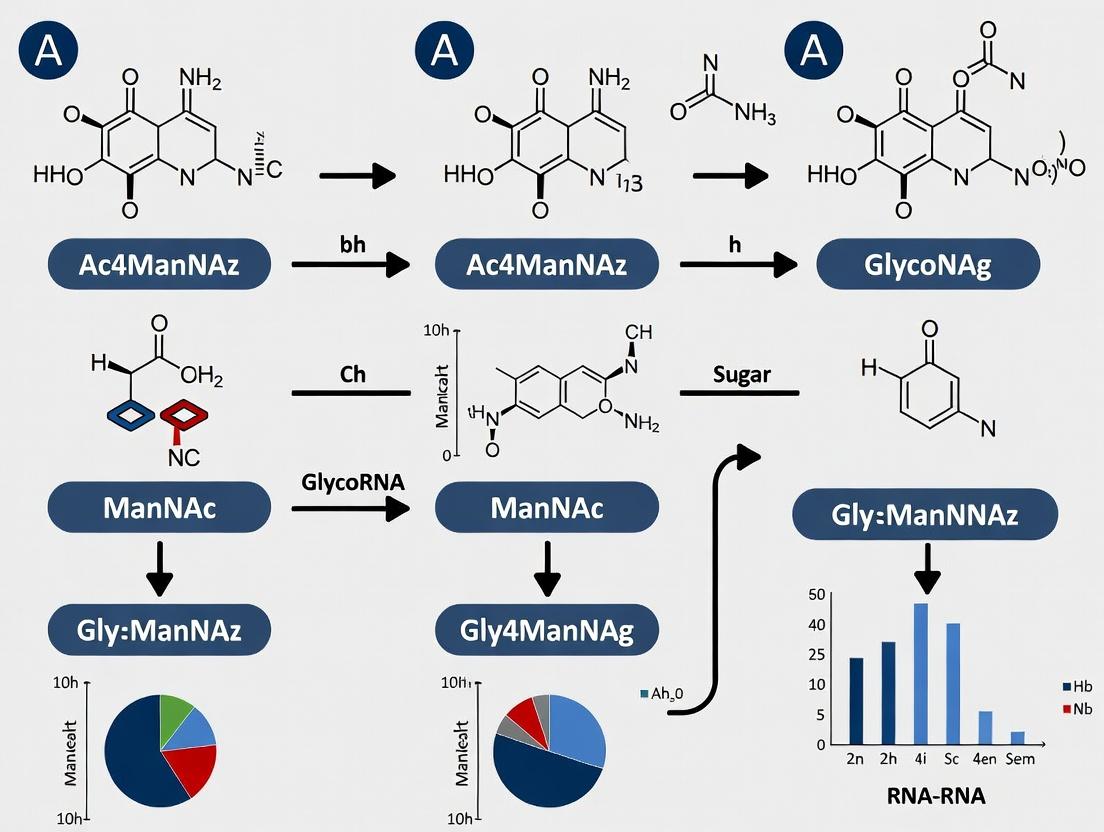
This comprehensive guide details the application of Ac4ManNAz metabolic labeling for the MS-based analysis of glycoRNAs.
Ac4ManNAz Metabolic Labeling for GlycoRNA Mass Spectrometry: A Complete Protocol Guide
Abstract
This comprehensive guide details the application of Ac4ManNAz metabolic labeling for the MS-based analysis of glycoRNAs. We cover foundational principles of metabolic glycan labeling and glycoRNA biology, provide a step-by-step protocol for cell culture, labeling, RNA extraction, enrichment via click chemistry, and LC-MS/MS analysis. The article addresses common troubleshooting scenarios, optimization strategies for labeling efficiency and MS sensitivity, and presents validation methods alongside a critical comparison with alternative techniques like metabolic crosslinking. This resource is designed for researchers and drug developers aiming to explore the glycoRNA landscape and its implications in disease.
Understanding the Foundation: What are GlycoRNAs and Why Use Ac4ManNAz for MS Detection?
Recent research has revealed that RNA, like proteins and lipids, can be glycosylated. These N-linked glycans, attached via sialic acid linkages to small non-coding RNAs, represent a novel layer of biological regulation. This discovery opens a new frontier in glycobiology. Within the broader thesis on "Advancing GlycoRNA Profiling through Metabolic Labeling," the strategic application of Ac4ManNAz—a peracetylated, azide-modified derivative of N-acetylmannosamine (ManNAc)—is central. This metabolic precursor enables bioorthogonal tagging and enrichment of sialylated glycoconjugates, including glycoRNAs, for subsequent mass spectrometry (MS) analysis, providing a powerful tool to define the glycoRNA landscape and its functional implications.
Current research indicates glycoRNA is a low-abundance modification present on specific RNA types. The following table summarizes key quantitative findings from recent studies.
Table 1: Compositional Analysis of Identified GlycoRNAs
| Parameter | Typical Finding / Range | Notes |
|---|---|---|
| Glycan Type | Primarily sialylated N-glycans (biantennary complex type) | Identified via MS/MS on metabolically labeled RNA. |
| RNA Carrier Size | ~20-60 nucleotides | Predominantly small non-coding RNAs (sncRNAs). |
| Linked Sugar | Terminal sialic acid (N-acetylneuraminic acid, Neu5Ac) | Serves as the point of attachment for the glycan to RNA. |
| Carrier RNA Classes | YRNA, tRNA, Vault RNA, snoRNA | Distribution varies by cell type. |
| Approximate Abundance | ~1-5 fmol per µg of total cellular RNA | Extremely low abundance necessitates enrichment strategies. |
| Cellular Localization | Cell surface membrane | Demonstrated via selective cell surface labeling and imaging. |
Table 2: Key Reagents for Ac4ManNAz-Based Metabolic Labeling
| Reagent / Solution | Function in GlycoRNA Research |
|---|---|
| Ac4ManNAz (tetraacetylated N-azidoacetylmannosamine) | Cell-permeable metabolic precursor. Incorporated into sialic acid biosynthesis pathway, resulting in azide-labeled sialic acid on glycoRNAs. |
| DBCO (dibenzocyclooctyne)-conjugated probes (e.g., DBCO-biotin, DBCO-fluorophore) | Used in "click chemistry" (Cu-free Strain-Promoted Alkyne-Azide Cycloaddition, SPAAC) for specific, covalent tagging of azide-labeled glycoRNAs for enrichment or imaging. |
| Streptavidin Magnetic Beads | For pulldown and enrichment of biotin-tagged glycoRNAs post-click reaction. |
| GlycoRNA-Seq Library Prep Kits | Specialized kits for constructing sequencing libraries from low-input, enriched small RNAs. |
| RNase Inhibitors (e.g., SUPERase•In) | Critical for protecting glycoRNA throughout the enrichment and purification process. |
| Mass Spectrometry-Grade Enzymes (RNase T1, PNGase F) | For controlled RNA digestion and glycan release prior to LC-MS/MS analysis. |
Detailed Experimental Protocols
Protocol 1: Metabolic Labeling of Cellular GlycoRNA with Ac4ManNAz
Objective: To incorporate azide tags into de novo synthesized sialic acid residues on glycoRNAs.
- Cell Culture & Labeling: Seed mammalian cells (e.g., HEK293T, HeLa) in standard growth medium.
- Prepare a 10-100 µM working solution of Ac4ManNAz in DMSO. A typical final concentration is 50 µM.
- Replace cell culture medium with fresh medium containing the Ac4ManNAz working solution. Include a vehicle control (DMSO only).
- Incubate cells for 48-72 hours to ensure sufficient metabolic turnover and incorporation.
- Harvest cells using a gentle method (e.g., trypsinization or scraping) and wash 2x with PBS.
Protocol 2: Enrichment of Azide-Labeled GlycoRNA via Click Chemistry & Pulldown
Objective: To selectively isolate azide-labeled glycoRNAs for downstream analysis (Seq or MS).
- Total RNA Extraction: Isolate total RNA from harvested cells using TRIzol or similar, including RNase inhibitors. Prefer methods that preserve small RNAs.
- Click Reaction: Prepare a 1 mL reaction mix per sample:
- RNA sample (up to 50 µg).
- 1X PBS pH 7.4.
- DBCO-PEG4-Biotin (Final conc. 100 µM).
- Incubate at 25°C for 2 hours with gentle rotation.
- Ethanol Precipitation: Recover RNA by standard ethanol precipitation. Wash pellet with 70% ethanol.
- Streptavidin Pulldown:
- Resuspend clicked RNA in 100 µL of RNA Bind Buffer.
- Add 50 µL of pre-washed Streptavidin Magnetic Beads.
- Incubate at 25°C for 30 minutes with rotation.
- Place on magnet, discard supernatant.
- Wash beads stringently 3x with Wash Buffer (e.g., containing 1% SDS).
- Elution: Elute bound glycoRNA from beads using a high-temperature elution (e.g., 95°C for 10 min in nuclease-free water) or competitive elution with excess biotin.
Protocol 3: Mass Spectrometric Analysis of GlycoRNA-Derived Glycans
Objective: To characterize the N-glycan structures attached to RNA.
- RNA Digestion: Digest the enriched glycoRNA pool with RNase T1 to generate short, glycan-bearing oligonucleotides.
- Glycan Release: Treat the digest with recombinant PNGase F (or similar glycosidase) to hydrolyze the N-glycans from the RNA backbone. Note: PNGase F is used for release, not for confirming protein-like linkage, as the linkage is sialic acid-to-RNA.
- Glycan Cleanup: Desalt and purify released glycans using solid-phase extraction (e.g., graphitized carbon cartridges).
- LC-MS/MS Analysis:
- Separate glycans via Porous Graphitic Carbon (PGC) Liquid Chromatography.
- Analyze using negative-ion mode Electrospray Ionization Tandem Mass Spectrometry (ESI-MS/MS).
- Fragment glycans via Collision-Induced Dissociation (CID) or Higher-Energy Collisional Dissociation (HECD).
- Identify structures by matching MS/MS spectra to glycan databases (e.g., GlyTouCan, UniCarb-DB).
Visualized Pathways and Workflows
Title: Ac4ManNAz Metabolic Pathway for GlycoRNA Labeling
Title: GlycoRNA Enrichment & Analysis Workflow
Within the broader thesis on glycoRNA MS research, metabolic labeling with tetraacetylated N-azidoacetylmannosamine (Ac4ManNAz) provides a pivotal strategy for the discovery and characterization of elusive glycoRNA structures. Unlike static analytical methods, Ac4ManNAz is a cell-permeable metabolic precursor that is integrated biosynthetically into sialylated glycoconjugates via the sialic acid pathway, introducing bioorthogonal azide tags onto cell-surface and intracellular glycans, including those conjugated to RNA.
This enables two core applications for glycoRNA research:
- Selective Enrichment: Azide-labeled glycoRNAs can be covalently captured from complex biological lysates via copper-free click chemistry (e.g., using DBCO-biotin), allowing for stringent purification away from unmodified RNA and non-glycosylated contaminants.
- Visualization & Detection: Fluorescent dyes or affinity handles can be clicked onto the azide tag for in-gel fluorescence, live-cell imaging, or flow cytometry to track the localization and dynamics of glycan-modified molecules.
The key advantage is the minimal perturbation to native biosynthetic pathways, allowing for the pulse-chase analysis and highly sensitive detection of low-abundance glycoRNA species, which are critical for downstream mass spectrometric (MS) sequencing and structural elucidation.
Experimental Protocol: Metabolic Labeling & Enrichment of GlycoRNAs
Objective: To metabolically label sialylated glycoRNAs with Ac4ManNAz, followed by click-chemistry-based enrichment for downstream MS analysis.
Materials & Reagents:
- Ac4ManNAz: Dissolved in DMSO to a 100 mM stock solution. Store at -20°C.
- Cell Culture Medium: Appropriate complete medium (e.g., DMEM, RPMI) and serum-free medium for labeling.
- Click Chemistry Reagents: DBCO-PEG4-Biotin (conjugate) or DBCO-Sulfone-Cy5 (imaging). Prepare stock in DMSO.
- Lysis/Binding Buffer: 1% SDS in 50 mM Tris-HCl, pH 7.5, supplemented with RNase inhibitors.
- Streptavidin Magnetic Beads: Pre-washed according to manufacturer's protocol.
- High-Salt Wash Buffer: 1 M NaCl, 0.1% SDS, 50 mM Tris-HCl, pH 7.5.
- Low-Salt Wash Buffer: 0.1% SDS, 50 mM Tris-HCl, pH 7.5.
- Elution Buffer: 95% Formamide, 10 mM EDTA, or direct TRIzol addition.
- DNase/RNase-Free Water.
Procedure: Part A: Metabolic Labeling
- Culture cells (e.g., HEK293T, HeLa) to ~70-80% confluency in standard medium.
- Optional: Pre-incubate cells in serum-free medium for 1 hour to reduce background sialic acid levels.
- Aspirate medium and replace with fresh medium containing 50 µM Ac4ManNAz (final concentration, from 100 mM DMSO stock). Include a vehicle-only control (DMSO).
- Incubate cells for 24-48 hours at 37°C, 5% CO₂ to allow for metabolic incorporation.
Part B: Click Chemistry Conjugation & Enrichment
- Harvest cells by trypsinization or scraping. Wash cells 2x with PBS.
- Lyse cells in Lysis/Binding Buffer (500 µL per 10⁷ cells). Sonicate briefly to reduce viscosity. Centrifuge to clear debris.
- Perform click reaction on the clarified lysate:
- Add DBCO-PEG4-Biotin to a final concentration of 100 µM.
- Incubate with rotation for 2 hours at room temperature.
- Enrichment with Streptavidin Beads:
- Add pre-washed streptavidin magnetic beads (100 µL slurry per sample) to the clicked lysate.
- Incubate with rotation for 1 hour at room temperature.
- Place tube on a magnetic rack. Discard supernatant.
- Wash beads sequentially:
- High-Salt Wash Buffer: 3 x 1 mL, 5 min each.
- Low-Salt Wash Buffer: 2 x 1 mL, 5 min each.
- Elution: Elute bound glycoRNA complexes by adding 100 µL Elution Buffer and incubating at 65°C for 10 min, or by direct extraction with TRIzol LS reagent following manufacturer's protocol for RNA isolation.
- Proceed to RNA purification, digestion, and LC-MS/MS analysis for glycoRNA identification.
Data Presentation: Quantitative Labeling Efficiency
Table 1: Representative Data from Ac4ManNAz Labeling of HeLa Cells
| Parameter | Control (DMSO) | Ac4ManNAz (50 µM, 48h) | Measurement Method |
|---|---|---|---|
| Cell Viability | 98.5% ± 1.2% | 96.8% ± 2.1% | Trypan Blue Exclusion |
| Azide Signal (MFI) | 1,050 ± 205 | 25,400 ± 3,150 | Flow Cytometry (DBCO-Cy5) |
| Enriched RNA Yield | 15 ng ± 5 ng | 850 ng ± 120 ng | Bioanalyzer (RIN > 7.0) |
| Unique GlycoRNA Candidates | 2 (background) | 47 | LC-MS/MS Identification |
Table 2: Key Research Reagent Solutions for Ac4ManNAz-Based GlycoRNA Studies
| Reagent | Function | Critical Consideration |
|---|---|---|
| Ac4ManNAz | Cell-permeable metabolic precursor; delivers ManNAz into the sialic acid pathway for azido-sialic acid display. | Optimize concentration (20-100 µM) & duration (24-72h) to balance signal vs. cytotoxicity. |
| DBCO-PEG4-Biotin | Copper-free click chemistry reagent for bioorthogonal conjugation of biotin to azide tags. Enables streptavidin-based enrichment. | Superior kinetics & specificity over CuAAC; critical for preserving RNA integrity. |
| Streptavidin Magnetic Beads | Solid-phase support for affinity purification of biotinylated glycoRNA complexes. | Use high-capacity, pre-washed beads. Stringent washes (high-salt/SDS) are essential to reduce non-specific RNA binding. |
| RNase Inhibitor Cocktail | Protects labile glycoRNA molecules from degradation during cell lysis and processing. | Must be included in all non-denaturing buffers prior to elution. |
| SDS Lysis Buffer | Denatures proteins, inactivates RNases, and disrupts non-covalent interactions to release all glycoRNA species. | Compatible with downstream click chemistry and streptavidin binding. |
Pathway & Workflow Visualizations
Title: Ac4ManNAz Pathway to GlycoRNA Labeling
Title: GlycoRNA Enrichment Protocol Workflow
The broader thesis of this work posits that metabolic oligosaccharide engineering (MOE) with Ac4ManNAz provides a robust, chemoselective strategy for the identification and characterization of glycosylated RNA (glycoRNA), a recently discovered class of post-transcriptional modifications. This approach enables the selective tagging, enrichment, and subsequent mass spectrometric (MS) analysis of these elusive biomolecules, overcoming the historical challenges posed by their low abundance and lack of inherent mass tags.
Core Chemistry and Pathways
The principle hinges on the cellular metabolism of peracetylated N-azidoacetyl-D-mannosamine (Ac4ManNAz). The acetyl groups facilitate cell permeability. Inside the cell, esterases remove the acetyl groups, yielding ManNAz. This azido-sugar is subsequently metabolized through the sialic acid biosynthetic pathway, ultimately being incorporated into cell-surface and intracellular glycoconjugates, including glycoRNA, as sialic acid analogs bearing a bioorthogonal azide (-N3) tag.
Diagram Title: Metabolic Pathway of Ac4ManNAz to Azide-Tagged Glycoconjugates
Key Protocols
Protocol 1: Metabolic Labeling of Cultured Cells with Ac4ManNAz
Objective: To incorporate the azide tag into cellular glycoRNA.
- Cell Culture: Grow target cells (e.g., HEK293T, HeLa) to ~70% confluence in standard medium.
- Labeling Medium Preparation: Prepare labeling medium by supplementing standard growth medium with a final concentration of 50 µM Ac4ManNAz (from a 50 mM stock in DMSO). Include a vehicle control (DMSO only).
- Labeling: Aspirate old medium, wash cells with PBS, and add the labeling medium.
- Incubation: Incubate cells for 48-72 hours at 37°C, 5% CO₂ to ensure sufficient metabolic turnover and incorporation.
- Harvest: Wash cells 3x with ice-cold PBS. Harvest cells by scraping or trypsinization for subsequent RNA extraction or cell lysis.
Protocol 2: CuAAC Conjugation for Enrichment or Detection
Objective: To covalently attach an alkyne-bearing probe (e.g., biotin, fluorophore) to the metabolically incorporated azide via Copper(I)-Catalyzed Azide-Alkyne Cycloaddition (CuAAC).
- Sample Preparation: Prepare cell lysates or purified RNA from Protocol 1.
- Reaction Mix: For a 100 µL reaction:
- Sample (in PBS or suitable buffer)
- 50 µM Alkyne-probe (e.g., Biotin-PEG4-Alkyne or DBCO-Cy5)
- 1 mM CuSO₄ (from 50 mM stock)
- 1 mM THPTA ligand (from 50 mM stock)
- 5 mM Sodium Ascorbate (freshly prepared)
- Click Reaction: Vortex gently and incubate at room temperature for 1 hour with rotation, protected from light.
- Clean-up: For RNA, perform ethanol precipitation. For proteins/cell lysates, use a desalting column or acetone precipitation to remove unreacted reagents.
Protocol 3: Streptavidin Enrichment of Biotinylated GlycoRNA
Objective: To isolate azide-tagged, biotin-clicked glycoRNA for downstream MS analysis.
- Bead Preparation: Wash 50 µL of streptavidin magnetic beads per sample 3x with wash/binding buffer (e.g., 20 mM Tris-HCl, pH 7.5, 500 mM NaCl, 1 mM EDTA).
- Binding: Incubate the clicked RNA sample (from Protocol 2, Step 4) with the pre-washed beads for 1 hour at 25°C with rotation.
- Washing: Pellet beads magnetically and wash sequentially:
- 2x with wash/binding buffer.
- 1x with high-salt buffer (1 M NaCl, 20 mM Tris-HCl, pH 7.5).
- 1x with low-salt buffer (20 mM Tris-HCl, pH 7.5).
- Elution: Elute bound glycoRNA by incubating beads with 100 µL of 20 mM DTT in buffer for 30 min at 65°C (to cleave disulfide-linked biotin tags) or by direct digestion with RNase for nucleoside analysis.
Protocol 4: LC-MS/MS Analysis of Enriched GlycoRNA Nucleosides
Objective: To identify and quantify the modified ribonucleosides derived from glycoRNA.
- Enzymatic Digestion: Digest enriched RNA to nucleosides using a cocktail of benzonase, phosphodiesterase I, and alkaline phosphatase in ammonium acetate buffer (pH 8.0) for 2-3 hours at 37°C.
- Sample Cleanup: Filter digest through a 10 kDa MWCO filter. Desalt using C18 solid-phase extraction tips.
- LC-MS/MS Parameters:
- Column: C18 reversed-phase (e.g., 2.1 x 150 mm, 1.8 µm).
- Mobile Phase: A: 0.1% Formic acid in H₂O; B: 0.1% Formic acid in acetonitrile.
- Gradient: 0-5% B over 5 min, 5-30% B over 25 min.
- MS: Negative ion mode. Data-Dependent Acquisition (DDA) or Parallel Reaction Monitoring (PRM) targeting the theoretical m/z of the azido-sialic acid-modified nucleoside (e.g., ~+ 291.1 Da from canonical nucleoside).
The Scientist's Toolkit: Research Reagent Solutions
| Item | Function & Explanation |
|---|---|
| Ac4ManNAz (Peracetylated N-Azidoacetylmannosamine) | Cell-permeable metabolic precursor. The azido moiety serves as the bioorthogonal chemical handle for downstream tagging. |
| Biotin-PEG4-Alkyne / DBCO-Biotin | Click-compatible probes. Alkyne reacts with azide via CuAAC; DBCO reacts via copper-free strain-promoted (SPAAC) chemistry. Biotin enables streptavidin-based enrichment. |
| CuSO₄, THPTA Ligand, Sodium Ascorbate | CuAAC Catalyst System. THPTA ligates Cu(I), enhancing reaction rate/cell compatibility. Ascorbate reduces Cu(II) to the active Cu(I) state. |
| Streptavidin Magnetic Beads | Solid-phase capture matrix for high-affinity (nM Kd) isolation of biotinylated glycoRNA conjugates from complex mixtures. |
| Triazole-linked GlycoRNA Standard | Synthetic reference material. Critical for MS method development, retention time determination, and fragmentation pattern validation. |
Table 1: Optimized Experimental Parameters for Ac4ManNAz Labeling & Analysis
| Parameter | Typical Range | Optimal Value (HEK293T) | Notes |
|---|---|---|---|
| Ac4ManNAz Labeling Concentration | 25 - 100 µM | 50 µM | Balances incorporation efficiency with potential cytotoxicity. |
| Labeling Duration | 24 - 96 hrs | 72 hrs | Allows for full metabolic turnover of endogenous pools. |
| CuAAC Reaction Time | 30 - 120 min | 60 min | Ensures >95% conjugation yield for cell lysates. |
| Click Probe Concentration | 10 - 100 µM | 50 µM | For Biotin-PEG4-Alkyne in cell lysate reactions. |
| Bead Binding Capacity | ~5-10 µg biotin/µL beads | Use 50 µL beads/sample | Do not overload; scale up for larger inputs. |
| LC-MS/MS Detection Limit (PRM) | Low amol range | ~10-50 amol on-column | Depends on instrument sensitivity and ionization efficiency of modified nucleoside. |
Diagram Title: Integrated Workflow from Cell Labeling to MS Identification
Introduction Within the broader thesis exploring Ac4ManNAz metabolic labeling for glycoRNA mass spectrometry research, a critical question emerges: why target glycoRNAs? These newly discovered biomolecules, consisting of small non-coding RNAs decorated with sialylated glycans, reside on the cell surface. This positions them as direct mediators of extracellular communication, offering unprecedented mechanistic insights and therapeutic opportunities in cancer and immunology.
Application Notes
1. Cancer: GlycoRNAs as Biomarkers and Immunomodulators GlycoRNAs are dysregulated on cancer cell surfaces, influencing tumor progression and immune evasion.
- Quantitative Data Summary:
| Observation | Cancer Model/System | Key Quantitative Finding | Proposed Mechanism |
|---|---|---|---|
| Overexpression | Leukemia Cell Lines | ~2-5 fold increase in surface glycoRNA levels compared to healthy counterparts. | Modulates interactions with Siglec family immunoreceptors. |
| Immune Engagement | In Vitro Co-culture | Anti-glycoRNA antibodies increased macrophage phagocytosis of cancer cells by ~40%. | GlycoRNAs present "eat-me" signals or block "don't-eat-me" signals. |
| Therapeutic Targeting | Mouse Xenograft | GlycoRNA-targeting conjugate reduced tumor volume by ~60% vs. control. | Antibody-RNAse fusion depletes surface glycoRNAs, enhancing immune recognition. |
- Detailed Protocol: Metabolic Labeling & Flow Cytometry for GlycoRNA Detection on Cancer Cells
- Day 1: Seed cancer cells (e.g., HL-60) in 6-well plates at 5x10^5 cells/mL in complete medium.
- Day 2: Supplement medium with 50 µM Ac4ManNAz (a metabolic precursor for sialic acid biosynthesis) or vehicle control (DMSO). Incubate for 48-72 hrs.
- Day 4/5: Harvest cells, wash 2x with PBS.
- Click Chemistry Labeling: Resuspend cell pellet in 500 µL PBS containing 10 µM DBCO-biotin (or DBCO-fluorophore). Incubate for 1 hr at 4°C with gentle rotation. The DBCO group reacts selectively with the azide moiety incorporated via Ac4ManNAz.
- Washing: Wash cells 3x with PBS + 1% BSA to remove excess reagent.
- Detection: If using DBCO-biotin, stain with streptavidin-AF647 (1:1000) for 30 min at 4°C. Wash 3x.
- Analysis: Analyze by flow cytometry. A rightward shift in fluorescence intensity in Ac4ManNAz-treated vs. control cells indicates surface glycoRNA labeling.
2. Immunology: GlycoRNA-Siglec Axis in Immune Regulation Surface glycoRNAs bind to Siglec (Sialic acid-binding immunoglobulin-type lectin) receptors on immune cells, providing a novel RNA-mediated checkpoint mechanism.
- Quantitative Data Summary:
| Observation | Immune Context | Key Quantitative Finding | Biological Implication |
|---|---|---|---|
| Direct Binding | In Vitro Pulldown | Recombinant Siglec-5 bound glycoRNA with Kd ≈ 150 nM, comparable to glycoprotein ligands. | Establishes glycoRNAs as high-affinity Siglec ligands. |
| Immune Suppression | PBMC Activation | Co-culture with glycoRNA+ cells reduced IFN-γ production in NK cells by ~35%. | GlycoRNA-Siglec engagement delivers an inhibitory signal. |
| Inflammatory Disease Link | SLE Patient Serum | GlycoRNA-specific antibodies were detected in >30% of patients (n=50). | Aberrant glycoRNA expression or modification may drive autoimmunity. |
- Detailed Protocol: GlycoRNA Pull-Down for Siglec Interaction Studies
- Step 1: Metabolic Labeling & Cell Lysis: Label 1x10^7 immune cells (e.g., monocytes) with 50 µM Ac4ManNAz for 72h. Lyse cells in NP-40 lysis buffer (+ RNase inhibitors).
- Step 2: Conjugate Bead Preparation: Wash streptavidin magnetic beads (100 µL slurry) 2x with PBS. Conjugate with 50 µM biotinylated recombinant Siglec-Fc protein (or control Fc) for 1h at RT. Block with 1% BSA.
- Step 3: Affinity Purification: Incubate cell lysate with conjugated beads for 2h at 4°C with rotation.
- Step 4: Washing & Elution: Wash beads stringently 5x with lysis buffer (+500 mM NaCl). Elute bound glycoRNAs directly in TRIzol LS reagent for RNA isolation or in Laemmli buffer for protein analysis.
- Step 5: Validation: Isplicate RNA. Perform qRT-PCR for specific small RNAs (e.g., Y-RNAs, snRNAs). Enrichment in the Siglec-Fc pulldown vs. control confirms interaction.
The Scientist's Toolkit: Research Reagent Solutions
| Reagent/Material | Function in GlycoRNA Research |
|---|---|
| Ac4ManNAz (tetraacetylated N-azidoacetylmannosamine) | Cell-permeable metabolic precursor for incorporating azido-sialic acid into glycoRNAs, enabling bioorthogonal tagging. |
| DBCO-biotin/fluorophore (Dibenzocyclooctyne) | Click chemistry reagent that reacts rapidly and specifically with azide groups for detection or pull-down. |
| Recombinant Siglec-Fc Chimera Proteins | Tool for identifying and validating glycoRNA binding partners via pulldown or cell-binding assays. |
| Biotinylated Anti-RNA Antibodies (e.g., J2) | Allows for specific capture of double-stranded RNA regions, useful for co-purifying associated glycans. |
| Mass Spectrometry Grade Enzymes (RNase A/T1, PNGase F) | For controlled digestion of glycoRNAs to analyze RNA sequence (via sequencing) and glycan composition (via MS). |
| Strepavidin Magnetic Beads | Solid support for isolating biotin-tagged glycoRNAs or biotinylated binding partners from complex mixtures. |
Diagrams
Title: GlycoRNA Role in Cancer Immune Evasion & Therapy
Title: GlycoRNA Workflow Using Ac4ManNAz Labeling
Step-by-Step Protocol: Ac4ManNAz Labeling to GlycoRNA LC-MS/MS Analysis
1. Introduction This protocol is part of a comprehensive thesis on utilizing Ac4ManNAz (tetraacetylated N-azidoacetylmannosamine) for metabolic labeling and subsequent mass spectrometric (MS) analysis of glycoRNAs. Successful labeling is critically dependent on optimal cell health and precise dosing of the metabolic precursor. This section details the methodology for optimizing mammalian cell culture conditions and establishing an effective, non-toxic Ac4ManNAz dosing regimen to maximize azido-sialic acid (SiaNAz) incorporation for downstream click-chemistry applications.
2. The Scientist's Toolkit: Research Reagent Solutions
| Item | Function/Benefit |
|---|---|
| Ac4ManNAz | Cell-permeable metabolic precursor that is converted into N-azidoacetyl sialic acid (SiaNAz) and incorporated into cell-surface and intracellular glycoconjugates, including glycoRNA. |
| DMSO (Cell Culture Grade) | High-purity solvent for reconstituting and diluting Ac4ManNAz stock solutions. |
| Cell Viability Assay Kit (e.g., MTT, CCK-8) | For quantitatively assessing cytotoxicity of Ac4ManNAz across a dosing range. |
| Flow Cytometry with DBCO-Clickable Dyes | For rapid, quantitative measurement of SiaNAz incorporation efficiency on cell surfaces via copper-free click chemistry. |
| Sialidase (Neuraminidase) | Enzyme control to confirm specific labeling of sialylated glycans by removing sialic acids, including SiaNAz. |
| High-Glucose DMEM with GlutaMAX | Culture medium formulation providing stable energy and glutamine sources, minimizing ammonia production for consistent growth during labeling. |
| Fetal Bovine Serum (FBS), Dialyzed | Serum depleted of small molecules (including natural ManNAc) to reduce background and increase Ac4ManNAz metabolic efficiency. |
3. Cell Culture Optimization Protocol
Aim: To establish robust, consistent, and healthy cell cultures as a foundation for metabolic labeling. Materials: Mammalian cell line of interest (e.g., HEK293T, HeLa), appropriate complete growth medium, dialyzed FBS, PBS, trypsin-EDTA, T-25/T-75 flasks, humidified 37°C/5% CO2 incubator, hemocytometer or automated cell counter.
Procedure:
- Seed cells at a density of 2-3 x 10^4 cells/cm² in complete growth medium. Allow attachment for 24 hours.
- Monitor growth kinetics: Every 24 hours for 3-4 days, trypsinize and count triplicate samples of cells. Calculate population doubling time.
- Determine optimal seeding density for labeling: Prior to the labeling experiment, seed cells across a range of densities (e.g., 1x10^4, 2x10^4, 4x10^4 cells/cm²) in a multi-well plate. After 24 hours, cells should be at 60-70% confluence for optimal labeling efficiency and health during the treatment period.
- Adapt cells to dialyzed FBS (Critical Step): For 1-2 passages prior to labeling, gradually adapt cells to growth medium supplemented with 10% dialyzed FBS. Start with a 1:1 mix of normal and dialyzed FBS, then transition fully to dialyzed FBS.
4. Ac4ManNAz Dosing Strategy Protocol
Aim: To determine the optimal concentration and duration of Ac4ManNAz treatment that maximizes SiaNAz incorporation while maintaining >90% cell viability. Materials: Ac4ManNAz (lyophilized), anhydrous DMSO, complete medium with dialyzed FBS, cell viability assay kit, flow cytometry buffers, DBCO-fluorophore conjugate (e.g., DBCO-Cy5).
Procedure: Part 1: Cytotoxicity Assessment
- Prepare 100 mM Ac4ManNAz stock: Dissolve in anhydrous DMSO. Aliquot and store at -20°C.
- Seed cells in a 96-well plate at the optimal density determined in Section 3.
- After 24 hours, prepare treatment media with Ac4ManNAz at final concentrations of 0 (DMSO vehicle control), 25, 50, 100, 200, and 400 µM in complete medium with dialyzed FBS. Keep DMSO concentration constant (≤0.4% v/v).
- Replace medium with treatment media. Incubate for 24, 48, and 72 hours.
- At each time point, perform a cell viability assay (e.g., CCK-8) following manufacturer instructions. Measure absorbance.
- Data Analysis: Calculate % viability relative to vehicle control. Select the maximum concentration that maintains >90% viability at the intended labeling duration.
Part 2: Labeling Efficiency Analysis via Flow Cytometry
- Seed cells in a 12-well plate.
- Treat cells with the selected non-toxic concentration range (e.g., 25, 50, 100 µM) for 24, 48, and 72 hours.
- Harvest cells: Wash with PBS, detach gently, and resuspend in PBS containing 1% BSA.
- Click labeling for detection: Incubate 1x10^6 cells with a DBCO-Cy5 conjugate (1-5 µM in PBS/1% BSA) for 30-60 minutes at 4°C in the dark.
- Wash cells twice with PBS/1% BSA.
- Analyze by flow cytometry. Measure median fluorescence intensity (MFI) of the Cy5 channel.
- Specificity Control: Pre-treat a sample with broad-spectrum sialidase (2 U/mL, 37°C, 1 hr) prior to the click reaction to confirm signal is from surface SiaNAz.
5. Data Presentation
Table 1: Cell Viability Post Ac4ManNAz Treatment (HEK293T Example)
| Ac4ManNAz (µM) | 24h Viability (%) | 48h Viability (%) | 72h Viability (%) |
|---|---|---|---|
| 0 (Control) | 100 ± 5 | 100 ± 7 | 100 ± 6 |
| 25 | 99 ± 4 | 98 ± 5 | 95 ± 6 |
| 50 | 98 ± 3 | 96 ± 4 | 92 ± 5 |
| 100 | 95 ± 4 | 90 ± 5 | 85 ± 7 |
| 200 | 88 ± 6 | 75 ± 8 | 65 ± 9 |
| 400 | 70 ± 8 | 55 ± 10 | 40 ± 12 |
Table 2: SiaNAz Incorporation Efficiency (Flow Cytometry MFI)
| Treatment Condition | 24h MFI (Cy5) | 48h MFI (Cy5) | 72h MFI (Cy5) |
|---|---|---|---|
| No Ac4ManNAz + DBCO-Cy5 | 520 | 500 | 510 |
| 25 µM Ac4ManNAz + DBCO-Cy5 | 8,500 | 15,200 | 18,500 |
| 50 µM Ac4ManNAz + DBCO-Cy5 | 15,000 | 28,400 | 35,000 |
| 100 µM Ac4ManNAz + DBCO-Cy5 | 22,000 | 40,100 | 45,200* |
| 100 µM + Sialidase Pre-treatment | 600 | 550 | 580 |
Note: * indicates reduced cell confluence at 72h per Table 1.
6. Experimental Workflow and Pathway Diagrams
Title: Workflow for Optimizing Ac4ManNAz Dose
Title: Ac4ManNAz Conversion to Label GlycoRNA and Glycans
7. Recommended Protocol Summary Based on typical data (as in Tables 1 & 2), the optimal dosing strategy for many mammalian cell lines is treatment with 50-100 µM Ac4ManNAz for 48 hours in medium supplemented with dialyzed FBS. This window typically maximizes SiaNAz incorporation while maintaining excellent cell viability, preparing cells for subsequent click-chemistry capture or profiling of glycoRNA.
Abstract Following metabolic labeling of cells with Ac4ManNAz for glycoRNA research, the subsequent isolation of high-integrity total RNA is critical. This protocol details a robust phenol-free method for total RNA extraction, purification, and comprehensive quality control, ensuring compatibility with downstream click-chemistry conjugation and mass spectrometric (MS) analysis.
Total RNA Extraction: Phenol-Free Method
This method minimizes contaminating genomic DNA and metabolites, which can interfere with click chemistry and MS.
Detailed Protocol
Cell Lysis:
- Aspirate culture medium from metabolically labeled cells (typically a 10-cm dish or pellet from 5-10 million cells).
- Wash cells gently with 5 mL of ice-cold 1X PBS.
- Add 1 mL of commercially available phenol-free, guanidinium thiocyanate-based lysis buffer (e.g., QIAzol or TRIzol LS) directly to the dish. Incubate for 5 minutes at room temperature (RT) with gentle rocking to ensure complete lysis. Transfer lysate to a nuclease-free microcentrifuge tube.
Phase Separation (Optional, if using TRIzol-like reagents):
- Add 200 µL of chloroform per 1 mL of lysate. Cap tube securely and shake vigorously by hand for 15 seconds.
- Incubate at RT for 2-3 minutes.
- Centrifuge at 12,000 × g for 15 minutes at 4°C. The mixture separates into a lower red phenol-chloroform phase, an interphase, and a colorless upper aqueous phase containing RNA.
RNA Precipitation and Purification:
- Transfer the upper aqueous phase (approximately 60% of the original volume) to a new tube. Do not disturb the interphase.
- For silica-membrane column purification (recommended):
- Add 1.5 volumes of 100% ethanol to the aqueous phase and mix by pipetting.
- Load the mixture onto a silica-membrane column (e.g., RNeasy Mini column). Follow manufacturer's instructions.
- Perform on-column DNase I digestion (15-minute incubation at RT) to eliminate genomic DNA contamination.
- Wash columns with provided buffers.
- For glycol precipitation:
- Add glycogen as a carrier (20 µg) and 0.5 volumes of isopropanol. Mix and incubate at -20°C for ≥1 hour.
- Pellet RNA by centrifugation at 12,000 × g for 30 minutes at 4°C.
- Wash pellet twice with 75% ethanol (made with RNase-free water).
Elution/Resuspension:
- Elute column-bound RNA in 30-50 µL of RNase-free water. If using precipitation, air-dry the pellet for 5-10 minutes and resuspend in RNase-free water.
- Determine RNA concentration using a UV-Vis spectrophotometer (NanoDrop). Aliquot and store at -80°C.
Table 1: Expected RNA Yield and Purity from 10^7 HEK293T Cells Post-Labeling
| Extraction Method | Average Yield (µg) | A260/A280 Ratio (Target: 1.9-2.1) | A260/A230 Ratio (Target: >2.0) | RIN (Bioanalyzer, Target: ≥8.5) |
|---|---|---|---|---|
| Phenol-free + Column | 25 - 45 | 2.05 ± 0.05 | 2.2 ± 0.2 | 9.2 ± 0.5 |
| Phenol-Chloroform + Precipitation | 30 - 50 | 1.95 ± 0.10 | 1.8 ± 0.3* | 8.5 ± 0.8 |
*Lower A260/A230 can indicate carryover of guanidine salts or metabolites, requiring additional ethanol washes.
Post-Extraction Quality Control (QC)
Comprehensive QC is non-negotiable for glycoRNA-MS workflows.
Detailed Protocols
2.1. Spectrophotometric Analysis (NanoDrop)
- Protocol: Use 1-2 µL of sample. Blank with RNase-free water. Measure absorbance at 230nm, 260nm, and 280nm.
- Interpretation: A260/A280 ~2.0 indicates pure RNA. A260/A230 <2.0 suggests contamination (e.g., salts, carbohydrates, residual phenol).
2.2. Microfluidic Capillary Electrophoresis (Bioanalyzer/Tapestation)
- Protocol: Use the RNA Pico or Nano kit per manufacturer's instructions. Denature 1 µL of RNA (50-500 pg/µL) at 70°C for 2 minutes with the provided denaturing buffer before loading.
- Interpretation: The RNA Integrity Number (RIN) or RIN equivalent is calculated. Intact total RNA shows distinct 18S and 28S ribosomal RNA peaks (2:1 ratio for mammalian cells). Degradation appears as a smear or shift to lower molecular weights.
Table 2: QC Metrics and Implications for Downstream Steps
| QC Assay | Pass Criteria | Failure Consequence for GlycoRNA Workflow |
|---|---|---|
| A260/A280 | 1.9 - 2.1 | Protein/phenol contamination can inhibit click chemistry and MS ionization. |
| A260/A230 | ≥ 2.0 | Salt/carbohydrate carryover suppresses click reaction efficiency and fouls LC-MS columns. |
| RIN | ≥ 8.5 | RNA degradation compromises specific capture of target glycoRNAs and increases background. |
| Gel Electropherogram | Clear 18S/28S peaks | Degradation indicates poor sample handling, leading to unreliable quantification. |
Visualization of Post-Labeling Workflow
Title: Total RNA Extraction and QC Workflow Post Metabolic Labeling
The Scientist's Toolkit: Key Reagents & Materials
Table 3: Essential Reagents for RNA Extraction & QC in GlycoRNA Studies
| Item | Function & Rationale |
|---|---|
| Phenol-Free Lysis Buffer (e.g., QIAzol) | Disrupts cells, inactivates RNases without phenol carryover that can interfere with click chemistry. |
| Silica-Membrane Spin Columns (e.g., RNeasy) | Bind RNA selectively for efficient washing and elution in small volumes. Minimizes contamination. |
| RNase-Free DNase I (e.g., Qiagen RNase-Free DNase Set) | Removes genomic DNA on-column, preventing false signals in downstream RNA analysis. |
| RNase-Free Water (PCR-grade) | Solvent for RNA elution/resuspension; free of nucleases and contaminants. |
| Glycogen (RNase-Free) | Acts as a carrier to improve precipitation efficiency and visibility of low-concentration RNA pellets. |
| Agilent Bioanalyzer 2100 / TapeStation | Provides automated, quantitative assessment of RNA integrity (RIN) and concentration. |
| RNA Pico/Nano Chips/LabTapes | Microfluidic chips required for capillary electrophoresis-based RNA QC on the above instruments. |
| UV-Vis Spectrophotometer (e.g., NanoDrop) | Provides rapid, nanodrop quantification of RNA concentration and preliminary purity assessment. |
This protocol details the enrichment of azide-labeled glycoRNAs, metabolically incorporated via Ac4ManNAz, using copper-catalyzed or copper-free click chemistry with biotin or solid-phase handles. This step is critical for the isolation and purification of low-abundance glycoRNAs prior to mass spectrometric analysis within the broader thesis on glycoRNA MS research.
Research Reagent Solutions & Essential Materials
| Item | Function | Example Product/Cat. No. |
|---|---|---|
| DBCO-PEG4-Biotin | Copper-free click handle. DBCO reacts with azide; biotin enables streptavidin-based enrichment. | Click Chemistry Tools, Cat# A1040 |
| Biotin-PEG3-Azide | Copper-catalyzed click handle. Azide reacts with alkynyl-labeled RNA; biotin enables enrichment. | Thermo Fisher, Cat# B10185 |
| THPTA Ligand | Copper-chelating ligand for CuAAC, reduces Cu-induced RNA degradation. | Sigma-Aldrich, Cat# 762342 |
| Aminopropyl Glass Beads (Solid-Phase) | Solid-phase handle. Beads functionalized with alkyne or DBCO for direct capture. | Chemglass, Cat# CLS-1400-100 |
| Sodium Ascorbate | Reducing agent for Cu(I) stabilization in CuAAC reactions. | Sigma-Aldrich, Cat# 11140 |
| CuSO4 | Source of Cu(II) ions for CuAAC catalysis. | Sigma-Aldrich, Cat# 451657 |
| High-Capacity Streptavidin Agarose | For capturing biotinylated glycoRNA complexes. | Thermo Fisher, Cat# 20357 |
| RNase Inhibitor | Protects RNA integrity during click reaction. | Murine RNase Inhibitor, NEB, Cat# M0314L |
| Click Reaction Buffer | Optimized buffer (e.g., 1X PBS, Tris-HCl) for maintaining RNA stability and click efficiency. | N/A |
Quantitative Comparison of Click Chemistry Approaches
| Parameter | CuAAC with Biotin-Azide | Copper-Free with DBCO-Biotin | Solid-Phase (Alkyne Beads) |
|---|---|---|---|
| Reaction Time | 1-2 hours | 2-4 hours | 1-3 hours |
| Typical Yield | 85-95% | 70-90% | 60-80% |
| RNA Integrity (RNV) | 8.2-9.0 (with ligand) | 9.0-9.5 | 8.5-9.2 |
| Background Binding | Moderate | Low | Low |
| Required [Handle] | 50-100 µM | 10-50 µM | 5-10 mg beads / sample |
| Elution Efficiency | 70-80% (Biotin cleavage) | 70-80% (Biotin cleavage) | >95% (Direct bead digestion) |
| Best For | High-efficiency labeling; robust enrichment. | Sensitive RNA; maximizing integrity. | Streamlined workflow; minimal post-click steps. |
Detailed Experimental Protocols
Protocol 3.1: Copper-Catalyzed Azide-Alkyne Cycloaddition (CuAAC) with Biotin Enrichment
Objective: To conjugate biotin to azide-labeled glycoRNAs via a Cu-catalyzed reaction for streptavidin capture.
- Prepare Click Master Mix: For a 100 µL reaction, combine:
- Nuclease-free water to volume.
- 1X Click Reaction Buffer (e.g., 1X PBS, pH 7.2-7.4).
- Biotin-PEG3-Azide (final conc. 50 µM).
- THPTA Ligand (final conc. 100 µM).
- CuSO4 (final conc. 1 mM).
- Sodium Ascorbate (freshly prepared, final conc. 5 mM).
- Murine RNase Inhibitor (40 U).
- Incubate: Add the master mix to your azide-labeled RNA sample (up to 5 µg in volume). Vortex gently and incubate at 25°C for 90 minutes in the dark.
- Purify: Purify the biotinylated RNA using ethanol precipitation or a size-exclusion spin column to remove unreacted reagents.
- Streptavidin Capture: Bind the purified RNA to High-Capacity Streptavidin Agarose (50 µL bead slurry) in binding buffer (0.1 M NaCl, 10 mM Tris-HCl, pH 7.5) for 45 minutes at 25°C with rotation.
- Wash: Wash beads stringently with high-salt buffer (1 M NaCl, 10 mM Tris-HCl, 1% SDS), followed by low-salt buffer (0.1 M NaCl, 10 mM Tris-HCl).
- Elute: Elute captured glycoRNAs using 2X RNA Loading Buffer with 10 mM DTT and heating at 95°C for 5 minutes, or via on-bead enzymatic digestion.
Protocol 3.2: Copper-Free Click Chemistry with DBCO-Biotin
Objective: To conjugate biotin to azide-labeled glycoRNAs via strain-promoted (copper-free) click reaction.
- Prepare Reaction: In a nuclease-free tube, combine:
- Azide-labeled RNA sample.
- 1X PBS (pH 7.2-7.4).
- DBCO-PEG4-Biotin (final conc. 25 µM).
- RNase Inhibitor (40 U).
- Adjust total volume to 100 µL with nuclease-free water.
- Incubate: Incubate the reaction at 37°C for 4 hours or at 4°C overnight.
- Purify & Capture: Purify the reaction mixture using ethanol precipitation. Proceed with streptavidin capture and wash as described in Protocol 3.1, Steps 4-6.
Protocol 3.3: Direct Solid-Phase Capture Using Alkyne-Functionalized Beads
Objective: To directly capture azide-labeled glycoRNAs onto a solid support.
- Prepare Beads: Wash 100 µL of aminopropyl glass beads (functionalized with alkyne groups) 3x with 1X PBS.
- Perform On-Bead Click: Resuspend beads in 100 µL of Click Reaction Buffer containing THPTA (100 µM), CuSO4 (1 mM), sodium ascorbate (5 mM), and RNase inhibitor. Add the azide-labeled RNA sample.
- Incubate: Rotate the mixture at 25°C for 2 hours.
- Wash: Wash beads sequentially with: i) Wash Buffer A (1% SDS in PBS), ii) Wash Buffer B (4 M Urea in PBS), iii) Wash Buffer C (PBS).
- Elute/Process: Elute RNA directly by adding TRIzol LS to the beads for downstream extraction, or perform on-bead enzymatic digestion for MS analysis.
Pathway & Workflow Visualizations
Title: GlycoRNA Enrichment via Click Chemistry Workflow
Title: CuAAC Reaction Mechanism for Biotin Conjugation
Title: Copper-Free Click Chemistry with DBCO-Biotin
This protocol details the critical steps following metabolic labeling of cells with Ac4ManNAz for glycoRNA analysis. After successful incorporation of the azido-sugar tag and subsequent biotin conjugation via click chemistry, prepared RNA must be enzymatically digested to glycopeptides/oligosaccharides, cleaned up, and often fractionated to reduce complexity prior to mass spectrometric (MS) analysis. This workflow is essential for identifying and characterizing the glycan structures and glycosylation sites on RNA.
Sample Digestion for GlycoRNA MS Analysis
The RNA-biotin conjugate, purified via streptavidin, requires digestion to generate fragments amenable to LC-MS/MS.
Nuclease P1 Digestion Protocol
This enzyme cleaves single-stranded RNA into 5'-mononucleotides, releasing glycosylated nucleosides.
- Resuspend: Resuspend the dried, purified glycoRNA-biotin pellet in 20 µL of nuclease-free water.
- Prepare Buffer: Prepare a 10X digestion buffer: 300 mM sodium acetate (pH 5.3).
- Reaction Setup: Combine:
- GlycoRNA sample: 20 µL
- 10X Sodium Acetate Buffer: 3 µL
- Nuclease P1 (1 U/µL): 2 µL
- Nuclease-free water: 5 µL
- Total Volume: 30 µL
- Incubate: Incubate at 37°C for 2 hours.
- Enzyme Inactivation: Heat at 75°C for 5 minutes to inactivate the enzyme. Spin down briefly.
Optional: Alkaline Phosphatase Treatment
To remove 5'-phosphate groups from the nucleosides, making them more uniform for MS.
- Direct Addition: To the Nuclease P1 digest, add 5 µL of 10X Alkaline Phosphatase Reaction Buffer and 2 µL of Alkaline Phosphatase (1 U/µL). Add nuclease-free water to 50 µL total.
- Incubate: Incubate at 37°C for 1 hour.
- Cleanup: Proceed immediately to cleanup (Section 3).
Table 1: Digestion Enzymes and Conditions
| Enzyme | Target | Optimal Buffer | Temperature | Time | Primary Outcome |
|---|---|---|---|---|---|
| Nuclease P1 | Single-stranded RNA | 30 mM NaOAc, pH 5.3 | 37°C | 2 hr | 5'-Mononucleotides/Glycosylated Nucleosides |
| Alkaline Phosphatase | 5'-Phosphate groups | Manufacturer's Buffer | 37°C | 1 hr | De-phosphorylated Nucleosides |
Sample Cleanup
Digestion buffers and salts must be removed to prevent MS ion suppression.
Solid-Phase Extraction (SPE) using C18 ZipTips
Ideal for desalting and concentrating glycosylated nucleosides/peptides.
- Conditioning: Aspirate and dispense 10 µL of 100% acetonitrile (ACN) three times. Do not allow the tip to run dry.
- Equilibration: Aspirate and dispense 10 µL of 0.1% Trifluoroacetic acid (TFA) in water three times.
- Binding: Slowly aspirate and dispense the digested sample (approx. 50 µL) 10-15 times to allow analyte binding.
- Washing: Aspirate and dispense 10 µL of 0.1% TFA in water three times to remove salts.
- Elution: Elute analytes into a clean MS vial by aspirating and dispensing 5-10 µL of 70% ACN / 0.1% TFA twice. Dry the eluate in a vacuum concentrator.
Sample Fractionation
For complex samples, fractionation prior to MS improves depth of analysis.
Basic-pH Reversed-Phase Fractionation
Separates digested glycopeptides/nucleosides by hydrophobicity.
- Resuspend: Redissolve the dried sample in 20 µL of 0.1% formic acid (FA) in water.
- Column Setup: Use a C18 column (e.g., 1.0 mm x 150 mm) on an HPLC system.
- Mobile Phases: A: 10 mM ammonium bicarbonate, pH 10. B: 10 mM ammonium bicarbonate in 90% ACN, pH 10.
- Gradient: Run a shallow gradient from 5% to 35% B over 60 minutes. Collect 1-minute fractions.
- Pooling: Pool fractions into 4-6 pools in a non-contiguous manner (e.g., pool 1, 4, 7...).
- Drying and Reconstitution: Dry pooled fractions and reconstitute in 20 µL of 0.1% FA for MS analysis.
Table 2: Cleanup and Fractionation Methods Comparison
| Method | Principle | Sample Capacity | Recovery (%)* | Key Advantage | Best For |
|---|---|---|---|---|---|
| C18 ZipTip | Hydrophobic Interaction | ≤ 10 µg | >85 | Rapid, minimal volume | Desalting single samples |
| Basic-pH RPLC | Hydrophobic Interaction at high pH | 1-50 µg | >90 | High-resolution separation, reduces complexity | Pre-fractionation of complex digests |
| Graphite Carbon SPE | Polar & Hydrophobic Interaction | ≤ 5 µg | 70-85 | Retains very polar glycans | Glycan cleanup |
*Recovery is analyte-dependent; values are approximate.
The Scientist's Toolkit: Research Reagent Solutions
Table 3: Essential Materials for GlycoRNA MS Sample Prep
| Item | Function in Protocol | Example Product/Catalog # |
|---|---|---|
| Nuclease P1 | Digests RNA to mononucleotides, releasing glyco-nucleosides. | Sigma-Aldrich, N8630 |
| Antarctic Phosphatase | Removes 5'-phosphates from nucleotides for consistent MS signals. | NEB, M0289S |
| C18 ZipTips | Micropipette tips with C18 resin for desalting and concentrating samples. | MilliporeSigma, Z720070 |
| HPLC-grade Water/ACN | High-purity solvents for mobile phases and sample prep to avoid contaminants. | Fisher Chemical, W64/HPLC grade |
| Ammonium Bicarbonate | Volatile salt for basic-pH fractionation buffers; easily removed after drying. | Sigma-Aldrich, 09830 |
| Formic Acid (FA) | Ion-pairing agent for acidic LC-MS mobile phases; improves electrospray. | Pierce, 28905 |
| Trifluoroacetic Acid (TFA) | Strong ion-pairing agent for sample cleanup steps. | Pierce, 28904 |
| SpeedVac Vacuum Concentrator | Rapidly dries down samples and fractions prior to reconstitution. | Thermo Scientific, SPD120 |
| 0.2 µm Spin Filters | Removes particulate matter that could clog nanoLC columns. | Corning, 8160 |
Visualized Workflows
Title: GlycoRNA MS Sample Prep Workflow
Title: Enzymatic Digestion to MS-ready Glycosylated Nucleoside
This protocol details the critical liquid chromatography-tandem mass spectrometry (LC-MS/MS) parameters and data acquisition settings for the analysis of metabolically labeled glycoRNA, following metabolic labeling with Ac4ManNAz in cultured cells. Optimized settings are essential for capturing the low-abundance, azide-tagged glycoRNA species amid a complex biological matrix. The parameters described herein are framed within the broader thesis objective of establishing a robust, sensitive, and reproducible MS-based workflow for glycoRNA characterization.
Key Research Reagent Solutions
| Reagent/Material | Vendor (Example) | Function in Protocol |
|---|---|---|
| Ac4ManNAz | Click Chemistry Tools | Metabolic precursor for incorporating azide-modified sialic acids into glycoRNA. |
| Phospho-RNase Mix | Thermo Fisher Scientific | Enzyme cocktail for digesting RNA to nucleoside monophosphates for LC-MS analysis. |
| DBCO-PEG4-Biotin | Sigma-Aldrich | Biotin conjugation handle for affinity enrichment via click chemistry (Cu-free strain-promoted alkyne-azide cycloaddition). |
| Streptavidin Magnetic Beads | New England Biolabs | Solid-phase support for affinity purification of biotinylated glycoRNA-derived nucleosides. |
| LC-MS Grade Solvents | Honeywell/Burdick & Jackson | Essential for maintaining instrument performance and preventing background interference. |
| Sialic Acid & Modified Nucleoside Standards | Carbosynth/TRC | Critical for retention time alignment and MRM transition optimization. |
Liquid Chromatography (LC) Parameters
Optimal separation is achieved using a reversed-phase column with ion-pairing to retain hydrophilic nucleosides.
Table 1: Nanoflow LC Gradient and Column Parameters
| Parameter | Setting |
|---|---|
| Column | 75 µm ID x 25 cm, 1.7µm C18 BEH particles |
| Column Temperature | 40 °C |
| Flow Rate | 300 nL/min |
| Mobile Phase A | 0.1% Formic acid in H₂O |
| Mobile Phase B | 0.1% Formic acid in Acetonitrile |
| Gradient | 0-2 min: 1% B; 2-20 min: 1% to 20% B; 20-25 min: 20% to 40% B; 25-26 min: 40% to 95% B; 26-30 min: 95% B; 30-31 min: 95% to 1% B; 31-40 min: 1% B (re-equilibration) |
| Injection Volume | 5 µL (from autosampler at 10 °C) |
Mass Spectrometry (MS) Acquisition Settings
Data acquisition is performed on a triple quadrupole mass spectrometer in Multiple Reaction Monitoring (MRM) mode for maximum sensitivity and specificity. Parallel Reaction Monitoring (PRM) on a high-resolution Q-Orbitrap system can be used for discovery.
Table 2: Triple Quadrupole MS/MS Source and Acquisition Parameters
| Parameter | Setting |
|---|---|
| Ionization Mode | Positive Electrospray Ionization (ESI+) |
| Spray Voltage | 2200 V |
| Ion Source Temperature | 300 °C |
| Sheath Gas Flow | 10 arb |
| Aux Gas Flow | 5 arb |
| Sweep Gas Flow | 1 arb |
| Collision Gas Pressure | 1.5 mTorr Argon |
| Dwell Time per Transition | 20-50 ms |
| Q1 & Q3 Resolution | Unit Resolution (0.7 FWHM) |
Table 3: Primary MRM Transitions for Key Analytes Note: Transitions must be optimized on your specific instrument.
| Analytic (Precursor Ion [M+H]⁺) | Product Ion (Quantifier) | CE (V) | Product Ion (Qualifier) | CE (V) |
|---|---|---|---|---|
| Azido-sialic acid (ManNAz derivative) | 455.2 > 313.1 | 18 | 455.2 > 295.1 | 24 |
| Canonical Nucleosides (e.g., Adenosine) | 268.1 > 136.1 | 20 | 268.1 > 119.0 | 30 |
| Glyco-modified Nucleoside (e.g., putative) | Target-specific optimization required | - | - | - |
Detailed Protocol: LC-MS/MS Analysis of Enriched GlycoRNA Nucleosides
Sample Preparation for Injection
- Reconstitution: Dry the final enriched nucleoside sample from the streptavidin bead elution in a vacuum concentrator. Reconstitute in 20 µL of 0.1% formic acid in H₂O.
- Vortex and Centrifuge: Vortex vigorously for 1 minute, then centrifuge at 16,000 x g for 10 minutes at 4°C to pellet any insoluble material.
- Transfer: Carefully transfer 18 µL of the supernatant to a low-adsorption LC-MS vial with insert.
Instrument Setup and Sequence Run
- System Equilibration: Prime the nanoLC system with Mobile Phases A and B. Equilibrate the column at starting conditions (99% A, 1% B) at 300 nL/min for at least 30 minutes or until a stable backpressure is achieved.
- Tune Calibration: Perform mass calibrations and ESI source optimization using the manufacturer's tuning solution according to the instrument manual.
- Sequence Creation: Create an acquisition sequence including:
- Blank injections (100% Mobile Phase A).
- Standard mixture injections (for calibration curve: 0.1, 0.5, 1, 5, 10, 50, 100 fmol/µL).
- Quality Control (QC) sample (a pooled mixture of all experimental samples).
- Experimental samples in randomized order.
- Data Acquisition: Start the sequence. The instrument will automatically inject the sample, run the chromatographic gradient, and trigger MS/MS acquisition based on the scheduled MRM list.
Data Analysis Workflow
Diagram Title: LC-MS/MS Data Analysis Pipeline for GlycoRNA
Critical Signaling & Experimental Pathway
Diagram Title: From Metabolic Labeling to MS Detection
Solving Common Problems: Optimizing Ac4ManNAz Efficiency and MS Sensitivity
This application note addresses common challenges in achieving efficient metabolic labeling of glycoRNA with Ac4ManNAz, a critical step for downstream mass spectrometry (MS) analysis within glycoRNA research. Low labeling efficiency directly compromises detection sensitivity and data quality. We systematically evaluate the three primary troubleshooting axes—cell health, probe concentration, and incubation time—within the context of optimizing workflows for glycoRNA-MS studies.
Table 1: Impact of Critical Variables on Ac4ManNAz Labeling Efficiency
| Variable | Tested Range | Optimal Point (HeLa Cells) | Effect on Azido-Sialic Acid Incorporation | Impact on Cell Viability (>80%) |
|---|---|---|---|---|
| Ac4ManNAz Concentration | 25 – 200 µM | 50 µM | Plateau above 100 µM; increased background at >200 µM | Maintained up to 100 µM for 48h |
| Incubation Time | 24 – 72 hours | 48 hours | Linear increase to 48h; marginal gain thereafter | Significant drop after 72h |
| Cell Confluence at Harvest | 40 – 95% | 70 – 80% | Peak efficiency at 70-80%; drops sharply >90% | N/A |
| Serum Concentration | 0 – 10% FBS | 2% FBS (during labeling) | High serum (10%) reduces uptake by ~30% | Required for >24h labeling |
Table 2: Troubleshooting Guide for Low Efficiency
| Symptom | Primary Suspect | Diagnostic Experiment | Recommended Adjustment |
|---|---|---|---|
| Low click-reaction signal across all samples | Cell health / Probe degradation | Test fresh Ac4ManNAz batch on healthy, low-passage cells. Perform viability assay. | Use cells at low passage (<20). Aliquot and store probe at -80°C. |
| High variability between replicates | Inconsistent cell confluence | Seed cells at defined density and document confluence at labeling start. | Standardize seeding protocol to yield 70-80% confluence at harvest. |
| High background in controls | Excessive probe concentration or time | Titrate probe (25-100 µM) with a fixed 48h incubation. | Lower Ac4ManNAz to 50 µM; ensure thorough washing post-labeling. |
| Poor cell viability post-labeling | Cytotoxicity from probe or starvation | Serum-starve control group; try reduced probe (25 µM) for 24h. | Implement labeling in 2% FBS instead of full serum starvation. |
Detailed Experimental Protocols
Protocol 1: Assessing Cell Health Prior to Labeling
Objective: Ensure robust metabolic activity for optimal Ac4ManNAz incorporation.
- Cell Preparation: Culture cells (e.g., HeLa, HEK293) in appropriate medium (DMEM + 10% FBS). Use low-passage number (<20).
- Viability Check: Seed cells in a 12-well plate at 2x10^5 cells/well. After 24h, detach and mix 10 µL cell suspension with 10 µL Trypan Blue. Count live (unstained) and dead (blue) cells using a hemocytometer. Acceptability threshold: >95% viability.
- Confluence Standardization: Seed cells for the labeling experiment such that they will reach 70-80% confluence at the time of probe addition. Critical: Over-confluent cells have altered metabolism.
- Mycoplasma Testing: Regularly test cell lines for mycoplasma contamination via PCR or commercial assay, as infection drastically reduces metabolic labeling efficiency.
Protocol 2: Titration of Ac4ManNAz Concentration and Incubation Time
Objective: Determine the optimal probe dose and duration for specific cell lines.
- Probe Preparation: Prepare a 10 mM stock of Ac4ManNAz in anhydrous DMSO. Aliquot and store at -80°C. Avoid freeze-thaw cycles.
- Experimental Setup: Seed cells in a 24-well plate. At 70% confluence, replace medium with fresh medium containing 2% FBS and Ac4ManNAz. Test concentrations: 0 (DMSO control), 25, 50, 100, 200 µM.
- Time Course: For each concentration, set up triplicate wells for incubation times of 24h, 48h, and 72h.
- Harvest and Analysis: Harvest cells. Perform copper-free click chemistry with a fluorescent DBCO-Cy5 conjugate (e.g., 5 µM, 1h, RT). Wash and analyze mean fluorescence intensity (MFI) via flow cytometry.
- Viability Assay: In parallel, perform an MTT or CellTiter-Glo assay on treated wells to correlate signal with cytotoxicity.
Protocol 3: Metabolic Labeling for GlycoRNA Enrichment and MS Preparation
Objective: Integrate optimal labeling conditions for subsequent glycoRNA pull-down and MS identification.
- Labeling: Incubate cells (from one 15-cm dish at 70-80% confluence) with 50 µM Ac4ManNAz in standard growth medium with 2% FBS for 48 hours.
- RNA Extraction: Harvest cells using trypsin. Isolate total RNA using TRIzol reagent, incorporating a DNase I treatment step.
- Click Conjugation: Perform a copper-free click reaction between azide-labeled glycoRNA and DBCO-biotin (10 µM final concentration in PBS, 30 min at room temperature).
- Enrichment: Capture biotinylated glycoRNA on streptavidin magnetic beads. Wash stringently (e.g., with high-salt buffers).
- Elution and MS Analysis: Elute bound RNA (e.g., via competition with free biotin or RNA denaturation). Proceed to nuclease digestion, glycan cleanup, and LC-MS/MS analysis for glycan composition.
Visualization of Workflows and Relationships
Title: Troubleshooting Decision Pathway for Low Ac4ManNAz Labeling
Title: GlycoRNA Labeling and MS Analysis Workflow
The Scientist's Toolkit: Research Reagent Solutions
Table 3: Essential Materials for Ac4ManNAz-based GlycoRNA Labeling
| Reagent/Material | Function | Key Consideration |
|---|---|---|
| Ac4ManNAz (Tetraacetylated N-azidoacetylmannosamine) | Metabolic precursor for incorporating azido-sialic acid into glycoRNA. | Aliquot in anhydrous DMSO; store at -80°C. Avoid repeated thawing to maintain stability. |
| DBCO-Biotin or DBCO-Cy5 | Copper-free click chemistry reagents for conjugation to azide-labeled glycoRNA (biotin for enrichment, Cy5 for visualization). | DBCO probes are light-sensitive. Use fresh or properly stored aliquots. |
| Streptavidin Magnetic Beads | High-affinity capture of biotin-conjugated glycoRNA for enrichment prior to MS. | Choose high-purity, low-RNase beads. Perform stringent washes to reduce nonspecific binding. |
| TRIzol or Equivalent | Monophasic reagent for simultaneous isolation of RNA, DNA, and proteins from labeled cells. | Ensure complete homogenization. Include DNase I treatment step for RNA. |
| Cell Viability Assay Kit (e.g., MTT, CellTiter-Glo) | Quantify potential cytotoxicity of labeling conditions. | Perform in parallel with labeling optimization to balance signal and cell health. |
| RNase Inhibitors | Protect labile glycoRNA during extraction and click conjugation steps. | Add to all reaction buffers post-cell lysis. |
| LC-MS/MS System with PGC Column | Analysis of released glycans from enriched glycoRNA. | Porous Graphitized Carbon (PGC) chromatography is ideal for separating isomeric glycan structures. |
Within the context of a broader thesis on Ac4ManNAz metabolic labeling for glycoRNA mass spectrometry (MS) research, optimizing copper(I)-catalyzed azide-alkyne cycloaddition (CuAAC) click chemistry is paramount. Efficient conjugation of enrichment/detection tags to metabolically incorporated azidosugars, while minimizing non-specific background, is critical for the sensitive detection and analysis of low-abundance glycoRNAs. This protocol details strategies to maximize reaction efficiency, implement effective quenching, and reduce background, specifically tailored for glycoRNA studies.
Application Notes & Protocols
Optimizing Reaction Efficiency for GlycoRNA-Conjugated Azides
The efficiency of the CuAAC reaction directly impacts MS signal strength. Key parameters must be optimized for the unique environment of RNA-conjugated azido-sialic acids.
Protocol 1.1: Titration of Cu(I) Ligand and Catalyst
- Objective: Determine the optimal ratio of copper sulfate to ligand (TBTA or THPTA) for RNA-compatible conditions.
- Materials: Purified, Azide-labeled RNA from Ac4ManNAz-treated cells, Alkyne-biotin probe (e.g., DBCO or Alkynyl-biotin), Copper(II) Sulfate (CuSO4), Sodium Ascorbate, Ligand (TBTA or THPTA in DMSO:t-butanol 1:4), Nuclease-free water, Chelex-100 treated buffers.
- Method:
- Prepare a master mix of RNA (e.g., 1 pmol) in 50 µL of Chelex-treated 1x PBS or HEPES buffer.
- Set up reactions with varying molar ratios of CuSO4 to Ligand (e.g., 1:1, 1:2, 1:5, 1:10), maintaining a final CuSO4 concentration of 100 µM.
- Add alkyne-biotin probe (50 µM final).
- Initiate the reaction with sodium ascorbate (1 mM final).
- Incubate at room temperature for 1 hour with gentle mixing.
- Quench with 10 mM EDTA.
- Perform ethanol precipitation of RNA. Analyze via streptavidin blot or click into alkyne-fluorescent dye for gel-shift analysis.
Table 1: Optimization Data for CuAAC Efficiency on Azide-Labeled RNA
| Cu:TBTA Ratio | Relative Biotinylation Signal (a.u.) | RNA Integrity (RIN) | Recommended for MS Prep? |
|---|---|---|---|
| 1:1 | 100 | 6.5 | No |
| 1:2 | 145 | 7.8 | Caution |
| 1:5 | 195 | 8.9 | Yes |
| 1:10 | 190 | 9.0 | Yes |
| No Cu Control | 5 | 9.5 | N/A |
Quenching and Background Reduction
Residual copper catalysts and reducing agents lead to oxidative RNA degradation and high chemical background in downstream streptavidin enrichment and MS.
Protocol 2.1: Comprehensive Quenching and Cleanup
- Objective: Terminate the CuAAC reaction and remove all small-molecule reagents prior to enrichment.
- Materials: Post-click reaction mixture, EDTA (0.5 M, pH 8.0), RNA Cleanup Beads (or materials for acid phenol:chloroform extraction), 80% Ethanol (nuclease-free), Desalting Columns (e.g., Illustra NAP-10).
- Method:
- Chelation: Add EDTA to the reaction to a final concentration of 10-20 mM and incubate for 5 min. This sequesters Cu ions.
- Organic Extraction: Add an equal volume of acid phenol:chloroform (pH 4.5), vortex vigorously, and centrifuge. The organic phase removes the Cu-EDTA complex, excess alkyne probe, and ligand. Note: For small RNA (<200 nt), use gel filtration.
- Precipitation/Desalting: Recover the aqueous phase and perform ethanol precipitation with glycogen carrier. Alternatively, use a desalting column equilibrated in MS-compatible buffer (e.g., 50 mM ammonium acetate).
- Validation: Measure A260/A280 (should be >1.9) and confirm the absence of residual fluorescence from alkyne probes if used.
Reducing Non-Specific Background in Streptavidin Enrichment
High background is a major hurdle in glycoRNA-MS. It arises from nonspecific RNA binding to streptavidin beads and residual reactive species.
Protocol 3.1: Bead Blocking and Stringent Washes
- Objective: Isulate biotinylated glycoRNA with minimal non-specific carryover.
- Materials: Streptavidin magnetic beads, BSA (protease-free, RNAse-free), Yeast tRNA, Glycogen, High-Salt Wash Buffer (2 M NaCl, 50 mM Tris-HCl, pH 7.5), Urea Wash Buffer (1 M Urea, 0.5 M NaCl, 50 mM Tris-HCl, pH 7.5), Denaturing Elution Buffer (95% formamide, 10 mM EDTA).
- Method:
- Block Beads: Pre-wash streptavidin beads. Resuspend in 1x PBS with 1 mg/mL BSA, 0.1 mg/mL yeast tRNA, and 0.1 mg/mL glycogen. Rotate for >1 hour at 4°C.
- Bind: Incubate cleaned-up, clicked RNA with blocked beads for 30 min at room temperature.
- Stringent Washes:
- 2x with 1 mL High-Salt Wash Buffer (2 min rotation).
- 1x with 1 mL Urea Wash Buffer (2 min rotation).
- 2x with 1 mL Standard Wash Buffer (0.5 M NaCl, 50 mM Tris-HCl, pH 7.5).
- Elution: Elute bound RNA with 2x 50 µL of Denaturing Elution Buffer at 80°C for 5 min. Pool eluates and precipitate.
Table 2: Impact of Background Reduction Strategies on MS Results
| Strategy | Non-Specific RNA Recovery (ng) | Unique GlycoRNA Peptides ID'd | Signal-to-Background Ratio |
|---|---|---|---|
| Standard Washes Only | 150 | 12 | 1:12 |
| + Bead Blocking | 75 | 18 | 1:4 |
| + High-Salt/Urea Washes | <20 | 25 | <1:1 |
| No Click Control (Background) | >200 | 0 | N/A |
The Scientist's Toolkit
Table 3: Essential Research Reagent Solutions for Ac4ManNAz GlycoRNA-Click-MS Workflow
| Reagent / Material | Function & Rationale |
|---|---|
| Ac4ManNAz | Cell-permeable metabolic precursor for incorporating azide moiety into sialic acid on glycoRNA. |
| THPTA Ligand | Cu(I)-stabilizing ligand. Preferred over TBTA for better aqueous solubility and reduced RNA damage. |
| Alkyne-PEG3-Biotin | Biotin conjugation handle. Polyethylene glycol (PEG) spacer reduces steric hindrance. |
| RNA-Compatible CuAAC Buffer | Chelex-100 treated, nuclease-free HEPES or PBS buffer to minimize metal-catalyzed RNA hydrolysis. |
| Streptavidin Magnetic Beads | For affinity enrichment of biotinylated glycoRNA. High binding capacity (>500 pmol/mg) is critical. |
| Protease/RNase-Free BSA | Blocks non-specific binding sites on streptavidin beads and tube surfaces. |
| Yeast tRNA / Glycogen | Carrier molecules that block nonspecific RNA binding without interfering with MS analysis. |
| Acid Phenol:Chloroform (pH 4.5) | Effectively partitions RNA to aqueous phase while removing proteins, lipids, and Cu-complexes. |
| Mass Spectrometry Grade Trypsin | For on-bead digestion of glycoRNA-associated proteins prior to glycopeptide analysis. |
Visualizations
Diagram 1 Title: GlycoRNA Click-MS Workflow with Optimization Focus
Diagram 2 Title: Click Chemistry Background Sources and Mitigation Strategies
Application Notes: Enhancing GlycoRNA MS Analysis via Metabolic Labeling
Within the broader thesis on leveraging Ac4ManNAz metabolic labeling for glycoRNA mass spectrometry (MS) research, a principal challenge is the sensitive and reliable detection of low-abundance, azide-labeled glycoconjugates amid complex biological matrices. These analytes suffer from severe ion suppression effects during electrospray ionization (ESI) due to co-eluting salts, lipids, and unlabeled biomolecules. The following notes and protocols detail integrated strategies to maximize MS detection sensitivity and specificity.
Core Strategy: The approach combines optimized sample preparation for glycoRNA isolation, efficient bioorthogonal enrichment via copper-free click chemistry, and advanced LC-MS/MS techniques incorporating ion mobility separation and dynamic background subtraction.
Data Presentation: Comparative Analysis of Enrichment and MS Techniques
Table 1: Comparison of Enrichment Methods for Azide-Labeled GlycoRNA
| Method | Chemistry | Efficiency (%)* | Processing Time | Compatibility with RNA |
|---|---|---|---|---|
| Strain-Promoted Alkyne-Azide Cycloaddition (SPAAC) | DBCO-Biotin to Azide | 85-95 | 2-3 hrs | High (copper-free) |
| Photoclick Chemistry | Tetrazole-based | 70-80 | 1-2 hrs (plus UV) | Moderate |
| Cu(I)-Catalyzed Azide-Alkyne Cycloaddition (CuAAC) | Standard Click | >95 | 1-2 hrs | Low (RNA degradation risk) |
*Estimated recovery of spiked, labeled standards from total RNA extracts.
Table 2: Impact of LC and MS Modifications on S/N for Low-Abundance GlycoRNA Peptides
| Chromatographic/MS Modification | Avg. Signal-to-Noise (S/N) Improvement | Key Benefit |
|---|---|---|
| Nano-flow LC (300 nL/min) vs. Analytical flow | 10-50x | Reduced ion suppression |
| Ion Mobility Separation (High-Field Asymmetric) | 3-5x | Isomeric separation, cleaner spectra |
| Dynamic Exclusion with Background Subtraction | 2-4x | Reduced chemical noise |
| Scheduled Parallel Reaction Monitoring (PRM) | 5-10x (vs. full scan) | Targeted sensitivity |
Experimental Protocols
Protocol 1: Metabolic Labeling and GlycoRNA Enrichment for MS
This protocol outlines the workflow from cell culture to enriched, azide-tagged glycoRNA ready for MS analysis.
Materials:
- Cultured cells (e.g., HEK293T, HeLa)
- Ac4ManNAz (e.g., 50 µM final concentration in DMSO)
- TRIzol Reagent
- DBCO-PEG4-Biotin Conjugate
- Streptavidin Magnetic Beads
- RNA Clean-up Kit (RNase-free)
Procedure:
- Metabolic Labeling: Treat cells with 50 µM Ac4ManNAz or vehicle control (DMSO) in complete media for 48 hours.
- Total RNA Extraction: Harvest cells using TRIzol per manufacturer's protocol. Isolate the total RNA fraction, ensuring protein/DNA contamination is minimized.
- Bioorthogonal Conjugation: Resuspend 10 µg of total RNA in 100 µL of PBS. Add DBCO-PEG4-Biotin to a final concentration of 100 µM. Incubate at 37°C for 2 hours with gentle mixing.
- Streptavidin Enrichment: Pre-wash streptavidin magnetic beads (50 µL slurry) with PBS. Incubate the conjugated RNA mixture with beads for 1 hour at room temperature.
- Stringent Washes: Wash beads sequentially with: (i) 1 mL PBS, (ii) 1 mL 1M NaCl in PBS, (iii) 1 mL PBS. Perform all washes quickly to minimize RNA degradation.
- Elution: Elute bound glycoRNA using 50 µL of 20 mM DTT in nuclease-free water for 30 min at 45°C. Recover the supernatant.
- Clean-up: Purify the eluted RNA using an RNase-free clean-up kit. Elute in 10 µL of LC-MS compatible buffer (e.g., 0.1% TEAA). Proceed to nuclease digestion for MS or store at -80°C.
Protocol 2: nanoLC-IMS-MS/MS Analysis with Dynamic Background Subtraction
This protocol describes the critical MS parameters for detecting low-abundance glycoRNA-derived glycopeptides.
Materials:
- Digested glycoRNA sample (e.g., via RNase T1/Serum Nuclease)
- nanoLC system with C18 trap and analytical column (75 µm x 25 cm)
- Mass spectrometer with ion mobility capability (e.g., TIMS-TOF, Waters Cyclic IMS)
- Solvent A: 0.1% Formic Acid in water
- Solvent B: 0.1% Formic Acid in acetonitrile
LC Method:
- Gradient: 2% to 35% B over 90 min, followed by a wash at 95% B.
- Flow Rate: 300 nL/min.
- Column Temperature: 55°C.
MS Method:
- Ion Source: ESI positive mode. Capillary voltage: 1.8 kV.
- Ion Mobility: Enable. Set appropriate ramp/time settings for your platform (e.g, 1/K0 range 0.6-1.4 V·s/cm² on TIMS).
- Data Acquisition: DDA (Data-Dependent Acquisition) with dynamic background subtraction activated.
- MS1 Scan Range: m/z 375-1500.
- Ion Mobility MS1 Resolution mode.
- Top 20 precursors per cycle for MS/MS.
- Dynamic Exclusion: 30 seconds.
- Background Subtraction: Activate 'Exclude Precursors at Peak Ends' and set intensity threshold to subtract common chemical noise ions automatically.
- MS/MS: Use collision energy ramping based on ion mobility and m/z.
Visualizations
Title: GlycoRNA MS Workflow via Metabolic Labeling
Title: Strategies to Overcome Ion Suppression in MS
The Scientist's Toolkit: Research Reagent Solutions
Table 3: Essential Reagents for Ac4ManNAz-based GlycoRNA-MS Research
| Item | Function in Workflow | Key Consideration |
|---|---|---|
| Ac4ManNAz (Tetraacetylated N-azidoacetylmannosamine) | Cell-permeable metabolic precursor for incorporating azide-modified sialic acids onto glycoconjugates, including glycoRNA. | Optimize concentration (20-100 µM) and labeling time (24-72h) for cell type. |
| DBCO-PEG4-Biotin | Copper-free click chemistry reagent for bioorthogonal conjugation of biotin to azide-labeled targets. Enables gentle, efficient enrichment. | PEG spacer reduces steric hindrance. Use fresh stocks in anhydrous DMSO. |
| Streptavidin Magnetic Beads (High Capacity) | Solid-phase capture of biotinylated glycoRNA for stringent washing and purification away from suppressors. | Choose beads with low RNA binding background; perform pre-washes. |
| RNase T1 / Serum Nuclease Mix | Enzymatic digestion of enriched RNA into shorter oligos/glyconucleosides suitable for LC-MS/MS analysis. | Use MS-grade enzymes to avoid keratin and other contaminants. |
| Sialidase (e.g., Neuraminidase) | Diagnostic enzyme to remove terminal sialic acids, confirming glycan-dependent signals in MS. | |
| Scheduled PRM-Compatible MS Calibrant | Stable isotope-labeled glycopeptide standards for absolute quantification and monitoring instrument performance. | Critical for assessing recovery through enrichment workflow. |
This document provides application notes and protocols for validating the specificity of Ac4ManNAz metabolic labeling in glycoRNA mass spectrometry (MS) research. Effective controls are essential to distinguish genuine glycoRNA signals from artifacts arising from non-specific labeling, metabolic byproducts, or sample processing.
Key Artifacts & Validating Controls
Table 1: Common Artifacts and Corresponding Validation Controls
| Artifact/Source | Potential Impact | Recommended Control Experiment | Expected Outcome for Valid Labeling |
|---|---|---|---|
| Non-specific azide incorporation | False-positive glycoRNA identification | No-click control (omit Cu catalyst) | No MS signal from azide affinity enrichment. |
| Metabolic conversion to sialic acid | Label incorporation into glycoproteins, not RNA | RNA vs. total proteome analysis | Enriched azide signal in glycoprotein fraction, not co-purifying with RNA after stringent isolation. |
| Non-biological click chemistry | Background adsorption to beads/columns | No-Ac4ManNAz labeled cell control | No MS signal after full click & enrichment workflow. |
| Endogenous bioorthogonal handles | Reaction with alkyne/azide probes | Untreated cell control (no probe) | No signal after click reaction with labeling reagent. |
| RNA degradation during processing | Misidentification of RNA fragments | RNA integrity analysis (RIN > 8.5) | Clear ribosomal peaks on bioanalyzer; no shift to low molecular weight. |
| Streptavidin bead non-specific binding | Co-purification of non-labeled RNA | Beads-only control (no click on sample) | Minimal background RNA in subsequent MS. |
Detailed Experimental Protocols
Protocol 1: Specificity Control for Metabolic Labeling
Objective: Confirm that MS signal originates from azide-labeled glycoRNA via specific CuAAC.
- Cell Culture & Labeling: Culture cells (e.g., HEK293T) in triplicate.
- Condition A: 50 µM Ac4ManNAz in DMSO.
- Condition B: Vehicle control (DMSO only).
- Condition C: Ac4ManNAz-treated sample for "no-click" control.
- Incubate for 48 hours.
- RNA Extraction: Use TRIzol LS reagent. Add glycogen as carrier. Perform stringent acid-phenol:chloroform (pH 4.5) extraction.
- Click Chemistry (CuAAC):
- For Condition A & B: React 10 µg RNA with 50 µM biotin-PEG4-alkyne, 1 mM CuSO4, 100 µM TBTA ligand, and 1 mM sodium ascorbate in PBS for 1 hr at RT.
- For Condition C (No-click): Omit CuSO4 and sodium ascorbate.
- Streptavidin Enrichment: Use high-capacity streptavidin magnetic beads. Wash stringently with: 1M NaCl, 0.1% SDS; 4M Urea; and PBS.
- On-bead RNase Digestion: Use RNase T1/A cocktail. Elute glycan-peptide motifs for LC-MS/MS.
Protocol 2: Distinguishing GlycoRNA from Glycoprotein Contamination
Objective: Ensure RNA-MS signal is not from glycoproteins co-purifying with RNA.
- Post-labeling, split cell lysate.
- Fraction 1 (RNA Focus): Perform direct RNA extraction via TRIzol (x2). Treat with Proteinase K. Analyze by dot blot (azide detection) and MS.
- Fraction 2 (Protein Focus): Perform glycoprotein capture via click chemistry with alkyne-biotin. Enrich with streptavidin beads. Analyze by western (streptavidin-HRP) and protein MS.
- Quantitative Comparison: Signal should be dominant in Fraction 1 for glycoRNA-specific studies.
Visualizing Workflows and Controls
Title: GlycoRNA MS Specificity Control Workflow
Title: Artifact Pathways in Metabolic Labeling
The Scientist's Toolkit
Table 2: Essential Research Reagent Solutions
| Reagent/Material | Function & Specificity in GlycoRNA Research | Key Consideration |
|---|---|---|
| Ac4ManNAz (Peracetylated N-azidoacetylmannosamine) | Cell-permeable metabolic precursor for introducing azide tags into sialoglycans. | Batch variability; confirm solubility & stock concentration via NMR/MS. |
| Biotin-PEG4-Alkyne | Click-compatible handle for biotinylation of azide-labeled glycans, enabling streptavidin enrichment. | PEG spacer reduces steric hindrance. Use fresh ascorbate to prevent alkyne oxidation. |
| THPTA or TBTA Ligand | Copper-chelating ligand for CuAAC; enhances reaction efficiency and reduces Cu-induced RNA degradation. | Critical for maintaining RNA integrity during click reaction. |
| High-Capacity Streptavidin Magnetic Beads | Capture biotinylated glycoRNA. | Pre-block with yeast tRNA/RNASin to minimize non-specific RNA binding. |
| RNase Inhibitors (e.g., SUPERase•In) | Protect glycoRNA from degradation during enrichment and processing. | Essential in all post-lysis steps prior to intentional digestion. |
| Acid-Phenol:Chloroform (pH 4.5) | RNA isolation reagent; acidic pH partitions proteins to organic phase, improving RNA purity. | Preferred over neutral pH for stringent separation from glycoproteins. |
| Recombinant Proteinase K (RNA-grade) | Digests proteins post-extraction to further remove glycoprotein contamination. | Must be RNase-free. Follow with phenol-chloroform clean-up. |
| Urea (4M) & High-Salt (1M NaCl) Wash Buffers | Stringent wash buffers for streptavidin beads to remove non-specifically bound RNA. | Key step to reduce background prior to MS. |
Benchmarking the Method: Validation Strategies and Comparison to Alternative Techniques
Within the thesis investigating Ac4ManNAz metabolic labeling for glycoRNA mass spectrometry (MS) research, validation of results is paramount. Reliance on a single detection method can lead to false positives or misinterpretation due to technical artifacts or nonspecific labeling. This application note details three orthogonal validation methods—blotting, glycosidase treatment, and genetic knockdown—to confirm the presence, specificity, and glycan dependence of metabolically labeled glycoRNAs. These protocols provide a rigorous framework to substantiate MS findings and advance the field of drug development targeting RNA glycosylation.
Application Notes & Protocols
Orthogonal Validation by Blotting (Click Chemistry & Streptavidin)
This protocol confirms the presence of Ac4ManNAz-labeled glycoconjugates, including glycoRNAs, post-metabolic labeling.
Principle: Metabolically incorporated azido-sialic acid (SiaNAz) is chemoselectively conjugated via copper-free click chemistry to a biotin-alkyne probe. Biotinylated species are then detected with horseradish peroxidase (HRP)-conjugated streptavidin on a blot.
Detailed Protocol:
A. Sample Preparation (Cultured Mammalian Cells):
- Culture cells (e.g., HEK293T, HeLa) to ~80% confluence in appropriate medium.
- Metabolic Labeling: Replace medium with fresh medium containing 50 µM Ac4ManNAz (from a 50 mM stock in DMSO). Incubate for 48 hours. Include a vehicle (DMSO-only) control.
- Harvest cells using a cell scraper, wash 3x with 1x PBS (4°C).
- Total RNA Extraction: Isolate total RNA using TRIzol reagent per manufacturer's instructions. Include a DNase I treatment step.
- Optional Enrichment: For glycoRNA-specific analysis, perform streptavidin bead enrichment (see Step C) prior to blotting.
B. Click Chemistry Biotinylation (In Solution):
- Prepare Click Reaction Mix (per 100 µL reaction):
- Component | Final Concentration | Volume
- RNA sample (1-10 µg) | - | Variable
- Biotin-PEG4-Dibenzocyclooctyne (Biotin-DBCO, 10 mM in DMSO) | 100 µM | 1 µL
- CuSO4 (Optional catalyst for non-live cell applications) | 1 mM | 1 µL (from 100 mM stock)
- Tris(3-hydroxypropyltriazolylmethyl)amine (THPTA, 50 mM) | 500 µM | 1 µL
- Sodium ascorbate (100 mM) | 10 mM | 10 µL
- 1x PBS (pH 7.4) | - | To 100 µL
- Incubate reaction for 2 hours at 25°C with gentle rotation.
- Precipitate RNA: Add 1/10 volume 3M sodium acetate (pH 5.2), 2.5 volumes 100% ethanol, and 1 µL glycogen (20 mg/mL). Incubate at -80°C for 1 hour.
- Centrifuge at >15,000 x g for 30 min at 4°C. Wash pellet with 75% ethanol. Air-dry and resuspend in nuclease-free water.
C. Streptavidin Bead Enrichment (Optional but Recommended):
- Wash High-Capacity Streptavidin Agarose beads twice with RNA-friendly binding/wash buffer (e.g., 0.1 M NaCl, 10 mM HEPES pH 7.5).
- Incubate click-biotinylated RNA with 50 µL bead slurry for 30 min at 25°C with rotation.
- Wash beads 5x with wash buffer.
- Elution: Elute bound RNA by incubating beads with 100 µL of 20 mM DTT or 95% formamide for 10 min at 70°C.
D. Detection by Dot Blot/Northern Blot:
- Dot Blot: Spot 50-200 ng of enriched RNA or total RNA onto a positively charged nylon membrane. Air dry.
- Northern Blot: Resolve RNA on a denaturing (e.g., glyoxal) agarose gel, then transfer to a nylon membrane via capillary transfer.
- Crosslink RNA to membrane using UV light (1200 J/m²).
- Blocking: Incubate membrane in Blocking Buffer (5% BSA in TBST) for 1 hour.
- Probing: Incubate with HRP-conjugated Streptavidin (1:10,000 dilution in Blocking Buffer) for 1 hour.
- Wash membrane 4 x 5 min with TBST.
- Develop using enhanced chemiluminescence (ECL) substrate and image.
Validation via Glycosidase Treatment
This protocol determines if the detected signal is dependent on a specific glycan modification, typically sialic acid.
Principle: Treatment with specific glycosidases (e.g., neuraminidase) removes terminal sialic acid residues. A loss of biotin signal post-treatment confirms that the Ac4ManNAz label was incorporated into sialylated glycans.
Detailed Protocol:
- Prepare Ac4ManNAz-labeled, Biotin-clicked RNA as described in Protocol 1, Steps A-C.
- Aliquot RNA: Split the enriched RNA sample into two equal aliquots.
- Enzymatic Digestion:
- Treatment: To one aliquot, add 1-5 U of recombinant neuraminidase (e.g., from Clostridium perfringens) in 1x Glycobuffer (e.g., 50 mM sodium citrate, pH 6.0). Adjust volume with nuclease-free water.
- Control: To the other aliquot, add buffer only.
- Incubate both reactions at 37°C for 2-3 hours.
- Purify RNA using ethanol precipitation or a spin column.
- Analyze both samples in parallel via dot blot or Northern blot (Protocol 1, Step D).
- Quantification: Measure signal intensity. A significant reduction (>70%) in the neuraminidase-treated sample versus the buffer control confirms sialic acid-dependent labeling.
Validation via Genetic Knockdown
This protocol validates the specificity of glycoRNA labeling by targeting genes essential for its biosynthesis.
Principle: siRNA- or shRNA-mediated knockdown of key enzymes in the sialic acid or N-glycan biosynthesis pathway should reduce or eliminate Ac4ManNAz incorporation into glycoRNAs.
Detailed Protocol:
- Design & Transfection:
- Target Genes: GNE (UDP-GlcNAc 2-epimerase/ManNAc kinase), SLC35A1 (CMP-sialic acid transporter), NANS (sialic acid synthase), or ALG13/14 (UDP-GlcNAc glycosyltransferase for N-glycan precursor).
- Transfert cells with 25-50 nM gene-specific siRNA or appropriate shRNA vector using a lipid-based transfection reagent. Include a non-targeting siRNA (scramble) control.
- Incubate for 48-72 hours to allow for protein knockdown.
- Metabolic Labeling & Harvest: Add fresh medium containing 50 µM Ac4ManNAz to both knockdown and scramble control cells. Incubate for an additional 24-48 hours. Harvest cells and isolate total RNA.
- Click Chemistry & Enrichment: Perform biotin-click chemistry and streptavidin bead enrichment as in Protocol 1, Steps B & C.
- Analysis:
- Blotting: Analyze enriched RNA by dot blot as in Protocol 1, Step D.
- qRT-PCR: Perform qRT-PCR on the input RNA (pre-enrichment) to confirm knockdown of the target gene mRNA.
- Western Blot: Confirm knockdown at the protein level if antibodies are available.
- Expected Outcome: Successful knockdown should lead to a marked decrease in the streptavidin-HRP signal from the Ac4ManNAz-labeled glycoRNAs compared to the scramble control.
Data Presentation
Table 1: Summary of Orthogonal Validation Methods & Expected Outcomes
| Validation Method | Key Reagent/Target | Mechanism of Validation | Quantitative Readout | Expected Result for Valid SiaNAz-glycoRNA |
|---|---|---|---|---|
| Blotting | Biotin-DBCO / Streptavidin-HRP | Chemoselective detection of azido label | Band/Dot intensity (Relative Light Units) | Strong signal in +Ac4ManNAz sample vs. vehicle control |
| Glycosidase | Neuraminidase | Enzymatic removal of terminal sialic acid | % Signal Reduction post-treatment | >70% signal loss in treated vs. untreated sample |
| Genetic Knockdown | siRNA vs. GNE/SLC35A1 | Ablation of biosynthetic pathway | % Signal Reduction vs. scramble | 50-90% signal reduction dependent on knockdown efficiency |
Table 2: Example qRT-PCR Data for Genetic Knockdown Validation
| Sample Condition | Target Gene (e.g., GNE) Ct | Housekeeping Gene Ct | ΔΔCt | % mRNA Remaining |
|---|---|---|---|---|
| Non-targeting siRNA | 24.5 | 18.2 | 0.0 | 100% |
| GNE-targeting siRNA | 28.1 | 18.3 | 3.7 | 7.6% |
The Scientist's Toolkit
Table 3: Essential Research Reagent Solutions
| Item | Function / Role in Validation |
|---|---|
| Ac4ManNAz (Tetraacetylated N-azidoacetylmannosamine) | Cell-permeable metabolic precursor for incorporating azido-modified sialic acid (SiaNAz) into glycoconjugates. |
| Biotin-DBCO (Dibenzocyclooctyne-PEG4-Biotin) | Copper-free click chemistry reagent for bio-orthogonal conjugation of biotin to azide-labeled glycans. |
| High-Capacity Streptavidin Agarose Beads | For robust enrichment of biotinylated glycoRNAs from complex total RNA mixtures. |
| Recombinant Neuraminidase (Sialidase) | Glycosidase that cleaves α2-3,6,8,9-linked terminal sialic acid residues; used to confirm glycan-dependent signal. |
| Gene-specific siRNA/shRNA Library | For targeted knockdown of glycosylation pathway genes (GNE, SLC35A1, ALG13) to establish biosynthetic specificity. |
| HRP-Conjugated Streptavidin | High-sensitivity detection reagent for biotin on blots. |
| TRIzol Reagent / RNA Clean-up Kits | For isolation of high-integrity, DNA-free total RNA, critical for downstream glycoRNA analysis. |
Visualization Diagrams
Title: Workflow for Orthogonal Validation of Labeled GlycoRNA
Title: GlycoRNA Sialylation Pathway and Knockdown Targets
This application note compares two pivotal methodologies for profiling glycosylated RNAs (glycoRNAs): metabolic labeling with tetraacetylated N-azidoacetylmannosamine (Ac4ManNAz) coupled with mass spectrometry (MS) and metabolic crosslinking. Framed within a broader thesis on Ac4ManNAz labeling for glycoRNA research, we evaluate these techniques on sensitivity, specificity, throughput, and applicability in drug development.
Comparative Analysis
Table 1: Quantitative Comparison of Core Methodologies
| Parameter | Ac4ManNAz-MS Workflow | Metabolic Crosslinking (e.g., with GDP-6-alkyne-sugar) |
|---|---|---|
| Primary Readout | Glycan structure & composition via MS | RNA sequence & glycan attachment site via sequencing |
| Sensitivity (Detection Limit) | ~100 amol (model glycopeptides) | Requires ~1 µg of enriched RNA |
| Specificity | High (bioorthogonal conjugation & enrichment) | High (crosslinker specificity & stringent washes) |
| Throughput | Medium (MS-dependent) | High (compatible with multiplexed sequencing) |
| Key Information Gained | Glycan chemical structure, potential modifications | Nucleotide-resolution glycan binding sites, RNA identity |
| Primary Equipment | High-resolution LC-MS/MS | Next-generation sequencer |
| Typical Experimental Duration | 5-7 days | 4-6 days |
Detailed Experimental Protocols
Protocol 1: Ac4ManNAz Metabolic Labeling for GlycoRNA MS Profiling
Principle: Cells metabolically incorporate Ac4ManNAz, converting it to sialic acid derivatives bearing an azide moiety on glycans. GlycoRNAs are subsequently enriched via bioorthogonal chemistry and analyzed by nuclease digestion and LC-MS/MS.
Procedure:
- Cell Culture & Labeling: Culture target cells (e.g., HEK293T) to ~60% confluency. Treat with 50 µM Ac4ManNAz (or vehicle DMSO control) in complete medium for 48-72 hours.
- Total RNA Extraction: Lyse cells using TRIzol reagent. Perform phase separation with chloroform. Precipitate total RNA with isopropanol, wash with 75% ethanol, and resuspend in RNase-free water.
- Bioorthogonal Enrichment:
- Click Reaction: To the RNA sample, add (final concentrations): 100 µM DBCO-PEG4-Biotin (or DBCO-modified solid support), 1 mM CuSO₄, 1 mM THPTA ligand, and 2.5 mM sodium ascorbate in a total volume of 100 µL. React for 1 hour at room temperature with gentle mixing.
- Clean-up: Remove unreacted reagents using a centrifugal filter (10K MWCO).
- Capture: Incubate the biotinylated RNA with pre-washed streptavidin magnetic beads for 30 minutes at 25°C.
- Washing: Wash beads stringently 3x with 1 mL of high-salt buffer (1 M NaCl, 0.1% SDS), followed by 3x with low-salt buffer (10 mM Tris-HCl, pH 7.5).
- On-Bead Digestion & MS Sample Prep:
- Resuspend beads in 50 µL of 20 mM ammonium acetate buffer (pH 5.0).
- Add 1 unit of Nuclease P1 and incubate at 37°C for 2 hours.
- Add 1 unit of Alkaline Phosphatase and incubate at 37°C for an additional 2 hours.
- Centrifuge, collect the supernatant containing glycans/nucleosides, and desalt using a C18 ZipTip.
- LC-MS/MS Analysis:
- Instrument: High-resolution LC-MS/MS system (e.g., Q-Exactive HF-X).
- Chromatography: Use a porous graphitic carbon (PGC) nano-LC column. Gradient: 2-40% ACN in 10 mM NH₄HCO₂ over 60 min.
- MS: Negative ion mode. Full MS scan (m/z 150-2000) at 120,000 resolution. Data-dependent MS/MS (HCD) on top 10 ions.
Protocol 2: Metabolic Crosslinking for GlycoRNA Sequencing
Principle: Cells incorporate a metabolic crosslinker (e.g., GDP-6-alkyne-fucose). Upon UV irradiation, the crosslinker forms a covalent bond between the glycan and its proximal RNA nucleotide, enabling mapping after enrichment and sequencing.
Procedure:
- Metabolic Incorporation: Culture cells to ~70% confluency. Treat with 100 µM GDP-6-alkyne-fucose (or other nucleotide sugar analog) for 48 hours.
- In-situ Crosslinking: Wash cells with PBS. Place culture dish on ice and irradiate with 254 nm UV light (400 mJ/cm²) using a calibrated crosslinker.
- RNA Extraction & Enrichment: Extract total RNA under denaturing conditions (e.g., guanidinium thiocyanate-phenol). Perform copper-catalyzed azide-alkyne cycloaddition (CuAAC) with an azide-biotin reagent as in Protocol 1, Step 3. Capture on streptavidin beads.
- On-Bead Reverse Transcription: Wash beads with RT buffer. Perform reverse transcription directly on beads using random hexamers and a thermostable reverse transcriptase.
- Library Preparation & Sequencing: Purify cDNA. Construct sequencing libraries using a small RNA-compatible kit (e.g., NEBNext). Perform high-depth sequencing (e.g., 100M reads, 75bp single-end) on an Illumina platform.
- Bioinformatic Analysis: Align reads to the genome. Identify crosslinking-induced mutation sites or truncations to map precise glycan attachment loci.
Visualizations
Title: Ac4ManNAz-MS GlycoRNA Profiling Workflow
Title: Metabolic Crosslinking for GlycoRNA Sequencing Workflow
The Scientist's Toolkit: Research Reagent Solutions
Table 2: Essential Materials for GlycoRNA Profiling
| Reagent/Material | Function in Research | Key Consideration |
|---|---|---|
| Ac4ManNAz | Cell-permeable metabolic precursor for introducing azide-modified sialic acids onto glycoconjugates. | Optimize concentration (typically 25-100 µM) and labeling time to balance incorporation efficiency with cytotoxicity. |
| DBCO-PEG4-Biotin | Bioorthogonal reagent for copper-free "click" conjugation to azide-labeled glycans; enables streptavidin-based enrichment. | Superior to CuAAC for preserving RNA integrity. PEG spacer reduces steric hindrance. |
| Streptavidin Magnetic Beads | Solid support for high-affinity capture of biotinylated glycoRNAs. Enables stringent washing. | Use MyOne or similar high-capacity, low-non-specific binding beads. |
| Porous Graphitic Carbon (PGC) LC Column | Stationary phase for separating polar glycan/nucleoside derivatives prior to MS. | Essential for retaining and resolving underivatized glycans in negative ion mode LC-MS. |
| GDP-6-Alkyne-Fucose | Metabolic crosslinker precursor. Incorporated into fucosylated glycans, allowing UV-induced RNA crosslinking. | Critical for mapping attachment sites. Requires UV optimization for crosslinking efficiency. |
| Thermostable Reverse Transcriptase | Synthesizes cDNA from crosslinked, enriched RNA directly on beads. | Must be capable of reading through glycan-crosslinked sites or producing truncation signatures. |
| High-Sensitivity NGS Library Prep Kit | Constructs sequencing libraries from low-input, enriched glycoRNA-cDNA. | Small RNA-focused kits (e.g., NEBNext) are often optimal due to glycoRNA size. |
Application Notes
The integration of metabolic labeling with Ac4ManNAz into glycoRNA mass spectrometry (MS) workflows presents a strategic alternative to direct RNA-MS approaches that lack enrichment steps. This analysis evaluates the comparative strengths and limitations of the Ac4ManNAz-based enrichment strategy against direct, non-enriched RNA-MS within the context of glycoRNA research and drug target discovery.
- Ac4ManNAz Metabolic Labeling & Enrichment: This chemoselective approach utilizes the metabolic incorporation of an azide-modified sialic acid precursor (Ac4ManNAz) into glycan structures on RNAs. This enables bioorthogonal conjugation (e.g., via copper-free click chemistry) to alkyne-bearing solid supports or purification tags, facilitating specific enrichment of newly synthesized, glycosylated RNAs from complex lysates. This significantly reduces sample complexity prior to MS analysis.
- Direct RNA-MS without Enrichment: This method involves the direct digestion and liquid chromatography-tandem MS (LC-MS/MS) analysis of total RNA extracts. It aims to identify glycoRNA species without prior selection or enrichment, relying on the sensitivity and resolution of the MS instrumentation to detect low-abundance glycopeptide spectra amidst a high background of unmodified RNAs and contaminants.
The core trade-off centers on specificity versus breadth. The Ac4ManNAz method provides high specificity and enhanced signal-to-noise for labeled glycoRNAs, crucial for mechanistic studies and low-abundance target validation. Direct RNA-MS offers an unbiased survey of the glycoRNA landscape but is often challenged by the extreme dynamic range and ionization suppression, potentially missing critical low-abundance species that are prime therapeutic targets.
Quantitative Data Summary
Table 1: Comparative Performance Metrics of GlycoRNA MS Strategies
| Parameter | Ac4ManNAz + Enrichment MS | Direct RNA-MS (No Enrichment) |
|---|---|---|
| Effective Sensitivity | High (fmol-low pmol range for labeled species) | Moderate to Low (limited by sample complexity, often > pmol) |
| Detection Specificity | Very High (chemoselective for azide-labeled glycans) | Low (relies on MS2 spectra; prone to false positives) |
| Sample Complexity | Drastically Reduced (enriched fraction only) | Very High (total RNA digest) |
| Throughput Potential | Moderate (additional labeling/enrichment steps) | Higher (streamlined sample prep) |
| Ionization Suppression | Minimized | Significant Major Limitation |
| Ideal Application | Target validation, pathway analysis, turnover studies | Discovery-phase, unbiased profiling (high-input samples) |
| Key Limitation | Limited to newly synthesized glycans with specific modification; metabolic efficiency variable. | Severe under-sampling of low-abundance glycoRNAs; high false-negative rate. |
Experimental Protocols
Protocol 1: Ac4ManNAz Metabolic Labeling & GlycoRNA Enrichment for MS
- Cell Culture & Labeling: Culture target cells (e.g., HEK293T, HeLa) to ~70% confluency. Supplement standard growth medium with 50 µM Ac4ManNAz (from a 50 mM DMSO stock). Incubate for 48-72 hours to ensure metabolic incorporation.
- Cell Lysis & Total RNA Extraction: Wash cells with cold PBS. Lyse cells using TRIzol reagent and isolate total RNA via chloroform separation and isopropanol precipitation per manufacturer's protocol. Treat RNA with DNase I.
- Click Chemistry Conjugation: Resuspend 20-50 µg of total RNA in 100 µL of click reaction buffer (1X PBS, pH ~7.4). Add 100 µM Biotin-PEG4-DBCO Alkyne (or alkyne-agarose resin) and 1 mM CuSO4 with THPTA ligand if using copper-catalyzed variant. React for 1 hour at room temperature with rotation.
- Streptavidin Enrichment (if using biotin): Bind the click-conjugated RNA to pre-washed streptavidin magnetic beads for 30 minutes at room temperature. Wash stringently with high-salt buffers (e.g., 1 M NaCl) and 70% ethanol to remove non-specific RNA.
- Elution & Cleanup: Elute enriched glycoRNA using 100 µL of 20 mM DTT in nuclease-free water or by heating at 95°C for 5 minutes in SDS-containing buffer. Desalt and concentrate using ethanol precipitation or a silica membrane column.
- MS Sample Preparation: Digest purified glycoRNA pool with a combination of RNase T1 and trypsin. Desalt peptides/glycopeptides using C18 StageTips prior to LC-MS/MS.
Protocol 2: Direct RNA-MS Analysis (No Enrichment)
- High-Purity RNA Isolation: Extract total RNA using a column-based kit with stringent DNase treatment. Assess integrity (RIN > 8.5) and purity (A260/A280 ~2.0) via bioanalyzer and spectrophotometry.
- Enzymatic Digestion: Denature 5-10 µg of total RNA at 90°C for 2 minutes, then immediately chill on ice. Digest with RNase T1 (1 U/µg RNA) in ammonium acetate buffer (pH 5.3) at 37°C for 3 hours. Follow with trypsin digestion (1:50 enzyme:substrate) in 50 mM Tris-HCl, pH 7.5, overnight at 37°C.
- Desalting & Fractionation: Acidify digest with 1% formic acid (FA). Desalt using C18 solid-phase extraction. For deep profiling, consider high-pH reverse-phase fractionation to reduce complexity before LC-MS/MS.
- LC-MS/MS Analysis: Reconstitute in 2% ACN, 0.1% FA. Analyze by nanoLC-MS/MS using a long gradient (e.g., 120 min) on a Q-Exactive HF or Orbitrap Eclipse Tribrid mass spectrometer. Use data-dependent acquisition (DDA) with inclusion lists for known glycan masses, or data-independent acquisition (DIA) for unbiased capture.
Visualization
Diagram 1: GlycoRNA MS Analysis Workflow Comparison
Diagram 2: Strategy Selection Logic for GlycoRNA MS
The Scientist's Toolkit
Table 2: Essential Research Reagent Solutions for Ac4ManNAz-based GlycoRNA MS
| Reagent/Material | Function/Benefit | Example/Catalog Consideration |
|---|---|---|
| Ac4ManNAz (tetraacetylated N-azidoacetylmannosamine) | Cell-permeable metabolic precursor for labeling sialic acid residues on glycoconjugates, including glycoRNAs, with an azide moiety. | Thermo Fisher Scientific (A28504); Click Chemistry Tools (1163). |
| DBCO-PEG4-Biotin (or Alkyne-Agarose) | Bioorthogonal handle for copper-free click conjugation to azide-labeled glycans. Biotin enables streptavidin enrichment; agarose allows direct pull-down. | Click Chemistry Tools (A112); Jena Bioscience (CLK-1052). |
| High-Capacity Streptavidin Magnetic Beads | For robust, specific capture of biotinylated glycoRNA conjugates. Magnetic format facilitates stringent washing. | Thermo Fisher Scientific (88817); Pierce. |
| RNase T1 | Endoribonuclease specific for guanosine residues, generating glycopeptide-compatible RNA fragments for MS. | Thermo Fisher Scientific (EN0541). |
| Mass Spectrometer with High Resolution/Accuracy | Essential for distinguishing glycan-modified peptide spectra from unmodified background. Orbitrap or time-of-flight (TOF) platforms preferred. | Thermo Fisher Orbitrap Eclipse; Bruker timsTOF. |
| C18 StageTips/Columns | For micro-desalting and concentration of peptide/glycopeptide samples prior to nanoLC-MS/MS. | Empore C18 disks; Thermo Fisher Scientific (SP301). |
| TRIzol Reagent | For simultaneous stabilization of RNA and lysis of cells, effective for glycoRNA-containing samples. | Thermo Fisher Scientific (15596026). |
| THPTA Ligand (Tris-hydroxypropyltriazolylmethylamine) | A critical chelator for copper-catalyzed click chemistry, protecting RNA from copper-mediated degradation. | Click Chemistry Tools (1061). |
Application Notes
This case study details the application of metabolic labeling with peracetylated N-azidoacetylmannosamine (Ac4ManNAz) followed by mass spectrometric (MS) analysis to identify glycosylated RNA (glycoRNA) biomarkers with disease specificity. The work is situated within a broader thesis exploring Ac4ManNAz as a foundational tool for glycoRNA discovery and characterization. GlycoRNAs are a recently discovered class of biomolecules where specific small non-coding RNAs are post-transcriptionally modified with glycans, often sialylated N-glycans. Their discovery suggests a novel layer of molecular communication potentially relevant to disease states like cancer and autoimmunity.
Core Principle: Ac4ManNAz is a cell-permeable metabolic precursor that is converted by cellular machinery into UDP-N-azidoacetyl sialic acid (UDP-SiaNAz) and incorporated into sialylated glycoconjugates, including glycoRNAs. The azide moiety serves as a bioorthogonal chemical handle for selective enrichment via copper-free click chemistry (e.g., with a DBCO-biotin conjugate), enabling the isolation of low-abundance glycoRNAs from complex biological matrices for downstream RNA sequencing and MS-based glycan analysis.
Key Findings from Recent Studies:
- GlycoRNAs are present on mammalian cell surfaces and are enriched with sialic acid.
- Their biogenesis involves the canonical oligosaccharyltransferase (OST) complex.
- Altered glycoRNA profiles have been correlated with specific disease models, suggesting biomarker potential.
- MS analysis following Ac4ManNAz labeling allows for the identification of the carrier RNA sequence and the characterization of the conjugated glycan moiety.
Quantitative Data Summary:
Table 1: Typical Yield from GlycoRNA Enrichment Workflow
| Step | Material Input | Recovery/Yield | Key Metric |
|---|---|---|---|
| Ac4ManNAz Labeling | 1 x 10⁷ cultured cells | >95% viable cells | Metabolic incorporation efficiency |
| Click Enrichment (DBCO-biotin) | Total RNA (20-50 µg) | 0.001-0.01% of total RNA | GlycoRNA abundance |
| Streptavidin Pulldown | Clicked RNA | 60-80% capture efficiency | Enrichment factor (>1000x) |
| LC-MS/MS Analysis | Enriched glycoRNA | Identifies 10-50 unique glycoRNAs | Spectral counts per species |
Table 2: Example MS Parameters for GlycoRNA Glycan Characterization
| Parameter | Setting for Q+TOF | Setting for Orbitrap |
|---|---|---|
| Ionization Mode | Negative ESI | Negative ESI |
| Mass Range (m/z) | 600-2000 | 600-2000 |
| Collision Energy | Ramped 20-50 eV | HCD 25-35% NCE |
| Resolution | ≥30,000 FWHM | ≥60,000 FWHM |
| Data Acquisition | DDA (Top 10) | DDA (Top 15) |
| Key Fragments | Sialic acid (m/z 290.09), HexNAc (m/z 202.07) | Sialic acid (m/z 290.087), RNA nucleoside losses |
Detailed Experimental Protocols
Protocol 1: Metabolic Labeling of Cells with Ac4ManNAz
Objective: To incorporate the azide tag into cellular sialylated glycoRNAs.
- Cell Culture: Grow relevant disease model cells (e.g., cancer cell lines, patient-derived primary cells) to 70-80% confluency.
- Labeling Medium Preparation: Prepare fresh culture medium containing 50 µM Ac4ManNAz from a 50 mM stock solution in DMSO. Include a vehicle-only (DMSO) control.
- Incubation: Replace medium with Ac4ManNAz-containing medium. Incubate cells for 48 hours under standard growth conditions (37°C, 5% CO₂).
- Harvesting: Wash cells 3x with cold PBS. Scrape cells and pellet by centrifugation (300 x g, 5 min). Proceed to RNA extraction or store pellet at -80°C.
Protocol 2: Enrichment of Azide-Labeled GlycoRNAs
Objective: To isolate glycoRNAs via bioorthogonal click chemistry.
- Total RNA Extraction: Isolve total RNA using TRIzol or a column-based kit with DNase I treatment. Quantify by spectrophotometry.
- Click Reaction: For 20 µg of total RNA, combine:
- 20 µg total RNA in nuclease-free water.
- 10 µM DBCO-PEG4-Biotin conjugate.
- 1 mM CuSO₄ (ONLY if using CuAAC; for SPAAC, omit).
- 100 µM THPTA ligand (if using CuAAC).
- 2.5 mM sodium ascorbate (if using CuAAC).
- Incubate at room temperature for 2 hours (SPAAC) or 1 hour (CuAAC).
- Clean-up: Purify clicked RNA using ethanol precipitation or a spin column.
- Streptavidin Capture: Bind biotinylated RNA to pre-washed streptavidin magnetic beads in binding buffer (e.g., 10 mM Tris-HCl, pH 7.5, 1 M NaCl, 0.5 mM EDTA) for 30 minutes at room temperature with rotation.
- Washing: Wash beads stringently: 2x with high-salt buffer (1 M NaCl, 0.1% SDS), 1x with medium-salt buffer (0.5 M NaCl), and 2x with low-salt buffer (10 mM Tris-HCl).
- Elution: Elute captured glycoRNAs by incubating beads in 95% formamide at 65°C for 10 minutes or by treating with 100 µM DTT. Collect supernatant.
Protocol 3: Mass Spectrometric Analysis of GlycoRNAs
Objective: To characterize the glycan moiety and identify the RNA carrier.
- Nuclease Digestion: Treat enriched glycoRNA sample with RNase T1 or A to generate shorter glyco-oligonucleotides.
- Desalting: Desalt using a C18 or graphite carbon micro-spin column.
- LC-MS/MS Setup:
- Column: Porous graphite carbon (PGC) nano-LC column.
- Gradient: 2-40% acetonitrile in 10 mM ammonium bicarbonate over 60 min.
- MS: Operate in negative ion mode.
- Acquisition: Data-dependent acquisition (DDA) targeting the most intense precursor ions for fragmentation.
- Data Analysis:
- Use software (e.g., Byonic, GlycoWorkbench) to search MS/MS spectra against custom databases containing RNA sequences and potential N-glycan compositions.
- Key diagnostic ions: SiaNAz (m/z ~291.10), HexNAc (m/z 202.07), and RNA-specific nucleoside losses.
Pathway & Workflow Diagrams
Title: Ac4ManNAz Metabolic Labeling Pathway for GlycoRNA
Title: GlycoRNA Biomarker Discovery Workflow
The Scientist's Toolkit: Research Reagent Solutions
Table 3: Essential Materials for Ac4ManNAz-MS GlycoRNA Research
| Reagent/Material | Function | Key Considerations |
|---|---|---|
| Ac4ManNAz | Metabolic precursor for incorporating azido-sialic acid into glycans. | Cell permeability is enhanced by peracetylation. Critical for bioorthogonal tagging. |
| DBCO-PEG4-Biotin | Cyclooctyne-biotin conjugate for copper-free click chemistry (SPAAC) with azide. | Minimizes RNA degradation compared to copper-catalyzed (CuAAC) methods. |
| Streptavidin Magnetic Beads | Solid-phase support for capturing biotinylated glycoRNAs. | High binding capacity and low non-specific RNA binding are essential. |
| PGC Nano-LC Column | Stationary phase for separating glycoconjugates prior to MS. | Superior for retaining and separating polar, charged glyco-oligonucleotides. |
| RNase T1 (or A) | Endoribonuclease for digesting RNA carrier into smaller fragments. | Generates glyco-oligonucleotides amenable to MS/MS sequencing. |
| High-Resolution Mass Spectrometer (Q-TOF, Orbitrap) | Analyzes mass and fragments of glycoRNA molecules. | High mass accuracy and resolution are required to identify glycan compositions. |
| Bioinformatics Software (Byonic, GlycoWorkbench, Custom Pipelines) | Analyzes MS/MS data for RNA sequence and glycan identification. | Must handle hybrid RNA-glycan search databases and diagnostic ions. |
Conclusion
Ac4ManNAz metabolic labeling coupled with mass spectrometry provides a powerful and versatile toolkit for the discovery and characterization of glycoRNAs. By integrating foundational knowledge with a robust methodological framework, researchers can reliably profile this novel class of biomolecules. Successful implementation requires careful attention to protocol optimization and rigorous validation to ensure specificity. While challenges related to abundance and analytical sensitivity remain, this approach is currently unparalleled for direct, glycan-specific identification of RNA modification sites. Future developments in MS instrumentation, enrichment chemistries, and data analysis pipelines will further unlock the potential of glycoRNA research, paving the way for uncovering their roles in cellular communication and developing new diagnostic and therapeutic strategies in human disease.