CLIP-seq Protocol: A Step-by-Step Guide from Crosslinking to Sequencing for RNA-Protein Interaction Mapping
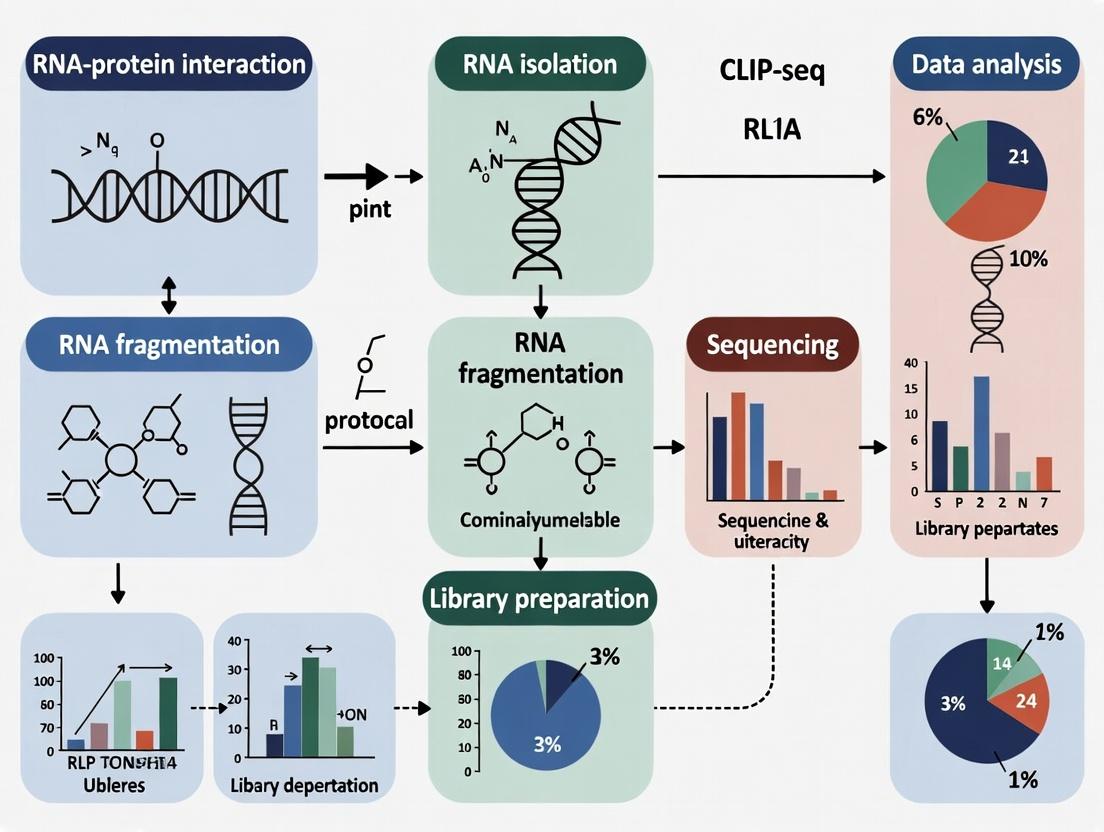
This comprehensive guide provides researchers and drug development professionals with a detailed overview of the Cross-Linking and Immunoprecipitation followed by sequencing (CLIP-seq) protocol.
CLIP-seq Protocol: A Step-by-Step Guide from Crosslinking to Sequencing for RNA-Protein Interaction Mapping
Abstract
This comprehensive guide provides researchers and drug development professionals with a detailed overview of the Cross-Linking and Immunoprecipitation followed by sequencing (CLIP-seq) protocol. We cover the foundational principles of RNA-protein interaction mapping, walk through each critical methodological step from cell culture to library preparation, address common troubleshooting and optimization challenges, and compare CLIP-seq variants for validation. This article serves as an essential resource for designing robust experiments to uncover functional RNA regulatory networks in biomedical research.
Understanding CLIP-seq: Principles, Applications, and Essential Pre-Experimental Planning
What is CLIP-seq? Defining RNA-Protein Interaction Mapping
CLIP-seq (Crosslinking and Immunoprecipitation followed by sequencing) is a state-of-the-art technique for genome-wide mapping of RNA-protein interactions at nucleotide resolution. It enables researchers to identify binding sites of RNA-binding proteins (RBPs) or ribonucleoprotein complexes on their target RNAs in vivo. By combining ultraviolet crosslinking, immunoprecipitation, and high-throughput sequencing, CLIP-seq provides a critical functional link between the transcriptome and proteome, elucidating post-transcriptional regulatory networks central to development, homeostasis, and disease.
Core Principles and Protocol Evolution
The fundamental principle of CLIP-seq is the use of UV light (typically 254 nm) to induce covalent bonds between RBPs and their directly bound RNA molecules in living cells or tissues. This "zero-length" crosslinking preserves only direct, intimate interactions. The crosslinked complexes are then isolated via immunoprecipitation with an antibody against the RBP of interest. Following stringent purification, the bound RNA fragments are recovered, converted into a sequencing library, and analyzed.
The protocol has evolved significantly from its original conception, with major variants enhancing specificity and resolution:
- HITS-CLIP (High-Throughput Sequencing CLIP): The foundational method.
- PAR-CLIP (Photoactivatable-Ribonucleoside-Enhanced CLIP): Incorporates nucleoside analogs (e.g., 4-thiouridine) for more efficient crosslinking at 365 nm and introduces characteristic mutation patterns during reverse transcription to pinpoint crosslink sites.
- iCLIP (individual-nucleotide resolution CLIP): Utilizes a novel circularization step during library prep to capture cDNAs that truncate at the crosslink site, allowing single-nucleotide mapping.
- eCLIP (enhanced CLIP): Incorporates a size-matched input control and optimized adapters to drastically reduce adapter-dimer artifacts and improve signal-to-noise ratio.
Detailed Experimental Protocol: A Modern eCLIP Workflow
The following methodology outlines a robust, contemporary eCLIP procedure.
1. In Vivo Crosslinking and Cell Lysis:
- Cells are irradiated with 254 nm UV-C light (150-400 mJ/cm²) to crosslink RNA to proteins.
- Cells are lysed in a strong denaturing buffer (e.g., with SDS) and the RNA is partially fragmented via limited RNase I digestion. The RNase concentration is titrated to produce RNA fragments of optimal length (~50-100 nucleotides).
2. Immunoprecipitation (IP) and Rigorous Washing:
- The lysate is incubated with magnetic beads conjugated to a specific antibody against the target RBP.
- Beads undergo extensive high-salt and detergent washes to remove non-specifically associated RNAs. A critical step involves washing with SDS-containing buffer to disrupt non-covalent interactions.
3. RNA Processing and Library Preparation:
- Following dephosphorylation of the RNA 3' ends, a pre-adenylated DNA adapter is ligated.
- The RBP is removed by Proteinase K treatment, and the liberated RNA is isolated.
- A 5' RNA adapter is ligated, followed by reverse transcription (RT) and PCR amplification to create the cDNA library. A key innovation in iCLIP is the use of a splint to circularize the cDNA after RT, enabling precise identification of the crosslink-induced truncation site.
4. Sequencing and Bioinformatics Analysis:
- Libraries are sequenced on an Illumina platform. For PAR-CLIP, the T-to-C transitions (if 4-thiouridine was used) in the sequencing reads are a primary feature for site identification.
- Bioinformatic pipelines (e.g., CLIPper, PARalyzer) align reads to the genome, identify significant clusters of reads (peaks), and often deduce binding motifs.
CLIP-seq Core Experimental Workflow
Table 1: Comparison of Major CLIP-seq Variants
| Method | Crosslinking Type | Key Characteristic | Primary Advantage | Typical Resolution |
|---|---|---|---|---|
| HITS-CLIP | UV-C (254 nm) | Standard protocol | Established, widely used | ~20-60 nt |
| PAR-CLIP | UV-A (365 nm) with 4-thiouridine | Induces T-to-C mutations | High signal-to-noise, precise site mapping | Single-nucleotide |
| iCLIP | UV-C (254 nm) | cDNA circularization | Identifies truncation sites at crosslink | Single-nucleotide |
| eCLIP | UV-C (254 nm) | Size-matched input control | Dramatically reduced background | ~20-60 nt |
Table 2: Common CLIP-seq Output Metrics and Their Interpretation
| Metric | Typical Value/Range | Biological/Technical Significance |
|---|---|---|
| Number of Peaks | 1,000 - 50,000+ | Reflects RBP's abundance and binding specificity |
| Peak Width | 20 - 100 nucleotides | Influenced by RNase digestion stringency and protein footprint |
| Reads per Peak | Varies widely | Indicates binding strength/occupancy |
| Enrichment over Input | Often >10-fold | Measure of specificity; key for eCLIP analysis |
| Motif Enrichment p-value | < 1e-10 | Statistical confidence in discovered sequence preference |
The Scientist's Toolkit: Essential CLIP-seq Reagents and Materials
Table 3: Key Research Reagent Solutions for CLIP-seq
| Item | Function & Critical Notes |
|---|---|
| UV Crosslinker | Calibrated source of 254 nm (or 365 nm for PAR-CLIP) UV light. Critical for in vivo fixation of RBP-RNA interactions. |
| RNase I | Endoribonuclease for controlled RNA fragmentation. Must be titrated for each experiment to achieve optimal fragment length. |
| Magnetic Protein A/G Beads | Solid support for antibody-mediated capture of the RNP complex. Bead choice depends on antibody isotype. |
| High-Affinity Antibody | Specific antibody against the target RBP. Success is absolutely dependent on antibody specificity and affinity under stringent conditions. |
| Pre-adenylated 3' Adapter | Specialized DNA adapter for ligation to the 3' end of RNA using truncated T4 RNA Ligase 2. Prevents adapter self-ligation. |
| Proteinase K | Digests the crosslinked RBP after IP, releasing the bound RNA fragment for downstream library preparation. |
| Reverse Transcriptase | Engineered enzyme (e.g., Superscript IV) with high processivity and fidelity to handle crosslink-modified RNA templates. |
| Size Selection Beads | SPRI/AMPure beads are used repeatedly to precisely select RNA/cDNA fragments of desired size and remove adapter dimers. |
| High-Sensitivity DNA Assay | For accurate quantification of final cDNA libraries prior to sequencing (e.g., Qubit, Bioanalyzer). |
RBP Binding Drives Post-Transcriptional Regulation
Within the broader thesis of CLIP-seq protocol development, the technique's power lies in its direct capture of functional RBP-RNA interactions. The continual refinement of protocols—from HITS-CLIP to eCLIP and iCLIP—addresses challenges of background noise, resolution, and scalability. For researchers and drug development professionals, CLIP-seq data is indispensable for validating RBP targets, understanding disease mechanisms (e.g., in neurodegeneration or cancer), and identifying potential therapeutic interventions within the RNA regulatory space. The integration of CLIP-seq with complementary techniques like RNA-seq and ribosome profiling provides a comprehensive view of post-transcriptional control.
Within the framework of CLIP-seq (Crosslinking and Immunoprecipitation followed by sequencing) protocol research, the initial and most critical step is the irreversible fixation of biomolecular interactions in vivo. This whitepaper provides an in-depth technical examination of UV crosslinking, the core principle that enables the covalent binding of proteins to nucleic acids, thereby "freezing" transient interactions for downstream isolation and analysis. This covalent bond is the foundation upon which the specificity and validity of all subsequent CLIP-seq data rests.
RNA-binding proteins (RBPs) interact with their RNA targets dynamically. Traditional co-immunoprecipitation (Co-IP) methods capture both direct and indirect associations through non-covalent bonds, leading to significant background noise. The central thesis of the CLIP-seq protocol is that introducing a covalent, irreversible link in situ before cell lysis preserves only direct, zero-distance interactions. UV light at 254 nm provides the energy to form this link, creating a covalent bond between the RBP and its bound RNA.
The Physics and Chemistry of UV Crosslinking
UV-C light at 254 nm is absorbed by the aromatic rings of nucleic acid bases and certain amino acid side chains (e.g., phenylalanine, tyrosine). This absorption promotes electrons to an excited state. Upon relaxation, the energy can facilitate the formation of a covalent bond between an atom in the protein (often a carbon) and an atom in the RNA base (often a carbon). The most common crosslinks occur between pyrimidine bases (Uracil and Cytosine) and proximate amino acids.
Key Quantitative Parameters of Standard UV Crosslinking:
Table 1: Standard UV Crosslinking Parameters for CLIP-seq
| Parameter | Typical Value | Rationale & Impact |
|---|---|---|
| Wavelength | 254 nm (UV-C) | Optimal absorption by nucleic acid bases. |
| Energy Output | 150-400 mJ/cm² | Titrated to balance crosslinking efficiency vs. cellular damage. |
| Sample Distance | ~5-10 cm from source | Ensures even illumination and prevents overheating. |
| Time | 30-120 seconds | Dependent on lamp intensity; calibrated to deliver target energy. |
| Temperature | 4°C (on ice) | Minimizes secondary effects and sample degradation. |
| Cell Type | Cultured cells or tissue | Must be in a monolayer or thin section for UV penetration. |
Detailed Experimental Protocol: UV Crosslinking for CLIP-seq
Objective: To covalently link RNA-binding proteins (RBPs) to their directly associated RNA molecules in living cells.
Materials & Reagents:
- Adherent or suspension cells of interest.
- Ice-cold Phosphate-Buffered Saline (PBS).
- Stratalinker 2400 (or equivalent UV crosslinker) equipped with 254 nm bulbs.
- Plastic cell scrapers (for adherent cells).
- Liquid nitrogen for snap-freezing.
- Safety Equipment: UV-protective goggles, face shield, and lab coat.
Methodology:
- Cell Preparation: Grow adherent cells to ~80% confluency in a culture dish. For suspension cells, pellet and resuspend in a small volume of PBS.
- Wash: Aspirate culture medium and wash cells twice gently with ice-cold PBS. Ensure the monolayer is kept cold to slow metabolism.
- UV Exposure: Aspirate all PBS, leaving a thin film to prevent drying. Place the open dish, with lid removed, directly in the UV crosslinker. The sample should be at the calibrated distance from the light source (e.g., in the Stratalinker, place on the turntable).
- Crosslinking: Irradiate cells with 254 nm UV light at a dosage of 150-400 mJ/cm². Critical: Protect eyes and skin from UV exposure.
- Harvest: Immediately after irradiation, place dishes on ice. Add a small volume of lysis buffer (from the subsequent CLIP step) and scrape cells thoroughly. Transfer the lysate to a microcentrifuge tube.
- Storage: Snap-freeze lysates in liquid nitrogen and store at -80°C until ready for immunoprecipitation.
Validation: Crosslinking efficiency can be assessed by comparing the mobility shift of the RBP-RNA complex vs. protein alone on an SDS-PAGE gel, visualized by autoradiography if RNA is radio-labeled.
The Scientist's Toolkit: Essential Reagents for UV Crosslinking Experiments
Table 2: Key Research Reagent Solutions for UV Crosslinking & CLIP
| Item | Function & Rationale |
|---|---|
| UV Crosslinker (254 nm) | Provides controlled, reproducible UV-C irradiation at a specified energy density. |
| RNase Inhibitors | Added to lysis buffers post-crosslinking to prevent degradation of crosslinked RNA. |
| Protease Inhibitor Cocktail | Prevents proteolytic degradation of the target RBP during and after lysis. |
| Magnetic Protein A/G Beads | For efficient immunoprecipitation of the RBP-RNA complex after crosslinking and fragmentation. |
| PNK (T4 Polynucleotide Kinase) | Key enzyme for radiolabeling RNA 5' ends with ³²P for visualization and size selection. |
| High-Salt Wash Buffers | Critical for stringent washing to remove non-specifically bound RNA after IP. |
| Proteinase K | Used in the final elution step to digest the protein, leaving the crosslinked RNA fragment for sequencing library prep. |
Pathway and Workflow Visualization
Title: CLIP-seq Workflow from UV Crosslinking to Library Prep
Title: Mechanism of UV-Induced Covalent Crosslink Formation
UV crosslinking is the non-negotiable first principle of the CLIP-seq methodology. By creating a covalent bond, it transforms fleeting, direct molecular interactions into stable, isolatable units. This technical guide underscores that meticulous optimization of UV wavelength, dosage, and sample handling is paramount. The resulting covalently linked complexes provide the high-resolution, low-noise foundation required for accurate mapping of protein-RNA interactions, ultimately driving discoveries in gene regulation, disease mechanisms, and therapeutic target identification in drug development.
This whitepaper, framed within a broader thesis on CLIP-seq protocol research, details the technical pipeline from foundational RNA-binding protein (RBP) interaction mapping to the identification and validation of clinically actionable biomarkers. It provides an in-depth guide for researchers and drug development professionals navigating this translational pathway.
Crosslinking and immunoprecipitation followed by sequencing (CLIP-seq) is the cornerstone methodology for mapping RBP binding sites transcriptome-wide. Its core principle involves UV crosslinking to covalently freeze transient RNA-protein interactions in vivo, followed by rigorous purification, library preparation, and high-throughput sequencing.
Core Experimental Protocols
Enhanced CLIP (eCLIP) Protocol
Objective: To map RBP binding sites with reduced adapter contamination and improved efficiency.
Detailed Methodology:
- In vivo UV Crosslinking (254 nm): Cells are irradiated with UV-C light (≥ 400 mJ/cm²) to form covalent bonds between RBPs and their bound RNAs.
- Cell Lysis and Partial RNase Digestion: Lysate is treated with RNase I (e.g., 0.5 U/µl) to generate RNA fragments bound to the RBP, leaving a short "footprint."
- Immunoprecipitation (IP): Lysate is incubated with antibody-coupled magnetic beads (e.g., Protein A/G Dynabeads) targeting the RBP of interest. Stringent washes (e.g., high-salt, detergent-containing buffers) remove non-specific interactions.
- 3' Adapter Ligation (On-bead): A pre-adenylated DNA adapter is ligated to the RNA 3' end using T4 RNA Ligase 1 (truncated).
- Radiolabeling and Transfer: RNA-protein complexes are radiolabeled with P³², separated by SDS-PAGE, and transferred to a nitrocellulose membrane. A slice corresponding to the RBP's molecular weight is excised to eliminate free RNA or non-specifically bound complexes.
- Proteinase K Digestion: RNA is recovered from the membrane slice by proteinase K digestion.
- 5' Adapter Ligation & Reverse Transcription: A 5' RNA adapter is ligated, followed by reverse transcription to cDNA.
- PCR Amplification & Sequencing: cDNA is PCR-amplified with indexed primers and subjected to paired-end sequencing (e.g., Illumina platforms).
Critical Controls: Size-matched input (SMInput) samples, where IP is omitted, are processed in parallel to control for background RNA fragmentation and sequence bias.
Biomarker Validation via qRT-PCR/Digital PCR
Objective: To quantify candidate biomarker RNA levels in clinical cohorts.
Detailed Methodology:
- RNA Extraction from Biofluids: Total RNA is isolated from plasma/serum (e.g., using silica-membrane columns with carrier RNA).
- Reverse Transcription: RNA is reverse-transcribed using random hexamers and/or target-specific stem-loop primers (for microRNAs).
- Quantitative PCR:
- TaqMan Probe-based Assay: Reactions contain cDNA, gene-specific primers, and a fluorogenic probe. Amplification is monitored in real-time. Cycle threshold (Ct) values are calculated.
- Digital PCR: The reaction is partitioned into thousands of nanoliter droplets or wells. Absolute copy number/µl is calculated from the ratio of positive to negative partitions using Poisson statistics.
- Data Analysis: Expression levels are normalized to stable endogenous controls (e.g., miR-16 for serum miRNA, GAPDH for cellular RNA). Statistical analysis (e.g., Mann-Whitney U test, ROC analysis) determines diagnostic/p prognostic power.
Key Data & Quantitative Findings
Table 1: CLIP-seq Derived RBP Binding Characteristics
| RBP | Primary Function | Avg. Binding Sites per Transcript (Range) | Preferred Motif | Association with Disease |
|---|---|---|---|---|
| HNRNPA1 | Splicing Regulation, mRNA Stability | 8.2 (1-45) | UAGGG(A/U) | Neurodegeneration, Cancer |
| TDP-43 | Splicing, miRNA Processing | 5.7 (1-32) | (UG)~n (n≥6) | ALS, FTLD |
| RBFOX2 | Alternative Splicing | 3.1 (1-18) | (U)GCAUG | Cardiomyopathy, Cancer |
| IGF2BP1 | mRNA Stability & Translation | 12.5 (2-67) | CA(U)HC (H=A,C,U) | Cancer Metastasis |
Table 2: Clinically Validated RBP-related RNA Biomarkers
| Biomarker (RNA) | Source (Biofluid) | Associated RBP | Clinical Indication | AUC (ROC) | Reference Cohort Size |
|---|---|---|---|---|---|
| MALAT1 (lncRNA) | Plasma | HNRNPC | Non-Small Cell Lung Cancer Detection | 0.89 | n=420 |
| miR-21 (miRNA) | Serum | AGO2 | Pancreatic Ductal Adenocarcinoma Prognosis | 0.92 | n=285 |
| SNHG1 (lncRNA) | Serum Exosomes | ELAVL1 | Colorectal Cancer Recurrence Prediction | 0.85 | n=310 |
| ENOX2 transcript | PBMCs | TIA1 | Response to Immunotherapy in Melanoma | 0.78 | n=195 |
The Scientist's Toolkit: Research Reagent Solutions
Table 3: Essential Reagents for CLIP-seq & Biomarker Workflows
| Item | Function | Example Product/ Specification |
|---|---|---|
| UV Crosslinker | Covalently freezes RNA-protein interactions in vivo | Spectrolinker (254 nm, adjustable energy) |
| RNase I | Fragments RNA to generate protein-protected footprints | High-purity, recombinant RNase I |
| Magnetic Beads (Protein A/G) | Solid support for antibody-mediated IP | Dynabeads Protein A/G |
| T4 RNA Ligase 1 (truncated K227Q) | Ligates pre-adenylated 3' adapter to RNA with minimal background | Thermostable, high-efficiency mutant |
| Phosphor Screen & Imager | Visualizes and quantifies radiolabeled RNA-protein complexes after transfer | Storage Phosphor System (e.g., Typhoon) |
| miRNA Extraction Kit | Isolves small RNAs from biofluids with high yield and purity | Column-based with carrier RNA |
| TaqMan Advanced miRNA Assay | Specific detection and quantification of mature miRNAs via RT-qPCR | Includes stem-loop RT primers and miRNA-specific probes |
| Droplet Digital PCR System | Absolute quantification of nucleic acids without a standard curve | QX200 Droplet Digital PCR System |
Visualizing the Pathways & Workflows
Diagram 1: From CLIP-seq to Biomarker Discovery Pipeline (100 chars)
Diagram 2: Key Steps in the eCLIP Experimental Protocol (99 chars)
Diagram 3: TDP-43 Dysfunction in Neurodegeneration (100 chars)
A successful CLIP-seq experiment is defined not during library preparation, but at the initial planning stage. Within the broader thesis of CLIP-seq protocol steps, the selection of the RNA-binding protein (RBP) and the biological system constitutes the critical, foundational decision that dictates all subsequent methodological choices, from crosslinking conditions to data analysis strategies. This guide details the technical and biological parameters that must be evaluated.
Selecting the RNA-Binding Protein (RBP)
Defining the RBP's Molecular Characteristics
The biochemical properties of your RBP directly determine the appropriate CLIP variant and experimental conditions.
Table 1: RBP Characteristics and Corresponding CLIP Methodological Implications
| RBP Characteristic | Key Questions | Technical Implications for CLIP |
|---|---|---|
| Expression Level | What is the cellular abundance (molecules/cell)? | Low abundance may require enhanced CLIP (eCLIP), high-sensitivity sequencing, or overexpression systems. |
| Binding Motif/Structure | Does it bind specific short sequences, structured RNAs, or both? | Influences downstream bioinformatics analysis; CLIP can define novel motifs. |
| Binding Dynamics (Kd) | What is the binding affinity and off-rate? | Fast off-rates necessitate strong, rapid crosslinking (e.g., 254 nm UV-C). |
| Subcellular Localization | Nuclear, cytoplasmic, or organelle-specific? | Informs cell fractionation needs and crosslink feasibility (UV penetrance). |
| Endogenous Tags | Are validated antibodies or knock-in tagged cell lines available? | Antibody quality is paramount; epitope tags (FLAG, GFP) enable standardized protocols. |
Experimental Protocol: Validating RBP SuitabilityBeforeCLIP
A phased approach mitigates the risk of project failure.
Phase 1: In Silico & Literature Assessment.
- Objective: Gather preliminary data on expression, conservation, and known RNA targets.
- Method: Query databases (UniProt, ENCODE, POSTAR) for RNA-seq, eCLIP data, and published literature. Use protein domain analysis tools (Pfam) to predict RNA-binding domains.
Phase 2: Biochemical Validation.
- Objective: Confirm the RBP is an authentic, RNA-binding protein in your chosen system.
- Method: Perform RNA co-immunoprecipitation (RIP) under stringent conditions (e.g., 500 mM salt wash), followed by qRT-PCR for suspected target RNAs. This confirms the protein-RNA interaction is specific and stable enough to withstand IP.
Phase 3: Crosslinking Efficiency Test (Pilot UV-C Experiment).
- Objective: Determine the optimal UV dose to capture transient interactions without excessive cellular damage.
- Method:
- Culture cells in a UV-transparent dish (e.g., 10 cm quartz dish or plastic dish with lid removed).
- Wash with PBS. Place on ice.
- Irradiate with 254 nm UV-C light at varying energies (e.g., 0, 150, 250, 400 mJ/cm²).
- Lyse cells and perform western blot. Successful crosslinking is often indicated by a characteristic upward smear or shift in the RBP's molecular weight.
Selecting the Cell or Tissue System
Key System Variables
The biological context determines the physiological relevance and technical feasibility of the experiment.
Table 2: Comparison of Model Systems for CLIP-seq
| System | Advantages | Disadvantages | Primary Use Case |
|---|---|---|---|
| Immortalized Cell Lines (e.g., HEK293, HeLa) | Homogeneous, high yield, easy to culture/crosslink, amenable to genetic manipulation. | May have altered physiology; limited cell-type specificity. | Method optimization, high-throughput screening, mechanistic studies. |
| Primary Cells | Physiologically relevant, proper cell-state context. | Finite lifespan, donor variability, difficult to transfert/modify, lower yield. | Modeling disease-specific or tissue-specific RBP function. |
| Induced Pluripotent Stem Cells (iPSCs) | Patient-derived, can be differentiated into relevant lineages. | Costly, time-consuming differentiation, potential epigenetic artifacts. | Modeling genetic diseases in vitro. |
| Tissue Samples (Fresh/Frozen) | Full physiological context, native cell-cell interactions. | Cellular heterogeneity, poor UV penetrance, RNA degradation risk. | Discovery studies in native in vivo context. |
| Whole Organisms (e.g., C. elegans, Fly) | Full developmental and systems context. | Requires specialized crosslinking (e.g., whole-body UV), high background possible. | In vivo developmental biology studies. |
Experimental Protocol: Assessing System Viability for CLIP
Protocol: Tissue Harvest and Preparation for UV Crosslinking.
- Objective: Maximize crosslinking efficiency in complex tissues.
- Method (for murine brain tissue):
- Rapid Dissection: Euthanize animal, quickly dissect the region of interest (e.g., cortex).
- Tissue Slicing: Use a vibratome or manual slicer to generate 300-500 µm slices in ice-cold, oxygenated artificial cerebrospinal fluid (aCSF).
- UV Crosslinking: Transfer slices to a single layer in a Petri dish containing ice-cold PBS. Irradiate with 254 nm UV-C (e.g., 250 mJ/cm²) on ice.
- Flash Freeze: Immediately snap-freeze crosslinked slices in liquid nitrogen. Store at -80°C until lysis.
- Homogenization: Lyse frozen tissue using a Dounce homogenizer or a motorized homogenizer in CLIP lysis buffer containing RNase inhibitors.
Integrated Decision Pathway
The Scientist's Toolkit: Essential Research Reagents & Materials
Table 3: Critical Reagents for Pre-Planning and Validation Phases
| Reagent / Material | Function / Application | Key Considerations |
|---|---|---|
| Validated Antibody | Immunoprecipitation of endogenous RBP. | Must be IP-grade; check species reactivity; test for non-specific RNA binding. |
| Epitope-Tagged Cell Line | Provides a consistent, high-affinity capture method. | CRISPR knock-in preferred over stable transfection to avoid overexpression artifacts. |
| RNase Inhibitor (e.g., RNasin, SUPERase•In) | Preserves RNA integrity during cell lysis and IP. | Essential for all buffers post-crosslinking. |
| UV-C Crosslinker (254 nm) | Covalently freezes protein-RNA interactions in vivo. | Calibrate energy output; ensure sample is in UV-transparent vessel. |
| High-Salt Wash Buffer | Reduces non-specific RNA-protein binding during IP. | Typical stringency: 500 mM - 1 M NaCl or KCl. |
| Proteinase K | Digests protein post-IP to release crosslinked RNA fragments. | Quality is critical for efficient reversal of crosslinks. |
| Magnetic Protein A/G Beads | Solid-phase support for antibody-based IP. | Pre-block with yeast tRNA/BSA to reduce non-specific RNA binding. |
| [γ-³²P] ATP or [γ-³²P] ATP | Radiolabels RNA for downstream visualization during protocol optimization. | Used in 5' end-labeling of decrosslinked RNA for old-school validation; often replaced by safer fluorescent labels. |
| TRIzol Reagent | Simultaneously isolates RNA, DNA, and protein from validation samples. | Allows analysis of IP efficiency (western) and co-precipitated RNA (qRT-PCR). |
Essential Reagents and Equipment Checklist for a CLIP-seq Experiment
This guide provides a comprehensive checklist of essential reagents and equipment, framed within the broader thesis of a CLIP-seq protocol steps overview research. Successful execution of Crosslinking and Immunoprecipitation followed by sequencing (CLIP-seq) relies on precise experimental workflows and high-quality materials. This document serves as an in-depth technical resource for researchers aiming to capture RNA-protein interactions with nucleotide resolution.
The Scientist's Toolkit: Core Reagents and Equipment
| Category | Item Name | Function / Key Specification |
|---|---|---|
| Crosslinking | UV Crosslinker (254 nm) | Induces covalent bonds between protein and RNA at zero-distance interactions. |
| 4-Thiouridine (4SU) | Photoactivatable ribonucleoside for in vivo incorporation and efficient crosslinking. | |
| Cell Lysis | IP Lysis Buffer | Maintains RNA-protein complex integrity; contains RNase inhibitors. |
| Protease Inhibitor Cocktail | Prevents protein degradation during cell lysis and handling. | |
| RNase Treatment | RNase I (or A/T1 mix) | Partially digests RNA not protected by the bound protein to generate footprints. |
| Immunoprecipitation | Target-Specific Antibody | High-affinity, validated antibody for the RNA-binding protein (RBP) of interest. |
| Protein A/G Magnetic Beads | Solid support for antibody-antigen complex isolation. | |
| RNA Processing | Phosphatase (CIP) | Removes 3' phosphate from RNA fragments left by RNase. |
| Polynucleotide Kinase (PNK) | Adds a phosphate to the 5' end of RNA for adapter ligation. | |
| RNA Ligase | Ligates 3' and 5' RNA adapters to the immunoprecipitated RNA fragments. | |
| Library Prep | Reverse Transcriptase | Generates cDNA from adapter-ligated RNA, often with template-switching capability. |
| High-Fidelity PCR Mix | Amplifies cDNA libraries for sequencing with minimal bias. | |
| Quality Control | Bioanalyzer/TapeStation | Analyzes RNA and final library fragment size distribution. |
| qPCR System | Quantifies library yield and checks for adapter dimer contamination. |
Detailed Experimental Protocol for Key Steps
In Vivo Crosslinking and Cell Lysis
- Materials: Growth medium, 4-Thiouridine (1 mM final), PBS (ice-cold), IP Lysis Buffer.
- Protocol: Treat cells with 4SU for the optimal time (e.g., 5-10 min). For UV crosslinking, wash cells with PBS and irradiate once with 150 mJ/cm² at 254 nm. Harvest cells, lyse in 1-2 mL of IP Lysis Buffer supplemented with protease/RNase inhibitors for 30 min on ice. Clear lysate by centrifugation at 16,000 x g for 15 min at 4°C.
Partial RNase Digestion and Immunoprecipitation
- Materials: RNase I (diluted in provided buffer), antibody, magnetic beads.
- Protocol: Dilute cleared lysate. Add RNase I to a predetermined optimal concentration (e.g., 0.01-0.1 U/µL) and incubate at 22°C for 5 min. Quench with SUPERase•In RNase Inhibitor. Pre-clear lysate with beads for 30 min. Incubate lysate with target antibody (1-5 µg) for 2 hrs at 4°C. Add Protein A/G beads and incubate for an additional 1 hr. Wash beads 4-6 times with high-salt wash buffer.
RNA Adapter Ligation and Library Preparation
- Materials: T4 PNK, T4 RNA Ligase, 3' and 5' RNA adapters, Reverse Transcriptase primers.
- Protocol: On-bead dephosphorylation with Antarctic Phosphatase (30 min, 37°C). Follow with 5' phosphorylation using T4 PNK and ATP (20 min, 37°C). Ligate 3' pre-adenylated adapter with T4 RNA Ligase 2, truncated (overnight, 16°C). Ligate 5' RNA adapter with T4 RNA Ligase 1 (2 hrs, 20°C). Elute and reverse transcribe RNA using a primer complementary to the 3' adapter. Amplify cDNA with 12-18 PCR cycles using indexed primers. Size-select libraries (120-200 bp) and validate on Bioanalyzer.
Table 1: Typical Reagent Volumes and Concentrations for a CLIP-seq Experiment (Scale: 1-2 x 10^7 cells)
| Reagent/Step | Typical Volume/Amount | Final Concentration/Setting | Notes |
|---|---|---|---|
| 4SU Treatment | 1 mL medium per 10^6 cells | 100 µM - 1 mM | Concentration/time optimization is critical. |
| UV Crosslinking | N/A | 150 mJ/cm² | Single dose at 254 nm. |
| Lysis Buffer | 1 mL | 1X | Must include fresh inhibitors. |
| RNase I Digestion | 1-10 U per sample | 0.01 - 0.1 U/µL | Titration required for each RBP. |
| Antibody Incubation | 1-5 µg | ~0.5-1 µg/µL | Antibody validation is essential. |
| 3' Adapter Ligation | 1 µL | 1-5 µM | Use pre-adenylated adapter. |
| PCR Amplification | 25 µL reaction | 1X Polymerase Mix | Cycle number depends on input. |
Visualizing the CLIP-seq Experimental Workflow
CLIP-seq Core Experimental Workflow
Visualizing the Molecular Steps on the Bead
Molecular Steps on the Bead Post-IP
The Complete CLIP-seq Workflow: A Detailed Step-by-Step Protocol
This technical guide details the initial, critical crosslinking step within the broader context of a CLIP-seq (Crosslinking and Immunoprecipitation followed by sequencing) protocol overview. The formation of covalent bonds between proteins and their bound RNA molecules at 254 nm is fundamental to capturing transient interactions for downstream analysis, directly impacting drug target validation and mechanistic studies.
Core Principles and Quantitative Parameters
Ultraviolet light at 254 nm is absorbed by nucleic acid bases and aromatic amino acids, generating reactive free radicals that form zero-length covalent crosslinks between RNAs and proteins in direct molecular contact.
Table 1: Key Quantitative Parameters for 254 nm UV Crosslinking
| Parameter | In Vivo Typical Range | In Vitro Typical Range | Notes |
|---|---|---|---|
| UV Energy Dose | 150 - 400 mJ/cm² | 200 - 800 mJ/cm² | In vivo dose is tissue/cell type dependent. |
| Irradiance | 2 - 15 mW/cm² | 5 - 25 mW/cm² | Must be calibrated for lamp-sample distance. |
| Exposure Time | 15 - 120 seconds | 10 - 40 seconds | Calculated from dose/irradiance. |
| Sample Distance | 1 - 10 cm | 2 - 8 cm | Critical for uniform exposure and energy delivery. |
| Optimal Wavelength | 254 nm | 254 nm | Peak absorption for crosslink formation. |
| Crosslinking Efficiency | ~1-5% of complexes | ~5-15% of complexes | Efficiency is inherently low to preserve complex integrity. |
| Sample Temperature | 4°C (on ice) | 4°C (on ice) | Minimizes degradation and artifact formation. |
Detailed Experimental Protocols
In Vivo UV Crosslinking Protocol
Objective: To capture native RNA-protein interactions within living cells or tissues.
- Cell Preparation: Grow adherent cells to 70-90% confluency in a culture dish without a lid. For suspension cells, pellet and resuspend in a thin layer in a Petri dish.
- Media Removal: Aspirate culture media completely and wash cells once with ice-cold phosphate-buffered saline (PBS). Keep PBS layer minimal.
- Crosslinking: Place the open dish directly on ice. Position a 254 nm UV lamp (e.g., hand-held spectrolinker) at a pre-calibrated distance (e.g., 5 cm) above the sample. Irradiate with the calculated energy dose (e.g., 150-250 mJ/cm²).
- Cell Harvest: Immediately after irradiation, scrape cells into lysis buffer containing RNase and protease inhibitors. Flash-freeze in liquid nitrogen if not proceeding directly.
In Vitro UV Crosslinking Protocol
Objective: To validate specific RNA-protein interactions using purified or recombinant components.
- Interaction Assembly: Combine purified protein(s) and target RNA in a defined binding buffer in a low-protein-binding microcentrifuge tube. Incubate to allow complex formation (typically 15-30 mins at 30°C).
- Sample Presentation: Transfer the mixture to a spot plate or create a thin film on a piece of Parafilm placed on ice.
- Crosslinking: Irradiate the sample at a close distance (e.g., 2-4 cm) with 254 nm UV light at a higher dose (e.g., 400-800 mJ/cm²) to compensate for the lack of cellular components.
- Post-Crosslinking Analysis: Transfer the sample back to a tube. It can now be analyzed by SDS-PAGE (for radiolabeled RNA) or proceed to immunoprecipitation steps.
Visualization of Workflows
Title: UV Crosslinking Protocol Decision Flow
Title: Molecular Mechanism of 254 nm Crosslinking
The Scientist's Toolkit: Essential Reagents & Materials
Table 2: Key Research Reagent Solutions for UV Crosslinking
| Item | Function in Experiment | Key Considerations |
|---|---|---|
| 254 nm UV Lamp | Provides precise wavelength irradiation for crosslink formation. | Choose between hand-held or cabinet-style; calibrate energy output (mW/cm²) regularly. |
| UV Radiometer | Measures irradiance (intensity) at the sample plane for dose calculation. | Critical for reproducibility. Ensure sensor is calibrated for 254 nm. |
| Ice Bath & Cold Blocks | Maintains samples at 4°C during crosslinking to reduce thermal damage. | Use shallow ice baths for culture dishes to ensure uniform cooling. |
| RNase Inhibitors | Added immediately to lysis buffer to prevent RNA degradation post-crosslinking. | Use broad-spectrum inhibitors (e.g., Recombinant RNasin). |
| Protease Inhibitor Cocktail | Added to lysis buffer to prevent protein degradation. | Use EDTA-free cocktails if subsequent purification steps require divalent cations. |
| Crosslinking-Optimized Lysis Buffer | Solubilizes crosslinked complexes while maintaining RNA-protein bonds. | Typically contains strong detergents (e.g., 1% SDS), salts, and inhibitors. |
| Thin-Bottom Culture Dishes | For in vivo crosslinking; allows minimal UV attenuation. | Ensure dishes are UV-transparent (e.g., polystyrene). |
| Dnase/Rnase-Free Tubes & Tips | Prevents exogenous nuclease contamination of samples. | Essential for all steps post-cell lysis. |
Within the CLIP-seq protocol, the steps of cell lysis and RNA fragmentation are critical for successful identification of protein-RNA interactions. This step must balance efficient disruption of cellular membranes with the preservation of native ribonucleoprotein (RNP) complexes for subsequent immunoprecipitation. The choice between physical and enzymatic RNA fragmentation methods further dictates the nature of the resulting RNA fragments and the resolution of binding site mapping.
Cell Lysis: Principles and Protocols
The goal of lysis in CLIP-seq is to solubilize RNPs while maintaining their integrity. Lysis buffers are typically hypotonic and contain non-ionic detergents (e.g., NP-40, Triton X-100), RNase inhibitors, and protease inhibitors.
Detailed Lysis Protocol (for Cultured Cells):
- Preparation: Pre-chill all buffers and equipment on ice. Prepare lysis buffer (e.g., 50 mM Tris-HCl pH 7.4, 100 mM NaCl, 1% Igepal CA-630 (NP-40), 0.1% SDS, 0.5% sodium deoxycholate) supplemented with 1x protease inhibitor cocktail and 1 U/µL RNase inhibitor.
- Harvesting: Wash adherent cells quickly with ice-cold PBS. Scrape cells into PBS and pellet by centrifugation at 500 RCF for 5 min at 4°C.
- Lysis: Resuspend cell pellet in 1 mL of ice-cold lysis buffer per 10⁷ cells. Incubate on a rotator for 15-20 minutes at 4°C.
- Clarification: Centrifuge the lysate at 16,000 RCF for 15 minutes at 4°C to pellet nuclei and cellular debris. Transfer the supernatant (cytoplasmic lysate) to a fresh tube. For nuclear RNP analysis, the nuclear pellet can be further processed with sonication or high-salt buffers.
- Quality Control: Measure protein concentration via Bradford assay. Assess RNA integrity via Bioanalyzer (RIN > 8.5 is ideal).
RNA Fragmentation: Physical vs. Enzymatic
Post-lysis, RNA is fragmented to generate manageable pieces for sequencing. This step occurs prior to immunoprecipitation in some protocols (e.g., HITS-CLIP) and after in others (e.g., iCLIP). The method influences fragment length distribution and sequence bias.
Physical Fragmentation (Ultraviolet Crosslinking & Sonication)
- Principle: Uses high-energy sound waves (sonication) or mechanical shear to physically break RNA. For CLIP, UV-C (254 nm) crosslinking is first performed in vivo to create covalent bonds between the protein and RNA at zero-distance interaction sites. Sonication then shears the RNA backbone.
- Protocol: The clarified lysate is subjected to focused ultrasonication (e.g., Covaris S2) using settings optimized for RNA (e.g., Duty Factor: 10%, Peak Incident Power: 175 W, Cycles per Burst: 200, Time: 45-90 seconds). Tubes must be kept in a chilled water bath (4°C).
- Advantages: No sequence bias. Compatible with any RNA modification. Effective for long RNAs and chromatin-associated complexes.
- Disadvantages: Requires specialized, expensive equipment. Generates heat that must be managed to avoid protein denaturation. Fragment size distribution can be broad.
Enzymatic Fragmentation (RNase)
- Principle: Uses limited digestion with ribonucleases (RNases) like RNase A, RNase T1, or RNase I to cleave RNA at specific sites. RNase T1 cleaves single-stranded RNA at guanosine residues (G). RNase I cleaves all single-stranded RNA bonds.
- Protocol: To the lysate, add RNase T1 (typical dilution 1:100 to 1:1000 from stock) or RNase I. Incubate at 22°C for 5-15 minutes. The reaction is stopped by adding SUPERase-In RNase inhibitor and placing samples on ice.
- Advantages: Simple, inexpensive, and highly reproducible. Allows fine-tuning of fragment size by adjusting enzyme concentration/time.
- Disadvantages: Introduces sequence (RNase T1) or structural bias (all RNases). Digestion efficiency can be affected by RNA modifications or protein binding.
Quantitative Data Comparison
Table 1: Comparison of Physical vs. Enzymatic Fragmentation Methods
| Parameter | Physical Fragmentation (Sonication) | Enzymatic Fragmentation (RNase T1) |
|---|---|---|
| Typical Fragment Size | 50-200 nt (broad distribution) | 20-50 nt (narrow distribution) |
| Sequence Bias | None | Cleaves 3' of Guanine (G) residues |
| Equipment Cost | High (>$20k for focused ultrasonicator) | Low (<$100 for reagents) |
| Protocol Time | 5-10 min active time + optimization | <15 min incubation |
| Reproducibility | Moderate (depends on instrument calibration) | High |
| Impact on RNP Integrity | Risk of protein denaturation from heat | Minimal thermal disruption |
| Optimal for | Long RNAs, chromatin complexes, modified RNAs | Standard mRNA/protein interactions, high-resolution mapping |
Table 2: Common Lysis Buffer Compositions for CLIP-seq
| Component | Typical Concentration | Function |
|---|---|---|
| Tris-HCl (pH 7.4) | 50 mM | Maintains physiological pH |
| NaCl | 100-150 mM | Provides ionic strength; preserves weak interactions |
| Igepal CA-630 (NP-40) | 0.5-1% | Non-ionic detergent; disrupts lipid membranes |
| Sodium Deoxycholate | 0.1-0.5% | Ionic detergent; aids in complete solubilization |
| SDS | 0.1% | Anionic detergent; helps dissociate non-specific aggregates |
| EDTA | 1 mM | Chelates Mg²⁺; inhibits metal-dependent RNases |
| DTT | 1-5 mM | Reducing agent; prevents protein oxidation |
| RNase Inhibitor | 0.5-1 U/µL | Inactivates endogenous RNases |
| Protease Inhibitor Cocktail | 1x | Inhibits endogenous proteases |
Experimental Workflow Diagram
Diagram Title: CLIP-seq Cell Lysis and RNA Fragmentation Workflow
The Scientist's Toolkit: Key Reagent Solutions
| Reagent / Material | Supplier Examples | Function in CLIP Lysis/Fragmentation |
|---|---|---|
| IGEPAL CA-630 (NP-40) | Sigma-Aldrich, Thermo Fisher | Non-ionic detergent for membrane solubilization with minimal protein denaturation. |
| SUPERase-In RNase Inhibitor | Thermo Fisher | Broad-spectrum RNase inhibitor active in a wide range of lysis buffers. |
| cOmplete Protease Inhibitor Cocktail | Roche | EDTA-free cocktail to inhibit serine, cysteine, and metalloproteases. |
| RNase T1 | Thermo Fisher, Worthington | Enzyme for specific, controllable fragmentation of RNA at G residues. |
| RNase I | Thermo Fisher | Enzyme for non-specific fragmentation of single-stranded RNA. |
| Covaris microTUBES | Covaris | Specialized tubes for optimal acoustic energy transfer during sonication. |
| Dynabeads Protein A/G | Thermo Fisher | Magnetic beads for subsequent immunoprecipitation of RNPs. |
| Bioanalyzer RNA Nano Chip | Agilent | For precise assessment of RNA integrity and fragment size distribution. |
| UV Crosslinker (254 nm) | Spectrolinker, UVP | Instrument for in vivo or in situ crosslinking of RNA-protein complexes. |
Within the CLIP-seq protocol, Step 3—Immunoprecipitation (IP) with Specific Antibodies and Rigorous Washes—is the critical stage for the specific isolation of crosslinked protein-RNA complexes from the vast cellular lysate background. This step directly determines the signal-to-noise ratio and the success of subsequent sequencing. The principle relies on the use of an antibody specific to the RNA-binding protein (RBP) of interest, conjugated to beads, to capture the RBP along with its covalently linked RNA partner. Rigorous washing is then employed to remove non-specifically bound nucleic acids and proteins while preserving the specific, UV-crosslinked interactions.
Core Methodology
Antibody-Bead Conjugation
The IP can be performed using pre-coupled antibody-bead complexes or by coupling during the experiment.
- Direct Coupling (Common): Antibodies are directly conjugated to magnetic Protein A, Protein G, or specific Fab beads. The choice depends on the antibody species and subclass.
- Indirect Coupling: A primary antibody is incubated with the lysate, followed by addition of secondary antibody-conjugated beads.
- Critical Control: A parallel IP with beads conjugated to an irrelevant IgG (same species) is mandatory to identify background RNA binding.
Detailed Protocol for Direct Magnetic Bead Coupling:
- Resuspend magnetic beads (e.g., Protein G) thoroughly.
- Aliquot the required bead slurry (typically 20-50 µL per IP) into a tube. Place on a magnetic rack, discard supernatant.
- Wash beads twice with 1 mL of ice-cold IP Wash Buffer (e.g., 50 mM Tris-HCl pH 7.4, 150 mM NaCl, 0.1% NP-40).
- Resuspend beads in 500 µL of IP Wash Buffer. Add 1-5 µg of specific antibody or control IgG.
- Incubate with rotation for 1-2 hours at 4°C.
- Place on magnetic rack, discard supernatant containing unbound antibody.
- Wash beads twice with 1 mL of IP Wash Buffer. Proceed to lysate addition.
Immunoprecipitation Reaction
- Take the clarified, RNase-treated lysate from the previous CLIP-seq step.
- Add the lysate to the prepared antibody-bead complexes.
- Incubate with rotation for 2-4 hours (or overnight) at 4°C to allow for efficient capture.
Rigorous Washes
This is the most crucial sub-step for reducing background. Washes are performed in a series with increasing stringency.
Standard Wash Series Protocol:
- Low Salt Wash (2x): Place tube on magnetic rack. Discard lysate. Wash beads with 1 mL of High-Salt Wash Buffer (e.g., 50 mM Tris-HCl pH 7.4, 1 M NaCl, 1 mM EDTA, 1% NP-40, 0.1% SDS). Incubate with rotation for 5 minutes at 4°C each wash. This removes non-ionic and high-salt sensitive interactions.
- High Salt Wash (2x): Wash beads with 1 mL of High-Salt Wash Buffer (e.g., 50 mM Tris-HCl pH 7.4, 1 M NaCl, 1 mM EDTA, 1% NP-40, 0.1% SDS). Incubate with rotation for 5 minutes at 4°C each wash. This removes non-ionic and high-salt sensitive interactions.
- LiCl Wash (1x): Wash beads with 1 mL of LiCl Wash Buffer (e.g., 250 mM LiCl, 10 mM Tris-HCl pH 7.4, 1 mM EDTA, 0.5% NP-40, 0.5% Sodium Deoxycholate). Incubate for 5 minutes at 4°C. This disrupts hydrophobic and some non-covalent protein-protein interactions.
- TNE Wash (2x): Wash beads with 1 mL of TNE Buffer (e.g., 10 mM Tris-HCl pH 7.4, 150 mM NaCl, 1 mM EDTA). This prepares the beads for the subsequent phosphatase reaction or RNA isolation.
All wash supernatants should be removed carefully without disturbing the bead pellet.
Key Quantitative Parameters & Optimization Data
Table 1: Optimization Variables for CLIP Immunoprecipitation
| Variable | Typical Range | Impact / Rationale | Recommended Starting Point |
|---|---|---|---|
| Antibody Amount | 1-10 µg per IP | Too little reduces yield; too much increases non-specific binding. | 2-5 µg for a high-affinity antibody. |
| IP Incubation Time | 2 hours to overnight | Longer incubation increases yield but may also increase background. | 3-4 hours at 4°C. |
| Bead Type | Protein A, G, A/G | Depends on antibody species/isotype. Protein G has broadest recognition. | Magnetic Protein G for monoclonal antibodies. |
| Wash Stringency (NaCl) | 150 mM - 1 M | Higher salt reduces non-specific RNA-protein binding but may disrupt weak specific complexes. | Start at 500 mM; increase to 1 M for high background. |
| Detergent (SDS) | 0.1% - 0.5% | Increases stringency; critical for disrupting aggregates. Higher levels can elute antibody. | 0.1% in wash buffers. |
| Number of Washes | 5-7 total | Removes unbound material. Excessive washing may decrease specific signal. | 5 washes as described above. |
Table 2: Troubleshooting Common IP Issues
| Problem | Potential Cause | Solution |
|---|---|---|
| High Background in Control IgG | Non-specific RNA binding to beads or antibody. | Increase salt and detergent in washes. Pre-clear lysate with bare beads. Use RNase inhibitors more consistently. |
| Low Specific Yield | Insufficient antibody or epitope masked by crosslinking. | Test antibody efficiency in non-crosslinked IP. Increase antibody amount or IP time. Try a different antibody clone. |
| Bead Loss During Washes | Improper magnetic separation; aggressive pipetting. | Allow beads to fully pellet on magnet before removal. Use wide-bore tips for wash removal. |
The Scientist's Toolkit: Key Research Reagent Solutions
Table 3: Essential Materials for CLIP Immunoprecipitation
| Item | Function & Rationale |
|---|---|
| Magnetic Protein G Beads | Solid support for antibody immobilization; allows for rapid buffer exchange via magnetic separation. |
| Validated Specific Antibody | Targets the RBP of interest. Must be validated for IP. Monoclonal antibodies are preferred for consistency. |
| Control IgG (Isotype-matched) | Critical negative control to distinguish specific RNA binding from background bead binding. |
| High-Salt Wash Buffer | Contains 0.5-1 M NaCl to disrupt non-specific ionic interactions between RNA and proteins/beads. |
| LiCl Wash Buffer | Uses chaotropic salt (LiCl) to denature proteins and remove co-purifying complexes not directly crosslinked. |
| Strong Detergents (NP-40, SDS, Deoxycholate) | Disrupt membrane vesicles, protein aggregates, and non-covalent complexes to reduce background. |
| Rotating Mixer at 4°C | Ensures constant suspension of beads during IP and washes for efficient capture and cleaning. |
| Magnetic Separation Rack | Enables quick and efficient bead pelleting for supernatant removal without centrifugation. |
Visualizing the Process
CLIP-seq IP and Wash Workflow
Specific vs. Non-Specific Interactions in IP
This technical guide details Step 4 of the CLIP-seq protocol, focusing on the enzymatic processes that prepare RNA-protein complexes for reverse transcription and sequencing. Within the broader thesis of CLIP-seq optimization, this step is critical for generating high-complexity libraries by ligating adapters to RNA ends while controlling for unwanted ligation events through precise phosphorylation state manipulation.
Following UV crosslinking and RNA fragmentation, the 3' and/or 5' ends of the RNA fragments bound to the protein of interest are modified. Adapter ligation provides known priming sequences for downstream cDNA amplification and sequencing. The concurrent or sequential dephosphorylation and phosphorylation reactions are essential to ensure directional and efficient ligation, preventing adapter self-ligation and circularization of RNA fragments. The efficiency of this step directly impacts library complexity and the signal-to-noise ratio in final data.
Core Biochemical Principles
Enzymatic Control of RNA Ends
Ligation by T4 RNA Ligase requires a 5'-phosphate (5'-P) and a 3'-hydroxyl (3'-OH). The native state of fragmented RNA ends is heterogeneous. Therefore, strategic manipulation is required:
- Dephosphorylation: Removal of 5'-P or 3'-phosphate (if present) using enzymes like Calf Intestinal Phosphatase (CIP) or Shrimp Alkaline Phosphatase (SAP). This blocks unwanted ligation events.
- Phosphorylation: Addition of a 5'-P using T4 Polynucleotide Kinase (PNK) to enable ligation. PNK also possesses 3' phosphatase activity, which can be modulated by buffer conditions (e.g., using PNK in low-pH buffer to suppress 3' phosphatase activity and preserve 3'-OH).
Adapter Ligation Strategies
- 3' Adapter Ligation: Typically performed first using a pre-adenylated adapter (App-adapter) and a truncated T4 RNA Ligase 2 (Rnl2), which ligates App-adapter to 3'-OH without requiring ATP, minimizing adapter dimer formation.
- 5' Adapter Ligation: Follows 3' ligation and often requires a 5'-P on the RNA fragment, introduced by PNK. Standard T4 RNA Ligase 1 (Rnl1) is used with ATP.
Detailed Experimental Protocols
Protocol A: Sequential Dephosphorylation, Phosphorylation, and Ligation
This traditional method offers precise control for challenging samples.
Materials: Bead-bound RNP complexes from Step 3, RNase Inhibitor, CIP, PNK, T4 Rnl1, T4 Rnl2(tr), App-adapter, DNA adapter, corresponding reaction buffers.
Procedure:
- Dephosphorylation: Resuspend beads in 1X CIP buffer. Add 10 units of CIP. Incubate at 37°C for 15-20 minutes. Wash beads thoroughly.
- Phosphorylation: Resuspend beads in 1X PNK buffer (low-pH, e.g., pH 6.5). Add 10 units of PNK and 1 mM ATP. Incubate at 37°C for 20 minutes. Wash beads.
- 3' Adapter Ligation: Resuspend beads in 1X Rnl2(tr) buffer. Add 50-100 pmol of pre-adenylated 3' adapter and 10 units of T4 Rnl2(tr). Incubate at 16°C overnight or 25°C for 2 hours.
- 5' Adapter Ligation: Wash beads. Resuspend in 1X Rnl1 buffer. Add 50-100 pmol of 5' DNA adapter, 1 mM ATP, and 10 units of T4 Rnl1. Incubate at 20°C for 2 hours.
- Purification: Wash complexes stringently for subsequent reverse transcription.
Protocol B: Streamlined Single-Pot Reaction
A modern, efficient approach suitable for most standard CLIP applications.
Materials: Bead-bound RNP complexes, PNK (with 3' phosphatase minus mutant available), T4 Rnl2(tr), T4 Rnl1, adapters, optimized commercial ligation buffer (e.g., from NEB).
Procedure:
- Prepare a master mix on ice containing:
- 1X Commercial Ligase Buffer
- 50 pmol App-3' adapter
- 10 units T4 Rnl2(tr)
- 10 units PNK (3' phosphatase minus)
- 1 mM ATP
- 20 units RNase Inhibitor
- Add mix to beads and incubate: 37°C for 20 minutes (PNK activity), then 16°C for 2 hours (Rnl2 ligation).
- Without purification, add 50 pmol of 5' adapter and 10 units of T4 Rnl1 directly to the reaction. Incubate at 20°C for 1 hour.
- Proceed to washing.
Table 1: Enzyme Activities and Standard Reaction Conditions
| Enzyme | Key Activity | Optimal Buffer pH | Typical Concentration | Critical Co-factor | Common Incubation |
|---|---|---|---|---|---|
| CIP | 5' & 3' phosphatase | 9.0-10.0 (Alkaline) | 0.1-0.5 U/μL | Zn²⁺, Mg²⁺ | 37°C, 15-30 min |
| T4 PNK | 5' kinase, 3' phosphatase | 6.5 (Kinase favored) | 0.5-1 U/μL | ATP (for kinase), Mg²⁺ | 37°C, 20-30 min |
| T4 Rnl2(tr) | App-adapter to 3'-OH ligase | 7.5-8.0 | 5-10 U/μL | Mn²⁺ (preferred) | 16-25°C, 2 hrs-O/N |
| T4 Rnl1 | 5'-P/3'-OH ligase | 7.5-8.0 | 5-10 U/μL | ATP, Mg²⁺ | 20-25°C, 1-2 hrs |
Table 2: Impact of Step 4 Efficiency on Final CLIP-seq Data
| Performance Metric | High-Efficiency Ligation (>70%) Outcome | Low-Efficiency Ligation (<30%) Outcome |
|---|---|---|
| Library Complexity | >1M unique reads | <200K unique reads |
| PCR Duplication Rate | Low (10-30%) | Very High (>50%) |
| Background Noise | Controlled, clear binding sites | High, diffuse signal |
| Diagnostic PCR Post-RT | Strong, specific band | Weak or smeared band |
The Scientist's Toolkit: Research Reagent Solutions
Table 3: Essential Materials for Adapter Ligation & Phospho-control
| Item | Function & Rationale | Example Product (Vendor) |
|---|---|---|
| Pre-adenylated 3' Adapter | Substrate for Rnl2(tr); prevents self-ligation, requires no ATP. | Truncated miRNA Cloning Linker (NEB), RA3 adapter (IDT). |
| 5' DNA Adapter | Provides PCR handle for amplification; designed with specific barcodes. | RA5 adapter series (IDT), Small RNA PCR primer (Illumina). |
| T4 RNA Ligase 2, truncated | Ligates App-adapter specifically to RNA 3'-OH; minimal RNA-RNA ligation. | T4 Rnl2(tr) K227Q (NEB). |
| T4 Polynucleotide Kinase (PNK) | Phosphorylates 5' ends; mutant versions allow selective control of 3' phosphatase. | T4 PNK (NEB), PNK, 3' phosphatase minus (Thermo). |
| Optimized Ligation Buffer | Single-buffer systems streamline protocols and improve yield. | Quick Ligation Reaction Buffer (NEB), T4 RNA Ligase Buffer (Thermo). |
| RNase Inhibitor | Protects RNA fragments during longer incubation steps. | RNaseOUT (Thermo), SUPERase•In (Ambion). |
| Magnetic Stand | For efficient bead washing and buffer exchange between enzymatic steps. | Magnetic Separation Rack (NEB, Invitrogen). |
| High-Fidelity PCR Mix | Used in the next step (cDNA amplification); critical for minimal bias. | Q5 Hot Start (NEB), KAPA HiFi (Roche). |
Visualization of Workflows and Pathways
Diagram 1: Two Primary Experimental Workflows for CLIP-seq Step 4
Diagram 2: Biochemical Pathways for Generating Ligation-Competent RNA Ends
Within the broader thesis on the CLIP-seq (Crosslinking and Immunoprecipitation followed by sequencing) protocol, Step 5 represents the critical juncture where covalently bound RNA-protein complexes, isolated via immunoprecipitation, are dissociated and the RNA is purified for downstream library preparation and sequencing. This step directly determines the yield, purity, and ultimate quality of the sequencing data, impacting the identification of in vivo RNA binding protein (RBP) interaction sites. Effective proteinase K treatment and RNA isolation are therefore paramount for minimizing background and recovering authentic crosslinked RNA fragments.
The Role of Proteinase K in CLIP-seq
Proteinase K is a broad-spectrum serine protease that cleaves peptide bonds adjacent to the carboxylic group of aliphatic and aromatic amino acids. In CLIP-seq, its primary function is to degrade the immunoprecipitated protein component of the RNA-protein crosslinked complex, thereby releasing the RNA fragments that were directly bound by the RBP of interest.
Key Characteristics for CLIP-seq:
- Activity: Functions optimally in a wide range of buffers (including SDS-containing buffers) and remains active at elevated temperatures (up to 65°C), which helps denature protein substrates.
- Purpose in CLIP: Digests the protein moiety, leaving short peptide remnants or amino acids still covalently linked to the crosslinked RNA nucleotides. This is a crucial distinction from standard RNA isolation, as these adducts are later accounted for during sequencing data analysis.
Detailed Experimental Protocol
Proteinase K Treatment
Materials & Reagents:
- Washed protein A/G beads with bound RNA-protein complexes.
- Proteinase K Buffer (20 mM Tris-HCl pH 7.5, 10 mM NaCl, 1 mM EDTA, 0.2% SDS).
- Proteinase K solution (e.g., 20 mg/mL).
- Thermonixer or water bath.
- Phenol:Chloroform:Isoamyl Alcohol (25:24:1), acidified.
- Glycogen or linear acrylamide (as carrier).
- 3M Sodium Acetate (NaOAc), pH 5.2.
- 100% Ethanol and 80% Ethanol.
- Nuclease-free water.
Method:
- Resuspension: After the final wash of the beads, completely aspirate the wash buffer. Resuspend the bead slurry in 100 µL of Proteinase K Buffer.
- Digestion: Add Proteinase K to a final concentration of 1.2 mg/mL. For a 100 µL reaction, add 6 µL of a 20 mg/mL stock.
- Incubation: Incubate the mixture with shaking (e.g., 1200 rpm) at 55°C for 60 minutes in a thermomixer. This elevated temperature enhances protease activity and denatures proteins.
- Bead Removal: Briefly centrifuge the tube and carefully transfer the supernatant (containing released RNA) to a new microcentrifuge tube. Discard the beads.
RNA Isolation and Purification
- Acid-Phenol Extraction: Add an equal volume (∼106 µL) of acidified Phenol:Chloroform:Isoamyl Alcohol to the supernatant. Vortex vigorously for 30 seconds.
- Phase Separation: Centrifuge at 16,000 x g for 5 minutes at room temperature. Carefully transfer the upper aqueous phase (containing RNA) to a new tube.
- Precipitation: Add 1 µL of glycogen (20 mg/mL) and 1/10th volume of 3M NaOAc (pH 5.2). Mix. Add 2.5 volumes of 100% ethanol. Precipitate at -80°C for a minimum of 1 hour or overnight.
- Wash: Centrifuge at 16,000 x g for 30 minutes at 4°C to pellet RNA. Carefully discard the supernatant. Wash the pellet with 500 µL of ice-cold 80% ethanol. Centrifuge again at 16,000 x g for 5 minutes.
- Resuspension: Air-dry the pellet for 2-5 minutes (do not over-dry). Resuspend the RNA pellet in 10-15 µL of nuclease-free water. Keep on ice or store at -80°C.
Table 1: Key Parameters and Expected Outcomes for Step 5
| Parameter | Typical Value / Condition | Purpose / Rationale |
|---|---|---|
| Proteinase K Concentration | 1.0 - 1.5 mg/mL | Optimal for complete digestion of RBP without excessive enzyme carryover. |
| Incubation Temperature | 55°C | Enhances protease activity and protein denaturation while limiting RNA hydrolysis. |
| Incubation Time | 60 minutes | Standard duration for complete digestion. Can be extended to 90 min for stubborn complexes. |
| RNA Precipitation Time | 1 hour (minimum) to overnight at -80°C | Ensures maximal recovery of short, crosslinked RNA fragments. |
| Expected RNA Yield (per replicate) | 1 - 50 pg (Highly variable) | Dependent on RBP abundance, crosslinking efficiency, and cell input. Yields are typically femtogram to picogram range. |
| RNA Fragment Size | 20 - 100 nucleotides | Reflects the fragmented crosslinked RNA prior to immunoprecipitation. |
The Scientist's Toolkit: Essential Reagents & Materials
Table 2: Research Reagent Solutions for Proteinase K Treatment & RNA Isolation
| Item | Function in the Protocol |
|---|---|
| Proteinase K (Recombinant, >30 U/mg) | Digests the immunoprecipitated RBP to release crosslinked RNA fragments. Must be RNase-free. |
| Proteinase K Buffer (with 0.2% SDS) | Provides optimal ionic and detergent conditions for Proteinase K activity while denaturing proteins. |
| Acidified Phenol:Chloroform:Isoamyl Alcohol (25:24:1) | Extracts and removes Proteinase K, residual proteins, and other contaminants from the aqueous RNA solution. The low pH partitions DNA to the organic/interphase. |
| Glycogen (RNase-free) | Acts as an inert carrier to visualize the RNA pellet and improve precipitation efficiency of low-concentration RNA. |
| Sodium Acetate (3M, pH 5.2) | Provides monovalent cations (Na+) necessary for ethanol precipitation of RNA and buffers at an acidic pH optimal for RNA precipitation. |
| RNase-free Ethanol (100% & 80%) | Precipitates RNA from the aqueous phase (100%). Washes the pellet to remove residual salts (80%). |
Visualized Workflow & Pathway
Title: CLIP-seq Step 5: RNA Release & Purification Workflow
Title: Molecular Outcome of Proteinase K Treatment in CLIP
This step is critical in the CLIP-seq (Crosslinking and Immunoprecipitation coupled with sequencing) workflow. Following RNA-protein crosslinking, immunoprecipitation, and RNA linker ligation, cDNA library construction converts the isolated RNA fragments into a stable, amplifiable DNA library suitable for high-throughput sequencing. The fidelity of this step directly impacts the accuracy of identifying protein-RNA interaction sites.
Reverse Transcription
Reverse transcription (RT) synthesizes complementary DNA (cDNA) from the immunoprecipitated RNA fragments, which have a 3' linker attached.
Detailed Methodology
Procedure:
- Primer Annealing: Resuspend the RNA pellet from the previous step in nuclease-free water. Add a reverse transcription primer (RTP) that is complementary to the ligated 3' linker. Heat to 70°C for 2 minutes and snap-cool on ice to anneal the primer.
- Master Mix Preparation: Assemble the following reaction on ice:
- Annealed RNA-Primer complex: 11 µL
- 5x First-Strand Buffer: 4 µL
- 100 mM DTT: 1 µL
- 10 mM dNTP Mix: 1 µL
- RNase Inhibitor (40 U/µL): 1 µL
- Reverse Transcriptase (e.g., SuperScript IV, 200 U/µL): 2 µL
- Total Volume: 20 µL
- Incubation: Perform reverse transcription in a thermal cycler:
- 42°C for 10 minutes (for initial extension).
- 50°C for 50 minutes (main synthesis phase).
- 70°C for 15 minutes (enzyme inactivation).
- RNA Template Degradation: Add 1 µL of RNase H (5 U/µL) and incubate at 37°C for 20 minutes to degrade the original RNA strand, leaving single-stranded cDNA.
Key Quantitative Data
Table 1: Reverse Transcription Reaction Components and Parameters
| Component/Parameter | Typical Quantity/Value | Function/Rationale |
|---|---|---|
| Input RNA | 1-50 ng (from IP) | Template for cDNA synthesis. |
| Reverse Transcriptase | 200-400 units | High-processivity, thermostable enzymes (e.g., SSIV) are preferred. |
| Incubation Temperature | 50-55°C | Reduces RNA secondary structure, improving yield and length. |
| Incubation Time | 50-60 min | Maximizes cDNA yield, especially for longer fragments. |
| cDNA Yield Efficiency | 50-70% | Percentage of RNA template successfully converted to cDNA. |
cDNA Purification
Purification removes enzymes, salts, dNTPs, and short oligonucleotides to prepare the cDNA for 5' linker ligation.
Detailed Methodology: Solid-Phase Reversible Immobilization (SPRI) Beads
Procedure:
- Bind: Add 36 µL of room-temperature SPRI beads (at a 1.8x ratio to the 20 µL RT reaction) directly to the cDNA sample. Mix thoroughly by pipetting and incubate at room temperature for 5 minutes.
- Wash: Place the tube on a magnetic rack until the solution clears. Carefully remove and discard the supernatant. While on the magnet, wash the bead pellet twice with 200 µL of freshly prepared 80% ethanol. Air-dry the beads for 3-5 minutes.
- Elute: Remove the tube from the magnet. Elute the purified cDNA by resuspending the beads in 17 µL of nuclease-free water or a low-EDTA TE buffer. Incubate at room temperature for 2 minutes. Place back on the magnet, and transfer the clear supernatant containing the cDNA to a new tube.
Key Quantitative Data
Table 2: cDNA Purification Performance Metrics
| Metric | Typical Value/Range | Notes |
|---|---|---|
| SPRI Bead Ratio | 1.6x - 1.8x | Selects for cDNA >50-70 bp; lower ratios recover shorter fragments. |
| Recovery Efficiency | 85-95% | Percentage of cDNA retained after purification. |
| Ethanol Wash Conc. | 80% | Optimal for removing salts without eluting cDNA. |
| Final Elution Volume | 15-20 µL | Minimizes volume for downstream steps while ensuring efficient elution. |
PCR Amplification
PCR amplifies the cDNA library to generate sufficient material for sequencing while adding full sequencing adapters.
Detailed Methodology
Procedure:
- Adapter Addition via PCR: The 5' end of the cDNA still contains the original RNA linker. PCR primers are designed such that the forward primer complements this linker sequence and adds the P5/P7 flow cell binding site, index (barcode), and part of the sequencing primer site. The reverse primer binds the 3' end (from the RT primer) and adds the complementary P7/P5 site and remaining sequencing primer site.
- Master Mix Assembly: Combine the following:
- Purified cDNA: 15 µL
- 2x High-Fidelity PCR Master Mix: 25 µL
- Forward Primer (10 µM): 2.5 µL
- Reverse Primer (10 µM): 2.5 µL
- Nuclease-free water: 5 µL
- Total Volume: 50 µL
- Thermocycling: Use a cycle number determined by a test amplification (see 4.2).
- 98°C for 30 sec (initial denaturation)
- Cycle (10-20x): 98°C for 10 sec, 60°C for 20 sec, 72°C for 20 sec
- 72°C for 5 min (final extension)
- Final Purification: Purify the PCR product using SPRI beads at a 1.0x ratio to remove primer dimers and reagents. Quantify by fluorometry (e.g., Qubit) and assess size distribution by Bioanalyzer/TapeStation before pooling and sequencing.
Key Quantitative Data
Table 3: PCR Amplification Optimization
| Parameter | Recommended Specification | Purpose/Risk |
|---|---|---|
| Polymerase | High-Fidelity (e.g., KAPA HiFi, Q5) | Minimizes PCR-induced mutations. |
| Cycle Number | Minimum necessary (10-18) | Determined by qPCR or test tube titration; prevents over-cycling & duplication bias. |
| Primer Concentration | 0.2-0.5 µM final | Balance between yield and specificity. |
| Annealing Temp | 58-62°C | Primer-specific; higher temperature increases specificity. |
| Input cDNA | 1-10 ng | Optimal input for efficient amplification without bias. |
Visualization of Workflow
Title: cDNA Library Construction Workflow for CLIP-seq
The Scientist's Toolkit: Essential Research Reagents
Table 4: Key Reagent Solutions for cDNA Library Construction
| Reagent / Material | Function & Rationale |
|---|---|
| Reverse Transcriptase (e.g., SuperScript IV) | Engineered for high thermal stability and processivity, enabling full-length cDNA synthesis from crosslinked, potentially modified RNA fragments at elevated temperatures. |
| RNase H | Degrades the RNA strand in an RNA-DNA hybrid post-RT, preventing interference during subsequent ligation or PCR steps. |
| SPRI (Ampure XP) Beads | Magnetic beads that bind nucleic acids based on size in PEG/NaCl buffers. Critical for efficient cleanup and size selection between steps. |
| High-Fidelity PCR Master Mix (e.g., KAPA HiFi) | Pre-mixed formulation containing a low-error-rate DNA polymerase, dNTPs, Mg2+, and optimized buffer. Ensures accurate amplification of rare cDNA templates. |
| Indexed PCR Primers | Oligonucleotides containing sequences complementary to the ligated linkers, plus P5/P7 flow cell adapters, unique dual indices (UDIs) for sample multiplexing, and sequencing primer sites. |
| Fluorometric Quantitation Kit (e.g., Qubit dsDNA HS) | Highly sensitive dye-based assay specific for double-stranded DNA, providing accurate concentration measurement of the final library without interference from primers or RNA. |
Within the context of a CLIP-seq protocol, the high-throughput sequencing step is where protein-RNA interaction data is quantitatively captured. The choice of sequencing platform and configuration profoundly impacts data quality, depth, cost, and turnaround time, directly influencing downstream analysis and biological conclusions. This guide provides a technical overview of current major platforms, with a focus on considerations for CLIP-seq applications.
Sequencing Platform Comparison
Based on current market and technical specifications, the primary platforms for CLIP-seq are from Illumina. The table below summarizes key quantitative metrics.
Table 1: Comparison of Illumina Sequencing Platforms for CLIP-seq
| Platform | Max Output per Flow Cell | Max Reads per Flow Cell | Read Lengths (Cycles) | Approx. Run Time (Standard Mode) | Ideal CLIP-seq Application Scale |
|---|---|---|---|---|---|
| NovaSeq X Plus | 16 Tb | 52 Billion | 2x150 bp | < 2 days | Large-scale projects, multiplexing many samples, deep coverage needs. |
| NovaSeq 6000 | 6 Tb | 20 Billion | 2x150 bp | 13-44 hours | Large cohorts, genome-wide studies requiring high depth. |
| NextSeq 2000 | 600 Gb | 2.0 Billion | 2x150 bp | 11-48 hours | Mid-throughput projects, multiple replicates per condition. |
| MiSeq | 15 Gb | 50 Million | 2x300 bp | 4-55 hours | Method optimization, pilot studies, small-scale CLIP. |
For most CLIP-seq experiments, single-end sequencing of 50-100 bp is sufficient to map crosslinked RNA fragments. Paired-end reads can help resolve complex genomic regions but are less critical than for RNA-seq.
Core Experimental Protocol: Library Preparation for Illumina Sequencing
Following CLIP library construction (adapter ligation, reverse transcription, cDNA amplification), a final library preparation step is required for sequencing.
Protocol: Final Library Preparation and Quantification for Illumina Platforms
Objective: To generate a sequencing-ready library with the correct adapter configuration and appropriate concentration.
Materials & Reagents:
- Purified CLIP cDNA library.
- Indexing Primers (i7, i5): Contains unique dual indices (UDIs) for sample multiplexing and the sequences required for cluster generation on the flow cell.
- High-Fidelity DNA Polymerase (e.g., Kapa HiFi): For precise amplification of the library with indexes incorporated.
- SPRSelect Beads or equivalent: For size selection and purification of the final library, removing primer dimers and large contaminants.
- Qubit dsDNA HS Assay Kit or equivalent: For accurate concentration measurement of the double-stranded library.
- Bioanalyzer High Sensitivity DNA Kit or TapeStation D1000/HS Kit: For assessing library fragment size distribution and quality.
- Tris-HCl Buffer (10 mM, pH 8.5): For library elution and storage.
Methodology:
- PCR Amplification with Indexing:
- Set up a PCR reaction with the purified CLIP cDNA, indexing primers, and high-fidelity polymerase.
- Cycle Number: Use the minimal number of PCR cycles necessary (typically 4-10) to avoid over-amplification biases. The optimal cycle number should be determined empirically via a qPCR-based library amplification assay.
- Perform thermal cycling as per the polymerase manufacturer's protocol.
Post-Amplification Cleanup & Size Selection:
- Purify the PCR product using SPRSelect beads at a ratio (e.g., 0.8x) to remove large fragments and primer dimers. Follow the bead clean-up protocol: bind, wash with 80% ethanol, elute in Tris-HCl buffer.
Library Quality Control (QC):
- Quantification: Use the Qubit dsDNA HS assay to determine library concentration (in ng/µL). Convert to molarity (nM) using the average fragment size from the Bioanalyzer.
- Fragment Analysis: Run 1 µL of the library on a Bioanalyzer High Sensitivity DNA chip or TapeStation. A successful CLIP library should show a tight peak centered at the expected insert size (typically 70-150 bp including adapters), with minimal adapter-dimer peak (~128 bp).
Pooling and Denaturation:
- For multiplexing, pool equimolar amounts of each indexed library into a single tube.
- The pooled library is then diluted to the loading concentration specified by the sequencing platform (e.g., 200-400 pM for NextSeq) and denatured with NaOH to generate single-stranded DNA for cluster generation.
Visualization of Workflow and Considerations
Title: Final CLIP-seq Library Prep Workflow
Title: CLIP-seq Platform Selection Logic
The Scientist's Toolkit: Key Research Reagent Solutions
Table 2: Essential Materials for CLIP-seq Library Sequencing
| Item | Function in CLIP-seq Context | Example Product/Kit |
|---|---|---|
| Indexing Primers | Provides unique dual combinations of indices (i7 & i5) for each sample, enabling multiplexing. Critical for reducing batch effects and cost. | Illumina IDT for Illumina UD Indexes, Nextera XT Index Kit v2. |
| High-Fidelity PCR Master Mix | Amplifies the final library with minimal errors during the indexing PCR step. Maintains sequence fidelity of the rare crosslinked fragments. | Kapa HiFi HotStart ReadyMix, NEBNext Ultra II Q5 Master Mix. |
| Solid Phase Reversible Immobilization (SPRI) Beads | Used for size-selective cleanup post-indexing PCR. Removes primer dimers and large contaminants, ensuring a pure library of the desired insert size. | Beckman Coulter SPRSelect, AMPure XP Beads. |
| dsDNA High-Sensitivity Quantitation Kit | Accurately measures the concentration of the double-stranded library. Essential for equal pooling of multiplexed samples. | Thermo Fisher Qubit dsDNA HS Assay, Invitrogen Picogreen. |
| Library Fragment Analyzer | Assesses the size distribution and quality of the final library. Confirms the absence of adapter dimers and validates the average insert size. | Agilent Bioanalyzer HS DNA Kit, Agilent TapeStation D1000/HS Kit. |
| Library Normalization Beads | Streamlines the dilution and denaturation of libraries for loading onto Illumina flow cells, improving reproducibility. | Illumina Library Normalization Beads. |
CLIP-seq Troubleshooting Guide: Solving Common Problems and Enhancing Signal-to-Noise
Within the framework of CLIP-seq (Crosslinking and Immunoprecipitation followed by sequencing) protocol optimization, the initial crosslinking step is a critical determinant of experimental success. This whitepaper provides an in-depth technical analysis of the three pivotal variables governing crosslinking efficiency: ultraviolet (UV) exposure time, irradiance intensity, and cell culture density. Optimizing these parameters is essential for capturing transient, in vivo protein-RNA interactions with high fidelity while minimizing RNA degradation and protein damage, thereby ensuring robust and reproducible CLIP-seq data.
CLIP-seq is a cornerstone technique for mapping RNA-protein interaction sites transcriptome-wide. The process begins with in vivo crosslinking, typically using ultraviolet light at 254 nm, which creates covalent bonds between proteins and RNAs in direct contact. The efficiency of this step directly impacts signal-to-noise ratio, library complexity, and the spatial resolution of binding sites. Suboptimal crosslinking can lead to high background from non-specific RNA or failure to capture genuine interactions. This guide dissects the core physical and biological variables—time, intensity, and density—to establish a foundation for protocol optimization within a comprehensive CLIP-seq workflow.
Core Variables & Quantitative Data
The following table summarizes the quantitative relationships between key variables and experimental outcomes, synthesized from current literature and standard protocols.
Table 1: Optimization Parameters for UV Crosslinking (254 nm)
| Variable | Typical Range | Optimal Target (Adherent Cells) | Effect on Efficiency | Consequence of Excess |
|---|---|---|---|---|
| Time | 100-400 msec | 150-250 msec | Increases yield up to a plateau | RNA degradation, protein damage, increased background |
| Intensity | 100-400 mJ/cm² | 150-250 mJ/cm² | Higher irradiance increases crosslinking rate | Severe cellular stress, nucleic acid damage, apoptosis |
| Cell Density | 70-90% confluency | 80-85% confluency | Uniform exposure, consistent interaction capture | Shadowing effects, nutrient depletion, variable exposure |
| Cell Volume/PBS Depth | < 2 mm | ~1 mm (minimal volume) | Reduces UV scattering/absorption | Inefficient crosslinking, gradient of efficiency |
Detailed Experimental Protocols
Protocol 1: Titration of UV Time and Intensity
Objective: To determine the optimal crosslinking energy dose (mJ/cm²) for a specific cell type and protein-of-interest.
- Cell Preparation: Culture adherent cells in 10-cm dishes to 80-85% confluency. Place dishes on ice and aspirate medium. Wash once with 10 mL ice-cold PBS.
- Parameter Matrix: Aspirate PBS completely. For a 4x4 matrix, prepare dishes for crosslinking at 4 time points (e.g., 100, 200, 300, 400 msec) and 4 intensity settings (adjusted on UV lamp).
- Crosslinking: Place dishes without lids directly under a pre-calibrated 254 nm UV light source (e.g., Stratagene Stratalinker). Irradiate according to the matrix. Keep dishes on ice throughout.
- Harvesting: Immediately add 1 mL of lysis buffer (e.g., containing RNase inhibitors) and scrape cells. Proceed to RNA-protein complex purification.
- Analysis: Assess efficiency via Western blot for protein-RNA crosslinking (smear above expected protein size) and RNA integrity (Bioanalyzer).
Protocol 2: Assessing Cell Density Effects
Objective: To evaluate the impact of monolayer density on crosslinking uniformity.
- Seed Gradient: Seed cells in 6-well plates at densities of 60%, 70%, 80%, and 95% confluency. Grow for 24-48 hours.
- Standardized Crosslinking: Wash all wells with identical volumes of ice-cold PBS. Aspirate completely. Subject all plates to identical UV conditions (e.g., 200 msec at optimal intensity determined in Protocol 1).
- Quantitative Harvest: Lyse cells in equal volumes. Measure total protein concentration.
- Efficiency Assay: Perform a reverse crosslinking assay on equal protein amounts from each condition. Isolate RNA and quantify bound RNA yield via qPCR for a known target.
Visualizing the Optimization Workflow and CLIP-seq Context
Diagram 1: CLIP-seq Workflow & Crosslinking Variables
Diagram 2: Crosslinking Optimization Decision Flowchart
The Scientist's Toolkit: Essential Research Reagent Solutions
Table 2: Key Reagents and Materials for UV Crosslinking Optimization
| Item | Function & Rationale |
|---|---|
| Stratagene Stratalinker 2400 (or equivalent) | Provides controlled, reproducible 254 nm UV irradiation with programmable energy delivery (mJ/cm²) and time settings. Calibration is critical. |
| Dulbecco's Phosphate Buffered Saline (DPBS), ice-cold | Used to wash cells and as a thin layer during crosslinking. Its clarity and lack of UV-absorbing compounds ensure efficient photon penetration. |
| RNase Inhibitor (e.g., Murine RNase Inhibitor) | Added immediately to lysis buffer post-crosslinking to prevent degradation of crosslinked and neighboring RNAs during sample processing. |
| QIAshredder Columns | Efficiently homogenize cell lysates containing crosslinked RNA-protein complexes, ensuring complete lysis and reducing sample viscosity for downstream steps. |
| Anti-FLAG M2 Magnetic Beads (or target-specific antibody beads) | For immunoprecipitation of epitope-tagged proteins. Magnetic beads facilitate stringent washing to reduce background in CLIP protocols. |
| Proteinase K | Used in the final reversal step to digest the protein component, liberating crosslinked RNA for library construction. Essential for RNA recovery. |
| [γ-³²P] ATP & T4 Polynucleotide Kinase | Traditional tools for radiolabeling RNA adapters or RNA fragments to visualize and quantify successful crosslinking and immunoprecipitation via autoradiography. |
| Bioanalyzer RNA 6000 Pico Kit | Assesses RNA integrity post-crosslinking. A shift to lower fragment sizes indicates excessive UV-induced RNA damage. |
Within the framework of a CLIP-seq (Crosslinking and Immunoprecipitation) protocol, background noise—manifesting as non-specific RNA-protein interactions, residual unbound RNA, or RNase contamination—poses a significant threat to data integrity. The core thesis of successful CLIP-seq research hinges on the precise isolation of in vivo RNA-protein binding sites. This guide details stringent washing and RNase control strategies critical for minimizing background and enhancing signal-to-noise ratio in the final sequencing libraries.
The primary sources of noise and their typical impact, as quantified in recent literature, are summarized below.
Table 1: Common Sources of Background Noise in CLIP-seq and Their Quantitative Impact
| Noise Source | Description | Typical Impact on Data (Without Stringent Control) | Key Mitigation Strategy |
|---|---|---|---|
| Non-specific RNA-Protein Binding | RNA adhering to beads, antibody, or non-target proteins during IP. | Can constitute 40-60% of recovered RNA sequences. | Optimized, high-stringency wash buffers. |
| Residual Unbound/Free RNA | Un-crosslinked RNA co-purifying with complexes. | Contributes to ~30% of background reads. | Rigorous pre-IP sample handling and washes. |
| RNase Contamination | Exogenous RNases degrading target RNA or creating artifactual fragments. | Can reduce yield by >80% and introduce spurious ends. | Use of RNase inhibitors and RNase-free reagents. |
| Inefficient Crosslink Reversal | Incomplete protein digestion/RNA recovery. | Can lead to 20-40% loss of legitimate signal. | Optimized Proteinase K digestion conditions. |
| Adapter Dimer Formation | Ligation of adapters without intervening cDNA. | Can consume >50% of sequencing lanes in severe cases. | Gel-based size selection and purification. |
Detailed Protocol for Stringent Washes
The goal of washing is to retain specific RBP-RNA crosslinked complexes while removing everything else.
High-Salt Stringent Wash Buffer Protocol
This is the cornerstone wash for removing non-specifically bound RNA.
- Reagents: 1x PBS, 5 M NaCl, 10% NP-40 (or Igepal CA-630), 10% Sodium Deoxycholate, 0.5 M EDTA, UltraPure DEPC-Treated Water.
- Preparation (10 mL of High-Salt Wash Buffer):
- Combine 5 mL of 2x PBS, 2 mL of 5 M NaCl (final 1 M), 500 µL of 10% NP-40 (final 0.5%), 500 µL of 10% Sodium Deoxycholate (final 0.5%), and 20 µL of 0.5 M EDTA (final 1 mM).
- Adjust volume to 10 mL with DEPC-treated water. Mix thoroughly.
- Filter sterilize (0.22 µm) and store at 4°C.
- Method:
- After binding the immune complex to pre-washed beads and a single quick rinse with 1x PBS, resuspend beads in 1 mL of pre-chilled High-Salt Wash Buffer.
- Rotate at 4°C for 5 minutes.
- Pellet beads using a magnet or centrifuge (briefly, 2000-3000g). Carefully remove and discard supernatant.
- Repeat this high-salt wash a total of 2-3 times.
Urea-Containing Denaturing Wash Protocol
This wash disrupts hydrophobic and ionic interactions using a denaturant.
- Reagents: UltraPure Urea, 1 M Tris-HCl (pH 7.5), 0.5 M EDTA, 10% NP-40, 5 M LiCl, DEPC-treated water.
- Preparation (10 mL of Urea Wash Buffer):
- Dissolve 4.8 g of urea in ~5 mL DEPC-water (final 8 M).
- Add 1 mL of 1 M Tris-HCl pH 7.5 (final 100 mM), 200 µL of 0.5 M EDTA (final 10 mM), 100 µL of 10% NP-40 (final 0.1%), and 2 mL of 5 M LiCl (final 1 M).
- Adjust to 10 mL with DEPC-water. Store at 4°C, protected from light. Use within a week.
- Method:
- Following high-salt washes, resuspend beads in 1 mL of pre-chilled Urea Wash Buffer.
- Rotate at 4°C for 2 minutes.
- Pellet beads, discard supernatant.
- Perform one or two urea washes.
RNase Control: Rationale and Protocol
Controlled, partial RNase digestion is a defining step in CLIP-seq (e.g., iCLIP, eCLIP) designed to trim unprotected RNA, leaving only the protein-protected "footprint." This must be balanced against catastrophic exogenous RNase contamination.
Controlled Partial RNase A Digestion Protocol
- Principle: RNase A cleaves single-stranded RNA after pyrimidine residues (C/U). Optimal titration yields fragments of ~50-70 nucleotides from the crosslink site.
- Reagents: RNase A (e.g., Thermo Scientific, #EN0531), PNK Buffer (without detergent), SUPERase•In RNase Inhibitor.
- Pre-Dilution: Prepare a 1:1000 dilution of stock RNase A (e.g., 10 mg/mL) in 1x PNK buffer to make a 10 µg/mL working solution. Keep on ice.
- On-Beads Digestion:
- After final stringent wash, wash beads once with 1x PNK buffer.
- Prepare digestion master mix in 1x PNK buffer. Titration is critical. Typical final concentrations range from 0.01 to 0.5 µg/mL RNase A.
- Resuspend beads completely in 200 µL of the RNase A/master mix.
- Incubate at 22°C (room temperature) for precisely 3 minutes with gentle agitation.
- Immediately place on ice and add 1 µL (20 units) of SUPERase•In RNase Inhibitor.
- Proceed quickly to washing (with PNK+0.5% NP-40 buffer) and subsequent 5' dephosphorylation.
Table 2: RNase A Titration Guidelines Based on Cell Input
| Cell Input (HeLa equivalent) | Suggested RNase A Final Concentration (µg/mL) | Expected RNA Footprint Size |
|---|---|---|
| 1 x 10^7 cells | 0.01 - 0.05 | 70-100 nt |
| 5 x 10^7 cells | 0.05 - 0.2 | 50-70 nt |
| >1 x 10^8 cells | 0.2 - 0.5 | 30-50 nt |
The Scientist's Toolkit: Essential Research Reagent Solutions
Table 3: Key Reagents for Stringent Washing and RNase Control
| Item | Function & Rationale | Example Product |
|---|---|---|
| High-Purity NP-40/Igepal CA-630 | Non-ionic detergent for membrane lysis and wash buffers. Minimizes protein aggregation and non-specific binding. | Thermo Scientific Igepal CA-630 |
| Molecular Biology Grade Urea | Denaturant for stringent urea washes. Must be RNase-free to avoid introducing contamination. | Invitrogen UltraPure Urea |
| SUPERase•In RNase Inhibitor | Broad-spectrum RNase inhibitor. Used to quench controlled digestion and protect RNA in all other steps. | Invitrogen SUPERase•In (20 U/µL) |
| UltraPure DEPC-Treated Water | Nuclease-free water for all buffer and solution preparation. Critical for preventing exogenous RNase introduction. | Invitrogen UltraPure DEPC-Treated Water |
| RNase A, Recombinant | For controlled partial digestion. Recombinant source ensures purity and absence of DNases. | Thermo Scientific RNase A, Recombinant (10 mg/mL) |
| Proteinase K, Recombinant | For complete digesting of proteins after IP to recover crosslinked RNA. Must be robust and RNase-free. | Invitrogen Proteinase K, Recombinant (20 mg/mL) |
| Magnetic Beads (Protein A/G) | Solid support for immunoprecipitation. Consistent size and binding capacity are key for reproducible washing. | Dynabeads Protein A/G |
Visualized Workflows and Pathways
Diagram 1: Stringent Wash & RNase Control Workflow in CLIP-seq
Diagram 2: RNase Titration Balance in CLIP-seq
Within the broader thesis on CLIP-seq protocol optimization, addressing low RNA yield is a critical bottleneck. This technical guide delves into the core technical challenges of inefficient immunoprecipitation (IP) and suboptimal RNA recovery, providing actionable strategies to enhance data quality and reproducibility for researchers and drug development professionals.
Optimizing Immunoprecipitation Efficiency
Key Factors: The efficiency of the IP step directly dictates the amount of RNA-protein complex available for subsequent recovery. Common pitfalls include poor antibody affinity, non-stringent wash conditions, and suboptimal bead capacity.
Experimental Protocol for Bead-Antibody-RNA-Protein Complex Optimization:
- Antibody Crosslinking: To reduce co-elution of antibody fragments and improve background, immobilize 5-10 µg of validated antibody to 50 µL of Protein A/G magnetic beads using 20 mM dimethyl pimelimidate (DMP) in 0.2 M triethanolamine pH 8.2 for 30 minutes at room temperature. Quench with 50 mM Tris pH 7.5.
- Binding Reaction: Incubate crosslinked beads with UV-crosslinked cell lysate (from ~1-5x10^7 cells) in IP buffer (e.g., 50 mM Tris-HCl pH 7.4, 100 mM NaCl, 1% NP-40, 0.1% SDS, 0.5% sodium deoxycholate) supplemented with RNase inhibitor (0.5 U/µL) and protease inhibitors for 2 hours at 4°C with rotation.
- Stringent Washes: Perform a sequential wash series on magnetic rack:
- Wash 1: 1 mL High-Salt Wash Buffer (50 mM Tris-HCl pH 7.4, 1 M NaCl, 1% NP-40, 0.1% SDS, 0.5% sodium deoxycholate). 5 minutes, 4°C.
- Wash 2: 1 mL IP Buffer. 5 minutes, 4°C.
- Wash 3: 1 mL Low-Salt Wash Buffer (20 mM Tris-HCl pH 7.4, 250 mM LiCl, 1% NP-40, 0.5% sodium deoxycholate). 5 minutes, 4°C.
- Wash 4: 1 mL TE Buffer (10 mM Tris-HCl pH 7.4, 1 mM EDTA). 1 minute, 4°C.
Table 1: Impact of IP Wash Stringency on Yield and Specificity
| Wash Buffer NaCl Concentration | Relative RNA Yield (%) | Signal-to-Noise Ratio (by qPCR) | Recommended Use Case |
|---|---|---|---|
| 150 mM | 100 | 5:1 | Abundant RNA-protein complexes |
| 500 mM | 85 | 15:1 | Standard CLIP-seq |
| 1 M | 60 | 50:1 | High-specificity eCLIP |
Enhancing RNA Recovery and Purification
Key Factors: After IP, RNA must be efficiently released from the protein complex and purified from contaminants like proteins, free nucleotides, and salts. Recovery losses occur during protease digestion, phenol extraction, and ethanol precipitation.
Experimental Protocol for High-Efficiency RNA Elution and Cleanup:
- On-Bead Proteinase K Digestion: Resuspend washed beads in 100 µL Proteinase K Buffer (100 mM Tris-HCl pH 7.5, 50 mM NaCl, 10 mM EDTA, 1% SDS). Add 10 µL of Proteinase K (20 mg/mL) and digest for 60 minutes at 55°C with shaking (1000 rpm).
- Acidic Phenol:Chloroform Extraction: Add 150 µL of acidic phenol:chloroform (pH 4.5) to the supernatant post-digestion. Vortex vigorously for 30 seconds. Centrifuge at 16,000 x g for 5 minutes at 4°C. Transfer aqueous phase to a new tube.
- Glycogen-Assisted Precipitation: Add 2 µL of glycogen (20 mg/mL), 10 µL of 3 M sodium acetate (pH 5.5), and 300 µL of 100% ethanol. Precipitate at -80°C for 1 hour (or overnight). Centrifuge at 16,000 x g for 30 minutes at 4°C.
- Rigorous Washing: Wash pellet twice with 500 µL of 80% ethanol (pre-chilled to -20°C). Air-dry for 5-10 minutes and resuspend in 10 µL RNase-free water.
Table 2: Comparison of RNA Recovery Methods Post-IP
| Recovery / Cleanup Method | Average Recovery (%) for <50 nt RNA | Pros | Cons |
|---|---|---|---|
| Standard Ethanol Precipitation | 30-40 | Simple, low cost | Poor for small RNAs, salt carryover |
| Glycogen-Assisted Precipitation | 60-75 | High yield for small RNAs, consistent | Requires careful wash |
| Silica Column-based | 50-60 | Pure RNA, removes salts | Size bias (>200 nt), lower yield for miRNAs |
| SPRI Bead-based | 55-70 | Scalable, automatable | Sensitive to PEG/NaCl ratios |
The Scientist's Toolkit: Key Research Reagent Solutions
Table 3: Essential Reagents for High-Yield CLIP-seq
| Reagent / Material | Function & Importance |
|---|---|
| High-Affinity Validated Antibodies | Ensures specific pull-down of target RBP; critical for IP efficiency. |
| RNase Inhibitor (e.g., Murine) | Prevents degradation of bound RNA during lengthy IP and wash steps. |
| Protein A/G Magnetic Beads | Robust, reproducible immobilization of antibodies; facilitate stringent washes. |
| Dimethyl Pimelimidate (DMP) | Crosslinks antibody to beads, preventing heavy/light chain contamination in libraries. |
| Proteinase K (Molecular Biology Grade) | Completely digests RBPs and antibodies to release bound RNA fragments. |
| Acidic Phenol:Chloroform (pH 4.5) | Optimized for RNA extraction, retains small RNAs in aqueous phase. |
| Glycogen (RNA Grade) | Carrier to visualize pellet and dramatically improve yield of small RNA precipitation. |
| High-Fidelity Reverse Transcriptase | Essential for copying often damaged, crosslinked, and modified RNA into cDNA. |
| UMIs (Unique Molecular Identifiers) | Barcodes for each RNA molecule to correct for PCR duplication bias, crucial for quantitative analysis. |
Visualization of Workflows and Relationships
Diagram 1: CLIP-seq Workflow with Yield-Critical Steps
Diagram 2: Root Causes & Solutions for Low RNA Yield
Systematic optimization of the IP and RNA recovery steps, as framed within the CLIP-seq protocol thesis, is paramount to overcoming low RNA yield. By implementing crosslinked antibodies, stringent buffer systems, and carrier-assisted precipitation, researchers can significantly improve both the quantity and quality of recovered RNA, leading to more robust and interpretable sequencing data for fundamental research and drug discovery.
Mitigating PCR Duplicates and Biases in Library Amplification
Within a comprehensive CLIP-seq protocol, library amplification by PCR is a critical step for generating sufficient material for sequencing. However, it is a major source of bias and artifacts, most notably PCR duplicates—identical reads derived from the same original cDNA molecule. These can severely skew quantitative interpretations of protein-RNA interaction sites. This guide details the sources, impacts, and state-of-the-art mitigation strategies for PCR duplicates and amplification biases.
PCR duplicates arise when multiple copies of the same cDNA template are generated during library amplification and are sequenced as independent reads. In CLIP-seq, this confounds the estimation of true crosslink events. Amplification bias refers to the non-uniform enrichment of sequences due to differences in GC content, length, or secondary structure, leading to uneven coverage.
Table 1: Quantitative Impact of PCR Duplicates on Sequencing Data
| Study (Year) | Protocol | Initial PCR Cycles | Duplicate Rate (%) | Impact on Differential Binding Call |
|---|---|---|---|---|
| Kivioja et al., 2012 | Standard RNA-seq | 15 | 20-50% | High false-positive rate in low-count regions |
| Meyer & Kircher, 2010 | (Single-Cell) | 18-25 | >70% | Absolute quantification becomes unreliable |
| CLIP-seq Benchmarking | Standard iCLIP | 20-25 | 30-80%* | Inflates counts at high-affinity sites, obscures low-affinity ones |
*Highly dependent on input material and amplification efficiency.
Core Methodologies for Mitigation
Molecular Indexing (Unique Molecular Identifiers - UMIs)
This is the gold-standard solution. A random nucleotide sequence (UID) is incorporated into the sequencing adapter prior to reverse transcription, uniquely tagging each original RNA molecule. Post-sequencing, reads with identical genomic coordinates and identical UMIs are collapsed into a single, unique count.
Detailed Protocol: UMI Integration in CLIP-seq
- Adapter Design: Use adapters containing a fixed sequencing primer binding site, a random N-mer UMI (e.g., 4-10 nucleotides), and the linker sequence for ligation to the cDNA.
- Ligation: Ligate the UMI-containing adapter to the 3' end of the cDNA (after reverse transcription of the RNA-protein complex and RNA linker ligation).
- Amplification & Sequencing: Perform limited-cycle PCR and sequence.
- Bioinformatic Processing: Use tools like
UMI-tools(Smith et al., 2017) orzUMIsto:- Extract UMI sequences from read headers.
- Group reads by genomic alignment and UMI sequence.
- Deduplicate, accounting for sequencing errors in the UMI (using network-based or directional adjacency methods).
Limiting PCR Cycle Number
The most straightforward experimental control. Perform the minimum number of PCR cycles required for adequate library yield, as determined by qPCR or capillary electrophoresis.
Detailed Protocol: Cycle Optimization via qPCR
- Set up a Pilot Amplification: Use a 50 μL PCR reaction with SYBR Green or a similar intercalating dye.
- Real-time Monitoring: Run the reaction on a real-time PCR machine. The cycle threshold (Ct) indicates the cycle where amplification becomes exponential.
- Determine Final Cycles: The optimal cycle number is typically Ct + 2-4 cycles. Never exceed 20 cycles for standard CLIP libraries.
- Scale-up: Perform the final library amplification at the determined optimal cycle number.
Use of High-Fidelity, Bias-Reducing Polymerases
Enzyme choice significantly impacts bias. Polymerases with high processivity and low GC bias are preferred.
Table 2: Comparison of High-Fidelity PCR Polymerases
| Polymerase | Key Feature | Bias Profile | Recommended for CLIP-seq |
|---|---|---|---|
| KAPA HiFi HotStart | Robust, high fidelity | Low GC bias | Excellent for standard & complex libraries |
| Q5 High-Fidelity | Ultra-high fidelity | Very low bias | Ideal for UMI-based protocols |
| PrimeSTAR GXL | High processivity | Good for long/structured templates | Suitable for longer CLIP cDNA fragments |
| Phusion (w/ GC buffer) | High speed & yield | Moderate GC bias | Use with optimized buffer and careful cycle control |
The Scientist's Toolkit: Research Reagent Solutions
Table 3: Essential Reagents for Mitigating Amplification Artifacts
| Item | Function | Example Product |
|---|---|---|
| UMI Adapters | Introduces a unique random barcode to each cDNA molecule for bioinformatic deduplication. | IDT for Illumina UDI Adapters, NEBNext Multiplex Oligos for Illumina (with UMIs). |
| High-Fidelity DNA Polymerase | Amplifies library with minimal sequence-dependent bias and low error rates. | KAPA HiFi HotStart ReadyMix, NEB Q5 Hot Start High-Fidelity Master Mix. |
| Thermostable dNTPs | Provides balanced, stable nucleotide concentration to prevent polymerase stalling and bias. | PCR-grade dNTPs (e.g., from ThermoFisher or NEB). |
| SPRI Beads | For size selection and clean-up, removing primer dimers and large contaminants that affect PCR efficiency. | AMPure XP, Sera-Mag Select beads. |
| qPCR Quantification Kit | Accurately measures amplifiable library concentration to determine minimal required PCR cycles. | KAPA Library Quantification Kit for Illumina, qPCR mix with SYBR Green. |
| Bioinformatics Software | For UMI extraction, error correction, and duplicate removal. | UMI-tools, zUMIs, fgbio. |
Visualization of Workflows and Concepts
Title: Integrated UMI CLIP-seq Workflow for Duplicate Removal
Title: Sources of PCR Bias and Corresponding Mitigations
Within the broader context of optimizing CLIP-seq (Crosslinking and Immunoprecipitation followed by sequencing) protocols, library complexity is a paramount determinant of data quality and biological insight. A library with high complexity contains a diverse set of unique DNA fragments, maximizing the information content per sequencing read. Conversely, poor complexity, characterized by over-amplification of a limited subset of fragments, leads to duplicated reads, reduced effective sequencing depth, skewed quantitative measurements, and ultimately, compromised statistical power and unreliable conclusions. This guide provides an in-depth technical analysis of the causes and solutions for poor library complexity, specifically framed within CLIP-seq research.
Understanding Library Complexity in CLIP-seq
CLIP-seq libraries are inherently challenging due to low starting material (RNA-protein complexes) and multiple enzymatic steps. Complexity is typically assessed by the rate of PCR duplication, where a high percentage of aligned reads are exact duplicates of another read's genomic coordinates. Pre-alignment duplicate detection via Unique Molecular Identifiers (UMIs) is the gold standard for CLIP-seq.
Quantitative Metrics for Assessing Complexity
The following table summarizes key metrics used to evaluate library complexity.
Table 1: Key Metrics for Assessing Sequencing Library Complexity
| Metric | Description | Ideal Target (CLIP-seq) | Indicator of Poor Complexity |
|---|---|---|---|
| % PCR Duplicates | Percentage of aligned reads marked as duplicates by tools like Picard. | < 30-50% (varies with depth) | > 50-60% |
| Estimated Library Size | Statistical estimate of unique molecules in the library (e.g., from preseq). | Should approach total molecules input to PCR. | Significantly lower than molecules input to PCR. |
| UMI Saturation | Fraction of distinct UMI-annotated molecules detected as sequencing depth increases. | > 80% saturation at final depth. | Early plateau in saturation curve. |
| Fraction of Reads Usable | Percentage of reads remaining after UMI-based deduplication. | High (>70%). | Low (<50%). |
Primary Causes and Experimental Solutions
Insufficient Starting Material
Cause: CLIP experiments begin with a limited number of crosslinked RNA-protein complexes. Low input leads to stochastic loss of low-abundance targets and necessitates excessive PCR amplification, the primary driver of duplicate reads.
Solutions:
- Protocol Optimization: Maximize crosslinking and immunoprecipitation efficiency. Use high-affinity, validated antibodies.
- Amplification-Free Library Prep: Consider emerging single-molecule or ligation-based methods that avoid PCR, though these may have lower sensitivity.
- UMI Integration: This is non-negotiable for modern CLIP-seq. UMIs are short random nucleotide sequences added to each molecule before any amplification step, allowing bioinformatic distinction between PCR duplicates and unique originating molecules.
Detailed Protocol: UMI Integration during CLIP-seq Library Preparation
- 3' Adapter Ligation: Use a pre-adenylated 3' adapter that contains a random UMI (e.g., 4-10N) at its 5' end. This is ligated to the RNA fragment while the protein is still bound.
- RNA Dephosphorylation & 5' Phosphorylation: After proteinase K digestion, the recovered RNA is dephosphorylated (to remove any 3' phosphate from fragmentation) and then the 5' end is phosphorylated using T4 PNK.
- 5' Adapter Ligation: A second adapter is ligated to the 5' end of the RNA fragment.
- Reverse Transcription: Primers complementary to the 3' adapter are used to generate cDNA. The UMI information is now copied into the cDNA.
- PCR Amplification: Use a minimal number of PCR cycles. Determine the optimal cycle number by qPCR (see below).
Suboptimal PCR Amplification
Cause: Excessive PCR cycles exponentially amplify early-duplicating fragments, drowning out diversity. Inefficient or biased polymerase can exacerbate this.
Solutions:
- Cycle Number Determination by qPCR: Perform a pilot qPCR reaction on a small aliquot of the library. Plot SYBR Green fluorescence vs. cycle. The optimal cycle number for the bulk reaction is 1-3 cycles before the plateau phase.
- High-Fidelity Polymerase: Use polymerases with high processivity and low bias (e.g., KAPA HiFi, Q5).
- Reaction Cleanup: Purify ligated fragments before PCR to remove salts, excess adapters, and enzymes that can inhibit amplification.
Detailed Protocol: qPCR for Cycle Determination
- Set up a 25 µL qPCR reaction mirroring your final library PCR conditions (polymerase, buffer, primers) using 2-5 µL of your ligated/RT product as template. Include a SYBR Green dye.
- Run on a real-time PCR machine with the following program: 98°C 45s; 18-25 cycles of (98°C 15s, 60°C 30s, 72°C 30s) with fluorescence acquisition at the end of each extension step.
- Analyze the amplification curve. Identify the cycle number at which the curve begins to plateau (
Cqplateau). The optimal cycle number for the preparative PCR isCq plateau - 2.
Inefficient Enzymatic Steps
Cause: Inefficient ligation or reverse transcription results in the loss of unique molecules, reducing the pool available for amplification.
Solutions:
- Adapter Quality: Use gel-purified or HPLC-purified adapters to prevent truncated ligation products.
- Ligation Optimization: Titrate adapter concentration (typically 5-20x molar excess over fragments). Ensure proper ATP concentration in the ligation buffer.
- RT Optimization: Use a thermostable, processive reverse transcriptase (e.g., Superscript IV). Include RNase inhibitors and DTT. Consider template-switching approaches for improved efficiency.
Size Selection Bias
Cause: Aggressive or narrow size selection (e.g., cutting too tight a band on a gel) can dramatically reduce the diversity of fragment lengths in the final library.
Solutions:
- Broader Size Selection: Perform a wider cut during gel extraction (e.g., 50-100 bp range for microRNA, 150-250 bp for standard CLIP). For paired-end sequencing, account for total insert + adapters.
- Bead-Based Alternatives: Use double-sided bead purification (SPRIselect) for a more reproducible and gentle size selection, though it offers less resolution than gel extraction.
The Scientist's Toolkit: Key Research Reagent Solutions
Table 2: Essential Reagents for High-Complexity CLIP-seq Libraries
| Item | Function | Specific Recommendation / Note |
|---|---|---|
| UMI Adapters | Uniquely tags each RNA molecule before amplification to enable bioinformatic deduplication. | Use pre-adenylated 3' adapters with random bases (e.g., NNNN). Commercially available from IDT or NEB. |
| High-Fidelity DNA Polymerase | Performs final library PCR with low error rate and minimal amplification bias. | KAPA HiFi HotStart ReadyMix or NEB Next Ultra II Q5 Master Mix. |
| Processive Reverse Transcriptase | Converts low-input, often modified/adapter-ligated RNA to cDNA with high efficiency. | Superscript IV (Thermo Fisher) or Maxima H Minus (Thermo Fisher). |
| T4 Polynucleotide Kinase (PNK) | Prepares RNA 5' and 3' ends for adapter ligation. Critical for successful ligation. | Use the high-activity variant (e.g., NEB T4 PNK). The reaction often includes ATP. |
| RNase Inhibitor | Protects precious RNA templates from degradation throughout the protocol. | Use a recombinant, broad-spectrum inhibitor (e.g., RNasin Plus, Protector RNase Inhibitor). |
| Magnetic Beads (SPRI) | For predictable, high-recovery purification and size selection of libraries. | SPRIselect beads (Beckman Coulter) allow for fine-tuning of size selection via bead-to-sample ratio. |
| High-Sensitivity Assay Kits | Quantify dilute library intermediates and final product accurately. | Qubit dsDNA HS Assay, Agilent Bioanalyzer High Sensitivity DNA chip, or Fragment Analyzer. |
Visualizing the Workflow and Decision Pathway
Diagram 1: CLIP-seq Library Prep & Complexity Optimization Workflow
Diagram 2: Diagnostic Pathway for Poor Library Complexity
Achieving high library complexity in CLIP-seq is a multifaceted challenge central to generating robust, publication-quality data. It requires vigilant optimization at every step—from improving immunoprecipitation yield and integrating UMIs, to meticulously optimizing enzymatic reactions and performing qPCR-guided amplification. By systematically addressing the causes outlined herein and employing the recommended solutions and reagents, researchers can significantly enhance the complexity and reliability of their CLIP-seq libraries, thereby strengthening the foundational data for downstream analysis in transcriptomics and drug discovery research.
Beyond Basic CLIP: Variants, Validation Methods, and Choosing the Right Assay
This document serves as an in-depth technical guide within a broader thesis reviewing CLIP-seq (Crosslinking and Immunoprecipitation) protocol steps. CLIP-seq is a pivotal technique for identifying RNA-protein interaction sites on a transcriptome-wide scale. Various advanced derivatives have been developed to address specific technical challenges, each with unique modifications to the core protocol. This whitepaper provides a detailed comparison of four principal variants: HITS-CLIP, PAR-CLIP, iCLIP, and eCLIP, focusing on their methodologies, applications, and quantitative performance for an audience of researchers, scientists, and drug development professionals.
Core Principles of CLIP-seq
All CLIP-seq variants share a common foundational workflow: in vivo crosslinking of RNA-protein complexes, partial RNA digestion, immunoprecipitation of the protein of interest, RNA adapter ligation, protein removal, reverse transcription, and high-throughput sequencing. The key differences lie in the crosslinking method, adapter ligation strategies, and library preparation steps, which influence resolution, bias, and signal-to-noise ratio.
Comparative Analysis of CLIP-seq Variants
Quantitative Comparison Table
| Feature | HITS-CLIP | PAR-CLIP | iCLIP | eCLIP |
|---|---|---|---|---|
| Crosslinking Method | UV-C at 254 nm | UV-A (365 nm) + 4-Thiouridine/6-Thioguanosine | UV-C at 254 nm | UV-C at 254 nm |
| Crosslink Type | Protein-RNA (direct) | Protein-RNA (via nucleoside analog) | Protein-RNA (direct) | Protein-RNA (direct) |
| Key Diagnostic | Deletions at crosslink sites | T-to-C transitions in cDNA | Truncated cDNAs (cDNA stops at +1 nucleotide) | Paired size-matched input control |
| Typical Resolution | ~30-60 nt | ~20-30 nt | Single-nucleotide | ~20-30 nt |
| Primary Advantage | Robust, widely applicable | High signal-to-noise, precise mapping | Single-nucleotide precision, captures truncated cDNAs | Reduced bias, high reproducibility |
| Primary Limitation | Lower resolution, higher background | Requires nucleoside analog incorporation | Complex library prep, lower yield | Requires more sequencing depth |
| Common Read Depth | 10-30 million reads | 20-40 million reads | 20-50 million reads | 30-100+ million reads (per sample & control) |
Detailed Methodologies
HITS-CLIP (High-Throughput Sequencing Crosslinking Immunoprecipitation)
- Protocol: Cells are irradiated with UV-C light (254 nm) to form covalent bonds between RNA and closely bound proteins. Cells are lysed, RNA is partially digested with RNase, and the RNA-protein complex is immunoprecipitated. A 3' RNA adapter is ligated on-bead, the complex is run on an SDS-PAGE gel, and the RNA-protein band is excised. After proteinase K digestion, the RNA is extracted, a 5' adapter is ligated, reverse-transcribed, and PCR-amplified for sequencing.
- Key Experiment: The original HITS-CLIP study mapped Nova binding sites in mouse brain, identifying ~3400 clusters in 3' UTRs regulating alternative splicing.
PAR-CLIP (Photoactivatable-Ribonucleoside-Enhanced CLIP)
- Protocol: Cells are first grown in media supplemented with photoactivatable ribonucleosides (e.g., 4-thiouridine, 4SU). Incorporation of 4SU into nascent RNA is followed by UV-A irradiation at 365 nm, which induces efficient crosslinking specifically at the incorporated analog sites. Subsequent steps are similar to HITS-CLIP. During reverse transcription, crosslinked 4SU residues cause characteristic T-to-C transitions in the cDNA, providing a digital footprint of the crosslink site.
- Key Experiment: PAR-CLIP for mRNA-binding proteins like Argonaute (AGO) revealed precise miRNA binding sites, with ~70-90% of clusters showing T-to-C transitions.
iCLIP (Individual-nucleotide resolution CLIP)
- Protocol: UV-C crosslinking (254 nm) is used. A critical modification occurs after the immunoprecipitation and 3' adapter ligation. Instead of a standard reverse transcription, iCLIP uses oligonucleotides designed to allow circularization of the cDNA product. This step specifically captures cDNAs that truncate at the nucleotide preceding the crosslink site (due to polymerase stalling). After circularization and re-linearization, the library is amplified. The final sequenced reads start precisely at the crosslinked nucleotide (+1).
- Key Experiment: iCLIP for splicing regulator PTB revealed its binding at single-nucleotide resolution upstream of silenced exons, distinguishing it from HITS-CLIP data.
eCLIP (Enhanced CLIP)
- Protocol: eCLIP retains UV-C crosslinking but introduces major experimental and computational enhancements. The most critical addition is a size-matched input (SMInput) control. For this, an aliquot of pre-immunoprecipitation lysate is processed identically but without immunoprecipitation, capturing background RNA fragmentation and sequencing biases. The adapter ligation steps are optimized with splinted ligation to reduce bias. eCLIP also employs a more stringent high-salt wash to reduce non-specific RNA recovery.
- Key Experiment: The ENCODE eCLIP consortium applied a standardized eCLIP protocol to over 150 RBPs, generating highly reproducible data where >90% of significant peaks were not detectable in the size-matched input control, drastically reducing false positives.
Visualized Workflows and Signaling Pathways
Generic CLIP-seq Core Workflow
Title: Core CLIP-seq Experimental Workflow
Key Differentiating Steps in CLIP Variants
Title: Key Differentiators Between CLIP-seq Variants
The Scientist's Toolkit: Essential Research Reagents and Materials
| Item | Function in CLIP-seq | Key Consideration |
|---|---|---|
| UV Crosslinker | Induces covalent bonds between RNA and binding proteins. | UV-C (254 nm) for HITS/iCLIP/eCLIP; UV-A (365 nm) for PAR-CLIP. Calibration of energy is critical. |
| Photoactivatable Ribonucleoside (4SU) | Incorporated into RNA for efficient, specific crosslinking in PAR-CLIP. | 4-Thiouridine concentration and incubation time must be optimized per cell type to avoid toxicity. |
| RNase (e.g., RNase I, RNase A/T1 mix) | Partially digests RNA not protected by the bound protein. | Concentration determines fragment size; must be titrated for each RBP to optimize footprint. |
| Protein-specific Antibody | Immunoprecipitates the target RNA-protein complex. | High specificity and affinity are paramount. Validated for immunoprecipitation under denaturing conditions. |
| Magnetic Protein A/G Beads | Solid support for antibody-mediated capture of complexes. | Bead type and blocking (e.g., with yeast RNA, BSA) reduce non-specific RNA binding. |
| RNA Adapters (3' & 5') | Ligated to RNA fragments for reverse transcription and PCR amplification. | eCLIP/iCLIP use pre-adenylated 3' adapters for splinted ligation to reduce ligation bias. |
| T4 RNA Ligase (Truncated) | Catalyzes ligation of pre-adenylated 3' adapter to RNA. | Truncated mutant (T4 Rn1 2, truncated K227Q) minimizes circularization of the RNA fragment itself. |
| Proteinase K | Digests the protein component to release the crosslinked RNA fragment. | Essential for recovering RNA from the excised gel/membrane piece. |
| Reverse Transcriptase (High-processivity) | Synthesizes cDNA from the crosslinked RNA template. | Must be capable of reading through crosslink sites with some enzymes stalling (key for iCLIP). |
| Size-Matched Input Reagents | (eCLIP-specific) Creates control library from non-IP lysate. | Identical reagents as main IP, but processed without antibody, crucial for background subtraction. |
Within the framework of a comprehensive thesis on CLIP-seq (Crosslinking and Immunoprecipitation followed by sequencing) protocol research, robust validation of protein-RNA interactions and their functional consequences is paramount. CLIP-seq provides a genome-wide snapshot of binding sites, but orthogonal validation techniques are essential to confirm specificity, affinity, and biological relevance. This technical guide details the integration of three critical validation methodologies: RIP-qPCR (RNA Immunoprecipitation quantitative PCR), RNA EMSA (Electrophoretic Mobility Shift Assay), and downstream functional assays.
Core Validation Methodologies
RIP-qPCR: Validating Specific Interactions In Vivo
RIP-qPCR is used to confirm specific protein-RNA interactions identified in CLIP-seq within a cellular context, without crosslinking or with mild crosslinking.
Detailed Protocol:
- Cell Lysis: Harvest and lyse cells (e.g., 10^7) in 1 ml of polysome lysis buffer (100 mM KCl, 5 mM MgCl2, 10 mM HEPES pH 7.0, 0.5% NP-40, 1 mM DTT, 100 U/ml RNase Inhibitor, protease inhibitors).
- Immunoprecipitation: Pre-clear lysate with protein A/G beads. Incubate supernatant with 2-5 µg of specific antibody or IgG isotype control overnight at 4°C. Capture complexes with protein A/G beads for 2 hours.
- Washing: Wash beads 5x with NT2 buffer (50 mM Tris-HCl pH 7.4, 150 mM NaCl, 1 mM MgCl2, 0.05% NP-40).
- RNA Purification: Digest proteins with Proteinase K (0.5 mg/ml) in SDS-containing buffer for 30 min at 55°C. Extract RNA using acid phenol:chloroform and precipitate.
- Reverse Transcription & qPCR: Synthesize cDNA using a high-efficiency reverse transcriptase. Perform qPCR using SYBR Green or TaqMan chemistry. Use primers designed for CLIP-seq peak regions and negative control regions.
- Data Analysis: Calculate % input and fold enrichment over IgG control.
Quantitative Data Summary: Table 1: Typical RIP-qPCR Validation Data for a Hypothetical RBP (RNA-Binding Protein)
| Target RNA | CLIP-seq Peak Signal (RPKM) | % Input (Specific Ab) | % Input (IgG Control) | Fold Enrichment |
|---|---|---|---|---|
| Positive Transcript A | 45.2 | 2.5% | 0.05% | 50x |
| Positive Transcript B | 32.1 | 1.8% | 0.04% | 45x |
| Negative Control Region | 0.5 | 0.06% | 0.05% | 1.2x |
RNA EMSA: Assessing Binding Affinity and Specificity In Vitro
RNA EMSA determines the dissociation constant (Kd) and sequence specificity of purified protein binding to a target RNA.
Detailed Protocol:
- RNA Probe Preparation: Synthesize target and mutant control RNA oligonucleotides (20-40 nt) with T7 promoter. Perform in vitro transcription with [γ-32P] ATP or label with a fluorescent dye. Purify via denaturing PAGE.
- Protein Purification: Express and purify recombinant RBP (e.g., via His-tag).
- Binding Reaction: Incubate labeled RNA probe (1-10 fmol) with increasing concentrations of purified protein (0.1 nM - 1 µM) in 20 µL binding buffer (10 mM HEPES pH 7.3, 20 mM KCl, 1 mM MgCl2, 1 mM DTT, 0.2 µg/µL yeast tRNA, 5% glycerol) for 30 min at room temperature.
- Electrophoresis: Load reactions onto a pre-run, non-denaturing 6% polyacrylamide gel (0.5x TBE) at 4°C. Run at 100 V for 60-90 min.
- Detection: For radiolabeled probes, expose gel to a phosphorimager screen. For fluorescent probes, use a gel imager.
- Kd Calculation: Quantify bound/unbound RNA. Fit data to a one-site specific binding model: % Bound = Bmax * [Protein] / (Kd + [Protein]).
Quantitative Data Summary: Table 2: RNA EMSA-Derived Binding Affinities
| RNA Probe Sequence | Protein Construct | Calculated Kd (nM) | Comments |
|---|---|---|---|
| Wild-type CLIP-motif | Full-length RBP | 25 ± 5 | High-affinity binding |
| Point Mutant Motif | Full-length RBP | > 1000 | Binding abolished |
| Wild-type CLIP-motif | RBD (RNA-Binding Domain) only | 30 ± 7 | RBD sufficient for binding |
| Non-specific RNA | Full-length RBP | No binding observed | Confirms specificity |
Functional Assays: Establishing Biological Relevance
Functional validation links the protein-RNA interaction to a cellular phenotype, such as mRNA stability, translation, or localization.
Example Protocol: mRNA Stability Assay (Actinomycin D Chase):
- Treatment: Treat cells (e.g., siRNA-mediated RBP knockdown vs. control) with 5 µg/mL Actinomycin D to halt transcription.
- Time-Course Harvest: Collect cells at 0, 2, 4, 8 hours post-treatment.
- RNA Analysis: Extract total RNA. Perform RT-qPCR for target transcripts and stable internal controls (e.g., GAPDH). Calculate relative RNA levels (ΔΔCt method).
- Half-life Calculation: Plot log(% RNA remaining) vs. time. Determine decay slope (k). RNA half-life (t1/2) = ln(2)/k.
Quantitative Data Summary: Table 3: Functional Impact of RBP Knockdown on Target mRNA Half-life
| Target mRNA | Half-life (Control) (hours) | Half-life (RBP KD) (hours) | P-value | Interpretation |
|---|---|---|---|---|
| Transcript A | 4.5 ± 0.3 | 1.8 ± 0.2 | <0.001 | RBP stabilizes mRNA |
| Transcript B | 6.2 ± 0.5 | 9.0 ± 0.7 | <0.01 | RBP destabilizes mRNA |
| Control mRNA | 8.1 ± 0.6 | 7.9 ± 0.5 | 0.75 | No effect |
Integrated Validation Workflow
Title: Integrated Validation Workflow for CLIP-seq Findings
The Scientist's Toolkit: Key Research Reagent Solutions
Table 4: Essential Reagents and Materials for Integrated Validation
| Reagent/Material | Function/Application | Key Considerations |
|---|---|---|
| Specific Antibody (IP-grade) | Immunoprecipitation of endogenous RBP-complexes in RIP-qPCR. | Validate for IP efficacy and specificity (knockout/knockdown controls). |
| Protein A/G Magnetic Beads | Efficient capture of antibody-protein-RNA complexes. | Reduce non-specific RNA background vs. agarose beads. |
| RNase Inhibitor (e.g., Recombinant RNasin) | Prevent RNA degradation during cell lysis and IP. | Critical for maintaining RNA integrity. |
| [γ-32P] ATP or Fluorescent dye (e.g., Cy5) | Label RNA probes for EMSA detection. | Radioactive offers high sensitivity; fluorescent is safer and easier. |
| Recombinant Protein Expression System (E. coli, insect cells) | Produce purified, active RBP for EMSA. | Ensure proper folding and post-translational modifications if needed. |
| Actinomycin D | Transcription inhibitor for mRNA stability assays. | Optimize concentration and exposure time for cell type. |
| SYBR Green or TaqMan qPCR Master Mix | Quantify RNA levels in RIP and functional assays. | TaqMan probes offer higher specificity for validated targets. |
| siRNA or CRISPR/Cas9 reagents | Knockdown or knockout of RBP for functional assays. | Include appropriate negative controls (scramble siRNA, wild-type cells). |
Pathway of Mechanistic Insight
Title: From Binding Sites to Mechanism
Within the broader thesis on CLIP-seq protocol steps overview research, this whitepaper provides an in-depth technical guide to the computational pipeline required to transform raw sequencing data into high-confidence binding sites. Crosslinking and immunoprecipitation followed by sequencing (CLIP-seq) and its variants (e.g., eCLIP, iCLIP) are pivotal for transcriptome-wide mapping of protein-RNA interactions, with direct implications for understanding gene regulation and identifying therapeutic targets in drug development. The transition from raw reads to called peaks involves a multi-step, tool-dependent process demanding rigorous quality control and specialized algorithms.
Core Bioinformatics Pipeline
The standard pipeline can be divided into four major phases: Pre-processing, Alignment, Post-alignment Processing, and Peak Calling/Analysis.
Phase 1: Pre-processing of Raw Reads
Raw FASTQ files from CLIP-seq experiments contain adapter sequences, low-quality bases, and PCR duplicates. Pre-processing is critical for downstream accuracy.
Key Tools & Steps:
- Adapter Trimming: Tools like
cutadaptorfastpare used to remove adapter sequences. CLIP-seq libraries often have specific barcodes and randomers that must be handled. - Quality Filtering: Bases below a quality score (e.g., Q20) are trimmed, and reads that become too short are discarded.
- Deduplication: Optional but recommended for some protocols. PCR duplicates are removed. For unique molecular identifier (UMI)-based protocols (e.g., eCLIP), deduplication is performed after alignment using the UMI information.
Experimental Protocol (Typical cutadapt Command):
Phase 2: Genome Alignment
Processed reads are aligned to a reference genome/transcriptome.
Key Consideration: CLIP-seq reads are often short (~30-70 nt) and may contain crosslink-induced mutations (e.g., deletions, substitutions in iCLIP). The aligner must be tolerant of such events.
Tool of Choice: STAR (spliced-aware) or Bowtie2 (for genome-only) are common. For iCLIP data with mutations, specialized aligners like STAR with modified parameters or Bowtie2 allowing for mismatches/gaps are used.
Experimental Protocol (STAR Alignment Skeleton):
Phase 3: Post-alignment Processing
This phase prepares BAM files for peak calling.
Key Steps:
- Duplicate Marking/Removal: For non-UMI data, tools like
samtools markduporpicard MarkDuplicatesidentify duplicates. For UMI data, tools likeumisorfgbiocollapse reads. - Indexing: BAM files are indexed (
samtools index). - Size Selection: Reads of a specific length range (corresponding to the protein-binding footprint) may be selected.
Phase 4: Peak Calling with Specialized Algorithms
This is the definitive step to identify significant protein-RNA interaction sites. Generic ChIP-seq peak callers are unsuitable due to CLIP-seq's continuous signal and narrow peaks.
Primary Tools:
- CLIPper: An early, widely cited CLIP-specific peak caller from the Yeo lab. It uses a segmentation algorithm to find significant read-enriched regions from the mapped reads. It works directly with BAM files.
- PEAKachu: A more recent machine learning-based toolkit. It includes models trained on various CLIP-seq datasets (e.g., PEAKachu for eCLIP) and can predict peaks with high precision. It often requires a matched input control sample.
Experimental Protocol (CLIPper):
Experimental Protocol (PEAKachu):
Table 1: Comparison of Key Peak Calling Tools for CLIP-seq
| Feature | CLIPper | PEAKachu |
|---|---|---|
| Core Algorithm | Heuristic segmentation (binomial test) | Machine learning (Random Forest) |
| Requires Control? | No (optional) | Yes (highly recommended) |
| Protocol Specialization | General CLIP | Model-specific (e.g., --train eCLIP) |
| Typical Run Time | Fast (<30 min for ~50M reads) | Moderate (requires model inference) |
| Key Output | BED file of peaks | BED file of peaks with confidence scores |
| Primary Citation | Lovci et al., Methods, 2013 | Lee et al., NAR, 2020 |
Table 2: Typical CLIP-seq Pipeline Yield Metrics
| Processing Stage | Expected Read Retention (%)* | Notes |
|---|---|---|
| Raw Reads | 100% | Starting point. |
| After QC/Trimming | 70-85% | Highly dependent on library quality. |
| After Alignment | 60-80% | Depends on genome, read length, aligner. |
| After Deduplication | 15-50% | Varies drastically; UMI protocols retain more unique reads. |
| Peaks Called | N/A | 10,000 - 100,000+ peaks per experiment. |
*Percentages are illustrative estimates from published literature and will vary.
Visualizing the Workflow and Analysis
Title: CLIP-seq Bioinformatics Pipeline from Raw Data to Peaks
Title: Tool Selection Decision Tree for Peak Calling
The Scientist's Toolkit: Essential Research Reagents & Materials
Table 3: Key Reagent Solutions for CLIP-seq Wet Lab & Analysis
| Item | Function in CLIP-seq Protocol / Analysis |
|---|---|
| RNase Inhibitor | Prevents degradation of RNA-protein complexes during immunoprecipitation and library preparation. |
| Proteinase K | Digests the crosslinked protein after IP, leaving a short peptide covalently linked to the RNA (the "footprint"). |
| P3 Primary Cell Nucleofector Kit | Example. For efficient transfection/nucleofection of cells to express tagged RNA-binding proteins (RBPs). |
| Anti-FLAG M2 Magnetic Beads | For immunoprecipitation of FLAG-tagged RBPs. Alternatives include HA-tag or protein-specific antibodies. |
| T4 PNK (Polynucleotide Kinase) | Critical for radio-labeling RNA adapters (traditional CLIP) and for repairing RNA ends during library prep. |
| SUPERase-In RNase Inhibitor | A specific, robust RNase inhibitor used during critical RNA handling steps post-lysis. |
| High-Fidelity DNA Polymerase | For PCR amplification of the final cDNA library prior to sequencing. Minimizes PCR bias. |
| SPRIselect Beads | For size selection and clean-up of cDNA libraries at various steps (replace traditional gel extraction). |
| UMI Adapters (e.g., NEBNext) | Adapters containing unique molecular identifiers to label individual RNA molecules pre-PCR, enabling accurate deduplication. |
| Indexed Sequencing Primers | For multiplexing multiple samples in a single sequencing run, reducing cost per sample. |
Benchmarking CLIP-seq Against Alternative Methods (RIP-seq, ChIRP)
1. Introduction Within the broader thesis on the CLIP-seq (Crosslinking and Immunoprecipitation coupled with sequencing) protocol, this technical guide provides a systematic benchmarking analysis against two established alternative methods: RIP-seq (RNA Immunoprecipitation sequencing) and ChIRP (Chromatin Isolation by RNA Purification). Understanding the technical parameters, resolutions, and inherent biases of each method is critical for researchers and drug development professionals aiming to study RNA-protein interactions (RPIs) and RNA-chromatin interactions in vivo.
2. Methodological Foundations & Comparative Framework
2.1 Core Experimental Protocols
- CLIP-seq: Cells are UV-crosslinked (254 nm) to create covalent bonds between RNAs and proteins in direct contact. The cells are lysed, and the RNA-protein complexes are partially fragmented via RNase treatment. The target protein is immunoprecipitated, and the complex is run on an SDS-PAGE gel for stringent purification. The RNA is extracted from the gel, converted into a sequencing library, and subjected to high-throughput sequencing. The precise crosslinking sites are identified via mutation signatures (e.g., deletions at crosslink sites).
- RIP-seq: Cells are chemically lysed under non-denaturing conditions, and the target protein is immunoprecipitated without prior crosslinking. Associated RNAs are co-purified, extracted, and sequenced. This method captures both direct and indirect interactions within stable ribonucleoprotein (RNP) complexes.
- ChIRP: Cells are fixed with formaldehyde to crosslink proteins and nucleic acids. After lysis, biotinylated oligonucleotides (tiles) complementary to the target RNA are used to capture the RNA and its crosslinked chromatin fragments. The associated DNA is then purified and sequenced to identify genomic binding sites of the RNA.
2.2 Quantitative Benchmarking Summary
Table 1: Key Parameter Comparison of RPI & RNA-Chromatin Mapping Methods
| Parameter | CLIP-seq | RIP-seq | ChIRP |
|---|---|---|---|
| Crosslinking | UV (254 nm); covalent, zero-length | None (native) | Formaldehyde; reversible, protein-protein/nucleic acid |
| Interaction Resolution | Nucleotide-level (via mutation signatures) | ~50-100 nt (fragment-based) | ~50-200 bp (chromatin fragment-based) |
| Interaction Stringency | High (direct, covalent RPI) | Low (direct & indirect, non-covalent RPI) | High (proximity-based via formaldehyde) |
| Primary Output | Protein binding sites on RNA transcriptome | RNA partners of a protein | Genomic binding loci of a specific RNA |
| Background Noise | Low (due to covalent linkage and gel purification) | High (due to non-specific co-purification) | Moderate (controlled by tiling design & washing) |
| Throughput | High | High | Targeted (per RNA of interest) |
| Key Challenge | Optimizing RNase digestion; antibody requirement | High false-positive rate from indirect binding | Designing efficient tiling oligonucleotides |
3. Essential Experimental Workflows
CLIP-seq Experimental Protocol Workflow
Method Selection Logic Based on Research Goal
4. The Scientist's Toolkit: Key Research Reagent Solutions
Table 2: Essential Materials and Reagents for Featured Experiments
| Reagent/Material | Primary Function | Key Consideration |
|---|---|---|
| UV Crosslinker (254 nm) | Induces covalent bonds between RNA bases and proximal amino acids in proteins. | Calibration of energy (J/cm²) is critical for efficiency and sample viability. |
| Formaldehyde (37%) | Reversible crosslinker for ChIRP, capturing proximal biomolecules (protein-DNA-RNA). | Quenching (e.g., with glycine) must be optimized to stop crosslinking. |
| RNase I/T1 | Partially digests RNA not protected by the bound protein, defining binding footprints in CLIP-seq. | Titration is essential to achieve optimal fragment size without destroying the RPI. |
| Biotinylated Oligonucleotides | Sequence-specific probes to capture target RNA and its crosslinked chromatin in ChIRP. | Design of tiling oligonucleotides (~20-nt, 40-nt gaps) is crucial for specificity. |
| Protein A/G Magnetic Beads | Solid-phase support for antibody-mediated immunoprecipitation of RNP complexes. | Bead type must match the host species and isotype of the antibody used. |
| Phosphatase/Kinase Enzymes | For library preparation (e.g., PNK for 5' phosphorylation and 3' dephosphorylation of RNA fragments). | Required for converting crosslinked RNA fragments into sequencing-compatible ends. |
| High-Affinity Antibodies | Specific immunoprecipitation of the target protein (CLIP/RIP) or epitope-tagged construct. | Validation for IP under denaturing conditions (CLIP) vs. native conditions (RIP). |
| Proteinase K | Digests proteins after purification to release crosslinked RNA for extraction. | Must be RNase-free and used under appropriate buffer conditions. |
5. Technical Considerations & Concluding Synthesis CLIP-seq remains the gold standard for mapping direct RNA-protein interactions at nucleotide resolution due to its covalent capture and stringent purification. Its primary limitations include the need for a high-quality antibody and optimization of RNase digestion. RIP-seq, while simpler and performed under native conditions, captures both direct and indirect associations, leading to higher background and necessitating careful validation. ChIRP serves a distinct purpose—mapping chromatin interactions of a specific RNA—and is not a direct alternative for RPI mapping.
The choice of method must be driven by the specific biological question: direct binding site identification (CLIP-seq), identification of RNA partners in a complex (RIP-seq), or mapping RNA occupancy on chromatin (ChIRP). Integrating data from these complementary approaches provides a more comprehensive understanding of RNA regulatory networks, a goal central to modern molecular biology and therapeutic development.
Determining the Optimal CLIP Method for Your Specific Research Question
CLIP-seq (Crosslinking and Immunoprecipitation) is a pivotal method for mapping protein-RNA interactions in vivo. Within the broader thesis on CLIP-seq protocol steps, selecting the optimal variant is critical for experimental success. This guide provides a technical framework for method selection based on specific research goals.
Core CLIP Methodologies: A Comparative Analysis
The evolution of CLIP has produced several optimized variants, each with distinct advantages.
Table 1: Quantitative Comparison of Major CLIP Methods
| Method | Key Feature | Crosslinking Type | Recommended Sequencing Depth | Typical Resolution | Primary Application |
|---|---|---|---|---|---|
| HITS-CLIP | High-throughput sequencing | UV-C (254 nm) | 20-50 million reads | ~30-60 nt (binding region) | Genome-wide binding site discovery |
| PAR-CLIP | Nucleotide substitution signature | UV-B (365 nm, 4-SU) | 30-80 million reads | ~1-10 nt (single-nucleotide) | Precise binding site identification |
| iCLIP | Captures cDNAs truncated at crosslink site | UV-C (254 nm) | 20-60 million reads | ~1 nt (crosslink site) | Identifying exact crosslink nucleotide & studying RBPs with tight binding |
| eCLIP | Enhanced specificity with size-matched input controls | UV-C (254 nm) | 20-40 million reads per replicate | ~30-60 nt | Reducing artifact signals; ENCODE standard |
| miCLIP | Maps m6A methylation sites | UV-C (254 nm) | 10-30 million reads | 1 nt | Identifying specific RNA modifications |
Detailed Experimental Protocols
Protocol 1: Core eCLIP Workflow (ENCODE Standard)
Materials: Cells of interest, RNase inhibitor, IP beads, proteinase K, T4 PNK, High-sensitivity DNA assay kit.
- In Vivo Crosslinking: Wash cells with PBS. Irradiate with 254 nm UV-C light at 150-400 mJ/cm². Use 365 nm UV with 100 µM 4-SU for PAR-CLIP.
- Cell Lysis & RNase Digestion: Lyse cells in stringent RIPA buffer. Partial RNase digestion (e.g., 1:1000 dilution of RNase I for 3 min at 37°C) to generate RNA fragments.
- Immunoprecipitation: Pre-clear lysate. Incubate with antibody-conjugated magnetic beads for 2hrs at 4°C. Wash stringently.
- RNA End Repair & Ligation: Dephosphorylate with FastAP. Link 3' RNA adapter with T4 RNA ligase 1.
- Radiolabeling & Membrane Transfer: Label 5' ends with γ-³²P-ATP using T4 PNK. Transfer RNA-protein complexes to nitrocellulose membrane, visualize via autoradiography.
- Proteinase K Digestion & RNA Isolation: Excise membrane band. Digest with Proteinase K. Extract RNA with acid phenol:chloroform.
- Reverse Transcription & Library Prep: Reverse transcribe with RT primer. Ligate 3' cDNA adapter. PCR amplify with indexed primers. Size-select cDNA (100-200 nt).
Protocol 2: iCLIP Critical Modification
The key difference lies in cDNA handling:
- After reverse transcription, run the product on a denaturing PAGE gel.
- Instead of full-length cDNAs, excise and isolate molecules that are truncated (+1 to + n) at the crosslink site due to RT termination.
- Ligate the 3' adapter after this circularization step to enable amplification of truncated cDNAs, pinpointing the crosslink site.
Visualizing CLIP Pathways and Workflows
Title: CLIP Method Selection Decision Tree
Title: Core eCLIP Experimental Workflow
The Scientist's Toolkit: Research Reagent Solutions
Table 2: Essential Materials for CLIP Experiments
| Item | Function & Specification | Example/Note |
|---|---|---|
| UV Crosslinker | Induces covalent bonds between RNA and proximal RBPs. Requires precise wavelength (254 nm for standard CLIP, 365 nm for PAR-CLIP). | Spectrolinker XL-1500. Calibrate energy output regularly. |
| RNase Inhibitor | Protects RNA from degradation during lysis and IP steps. Critical for maintaining interaction integrity. | Murine RNase Inhibitor (e.g., NEB M0314). Add fresh to all buffers. |
| Magnetic Beads, Protein A/G | Solid support for antibody-mediated capture of RNA-protein complexes. Enable stringent washing. | Dynabeads Protein G. Pre-wash and couple with antibody. |
| T4 Polynucleotide Kinase (PNK) | Radiolabels RNA 5' ends for visualization and catalyzes end repair during library prep. | Use [γ-³²P] ATP for radiolabeling. |
| Proteinase K | Digests the protein component after membrane transfer, releasing crosslinked RNA for recovery. | Use molecular biology grade. Incubate at 55°C. |
| High-Fidelity Reverse Transcriptase | Synthesizes cDNA from crosslinked, fragmented, and adapter-ligated RNA. Must read through crosslink sites. | Superscript IV (Thermo Fisher). |
| Size Selection Beads | Purify and select cDNA fragments in the desired size range (e.g., 100-200 nt) to remove adapter dimers. | SPRIselect beads (Beckman Coulter). Optimize bead:sample ratio. |
| High-Sensitivity DNA Assay | Quantify final library concentration accurately for sequencing pool dilution. Essential for low-input libraries. | Qubit dsDNA HS Assay Kit (Thermo Fisher). |
Conclusion
The CLIP-seq protocol is a powerful and continually evolving cornerstone for mapping RNA-protein interactions with nucleotide resolution. By understanding its foundational principles, meticulously executing the step-by-step crosslinking, IP, and library prep workflow, proactively troubleshooting common pitfalls, and selecting the appropriate variant for validation, researchers can generate high-quality, reproducible data. As sequencing technologies and computational tools advance, CLIP-seq methodologies will become increasingly precise and accessible. Future directions include single-cell CLIP applications, integration with spatial transcriptomics, and the translation of RBP binding maps into novel therapeutic targets and diagnostic biomarkers, further cementing its vital role in deciphering post-transcriptional regulatory networks in health and disease.