CRISPR-Cas13: Revolutionizing RNA Detection and Molecular Diagnostics
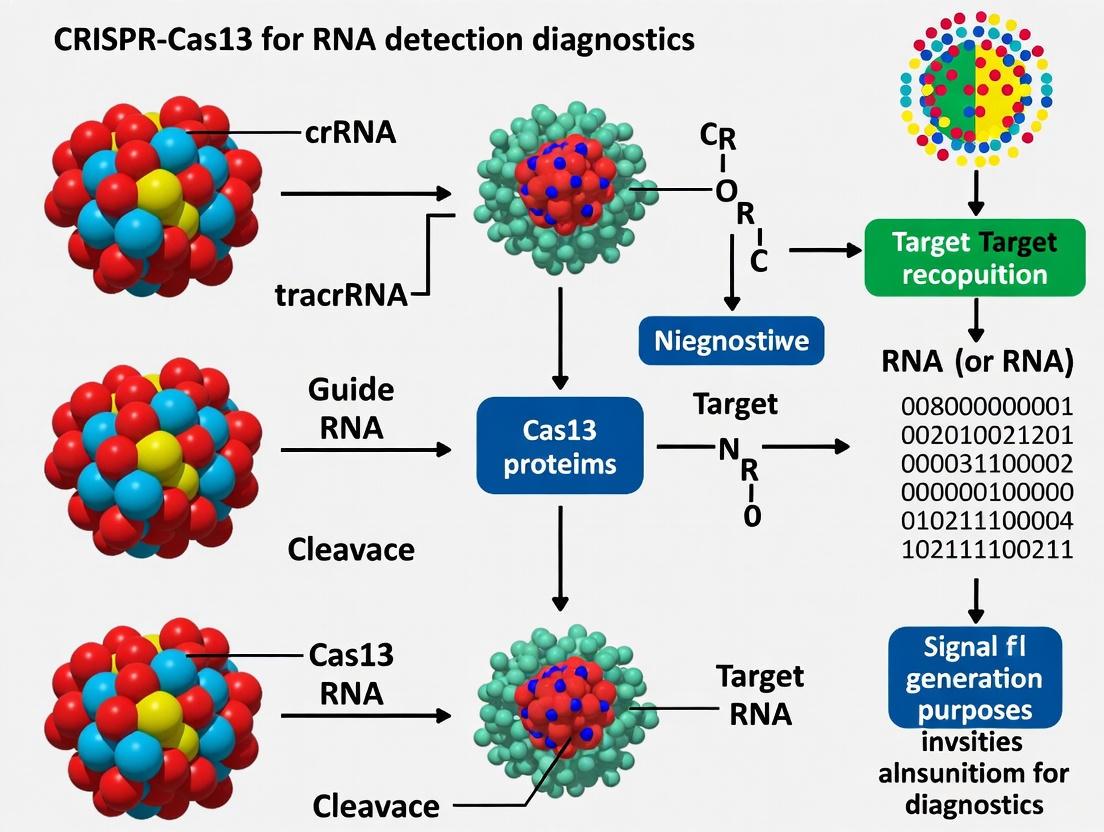
This article explores the transformative role of the CRISPR-Cas13 system in RNA detection and diagnostics.
CRISPR-Cas13: Revolutionizing RNA Detection and Molecular Diagnostics
Abstract
This article explores the transformative role of the CRISPR-Cas13 system in RNA detection and diagnostics. Tailored for researchers, scientists, and drug development professionals, it provides a comprehensive examination of the foundational mechanisms of different Cas13 effectors (Cas13a-d, Cas13X, Y), their application in groundbreaking platforms like SHERLOCK for detecting pathogens such as SARS-CoV-2 and dengue virus, and critical optimization strategies for guide RNA design and ortholog selection to enhance specificity and minimize off-target effects. The content further validates Cas13's performance against traditional methods like RT-qPCR and ELISA, highlighting its superior sensitivity, rapidity, and potential for point-of-care testing. The synthesis of these aspects underscores CRISPR-Cas13's immense potential to reshape future biomedical research and clinical diagnostics.
The RNA-Targeting Mechanism: Deconstructing the CRISPR-Cas13 System
Class 2, Type VI CRISPR-Cas systems represent a distinct family of prokaryotic adaptive immune systems exclusively dedicated to RNA targeting. Unlike DNA-targeting systems such as Cas9 and Cas12, Type VI systems utilize single-subunit RNA-guided Cas endonucleases (Cas13) that provide immunity against foreign RNA, such as viral transcripts or mobile genetic elements [1]. These systems are characterized by their unique RNA-targeting mechanism and collateral cleavage activity, which have made them powerful tools for RNA manipulation, detection, and diagnostics [1] [2].
A key differentiator of Type VI systems is their target RNA-activated nonspecific RNase activity. Upon recognition and binding of a complementary target RNA, Cas13 undergoes conformational changes that activate its HEPN (Higher Eukaryotes and Prokaryotes Nucleotide-binding) domains, leading to degradation of both the target RNA and bystander RNA molecules in proximity [1]. This collateral cleavage effect has been harnessed for sensitive diagnostic applications, enabling detection of attomolar concentrations of RNA targets [2].
Biological Mechanism and Classification
Genomic Organization and Functional Modules
Type VI CRISPR-Cas systems share the fundamental organizational principles of all CRISPR systems, functioning through three distinct stages: adaptation, expression, and interference [1] [3]. The CRISPR array consists of several spacer units flanked by direct repeats, while the cas operon contains genes encoding the Cas proteins responsible for processing and interference [1].
During the adaptation stage, short DNA fragments (protospacers) derived from invaders are integrated into the host CRISPR array by the Cas1-Cas2 integrase complex, creating immunological memory [1] [3]. In the expression stage, the CRISPR array is transcribed into a single precursor CRISPR RNA (pre-crRNA), which is processed into mature crRNAs by Cas13 itself or associated nucleases [1]. Finally, during the interference stage, the Cas13-crRNA surveillance complex identifies and cleaves complementary foreign RNA targets [1].
Cas13 Effector Architecture and Diversity
Cas13 effectors share a conserved bilobed architecture consisting of Recognition (REC) and Nuclease (NUC) lobes [1]. The REC lobe, composed of N-terminal and helical-1 domains, primarily facilitates crRNA recognition, while the NUC lobe, containing helical-2 and HEPN domains, accommodates target RNA and executes cleavage [1].
Type VI systems are subclassified into several subtypes based on protein phylogeny and locus organization:
Table: Classification of Type VI CRISPR-Cas Systems
| Subtype | Key Features | Representative Effectors |
|---|---|---|
| VI-A | Contains helical-3 linker domain | LshCas13a, LwaCas13a |
| VI-B | Features RRI (lid) domain | PspCas13b, PguCas13b |
| VI-C | Compact effector size | - |
| VI-D | Minimal system architecture | - |
| VI-BT/VI-CT | Branch variants within VI-B/VI-C | - |
crRNA Biogenesis and Target Recognition
The maturation of crRNA is critical for Cas13 function. In Type VI systems, Cas13 itself typically processes pre-crRNA into mature crRNAs, each containing a spacer sequence flanked by partial repeat sequences [1]. The direct repeat forms a stem-loop structure (5′-handle) that is recognized by Cas13, while the spacer region remains accessible for base pairing with target RNA [1].
Target recognition follows specific rules that ensure specificity and prevent autoimmunity. The seed region (nucleotides 9-14 of the spacer) requires perfect complementarity for stable target binding, while the switch region (nucleotides 5-8) induces activation of the catalytic cleft upon target recognition [2]. Extended complementarity between the 3′-flank of the crRNA (tag) and target RNA (anti-tag) can inhibit Cas13 nuclease activity, providing a self versus non-self discrimination mechanism [2].
Figure 1: Cas13 Activation and Collateral Cleavage Mechanism. Upon binding complementary target RNA, Cas13 undergoes conformational changes that activate its HEPN domains, leading to collateral cleavage of nearby single-stranded RNA molecules.
Application Notes
Diagnostic Applications
The collateral cleavage activity of Cas13 has been harnessed for developing highly sensitive diagnostic platforms. Cas13-based diagnostics typically utilize fluorescent RNA reporters that are cleaved upon target recognition, generating detectable signals [2]. Recent advancements have addressed challenges such as the need for pre-amplification and elevated reaction temperatures.
The CARRD (CRISPR Anti-tag Mediated Room-temperature RNA Detection) assay represents a significant innovation, enabling one-step cascade signal amplification for RNA detection without pre-amplification at room temperature [2]. This system utilizes a designed CRISPR anti-tag hairpin containing secondary structure and anti-tag sequences that inhibit Cas13 activation until the specific target RNA is present [2].
Table: Performance Characteristics of Cas13-Based Diagnostic Methods
| Method | Detection Principle | Sensitivity | Temperature | Key Applications |
|---|---|---|---|---|
| CARRD | Anti-tag hairpin cascade amplification | 10 aM | Room temperature (25°C) | HIV, HCV detection [2] |
| SHERLOCK | Cas13 collateral cleavage with pre-amplification | Attomolar | 37°C | Viral pathogen detection [4] |
| Electrochemical Biosensors | Cas13 with electrochemical signal detection | High sensitivity | Variable | Cancer biomarkers, viral RNA [5] |
RNA Imaging and Tracking in Living Cells
Catalytically inactive Cas13 (dCas13) variants fused to fluorescent proteins enable RNA visualization and tracking in live cells [6]. This application leverages the programmable RNA-targeting capability of dCas13 without cleaving the RNA target, allowing real-time monitoring of RNA dynamics, localization, and transport.
The dPspCas13b system has been optimized for imaging nuclear RNAs with dPspCas13b-3×EGFP-2×NLS, while cytoplasmic RNAs are effectively labeled with dPspCas13b-3×sfGFP-3×NLS or dPspCas13b-2×mNeonGreen-NLS [6]. For successful implementation, guide RNAs should be designed with spacers between 20-27 nucleotides, preferably beginning with guanine (G) to ensure transcription efficiency while avoiding introduction of mismatches [6].
Figure 2: Live-Cell RNA Imaging with dCas13. Catalytically dead Cas13 (dCas13) fused to fluorescent proteins (FP) binds specific RNA targets via guide RNAs, enabling visualization of RNA dynamics in living cells.
Therapeutic and Biotechnology Applications
Cas13 systems show promise for therapeutic interventions against RNA viruses. The PAC-MAN (Prophylactic Antiviral CRISPR in huMAN cells) approach utilizes Cas13d to target and degrade influenza and SARS-CoV-2 viral RNA sequences [4]. Similarly, the CARVER (Cas13-assisted restriction of viral expression and readout) platform employs Cas13a/b to combat viral infections [4].
Bioinformatic design of Cas13 guide RNAs for SARS-CoV-2 targeting highlights the consideration differences between diagnostics and therapeutics. Diagnostic applications require high specificity for SARS-CoV-2, while therapeutic approaches may target conserved regions across coronavirus strains to address potential variants [4].
Experimental Protocols
CARRD Assay for Amplification-Free RNA Detection
Principle: The CARRD assay leverages the inhibitory effect of anti-tag sequences on Cas13 activation. A designed CRISPR anti-tag hairpin remains inactive until the target RNA initiates a cascade activation process [2].
Materials:
- LwaCas13a protein purified or commercially obtained
- Custom crRNA designed with target-specific spacer
- CRISPR anti-tag hairpin (synthesized)
- Fluorescent RNA reporter (e.g., 5'-6-FAM-UUUUU-BHQ-1-3')
- Nuclease-free buffer (40 mM Tris-HCl, 60 mM NaCl, 6 mM MgCl₂, pH 7.3)
- Microplate reader or fluorometer
Procedure:
- Reaction Setup: Combine 50 nM LwaCas13a, 50 nM crRNA, 100 nM anti-tag hairpin, and 500 nM fluorescent reporter in reaction buffer [2].
- Complex Formation: Incubate at 25°C for 10 minutes to allow RNP complex formation.
- Target Addition: Add target RNA at appropriate dilution (assay validated from 10 aM to 1 nM).
- Signal Detection: Monitor fluorescence intensity (excitation/emission: 485/535 nm) over 60-120 minutes at 25°C.
- Data Analysis: Calculate fluorescence fold change relative to negative control.
Optimization Notes:
- Assay performs optimally at room temperature (25°C), eliminating need for heating equipment [2].
- The anti-tag hairpin should contain an 8-nt anti-tag sequence complementary to the crRNA 3′-flank in a structured configuration.
- For clinical samples, include appropriate extraction and purification steps prior to detection.
Live-Cell RNA Imaging with dCas13
Principle: An endonuclease-dead Cas13 (dCas13) fused to fluorescent proteins binds specific RNA sequences without cleavage, enabling real-time visualization of RNA dynamics [6].
Materials:
- pHAGE-dPspCas13b-3×EGFP-2×NLS plasmid (Addgene #132397)
- gRNA expression vectors with target-specific spacers
- Lipofectamine 3000 transfection reagent
- HeLa cells (or relevant cell line)
- FluoroBrite DMEM medium
- 35 mm glass-bottom dishes
Procedure:
- gRNA Design: Design 2-3 gRNAs (20-27 nt) targeting regions of interest using computational tools (crispor.tefor.net). Avoid functional RNA domains [6].
- Plasmid Transfection: Plate HeLa cells at 30% confluency in 12-well plates. The next day, co-transfect 0.3 μg dPspCas13b-FP and 0.7 μg total gRNA plasmids using Lipofectamine 3000 [6].
- Selection and Expansion: After 48 hours, add puromycin (1-2 μg/mL) for selection of transfected cells. Expand positive populations.
- Live-Cell Imaging: Plate selected cells on glass-bottom dishes 24 hours before imaging. Image in FluoroBrite DMEM using appropriate imaging systems.
- Image Analysis: Process images using Fiji/ImageJ. Calculate signal-to-noise ratios and perform particle tracking if monitoring RNA dynamics.
Critical Controls:
- Include non-targeting gRNA as negative control
- Validate targeting efficiency using RNA FISH on parallel samples
- For new RNA targets, test multiple gRNAs as efficiency varies
The Scientist's Toolkit
Table: Essential Research Reagents for Cas13 Applications
| Reagent/Category | Specific Examples | Function/Application | Key Considerations |
|---|---|---|---|
| Cas13 Effectors | LwaCas13a, LshCas13a, PspCas13b | RNA targeting and cleavage | Varying temperature optima, collateral activity levels [2] [6] |
| Guide RNA Vectors | pC013, pHAGE gRNA backbones | Express targeting crRNAs | Spacer length (20-27 nt), 5' G preferred for transcription [6] |
| Detection Reporters | 6-FAM-UUUUU-BHQ-1, RNA-quencher probes | Signal generation via collateral cleavage | Optimize concentration to balance signal and background [2] |
| dCas13 Fusion Constructs | dPspCas13b-3×EGFP-2×NLS, dPspCas13b-2×mNeonGreen-NLS | RNA imaging in live cells | Nuclear vs. cytoplasmic localization signals [6] |
| Target RNA Standards | Synthetic in vitro transcribed RNA | Assay validation and quantification | Store in aliquots at -80°C to prevent degradation |
| Cell Lines | HeLa, HEK293T | Delivery and testing platforms | Optimize transfection protocols for specific cell types |
Class 2, Type VI CRISPR systems represent a versatile and powerful RNA-targeting technology with broad applications in molecular diagnostics, fundamental research, and therapeutic development. The continuing characterization of Cas13 effectors from diverse prokaryotic sources, coupled with engineering approaches to enhance specificity and efficiency, promises to expand the utility of these systems. As Cas13-based technologies mature, they are poised to make significant contributions to RNA biology and clinical diagnostics, particularly through development of sensitive, field-deployable detection platforms and precise RNA manipulation tools.
Cas13 effectors, the hallmark of Type VI CRISPR-Cas systems, are programmable RNA-guided ribonucleases that have emerged as powerful tools for RNA detection, diagnostics, and transcriptome engineering. A universal feature across all Cas13 subtypes (VI-A to VI-D, Cas13X, and Cas13Y) is the presence of two Higher Eukaryotes and Prokaryotes Nucleotide-binding (HEPN) domains, which are indispensable for RNA cleavage activity. This application note details the structural and mechanistic principles governing HEPN domain function, provides validated experimental protocols for studying their activity, and discusses their critical role in the development of next-generation diagnostic tools such as the CRISPR Anti-tag Mediated Room-temperature RNA Detection (CARRD) assay. Understanding this architecture is essential for researchers and drug development professionals aiming to harness CRISPR-Cas13 for precise RNA targeting.
Cas13 is a single-effector protein found in Type VI CRISPR-Cas systems, which provide adaptive immunity in bacteria and archaea by targeting and degrading foreign RNA. Unlike DNA-targeting Cas9 and Cas12, Cas13 exclusively targets single-stranded RNA (ssRNA) and exhibits two distinct ribonuclease activities: one for pre-crRNA processing and another for target RNA cleavage. The HEPN domains, characterized by conserved R-X4-H motifs, are responsible for the target RNA degradation activity [7] [1]. These domains are a defining feature of all Cas13 proteins, though the effectors themselves show significant sequence divergence across subtypes [1] [8]. The compact and minimal architecture of certain subtypes, particularly Cas13d, facilitates their flexible packaging into viral vectors like AAV, enhancing their utility for therapeutic applications [9].
Structural Architecture of Cas13 Effectors
Cas13 effectors share a conserved bilobed architecture common to Class 2 single-subunit Cas proteins, consisting of a Recognition (REC) lobe and a Nuclease (NUC) lobe [1] [9].
- The REC Lobe is primarily responsible for crRNA recognition and binding. It is typically composed of an N-terminal domain (NTD) and a Helical-1 domain.
- The NUC Lobe houses the catalytic centers and is composed of two HEPN domains (HEPN-1 and HEPN-2) and a Helical-2 domain [10] [1] [9].
The mature crRNA is sandwiched within a positively charged channel between these two lobes. Upon binding to a complementary target RNA, the Cas13-crRNA complex undergoes a significant conformational change that activates its RNA cleavage capability [9] [8].
The Central Role of the HEPN Domains
The HEPN domains form the catalytic core of the Cas13 effector. The following table summarizes the key structural and functional attributes of these domains.
Table 1: Structural and Functional Features of HEPN Domains in Cas13 Effectors
| Feature | Description | Functional Implication |
|---|---|---|
| Conserved Motifs | Two R-X4-H motifs (one in each HEPN domain) [7] [10]. | Forms the active site for target RNA cleavage; mutation of these residues creates a catalytically dead Cas13 (dCas13) [7]. |
| Pre-crRNA Processing | Catalyzed by a distinct active site, often within the HEPN-2 domain in Cas13d [11] [10]. | Enables self-processing of precursor crRNA into mature guide RNAs, independent of target cleavage. |
| Divalent Cation Dependence | Target cleavage is abolished by sequestration of Mg²⁺ ions [11] [10]. | Mg²⁺ ions are critical for stabilizing the crRNA structure and the active conformation; however, pre-crRNA processing may proceed without them [10]. |
| Activation Mechanism | Target RNA binding induces conformational changes that reposition the HEPN domains [12] [9]. | Forms a stable composite RNase pocket, activating both specific (cis) and collateral (trans) RNA cleavage [7] [1]. |
The structural organization of the Cas13 effector and the activation mechanism of its HEPN domains can be visualized in the following diagram.
Figure 1: Cas13 HEPN Domain Activation Pathway. Target RNA binding induces conformational changes in the HEPN domains, forming an active ribonuclease site. Mg²⁺ ions are critical for stabilizing the active conformation, leading to collateral cleavage.
Experimental Protocols & Methodologies
Protocol: Assessing HEPN-Dependent RNA Cleavage In Vitro
This protocol outlines the steps to reconstitute Cas13 activity and quantify its RNA cleavage function in a controlled setting.
Principle: The Cas13-crRNA complex is activated upon binding to a complementary target RNA, leading to the cleavage of the target (cis-cleavage) and a separate, quenched fluorescent RNA reporter (trans-cleavage). The increase in fluorescence is a direct measure of HEPN domain activity.
Materials:
- Purified Cas13 Protein: Wild-type and HEPN-motif mutant (e.g., RxxxA/HxxxA).
- Synthetic crRNA: Designed with a spacer complementary to the target RNA.
- Target RNA: Synthetic ssRNA containing the protospacer sequence.
- Fluorescent Reporter RNA: e.g., 5'-FAM-UUUUUU-BHQ1-3' poly-U ssRNA.
- Reaction Buffer: 20 mM HEPES pH 6.8, 50 mM KCl, 5 mM MgCl₂, 1 mM DTT.
- Real-time Fluorescence Plate Reader.
Procedure:
- Complex Formation: Pre-incubate 50 nM Cas13 protein with 50 nM crRNA in the reaction buffer for 15 minutes at 25°C to form the surveillance complex.
- Reaction Setup: In a 96-well plate, add the Cas13-crRNA complex mixture. Supplement with 1 µM of the fluorescent reporter RNA and initiate the reaction by adding 5 nM of target RNA. Bring the total reaction volume to 50 µL.
- Controls:
- Negative Control: Replace the target RNA with nuclease-free water.
- HEPN-mutant Control: Use a Cas13 protein with mutations in all four catalytic residues (R-X4-H motifs in HEPN-1 and HEPN-2).
- Data Acquisition: Immediately place the plate in a fluorescence plate reader pre-heated to 25°C. Measure fluorescence (Ex/Em: 485/535 nm) every 30 seconds for 1-2 hours.
- Data Analysis: Plot fluorescence over time. The initial rate of fluorescence increase (slope of the linear phase) is proportional to the trans-cleavage activity and, by extension, HEPN domain function.
Protocol: Evaluating the Impact of RNA Structure on Cas13 Activity
This protocol leverages the finding that RNA secondary structure can inhibit Cas13 activation by occluding the protospacer [13].
Principle: DNA or RNA "occluders" complementary to different regions of the target RNA are used to systematically probe how steric hindrance affects the strand displacement process required for Cas13 activation.
Materials:
- Target RNA with Minimal Structure: Designed to have low self-complementarity.
- DNA Occluders: A set of DNA oligonucleotides of varying lengths (e.g., 10, 14, 21, 28 nt) tiled across the protospacer region and its 3'-flank.
- Equipment for Electrophoresis Mobility Shift Assay (EMSA): Native polyacrylamide gel, electrophoresis apparatus.
Procedure:
- Structure Formation: Anneal the target RNA with a 2-5 fold molar excess of each DNA occluder by heating to 95°C for 2 minutes and slowly cooling to 25°C.
- Cleavage Reaction: Perform the in vitro cleavage assay (as in Protocol 3.1) using the structured target RNA as the activator.
- Binding Assay (EMSA): To distinguish between binding and activation, incubate the Cas13-crRNA complex with the occluded target RNAs. Run the mixtures on a native gel to visualize complex formation. Occluders binding the protospacer will reduce binding, while those 3' to the protospacer may not affect binding but still inhibit activation [13].
- Analysis: Quantify the reduction in Cas13 activity (reporter cleavage rate) for each occluded target. This data reveals the importance of an accessible protospacer for HEPN domain activation.
Diagnostic Applications: Harnessing HEPN Domain Mechanics
The unique properties of the HEPN domains, particularly their target-activated collateral RNase activity, are the foundation for several innovative diagnostic platforms.
Table 2: Diagnostic Platforms Leveraging Cas13 HEPN Domain Activity
| Platform/Assay | Principle | Key Advantage | Example Application |
|---|---|---|---|
| SHERLOCK / DETECTR | Cas13 collateral activity cleaves a reporter molecule upon target recognition, generating a fluorescent or colorimetric signal [7]. | High sensitivity and specificity, capable of single-molecule detection. | Detection of viral RNA (e.g., SARS-CoV-2, Zika) and cancer-associated mutations [7] [13]. |
| CARRD (This Review) | An anti-tag sequence in a hairpin structure inhibits Cas13a. Target RNA binding triggers cleavage of the anti-tag, unlocking the hairpin and initiating a cascade signal amplification [2]. | One-pot, one-enzyme, amplification-free detection at room temperature. | Detection of HIV and HCV RNA at attomolar (aM) sensitivity in clinical plasma samples [2]. |
| Electrochemical Biosensors | Cas13 trans-cleavage of an RNA reporter is coupled to an electrode surface, resulting in a measurable change in electrical current or potential [5]. | Simplicity, rapid response, and suitability for point-of-care use. | Detection of cancer-related RNA biomarkers without the need for sample amplification [5]. |
The Scientist's Toolkit: Essential Research Reagents
The following table catalogs key reagents and their functions essential for conducting experiments with Cas13 effectors.
Table 3: Essential Research Reagents for Cas13 Studies
| Reagent / Material | Function / Purpose | Example / Notes |
|---|---|---|
| Wild-type Cas13 Protein | The core effector for RNA targeting and cleavage studies. | Purified LwaCas13a, RfxCas13d, or EsCas13d [13] [9]. |
| dCas13 (catalytically dead) | A binding-only effector for RNA imaging, tracking, and mechanistic studies without cleavage. | Created by mutating all four catalytic residues in the HEPN R-X4-H motifs [7] [9]. |
| crRNA (CRISPR RNA) | Guides the Cas13 effector to a specific RNA target sequence. | Synthesized with a direct repeat and a user-defined ~20-30 nt spacer sequence. |
| Fluorescent RNA Reporter | A substrate for detecting collateral cleavage activity. | A short ssRNA oligo with a fluorophore and quencher pair (e.g., FAM/UUUUUU/BHQ1) [2]. |
| HEPN-motif Mutants | Critical controls to confirm HEPN-dependent activity versus other functions. | e.g., UrCas13d (R288A/R823A) [10] or EsCas13d (R295A/H300A/R849A/H854A) [9]. |
| DNA Occlusion Oligos | To study the impact of RNA secondary structure on Cas13 activity and mechanism. | DNA oligos of varying lengths (e.g., 10-28 nt) complementary to the target RNA [13]. |
The Type VI CRISPR-Cas system represents a groundbreaking advancement in RNA-targeting technologies, distinguished from DNA-editing systems like Cas9 by its exclusive targeting of single-stranded RNA (ssRNA). These systems are classified as Class 2, Type VI CRISPR systems, characterized by single-component effector proteins that function as RNA-guided RNases [14] [15]. All Cas13 effectors share a common characteristic: the presence of two Higher Eukaryotes and Prokaryotes Nucleotide-binding (HEPN) domains that form the catalytic core for RNA cleavage [16] [7]. Upon recognition and binding to a target RNA sequence specified by its CRISPR RNA (crRNA), Cas13 undergoes a conformational change that activates its RNase capability, leading to cleavage of the target RNA [17]. A unique feature of most Cas13 orthologs is their collateral activity—a non-specific RNase function activated upon target recognition that cleaves nearby bystander RNA molecules [14] [15]. This diverse family of enzymes has expanded to include multiple subtypes (Cas13a-d, X, and Y) with distinct functional characteristics, opening new avenues for RNA detection, diagnostics, and transcriptome engineering [7] [18].
Comparative Analysis of Cas13 Orthologs
Structural and Functional Diversity
The Cas13 protein family exhibits significant structural and functional diversity across its orthologs, with variations in size, domain architecture, crRNA requirements, and catalytic properties influencing their application potential.
Table 1: Comparative Characteristics of Cas13 Orthologs
| Ortholog | Subtype | Size (amino acids) | HEPN Domain Position | crRNA Length | PFS Requirement | Key Features |
|---|---|---|---|---|---|---|
| Cas13a | VI-A | ~1000-1200 [15] | Central and C-terminal [18] | ~24-28 nt [19] | 3' A, U, or C (for LshCas13a) [19] | First discovered; robust collateral activity [14] |
| Cas13b | VI-B | ~1100 [15] | Extreme N and C-termini [20] [18] | Varies | 3' and 5' PFS [21] | Regulated by Csx27/Csx28; high efficiency in mammalian cells [21] [18] |
| Cas13d | VI-D | ~190-300 [18] | Central and C-terminal [18] | ~20-23 nt [16] | None [16] [18] | Compact size; high specificity; minimal PFS constraints [16] [18] |
| Cas13X | VI-X | ~775-800 [15] [22] | Extreme N and C-termini [18] | Information missing | Information missing | Ultra-compact; efficient knockdown; suitable for AAV delivery [22] [18] |
| Cas13Y | VI-Y | ~775-800 [15] | Extreme N and C-termini [18] | Information missing | Information missing | Similar to Cas13X; high efficiency in mammalian cells [15] [18] |
Performance Characteristics
Recent systematic evaluations of Cas13 orthologs have quantified their performance in transcript knockdown efficiency, collateral activity, and specificity across different biological systems.
Table 2: Performance Metrics of Cas13 Orthologs in Eukaryotic Systems
| Ortholog | Representative Variant | Knockdown Efficiency | Collateral Activity in Eukaryotes | Specificity (Off-target Effects) | Documented Applications |
|---|---|---|---|---|---|
| Cas13a | LwaCas13a | Moderate [18] | Minimal in eukaryotes [19] | Low off-target effects [19] | Transcript knockdown, viral interference [18] [19] |
| Cas13b | PbuCas13b | High [18] | Moderate [14] | Information missing | RNA editing, nucleic acid detection [20] |
| Cas13d | RfxCas13d | High (58-80%) [18] | Low to absent in eukaryotes [16] | High specificity [16] | Multiplexed knockdown, base editing, in vivo delivery [16] [22] [18] |
| Cas13X | Cas13x.1 | High (comparable to Cas13d) [18] | Information missing | Minimal off-target effects [18] | RNA knockdown, splicing modulation, AAV delivery [22] [18] |
| Cas13Y | Cas13y.1 | High (comparable to Cas13d) [18] | Information missing | Minimal off-target effects [18] | RNA knockdown, multiplexed targeting [18] ``` |
The structural and functional relationships between different Cas13 orthologs can be visualized through the following mechanistic diagram:
Molecular Mechanisms and Activation
Unified Mechanism of RNA Targeting
Despite their structural differences, all Cas13 orthologs share a common mechanistic framework for RNA targeting and cleavage. The Cas13 effector protein first complexes with a mature crRNA to form a surveillance complex that scans cellular RNA for complementary sequences [14]. Upon recognition of a target RNA sequence that complements the crRNA spacer, Cas13 undergoes a conformational rearrangement that aligns the two HEPN domains into a catalytically active RNase site [17]. This activation triggers cleavage of the target RNA and, for most orthologs, activates collateral non-specific RNase activity that degrades nearby bystander RNA [14] [17]. The activation mechanism represents a fundamental shift from DNA-targeting CRISPR systems, with the collateral activity being particularly harnessed for diagnostic applications [19].
Ortholog-Specific Activation Characteristics
Cas13a requires a protospacer flanking site (PFS) at the 3' end of the target sequence (typically a non-G nucleotide) for efficient activation [14]. The structure of Cas13a reveals a bilobed architecture with the HEPN domains positioned in the center and C-terminus, requiring substantial conformational change upon target recognition to align the catalytic residues [17]. In contrast, Cas13b exhibits a unique linear domain architecture with HEPN domains at the extreme N and C-termini, and its crRNA direct repeat is positioned at the 5' end—opposite to other type VI systems [20] [18]. Cas13d shows minimal PFS constraints, contributing to its versatility, and undergoes striking polypeptide rearrangement in its Helical-1 domain to accommodate target RNA binding [16] [22]. The compact Cas13X and Cas13Y orthologs achieve similar catalytic efficiency despite their significantly reduced size, maintaining the essential HEPN domains and RNA recognition capabilities [15] [22].
Experimental Protocols and Workflows
SHERLOCK Protocol for Nucleic Acid Detection
The Specific High-Sensitivity Enzymatic Reporter UnLOCKing (SHERLOCK) platform leverages the collateral activity of Cas13 for highly sensitive nucleic acid detection, particularly valuable for pathogen identification including SARS-CoV-2 [7] [19].
Protocol Workflow:
- Sample Preparation: Extract RNA or DNA from patient samples (e.g., nasal swabs, saliva). For DNA targets, include an optional reverse transcription step.
- Amplification: Employ Recombinase Polymerase Amplification (RPA) or reverse transcription RPA (RT-RPA) to isothermally amplify target sequences at 37-42°C for 15-30 minutes.
- Cas13 Detection: Combine amplified product with:
- Cas13 enzyme (typically LwaCas13a or RfxCas13d)
- Target-specific crRNA
- Fluorescent RNA reporter (e.g., FAM-UU-rB-HQ)
- Incubation: Incubate reaction at 37°C for 5-30 minutes.
- Signal Detection: Measure fluorescence output using plate readers or lateral flow strips.
Key Considerations:
- Design crRNAs to target conserved regions with high specificity
- Include appropriate controls (positive, negative, no-template)
- Optimize crRNA concentration (typically 10-100 nM) to balance sensitivity and specificity
The following workflow diagram illustrates the SHERLOCK detection process:
Endogenous Transcript Knockdown in Eukaryotic Cells
Robust RNA knockdown using Cas13 orthologs enables functional genomics studies and therapeutic applications for disease-associated transcripts.
Protocol Workflow:
- crRNA Design: Design 20-30 nt spacer sequences complementary to target transcript regions with minimal secondary structure. For multiplexing, design tRNA-crRNA arrays [18].
- Vector Construction: Clone expression cassettes for:
- Cas13 ortholog (codon-optimized for host species)
- crRNA expression driven by U6 or Pol III promoters
- Delivery: Transfert plasmids or deliver RNP complexes into target cells using appropriate methods (lipofection, electroporation, AAV transduction).
- Validation: Assess knockdown efficiency 48-72 hours post-delivery:
- RT-qPCR for transcript levels
- Western blot for protein levels (if applicable)
- RNA-seq for transcriptome-wide specificity assessment
Ortholog-Specific Optimization:
- Cas13d (RfxCas13d): No PFS constraints; highly efficient with 58-80% knockdown reported [18]
- Cas13X/Y: Compact size ideal for AAV delivery; high efficiency comparable to Cas13d [18]
- Cas13a (LwaCas13a): Requires 3' PFS (non-G); moderate efficiency with minimal collateral effects in eukaryotes [19]
- Cas13b (PbuCas13b): Requires 3' and 5' PFS; high efficiency but may exhibit more collateral activity [18]
The Scientist's Toolkit: Essential Research Reagents
Successful implementation of Cas13 technologies requires carefully selected reagents and orthogonal validation methods. The following table outlines critical components for establishing Cas13-based research applications.
Table 3: Essential Research Reagents for Cas13 Applications
| Reagent Category | Specific Examples | Function & Importance | Selection Considerations |
|---|---|---|---|
| Cas13 Expression Plasmids | LwaCas13a, PbuCas13b, RfxCas13d, Cas13X.1 [18] [19] | Engineered Cas13 variants with heterologous promoters for mammalian expression | Consider size constraints for delivery; Cas13X/Y preferred for AAV packaging [22] |
| crRNA Expression Systems | U6-driven expression vectors, tRNA-crRNA arrays for multiplexing [18] | Guide RNA expression with precise termini; enables simultaneous targeting of multiple transcripts | Spacer length optimization (20-30 nt); secondary structure avoidance [18] |
| Detection Reporters | FAM-UU-rB-HQ (fluorescent), biotin-RNA-fluorescein (lateral flow) [19] | Signal generation in detection assays through collateral cleavage | Quencher-fluorophore selection based on detection modality |
| Delivery Vehicles | AAV vectors (for in vivo), lipid nanoparticles, electroporation systems | Efficient intracellular delivery of Cas13 components | AAV capacity ~4.7kb; compact Cas13X/Y (775-800 aa) ideal [22] |
| Positive Control Targets | Synthetic RNA templates, in vitro transcripts | System validation and optimization | Include in every experimental batch for quality control |
| Collateral Activity Assays | Non-target RNA transcripts, stress response markers [18] | Assessment of non-specific RNase activity | Particularly important for bacterial applications; minimal in eukaryotes [19] |
Ortholog Selection Guidelines for Diagnostic Applications
Application-Specific Recommendations
Choosing the appropriate Cas13 ortholog requires careful consideration of the specific application requirements, detection environment, and delivery constraints.
For In Vitro Diagnostic Applications:
- High-Sensitivity Detection: Cas13a (LwaCas13a) demonstrates robust collateral activity ideal for signal amplification in platforms like SHERLOCK [19].
- Multiplexed Detection: Cas13d (RfxCas13d) offers PFS-independent targeting, enabling flexible probe design for parallel pathogen detection [16] [18].
- Point-of-Care Testing: Cas13X/Y provide high efficiency in compact formats, compatible with portable detection devices [22] [18].
For Cellular Research and Therapeutic Development:
- Endogenous Transcript Knockdown: Cas13d achieves 58-80% knockdown efficiency with high specificity in eukaryotic cells [18].
- In Vivo Delivery: Cas13X and Cas13Y (775-800 aa) are packageable in AAV vectors with efficient transcript knockdown capabilities [22] [18].
- Base Editing Applications: Engineered Cas13d variants fused to deaminase domains (e.g., mini-Vx) enable precise RNA editing with minimal off-target effects [22].
Emerging Trends and Future Directions
The Cas13 field continues to evolve with several promising developments. Miniaturization strategies using computational design and AlphaFold-predicted structures have generated compact Cas13 variants without compromising activity [22]. Orthologs with reduced collateral activity are being engineered to enhance safety for therapeutic applications [15]. Additionally, the discovery of novel Cas13 subtypes through metagenomic mining continues to expand the molecular toolbox available for RNA manipulation [18]. These advances, coupled with improved delivery methods and enhanced specificity profiles, position Cas13 technologies as increasingly powerful tools for diagnostic applications and RNA-focused therapeutic interventions.
The Type VI CRISPR-Cas13 system has emerged as a powerful platform for programmable RNA targeting, offering significant potential for diagnostic applications and fundamental RNA biology research [23] [7]. Unlike DNA-targeting CRISPR systems, Cas13 effector proteins exclusively target single-stranded RNA molecules through a guide mechanism mediated by CRISPR RNA (crRNA) [1] [8]. This RNA-targeting capability positions Cas13 as an ideal tool for detecting RNA viruses, profiling transcriptomes, and modulating gene expression without altering genomic DNA—a particularly valuable characteristic for diagnostic applications [23] [7].
The crRNA-guided process represents a sophisticated molecular mechanism that transforms a generic Cas13 effector into a sequence-specific RNase. This process encompasses multiple stages: from the initial transcription of precursor crRNA (pre-crRNA) to its maturation into functional guide molecules, and culminating in target recognition and degradation [1] [8]. For researchers developing Cas13-based diagnostic platforms, a thorough understanding of this process is essential for optimizing guide RNA design, anticipating potential limitations, and designing robust experimental protocols.
This application note provides a detailed examination of the crRNA-guided process within CRISPR-Cas13 systems, with particular emphasis on practical considerations for diagnostic development. We present structural and mechanistic insights, quantitative comparisons of Cas13 orthologs, detailed experimental protocols, and essential reagent solutions to support implementation in research settings.
Molecular Mechanism of crRNA-Guided Activity
pre-crRNA Processing and Maturation
The crRNA-guided process begins with the transcription of a pre-crRNA array containing multiple repeat-spacer units [1] [8]. Cas13 proteins possess an intrinsic RNase activity dedicated to processing this pre-crRNA into mature crRNAs, each comprising a single spacer flanked by partial repeat sequences [1] [8]. This self-processing capability distinguishes Cas13 from other CRISPR systems that require additional host factors or trans-activating RNAs for crRNA maturation.
The direct repeat (DR) region in pre-crRNA forms a defined secondary structure featuring a stem-loop (5'-handle) flanked by single-stranded segments [1]. Structural studies, particularly of Type VI-A Cas13a from Leptotrichia shahii (LshCas13a), reveal that Cas13 recognizes and buries this stem-loop within a cleft formed between its N-terminal domain (NTD) and helical-1 domains in the recognition lobe [1]. The processing cleavage site varies among Cas13 subtypes: Type VI-A systems typically cleave within the 3'-flank of the direct repeat, while Type VI-B systems cleave at the 5'-end of the direct repeat [1].
Key catalytic residues responsible for pre-crRNA processing have been identified through mutagenesis studies. In LshCas13a, residues Arg438, Lys441, and Lys471 in the helical-1 domain are essential for cleavage chemistry [1]. The processing reaction generates a mature crRNA with a 5'-OH group while leaving a 2',3'-cyclic phosphate on the 5'-flank product [1]. Following processing, the mature crRNA remains bound to Cas13, forming the surveillance complex capable of target RNA recognition.
Figure 1: crRNA-Guided Process Workflow. The diagram illustrates the sequential steps from pre-crRNA transcription through target RNA cleavage.
Target Recognition and HEPN Activation
The Cas13:crRNA surveillance complex scans cellular RNA content for sequences complementary to the crRNA spacer region [1] [8]. Before target engagement, the spacer region of crRNA exhibits considerable flexibility, with central and 3'-segments adopting a nearly A-form conformation that facilitates target searching and loading [1].
Upon encountering complementary target RNA, the Cas13:crRNA complex undergoes significant conformational changes that activate its RNase function [1] [8]. Structural studies of LbuCas13a in complex with crRNA and target RNA reveal that target binding induces rearrangement of the helical-2 domain toward the linker domain in the nuclease lobe, creating a more compact conformation and forming a channel for target RNA accommodation [1].
Target RNA binding activates the two Higher Eukaryotes and Prokaryotes Nucleotide-binding (HEPN) domains in the nuclease lobe, which form a single composite RNase active site [1] [8]. This activation mechanism represents a critical safeguard—HEPN nuclease activity remains auto-inhibited until specific target recognition occurs, preventing indiscriminate RNA degradation [8].
The target RNA must form a complete duplex with the crRNA spacer to achieve full HEPN activation. Recent studies with LbuCas13a demonstrate that discontinuous target RNAs connected by a loop structure can activate Cas13 when the complementary regions are appropriately positioned, with optimal activation observed when breaks occur at specific positions within the spacer [24]. This finding has significant implications for diagnostic applications requiring multi-target activation.
Target Cleavage and Collateral Activity
Activated Cas13 cleaves target RNA within the guide-target duplex [8]. Additionally, it exhibits collateral RNase activity—indiscriminately degrading nearby non-target RNA molecules after activation [1] [23]. This collateral effect likely serves as a programmed "suicide" response in bacterial immunity, inducing host cell dormience to abort phage infection cycles [1] [23].
From a diagnostic perspective, this collateral activity has been harnessed for sensitive nucleic acid detection platforms [23]. However, for transcriptome engineering applications, collateral activity poses significant challenges as it can lead to widespread offtarget effects and cytotoxicity [23] [18]. Different Cas13 orthologs exhibit varying degrees of collateral activity, with some studies reporting minimal effects in certain eukaryotic contexts [18].
Recent research has identified an RNA target-independent non-canonical activation (RINCA) phenomenon, where Cas13 can exhibit RNase activity through crRNA alone without target RNA binding [25]. This unexpected activation mode presents both challenges and opportunities for Cas13-based technologies, prompting the development of engineered Cas13 variants with reduced RINCA potential while maintaining target-dependent responsiveness [25].
Comparative Analysis of Cas13 Orthologs
Diversity of Cas13 Family
The Cas13 protein family includes multiple subtypes (VI-A to VI-D, with more recently identified Cas13X and Cas13Y) that differ in size, sequence, and functional characteristics [23] [18] [7]. All share the conserved bilobed architecture with REC (recognition) and NUC (nuclease) lobes and two HEPN domains essential for RNase activity [1] [8].
Phylogenetic analysis reveals substantial diversity among Cas13 orthologs, with extremely low sequence similarity between subtypes despite structural conservation [1]. This diversity translates to functional differences that researchers can leverage for specific applications.
Table 1: Characteristics of Major Cas13 Orthologs
| Ortholog | Subtype | Size (aa) | crRNA Length (nt) | PFS Requirement | Key Features | Primary Applications |
|---|---|---|---|---|---|---|
| LwaCas13a | VI-A | ~1,300 | 50-66 | Minimal | First characterized; robust activity | Transcript knockdown, nucleic acid detection |
| PspCas13b | VI-B | ~1,150 | 30+ spacer | None in eukaryotes | High specificity; used in REPAIR system | RNA editing, imaging |
| RfxCas13d | VI-D | ~930 | 55-60 | None | Compact size; high efficiency; minimal collateral | In vivo applications, multiplexing |
| Cas13X.1 | VI-X | ~775 | Not specified | None | Ultra-compact | AAV delivery, therapeutic development |
| Cas13Y.1 | VI-Y | ~850 | Not specified | None | Compact; efficient | Therapeutic development |
Performance Comparison in Eukaryotic Systems
Recent systematic evaluations of Cas13 orthologs in plants and mammalian cells provide valuable insights for selecting appropriate variants for research applications [18]. When assessing knockdown efficiency against endogenous transcripts, RfxCas13d, Cas13X.1, and Cas13X.2 demonstrated superior performance with editing efficiencies ranging from 58% to 80%, followed closely by Cas13Y.1 and Cas13Y.2 [18].
Different Cas13 orthologs enable varying degrees of endogenous transcript knockdown with minimal off-target effects, generating diverse mutant phenotypes [18]. This ortholog-dependent efficiency highlights the importance of selecting appropriate Cas13 variants for specific experimental contexts.
Biological context significantly influences Cas13 performance. For instance, PspCas13b originally showed protospacer flanking site (PFS) requirements in E. coli but operates without PFS constraints in eukaryotic cells [26]. Similarly, collateral activity effects vary across cell types and organisms, necessitating empirical validation in specific experimental systems [18].
Table 2: Performance Characteristics of Cas13 Orthologs in Research Applications
| Ortholog | Knockdown Efficiency | Specificity | Collateral Activity | Cytotoxicity | Delivery Efficiency | Multiplexing Capability |
|---|---|---|---|---|---|---|
| LwaCas13a | Moderate-High | Moderate | High | Moderate | Moderate | Limited |
| PspCas13b | High | High | Moderate | Low-Moderate | Moderate | Good |
| RfxCas13d | High | High | Low | Low | High | Excellent |
| Cas13X.1 | High | High | Low-Moderate | Low | Excellent | Good |
| Cas13Y.1 | High | High | Low-Moderate | Low | Excellent | Good |
Experimental Protocols
Protocol 1: Cas13-mediated Transcript Knockdown in Mammalian Cells
This protocol describes the implementation of CRISPR-Cas13 for targeted transcript knockdown in mammalian cells, optimized for high efficiency and minimal off-target effects [23] [26].
Reagents and Equipment
- Mammalian codon-optimized Cas13 expression vector (e.g., RfxCas13d for high efficiency and low cytotoxicity)
- crRNA expression construct or synthetic crRNA with 3'-end modifications (2'-O-methylation at terminal 3 bases)
- Target cells (adherent or suspension)
- Transfection reagent (lipofectamine or similar for plasmid DNA; RNAiMAX for synthetic crRNP delivery)
- Lysis buffer for RNA extraction
- qRT-PCR reagents for knockdown validation
- Optional: Nuclease-deficient dCas13 for binding-only controls
Procedure
Guide RNA Design: Design crRNA spacer sequences (30nt for Cas13d, 28nt for Cas13a, 30+nt for Cas13b) complementary to target transcript regions. Avoid repetitive sequences and verify specificity using genome alignment tools. For enhanced stability, incorporate 2'-O-methyl modifications at the 3'-end of synthetic crRNAs [27].
Expression Construct Preparation: Clone crRNA expression cassette into appropriate vector under U6 promoter control. For multiplexing, design a tRNA-crRNA array allowing simultaneous expression of multiple guides from a single transcript [18].
Cell Transfection: Plate cells at 60-70% confluence 24 hours before transfection. For plasmid-based delivery: co-transfect Cas13 expression vector (500ng) and crRNA vector (250ng) in 24-well format using appropriate transfection reagent. For ribonucleoprotein (RNP) delivery: pre-complex 2μg recombinant Cas13 protein with 3μg synthetic crRNA (3'-modified) in serum-free medium, incubate 20 minutes at room temperature, then transfect using RNAiMAX [27].
Incubation and Analysis: Harvest cells 48-72 hours post-transfection. Extract total RNA and quantify knockdown efficiency via qRT-PCR normalized to housekeeping genes. For functional assays, extend incubation time to allow for protein turnover.
Specificity Validation: Perform RNA-seq or transcriptome-wide analysis to verify on-target specificity and assess potential collateral effects, particularly when using Cas13a orthologs with pronounced collateral activity [18].
Troubleshooting
- Low Knockdown Efficiency: Verify crRNA accessibility using structure prediction tools; test multiple target sites; optimize crRNA 3'-modifications; increase RNP complex concentration.
- Cytotoxicity: Switch to Cas13 orthologs with lower collateral activity (e.g., RfxCas13d); reduce Cas13 expression level; shorten transfection time.
- Off-target Effects: Incorporate synthetic mismatches in crRNA spacer; extend 3'-end with hairpin structure to improve specificity [23].
Protocol 2: Cas13-Based Nucleic Acid Detection
This protocol adapts the collateral activity of Cas13 for sensitive detection of specific RNA targets, applicable for viral detection or transcript quantification [23] [24].
Reagents and Equipment
- Purified Cas13 protein (LbuCas13a recommended for detection applications)
- Synthetic crRNA targeting sequence of interest
- Fluorescent RNA reporter (e.g., 5'-FAM-UUUUUU-3'-Iowa Black)
- Lateral flow detection strips (for alternative readout)
- Isothermal amplification reagents (RPA or LAMP if pre-amplification required)
- Plate reader or fluorescence detector
Procedure
crRNA Design: Design crRNAs complementary to unique regions of target RNA. For single-nucleotide polymorphism discrimination, position the discriminatory nucleotide at crRNA positions 15-21, which show higher mismatch sensitivity [23].
Reaction Setup: Prepare 20μL reaction containing: 100nM Cas13 protein, 120nM crRNA, 500nM fluorescent reporter, and sample RNA. Include appropriate negative controls (no target RNA, mismatched target).
Pre-incubation: Incubate Cas13 and crRNA for 10 minutes at 37°C to form surveillance complex.
Target Detection: Add target RNA and fluorescent reporter, incubate at 37°C with continuous fluorescence monitoring (excitation/emission: 485/535nm for FAM) for 1-2 hours.
Data Analysis: Calculate fluorescence accumulation rates. For quantitative applications, include standard curve with known target concentrations.
Alternative Readout: For lateral flow detection, use biotin-labeled RNA reporter and FAM-labeled crRNA. After reaction, apply to lateral flow strip; target presence produces test line signal [24].
Troubleshooting
- High Background: Purify Cas13 protein to remove contaminating nucleases; include RNase inhibitors; optimize crRNA:protein ratio to minimize non-specific activation.
- Low Sensitivity: Incorporate pre-amplification step (RPA/LAMP for DNA targets; RT-RPA for RNA targets); test multiple crRNA target sites; try orthogonal Cas13 activation with Gemini system approach [24].
- Inconsistent Results: Include internal control reporters; standardize reaction temperature; use freshly prepared reagents.
The Scientist's Toolkit: Essential Research Reagents
Table 3: Key Research Reagent Solutions for Cas13 Applications
| Reagent Category | Specific Examples | Function & Application | Considerations |
|---|---|---|---|
| Cas13 Expression Plasmids | pC013-RfxCas13d, pLWJ-1159-LwaCas13a | Constitutive Cas13 expression in mammalian cells | Select based on size constraints and efficiency needs; RfxCas13d optimal for AAV delivery |
| crRNA Expression Systems | U6-sgRNA vectors, tRNA-crRNA arrays | Guide RNA expression for single or multiplex targeting | tRNA-crRNA systems enable efficient processing of multiple guides from single transcript |
| Synthetic crRNA Modifications | 3'-end 2'-O-methylation, internal 2'-fluoro | Enhanced stability and knockdown persistence in cells | 3'-modifications significantly improve half-life without compromising activity |
| Recombinant Cas13 Proteins | His-tagged LbuCas13a, MBP-RfxCas13d | In vitro applications and RNP delivery | Protein purity critical for minimizing non-specific RNase activity |
| Detection Reporters | FAM-UUUUUU-Iowa Black, biotinylated U6 reporters | Real-time detection of Cas13 activation via collateral cleavage | Fluorescent for quantitative applications; lateral flow compatible for point-of-care |
| Activation Control RNAs | Synthetic target RNAs, in vitro transcripts | Validation of Cas13 activity and calibration | Include both perfectly matched and mismatched controls for specificity assessment |
| Delivery Tools | AAV vectors (for in vivo), lipid nanoparticles (LNP) | Efficient Cas13 delivery to target cells and tissues | Size constraints critical for AAV packaging (<4.7kb); Cas13d/X/Y preferred |
The crRNA-guided process in CRISPR-Cas13 systems represents a sophisticated biological mechanism that researchers have harnessed for diverse RNA targeting applications. From initial pre-crRNA processing to final target degradation, each step offers opportunities for optimization and engineering to enhance specificity and efficiency.
Understanding the molecular details of Cas13 activation, collateral effects, and ortholog-specific differences enables more informed experimental design—particularly important for diagnostic applications where sensitivity and specificity are paramount. The protocols and reagents described here provide a foundation for implementing Cas13 technology in research settings, with appropriate considerations for application-specific requirements.
As Cas13-based technologies continue to evolve, ongoing characterization of novel orthologs and engineering efforts to reduce collateral activity and improve specificity will further expand the utility of this powerful RNA-targeting platform. Researchers are encouraged to monitor emerging developments in Cas13 engineering, including minimized variants with improved specificity and orthologs with unique functional properties that may offer advantages for specific applications.
The Clustered Regularly Interspaced Short Palindromic Repeats (CRISPR) system, an adaptive immune system in prokaryotes, has been harnessed as a powerful tool for molecular diagnostics. Among its various protein effectors, type VI CRISPR-associated proteins (Cas13) have emerged as particularly transformative for RNA detection due to their unique collateral cleavage activity. This activity, often described as "trans-cleavage" or "collateral cleavage," refers to the phenomenon where, upon recognition and cleavage of a target RNA sequence, the Cas13 enzyme becomes activated to non-specifically cleave surrounding single-stranded RNA (ssRNA) molecules [28]. This review details the principle of collateral cleavage activity and its application in developing highly sensitive diagnostic platforms, specifically within the context of CRISPR-Cas13 for RNA detection and diagnostics research.
The collateral cleavage mechanism provides a powerful signal amplification capability, enabling the detection of target nucleic acids at extremely low concentrations. When coupled with fluorescently labeled reporter RNA molecules, this activity generates a detectable fluorescence signal that indicates the presence of the target pathogen [29]. This combination of programmed specificity and activated non-specific cleavage forms the foundation for next-generation diagnostic tools that offer exceptional sensitivity (often at attomolar levels), single-base pair specificity, rapid turnaround times, and field-deployable formats [29] [30].
The Molecular Mechanism of Cas13 Collateral Cleavage
Cas13 Protein Structure and Functional Domains
Cas13a, a representative subtype of the Cas13 family, is an RNA-guided RNase characterized by two conserved Higher Eukaryotes and Prokaryotes Nucleotide-binding (HEPN) domains [28]. Structurally, the Cas13a protein comprises two primary lobes: the crRNA-recognition (REC) lobe and the nuclease (NUC) lobe. The REC lobe consists of the Helical-1 domain and the N-terminal domain (NTD), while the NUC lobe contains the HEPN1 domain, HEPN2 domain, Helical-2 domain, and a linker region between the two HEPN domains [28]. The HEPN domains are responsible for the catalytic RNase activity of the protein, with conserved residues forming the active sites for RNA cleavage [31].
The Cas13 system functions through a ribonucleoprotein complex formed by the Cas13 protein and its guide component, the CRISPR RNA (crRNA). The mature crRNA consists of a 5' handle (derived from the direct repeat) and a 3' spacer sequence that provides target specificity [28]. The 5' handle itself contains distinct regions: 5' flank, 5' stem, loop, 3' stem, and 3' flank, which facilitate proper binding and complex formation with the Cas13 protein [28].
Activation and Cleavage Mechanism
The activation mechanism of Cas13 involves a sophisticated sequence of molecular events, illustrated in the diagram below.
Cas13 Activation and Collateral Cleavage Mechanism
The process begins with the formation of a ribonucleoprotein (RNP) complex between the Cas13 protein and its crRNA. This surveillance complex then scans for RNA molecules complementary to the crRNA's spacer region. Upon encountering a target RNA with sufficient complementarity, particularly in the critical "seed region" (nucleotides 9-14 of the spacer), the complex undergoes a conformational change [2] [28]. This structural rearrangement activates the HEPN domains, first leading to the sequence-specific cleavage of the target RNA (cis-cleavage). Subsequently, the activated Cas13 complex gains the ability to indiscriminately cleave any nearby ssRNA molecules (trans-cleavage) [28]. In diagnostic applications, this collateral activity is harnessed by including engineered reporter RNA molecules with fluorophore-quencher pairs; cleavage separates the pair and generates a fluorescent signal for detection [29].
The collateral cleavage activity exhibits a strong preference for specific ribonucleotides, with most Cas13 orthologs preferring uridine (U) or adenine (A) bases at the cleavage site [29]. The activation is highly specific, as single mismatches between the crRNA and target RNA, particularly in the central seed region, can significantly reduce or abolish cleavage activity [28].
Quantitative Performance of Cas13-Based Diagnostic Platforms
The exceptional performance of Cas13-based diagnostics is demonstrated through their quantitative detection capabilities across various implementations, as summarized in the table below.
Table 1: Performance Metrics of Representative Cas13-Based Diagnostic Platforms
| Platform Name | Detection Principle | Key Targets | Limit of Detection (LoD) | Time to Result | Key Features | Reference |
|---|---|---|---|---|---|---|
| SHERLOCK | Cas13 + isothermal amplification | SARS-CoV-2, Zika virus, miRNAs | ~2 aM (~1 copy/μL) | <2 hours | >95% sensitivity, >99% specificity | [29] |
| IMACC | Cas13a + ion concentration polarization (ICP) | miRNA-21, SARS-CoV-2 | 10 pM (for miRNA-21) | 2 minutes | Amplification-free, microfluidic concentration | [32] |
| CARRD | Cas13a + anti-tag hairpin | HIV, HCV | 10 aM | ~11 minutes | Room temperature, amplification-free, one-pot | [2] |
| Cas13a-CARMEN | Cas13 + multiplexed analysis | Multiple viral targets | High multiplexing capacity | Varies | Massive multiplexing (thousands of tests) | [30] |
The data reveal that platforms incorporating pre-amplification steps (e.g., SHERLOCK) achieve superior sensitivity, reaching attomolar (aM) levels [29]. In contrast, amplification-free methods like IMACC typically demonstrate picomolar (pM) sensitivity, though they offer significantly faster turnaround times [32]. Recent innovations, such as the CARRD system, have successfully achieved attomolar sensitivity without target amplification by employing engineered CRISPR anti-tag hairpins that enable cascade signal amplification at room temperature [2].
Research Reagent Solutions for Collateral Cleavage Assays
The successful implementation of Cas13-based diagnostics relies on a core set of specialized reagents and materials, each serving a critical function in the detection system, as detailed below.
Table 2: Essential Research Reagents for Cas13-Based Collateral Cleavage Assays
| Reagent / Material | Function and Role in Assay | Examples / Specifications | Key Considerations |
|---|---|---|---|
| Cas13 Ortholog | RNA-guided RNase effector protein; provides collateral cleavage activity. | LwaCas13a, LbuCas13a, RfxCas13d, PbuCas13b. | Orthologs vary in size, efficiency, temperature optimum, and collateral activity strength [31]. |
| crRNA | Guide RNA that confers target specificity; spacer sequence is programmable. | ~20-24 nt spacer with direct repeat handle. | Spacer length and complementarity to target are critical; seed region (nt 9-14) is especially sensitive to mismatches [28]. |
| Fluorescent Reporter | ssRNA molecule cleaved collateral activity; signal generation. | Poly-U sequence with 5' fluorophore (e.g., FAM) and 3' quencher (e.g., BHQ). | Cleavage separates fluorophore from quencher, increasing fluorescence. Sequence should match Cas13's base preference [29]. |
| Target RNA | The analyte of interest; activates Cas13 upon binding. | Viral RNA (e.g., SARS-CoV-2), miRNA, mRNA. | Requires complementarity to crRNA spacer. Secondary structure can impact activation efficiency [2]. |
| Reaction Buffer | Provides optimal ionic and pH conditions for Cas13 activity. | Includes Mg²⁺ or other divalent cations as cofactors. | Cations are essential for Cas13's RNase activity. Buffer composition can affect kinetics and specificity [28]. |
Experimental Protocol: Detection of RNA Targets Using the CARRD Platform
The following section provides a detailed protocol for implementing the CRISPR Anti-tag Mediated Room-temperature RNA Detection (CARRD) assay, a recent advancement that enables highly sensitive, amplification-free detection at room temperature [2].
Principle and Workflow
The CARRD platform leverages the discovery that extended complementarity between the 3'-flank of the crRNA (tag) and the target RNA (anti-tag) inhibits Cas13a's trans-cleavage activity [2]. The assay incorporates an engineered CRISPR anti-tag hairpin that contains both a target-complementary region and an inhibitory anti-tag sequence within a hairpin structure. The workflow of the CARRD assay is illustrated below.
CARRD Assay Workflow for Cascade Amplification
In the absence of the target RNA, the anti-tag sequence within the hairpin loop inhibits Cas13a activation. However, when the target RNA is present, it activates the Cas13a RNP, triggering initial collateral cleavage activity. This activated complex then cleaves the loop region of the CRISPR anti-tag hairpin, which exposes the target sequence embedded within the hairpin stem. This newly exposed site can then be recognized by additional Cas13a/crRNA complexes, leading to a cascade signal amplification effect that enables highly sensitive detection without target pre-amplification [2].
Step-by-Step Procedure
Reagent Preparation
- Cas13a RNP Complex Formation: Incubate 0.5 μM LwaCas13a (or other ortholog) with 0.5 μM crRNA at room temperature for 10 minutes to form the ribonucleoprotein (RNP) complex [2].
- CRISPR Anti-tag Hairpin Design: Design a hairpin DNA/RNA chimeric oligonucleotide with the following structure:
- Stem Region: A double-stranded region created by a DNA/RNA chimera with asymmetric lengths. The RNA portion must be fully complementary to the crRNA spacer.
- Loop Region: Contains the 8-nucleotide anti-tag sequence (e.g., 5'-rGrUrUrUrUrArGrU-3') that is complementary to the 3' tag of the crRNA [2].
- Master Mix Preparation: Combine the following components to create a master mix:
- Prepared Cas13a RNP complex.
- 1× Reaction Buffer.
- CRISPR anti-tag hairpin (optimized concentration, typically 10-100 nM).
- Fluorescent ssRNA reporter (e.g., 4 μM poly-U reporter with FAM/BHQ).
- RNase inhibitor (e.g., 40 U/μL).
Assay Execution and Detection
- Sample Mixing: Mix 2 μL of the RNA target sample (e.g., synthetic RNA, extracted viral RNA) with 8 μL of the master mix. For clinical samples, such as nasopharyngeal swabs, RNA should be extracted using standard commercial kits prior to this step [32].
- Incubation: Incubate the reaction mixture at 25°C for 11-30 minutes. The CARRD platform is optimized for room-temperature operation, eliminating the need for heating equipment [2].
- Signal Detection: Monitor the fluorescence signal in real-time using a plate reader or lateral flow detection. For quantitative results, measure the time-to-positive or endpoint fluorescence.
- Data Analysis: Calculate sample concentration based on a standard curve generated with known target concentrations. The CARRD assay has demonstrated detection sensitivity of 10 aM for viral targets like HIV and HCV in clinical samples [2].
Critical Experimental Parameters
- Temperature Optimization: While many Cas13a protocols use 37°C, the CARRD system performs optimally at 25°C, which simplifies instrumentation and enhances field-deployability [2].
- crRNA Design: Ensure the crRNA spacer is complementary to both the target RNA and the exposed target sequence in the CRISPR anti-tag hairpin. Avoid extended complementarity beyond the spacer region to prevent inhibition from anti-tag sequences [2].
- Controls: Always include negative controls (no template) and positive controls (synthetic target at known concentration) to validate assay performance and specificity.
The collateral cleavage activity of CRISPR-Cas13 systems represents a fundamental biochemical principle that has been ingeniously repurposed for developing highly sensitive molecular diagnostic platforms. The intrinsic signal amplification capability of this mechanism, when combined with programmable crRNA specificity, enables the detection of RNA targets with attomolar sensitivity and single-nucleotide resolution. As evidenced by platforms like SHERLOCK, IMACC, and CARRD, the ongoing innovation in this field continues to address key challenges in diagnostics, including amplification-free detection, room-temperature operation, and multiplexed analysis. For researchers and drug development professionals, understanding and leveraging the principle of collateral cleavage is paramount for developing next-generation diagnostic tools that are rapid, precise, and accessible, ultimately strengthening global health security and personalized medicine.
From Bench to Bedside: CRISPR-Cas13 Platforms for Real-World Diagnostics
SHERLOCK (Specific High-sensitivity Enzymatic Reporter unLOCKing) represents a transformative CRISPR-based diagnostic tool that is rapid, inexpensive, and highly sensitive, with profound implications for global public health and research [33]. This technology is built upon the CRISPR-Cas13a system, which is guided by a CRISPR RNA (crRNA) to target single-stranded RNA (ssRNA) [34]. Upon recognition and cleavage of its target RNA, the Cas13a enzyme exhibits collateral activity, non-specifically cleaving nearby RNA reporters in the solution [35]. This collateral cleavage is harnessed for detection by using reporter molecules that produce a fluorescent or colorimetric signal upon being cut, thereby "unlocking" the detectable signal and giving the technology its name [33]. Unlike the Cas9 system, which is limited by protospacer adjacent motif (PAM) sequences and is primarily used for DNA targeting, Cas13a can target RNA with high specificity and does not require a PAM sequence, though some variants have a simple protospacer flanking site (PFS) requirement [34]. This fundamental characteristic allows SHERLOCK to be deployed for the detection of RNA viruses, the monitoring of gene expression, and the identification of bacterial infections, potentially revealing results on a simple paper strip without the need for extensive specialized equipment [33].
The power of SHERLOCK lies in its combination of programmable RNA recognition with isothermal amplification, creating a system that can detect attomolar (10⁻¹⁸ M) concentrations of target nucleic acids [34]. This sensitivity is comparable to, or even surpasses, that of traditional quantitative PCR (qPCR) but with greater speed and without the requirement for complex thermocycling equipment. The platform is designed for versatility and can be adapted to detect a wide array of targets, including viruses like SARS-CoV-2 and Ebola, bacteria, cancer mutations, and antibiotic resistance genes [34] [33]. Furthermore, the licensing framework for SHERLOCK ensures that this diagnostic platform is easily accessible, especially in the developing world where the need for inexpensive, reliable, field-based diagnostics is the most urgent [33].
Quantitative Performance Data
The performance of SHERLOCK and its derivatives has been rigorously quantified in scientific studies, demonstrating its exceptional sensitivity, specificity, and speed. The following tables summarize key quantitative data from research into CRISPR-Cas13-based detection, including the advanced SATORI platform which utilizes an amplification-free digital detection method [35].
Table 1: Analytical Sensitivity of SHERLOCK and SATORI Platforms
| Platform / Experiment | Target | Limit of Detection (LOD) | Time to Result | Key Requirement |
|---|---|---|---|---|
| SHERLOCK (General Platform) | Various pathogens (e.g., Zika, Dengue) [34] | Attomolar (10⁻¹⁸ M) sensitivity [34] | Several hours (includes pre-amplification) [35] | Pre-amplification (e.g., RPA) step required [35] |
| SATORI (Amplification-free) | Synthetic 120-nt ssRNA [35] | 56 fM (femtomolar) [35] | < 5 minutes [35] | Microchamber-array device [35] |
| SATORI (Amplification-free) | SARS-CoV-2 N-gene RNA fragment [35] | 9.3 - 123 fM (depending on crRNA) [35] | < 5 minutes [35] | Microchamber-array device [35] |
| SATORI (Amplification-free, multi-crRNA) | SARS-CoV-2 N-gene RNA fragment [35] | 5.7 ± 2.2 fM [35] | < 5 minutes [35] | 3 crRNAs (N-1, -4, -7) used simultaneously [35] |
| SATORI (Amplification-free) | SARS-CoV-2 Genomic RNA [35] | 12.8 fM [35] | < 5 minutes [35] | crRNA-CoV-N-1 [35] |
Table 2: Specificity and Robustness of SATORI Detection
| Parameter Tested | Experimental Condition | Result / Observation |
|---|---|---|
| Specificity (Mismatch Tolerance) | Single mismatch between crRNA and target RNA [35] | No substantial effect on detection signal [35] |
| Double mismatch between crRNA and target RNA [35] | ~5-fold reduction in detection signal [35] | |
| Triple mismatch between crRNA and target RNA [35] | ~25-fold reduction in detection signal [35] | |
| Robustness to Contaminants | Presence of saliva, nasopharyngeal swabs, or nontarget RNAs [35] | Almost no change in detection signal; compatible with raw clinical specimens [35] |
| Kinetics | Reporter fluorescence kinetics in microchambers [35] | Fluorescence intensities reached plateaus within 2 minutes [35] |
Experimental Protocols
Core SHERLOCK Protocol with Pre-amplification
The canonical SHERLOCK protocol involves a two-step process to achieve maximal sensitivity: an isothermal pre-amplification of the target nucleic acid, followed by the Cas13-mediated detection.
- A. Sample Preparation and Nucleic Acid Extraction: Begin by collecting relevant clinical samples (e.g., saliva, nasopharyngeal swabs, or blood). Extract total RNA using a commercial kit. For viral detection, protocols often include a viral inactivation step.
- B. Reverse Transcription and Recombinase Polymerase Amplification (RPA):
- Convert the extracted RNA to DNA using a reverse transcriptase enzyme.
- Perform isothermal amplification using RPA. The reaction typically includes:
- Template DNA (from the previous step).
- RPA primers (designed to flank the target region, ~30-35 nucleotides).
- RPA reaction pellets or master mix containing enzymes and nucleotides.
- The reaction is incubated at 37-42°C for 15-30 minutes.
- C. Cas13 Detection Reaction:
- Prepare the detection cocktail. The final reaction volume is typically 10-20 µL and contains:
- Purified LwaCas13a protein (e.g., 100-200 nM).
- crRNA (e.g., 50 nM) designed to be complementary to the target amplicon.
- Fluorophore Quencher (FQ)-labeled RNA reporter (e.g., 1-2 µM).
- A suitable reaction buffer.
- Transfer the RPA product (typically 1-2 µL) into the detection cocktail.
- Incubate the reaction at 37°C for 30-60 minutes.
- Readout: Measure the fluorescence signal using a plate reader or apply the reaction to a lateral flow dipstick for visual interpretation.
- Prepare the detection cocktail. The final reaction volume is typically 10-20 µL and contains:
SATORI: Amplification-free Digital RNA Detection Protocol
The SATORI protocol eliminates the pre-amplification step, enabling direct, single-molecule detection of RNA targets in under five minutes [35].
- A. crRNA Design and Complex Formation:
- Design multiple crRNAs: For optimal sensitivity, design 3-4 crRNAs targeting different regions of the target RNA (e.g., the SARS-CoV-2 N-gene). Combining crRNAs (e.g., crRNA-CoV-N-1, -4, and -7) can enhance sensitivity by generating multiple active complexes from a single target molecule [35].
- Pre-assemble the Cas13-crRNA complex: Mix purified Leptotrichia wadei Cas13a (LwaCas13a) protein with the synthesized crRNA(s) in an equimolar ratio (e.g., 50 nM each) in a suitable buffer. Incubate at 37°C for 10-15 minutes to form the ribonucleoprotein (RNP) complex.
- B. Preparation of Assay Mixture:
- Combine the following in a microcentrifuge tube:
- Pre-assembled LwaCas13a-crRNA RNP complex.
- Target RNA sample (e.g., extracted RNA from a clinical swab).
- FQ-labeled RNA reporter (final concentration ~1 µM).
- Mix the assay mixture thoroughly by pipetting.
- Combine the following in a microcentrifuge tube:
- C. Loading the Microchamber Device:
- Use a microchamber array device containing >1×10⁶ through-hole femtoliter chambers (volume ~3 fL, dimensions: ϕ=2.5 µm, h=0.6 µm) [35].
- Load the assay mixture into the device. The small chamber volume ensures that the reaction mixture is partitioned, allowing for digital quantification.
- D. Sealing, Imaging, and Data Analysis:
- Seal the device to prevent evaporation.
- Immediately observe fluorescence using a fluorescent microscope. Capture images from ~1.2×10⁵ chambers.
- Analysis:
- Acquire fluorescence images over a 2-5 minute period.
- Define chambers with a mean fluorescence intensity significantly above background (e.g., background + 20 standard deviations) as "positive chambers."
- The concentration of the target RNA is directly proportional to the number of positive chambers, enabling digital quantification with a limit of detection as low as ~5 fM [35].
Signaling Pathways and Workflows
The Scientist's Toolkit: Research Reagent Solutions
Table 3: Essential Reagents and Materials for SHERLOCK Assays
| Item | Function / Description | Example / Specification |
|---|---|---|
| LwaCas13a Protein | The effector nuclease that, upon binding to target RNA, cleaves the reporter molecule. | Purified Leptotrichia wadei Cas13a protein [35]. |
| crRNA (CRISPR RNA) | A short RNA that guides the Cas13 protein to the complementary target sequence. | 64-66 nt RNA; designed with a 28-30 nt spacer for target recognition [35] [34]. |
| FQ-Labeled Reporter | A synthetic RNA molecule that emits a fluorescent signal upon collateral cleavage. | e.g., 5'-6-FAM- UU UUU U-3IABkFQ-3' [35]. |
| RPA Kit | For isothermal pre-amplification of the target nucleic acid to enhance sensitivity. | Commercial kits containing recombinase, polymerase, and primers [34]. |
| Microchamber Array | A device for digital detection, partitioning the reaction for single-molecule counting. | Through-hole chambers (V ~3 fL, ϕ=2.5 µm); enables SATORI protocol [35]. |
| Lateral Flow Strip | For visual, equipment-free readout of the detection reaction. | Nitrocellulose strips with test and control lines [33]. |
Combining Isothermal Amplification with Cas13 for Rapid, Equipment-Free Detection
The CRISPR-Cas13 system represents a transformative advancement in molecular diagnostics, particularly for detecting RNA viruses and pathogens. Unlike DNA-targeting Cas enzymes, Cas13 specializes in RNA recognition and cleavage, making it ideally suited for diagnosing RNA-based pathogens without reverse transcription steps. When combined with isothermal amplification techniques, this technology enables rapid, sensitive, and equipment-free detection of target nucleic acids, making it invaluable for point-of-care testing, field surveillance, and resource-limited settings. The core innovation lies in leveraging Cas13's "collateral effect" – upon recognizing its target RNA, the activated Cas13 protein non-specifically cleaves surrounding reporter RNA molecules, generating an amplified, detectable signal [28]. This review explores the mechanistic basis, implementation protocols, and practical applications of integrating isothermal amplification with Cas13 technology, providing researchers with a comprehensive framework for developing next-generation diagnostic platforms.
Molecular Mechanisms: Cas13 and Isothermal Amplification Synergy
The Cas13 Enzyme Family
The Cas13 protein family, classified as Type VI CRISPR-Cas systems, comprises several variants including Cas13a, Cas13b, Cas13c, Cas13d, Cas13X, and Cas13Y, all sharing two conserved Higher Eukaryotes and Prokaryotes Nucleotide-binding (HEPN) domains responsible for RNA cleavage activity [36] [28]. These enzymes are guided by CRISPR RNA (crRNA) to specifically bind complementary target RNA sequences. Upon target recognition, Cas13 undergoes a conformational change that activates its collateral RNase activity, leading to non-specific cleavage of nearby single-stranded RNA molecules [37] [28]. This collateral cleavage activity serves as the fundamental signaling mechanism for detection platforms. Different Cas13 orthologs exhibit varying properties: LwaCas13a and LbuCas13a are among the most characterized, while newer variants like Cas13d and engineered Cas13Y offer advantages including smaller size, minimal protospacer flanking sequence (PFS) requirements, and enhanced specificity [36] [38].
Isothermal Amplification Principles
Isothermal amplification techniques enable exponential nucleic acid amplification at constant temperatures, eliminating the need for thermal cyclers required in conventional PCR. This characteristic makes them ideal for field-deployable diagnostics. Key isothermal methods used with Cas13 include:
- Recombinase Polymerase Amplification (RPA): Operates at 37-42°C using recombinase enzymes that facilitate primer binding to homologous sequences, followed by strand-displacement DNA synthesis [39] [40]. RPA offers rapid amplification (15-20 minutes) and high sensitivity.
- Loop-Mediated Isothermal Amplification (LAMP): Utilizes 4-6 primers recognizing 6-8 distinct target regions and a strand-displacing DNA polymerase operating at 60-65°C [39]. LAMP produces extremely high yields of amplification products (10^9-10^10 copies) within 30-60 minutes.
- Nucleic Acid Sequence-Based Amplification (NASBA): Specifically designed for RNA amplification through the coordinated activity of reverse transcriptase, RNase H, and T7 RNA polymerase at 41°C [39]. NASBA directly amplifies RNA to single-stranded RNA amplicons, making it particularly compatible with RNA-targeting Cas13.
These isothermal methods share the common advantage of operating at single temperatures (unlike PCR's thermal cycling), enabling simplified instrument design or completely equipment-free implementation using simple heat blocks or even body heat [41] [40].
Integrated Detection Mechanism
The power of combined isothermal amplification-Cas13 platforms stems from a two-stage process that separates amplification from detection. In the first stage, isothermal amplification exponentially increases target nucleic acid concentration, typically achieving 10^9-10^12-fold amplification within 15-60 minutes [39]. In the second stage, Cas13 crRNAs programmed to recognize specific amplicons activate collateral cleavage upon target binding. This collateral activity cleaves reporter molecules (typically fluorophore-quencher labeled RNA probes), generating detectable signals read via fluorescence, colorimetric changes, or lateral flow strips [37] [28]. This integrated approach achieves exceptional sensitivity, with detection limits often reaching attomolar (aM) concentrations – single-molecule level detection – while maintaining high specificity through dual recognition (amplification primers and crRNA guidance) [37] [35].
Research Reagent Solutions: Essential Components for Cas13-Based Detection
Table 1: Key reagents and materials for combined isothermal amplification-Cas13 detection systems
| Reagent Category | Specific Examples | Function & Importance |
|---|---|---|
| Cas13 Enzymes | LwaCas13a, LbuCas13a, RfxCas13d, Cas13Y | RNA-guided RNase collateral cleavage; Engineered variants offer improved stability and specificity [36] [38] |
| crRNA Components | Custom-designed crRNAs, Direct Repeat sequence | Target recognition and Cas13 activation; Design critical for sensitivity/specificity [13] [28] |
| Isothermal Amplification Kits | RPA (TwistAmp), LAMP, NASBA kits | Exponential nucleic acid amplification without thermal cycling [39] [40] |
| Sample Preparation | FastAmp lysis reagent, HUDSON, Proteinase K | Viral lysis, nuclease inactivation, and nucleic acid release [41] [40] |
| Reporters | FQ-labeled RNA reporters (e.g., FAM-UUUUU-BHQ1) | Signal generation via collateral cleavage; Fluorescent, colorimetric, or lateral flow detection [35] [28] |
| Lateral Flow Strips | Milenia HybriDetect, ASWEALTH | Equipment-free visual detection; Typically use FAM-biotin reporters [41] [40] |
| Lyophilization Formulations | Trehalose, PEG, Sorbitol | Room-temperature stable reagent preservation for field deployment [41] [40] |
Comparative Performance of Detection Methodologies
Table 2: Analytical performance comparison of integrated isothermal amplification-Cas13 platforms
| Detection Platform | Isothermal Method | Limit of Detection | Time to Result | Key Applications | Readout Method |
|---|---|---|---|---|---|
| SHERLOCK [36] [28] | RPA | ~2 aM | <60 minutes | Zika, Dengue, SARS-CoV-2 detection | Fluorescence, Lateral Flow |
| SHINEv2 [41] [40] | RPA | 50-fold more sensitive than antigen tests | <90 minutes | SARS-CoV-2 and variant identification | Lateral Flow |
| SATORI [35] | Amplification-free | ~10 fM | <5 minutes | SARS-CoV-2 RNA detection | Fluorescence (Digital) |
| NASBA-Cas13a [39] | NASBA | 20-200 aM | ~90 minutes | SARS-CoV-2 detection | Fluorescence |
| CRISPR-LFA [38] | RPA/LAMP | <10 copies/μL | 30-60 minutes | Plant virus diagnostics | Lateral Flow |
Experimental Protocols: Implementation Frameworks
SHINEv2 for SARS-CoV-2 and Variant Detection
The SHINEv2 (Streamlined Highlighting of Infections to Navigate Epidemics, version 2) protocol demonstrates an optimized workflow for equipment-free detection of SARS-CoV-2 and its variants using RPA-Cas13 integration [41] [40].
Sample Preparation Protocol:
- Sample Lysis: Mix 50μL nasopharyngeal sample with 50μL FastAmp lysis reagent supplemented with 5% RNase inhibitors. Incubate at ambient temperature (5-10 minutes) to inactivate nucleases and infectious viral particles while preserving RNA integrity [40].
- Lyophilized Reaction Setup: Use pre-prepared lyophilized pellets containing RPA enzymes, primers, Cas13 enzyme, crRNAs, and RNA reporters. Reconstitute with the lysed sample mixture.
- Target Amplification: Incubate at 37°C for 20-60 minutes using a portable heat block or body heat. During this phase, RPA amplifies target viral sequences.
Detection and Readout:
- Cas13 Activation: Program crRNAs targeting conserved regions (e.g., SARS-CoV-2 S gene) activate upon recognizing amplicons, triggering collateral cleavage of RNA reporters.
- Variant Discrimination: Implement multiple crRNAs designed against variant-specific mutations (e.g., Alpha, Beta, Gamma, Delta). Differential signal intensities between wild-type and mutant-targeting crRNAs enable variant identification [40].
- Lateral Flow Visualization: Apply reaction mixture to lateral flow strips containing FAM and biotin detection lines. Cleaved reporters generate visible test lines within 5-10 minutes.
Optimization Notes:
- crRNA Design: Utilize computational tools like ADAPT for predicting highly active crRNAs with maximal specificity and minimal off-target effects [40].
- Lyophilization Stability: Formulate reagents with trehalose-based cryoprotectants to maintain activity for months without cold chain.
- Inhibition Control: Include human RNase P gene detection via Cas12 to monitor sample quality and extraction efficiency [40].
Amplification-Free Digital RNA Detection (SATORI)
For ultra-rapid detection requiring <5 minutes, the SATORI (CRISPR-based amplification-free digital RNA detection) platform combines Cas13 with microchamber technology, eliminating amplification steps and associated biases [35].
Microchamber Workflow:
- Device Preparation: Use a microchamber array device containing >1×10^6 femtoliter chambers (3fL volume, 2.5μm diameter).
- Reaction Assembly: Pre-complex LwaCas13a with target-specific crRNAs, then mix with sample RNA and FQ-labeled reporters.
- Compartmentalization: Load mixture into microchamber device, effectively partitioning into ~120,000 individual reactions.
- Digital Detection: Image chambers using fluorescence microscopy. Chambers containing target RNA molecules show increased fluorescence due to Cas13 collateral cleavage.
- Quantification: Calculate target concentration based on Poisson distribution of positive chambers.
Performance Characteristics:
- Sensitivity: LOD of ~10 fM for SARS-CoV-2 N-gene RNA without amplification.
- Multiplexing: Simultaneous use of multiple crRNAs targeting different regions enhances sensitivity to ~5 fM.
- Robustness: Tolerant to clinical sample contaminants (saliva, transport media) without purification.
- Speed: <5 minutes total detection time due to small chamber volumes and rapid reaction kinetics [35].
Advanced Applications and Methodological Innovations
Enhanced Specificity Through Structural Occlusion
Recent mechanistic insights reveal that RNA secondary structure significantly modulates Cas13 activity. Strategic manipulation of this property enables enhanced mismatch discrimination, critical for identifying single-nucleotide variants (SNVs) in viral variants and cancer mutations [13].
Occluded Cas13 Methodology:
- Principle: Secondary structure in the target RNA protospacer region inhibits Cas13 activation by competing with crRNA binding. This inhibition follows a kinetic strand displacement model rather than equilibrium hybridization [13].
- Implementation: Design target sequences with structured elements or add complementary DNA "occluders" to regions flanking mutation sites. This structure potently inhibits Cas13 activation with mismatched targets while maintaining activity with perfectly matched targets.
- Performance: Enables up to 50-fold enhancement in mismatch discrimination and identification of low-frequency mutations (<1% allele frequency) without specialized enzymes [13].
- Applications: Successfully demonstrated for detecting human-adaptive mutations in SARS-CoV-2 and influenza viruses, plus oncogenic mutations in KRAS [13].
Multiplexed Pathogen Detection
The CARMEN-Cas13 platform enables massive multiplexing by combining Cas13 detection with microfluidic encoding, allowing simultaneous screening for hundreds of pathogens in a single assay [38]. This approach uses unique fluorescent color codes to identify different crRNA targets within water-in-oil emulsions, dramatically expanding surveillance capabilities for outbreak monitoring and co-infection detection.
The integration of isothermal amplification with Cas13 detection represents a paradigm shift in molecular diagnostics, enabling rapid, sensitive, and equipment-free identification of pathogens and genetic variants. These platforms successfully address critical limitations of conventional PCR and ELISA methods, particularly in resource-limited settings [37] [38]. Current research focuses on enhancing multiplexing capabilities, developing more stable reagent formulations, and creating integrated "sample-to-result" systems that further simplify testing procedures. The recent discovery of structural modulation effects on Cas13 activity opens new avenues for improving specificity and single-nucleotide discrimination [13]. As these technologies mature, they hold tremendous promise for democratizing molecular diagnostics, enabling widespread deployment in point-of-care, home-testing, and field-surveillance scenarios for improved outbreak management and personalized medicine.
The Combinatorial Arrayed Reactions for Multiplexed Evaluation of Nucleic acids (CARMEN) platform represents a transformative advancement in molecular diagnostics by enabling massively scalable and multiplexed pathogen detection. This technology synergistically integrates CRISPR-Cas13-based detection with microfluidics to create a system capable of testing thousands of crRNA-sample pairs simultaneously on a single chip [42] [43]. In the context of infectious disease diagnostics, CARMEN addresses a critical limitation of conventional methods: the inability to comprehensively test for numerous pathogens across many samples in a resource-efficient manner [42]. The platform shifts diagnostic paradigms from targeted testing of high-priority samples to comprehensive screening of large sample sets, thereby significantly enhancing capabilities for outbreak preparedness and response in public health and research settings [42] [37].
The CARMEN platform operates through a sophisticated workflow that combines nanoliter droplet technology with fluorescence-based detection. Samples and detection reagents are first prepared in distinct, color-coded droplets, then pooled and loaded onto a microwell-array chip where they self-organize into all possible pairwise combinations [42]. This elegant approach enables researchers to perform up to 4,500 individual tests on a single microfluidics chip, dramatically reducing reagent costs per test by more than 300-fold compared to standard multiwell-plate SHERLOCK tests while simultaneously increasing throughput [42] [43]. The platform's capacity for massive multiplexing makes it particularly valuable for comprehensive pathogen surveillance, differential diagnosis of clinically similar presentations, and monitoring emerging viral variants.
Technological Foundation and Working Mechanism
Core Components and Detection Principle
The CARMEN-Cas13 system builds upon the fundamental properties of the CRISPR-Cas13a system, which functions as an RNA-guided, RNA-targeting CRISPR system [34] [37]. Upon recognition of its target RNA sequence, Cas13 exhibits collateral cleavage activity, non-specifically degrading surrounding RNA molecules [37]. This collateral cleavage activity is harnessed for detection by including a reporter molecule—typically an RNA oligonucleotide flanked by a fluorophore-quencher pair—that emits a fluorescent signal when cleaved [42] [34]. The exceptional specificity of CARMEN-Cas13 stems from the Cas13-crRNA binding and recognition process, which enables single-base resolution discrimination between target and non-target sequences [42].
The CARMEN platform incorporates several key technological innovations that enable its massive multiplexing capabilities. The system utilizes a microwell-array chip molded from polydimethylsiloxane (PDMS) that contains tens of thousands of microwells, each designed to accommodate two nanoliter-sized droplets [42] [43]. A critical innovation is the implementation of solution-based fluorescent color coding using ratios of four commercially available, small-molecule fluorophores to create 1,050 unique optical identifiers [42]. This extensive barcoding system allows for precise identification of each droplet's contents after random self-organization in the microwell array, with 99.5% of droplets correctly classified after permissive filtering [42].
CARMEN-Cas13 Workflow
The following diagram illustrates the comprehensive CARMEN-Cas13 workflow, from sample preparation to final detection:
CARMEN-Cas13 Detection Mechanism
The molecular mechanism underlying detection in the CARMEN platform leverages the unique properties of the CRISPR-Cas13 system, as detailed below:
Performance Characterization and Validation
Analytical Performance Metrics
The CARMEN-Cas13 platform has demonstrated exceptional performance characteristics in rigorous testing. The system achieves attomolar sensitivity for target detection, matching the sensitivity of both SHERLOCK and PCR-based assays [42]. This exceptional sensitivity is complemented by high specificity, with the CRISPR-Cas13 system capable of distinguishing between closely related viral sequences with single-base resolution [42] [37]. In validation experiments, the platform exhibited 97.2% concordance between experimental rounds for unchanged designs, demonstrating remarkable reproducibility [42]. Furthermore, when tested against clinical samples, CARMEN-Cas13 showed 99.7% concordance with next-generation sequencing results across 11,268 interpretable tests, confirming its reliability for diagnostic applications [42].
Table 1: Performance Metrics of CARMEN-Cas13 Platform
| Parameter | Performance Value | Experimental Context |
|---|---|---|
| Sensitivity | Attomolar detection | Zika virus sequences [42] |
| Specificity | 97.2% concordance between rounds | Testing of 167 crRNAs [42] |
| Clinical Concordance | 99.7% agreement with NGS | 11,268 tests on clinical samples [42] |
| Throughput | >4,500 tests per chip | Single mChip capacity [42] [43] |
| Cost Reduction | >300-fold reduction | Reagent cost per test vs. plate-based SHERLOCK [42] |
| Assay Time | <8 hours | From RNA extraction to results [43] |
Multiplexing Capacity and Configuration Options
The CARMEN platform's design enables flexible testing configurations that can be tailored to specific research or diagnostic needs. The massive capacity of the system—enabled by the massive-capacity chip (mChip)—allows researchers to implement various testing strategies depending on their requirements [42]. For example, a single chip can be configured to test 1,048 samples against a single virus, five samples against 169 viruses, or any intermediate combination that maximizes the available 4,500 tests [43]. This flexibility makes the platform equally suitable for broad surveillance applications and focused diagnostic investigations.
Table 2: CARMEN Platform Multiplexing Configurations
| Testing Scenario | Samples | Targets | Total Tests | Application Example |
|---|---|---|---|---|
| Broad Surveillance | 1,048 | 1 | 1,048 | Population screening for specific pathogen |
| Comprehensive Diagnostic | 5 | 169 | 845 | Differential diagnosis of clinically similar presentations |
| Focused Panel Testing | 45 | 10 | 450 | Respiratory pathogen panel testing |
| Maximum Multiplexing | 67 | 67 | 4,489 | Comprehensive sample-target pairing |
Protocol: Implementation of CARMEN-Cas13 for Pathogen Detection
Research Reagent Solutions
Table 3: Essential Reagents and Materials for CARMEN-Cas13
| Reagent/Material | Specifications | Function in Protocol |
|---|---|---|
| Cas13 Protein | LwaCas13a or similar variant | RNA-targeting CRISPR effector enzyme [42] [34] |
| crRNAs | Designed using ADAPT tool, 64-66 nucleotides | Sequence-specific guide RNAs for pathogen detection [42] [37] |
| Fluorescent Reporters | RNA oligonucleotide with FAM dye and quencher | Signal generation upon Cas13 collateral cleavage [42] |
| Color Coding Dyes | 4 distinct small-molecule fluorophores | Optical barcoding for sample and detection mix identification [42] |
| Microfluidics Chip | PDMS mChip with >10,000 microwells | Platform for droplet pairing and reactions [42] [43] |
| Amplification Reagents | PCR or RPA master mixes | Target amplification for enhanced sensitivity [42] |
| Fluorous Oil | HFE-7500 or equivalent | Emulsion formation and droplet stabilization [42] |
Step-by-Step Experimental Procedure
Step 1: Sample Preparation and Amplification Begin by extracting RNA from clinical samples (e.g., plasma, serum, or swab samples) using standard methods. Amplify the viral genetic material using either PCR or recombinase polymerase amplification (RPA) [42]. For comprehensive testing, design primer pools to target conserved regions across pathogen groups using tools like ADAPT, which optimizes for coverage and specificity [42]. Divide amplified products for multiplexed testing if required.
Step 2: Reaction Mixture Preparation and Color Coding Prepare two separate reaction mixtures: (1) Sample mixture: Combine amplified nucleic acids with a unique fluorescent color code specific to that sample. (2) Detection mixture: Combine Cas13 protein, sequence-specific crRNA, and fluorescent reporter molecules with a distinct color code identifying the target [42]. Utilize the 1,050 available color codes to uniquely identify each sample and detection mix.
Step 3: Droplet Emulsification Emulsify each color-coded sample and detection mixture separately in fluorous oil to form monodisperse nanoliter droplets (approximately 1 nL volume) [42]. This step is critical for miniaturization and subsequent self-organization. Ensure uniform droplet size for consistent loading into microwells.
Step 4: Chip Loading and Self-Organization Pool all emulsified droplets into a single tube and load them onto the microwell-array chip in a single pipetting step [42] [43]. The droplets will randomly self-organize into the microwells, with each well typically capturing one sample droplet and one detection droplet, creating all possible pairwise combinations in replicate.
Step 5: Content Identification and Droplet Merging Image the chip using fluorescence microscopy to identify the color codes of droplets in each microwell, thereby determining the sample-detection pair in each well [42]. Apply an electric field to merge the droplet pairs within each microwell, initiating the Cas13 detection reactions simultaneously across the entire chip.
Step 6: Incubation and Signal Detection Incubate the chip at the optimal temperature for Cas13 activity (typically 37°C) for 30-90 minutes. Monitor fluorescence development using time-lapse fluorescence microscopy [42]. The cleavage of the reporter molecules by activated Cas13 generates a fluorescent signal that indicates positive detection of the target pathogen.
Step 7: Data Analysis and Interpretation Process fluorescence images to quantify signals in each microwell. Normalize signals to appropriate controls and apply statistical thresholds (typically 6 standard deviations above background) to identify positive detections [42]. Correlate positive signals with the identified sample-detection pairs to determine which samples contain which pathogens.
Applications and Case Studies
The CARMEN-Cas13 platform has been successfully implemented across diverse diagnostic scenarios, demonstrating its versatility and robustness. In one prominent application, researchers developed a comprehensive assay that simultaneously differentiates all 169 human-associated viruses with at least 10 published genome sequences [42] [43]. This master viral panel was designed using the ADAPT algorithm to ensure greater than 90% coverage of sequence diversity within each targeted species while maintaining high specificity against non-target species [42]. The platform's modularity was demonstrated when researchers rapidly incorporated a crRNA to detect SARS-CoV-2 during the COVID-19 pandemic, enabling testing of more than 400 samples in parallel against a comprehensive coronavirus panel [42].
Beyond viral detection, CARMEN-Cas13 has proven valuable for strain differentiation and antimicrobial resistance profiling. The platform enables comprehensive subtyping of influenza A strains and multiplexed identification of dozens of HIV drug-resistance mutations [42] [43]. This capability for high-resolution genotyping makes the technology particularly valuable for tracking transmission patterns and guiding treatment decisions. When validated against 58 clinical samples from patients with confirmed infections, the platform demonstrated 99.7% concordance with next-generation sequencing, further establishing its reliability for complex diagnostic applications [42].
Technical Considerations and Optimization
crRNA Design and Panel Optimization
The performance of CARMEN-Cas13 critically depends on careful crRNA design and panel optimization. The ADAPT (Activity-informed Design with All-in-silico Prediction) tool represents a specialized approach for designing crRNA sets that maximize coverage within target species while minimizing cross-reactivity [42]. This computational method analyzes available sequence diversity to select optimal crRNAs that detect a desired fraction of sequences within a target group while avoiding detection of sequences in other groups. During implementation, researchers should plan for an iterative design process, as approximately 6.5% of crRNAs may require redesign based on initial performance testing [42].
Integration with Complementary Technologies
Recent advancements in CRISPR diagnostics suggest promising avenues for enhancing the CARMEN platform. Bead-based approaches have shown potential for increasing sensitivity and multiplexing capabilities [44]. For instance, bead-based split-luciferase reporter systems can achieve up to 20× higher sensitivity compared to standard fluorescence-based reporters in amplification-free settings [44]. Additionally, color-coded beads coupled to distinct crRNAs could potentially simplify the barcoding process and enhance deployability. While these technologies currently exist as separate systems, their integration with the CARMEN platform could further expand its capabilities for resource-limited settings.
The CARMEN-Cas13 platform represents a significant milestone in the evolution of molecular diagnostics, offering unprecedented multiplexing capacity and scalability for pathogen detection. By combining the programmability and specificity of CRISPR-Cas13 with the miniaturization and throughput of microfluidics, this technology enables comprehensive testing approaches that were previously impractical. As the platform continues to evolve and incorporate emerging innovations in CRISPR diagnostics, it holds considerable promise for transforming public health surveillance, outbreak response, and clinical diagnostics through massively parallel, cost-effective pathogen screening.
The rapid and accurate detection of RNA viruses is a cornerstone of modern public health and clinical diagnostics. Viruses such as SARS-CoV-2, Dengue, and HIV present significant challenges due to their high mutation rates, diverse serotypes, and the need for precise identification in both epidemic and endemic settings. [45] Traditional diagnostic methods, including qPCR and antigen tests, often involve time-consuming processes, require sophisticated laboratory equipment, and can lack the sensitivity needed for early detection. [46] [47] The advent of CRISPR-based diagnostics, particularly those utilizing the RNA-targeting Cas13 protein, has revolutionized this field. Cas13 functions as a precise, programmable molecular scalpel that, upon recognizing its target RNA sequence, exhibits non-specific trans-cleavage activity, degrading nearby reporter RNA molecules to generate a detectable signal. [46] [45] This mechanism enables the development of highly sensitive, specific, and rapid diagnostic platforms suitable for point-of-care testing. This article details successful applications and provides detailed protocols for detecting these three critical human pathogens using CRISPR-Cas13 technology.
Case Study 1: SARS-CoV-2 Detection via SHERLOCK
The SHERLOCK platform exemplifies the power of Cas13 for sensitive viral detection.
Experimental Protocol
The following workflow outlines the specific steps for SARS-CoV-2 detection using the SHERLOCK method. [47] [48]
Sample Preparation & Target Amplification:
- Extract viral RNA from patient nasopharyngeal or saliva samples.
- Perform Reverse Transcription-Recombinase Polymerase Amplification (RT-RPA). This is an isothermal amplification step that converts viral RNA into complementary DNA (cDNA) and amplifies it at a constant temperature of 38-42°C, eliminating the need for a thermal cycler. [48] Primers are designed to target conserved regions of the SARS-CoV-2 genome, such as the S gene or Orf1ab. [47] [48]
- An optional in vitro transcription (IVT) step can be incorporated using T7 RNA polymerase to transcribe the amplified DNA back into RNA, thereby providing more targets for Cas13 and enhancing sensitivity. [48]
CRISPR-Cas13 Detection:
- Transfer the amplified product (RNA or DNA from the previous step) into the detection reaction.
- The reaction mixture contains:
- LwaCas13a or LbuCas13a protein
- Custom-designed crRNA specific to the SARS-CoV-2 target sequence
- Fluorescently quenched RNA reporter (e.g., FAM and BHQ-labeled ssRNA)
- Incubate the reaction at 37°C for 10-60 minutes. If the target viral RNA is present, the Cas13-crRNA complex will bind to it, activating its trans-cleavage activity and cleaving the reporter, resulting in a fluorescent signal. [47] [48]
Signal Readout:
- Fluorescence can be measured using a plate reader or a portable fluorometer for quantitative results.
- For visual, point-of-care readout, the reaction can be applied to a lateral flow dipstick. In this format, the cleaved reporter is captured on test lines, producing a visible band that confirms detection. [48]
Performance Data
Table 1: Performance metrics of SHERLOCK for SARS-CoV-2 detection.
| Target Gene | Limit of Detection (LoD) | Time to Result | Clinical Sensitivity | Clinical Specificity |
|---|---|---|---|---|
| S gene / Orf1ab | 10-100 copies/µL [48] | < 60 minutes [48] | Comparable to RT-qPCR [47] | >99% [47] |
Case Study 2: Dengue Virus (DENV) Serotyping
CRISPR diagnostics have been adeptly configured to not only detect Dengue virus but also to distinguish between its four serotypes.
Experimental Protocol
A one-pot, single-tube RT-RPA and Cas13a protocol has been developed to minimize cross-contamination and streamline the detection process. [49]
One-Pot Reaction Setup:
- In a single tube, prepare two spatially separated reaction mixtures:
Amplification and Detection:
- Incubate the tube at 38°C for 30 minutes. During this time, the RT-RPA occurs, amplifying any viral RNA present.
- Briefly centrifuge the tube to combine the amplification mix with the detection mix in the cap.
- Continue incubation at 37°C for an additional 10 minutes. The Cas13a system will now interact with the amplified products. The use of serotype-specific crRNAs ensures that only the matching amplicon will activate Cas13a and produce a signal. [49]
Serotype Discrimination:
- By running parallel reactions with different crRNAs, or using a multiplexed readout, the specific serotype (DENV-1, -2, -3, or -4) can be identified based on which reaction produces a positive signal.
Performance Data
Table 2: Performance of a one-pot CRISPR-Cas13a assay for Dengue virus detection. [49]
| Parameter | Performance |
|---|---|
| Limit of Detection (LoD) | 10³ copies/mL for each serotype |
| Time to Result | ~40 minutes total |
| Specificity | No cross-reactivity with Zika, West Nile, or Murray Valley encephalitis viruses |
| Clinical Sensitivity | 95.8% (one-step method) |
| Clinical Specificity | 96.6% (one-step method) |
Case Study 3: HIV-1 Detection
The programmability of Cas13 allows for the targeting of highly conserved regions of the HIV-1 genome, which is crucial for detecting this diverse and rapidly mutating virus.
Experimental Protocol
While in its earlier stages for HIV, CRISPR-Cas13 detection platforms show significant promise. [46] [45]
Target Selection and crRNA Design:
- The critical step is the bioinformatic selection of a highly conserved region within the HIV-1 RNA genome. This ensures the diagnostic can detect the vast majority of circulating strains despite the virus's high mutation rate. [45]
- Design crRNAs to be perfectly complementary to this conserved target.
Amplification-Free Direct Detection:
- To maximize speed and minimize steps, amplification-free CRISPR methods are being explored. In one approach, viral RNA is extracted and directly incubated with the Cas13 detection system. [46]
- Studies have demonstrated that a CRISPR-Cas13a-based system can generate a detection signal by directly binding to RNA targets from the HIV-1 virus, showcasing good specificity and sensitivity without the need for an amplification step. [46]
Signal Amplification and Readout:
Performance Data
Table 3: Reported performance of CRISPR-Cas13 in HIV-1 detection.
| Parameter | Reported Performance |
|---|---|
| Principle | Direct detection of HIV-1 RNA using Cas13a [46] |
| Key Advantage | Capable of distinguishing between viral clades and drug-resistant mutants via crRNA design [45] |
| Sensitivity (General Cas13 Potential) | Capable of aM level detection (e.g., 470 aM for SARS-CoV-2 in amplification-free format) [46] |
The Scientist's Toolkit: Research Reagent Solutions
Table 4: Essential reagents and materials for implementing CRISPR-Cas13 viral detection assays.
| Reagent/Material | Function | Example & Notes |
|---|---|---|
| Cas13 Protein | RNA-targeting effector; provides collateral cleavage activity. | LwaCas13a, LbuCas13a (Purus). Select based on optimal activity and temperature. |
| crRNA | Guides Cas13 to the specific viral target sequence. | Synthesized gRNA (Synthego). Design to target conserved viral regions. |
| Fluorescent Reporter | Signal generation upon Cas13 activation. | FAM-UUUU-BHQ1 ssRNA reporter. Quenched fluorophore released upon cleavage. |
| Isothermal Amplification Kit | Pre-amplifies target viral RNA to enhance sensitivity. | RT-RPA Kit (TwistAmp). Operates at 38-42°C; no thermal cycler needed. |
| Lateral Flow Dipstick | Point-of-care visual readout. | Milenia HybriDetect strips. Detects FAM and biotin labels on cleaved reporters. |
| Nuclease-free Water | Solvent for reaction preparation. | Invitrogen. Essential to prevent degradation of RNA and reagents. |
The case studies for SARS-CoV-2, Dengue, and HIV illustrate that CRISPR-Cas13 technology is a versatile and powerful tool for molecular diagnostics. Its key advantages—high sensitivity, single-base specificity, rapid turnaround time, and compatibility with point-of-care formats—address critical limitations of traditional diagnostic methods. [37] [47] [45] The provided protocols and performance data offer a roadmap for researchers and drug development professionals to implement and further refine these assays. As the field progresses, addressing challenges such as efficient delivery for therapeutic applications, minimizing potential off-target effects, and ensuring robust performance in diverse field conditions will be crucial. [45] [51] Nevertheless, CRISPR-Cas13 has firmly established itself as a cornerstone of next-generation viral detection, holding immense promise for improving global responses to current and future infectious disease threats.
The CRISPR-Cas13 system has emerged as a revolutionary tool in molecular biology, extending its utility beyond basic RNA detection to sophisticated applications in oncology and RNA epigenetics. As a programmable RNA-guided ribonuclease, Cas13 leverages its unique collateral cleavage activity to target specific RNA sequences, enabling precise manipulation of gene expression and development of highly sensitive diagnostic platforms [52] [53]. This application note details recent methodological advances in two key areas: cancer management through transcriptome engineering and programmable chemical modification of RNA within living cells. We present structured experimental protocols, quantitative performance data, and essential reagent specifications to facilitate implementation of these technologies in research and therapeutic development contexts, framed within the broader thesis of advancing CRISPR-Cas13 for RNA detection and diagnostics.
CRISPR-Cas13 in Cancer Management
The type VI CRISPR-Cas13 system has shown remarkable potential for cancer research, diagnosis, and therapy through its ability to perform transient knockdown of gene expression without permanent genomic alterations [52] [53]. This capability is particularly valuable for targeting oncogenic transcripts, immune checkpoints, and drug resistance pathways.
Key Applications in Oncology
Transcriptome Engineering for Cancer Therapy: Cas13 can be programmed to knock down specific mRNA transcripts encoding proteins involved in cancer progression, such as immune checkpoint inhibitors or oncogenic drivers [53]. The transient nature of Cas13-mediated knockdown makes it particularly suitable for therapeutic applications where temporary modulation of gene expression is desired, such as in remodeling the tumor microenvironment or enhancing cancer immunotherapy [54].
Cancer Diagnostic Detection: Cas13-based detection platforms, including the Specific High Sensitivity Enzymatic Reporter Unlocking (SHERLOCK) system, enable identification of tumor-specific RNA biomarkers with attomolar sensitivity [52] [37]. This allows for early cancer detection and monitoring through liquid biopsies by targeting circulating microRNAs, RNAs, and other nucleic acid biomarkers from bodily fluids [53].
Functional Genomics and Target Discovery: The system facilitates high-throughput genetic screening to identify novel therapeutic targets in oncology [53]. By systematically knocking down candidate genes, researchers can identify essential pathways for cancer survival and drug resistance.
Live-Cell RNA Imaging: Catalytically inactive Cas13 (dCas13) fused to fluorescent proteins enables tracking the localization and dynamics of specific RNA transcripts in living cancer cells, providing insights into RNA biology and cancer-relevant signaling pathways [53].
Quantitative Performance Metrics in Cancer Applications
Table 1: Performance Metrics of CRISPR-Cas13 in Cancer-Relevant Applications
| Application Area | Specific Target | Efficiency/ Sensitivity | Experimental Model | Key Findings |
|---|---|---|---|---|
| Transcript Knockdown | CD46, CD55, CD71 | 60-80% protein knockdown | HEK293FT cells [55] | Chemically modified crRNAs significantly enhanced knockdown efficiency and duration |
| Immuno-oncology | PD-1 immune checkpoint | Not specified | Primary human T cells [54] | Temporary knockdown enables reshaping T cell activity for cancer immunotherapy |
| Viral RNA Detection | HIV, HCV RNA | 10 attomolar (10 aM) | Clinical plasma samples [2] [56] | CARRD method enables amplification-free detection at room temperature |
| Therapeutic Delivery | Various transcripts | 2-3 week knockdown duration | Primary T cells [54] | Ribonucleoprotein (RNP) complexes with modified crRNAs extend functional half-life |
RNA Chemical Modification Tracking and Engineering
Recent advances have enabled precise chemical modification of specific RNA molecules using engineered CRISPR-Cas13 systems, opening new avenues for studying post-transcriptional gene regulation and developing RNA-based therapeutics.
Programmable RNA Acetylation System
A breakthrough technology developed by KAIST researchers combines catalytically inactive Cas13 (dCas13) with a hyperactive variant of the NAT10 enzyme (eNAT10) to create a targeted RNA acetylation system named dCas13-eNAT10 [57]. This platform enables selective acetylation of specific RNA molecules among countless transcripts within living cells, allowing precise, programmable control of RNA function.
Functional Outcomes of Programmable RNA Acetylation
- Enhanced Protein Expression: Acetylation of specific mRNA targets significantly increased protein expression from the modified transcripts [57].
- Altered RNA Localization: RNA acetylation facilitates the export of RNA from the nucleus to the cytoplasm, a critical step in gene expression regulation [57].
- In Vivo Application: The system has been successfully delivered into the livers of live mice using adeno-associated virus (AAV), marking the first demonstration of in vivo RNA modification and extending the applicability of RNA chemical modification tools from cell culture models to living organisms [57].
Experimental Protocols
CARRD (CRISPR Anti-tag Mediated Room-Temperature RNA Detection) Protocol
The CARRD method enables highly sensitive, amplification-free RNA detection using a single Cas13a enzyme at room temperature, making it particularly suitable for point-of-care diagnostics and resource-limited settings [2] [56].
Figure 1: The CARRD assay workflow leverages a designed CRISPR anti-tag hairpin for room-temperature RNA detection.
Reagent Preparation
- CRISPR Anti-tag Hairpin Design: Design a hairpin structure containing an 8-nucleotide anti-tag sequence in the loop region and a double-stranded chimeric region of DNA and target RNA with asymmetric lengths, where the target RNA region is fully complementary to the crRNA [2].
- Cas13a/crRNA RNP Complex: Combine recombinant LwaCas13a protein (37.5 nM) with specific crRNA (37.5 nM) in a buffer containing 20 mM HEPES (pH 6.8), 60 mM NaCl, 6% PEG-8000, and 3% trehalose. Incubate at 25°C for 10 minutes to form the ribonucleoprotein complex [2].
- Fluorescent Reporter: Prepare a single-stranded RNA reporter (62.5 nM) labeled with a fluorophore and quencher pair (e.g., FAM/BHQ-1) for signal detection [2].
Detection Procedure
- Sample Preparation: Extract RNA from clinical samples (e.g., plasma) using standard methods. For viral RNA detection (HIV or HCV), no pre-amplification is required [2] [56].
- Reaction Assembly: In a reaction tube, combine 2.5 μL of the pre-formed Cas13a/crRNA RNP complex, 0.5 μL of fluorescent reporter, 1 μL of CRISPR anti-tag hairpin (50 nM), and 1 μL of target RNA sample.
- Incubation: Incubate the reaction at room temperature (25°C) for 60-90 minutes. No thermal cycling equipment is required [2].
- Signal Detection: Measure fluorescence intensity using a plate reader or portable fluorescence detector. Alternatively, visualize results using lateral flow strips for point-of-care applications [56].
- Data Analysis: Calculate the signal-to-noise ratio by comparing fluorescence intensities of samples to negative controls. A signal-to-noise ratio ≥2 indicates positive detection [2].
Chemically Modified crRNAs for Enhanced Transcript Knockdown
This protocol describes the use of chemically modified crRNAs to improve Cas13-mediated transcript knockdown efficiency and duration in human cells, particularly relevant for primary cells and therapeutic applications [55] [27] [54].
crRNA Modification Design and Synthesis
- Modification Strategy: Incorporate specific chemical modifications at the 3' end of synthesized crRNAs:
- 3' 2'-O-methylation (3'M): Add 2'-O-methyl modifications to the last three uridine nucleotides at the 3' end of the spacer sequence [55].
- 3' Phosphorothioate (3'S): Introduce phosphorothioate linkages at the last three nucleotides of the crRNA's 3' end within the spacer sequence [55].
- 3' Inverted Thymidine (3'invT): Add an inverted thymidine cap at the 3' end of the crRNA [55].
- Synthesis: Order custom chemically modified crRNAs from commercial suppliers (e.g., Synthego). Avoid extensive modifications along the entire crRNA, as this can abrogate Cas13 binding and activity [55].
RNP Complex Formation and Delivery
- RNP Complex Assembly: Combine recombinant Cas13 protein (e.g., RfxCas13d) with chemically modified crRNAs at a 1:1.5 molar ratio in a suitable buffer (e.g., 20 mM HEPES pH 7.5, 150 mM KCl). Incubate at 25°C for 10 minutes to form ribonucleoprotein complexes [55].
- Cell Preparation: For primary T cells, isolate CD4+ or CD8+ T cells from human peripheral blood mononuclear cells (PBMCs) and activate with CD3/CD28 beads for 48 hours before RNP delivery [55] [54].
- Nucleofection: Deliver RNP complexes into cells using electroporation/nucleofection. For primary T cells, use the appropriate nucleofection kit and program (e.g., Lonza 4D-Nucleofector, program EH-115) [55].
- Post-nucleofection Culture: Immediately transfer nucleofected cells to pre-warmed culture medium and maintain at 37°C in a 5% CO2 incubator. Assess knockdown efficiency 48-72 hours post-delivery [55].
Knockdown Validation
- Flow Cytometry: For cell surface proteins (CD46, CD55, CD71), stain cells with fluorophore-conjugated antibodies and analyze by flow cytometry. Compare mean fluorescence intensity to non-targeting crRNA controls [55].
- qRT-PCR: Extract total RNA and perform quantitative RT-PCR to measure transcript levels of target genes. Normalize to housekeeping genes and calculate percentage knockdown relative to controls [55].
- Western Blotting: For intracellular proteins, perform western blot analysis to confirm protein-level knockdown [55].
Figure 2: Chemically modified crRNAs enhance Cas13 transcript knockdown in human primary cells.
The Scientist's Toolkit: Essential Research Reagents
Table 2: Key Research Reagent Solutions for CRISPR-Cas13 Applications
| Reagent Category | Specific Product | Function/Application | Key Features/Benefits |
|---|---|---|---|
| Cas13 Enzymes | LwaCas13a, RfxCas13d | RNA detection, transcript knockdown | RNA-guided RNase with collateral cleavage activity; different orthologs offer varying properties [2] [55] |
| crRNA Modifications | 2'-O-methyl, Phosphorothioate, Inverted Thymidine | Enhance crRNA stability and half-life | Protects against nuclease degradation; extends functional activity from hours to days/weeks [55] [54] |
| Detection Reporters | FAM/BHQ-1 ssRNA reporters | Signal generation in detection assays | Fluorescent quenching upon Cas13 collateral cleavage; enables real-time detection [2] |
| Specialized Hairpins | CRISPR anti-tag hairpin | Cascade signal amplification in CARRD | Contains anti-tag sequence and target region; enables room-temperature detection without pre-amplification [2] |
| Delivery Systems | Nucleofection reagents, AAV vectors | Intracellular delivery of Cas13 components | Enables RNP delivery to primary cells (T cells); AAV allows in vivo delivery [55] [57] |
| RNA Modification Enzymes | dCas13-eNAT10 fusion | Programmable RNA acetylation | Catalytically inactive dCas13 fused to hyperactive NAT10 enzyme for targeted RNA acetylation [57] |
The expanding applications of CRISPR-Cas13 in cancer management and RNA chemical modification tracking represent significant advances in RNA-targeting technologies. The CARRD detection method offers unprecedented sensitivity for RNA detection without requiring pre-amplification or elevated temperatures, making it particularly valuable for point-of-care diagnostics in resource-limited settings [2] [56]. Simultaneously, the development of chemically modified crRNAs and programmable RNA modification tools has overcome previous limitations in stability and specificity, enabling more effective transcript knockdown and novel approaches to study and manipulate RNA function [55] [57]. These technologies provide researchers and therapeutic developers with powerful platforms for cancer research, diagnostic applications, and the development of RNA-targeted therapies. As these tools continue to evolve, they are expected to play increasingly important roles in precision medicine and personalized cancer treatment strategies.
Enhancing Precision: A Guide to Optimizing CRISPR-Cas13 Performance
The efficacy of CRISPR-Cas13-based diagnostic and research tools is fundamentally governed by the strategic design of guide RNAs (gRNAs). Single-guide RNA (sgRNA) activity is a primary determinant of detection sensitivity in RNA-targeting applications, as it directs the Cas13 nuclease to complementary target sequences and activates its trans-cleavage activity [58] [59]. The principal challenge lies in predicting which guide sequences will achieve high on-target efficiency, a complex process influenced by spacer sequence composition, RNA secondary structure, and binding affinity [58] [59]. Artificial intelligence (AI) and deep learning models have emerged as powerful solutions to this challenge, significantly outperforming traditional rule-based design methods by learning complex determinants of gRNA activity from large-scale experimental datasets [60]. This Application Note provides a structured framework for leveraging these computational tools to design highly efficient gRNAs, specifically within the context of CRISPR-Cas13 diagnostics.
Core Principles of Cas13 gRNA On-Target Activity
The on-target efficiency of a Cas13 gRNA is governed by several key factors. Understanding these is essential for both guide design and interpreting algorithm predictions.
- Spacer Sequence and Secondary Structure: The spacer sequence within the gRNA must not only be complementary to the target RNA but must also itself adopt a minimal secondary structure. A stable secondary structure in the spacer region can impede the efficient loading of the target strand into the enzyme's active site, thereby lowering the activation rate and overall detection sensitivity [59]. Computational predictions of secondary structure are therefore a critical input for AI models.
- Seed Region and Binding Affinity: The seed region (nucleotides proximal to the protospacer flanking site) often requires perfect or near-perfect base pairing for stable target binding and subsequent activation of the Cas13 nuclease [2]. While binding affinity between the gRNA and target is important, recent studies suggest that for Cas13a, site accessibility—governed by target RNA secondary structure—can be a more critical determinant of enzyme activation efficiency than binding affinity alone [59].
- Anti-Tag Sequence Considerations: Extended complementarity between the 3'-flank of the crRNA (the "tag") and the target RNA (the "anti-tag") can significantly inhibit the nuclease activity of Type VI-A Cas13 systems. Designs should avoid such extended pairings to prevent unintended suppression of the trans-cleavage reaction [2].
Algorithmic Models for Predicting gRNA Efficiency
Advanced computational models have been trained on large-scale screening data to quantitatively predict gRNA on-target activity. The table below summarizes the key features of prominent models applicable to Cas13 systems.
Table 1: AI Models for Predicting CRISPR-Cas13 gRNA On-Target Efficiency
| Model Name | Target Cas Enzyme | Key Input Features | Model Architecture | Key Advantage |
|---|---|---|---|---|
| DeepCas13 [58] | Cas13d (CasRx) | sgRNA sequence, Predicted secondary structure | Convolutional Recurrent Neural Network (CRNN) | High accuracy in predicting guides for both coding and non-coding RNAs (e.g., lncRNAs, circRNAs). |
| CRISPRon [60] | Cas9 (Conceptually similar) | gRNA sequence, Epigenomic context (e.g., chromatin accessibility) | Deep Learning | Demonstrates the power of multi-modal data integration for improved accuracy. |
| CRISPR-Net [60] | Cas9 (Conceptually similar) | gRNA and target DNA sequences with mismatches/indels | CNN + Bidirectional GRU | Architecture suited for analyzing spatial-temporal sequence features, adaptable to RNA targets. |
| Hybrid Multitask Model (Vora et al.) [60] | Cas9 (Conceptually similar) | gRNA sequence | Multitask Deep Learning | Jointly predicts on-target efficacy and off-target cleavage, enabling balanced guide design. |
The following diagram illustrates the typical workflow for AI-driven gRNA design and validation, integrating the models and principles discussed.
Figure 1: AI-Guided gRNA Design and Validation Workflow. This process integrates computational prediction with experimental testing to identify optimal guides.
Experimental Protocol: Validation of gRNA On-Target Efficiency
This protocol details a standardized method for empirically validating the on-target efficiency of computationally designed gRNAs using a fluorescence-based trans-cleavage assay.
Research Reagent Solutions and Materials
Table 2: Essential Reagents and Materials for gRNA Validation
| Item | Function/Description | Example Supplier/Type |
|---|---|---|
| LwaCas13a or RfxCas13d (CasRx) | RNA-targeting Cas nuclease effector. | Recombinantly expressed and purified protein. |
| In Vitro Transcription Kit | Synthesis of target RNA and gRNA transcripts. | HiScribe T7 High Yield RNA Synthesis Kit (NEB). |
| Fluorescent RNA Reporter | ssRNA molecule with fluorophore/quencher pair; collateral cleavage generates fluorescence. | FAM- UUU UUU UUU U-BHQ1 (or equivalent). |
| qPCR Thermocycler or Plate Reader | Instrument for real-time fluorescence detection and kinetics measurement. | Real-time PCR system (e.g., from Thermo Fisher, Bio-Rad) or fluorescent microplate reader. |
| gRNA Candidates | Synthesized guide RNAs from the computational design step. | Top 3-5 candidates predicted by DeepCas13 or other models. |
Step-by-Step Procedure
gRNA and Target Preparation:
- Synthesize the top candidate gRNAs (e.g., 3-5) selected by the AI model (e.g., DeepCas13) and the full-length target RNA sequence using an in vitro transcription kit according to the manufacturer's instructions. Purify transcripts using a dedicated RNA cleanup kit.
- Resuspend all RNA components in nuclease-free, DEPC-treated water. Quantify concentration via spectrophotometry (NanoDrop) and aliquot for storage at -80°C.
Reaction Mixture Assembly:
- Prepare a master mix on ice containing the following components for a single 20 µL reaction:
- 1X Cas13 Reaction Buffer (e.g., 20 mM HEPES, 60 mM NaCl, 6 mM MgCl₂, pH 6.8)
- 50 nM LwaCas13a or RfxCas13d protein
- 50 nM of a single gRNA candidate
- 2 µM fluorescent RNA reporter
- Mix thoroughly by gentle pipetting and centrifuge briefly.
- Prepare a master mix on ice containing the following components for a single 20 µL reaction:
Baseline Signal Acquisition:
- Aliquot 20 µL of the reaction mixture into a minimum of three replicate wells of a 96-well optical plate.
- Place the plate in the qPCR thermocycler or plate reader pre-warmed to the assay temperature (e.g., 25°C or 37°C). Incubate for 2-5 minutes and measure the initial fluorescence (F0) to establish a baseline. Use excitation/emission wavelengths appropriate for the fluorophore (e.g., 485/535 nm for FAM).
Reaction Initiation and Kinetic Monitoring:
- Quickly add 5 µL of target RNA solution (diluted in reaction buffer) to the reaction wells to achieve a final concentration within a relevant range (e.g., 1 nM). Include a no-target negative control by adding 5 µL of buffer only.
- Immediately initiate kinetic fluorescence monitoring, reading the fluorescence signal every 30-60 seconds for 1-2 hours.
Data Analysis and Efficiency Scoring:
- For each reaction, calculate the normalized fluorescence (F/F0) over time.
- Determine the time to threshold (Tt) or the maximum reaction slope (Vmax) during the initial linear phase of the reaction. These kinetic parameters serve as the primary metrics for gRNA on-target efficiency.
- Rank the tested gRNAs based on their Tt or Vmax. Guides with a shorter Tt or a steeper Vmax demonstrate higher functional efficiency.
Performance Benchmarking of AI Models
The predictive power of modern AI models is validated through large-scale proliferation and FACS-based screens. The following table summarizes quantitative performance data for the DeepCas13 model.
Table 3: Performance Benchmarking of the DeepCas13 Model
| Validation Metric | DeepCas13 Performance | Experimental Context |
|---|---|---|
| Prediction Accuracy | Outperformed existing methods for both protein-coding and non-coding RNAs [58]. | Validation via secondary CRISPR-Cas13d screen and qRT-PCR on guides targeting lncRNAs. |
| Screening Application | Identified 20/94 known essential genes as significantly depleted (FDR < 10%) [58]. | A375 melanoma cell line proliferation screen with 10,830 guides. |
| Data Foundation | Trained on a combined dataset of 22,599 Cas13d sgRNAs [58]. | Integrated data from public sources and an internal proliferation screen. |
Advanced Considerations for Diagnostic Applications
- Mitigating Off-Target Viability Effects: In cellular screens, guides with high on-target efficiency can produce strong depletion phenotypes even when targeting non-essential genes, a phenomenon known as off-target viability effects. These false positives are closely related to the guide's on-target efficiency. Using established essential and non-essential gene sets as positive and negative controls during screen normalization is critical to mitigate this confounder [58].
- Amplification-Free Detection and Site Accessibility: For direct RNA detection without pre-amplification, gRNA design must prioritize site accessibility. Kinetic and thermodynamic analyses confirm that the structural openness of the target site is a more significant factor for efficient Cas13a activation than binding affinity alone. AI models that incorporate RNA secondary structure predictions are therefore essential for designing sensitive amplification-free diagnostic assays [59].
The Scientist's Toolkit
Table 4: Key Research Reagent Solutions for gRNA Design and Validation
| Reagent / Tool | Function in gRNA Design & Validation |
|---|---|
| DeepCas13 Web Server (http://deepcas13.weililab.org/) [58] | Publicly accessible deep learning model to predict Cas13d sgRNA on-target activity from guide sequence and structure. |
| CRISPOR [61] | Guide design tool that uses specialized algorithms for off-target prediction and provides on/off-target scores for candidate gRNAs. |
| Inference of CRISPR Edits (ICE) [61] | Analysis tool for assessing overall editing efficiency and specific edits from Sanger sequencing data; useful for validation. |
| Chemically Modified gRNAs (e.g., 2'-O-Me, PS bonds) [61] | Synthetic gRNAs with chemical modifications to reduce off-target effects and increase on-target editing efficiency, crucial for clinical applications. |
| High-Fidelity Cas Variants [61] | Engineered Cas nucleases (e.g., high-fidelity Cas9) with reduced off-target cleavage activity, though sometimes with a trade-off of reduced on-target activity. |
The integration of AI-driven gRNA design is no longer an optional enhancement but a core component of robust CRISPR-Cas13 diagnostic development. By leveraging algorithms like DeepCas13 that are trained on large-scale functional data and account for critical determinants like sequence and secondary structure, researchers can systematically prioritize gRNAs with the highest predicted on-target activity. The experimental framework outlined herein provides a reliable path for validating these computational predictions, ensuring the development of highly sensitive and specific diagnostic assays for pathogenic RNA detection and broader transcriptomic research.
The CRISPR-Cas13 system has emerged as a powerful tool for programmable RNA targeting with significant applications in molecular diagnostics and RNA manipulation [45] [34]. Unlike DNA-targeting CRISPR systems such as Cas9, Cas13 proteins specifically recognize and cleave single-stranded RNA (ssRNA) molecules through the guidance of CRISPR RNA (crRNA) [45]. This unique property makes Cas13 particularly suitable for targeting RNA viruses and developing highly sensitive diagnostic platforms [45] [38]. However, a significant challenge in employing wild-type Cas13 systems is their propensity for collateral RNA degradation – a phenomenon where upon recognition and cleavage of its target RNA, Cas13 exhibits promiscuous RNase activity, indiscriminately degrading non-target RNAs in the vicinity [62] [63].
This collateral activity stems from Cas13's structural mechanism. Upon binding to its target RNA, the two Higher Eukaryotes and Prokaryotes Nucleotide-binding (HEPN) domains within Cas13 undergo a conformational change that activates a catalytic site on the protein surface [63]. This activated state enables the enzyme to cleave any surrounding single-stranded RNA molecules, leading to widespread transcriptome destruction in mammalian cells [62]. The collateral effect has been demonstrated to cause substantial issues in experimental and potential therapeutic applications, including aberrant cellular phenotypes, inhibition of cell proliferation, and difficulty in interpreting results due to non-specific RNA degradation [62] [63]. Consequently, developing strategies to mitigate this collateral activity while preserving on-target efficiency represents a critical frontier in advancing Cas13-based technologies.
Mechanisms and Impact of Collateral Activity
Molecular Basis of Collateral Effects
The collateral activity of Cas13 systems is an intrinsic property of their catalytic mechanism. Structural studies have revealed that target RNA binding induces conformational changes in Cas13 that activate the HEPN nuclease domains, creating a catalytic site on the protein surface capable of promiscuous RNA cleavage [63]. This activation mechanism transforms Cas13 into a multiple-turnover enzyme, with each activated molecule capable of cleaving thousands of bystander RNA substrates [62].
This collateral cleavage activity is not merely an in vitro phenomenon but occurs potently in human cells. Research using RfxCas13d (also known as CasRx) has demonstrated that targeting abundant reporter or endogenous RNAs triggers widespread transcriptome degradation [62]. When RfxCas13d was programmed to target highly expressed RNAs, RNA-seq analysis with spike-in controls revealed nearly uniform downregulation of the entire human transcriptome by approximately 46%, with non-targeted transfected RNAs (such as BFP and GFP) experiencing even more severe degradation (85-90%) [62]. Notably, mitochondrial RNAs were less affected, likely due to protection by the mitochondrial membrane [62].
Functional Consequences in Research Applications
The collateral activity of Cas13 systems produces significant functional consequences that complicate their research and therapeutic applications:
Cell Proliferation Defects: Targeting abundant RNAs with RfxCas13d impairs DNA replication and cell proliferation without inducing significant cell death, apoptosis, or autophagy [62]. This proliferation defect correlates with target abundance and is not observed with siRNA-mediated knockdown of the same targets, indicating it results specifically from collateral activity rather than on-target effects [62].
Nuclear Morphology Abnormalities: Cells exhibiting strong collateral activity frequently display nuclei with rugged, irregular boundaries and dense chromatin clumps, resembling the chromatin collapse phenotype observed in cells treated with RNase [62].
Experimental Interpretation Challenges: The non-specific degradation of cellular RNAs makes it difficult to attribute phenotypic effects specifically to the intended target, as thousands of non-target transcripts are simultaneously affected [62] [63].
Table 1: Impact of Targeting Different RNA Abundance Levels with Wild-Type Cas13
| Target Abundance Level | Transcriptome-Wide Reduction | Collateral Effects on Non-Targets | Impact on Cell Proliferation |
|---|---|---|---|
| High (Comparable to GAPDH) | 24% reduction | Severe degradation (85-90% of non-targets) | Strong inhibition |
| Medium (~10% of GAPDH) | 15% reduction | Moderate degradation | Moderate inhibition |
| Low (~1% of GAPDH) | 8% reduction | Minimal detectable effects | No significant impact |
Strategic Approaches to Minimize Collateral Effects
Guide RNA Design Optimization
Strategic design of guide RNAs (gRNAs) represents a primary approach to enhance Cas13 specificity and reduce collateral effects:
Seed Region Targeting: The seed region (nucleotides 9-14 of the spacer sequence) requires perfect base pairing for stable target binding and Cas13 activation [64] [2]. Designing gRNAs to ensure that single nucleotide variants (SNVs) of interest fall within this region enhances discrimination against non-target sequences [64].
Synthetic Mismatches: Intentionally introducing mismatches at specific positions in the gRNA can increase the penalty score for off-target binding, thereby improving specificity [64]. This approach has been successfully applied in Cas13a-based diagnostics to achieve single-nucleotide fidelity [64].
Anti-Tag Utilization: Extended complementarity between the 3'-flank of the crRNA (tag) and the target RNA (anti-tag) can inhibit Cas13 nuclease activity [2]. This principle has been harnessed in the CRISPR Anti-tag Mediated Room-temperature RNA Detection (CARRD) system, which uses a hairpin-structured RNA containing anti-tag sequences to prevent Cas13 activation in the absence of the specific target RNA [2].
Protein Engineering for Enhanced Fidelity
Direct engineering of Cas13 proteins has yielded variants with dramatically reduced collateral activity:
High-Fidelity Cas13d (hfCas13d): Through systematic mutagenesis and screening, researchers developed hfCas13d (variant N2V8) that maintains robust on-target activity while minimizing collateral effects [63]. In a dual-fluorescent reporter system, wild-type Cas13d typically showed high rates of both on-target (mCherry loss) and collateral (EGFP loss) effects, while hfCas13d preserved on-target efficiency with minimal collateral damage [63].
High-Fidelity Cas13X (hfCas13X): Building on the compact Cas13X system (only 775 amino acids), researchers further engineered hfCas13X variants that exhibit high specificity for on-target RNA degradation with minimal collateral effects [63].
Table 2: Comparison of Wild-Type and High-Fidelity Cas13 Variants
| Parameter | Wild-Type Cas13d | hfCas13d (N2V8) | hfCas13X |
|---|---|---|---|
| On-target efficiency | High | Maintained high | Maintained high |
| Collateral effects | Severe (widespread transcriptome degradation) | Minimal to undetectable | Minimal to undetectable |
| Transcriptome-wide off-targets | Numerous | Markedly reduced | Markedly reduced |
| Cell proliferation impact | Significant with high-abundance targets | Minimal | Minimal |
| In vivo applicability | Limited by toxicity | Feasible with reduced concerns | Feasible with reduced concerns |
Experimental Condition Optimization
Fine-tuning reaction conditions can further mitigate collateral effects:
Temperature Modulation: Cas13a exhibits efficient trans-cleavage activity across a broad temperature range (7-37°C), with room temperature (25°C) potentially offering more favorable specificity profiles in certain contexts [2].
Reaction Timing: Limiting reaction duration may help control the extent of collateral activity, as Cas13-mediated degradation is time-dependent [62] [2].
Cellular Expression Control: Using minimal effective concentrations of Cas13 and gRNA through titrated expression systems can reduce collateral damage, as these effects scale with the abundance of both the target and the Cas13-gRNA complex [62].
Experimental Protocols and Methodologies
Assessing Collateral Activity Using Dual-Fluorescent Reporter Systems
Purpose: To quantitatively evaluate Cas13 collateral effects in mammalian cells.
Materials:
- Dual-fluorescent reporter plasmid (EGFP & mCherry with EGFP-targeting gRNA)
- Cas13 expression vector (wild-type or engineered variant)
- Appropriate cell line (e.g., HEK293T)
- Transfection reagent
- Flow cytometer or fluorescence microscope
Procedure:
- Co-transfect the dual-fluorescent reporter plasmid with Cas13 expression vector into HEK293T cells.
- Culture cells for 24-48 hours post-transfection.
- Analyze fluorescence using flow cytometry or fluorescence microscopy.
- Interpretation: Loss of mCherry fluorescence indicates successful on-target editing, while loss of EGFP fluorescence represents collateral cleavage activity.
- Calculate the ratio of EGFP-positive to mCherry-positive cells to quantify collateral effects [63].
High-Fidelity Cas13 Screening Protocol
Purpose: To identify Cas13 variants with reduced collateral effects.
Materials:
- Mutagenesis library of Cas13 variants
- Dual-fluorescent reporter system
- High-throughput transfection system
- Flow cytometer with sorting capability
- RNA extraction kit
- RNA-seq reagents
Procedure:
- Generate a comprehensive mutagenesis library targeting Cas13 residues, particularly those near the HEPN domains and catalytic cleft.
- Co-transfect individual Cas13 variants with the dual-fluorescent reporter system into HEK293 cells.
- Analyze reporter fluorescence using flow cytometry to identify variants exhibiting high mCherry loss (on-target efficiency) with minimal EGFP loss (low collateral effects).
- Validate top candidates through RNA-seq analysis with spike-in controls to assess transcriptome-wide specificity.
- Test promising variants in multiple cell types and in vivo models to confirm fidelity across biological contexts [63].
CARRD (CRISPR Anti-tag Mediated Room-temperature RNA Detection)
Purpose: To achieve specific RNA detection without pre-amplification while minimizing non-specific signals.
Materials:
- LwaCas13a protein
- Custom crRNA
- CRISPR anti-tag hairpin probe
- Fluorescent RNA reporter
- Target RNA samples
- Fluorescence plate reader
Procedure:
- Design and synthesize the CRISPR anti-tag hairpin containing an anti-tag sequence and a double-stranded chimeric region of DNA and target RNA with asymmetric lengths.
- Set up the CARRD reaction mixture containing LwaCas13a/crRNA complex, CRISPR anti-tag hairpin, fluorescent reporter, and target RNA.
- Incubate the reaction at room temperature (25°C) for 30-60 minutes.
- Measure fluorescence signals every 30 seconds using a plate reader.
- Mechanism: In the presence of target RNA, Cas13a is activated and cleaves the anti-tag sequence of the hairpin, exposing the target RNA sequence within the hairpin, which then activates additional Cas13a/crRNA complexes in a cascade amplification [2].
Research Reagent Solutions
Table 3: Essential Research Reagents for Cas13 Studies
| Reagent | Function | Application Examples |
|---|---|---|
| Dual-fluorescent reporter plasmids | Simultaneous monitoring of on-target and collateral effects | Screening high-fidelity variants [63] |
| Spike-in RNA controls | Normalization for transcriptome-wide studies | RNA-seq analysis of collateral damage [62] |
| CRISPR anti-tag hairpins | Control Cas13 activation through structural inhibition | CARRD assay for specific detection [2] |
| High-fidelity Cas13 variants (hfCas13d/X) | RNA targeting with minimal collateral effects | Therapeutic development and precise transcript manipulation [63] |
| Isothermal amplification reagents (RPA/LAMP) | Sensitivity enhancement for diagnostic applications | SHERLOCK platform for pathogen detection [38] [65] |
Schematic Representations
Cas13 Collateral Activity Mechanism
Schematic of Cas13 Collateral Activity: Target binding activates HEPN domains, leading to non-specific RNA degradation.
High-Fidelity Cas13 Engineering Workflow
High-Fidelity Cas13 Development: Mutagenesis and screening pipeline for specific variants.
The development of strategies to mitigate collateral RNA degradation represents a critical advancement in CRISPR-Cas13 technology. Through optimized gRNA design, protein engineering of high-fidelity variants, and refined experimental approaches, researchers can now harness the powerful RNA-targeting capabilities of Cas13 systems while minimizing confounding off-target effects. The continued refinement of these strategies will expand the applicability of Cas13 in both basic research and therapeutic development, particularly for sensitive diagnostic applications and precise transcriptome engineering where specificity is paramount. As Cas13 technology evolves, the implementation of these mitigation approaches will be essential for realizing its full potential while maintaining experimental rigor and biological safety.
The clinical translation of CRISPR-Cas13 systems for RNA-targeting therapeutics faces a fundamental delivery challenge: the packaging of these molecular tools into safe and efficient delivery vectors. Adeno-associated virus (AAV) has emerged as the leading delivery vehicle for gene therapy applications due to its low immunogenicity, high transduction efficiency in diverse tissues, and well-established safety profile. However, AAV has a stringent packaging limit of approximately 4.7 kilobases (kb), which presents significant constraints for delivering CRISPR-Cas13 systems that often exceed this capacity. This limitation has driven the development of compact Cas13 variants and innovative packaging strategies to enable effective in vivo delivery for therapeutic applications targeting RNA viruses, genetic disorders, and other diseases mediated by aberrant RNA expression.
The size constraints of AAV vectors necessitate the engineering of smaller Cas13 orthologs and the optimization of their associated components while maintaining high activity and specificity. Recent advances have identified several naturally compact Cas13 proteins and generated truncated versions of existing effectors that retain RNA-targeting functionality. Parallel development has focused on optimizing expression cassettes, including promoter choices and regulatory elements, to ensure robust expression within size constraints. This application note details these key advances, providing structured experimental data and protocols to support researchers in implementing AAV-compatible Cas13 platforms for therapeutic development.
Comparative Analysis of Compact Cas13 Variants
Quantitative Comparison of AAV-Compatible Cas13 Systems
Table 1: Performance Characteristics of Compact Cas13 Variants for AAV Delivery
| Cas13 Variant | Size (amino acids/nt) | AAV Packaging Compatibility | Editing Efficiency (Reported Range) | Key Applications Demonstrated | References |
|---|---|---|---|---|---|
| RfxCas13d (CasRx) | ~950 aa/~2.85 kb | Single AAV with compact promoter | 75-95% knockdown in reporter assays | Neurodegenerative disease models (C9-ALS/FTD); efficient in vivo knockdown | [66] |
| PspCas13b (full-length) | ~1150 aa/~3.45 kb | Requires dual-AAV or truncated version | Up to 80% editing in cell culture | RNA base editing with ADAR fusion; USH2A correction | [67] |
| PspCas13b-Δ984-1090 (truncated) | ~1000 aa/~3.0 kb | Compatible with single AAV | ~50% editing in luciferase assays | USH2A-associated retinal degeneration; maintains editing function | [67] |
| Cas13bt3 | ~900 aa/~2.7 kb | Readily packaged in single AAV | 17-21% editing in screening assays | Inherited retinal disease; compact base editor platform | [67] |
| LwaCas13a | ~1050 aa/~3.15 kb | Challenging, requires minimal expression elements | >95% detection sensitivity | Diagnostic applications; SHERLOCK platform | [34] [2] |
Experimental Protocol: Evaluation of Cas13 Variant Packaging Efficiency
Materials:
- HEK293T cells (ATCC CRL-3216)
- AAV packaging plasmids (pAAV-MCS, pRC, pHelper)
- Polyethylenimine (PEI) transfection reagent
- Opti-MEM reduced serum media
- Ultracentrifuge and appropriate tubes
- Quantitative PCR system with SYBR Green
- Target-specific crRNAs and reporters
Method:
- Vector Design: Clone each Cas13 variant (RfxCas13d, PspCas13b-Δ984-1090, Cas13bt3) into AAV expression vectors under control of a compact promoter (e.g., U6, EFS, or miniCMV).
- Virus Production:
- Co-transfect HEK293T cells with AAV vector, RC, and Helper plasmids using PEI transfection reagent (1:3 DNA:PEI ratio) in Opti-MEM.
- Harvest cells 72 hours post-transfection and lysate via freeze-thaw cycles.
- Purify AAV particles via iodixanol gradient ultracentrifugation.
- Titer Determination:
- Quantify genomic titers using qPCR with primers targeting the Cas13 coding sequence.
- Serial dilute purified AAV and extract DNA for standard curve generation.
- Packaging Efficiency Assessment:
- Calculate packaging efficiency as (number of viral genomes with intact Cas13 expression cassette)/(total viral particles) × 100%.
- Confirm expression via Western blot of transduced HEK293T cells.
Expected Results: RfxCas13d and Cas13bt3 should demonstrate superior packaging efficiency (>80% intact genomes) compared to larger variants like full-length PspCas13b. Truncated PspCas13b-Δ984-1090 shows intermediate packaging efficiency.
AAV Delivery Workflows for In Vivo Applications
Workflow Visualization: AAV-Mediated Cas13 Delivery for Therapeutic Applications
Protocol: In Vivo Delivery and Evaluation for Neurological Applications
Based on successful implementation in a C9ORF72-linked ALS/FTD model [66], this protocol details AAV-Cas13 delivery to the central nervous system.
Materials:
- Purified AAV particles (titer ≥ 1×10^13 vg/mL)
- Stereotactic injection apparatus
- Adult rodent model (mice or rats)
- Anesthesia system (isoflurane recommended)
- Artificial cerebrospinal fluid
- Fixation and tissue processing reagents
Method:
- Surgical Preparation:
- Anesthetize animal and secure in stereotactic frame.
- Expose skull and identify coordinates for target region (e.g., cerebral ventricles, striatum).
AAV Administration:
- Load AAV preparation into Hamilton syringe with 33-gauge needle.
- Inject 2-3 μL of AAV preparation at flow rate of 0.2 μL/min.
- Allow 5 minutes for diffusion before needle withdrawal.
Post-Procedure Care:
- Monitor animals until fully recovered from anesthesia.
- Administer analgesics as required per IACUC protocol.
Efficacy Assessment (4-6 weeks post-injection):
- Sacrifice animals and collect target tissues.
- Process tissue for RNA and protein analysis.
- Quantify target RNA reduction via RT-qPCR.
- Assess functional outcomes via behavioral tests or biomarker analysis.
Expected Results: In the C9ORF72-ALS/FTD model, RfxCas13d delivery achieved significant reduction (>70%) in G4C2 repeat-containing RNA without affecting normal C9ORF72 levels, resulting in decreased RNA foci and reversal of transcriptional deficits [66].
Research Reagent Solutions for AAV-Cas13 Platforms
Table 2: Essential Research Reagents for AAV-Compatible Cas13 Systems
| Reagent Category | Specific Examples | Function/Application | Considerations |
|---|---|---|---|
| Compact Cas13 Variants | RfxCas13d, Cas13bt3, PspCas13b-Δ984-1090 | RNA targeting in size-constrained environments | Balance between size and activity; nuclear localization signals needed for nuclear transcripts |
| AAV Serotypes | AAV9, AAV-PHP.eB, AAV-retro, AAV-DJ | Tissue-specific transduction; enhanced blood-brain barrier penetration | Selection based on target tissue; immunogenicity profiles vary |
| Compact Promoters | EFS, U6, miniCMV, miniCAG | Drive Cas13/crRNA expression within size constraints | Strength and cell-type specificity should match application needs |
| crRNA Design Tools | Cas13 Design Resource, ADAPT algorithm | Predict active crRNAs with minimized off-target effects | Seed region (nt 9-14) requires perfect complementarity for optimal activity |
| Delivery Assessment | Barcoded AAV libraries, Next-generation sequencing | Evaluate tropism and editing efficiency in complex tissues | Enables multiplexed assessment of multiple constructs/conditions |
Advanced Engineering Strategies for Enhanced Performance
High-Fidelity Cas13 Variants with Reduced Collateral Effects
Recent engineering efforts have addressed a critical limitation of native Cas13 systems: non-specific collateral RNA cleavage upon activation. High-fidelity variants have been developed that maintain on-target efficacy while substantially reducing off-target effects [66]. These engineered variants demonstrate improved transcriptome-wide specificity, making them particularly valuable for therapeutic applications where precise RNA targeting is essential.
Experimental Protocol: Assessment of Collateral Activity
Dual-Luciferase Reporter Assay:
- Co-transfect cells with (1) a Renilla luciferase reporter fused to the target sequence and (2) a firefly luciferase control reporter.
- Express Cas13 variants with target-specific crRNAs.
- Measure luciferase activities 72 hours post-transfection.
- Calculate specificity ratio: (Renilla luciferase reduction)/(Firefly luciferase reduction).
RNA-Seq Analysis:
- Perform transcriptome-wide RNA sequencing on treated vs. control cells.
- Identify differentially expressed genes beyond the intended target.
- Calculate off-target score: (number of significantly dysregulated genes)/(total expressed genes).
Expected Results: High-fidelity RfxCas13d variants demonstrated >95% reduction of target Renilla luciferase with no significant effect on firefly luciferase control, indicating minimal collateral effects [66].
Optimization of Expression Cassettes for Enhanced Performance
The compact nature of AAV-compatible Cas13 systems necessitates careful optimization of all expression components. Strategic design choices can significantly impact overall system performance:
Key Considerations:
- Promoter Selection: Compact synthetic promoters (EFS, U6) provide adequate expression while conserving space.
- Regulatory Elements: Inclusion of WPRE elements can enhance expression levels.
- Nuclear Localization: Multiple nuclear localization signals (NLS) are essential for targeting nuclear RNAs.
- crRNA Engineering: Optimal spacer length (typically 28-30 nt) balances specificity and activity.
The development of compact, AAV-compatible Cas13 systems represents a significant advancement in RNA-targeting therapeutics. The comparative data presented herein demonstrates that while trade-offs exist between size, activity, and specificity, multiple viable options now enable in vivo therapeutic applications. RfxCas13d emerges as a particularly promising variant for neurological applications due to its compact size and demonstrated efficacy in disease models, while Cas13bt3 offers the smallest footprint for particularly challenging packaging situations.
Future development will likely focus on further engineering to enhance specificity and activity, improved AAV capsids for enhanced tissue targeting, and optimized expression systems for sustained therapeutic effect. As these technologies mature, they hold significant promise for addressing a wide range of diseases driven by aberrant RNA expression, from neurodegenerative disorders to inherited retinal diseases and RNA viral infections.
The CRISPR-Cas13 system has emerged as a powerful platform for RNA detection, diagnostics, and transcriptome engineering, with recent applications demonstrating attomolar sensitivity in viral RNA detection and precise manipulation of disease-relevant transcripts [2] [68]. Unlike DNA-targeting CRISPR systems, Cas13 targets RNA sequences through a guide RNA complex, activating collateral trans-cleavage activity that enables both RNA degradation and sensitive detection methodologies [28]. However, the full potential of Cas13-based technologies has been limited by a critical factor: the lack of temporal precision in its activity.
Constitutively active Cas13 systems operate continuously once delivered, preventing researchers from precisely controlling the timing, duration, and location of RNA interference. This limitation is particularly significant for studying dynamic biological processes where RNA expression patterns change rapidly, such as in immune signaling, cancer progression, and developmental biology [69]. The inherent dynamic nature of RNA means that its modulation must be precisely controlled, functionality not offered by conventional Cas13 systems [69].
Recent advances have addressed this limitation through two complementary approaches: chemogenetic systems that use small molecules to control Cas13 activity, and optogenetic systems that respond to light. These engineered systems provide unprecedented temporal control over RNA targeting, enabling researchers to probe gene function with minute-scale precision and develop safer therapeutic applications by limiting off-target effects [69]. This application note details the implementation of these advanced control systems, providing comprehensive protocols and analytical frameworks for implementing temporal precision in Cas13 research applications.
Molecular Foundations of Inducible Cas13 Systems
Cas13 Mechanism and Engineering Considerations
The Cas13 effector protein, upon binding to its target RNA through a CRISPR RNA (crRNA) guide, undergoes conformational changes that activate its Higher Eukaryotes and Prokaryotes Nucleotide-binding (HEPN) domains, enabling both specific cis-cleavage of the target RNA and non-specific trans-cleavage of nearby RNA molecules [28]. This collateral cleavage activity forms the basis for both diagnostic applications and RNA knockdown approaches. For temporal control systems, researchers typically utilize the catalytically inactive dead Cas13 (dCas13) variant as a targeting scaffold, fused to various effector domains or split into fragments that can be reconstituted [69].
The development of inducible systems requires careful consideration of Cas13 ortholog selection. The most commonly employed variants for these applications include:
- PspCas13b: Preferred for its high efficiency in fluorescent labeling and better target specificity compared to other orthologs, with a relatively long spacer sequence (at least 30 nucleotides) that provides enhanced specificity [69].
- LwaCas13a: Valued for its robust collateral activity and efficiency at room temperature, making it suitable for diagnostic applications [2].
- RfxCas13d: Recognized for its compact size and high knockdown efficiency, with the advantage of not requiring a protospacer flanking sequence (PFS) for targeting [68].
Table 1: Key Cas13 Orthologs for Inducible Systems
| Ortholog | Size (aa) | PFS Requirement | Primary Applications | Advantages |
|---|---|---|---|---|
| PspCas13b | ~1150 | Yes | Optogenetics, Base Editing | High specificity, long spacer |
| LwaCas13a | ~1250 | Yes | Diagnostics, Knockdown | Room temperature activity |
| RfxCas13d | ~930 | No | Therapeutics, Knockdown | Compact size, high efficiency |
Fundamental Principles of Control Systems
Inducible Cas13 platforms operate on the principle of controlled reconstitution of protein function. Two primary strategies have been successfully implemented:
Chemogenetic Control utilizes small molecule-induced dimerization domains, such as FKBP-FRB, that reassemble split Cas13 fragments in the presence of a rapamycin analog [69]. This approach provides temporal control through the timing of ligand administration and enables reversible system activation.
Optogenetic Control leverages light-sensitive dimerization proteins from the Magnet system, which rapidly associate under blue light exposure (450-490 nm) [69]. This method offers superior temporal precision (seconds to minutes) and spatial resolution through targeted illumination, but requires specialized equipment for light delivery.
Both systems address the critical challenge of background activity through strategic splitting of the Cas13 protein at positions that minimize spontaneous reconstitution while maintaining efficient induced assembly [69].
Chemogenetic Control of Cas13 with Rapamycin-Inducible Systems
System Design and Vector Construction
The chemogenetic Cas13 system employs a rationally split PspCas13b protein fused to the FKBP-FRB dimerization domains. Based on AlphaFold2-predicted structural analysis, the optimal split site identified is between residues N351 and C352, which minimizes background activity while maintaining high inducibility [69].
Research Reagent Solutions:
- Split Cas13 Plasmids: pcDNA3.1-PspCas13b(1-351)-FKBP and pcDNA3.1-PspCas13b(352-1125)-FRB
- Dimerization Ligand: Rapamycin or analog (iDimerize, A/C Heterodimerizer)
- crRNA Expression Vector: U6-promoter driven crRNA expression cassette
- Reporter System: Dual-luciferase reporter (fluc/Rluc) with target sequence in 3' UTR
Protocol 3.1: Implementation of Chemogenetic Cas13 System
Cell Seeding and Transfection:
- Seed HEK293T cells in 24-well plates at 1.5×10^5 cells/well and incubate for 24 hours
- Transfect using lipid-based transfection reagent with:
- 250 ng of each split Cas13 plasmid
- 100 ng of crRNA expression vector
- 50 ng of dual-luciferase reporter plasmid
- Incubate transfected cells for 24 hours to allow protein expression
Ligand Induction and Activity Assessment:
- Prepare rapamycin working solution (500 nM in DMSO)
- Add rapamycin to culture medium at final concentration of 50 nM
- Include DMSO-only controls for background activity measurement
- Incubate for 24 hours post-induction
Luciferase Activity Quantification:
- Lyse cells using passive lysis buffer
- Measure firefly and Renilla luciferase activities using dual-luciferase assay kit
- Calculate normalized activity as firefly/Renilla ratio
- Compare induced vs. uninduced conditions to determine fold-reduction
Validation of RNA Knockdown:
- Extract total RNA using column-based purification kits
- Perform RT-qPCR targeting endogenous transcripts of interest
- Normalize to housekeeping genes (GAPDH, ACTB)
- Calculate percentage knockdown compared to non-targeting crRNA controls
Table 2: Performance Metrics of Chemogenetic Cas13 Systems
| Split Site | Background Activity | Induced Activity | Fold Induction | Optimal [Rapamycin] |
|---|---|---|---|---|
| N272/C273 | 2.1% ± 0.4% | 28.7% ± 3.2% | 13.7x | 100 nM |
| N351/C352 | 1.8% ± 0.3% | 12.4% ± 1.8% | 6.9x | 50 nM |
| N550/C551 | 45.3% ± 5.1% | 52.6% ± 4.7% | 1.2x | N/A |
| N624/C625 | 38.7% ± 4.2% | 44.1% ± 3.9% | 1.1x | N/A |
Troubleshooting and Optimization
High Background Activity: If excessive background activity is observed:
- Validate split site selection using structural prediction tools
- Titrate split plasmid ratios (test 1:3, 1:1, and 3:1 ratios)
- Reduce transfection amounts to minimize overexpression artifacts
- Include additional control with catalytically dead mutations in both fragments
Low Induction Efficiency:
- Verify rapamycin stability and preparation (store at -80°C in single-use aliquots)
- Optimize transfection efficiency using fluorescent protein reporters
- Test alternative split sites (N272/C273) with higher dynamic range
- Extend induction time to 36-48 hours for slower-turnover transcripts
Optogenetic Control with Photoactivatable Cas13 (paCas13)
System Configuration and Light Delivery
The photoactivatable Cas13 (paCas13) system utilizes the Magnet photodimerization system, which enables rapid and reversible control of Cas13 activity with blue light. The optimal split site for PspCas13b in this configuration is between residues N351 and C350, which demonstrates low background and high light inducibility [69].
Research Reagent Solutions:
- paCas13 Plasmids: pCMV-PspCas13b(1-351)-pMag and pCMV-PspCas13b(350-1125)-nMagHigh
- Light Source: Blue LED array (460-470 nm, 1-5 mW/cm² intensity)
- crRNA Delivery: Lentiviral U6-crRNA vectors for stable expression
- Validation Reagents: RNA extraction kits, RT-qPCR reagents, Western blot supplies
Protocol 4.1: Implementation of paCas13 System
Cell Culture and Transfection:
- Plate HEK293T or target cells on glass-bottom dishes or multi-well plates
- Transfect with 200 ng of each paCas13 plasmid and 100 ng of crRNA vector
- Culture for 24-48 hours to allow protein expression before light induction
Light Illumination Protocol:
- Program LED array for specific illumination regimes:
- Pulsed Illumination: 30 seconds ON/90 seconds OFF cycles
- Continuous Illumination: Sustained exposure for 2-24 hours
- Duty Cycle Variation: Test different ON/OFF intervals for kinetic studies
- Maintain illumination intensity at 2-3 mW/cm² to minimize cellular stress
- Include dark controls with identical handling but no light exposure
- Program LED array for specific illumination regimes:
Activity Monitoring and Sampling:
- For time-course studies, collect samples at 0, 2, 4, 8, 12, and 24 hours
- Extract RNA for RT-qPCR analysis of target transcripts
- Analyze protein levels by Western blot if targeting coding mRNAs
- For live-cell imaging, co-express fluorescent protein reporters
Reversibility Assessment:
- Apply continuous illumination for 4 hours, then return to dark conditions
- Monitor recovery of target RNA levels at 2, 4, 8, and 12 hours post-illumination
- Compare to non-induced controls to determine system reversibility
Table 3: Temporal Resolution of paCas13 Systems
| Illumination Protocol | Time to Detectable Knockdown | Maximum Knockdown | Reversibility Half-life |
|---|---|---|---|
| Continuous (2 mW/cm²) | 2.1 ± 0.3 hours | 84.3% ± 3.7% | 5.2 ± 0.8 hours |
| Pulsed (30s/90s) | 3.4 ± 0.5 hours | 76.8% ± 4.2% | 4.1 ± 0.6 hours |
| Pulsed (60s/60s) | 2.7 ± 0.4 hours | 79.5% ± 3.9% | 4.8 ± 0.7 hours |
Advanced paCas13 Applications
padCas13 Editor for Base Editing: The paCas13 system can be adapted for precise RNA base editing by fusing adenosine deaminase domains to catalytically inactive paCas13 fragments. This padCas13 editor enables light-controlled A-to-I and C-to-U RNA editing with temporal precision [69].
Protocol 4.2: padCas13 Base Editing Implementation
Construct Assembly:
- Fuse ADAR2 catalytic domain (ADAR2dd) to dPspCas13b fragments
- Clone into mammalian expression vectors with nuclear localization signals
- Co-express with guide RNAs targeting specific editing sites
Editing Induction and Validation:
- Apply blue light illumination (2 mW/cm²) for 6-12 hours
- Extract RNA and convert to cDNA for sequencing analysis
- Use RNA-seq or targeted amplicon sequencing to quantify editing efficiency
- Assess editing specificity by analyzing transcriptome-wide off-target effects
Analytical Methods and Data Interpretation
Quantification of Temporal Control Parameters
Precise characterization of inducible Cas13 systems requires quantification of multiple kinetic parameters:
Activation Kinetics:
- Time to 50% maximal knockdown (t₁/₂,on): Typically 2-4 hours for paCas13 systems
- Maximal knockdown efficiency: Ranges from 70-90% depending on transcript stability
- Dose-response relationship: Illumination intensity vs. knockdown efficiency for optogenetic systems
Deactivation Kinetics:
- Reversal half-life (t₁/₂,off): 4-6 hours for most systems, dependent on protein turnover
- Residual activity: Measurement of background activity in non-induced state
Protocol 5.1: Kinetic Analysis of Inducible Cas13 Systems
Time-Course Experiment Design:
- Set up parallel samples for induction at time zero
- Collect samples at regular intervals (0, 1, 2, 4, 8, 12, 24 hours)
- Include non-induced controls and non-targeting crRNA controls
Data Normalization and Modeling:
- Normalize target RNA levels to housekeeping genes
- Fit data to exponential decay models for knockdown kinetics
- Calculate rate constants using nonlinear regression analysis
- Compare kinetics across different experimental conditions
Table 4: Comparative Analysis of Control Systems
| Parameter | Chemogenetic System | Optogenetic System | Constitutive Cas13 |
|---|---|---|---|
| Temporal Resolution | Minutes to hours | Seconds to minutes | N/A (constitutive) |
| Spatial Precision | Limited (cell population) | Single-cell possible | Limited |
| Reversibility | Moderate | High | None |
| Background Activity | 1-3% | 2-5% | 100% |
| Equipment Requirements | Standard tissue culture | Specialized light delivery | Standard tissue culture |
| Therapeutic Compatibility | Moderate (ligand delivery) | High (non-invasive) | Low (always on) |
Validation and Specificity Assessment
Rigorous validation of inducible Cas13 systems is essential for reliable experimentation:
On-Target Validation:
- Multiple crRNAs targeting the same transcript should produce consistent results
- Protein-level validation for coding transcripts via Western blot
- Functional assays where appropriate (enzyme activity, signaling output)
Off-Target Assessment:
- RNA-seq analysis of non-target transcripts in induced vs. non-induced cells
- Comparison to non-targeting crRNA controls
- Evaluation of potential immune activation (IFN response)
Protocol 5.2: Specificity Profiling
Transcriptome-Wide Analysis:
- Perform RNA-seq on induced and non-induced samples (n=3 minimum)
- Analyze differential expression using appropriate statistical methods
- Focus on transcripts with seed sequence similarity to guide RNA
Control Experiments:
- Include catalytically dead Cas13 controls to identify crRNA-independent effects
- Test multiple independent crRNAs to confirm on-target effects
- Compare to RNAi knockdown phenotypes for validation
Applications in Disease Modeling and Therapeutic Development
The temporal precision offered by engineered Cas13 systems enables novel applications across biomedical research:
Dynamic Pathway Analysis: Inducible Cas13 systems allow researchers to perturb signaling pathways at specific timepoints to dissect causal relationships in disease processes. For example, temporal control of oncogene knockdown can model the consequences of targeted therapy in cancer [70].
Therapeutic Safety Enhancement: The ability to limit Cas13 activity to specific time windows reduces the risk of chronic off-target effects, making Cas13-based therapies potentially safer. This is particularly relevant for treating chronic diseases requiring long-term intervention [68].
Combination with Diagnostic Applications: The CARRD (CRISPR Anti-tag Mediated Room-temperature RNA Detection) system demonstrates the potential for Cas13 in diagnostic applications, achieving 10 attomolar sensitivity for HIV and HCV RNA detection without pre-amplification [2] [56]. Integration of temporal control could further enhance specificity by limiting detection windows.
Protocol 6.1: Implementing paCas13 for Pathway Analysis
Synchronization and Induction:
- Synchronize cells at specific cell cycle stages if required
- Apply light induction at precise timepoints relative to stimulation
- Include appropriate controls for light exposure effects
Downstream Analysis:
- Monitor immediate early gene expression for rapid responses
- Assess pathway activation through phosphoprotein analysis
- Evaluate functional outputs specific to the pathway under study
Advanced control systems for Cas13 represent a significant advancement in RNA targeting technology, providing researchers with unprecedented temporal precision for manipulating the transcriptome. The chemogenetic and optogenetic systems detailed in this application note enable experimental designs that were previously impossible, particularly for studying dynamic biological processes and developing safer therapeutic interventions.
Future developments in this field will likely focus on improving the compactness of these systems for viral delivery, enhancing the dynamic range between induced and non-induced states, and developing orthogonal control systems for multiplexed regulation of different RNA targets. Additionally, integration of these systems with endogenous signaling pathways through engineered biosensors may enable closed-loop control of gene expression based on cellular state.
As these technologies mature, they will continue to transform our ability to precisely manipulate RNA biology with temporal control, accelerating both basic research and therapeutic development in diverse disease contexts.
Benchmarking Success: Validating CRISPR-Cas13 Against Gold Standards
The advent of CRISPR-Cas systems has introduced a transformative approach to nucleic acid detection, presenting a formidable challenge to established diagnostic techniques. This application note provides a detailed comparative analysis of the CRISPR-Cas13 system, RT-qPCR, and ELISA, focusing on their analytical sensitivity, specificity, and practical utility in RNA virus detection. Framed within broader research on CRISPR-Cas13 for RNA detection, this document offers structured experimental protocols and performance data tailored for researchers, scientists, and drug development professionals seeking to implement or evaluate these technologies. The data presented herein illuminate the distinct advantages and limitations of each platform, empowering informed methodological selection for diagnostic development and research applications.
Performance Comparison at a Glance
The following table summarizes the key performance characteristics of ELISA, RT-qPCR, and CRISPR-Cas13a based on recent comparative studies.
Table 1: Comparative analysis of ELISA, RT-qPCR, and CRISPR-Cas13a diagnostic methods
| Detection Method | Sensitivity (Limit of Detection) | Time to Result | Specificity & Mutation Discrimination | Equipment Needs | Field Applicability |
|---|---|---|---|---|---|
| ELISA | 0.1–10 ng/mL (viral protein) [38] | 2–6 hours [38] | Limited; subject to antibody cross-reactivity [38] | Basic laboratory equipment [38] | Moderate (requires lab infrastructure) [38] |
| RT-qPCR | 1–10 copies/μL [38] | 1–4 hours [38] | High, but can be affected by sequence homology | Advanced thermocycler and detection system [38] | Low (lab-dependent) [38] |
| CRISPR-Cas13a | <10 copies/μL (with pre-amplification); ~10 fM (amplification-free, digital) [38] [35] | 30–60 minutes (with pre-amplification); <5 minutes (amplification-free, digital) [38] [35] | Very high; capable of single-base mismatch discrimination [13] | Minimal to moderate (isothermal incubation) [38] | High (suitable for point-of-care) [38] [34] |
Experimental Protocols
CRISPR-Cas13a with Lateral Flow Readout
This protocol describes a one-pot assay integrating Recombinase Polymerase Amplification (RPA) and CRISPR-Cas13a for the specific detection of viral RNA, adapted from a validated method for detecting Duck Hepatitis A Virus (DHAV-3) [71].
Research Reagent Solutions:
- Cas13a Protein: RNA-guided ribonuclease; provides collateral cleavage activity.
- crRNA: Custom-designed CRISPR RNA; confers target specificity.
- RPA Primer Pair: Amplifies target viral sequence under isothermal conditions.
- T7 RNA Polymerase: Transcribes RPA amplicons into single-stranded RNA for Cas13a recognition.
- NTP Mix: Nucleotides for in vitro transcription.
- Fluorescent or Biotinylated RNA Reporter Probe: Substrate for collateral cleavage; signal generation source.
- Lateral Flow Strip: For visual detection of cleaved reporter.
Procedure:
- Nucleic Acid Extraction: Purify total RNA from sample material (e.g., tissue, wastewater) using a commercial kit.
- One-Tube RPA-CRISPR Reaction:
- Prepare a master mix containing:
- Purified Cas13a protein (e.g., 100-200 nM)
- crRNA (e.g., 50-100 nM) targeting the desired viral genomic region
- RPA primers (e.g., 10 μM each)
- T7 RNA polymerase and NTP mix
- Fluorescent/Biotin-labeled RNA reporter (e.g., 1-2 μM)
- The extracted RNA template
- Incubate the reaction tube at 39°C for 20-35 minutes.
- Prepare a master mix containing:
- Result Visualization:
- Fluorescence Readout: Directly observe the tube under a blue-light transilluminator for positive fluorescence.
- Lateral Flow Readout:
- Dip the lateral flow strip into the reaction product or apply a droplet.
- Wait 2-5 minutes for bands to develop.
- Interpret results: The test line (e.g., control line disappearance or test line appearance, depending on design) indicates a positive result.
Amplification-Free Digital RNA Detection (SATORI)
This protocol outlines the SATORI method, which combines Cas13a with microchamber arrays for single-molecule, amplification-free detection of RNA targets [35].
Research Reagent Solutions:
- LwaCas13a Protein: Purified Leptotrichia wadei Cas13a effector.
- crRNA: Designed to target the viral RNA of interest.
- Fluorophore-Quencher (FQ) Labeled RNA Reporter: ssRNA molecule with a fluorophore and a quencher; cleavage produces a fluorescent signal.
- Microchamber Array Device: A chip containing millions of femtoliter-volume chambers.
Procedure:
- Complex Pre-assembly: Mix the purified LwaCas13a protein with crRNA to form the Cas13a-crRNA ribonucleoprotein complex. Incubate to allow proper complex formation.
- Sample Preparation: Mix the pre-assembled Cas13a-crRNA complex with the sample containing the target RNA and the FQ-labeled reporter molecule.
- Device Loading: Load the assay mixture into the microchamber array device, effectively partitioning the solution into millions of isolated reactions.
- Incubation and Imaging:
- Seal the device to prevent evaporation.
- Incubate at room temperature for 2-5 minutes.
- Image the entire microchamber array using a fluorescence microscope.
- Digital Quantification:
- Analyze the acquired images to count the number of "positive" chambers (fluorescence intensity significantly above background).
- The concentration of the target RNA is directly proportional to the number of positive chambers, enabling absolute quantification at the single-molecule level.
Workflow & Signaling Visualization
The following diagram illustrates the core signaling mechanism of the CRISPR-Cas13a system, which underpins its diagnostic function.
CRISPR-Cas13a Activation and Signal Generation. This diagram illustrates the RNA-targeting mechanism where the Cas13a protein, guided by a crRNA, binds to a complementary target viral RNA. This binding activates the protein's collateral cleavage activity, leading to the non-specific cleavage of a reporter RNA molecule. The cleavage of the fluorophore-quencher (FQ) labeled reporter produces a detectable fluorescent signal.
The comparative data and protocols highlight a clear paradigm shift in diagnostic technology. While RT-qPCR remains the gold standard for sensitivity in centralized laboratories, CRISPR-Cas13a offers a compelling combination of speed, sensitivity, and specificity that is uniquely suited for point-of-care and resource-limited settings [38] [34]. Its ability to be coupled with isothermal amplification and simple visual readouts without compromising significant sensitivity is a key advantage [71]. Furthermore, the development of amplification-free digital detection methods like SATORI pushes the boundaries of speed and robustness, potentially mitigating amplification-related errors and handling inhibitors in complex samples [35].
ELISA, while operationally simple and useful for confirming past infections through serology, is fundamentally limited by its reliance on protein-antibody interactions, resulting in lower sensitivity and an inability to detect early, active viral infections before a humoral immune response [38] [72].
A critical factor for CRISPR-Cas13a performance is crRNA design. The integration of AI and bioinformatics pipelines has proven highly effective for selecting crRNAs with optimal specificity and sensitivity, as demonstrated in the detection of Tomato Brown Rugose Fruit Virus [73]. Additionally, the activity of Cas13 is modulated by the secondary structure of the target RNA; occluded structures can inhibit activation, a phenomenon that can be harnessed to improve mismatch discrimination for identifying viral variants [13].
In conclusion, the choice between RT-qPCR, ELISA, and CRISPR-Cas13a is application-dependent. For maximum sensitivity in a controlled lab, RT-qPCR is preferable. For detecting past infections or in settings where nucleic acid extraction is challenging, ELISA provides value. For rapid, specific, and field-deployable detection of RNA viruses, CRISPR-Cas13a represents the vanguard of diagnostic technology, with ongoing engineering efforts continuously expanding its capabilities and ease of use.
Performance Comparison: CRISPR-Cas13 vs. Traditional Diagnostics
CRISPR-Cas13 diagnostics offer distinct operational advantages over traditional lab-based methods, particularly for point-of-care (POC) applications. The table below summarizes key performance metrics.
Table 1: Comparative Performance of RNA Detection Methods [74] [75] [37]
| Method | Sensitivity | Time-to-Result | Equipment Needs | Cost | Key Applications |
|---|---|---|---|---|---|
| CRISPR-Cas13 (POC) | Attomolar (aM) level (e.g., 10 aM for CARRD) [2] [56] | ~30-60 minutes [74] [75] | Minimal (e.g., heater, lateral flow strip) [75] [37] | Low | Infectious diseases (HIV, HCV, FMDV), plant pathogens [2] [75] [30] |
| RT-qPCR | ~1-10 copies/μL [30] | 1.5 - 4 hours [74] [30] | Thermocycler, trained personnel [74] [37] | High | Gold standard for nucleic acid detection [37] |
| ELISA | ~0.1-10 ng/mL [30] | 2 - 6 hours [30] | Plate reader, washer [30] | Medium | Detects viral proteins [30] |
| Lateral Flow Immunoassay (LFIA) | ~0.1-10 ng/mL [30] | 15 - 30 minutes [30] | Minimal (equipment-free) [30] | Low | Rapid antigen tests [30] |
The core advantage of CRISPR-Cas13 lies in its combination of high sensitivity and technical simplicity. Its attomolar sensitivity makes it significantly more sensitive than immunoassays and comparable to RT-qPCR, while its minimal equipment requirements and rapid results make it uniquely suited for resource-limited settings [74] [37] [30].
Experimental Protocol: RT-RAA-CRISPR/Cas13a for Viral RNA Detection
This protocol details a specific application for detecting Foot-and-Mouth Disease Virus (FMDV) serotype O, integrating reverse transcription recombinase-aid amplification (RT-RAA) with CRISPR-Cas13a detection [75].
The following diagram illustrates the complete RT-RAA-CRISPR/Cas13a detection workflow.
Step-by-Step Procedure
I. Primer and crRNA Design
- Primers: Design six pairs of RT-RAA primers targeting the conserved gene sequence of the target pathogen (e.g., FMDV serotype O). Introduce a T7 promoter sequence at the 5′ end of the upstream primer [75].
- crRNA: Design CRISPR-derived RNA (crRNA) sequences based on the optimal amplified target band. Screen multiple crRNAs (e.g., crRNA1-6) to identify the most efficient one for a strong detection signal [75].
II. crRNA Preparation (In Vitro Transcription)
- Annealing: Mix the T7 promoter oligo and the selected crRNA template. Incubate at 95°C for 5 minutes for denaturation, then slowly cool to 10°C over no less than 56 minutes to form double-stranded DNA [75].
- Transcription: Use the annealed DNA as a template for in vitro transcription with a T7 High Yield RNA Transcription Kit. Incubate at 37°C for 2 hours [75].
- Purification: Treat the transcription product with DNase I (37°C for 30 min) to degrade the DNA template. Purify the resulting crRNA using RNA isolation beads and store at -80°C until use [75].
III. RT-RAA Amplification
- Prepare Reaction Mix: Assemble a 50 μL reaction containing 25 μL of buffer, 2 μL each of upstream and downstream primers (10 μM), and 5 μL of extracted RNA template [75].
- Initiate Amplification: Add 5 μL of magnesium acetate to the mixture to initiate the reaction. Incubate at 37°C for 40 minutes [75].
- Validate Amplification: Confirm successful amplification by running the product on a 2% agarose gel. A single, bright band indicates optimal amplification [75].
IV. CRISPR-Cas13a Detection and Readout
- Assemble Detection Reaction: Combine the amplified RT-RAA product with the purified crRNA, Cas13a enzyme, and a fluorescent (FAM/BHQ1) or lateral flow (FAM/Biotin) RNA reporter probe in a suitable buffer [75].
- Incubate: Incubate the reaction at 37°C for 10-30 minutes to allow for target-specific Cas13a activation and collateral cleavage of the reporter [75].
- Visualize Results:
Advanced Protocol: Amplification-Free, Room-Temperature Detection (CARRD)
The CARRD (CRISPR Anti-tag Mediated Room-temperature RNA Detection) method enables highly sensitive, one-step RNA detection without pre-amplification and at room temperature, significantly simplifying POC applications [2] [56].
Core Mechanism of the CARRD Assay
The CARRD method utilizes a specially designed "CRISPR anti-tag hairpin" to enable cascade signal amplification.
Step-by-Step CARRD Procedure
I. Design and Synthesis of CRISPR Anti-tag Hairpin
- Design a chimeric DNA-RNA hairpin structure comprising:
- An anti-tag sequence (e.g., 8-nt) in the loop region that is complementary to the 3'-tag of the crRNA.
- A target RNA sequence in the stem that is fully complementary to the crRNA spacer.
- A partially complementary DNA strand to form the stem [2].
- Synthesize the hairpin probe commercially.
II. CARRD Reaction Assembly
- Prepare a one-pot reaction mixture containing:
- LwaCas13a enzyme
- crRNA specific to the target viral RNA (e.g., HIV, HCV)
- CRISPR anti-tag hairpin
- Fluorescent RNA reporter probe (e.g., FAM-labeled)
- Target RNA (clinical sample) [2]
- Mix reagents gently and incubate at 25°C (room temperature) for 30-60 minutes. No heating block is required [2].
III. Result Interpretation
- Measure fluorescence output using a portable fluorescence reader. The CARRD method can achieve a detection sensitivity of 10 attomolar (aM) for viral RNAs like HIV and HCV, which is ~10,000 times more sensitive than standard Cas13a tests [2] [56].
- The method has been clinically validated for detecting HIV RNA in clinical plasma samples [2].
The Scientist's Toolkit: Key Research Reagent Solutions
Table 2: Essential Reagents for CRISPR-Cas13 Diagnostics Development [75] [76] [37]
| Reagent / Material | Function | Example & Notes |
|---|---|---|
| Cas13 Effector Proteins | RNA-targeting enzyme; provides collateral cleavage activity. | LwaCas13a, LbuCas13a. Selection impacts specificity and reaction temperature [2] [37]. |
| crRNA / Guide RNA | Guides Cas13 to the target RNA sequence; key for specificity. | Designed to target conserved pathogen regions. Synthetic mismatches can be introduced to enhance single-nucleotide specificity [76] [37]. |
| Isothermal Amplification Kits | Pre-amplifies target nucleic acid to achieve high sensitivity. | RT-RAA & RT-LAMP kits. Used in workflows like SHERLOCK. Enables attomolar sensitivity [75] [30]. |
| Reporter Probes | Generates detectable signal upon Cas13 collateral cleavage. | Fluorescent: ssRNA with FAM/BHQ1. Lateral Flow: ssRNA with FAM/Biotin [75]. |
| CRISPR Anti-tag Hairpin | Enables amplification-free, cascade signal amplification. | Custom chimeric DNA-RNA hairpin. Core component of the CARRD assay for room-temperature detection [2]. |
| Lateral Flow Strips | Provides visual, equipment-free readout for POC use. | Nitrocellulose strips with control and test lines. Ideal for field deployment [75] [30]. |
The ability to precisely knock down RNA transcripts is a cornerstone of molecular biology and therapeutic development. For years, RNA interference (RNAi) and antisense oligonucleotides (ASOs) have been the primary tools for this purpose. However, the advent of CRISPR-Cas13 technology has introduced a new paradigm in RNA targeting. Mounting evidence indicates that Cas13 systems achieve RNA knockdown with superior specificity and comparable or greater efficiency than traditional methods. This application note, framed within the broader context of CRISPR-Cas13 for RNA detection and diagnostics research, provides a comparative analysis of these technologies and detailed protocols for implementing Cas13-based knockdown, equipping researchers and drug development professionals with the knowledge to leverage this powerful technology.
Comparative Analysis of RNA Knockdown Technologies
The following table summarizes the key characteristics of the three main RNA knockdown technologies, highlighting the relative advantages of CRISPR-Cas13.
Table 1: Comparison of Major RNA Knockdown Technologies
| Feature | CRISPR-Cas13 | RNAi (siRNA/shRNA) | ASOs (Gapmers) |
|---|---|---|---|
| Mechanism | RNA-guided, enzymatic cleavage via HEPN domains [77] | Endogenous RISC-mediated cleavage [78] | RNase H1-mediated degradation of DNA-RNA hybrid [79] [78] |
| Specificity | Very High (programmable crRNA; minimal off-targets) [77] [80] | Moderate (tolerance to mismatches can cause off-targets) [77] [78] | High (sequence-specific, but some chemistries can cause hepatotoxicity) [81] |
| Knockdown Efficiency | High to Very High (e.g., CasRx: ~78-90% [80]) | High (e.g., shRNA: ~66% [80]) | Variable, can be high with optimized chemistry [79] |
| Target Flexibility | High (easily re-targeted with new crRNA) [79] | Moderate (new siRNA design and validation required) | Moderate (new ASO design and synthesis required) |
| Delivery Considerations | Requires delivery of Cas13 protein and crRNA (or encoding genes) [77] | Requires delivery of siRNA or shRNA-encoding vectors [81] | Single-stranded, relatively easier delivery [81] |
| Primary Applications | Transcript knockdown, RNA imaging, diagnostics [77] [46] | Transcript knockdown, functional genomics screens [81] | Transcript knockdown, splice modulation [79] [78] |
Experimental Evidence: Quantifying Cas13 Superiority
Direct comparative studies underscore the performance advantages of CRISPR-Cas13. A key investigation using a dual-luciferase reporter assay in HEK293 cells demonstrated that an engineered CasRx-crRNA-ribozyme system (CCRS) could knock down Renilla luciferase (Rluc) activity by up to 90%. In the same experiment, wild-type CasRx achieved ~78% knockdown, while conventional shRNA only reached ~66% inhibition. Furthermore, qRT-PCR analysis confirmed that the reduction in luciferase activity was a direct result of mRNA knockdown [80].
The specificity of Cas13 is another critical advantage. Unlike RNAi, which uses endogenous cellular machinery prone to off-target effects due to partial complementarity, Cas13's programmable crRNA enables highly precise targeting. Studies have shown that Cas13, particularly the RfxCas13d ortholog, exhibits highly specific binding and cleavage of its target substrates with negligible off-target effects, a significant improvement over shRNAs [77].
Table 2: Performance Metrics from a Direct Comparison Study [80]
| Technology | Knockdown Efficiency (Rluc Activity) | mRNA Reduction (qRT-PCR) |
|---|---|---|
| CCRS (CasRx-Ribozyme Fusion) | ~90% | ~90% |
| Wild-type CasRx | ~78% | Data Not Explicitly Shown |
| shRNA | ~66% | ~65% |
| Antisense Ribozyme | ~20% | Data Not Explicitly Shown |
Detailed Protocol: Optimized RNA Knockdown Using RfxCas13d
The following protocol is optimized for efficient and specific RNA knockdown in mammalian cells, based on established methodologies [77].
Materials and Reagents
Table 3: Essential Research Reagent Solutions
| Item | Function/Description | Example/Note |
|---|---|---|
| RfxCas13d Expression Plasmid | Expresses the Cas13d effector protein. | pXR001:EF1a-RfxCas13d (Addgene) |
| crRNA Expression Vector | U6-promoter driven vector for guide RNA transcription. | pgRNA_UID (Addgene) |
| Cell Line | Mammalian cells for knockdown experiment. | HEK293T, HeLa, etc. |
| Transfection Reagent | For plasmid delivery into cells. | Lipofectamine 3000, PEI, etc. |
| qRT-PCR Kit | To quantify knockdown efficiency at the mRNA level. | SYBR Green-based kits |
| Antibodies | For validation of knockdown at the protein level (if applicable). | Target-specific antibodies |
Step-by-Step Workflow
crRNA Design and Cloning
- Target Site Selection: Identify a 22-30 nucleotide spacer sequence within your target mRNA. Prioritize single-stranded regions by using tools like mFold or RNAfold to predict secondary structure, as this significantly enhances efficiency [77].
- crRNA Cloning: Synthesize and clone the spacer sequence into a U6-promoter driven crRNA expression vector. The final transcript will consist of the direct repeat and the user-defined spacer.
Cell Seeding and Transfection
- Seed adherent mammalian cells (e.g., HEK293T) to reach 70-90% confluency at the time of transfection.
- Co-transfect the cells with the RfxCas13d expression plasmid and the crRNA expression vector using a suitable transfection reagent. A 1:1 mass ratio of Cas13 to guide plasmid is a recommended starting point, with a total of 1-2 μg of DNA per well in a 24-well plate [77].
Incubation and Harvest
- Incubate the transfected cells for 48-72 hours at 37°C with 5% CO₂ to allow for sufficient expression of the Cas13 system and turnover of the target RNA and protein.
- Harvest cells for downstream analysis by extracting total RNA (for qRT-PCR) or protein (for Western blot).
Efficiency Validation and Troubleshooting
- Validation: Always include a non-targeting crRNA control. Quantify knockdown efficiency using qRT-PCR and, if possible, confirm at the protein level via Western blot.
- Troubleshooting:
- Low Efficiency: Test multiple crRNAs targeting different regions of the transcript. Verify plasmid quality and transfection efficiency.
- Cytotoxicity: Optimize the amount of transfected DNA, as high levels of Cas13 expression can be toxic in some cell types [77].
CRISPR-Cas13 represents a significant leap forward in RNA knockdown technology, offering a combination of high efficiency, exceptional specificity, and programmable flexibility that surpasses traditional RNAi and ASO approaches. The provided data and optimized protocol serve as a robust foundation for researchers to integrate Cas13 into their workflows, accelerating both basic research into RNA biology and the development of novel diagnostic and therapeutic applications. As delivery technologies continue to advance, the potential of Cas13 to target previously inaccessible transcripts and tissues will further solidify its role as an indispensable tool in the molecular life sciences.
The CRISPR-Cas13 system has emerged as a powerful platform for RNA detection and therapeutic development. As an RNA-guided, RNA-targeting system, Cas13 possesses unique collateral cleavage activity that enables highly sensitive diagnostic applications and precise modulation of gene expression. This application note details the current state of clinical validation for CRISPR-Cas13 technologies, drawing on evidence from in vivo models and highlighting the potential for therapeutic development. We provide structured quantitative data, detailed experimental protocols, and essential resource information to support researchers and drug development professionals in advancing CRISPR-Cas13-based applications. The content is framed within the broader context of CRISPR-Cas13 for RNA detection and diagnostics research, with a focus on translating mechanistic insights into clinically viable solutions [45] [30].
Clinical Validation Status and Quantitative Evidence
Recent advances have demonstrated promising clinical validation pathways for CRISPR-Cas13 technologies across both diagnostic and therapeutic domains. The following tables summarize key quantitative evidence from preclinical studies and clinical trials.
Table 1: Therapeutic Efficacy of CRISPR-Cas13 in Preclinical In Vivo Models
| Therapeutic Target | Disease Model | Efficacy Outcome | Delivery System | Reference |
|---|---|---|---|---|
| VEGFA mRNA knockdown | Laser-induced CNV mice (nAMD model) | 87% reduction in CNV area | AAV (HG202) | [82] |
| Viral RNA degradation | SARS-CoV-2 infection models | Inhibition of viral replication | LNP | [45] |
| Viral RNA degradation | HIV infection models | Viral load reduction | LNP | [45] |
| Viral RNA degradation | Influenza infection models | Inhibition of replication | LNP | [45] |
Table 2: Diagnostic Performance of CRISPR-Cas13 Platforms
| Detection Platform | Target Analyte | Sensitivity | Time to Result | Temperature | Amplification Requirement | |
|---|---|---|---|---|---|---|
| Standard Cas13a | HIV RNA | ~1 pM | 30-90 min | 37°C | Pre-amplification needed | [2] |
| CARRD (This work) | HIV/HCV RNA | 10 aM (10,000x improvement) | <60 min | Room temperature | Amplification-free | [2] [56] |
| SHERLOCK | Various viral RNAs | aM level | ~30 min | 37°C | RPA pre-amplification | [30] |
Table 3: Clinical Trial Status of CRISPR-Cas13 Therapies (as of 2025)
| Therapeutic Candidate | Developer | Target Condition | Mechanism of Action | Clinical Stage | Key Findings | |
|---|---|---|---|---|---|---|
| HG202 | HuidaGene Therapeutics | Neovascular age-related macular degeneration (nAMD) | Knock-down of VEGFA mRNA via hfCas13Y | Phase 1 (BRIGHT trial, NCT06623279) | First FDA-cleared CRISPR/Cas13 RNA-editing therapy; preliminary data show promising safety profile | [82] |
| Multiple candidates | Various | RNA viral infections (SARS-CoV-2, HIV, Influenza) | Viral RNA degradation | Preclinical | Demonstrated efficacy in animal models; optimization of LNP delivery ongoing | [45] |
Experimental Protocols and Methodologies
CARRD (CRISPR Anti-tag Mediated Room-temperature RNA Detection) Protocol
The CARRD platform represents a significant advancement in CRISPR diagnostics by enabling amplification-free, room-temperature RNA detection with exceptional sensitivity. Below is the detailed experimental workflow [2] [56]:
Principle: CARRD leverages the discovery that extended complementarity between the target RNA and the 3'-flank of the crRNA (tag:anti-tag pairing) inhibits Cas13a's trans-cleavage activity. A specially designed "CRISPR anti-tag hairpin" containing secondary structure and anti-tag sequences remains inactive until target RNA initiates a cascade signal amplification.
Reagents and Equipment:
- LwaCas13a enzyme (purified)
- Custom crRNA (designed with target-specific spacer)
- CRISPR anti-tag hairpin (synthesized RNA/DNA chimera)
- Fluorescent RNA reporter (e.g., FAM-UUUU-BHQ1)
- Target RNA (positive control)
- Nuclease-free water
- Reaction buffer (20 mM HEPES, 60 mM NaCl, 6 mM MgCl₂, pH 6.8)
- Plate reader or portable fluorescence detector
Step-by-Step Procedure:
- Reaction Setup: Prepare master mix containing:
- 10 nM LwaCas13a
- 10 nM crRNA
- 50 nM CRISPR anti-tag hairpin
- 500 nM fluorescent RNA reporter
- 1× reaction buffer
Complex Formation: Incubate Cas13a and crRNA for 10 minutes at room temperature to form RNP complex.
Addition of Components: Add CRISPR anti-tag hairpin and fluorescent reporter to the RNP complex.
Target Introduction: Add sample containing target RNA (or negative control).
Incubation: Incubate reaction at 25°C for 30-60 minutes. No thermal cycler required.
Signal Detection: Measure fluorescence using plate reader or portable detector.
- Excitation: 485 nm, Emission: 535 nm for FAM
- Kinetic measurements every 2-5 minutes for real-time monitoring
Data Analysis: Calculate ΔRFU (relative fluorescence units) by subtracting background fluorescence. Positive signal typically shows exponential increase within 15-30 minutes.
Optimization Notes:
- crRNA design should avoid extensive complementarity to the 3'-flank (tag region)
- Hairpin stability can be adjusted by modifying stem length and GC content
- Magnesium concentration (4-8 mM) can be optimized for specific targets
In Vivo Therapeutic Efficacy Testing Protocol
For evaluation of CRISPR-Cas13 therapeutics in animal models, the following protocol outlines key methodology for retinal disease applications based on successful preclinical studies [82]:
Animal Models:
- Laser-induced choroidal neovascularization (CNV) mouse model for nAMD
- Age: 8-12 weeks
- Sample size: 8-10 animals per group
Therapeutic Agent Preparation:
- AAV vectors encoding hfCas13Y and guide RNA against VEGFA
- Control: AAV encoding non-targeting guide RNA
- Dose range: 1×10⁹ to 1×10¹¹ vg/eye
Administration Protocol:
- Animal Preparation: Anesthetize mice using ketamine/xylazine mixture.
- Pupil Dilation: Apply 1% tropicamide ophthalmic solution.
- Intravitreal Injection: Using a 33-gauge needle, inject 1-2 μL of AAV preparation into the vitreous cavity.
- Post-operative Care: Apply antibiotic ointment and monitor until recovery.
Assessment Timeline:
- Baseline: Pre-injection imaging and functional assessments
- Week 2-4: Initial efficacy assessment
- Week 8-12: Primary endpoint analysis
Outcome Measures:
- CNV Area Quantification:
- Fluorescein angiography at week 4 post-injection
- Image analysis using ImageJ software
- Calculate percentage reduction compared to controls
Molecular Efficacy:
- VEGFA mRNA levels by RT-qPCR from retinal tissues
- Protein analysis by Western blot or ELISA
Safety Assessment:
- Histopathological analysis of retinal structure
- Inflammation markers
- Off-target editing assessment by RNA-seq
Signaling Pathways and Molecular Mechanisms
The therapeutic action of CRISPR-Cas13 in conditions like nAMD involves precise modulation of key signaling pathways. The following diagram illustrates the molecular mechanism of HG202 in targeting the VEGF pathway [82]:
The Scientist's Toolkit: Essential Research Reagents
Successful implementation of CRISPR-Cas13 technologies requires specific reagent systems and delivery platforms. The table below details essential materials and their applications based on current clinical and preclinical evidence.
Table 4: Research Reagent Solutions for CRISPR-Cas13 Development
| Reagent Category | Specific Examples | Function/Application | Clinical Validation Status |
|---|---|---|---|
| Cas13 Variants | LwaCas13a, hfCas13Y, Cas13bt3 | RNA targeting with varying size, efficiency, and fidelity | hfCas13Y in clinical trials for nAMD [82] |
| Delivery Systems | AAV, Lipid Nanoparticles (LNP) | In vivo delivery of Cas13 components | AAV: retinal delivery [82]; LNP: systemic delivery [83] |
| Guide RNA Design | Target-specific crRNA with optimized flanking regions | Specific target recognition; modulated activity with anti-tag sequences | Clinical validation in CARRD diagnostics [2] |
| Detection Reporters | Fluorescent RNA reporters (FAM/UUUU/BHQ1) | Signal generation in diagnostic applications | Used in SHERLOCK and CARRD platforms [2] [30] |
| Amplification Systems | RPA, LAMP (for pre-amplification) | Signal enhancement in detection assays | Integrated with SHERLOCK platform [30] |
| Vector Systems | AAV serotypes with tissue-specific tropism | Targeted delivery to specific organs | AAV retinal transduction in clinical trials [82] |
The clinical validation of CRISPR-Cas13 technologies has progressed significantly, with robust evidence from in vivo models demonstrating therapeutic potential and diagnostic applications. The first FDA-cleared CRISPR-Cas13 therapy (HG202) for nAMD represents a landmark achievement, while advances in detection platforms like CARRD offer unprecedented sensitivity under field-deployable conditions. Current research focuses on optimizing delivery systems, enhancing specificity, and expanding the range of targetable conditions. As these technologies mature, CRISPR-Cas13-based approaches are poised to become transformative tools in molecular diagnostics and RNA-targeted therapeutics, offering new solutions for conditions ranging from retinal diseases to infectious diseases and beyond.
{# The Application Note}
Context:This document is part of a thesis on "CRISPR-Cas13 for RNA Detection and Diagnostics."
The Type VI CRISPR-Cas13 system has emerged as a revolutionary tool for programmable RNA targeting, enabling unprecedented applications in molecular diagnostics, gene therapy, and functional genomics [7] [28]. Its core mechanism involves a Cas13-crRNA complex that recognizes and cleaves specific single-stranded RNA sequences. A unique feature of Cas13 is its collateral, or trans-cleavage activity; upon binding to its target RNA, the Cas13 enzyme becomes activated and non-specifically degrades any nearby single-stranded RNA molecules [29] [28]. This activity is ingeniously harnessed in diagnostics by including reporter RNAs (e.g., fluorescent probes) that, when cleaved, generate a detectable signal [29] [37].
Despite its transformative potential, the path to clinical and widespread field application is paved with significant challenges. This Application Note details the primary limitations of the CRISPR-Cas13 system—with a focus on off-target effects and clinical translation hurdles—and provides structured experimental protocols and future outlooks to guide researchers in overcoming these barriers.
Core Limitations of CRISPR-Cas13 Systems
The major limitations of the CRISPR-Cas13 system can be categorized into mechanistic and clinical challenges, with off-target effects representing a central concern.
Off-Target Effects: Collateral RNA Cleavage
The most significant inherent limitation of Cas13 is its promiscuous collateral cleavage activity. While exploitable for signal amplification in diagnostics, this "bystander effect" poses a substantial risk for therapeutic and cellular applications, as it can lead to widespread degradation of non-target, endogenous RNAs [7] [28]. This uncontrolled activity can confound experimental results, induce cytotoxic effects, and present serious safety risks in clinical settings [7].
Clinical and Practical Translation Hurdles
Beyond off-target effects, several interconnected challenges impede the clinical adoption of CRISPR-Cas13 technologies:
- Delivery Challenges: A "critical challenge" for in vivo gene editing therapies is the efficient, safe, and targeted delivery of CRISPR components (Cas13 mRNA/protein and crRNA) to the correct cells [84]. The large size of Cas proteins complicates packaging into efficient delivery vectors like adeno-associated viruses (AAVs) [85].
- Immunogenicity: The bacterial origin of Cas proteins can trigger pre-existing or treatment-induced immune responses in human patients, potentially reducing therapy efficacy or causing adverse events [85].
- Variable Efficiency and Reagent Stability: Cell-to-cell variability in editing efficiency can reduce the effectiveness of CRISPR screens [84]. Furthermore, the stability of CRISPR reagents (e.g., Cas13 protein, crRNA) in non-ideal conditions, such as high humidity, remains a concern for field-deployable diagnostics [37].
- Scalability and Cost: Scaling up manufacturing for clinical-grade CRISPR components under Good Manufacturing Practice (GMP) standards is complex and costly [84].
Table 1: Key Limitations of CRISPR-Cas13 Systems and Their Implications
| Limitation Category | Specific Challenge | Impact on Research & Clinical Translation |
|---|---|---|
| Mechanistic & Off-Target | Collateral RNA Cleavage [7] [28] | Widespread degradation of bystander RNA; potential cytotoxicity; unreliable phenotypic readouts. |
| crRNA Seed Region Mismatch Sensitivity [28] | Mismatches in the "central seed region" can inactivate RNase activity, requiring meticulous crRNA design. | |
| Delivery & Efficiency | In Vivo Delivery Hurdles [84] [85] | Inefficient delivery to target tissues limits therapeutic efficacy for hereditary and oncological diseases. |
| Variable Editing Efficiency [84] | Cell-to-cell variability reduces the resolution and reliability of functional genomics screens. | |
| Safety & Stability | Immunogenicity [85] | Immune responses against bacterial Cas proteins may compromise therapy safety and effectiveness. |
| Reagent Stability [37] | Enzymatic activity degrades in field conditions (e.g., high humidity), reducing diagnostic reliability. | |
| Commercial & Regulatory | Scalability & Cost [84] | High cost and complexity of GMP-grade manufacturing for clinical-scale production. |
| Regulatory Frameworks | Evolving guidelines require extensive pre-clinical and clinical characterization of off-target effects [61]. |
Experimental Protocols for Analysis and Mitigation
This section provides detailed methodologies for assessing and mitigating the central challenge of off-target effects.
Protocol: Assessment of Cas13 Collateral Cleavage in Cell Cultures
Objective: To quantify the extent of off-target RNA degradation following Cas13 activation in a cellular model. Principle: Transfection of a Cas13-crRNA complex targeting a specific endogenous transcript (e.g., GAPDH), followed by transcriptomic analysis to monitor changes in the target and non-target RNAs.
Materials:
- Research Reagent Solutions:
- LwaCas13a or PspCas13b Protein: RNA-guided RNase effectors [7] [28].
- Synthetic crRNA: Designed against the target mRNA with a 5' handle and a 20-28 nt spacer sequence [28].
- Lipofectamine CRISPRMAX: Transfection reagent for ribonucleoprotein (RNP) delivery.
- qPCR/TaqMan Assays: For validating knockdown of the target transcript.
- RNA-Seq Library Prep Kit (e.g., Illumina): For genome-wide analysis of off-target effects.
Methodology:
- crRNA Design and Complex Formation:
- Design crRNAs with spacer sequences targeting a highly expressed gene (e.g., GAPDH). Include a negative control crRNA with a scrambled, non-targeting sequence.
- Pre-complex purified Cas13 protein with the respective crRNA (at a 1:2 molar ratio) in nuclease-free buffer for 20 minutes at 25°C to form the active RNP complex.
Cell Transfection:
- Culture HEK-293T or relevant cell line in a 12-well plate.
- Transfect cells with either the target-specific RNP complex or the non-targeting control RNP using Lipofectamine CRISPRMAX, according to the manufacturer's protocol.
RNA Harvest and Analysis:
- Time-Course Harvest: Harvest total RNA at 6, 24, and 48 hours post-transfection using a TRIzol-based method.
- Validation by qRT-PCR: Synthesize cDNA and perform qRT-PCR for the target gene (GAPDH) and a panel of housekeeping genes (e.g., HPRT1, ACTB) to confirm on-target knockdown.
- Genome-Wide Screening by RNA-Seq: For a comprehensive off-target profile, prepare RNA-seq libraries from the 24-hour timepoint samples. Sequence to a depth of 30-50 million reads per sample.
Data Analysis:
- Map sequencing reads to the reference genome.
- Identify differentially expressed genes (DEGs) between the target RNP and control RNP groups. Significant up-regulation of DEGs is not expected from Cas13 activity; focus analysis on genes showing significant down-regulation, which suggests potential collateral cleavage.
The following diagram illustrates the core mechanism of Cas13's on-target and collateral cleavage, which this protocol is designed to detect.
Diagram 1: Cas13 Activation and Collateral Cleavage. The Cas13-crRNA ribonucleoprotein (RNP) complex (1) binds its target RNA, triggering a conformational change that activates the Cas13 nuclease (2). Activated Cas13 non-specifically cleaves nearby reporter and bystander RNAs, generating a detectable signal but also causing off-target effects (3).
Protocol: Detection and Analysis of Off-Target Effects
Objective: To empirically identify RNA transcripts affected by Cas13's collateral activity using high-throughput sequencing. This protocol is critical for preclinical safety assessment [61].
Materials:
- CIRCLE-seq or GUIDE-seq Kit: For identifying Cas13 binding sites genome-wide.
- Bioinformatics Software (e.g., Cas-OFFinder): For in silico prediction of potential off-target sites based on sequence homology.
Methodology:
- Computational Prediction:
Empirical Detection via CIRCLE-seq:
- Isolate genomic DNA from your cell model.
- Perform the CIRCLE-seq assay according to the kit protocol. This method circularizes the genomic DNA and amplifies fragments bound by the Cas13 protein, which are then sequenced to identify potential off-target binding sites with high sensitivity [61].
Validation:
- Select top candidate off-target sites from the computational and CIRCLE-seq data.
- Design PCR primers flanking these sites and perform Sanger sequencing or targeted next-generation sequencing on edited and control cell populations to confirm the presence of off-target effects.
Table 2: Comparison of Methods for Off-Target Analysis
| Method | Principle | Key Advantage | Key Limitation |
|---|---|---|---|
| CIRCLE-seq [61] | In vitro circularization and amplification of nuclease-cleaved DNA fragments. | High sensitivity; low false-positive rate; works without transfection. | Performed in a cell-free system; may not reflect cellular context. |
| GUIDE-seq [61] | Integration of double-stranded oligodeoxynucleotides (dsODNs) into double-strand breaks in live cells. | Captures off-target activity in a cellular environment. | Requires delivery of dsODN into cells, which can be inefficient. |
| Whole Genome Sequencing (WGS) [61] | Comprehensive sequencing of the entire genome to identify all mutations. | Most comprehensive method; detects chromosomal rearrangements. | Very expensive; requires sophisticated data analysis; lower depth may miss rare events. |
| Candidate Site Sequencing [61] | Sanger or NGS of specific genomic loci predicted by bioinformatics tools. | Low-cost and rapid for validating predicted sites. | Can only detect off-targets at pre-selected sites; misses novel sites. |
The Scientist's Toolkit: Research Reagent Solutions
Table 3: Essential Reagents for CRISPR-Cas13 Research
| Reagent / Material | Function / Description | Application Notes |
|---|---|---|
| LwaCas13a / PspCas13b | Purified recombinant Cas13 effector proteins with HEPN domains for RNA cleavage [7] [28]. | LwaCas13a is commonly used in SHERLOCK diagnostics. PspCas13b offers high specificity. |
| Chemically Modified crRNA | Synthetic crRNA with 2'-O-methyl (2'-O-Me) and 3' phosphorothioate (PS) bond modifications [61]. | Enhances stability against nucleases and reduces off-target editing. Critical for in vivo applications. |
| High-Fidelity Cas13 Variants | Engineered Cas13 proteins (e.g., Cas13bt3, Cas13Y) with mutations that reduce collateral activity [30]. | Minimizes bystander RNA degradation while maintaining on-target efficiency. |
| Lipid Nanoparticles (LNPs) | Non-viral delivery vehicles for in vivo delivery of Cas13 mRNA and crRNA [84]. | Protects nucleic acids, enables targeted delivery, and reduces immunogenicity compared to viral vectors. |
| RPA/LAMP Reagents | Isothermal amplification kits (Recombinase Polymerase Amplification / Loop-Mediated Isothermal Amplification) [29] [30]. | Pre-amplifies target nucleic acids to increase the sensitivity of Cas13-based diagnostic assays (e.g., SHERLOCK). |
| Fluorescent Reporter (FQ-RNA) | ssRNA reporter with a fluorophore (F) and quencher (Q); cleavage produces fluorescence [29] [28]. | The core detection molecule for quantifying Cas13 trans-cleavage activity in real-time. |
| Microfluidic Chip | Device with micro-wells for high-throughput, multiplexed Cas13 reactions (e.g., CARMEN, qCARMEN) [86]. | Enables thousands of simultaneous detection reactions, scaling up diagnostic capabilities. |
Future Prospects and Concluding Remarks
Despite the challenges, the future of CRISPR-Cas13 is bright, driven by rapid engineering and strategic innovations. The following workflow outlines a path from identifying a limitation to implementing a solution.
Diagram 2: A Path from Problem to Solution in Cas13 Development. The field is addressing key limitations through targeted engineering solutions.
Key future directions include:
- Engineering Next-Generation Cas13 Effectors: The development of high-fidelity Cas13 variants with minimized collateral activity is a top priority [7]. Furthermore, the discovery of compact orthologs like Cas13X and Cas13Y facilitates more efficient packaging into delivery vectors like AAVs, directly addressing a major clinical hurdle [7] [30].
- Advanced Delivery Platforms: Innovations in non-viral delivery, particularly lipid nanoparticles (LNPs) optimized for RNA delivery, are showing great promise for safe and efficient in vivo therapeutic application [84].
- Integrated Diagnostic Systems: The convergence of CRISPR biology with microfluidics, lyophilized reagents, and portable electronic readers is paving the way for fully automated, sample-to-answer diagnostic devices for use at the point-of-care [37] [30]. The integration of artificial intelligence (AI) is also expected to enhance crRNA design and predict off-target effects with greater accuracy [37].
In conclusion, while significant limitations remain, the CRISPR-Cas13 field is dynamically evolving. A concerted effort focusing on protein engineering, sophisticated delivery, and robust clinical assay design will be crucial to fully realize the potential of this powerful technology in both therapeutics and diagnostics.
Conclusion
CRISPR-Cas13 has unequivocally emerged as a versatile and powerful platform, poised to redefine the landscape of RNA detection and diagnostics. By leveraging its unique RNA-guided cleavage and collateral activity, technologies like SHERLOCK offer unparalleled sensitivity and specificity for pathogen identification, often surpassing traditional gold-standard methods in speed and accessibility for point-of-care use. Future progress hinges on overcoming delivery challenges, fully understanding the implications of collateral cleavage in vivo, and standardizing protocols for clinical deployment. As optimization of guide RNAs and engineered orthologs continues, and with the advent of temporally controlled systems like photoactivatable Cas13, the scope of CRISPR-Cas13 is expanding from diagnostics into the realm of precise RNA-targeting therapeutics, promising a new era in the management of infectious diseases, cancer, and genetic disorders.
References
- 1. Structures, mechanisms and applications of RNA ... - PMC - NIH [https://pmc.ncbi.nlm.nih.gov/articles/PMC11375968/]
- 2. CRISPR anti-tag-mediated room-temperature RNA ... [https://www.nature.com/articles/s41467-025-64205-4]
- 3. Annotation and Classification of CRISPR-Cas Systems - PMC [https://pmc.ncbi.nlm.nih.gov/articles/PMC5901762/]
- 4. Bioinformatic Design of Cas13 Guide RNAs Targeting ... [https://www.synthego.com/blog/coronavirus-crispr-guide-design/]
- 5. CRISPR-Cas13a-powered electrochemical biosensors for ... [https://www.sciencedirect.com/science/article/pii/S2666053925000761]
- 6. Protocol for Dynamic Imaging of RNA in Living Cells by ... [https://pmc.ncbi.nlm.nih.gov/articles/PMC7580206/]
- 7. Current updates on the structural and functional aspects of the ... [https://pmc.ncbi.nlm.nih.gov/articles/PMC12068846/]
- 8. Molecular Mechanisms of RNA Targeting by Cas13-containing Type VI CRISPR–Cas Systems - ScienceDirect [https://www.sciencedirect.com/science/article/abs/pii/S0022283618306557]
- 9. Structural basis for the RNA-guided ribonuclease activity of CRISPR-Cas13d - PMC [https://pmc.ncbi.nlm.nih.gov/articles/PMC6179368/]
- 10. Two HEPN domains dictate CRISPR RNA maturation and ... [https://www.nature.com/articles/s41467-019-10507-3]
- 11. Two HEPN domains dictate CRISPR RNA maturation and target cleavage in Cas13d - PubMed [https://pubmed.ncbi.nlm.nih.gov/31186424/]
- 12. Molecular mechanism for target RNA recognition and ... [https://pubmed.ncbi.nlm.nih.gov/38661236/]
- 13. RNA structure modulates Cas13 activity and enables ... [https://www.nature.com/articles/s41587-025-02868-6]
- 14. Advances in application of CRISPR-Cas13a system - PMC [https://pmc.ncbi.nlm.nih.gov/articles/PMC10958658/]
- 15. On the ever‐growing functional versatility of the CRISPR‐ ... [https://pmc.ncbi.nlm.nih.gov/articles/PMC10880580/]
- 16. Cas13d: A New Molecular Scissor for Transcriptome ... [https://pmc.ncbi.nlm.nih.gov/articles/PMC9008242/]
- 17. Structure and mechanism of the RNA dependent RNase ... [https://www.nature.com/articles/s42003-022-03025-4]
- 18. Systemic evaluation of various CRISPR/Cas13 orthologs for ... [https://genomebiology.biomedcentral.com/articles/10.1186/s13059-024-03448-8]
- 19. CRISPR 101: Targeting RNA with Cas13a (C2c2) [https://blog.addgene.org/crispr-101-targeting-rna-with-cas13a-c2c2]
- 20. High-resolution structure of Cas13b and biochemical ... - PMC [https://pmc.ncbi.nlm.nih.gov/articles/PMC6659120/]
- 21. Cas13b Is a Type VI-B CRISPR-Associated RNA-Guided ... [https://www.sciencedirect.com/science/article/pii/S1097276516308668]
- 22. A strategy for Cas13 miniaturization based on the structure ... [https://www.nature.com/articles/s41467-023-41320-8]
- 23. Programmable RNA targeting with CRISPR-Cas13 - PMC [https://pmc.ncbi.nlm.nih.gov/articles/PMC11110701/]
- 24. The CRISPR-Cas13a Gemini System for noncontiguous ... [https://www.nature.com/articles/s41467-024-47281-w]
- 25. RNA target-independent non-canonical activation (RINCA) ... [https://www.sciencedirect.com/science/article/pii/S2095927325007352]
- 26. A versatile toolkit for CRISPR-Cas13-based RNA ... [https://genomebiology.biomedcentral.com/articles/10.1186/s13059-020-02193-y]
- 27. Modified guide RNAs boost CRISPR-Cas13 transcript ... [https://frontlinegenomics.com/modified-guide-rnas-boost-crispr-cas13-transcript-knockdown/]
- 28. CRISPR-Cas13a system: A novel tool for molecular ... [https://www.frontiersin.org/journals/microbiology/articles/10.3389/fmicb.2022.1060947/full]
- 29. Development and application of sensitive, specific, and rapid ... [https://pmc.ncbi.nlm.nih.gov/articles/PMC8014745/]
- 30. CRISPR-Cas13a as a next-generation tool for rapid and ... [https://plantmethods.biomedcentral.com/articles/10.1186/s13007-025-01401-9]
- 31. Systemic evaluation of various CRISPR/Cas13 orthologs ... [https://pmc.ncbi.nlm.nih.gov/articles/PMC11619151/]
- 32. Accelerating Cleavage Activity of CRISPR-Cas13 System ... [https://pmc.ncbi.nlm.nih.gov/articles/PMC12079638/]
- 33. SHERLOCK - Developing diagnostics and treatments [https://www.broadinstitute.org/developing-diagnostics-and-treatments/sherlock]
- 34. CRISPR-Cas13: A new technology for the rapid detection of ... [https://pmc.ncbi.nlm.nih.gov/articles/PMC9650447/]
- 35. Amplification-free RNA detection with CRISPR–Cas13 [https://www.nature.com/articles/s42003-021-02001-8]
- 36. Engineering CRISPR/Cas13 System against RNA Viruses [https://pmc.ncbi.nlm.nih.gov/articles/PMC9312194/]
- 37. CRISPR‐driven diagnostics: Molecular mechanisms, clinical ... [https://pmc.ncbi.nlm.nih.gov/articles/PMC12464570/]
- 38. CRISPR-Cas13a as a next-generation tool for rapid and ... [https://pmc.ncbi.nlm.nih.gov/articles/PMC12150587/]
- 39. Progress in the application of isothermal amplification ... [https://pmc.ncbi.nlm.nih.gov/articles/PMC12271116/]
- 40. Simplified Cas13-based assays for the fast identification of ... [https://www.nature.com/articles/s41551-022-00889-z]
- 41. Equipment-free detection of SARS-CoV-2 and Variants of ... [https://pmc.ncbi.nlm.nih.gov/articles/PMC8575147/]
- 42. Massively multiplexed nucleic acid detection with Cas13 [https://www.nature.com/articles/s41586-020-2279-8]
- 43. CRISPR-based diagnostic chips perform thousands of tests ... [https://www.broadinstitute.org/news/crispr-based-diagnostic-chips-perform-thousands-tests-simultaneously-detect-viruses]
- 44. Bead-based approaches for increased sensitivity and ... [https://www.nature.com/articles/s41551-025-01498-2]
- 45. CRISPR/Cas13-Based Anti-RNA Viral Approaches - PMC [https://pmc.ncbi.nlm.nih.gov/articles/PMC12385312/]
- 46. Advances in the application of CRISPR technology ... [https://pmc.ncbi.nlm.nih.gov/articles/PMC12620484/]
- 47. CRISPR-Based Molecular Detection of SARS-CoV-2, Its ... [https://www.sciencedirect.com/science/article/abs/pii/S0732889325003852]
- 48. Coronavirus Detection Using CRISPR Diagnostics [https://www.synthego.com/blog/crispr-coronavirus-detection/]
- 49. Rapid and efficient CRISPR-based detection of dengue ... [https://pubmed.ncbi.nlm.nih.gov/40097290/]
- 50. A one-pot method for universal Dengue virus detection by ... [https://bmcmicrobiol.biomedcentral.com/articles/10.1186/s12866-025-03882-z]
- 51. Therapeutic Potential of CRISPR-Cas13 for RNA Virus Infections [https://ifnmujournal.com/gmj/article/view/e-GMJ2025-A13]
- 52. A next‑generation tool for cancer management (Review) [https://pubmed.ncbi.nlm.nih.gov/40342053/]
- 53. A next‑generation tool for cancer management (Review) [https://www.spandidos-publications.com/10.3892/ijo.2025.5748]
- 54. Guiding CRISPR/Cas13 Activity Using Chemically Modified ... [https://www.neb.com/en-us/nebinspired-blog/guiding-crispr-cas13-activity-using-chemically-modified-guides?srsltid=AfmBOoqIq70XL7-YePmSw4dX8_VNN-3BOB4gO8WZtq7bhsRqeElKtsrI]
- 55. Chemically modified guide RNAs enhance CRISPR-Cas13 ... [https://pmc.ncbi.nlm.nih.gov/articles/PMC8792099/]
- 56. Researchers Revolutionize RNA Detection - UConn Today [https://today.uconn.edu/2025/10/researchers-revolutionize-rna-detection/]
- 57. New CRISPR tool enables precise chemical modification of ... [https://www.news-medical.net/news/20250612/New-CRISPR-tool-enables-precise-chemical-modification-of-RNA-in-living-cells.aspx]
- 58. Modeling CRISPR-Cas13d on-target and off-target effects ... [https://pmc.ncbi.nlm.nih.gov/articles/PMC9912244/]
- 59. Site Accessibility-Driven CRISPR/Cas13a Activation for ... [https://www.sciencedirect.com/science/article/abs/pii/S0003267025012528]
- 60. Artificial Intelligence for CRISPR Guide RNA Design [https://arxiv.org/html/2508.20130v1]
- 61. CRISPR Off-Target Editing: Prediction, Analysis, and More [https://www.synthego.com/blog/crispr-off-target-editing/]
- 62. Collateral activity of the CRISPR/RfxCas13d system in ... [https://www.nature.com/articles/s42003-023-04708-2]
- 63. Engineered high-fidelity Cas13 variants with minimal ... [https://www.huidagene.com/new/news/34]
- 64. Recent advances in CRISPR-based single-nucleotide fidelity ... [https://pmc.ncbi.nlm.nih.gov/articles/PMC12219407/]
- 65. Development and Evaluation of Rapid and Accurate ... [https://www.frontiersin.org/journals/cellular-and-infection-microbiology/articles/10.3389/fcimb.2022.904485/full]
- 66. A high-fidelity CRISPR-Cas13 system improves ... [https://www.nature.com/articles/s41467-024-55548-5]
- 67. Comparison of CRISPR-Cas13b RNA base editing ... [https://www.nature.com/articles/s42003-025-07557-3]
- 68. CRISPR–Cas13: Pioneering RNA Editing for Nucleic Acid ... [https://pmc.ncbi.nlm.nih.gov/articles/PMC11371277/]
- 69. Programmable RNA base editing with photoactivatable ... [https://www.nature.com/articles/s41467-024-44867-2]
- 70. CRISPR-Cas13 Precision Transcriptome Engineering in ... [https://pubmed.ncbi.nlm.nih.gov/30021724/]
- 71. Integration of RPA and CRISPR-Cas13a collateral activity ... [https://www.sciencedirect.com/science/article/abs/pii/S0141813025049529]
- 72. Development and Validation of ELISA for In Vitro Diagnosis ... [https://www.mdpi.com/2673-8112/5/7/108]
- 73. Integrating AI and CRISPR Cas13a for rapid detection of ... [https://www.nature.com/articles/s41598-025-11405-z]
- 74. Recent developments and future directions in point-of-care ... [https://pmc.ncbi.nlm.nih.gov/articles/PMC11717804/]
- 75. Establishment and Implementation of the Point-of-Care RT ... [https://www.mdpi.com/1999-4915/17/5/721]
- 76. Recent advances in CRISPR-based single-nucleotide ... [https://www.nature.com/articles/s43856-025-00933-4]
- 77. Optimization of specific RNA knockdown in mammalian ... [https://pmc.ncbi.nlm.nih.gov/articles/PMC9511595/]
- 78. Possibilities and limitations of antisense oligonucleotide ... [https://www.nature.com/articles/s43856-023-00419-1]
- 79. RNA-Targeting Techniques: A Comparative Analysis of ... [https://pmc.ncbi.nlm.nih.gov/articles/PMC12563179/]
- 80. Enhanced RNA knockdown efficiency with engineered fusion ... [https://genomebiology.biomedcentral.com/articles/10.1186/s13059-023-02852-w]
- 81. RNA Therapeutics: Delivery Problems and Solutions—A Review [https://pmc.ncbi.nlm.nih.gov/articles/PMC12567017/]
- 82. HuidaGene Therapeutics Receives the First-Ever FDA ... [https://www.huidagene.com/new/news/70]
- 83. CRISPR Clinical Trials: A 2025 Update [https://innovativegenomics.org/news/crispr-clinical-trials-2025/]
- 84. CMN Weekly (17 October 2025) [https://crisprmedicinenews.com/news/cmn-weekly-17-october-2025-your-weekly-crispr-medicine-news/]
- 85. Recent applications, future perspectives, and limitations of ... [https://www.sciencedirect.com/science/article/pii/S216225312500188X]
- 86. Highly multiplexed mRNA quantitation with CRISPR-Cas13 [https://pmc.ncbi.nlm.nih.gov/articles/PMC10461975/]