Mastering Single-Cell RNA-seq: A Step-by-Step Guide to the 10x Genomics Chromium Protocol for Researchers
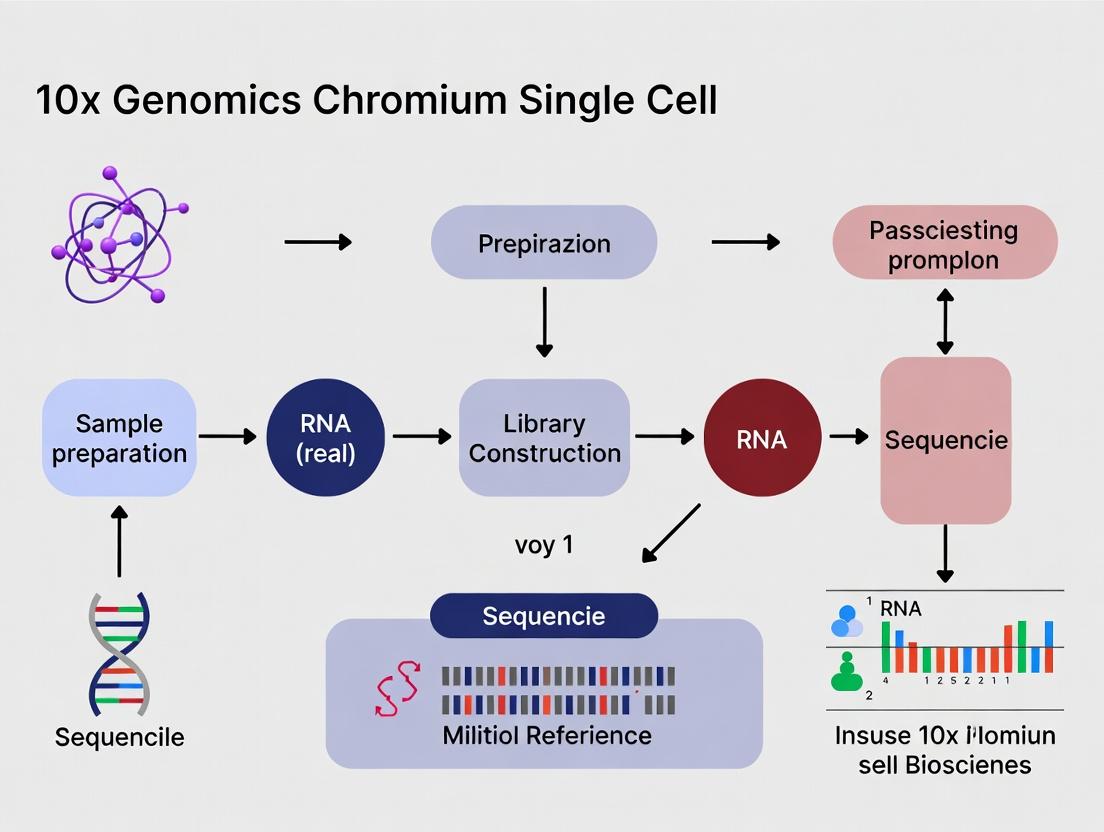
This comprehensive guide details the complete 10x Genomics Chromium Single Cell Gene Expression protocol, from foundational principles to advanced applications.
Mastering Single-Cell RNA-seq: A Step-by-Step Guide to the 10x Genomics Chromium Protocol for Researchers
Abstract
This comprehensive guide details the complete 10x Genomics Chromium Single Cell Gene Expression protocol, from foundational principles to advanced applications. Designed for researchers, scientists, and drug development professionals, it provides a methodical walkthrough of the experimental workflow, critical troubleshooting and optimization strategies, and a framework for data validation. The article covers cell preparation, library construction, sequencing, and data analysis, empowering users to generate high-quality single-cell data for groundbreaking discoveries in biomedical research.
Understanding Single-Cell RNA-seq: Core Principles of the 10x Genomics Chromium Platform
What is Single-Cell RNA Sequencing and Why Does Resolution Matter?
Single-cell RNA sequencing (scRNA-seq) is a high-resolution genomic technology that measures the transcriptome—the complete set of RNA transcripts—of individual cells. It enables researchers to characterize cellular heterogeneity, identify rare cell types, trace developmental lineages, and understand dynamic gene expression changes within complex tissues. In the context of 10x Genomics Chromium Single Cell protocols, this technology leverages microfluidic partitioning to capture thousands of individual cells in nanoliter-scale droplets, where each cell's RNA is uniquely barcoded for parallel sequencing.
Traditional bulk RNA sequencing averages gene expression across thousands to millions of cells, masking differences between individual cells. scRNA-seq overcomes this by isolating single cells, converting their RNA into complementary DNA (cDNA), and adding cell-specific barcodes during reverse transcription. This allows pooled sequencing of libraries from thousands of cells, with computational deconvolution to attribute sequences to their cell of origin. The resolution—the ability to distinguish distinct cellular states—matters profoundly because biological systems are composed of heterogeneous cell populations. High-resolution data is critical for discovering novel cell types, understanding tumor microenvironments, deciphering immune responses, and identifying specific drug targets.
Detailed Application Notes and Protocols within 10x Genomics Chromium Framework
Protocol 1: Single Cell 3' Gene Expression (v3.1/v4.0)
This protocol profiles the 3' ends of transcripts, capturing digital gene expression counts per cell.
Key Steps:
- Cell Preparation: Create a single-cell suspension with high viability (>90%) and target cell concentration (700-1,200 cells/µL). Use a viability dye and hemocytometer or automated cell counter. Filter through a 40µm flow cell strainer.
- Chip Loading & Partitioning: Load the cell suspension, Master Mix, and Gel Beads containing barcoded oligonucleotides (10x Barcodes, UMIs, poly-dT) into a 10x Genomics Chromium Chip. The Chromium Controller partitions each cell with a Gel Bead into a single oil droplet (GEM).
- Reverse Transcription (GEM-RT): Within each droplet, cells are lysed, and poly-adenylated RNA binds to the poly-dT on the Gel Bead. Reverse transcription occurs, producing cDNA tagged with the cell-specific barcode and a Unique Molecular Identifier (UMI).
- Post GEM-RT Cleanup & Amplification: Droplets are broken, and barcoded cDNA is purified using DynaBeads. The cDNA is then PCR-amplified.
- Library Construction: The amplified cDNA is fragmented, end-repaired, A-tailed, and ligated to sample index adapters via a second PCR. This creates a sequencing-ready library.
- Quality Control & Sequencing: Libraries are quantified (qPCR) and sized (Bioanalyzer). Pooled libraries are sequenced on an Illumina platform (e.g., NovaSeq) with recommended read lengths: Read 1 (28 cycles: 10x Barcode + UMI), i7 Index (10 cycles), and Read 2 (90 cycles: transcript).
Critical Parameters:
- Cell Viability: Low viability increases background from ambient RNA.
- Doublet Rate: Overloading cell concentration increases multiplets, confounding data.
- Sequencing Depth: Typically 20,000-50,000 reads per cell is recommended for mammalian cells.
Protocol 2: Single Cell Multiome ATAC + Gene Expression
This integrated protocol simultaneously assays gene expression and chromatin accessibility (ATAC-seq) from the same single nucleus.
Key Steps:
- Nuclei Isolation: Tissue is homogenized and lysed in a nuclei isolation buffer. Nuclei are filtered, counted, and adjusted to 1,700-2,500 nuclei/µL.
- Co-Partitioning: Nuclei are co-loaded with a Tn5 transposase-loaded Gel Bead and Gene Expression Gel Bead into the Chromium Chip.
- Tagmentation & GEM Generation: Within each GEM, the Tn5 enzyme simultaneously fragments accessible chromatin and adds a barcode/Adapter sequence. RNA also undergoes barcoded reverse transcription.
- Post GEM-RT Processing: After cleanup, the material is split for separate ATAC and Gene Expression library preparations.
- ATAC Library Prep: Fragments undergo PCR amplification using primers complementary to the added Adapter 1 sequence.
- Gene Expression Library Prep: Proceeds as in Protocol 1.
- Sequencing: Libraries are sequenced separately. Recommended depth is ~25,000 RNA reads and ~20,000 ATAC fragments per nucleus.
Key Advantage: Enables direct correlation of a cell's transcriptomic state with its open chromatin landscape, providing mechanistic insight into gene regulation.
Data Presentation: Quantitative Comparisons
Table 1: Comparison of 10x Genomics Chromium scRNA-seq Protocols
| Feature | 3' Gene Expression (v4.0) | 5' Gene Expression + V(D)J | Multiome (ATAC + GEX) | Fixed RNA Profiling |
|---|---|---|---|---|
| Target | 3' mRNA | 5' mRNA + Immune Receptor | mRNA + Accessible Chromatin | Pre-indexed Fixed RNA |
| Cells/Nuclei per Run | Up to 10,000 | Up to 10,000 | Up to 10,000 | Up to 1,000 - 10,000 |
| Recommended Reads/Cell | 20,000-50,000 | 20,000-50,000 (GEX) + 5,000 (V(D)J) | 25,000 (GEX) + 20,000 (ATAC) | 5,000-50,000 |
| Key Application | Cell typing, differential expression | Immune profiling, clonotype tracking | Regulatory network analysis | Archived/FFPE samples, spatial linking |
| Cell Input Viability | >90% | >90% | N/A (Uses nuclei) | N/A (Fixed cells) |
Table 2: Impact of Sequencing Depth on Data Resolution
| Reads per Cell | Estimated Genes/Cell | Key Outcome | Recommended For |
|---|---|---|---|
| 10,000 | 500-1,500 | Basic cell type classification | Large-scale atlas projects, abundant cell types |
| 20,000-50,000 | 1,500-3,000 | Standard resolution; robust DE analysis | Most research applications, intermediate heterogeneity |
| 50,000-100,000+ | 3,000-5,000+ | High resolution; rare transcript detection | Rare cell population analysis, subtle subtype discrimination |
Experimental Workflow Visualization
Workflow for Single-Cell RNA Sequencing
Core scRNA-seq Data Analysis Pipeline
The Scientist's Toolkit: Research Reagent Solutions
| Item | Function & Importance in 10x Protocol |
|---|---|
| Chromium Next GEM Chip K | Microfluidic chip for partitioning cells/nuclei with reagents into Gel Bead-in-Emulsions (GEMs). Different chip types scale to different cell numbers. |
| Single Cell 3' Gel Beads v4 | Beads containing millions of oligonucleotides with unique 10x Barcodes, UMIs, and poly-dT sequences for capturing mRNA. Core to cell identity assignment. |
| Chromium Controller | Instrument that performs microfluidic partitioning to generate GEMs with precisely one bead and one cell/nucleus per droplet. |
| DynaBeads MyOne SILANE | Magnetic beads used for post-GEM-RT cleanup to purify barcoded cDNA, removing enzymes, primers, and other reaction components. |
| SPRIselect Reagent Kit | Size-selective magnetic beads for post-amplification and post-library construction cleanup and size selection. |
| Dual Index Kit TT Set A | Provides unique i7 and i5 sample index primers for multiplexed sequencing of up to 96 libraries in a single run. |
| Cell Suspension Buffer | A protein-based buffer that maintains cell viability and integrity, preventing clumping and non-specific binding during loading. |
| Nuclei Isolation Kit | Essential for Multiome ATAC+GEX or any assay requiring nuclei, providing buffers for tissue dissociation and nuclei extraction/purification. |
| Targeted Gene Expression Panels | Pre-designed or custom panels for enriching reads from specific gene sets (e.g., CRISPR guides, oncology panels) to increase sensitivity and cost-efficiency. |
Within the broader thesis on 10x Genomics Chromium single-cell protocol steps research, understanding the core Gel Bead-in-Emulsion (GEM) technology is paramount. This platform enables high-throughput single-cell analysis by partitioning individual cells into nanoliter-scale droplets. This document provides detailed application notes and protocols centered on this technology for researchers, scientists, and drug development professionals.
GEM Technology: Core Mechanism and Quantitative Data
The Chromium System isolates single cells with barcoded gel beads in ~700,000 GEMs per run. Each GEM serves as an individual reaction vessel.
Table 1: Key Performance Metrics of the Chromium System (Current Generation)
| Parameter | Specification | Notes |
|---|---|---|
| Cell Throughput (Target) | 1 to 20,000 cells per lane | Adjustable via cell loading concentration. |
| Single-Cell Capture Efficiency | 50-65% | Varies by cell type and sample quality. |
| GEMs Generated per Channel | ~700,000 | Ensves low cell multiplet rates. |
| Estimated Multiplet Rate | <0.9% per 1,000 cells recovered | Rate increases with cells loaded. |
| Barcode Diversity | ~750,000 unique barcodes | On gel beads (Chromium Next GEM). |
| Partition Size | ~0.7 - 1.0 nL | Nanoliter-scale reaction volume. |
Detailed Protocol: Single-Cell Gene Expression (3’)
Materials and Reagent Setup
The Scientist's Toolkit: Key Research Reagent Solutions
| Item | Function |
|---|---|
| Chromium Next GEM Chip G | Microfluidic device for generating GEMs. |
| Chromium Next GEM Reagent Kits | Contains master mix, gel beads, partitioning oil. |
| Single Cell 3’ Gel Beads v3.1/v4 | Polyacrylamide beads with oligo barcodes (~750k unique). |
| RT & Amplification Enzymes | For reverse transcription and cDNA PCR. |
| DynaBeads MyOne SILANE | For post-RT cleanup of cDNA. |
| SPRIselect Reagent | For size selection and cleanup of amplified cDNA. |
| Chromium Controller | Instrument to perform microfluidic partitioning. |
Step-by-Step Workflow
Day 1: GEM Generation & Barcoding
Goal: Partition single cells with barcoded gel beads.
- Prepare Single-Cell Suspension: Viability >90%, concentration optimized for target cell recovery (e.g., 1000 cells/µL for 10,000 cells).
- Prepare Master Mix: Combine in a tube:
- RT Reagent Mix
- Single Cell 3’ Gel Beads
- Partitioning Oil (provided in kit).
- Load Chip: Pipette master mix, cell suspension, and partitioning oil into designated wells of the Chromium Next GEM Chip G.
- Run Chromium Controller: Place chip in the Controller. The instrument uses microfluidics to form ~700,000 oil-coated GEMs. Each GEM contains a gel bead, RT reagents, and, ideally, one cell.
- Incubate for RT: Transfer the GEMs to a PCR tube. Perform reverse transcription in a thermal cycler (53°C for 45 min, 85°C for 5 min). Within each GEM, the gel bead dissolves, releasing oligonucleotides containing:
- A 16bp 10x Barcode (shared by all transcripts from one cell).
- A 10bp Unique Molecular Identifier (UMI).
- A 30bp Poly-dT sequence for mRNA capture.
- Post-RT Cleanup: Break emulsions. Perform a cleanup using DynaBeads MyOne SILANE to recover barcoded cDNA.
Day 2: cDNA Amplification & Library Construction
Goal: Amplify cDNA and construct Illumina-compatible libraries.
- cDNA Amplification: Perform PCR on the cleaned-up cDNA to generate sufficient mass for library construction (number of cycles depends on cell count).
- cDNA Size Selection: Clean and size-select amplified cDNA using SPRIselect Reagent.
- End Repair, A-tailing & Adapter Ligation: Use enzymatic steps to add platform-specific adapters.
- Sample Index PCR: Perform a final PCR to add sample index sequences (i7 and i5) for multiplexing.
- Final Library Cleanup: Double-sided SPRI size selection to remove fragments <200bp and >700bp.
- QC: Assess library concentration (Qubit) and fragment size (Bioanalyzer/TapeStation). Expected average size: ~480bp.
Visualizing the GEM Workflow and Barcode Structure
Title: GEM Generation and Barcoding Process
Title: Oligo Barcode Structure and cDNA Synthesis
Application Notes for Protocol Optimization
- Cell Viability: Maintain >90% viability to minimize ambient RNA.
- Cell Concentration: Accurate quantification (e.g., with AO/PI staining on a Countess) is critical to target desired cell recovery and control multiplet rates.
- RT & PCR Cycles: Do not exceed recommended cycles to avoid skewing in transcript representation.
- SPRI Ratios: Adhere strictly to kit-specified SPRI bead-to-sample ratios for optimal size selection.
Application Notes
Single-cell RNA sequencing (scRNA-seq) using the 10x Genomics Chromium platform has revolutionized biomedical research by enabling high-throughput profiling of individual cells. This technology dissects cellular heterogeneity, identifies rare cell populations, and maps developmental trajectories across diverse fields.
Oncology
In oncology, scRNA-seq unravels tumor microenvironment complexity. It identifies distinct cancer cell subtypes, stromal cells, and immune infiltrates, enabling the study of drug resistance mechanisms and the discovery of novel therapeutic targets. Recent studies profiling over 50,000 cells from non-small cell lung carcinoma biopsies revealed 12 distinct immune and stromal cell populations, correlating specific macrophage subsets with poor patient prognosis.
Immunology
In immunology, the protocol is pivotal for defining immune repertoires and cell states. It has been used to catalogue novel dendritic cell and T cell subsets in human blood and tissues. A landmark study analyzing 500,000 peripheral blood mononuclear cells (PBMCs) from healthy donors established a reference map of over 30 immune cell types, serving as a baseline for disease studies.
Neuroscience
In neuroscience, scRNA-seq deciphers the immense cellular diversity of the brain. It has been employed to classify neuronal and glial subtypes in regions like the cortex and hippocampus. Analysis of 1.3 million mouse brain cells led to the identification of over 100 distinct neuronal subtypes, many previously uncharacterized, providing insights into brain development and function.
Table 1: Quantitative Data Summary from Key 10x Genomics Studies
| Research Field | Typical Cells Profiled per Sample | Key Cell Types/Clusters Identified | Common Differential Genes Detected | Reference Study Year |
|---|---|---|---|---|
| Oncology (NSCLC) | 5,000 - 50,000 | Malignant, T cells, Macrophages, Fibroblasts | PDCD1, CTLA4, CD274, MKI67 | 2023 |
| Immunology (PBMCs) | 10,000 - 100,000 | CD4+ T, CD8+ T, NK, B, Monocytes, DCs | IL7R, CD8A, GNLY, MS4A1, FCGR3A | 2024 |
| Neuroscience (Mouse Cortex) | 100,000 - 1,000,000 | Excitatory Neurons, Inhibitory Neurons, Astrocytes, Microglia | SLC17A7, GAD1, AQP4, P2RY12 | 2023 |
Detailed Experimental Protocol: 10x Genomics Chromium Single Cell 3' Gene Expression
This protocol is framed within a broader thesis on standardizing steps for reproducible multi-omics integration.
Part 1: Cell Preparation and Viability Assessment
Aim: To obtain a high-viability, single-cell suspension free of debris and clusters. Reagents: 1x PBS, Trypan Blue, appropriate tissue dissociation kit. Steps:
- Prepare single-cell suspension from tissue (mechanical/enzymatic dissociation) or culture.
- Filter suspension through a 40µm Flowmi cell strainer.
- Centrifuge at 300-400 RCF for 5 minutes at 4°C. Aspirate supernatant.
- Resuspend pellet in 1x PBS + 0.04% BSA. Count cells using an automated counter or hemocytometer.
- Assess viability via Trypan Blue exclusion. Target viability >80%.
- Adjust cell concentration to 700-1,200 cells/µl in 1x PBS + 0.04% BSA. Keep on ice.
Part 2: Chromium Chip B Loading and GEM Generation
Aim: To partition single cells with gel beads in oil emulsion (GEMs). Reagents: 10x Chromium Controller, Chip B, Single Cell 3' GEM Kit, Partitioning Oil. Steps:
- Thaw and mix all kit reagents. Briefly spin Master Mix and Enzyme.
- Load the Chromium Chip B:
- Wells 1 & 2: 50µl of Partitioning Oil.
- Well 3: 6.6µl of Master Mix, 2.4µl of Enzyme, and 35µl of cell suspension (targeting 10,000 cells).
- Well 4: 50µl of Partitioning Oil.
- Wells 5 & 6: 100µl of Partitioning Oil.
- Place the Chip into the 10x Chromium Controller and run the "Single Cell 3'" program.
Part 3: Post GEM-RT Cleanup and cDNA Amplification
Aim: To reverse transcribe RNA within GEMs, break emulsions, and amplify cDNA. Reagents: Recovery Agent, DynaBeads MyOne SILANE, SPRIselect Reagent. Steps:
- Transfer GEMs from the chip outlet into a 0.2ml PCR tube.
- Incubate in a thermal cycler: 53°C for 45 min, 85°C for 5 min, hold at 4°C.
- Add 100µl of Recovery Agent, mix, and incubate at room temp for 2 min.
- Centrifuge tube at 1000 RCF for 2 min. Transfer 100µl of aqueous phase to a new 1.5ml tube.
- Add 125µl of SPRIselect Reagent, mix, and incubate for 9 min.
- Place tube on a magnetic rack for 5 min. Remove and discard 225µl supernatant.
- Wash beads twice with 200µl of 80% ethanol. Air dry for 2 min.
- Elute cDNA in 42µl of Elution Buffer. Remove from magnet and incubate for 2 min.
- Place back on magnet, transfer 40µl of eluate to a new PCR tube.
- Amplify cDNA: Combine 40µl cDNA, 25µl Amplification Master Mix, 5µl Primer. Cycle: 98°C 3min; [98°C 15s, 63°C 20s, 72°C 1min] x 12 cycles; 72°C 1min.
Part 4: Library Construction and Indexing
Aim: To fragment, A-tail, adaptor ligate, and sample index the amplified cDNA. Reagents: Fragmentation Master Mix, SPRIselect Reagent, Dual Index Kit TT Set A. Steps:
- Clean up amplified cDNA with 0.6x SPRIselect beads. Elute in 50.5µl Elution Buffer.
- Fragmentation & A-tailing: Combine 50µl cDNA, 20µl Fragment Mix, 5µl Enzyme. Incubate: 32°C 5min, 65°C 30min, 4°C hold.
- Clean up with 0.6x SPRIselect beads. Elute in 26.5µl Elution Buffer.
- Ligation: Combine 25µl product, 2.5µl Ligation Mix, 2.5µl Enzyme. Incubate: 20°C 15min.
- Clean up with 0.8x SPRIselect beads. Elute in 26.5µl Elution Buffer.
- Sample Indexing PCR: Combine 25µl product, 5µl SI Primer, 5µl Dual Index, 15µl Master Mix. Cycle: 98°C 45s; [98°C 20s, 54°C 30s, 72°C 20s] x 14 cycles; 72°C 1min.
- Clean up with 0.8x SPRIselect beads. Elute in 35µl Elution Buffer.
- Assess library quality (fragment analyzer) and quantify (qPCR). Pool libraries equimolarly for sequencing on an Illumina NovaSeq (28x8x0x91 recommended).
Visualizations
Title: scRNA-seq Workflow in Oncology Research
Title: T Cell Differentiation & Exhaustion Pathways
The Scientist's Toolkit: Key Research Reagent Solutions
Table 2: Essential Materials for 10x Genomics Chromium Protocol
| Item | Function/Benefit | Key Consideration |
|---|---|---|
| Chromium Chip B | Microfluidic chip for partitioning cells into nanoliter-scale GEMs. | Single-use; ensure it's free of dust/debris before loading. |
| Single Cell 3' Gel Beads | Barcoded beads containing oligonucleotides with Illumina adapters, cell barcode, UMI, and poly(dT). | Store desiccated at -20°C; avoid repeated freeze-thaw. |
| Partitioning Oil | Creates stable, water-in-oil emulsions for individual GEM reactions. | Must be at room temp before use; avoid bubbles during loading. |
| SPRIselect Beads | Magnetic beads for size-selective cleanup of cDNA and libraries. | Ratio (0.6x, 0.8x) is critical for size selection and yield. |
| DynaBeads MyOne SILANE | Magnetic beads for post-GEM cleanup, binding cDNA. | Ensure thorough resuspension before use. |
| Recovery Agent | Breaks the oil emulsion after GEM-RT to recover aqueous phase. | Contains a destabilizing agent; add promptly post-cycler run. |
| Dual Index Kit TT Set A | Provides unique dual indices for multiplexing up to 96 samples. | Allows sample pooling; critical for tracking samples post-seq. |
| High Viability Cell Suspension | Starting material (>80% viability, single cells). | The most critical step; clumps and dead cells compromise data. |
Application Notes
This protocol details the end-to-end workflow for single-cell RNA sequencing (scRNA-seq) using the 10x Genomics Chromium platform, a cornerstone technology for high-throughput cellular profiling in immunology, oncology, and drug discovery research. The process partitions single cells into nanoliter-scale Gel Bead-in-Emulsions (GEMs) where cell lysis, barcoding, and reverse transcription occur, enabling the simultaneous analysis of transcriptomes from thousands of single cells. The following sections and protocols are framed within a broader thesis investigating optimization points within the 10x Genomics Chromium single-cell protocol to enhance data quality and cost-efficiency.
Table 1: 10x Genomics Chromium Platform Specifications and Performance Metrics
| Parameter | Chromium Next GEM Chip G | Chromium Next GEM Chip K |
|---|---|---|
| Target Cell Recovery | Up to 10,000 cells | Up to 20,000 cells |
| Recommended Cell Load | 6,500-16,500 cells | 13,000-26,000 cells |
| GEM Generation Rate | ~60,000 GEMs per channel | ~60,000 GEMs per channel |
| Single-Cell Multiplexing | 1 sample per channel (8 max per run) | 1 sample per channel (8 max per run) |
| Recommended Read Depth | 20,000-50,000 reads per cell | 20,000-50,000 reads per cell |
Table 2: cDNA and Library QC Metrics
| QC Assay | Target Range | Purpose |
|---|---|---|
| Cell Viability (via Trypan Blue) | >90% | Ensure high-quality input cell suspension |
| cDNA Yield (Qubit dsDNA HS Assay) | Chip G: 4-12 ng/µL; Chip K: 8-24 ng/µL | Confirm efficient RT and amplification |
| cDNA Fragment Size (Bioanalyzer) | Broad peak ~1.5-10 kb | Verify cDNA integrity and absence of primer dimers |
| Final Library Concentration (Qubit) | >2 nM | Ensure sufficient material for sequencing |
| Library Fragment Size (Bioanalyzer) | Peak ~400-500 bp | Confirm correct fragmentation and size selection |
Detailed Experimental Protocols
Protocol 1: Preparation of Single-Cell Suspension Objective: To obtain a viable, single-cell suspension free of debris and aggregates.
- Cell Harvesting: Dissociate tissue using appropriate enzymatic (e.g., collagenase) and mechanical dissociation methods. For cultured cells, use gentle detachment reagents.
- Washing: Pellet cells (300 x g, 5 min) and wash twice in ice-cold, nuclease-free 1x PBS containing 0.04% Ultrapure BSA.
- Filtration & Counting: Pass cell suspension through a pre-wet 40 µm Flowmi cell strainer. Count using an automated cell counter or hemocytometer with Trypan Blue.
- Resuspension: Pellet cells and resuspend in the appropriate 10x Genomics Cell Buffer (from the Chromium Next GEM Kit) at a target concentration of 700-1,200 cells/µL. Keep on ice.
Protocol 2: GEM Generation & Barcoding (Chromium Controller Run) Objective: To partition single cells with Gel Beads and reagents for reverse transcription.
- Chip Loading: Place a new Chromium Next GEM Chip G into the Chromium Controller tray.
- Pipetting: In order, add:
- 50 µL of Partitioning Oil to the well marked 'OIL'.
- 100 µL of the prepared cell suspension (from Protocol 1) to 'CELLS'.
- 40 µL of the Master Mix (from the Chromium Next GEM Kit) to 'GEM RT Mix'.
- 20 µL of the thawed Gel Beads to 'GEL BEADS'.
- Run: Close the lid and start the 'Chromium Run' program. The run generates ~60,000 barcoded GEMs in ~7 minutes.
Protocol 3: Post-GEM-RT Cleanup & cDNA Amplification Objective: To recover barcoded cDNA from GEMs and amplify it.
- Break GEMs: Transfer the GEMs from the chip's collection tube to a clean tube. Add Recovery Agent, mix, and incubate at room temperature for 2 minutes.
- Magnetic Bead Cleanup: Add Silane Beads, mix, and incubate off the magnet for 5 minutes. Place on a magnetic stand for 5 minutes until clear. Transfer the supernatant containing cDNA to a new tube.
- PCR Amplification: Add SPRIselect Reagent to the supernatant, incubate, and pellet on a magnet. Elute in Elution Buffer. Prepare the cDNA Amplification Mix and run PCR: 53°C for 45 min; 85°C for 5 min; hold at 4°C. Purify amplified cDNA with SPRIselect Reagent.
Protocol 4: Library Construction Objective: To fragment, end-repair, A-tail, adapter ligate, and sample index the amplified cDNA.
- Fragmentation, End-Repair & A-tailing: Combine purified cDNA with Fragmentation Buffer and enzyme. Incubate in a thermal cycler (32°C for 5 min, 65°C for 30 min, 4°C hold). Purify with SPRIselect Reagent.
- Double-Sided Size Selection: Perform a two-step SPRIselect size selection (0.6x and 0.8x ratios) to select fragments of desired size (~400-500 bp).
- Adapter Ligation & Sample Indexing: Ligate Chromium i7 Multiplex Kit adapters to the size-selected fragments. Perform a post-ligation cleanup with SPRIselect. Amplify the library via PCR with sample index primers.
- Final Library Cleanup: Perform a final double-sided size selection (0.6x and 0.8x) and elute in Elution Buffer. Quantify using Qubit and Bioanalyzer/TapeStation.
Mandatory Visualizations
Title: 10x Chromium Single Cell Workflow Overview
Title: Core Hardware and Reagent Components
The Scientist's Toolkit: Essential Research Reagent Solutions
Table 3: Key Reagents and Their Functions in the 10x Chromium Workflow
| Reagent / Material | Function in Protocol | Critical Notes |
|---|---|---|
| Chromium Next GEM Kit | Contains Gel Beads, Partitioning Oil, Master Mix, buffers for GEM generation and RT. | Kit version must match controller and chip. Keep Gel Beads protected from light. |
| Cell Buffer (0.04% BSA) | Resuspension buffer for input cells. Maintains cell viability and prevents adhesion. | Must be nuclease-free. Prepare fresh or use single-use aliquots. |
| Recovery Agent | Breaks GEM droplets post-RT to release barcoded cDNA into aqueous solution. | Critical for efficient cDNA recovery. Handle in a fume hood. |
| Silane Beads | Magnetic beads for post-GEM cleanup. Remove unwanted components (oil, debris). | Do not vortex. Ensure thorough mixing by pipetting. |
| SPRIselect Reagents | Magnetic beads for size-selective purification (cDNA cleanup, size selection). | Ratios (0.6x, 0.8x, etc.) are critical for fragment selection. |
| Chromium i7 Multiplex Kit | Contains unique dual index adapters for sample multiplexing. | Allows pooling of libraries. Accurate indexing is crucial for demultiplexing. |
Within a broader thesis investigating the 10x Genomics Chromium Single Cell protocol, rigorous experimental design is paramount. This document outlines critical considerations for defining research goals, determining sample and cell numbers, and optimizing sequencing depth to ensure robust, interpretable data for researchers, scientists, and drug development professionals.
Defining Experimental Goals
Clarifying the primary objective dictates all subsequent design choices. Goals must be specific, measurable, and aligned with the capabilities of single-cell RNA sequencing (scRNA-seq).
Key Goal Categories & Design Implications
| Primary Goal | Key Design Implications | Typical 10x Chromium Assay |
|---|---|---|
| Discovery & Atlas Building | Broad cell type cataloging; minimize batch effects. | 3’ Gene Expression v3/v4 |
| Differential Expression (Within/Between) | Sufficient biological replicates; balanced design. | 3’ Gene Expression, Fixed RNA Profiling |
| Trajectory Inference (Development, Differentiation) | Dense time-series sampling; high cell recovery. | 3’ Gene Expression, Multiome (ATAC + GEX) |
| Immune Repertoire Profiling | Paired V(D)J and Gene Expression libraries. | 5’ Gene Expression with V(D)J |
| Spatial Context Integration | Region-of-interest guidance for dissociation. | 3’ Gene Expression + Visium/ Xenium |
Determining Sample and Cell Numbers
Accurate powering of an experiment requires justification of both biological replicates (samples) and the number of cells per sample.
Sample Number (Biological Replicates)
Replicates are essential for statistical generalization. The minimum number is influenced by variability and effect size.
| Experimental Context | Recommended Minimum Biological Replicates (per condition) | Rationale |
|---|---|---|
| Inbred Model Systems (low variability) | n = 3 - 4 | Controls for technical noise and minor biological variance. |
| Outbred Populations or Human Samples (high variability) | n = 5 - 8 | Accounts for greater genetic and environmental heterogeneity. |
| Pilot Studies | n = 2 - 3 | Used for initial hypothesis generation and variability estimation. |
Protocol: Calculating Sample Number via Power Analysis
- Define Effect Size: Estimate the minimum log2 fold change in gene expression you aim to detect (e.g., 1.5-fold change = ~0.58 log2FC).
- Estimate Variance: Use data from pilot studies or public datasets for similar tissues to estimate the mean-variance relationship.
- Set Statistical Thresholds: Typically, power (1-β) = 0.8, alpha (α) = 0.05.
- Utilize Tools: Perform calculation using specialized packages (e.g.,
scPowerin R) that model scRNA-seq count distributions.- Method: Input estimated parameters (cells per sample, genes per cell, read depth, dropout rate, effect size, desired power). The tool outputs the required number of samples.
Cell Number per Sample
The target cell number depends on the complexity of the tissue and the rarity of the cell population of interest.
| Tissue/Cell System Complexity | Recommended Cells to Load (for 10k recovery) | Target Recovered Cells per Sample | Justification |
|---|---|---|---|
| Homogeneous (Cell Lines, Sorted Populations) | 12,000 - 16,000 | 5,000 - 10,000 | Focus on transcriptional heterogeneity, not type discovery. |
| Moderately Complex (Blood, Spleen) | 16,000 - 20,000 | 10,000 - 15,000 | Capture major and intermediate abundance types. |
| Highly Complex (Brain, Tumor Microenvironment) | 20,000 - 30,000+ | 15,000 - 30,000+ | Ensure detection of rare cell states (<1% abundance). |
Protocol: Estimating Required Cells for Rare Population Detection
- Define Rarity: Identify the approximate expected frequency (p) of the rare cell population (e.g., 0.5% = 0.005).
- Set Probability Threshold: Choose the desired probability (P) of capturing at least N cells of this type (e.g., P=0.95).
- Apply Binomial/Poisson Approximation: Use the formula
N_cells_total ≈ -ln(1 - P) / p.- Example: For p=0.005 and P=0.95:
N ≈ -ln(1-0.95)/0.005 ≈ -ln(0.05)/0.005 ≈ 3.0/0.005 = 600 cells. - Interpretation: You need to recover at least 600 total cells to be 95% confident of capturing at least one cell of the 0.5% population. To characterize the population, aim for 50-100 cells of that type, requiring 10,000-20,000 total recovered cells.
- Example: For p=0.005 and P=0.95:
Optimizing Sequencing Depth
Sequencing depth must be balanced against cost and is determined by the need to sensitively detect genes per cell.
Quantitative Guidelines for 10x 3' Gene Expression
| Application Focus | Recommended Reads per Cell | Target Median Genes per Cell (UEI) | Saturation |
|---|---|---|---|
| Cell Type Identification & Atlas | 20,000 - 30,000 | 1,500 - 2,500 | >50% |
| Differential Expression (Abundant Types) | 30,000 - 50,000 | 2,500 - 4,000 | >70% |
| Differential Expression (Rare Types) | 50,000 - 70,000+ | 3,500 - 5,000+ | >80% |
| Splicing or Lowly Expressed Gene Focus | 70,000 - 100,000+ | 4,000 - 6,000+ | >90% |
Protocol: Conducting a Sequencing Saturation Analysis
- Sequence a Pilot Lane: Sequence one library at high depth (e.g., 100,000 reads/cell).
- Subsample Reads: Use the
Cell Rangercountorreanalyzepipeline to generate downsampled datasets (e.g., at 10k, 20k, 50k reads/cell intervals). - Plot Genes vs. Reads: For each subsample depth, plot the median genes detected per cell (or unique molecular identifier (UMI) counts).
- Identify Knee Point: The point where the curve begins to plateau indicates the cost-effective optimal sequencing depth for your specific sample type.
The Scientist's Toolkit: Key Research Reagent Solutions
| Reagent / Material | Function in 10x Chromium Workflow |
|---|---|
| Chromium Next GEM Chip G | Microfluidic device for partitioning cells/nuclei into nanoliter-scale Gel Bead-In-EMulsions (GEMs). |
| Single Cell 3' v4 or 5' v2 Gel Beads | Barcoded beads containing oligonucleotides with unique cell barcode, UMI, and poly(dT) or V(D)J primers. |
| Partitioning Oil | Immiscible oil used to flow cells and beads into the Chip G for GEM generation. |
| RT Enzyme & Mix | Master mix for reverse transcription within each GEM, generating barcoded cDNA. |
| Silane Magnetic Beads | For post-GEM cleanup, removing leftover biochemical reagents and oil. |
| DynaBeads MyOne SILANE | Alternative solid-phase reversible immobilization (SPRI) beads for cDNA and library purification. |
| SPRIselect Reagent Kit | For size selection and clean-up of final libraries before sequencing. |
| Chromium i7 Multiplex Kit | Adds sample indices (i7) during library construction for pooling multiple libraries. |
| Dual Index Kit TT Set A | (For NovaSeq 6000) Provides unique dual indices (i7 and i5) for enhanced sample multiplexing. |
Visualizations
Single Cell Experimental Design Workflow
Trade-offs in Cell Number and Sequencing Depth
Executing the Chromium Protocol: A Detailed Step-by-Step Experimental Guide
Within the 10x Genomics Chromium single-cell workflow, the generation of a high-viability, intact single-cell suspension is the most critical pre-analytical step. The success of downstream processes—including cell partitioning, barcoding, and library preparation—is entirely contingent on the initial sample quality. This protocol details standardized methodologies for diverse sample types, emphasizing viability preservation and the prevention of artifactual gene expression.
Key Parameters for a Viable Suspension
The table below summarizes the target quantitative metrics for a sample ready for loading onto the 10x Chromium controller.
Table 1: Target Specifications for Single-Cell Suspensions
| Parameter | Optimal Target | Acceptable Range | Measurement Method |
|---|---|---|---|
| Cell Viability | >90% | ≥80% | Trypan Blue, AO/PI Staining |
| Cell Concentration | 700-1,200 cells/µL | 500-2,000 cells/µL | Automated Cell Counter |
| Debris/Doublet Level | Minimal | <10% of total events | Flow Cytometry, Microscopy |
| Cell Size | Compatible with 10x chip (≤40µm) | -- | Size-calibrated beads |
| Buffer | 1x PBS + 0.04% BSA | DPBS, 1x HBSS + BSA | -- |
Detailed Protocols for Major Sample Types
Protocol 1: Fresh Mouse Spleen Tissue Dissociation
Objective: Isolate live immune cells with minimal stress-induced transcriptional changes.
Materials & Reagents:
- Cold 1x PBS + 0.04% BSA
- GentleMACS Octo Dissociator (or manual method)
- Pre-warmed RPMI 1640 with 5% FBS
- Collagenase IV (1 mg/mL) and DNase I (0.1 mg/mL) in RPMI
- 70µm and 40µm sterile cell strainers
- Pre-chilled centrifuge.
Methodology:
- Tissue Harvest & Mincing: Euthanize mouse per IACUC protocol. Harvest spleen into cold PBS+BSA on ice. Using sterile scalpels, mince tissue into ~1mm³ pieces in a petri dish.
- Enzymatic Digestion: Transfer pieces to a C-tube containing 5 mL of pre-warmed enzyme solution (Collagenase IV + DNase I). Attach to GentleMACS and run the pre-programmed "mspleen01" protocol (approx. 30-37°C for 30 min).
- Mechanical Dissociation & Filtration: Following enzymatic digestion, run the "mspleen02" program for final dissociation. Pass the resulting slurry through a 70µm strainer into a 50mL tube. Rinse with 10mL of cold PBS+BSA.
- RBC Lysis (Optional): If erythrocytes are present, resuspend pellet in 2mL of ACK lysing buffer for 2 minutes on ice. Quench with 10mL PBS+BSA.
- Debris Removal & Final Wash: Pass suspension through a 40µm strainer. Centrifuge at 300-400 x g for 5 min at 4°C. Resuspend pellet in 1mL cold PBS+BSA.
- Assessment: Count cells and assess viability using AO/PI staining on an automated cell counter. Adjust concentration to target 1,000 cells/µL. Keep on ice until loading.
Protocol 2: Cultured Adherent Cell Lines (e.g., HEK293)
Objective: Detach cells gently while preserving membrane integrity and minimizing stress response.
Materials & Reagents:
- Pre-warmed 1x PBS (Ca²⁺/Mg²⁺-free)
- Pre-warmed 0.25% Trypsin-EDTA or non-enzymatic dissociation buffer (e.g., Enzyme-free Cell Dissociation Buffer)
- Complete growth medium (with serum)
- Centrifuge.
Methodology:
- Preparation: Culture cells to ~80% confluency in a T-75 flask.
- Wash: Aspirate medium and gently rinse monolayer with 5 mL pre-warmed PBS to remove serum and debris.
- Detachment: Add 3 mL of pre-warmed non-enzymatic dissociation buffer. Incubate at 37°C for 5-10 minutes, monitoring detachment under a microscope.
- Neutralization: Gently tap flask. Once cells detach, add 7 mL of complete growth medium to neutralize.
- Quenching & Collection: Pipette suspension over the surface to ensure complete detachment. Transfer to a 15mL conical tube.
- Wash & Resuspension: Centrifuge at 300 x g for 5 min. Aspirate supernatant and gently resuspend pellet in 1mL of cold PBS+BSA. Avoid vortexing; use wide-bore pipette tips.
- Assessment: Count and assess viability. Pellet and resuspend in PBS+BSA at target concentration. Keep on ice.
Protocol 3: Cryopreserved PBMC Thawing
Objective: Recover maximal viable cell count with minimal clumping.
Materials & Reagents:
- Pre-warmed complete RPMI (10% FBS)
- Cold PBS+BSA
- Benzonase Nuclease (optional, for reducing DNA-mediated clumping)
- Water bath (37°C).
Methodology:
- Rapid Thaw: Remove vial from liquid nitrogen and immediately place in a 37°C water bath until only a small ice crystal remains (~2 min).
- Dilution: Transfer cell suspension drop-wise into 10 mL of pre-warmed complete RPMI in a 15mL tube.
- Centrifugation: Centrifuge at 300 x g for 5 min at room temperature.
- DNase Treatment (if clumpy): Aspirate supernatant. Resuspend pellet gently in 1mL of pre-warmed RPMI containing 25 U/mL Benzonase. Incubate for 10 min at 37°C.
- Final Wash: Add 10mL cold PBS+BSA, centrifuge at 300 x g for 5 min at 4°C.
- Resuspension & Filtration: Resuspend in 1mL cold PBS+BSA. Pass through a 40µm flow cytometry strainer cap.
- Assessment: Count and assess viability. Adjust concentration. Keep on ice.
The Scientist's Toolkit: Essential Reagents & Materials
Table 2: Key Research Reagent Solutions for Single-Cell Preparation
| Item | Function & Rationale |
|---|---|
| Phosphate-Buffered Saline + 0.04% BSA | Standard wash and resuspension buffer. BSA reduces non-specific cell adhesion to tubes and tips. |
| Collagenase IV | Enzyme for gentle tissue dissociation; cleaves collagen in extracellular matrix without damaging cell surface epitopes. |
| DNase I | Degrades free DNA released from dead cells, reducing viscosity and cell aggregation (stickiness). |
| Non-enzymatic Dissociation Buffer | For adherent cells; uses chelating agents to disrupt cell-surface bonds, preserving receptor integrity better than trypsin. |
| Benzonase Nuclease | Broad-spectrum nuclease effective on both DNA and RNA; crucial for reducing clumps in thawed or fragile samples. |
| Viability Dye (AO/PI) | Acridine Orange (AO) stains all nuclei; Propidium Iodide (PI) stains nuclei of dead cells. Allows precise live/dead counts. |
| 40µm Nylon Cell Strainer | Final filtration step to remove residual aggregates and ensure a true single-cell suspension before loading. |
Visualizing the Workflow & Critical Checkpoints
Workflow & QC for Single-Cell Suspension Prep
Impact of Poor Sample Prep on Data
Within the broader thesis on the 10x Genomics Chromium Single Cell Protocol, Stage 2 is the pivotal microfluidic step where cells, reagents, and barcodes are co-partitioned into Gel Beads-in-emulsion (GEMs). This step uniquely labels each cell's transcriptome with a cell-specific barcode, enabling massively parallel single-cell RNA sequencing. This application note details the protocol and critical parameters for successful chip loading and GEM generation.
Quantitative Parameters for GEM Generation
The following table summarizes the core quantitative specifications for the Chromium Chip and GEM generation.
Table 1: Key Specifications for Chromium Chip and GEM Generation
| Parameter | Specification | Notes |
|---|---|---|
| Target Cell Recovery | 65% (Standard) | Varies by cell type, viability, and input concentration. |
| Number of Partitions (GEMs) | ~100,000 per channel | Actual number of barcoded, cell-containing GEMs is lower. |
| Partition Size | ~1 nL | Nanoscale reaction vessel for reverse transcription. |
| Cell Input Range (Single Channel) | 500 - 10,000 cells | Optimal recovery at 5,000-10,000 cells. |
| Cell Suspension Volume Loaded | 65 µL | Mixed with Master Mix. |
| Gel Bead Suspension Volume | 35 µL | Contains ~3.3 million barcoded beads per channel. |
| Partitioning Oil Volume | 200 µL | Forms stable, water-in-oil emulsions. |
| Target Cell Multiplexing | 1-10 cells per GEM (Poisson distribution) | Aim for ≤10% multiplet rate at optimal loading. |
Table 2: Reagent Volumes per Single Channel (Single Sample)
| Reagent | Volume (µL) |
|---|---|
| Cell Suspension | 65 |
| Master Mix | 20 |
| Gel Bead Suspension | 35 |
| Partitioning Oil | 200 |
Detailed Experimental Protocol
Pre-Run Preparation
- Equipment & Reagent Setup:
- Thaw the 10x Genomics Single Cell 3' v3.1/v4 Master Mix, cDNA Additive, and Partitioning Oil on ice. Vortex and centrifuge briefly.
- Warm the Chromium Chip (Next GEM Chip) to room temperature for at least 30 minutes.
- Prepare the cell suspension in 1x PBS + 0.04% BSA. Filter through a 35 µm cell strainer cap. Keep on ice. Confirm viability (>90%) and count.
- Prepare the Gel Bead suspension by vortexing the vial for 30 seconds, then centrifuging briefly.
- Set the Chromium Controller to the correct protocol (e.g., "Single Cell 3' v3.1/v4").
Chip Loading Procedure
- Prepare Reaction Mix: In a 0.2 mL PCR tube, combine 65 µL of prepared cell suspension with 20 µL of Master Mix. Mix by pipetting up and down 10 times. Do not vortex.
- Load the Chip:
- Place the Chromium Chip into the appropriate chip holder.
- Pipette 35 µL of vortexed Gel Bead suspension into the well marked ● (Gel Beads).
- Pipette 85 µL of the prepared cell + Master Mix into the adjacent well marked ▲ (Cells).
- Pipette 200 µL of Partitioning Oil into the well marked (Oil).
- Ensure no air bubbles are introduced into the bottom of the wells.
- Run the Chip on the Chromium Controller:
- Seal the chip with the gasket and run it in the pre-programmed Chromium Controller.
- The controller uses positive displacement pressure to precisely combine the three lanes (Gel Beads, Cell/Master Mix, Oil) at the microfluidic junction, generating up to 100,000 barcoded GEMs per channel.
- The run is complete when the oil has passed through and the waste chamber is full (~7 minutes).
Post-Partitioning Recovery
- Carefully open the chip holder. The GEMs are now contained in the outlet reservoir.
- Using a P200 pipette with wide-bore tips, gently aspirate the GEM suspension (~120-150 µL) from the outlet. Avoid pipetting any oil layer or debris from the chip surface.
- Transfer the GEMs to a 0.2 mL PCR strip tube for the subsequent reverse transcription (Stage 3) incubation.
The Scientist's Toolkit: Essential Research Reagent Solutions
Table 3: Key Research Reagent Solutions for GEM Generation
| Item | Function | Critical Notes |
|---|---|---|
| Chromium Next GEM Chip | Microfluidic device with precise channels to combine cells, beads, and oil. | Single-use. Must be at room temperature before loading. |
| Single Cell 3' Gel Beads | Barcoded hydrogel beads containing primers with Illumina adapters, cell barcode, UMI, and poly(dT). | Store at 4°C. Vortex thoroughly to resuspend. |
| Single Cell 3' v4/v3.1 Master Mix | Contains reverse transcriptase, nucleotides, and buffers for in-GEM RT. | Contains DTT. Thaw on ice, vortex, and spin. |
| Partitioning Oil | Fluorinated oil to create stable, water-in-oil emulsions (GEMs). | Viscous. Pipette slowly. Ensure no bubbles. |
| Chromium Controller | Automated instrument to apply pressure and run the microfluidic protocol. | Must be calibrated and have valid service contract. |
| Nuclease-Free Water | For diluting Master Mix or preparing cell suspension. | Essential for preventing RNA degradation. |
| 1x PBS + 0.04% BSA | Cell suspension buffer. BSA reduces non-specific cell adhesion. | Filter sterilize. Do not use media with calcium/magnesium. |
| 35 µm Cell Strainer | Removes cell clumps to prevent microfluidic clogging. | Critical step for high cell recovery. |
Visualization of GEM Generation Workflow
Title: Chip to GEM Workflow
Title: Composition of a Single GEM
Within the broader thesis on 10x Genomics Chromium Single Cell Protocol, Stage 3 is pivotal for converting captured mRNA into sequencer-ready, barcoded cDNA libraries. This phase follows cell partitioning and lysis, and involves reverse transcription (RT) to synthesize first-strand cDNA, followed by enzymatic amplification to generate sufficient material for library construction. Each cDNA molecule is tagged with a cell-specific barcode and a unique molecular identifier (UMI), enabling high-throughput multiplexing and accurate digital gene expression quantification.
Table 1: Critical Parameters for Reverse Transcription & cDNA Amplification
| Parameter | Typical Value or Specification | Purpose/Rationale |
|---|---|---|
| Reverse Transcription Incubation | 90 minutes at 53°C | Optimized for template-switching efficiency and cDNA yield. |
| cDNA Amplification Cycles | 12-14 cycles (PCR) | Minimizes amplification bias while generating sufficient yield (ng/µL). |
| Expected cDNA Yield | 5-20 ng/µL total cDNA | Post-amplification concentration, varies by cell number and type. |
| UMI Base Composition | 12 random nucleotides | Allows for ~4.7x10^14 unique combinations, enabling precise molecule counting. |
| Cell Barcode Length | 16 nucleotides (GEM Barcode) | Enables multiplexing of up to tens of thousands of cells per lane. |
| Template-Switching Oligo (TSO) | 5'-AAGCAGTGGTATCAACGCAGAGTACATGGG-3' | Facilitates strand switching and addition of universal primer sequence. |
Detailed Protocols
Protocol 1: Reverse Transcription in Gel Bead-in-Emulsion (GEMs)
Objective: To synthesize first-strand cDNA within each droplet, incorporating cell barcode and UMI.
- Post-Partitioning Recovery: Transfer the amplified GEMs from the Chromium Chip to a 0.2 mL PCR tube.
- RT Reaction Setup: The reaction occurs within the droplet. Key components include:
- Gel Bead-derived oligos: Containing Illumina R1 sequence, 16nt Cell Barcode, 12nt UMI, and 30nt poly(dT) sequence.
- dNTPs, Reverse Transcriptase, and Template-Switching Oligo (TSO).
- Thermal Cycler Program:
- Incubate: 53°C for 90 minutes.
- Hold: 85°C for 5 minutes (enzyme inactivation).
- Hold: 4°C.
- Post-RT Cleanup: Break emulsions using Recovery Agent. Clean up cDNA with DynaBeads MyOne SILANE beads to remove enzymes, primers, and oil. Elute in Tris buffer.
Protocol 2: cDNA Amplification via PCR
Objective: To amplify barcoded cDNA for subsequent library construction.
- PCR Reaction Assembly: Combine cleaned-up first-strand cDNA with PCR Master Mix containing:
- SMART PCR Primer: Binds to the universal sequence added by TSO.
- High-fidelity DNA polymerase.
- Thermal Cycler Program:
- Denature: 98°C for 3 minutes.
- Amplify (Cycle 12-14x):
- 98°C for 15 seconds (denaturation)
- 67°C for 20 seconds (annealing)
- 72°C for 1 minute (extension)
- Final Extension: 72°C for 1 minute.
- Hold: 4°C.
- Post-Amplification Cleanup: Purify amplified cDNA using SPRIselect beads. Perform a double-sided size selection (0.6x and 0.8x bead-to-sample ratios) to remove primer dimers and large artifacts. Elute in Tris buffer.
- Quality Control: Quantify cDNA yield using a fluorescence-based assay (e.g., Qubit dsDNA HS Assay). Assess size distribution via a Bioanalyzer or TapeStation (expected broad smear from 0.5-10 kb).
Visualizing the Workflow and Chemistry
Diagram 1: RT & cDNA Amplification Workflow (76 chars)
Diagram 2: Template-Switching Mechanism (69 chars)
The Scientist's Toolkit: Research Reagent Solutions
Table 2: Essential Reagents for Stage 3
| Item | Function in the Protocol |
|---|---|
| Chromium Next GEM Chip & GEM Kit | Contains microfluidic chips and Gel Beads for partitioning. Each bead is conjugated with barcoded oligos. |
| Chromium Reverse Transcription Reagents | Includes the optimized Master Mix with reverse transcriptase and nucleotides for cDNA synthesis within GEMs. |
| Template-Switching Oligo (TSO) | Enables the addition of a universal primer binding site to the 5' end of cDNA, independent of the mRNA sequence. |
| SPRIselect Beads | Used for post-RT and post-PCR cleanups. Facilitates size selection and buffer exchange via solid-phase reversible immobilization. |
| Recovery Agent | A destabilizing agent used to break the oil emulsion (GEMs) after RT, allowing recovery of aqueous cDNA products. |
| DynaBeads MyOne SILANE | Magnetic beads used for the initial post-RT cleanup to remove enzymes, salts, and other contaminants. |
| SMART PCR Primers | Universal primers complementary to the sequence added by the TSO, used to amplify all cDNA molecules uniformly. |
| High-Fidelity DNA Polymerase | Used for cDNA amplification to minimize errors introduced during PCR, preserving sequence fidelity. |
Application Notes
Within the 10x Genomics Chromium Single Cell protocol, Stage 4 is the final wet-lab step where barcoded cDNA is converted into sequencer-ready libraries. This involves targeted fragmentation of the cDNA, attachment of sequencing adapters and sample indices, and PCR amplification. The process is designed to preserve the cell-specific barcode and UMI information while generating Illumina-compatible libraries. Rigorous quality control is critical to ensure library complexity, appropriate size distribution, and the absence of contamination before high-throughput sequencing.
Protocols and Methodologies
Protocol 1: cDNA Fragmentation and End-Repair
This protocol fragments the full-length cDNA into optimal lengths for Illumina sequencing while preparing the ends for adapter ligation.
Materials:
- Fragmentation Buffer (10x Genomics)
- Fragmentation Enzyme (10x Genomics)
- End Repair Mix (10x Genomics)
- Purification Beads (SPRIselect)
Method:
- Fragmentation: Combine up to 50 µL of amplified cDNA with 50 µL of Fragmentation Buffer and 25 µL of Fragmentation Enzyme in a 0.2 mL tube. Mix thoroughly by pipetting.
- Incubate in a thermal cycler at 32°C for 5 minutes, then hold at 4°C.
- End-Repair: Immediately add 50 µL of End Repair Mix to the fragmentation reaction. Mix thoroughly.
- Incubate in a thermal cycler at 65°C for 30 minutes, then hold at 4°C.
- Purification: Add 250 µL of Purification Beads to the 175 µL reaction. Follow manufacturer's instructions for double-sided size selection to remove fragments < 200 bp and > 700 bp. Elute in 42.5 µL of Elution Buffer.
Protocol 2: Sample Indexing and Adapter Ligation
This step attaches dual indices (i7 and i5) and P5/P7 flow cell binding sequences, uniquely tagging each sample library.
Materials:
- A-tailing Mix (10x Genomics)
- Ligation Mix (10x Genomics)
- Dual Index Kit TT Set A (10x Genomics)
- Stop Ligation Buffer (10x Genomics)
- Purification Beads
Method:
- A-tailing: Add 12.5 µL of A-tailing Mix to the 42.5 µL purified end-repaired DNA. Incubate at 37°C for 30 minutes, then 70°C for 5 minutes. Hold at 4°C.
- Ligation: To the A-tailed product, add 25 µL of Ligation Mix and 2.5 µL of a uniquely selected Dual Index (containing both i7 and i5 adapters). Mix thoroughly.
- Incubate at 20°C for 15 minutes.
- Reaction Stop: Add 25 µL of Stop Ligation Buffer and mix.
- Purification: Add 125 µL of Purification Beads. Perform a double-sided size selection (remove < 200 bp, > 700 bp). Elute in 35 µL of Elution Buffer.
Protocol 3: Library Amplification and Final Cleanup
A limited-cycle PCR enriches for library fragments with correctly attached adapters and amplifies material for sequencing.
Materials:
- SI-PCR Primer (10x Genomics)
- PCR Mix (10x Genomics)
- Purification Beads
Method:
- Combine the 35 µL ligated product with 5 µL SI-PCR Primer and 10 µL PCR Mix.
- Amplify in a thermal cycler using the following program:
- 98°C for 45s
- 14 cycles: [98°C for 20s, 54°C for 30s, 72°C for 20s]
- 72°C for 1 min
- Hold at 4°C
- Purification: Add 50 µL of Purification Beads for a single-sided cleanup (remove fragments < 200 bp). Elute in 35 µL of Elution Buffer. This is the final single cell library.
Protocol 4: Library Quality Control
Critical QC ensures library integrity before expensive sequencing.
Materials:
- Bioanalyzer High Sensitivity DNA kit (Agilent) or TapeStation D1000/High Sensitivity D1000 (Agilent)
- Qubit dsDNA HS Assay Kit (Thermo Fisher)
- qPCR Kit for Library Quantification (e.g., Kapa Biosystems)
Method:
- Concentration: Quantify library using Qubit (ng/µL) and qPCR (nM). qPCR is required for accurate molarity of amplifiable fragments.
- Size Distribution: Analyze 1 µL of library on a Bioanalyzer or TapeStation. The expected profile is a broad peak centered around ~450-550 bp.
- Acceptance Criteria:
- Yield: > 50 nM total library.
- Size: Primary peak within expected range, minimal adapter dimer (~128 bp) or high molecular weight contamination.
- Molarity Concordance: Qubit and qPCR values should be broadly consistent; large discrepancies indicate issues.
Data Presentation
Table 1: Key Quantitative Metrics for Library QC
| Metric | Target Range | Measurement Method | Significance |
|---|---|---|---|
| Library Concentration | > 4 nM for sequencing | qPCR (Kapa/SYBR) | Ensures sufficient loading concentration. |
| Total Library Yield | > 50 nM | Qubit / qPCR | Indicates successful amplification & recovery. |
| Average Fragment Size | 450 - 550 bp | Bioanalyzer / TapeStation | Confirms correct fragmentation and size selection. |
| Adapter Dimer Presence | < 5% of total area | Bioanalyzer / TapeStation | High levels reduce sequencing efficiency. |
Table 2: Reagent Solutions for Stage 4
| Reagent/Kit | Vendor (Example) | Function in Protocol |
|---|---|---|
| Chromium Single Cell 3' Library Kit | 10x Genomics | Contains all enzymes & buffers for fragmentation, A-tailing, ligation. |
| Dual Index Kit TT Set A | 10x Genomics | Provides unique combinatorial indices for sample multiplexing. |
| SPRIselect Beads | Beckman Coulter | For size selection and purification after enzymatic reactions. |
| Qubit dsDNA HS Assay | Thermo Fisher | Fluorometric quantification of double-stranded library DNA. |
| Kapa Library Quant Kit | Roche | qPCR-based quantification of amplifiable library fragments. |
| High Sensitivity DNA Kit | Agilent | Capillary electrophoresis for precise library size profiling. |
Visualizations
Title: Stage 4 Library Construction Workflow
Title: Final Library Structure with Adapters and Indices
Application Notes: Platform Selection Criteria
Selecting the appropriate sequencing platform and configuring read parameters are critical determinants of data quality, cost, and experimental success in single-cell RNA-seq (scRNA-seq) using the 10x Genomics Chromium system. The choice impacts gene detection sensitivity, cell multiplexing capability, and the ability to interrogate specific genomic features.
| Platform | Key Attribute | Max Read Length | Output per Flow Cell | Optimal for 10x Chemistry | Primary Consideration |
|---|---|---|---|---|---|
| Illumina NovaSeq 6000 | High-Throughput | 2x 150 bp | Up to 3.2B reads (S4) | 3' v3.1, 5', ATAC, Multiome | Large-scale projects (>20k cells) |
| Illumina NextSeq 1000/2000 | Mid-Throughput | 2x 150 bp | Up to 1.2B reads (P3) | 3' v3.1, 5', ATAC, Immune Profiling | Medium-scale projects (1k-20k cells) |
| Illumina MiSeq | Low-Throughput | 2x 300 bp | Up to 50M reads | Library QC, Small Pilot Studies | Read length for V(D)J (600 cycle kit) |
| Illumina iSeq 100 | Entry-Level | 2x 150 bp | Up to 4M reads | Ultra-small pilot runs, Troubleshooting | Low cost per run for minimal cells |
Protocols for Read Configuration
Protocol: Standard Gene Expression (3’ or 5’ scRNA-seq)
Objective: Generate sequencing data sufficient for confident cell calling, gene quantification, and downstream analysis.
Detailed Methodology:
- Calculate Sequencing Saturation Target: Aim for 20,000-50,000 read pairs per cell. For 10,000 cells, target 200-500 million total read pairs.
- Configure Sequencing Kit: Select a kit providing sufficient cycles for Read 1 (28 cycles), i7 Index (10 cycles), i5 Index (10 cycles), and Read 2 (90 cycles for 3’ v3.1). A 150-cycle kit (e.g., NextSeq 500/550 High Output v2.5) is standard.
- Set Read Lengths in Instrument Software:
- Read 1: 28 cycles (cell barcode and UMI).
- Index 1 (i7): 10 cycles (sample index).
- Index 2 (i5): 10 cycles (sample index).
- Read 2: 90 cycles (transcript cDNA).
- Include PhiX Control: Spike in 1% PhiX to improve base calling accuracy during initial cycles.
- Demultiplexing: Use
bcl2fastqormkfastq(Cell Ranger) with the correct sample sheet specifying i7 and i5 indices.
Protocol: Feature Barcoding (Cell Surface Protein or CRISPR Screening)
Objective: Simultaneously sequence gene expression and feature barcode (e.g., Antibody-Derived Tag) libraries.
Detailed Methodology:
- Library Pooling: Pool the Gene Expression library and the Feature Barcode library at a molar ratio of 10:1 (Expression:Feature).
- Adjust Read Configuration: Use a standard 150-cycle kit with modified lengths:
- Read 1: 28 cycles (cell barcode and UMI from both libraries).
- i7 Index: 10 cycles.
- i5 Index: 10 cycles.
- Read 2: 90 cycles (for gene expression cDNA).
- Note: A custom primer is required during sequencing to read the Feature Barcode. The Feature Barcode sequence itself is contained within Read 1.
- Data Processing: Use
cellranger countwith the--feature-refflag specifying the Feature Barcode CSV file.
Protocol: Single Cell Immune Profiling (V(D)J + 5’ Gene Expression)
Objective: Generate full-length V(D)J sequences for T- or B-cell receptors paired with 5’ gene expression.
Detailed Methodology:
- Sequencing Kit Selection: Requires a kit with sufficient cycles for long Read 2. A 300-cycle kit (e.g., MiSeq v3) or a 150-cycle kit with dual-indexing is necessary.
- Configure Dual-Indexed Run (Recommended for NovaSeq/NextSeq):
- Read 1: 26 cycles (cell barcode and UMI).
- i7 Index: 10 cycles.
- i5 Index: 10 cycles.
- Read 2: 150 cycles (covers full V(D)J region).
- Depth Requirements: Target 5,000 read pairs per cell for 5’ expression and an additional 20,000+ read pairs per cell for enriched V(D)J libraries.
Data Presentation: Recommended Sequencing Depth
| 10x Genomics Assay Type | Recommended Minimum Reads/Cell | Optimal Reads/Cell | Key Driver for Depth |
|---|---|---|---|
| 3’ Gene Expression (v3.1) | 20,000 | 50,000 | Gene detection, saturation |
| 5’ Gene Expression | 20,000 | 50,000 | Gene detection, UTR analysis |
| Single Cell Immune Profiling | 5,000 (5’ GEX) + 5,000 (V(D)J) | 50,000 (5’ GEX) + 20,000 (V(D)J) | V(D)J contig assembly |
| Single Cell ATAC-seq | 25,000 fragments per cell | 100,000 fragments per cell | Peak calling, chromatin accessibility |
| Single Cell Multiome (ATAC + GEX) | 25,000 (ATAC) + 20,000 (GEX) | 100,000 (ATAC) + 50,000 (GEX) | Paired modality data quality |
Diagrams
Title: Sequencing Platform Decision Workflow
Title: Read Structure and Assay-Specific Configuration
The Scientist's Toolkit: Key Research Reagent Solutions
| Item | Function | Example/Catalog Consideration |
|---|---|---|
| Illumina Sequencing Kits | Provides chemistry, buffers, and flow cell for sequencing. | NextSeq 1000/2000 P2/P3 Reagent Kits; NovaSeq 6000 S1-S4 Reagent Kits. Choice depends on output and cycle needs. |
| 10x Genomics Dual Index Kit TT Set A | Contains unique i7 and i5 index combinations for multiplexing up to 96 samples. | Enables pooling of multiple libraries in one lane, reducing cost per sample. Essential for NovaSeq/NextSeq runs. |
| PhiX Control v3 | A standardized library used as a run quality control. Improves base calling accuracy during initial cycles. | Spiked at 1-5% to mitigate low-diversity issues common in scRNA-seq libraries. |
| D1000 ScreenTape / High Sensitivity DNA Kit | For final library QC before sequencing. Accurately measures molarity and fragment size. | Critical for correct pooling stoichiometry. Agilent 4200 TapeStation or Bioanalyzer systems. |
| Tris-HCl, pH 8.0 (10 mM) with 0.1% Tween 20 | Low-EDTA TE buffer. Used for diluting and pooling libraries prior to loading on sequencer. | Prevents chelation of magnesium ions required for sequencing chemistry. |
| Sodium Hydroxide (NaOH, 1N) | Used for fresh denaturation of pooled libraries into single strands before loading. | Must be fresh and prepared with nuclease-free water for optimal denaturation efficiency. |
Troubleshooting the 10x Protocol: Solving Common Pitfalls and Optimizing Data Quality
Diagnosing and Fixing Poor Cell Viability and Doublet Rates
Within the broader thesis on optimizing the 10x Genomics Chromium Single Cell protocol, two critical metrics that directly impact data quality and cost-efficiency are cell viability and doublet rate. High viability ensures robust library construction, while low doublet rates are essential for accurate downstream biological interpretation. This application note details systematic diagnostic and corrective workflows for researchers encountering suboptimal performance in these areas.
Key Metrics and Impact Assessment
Table 1: Acceptable vs. Problematic Ranges for Key Metrics
| Metric | Acceptable Range | Problematic Range | Primary Impact on Data |
|---|---|---|---|
| Cell Viability (Pre-encapsulation) | >90% (Ideal: >95%) | <80% | Low UMI/gene counts, high ambient RNA, failed GEM generation. |
| Doublet Rate (Post-processing) | 0.4-1.0% per 1,000 cells loaded* | >1.0% per 1,000 cells loaded* | Artificial trans-expression, spurious cell types, confounded differential expression. |
| Targeted Cell Recovery | 65-75% of loaded cells | <50% of loaded cells | Wasted reagents, reduced statistical power. |
*Based on 10x Genomics' theoretical background rate. Actual observed rates in Cell Ranger/DoubletFinder are influenced by sample type and loading concentration.
Diagnostic Protocol: Identifying the Root Cause
Protocol 3.1: Systematic Viability Assessment Workflow
Objective: To pinpoint the stage at which cell death occurs. Materials: Trypan Blue, AO/PI stains (e.g., Nexcelom Cellometer), Flow cytometer with viability dyes (e.g., DRAQ7, SYTOX Green), Fluorescence microscope.
Sample Collection: Collect and label aliquots at each critical stage:
- A1: Primary cell suspension (post-dissociation).
- A2: Post-centrifugation/wash.
- A3: Post-filtration (40μm).
- A4: Post-resuspension in final buffer (e.g., PBS + 0.04% BSA).
- A5: Debris-removed sample (post-dead cell removal kit, if used).
Parallel Viability Measurement:
- For each aliquot (A1-A5), perform triplicate counts using an automated cell counter with AO/PI staining.
- Record: Viability (%), total cell concentration, and visual observation of clumps.
Data Analysis: Plot viability (%) against the processing stage. A sharp drop indicates the problematic step.
Protocol 3.2: Doublet Origin Investigation
Objective: Distinguish between biological aggregates (pre-existing) and instrumental/co-encapsulation doublets.
- Microscopic Inspection: Before loading, take a 20μL aliquot, add 0.4% Trypan Blue, and inspect under a brightfield microscope at 10x and 40x. Count the number of doublets/triplets per 1000 cells.
- Flow Cytometry Gating: For dissociated tissues, stain with a pan-cell surface marker (e.g., CD298). Analyze using a flow cytometer. Plot FSC-A vs. FSC-H to identify doublets. A pre-loading doublet rate >2% suggests a dissociation/aggregation issue.
- Post-Hoc Bioinformatics Analysis: After sequencing, use the DoubletFinder (R package) or Scrublet (Python) expected doublet rate table to compare the observed rate against the expected rate for the number of cells recovered.
Corrective Protocols and Optimization
Protocol 4.1: Optimizing Cell Viability
Root Cause: Poor Tissue Dissociation.
- Solution: Perform titration of enzymatic activity (e.g., Collagenase, Liberase). Use viability-preserving media (e.g., Hibernate-A for neuronal cells). Reduce mechanical trituration. Keep samples at 4°C during dissociation when possible.
- Detailed Method: Prepare three dissociation cocktails with enzyme concentrations at 0.5x, 1x (standard), and 2x. Process identical tissue masses in parallel for 15, 30, and 45 minutes. Quench with complete media + 10% FBS. Measure viability and cell yield immediately. Select conditions yielding >90% viability with sufficient yield.
Root Cause: Apoptosis/Necrosis Post-Dissociation.
- Solution: Incorporate a recombinant RNase inhibitor (e.g., Protector RNase Inhibitor) and apoptosis inhibitors (e.g., RevitaCell supplement) in all wash and resuspension buffers. Avoid prolonged cold storage in PBS alone.
- Detailed Method: Resuspend final cell pellet in two buffers: (1) Standard PBS+0.04% BSA, (2) PBS+0.04% BSA + 1x RevitaCell + 0.5 U/μL RNase Inhibitor. Incubate both on ice for 30 minutes. Measure and compare viability.
Root Cause: Mechanical Stress.
- Solution: Use low-retention, wide-bore pipette tips (≥200μL) for all handling steps. Avoid vortexing; flick tubes gently. Use pre-wetted filters during filtration.
Protocol 4.2: Minimizing Doublet Rates
Root Cause: Biological Aggregates.
- Solution: Implement a gentle, continuous debris and dead cell removal step.
- Detailed Method (Dead Cell Removal): Use a magnetic bead-based dead cell removal kit. Critical: Follow the manufacturer's protocol but elute in two successive fractions (F1: first 500μL, F2: second 500μL). Assess viability and aggregation in each fraction separately. F1 typically has the highest viability and lowest aggregation.
Root Cause: Overloading the 10x Chip.
- Solution: Precise cell concentration calculation is paramount.
- Detailed Method: After final resuspension, count the sample three separate times using an automated counter. Calculate the average concentration. Apply the 10x Recommended Loading Calculation: For a Targeted Recovery of 10,000 cells, with an expected recovery rate of 65%, load:
(10,000 cells / 0.65) = ~15,400 total cells. Adjust volume to achieve this cell count in the Chromium chip's recommended loading volume (e.g., 43.2 μL for v3.1). Always underload rather than overload. See Table 2.
Table 2: Recommended Cell Loading for 10x Chromium Standard v3.1
| Target Cell Recovery | Expected Recovery Rate | Total Cells to Load | In 43.2μL Load Volume |
|---|---|---|---|
| 5,000 | 65% | 7,700 | 1,000 cells/μL * |
| 10,000 | 65% | 15,400 | 2,000 cells/μL * |
| 16,000 | 60% (conservative) | 26,700 | 3,500 cells/μL * |
*Example concentration. Dilute stock suspension to this target concentration.
The Scientist's Toolkit: Key Research Reagent Solutions
Table 3: Essential Materials for Viability and Doublet Optimization
| Item | Function & Rationale |
|---|---|
| AO/PI Viability Stain (Nexcelom) | Accurate, fluorescent-based live/dead cell discrimination superior to Trypan Blue. |
| Recombinant RNase Inhibitor | Inactivates RNases released from dead cells, preserving RNA integrity of live cells. |
| RevitaCell Supplement | Antioxidant and apoptosis inhibitor cocktail to maintain viability during processing. |
| Magnetic Dead Cell Removal Kit | Rapidly removes apoptotic/dead cells which can fragment and cause background noise. |
| Low-Binding, Wide-Bore Pipette Tips | Prevents cell loss and reduces shear stress, protecting viability and reducing aggregates. |
| 40μm Flowmi Cell Strainers | Gentle, pre-wetted filters to remove large aggregates without clogging or cell loss. |
| DRAQ7 Viability Dye (Flow Cytometry) | Membrane-impermeant DNA dye for precise live/dead gating via flow cytometry. |
| DoubletFinder R Package | Computational tool to identify doublets from single-cell gene expression data. |
Visualized Workflows and Relationships
Title: Diagnostic and Corrective Workflow for Cell Viability and Doublet Issues
Title: Origins of Poor Viability and Doublets in Single-Cell Workflow
Application Notes
In the context of a thesis on 10x Genomics Chromium Single Cell protocol optimization, achieving the targeted cell recovery—typically 10,000 cells for a standard Single Cell 3’ Gene Expression assay—is critical for data quality and cost-efficiency. Deviations, whether low or high, introduce significant experimental variability and can compromise downstream analyses. Low recovery leads to poor library complexity and reduced statistical power, while overloading can cause cell multiplets, inefficient partitioning, and increased reagent costs. The root causes often lie in initial cell sample preparation and quality control steps.
Recent data from the Single Cell Community highlights the impact of recovery rates on key QC metrics:
Table 1: Impact of Cell Recovery on Single Cell 3’ Data Quality
| Metric | Target Recovery (~10k) | Low Recovery (<5k) | High Recovery (>15k) | Acceptable Range |
|---|---|---|---|---|
| Estimated Number of Cells | 9,500 | 4,200 | 16,000 | 7.5k - 12.5k |
| Median Genes per Cell | 3,500 | 1,800 | 2,900 | >2,000 |
| Reads Mapped Confidently to Transcriptome | 85% | 88% | 79% | >70% |
| Fraction of Reads in Cells | 75% | 90% | 60% | >60% |
| Q30 Bases in Barcode | 92% | 92% | 89% | >90% |
| Multiplets Rate (Estimated) | 0.9% | 0.4% | 8.5% | <5% |
Experimental Protocols
Protocol 1: Accurate Cell Counting and Viability Assessment for 10x Genomics Objective: To obtain a precise and viable cell count for loading onto the Chromium Chip. Materials: See "The Scientist's Toolkit" below. Methodology:
- Cell Preparation: Centrifuge cell suspension and resuspend in 1X PBS + 0.04% BSA. Avoid using media with high protein or EDTA.
- Staining: Mix 20 µL of cell suspension with 20 µL of Trypan Blue (1:1 dilution). Incubate for 30-60 seconds at room temperature.
- Loading Chamber: Pipette 10 µL of the mixture into each side of a hemocytometer chamber.
- Microscopy & Counting: Using a brightfield microscope at 10X magnification, count viable (unstained) and non-viable (blue) cells in all four corner grids (each with 16 squares).
- Calculation:
- Total cells counted in 4 grids x 2 (dilution factor) x 10^4 = cells/mL.
- % Viability = (Total viable cells / Total cells) x 100.
- Adjustment: Dilute or concentrate sample to a target concentration of 700-1,200 viable cells/µL in preparation for the Chromium controller.
Protocol 2: Optimizing Input for Low-Cell-Concentration Samples Objective: To maximize recovery from samples with low total cell numbers (e.g., rare populations, biopsies). Methodology:
- Pre-concentration: Use low-protein-binding concentrator columns (e.g., Amicon Ultra) per manufacturer instructions. Avoid over-centrifugation to minimize clumping.
- Carrier Strategy: If cell count is severely limited (<5,000 total), consider using a compatible carrier cell line (e.g., HEK293) at a 1:9 (sample:carrier) ratio. Note: This requires rigorous bioinformatic deconvolution post-sequencing.
- Reduced Volume Loading: When using the Chromium X series, opt for the "Low Cell Number" mode, which processes the entire sample volume in a single partition.
- Post-Lysis QC: Use the Agilent 4200 TapeStation with High Sensitivity D1000 reagents to assess cDNA yield prior to library construction.
Protocol 3: Correcting for Over-Concentrated Samples Objective: To prevent overloading and high multiplet rates from samples exceeding target concentration. Methodology:
- Recount and Dilute: Re-assess viability and concentration using Protocol 1. Dilute the stock suspension with 1X PBS + 0.04% BSA to the target 700-1,200 cells/µL.
- Debris Removal: Perform a gentle density gradient centrifugation (e.g., using Lymphoprep) to remove dead cells and debris that may inflate counts.
- Aggregate Dissociation: If clumping is suspected, re-treat with a gentle enzyme (e.g., 10-20 U/mL of DNase I) for 5 minutes at 37°C, followed by washing.
- Chip Loading Adjustment: If the sample cannot be re-processed, manually reduce the volume of cell suspension loaded into the Chromium chip well, compensating with additional 1X PBS + 0.04% BSA to maintain the total liquid volume.
Mandatory Visualization
Title: Optimization Workflow for Target Cell Recovery
The Scientist's Toolkit
Table 2: Essential Research Reagent Solutions for Cell Recovery QC
| Item | Function & Rationale |
|---|---|
| Automated Cell Counter (e.g., Countess II) | Provides rapid, consistent viability (via trypan blue) and concentration counts. Reduces human error from manual hemocytometry. |
| Bright-Line Hemocytometer | Gold-standard manual counting chamber. Essential for verifying automated counter results, especially for difficult samples. |
| 1X PBS + 0.04% BSA | Recommended resuspension buffer for 10x protocols. BSA reduces cell adhesion to pipette tips and tubes, improving recovery. |
| DNase I (RNase-free) | Gently dissociates cell aggregates caused by DNA release from dead cells, preventing clogging and inaccurate counts. |
| Lymphoprep / Density Gradient Medium | Removes dead cells and debris via centrifugation, purifying the live cell fraction and providing a more accurate count. |
| DMSO & Fetal Bovine Serum (FBS) | For cryopreservation of backup aliquots. Ensines sample can be re-thawed and re-processed if initial recovery fails. |
| Agilent TapeStation 4200 | Uses High Sensitivity D1000 ScreenTape to quantify cDNA yield post-GEM-RT, a critical checkpoint before library prep. |
| Chromium Next GEM Chip K (Single Index) | The consumable containing microfluidic channels for partitioning cells into Gel Bead-in-emulsions (GEMs). Correct loading is paramount. |
Within the context of a broader thesis on 10x Genomics Chromium Single Cell protocol optimization, the quality control (QC) of final sequencing libraries is a critical determinant of experimental success and data reliability. Common QC challenges—low yield, suboptimal size distribution, and adapter dimer contamination—can severely impact sequencing efficiency, cost, and biological interpretation. This application note details troubleshooting protocols and methodologies to diagnose and resolve these prevalent issues, ensuring high-quality single-cell RNA sequencing (scRNA-seq) data for researchers, scientists, and drug development professionals.
Common QC Issues and Diagnostic Data
Quantitative data from common QC metrics, as gathered from current literature and platform documentation, are summarized below.
Table 1: Expected vs. Problematic QC Metrics for 10x Genomics Single Cell 3' Libraries
| QC Metric | Expected/Healthy Profile | Low Yield Indicator | Broad Size Distribution Indicator | Adapter Dimer Indicator |
|---|---|---|---|---|
| Yield (Qubit) | 20-100 nM (post-amplification) | < 10 nM | Variable, often low | May be normal or high |
| Fragment Analyzer/Bioanalyzer Profile | Sharp peak ~350-550 bp (with adapters) | Low peak height | Broad smear or multiple peaks | Prominent peak ~200-300 bp |
| Bioanalyzer Concentration | Aligns with Qubit | Low | Variable | May be inflated |
| qPCR Efficiency | High, Cq < 20 for library | High Cq (>22) | Variable Cq | Low Cq but from dimers |
| Sequencing Cluster Density | Optimal for platform (e.g., 180-280 K/mm² for NovaSeq) | Low, uneven | May be normal | High, often out-of-spec |
| % Read Pairs PF | > 80% | Low | Moderate to low | Very Low |
Detailed Experimental Protocols
Protocol 1: Systematic Diagnosis of Low Library Yield
Objective: To identify the root cause of insufficient library concentration following the 10x Chromium Single Cell 3' protocol.
Materials:
- Completed SPRIselect cleanup beads.
- Qubit dsDNA HS Assay Kit.
- Agilent High Sensitivity DNA Kit (or equivalent).
- qPCR library quantification kit (e.g., Kapa Biosystems).
Methodology:
- Post-cDNA Amplification QC: After the cDNA amplification step (protocol step 4.3), quantify 1 µL of cDNA using the Qubit HS assay. Expected yield is > 5 ng/µL. If low, proceed to step 2.
- Enzymatic Fragmentation Check: Run 1 µL of fragmented cDNA on a High Sensitivity Bioanalyzer chip. The expected smear should be centered around the target insert size (e.g., ~400 bp prior to adapter ligation). A shifted or absent profile indicates inefficient fragmentation or sample loss.
- Post-Ligation Cleanup Audit: Precisely follow SPRIselect bead cleanup ratios (e.g., 0.6X left-side, 0.8X right-side). Deviations cause significant DNA loss. Elute in recommended buffer (EB or water) and incubate at 37°C for 2 min.
- Library Amplification Optimization: If previous steps are normal, low yield may stem from suboptimal PCR. Prepare a small-scale test amplification (e.g., ¼ reaction) varying cycle number (±2 cycles from recommended). Run profiles on a Bioanalyzer. Use the minimum cycles required for visible product.
- Final Quantification: Use both Qubit (for mass) and qPCR (for amplifiable molecules) on the final library. A large discrepancy (Qubit >> qPCR) suggests dominant non-amplifiable adapter dimer.
Protocol 2: Remediation of Broad Size Distribution and Adapter Dimer Contamination
Objective: To purify the final library, selecting for the correct insert size and removing short-fragment adapter-dimer products.
Materials:
- SPRIselect or AMPure XP beads.
- Pippin HT or BluePippin system (for automated size selection).
- Low EDTA TE buffer.
Methodology (Double-Sided Bead Size Selection):
- Initial Cleanup (Remove Large Fragments): Bring final library volume to 100 µL with water. Add 60 µL of room-temperature SPRIselect beads (0.6X ratio). Mix thoroughly and incubate 5 min.
- Place on magnet until supernatant is clear. Transfer supernatant (contains fragments ≤ target size) to a new tube. Discard beads (with bound large fragments).
- Secondary Selection (Remove Small Fragments/Adapters): To the supernatant, add 20 µL of fresh SPRIselect beads (0.2X ratio of the original 100 µL volume). Mix and incubate 5 min.
- Place on magnet. Discard supernatant (contains adapter dimers and primers). Keep beads.
- Wash and Elute: With beads on magnet, wash twice with 200 µL of 80% ethanol. Air dry 5 min. Elute beads in 25 µL of Low EDTA TE buffer or nuclease-free water. Incubate at 37°C for 2 min, then place on magnet and transfer purified library to a new tube.
- QC Post-Cleanup: Re-quantify with Qubit and analyze 1 µL on a High Sensitivity Bioanalyzer chip. The profile should show a sharp peak in the expected size range with the ~200 bp dimer peak eliminated or drastically reduced.
Visualization of the Double-Sided SPRIselect Size Selection Workflow:
Diagram Title: Double-Sided Bead Cleanup for Size Selection
Protocol 3: Preventive Optimization During 10x Chromium Workflow
Objective: To integrate preventive steps within the standard 10x Chromium protocol to mitigate QC issues.
Key Integrations:
- GEM Generation & Lysis: Visually confirm stable emulsion formation. Ensure all reagents (Master Mix, Gel Beads, Partitioning Oil) are at correct, equilibrated temperature (4-8°C) before loading.
- Post-RT Cleanup: Use fresh, properly prepared Silane magnetic beads. Ensure no bead pellet is disturbed during supernatant removal.
- cDNA Amplification: Use a thermocycler with a heated lid and calibrated block. Pre-mix reagents thoroughly but gently. Do not exceed recommended cycles (typically 12-14 for 10k cells).
- Library Indexing PCR: Use unique dual indices (UDIs) to minimize index hopping. Perform a pilot ¼ reaction to determine optimal cycle number (aim for just-sufficient yield). Always include a no-template control (NTC).
The Scientist's Toolkit: Key Research Reagent Solutions
Table 2: Essential Reagents for 10x Library QC Troubleshooting
| Item | Function & Rationale |
|---|---|
| SPRIselect/AMPure XP Beads | Paramagnetic beads for size-selective nucleic acid purification. Critical for cleanup and adapter dimer removal via optimized bead-to-sample ratios. |
| Agilent High Sensitivity DNA Kit | Provides precise electrophoregram of library fragment size distribution, enabling diagnosis of broad profiles and adapter dimer peaks. |
| Qubit dsDNA HS Assay Kit | Fluorometric quantification specific for double-stranded DNA. Essential for accurate yield measurement without interference from primers or nucleotides. |
| Kapa Library Quantification Kit (qPCR) | Quantifies only amplifiable library fragments via probe-based qPCR. Crucial for detecting non-productive adapter dimer background. |
| Fresh 10x Buffer & Enzyme Master Mixes | Enzymatic steps (RT, Fragmentation, Ligation, PCR) are highly sensitive to buffer age and enzyme activity. Fresh lots prevent low yield. |
| Low EDTA TE Buffer | Ideal elution and storage buffer for libraries, as high EDTA can inhibit downstream enzymatic sequencing steps. |
| Unique Dual Index (UDI) Kits | Minimizes index misassignment (index hopping) on patterned flow cells, ensuring sample integrity in multiplexed runs. |
| Pippin HT Size Selection System | Automated, gel-based precise size selection as an alternative to bead cleanups for exceptionally challenging size distributions. |
Effective resolution of library QC issues in 10x Genomics workflows requires a systematic approach combining precise diagnostic assessment with targeted remedial protocols. Integrating preventive measures and rigorous reagent management throughout the Chromium Single Cell protocol enhances yield, refines size distribution, and eliminates adapter dimers. This ensures the generation of high-quality sequencing data, ultimately supporting robust biological insights in research and drug development.
Mitigating Ambient RNA Contamination and Background Noise
Within the framework of a thesis on optimizing 10x Genomics Chromium Single Cell protocols, addressing ambient RNA contamination and background noise is paramount for data fidelity. These artifacts, stemming from lysed cells and non-specific capture, can obscure true biological signals, leading to erroneous conclusions in downstream analysis for drug development and disease research.
Table 1: Impact and Mitigation Efficacy of Ambient RNA Contamination Methods
| Method/Reagent | Average % Reduction in Ambient RNA Signal | Key Metric Improved | Common Use Case |
|---|---|---|---|
| Cell Surface Washing (PBS-BSA) | 15-25% | Reduction in droplet multiplet rate | Pre-processing of low-viability samples |
| Dead Cell Removal Beads | 40-60% | Live cell recovery & specificity | Tissues requiring dissociation (e.g., tumor) |
| 10x Genomics CellPlex (Multiplexing) | 70-90%* | Signal-to-noise in downstream clustering | Pooled samples from multiple donors/conditions |
| Background Removing Tools (e.g., SoupX, DecontX) | 20-50% (computational) | Clustering resolution, marker gene identification | Post-sequencing bioinformatics pipeline |
| Commercial Kits (e.g., HyQ RNase inhibitor) | 30-40% (biochemical) | Library complexity & UMIs per cell | Sensitive cell types (e.g., neurons) |
*Reduction achieved via in-silico multiplex sample demultiplexing and background correction.
Detailed Experimental Protocols
Protocol 1: Pre-Processing Cell Suspension with Dead Cell Removal
Objective: To physically remove dead cells and debris, reducing the source of ambient RNA.
- Prepare a single-cell suspension in PBS + 0.04% BSA, targeting 1-1.5x10⁶ cells/mL.
- Add Dead Cell Removal Microbeads (e.g., Miltenyi Biotec) at a ratio of 100 µL beads per 1x10⁶ cells. Mix and incubate for 15 min at 2-8°C.
- Wash cells by adding 10-20x the bead volume of buffer and centrifuge at 300 x g for 10 min.
- Resuspend pellet in an appropriate volume of buffer. Pass cells through a pre-washed LD Column placed in a magnetic field. Collect the flow-through containing live cells.
- Count and assess viability using Trypan Blue or AO/PI staining. Proceed to 10x Chromium chip loading.
Protocol 2: Implementing CellPlex (Multiplexing) for In-Silico Background Correction
Objective: To use sample multiplexing oligonucleotide tags for computational identification and subtraction of ambient RNA.
- Cell Staining: Prior to 10x library prep, label cells from different samples with unique, membrane-permeable CellPlex Tag antibodies. Use 1 µL of each tag per 1x10⁶ cells in a 100 µL volume. Incubate 5 min on ice.
- Quenching & Pooling: Add 10x volume of PBS-BSA to quench. Centrifuge, resuspend each sample separately, count, then pool samples at equal cell numbers into a single tube.
- 10x Processing: Process the pooled sample through the standard 10x Genomics Chromium Single Cell Gene Expression protocol (v3.1 or later).
- Sequencing & Analysis: Sequence libraries. Use the Cell Ranger Multi pipeline with the
mkfastq,count, andmultiplexfunctions. The pipeline will demultiplex samples based on tag reads and automatically perform ambient RNA correction using the--use-multiplexflag, generating cleaned, sample-specific feature-barcode matrices.
Protocol 3: Computational Cleanup with SoupX
Objective: To estimate and subtract ambient RNA contamination from the digital gene expression matrix.
- Generate a raw, unfiltered feature-barcode matrix using
cellranger countwithout setting a minimum UMI threshold. - In R, load the matrix and create a SoupChannel object. For automatic estimation of the contamination fraction, provide a pre-defined list of marker genes for expected cell types that are not ubiquitously expressed (e.g., Hb for erythrocytes, Ptprc/CD45 for immune cells).
- Run
autoEstContto estimate the global ambient contamination fraction. - Apply the correction using
adjustCounts. This function outputs a corrected count matrix where the estimated soup counts are subtracted. - Use the corrected matrix for all downstream analyses (Seurat, Scanpy).
The Scientist's Toolkit
Table 2: Essential Research Reagent Solutions
| Item | Function in Mitigation | Example Product/Brand |
|---|---|---|
| Dead Cell Removal Beads | Binds to dead cell debris for magnetic separation, reducing ambient RNA source. | MACS Dead Cell Removal Kit (Miltenyi) |
| Cell Surface Washing Buffer (PBS + BSA) | Gentle washing to remove extracellular RNA without lysing cells. | 1X PBS + 0.04% UltraPure BSA |
| CellPlex Kit (Sample Multiplexing Oligos) | Labels cells with sample-specific barcodes for post-hoc computational background subtraction. | 10x Genomics CellPlex Kit |
| RNase Inhibitor | Suppresses RNase activity during processing to preserve RNA integrity and prevent degradation artifacts. | Protector RNase Inhibitor (Roche) |
| Viability Stain (AO/PI) | Accurately quantifies live/dead cell ratio pre-processing to guide cleanup strategy. | NucleoCounter NC-200 |
| Background Removal Software | Algorithmically estimates and subtracts ambient RNA signal from count matrices. | SoupX (R), DecontX (Python/R), CellBender |
Visualizations
Title: Single-Cell RNA-seq Workflow with Ambient RNA Mitigation
Title: Ambient RNA: Sources, Impacts, and Mitigation Pathways
Best Practices for Reagent Handling, Equipment Calibration, and Process Consistency
Application Note & Protocol Series: Optimizing the 10x Genomics Chromium Single Cell Protocol
This application note provides detailed protocols for critical pre-analytical steps in the 10x Genomics Chromium Single Cell workflow. Consistent, high-quality results in single-cell RNA sequencing (scRNA-seq) are predicated on rigorous reagent handling, precise equipment calibration, and strict process standardization. These practices are essential for minimizing technical variability, ensuring data reproducibility, and enabling robust biological insights in drug development and basic research.
Reagent Handling: Protocols and Best Practices
Proper handling of reagents is paramount for maintaining cell viability, ensuring efficient partitioning, and generating high-quality libraries.
Key Reagent Storage and Thawing Protocol
- Master Mixes & Enzyme Components: Store at –20°C or –80°C as specified. Thaw completely on ice or in a 4°C refrigerator. Gently vortex and briefly centrifuge before use.
- Gel Beads: Store desiccated at 4°C. Protect from light. Prior to use, centrifuge the vial at 1300 rpm for 30 seconds to pellet beads. Resuspend gently in the provided buffer. Do not vortex aggressively.
- Partitioning Oil: Store at 4°C. Equilibrate to room temperature (RT: 23-25°C) for at least 30 minutes before use. Invert 5-10 times to mix thoroughly.
- General Rule: Avoid multiple freeze-thaw cycles. Aliquot reagents where possible.
Quantitative Data: Reagent Stability Under Various Conditions
Table 1: Stability of Critical 10x Genomics Reagents Under Suboptimal Conditions
| Reagent | Recommended Storage | Tested Condition | Measured Performance Loss (vs. Control) | Key Metric Affected |
|---|---|---|---|---|
| Chromium Next GEM Chip K | 4°C, desiccated | 24h at RT, ambient humidity | 15% reduction | Number of cell partitions |
| RT Reagent Mix | –20°C | 3 freeze-thaw cycles | 20% reduction | cDNA yield (ng) |
| Gel Beads v3.1 | 4°C, desiccated | 1 week at RT | 30% increase in multiplet rate | Fraction of reads in cells |
| Partitioning Oil | 4°C | 1 month at RT | 10% reduction | Valid barcode rate |
Equipment Calibration: Detailed Methodologies
Consistent performance of liquid handlers and thermal cyclers is non-negotiable for process consistency.
Automated Liquid Handler (e.g., Beckman FXp, Integra ViaFlo) Calibration Protocol
Objective: Ensure volumetric accuracy and precision for critical steps (master mix assembly, sample loading). Materials: Analytical balance (0.1 mg sensitivity), distilled water, low-retention microcentrifuge tubes. Method:
- Tare an empty, dry tube on the balance.
- Program the liquid handler to dispense a target volume (e.g., 10 µL, 45 µL) of water into the tared tube.
- Execute the dispense. Record the mass of the water.
- Convert mass to volume using the density of water at the ambient temperature (e.g., 0.9982 g/mL at 20°C). Calculated Volume (µL) = Mass (mg) / Density (g/mL).
- Repeat for 10 replicates per channel/tip head used in the protocol.
- Calculate accuracy (% bias) and precision (%CV). Acceptance Criteria: Accuracy within ±2.5%; Precision (CV) < 1.5%.
Table 2: Example Calibration Results for a Critical Dispense Step
| Target Volume (µL) | Channel | Mean Measured Volume (µL) | Accuracy (% Bias) | Precision (%CV) | Pass/Fail |
|---|---|---|---|---|---|
| 45.0 | 1 | 44.7 | -0.67% | 0.9% | Pass |
| 45.0 | 2 | 43.8 | -2.67% | 1.3% | Pass |
| 4.3 | 8 | 4.1 | -4.65% | 2.8% | Fail |
Thermal Cycler Gradient Calibration Protocol
Objective: Verify temperature uniformity across all wells for critical cDNA and library amplification steps. Materials: Thermal cycler with gradient function, calibrated multi-channel temperature probe. Method:
- Set the thermal cycler to run a 30-minute hold at two critical temperatures: 4°C (hold for cold uniformity) and 98°C (denaturation step).
- Insert temperature probes into multiple wells across the block (center, corners, edges).
- Record the temperature from each probe once stable.
- Calculate the maximum observed deviation from the setpoint. Acceptance Criteria: All wells within ±0.5°C of the setpoint for temperatures >50°C; within ±1.0°C for temperatures ≤50°C.
Process Consistency: Standardized Workflow
A locked-down, step-by-step protocol is essential. The following diagram outlines the critical control points in the pre-library preparation workflow.
Diagram Title: Critical Control Points in Chromium Single Cell Workflow
The Scientist's Toolkit: Essential Research Reagent Solutions
Table 3: Key Reagents & Materials for Robust 10x Genomics Workflows
| Item | Function in Workflow | Critical Handling Note |
|---|---|---|
| 10x Genomics Chromium Chip K | Microfluidic device for generating Gel Beads-in-emulsion (GEMs). | Store at 4°C. Inspect for bubbles/sealing issues before loading. |
| Live/Dead Cell Stain (e.g., AO/PI, Trypan Blue) | Assess cell viability and count prior to loading. | Use fresh; standardize incubation time for consistency. |
| Nuclease-Free Water | Diluent for master mixes and samples. | Aliquot from large stocks; avoid introduction of RNase. |
| BSA (0.04% in PBS) | Used in cell suspension buffer to reduce adhesion and aggregation. | Use low-bind tubes; prepare fresh aliquots weekly. |
| SPRIselect Beads (Beckman Coulter) | Size selection and clean-up of cDNA and libraries. | Bring to RT thoroughly; ensure ethanol is fresh (≥70%). |
| High Sensitivity DNA/RNA Assay (e.g., Agilent Bioanalyzer/ TapeStation) | Quality control of input RNA, cDNA, and final libraries. | Calibrate instrument regularly; use same lot of assay kits for a study. |
| PCR Tubes/Plates (Low-Bind) | Containers for GEM-RT, amplification, and library prep. | Minimize master mix loss and biomolecule adhesion. |
| Pipette Calibration Weights & Solution | For monthly verification of manual pipette accuracy. | Perform calibration at temperatures/humidity levels matching the lab environment. |
Validating Your Single-Cell Data: Metrics, Analysis, and Platform Comparisons
Within the framework of a comprehensive thesis on 10x Genomics Chromium single-cell protocol optimization, the rigorous interpretation of key quality control metrics is paramount. These metrics—Sequencing Saturation, Genes per Cell, and UMI Counts—serve as the primary indicators of data integrity, library complexity, and biological discovery potential. For researchers, scientists, and drug development professionals, accurately assessing these parameters ensures reliable downstream analysis, from identifying novel cell types to elucidating disease mechanisms.
Core Quality Metrics: Definitions and Interpretation
Sequencing Saturation
Sequencing Saturation measures the fraction of library complexity that has been sampled. It indicates whether sufficient sequencing depth has been achieved or if additional reads would yield novel data.
Interpretation:
- Low Saturation (<50%): Indicates under-sequencing. A significant proportion of distinct molecules remain unsequenced, leading to potential loss of rare transcripts and low gene detection sensitivity.
- Optimal Saturation (50-80%): Represents a cost-effective balance, where most of the library's complexity has been captured without excessive redundant sequencing.
- High Saturation (>80%): Suggests near-complete sampling of the library. Further sequencing yields minimal new information, representing diminishing returns on investment.
Genes per Cell
This metric refers to the number of unique genes detected per cell barcode. It reflects the transcriptional complexity and activity of individual cells, and is influenced by cell type, viability, and protocol efficiency.
Interpretation:
- Too Low: May indicate poor cell viability, insufficient lysis, low cDNA synthesis efficiency, or high background from empty droplets. Expected ranges vary by sample and cell type (e.g., lymphocytes vs. hepatocytes).
- Expected Range: For typical 10x Genomics 3' gene expression assays, healthy mammalian cells often show 1,000-5,000 detected genes per cell.
- Too High (>10,000): Can signal multiplets (two or more cells encapsulated together), which confound downstream analysis.
UMI Counts per Cell
Unique Molecular Identifiers (UMIs) are short, random barcodes attached to each mRNA molecule during reverse transcription. UMI counts per cell approximate the number of original mRNA molecules captured, providing a digital measure of gene expression that corrects for PCR amplification bias.
Interpretation:
- Correlates with Genes per Cell: Generally, a higher UMI count suggests a higher number of detected genes.
- Indicator of Cell Size/Activity: Large, metabolically active cells (e.g., cardiomyocytes) typically yield higher UMI counts.
- Quality Filter: Cells with extremely low UMI counts (e.g., <500) are often considered empty droplets or low-quality cells and are filtered out.
Table 1: Benchmark Ranges for Key Metrics in 10x Genomics 3' Single-Cell RNA-Seq
| Metric | Low-Quality Zone | Acceptable/Good Zone | Optimal Zone | High/Concerning Zone | Primary Cause of Low Value | Primary Cause of High Value |
|---|---|---|---|---|---|---|
| Sequencing Saturation | < 50% | 50 - 70% | 70 - 80% | > 90% | Insufficient sequencing depth | Excessive depth; diminishing returns |
| Median Genes per Cell | < 500 | 500 - 2,500 | 2,500 - 5,000* | > 10,000 | Poor cell viability, empty droplets | Multiplets, high ambient RNA |
| Median UMI Counts per Cell | < 1,000 | 1,000 - 10,000 | 10,000 - 30,000* | > 50,000 | Poor RT/capture efficiency, dead cells | Multiplets, large/active cells |
| Cells Detected | << Target Recovery | ~70-90% of Target | ~90-100% of Target | N/A | Cell loss, clogged chip, low viability | N/A |
| Reads per Cell | < 20,000 | 20,000 - 50,000 | 50,000 - 100,000 | > 200,000 | Under-sequencing | Over-sequencing |
*Note: Optimal ranges are highly sample-dependent. Immune cells typically yield lower values, while large epithelial or neuronal cells yield higher values.
Table 2: Impact of Metric Deviations on Downstream Analysis
| Anomalous Metric | Potential Impact on Clustering & Differential Expression | Impact on Rare Cell Population Detection | Recommended Action |
|---|---|---|---|
| Low Sequencing Saturation | Reduced statistical power, inflated zero counts, false negative DEGs. | High probability of missing rare cell types/transcripts. | Sequence deeper if sample/library complexity justifies it. |
| Low Genes/Cell & UMI/Cell | Poor cell type resolution, clusters dominated by technical artifacts. | Inability to distinguish subtle subtypes. | Revise tissue dissociation, improve viability, check reagent efficacy. |
| High Genes/Cell & UMI/Cell (Multiplets) | Artificial hybrid clusters, false differential expression signals. | Misclassification of rare populations as multiplet artifacts. | Apply doublet detection tools (e.g., Scrublet, DoubletFinder) and filter. |
Application Notes & Protocols
Protocol 1: Systematic QC Workflow for 10x Genomics Chromium Data
This protocol outlines the steps for evaluating key metrics upon receipt of sequencing data.
Materials: Cell Ranger software suite (10x Genomics), high-performance computing cluster, sample sheet with lane/library information. Procedure:
- Alignment & Feature Counting: Run
cellranger countfor each library. Specify the reference transcriptome, FASTQ paths, and expected cell number. - Aggregation (if multiple libraries): Run
cellranger aggrto normalize libraries to the same sequencing depth and create a combined feature-barcode matrix. - Generate Summary Reports: Examine the
web_summary.htmlfile andmetrics_summary.csvoutput by Cell Ranger. - Metric Extraction & Tabulation: Record key metrics from the summary files into a lab database (e.g., Sequencing Saturation, Median Genes per Cell, Median UMI Counts per Cell, Total Cells, Mean Reads per Cell).
- Visual Inspection: Use the Cell Ranger web summary to view the UMI counts vs. genes detected plot, t-SNE projections colored by library, and distributions of all metrics.
- Threshold Application: Apply sample and project-specific thresholds (see Table 1) to decide if data passes QC, requires re-sequencing, or necessitates re-preparation.
Protocol 2: Troubleshooting Low Genes per Cell and UMI Counts
This protocol addresses a common issue encountered during single-cell library preparation.
Objective: Diagnose and resolve causes of low transcriptional complexity. Materials: Fresh single-cell suspension, Trypan Blue or AO/PI staining kit, hemocytometer or automated cell counter, 10x Genomics Chromium Chip & reagents, bioanalyzer/tapestation. Experimental Workflow:
- Pre-Capture Assessment:
- Cell Viability: Quantify using a fluorescent viability dye (e.g., PI). Aim for >90% viability. If low, optimize tissue dissociation protocol (enzymatic cocktail, time, temperature).
- Cell Concentration: Precisely count using a hemocytometer or automated counter. Accuracy is critical for optimal partitioning in the Chromium chip.
- Inspection: Check for excessive cellular debris or clumps under a microscope. Filter through a flow cytometry-grade strainer (30-40µm).
- Post-Capture, Pre-Sequencing QC:
- cDNA Yield & Quality: Post- RT and amplification, quantify cDNA yield with a fluorometric assay (e.g., Qubit). Assess size distribution via bioanalyzer (expect a broad smear >1kb). Low yield indicates poor RT efficiency.
- Library Size Distribution: Check final library profile. Expect a peak ~350-450bp. A shifted peak may indicate issues with fragmentation or size selection.
- Post-Sequencing Diagnosis (if issues persist):
- Compare metrics across multiple samples from the same batch to isolate reagent/lot issues.
- Check for high mitochondrial gene percentage (>20%), indicating cell stress/death during processing.
- Verify that the correct reference genome was used during
cellranger count.
Visualizations
Diagram Title: Sequencing Saturation Decision Pathway
Diagram Title: Diagnostic Tree for Low Complexity Libraries
The Scientist's Toolkit: Research Reagent Solutions
Table 3: Essential Materials for 10x Genomics Chromium Single-Cell Workflows
| Item | Function | Critical for Metric |
|---|---|---|
| Chromium Next GEM Chip G | Partitions single cells and barcoded beads into nanoliter-scale droplets. | Cells Detected, Multiplet Rate |
| Chromium Next GEM Single Cell 3' Gel Beads | Contains oligo-dT primers with cell barcode, UMI, and Illumina adapters. | UMI Counts, Genes per Cell |
| Single Cell 3' v3.1 or v4 Reagent Kits | Contains enzymes & buffers for RT, cDNA amplification, and library construction. | Sequencing Saturation, cDNA Yield |
| Dual Index Kit TT Set A | Provides unique dual indexes for multiplexing libraries, reducing index hopping artifacts. | Data Multiplexing Integrity |
| Live/Dead Cell Staining Dye (e.g., PI, AO) | Accurately assess cell viability prior to loading. | Genes per Cell, UMI Counts |
| 40µm Flowmi Cell Strainer | Removes cell clumps to prevent chip clogging and multiplet formation. | Median Genes per Cell (prevents high outliers) |
| High-Sensitivity DNA Assay (e.g., Qubit dsDNA HS) | Precisely quantifies low-concentration cDNA and final libraries for balanced loading. | Sequencing Saturation, Coverage Uniformity |
| High Sensitivity DNA Bioanalyzer/TapeStation Kit | Assesses size distribution and quality of cDNA and final libraries. | Detects protocol failures early |
Application Notes
This document details the standard bioinformatics pipeline for analyzing single-cell RNA sequencing (scRNA-seq) data generated from the 10x Genomics Chromium platform. Framed within a thesis on 10x Genomics Chromium protocol steps, this pipeline transforms raw sequencing base calls into interpretable clusters of cell types, enabling biological discovery and therapeutic target identification in drug development.
The process is bifurcated into primary analysis (handled by the proprietary Cell Ranger suite) and secondary analysis (involving open-source tools for downstream clustering and discovery). The critical quantitative outputs from Cell Ranger serve as the foundation for all subsequent biological interpretation.
Table 1: Key Cell Ranger Output Metrics for Quality Assessment
| Metric | Description | Typical Target (3' v3.1) | Interpretation |
|---|---|---|---|
| Median Genes per Cell | Complexity of transcriptional profile. | 1,000 - 3,000 | Low values may indicate poor cell viability or capture. |
| Number of Cells Estimated | Cells identified from barcode sequencing. | Close to loaded cell target | Large deviations may indicate capture issues. |
| Sequencing Saturation | Fraction of library derived from observed, non-unique reads. | >50% | Indicates read depth adequacy; higher is better. |
| Fraction Reads in Cells | Reads associated with cell barcodes. | >60% | Low values suggest high background/ambient RNA. |
| Q30 Bases in Barcode/UMI | Data quality for cell/unique molecule identification. | >90% | Critical for accurate demultiplexing and quantification. |
Experimental Protocols
Protocol 1: Primary Analysis with Cell Ranger
This protocol describes the computational processing of raw sequencing data (BCL files) into a gene-cell count matrix.
Materials:
- Raw sequencing data (BCL files or FASTQs)
- Cell Ranger software (version 7.x or later)
- Reference transcriptome (e.g., refdata-gex-GRCh38-2020-A from 10x Genomics)
- High-performance computing cluster (recommended)
Methodology:
- Setup: Install Cell Ranger and download the appropriate pre-built human or mouse reference genome package.
- Demultiplexing: If starting from BCL files, run
cellranger mkfastqto generate FASTQ files, demultiplexing by sample index. - Count Matrix Generation: For each sample, execute
cellranger count.- Specify the FASTQ folder paths (
--fastqs), sample ID (--id), and reference transcriptome (--transcriptome). - The pipeline performs barcode processing, read alignment (via STAR), UMI counting, and gene quantification.
- Outputs include the filtered feature-barcode matrices (HDF5/MTX format), clustering results, and a comprehensive web summary report.
- Specify the FASTQ folder paths (
- Aggregation (for multiple libraries): For integrated analysis of multiple samples/runs, use
cellranger aggrto normalize for sequencing depth and create a combined matrix.
Protocol 2: Downstream Clustering with Seurat in R
This protocol covers secondary analysis using the Seurat toolkit for quality control, integration, clustering, and marker gene identification.
Materials:
- R environment (v4.0+)
- Seurat R package (v4.3.0+)
- Filtered feature-barcode matrix from Cell Ranger
Methodology:
- Data Import & QC: Load the matrix with
Read10X()and create a Seurat object. Filter cells based on metrics:- Exclude cells with unique feature counts (<200 or >2500) to remove debris/doublets.
- Exclude cells with high mitochondrial gene percentage (>5-10%), indicating stressed/dead cells.
- Normalization & Scaling: Normalize data using
NormalizeData()(log normalization). Identify highly variable features (FindVariableFeatures()). Scale the data (ScaleData()) regressing out covariates like mitochondrial percentage. - Linear Dimensionality Reduction: Perform Principal Component Analysis (PCA) on scaled variable features (
RunPCA()). - Clustering: Construct a shared nearest neighbor (SNN) graph (
FindNeighbors()) using top PCs, then cluster cells (FindClusters()) using a resolution parameter (e.g., 0.4-1.2 for ~5-20 clusters). - Non-Linear Dimensionality Reduction (Visualization): Run UMAP (
RunUMAP()) on the same PCs used for clustering to generate 2D visualizations. - Differential Expression (Marker Discovery): Identify cluster-defining genes using
FindAllMarkers()(Wilcoxon Rank Sum test). Interpret clusters based on top marker genes (e.g., CD3D for T cells, CD79A for B cells, COL1A1 for fibroblasts).
Mandatory Visualization
Title: scRNA-seq Analysis Pipeline: Cell Ranger to Clustering
The Scientist's Toolkit
Table 2: Key Research Reagent Solutions & Computational Tools
| Item | Function in Pipeline |
|---|---|
| 10x Genomics Chromium Chip & Reagents | Generates single-cell Gel Bead-in-Emulsions (GEMs) for barcoding and reverse transcription. |
| Cell Ranger Software Suite | Proprietary pipeline for demultiplexing, alignment, barcode/UMI processing, and initial count matrix generation. |
| 10x Genomics Reference Transcriptome | Pre-processed genome reference for accurate alignment and gene tagging with Cell Ranger. |
| Seurat R Toolkit | Comprehensive open-source R package for QC, normalization, clustering, and differential expression of scRNA-seq data. |
| Scanpy Python Toolkit | Open-source Python package offering scalable and extensive functionality analogous to Seurat. |
| Doublet Detection Software (e.g., DoubletFinder) | Algorithm to identify and remove technical artifacts where two cells are captured as a single barcode. |
| Cell Type Annotation Databases (e.g., CellMarker, PanglaoDB) | Curated resources of canonical marker genes to facilitate biological interpretation of clusters. |
Benchmarking Against Bulk RNA-seq and Other Single-Cell Technologies (e.g., Smart-seq2)
Within the broader context of 10x Genomics Chromium single-cell RNA sequencing (scRNA-seq) protocol research, benchmarking against bulk RNA-seq and other high-sensitivity scRNA-seq platforms like Smart-seq2 is essential. This application note details protocols and comparative analyses to guide researchers in selecting the appropriate technology based on experimental goals, such as cell throughput, gene detection sensitivity, and cost.
Table 1: Technology Benchmarking Overview
| Feature | Bulk RNA-seq | 10x Genomics Chromium (3') | Smart-seq2 |
|---|---|---|---|
| Cell Throughput | Population (N/A) | High (10-10,000 cells) | Low to Medium (96-384 cells) |
| Sensitivity (Genes/Cell) | High (Population Avg.) | Moderate (~1,000-3,000) | High (~4,000-8,000) |
| Cell Barcoding | No | Yes (Droplet-based) | No (Plate-based) |
| Full-Length Coverage | Yes | 3'- or 5'-End Biased | Yes (Full-length) |
| Cost per Cell | Low (per sample) | Low | High |
| Ideal Application | Differential expression, splicing | Atlas building, rare cell discovery, immune profiling | Deep molecular phenotyping, splice variants, eQTLs |
Table 2: Quantitative Comparison from Public Benchmarking Studies
| Metric | 10x Genomics Chromium | Smart-seq2 | Notes |
|---|---|---|---|
| Median Genes per Cell | 2,100 | 6,500 | Data from PBMCs (Svensson et al., Nat. Methods, 2020) |
| Technical Noise (CV) | Higher | Lower | Smart-seq2 offers superior technical precision |
| Doublet Rate | ~0.8% per 1,000 cells | ~0.5% per 96 wells | Depends on cell loading concentration |
| Mapping Rate | 80-90% | 70-85% | Varies with library prep and sequencing depth |
| Required Sequencing Depth | 20,000-50,000 reads/cell | 250,000-1M reads/cell | For optimal gene detection |
Experimental Protocols
Protocol 1: Cross-Platform Benchmarking Experimental Design
This protocol outlines the steps for a direct comparison between 10x Genomics Chromium, Smart-seq2, and bulk RNA-seq from the same biological sample (e.g., cultured cells or dissociated tissue).
Sample Preparation:
- Generate a single-cell suspension from your sample using standard dissociation techniques. Assess viability (>90%) and count cells.
- Split the Suspension: Divide the suspension into three aliquots:
- Aliquot A (10x Genomics): Target cell concentration ~1,000 cells/µL.
- Aliquot B (Smart-seq2): Dilute to ~100 cells/µL for FACS sorting.
- Aliquot C (Bulk): Pellet at least 100,000 cells for bulk RNA extraction.
Parallel Library Preparation:
- 10x Genomics Chromium (3' v3.1 Chemistry): Follow the manufacturer's protocol (CG000315). Briefly, load cells and Gel Beads into a Chromium chip to generate gel bead-in-emulsions (GEMs). Perform GEM-RT, cleanup, cDNA amplification, and library construction. Use recommended cycles for cDNA amplification.
- Smart-seq2: Follow the published protocol (Picelli et al., Nat. Protoc., 2014). FACS-sort single cells into 96- or 384-well plates containing lysis buffer. Perform reverse transcription with template-switching oligos (TSO), followed by cDNA PCR pre-amplification. Tagment and amplify libraries using Nextera XT.
- Bulk RNA-seq: Extract total RNA using a kit (e.g., RNeasy). Assess RNA integrity (RIN > 8). Prepare libraries using a stranded poly-A selection kit (e.g., Illumina Stranded mRNA Prep).
Sequencing & Data Processing:
- Sequence all libraries on the same Illumina platform (e.g., NovaSeq 6000).
- Process 10x Data: Use
cellranger count(10x Genomics) against a reference transcriptome. - Process Smart-seq2 Data: Align reads with STAR, and generate count matrices using RSEM or featureCounts.
- Process Bulk Data: Align with STAR/Hisat2 and quantify with Salmon or featureCounts.
- Downsample Analysis: Use tools like
Seuratfor scRNA-seq orDESeq2for bulk to compare gene detection, cell-type clustering, and differential expression concordance.
Protocol 2: Validating Cluster-Specific Markers from 10x Data Using Smart-seq2
This protocol uses Smart-seq2 as a high-sensitivity orthogonal validation for candidate genes identified in a 10x Genomics experiment.
Identify Candidate Genes from 10x Data:
- Perform standard 10x Chromium scRNA-seq analysis (clustering, differential expression).
- Select top marker genes (5-10) for a cluster of interest (e.g., high fold-change, p-value).
Targeted Single-Cell Sorting for Validation:
- Prepare a new single-cell suspension from the same sample type.
- Use FACS to sort single cells from the target population. Gating can be informed by surface markers or via index sorting if the population is known.
- Sort a minimum of 20-50 single cells into plates for Smart-seq2, plus 10-20 bulk populations (>=100 cells) for bulk comparison.
High-Sensitivity Library Prep and Analysis:
- Perform Smart-seq2 library preparation on the sorted single cells and bulk populations.
- Sequence to high depth (>500,000 reads/cell).
- Analyze data to confirm:
- Expression Specificity: Are the marker genes uniquely and highly expressed in the target cell type?
- Isoform Detection: Use tools like
StringTieorrMATSon Smart-seq2 data to explore full-length transcripts and alternative splicing events hinted at by the 10x data.
Experimental Workflow and Logical Diagrams
Workflow for Cross-Platform Benchmarking
Orthogonal Validation Workflow Using Smart-seq2
The Scientist's Toolkit
Table 3: Key Research Reagent Solutions
| Item | Function & Role in Benchmarking | Example Product/Catalog |
|---|---|---|
| Chromium Next GEM Chip G | Microfluidic chip for partitioning single cells with Gel Beads in Emulsions (GEMs) for 10x library prep. | 10x Genomics, 1000127 |
| Chromium Next GEM Single Cell 3' Kit v3.1 | Reagent kit for 3' gene expression library construction on the 10x platform. | 10x Genomics, 1000269 |
| Template Switching Oligo (TSO) | Critical oligonucleotide for Smart-seq2 protocol; enables full-length cDNA synthesis and pre-amplification. | 5'-AAGCAGTGGTATCAACGCAGAGTACATGGG-3' |
| Nextera XT DNA Library Prep Kit | Used for tagmentation and indexing of pre-amplified Smart-seq2 cDNA. | Illumina, FC-131-1096 |
| RNase Inhibitor | Protects RNA from degradation during single-cell lysis and reverse transcription steps in all protocols. | Takara, 2313A |
| Dual Index Kit TT Set A | Provides unique dual indices for multiplexing Smart-seq2 and bulk RNA-seq libraries. | Illumina, 20027213 |
| Single-Cell Suspension Viability Dye | Accurately assess viability of pre-library prep cell suspensions (critical for all methods). | BioLegend, 423002 (PI) |
| Poly-D-lysine Coated Plates | For bulk RNA-seq cell culture and potential adherence steps in sample prep. | Corning, 354640 |
Within the broader thesis on 10x Genomics Chromium single cell protocol steps research, the integration of multiomic assays represents a transformative advancement. By concurrently profiling gene expression, chromatin accessibility, and cell surface protein abundance from the same single cell, researchers can achieve a comprehensive understanding of cellular identity, state, and function. This application note details the protocols and considerations for integrating Feature Barcoding (for cell surface proteins), ATAC-seq (for chromatin accessibility), and Gene Expression (GEX) using the 10x Genomics Chromium platform.
Key Multiomic Assays and Their Quantitative Outputs
The integrated 10x Genomics Chromium Single Cell Multiome ATAC + Gene Expression assay, combined with Feature Barcoding for proteins, generates rich, quantitative datasets from single cells.
Table 1: Summary of Key Quantitative Data from Integrated Multiomic Assays
| Assay Module | Measured Feature | Typical Cells Recovered | Median Features per Cell (Typical) | Key Output Files |
|---|---|---|---|---|
| Gene Expression (GEX) | mRNA Transcripts | 5,000 - 10,000 | 1,000 - 5,000 genes | filtered_feature_bc_matrix.h5 (Gene counts) |
| ATAC-seq | Chromatin Accessibility | 5,000 - 10,000 | 5,000 - 25,000 fragments | atac_fragments.tsv.gz (Fragment file) |
| Feature Barcoding (CSP) | Cell Surface Protein Abundance | 5,000 - 10,000 | 10 - 100 antibodies | protein_filtered_feature_bc_matrix.h5 (Antibody counts) |
Detailed Experimental Protocol
The following protocol is for the 10x Genomics Chromium Single Cell Multiome ATAC + Gene Expression assay integrated with Cell Surface Protein (Feature Barcoding). It is critical to use fresh, high-viability (>80%) cells.
Part 1: Cell Preparation and Antibody Staining
Objective: To label cell surface proteins with oligonucleotide-conjugated antibodies.
- Prepare Staining Buffer: PBS + 0.04% UltraPure BSA.
- Wash Cells: Pellet 0.5-1.0 million cells, resuspend in 100 µL staining buffer.
- Antibody Staining: Add a pre-titrated cocktail of TotalSeq-B or TotalSeq-C antibodies. Incubate for 30 minutes on ice, protected from light.
- Wash: Add 2 mL staining buffer, pellet cells, and aspirate supernatant. Repeat twice to remove unbound antibodies.
- Resuspend: Finally, resuspend cells in 100 µL of 1x PBS + 0.04% BSA. Keep on ice.
Part 2: Nuclei Isolation for Multiome ATAC + GEX
Objective: To isolate nuclei compatible with the Multiome assay from antibody-stained cells.
- Lysis: Add 100 µL of chilled Nuclei Buffer (10x Genomics) to the 100 µL cell suspension. Mix gently by pipetting. Incubate on ice for 3-5 minutes.
- Quench & Wash: Add 1 mL of Wash Buffer (1x PBS + 1% BSA + 1mM DTT). Pellet nuclei at 500 rcf for 5 minutes at 4°C.
- Resuspend Nuclei: Carefully aspirate supernatant. Resuspend nuclei pellet in 100 µL of Diluted Nuclei Buffer. Filter through a 40µm Flowmi cell strainer.
- Count & Quality Control: Count nuclei using a hemocytometer with Trypan Blue or an automated cell counter. Adjust concentration to 700-1,200 nuclei/µL targeting 10,000 nuclei for loading.
Part 3: 10x Genomics Library Construction
Objective: To generate barcoded libraries for GEX, ATAC, and Antibody-derived tags (ADT).
- Gel Bead-in-emulsion (GEM) Generation: Load the nuclei suspension, Master Mix, and ATAC Buffer into a Chromium Next GEM Chip K. The instrument partitions single nuclei into GEMs containing a Gel Bead with barcoded oligos for GEX and ATAC.
- Post-GEM-RT Cleanup & Amplification: Perform post-GEM reactions per the 10x protocol. The ATAC library is constructed via tagmentation and amplification. The GEX/ADT library is constructed via reverse transcription and cDNA amplification. The oligonucleotide from the bound antibodies is co-amplified with the cDNA.
- Library Construction & Indexing: Construct sequencing libraries separately for GEX+ADT and for ATAC using the Chromium Library Kit. Use different Sample Indexes (e.g., SI-NA for GEX/ADT, SI-NB for ATAC) to allow sample multiplexing.
- Library QC: Quantify libraries using a fluorometric method (e.g., Qubit). Assess size distribution using a Bioanalyzer or TapeStation (GEX/ADT library: ~400-500bp broad peak; ATAC library: <1000bp smear).
Part 4: Sequencing
Objective: To generate sufficient sequencing depth for all modalities. Table 2: Recommended Sequencing Parameters
| Library Type | Read Configuration | Recommended Depth per Cell | Suggested Sequencing Kit |
|---|---|---|---|
| Gene Expression | Read 1: 28 cycles | 20,000 - 50,000 reads | Illumina NovaSeq 6000 |
| i7 Index: 10 cycles | S4 or S2 Reagent Kit | ||
| i5 Index: 10 cycles | |||
| ATAC-seq | Read 1: 50 cycles | 25,000 - 100,000 reads | |
| i7 Index: 8 cycles | |||
| i5 Index: 16 cycles* | |||
| Feature Barcode (ADT) | Read 1: ~20 cycles | 5,000 - 10,000 reads |
Note: The i5 index for the ATAC library is read during Read 2.
Visualized Workflows and Pathways
Single Cell Multiome with Protein Workflow
Multiomic Data Analysis Pipeline
The Scientist's Toolkit: Research Reagent Solutions
Table 3: Essential Materials and Reagents
| Item Name | Supplier/Example | Function in Protocol |
|---|---|---|
| Chromium Next GEM Chip K | 10x Genomics (PN 1000286) | Microfluidic chip for partitioning single nuclei into GEMs. |
| Chromium Single Cell Multiome ATAC + Gene Expression Kit | 10x Genomics (PN 1000285) | Contains all reagents (Gel Beads, enzymes, buffers) for GEX and ATAC library construction. |
| TotalSeq-B/C Antibodies | BioLegend | Oligonucleotide-conjugated antibodies for cell surface protein detection via Feature Barcoding. |
| Nuclei Buffer | 10x Genomics (included in kit) | Gently lyses cell membrane while keeping nuclear membrane intact for nuclei isolation. |
| Dual Index Kit TT Set A | 10x Genomics (PN 1000215) | Contains unique sample indexes for multiplexing GEX/ADT libraries. |
| Dual Index Kit NT Set B | 10x Genomics (PN 1000217) | Contains unique sample indexes for multiplexing ATAC libraries. |
| SPRIselect Reagent Kit | Beckman Coulter | For post-reaction cleanups and size selection of libraries (alternative to provided beads). |
| DMEM or PBS + 0.04% BSA | Various | Staining buffer for antibody dilution and cell washing to minimize non-specific binding. |
| 40µm Flowmi Cell Strainer | Bel-Art | Removes cell/nuclei aggregates to prevent channel clogging in the Chromium Chip. |
| High Sensitivity D1000/5000 ScreenTape | Agilent Technologies | For accurate QC of final library fragment size distribution and molarity. |
Introduction In single-cell RNA sequencing (scRNA-seq) research using the 10x Genomics Chromium platform, validation of primary findings is non-negotiable. High-throughput sequencing can reveal novel cell clusters, trajectories, and differentially expressed genes, but these findings require confirmation via orthogonal methods—techniques based on different physicochemical principles. This application note, framed within a broader thesis on the 10x Genomics Chromium single cell protocol, details protocols and case studies for robust biological validation.
Case Study 1: Validating a Novel T Cell Subtype Identified by scRNA-seq Primary 10x Genomics Finding: Dimensionality reduction and clustering of PBMC data revealed a distinct CD8+ T cell sub-cluster with high expression of GZMK and CXCR3, but low CD62L (SELL), suggesting an effector memory phenotype. Orthogonal Validation Goal: Confirm the existence and phenotype of this population at the protein level.
Protocol 1.1: Validation by Cytometry by Time of Flight (CyTOF) 1. Sample Preparation: Start with a cryopreserved PBMC aliquot from the same donor used for 10x Genomics sequencing. Thaw rapidly and rest overnight in complete RPMI. 2. Antibody Staining: Stain 2-3 million cells with a metal-tagged antibody panel. Critical Panel Includes: CD45 (89Y), CD3 (141Pr), CD8 (144Nd), CD62L (148Nd), CXCR3 (158Gd), CD45RA (169Tm). Include a live/dead stain (191Ir/193Ir). 3. Data Acquisition & Analysis: Acquire data on a CyTOF instrument. Normalize data using bead standards. Downsample events and perform dimensionality reduction (e.g., t-SNE or UMAP) using the protein markers. Manually gate the CD3+CD8+ population and compare expression of CD62L and CXCR3 to the scRNA-seq findings.
Research Reagent Solutions
| Reagent | Function in Validation |
|---|---|
| Maxpar Metal-Labeled Antibodies | Tag specific cell surface proteins with unique metal isotopes for simultaneous, background-free detection in CyTOF. |
| Cell-ID Intercalator-Ir (191/193Ir) | Distinguishes live (DNA-intercalating) from dead cells; provides a normalization signal. |
| EQ Four Element Calibration Beads | Beads containing known metals allow for signal normalization and instrument tuning across runs. |
| Maxpar Cell Staining Buffer | Optimized buffer for metal-labeled antibody staining, minimizing non-specific binding. |
Diagram 1: Orthogonal Validation Workflow for scRNA-seq
Case Study 2: Confirming Differential Gene Expression with Spatial Context Primary 10x Genomics Finding: Analysis of tumor infiltrating immune cells showed macrophages in Cluster 4 highly express MMP9 and VEGFA, suggesting a pro-angiogenic role. Orthogonal Validation Goal: Confirm elevated MMP9/VEGFA protein expression and localize these cells within the tumor microenvironment.
Protocol 1.2: Validation by Multiplex Immunofluorescence (mIF) 1. Tissue Sectioning: Generate 5µm formalin-fixed, paraffin-embedded (FFPE) tissue sections from the same tumor sample used for single-cell dissociation. 2. Multiplex Staining (Opal 7-Color Kit): Perform iterative rounds of antibody staining, tyramide signal amplification (TSA), and microwave-mediated antibody stripping. Round 1: CD68 (macrophage marker, Opal 520). Round 2: MMP9 (Opal 570). Round 3: VEGFA (Opal 620). Round 4: DAPI (nuclear counterstain). 3. Image Acquisition & Analysis: Scan slides using a multispectral imaging system. Use spectral unmixing to remove autofluorescence. Create composite images and quantify fluorescence intensity of MMP9 and VEGFA specifically within CD68+ cell masks.
Quantitative Data Summary: Validation Concordance
| Finding | 10x Genomics Metric (Avg. Expression) | Orthogonal Method | Validation Metric | Result | Concordance |
|---|---|---|---|---|---|
| Novel T Cell Subtype | SELL: 0.5, CXCR3: 2.8 | CyTOF | MFI Ratio (CXCR3+/CD62L-) | 15.2 | High |
| Pro-angiogenic Macrophages | MMP9: 3.2, VEGFA: 2.9 | mIF | Mean Fluorescence Intensity in CD68+ cells | MMP9: +285%, VEGFA: +320% vs. control | High |
| Epithelial Subpopulation | KRT17: 4.5, KRT19: 0.8 | RNAscope | RNA Transcripts/Cell | KRT17: 18.2, KRT19: 2.1 | High |
Diagram 2: Spatial Validation via mIF
Protocol 1.3: Orthogonal Transcript Validation via RNAscope For validating rare transcripts or splice variants from 10x data, use RNAscope. 1. Probe Design: Design ZZ probe pairs targeting the gene of interest (e.g., KRT17). 2. Tissue Pretreatment: Bake, deparaffinize, and pretreat FFPE sections with protease. 3. Hybridization & Amplification: Hybridize target probes, then perform sequential amplification steps to build a fluorescent polymer. 4. Analysis: Count discrete fluorescent dots (representing individual mRNA molecules) within DAPI-defined nuclei or cell boundaries.
The Scientist's Toolkit: Essential Reagents for Orthogonal Validation
| Item | Function |
|---|---|
| 10x Genomics Chromium Controller & Kits | Generates the primary single-cell gene expression data requiring validation. |
| CITE-seq Antibodies | Allows for simultaneous protein detection during scRNA-seq, providing initial integrated data. |
| Opal Tyramide Signal Amplification Kits | Enable high-plex, high-sensitivity protein detection on a single tissue section for mIF. |
| RNAscope Probe Sets | Provide high-specificity, single-molecule sensitivity for RNA detection in situ. |
| BD AbSeq or BioLegend Oligo-tagged Antibodies | Antibodies with associated DNA barcodes for use in cellular indexing of transcriptomes and epitopes by sequencing (CITE-seq). |
| Cell Hashtag Oligonucleotide (HTO) Antibodies | Enable sample multiplexing in 10x runs, allowing pooled analysis and reducing batch effects. |
Conclusion Integrating orthogonal validation methods—CyTOF, mIF, RNAscope—into the workflow following the 10x Genomics Chromium protocol is critical for transforming high-dimensional single-cell data into biologically actionable insights. These protocols provide a framework for confirming gene expression at the protein level, adding spatial context, and bolstering confidence in findings for drug target identification and biomarker discovery.
Conclusion
The 10x Genomics Chromium protocol has democratized high-throughput single-cell transcriptomics, providing a robust and scalable framework for dissecting cellular heterogeneity. Mastering the protocol requires a deep understanding of its foundational technology, meticulous execution of the wet-lab steps, proactive troubleshooting to ensure data integrity, and rigorous validation through bioinformatic and biological confirmation. As the field advances, integrating single-cell RNA-seq data with spatial transcriptomics, proteomics, and long-read sequencing will paint an increasingly comprehensive picture of cellular states and circuits. For researchers in drug development and fundamental biology, proficiency in this protocol is no longer a niche skill but a cornerstone of modern experimental biology, driving precision medicine and the discovery of novel therapeutic targets.