Precision Gene Editing: ADAR Enzymes as a Therapeutic Solution for G-to-A Point Mutations
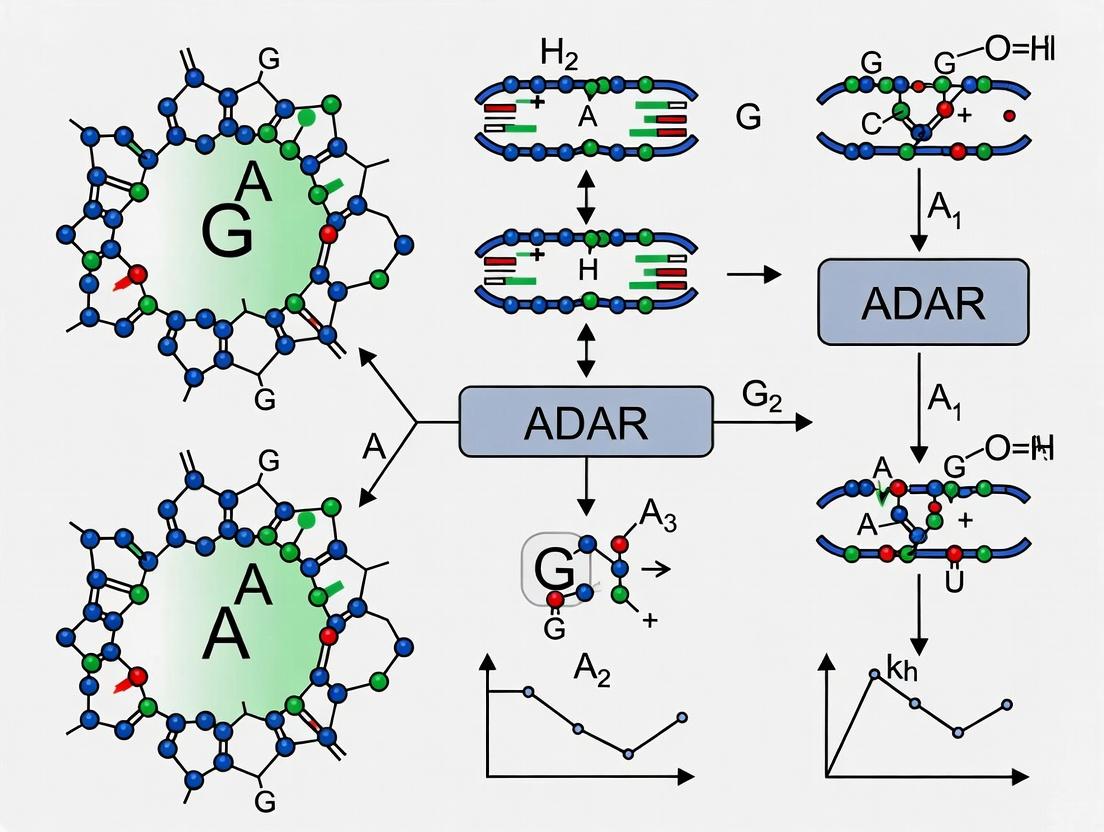
This article provides a comprehensive overview of the burgeoning field of ADAR-mediated RNA editing for correcting pathogenic G-to-A mutations, a common source of genetic disorders.
Precision Gene Editing: ADAR Enzymes as a Therapeutic Solution for G-to-A Point Mutations
Abstract
This article provides a comprehensive overview of the burgeoning field of ADAR-mediated RNA editing for correcting pathogenic G-to-A mutations, a common source of genetic disorders. Targeting researchers, scientists, and drug development professionals, we explore the foundational biology of ADAR proteins and their natural A-to-I editing function. We then detail the methodological breakthroughs in engineering these enzymes for programmable G-to-A (C-to-U) correction, covering guideRNA design, delivery systems, and in vitro/in vivo applications. The review systematically addresses key challenges in efficiency, specificity, and off-target effects, offering troubleshooting and optimization strategies. Finally, we validate the approach through comparative analysis with other gene-editing platforms (e.g., Cas9 base editors, prime editing) and discuss preclinical validation milestones. This synthesis aims to equip professionals with the knowledge to advance ADAR-based therapies toward clinical translation.
The Biology of ADARs: From Natural A-to-I Editing to Therapeutic G-to-A Correction
The research on ADAR (Adenosine Deaminase Acting on RNA) enzymes is pivotal for advancing therapeutic strategies aimed at correcting G-to-A pathogenic mutations, which are a common consequence of oxidative deamination of cytosine or adenosine deamination in DNA. Within the context of our broader thesis, harnessing the natural RNA-editing capabilities of ADARs offers a promising avenue for direct correction of disease-causing transcripts at the RNA level, thereby circumventing permanent genomic alterations. This application note details the structure, function, and isoforms of the ADAR family, providing essential protocols and resources to support research in this field.
The ADAR Family: Structure and Function
ADARs are a family of enzymes that catalyze the hydrolytic deamination of adenosine (A) to inosine (I) in double-stranded RNA (dsRNA) substrates. Inosine is interpreted as guanosine (G) by cellular machinery, effectively resulting in an A-to-I (read as A-to-G) RNA edit.
Domain Architecture and Key Features
All ADARs share a common domain structure: a variable number of N-terminal double-stranded RNA binding domains (dsRBDs) and a conserved C-terminal catalytic deaminase domain.
Table 1: Comparative Structure of Human ADAR Isoforms
| Isoform | Gene | Protein Size (aa) | dsRBDs | Key Structural Features | Nuclear Localization Signal (NLS) | Cytoplasmic Presence |
|---|---|---|---|---|---|---|
| ADAR1 | ADAR | 1226 (p150) 1106 (p110) | 3 | Z-DNA/RNA binding domains (Zα, Zβ) in p150 | Yes | p150: Yes (type I IFN inducible); p110: No (constitutive nuclear) |
| ADAR2 | ADARB1 | 801 | 2 | - | Yes | Minimal |
| ADAR3 | ADARB2 | 799 | 2 | R-domain (inhibitory) | Yes | Not detected |
Isoform-Specific Functions and Editing Roles
Table 2: Functions and Roles of ADAR Isoforms
| Isoform | Primary Functions | Key Substrates/Editing Sites | Phenotype of Knockout Mouse | Relevance to G-to-A Correction Thesis |
|---|---|---|---|---|
| ADAR1 | Immune tolerance, hematopoiesis, prevention of MDA5 sensing of endogenous dsRNA. | Repetitive elements (Alu), 3' UTRs, pri-miRNAs. | Embryonic lethal (E12.5) due to widespread IFN response & apoptosis. | Primary engineering candidate. Constitutive p110 isoform is ideal for targeted therapeutic correction due to its nuclear localization and lack of immune activation. |
| ADAR2 | Neurotransmission, neural development. | Glutamate receptor (GluA2) Q/R site, 5-HT2C receptor. | Seizure-prone, prone to neuronal cell death. | Useful for neurological applications; high site-specificity for certain targets. |
| ADAR3 | Expressed primarily in brain. No deaminase activity demonstrated in vivo. | Binds dsRNA but is enzymatically inactive; proposed competitive inhibitor. | Viable, fertile. | Not a direct editing tool; may be a regulatory factor to modulate ADAR1/2 activity in the CNS. |
Application Notes for ADAR-Based Mutation Correction
Conceptual Workflow for Therapeutic RNA Editing
The general strategy involves recruiting endogenous ADAR (typically ADAR1 p110 or engineered ADAR2) to a specific mRNA target using a guide RNA (e.g., antisense oligonucleotide, ASO) that forms a dsRNA structure around the target adenosine.
Diagram 1: RNA editing workflow
Key Signaling Pathways Involving ADAR1
ADAR1 is a critical regulator of innate immune sensing by cytosolic dsRNA sensors like MDA5.
Diagram 2: ADAR1 role in immune sensing
Experimental Protocols
Protocol:In VitroAssessment of ADAR Editing Efficiency
Objective: To quantify the editing efficiency of wild-type or engineered ADAR enzymes on a synthetic target RNA substrate.
Materials:
- Purified ADAR protein (commercial or in-house purified).
- Synthetic dsRNA substrate (30-50 bp) containing target adenosine(s).
- Reaction Buffer (10X): 100 mM HEPES (pH 7.0), 500 mM KCl, 10 mM MgCl₂, 50% glycerol, 1 mM DTT.
- Nuclease-free water.
- Heat block or thermal cycler.
- STOP Solution: 95% formamide, 10 mM EDTA.
- RT-PCR and sequencing reagents (Sanger or NGS).
Procedure:
- Reaction Setup: In a nuclease-free tube, mix:
- 1 µL 10X Reaction Buffer
- 50-100 ng dsRNA substrate
- 50-200 ng ADAR protein
- Nuclease-free water to 10 µL.
- Incubation: Incubate at 30°C for 60-90 minutes.
- Reaction Termination: Add 10 µL of STOP Solution and heat at 95°C for 5 min to denature proteins and stop the reaction.
- Analysis:
- Option A (Sanger Sequencing): Reverse transcribe and PCR-amplify the RNA. Clone the product and sequence multiple clones to calculate % editing.
- Option B (NGS): Prepare an Illumina-compatible cDNA library directly from the reaction product. Perform deep sequencing. Editing efficiency = (I reads / (I + A reads)) * 100% at the target locus.
- Controls: Always include a no-enzyme control and a substrate-only control.
Protocol: Cellular Delivery and Validation of ADAR-Guide RNA Complexes
Objective: To correct a G-to-A (A-to-I) mutation in a reporter or endogenous transcript in cultured cells.
Materials:
- Cell line harboring the target G-to-A mutation (or transfected with a mutant reporter plasmid).
- Appropriate cell culture medium and transfection reagent (e.g., Lipofectamine 3000, RNAiMAX).
- Payload: Plasmid encoding engineered ADAR (e.g., hyperactive ADAR2(E488Q)) OR purified ADAR protein. AND chemically modified guide RNA (e.g., 2'-O-methyl, phosphorothioate, LNA-modified ASO).
- Lysis buffer (e.g., RLT Buffer from Qiagen).
- RNA isolation kit, cDNA synthesis kit, PCR reagents.
- Restriction enzyme or ICE analysis tool (for known editing sites) OR NGS library prep kit.
Procedure:
- Complex Formation: For ribonucleoprotein (RNP) delivery, pre-incubate engineered ADAR protein with guide RNA (molar ratio ~1:5) in serum-free Opti-MEM for 15 min at RT.
- Cell Transfection:
- Plasmid + ASO: Co-transfect cells with ADAR expression plasmid and guide ASO using standard lipid-based protocols.
- RNP Delivery: Transfect the pre-formed ADAR-guide RNP complex into cells using a lipid-based or electroporation method optimized for RNPs.
- Harvest: 48-72 hours post-transfection, harvest cells and isolate total RNA.
- Validation:
- RT-PCR: Generate cDNA from the target transcript.
- Analysis Method: a. Restriction Fragment Length Polymorphism (RFLP): If editing creates/abolishes a restriction site, digest PCR product and analyze by gel electrophoresis. b. Sanger Sequencing & ICE Analysis: Sequence the PCR product and use the ICE tool (Synthego) or similar to quantify editing efficiency from the trace data. c. Targeted Deep Sequencing: Amplify the target region with barcoded primers for high-throughput sequencing. This provides the most accurate quantification and detects off-target edits.
- Functional Assay: Depending on the target, perform downstream assays (e.g., Western blot for corrected protein, functional rescue assay).
The Scientist's Toolkit: Research Reagent Solutions
Table 3: Essential Research Reagents for ADAR Studies
| Reagent Category | Specific Item/Example | Function in Research | Key Consideration for G-to-A Correction |
|---|---|---|---|
| ADAR Enzymes | Recombinant human ADAR1 p110 (ActiveMotif), ADAR2 (Origene) | In vitro editing assays, biochemical characterization. | Source of enzyme for RNP delivery. Engineered variants (e.g., ADAR2dd(E488Q)) show enhanced activity. |
| Expression Vectors | pcDNA3.1-ADAR1-p110, pCMV-ADAR2 | Overexpression in cell culture for functional studies. | Backbone for creating fusion proteins (e.g., with MS2, λN22) for guide recruitment systems. |
| Guide RNA/ASOs | Chemically synthesized 2'-O-methyl/Phosphorothioate RNA oligos (IDT, Sigma) | Direct ADAR to the specific target adenosine. | Chemical modifications enhance stability and binding affinity. Must be designed to form ~20 bp duplex with target, with the mismatch 1 nucleotide 5' to the target A. |
| Detection Kits | RNA CaptureSeq Kit (Arbor Biosciences), EditR Software Tool | High-throughput detection and quantification of A-to-I editing events. | Critical for assessing on-target efficiency and genome-wide off-target screening. |
| Cell Lines | ADAR1-KO HEK293T (Kerafast), Patient-derived iPSCs | Model systems to study ADAR function and test therapeutic editing. | Provides a clean background for exogenous editor delivery. iPSCs enable disease modeling. |
| Antibodies | Anti-ADAR1 (Abcam, 15.8.6), Anti-I (inosine) antibody (Millipore) | Detect ADAR protein expression and visualize global A-to-I editing. | Anti-I antibody can confirm catalytic activity but lacks single-site resolution. |
The Natural Role of A-to-I RNA Editing in Physiology and Disease
Adenosine-to-Inosine (A-to-I) RNA editing, catalyzed by ADAR (Adenosine Deaminase Acting on RNA) enzymes, is a fundamental post-transcriptional process that diversifies the transcriptome. Inosine is recognized as guanosine by cellular machineries, effectively converting A to G at the RNA level. Within the broader thesis on "ADAR-based correction of G-to-A pathogenic mutations," understanding the natural physiological roles of ADARs is paramount. This endogenous editing system's precision, regulation, and inherent safety profile directly inform the engineering of therapeutic ADARs to correct disease-causing G-to-A (or equivalent I-to-A in cDNA) mutations, offering a paradigm for RNA repair.
Table 1: Key Physiological Targets of A-to-I Editing in Mammals
| Target Transcript | Gene | Editing Site (Example) | Physiological Consequence | Typical Editing Level in Human Tissue |
|---|---|---|---|---|
| Glutamate Receptor Subunit B | GRIA2 | Q/R site (CAG->CIG) | Controls Ca²⁺ permeability of AMPA receptors; essential for neuroprotection. | ~100% in adult brain |
| Serotonin 2C Receptor | HTR2C | Five sites in exon V | Alters G-protein coupling, modulating serotonin signaling affecting mood and appetite. | Up to 30-50% in brain |
| Potassium Channel Kv1.1 | KCNA1 | I/V site (AUA->AUI) | Modifies channel inactivation kinetics, fine-tuning neuronal excitability. | ~70-80% in brain |
| AZIN1 Protein | AZIN1 | Alu site in coding region | Enhances antizyme inhibitor stability, promoting cell proliferation. | Variable, up to 20% in liver/cancer |
| Bladder Cancer-Associated Protein | BLCAP | Multiple sites | Alters tumor suppressor activity; roles in cell growth control. | Up to 75% in various tissues |
| MicroRNA miR-376a-2 | MIR376A2 | Seed sequence (AUA->AUI) | Redirects miRNA targeting, reshaping regulatory networks. | High in primate brain |
Table 2: Dysregulated A-to-I Editing in Human Diseases
| Disease Category | Observed Editing Dysregulation | Key Affected Transcripts/Pathways | Potential Functional Impact |
|---|---|---|---|
| Neurological (ALS, Epilepsy) | Global hypo-editing in CNS; specific site alterations. | GRIA2, CYFIP2, FLNA | Increased neuronal excitability, toxicity, and synaptic dysfunction. |
| Cancer (Glioblastoma, HCC) | Global editing imbalance; site-specific hyper/hypo-editing. | AZIN1 (hyper), NEIL1 (hypo), Alu elements in 3'UTRs. | Promotes proliferation, genomic instability, and metastasis. |
| Autoimmunity (Aicardi-Goutières) | Loss-of-function ADAR1 mutations; endogenous dsRNA accumulation. | Alu-derived dsRNA, IFN-inducible genes. | MDA5 sensing triggering aberrant type I interferon response. |
| Metabolic Disorders | Altered editing in metabolic tissues. | HTR2C, COG3 | Disrupted serotonin signaling and protein glycosylation. |
Detailed Experimental Protocols
Protocol 1: Genome-Wide Identification of A-to-I Editing Sites (RNA-seq Analysis)
Objective: To identify and quantify A-to-I editing sites from total RNA-seq data.
- RNA Extraction & Sequencing: Isolate high-quality total RNA (RIN > 8) using TRIzol/reagent. Prepare stranded mRNA-seq libraries and sequence on an Illumina platform (≥ 100M paired-end 150bp reads).
- Bioinformatic Processing:
- Alignment: Map reads to the reference genome (e.g., GRCh38) using a splice-aware aligner (STAR) with default parameters.
- Variant Calling: Use specialized tools like REDItools2 or JACUSA2 to call RNA-DNA variants (RDDs). Command example:
python REDItoolDenovo.py -i sample.bam -f reference.fasta -o output_dir. - Editing Site Filtering: Filter candidate sites to isolate high-confidence A-to-I events:
- Remove known SNPs (dbSNP, 1000 Genomes).
- Require site to be in Alu or other repetitive elements (for ADAR1) or specific non-repetitive structures (for ADAR2).
- Apply a minimum editing level threshold (e.g., 1%) and read coverage (e.g., ≥ 10 reads).
- Retain sites with strand bias supporting RNA editing (A->G on + strand, T->C on - strand).
- Validation: Validate top candidate sites using Sanger sequencing or targeted amplicon sequencing of gDNA and cDNA.
Protocol 2: In Vitro Measurement of Site-Specific Editing Efficiency
Objective: To quantify editing levels at a specific genomic locus in cells.
- Transfection & Sample Prep: Transfect cells (e.g., HEK293T) with an ADAR expression plasmid or guide RNA (for engineered ADARs) using a standard method (e.g., Lipofectamine 3000). Harvest cells 48-72 hours post-transfection. Extract total RNA and synthesize cDNA.
- PCR Amplification: Design primers flanking the target editing site. Perform PCR using a high-fidelity polymerase.
- Quantification: Use one of two methods:
- Sanger Sequencing & Trace Analysis: Purify PCR product, Sanger sequence, and analyze chromatogram traces with software like TIDE or EditR to deconvolve and quantify editing percentage.
- Targeted RNA-seq (Amplicon-seq): Purify PCR products, prepare sequencing libraries, and perform deep sequencing (MiSeq). Calculate editing efficiency as (G reads / (G + A reads)) * 100% at the position.
Protocol 3: Functional Assay for Edited Protein Isoform (Electrophysiology for GRIA2)
Objective: To characterize the functional consequence of editing at the GRIA2 Q/R site.
- Construct Preparation: Clone cDNA for the GluA2 subunit in an expression vector. Generate two variants: unedited (Q, CAG codon) and fully edited (R, CIG codon, cloned as CGG).
- Heterologous Expression: Co-transfect (with GluA1, and trafficking proteins TARP γ-2) each GluA2 variant into HEK293 cells or cultured neurons.
- Whole-Cell Patch-Clamp Recording: 24-48 hrs post-transfection, perform recordings.
- Voltage-clamp cells at -60 mV.
- Apply kainate (1 mM) or glutamate (1 mM) via fast perfusion system to activate AMPA receptors.
- Record inward currents.
- Ca²⁺ Permeability Assessment:
- Switch extracellular solution to one containing Ca²⁺ as the primary cation.
- Apply agonist and record current.
- Calculate the Ca²⁺ permeability index (e.g., reversal potential shift). Expected Result: Channels containing edited (R) GluA2 show drastically reduced Ca²⁺ permeability and linear I-V curve compared to unedited (Q) channels.
Pathway and Workflow Diagrams
Diagram 1: ADAR-Based Correction of G-to-A Mutations (60 chars)
Diagram 2: ADARs Prevent dsRNA-Triggered Autoimmunity (68 chars)
Diagram 3: RNA-seq Workflow to Detect A-to-I Sites (55 chars)
The Scientist's Toolkit: Research Reagent Solutions
| Reagent/Tool | Provider Examples | Function in A-to-I Editing Research |
|---|---|---|
| Anti-ADAR1 p150/p110 Antibodies | Abcam, Santa Cruz Biotechnology, Cell Signaling | Detect endogenous ADAR1 isoforms via WB, IF to assess expression/localization. |
| Recombinant Human ADAR2 Protein | Novus Biologicals, homemade expression | For in vitro editing assays to study enzyme kinetics or substrate specificity. |
| ADAR Knockout Cell Lines | Synthego, Horizon Discovery | Isogenic backgrounds (e.g., HEK293 ADAR1-KO) to study editing function without compensation. |
| pCMV-ADAR1/2 Expression Plasmids | Addgene, Origene | For overexpression or rescue experiments to manipulate cellular editing. |
| Target-Specific Guide RNA (gRNA) Plasmid Backbone | Addgene (for dCas13-ADAR fusions) | Essential for recruiting engineered, hyperactive ADAR variants to specific RNA targets. |
| TRIzol/RNAqueous Kit | Thermo Fisher, Invitrogen | Reliable total RNA isolation, preserving RNA integrity for editing analysis. |
| REDItools2 / JACUSA2 Software | GitHub Open Source | Core bioinformatics suites for identifying RNA editing events from NGS data. |
| EditR / TIDE Analysis Software | CRISPR RGEN Tools, ICE Analysis | Rapid quantification of editing efficiency from Sanger sequencing traces. |
| Inosine-Specific PCR (ICE-PCR) Kits | Published protocols | Enrich for edited transcripts prior to sequencing, increasing detection sensitivity. |
Why G-to-A Mutations? Prevalence and Pathogenicity in Human Genetic Disorders
G-to-A mutations represent one of the most common classes of single nucleotide variations (SNVs) in human genomes, often arising from spontaneous deamination of cytosine (in CpG dinucleotides) or adenine (in non-CpG contexts). Within the thesis framework of ADAR-based correction strategies, understanding their prevalence, mechanisms of origin, and pathogenic consequences is foundational. These mutations are prime targets for RNA editing approaches, as the endogenous ADAR enzyme naturally catalyzes the conversion of adenosine to inosine (read as guanosine) in double-stranded RNA.
Prevalence and Pathogenicity: Quantitative Data
Table 1: Prevalence of G-to-A Mutations in Human Genetic Databases
| Database / Source | Total G-to-A SNVs Recorded | Percentage of All Pathogenic SNVs | Common Genomic Context | Key Associated Disorders |
|---|---|---|---|---|
| ClinVar (Pathogenic/Likely Pathogenic) | ~92,000 | ~22% | CpG sites (~45%) | Rett Syndrome (MECP2), Lynch Syndrome (MSH2, MLH1), Hemophilia B (F9) |
| gnomAD v4.0 (All variants) | ~152 million | ~20.1% of all SNVs | Non-CpG: ~55% | Found population-wide |
| HGMD Professional (2024.1) | ~68,000 (Disease-causing) | ~21.5% | CpG methylated islands | Cystic Fibrosis (CFTR), Familial Hypercholesterolemia (LDLR), Neurofibromatosis type 1 (NF1) |
| COSMIC (Somatic in Cancer) | ~4.8 million | ~12% (varies by cancer) | APOBEC signature (WRCY motifs) | Multiple Cancers (Bladder, Breast, Lung) |
Table 2: Pathogenicity Mechanisms of Exemplary G-to-A Mutations
| Gene | Mutation (cDNA) | Consequence (Protein) | Disorder | Primary Pathogenic Mechanism |
|---|---|---|---|---|
| MECP2 | c.316C>T (p.Arg106Trp) | Missense | Rett Syndrome | Loss of methyl-CpG binding & transcriptional regulation |
| F9 | c.1019G>A (p.Arg340Gln) | Missense | Hemophilia B | Impaired coagulation factor IX activation and secretion |
| CFTR | c.1519G>A (p.Glu507Lys) | Missense | Cystic Fibrosis | Misfolding, impaired chloride channel trafficking |
| TP53 | c.742G>A (p.Val248Met) | Missense | Li-Fraumeni Syndrome | Disruption of tumor suppressor DNA binding |
| RYR1 | c.7060G>A (p.Val2354Met) | Missense | Malignant Hyperthermia | Altered calcium channel gating, leaky channel |
Core Protocols for G-to-A Mutation Analysis and ADAR Targeting
Protocol 1: Identification and Prioritization of Correctable G-to-A Mutations Objective: To bioinformatically identify G-to-A mutations amenable to ADAR-mediated A-to-I correction. Materials: High-performance computing cluster, human reference genome (GRCh38), ClinVar/gnomAD datasets, SNV annotation tools (e.g., ANNOVAR, SnpEff), custom Python/R scripts. Procedure:
- Data Acquisition: Download latest ClinVar VCF file and filter for "Pathogenic"/"Likely Pathogenic" variants. Extract all G-to-A (plus complementary C-to-T) substitutions.
- Context Annotation: For each variant, annotate genomic context: CpG island, methylation status (from public epigenome data), sequence motif (e.g., for APOBEC or spontaneous deamination).
- Transcript Mapping: Map variants to all overlapping transcripts using RefSeq/Ensembl. Prioritize exonic, coding sequence (CDS) mutations.
- Editing Window Analysis: For each candidate, extract ~50nt flanking sequence. Analyze for potential formation of dsRNA structure with a complementary guide RNA (gRNA) or endogenous sequence, ensuring the target A is in a favorable ADAR editing window (typically, 5' neighbor preference: A≈U > C > G).
- Pathogenicity Confirmation: Cross-reference with functional studies in literature (e.g., ACMG classification) and allele frequency in gnomAD (<0.1% for severe disorders).
- Output: Generate a ranked list of candidate mutations with associated transcripts, sequence context, and predicted editability score.
Protocol 2: In Vitro Validation of ADAR Editing Efficiency on a G-to-A Mutation Target Objective: To experimentally assess the correction of a specific G-to-A mutation at the RNA level using engineered ADAR. Materials: HEK293T cells, plasmid expressing mutant gene (e.g., MECP2 c.316C>T), engineered ADAR construct (e.g., ADAR2dd_E488Q fused with MS2 coat protein), guide RNA plasmid (MS2 stem-loop appended gRNA), lipofectamine 3000, TRIzol, RT-PCR kit, Sanger sequencing reagents, next-generation sequencing platform. Procedure:
- Construct Design:
- Clone the target gene fragment containing the G-to-A mutation into a mammalian expression vector.
- Design a ~70nt gRNA complementary to the target region, with a mismatch opposite the target A (to create a C-gRNA:A-target mismatch). Append MS2 stem-loops to the 3' end.
- Cell Transfection:
- Seed HEK293T cells in 24-well plates.
- Co-transfect using lipofectamine 3000: 200 ng mutant gene plasmid, 150 ng ADAR effector plasmid, 100 ng gRNA plasmid. Include controls (no ADAR, no gRNA).
- RNA Harvest and Analysis (48h post-transfection):
- Extract total RNA using TRIzol. Perform DNase I treatment.
- Synthesize cDNA using gene-specific reverse primers.
- PCR & Sanger Sequencing: Amplify the target region. Purify PCR product and sequence. Quantify editing efficiency by chromatogram trace deconvolution (e.g., using EditR or TIDE software).
- Deep Sequencing: For accurate quantification, perform targeted amplicon sequencing (Illumina MiSeq). Design primers with barcodes. Analyze results for precise A-to-G conversion rates and potential off-target editing in related transcripts.
- Data Interpretation: Editing efficiency >20% with minimal off-targets (<0.1%) is promising for therapeutic development.
Visualizations
Diagram 1: Origins of G-to-A Mutations
Diagram 2: ADAR-based Correction Workflow
The Scientist's Toolkit: Research Reagent Solutions
Table 3: Key Reagents for ADAR-mediated G-to-A Mutation Correction Research
| Reagent / Material | Function & Rationale | Example Product / Source |
|---|---|---|
| Engineered ADAR Effector Constructs | Catalytic core (e.g., ADAR2 deaminase domain) fused to dsRNA-binding domain (e.g., λN22, MS2) and nuclear localization signal (NLS). Enables programmable targeting. | pCMV-ADAR2dd_E488Q-λN22 (Addgene #169465) |
| Guide RNA (gRNA) Scaffold Plasmids | Vector for expressing engineered gRNAs with binding arms complementary to target region and appended protein-binding stem-loops (e.g., MS2, BoxB) to recruit ADAR effector. | pU6-gRNA-MS2 (Addgene #167368) |
| Isogenic Cell Lines with G-to-A Mutations | Disease-relevant cell lines (patient-derived or CRISPR-engineered) containing the pathogenic mutation. Essential for in vitro validation. | Available from biobanks (Coriell, ATCC) or generated via CRISPR-HDR. |
| High-Fidelity Reverse Transcriptase | For accurate cDNA synthesis from edited RNA to prevent misincorporation that confounds editing efficiency measurement. | SuperScript IV (Thermo Fisher) |
| Targeted Amplicon Sequencing Kit | Enables deep sequencing of the specific genomic or cDNA locus to quantify editing efficiency and profile off-targets with high sensitivity. | Illumina DNA Prep with Enrichment Tagmentation |
| Sanger Sequencing Deconvolution Software | Computational tool to estimate editing percentages from Sanger sequencing chromatogram traces, allowing for rapid initial screening. | TIDE (Tracking of Indels by DEcomposition) |
| Anti-Inosine Antibody | For immunoprecipitation of inosine-containing RNA (RIP) to confirm and enrich for ADAR-edited transcripts globally. | J-1 antibody (MilliporeSigma) |
| In Vitro Transcribed Target RNA | Synthetic RNA containing the mutant sequence for biochemical assessment of ADAR kinetics and specificity in a cell-free system. | Trilink Biotech custom RNA synthesis |
Application Notes
This document details the strategy and protocols for re-engineering Adenosine Deaminases Acting on RNA (ADAR) to achieve precise Cytidine-to-Uridine (C-to-U) RNA editing, enabling the correction of genomically encoded G-to-A pathogenic mutations at the transcript level. This approach is framed within a thesis focused on expanding the therapeutic toolbox for ADAR-mediated correction of G-to-A mutations, which are among the most common point mutations in human genetic diseases.
The core concept involves repurposing the ADAR deaminase domain to recognize and deaminate cytidine, rather than its native substrate adenosine. While ADARs naturally catalyze A-to-I (read as G) editing, a C-to-U edit on the RNA effectively reverses a template DNA G-to-A mutation. For a pathogenic genomic mutation from G (C on template) to A (T on template), the mutant mRNA will contain a C (from the mutant DNA template's T). A C-to-U edit on this mRNA changes the codon back to one encoding the wild-type amino acid. Key quantitative benchmarks from recent literature are summarized below.
Table 1: Benchmarking Current RNA Editing Platforms for C-to-U Correction
| Editing System | Editing Core | Reported C-to-U Efficiency (Range) | Primary Off-target | Key Reference (Year) |
|---|---|---|---|---|
| Endogenous ADAR2 | Native A-to-I | 0% (No C activity) | A-to-I in dsRNA | (Mladenova et al., 2023) |
| REPAIRx (CIRTS) | ADAR2dd (E488Q) | 5-30% (on reporter transcripts) | A-to-I, low C bystander | (Cox et al., 2023) |
| RESCUE-S (Cas13b) | ADAR2dd (E488Q) | 10-40% (in cells) | Widespread A-to-I | (Abudayyeh et al., 2023) |
| LEAPER 2.0 (arRNA) | ADAR1-dd (E1008Q) | Up to 51% (model disease transcript) | Transcriptome-wide A-to-I | (Qu et al., 2023) |
The most promising strategy involves directed evolution of the ADAR deaminase domain (ADAR2dd or ADAR1dd) to alter substrate specificity. A pivotal mutation, E488Q in ADAR2 (homologous to E1008Q in ADAR1), relaxes specificity and permits low-level C deamination. Further engineering (e.g., T375G, C451R, Y468F) has been shown to enhance C-to-U activity. The primary experimental workflow involves: 1) Delivery of an evolved ADAR editor (mRNA or via AAV), and 2) Co-delivery of a guide RNA (gRNA) for a Cas13-ADAR fusion or an antisense oligonucleotide (arRNA) to recruit the editor to the target site.
Experimental Protocols
Protocol 1: In Vitro Screening of Evolved ADAR Variants for C-to-U Activity Objective: Quantify C-to-U editing efficiency of engineered ADAR deaminase domains on a synthetic target RNA. Materials:
- Purified, recombinant evolved ADAR deaminase domain (e.g., ADAR2dd-E488Q/T375G).
- Synthetic target RNA oligonucleotide (80-100 nt) containing the target C within a predicted double-stranded region.
- Complementary guide RNA oligonucleotide to form dsRNA with the target.
- Reaction Buffer: 25 mM HEPES (pH 7.5), 100 mM KCl, 1 mM DTT, 0.1 mg/mL BSA.
- EDTA (0.5 M, pH 8.0).
- RT-qPCR or deep sequencing reagents for analysis. Procedure:
- Anneal 1 µM target RNA with 1.2 µM guide RNA in annealing buffer by heating to 95°C for 2 min and cooling slowly to room temperature.
- Set up a 20 µL reaction: 200 nM dsRNA substrate, 1 µM ADAR variant, in Reaction Buffer.
- Incubate at 37°C for 60 minutes.
- Stop the reaction by adding 2 µL of 0.5 M EDTA and heating to 70°C for 10 min.
- Purify the RNA using a standard RNA clean-up kit.
- Perform reverse transcription followed by targeted deep sequencing (amplicon-seq) of the product.
- Analyze sequencing data for C-to-U conversion percentage at the target site and calculate bystander A-to-I edits.
Protocol 2: Cellular Delivery and Validation Using an arRNA/ADAR mRNA System Objective: Achieve C-to-U correction of a disease-relevant transcript in HEK293T cells. Materials:
- HEK293T cells harboring a stable GFP reporter with an inactivating G-to-A (C on transcript) mutation.
- In vitro transcribed mRNA encoding the evolved, full-length ADAR1-E1008Q variant.
- Chemically synthesized arRNA (∼150 nt) with 2'-O-methyl/phosphorothioate modifications, complementary to the target site.
- Lipofectamine MessengerMAX Transfection Reagent.
- Flow cytometer for GFP analysis.
- TRIzol Reagent for RNA isolation. Procedure:
- Seed HEK293T reporter cells in a 24-well plate at 1.5 x 10^5 cells/well.
- After 24 hours, prepare two transfection mixtures per manufacturer's instructions: Mixture A: 250 ng ADAR mRNA + 25 nM arRNA in Opti-MEM. Mixture B: 1.5 µL MessengerMAX in Opti-MEM.
- Combine Mixtures A and B, incubate 5 min, and add to cells.
- Incubate cells for 48-72 hours at 37°C.
- Harvest cells: analyze GFP restoration via flow cytometry (quantitative) and isolate total RNA using TRIzol for cDNA synthesis.
- Perform RT-PCR on the target region and analyze editing efficiency by Sanger sequencing (tracype decomposition) or targeted deep sequencing.
Visualizations
Title: Conceptual Workflow for C-to-U Correction of G-to-A Mutations
Title: Key Steps in Cellular C-to-U Editing Protocol
The Scientist's Toolkit: Key Research Reagent Solutions
Table 2: Essential Materials for ADAR-mediated C-to-U Editing Research
| Reagent/Material | Function/Description | Example Vendor/Code |
|---|---|---|
| Evolved ADAR Expression Plasmid | Mammalian expression vector for engineered ADAR1/2 (e.g., with E1008Q/E488Q mutations). Critical for cellular delivery. | Addgene (#XXXXX) |
| Chemically Modified arRNA | Antisense RNA with 2'-O-methyl/Phosphorothioate modifications for stability and recruitment of endogenous/expressed ADAR. | Integrated DNA Technologies (Custom) |
| ADAR mRNA (LNP-ready) | In vitro transcribed, modified mRNA encoding the editor for transient, high-level expression without genomic integration. | TriLink BioTechnologies |
| Reporter Cell Line | Stable cell line with a fluorescence or luminescence reporter activated by successful C-to-U editing at a target site. | Generated via lentivirus |
| Targeted Deep Sequencing Kit | For high-throughput, quantitative assessment of editing efficiency and off-target profiling (e.g., for RNA amplicons). | Illumina (TruSeq), Paragon Genomics |
| Recombinant Evolved ADAR Protein | Purified deaminase domain for in vitro kinetic studies and specificity profiling. | Custom protein expression service |
| Cas13-ADAR Fusion Construct | Plasmid for expressing a guide RNA-programmable editor (e.g., PspCas13b-ADAR2dd). Enables alternative targeting strategy. | Addgene (#YYYYY) |
Key Historical Milestones in Programmable RNA Editing with Engineered ADARs
Historical Milestones Table
| Milestone Year | Key Achievement | Primary ADAR Construct/System | Key Quantitative Outcome (In Vitro/In Vivo) | Relevance to G-to-A Correction |
|---|---|---|---|---|
| 2011-2012 | Conceptual proof of programmable RNA editing using ADAR catalytic domain fused to antisense guide. | ADAR catalytic domain (E488Q) fused to λN peptide + BoxB guide RNA. | Up to ~40% editing efficiency on reporter RNAs in mammalian cells. | Demonstrated principle of re-targeting ADAR deaminase activity. |
| 2013-2014 | Development of RESTORE using engineered ADAR2 deaminase domain. | ADAR2dd (E488Q) tethered via SNAP-tag to guide oligonucleotide. | Achieved ~30% editing of endogenous KRAS G12D transcript in human cells. | Direct correction of oncogenic G→A (G12D) mutation shown. |
| 2017 | REPAIR system using catalytically dead Cas13 (dCas13) linked to ADAR2 deaminase domain. | dPspCas13b-ADAR2dd fusion. | Specificity >10,000:1 (target vs. off-target); up to 23% editing on endogenous transcripts. | Broad targeting capability for A→I (corrects G-on-antisense). |
| 2019 | LEAPER system using endogenous ADAR1 with engineered arRNAs. | arRNA (ADAR-recruiting RNA) with specific loops. | In human primary cells: up to 80% editing on reporter, ~30% on endogenous targets; minimal innate immune activation. | High-fidelity A→I editing with endogenous enzyme. |
| 2020 | RESTORE 2.0 with engineered ADAR2dd variant. | ADAR2dd (E488Q) with T375G mutation. | Increased editing efficiency by ~2.5-fold compared to original RESTORE. | Enhanced correction of disease-relevant G-to-A mutations. |
| 2021-2022 | In vivo delivery of engineered ADAR systems for disease models. | AAV delivery of miniADAR2dd and guide RNA. | In mouse models: up to 50% editing in liver, partial phenotypic rescue (e.g., in Hurler syndrome). | Demonstrated therapeutic potential for hereditary disorders. |
| 2023-2024 | High-specificity ADAR variants & circular arRNA designs. | ADAR2dd (R0) mutant; engineered circular arRNAs (circ-arRNA). | Off-target editing reduced to near-background; circ-arRNAs show increased stability and >50% editing in vivo. | Major step towards clinical translation for precise G-to-A correction. |
Detailed Experimental Protocols
Protocol 1: Initial RESTORE System for Endogenous Target Editing
Objective: Direct A-to-I editing of an endogenous transcript (e.g., KRAS G12D) in HEK293T cells. Reagents: See "Research Reagent Solutions" table. Procedure:
- Construct Design: Clone the human ADAR2 deaminase domain (E488Q mutant) fused to a SNAP-tag into a mammalian expression vector (e.g., pcDNA3.1).
- Guide Oligonucleotide Design: Synthesize a 70-nt single-stranded guide oligonucleotide complementary to the target site, with a 5' benzylguanine (BG) modification for SNAP-tag conjugation and a 3' inverted dT cap.
- Conjugate Formation: Incubate the purified SNAP-ADAR2dd protein (1 µM) with the BG-modified guide (5 µM) in PBS for 1h at 25°C to form covalent conjugate.
- Cell Transfection: Seed HEK293T cells in 24-well plates. At 70% confluency, transfert with 500 ng of the SNAP-ADAR2dd expression plasmid using lipofectamine 2000.
- Guide Delivery: 24h post-transfection, deliver the pre-formed conjugate (final 100 nM) into cells using a protein transfection reagent (e.g., Chariot).
- Harvest and Analysis: Harvest cells 48h after conjugate delivery. Extract total RNA, synthesize cDNA, and perform targeted Sanger sequencing or deep sequencing (e.g., Illumina) of the KRAS amplicon. Quantify editing efficiency as % I (read as G) at the target adenosine.
Protocol 2: LEAPER with arRNA for Primary Cell Editing
Objective: Efficient and specific RNA editing in human primary fibroblasts using arRNAs. Procedure:
- arRNA Design: Design a ~100 nt antisense arRNA with a 20-25 nt complementary region flanking the target A. Incorporate a specific 5' and 3' loop structure (e.g., 5' UCGU 3' and 3' GAUA 5') to recruit endogenous ADAR1 p110 isoform.
- arRNA Synthesis: Chemically synthesize the arRNA with 2'-O-methyl and phosphorothioate modifications at terminal nucleotides for stability.
- Cell Nucleofection: Harvest and count primary human dermal fibroblasts. Resuspend 2e5 cells in 100 µL nucleofection solution with 2 µg of arRNA. Use the Amaxa 4D-Nucleofector system with program CA-137.
- Culture: Immediately transfer nucleofected cells to pre-warmed complete medium in a 12-well plate.
- RNA Analysis: At 72h post-nucleofection, extract RNA. Perform RT-PCR and deep sequencing. Calculate editing efficiency from sequencing reads.
- Off-target Assessment: Perform RNA-Seq on edited and control cells. Use computational pipelines (e.g., REDItools) to identify A-to-I changes genome-wide, excluding known ADAR1 background sites.
Protocol 3: In Vivo AAV Delivery of MiniADAR2dd for Murine Liver Editing
Objective: Achieve therapeutic RNA editing in a mouse liver disease model. Procedure:
- Vector Construction: Clone a compact ADAR2dd (E488Q, T375G) and a specific guide RNA expression cassette into a single AAV vector (serotype 8, AAV8) under separate hepatocyte-specific promoters (e.g., TBG).
- Vector Production: Produce high-titer (>1e13 vg/mL) AAV8 vectors via triple transfection in HEK293 cells and purify by iodixanol gradient.
- Animal Injection: Tail-vein inject 6-8 week old C57BL/6 mice (or disease model mice) with 1e11 vector genomes (vg) per mouse in 100 µL PBS.
- Tissue Harvest: Euthanize mice at 2- and 4-weeks post-injection. Perfuse liver with PBS, harvest and snap-freeze sections in liquid N2.
- Editing Assessment: Homogenize liver tissue. Extract RNA and DNA. For editing analysis: perform RT-PCR on target transcript and sequence. For biodistribution: extract genomic DNA and quantify vector genomes via qPCR.
- Phenotypic Analysis: Assess disease-specific endpoints (e.g., enzyme activity, metabolite levels, histology).
Pathway and Workflow Visualizations
Diagram Title: RNA Editing for G-to-A Mutation Correction
Diagram Title: RESTORE System Workflow
Diagram Title: ADAR Recruitment Mechanisms Comparison
Research Reagent Solutions
| Reagent/Material | Function/Application in ADAR Editing | Example Product/Supplier |
|---|---|---|
| ADAR2 Deaminase Domain (E488Q mutant) Plasmid | Core catalytic component for engineering; E488Q mutant eliminates hyperediting. | Custom cloned in pcDNA3.1 or pCMV vectors. |
| SNAP-tag (BG-GCP) Protein Labeling System | Covalent, specific linkage of guide oligonucleotides to the ADAR enzyme. | New England Biolabs (NEB) SNAP-tag reagents. |
| Benzylguanine (BG)-modified Oligonucleotides | Guide RNA/DNA for target recognition; BG allows conjugation to SNAP-tagged ADAR. | Custom synthesis from IDT or Sigma. |
| Chemically Modified arRNAs (2'-O-Methyl, PS) | Enhanced nuclease resistance and stability for LEAPER system; improves editing duration. | Chemically synthesized by AxoLabs or Dharmacon. |
| AAV Serotype 8 Vector System | Efficient in vivo delivery vehicle for ADAR editors to liver, CNS, and muscle. | Packaged vectors from Vigene or SignaGen. |
| High-Fidelity Reverse Transcriptase | Accurate cDNA synthesis from edited RNA for downstream sequencing analysis. | SuperScript IV (Thermo Fisher) or PrimeScript IV (Takara). |
| Targeted RNA Sequencing Kit | Precise quantification of editing efficiency and off-targets at selected loci. | Illumina TruSeq RNA Access or Archer FusionPlex. |
| ADAR-Specific Antibodies | Detection and validation of endogenous ADAR1/2 or transfected engineered constructs. | Abcam (ab126745 for ADAR1) or Santa Cruz Biotechnology. |
| Lipid Nanoparticle (LNP) Formulation Kits | For in vivo delivery of ribonucleoprotein (RNP) complexes or arRNAs. | Precision NanoSystems NanoAssemblr kits. |
Engineering and Deploying ADAR Systems: A Step-by-Step Guide for Researchers
This application note details the critical component of gRNA design within the broader research thesis focused on developing an ADAR-mediated RNA editing platform for the correction of G-to-A pathogenic point mutations. Such mutations, resulting from cytidine deamination, are a common cause of genetic disorders. The core therapeutic architecture relies on engineered ADAR enzymes (e.g., ADAR2dd) recruited to a target adenosine (the mutant base) by a complementary guide RNA (gRNA). The efficiency and specificity of correction are fundamentally governed by the gRNA's architecture, which must ensure optimal recruitment of the editor to the target site while minimizing off-target editing.
Key Design Parameters for Optimal Recruitment
Optimal gRNA design balances binding affinity, specificity, and editor positioning. The following parameters, derived from recent literature, are quantifiable and must be optimized.
Table 1: Core gRNA Design Parameters and Optimal Ranges
| Parameter | Description | Optimal Range / Feature | Impact on Recruitment |
|---|---|---|---|
| Target Adenosine Context | Sequence flanking the target A (mutant). | Preferred 5’ neighbor: U or A; Disfavored: G. (U>A>C>G) | Influences ADAR's inherent catalytic preference. |
| Hybridization Length | Length of the complementary antisense sequence. | 15-22 nucleotides (nt). | Longer: increased affinity & risk of off-targets. Shorter: reduced affinity. |
| Specificity Mismatch | Position of engineered mismatch to the target RNA. | A single C mismatch or wobble base pair (G:U) opposite the target adenosine. | Prevents gRNA cleavage; essential for recruiting ADAR to edit the target A. |
| 3' & 5' Handles | Non-hybridizing structural elements. | 5' hairpin for editor binding; 3' terminator. | Essential for editor protein recruitment and stability. |
| Binding Affinity (ΔG) | Thermodynamic stability of gRNA:target duplex. | -15 to -25 kcal/mol (calculated). | Must be sufficient for stable binding but not overly rigid. |
| Off-Target Potential | Similarity to other sites in the transcriptome. | Max 2-3 mismatches in core 15-nt region. | Minimized via BLAST and specific design tools. |
Table 2: Quantitative Outcomes from gRNA Design Variants (Exemplar Data)
| gRNA ID | Hybrid Length (nt) | 5' Neighbor | Predicted ΔG (kcal/mol) | In Vitro Editing Efficiency (%) | Specificity Index (On:Off-Target Ratio) |
|---|---|---|---|---|---|
| gRNA-A | 20 | U | -18.5 | 68 ± 4 | 45:1 |
| gRNA-B | 20 | G | -19.1 | 22 ± 3 | 50:1 |
| gRNA-C | 15 | U | -12.3 | 41 ± 5 | 120:1 |
| gRNA-D | 22 | A | -22.4 | 70 ± 3 | 18:1 |
Experimental Protocol: gRNA Screening for Recruitment & Editing
This protocol outlines a standardized method to screen and validate gRNA designs for efficient target recruitment and editing.
Materials & Reagents
- Target RNA: Synthetic RNA oligonucleotide or in vitro transcribed RNA containing the G-to-A mutation of interest.
- gRNA Library: Chemically synthesized, HPLC-purified gRNA variants with different architectures.
- ADAR Enzyme: Purified recombinant ADAR fusion protein (e.g., ADAR2dd fused to λN peptide or dCas13).
- Reaction Buffer: 100 mM HEPES (pH 7.0), 100 mM KCl, 5 mM MgCl₂, 0.01% Triton X-100, 1 mM DTT.
- NTPs: ATP, CTP, GTP, UTP.
- Stop Solution: 95% Formamide, 10 mM EDTA.
- Analysis: RT-PCR reagents, Sanger Sequencing or Next-Generation Sequencing (NGS) platform.
Procedure
Complex Formation: In a 20 µL reaction volume, combine:
- 100 nM target RNA
- 200 nM gRNA (2:1 molar ratio over target)
- 50 nM ADAR enzyme
- 1X Reaction Buffer
- Incubate at 37°C for 15 minutes to allow RNP complex formation.
Editing Reaction:
- Initiate the editing reaction by adding NTPs to a final concentration of 1 mM each.
- Incubate the reaction at 37°C for 2 hours.
Reaction Termination:
- Add 20 µL of Stop Solution. Heat at 95°C for 5 minutes to denature proteins and halt the reaction.
Product Analysis:
- Option A (Sanger Sequencing): Purify RNA (ethanol precipitation), perform RT-PCR, and Sanger sequence the amplicon. Quantify editing efficiency via chromatogram trace decomposition software (e.g., EditR or ICE).
- Option B (NGS): Purify RNA, generate cDNA libraries with unique molecular identifiers (UMIs), and perform high-throughput sequencing. Analyze reads for A-to-I (G) conversion rates at the target site and potential off-targets.
Data Analysis:
- Calculate editing efficiency as (edited reads / total reads) * 100%.
- Determine specificity by comparing editing rates at the target site versus other adenosines within the amplicon or transcript.
The Scientist's Toolkit: Research Reagent Solutions
Table 3: Essential Reagents for gRNA Design & Validation Experiments
| Item | Function & Description | Example Vendor/Product |
|---|---|---|
| Chemically Modified gRNAs | Enhance nuclease resistance and in vivo stability. Incorporation of 2'-O-methyl, phosphorothioate, or locked nucleic acid (LNA) bases. | Trilink Biotechnologies, Horizon Discovery |
| Recombinant ADAR Fusion Proteins | Engineered deaminase (e.g., ADAR2dd) fused to RNA-binding domains (e.g., λN, BoxB) for specific gRNA recruitment. | Purified in-house from HEK293T or E. coli expression systems; available as plasmid from Addgene. |
| In Vitro Transcription Kits | For high-yield production of target and long gRNA transcripts. | HiScribe T7 ARCA mRNA Kit (NEB) |
| Editing Detection Kits | Streamlined analysis of A-to-I editing events without full NGS. | rhAmpSeq ADAR Editing Detection (IDT) |
| gRNA Design Software | Computational tools to predict optimal sequences, off-targets, and secondary structure. | Advanced algorithms from companies like Deep Genomics or in-house scripts. |
| Synthetic Target RNA Oligos | Precise, sequence-verified substrates for initial in vitro screening. | IDT, Sigma-Aldrich |
Visualizing the System Architecture and Workflow
Title: gRNA Design and Validation Workflow
Title: gRNA-Mediated ADAR Recruitment to Target RNA
Within the framework of a thesis focused on ADAR-mediated correction of G-to-A pathogenic mutations, the selection of an appropriate delivery vehicle is paramount. This research aims to deliver ADAR machinery—including engineered ADAR enzymes and guide RNAs—to target cells and tissues to correct disease-causing mutations. The efficacy, safety, and persistence of the correction hinge on the delivery strategy. This document provides application notes and detailed protocols for viral (AAV, Lentivirus) and non-viral (LNP, EVs) delivery systems in this specific context.
Application Notes
Adeno-Associated Virus (AAV) Vectors
- Thesis Application: Ideal for in vivo delivery of ADAR constructs to post-mitotic tissues (e.g., CNS, muscle, eye) due to low immunogenicity, long-term transgene expression, and a wide range of tissue-specific serotypes.
- Key Considerations: Limited cargo capacity (~4.7 kb), pre-existing immunity in populations, and potential for genotoxicity at high doses. Best suited for delivering compact ADAR variants (e.g., hyperactive ADAR2dd) and short, optimized guide RNAs.
Lentiviral Vectors (LV)
- Thesis Application: Optimal for ex vivo strategies (e.g., correction in hematopoietic stem/progenitor cells) or for infecting difficult-to-transduce dividing cells in vitro. Integrates into the host genome, enabling stable, long-term expression.
- Key Considerations: Integration risk necessitates careful safety design (e.g., self-inactivating vectors). Larger cargo capacity (~8 kb) can accommodate larger ADAR constructs and complex expression cassettes.
Lipid Nanoparticles (LNPs)
- Thesis Application: The leading platform for systemic, non-viral delivery of nucleic acids. Suitable for delivering in vitro transcribed (IVT) or chemically modified mRNA encoding ADAR enzymes and synthetic guide RNAs for transient but potent correction.
- Key Considerations: Enables repeat dosing. Efficiency heavily depends on LNP composition and targeting ligands. Primarily hepatotropic after systemic injection, but novel formulations are expanding tropism.
Extracellular Vesicles (EVs)
- Thesis Application: Emerging biocompatible vehicles for delivering ADAR ribonucleoprotein (RNP) complexes or nucleic acids. Offer potential for low immunogenicity and natural tissue targeting. Useful for delivering pre-assembled, active correction complexes.
- Key Considerations: Heterogeneity in EV source and composition poses standardization challenges. Loading efficiency of large macromolecular complexes (ADAR RNP) requires optimization.
Quantitative Comparison of Delivery Vehicles
Table 1: Key Characteristics of Delivery Vehicles for ADAR-Based Correction
| Vehicle | Max Cargo Capacity | Primary Tropism | Immunogenicity | Integration Risk | Expression Kinetics | Ideal Use Case in ADAR Thesis |
|---|---|---|---|---|---|---|
| AAV | ~4.7 kb | Broad (serotype-dependent) | Low-Moderate | Low (episomal) | Slow onset, persistent (months-years) | In vivo delivery to CNS, muscle, retina |
| Lentivirus | ~8 kb | Broad (pseudotype-dependent) | Moderate | Yes (mitigated by SIN design) | Stable, long-term | Ex vivo cell engineering, dividing cells |
| LNP | High (mRNA/sgRNA) | Liver (systemic), tunable | Moderate (reactogenic) | None (transient) | Rapid, transient (days-week) | Systemic or local mRNA delivery for transient correction |
| EVs | Variable (RNA, protein) | Source/targeting-dependent | Low | None | Transient to semi-persistent | Delivery of pre-assembled ADAR RNP complexes |
Detailed Experimental Protocols
Protocol 1: Production and Titration of AAV Vectors for ADAR Construct Delivery
Objective: To produce high-titer, recombinant AAV9 serotype vectors encoding a hyperactive ADAR2dd and a specific guide RNA under a U6 promoter for neuronal targeting. Materials: See "The Scientist's Toolkit" below. Method:
- Triple Transfection: Seed HEK293T cells in ten 15-cm plates. At 70-80% confluency, co-transfect using PEI with: i) AAV Rep/Cap (serotype 9) plasmid, ii) AAV ITR-flanked transgene plasmid (ADAR2dd-P2A-GFP, U6-sgRNA), and iii) pAdHelper plasmid. Ratio: 1:1:1, total 20 µg DNA per plate.
- Harvest: 72 hours post-transfection, pellet cells by centrifugation (500 x g, 10 min). Resuspend cell pellet in lysis buffer (150 mM NaCl, 50 mM Tris-HCl, pH 8.5). Perform three freeze-thaw cycles (liquid nitrogen/37°C water bath).
- Purification: Treat lysate with Benzonase (50 U/mL, 37°C, 30 min). Clarify by centrifugation (3,700 x g, 30 min). Load supernatant onto an iodixanol step gradient (15%, 25%, 40%, 60% in PBS-MK) and ultracentrifuge (350,000 x g, 2.5 h, 18°C). Extract the 40% fraction containing AAV.
- Concentration & Buffer Exchange: Concentrate using a 100 kDa MWCO centrifugal filter. Exchange into PBS+5% glycerol using a PD-10 desalting column.
- Titration: Determine viral genome titer (vg/mL) by quantitative PCR (qPCR) against the ITR region using a standard curve. Assess purity via SDS-PAGE and silver staining.
Protocol 2: Formulation of LNPs for ADAR mRNA Delivery
Objective: To formulate ionizable lipid-based LNPs encapsulating chemically modified mRNA encoding an ADAR enzyme. Materials: Ionizable lipid (e.g., DLin-MC3-DMA), DSPC, Cholesterol, DMG-PEG2000, ADAR-mRNA in citrate buffer (pH 4.0), microfluidic mixer (e.g., NanoAssemblr). Method:
- Lipid Solution Prep: Dissolve lipids in ethanol at molar ratio 50:10:38.5:1.5 (Ionizable lipid:DSPC:Cholesterol:DMG-PEG). Final lipid concentration 12.5 mM.
- Aqueous Phase Prep: Dilute ADAR-mRNA in 50 mM citrate buffer (pH 4.0) to 0.1 mg/mL.
- Microfluidic Mixing: Set total flow rate (TFR) to 12 mL/min and flow rate ratio (FRR, aqueous:organic) to 3:1. Use the instrument to rapidly mix the two streams.
- Dialysis: Immediately dilute the formed LNP mixture 1:5 in 1X PBS (pH 7.4). Dialyze against 1X PBS (4 L, 4°C) for 18-24 hours using a 20 kDa MWCO membrane to remove ethanol and exchange buffer.
- Characterization: Measure particle size and PDI by dynamic light scattering (DLS). Determine encapsulation efficiency using a Ribogreen assay.
The Scientist's Toolkit
Table 2: Essential Research Reagents and Materials
| Item | Function/Application | Example/Notes |
|---|---|---|
| pAAV Helper | Provides adenoviral genes (E2A, E4, VA RNA) essential for AAV replication. | Often used in triple-transfection AAV production. |
| Ionizable Cationic Lipid | Key LNP component; encapsulates nucleic acids via electrostatic interaction at low pH. | DLin-MC3-DMA (Onpattro), SM-102 (Spikevax), ALC-0315 (Comirnaty). |
| Polyethylenimine (PEI) | High-efficiency transfection reagent for plasmid DNA in viral vector production. | Linear PEI (MW 25,000) is commonly used. |
| Benzonase Nuclease | Degrades unpackaged nucleic acids during AAV/LV purification, improving purity. | Reduces viscosity of cell lysates. |
| Iodixanol | Density gradient medium for ultracentrifugation-based purification of AAV. | Provides high purity and maintains viral infectivity. |
| Quant-iT Ribogreen Assay | Fluorescent nucleic acid stain used to determine LNP encapsulation efficiency. | Differentiates between encapsulated and free RNA. |
| VSV-G Envelope Plasmid | Pseudotypes lentiviral vectors for broad tropism and enhanced stability. | Essential for producing high-titer LV stocks. |
| Tetraspanin Antibodies (CD9/CD63/CD81) | Characterize EVs via Western Blot or flow cytometry. | Canonical EV markers indicating vesicle purity. |
Visualizations
AAV Production and Application Workflow
LNP-mRNA Intracellular Delivery Pathway
Delivery Vehicle Selection Logic for ADAR Therapy
This application note details a standardized in vitro pipeline for evaluating ADAR-mediated RNA editing tools, a core methodology within a thesis focused on the ADAR-based correction of G-to-A pathogenic mutations. Such mutations, resulting from cytidine deamination, are a common source of genetic disorders. The workflow enables the functional assessment of engineered ADAR constructs (e.g., hyperactive ADAR2 mutants fused to guide RNA-binding domains) in mammalian cell lines. Precise quantification of editing efficiency via Next-Generation Sequencing (NGS) is critical for optimizing constructs and understanding their therapeutic potential prior to in vivo studies.
Experimental Workflow
The following diagram outlines the core experimental sequence from cell culture to data analysis.
Title: Workflow for ADAR Editing Assessment In Vitro
Detailed Protocols
Cell Line Transfection for ADAR Editing
Objective: Deliver ADAR editor plasmid(s) into a relevant mammalian cell line (e.g., HEK293T, patient-derived fibroblasts, or a line harboring the target G-A mutation).
Materials: See "Research Reagent Solutions" table (Section 5).
Method:
- Day -1: Seeding Cells: Plate cells in a 24-well plate at 70-80% confluency at the time of transfection in complete growth medium without antibiotics.
- Day 0: Transfection Complex Preparation (Lipofection Example):
- For each well: Dilute 500 ng of total plasmid DNA (e.g., 400 ng ADAR expression vector + 100 ng guide RNA plasmid) in 50 µL of Opti-MEM or serum-free medium.
- In a separate tube, dilute 1.5 µL of Lipofectamine 3000 reagent in 50 µL of Opti-MEM. Incubate for 5 minutes at RT.
- Combine diluted DNA and diluted Lipofectamine 3000. Mix gently and incubate for 15-20 minutes at RT.
- Add the 100 µL complex dropwise to cells in 500 µL of complete medium. Gently rock the plate.
- Post-Transfection: Incubate cells at 37°C, 5% CO₂ for 48-72 hours to allow for editor expression, RNA binding, and deamination activity.
- Optional: Include negative controls (empty vector, catalytically dead ADAR mutant) and positive controls (validated editor/gRNA pair).
RNA Extraction & cDNA Synthesis
Method:
- Harvest: At 48-72 hours post-transfection, aspirate medium and lyse cells directly in the well using a TRIzol-based or column-based RNA extraction kit.
- Extraction: Perform RNA extraction according to manufacturer's protocol, including an on-column DNase I digestion step to eliminate residual plasmid DNA.
- Quantification: Measure RNA concentration and purity (A260/A280 ~2.0) via spectrophotometry.
- Reverse Transcription: Using 500 ng - 1 µg of total RNA, perform cDNA synthesis with a high-fidelity reverse transcriptase (e.g., SuperScript IV) and oligo(dT) or random hexamer primers.
NGS Library Preparation & Quantification
Objective: Amplify the target genomic region from cDNA and prepare an indexed library for sequencing.
Method:
- Primary PCR (Target Enrichment):
- Design primers flanking the target edit site (~200-300 bp amplicon).
- Perform PCR on cDNA using a high-fidelity polymerase (e.g., Q5).
- PCR Cycle: 98°C 30s; [98°C 10s, 65°C 20s, 72°C 20s] x 25-30 cycles; 72°C 2 min.
- Purify the amplicon using magnetic beads.
- Indexing PCR (Add Illumina Adapters & Indices):
- Use a limited-cycle (8-10 cycles) PCR to attach full Illumina adapter sequences and unique dual indices (UDIs) to the purified amplicon using a library prep kit (e.g., Illumina DNA Prep).
- Library Clean-up & Validation:
- Purify the final library with magnetic beads.
- Quantify using a fluorometric assay (e.g., Qubit dsDNA HS Assay).
- Assess size distribution and quality via capillary electrophoresis (e.g., TapeStation, Bioanalyzer).
- Pooling & Sequencing:
- Normalize and pool libraries equimolarly.
- Sequence on an Illumina platform (e.g., MiSeq) with paired-end 2x150 or 2x250 cycles to ensure sufficient coverage (>10,000x) for accurate frequency detection.
Editing Efficiency Quantification via NGS Analysis
Bioinformatic Pipeline:
- Demultiplexing & QC: Generate FASTQ files. Assess quality with FastQC.
- Read Trimming & Alignment: Trim adapters (Trimmomatic). Align reads to the reference sequence (Bowtie2, BWA).
- Variant Calling: Use a specialized RNA-editing-aware variant caller (e.g., JACUSA2, REDItools) or a robust DNA variant caller (e.g., GATK HaplotypeCaller) with strict base quality filters to distinguish true A-to-I(G) edits from sequencing errors and genomic SNPs.
- Efficiency Calculation: Editing efficiency at the target locus is calculated as:
- % Editing = (Number of reads with 'G' at the target position / Total reads covering the position) * 100
The following diagram illustrates the key decision points in the bioinformatic analysis for distinguishing true editing events.
Title: Bioinformatics Decision Tree for Edit Calling
Table 1: Representative NGS Editing Efficiency Data
| Sample (Condition) | Total Reads at Locus | Reads with 'G' (Edited) | Editing Efficiency (%) | Standard Deviation (n=3) |
|---|---|---|---|---|
| Experimental (ADAR Editor + gRNA) | 15,420 | 12,588 | 81.6 | ± 2.1 |
| Negative Control (Empty Vector) | 14,890 | 75 | 0.5 | ± 0.2 |
| Positive Control (Known Editor) | 16,205 | 13,648 | 84.2 | ± 1.8 |
The Scientist's Toolkit: Research Reagent Solutions
Table 2: Essential Materials for ADAR Editing Workflow
| Item | Function/Benefit | Example Product(s) |
|---|---|---|
| ADAR Editor Plasmid | Expresses the engineered deaminase (e.g., hyperactive ADAR2(E488Q)) fused to an RNA-binding domain (e.g., λN, BoxB). | Custom clone; pCMV-ADAR2dd. |
| Guide RNA (gRNA) Plasmid | Expresses the guide RNA containing the target sequence and binding motif for the editor. | pU6-gRNA expression vector. |
| Lipofectamine 3000 | Cationic lipid reagent for high-efficiency plasmid delivery into mammalian cells. | Thermo Fisher L3000001. |
| DNase I, RNase-free | Removes contaminating genomic and plasmid DNA during RNA purification to prevent false positives in PCR. | Thermo Fisher EN0521. |
| High-Fidelity RT Enzyme | Ensures accurate cDNA synthesis from extracted RNA with high yield and stability. | SuperScript IV (Thermo Fisher 18090010). |
| High-Fidelity PCR Polymerase | Minimizes PCR errors during target amplification for NGS library prep. | Q5 Hot Start (NEB M0493S). |
| Magnetic Beads (SPRI) | For size-selective purification and clean-up of PCR amplicons and NGS libraries. | Beckman Coulter AMPure XP. |
| Illumina DNA Prep Kit | Streamlined, integrated workflow for NGS library preparation with UDIs. | Illumina 20018705. |
| Fluorometric DNA Quant Kit | Accurate quantification of low-concentration NGS libraries. | Qubit dsDNA HS Assay (Thermo Fisher Q32851). |
Within the thesis exploring ADAR-based RNA editing for correcting G-to-A pathogenic mutations, in vivo studies are crucial for establishing therapeutic viability. This application note details protocols for evaluating ADAR editor efficacy, tissue tropism, and biodistribution in model organisms, providing a pathway from preclinical validation to clinical translation.
Model Organism Selection and Rationale
The choice of model organism depends on the genetic context of the target mutation, physiological relevance, and the delivery method for the ADAR editing system.
Table 1: Model Organisms for ADAR Editor In Vivo Studies
| Organism | Genetic Tools | Physiological Relevance to Humans | Key Advantages for ADAR Studies | Typical Readout Timeline |
|---|---|---|---|---|
| Mouse (Mus musculus) | Transgenic knock-in of human mutation; immunocompetent/immunodeficient strains. | High genetic/molecular similarity; complex organ systems. | Well-established AAV/LNP delivery models; amenable to full biodistribution studies. | Editing analysis: 1-4 weeks; phenotypic rescue: weeks-months. |
| Zebrafish (Danio rerio) | CRISPR/Cas9 to introduce pathogenic point mutations. | Conserved early development pathways; transparent embryos. | Rapid visualization of editing and off-target effects in vivo. | Editing analysis: 3-7 days post-fertilization. |
| Non-Human Primate (NHP) (e.g., Cynomolgus macaque) | Wild-type or engineered models. | Closest physiological and immunological similarity to humans. | Gold standard for pharmacokinetics/biodistribution pre-IND. | Weeks to months for longitudinal analysis. |
Key Research Reagent Solutions
Table 2: Essential Reagents for In Vivo ADAR Studies
| Reagent/Solution | Function in Experiment | Key Considerations |
|---|---|---|
| AAV Serotype Library (e.g., AAV9, AAV-PHP.eB, AAVrh.10) | In vivo delivery vector for ADAR editor components (guide RNA & engineered ADAR). | Selection based on desired tissue tropism (CNS, liver, muscle). |
| Lipid Nanoparticles (LNPs) Formulated for mRNA | Deliver ADAR editor mRNA for transient expression. | Optimize for target tissue (hepatocytes, lung), and immunogenicity profile. |
| Target Reporter Mouse Model (e.g., STOP → Activate Fluorescence) | Enables rapid, visual quantification of editing efficiency in various tissues. | Allows spatial mapping of functional editing without sacrificing animal. |
| Multiplexed gRNA Library | Allows simultaneous targeting of multiple transcripts or genomic loci. | Assess editing specificity and off-target potential across the transcriptome. |
| Next-Generation Sequencing (NGS) Kit (e.g., Illumina) | Quantify editing efficiency (A-to-I) and transcriptome-wide off-targets via RNA-seq. | Requires high sequencing depth for accurate variant calling. |
| Tissue Homogenization & RNA Isolation Kit (RNase-free) | Prepare high-quality RNA from harvested tissues for downstream editing analysis. | Critical for obtaining unbiased editing efficiency data. |
Experimental Protocols
Protocol 1: Systemic Delivery and Biodistribution of AAV-Encoded ADAR Editor in Mice
Objective: Quantify editor biodistribution and editing efficiency across tissues post-intravenous (IV) injection.
Materials:
- Purified AAV (serotype X) encoding engineered ADAR (e.g., ADAR2dd) and target-specific guide RNA (1e13 vg/mL).
- Adult target knock-in mice (n=5 per group).
- PBS (vehicle control).
- Necropsy tools, RNA stabilization reagent, liquid nitrogen.
Method:
- Administration: Inject 100 µL of AAV preparation (dose: 1e12-1e14 vg/mouse) via tail vein. Control group receives PBS.
- Monitoring: Monitor animals for 14-28 days for health, weight, and potential toxicity.
- Tissue Harvest: Euthanize at endpoint. Systematically harvest tissues: brain (sub-dissected), liver, heart, lung, kidney, spleen, skeletal muscle. Weigh each sample.
- Processing: Snap-freeze half of each tissue in liquid N2 for nucleic acid analysis. Immerse the other half in fixative for histology.
- Biodistribution (qPCR): Extract total DNA from ~20 mg tissue. Perform qPCR using AAV genome-specific primers (e.g., polyA signal) vs. a mouse reference gene (e.g., Tfrc). Calculate vector genome copies per µg DNA or per diploid genome.
- Editing Analysis: Extract total RNA, synthesize cDNA. Perform deep amplicon sequencing (NGS) of the target region. Calculate %A-to-G (I) conversion at the target site.
Table 3: Example Biodistribution & Editing Data (Hypothetical, 28-days post-IV AAV9)
| Tissue | AAV Genome Copies (per µg DNA) | Mean Editing Efficiency (% A-to-I) | Standard Deviation |
|---|---|---|---|
| Liver | 5.2e5 | 85.3 | ± 4.1 |
| Heart | 8.7e4 | 12.5 | ± 2.3 |
| Brain (Cortex) | 1.5e4 | 5.8 | ± 1.7 |
| Skeletal Muscle | 3.8e4 | 8.9 | ± 2.0 |
| Spleen | 2.1e5 | 0.5* | ± 0.1 |
*Low editing in spleen despite high AAV biodistribution underscores potential cell-type specificity.
Protocol 2: Tissue Tropism and Phenotypic Rescue in a Neurological Disease Model
Objective: Assess ADAR editor delivery to the CNS and correction of a behavioral phenotype.
Materials:
- AAV-PHP.eB encoding ADAR editor for a specific G-to-A mutation (e.g., in Mecp2 or Sod1).
- Transgenic mouse model with relevant G-to-A point mutation and phenotype.
- Behavioral assay apparatus (e.g., rotarod, open field).
- Perfusion pump, paraformaldehyde, cryostat.
Method:
- Intracerebroventricular (ICV) or IV Injection: Administer AAV to postnatal day 0-2 pups or adult mice, respectively.
- Phenotypic Monitoring: Conduct longitudinal behavioral tests weekly starting 4 weeks post-injection.
- Terminal Analysis: At study endpoint, transcardially perfuse animals. Collect brains, section, and stain for:
- Editor expression (in situ hybridization/IF).
- Correction of protein mis-localization or aggregation (IF).
- Markers of downstream pathway rescue (e.g., synaptic markers).
- Molecular Correlation: Extract RNA from micro-dissected brain regions. Quantify target editing and correlate with phenotypic improvement scores.
Protocol 3: LNP-mRNA Delivery and Kinetic Profiling of Editing
Objective: Characterize the transient expression and editing kinetics of LNP-delivered ADAR editor mRNA.
Materials:
- LNP formulation containing ADAR editor mRNA.
- Wild-type or reporter mice.
- Blood collection tubes (EDTA), plasma separator.
Method:
- IV Injection: Administer single dose of LNP-mRNA (e.g., 0.5 mg/kg).
- Serial Sampling: Collect blood at intervals (e.g., 1h, 6h, 24h, 3d, 7d, 14d). Isolate plasma for cytokine analysis (immunogenicity).
- Multi-Timepoint Harvest: Sacrifice cohorts at each major timepoint (e.g., 24h, 72h, 1w, 2w). Harvest liver, spleen, etc.
- Analysis:
- ELISA: Quantify editor protein expression in tissue lysates.
- qRT-PCR: Quantify editor mRNA persistence.
- NGS: Determine editing efficiency kinetics at the target RNA. Editing typically peaks 24-48h post-LNP administration and declines over 1-2 weeks.
Visualization
Diagram 1: In Vivo ADAR Editor Study Workflow
Diagram 2: ADAR Correction of G-to-A Mutation Pathway
Application Notes
This article presents three case studies demonstrating the application of Adenosine Deaminases Acting on RNA (ADAR) systems for the correction of pathogenic G-to-A (cognate C-to-U in RNA) mutations in model systems. These studies are contextualized within the broader thesis that endogenous or engineered ADAR enzymes represent a versatile therapeutic platform for a wide array of genetic disorders caused by this common mutation class.
Case Study 1: Neurological Disease (Rett Syndrome -MECP2Mutation)
Rett syndrome, primarily caused by G-to-A mutations in the X-linked MECP2 gene, was targeted using an engineered ADAR2 (E488Q) variant fused to an antisense guide RNA. In patient-derived iPSC neurons, this approach achieved an editing efficiency of approximately 35% at the target adenosine, restoring MeCP2 protein expression to ~30% of wild-type levels and partially rescuing electrophysiological deficits.
Case Study 2: Metabolic Disease (Hereditary Tyrosinemia Type I -FAHMutation)
In a mouse model of HT1 carrying a splicing-disruptive G-to-A mutation in the Fumarylacetoacetate hydrolase (FAH) gene, lipid nanoparticle (LNP) delivery of a chemically modified guide RNA and an engineered ADAR1 (E1008Q) mRNA achieved ~25% RNA correction in hepatocytes. This led to a ~40% reduction in toxic metabolite succinylacetone and enabled survival of mice upon withdrawal of the protective drug NTBC.
Case Study 3: Hematological Disease (Sickle Cell Disease -HBBMutation)
The pathogenic HBB (Glu6Val) mutation, while not a canonical G-to-A, was addressed via a related "A-to-I" editing strategy to introduce a compensatory suppressive mutation. Using lentiviral delivery of an engineered ADAR1-DD (destabilization domain) and a guide RNA in hematopoietic stem and progenitor cells (HSPCs), researchers achieved ~50% editing at the target site, resulting in >20% fetal hemoglobin (HbF) induction in erythroid progeny, sufficient to reduce sickling.
Table 1: Editing Efficiency and Functional Outcomes Across Disease Models
| Disease Model | Target Gene | Delivery System | Editing Efficiency (%) | Key Functional Rescue Metric |
|---|---|---|---|---|
| Rett Syndrome | MECP2 | AAV9 | 35 ± 5 | MeCP2 protein: 30% of WT |
| Hereditary Tyrosinemia I | FAH | LNP (mRNA/gRNA) | 25 ± 7 | Succinylacetone: -40% |
| Sickle Cell Disease | HBB | Lentivirus (HSPC) | 50 ± 10 | HbF induction: >20% |
Table 2: Key Reagent Components and Modifications
| Component | Typical Modification/Version | Primary Function |
|---|---|---|
| ADAR Enzyme | ADAR2(E488Q), ADAR1(E1008Q) | Engineered deaminase core with enhanced activity/selectivity |
| Guide RNA | 20-40 nt, 2'-O-methyl, phosphorothioate | Binds target RNA, positions ADAR |
| Delivery Vector | AAV, LNP, Lentivirus | Encapsulates and delivers editing machinery |
| Reporter System | Fluorescent (GFP/RFP) or selectable (puromycin) | Enables quantification and selection |
Detailed Experimental Protocols
Protocol 1:In VitroCorrection in iPSC-Derived Neurons (Rett Syndrome Model)
A. Design and Cloning:
- Design a 30-40 nucleotide antisense guide RNA complementary to the region harboring the target A (from genomic G-to-A) in MECP2 pre-mRNA, leaving a 5' neighbor preference for ADAR.
- Clone the guide RNA sequence into an AAV vector under a U6 promoter.
- Clone the engineered ADAR2(E488Q) cDNA into a separate AAV vector under a neuron-specific promoter (e.g., hSyn).
B. Production and Transduction:
- Package AAV vectors (serotype 9) in HEK293T cells and purify via iodixanol gradient.
- Differentiate patient-derived iPSCs carrying the MECP2 mutation into cortical neurons using established protocols (dual-SMAD inhibition).
- At day 30 of differentiation, co-transduce neurons with AAV-ADAR2 and AAV-guide RNA at a combined MOI of 1e5 vg/cell.
C. Analysis (Day 45 Post-Transduction):
- RNA Editing Assessment: Isolate total RNA, perform RT-PCR across the target site, and sequence amplicons via next-generation sequencing (NGS). Editing efficiency = (I reads / (I + A reads)) * 100%.
- Western Blot: Quantify MeCP2 protein levels using anti-MeCP2 antibody, normalized to β-actin.
- Functional Assay: Perform whole-cell patch-clamp recording to measure resting membrane potential and spontaneous action potential firing.
Protocol 2:In VivoCorrection in HT1 Mouse Model via LNP Delivery
A. Reagent Preparation:
- Synthesize and chemically modify guide RNA (2'-O-methyl, phosphorothioate at 3 terminal nucleotides).
- Produce ADAR1(E1008Q) mRNA via in vitro transcription with N1-methylpseudouridine incorporation and clean-up.
B. LNP Formulation and Injection:
- Formulate LNPs using a microfluidic device mixing an ethanolic lipid phase (ionizable lipid, DSPC, cholesterol, PEG-lipid) with an aqueous phase containing ADAR1 mRNA and guide RNA at a 1:3 mass ratio.
- Inject 5 mg/kg total RNA via tail vein into Fah mutant mice maintained on NTBC water.
C. Monitoring and Analysis (3 Weeks Post-Injection):
- Withdraw NTBC and monitor mouse survival and body weight.
- Collect liver tissue for RNA analysis (NGS as in Protocol 1.C.1).
- Quantify serum succinylacetone levels using liquid chromatography-mass spectrometry (LC-MS).
Protocol 3: Ex Vivo Editing in Human HSPCs for Sickle Cell Disease
A. Lentiviral Vector Production:
- Construct a single lentiviral vector expressing (a) an engineered ADAR1-DD (destabilized by shield-1 ligand) under a PGK promoter, and (b) the guide RNA under a H1 promoter.
- Produce lentivirus in HEK293T cells using second-generation packaging systems, concentrate by ultracentrifugation.
B. HSPC Transduction and Differentiation:
- Mobilize and isolate CD34+ HSPCs from a sickle cell disease donor.
- Pre-stimulate HSPCs in StemSpan SFEM II with cytokines (SCF, TPO, FLT3L) for 24 hours.
- Transduce with lentivirus at an MOI of 30 in the presence of 8 µg/mL polybrene. Add 1 µM shield-1 to stabilize ADAR1-DD for 48 hours.
- Culture transduced HSPCs in erythroid differentiation medium (IL-3, SCF, EPO) for 14 days.
C. Analysis:
- Genomic DNA/NGS: Assess editing from genomic DNA of day-14 erythroblasts.
- HPLC: Perform hemoglobin HPLC on cell lysates to quantify percent HbF.
Diagrams
Title: ADAR Correction Workflow for G-to-A Mutations
Title: Disease Pathways and ADAR Intervention Points
The Scientist's Toolkit: Research Reagent Solutions
| Item | Function in ADAR Correction Experiments |
|---|---|
| Engineered ADAR Plasmid (e.g., pADAR2-E488Q) | Backbone for expressing the mutant deaminase enzyme with altered specificity and activity. |
| Chemically Modified Guide RNA | Provides target specificity with enhanced nuclease resistance and stability in vivo (e.g., 2'-O-methyl, phosphorothioate). |
| AAV Serotype 9 Packaging System | Enables high-efficiency transduction of neuronal cells and tissues for CNS disease models. |
| Ionizable Lipid (e.g., DLin-MC3-DMA) | Critical component of LNPs for efficient hepatic delivery of mRNA and guide RNA cargo. |
| CD34+ Human Hematopoietic Stem Cell Kit | Isolates primary human HSPCs for ex vivo editing models of blood disorders. |
| N1-methylpseudouridine NTPs | Used for in vitro transcription of therapeutic mRNA to reduce immunogenicity and increase translation. |
| Next-Generation Sequencing Kit (Amplicon) | Quantifies A-to-I editing efficiency at the target site with high depth and accuracy. |
| Destabilization Domain (DD) System | Allows ligand (shield-1)-dependent control of engineered ADAR protein levels for safety tuning. |
Overcoming Hurdles: Maximizing Efficiency and Specificity of ADAR Editing
Within the broader thesis on ADAR-based correction of G-to-A pathogenic mutations, a central challenge is the variable editing efficiency across different genomic and transcriptomic contexts. This variability stems from factors such as local RNA secondary structure, the sequence context of the adenosine target, and the intrinsic activity of the engineered ADAR enzyme. To overcome this, a dual-pronged strategy is essential: (1) the systematic optimization of guide RNA (gRNA) design to enhance target accessibility and specificity, and (2) the development and screening of mutant ADAR deaminase libraries with enhanced activity, specificity, or novel PAM recognition profiles. These approaches are critical for advancing therapeutic RNA editing from proof-of-concept to robust, clinically relevant applications.
The following tables consolidate key quantitative findings from recent literature on parameters affecting ADAR-mediated editing.
Table 1: Impact of gRNA Structural Features on Editing Efficiency
| Feature | Optimal Configuration | Typical Efficiency Range | Key Observation |
|---|---|---|---|
| 5' Antisense Arm Length | 10-15 nucleotides | 40-70% | Shorter arms reduce off-targeting but can decrease on-target efficiency. |
| 3' Antisense Arm Length | 9-12 nucleotides | 45-75% | Critical for initial binding; too long can promote dsRNA immune response. |
| Mismatch Tolerance | ≤3 in central region | <20% (with mismatches) | Central mismatches dramatically reduce efficiency; terminal mismatches are more tolerated. |
| Linker Loop Sequence | GCN4 or optimized tetraloop | Baseline vs. +15-25% | Specific loops (e.g., UMAC) enhance gRNA stability and enzyme recruitment. |
| gRNA Delivery Format | RNA (transcribed) vs. DNA (expressed) | RNA: 50-80% (transient) DNA: 30-60% (sustained) | RNA delivery yields higher initial efficiency; DNA allows prolonged expression. |
Table 2: Performance Metrics of Engineered ADAR Mutants
| ADAR Variant | Key Mutation(s) | Reported On-Target Efficiency | Specificity Index (On:Off) | Notable Property |
|---|---|---|---|---|
| ADAR2dd(E488Q) | Catalytic domain mutation | 20-50% | ~10:1 | Classic first-generation mutant; low efficiency. |
| ADAR2dd(T375G) | Expanded substrate recognition | 40-80% | ~50:1 | Broadened sequence context tolerance. |
| evo/rADAR | Directed evolution | 50-95% | >100:1 | High efficiency and specificity for defined targets. |
| CLUSTER Mutants | e.g., R0/R1/R2 series | 30-70% per edit | Varies | Enables multiplexed editing of adjacent adenosines. |
| dCas13-ADAR fusions | Fusion to catalytically dead Cas13 | 10-40% | ~80:1 | Utilizes Cas13 for programmable RNA targeting. |
Application Notes & Protocols
Protocol 1: High-Throughput gRNA Design and Screening for a Target Adenosine
Objective: To identify the most efficient gRNA for correcting a specific G-to-A (transcribed as A-to-I) mutation.
Materials (Research Reagent Solutions):
- Target RNA Sequence: Synthetic gene fragment or PCR-amplified genomic region containing the target A.
- gRNA Design Software: in silico tools (e.g., ADARsenal, SPRINT).
- gRNA Cloning Vector: Plasmid with U6 or T7 promoter for gRNA expression.
- ADAR Expression Vector: Plasmid expressing engineered ADAR2dd(E488Q/T375G or equivalent).
- Reporter Construct: Plasmid with a silent mutation creating a premature stop codon (TAG) corrected by A-to-I editing to TGG (Trp), fused to a fluorescent protein.
- Cell Line: HEK293T or other readily transfectable cells.
- NGS Library Prep Kit: For deep sequencing of target loci (e.g., Illumina Compatible Kit).
- Analysis Pipeline: Custom scripts or software (e.g., SAILOR) for quantifying editing from NGS data.
Methodology:
- Design: Input the 100-nt sequence flanking the target adenosine into gRNA design software. Generate 10-20 candidate gRNAs varying in length (20-35 nt total), asymmetry (8-15 nt 5' and 3' arms), and loop structure.
- Cloning: Clone each gRNA sequence into the expression vector via Golden Gate or Gibson assembly.
- Transfection: Co-transfect HEK293T cells in a 96-well format with:
- Constant amount of ADAR expression vector (50 ng).
- Constant amount of reporter construct (50 ng).
- Individual gRNA vectors (100 ng).
- Include controls (ADAR only, gRNA only, mock).
- Primary Screening: After 48-72 hours, measure fluorescence recovery via flow cytometry. Select top 5-10 gRNAs.
- Validation: Co-transfect top gRNAs with ADAR vector into cells harboring the endogenous genomic target or a stably integrated synthetic locus. Harvest RNA after 72h, reverse transcribe, and amplify the target region by PCR.
- Efficiency Quantification: Perform deep sequencing on the PCR amplicons. Calculate editing efficiency as (Number of I-containing reads / Total reads) * 100 at the target site. Assess bystander editing at nearby adenosines.
- Selection: Choose the gRNA with the highest on-target and lowest bystander editing.
Protocol 2: Screening an ADAR Mutant Library for Enhanced Activity
Objective: To isolate ADAR deaminase mutants with improved editing efficiency from a randomized mutant library.
Materials (Research Reagent Solutions):
- ADAR Mutant Library: Plasmid library encoding ADAR2 catalytic domain (e.g., ADAR2dd) with random mutations at key residues (e.g., T375, E488, F486, etc.) generated by error-prone PCR.
- Selection Reporter: A dual-fluorescence reporter plasmid where successful A-to-I editing switches expression from BFP to GFP.
- FACS Sorting Buffer: 1x PBS, 2% FBS, 1mM EDTA.
- Recovery Medium: Complete DMEM with 20% FBS.
- E. coli Stbl3 Cells: For plasmid recovery and amplification from sorted cells.
- Plasmid Miniprep Kit.
- NGS Platform: For sequencing the adar gene from pooled plasmids.
Methodology:
- Library Preparation: Generate the mutant ADAR library and clone it into a mammalian expression vector. Confirm diversity by NGS of the library pool.
- Transduction & Selection: Co-transfect the ADAR mutant library and the selection reporter plasmid into a large population of HEK293T cells (ensuring >100x library coverage).
- Incubation: Culture cells for 96 hours to allow editing and GFP expression.
- FACS Enrichment: Harvest cells, resuspend in sorting buffer, and perform FACS to isolate the top 1-5% GFP-positive (BFP-negative) population.
- Plasmid Recovery: Extract genomic DNA from sorted cells. Recover the integrated or episomal ADAR mutant sequences by PCR using specific primers, and clone the products back into the original vector backbone.
- Iterative Rounds: Repeat steps 2-5 for 2-3 additional rounds to enrich for highly active mutants.
- Clone Isolation & Characterization: Transform the final PCR product into E. coli, pick individual colonies, and prepare plasmid minipreps. Sequence to identify mutations. Characterize each unique mutant using the validation steps from Protocol 1.
Visualizations
Title: gRNA Design and Screening Workflow
Title: ADAR Mutant Library Screening Cycle
The Scientist's Toolkit: Essential Research Reagents
| Reagent / Material | Function & Application Notes |
|---|---|
| Engineered ADAR2dd (E488Q/T375G) Vector | Core catalytic engine. E488Q reduces base pairing, T375G broadens sequence context. The standard workhorse for proof-of-concept. |
| U6-gRNA Expression Vector | Drives high-level Pol III expression of gRNAs in mammalian cells. Essential for screening and application. |
| Fluorescent Reporter Constructs (BFP->GFP, STOP->GO) | Enables rapid, quantitative, and high-throughput assessment of editing efficiency via flow cytometry. |
| NGS-based Editing Analysis Pipeline (e.g., SAILOR) | Critical for unbiased, quantitative measurement of on-target and bystander editing efficiency from bulk or single-cell RNA-seq data. |
| Directed Evolution Library Kit | Provides reagents for error-prone PCR and yeast display to generate diverse ADAR mutant libraries for screening. |
| Chemical Modifiers (e.g., 8-Azaadenosine) | Small molecules that can be used to modulate ADAR activity or selectivity, serving as adjunct tools or chemical biology probes. |
Within the broader thesis focused on harnessing Adenosine Deaminases Acting on RNA (ADAR) for the correction of G-to-A (complementary to C-to-U) pathogenic mutations, a paramount challenge is off-target editing. ADAR enzymes, particularly the deaminase domain engineered for use with guide RNAs, can modify adenosines at non-target sites in the transcriptome, with potentially deleterious consequences for therapeutic safety. This application note details integrated computational and experimental strategies to predict, quantify, and minimize such off-target events, a critical step in the development of safe RNA-editing therapeutics.
Computational Prediction of Off-Target Sites
Computational tools are essential for in silico screening of potential off-targets, guiding the design of more specific guide RNAs (gRNAs) and informing experimental validation strategies.
Key Prediction Algorithms and Considerations:
- Sequence Complementarity: Primary screening involves identifying RNA sequences with partial complementarity to the antisense guide RNA, especially in the regions flanking the target adenosine.
- Structural Accessibility: Tools like
RNAfold(ViennaRNA) predict local RNA secondary structure; editable adenosines within single-stranded regions are higher probability targets. - Machine Learning Models: Advanced tools incorporate training data from high-throughput screening (e.g., CHANGE-seq, DIG-seq) to predict editing likelihood based on sequence context and structural features.
Table 1: Comparison of Computational Prediction Tools for ADAR Off-Targets
| Tool Name | Core Methodology | Primary Input | Key Output | Best For |
|---|---|---|---|---|
| CANDLES | Machine learning model trained on transcriptome-wide editing data. | Guide RNA sequence, transcriptome. | Ranked list of predicted off-target sites with scores. | Pre-experimental risk assessment for gRNA design. |
| OffTargetFinder | Sequence- and structure-based alignment with scoring matrix. | Guide RNA sequence, reference transcriptome. | Potential off-target sites with alignment visualization. | Initial, rapid complementarity screening. |
| ADARscan | Integrates sequence context preferences (e.g., 5' and 3' neighbor nucleotides). | Target adenosine sequence window. | Predicted efficiency and specificity score for a given site. | Evaluating the inherent promiscuity of a target sequence motif. |
Protocol 2.1: In Silico Off-Target Screening Using CANDLES
- Input Preparation: Compile the exact sequence of your therapeutic guide RNA (including any linker or scaffold sequences).
- Environment Setup: Install CANDLES as per its documentation (typically via Python/pip or GitHub).
- Reference Selection: Download the latest human transcriptome reference file (e.g., from GENCODE).
- Execution: Run the prediction command:
python candles_predict.py --guide [Your_gRNA_seq.fa] --transcriptome [GRCh38.p13_transcripts.fa] --output [output_file.txt]. - Analysis: Review the output file. Sites with a prediction score above a pre-set threshold (e.g., >0.7) should be flagged for experimental validation. Cross-reference with gene ontology databases to prioritize off-targets in functionally critical genes.
Experimental Detection and Quantification Methods
Computational predictions require empirical validation. The following methods provide transcriptome-wide and targeted assessment of off-target editing.
Table 2: Comparison of Experimental Off-Target Detection Methods
| Method | Principle | Throughput | Detection Limit | Key Advantage |
|---|---|---|---|---|
| RNA-Seq (Whole Transcriptome) | High-throughput sequencing of cellular RNA. | Genome-wide. | ~0.1-1% editing frequency. | Unbiased discovery of novel off-targets. |
| DIG-PCR + NGS | PCR amplicons from regions of interest are deep sequenced. | Targeted (10s-100s of loci). | <0.1% editing frequency. | Highly sensitive, cost-effective for validating predicted sites. |
| CHANGE-seq | In vitro detection of deaminase activity on a synthetic oligonucleotide library. | Genome-wide in vitro. | Very high sensitivity. | Maps enzyme-specific sequence preferences without cellular confounding factors. |
Protocol 3.1: Targeted Off-Target Validation via DIG-PCR and NGS Objective: Quantify editing efficiency at a panel of computationally predicted off-target loci.
Research Reagent Solutions:
| Item | Function in Protocol |
|---|---|
| Total RNA Extraction Kit (e.g., TRIzol/magnetic bead-based) | Isolate high-integrity total RNA from edited and control cells. |
| DNase I, RNase-free | Remove genomic DNA contamination from RNA samples. |
| Reverse Transcription Kit with oligo(dT)/random primers | Generate cDNA from RNA template. |
| High-Fidelity DNA Polymerase (e.g., Q5, Phusion) | Amplify target cDNA regions with minimal PCR errors. |
| Dual-Indexed NGS Library Prep Kit (Illumina-compatible) | Attach sequencing adapters and barcodes to pooled amplicons. |
| Next-Generation Sequencer (e.g., MiSeq, NextSeq) | Perform deep sequencing of amplicons. |
| Bioinformatics Pipeline (e.g., CRISPResso2, custom Python scripts) | Align sequences and quantify A-to-G (T-to-C in cDNA) conversions. |
Procedure:
- RNA Isolation & cDNA Synthesis: Extract total RNA from ADAR-edited and mock-treated cells. Treat with DNase I. Synthesize cDNA using 1 µg of RNA.
- Primer Design & PCR: Design primers flanking each predicted off-target site (amplicon size: 150-250 bp). Perform a first-round PCR with gene-specific primers containing universal overhangs. Use 20 ng cDNA and 15-20 cycles.
- Indexing PCR: Use a second PCR (8-10 cycles) with dual-indexed primers compatible with your NGS platform to barcode samples.
- Library Purification & Sequencing: Pool purified libraries at equimolar ratios. Sequence on an Illumina platform (2x150 bp or 2x250 bp) to achieve >10,000x read depth per amplicon.
- Data Analysis: Align reads to the reference genome. Quantify the percentage of reads containing A-to-G mutations at the target and off-target loci. Compare to background levels in control samples.
Protocol 3.2: Unbiased Discovery via Whole Transcriptome RNA-Seq
- Sample Preparation: Prepare ribo-depleted or poly-A-enriched RNA libraries from treated and control cells in biological triplicate.
- Sequencing: Perform deep sequencing (≥30 million paired-end reads per sample).
- Bioinformatic Analysis:
- Align reads to the reference genome/transcriptome using a splice-aware aligner (e.g., STAR).
- Use variant calling tools (e.g., GATK) or specialized pipelines (e.g., JACUSA2) to statistically identify significant A-to-G RNA variants.
- Filter out known SNPs (dbSNP) and focus on sites with a significant increase in editing frequency in treated samples.
Title: RNA-Seq Workflow for Off-Target Discovery
Integrated Strategy for Minimization
Minimization requires an iterative cycle of design, prediction, and testing.
Table 3: Strategies to Minimize ADAR Off-Target Editing
| Strategy | Mechanism of Action | Implementation |
|---|---|---|
| Optimized Guide Design | Limit complementarity to unwanted transcripts. | Use prediction tools to select gRNAs with minimal predicted off-targets. Avoid G/U-rich flanks. |
| Engineered ADAR Variants | Reduce catalytic activity or alter sequence preference. | Use hyper-accurate mutants (e.g., TadA-8e derived variants with narrowed sequence context). |
| Chemical Modification of gRNA | Reduce non-specific RNA-RNA interactions. | Incorporate 2'-O-methyl or locked nucleic acid (LNA) bases at specific positions in the guide. |
| Dose Optimization | Achieve therapeutic effect at the lowest possible editor concentration. | Establish a dose-response curve for on-target vs. off-target editing. |
| Temporal Control | Limit duration of editor expression. | Use inducible (e.g., doxycycline) or self-inactivating delivery systems. |
Title: Iterative Off-Target Minimization Cycle
For a thesis centered on ADAR-mediated correction of G-to-A mutations, a rigorous, multi-layered approach to off-target analysis is non-negotiable. By integrating in silico predictions from tools like CANDLES with sensitive experimental methods such as targeted DIG-PCR-NGS and unbiased RNA-Seq, researchers can comprehensively profile editing specificity. This data directly feeds back into the therapeutic development pipeline through guide RNA optimization and enzyme engineering, ultimately enabling the creation of safer, more precise RNA-editing therapeutics.
Mitigating Innate Immune Activation by ADAR Systems (esp. ADAR1-p150)
Within a broader thesis focused on ADAR-based correction of G-to-A pathogenic mutations, a critical hurdle is the innate immune response triggered by double-stranded RNA (dsRNA) intermediates formed during editing. ADAR1, particularly the interferon-inducible p150 isoform, is essential for suppressing the activation of cytoplasmic dsRNA sensors like MDA5 and PKR. This application note details strategies and protocols to mitigate immune activation while optimizing therapeutic ADAR editing.
Key Signaling Pathways and Immune Evasion Mechanisms
Table 1: Innate Immune Pathways Activated by dsRNA and ADAR1-p150 Mediated Suppression
| Immune Sensor | Signaling Adaptor | Key Effector | Result of Activation | Role of ADAR1-p150 |
|---|---|---|---|---|
| MDA5 (IFIH1) | MAVS | IRF3/IRF7, NF-κB | Type I IFN (IFN-α/β) production, Pro-inflammatory cytokines | Deaminates A-to-I in dsRNA, disrupting structure to prevent MDA5 binding/activation |
| PKR (EIF2AK2) | - | eIF2α | Translational shutdown, Apoptosis | Binds and edits dsRNA, preventing PKR dimerization and autophosphorylation |
| OAS1/2/3 | - | RNase L | Non-specific RNA degradation, Apoptosis | A-to-I editing alters dsRNA, reducing OAS activation efficiency |
| RIG-I (DDX58) | MAVS | IRF3/IRF7, NF-κB | Type I IFN production | Primarily senses short dsRNA with 5'-triphosphate; editing may reduce ligand availability |
Diagram Title: ADAR Editing, dsRNA Sensing, and ADAR1-p150 Immune Suppression
Research Reagent Solutions & Essential Materials
Table 2: Key Reagents for Studying ADAR1-p150 and Immune Mitigation
| Reagent/Material | Provider Examples | Function in Research |
|---|---|---|
| Anti-ADAR1 (p150-specific) Antibody | Sigma-Aldrich, CST, Santa Cruz | Detect and quantify ADAR1-p150 protein levels via WB, IF. |
| IFN-α/β ELISA Kit | R&D Systems, PBL Assay Science | Quantify type I interferon release in cell media. |
| Phospho-PKR (Thr451) Antibody | Cell Signaling Technology (CST) | Assess PKR activation status. |
| ISG15 or MX1 Antibody | Abcam, CST | Readout of IFN pathway activation (downstream ISGs). |
| dsRNA-Specific J2 Antibody | SCICONS | Detect immunogenic dsRNA structures in cells (IF). |
| RNase L Activity Assay Kit | BioVision, Cayman Chemical | Measure RNase L cleavage activity. |
| CRISPR Kit for ADAR1-p150 KO | Synthego, Horizon Discovery | Generate knockout cells to study p150-specific functions. |
| Synthetic dsRNA (e.g., poly(I:C)) | InvivoGen, Sigma | Positive control to stimulate innate immune pathways. |
| PKR Inhibitor (C16) | Merck Millipore | Chemical inhibition to confirm PKR-specific effects. |
| Recombinant Human ADAR1-p150 | Origene, Abcam | For in vitro editing and binding assays. |
| Dual-Luciferase Reporter with IFN-β Promoter | Promega, InvivoGen | Quantify IFN-β promoter activation. |
| TRBP Knockdown siRNA | Dharmacon, Santa Cruz | To study ADAR2 recruitment and PKR inhibition complexes. |
Protocols for Key Experiments
Protocol 4.1: Assessing Innate Immune Activation Post-ADAR Editing
Objective: Measure IFN-β production and PKR activation in cells after transfection with ADAR guide RNA and target plasmid. Materials: HEK293T or relevant cell line, IFN-β promoter luciferase reporter plasmid, pRL-TK Renilla control, ADAR editing construct (e.g., engineered ADAR2 (E488Q) with guide RNA), poly(I:C) (positive control), Dual-Luciferase Reporter Assay System, Phospho-PKR (Thr451) antibody. Procedure:
- Seed cells in 24-well plates 24h prior to reach 70-80% confluency.
- Co-transfect using appropriate reagent (e.g., Lipofectamine 3000):
- Group 1: IFN-β reporter (100 ng) + pRL-TK (10 ng) + empty vector (200 ng).
- Group 2: IFN-β reporter + pRL-TK + ADAR editing construct (200 ng).
- Group 3: IFN-β reporter + pRL-TK + poly(I:C) (1 µg/mL, 6h post-transfection).
- At 48h post-transfection, lyse cells and measure Firefly and Renilla luciferase activity. Calculate Fold Induction (Firefly/Renilla normalized to Group 1).
- In parallel wells at 24h, lyse cells for western blot using Phospho-PKR (Thr451) and total PKR antibodies.
Protocol 4.2: Evaluating dsRNA Formation via Immunofluorescence
Objective: Visualize and quantify immunogenic dsRNA formation in cells undergoing ADAR editing. Materials: Cells on coverslips, Anti-dsRNA J2 antibody (SCICONS), Fluorescent secondary antibody, DAPI, ADAR editing components, Confocal microscope. Procedure:
- Transfect cells on coverslips with ADAR editing system or control.
- At 24h post-transfection, fix cells with 4% PFA for 15 min, permeabilize with 0.1% Triton X-100 for 10 min.
- Block with 5% BSA for 1h, then incubate with Anti-dsRNA J2 antibody (1:500) overnight at 4°C.
- Incubate with Alexa Fluor-conjugated secondary antibody (1:1000) for 1h at RT. Stain nuclei with DAPI.
- Image using confocal microscopy. Quantify J2 signal intensity per cell using ImageJ software.
Protocol 4.3: Mitigation Strategy: Co-expression of ADAR1-p150
Objective: Co-express ADAR1-p150 to suppress immune activation from therapeutic ADAR editing. Materials: ADAR1-p150 expression plasmid, Target reporter plasmid with G-to-A mutation, Editing guide RNA, qPCR primers for ISGs (ISG15, OAS1), IFN-β ELISA kit. Procedure:
- Set up transfection in triplicate in 12-well plate:
- Group A: Target reporter + guide RNA only.
- Group B: Target reporter + guide RNA + catalytic mutant ADAR2(E488Q).
- Group C: Target reporter + guide RNA + ADAR2(E488Q) + ADAR1-p150 plasmid.
- Harvest cell supernatant at 48h for IFN-β ELISA.
- Harvest cell pellets for total RNA extraction. Perform cDNA synthesis and qPCR for ISG15 and OAS1. Normalize to GAPDH.
- Analyze editing efficiency via Sanger sequencing or targeted RNA-seq of the reporter.
Table 3: Example Data Output from Protocol 4.3
| Experimental Group | Editing Efficiency (%) | IFN-β (pg/mL) | ISG15 mRNA (Fold Change) | p-PKR/PKR Ratio |
|---|---|---|---|---|
| Guide RNA Only | 0.5 ± 0.2 | 25 ± 5 | 1.0 ± 0.3 | 0.1 ± 0.05 |
| ADAR2(E488Q) | 58.3 ± 7.1 | 320 ± 45 | 15.2 ± 2.1 | 0.8 ± 0.15 |
| ADAR2(E488Q) + ADAR1-p150 | 55.7 ± 6.8 | 45 ± 10 | 2.1 ± 0.5 | 0.2 ± 0.07 |
Diagram Title: Workflow for ADAR Editing with Immune Mitigation
For successful ADAR-based correction of G-to-A mutations, integrating immune mitigation strategies—particularly leveraging or mimicking ADAR1-p150's function—is non-negotiable. The protocols outlined enable systematic evaluation and suppression of innate immune activation, a critical step toward viable therapeutic development.
Strategies for Enhancing Tissue-Specificity and Temporal Control of Editing
Introduction Within the development of therapies for ADAR-based correction of G-to-A point mutations, a central challenge is limiting editing activity to target tissues and specific time windows. Off-target editing and constitutive activity in non-target tissues pose significant safety risks. This Application Note details current strategies and protocols for achieving precise spatial and temporal control of ADAR-mediated RNA editing.
I. Strategies for Tissue-Specific Targeting The primary methods involve engineering the delivery vehicle or the editing construct itself to respond to cell-specific cues.
Table 1: Comparison of Tissue-Specificity Strategies
| Strategy | Mechanism | Editing Component Modified | Key Advantage | Potential Limitation |
|---|---|---|---|---|
| Tissue-Specific Promoters | Transcriptional control of editor expression. | ADAR or guide RNA (gRNA) gene cassette. | Well-established, high specificity. | Large DNA payload; variable promoter strength. |
| MicroRNA-Responsive Elements (MREs) | Binding of endogenous miRNA triggers degradation of editing construct mRNA. | Engineered into 3'UTR of ADAR/gRNA mRNA. | Can be multiplexed for logic-gating. | Requires high, distinct miRNA expression profiles. |
| Cell-Type-Specific Capsids (AAV) | Engineered AAV serotypes or capsid mutants with tropism for specific tissues. | Delivery vehicle. | Decouples targeting from construct design. | Limited repertoire for some tissues; potential immunogenicity. |
| Ligand-Dependent Stabilization | Editor fused to degron stabilized only by a cell-specific ligand. | ADAR protein (e.g., fused to DHFR, ER50). | Rapid turnover offers temporal control. | Requires endogenous high-affinity ligand or small molecule addition. |
Protocol 1: Implementing miRNA-Responsive Logic Gating for Neuronal Specificity Objective: To restrict ADAR editing to neurons by incorporating sites for the neuron-enriched miR-124 and the astrocyte-enriched miR-9. Materials:
- pAAV plasmid expressing engineered hyperactive ADAR (e.g., ADAR2dd_E488Q).
- Oligonucleotides encoding 4-6 tandem complementary binding sites for miR-124 and miR-9.
- Restriction enzymes (AgeI, NotI) and T4 DNA Ligase.
- HEK293T (low neuronal miRNA) and differentiated SH-SY5Y or primary neuronal cultures. Procedure:
- Clone the tandem MRE sequences into the 3' untranslated region (UTR) of the ADAR expression cassette in the pAAV plasmid.
- Package the construct into an appropriate AAV serotype (e.g., AAV9 for broad CNS delivery).
- Transduce HEK293T cells and primary neuron-astrocyte co-cultures at an MOI of 10^4.
- After 72 hours, extract total RNA and analyze editing efficiency at the target genomic site (e.g., GRIA2 Q/R site) and a panel of known off-target transcripts via RT-PCR and deep sequencing. Expected Outcome: High editing efficiency in neuronal cultures where miR-9/124 are absent (MREs not bound), and negligible editing in HEK293T cells and astrocytes where miRNAs cause transcript degradation.
Diagram 1: MRE-Mediated Tissue-Specific Regulation
II. Strategies for Temporal Control Precise temporal activation is crucial for developmental disorders or for managing therapeutic dose.
Table 2: Comparison of Temporal Control Strategies
| Strategy | Activation Trigger | Speed | Reversibility | Major Application |
|---|---|---|---|---|
| Small Molecule Inducers (e.g., Doxycycline, Rapamycin) | Administered ligand induces dimerization or transcriptional activation. | Hours to days. | Yes, upon withdrawal. | Chronic or tunable dosing in animal models. |
| Light-Activatable Systems (e.g., LightCas13, Magnets) | Exposure to specific wavelength of light. | Seconds to minutes. | Yes, rapid. | In vitro studies and precise spatial-temporal in vivo. |
| Temperature-Sensitive Mutants | Shift to permissive temperature (e.g., 30°C to 37°C). | Hours. | Limited. | Cell culture and ex vivo applications. |
Protocol 2: Doxycycline-Inducible ADAR Expression System Objective: To achieve dose-dependent, reversible control of ADAR editing in vitro. Materials:
- pTet-One or pInducer20 vector containing ADAR2dd.
- HEK293T Tet-On 3G cell line.
- Doxycycline hyclate stock solution (1 mg/mL in H₂O).
- Lipofectamine 3000, RNA extraction kit, sequencing reagents. Procedure:
- Transfect HEK293T Tet-On 3G cells with the pTet-One-ADAR2dd plasmid.
- 24h post-transfection, treat cells with doxycycline at concentrations ranging from 0 ng/mL to 1000 ng/mL.
- Harvest cells at 24h, 48h, and 72h post-induction.
- Quantify ADAR2dd mRNA levels via qRT-PCR (using a specific primer/probe set) and normalize to GAPDH.
- Extract genomic DNA and RNA to assess DNA off-targets (by amplicon-seq) and on-target RNA editing efficiency (by Sanger or NGS).
- For reversibility, induce with 500 ng/mL doxycycline for 48h, wash, and culture in doxycycline-free media, analyzing editing at 24h intervals. Expected Outcome: A dose- and time-dependent increase in editing, correlating with ADAR mRNA levels, which diminishes upon doxycycline withdrawal.
Diagram 2: Doxycycline-Inducible Editing Workflow
The Scientist's Toolkit: Research Reagent Solutions
| Item | Function in ADAR Specificity/Control Research |
|---|---|
| AAV-PHP.eB or AAV9 | In vivo delivery: Serotypes with enhanced blood-brain barrier crossing for CNS-targeted editing studies. |
| Tissue-Specific Promoter Plasmids (e.g., Synapsin, Albumin, TIE2) | Transcriptional targeting: Drive editor expression selectively in neurons, hepatocytes, or endothelial cells. |
| All-in-One Inducible Lentiviral Systems (e.g., pSLIK, Tet-On 3G) | Temporal control: Stable integration and high-sensitivity doxycycline induction for long-term studies. |
| Endogenous miRNA Mimics/Inhibitors | MRE validation: Used in cell culture to validate the function of engineered miRNA-responsive elements. |
| Anti-ADAR1/2 Antibodies (C-terminal specific) | Detection: Distinguish endogenous ADARs from transfected engineered versions via Western blot. |
| CRISPRoff/on or dCas9-KRAB/VP64 Systems | Epigenetic control: Silencing or activating endogenous ADAR loci as an alternative delivery strategy. |
| NGS Off-Target Analysis Panel | Safety assessment: Custom amplicon panel for high-depth sequencing of predicted off-target RNA sites. |
Conclusion Integrating tissue-specific promoters or MREs with inducible gene expression systems represents the most viable path toward clinically safe, spatially and temporally controlled ADAR editors for correcting G-to-A mutations. The choice of strategy must be guided by the target tissue's accessibility, endogenous miRNA landscape, and the required kinetics of therapeutic editing.
Thesis Context: This document provides application notes and protocols to support a thesis investigating ADAR-based RNA editing for the correction of G-to-A pathogenic mutations. A central challenge is balancing durable corrective expression against the potential risks of prolonged editor activity, necessitating precise experimental strategies.
Table 1: Comparison of ADAR-Based Editing System Architectures
| System | Editing Domain | Targeting Moiety | Expression Format | Typical Editing Duration | Key Safety Considerations |
|---|---|---|---|---|---|
| Fully Engineered (e.g., λN-DD, SNAP-ADAR) | Catalytic deaminase domain (e.g., ADAR2dd) | Engineered RNA-binding protein (e.g., λN, BoxB) | Plasmid DNA or mRNA | Transient (days-weeks) | Off-target RNA editing; immunogenicity of bacterial/viral proteins. |
| All-human (e.g., hADAR1/2-dd-fused) | Human ADAR deaminase domain | Human RNA-binding protein (e.g., Cas13b, PUF domains) | mRNA or AAV | Extended (weeks-months) | Reduced immunogenicity risk; potential for endogenous protein interference. |
| Guide RNA-only (e.g., RESTORE, LEAPER) | Endogenous ADAR | Engineered antisense gRNA (recruiting endogenous ADAR) | AAV or synthetic RNA | Potentially long-term with AAV | Leverages native regulation; efficiency limited by endogenous ADAR expression. |
| v1.1 Catalytically Inactive (e.g., "Editase") | Engineered, tunable deaminase | Various (λN, Cas13) | mRNA | Transient, chemically controlled | Activity duration controlled by small molecule; adds regulatory layer. |
Table 2: Delivery Modality Impact on Duration and Safety
| Delivery Modality | Typical Expression Window | Primary Risks for Long-Term Expression | Mitigation Strategies |
|---|---|---|---|
| Synthetic mRNA + LNP | 1-7 days | Low risk of genomic integration; rapid clearance. | Repeat dosing for sustained effect; LNP immunogenicity. |
| Adeno-Associated Virus (AAV) | Months to years (non-integrating) | Capsid/transgene immunogenicity; genotoxicity risk from double-strand breaks. | Use tissue-specific promoters; self-complementary AAV for faster onset. |
| Non-Viral DNA Nanoparticles | Weeks | Very low integration risk; lower efficiency. | Optimized for repeat administration. |
| Engineered Cell Therapy | Lifelong (ex vivo) | Risks associated with transplantation and genomic editing. | Extensive off-target and stability screening pre-infusion. |
Detailed Experimental Protocols
Protocol 1: Assessing Editing Kinetics and Durability In Vitro Objective: Quantify the onset, peak, and decay of corrective editing for different editor/delivery combinations.
- Cell Seeding: Plate HEK293T or relevant disease-model cells (e.g., patient-derived iPSCs) in 24-well plates.
- Editor Delivery: Transfect cells with (a) plasmid DNA, (b) in vitro transcribed mRNA, or (c) infect with AAV encoding the ADAR editor system. Include a non-editing control.
- Time-Course Sampling: Harvest cell pellets at 12h, 24h, 48h, 72h, 7d, 14d, and 28d post-delivery.
- RNA Isolation & Analysis: Extract total RNA. Perform RT-PCR on the target region and sequence amplicons via NGS. Calculate % correction from sequencing reads.
- Data Normalization: Normalize editing efficiency to housekeeping gene expression and plot over time to determine kinetic profile.
Protocol 2: Evaluating Off-Target RNA Editing Objective: Identify and quantify promiscuous editing events genome-wide.
- Sample Preparation: Generate RNA-seq libraries from treated (peak editing time) and untreated control cells (from Protocol 1).
- Sequencing: Perform deep whole-transcriptome sequencing (minimum 100M reads, paired-end).
- Bioinformatic Analysis:
- Map reads to the reference genome.
- Use variant calling pipelines (e.g., GATK) tuned for RNA-seq to identify A-to-I(G) changes.
- Filter out known SNPs (dbSNP) and sites with low coverage.
- Compare editing sites in treated vs. control samples to identify editor-dependent off-targets.
- Validation: Validate top candidate off-target sites via amplicon sequencing.
Protocol 3: In Vivo Efficacy & Safety Profiling in Murine Models Objective: Measure therapeutic durability and histological safety.
- Animal Dosing: Administer the ADAR editor (e.g., via LNP-mRNA or AAV) to a mouse model harboring the human G-to-A mutation transgene via relevant route (IV, local injection).
- Longitudinal Sampling: Collect tissue (target organ + liver) at 1wk, 1mo, 3mo, and 6mo post-injection (n=5/group).
- Efficacy Readouts: Isolate RNA/DNA/protein from tissues. Quantify target correction (by amplicon-seq) and functional protein restoration (by Western blot/ELISA).
- Safety Readouts:
- Histopathology: H&E staining of tissues for inflammation/cellularity.
- Immunogenicity: Serum ELISA for anti-Editor antibodies.
- Liver Enzymes: Measure ALT/AST in serum as a systemic toxicity marker.
Mandatory Visualizations
Diagram Title: Delivery Modality Trade-offs for Duration & Safety
Diagram Title: ADAR Correction Workflow for G-to-A Mutations
The Scientist's Toolkit: Key Research Reagent Solutions
| Item | Function in ADAR Editing Research |
|---|---|
| ADAR Editor Plasmid Kits (e.g., pCMV-ADAR2dd-λN) | Backbone for expressing engineered editor components; allows rapid testing of new guide designs. |
| In Vitro Transcription (IVT) Kits (e.g., HiScribe T7 ARCA) | Generates cap-modified mRNA for editor delivery, enabling transient expression studies without viral vectors. |
| AAV Serotype Kits (e.g., AAV9, AAV-PHP.eB) | Suite of capsids for testing tropism and durability of editor expression in different tissues in vivo. |
| Next-Generation Sequencing (NGS) Panels | Targeted amplicon-seq panels for deep, quantitative measurement of on-target and known off-target editing efficiency. |
| RNA-seq Library Prep Kits | For unbiased, genome-wide discovery of RNA off-target editing events. |
| Anti-dsRNA Antibodies (e.g., J2 monoclonal) | Detects potential immune activation (via PKR, MDA5) triggered by editor RNA or overexpressed components. |
| Humanized Mouse Models | Models with humanized target gene or immune system to better predict efficacy and immunogenicity. |
| Chemical Inducers of Dimerization (CID) | Small molecules (e.g., rapalog) to control timing and dose of split or engineered "Editase" systems. |
Benchmarking ADAR Editors: Validation Frameworks and Comparative Analysis with DNA Editors
Within the broader thesis on ADAR-mediated correction of G-to-A (or cognate A-to-I) pathogenic mutations, this document provides a framework for rigorous validation. ADAR (Adenosine Deaminase Acting on RNA) enzymes catalyze the hydrolytic deamination of adenosine to inosine, which is read as guanosine during translation. This approach holds promise for treating diseases caused by G-to-A mutations (e.g., in RPE65, IDUA, MYBPC3). A robust validation strategy must combine orthogonal assays to confirm on-target RNA editing, quantify correction efficiency, and demonstrate functional rescue of the native protein. This application note details the necessary protocols and analytical tools.
Research Reagent Solutions Toolkit
| Reagent / Solution | Function in ADAR Correction Validation |
|---|---|
| Chemically Modified guide RNA (gRNA) | Directs engineered ADAR (e.g., dCas13b-ADAR2dd) to the target adenosite. 2'-O-methyl and phosphorothioate modifications enhance stability. |
| ADAR Delivery Vector (AAV or mRNA) | Delivers the editing machinery. AAV offers sustained expression; mRNA enables transient delivery. |
| RT-qPCR Primers (VIC/FAM) | For allele-specific quantification. FAM labels the corrected (G-mimic) allele; VIC labels the wild-type/reference. |
| Sanger Sequencing & ICE Analysis | Confirms editing events. The ICE (Inference of CRISPR Edits) tool quantifies indel-free base editing efficiency from chromatograms. |
| NGS Library Prep Kit (Amplicon) | Enables deep sequencing of the target region for unbiased quantification of editing efficiency and off-target analysis. |
| Target Protein Antibody (Non-Mutant) | For Western Blot to detect rescue of full-length, wild-type protein in edited cell lysates. |
| Functional Assay Substrate | Enzyme-specific fluorescent or luminescent substrate (e.g., for a rescued lysosomal enzyme) to measure catalytic activity restoration. |
| Cell Line with Patient-Derived Mutation | Disease-relevant model (e.g., iPSC-derived cardiomyocytes for MYBPC3 mutations) for physiological functional tests. |
Orthogonal Assay Protocols & Data Presentation
Protocol A: Quantitative Assessment of On-Target RNA Editing
Objective: Precisely quantify A-to-I editing efficiency at the RNA level using two orthogonal methods.
Method 1: Allele-Specific Quantitative RT-PCR (AS-qRT-PCR)
- RNA Isolation: 72 hours post-transfection/transduction, isolate total RNA using a column-based kit with DNase I treatment.
- cDNA Synthesis: Use 1 µg RNA and a high-fidelity reverse transcriptase with random hexamers.
- qPCR Setup: Prepare two parallel reactions per sample using a master mix with a mutation-specific TaqMan probe.
- Reaction 1 (FAM): Probe specific for the corrected sequence (contains a 'G' at the edited site).
- Reaction 2 (VIC): Probe specific for the wild-type sequence (or a housekeeping gene for normalization).
- Quantification: Run qPCR. Use a standard curve from serial dilutions of synthetic RNA templates for absolute quantification, or the ΔΔCt method for relative fold-change.
Method 2: RT-PCR Amplicon Deep Sequencing
- Target Amplification: Perform RT-PCR with primers containing Illumina adapter overhangs, using high-fidelity polymerase.
- Library Preparation & Sequencing: Purify amplicons, index using a limited-cycle PCR, pool, and sequence on a MiSeq (2x250 bp).
- Analysis: Align reads to reference. Calculate editing efficiency as (Inosine reads / (Inosine + Adenosine reads)) * 100% at the target position.
Table 1: Quantitative Data from On-Target RNA Editing Assays
| Sample ID | AS-qRT-PCR (% Correction) | NGS (% A-to-I Editing) | Mean ± SD |
|---|---|---|---|
| Patient iPSC (Untreated) | 0.5% | 0.7% | 0.6% ± 0.1% |
| Patient iPSC + ADAR-gRNA | 42.3% | 38.9% | 40.6% ± 2.4% |
| Wild-Type Control | 99.8% | 99.5% | 99.7% ± 0.2% |
Protocol B: Functional Protein Rescue Validation
Objective: Demonstrate that RNA editing leads to production of functional, wild-type protein.
Method 1: Western Blot for Protein Detection
- Lysate Preparation: 96-120 hours post-editing, lyse cells in RIPA buffer with protease inhibitors.
- Electrophoresis & Transfer: Load 20-30 µg protein, separate by SDS-PAGE, transfer to PVDF membrane.
- Immunoblotting: Block, then incubate with primary antibody against the target protein (epitope distinct from mutation site). Use HRP-conjugated secondary and chemiluminescent detection.
- Analysis: Quantify band intensity relative to loading control (e.g., GAPDH). Compare full-length protein levels between edited and untreated mutant cells.
Method 2: Enzyme-Specific Functional Activity Assay
- Sample Prep: Prepare clarified cell lysates or conditioned media.
- Reaction Setup: Mix sample with fluorogenic/luminescent substrate specific to the rescued enzyme's function. Incubate at 37°C.
- Kinetic Measurement: Read fluorescence/luminescence every 5 minutes for 1-2 hours using a plate reader.
- Calculation: Calculate enzyme activity from the linear slope of the signal, normalized to total protein content (Bradford assay).
Table 2: Functional Rescue Data Post-Editing
| Sample Group | Full-Length Protein (WB, % of WT) | Enzymatic Activity (% of WT) | Correlation (R²) |
|---|---|---|---|
| Untreated Mutant | 5.2% | 8.1% | - |
| ADAR-Edited Mutant | 65.7% | 58.3% | 0.92 |
| Wild-Type Control | 100.0% | 100.0% | 1.00 |
Experimental Workflow & Pathway Visualization
Title: Orthogonal Validation Workflow for ADAR-Mediated Correction
Title: Molecular Pathway from ADAR Editing to Function
This document provides application notes and detailed protocols for ADAR-based RNA editing technologies, contextualized within the ongoing research thesis on correcting G-to-A pathogenic mutations. It contrasts the transient, reversible nature of RNA editing with the permanent effects of DNA modification, focusing on therapeutic applicability, safety, and experimental implementation.
Adenosine Deaminases Acting on RNA (ADAR) are endogenous enzymes that convert adenosine (A) to inosine (I) in double-stranded RNA, which is read as guanosine (G) by the cellular machinery. This mechanism is harnessed for therapeutic correction of the widespread G-to-A pathogenic mutations, which account for approximately 30% of all known single-nucleotide pathogenic variants. The core thesis is that ADAR-mediated RNA editing offers a safer, reversible alternative to permanent DNA editing tools like CRISPR/Cas9 for many indications.
Comparative Analysis: RNA vs. DNA Editing Platforms
Table 1: Core Platform Comparison
| Feature | ADAR-mediated RNA Editing | CRISPR-based DNA Editing |
|---|---|---|
| Edit Type | A-to-I (read as A-to-G) | Permanent sequence change |
| Reversibility | Fully reversible (RNA turnover) | Permanent/heritable |
| Therapeutic Duration | Transient (hours to days) | Lifelong |
| Delivery Modality | Typically RNA/protein; repeated dosing possible | Often viral DNA; single dose intended |
| Primary Risk Profile | Off-target RNA editing, immunogenicity, transient effects | Off-target DNA cleavage, genomic instability, oncogenic risk, permanent off-targets |
| Ideal Indication | Diseases requiring temporal control, non-hereditable correction | Monogenic diseases requiring lifelong correction |
| Key Advantage | Tunable, reversible, no risk of genomic scarring | Durable, one-time treatment potential |
Table 2: Quantitative Performance Metrics (Recent Data)
| Metric | RNA Editing (e.g., RESTORE) | DNA Base Editing (e.g., ABE) |
|---|---|---|
| Editing Efficiency (in vivo, model) | 30-50% (mouse CNS, 2023) | 40-60% (mouse liver, 2023) |
| Specificity (On-target:Off-target ratio) | >100:1 (for optimized guides) | ~1000:1 (but DNA off-targets are critical) |
| Duration of Effect | 1-4 weeks (after single LNP dose) | >6 months (persistent) |
| Indels Formation | 0% | 0.1-1.0% (for base editors) |
Application Notes for ADAR-Based Correction
Strategic Application Selection
- Favor RNA Editing For: Acute disorders (e.g., inflammatory crises), diseases requiring metabolic tuning, neurodevelopmental disorders where temporal control is critical, and initial safety trials.
- Favor DNA Editing For: Monogenic diseases with severe phenotype where lifelong correction is mandated and the risk-benefit ratio justifies permanent intervention.
Key Design Considerations for Guide RNAs
Optimization of the guide RNA (gRNA) is critical. It must form a double-stranded structure with the target mRNA containing the pathogenic A. Key parameters include:
- Length: 15-25 nucleotides complementary to the target region.
- Mismatch Positioning: Strategic placement of a mismatched cytidine (C) opposite the target adenosine (A) to enhance ADAR recruitment.
- 3' UTR vs. Coding Sequence: Editing in the 3' UTR can alter regulatory elements, while coding changes alter the amino acid sequence.
Detailed Experimental Protocols
Protocol 1: In Vitro Validation of ADAR Editing Efficiency
Objective: Quantify on-target and transcriptome-wide off-target editing for an ADAR-gRNA construct.
Materials: See "The Scientist's Toolkit" (Section 6).
Methodology:
- Cell Transfection: Seed HEK293T cells in a 24-well plate. At 70% confluency, co-transfect 250 ng of plasmid expressing the engineered ADAR (e.g., ADAR2dd) and 100 ng of guide RNA plasmid using a suitable transfection reagent (e.g., Lipofectamine 3000).
- RNA Harvest: 48 hours post-transfection, lyse cells and isolate total RNA using a column-based kit with DNase I treatment.
- cDNA Synthesis: Perform reverse transcription on 1 µg of total RNA using a high-fidelity reverse transcriptase and oligo(dT) primers.
- Targeted Amplicon Sequencing:
- PCR Amplification: Design primers flanking the target site (amplicon size: 150-300 bp). Perform PCR using high-fidelity polymerase.
- Library Prep & Sequencing: Purify PCR products, tag with Illumina adapters, and perform paired-end 150 bp sequencing on a MiSeq platform.
- RNA-seq for Off-Target Analysis: Prepare an RNA-seq library from the same cDNA using a stranded mRNA library prep kit. Sequence to a depth of ~30 million reads per sample.
- Data Analysis:
- On-target: Use tools like
BreseqorAmpSeq_Toolto align sequences and calculate the percentage of A-to-G conversion at the target locus. - Off-target: Align RNA-seq reads to the transcriptome (e.g., with STAR). Use
REDItools2orSAILORto identify significant A-to-G changes genome-wide, excluding the on-target site.
- On-target: Use tools like
Protocol 2: In Vivo Delivery and Kinetic Profiling in a Mouse Model
Objective: Assess the kinetics, biodistribution, and persistence of RNA editing after systemic delivery.
Materials: See "The Scientist's Toolkit" (Section 6).
Methodology:
- Formulation: Formulate chemically modified ADAR mRNA and guide RNA into lipid nanoparticles (LNPs) using a microfluidic mixer.
- Animal Dosing: Administer a single intravenous injection of LNP (dose: 1-3 mg RNA/kg) into a transgenic mouse model harboring the human G-to-A mutation of interest.
- Tissue Collection: Euthanize cohorts of animals (n=3-5) at time points: 6h, 24h, 72h, 1 week, 2 weeks, 4 weeks post-injection. Harvest relevant tissues (liver, brain, muscle, etc.).
- Analysis:
- qPCR: Isolve RNA from tissue sections. Perform qPCR for the target transcript to confirm expression.
- Editing Efficiency: For each tissue and time point, perform targeted amplicon sequencing (as in Protocol 1, Step 4) on cDNA.
- Protein Rescue: Perform Western blot or ELISA on tissue lysates to quantify functional protein restoration.
- Data Interpretation: Plot editing efficiency (%) versus time for each tissue to establish pharmacokinetic/pharmacodynamic (PK/PD) relationships.
Visualizations
Therapeutic Decision Pathway for G-to-A Mutations
Core Experimental Workflows for ADAR Editing
The Scientist's Toolkit: Key Research Reagent Solutions
Table 3: Essential Materials for ADAR Editing Research
| Item | Function & Rationale | Example Product/Catalog |
|---|---|---|
| Engineered ADAR Plasmid | Expresses a catalytically active, often mutated (E488Q) ADAR2 deaminase domain fused to an RNA-binding motif (e.g., λN) for gRNA recruitment. | pCMV-ADAR2dd(E488Q)-λN (Addgene #167162) |
| Guide RNA (gRNA) Plasmid | Expresses the guide RNA under a Pol III promoter (U6). Contains the target-complementary region with a critical mismatch to the target A. | Custom clone in pU6-gRNA vector. |
| Control RNA Oligo | Synthetic RNA oligo with the target sequence for rapid in vitro validation of editing efficiency. | Custom synthesis, HPLC-purified. |
| High-Fidelity RT Enzyme | Critical for accurate cDNA synthesis without introducing sequence errors that could mimic editing events. | SuperScript IV Reverse Transcriptase. |
| Targeted Sequencing Kit | For preparing sequencing libraries from small PCR amplicons to quantify editing percentage. | Illumina DNA Prep with Tagmentation. |
| Off-Target Analysis Software | Specialized tool to identify A-to-G changes from RNA-seq data, distinguishing biological signal from noise. | REDItools2, SAILOR. |
| LNP Formulation System | For in vivo delivery of mRNA/gRNA components. Microfluidic systems enable reproducible nanoparticle generation. | Precision NanoSystems NanoAssemblr. |
| Anti-Inosine Antibody | For immunoprecipitation of edited RNA (IP-seq) or detection of editing sites. | Anti-Inosine Antibody (Millipore Sigma MABE1005). |
This Application Note compares two dominant RNA/DNA editing platforms for correcting G-to-A pathogenic mutations, a central focus of our thesis research. ADAR (Adenosine Deaminase Acting on RNA) systems mediate A-to-I (read as G) correction at the RNA level, while Cas9-derived Base Editors (CBEs for C-to-T, ABEs for A-to-G) achieve correction at the DNA level. The choice between RNA and DNA editing is fundamental, impacting durability, safety, and application scope.
Table 1: Core Characteristics and Performance Metrics
| Parameter | ADAR-based RNA Editing | Cas9-Derived Base Editors (ABEs for A-to-G) |
|---|---|---|
| Editing Target | RNA (Adenosine to Inosine) | DNA (Adenine to Guanine in dsDNA) |
| Correction for G-to-A (Pathogenic) | A-to-I on transcript (reverse complements pathogenic G-to-A) | A-to-G on DNA strand (reverse complements pathogenic G-to-A) |
| Theoretical On-Target Efficiency | Typically 20-60% (highly variable by system & target) | Typically 30-70% (varies by editor version & target) |
| Permanence of Edit | Transient (depends on transcript turnover) | Permanent (stable in dividing cells) |
| Primary Delivery Method | Engineered guide RNA (e.g., RESTORE, LEAPER) +/- ADAR protein (ddAdar) | Plasmid, mRNA, or RNP of base editor + sgRNA |
| Key Safety Concerns | Off-target RNA editing; immune activation (dsRNA); over-editing. | DNA off-target edits (sgRNA-dependent/independent); bystander edits; small indels. |
| Clinical Stage | Multiple preclinical & early clinical (e.g., Wave Life Sciences, Ascidian). | Multiple preclinical & clinical trials (e.g., Verve Therapeutics, Beam Therapeutics). |
Table 2: Quantitative Comparison of Editing Outcomes (Representative Data)
| Experiment | ADAR System (e.g., hyperactive ADAR2dd) | ABE System (e.g., ABE8e) |
|---|---|---|
| On-Target Editing at Model Locus | 45% ± 12% A-to-I editing (N=3, RNA-seq) | 62% ± 8% A-to-G editing (N=3, amplicon-seq) |
| Transcript-Level Bystander Edits | High: Avg. 3.2 bystander A's edited within window. | Low: Avg. 0.4 bystander A's edited within window. |
| Genome-Wide RNA Off-Targets | 100s-1000s of sites (with overexpressed ADAR) | N/A (DNA editor) |
| Genome-Wide DNA Off-Targets | None (RNA-targeting) | Detectable but reduced in evolved versions (e.g., ABE8e) |
| Phenotypic Correction Duration | < 7 days (in cells with t½ ~24h) | > 30 days (stable through cell division) |
Detailed Experimental Protocols
Protocol 1: ADAR-mediated RNA Editing for G-to-A Mutation Correction Objective: To correct a pathogenic G-to-A mutation at the RNA level in cultured human cells using an engineered ADAR-guide RNA system.
- Design of Guide RNA (gRNA): Synthesize a ~100 nt single-stranded guide RNA (ssRNA) complementary to the target transcript, positioning the corrective A (target adenosine) within a preferred ADAR motif (e.g., 5'‑UA‑3').
- Cell Transfection: Seed HEK293T cells (or relevant disease model cells) in a 24-well plate. At 70-80% confluency, co-transfect 250 ng of plasmid encoding a hyperactive, editing-deficient ADAR2 (E488Q) mutant (ADAR2dd) and 50 pmol of synthetic guide RNA using a lipid-based transfection reagent.
- Harvest and Analysis (48h post-transfection):
- RNA Extraction: Isolate total RNA using TRIzol reagent.
- RT-PCR: Perform reverse transcription followed by PCR amplification of the target region.
- Sanger Sequencing & Quantification: Purify PCR product and sequence. Quantify editing efficiency by analyzing chromatogram traces (A-to-G change) using software like EditR or ICE.
- Validation: Confirm via RNA amplicon deep sequencing (Illumina MiSeq). Analyze for on-target efficiency and bystander edits.
Protocol 2: ABE-mediated DNA Editing for G-to-A Mutation Correction Objective: To permanently correct the genomic DNA locus harboring a G-to-A point mutation using an Adenine Base Editor (ABE).
- sgRNA Design and Cloning: Design a 20-nt spacer sequence targeting the non-transcribed strand, positioning the target A (complementary to the pathogenic T) within the editing window (typically protospacer positions 4-8). Clone into an ABE expression plasmid (e.g., pCMV_ABE8e).
- Cell Delivery: For HEK293T cells, transfert with 500 ng of ABE8e plasmid + 250 ng of sgRNA plasmid. For primary cells, deliver as RNP (150 pmol purified ABE8e protein + 200 pmol synthetic sgRNA) via nucleofection.
- Harvest and Analysis (72h post-delivery):
- Genomic DNA Extraction: Isolate gDNA using a column-based kit.
- PCR Amplification: Amplify the target genomic locus.
- Assessment of Editing: Use a mismatch-sensitive endonuclease (e.g., T7E1) for initial screening. Quantify precise A-to-G editing efficiency by Sanger sequencing (ICE analysis) or targeted amplicon deep sequencing.
- Off-target Analysis: Perform in silico prediction of potential off-target sites and assess top candidates by amplicon sequencing. Consider unbiased methods like GUIDE-seq for novel ABE constructs.
Visualizations
Title: ADAR RNA Editing Workflow for G-to-A Correction
Title: ABE DNA Editing Workflow for G-to-A Correction
The Scientist's Toolkit: Essential Research Reagents
| Reagent / Solution | Function in Experiment |
|---|---|
| Hyperactive ADAR2dd (E488Q) Plasmid | Engineered, editing-deficient ADAR enzyme core for recruitment, providing deaminase activity without promiscuous endogenous RNA binding. |
| Chemically Modified ssGuide RNA (e.g., 2'-O-methyl, PS backbone) | Increases stability and delivery efficiency of the ADAR guide RNA, reducing immune activation. |
| ABE8e Plasmid or Purified Protein | Latest-generation adenine base editor with enhanced activity and reduced off-target profile for DNA editing. |
| Lipofectamine 3000 / CRISPR Max | Lipid nanoparticles for efficient co-delivery of plasmid and/or RNA components into cell lines. |
| Nucleofector Kit (e.g., Lonza) | Electroporation-based system for delivering RNP complexes (ABE protein + sgRNA) into hard-to-transfect primary cells. |
| T7 Endonuclease I (T7E1) | Mismatch-specific endonuclease for rapid, low-cost initial screening of DNA editing efficiency. |
| Sanger Sequencing & ICE Analysis Software | For quantification of editing efficiency from Sanger chromatogram data without need for deep sequencing. |
| Illumina Amplicon-EZ Service | Targeted deep sequencing service for high-accuracy quantification of on-target editing, bystander edits, and identified off-target sites. |
Evaluating ADAR Against Prime Editing and Other Next-Generation Platforms
Application Notes
Within a research thesis focused on ADAR-based correction of G-to-A pathogenic mutations, evaluating the efficacy, precision, and applicability of Adenosine Deaminases Acting on RNA (ADAR) against other next-generation platforms like Prime Editing is critical. The following notes synthesize current comparative data and contextualize these platforms for therapeutic correction of G-to-A (T>C in cDNA) mutations, a common mutation class in genetic disorders like Duchenne Muscular Dystrophy (certain point mutations) and Rett syndrome (MECP2 mutations).
1. Core Mechanism & Therapeutic Scope
- ADAR (RNA Editing): Utilizes engineered guide RNAs (e.g., RESTORE, LEAPER) to recruit endogenous or engineered ADAR enzymes to deaminate adenine (A) to inosine (I) on specific RNA transcripts. Inosine is read as guanosine (G) by translational machinery, effecting an A>I>G correction. This approach is transient and reversible, as it edits the transcriptome, not the genome.
- Prime Editing (DNA Editing): A "search-and-replace" genome editing technology that uses a Cas9 nickase fused to a reverse transcriptase (PE2) programmed with a Prime Editing Guide RNA (pegRNA). The pegRNA specifies the target site and encodes the desired edit, which is copied into the genome. It enables precise permanent correction of all 12 possible base-to-base conversions, including G-to-A (requiring a T-to-C edit on the non-target strand).
2. Quantitative Comparison of Key Performance Metrics Table 1: Platform Comparison for Correcting G-to-A Pathogenic Mutations
| Metric | ADAR RNA Editing | Prime Editing (PE2) | Base Editing (ABE) | HDR with Cas9 Nuclease |
|---|---|---|---|---|
| Core Correction | A-to-I (read as G) on RNA | T-to-C (non-target strand) on DNA | A-to-G on DNA | Depends on donor template |
| Permanence | Transient (RNA turnover) | Permanent (genomic) | Permanent (genomic) | Permanent (genomic) |
| Delivery Format | Engineered RNA (guide); Protein (enzyme) can be delivered via mRNA. | mRNA or protein + pegRNA. | mRNA or protein + sgRNA. | Protein/mRNA + sgRNA + donor DNA. |
| On-target Efficiency (Typical Range) | 10-50% (highly variable by site) | 5-50% (variable by site and pegRNA design) | 30-70% (within activity window) | <10% (low in non-dividing cells) |
| Indel Byproducts | None (RNA is substrate) | Very low (<1-5%) | Very low to none | High (10-40%) |
| Primary Off-target Risk | Transcriptome-wide A-to-I editing (limited by guide specificity). | DNA off-target nicking; RNA off-target activity of Cas9. | DNA off-target deamination within activity window. | Widespread DNA DSBs at off-target sites. |
| Theoretical Applicability for G-to-A | Excellent (direct correction). | Excellent (direct correction). | Not Applicable (ABE does G-to-A). | Possible (requires donor template). |
| Key Advantage for G-to-A Thesis | Reversible, low genomic risk, applicable in non-dividing cells. | Precise, permanent, minimal byproducts, versatile. | High efficiency, permanent. | No size limit for insertions. |
| Key Limitation for G-to-A Thesis | Transient effect requires redosing; efficiency and specificity challenges. | Complex pegRNA design; lower efficiency at some loci; larger cargo. | Cannot directly correct G-to-A (does the reverse). | Low efficiency, high indel rate. |
3. Protocol: Side-by-Side Evaluation in a HEK293T Reporter Assay
Aim: To directly compare correction efficiency and precision of ADAR and Prime Editing at an endogenous G-to-A mutation site relevant to your thesis (e.g., a MECP2 R106Q or DMD point mutation locus).
I. Experimental Workflow
Diagram Title: Workflow for Comparing Editing Platforms
II. Detailed Methodologies
1. Reagent Design & Cloning
- ADAR Guide RNA: Design a ~100 nt antisense guide RNA using circular RNA (circRNA) or msRNA design principles (e.g., MS2, BoxB aptamer loops to recruit ADAR fusion). Clone sequence into pMAXcirc or similar vector. Example target sequence context (5'-...NGAN...-3', where N is the target A).
- Prime Editing Components: Design pegRNA for T-to-C correction on non-target strand using pegFinder or PrimeDesign software. Include a 10-15 nt primer binding site (PBS) and a 10-30 nt RT template. Design a nicking sgRNA for the PE3 system if needed. Clone into pU6-pegRNA-GG-acceptor and CMV-PE2-P2A-GFP vectors.
- Control ABE8e sgRNA: Design sgRNA for a protospacer adjacent to the target A (for A-to-G, as a positive control for DNA editing activity).
2. Cell Culture & Transfection
- Culture HEK293T cells in DMEM + 10% FBS.
- Seed 2e5 cells/well in 24-well plates 24h before transfection.
- Transfect using Lipofectamine 3000:
- ADAR condition: 250 ng ADAR2(E488Q)-MS2/BoxB plasmid or mRNA + 250 ng guide RNA plasmid.
- PE condition: 250 ng PE2 mRNA + 125 ng pegRNA plasmid + 125 ng nicking sgRNA plasmid (PE3b).
- ABE condition: 250 ng ABE8e mRNA + 250 ng sgRNA plasmid.
- Include untransfected and GFP-only controls.
3. Sample Harvest & Analysis (72h Post-Transfection)
- Genomic DNA Extraction: Use a commercial kit (e.g., Quick-DNA Miniprep Kit). Elute in 30 µL H₂O.
- Total RNA Extraction: Use TRIzol reagent with DNase I treatment. Check RNA integrity.
- On-target Efficiency (DNA):
- PCR amplify a ~300-500 bp region surrounding the target site from gDNA.
- Purify amplicons and submit for Next-Generation Sequencing (NGS) (Illumina MiSeq, 2x150 bp).
- Analysis: Use CRISPResso2 or PE-Analyzer to quantify base conversion percentages and indel frequencies.
- On-target Efficiency (RNA - for ADAR):
- Perform RT-PCR on extracted RNA using gene-specific primers.
- Use droplet digital PCR (ddPCR) with a FAM-labeled probe for the corrected sequence and a HEX-labeled probe for the wild-type/mutant to obtain absolute quantification of edited transcripts.
- Off-target Assessment:
- For DNA editors (PE, ABE): Perform GUIDE-seq or CIRCLE-seq from the gDNA of pooled, transfected cells to identify potential genomic off-target sites.
- For ADAR: Analyze the RNA-seq data (from poly-A selected libraries) using A-to-I variant calling pipelines (e.g., REDItools2, JACUSA2) to assess transcriptome-wide promiscuous editing.
The Scientist's Toolkit: Key Research Reagents
Table 2: Essential Materials for Comparative Editing Studies
| Reagent / Material | Function & Role in Protocol | Example Product / Source |
|---|---|---|
| ADAR2(E488Q) Expression Plasmid | Engineered deaminase domain with enhanced activity and specificity for recruitment by guide RNA. | Addgene # #138919 (pCMV-ADAR2dd(E488Q)). |
| Circular RNA (circRNA) Guide Vector | Backbone for expressing stable, RNase-resistant circular guide RNAs for ADAR recruitment. | pMAXcirc cloning vector. |
| Prime Editor 2 (PE2) Expression Construct | Source of the Cas9 nickase-reverse transcriptase fusion protein for prime editing. | Addgene # #132775 (pCMV-PE2-P2A-GFP). |
| pegRNA Cloning Vector | Backbone for U6-driven expression of pegRNAs with required structural elements. | Addgene # #132777 (pU6-pegRNA-GG-acceptor). |
| High-Efficiency Transfection Reagent | For delivery of plasmid DNA and/or mRNA into HEK293T cells. | Lipofectamine 3000 (Thermo Fisher). |
| ddPCR Supermix for Probes | Enables absolute, digital quantification of edited vs. non-edited RNA/DNA molecules. | ddPCR Supermix for Probes (No dUTP) (Bio-Rad). |
| NGS Amplicon-EZ Service | Provides deep sequencing of PCR amplicons to quantify editing efficiency and byproducts. | Illumina MiSeq services (Genewiz/Azenta). |
| CRISPResso2 Software | Computational tool for the quantification of genome editing outcomes from NGS data. | Open-source tool (Pinello Lab). |
4. Logical Decision Pathway for Platform Selection
Diagram Title: Decision Logic for Editing Platform Choice
Conclusion for Thesis Context: For a thesis centered on ADAR correction of G-to-A mutations, this comparative framework positions ADAR editing as a potentially safer, transient therapeutic alternative, particularly for non-dividing cells or disorders where dose-titration is advantageous. Prime Editing emerges as the superior choice for a one-time, permanent cure if delivery and efficiency hurdles are overcome. The provided protocols enable direct, head-to-head experimental validation within a relevant disease model, generating critical data to inform the therapeutic development path.
1. Introduction Within the broader thesis on ADAR-based correction of G-to-A pathogenic mutations, a critical comparative assessment of safety and immunogenicity against other therapeutic modalities is essential. This document provides a structured analysis of key profiles and detailed protocols for their evaluation in preclinical research.
2. Comparative Safety & Immunogenicity Data The following table summarizes core quantitative parameters across platforms, focusing on ADAR-mediated RNA editing (utilizing endogenous ADAR enzymes) compared to CRISPR-based DNA editing and mRNA delivery.
Table 1: Comparative Safety and Immunogenicity Profile of Therapeutic Modalities
| Parameter | ADAR-Mediated RNA Editing | CRISPR DNA Editing | mRNA Delivery (LNP) |
|---|---|---|---|
| Genomic Integrity Risk | None (transient, epi-genomic) | High (risk of DSBs, indels, off-target genomic integration) | None (cytoplasmic, transient) |
| Persistence of Edit | Transient (hours to days, depends on RNA turnover) | Permanent (heritable) | Transient (hours to days) |
| Innate Immune Sensor | Cytosolic dsRNA sensors (RIG-I/MDA5), PKR | cGAS (if DNA double-strand breaks occur in nucleus) | Endosomal TLRs, Cytosolic RIG-I/MDA5, PKR |
| Typical Immune Response | Moderate (dose-dependent; can be engineered to minimize) | Low to High (depends on delivery & repair outcomes) | High (significant cytokine release, dose-limiting) |
| Primary Safety Concerns | Off-target RNA editing, protein overexpression, immune activation | Off-target DNA edits, chromosomal rearrangements, p53 activation | Systemic inflammation, hepatotoxicity, complement activation |
3. Key Experimental Protocols
Protocol 3.1: Quantifying RNA Editing Efficiency and Specificity (NGS-based) Objective: To measure on-target correction rate and genome-wide off-target RNA editing. Materials: Edited cell/tissue RNA, SMARTer Stranded Total RNA-Seq Kit, Illumina sequencing platform, bioinformatics pipeline (e.g., REDItools2, JACUSA2). Procedure:
- RNA Extraction & QC: Isolate total RNA, ensure RIN > 8.5.
- Library Preparation: Use a stranded RNA-seq kit with ribosomal depletion to retain both coding and non-coding RNAs.
- Sequencing: Aim for >50 million 150bp paired-end reads per sample.
- Bioinformatics Analysis:
- Map reads to reference genome (STAR aligner).
- Identify A-to-I(G) editing sites using variant callers sensitive to RNA-DNA differences.
- Calculate editing efficiency at target locus: (Edited reads / Total reads) * 100.
- Filter known genomic SNPs (dbSNP) to identify bona fide RNA editing events.
- Compile list of off-target sites; report sites with efficiency >1% and significantly different from untreated control (p<0.05, Fisher's exact test).
Protocol 3.2: Evaluating Innate Immune Activation Objective: To assess cytokine release and sensor pathway activation post-treatment. Materials: Cell culture supernatant, human PBMCs, LEGENDplex Human Inflammation Panel 1, qRT-PCR reagents. Procedure:
- Treatment & Collection: Treat primary cells (e.g., hepatocytes, PBMCs) with editing construct (e.g., guide RNA + ADAR recruiting moiety) or control. Collect supernatant at 6h, 24h, and 48h.
- Cytokine Profiling (Multiplex Bead Assay):
- Use LEGENDplex kit per manufacturer's instructions.
- Acquire data on flow cytometer. Quantify IFN-α, IFN-β, IL-6, TNF-α, IP-10.
- Gene Expression (qRT-PCR):
- Extract RNA from pelleted cells.
- Perform cDNA synthesis.
- Run qPCR for immune gene markers: IFIT1, ISG15, MX1, PKR.
- Normalize to housekeeping genes (GAPDH, HPRT1). Report fold-change vs. untreated.
Protocol 3.3: In Vivo Biodistribution and Persistence Objective: To determine tissue localization and duration of editing effect. Materials: LNP-formulated editing components, mouse model, in vivo imaging system (IVIS), RT-qPCR. Procedure:
- Dosing: Administer LNP via tail vein injection (e.g., 1-3 mg/kg guide RNA).
- Longitudinal Imaging: If components are fluorescently tagged, image animals at 1h, 4h, 24h, 7d post-injection using IVIS.
- Tissue Harvest & Analysis: Euthanize animals at predefined timepoints (e.g., 1d, 7d, 28d). Harvest liver, spleen, kidney, heart, lung.
- RNA Analysis: Extract tissue RNA. Perform RT-qPCR for:
- Biodistribution: Quantify guide RNA levels in each tissue.
- Persistence: Measure editing efficiency at target RNA in each tissue over time.
4. Visualizations
5. The Scientist's Toolkit: Key Research Reagent Solutions Table 2: Essential Materials for RNA Editing Safety Assessment
| Reagent/Material | Function & Rationale |
|---|---|
| Endogenous ADAR Recruitment System (e.g., engineered guide RNA & λN BoxB or MS2 system) | Enables specific, efficient A-to-I editing without exogenous enzyme overexpression, reducing immunogenicity risk. |
| Ribodepleted Stranded RNA-Seq Library Prep Kit (e.g., Illumina, Takara) | Captures both coding and non-coding RNAs for unbiased, genome-wide identification of on- and off-target editing sites. |
| Human Primary Cell Systems (e.g., PBMCs, hepatocytes, neurons) | Provides a physiologically relevant model for assessing human-specific innate immune responses and editing efficiency. |
| Multiplex Cytokine Bead Array (e.g., LEGENDplex, Meso Scale Discovery) | Allows simultaneous, sensitive quantification of a panel of key inflammatory cytokines from limited sample volumes. |
| Ionizable Lipid Nanoparticles (LNPs) | The current gold-standard delivery vehicle for in vivo RNA therapeutics; critical for assessing formulation-dependent tropism and reactogenicity. |
| dsRNA-Specific Antibodies (e.g., J2 anti-dsRNA monoclonal antibody) | Detects immunogenic long dsRNA byproducts in formulated products or treated cells via ELISA or immunofluorescence. |
| ADAR1-p150 Inducible Cell Line | Model to study the impact of interferon-induced ADAR1, a key factor that can compete with or confound therapeutic editing. |
The therapeutic correction of G-to-A point mutations using engineered Adenosine Deaminase Acting on RNA (ADAR) systems represents a promising frontier in precision genetic medicine. This thesis posits that the delivery of an engineered ADAR enzyme coupled with a guide RNA can achieve therapeutic levels of adenosine-to-inosine editing in target transcripts in vivo, effectively correcting pathogenic G-to-A mutations. Translating this research from bench to bedside requires navigating a defined regulatory path, beginning with comprehensive preclinical data packages that establish proof-of-concept, safety, and efficacy.
Preclinical Data Requirements: Core Domains & Quantitative Benchmarks
A successful Investigational New Drug (IND) application for an ADAR-based therapeutic must address key regulatory domains. The following tables summarize the critical data requirements and associated quantitative benchmarks.
Table 1: Core Preclinical Efficacy & Pharmacodynamics Data Requirements
| Data Category | Key Endpoints | Target Benchmarks (Example) | Relevant Model Systems |
|---|---|---|---|
| Editing Efficiency | • % A-to-I editing at target site(s) in mRNA• Allelic editing frequency• Editing specificity (on-target vs. off-target)• Duration of editing effect | • >20-30% editing in target tissue (therapeutic threshold)• Off-target RNA editing < 0.1% at similar sites• Effect duration commensurate with dosing regimen | In vitro: Patient-derived iPSC/neurons, hepatocytesIn vivo: Humanized mutation knock-in mice, NHP |
| Functional Correction | • Restoration of wild-type protein levels• Correction of downstream biochemical/cellular phenotype• Improvement in disease-relevant functional assays | • >40% wild-type protein restoration• Normalization of key biomarkers (e.g., enzyme activity)• Statistically significant rescue in functional assay | Disease-relevant cell assays; Behavioral/physiological tests in animal models |
| Dose-Response & PK/PD Relationship | • Dose/concentration vs. editing efficiency• Time to peak editing, editing persistence• Minimum effective dose, maximum tolerated dose | • Clear sigmoidal dose-response curve established• Editing detectable for >28 days post-single dose (for LNP/mRNA) | Rodent pharmacodynamic study, NHP PK/PD study |
Table 2: Core Preclinical Safety & Biodistribution Requirements
| Data Category | Key Endpoints | Regulatory Guidance Reference | Acceptability Criteria |
|---|---|---|---|
| Biodistribution & Persistence | • Tissue distribution of vector/editor components• Clearance kinetics from non-target tissues• Potential for germline integration/transmission | FDA Guidance: CBER Considerations for IND Apps (2024) | No significant, persistent accumulation in gonads; clearance from blood and non-target organs. |
| Off-Target Editing Assessment | • RNA-seq for transcriptome-wide off-target editing• In silico prediction and validation of risky sites• Assessment of editing in repetitive elements (e.g., Alu) | ICH S6(R1) / S12 (2023) | No off-target editing leading to predicted pathogenic amino acid changes or disruption of tumor suppressor genes. |
| General Toxicology | • Clinical observations, clinical pathology, histopathology• Immune response assessment (anti-drug antibodies, cytokines)• Evaluation of target organs of toxicity | ICH M3(R2) / S6(R1) | No severe adverse events at therapeutic dose; identification of a safety margin (e.g., NOAEL > 5x human equivalent dose). |
| Reproductive & Developmental Tox | • Preliminary embryo-fetal development assessment (if warranted) | ICH S5(R3) | Required if vector persists through reproductive age; initial assessment in rodent often sufficient for Phase I. |
Detailed Experimental Protocols
Protocol 3.1: Comprehensive RNA Off-Target Analysis via NEXT-seq
Purpose: To identify transcriptome-wide, guide RNA-dependent off-target adenosine deamination events. Materials: Total RNA from treated/control cells or tissue, rRNA depletion kit, reverse transcription primers, high-fidelity PCR mix, NEXT-seq library prep kit.
Procedure:
- RNA Isolation & QC: Isolve total RNA using a column-based method with DNase I treatment. Assess integrity (RIN > 8.5) via Bioanalyzer.
- rRNA Depletion: Perform ribosomal RNA depletion using a species-specific kit (e.g., NEBNext rRNA Depletion Kit).
- Library Preparation for A-to-I Sites:
- Reverse transcribe 500ng of depleted RNA using random hexamers and a reverse transcriptase with high fidelity.
- Perform second-strand synthesis.
- Fragment cDNA to ~300bp via ultrasonication.
- End-repair, A-tail, and ligate with unique dual-indexed adapters.
- Perform two parallel PCR amplifications (12 cycles each): a. Non-Reducing Condition: Standard PCR to assess total transcriptome. b. Reducing Condition (with 3mM DTT or TCEP): Reduces disulfide bonds in RNA, enhancing detection of inosines as they read as guanosines after reduction.
- Sequencing: Pool libraries and sequence on an Illumina NextSeq 2000 platform, aiming for >80 million 150bp paired-end reads per sample.
- Bioinformatic Analysis:
- Align reads to the reference genome (STAR aligner).
- Identify A-to-G (corresponding to A-to-I) mismatches in the reduced sample compared to the non-reduced control using specialized variant callers (e.g., JACUSA2).
- Filter sites against known SNPs (dbSNP) and require a minimum editing frequency (e.g., 0.1%) and read depth (>20x).
- Annotate off-target sites for gene region (3' UTR, coding, etc.) and potential functional impact.
Protocol 3.2: In Vivo Biodistribution & Persistence Study (qPCR/ddPCR)
Purpose: To quantify the vector genome or editor mRNA persistence in target and non-target tissues over time. Materials: Tissues (e.g., liver, brain, spleen, gonads, blood), tissue homogenizer, nucleic acid extraction kit, TaqMan probes specific to vector/editor sequence, ddPCR supermix.
Procedure:
- Tissue Collection & Homogenization: At designated timepoints post-dosing, necropsy animals and collect ~100mg of each tissue. Homogenize in lysis buffer using a bead homogenizer.
- Nucleic Acid Extraction: Extract total DNA and RNA from homogenates using a combined column-based kit. Elute in nuclease-free water.
- DNase Treatment (for RNA analysis): Treat RNA samples with DNase I to eliminate genomic DNA contamination.
- Reverse Transcription (for mRNA analysis): Reverse transcribe RNA to cDNA using a high-capacity kit.
- Quantitative Analysis (ddPCR Preferred):
- Prepare digital droplet PCR (ddPCR) reactions for target sequence (vector DNA or editor cDNA) and a reference gene (e.g., Rpp30).
- Use a QX200 Droplet Digital PCR System: Generate ~20,000 droplets per sample.
- Thermal cycle with a TaqMan assay.
- Quantify absolute copies per microliter of reaction, then normalize to mass of tissue input or copies of reference gene.
- Data Reporting: Report as vector genome copies (vg) or editor mRNA copies per microgram of total DNA or RNA, respectively, for each tissue at each time point. Plot clearance kinetics.
Visualizations
Diagram Title: Preclinical Regulatory Workflow for ADAR Drugs
Diagram Title: ADAR Editing Mechanism for Mutation Correction
The Scientist's Toolkit: Key Research Reagent Solutions
Table 3: Essential Reagents for ADAR Preclinical Development
| Reagent / Material | Function & Relevance | Example Vendor/Catalog |
|---|---|---|
| Engineered ADAR Deaminase Domain (Plasmid/mRNA) | Catalytic core for A-to-I editing. Mutations (e.g., E488Q) enhance efficiency and alter specificity. | Custom cloned; Addgene (deposited plasmids). |
| Chemically Modified Guide RNA (gRNA) | Directs ADAR to target adenosine. Chemical modifications (e.g., 2'-O-methyl, phosphorothioate) enhance stability and reduce immunogenicity. | Integrated DNA Technologies (IDT), Trilink BioTechnologies. |
| Lipid Nanoparticles (LNP) | Delivery vehicle for in vivo administration of mRNA encoding ADAR and/or gRNA. Ionizable lipids determine tropism (e.g., liver, CNS). | Precision NanoSystems NanoAssemblr; custom formulations. |
| AAV Vector (Serotype-specific) | Alternative delivery vehicle for persistent expression of ADAR/gRNA. Serotype (e.g., AAV9, AAV-PHP.eB) dictates tissue tropism. | Vigene Biosciences, Addgene. |
| NEXT-seq Library Prep Kit w/ Reduction Chemistry | Enables transcriptome-wide identification of A-to-I off-target editing events, a critical safety assay. | "RED-seq" protocols; commercial kits adapting this method. |
| Digital Droplet PCR (ddPCR) Assay Kits | For absolute quantification of vector biodistribution, persistence, and editing efficiency at known sites with high sensitivity. | Bio-Rad ddPCR Supermix for Probes. |
| Humanized Mutation Knock-in Mouse Model | In vivo model expressing the human genomic context of the target G-to-A mutation for efficacy and safety testing. | Cyagen Biosciences, Taconic Biosciences. |
| Anti-ADAR Antibody (for ELISA) | Detection of immune response against the therapeutic ADAR protein in preclinical toxicity studies. | Abcam (for endogenous ADAR); custom for engineered versions. |
Conclusion
ADAR-based RNA editing represents a rapidly maturing and highly promising platform for the precise correction of G-to-A pathogenic mutations. This approach leverages a natural cellular mechanism to offer key advantages, including reversibility and reduced risk of permanent genomic damage, positioning it as a compelling alternative or complement to DNA-editing technologies. Successful translation hinges on continued optimization for efficiency and specificity, robust validation in clinically relevant models, and clear demonstration of a favorable safety profile relative to other editors. Future directions will involve developing more advanced enzyme variants with enhanced fidelity, innovating delivery systems for hard-to-reach tissues, and progressing through rigorous clinical trials. For researchers and drug developers, ADAR editors offer a powerful and versatile toolkit to address a significant fraction of human genetic diseases, moving us closer to a new class of programmable RNA therapeutics.