RNAi Off-Target Effects: A 2024 Guide to Mechanisms, Mitigation, and Validation Strategies
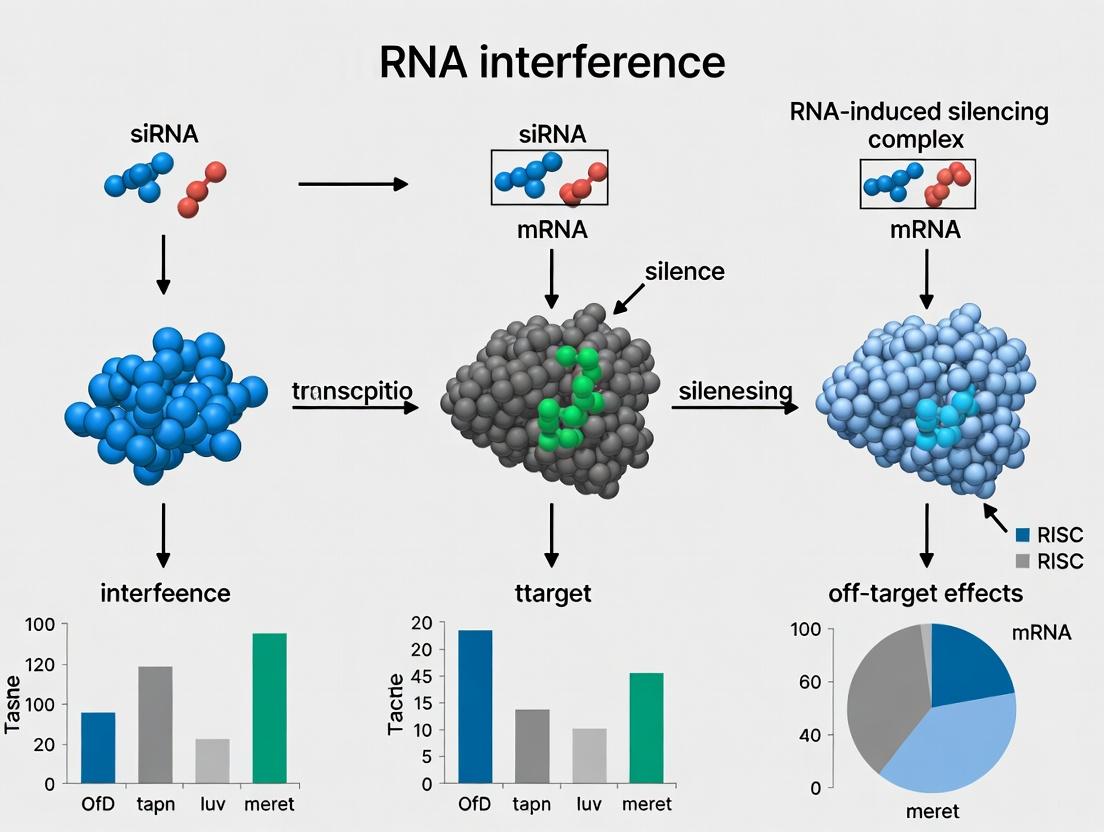
This comprehensive guide for researchers, scientists, and drug development professionals systematically addresses the critical challenge of off-target effects in RNA interference (RNAi) experiments.
RNAi Off-Target Effects: A 2024 Guide to Mechanisms, Mitigation, and Validation Strategies
Abstract
This comprehensive guide for researchers, scientists, and drug development professionals systematically addresses the critical challenge of off-target effects in RNA interference (RNAi) experiments. It explores the foundational molecular mechanisms causing seed-based and innate immune off-targeting, details advanced methodological strategies including novel siRNA design and chemical modifications, provides a troubleshooting framework for experimental optimization, and outlines rigorous validation and comparative analysis techniques. The article synthesizes current best practices to enhance data reliability, specificity, and therapeutic potential, bridging the gap between basic RNAi research and robust clinical application.
Decoding Off-Target Effects: The Molecular Mechanisms Behind RNAi's Hidden Side
Off-target effects (OTEs) in RNA interference (RNAi) experiments occur when a short interfering RNA (siRNA) or microRNA (miRNA) inadvertently silences genes other than the intended target due to partial sequence complementarity. These effects confound experimental data by introducing false-positive phenotypes and misleading conclusions about gene function. In therapeutic development, OTEs pose significant safety risks, potentially leading to cytotoxicity and unintended biological consequences. This support content is framed within the critical thesis of developing robust strategies to identify, mitigate, and account for OTEs to ensure data integrity and therapeutic viability.
Troubleshooting Guides & FAQs
Q1: My negative control siRNA is causing phenotypic changes or significant gene expression shifts. What does this indicate and how should I proceed? A: This strongly suggests off-target effects. The "negative control" sequence may have partial homology to unintended mRNA targets.
- Action Plan:
- Re-evaluate Control Design: Use a scrambled sequence verified by genome-wide alignment tools (e.g., BLAST) to have minimal homology. Consider using multiple control sequences with different designs.
- Profile the Effect: Perform transcriptomic analysis (RNA-seq) comparing your control siRNA to a mock-transfected sample. This identifies which genes are being off-targeted.
- Validate Findings: Use rescue experiments with an orthogonal tool (e.g., CRISPR inhibition or cDNA overexpression) to confirm that the phenotype is not target-specific.
Q2: How can I distinguish a true on-target phenotype from an off-target artifact? A: Rigorous validation through multiple, independent strategies is required.
- Action Plan:
- Use Multiple siRNAs: Test at least 2-3 independent siRNAs targeting different regions of the same gene. A phenotype reproduced by all is more likely to be on-target.
- Dose-Response Correlation: Titrate the siRNA. True on-target effects often show a dose-dependent response in both mRNA knockdown and phenotype severity.
- Rescue with Modified Target: Co-transfect an expression construct for the target gene containing silent mutations in the siRNA-binding site. This resistant cDNA should reverse an on-target phenotype but not an off-target one.
Q3: My siRNA shows excellent knockdown by qPCR, but no expected phenotypic change. Is this an off-target issue? A: Not necessarily. It could indicate poor knockdown at the protein level, functional redundancy, or an incorrect hypothesis. However, potent OTEs can sometimes mask or compensate for the loss of the target gene.
- Action Plan:
- Confirm Protein Knockdown: Always assess knockdown at the protein level (Western blot, immunofluorescence).
- Check for Compensation: Perform time-course experiments; the phenotype may manifest later.
- Assess Off-Target Signature: As in Q1, transcriptomic profiling can reveal if the siRNA is activating or repressing compensatory pathways.
Q4: What are the best current practices for designing siRNAs with minimal off-target potential? A: Modern design incorporates both algorithmic prediction and chemical modification.
- Action Plan:
- Leverage Design Tools: Use tools like siRNA Design Center (Horizon) or siDirect which incorporate rules for specificity and seed region optimization.
- Incorporate Chemical Modifications: Utilize siRNAs with strategic 2'-O-methyl (2'-O-Me) or 2'-fluoro (2'-F) modifications, especially at positions 2 and 6 of the seed region (guide strand nucleotides 2-8), to dramatically reduce seed-mediated OTEs.
- Pooling Strategies: Consider using well-designed siRNA pools (e.g., SMARTpools from Horizon) where individual siRNA concentrations are low, diluting out OTEs while maintaining on-target potency.
Table 1: Impact of Seed-Region Modifications on Off-Target Reduction
| Modification Type (Position in Guide Strand) | Reduction in Seed-Mediated Off-Target mRNA Changes | Effect On On-Target Potency |
|---|---|---|
| 2'-O-Me at positions 2 & 6 | >80% | Minimal loss (<20%) |
| 2'-O-Me at positions 1-8 (full seed) | >95% | Moderate loss (30-50%) |
| 2'-F at positions 2 & 6 | ~70% | Minimal loss (<10%) |
| Unmodified control (baseline) | 0% (Baseline) | 100% (Baseline) |
Data synthesized from recent studies (2022-2024) on chemically modified siRNAs.
Table 2: Validation Strategies and Their Efficacy
| Validation Method | Time Investment | Approx. Cost | Effectiveness in OTE Identification |
|---|---|---|---|
| Transcriptomics (RNA-seq) | 1-2 weeks | High | Very High (Global view) |
| Multiple siRNA Validation | 2-3 weeks | Medium | High |
| Rescue with Mutant cDNA | 3-4 weeks | Medium | Very High (Gold Standard) |
| pSILAC / Proteomics | 2-3 weeks | Very High | Highest (Direct protein-level data) |
Experimental Protocols
Protocol 1: Transcriptomic Profiling for Off-Target Signature Identification Objective: To identify genome-wide changes induced by an siRNA, comparing it to appropriate controls.
- Cell Culture & Transfection: Plate cells in triplicate. Transfert with: a) Test siRNA, b) Validated negative control siRNA, c) Mock transfection reagent control.
- RNA Isolation: At 48 hours post-transfection, harvest cells and isolate total RNA using a column-based kit with DNase I treatment. Assess integrity (RIN > 9.0).
- Library Prep & Sequencing: Use a stranded mRNA-seq library preparation kit. Sequence on a platform to achieve ~30 million paired-end reads per sample.
- Bioinformatic Analysis: Align reads to the reference genome. Perform differential gene expression analysis (e.g., DESeq2). Focus: Compare Test siRNA vs. Negative Control siRNA. Genes significantly differentially expressed (FDR < 0.05) are potential off-targets. Perform seed sequence analysis (motif 2-8 of guide strand) in 3'UTRs of downregulated genes.
Protocol 2: Rescue Experiment with siRNA-Resistant cDNA Objective: To confirm an observed phenotype is on-target.
- Design Resistant cDNA: Synthesize the cDNA for your target gene. Introduce 3-5 silent mutations in the region complementary to the siRNA guide strand using site-directed mutagenesis.
- Co-transfection: In a 24-well plate, co-transfect cells with:
- Condition A: siRNA (targeting endogenous WT mRNA) + Empty Vector.
- Condition B: siRNA + Resistant cDNA Expression Vector.
- Include relevant controls (scramble siRNA + vectors).
- Analysis: After 72 hours:
- qPCR: Use primers specific for the endogenous mRNA (targeting an untranslated region) to confirm knockdown.
- Western Blot: Use an antibody against the target protein to confirm rescue of protein expression from the modified cDNA.
- Phenotypic Assay: Measure the functional readout (e.g., viability, migration). True on-target phenotypes will be rescued in Condition B.
Visualizations
Diagram 1: siRNA Off-Target Mechanisms
Diagram 2: OTE Mitigation Workflow
The Scientist's Toolkit: Research Reagent Solutions
| Reagent / Tool | Function in Addressing OTEs | Key Consideration |
|---|---|---|
| Chemically Modified siRNAs (e.g., 2'-O-Me) | Reduce seed-mediated off-target binding by altering A-form helix geometry and RISC dynamics. | Modification at positions 2 & 6 offers best balance of specificity and potency. |
| SMARTvector Lentiviral shRNAs | Allows low-copy, stable integration for consistent, low-dose expression, reducing saturations that exacerbate OTEs. | Use inducible (e.g., Tet-pLKO) systems for temporal control and tighter validation. |
| Genome-Wide Expression Microarrays or RNA-seq Kits | Gold standard for empirical identification of off-target transcriptional signatures. | Always compare to multiple controls (scramble, mock). Include for pivotal experiments. |
| Silent Mutagenesis Kits (for cDNA rescue) | Creates an siRNA-resistant version of the target gene for definitive on-target phenotype validation. | Mutations must be in the siRNA-binding site and not alter amino acid sequence. |
| pSILAC (Stable Isotope Labeling) Kits | Quantitative proteomics method to directly measure changes at the protein level, capturing both direct and indirect OTEs. | More resource-intensive but provides the most comprehensive OTE data layer. |
| Validated Scrambled siRNA Controls | Negative controls designed to have minimal homology to any known gene, providing a better baseline. | Must be processed by RISC (have a functional passenger strand) to be a true control. |
Technical Support Center: Troubleshooting Guides & FAQs
FAQs & Troubleshooting
Q1: My siRNA/shRNA shows potent on-target knockdown, but my RNA-seq data reveals widespread dysregulation of transcripts that do not share full complementarity. Is this evidence of seed-mediated off-targeting? A: Very likely. This pattern is a hallmark of seed-region mediated off-target effects (OTEs). The siRNA's "seed region" (nucleotides 2-8 from the 5' end) can act like a microRNA (miRNA), binding to complementary sequences in the 3'UTRs of off-target mRNAs, leading to translational repression or mRNA destabilization. To confirm:
- Analyze Seed Matches: Use tools like TargetScan or miRanda to check for 6-8mer matches to your siRNA's seed sequence in the 3'UTRs of dysregulated genes.
- Perform Rescue Experiments: Co-transfect a synthetic mRNA for a key suspected off-target gene with a mutated 3'UTR (seed match site disrupted). Rescue of phenotype suggests direct off-target regulation.
Q2: How can I design RNAi reagents to minimize seed-mediated off-target effects? A: Employ rational design strategies:
- Seed Mismatch Design: Introduce a single mismatch (e.g., G-U wobble) at position 5 or 6 of the seed region. This drastically reduces miRNA-like activity while often preserving perfect-match, on-target RISC activity.
- Chemical Modifications: Incorporate 2'-O-methyl (2'-O-Me) or 2'-fluoro (2'-F) modifications, especially at positions 1 and 2 of the guide strand. This reduces non-specific loading into RISC and seed-dependent binding.
- Pooling: Use a pool of 3-4 siRNAs targeting the same gene. This dilutes the concentration of any single seed sequence, reducing OTEs while maintaining on-target efficacy.
Q3: My negative control siRNA (scrambled or targeting a non-mammalian gene) is still producing phenotypic changes. What went wrong? A: "Scrambled" controls are not sufficient. They may contain novel, biologically active seed sequences.
- Solution: Use validated negative controls with proven minimal seed match frequency to the transcriptome of your model organism. Alternatively, employ transfection controls that assess delivery toxicity separately.
Q4: What are the best experimental practices to distinguish true seed-mediated off-targets from indirect transcriptional changes? A: A tiered validation protocol is critical.
| Validation Tier | Method | Purpose | Key Interpretation |
|---|---|---|---|
| Tier 1: Correlation | Bioinformatics analysis of RNA-seq hits for seed match enrichment. | Identify candidate off-target genes. | P-value enrichment in 3'UTRs supports mechanism. |
| Tier 2: Direct Interaction | Luciferase reporter assay with wild-type vs. mutant 3'UTR. | Confirm direct seed-region binding. | Repression lost in mutant 3'UTR confirms direct targeting. |
| Tier 3: Phenotypic Rescue | Express cDNA of off-target gene lacking its 3'UTR (or with mutant site). | Link off-target mRNA change to phenotype. | Phenotype rescued = causal off-target effect. |
Detailed Experimental Protocols
Protocol 1: Luciferase Reporter Assay for Seed Match Validation Objective: To confirm direct binding of the siRNA seed region to a suspected off-target mRNA 3'UTR. Materials: Dual-Luciferase Reporter Assay System, HEK293T cells, psiCHECK-2 vector. Method:
- Clone a ~500-1000 bp fragment of the suspected off-target gene's 3'UTR, containing the predicted seed match, downstream of the Renilla luciferase gene in the psiCHECK-2 vector.
- Generate a mutant construct where the seed match sequence is disrupted via site-directed mutagenesis (e.g., mutate 2-3 central nucleotides).
- Co-transfect HEK293T cells with:
- psiCHECK-2 reporter (wild-type or mutant 3'UTR).
- Experimental siRNA or a negative control siRNA.
- A Firefly luciferase control plasmid for normalization.
- At 24-48 hours post-transfection, lyse cells and measure Renilla and Firefly luminescence.
- Normalize Renilla signal to Firefly signal. A significant reduction in normalized Renilla activity for the wild-type, but not the mutant, reporter confirms seed-mediated regulation.
Protocol 2: Modified siRNA Synthesis for Reduced OTEs Objective: To synthesize a chemically modified siRNA with attenuated seed-mediated off-targeting. Method:
- Design: Start with your optimized on-target siRNA sequence.
- Modification Strategy:
- Synthesize the guide strand with 2'-O-Me modifications on riboses at positions 1 and 2.
- Alternatively, introduce a single G-U wobble mismatch at position 6 of the seed region (e.g., change a designed A to U to pair with a genomic G).
- Synthesis & Purification: Perform solid-phase synthesis using standard phosphoramidite chemistry, incorporating the modified phosphoramidites at specified positions. Purify via HPLC.
- Validation: Test the modified siRNA alongside the unmodified version for on-target potency (qRT-PCR) and off-target profile (focused qPCR array of predicted seed-matched genes).
Diagrams
Title: Mechanism of Seed-Mediated Off-Target Effects in RNAi
Title: Three-Tier Experimental Validation Workflow for Off-Targets
The Scientist's Toolkit: Research Reagent Solutions
| Reagent / Material | Function & Rationale |
|---|---|
| Chemically Modified siRNA (e.g., 2'-O-Me at positions 1,2) | Reduces guide strand loading into RISC and stabilizes the seed region, decreasing non-seed and seed-mediated interactions with off-target transcripts. |
| Seed-Mismatch siRNA Controls | Designed with deliberate mismatches in the seed region; critical control to attribute phenotypic effects to the seed sequence itself versus other siRNA features. |
| Validated Negative Control siRNA | A siRNA with a sequence proven to have minimal matches to the host transcriptome and no immune stimulation. Superior to simple "scrambled" controls. |
| Dual-Luciferase Reporter Vector (e.g., psiCHECK-2) | Allows cloning of putative 3'UTR sequences downstream of a reporter gene to directly test for seed-mediated repression in a controlled context. |
| 3'UTR Mutant Clones | Site-directed mutants of the putative off-target 3'UTR with disrupted seed match sites. Essential for specificity control in reporter assays. |
| cDNA Rescue Constructs | Expression plasmids for suspected off-target genes that lack the native 3'UTR, enabling phenotypic rescue experiments to establish causality. |
| Bioinformatics Tools (TargetScan, miRanda) | Predict potential off-target genes based on seed sequence complementarity to 3'UTRs, guiding validation experiments. |
Troubleshooting & FAQs
Q1: My siRNA/miRNA experiment shows potent target knockdown, but I also observe unexpected cell death or morphology changes in my treated cells. Could this be due to PKR activation, and how can I confirm it? A: Yes, this is a classic sign of PKR activation by double-stranded RNA (dsRNA) contaminants. PKR activation leads to phosphorylation of eIF2α, halting global translation and inducing apoptosis.
- Confirmation Protocol:
- Western Blot Analysis: Lyse cells 24-48 hours post-transfection.
- Probe for:
- Phospho-PKR (Thr446) – indicates active PKR.
- Phospho-eIF2α (Ser51) – downstream marker of PKR activity.
- Total PKR & eIF2α – loading controls.
- Compare lanes: Untreated, Scramble siRNA, Your siRNA, Positive Control (e.g., synthetic dsRNA like poly(I:C)).
Q2: I see a strong inflammatory cytokine response (e.g., IFN-β, TNF-α, IL-6) after siRNA transfection in my immune cells. Which TLRs are likely involved, and how do I pinpoint the specific pathway? A: In immune cells, this typically indicates endosomal TLR activation. TLR3 binds dsRNA, while TLR7/8 bind ssRNA.
- Pinpointing Protocol (Using Inhibitors):
- Pre-treat cells for 1 hour with specific pharmacological inhibitors prior to siRNA transfection.
- Key Inhibitors:
- TLR3: Bafilomycin A1 (inhibits endosomal acidification required for TLR3 signaling).
- TLR7/8: Chloroquine or specific small-molecule antagonists (e.g., CU-CPT9a).
- MyD88/TRIF: Use peptide inhibitors to block these key adaptor proteins downstream of most TLRs.
- Measure cytokine mRNA (qPCR) or protein (ELISA) 6-24 hours post-transfection to see which inhibitor abrogates your response.
Q3: How can I design or select RNAi reagents that minimize PKR and TLR activation? A: Follow these design and sourcing guidelines:
- Avoid Long dsRNA: Use <30 bp duplexes. Shorter siRNAs (<21 bp) are less potent PKR activators.
- Modify Chemistry: Incorporate 2'-O-methyl (2'-O-Me), 2'-fluoro (2'-F), or other modifications on specific nucleotides (especially uridines in sense strand) to block TLR7/8 recognition.
- Purification: Always use HPLC- or PAGE-purified reagents to remove short, imperfect dsRNA fragments.
- Sequence Scrutiny: Avoid GU-rich sequences (TLR7/8 agonists) and use sequence prediction tools to flag immunostimulatory motifs.
Q4: What are reliable positive and negative controls for innate immune activation experiments in RNAi? A:
| Control Type | Reagent/Technique | Expected Readout | Purpose |
|---|---|---|---|
| Positive (PKR) | Transfect poly(I:C) (high mol wt) | Strong p-PKR, p-eIF2α, cell death | Activates PKR & TLR3. |
| Positive (TLR7/8) | Transfect ssRNA rich in GU/U (e.g., GU-rich oligonucleotide) or R848 (small molecule agonist) | Cytokine secretion (IFN-α, TNF-α) | Specific TLR7/8 pathway activation. |
| Negative | Scrambled siRNA (modified, HPLC-purified) | No immune markers, only target knockdown effects | Baseline for specific silencing. |
| Negative | Mock transfection (lipid reagent only) | No immune markers | Controls for transfection stress. |
Table 1: Innate Immune Activation by Common RNAi Triggers
| RNA Trigger (50 nM) | PKR Activation (p-eIF2α fold increase) | IFN-β mRNA (fold increase) | TNF-α Secretion (pg/mL) | Primary Receptor |
|---|---|---|---|---|
| Unmodified siRNA (HPLC-purified) | 1.5 - 3 | 2 - 10 | 50 - 200 | Low/Moderate PKR, possible TLR7/8 |
| Unmodified siRNA (unpurified) | 5 - 20 | 50 - 200 | 500 - 2000 | PKR, TLR7/8 |
| 2'-O-Me Modified siRNA | ~1 | ~1 | < 50 | Minimal |
| Poly(I:C) (1 μg/mL) | 20 - 50 | 100 - 1000 | 1000 - 5000 | PKR, TLR3 |
| Lipofectamine Only | ~1 | ~1 | < 20 | N/A |
Table 2: Key Innate Immune Sensors in RNAi Experiments
| Sensor | Location | Ligand from RNAi | Adaptor Protein | Key Downstream Effector | Final Outcome |
|---|---|---|---|---|---|
| PKR | Cytoplasm | Long dsRNA (>30 bp), siRNA with blunt ends | (Direct) | eIF2α phosphorylation | Translation shutdown, apoptosis |
| TLR3 | Endosome | Long dsRNA, siRNA complexes | TRIF | IRF3/NF-κB activation | Type I IFN, pro-inflammatory cytokines |
| TLR7 (murine) / TLR8 (human) | Endosome | GU-rich ssRNA, siRNA sense strand | MyD88 | IRF7/NF-κB activation | Type I IFN, pro-inflammatory cytokines |
Experimental Protocols
Protocol 1: Detecting PKR/eIF2α Pathway Activation (Western Blot)
- Cell Seeding & Transfection: Seed appropriate cells (e.g., HEK293, HeLa) to reach 70% confluency in 24 hours. Transfect with 10-50 nM siRNA using your standard reagent.
- Lysis: At 24h and 48h post-transfection, lyse cells in RIPA buffer supplemented with phosphatase and protease inhibitors.
- Electrophoresis & Transfer: Load 20-40 μg of protein per lane on a 4-12% Bis-Tris gel. Transfer to PVDF membrane.
- Blocking & Incubation: Block with 5% BSA in TBST for 1h. Incubate overnight at 4°C with primary antibodies:
- Mouse anti-phospho-PKR (Thr446) (1:1000)
- Rabbit anti-phospho-eIF2α (Ser51) (1:1000)
- Rabbit anti-total eIF2α (1:2000) – loading control.
- Detection: Incubate with HRP-conjugated secondary antibodies (1:5000) for 1h at RT. Develop using ECL reagent and image.
Protocol 2: Quantifying TLR-Mediated Cytokine Response (qPCR)
- Treatment: Seed primary macrophages or suitable cell line (e.g., THP-1-derived). Pre-treat with inhibitors (e.g., Chloroquine 10 μM) if needed. Transfert siRNA.
- RNA Extraction: 6h post-transfection, extract total RNA using TRIzol reagent.
- cDNA Synthesis: Use 1 μg RNA for reverse transcription with a random hexamer primer kit.
- qPCR Setup: Prepare reactions in triplicate with SYBR Green master mix. Use primers for:
- Target Cytokines: IFN-β, TNF-α, IL-6
- Housekeeping: GAPDH or HPRT
- Analysis: Calculate fold induction using the 2^(-ΔΔCt) method relative to mock-transfected controls.
The Scientist's Toolkit: Research Reagent Solutions
| Item | Function in This Context | Example/Note |
|---|---|---|
| HPLC-Purified siRNAs | Removes short dsRNA contaminants that are potent PKR/TLR agonists. | Essential for all in vitro experiments. |
| Chemically Modified Nucleotides (2'-O-Me, 2'-F) | Masks RNA from immune sensing; reduces TLR7/8 binding. | Place on specific positions (e.g., 2nd base of sense strand). |
| Poly(I:C), High Molecular Weight | Definitive positive control for PKR and TLR3 activation. | Use at 0.1-1 μg/mL. |
| R848 (Resiquimod) | Specific small-molecule agonist for TLR7/8. | Positive control for endosomal ssRNA sensing. |
| Bafilomycin A1 | V-ATPase inhibitor that blocks endosomal acidification. | Inhibits TLR3 & TLR7/8/9 signaling. |
| Chloroquine | Weak base that inhibits endosomal TLR signaling (esp. TLR7/8/9). | Useful for screening if TLRs are involved. |
| Anti-phospho-PKR (Thr446) Antibody | Detects activated PKR by Western blot. | Critical for confirming PKR pathway. |
| Mouse IFN-β / Human TNF-α ELISA Kit | Quantifies specific cytokine secretion. | More sensitive than qPCR for protein output. |
Signaling Pathway Diagrams
Troubleshooting & FAQs
Q1: How can I experimentally confirm that my observed off-target effects are due to saturating the endogenous RNAi machinery, and not another mechanism? A: Perform a dose-response experiment with your siRNA. If off-target effects increase non-linearly at higher concentrations (especially above 100 nM) while target knockdown plateaus, it suggests saturation. A key control is to co-transfect a fixed dose of your siRNA with increasing doses of a non-targeting siRNA. If the non-targeting siRNA alone begins to produce sequence-independent phenotypic effects at high doses, it indicates saturation of shared pathway components like Exportin-5 or RISC loading factors.
Q2: What are the critical concentrations to avoid for siRNA/ miRNA mimics to prevent saturation? A: Current literature indicates thresholds vary by cell type and transfection efficiency. As a general guideline:
| Reagent Type | Low Risk Range | Moderate Risk Range | High Saturation Risk |
|---|---|---|---|
| siRNA (final conc.) | 1 - 10 nM | 10 - 30 nM | > 30 nM |
| miRNA mimic (final conc.) | 1 - 5 nM | 5 - 20 nM | > 20 nM |
| shRNA (lentiviral MOI) | < 10 | 10 - 50 | > 50 |
Q3: My positive control siRNA (e.g., against GAPDH) is working at 50 nM, but I see cytotoxicity. How do I maintain knockdown without saturation effects? A: Titrate the control siRNA downward. Use 5-10 nM and optimize transfection reagent for maximum efficiency. Alternatively, switch to siRNA formulations with chemical modifications (e.g., 2'-O-methyl) that increase potency and longevity, allowing lower doses. Always include a non-targeting siRNA control at the same concentration to deconvolute sequence-specific from saturation effects.
Q4: What are the best endogenous markers to monitor for global miRNA pathway disruption? A: Quantify the levels of mature, endogenous miRNAs that are highly expressed and regulated in your cell model (e.g., let-7a, miR-21) via qRT-PCR. Saturation causes a global decrease in these mature miRNAs. Simultaneously, monitor pre-miRNA accumulation via primers specific to the pre-miRNA loop, as saturation of Exportin-5 causes nuclear accumulation.
Q5: How long after transfection should I assay for saturation effects? A: Effects can be transient. Assay at 24, 48, and 72 hours post-transfection. Saturation-driven off-targets often peak at 24-48 hours and may diminish by 72 hours as siRNA/mimic levels decrease, while true on-target effects persist.
Experimental Protocols
Protocol 1: Validating Saturation via Endogenous miRNA Displacement Objective: To assess if exogenous RNAi reagent saturates Exportin-5/RISC, leading to functional depletion of endogenous miRNAs.
- Transfection: Plate cells in 12-well plates. Transfect with either a non-targeting siRNA or your therapeutic siRNA at a range of concentrations (e.g., 1, 10, 30, 100 nM) using your standard protocol.
- RNA Isolation: At 48 hours post-transfection, harvest cells and isolate total RNA using a column-based method that retains small RNAs.
- Reverse Transcription: Use a stem-loop RT primer specific to your chosen control mature miRNA (e.g., hsa-let-7a-5p) and a standard oligo-dT/prandom hexamer mix for mRNA targets (e.g., a known let-7 target gene like HMGA2).
- qPCR: Perform TaqMan-based qPCR (recommended for specificity) for the mature miRNA and the mRNA target. Use snRNA U6 or RNU44 as a reference for miRNA, and GAPDH for mRNA.
- Analysis: Calculate ΔΔCt. A dose-dependent increase in HMGA2 mRNA (derepression) concurrent with a decrease in mature let-7a signals saturation.
Protocol 2: Competitive Saturation Assay Objective: To directly demonstrate competition for limiting cellular factors.
- Reporter Construction: Use a dual-luciferase reporter system (e.g., psiCHECK-2). Clone a perfectly complementary target site for an exogenous miRNA (e.g., C. elegans miR-67, which has no human homolog) into the 3'UTR of Renilla luciferase.
- Co-transfection: In a 96-well format, co-transfect a constant, low dose (5 nM) of the miR-67 mimic with an increasing dose (0-50 nM) of a non-targeting siRNA or your siRNA of interest.
- Measurement: Assay dual-luciferase activity at 24 hours. Normalize Renilla (miR-67 target) to Firefly.
- Interpretation: As the competing siRNA dose increases, the repression of the Renilla reporter by the co-transfected miR-67 mimic will decrease, indicating competition for shared limiting machinery. Plot normalized luminescence vs. competitor siRNA dose.
Visualization
The Scientist's Toolkit
| Research Reagent Solution | Function in Addressing Saturation |
|---|---|
| Low Dose, High-Potency siRNA (e.g., Accell, Silencer Select) | Chemically modified for enhanced stability and RISC loading, enabling effective knockdown at 1-10 nM, below typical saturation thresholds. |
| Non-Targeting siRNA Pool | A complex pool of sequences with no known targets. Used as a critical negative control at all experimental doses to identify concentration-dependent, sequence-independent effects. |
| miRNA Mimic (Control, e.g., cel-miR-67) | A mimic of a miRNA from another species with no homology to the host genome. Used in competitive reporter assays to directly measure functional capacity of the RNAi machinery. |
| Dual-Luciferase miRNA Target Reporter (e.g., psiCHECK-2) | Vector system for cloning miRNA target sites. Essential for conducting the competitive saturation assay to monitor displacement of endogenous miRNA function. |
| TaqMan Small RNA Assays | Highly specific qRT-PCR assays for quantifying subtle changes in levels of mature endogenous miRNAs (e.g., let-7) to monitor global pathway disruption. |
| Exportin-5 / AGO2 Antibodies | For western blot or immunofluorescence to monitor potential upregulation or re-localization of core RNAi factors in response to saturation stress. |
| Locked Nucleic Acid (LNA) Inhibitors | Ultra-high-affinity antisense oligonucleotides to inhibit specific endogenous miRNAs. Useful as positive controls for miRNA loss-of-function phenotypes. |
Troubleshooting Guides & FAQs
Q1: My siRNA experiment shows a strong phenotypic effect, but validation with a second siRNA yields no effect. Could this be due to off-targeting? A: Yes, this is a classic indicator of an siRNA-specific off-target effect. The first siRNA is likely regulating genes other than your intended target (via seed region-mediated microRNA-like silencing), producing a phenotype not related to true target knockdown. Always use a minimum of two functionally independent siRNAs targeting different regions of the same gene. If phenotypes do not converge, off-target effects are probable.
Q2: RNA-Seq after siRNA knockdown shows hundreds of differentially expressed genes. How do I distinguish on-target from off-target transcriptomic changes? A: This requires a comparative approach. Perform RNA-Seq following knockdown with at least two unrelated siRNAs to the same target. Genes that are differentially expressed in both experiments are high-confidence on-target effects. Changes unique to a single siRNA are likely off-target. Use the following analysis workflow:
Diagram Title: Workflow to Distinguish On vs. Off-Target Transcriptomic Effects
Q3: How can I minimize seed-mediated off-target effects when designing siRNAs? A: Utilize modern siRNA design algorithms that incorporate seed region toxicity screening. Key steps:
- Use Specialized Design Tools: Leverage tools from vendors (Horizon, Sigma) or open-source platforms that predict and penalize siRNAs with 6-7 nt seed sequences complementary to highly expressed mRNAs in your cell type.
- Chemical Modification: Incorporate 2'-O-methyl modifications at specific positions (e.g., positions 2 and 6 of the guide strand) to reduce seed region interaction with Ago2.
- Use Pooled siRNAs: A carefully designed pool of 4-5 siRNAs can dilute out individual off-target effects, as each siRNA's off-targets are unlikely to be consistent.
Q4: What is the gold-standard experimental control to identify phenotypic off-targets? A: The rescue experiment is considered the gold standard. It involves expressing a target gene cDNA that is resistant to the siRNA (due to silent mutations in the siRNA binding site) in the knockdown background. If the phenotype is reversed, it confirms an on-target effect. Persistent phenotype indicates off-target activity.
Key Experimental Protocols
Protocol 1: Transcriptomic Off-Target Profiling by RNA-Seq
Objective: To genome-widely identify off-target gene expression changes induced by an siRNA. Steps:
- Transfection: Treat cells in triplicate with a) Target siRNA, b) Non-targeting Control (NTC) siRNA, c) A second, independent siRNA to the same target.
- RNA Extraction: 48 hours post-transfection, extract total RNA using a column-based kit with DNase I treatment. Assess integrity (RIN > 9.0).
- Library Prep & Sequencing: Use stranded mRNA-Seq library preparation kit. Sequence on a platform to achieve >30 million aligned reads per sample.
- Bioinformatic Analysis:
- Align reads to the reference genome (e.g., STAR aligner).
- Quantify gene expression (e.g., featureCounts).
- Perform differential expression analysis (e.g., DESeq2) comparing each target siRNA vs. NTC.
- Identify the consensus signature (intersection of both siRNA analyses) as the on-target signature. Genes deregulated by only one siRNA are its off-target signature.
Protocol 2: Phenotypic Off-Target Validation via Rescue
Objective: To confirm if an observed phenotype is due to specific on-target knockdown. Steps:
- Design Rescue Construct: Clone the target ORF into an expression vector. Introduce 3-5 silent mutations within the siRNA binding site using site-directed mutagenesis.
- Cell Line Generation: Stably transfect cells with either the rescue construct (mutated, siRNA-resistant) or an empty vector control.
- Phenotype Assay: Transfert both cell lines with the target siRNA or NTC. Perform the phenotypic assay (e.g., proliferation, migration, apoptosis) 72-96 hours later.
- Interpretation: If the phenotype in the rescue construct line is significantly attenuated compared to the empty vector line, the phenotype is on-target.
Table 1: Comparative Analysis of Off-Target Effect Detection Methods
| Method | Detects Phenotypic OT? | Detects Transcriptomic OT? | Throughput | Cost | Key Limitation |
|---|---|---|---|---|---|
| Multiple siRNA Convergence | Yes | Yes | Medium | $$ | Cannot rule out convergent off-targets |
| Rescue with Mutated cDNA | Yes (Gold Standard) | No | Low | $$ | Technically demanding, not for high-throughput |
| Genome-Wide RNA-Seq | Indirectly | Yes | Low | $$$ | Identifies changes but not direct causality |
| Sensor Reporter Assays | No | Yes (for seed effects) | High | $ | Only tests predicted seed matches |
| Chemical Modification (2'-O-Me) | Mitigates | Mitigates | High | $ | Prophylactic, not diagnostic |
Table 2: Impact of siRNA Chemical Modifications on Off-Target Effects (Representative Data)
| Modification Strategy | Seed-Mediated Off-Targets (by RNA-Seq) | On-Target Potency (IC50) | Phenotype Specificity (Rescue Validation) |
|---|---|---|---|
| Unmodified siRNA | 100-500+ DEGs | 1.0 nM (reference) | Low (30-50% rescue) |
| 2'-O-Me @ g2, g6 | ~70% Reduction in OT DEGs | No significant change | High (>80% rescue) |
| Pooled siRNAs (4-plex) | ~85% Reduction in OT DEGs | May increase 2-5 fold | Moderate to High |
| RISC-free siRNA* (as control) | Identifies false positives | Inactive | Essential Control |
*siRNA designed not to load into RISC.
The Scientist's Toolkit: Key Research Reagent Solutions
| Item | Function in Addressing Off-Targets | Example/Vendor |
|---|---|---|
| Multiple, Independent siRNAs | To distinguish consistent on-target from random off-target effects. Minimum of two is mandatory. | Horizon Discovery (SMARTvector, On-Targetplus), Sigma (MISSION esiRNAs) |
| Non-Targeting Control (NTC) siRNA | A negative control with no sequence homology to the genome, matching GC content and complexity. | All major vendors (e.g., Dharmacon, Qiagen) |
| RISC-Free Control siRNA | A chemically modified siRNA that cannot load into Ago2. Distinguishes RNAi-mediated from non-specific effects. | Dharmacon (RISC-free Control) |
| siRNA with Chemical Modifications | 2'-O-methyl, 2'-Fluoro modifications reduce seed-mediated off-target binding. | Horizon (Accell), Silence Therapeutics (DB-STAT) designs |
| Validated Rescue Construct (cDNA) | siRNA-resistant cDNA for definitive phenotypic validation. Often requires custom generation. | Gene synthesis services (GenScript, IDT), mutagenesis kits. |
| PCR-based Off-Target Prediction Tools | In silico screening of seed region homology to avoid worst-case siRNAs. | Dharmacon siDESIGN Center, Horizon's design algorithm. |
| Ago2 CLIP-Seq Kits | To experimentally identify all RNA sequences bound by Ago2 after siRNA transfection. | Protocol requires specific Ago2 antibody (e.g., Abcam). |
Key Historical and Recent Landmark Studies Defining the Problem (e.g., Jackson et al., 2003; Recent Nature Methods Reviews)
FAQs & Troubleshooting Guide for RNAi Off-Target Effects
This technical support center addresses common experimental issues related to off-target effects in RNA interference (RNAi) research. The guidance is framed within the historical and recent literature that defines the scope of the problem.
FAQ 1: My siRNA experiment shows a phenotype, but validation with a second siRNA targeting the same gene does not. What is the likely cause and how should I proceed?
- Answer: This is a classic indicator of an off-target effect. The phenotype from the first siRNA is likely caused by unintended silencing of other transcripts with partial sequence complementarity. Troubleshooting Steps:
- Rule Out Low Efficacy: Ensure the second siRNA has validated knockdown efficiency via qRT-PCR.
- Use Multiple Controls: Always include at least two distinct siRNAs per target with non-overlapping seed regions (nucleotides 2-8 of the guide strand). A consistent phenotype across both increases confidence.
- Rescue Experiment: Perform a rescue by expressing an siRNA-resistant cDNA version of your target gene. Restoration of the wild-type phenotype confirms on-target activity.
- Analyze Seed Region: Check the 7-nt seed sequence of your first siRNA for potential off-targets using databases like
siRNA Off-Target FinderorUCSC Genome Browser.
FAQ 2: My negative control siRNA (scramble or non-targeting) is producing unexpected changes in gene expression or cell viability. What went wrong?
- Answer: So-called "negative control" siRNAs can still induce immune responses (e.g., via TLR activation) or have seed-mediated off-target effects.
- Troubleshooting Steps:
- Validate Control Sequence: Re-screen your control sequence in silico for homology to any human gene (especially within the seed region) and for immune-stimulatory motifs.
- Test Multiple Controls: Use a panel of at least two different validated negative control sequences from reputable vendors.
- Monitor Immune Activation: Include assays for immune response markers (e.g., IFN-β expression) in your experimental setup.
- Use Modified Nucleotides: Consider using siRNAs with 2'-O-methyl modifications, particularly in the passenger strand, to reduce immune stimulation.
FAQ 3: How can I definitively identify all transcripts affected by an siRNA's off-target activity?
- Answer: Genome-wide transcriptome profiling is required. Recommended Protocol:
- Experimental Design: Treat samples with your siRNA of interest, a validated negative control siRNA, and include a mock-transfected control. Use biological replicates (n≥3).
- RNA-Seq: Perform next-generation RNA sequencing (RNA-Seq) for unbiased transcriptome analysis. This has largely replaced microarrays for this purpose.
- Bioinformatic Analysis:
- Map sequencing reads to the reference genome.
- Identify differentially expressed genes (DEGs) (e.g., using DESeq2 or EdgeR; adjusted p-value < 0.05).
- Perform seed match analysis: Filter the list of DEGs to identify those with a 6- or 7-nt match to the seed region (positions 2-7 or 2-8) of the siRNA guide strand in their 3'UTR. These are high-confidence off-target candidates.
FAQ 4: What are the current best practices to minimize off-target effects in my RNAi experiment design?
- Answer: Implement a consensus strategy derived from landmark studies:
- Use Pooled siRNAs: Employ a pool of 4-5 siRNAs targeting the same gene. This dilutes individual off-target effects while maintaining on-target potency.
- Utilize Chemical Modifications: Specify siRNAs with 2'-O-methyl or 2'-fluoro modifications in the passenger strand and seed region of the guide strand to reduce seed-mediated off-targeting.
- Employ siRNA Design Algorithms: Use modern design tools (e.g., from Dharmacon, Ambion, or DSIR) that incorporate rules to avoid seed sequences associated with prolific off-targeting.
- Mandatory Rescue Experiment: Design a cDNA rescue construct containing silent mutations in the siRNA target site to confirm phenotype specificity.
Data Presentation: Key Studies on RNAi Off-Target Effects
Table 1: Landmark Studies Defining the Off-Target Problem
| Study (Year) | Key Finding | Experimental Method | Quantitative Insight |
|---|---|---|---|
| Jackson et al., 2003 (Nature Biotechnology) | First genome-wide demonstration that siRNAs can silence hundreds of genes with limited complementarity, primarily via the 6-7 nt "seed" sequence. | Microarray analysis of cells transfected with single siRNAs. | ~300 genes were downregulated ≥1.5-fold by a single siRNA, most with ≥6-nt match to the seed region. |
| Birmingham et al., 2006 (Nature Methods) | Systematically defined the impact of seed region pairing on off-targeting. | Luciferase reporter assays with 3'UTRs containing specific matches to siRNA seeds. | A 7-nt match to positions 2-8 of the guide strand caused a median 65% knockdown of the reporter. |
| Recent Review: Ressel & Rorbach, 2024 (Nature Reviews Molecular Cell Biology) | Synthesis of current knowledge, emphasizing that chemical modifications and pooled designs are now the standard for therapeutic RNAi. | Review of clinical & preclinical data. | Modern modified siRNA pools show >90% reduction in off-target signatures compared to early unmodified designs. |
Experimental Protocol: Genome-Wide Off-Target Profiling via RNA-Seq
Objective: To identify all siRNA-mediated off-target transcript changes. Workflow:
- Cell Seeding & Transfection: Seed HEK293 cells in 6-well plates. In triplicate, transfect with: a) Target siRNA (20 nM), b) Validated Negative Control siRNA (20 nM), c) Mock (transfection reagent only).
- Incubation: Incubate for 48 hours.
- RNA Isolation: Harvest cells and extract total RNA using a column-based kit with DNase I treatment. Assess integrity (RIN > 9.5).
- Library Preparation & Sequencing: Deplete ribosomal RNA. Prepare stranded cDNA libraries. Sequence on an Illumina platform to a depth of 30-40 million paired-end reads per sample.
- Bioinformatic Analysis:
- Alignment: Map reads to the human reference genome (GRCh38) using STAR aligner.
- Quantification: Generate gene-level counts using featureCounts.
- Differential Expression: Analyze with DESeq2 (siRNA vs. Negative Control). Genes with FDR-adjusted p-value < 0.05 and |log2FoldChange| > 0.5 are considered Differentially Expressed Genes (DEGs).
- Seed Match Filtering: Cross-reference DEGs against a database of all 3'UTR sequences. Isolate genes containing a perfect 7-nt match (or 6-nt match at positions 2-7) to the siRNA guide strand seed sequence.
Diagram Title: RNA-Seq Workflow for siRNA Off-Target Identification
The Scientist's Toolkit: Research Reagent Solutions
Table 2: Essential Reagents for Mitigating RNAi Off-Target Effects
| Item | Function & Rationale | Example/Vendor |
|---|---|---|
| SMARTpool siRNA | A pool of 4-5 distinct siRNAs targeting one gene. Reduces off-target effects by diluting individual siRNA seed-mediated activity while maintaining strong on-target knockdown. | Dharmacon SMARTpool |
| Chemically Modified siRNA (2'-OMe) | Incorporation of 2'-O-methyl nucleotides in the seed region (guide strand) and passenger strand. Dramatically reduces seed-mediated off-targeting and immune stimulation. | Silencer Select (Ambion); ON-TARGETplus (Dharmacon) |
| Validated Negative Control siRNA | A siRNA with a scrambled sequence rigorously screened to have minimal seed matches in the transcriptome and no immune stimulation. Critical for baseline comparison. | AllStars Neg. Ctrl (Qiagen); Non-Targeting Ctrl (Dharmacon) |
| siRNA-Rescue cDNA Construct | Plasmid expressing the target gene cDNA with silent mutations in the siRNA binding site. Gold-standard confirmation that an observed phenotype is on-target. | Custom design (e.g., GenScript, IDT) |
| Ribo-depletion Kit for RNA-Seq | For transcriptome profiling, ribosomal RNA depletion (over poly-A selection) allows capture of non-polyadenylated RNAs affected by off-target effects. | NEBNext rRNA Depletion Kit |
| Dual-Luciferase Reporter Assay System | To functionally validate predicted off-target interactions by cloning putative 3'UTRs behind a luciferase gene. | Promega Dual-Luciferase Reporter |
Diagram Title: Dual Pathways of siRNA On-Target and Seed-Mediated Off-Target Effects
Advanced siRNA Design and Delivery Strategies to Minimize Off-Targeting
Troubleshooting Guides & FAQs
Q1: My siRNA shows strong knockdown of the target mRNA in qPCR, but my phenotypic assay is inconsistent or shows no effect. What could be wrong?
A: This strongly suggests significant off-target effects. The siRNA is likely silencing unintended transcripts, which can confound phenotypic readouts.
- Actionable Steps:
- Check Specificity: Use BLAST or a specialized siRNA design tool (e.g., from IDT, Dharmacon) to verify your siRNA sequence has minimal homology to other transcripts, especially in the seed region (positions 2-8 of the guide strand).
- Validate with Multiple siRNAs: Always use at least two distinct siRNAs targeting the same gene. Concordant phenotypes across multiple siRNAs increase confidence.
- Rescue Experiment: Perform a rescue by expressing a cDNA of your target gene that is resistant to the siRNA (e.g., through silent mutations). Restoration of phenotype indicates on-target activity.
- Analyze by RNA-seq: For critical experiments, perform RNA-seq to profile genome-wide expression changes after siRNA treatment and identify major off-targets.
Q2: I designed an siRNA with perfect asymmetry (low 5' end stability for the guide strand), but the antisense strand is still incorporated into RISC. Why?
A: Thermodynamic asymmetry is a strong determinant but not absolute. Other factors influence RISC loading.
- Actionable Steps:
- Verify Rule Compliance: Ensure the guide strand has a lower thermodynamic stability at its 5' end relative to its 3' end and to the 5' end of the passenger strand. Re-calculate ΔG using tools like DINAMelt or the UNAFold module.
- Check Sequence Motifs: Avoid sequences that may be bound by endogenous proteins that interfere with Dicer processing or RISC loading.
- Consider Chemical Modification: Use siRNAs with chemical modifications (e.g., 2'-O-methyl on the passenger strand) that promote its degradation and prevent loading.
Q3: What is the optimal GC content for an effective siRNA, and what happens if it's too high or too low?
A: An optimal GC content is typically between 30% and 55%.
- Low GC (<30%): May reduce duplex stability, potentially decreasing efficacy and increasing susceptibility to degradation.
- High GC (>60%): Can lead to excessive duplex stability, making strand separation by RISC difficult, reducing silencing efficiency, and increasing the risk of non-specific immune activation (e.g., through PKR response).
- Actionable Step: Re-design siRNAs falling outside the 30-55% GC range. If the target region is universally high-GC, consider using modified bases (e.g., unlocked nucleic acids, UNA) to locally destabilize the duplex.
Q4: My negative control siRNA (scrambled or non-targeting) is causing unexpected gene expression changes. How do I establish a proper baseline?
A: This is a common issue where the "negative control" itself has off-target effects due to seed region homology.
- Actionable Steps:
- Use Validated Controls: Use vendor-provided, extensively profiled non-targeting controls. Do not rely on a simple scrambled sequence.
- Employ Multiple Controls: Include more than one distinct control sequence to differentiate general from sequence-specific effects.
- Consider "Mock" Transfection: Include a transfection reagent-only control to account for reagent toxicity or immune stimulation.
- Move to Modified Controls: Use controls with chemical modifications (e.g., 2'-O-methyl modifications on every base) that virtually eliminate RISC incorporation and off-targeting.
Table 1: Quantitative Guidelines for Rational siRNA Design
| Parameter | Optimal Range/Value | Rationale & Consequence of Deviation |
|---|---|---|
| Length | 19-21 bp duplex | Standard for Dicer processing and RISC loading. Longer siRNAs may trigger interferon response. |
| GC Content | 30% - 55% | Balanced duplex stability. Low GC: poor efficacy. High GC: difficult RISC loading, increased off-target risk. |
| Thermodynamic Asymmetry (ΔΔG) | ≤ -1.0 kcal/mol | Favors guide strand loading into RISC. Positive or near-zero ΔΔG promotes passenger strand loading and off-targeting. |
| Seed Region (pos 2-8) Specificity | ≤ 15-16 nt match to any other transcript | Minimizes microRNA-like off-target effects. Requires rigorous BLAST search. |
| Internal Repeats/Symmetry | Avoid | Reduces risk of hairpin formation within the siRNA or non-specific interactions. |
| 3' Overhangs | 2-nt deoxythymidine (dTdT) or UU | Enhances accuracy of Dicer cleavage and promotes RISC assembly. |
Experimental Protocol: Validating siRNA Specificity and Efficacy
Objective: To confirm on-target gene knockdown and assess potential major off-target effects using qRT-PCR.
Materials: See The Scientist's Toolkit below.
Method:
- Transfection: Plate cells to reach 30-50% confluency at transfection. Transfect with:
- Test siRNA(s) (at least two different sequences).
- Validated Non-targeting Control siRNA.
- Transfection Reagent-only Control.
- Use a minimum concentration that gives efficacy (e.g., 10-50 nM) to minimize off-target saturation.
- Incubation: Incubate cells for 48-72 hours based on target protein half-life.
- RNA Isolation: Harvest cells and isolate total RNA using a column-based kit with DNase I treatment.
- cDNA Synthesis: Perform reverse transcription using random hexamers and a high-fidelity reverse transcriptase.
- qPCR Analysis:
- On-Target: Design primers spanning the siRNA target site (to confirm mRNA cleavage) and in another exon (for total mRNA quantification).
- Off-Target Candidates: Select 3-5 top candidate off-target genes predicted by design tools (based on seed match). Include a stable housekeeping gene (e.g., GAPDH, HPRT1).
- Use SYBR Green or probe-based chemistry. Run reactions in triplicate.
- Data Analysis: Calculate fold-change using the 2^(-ΔΔCt) method relative to the non-targeting control. On-target knockdown should be >70%. Significant changes (>2-fold) in candidate off-target genes indicate a problematic siRNA design.
Visualization: siRNA Design and Off-Target Analysis Workflow
Diagram 1: siRNA Design & Validation Workflow (72 chars)
Diagram 2: RISC Loading & Off-Target Pathway (53 chars)
The Scientist's Toolkit: Essential Reagents & Materials
Table 2: Key Research Reagent Solutions for siRNA Experiments
| Reagent/Material | Function & Rationale | Example Vendor/Product |
|---|---|---|
| Validated Silencer Select or ON-TARGETplus siRNAs | Pre-designed, chemically modified siRNA pools with reduced off-target effects and improved stability. | Thermo Fisher Scientific, Dharmacon |
| Accell siRNA Delivery Media | Enables siRNA delivery in hard-to-transfect cells (e.g., primary, neuronal) without additional transfection reagents. | Dharmacon |
| RNAiMAX or Lipofectamine 3000 Transfection Reagent | Lipid-based reagents optimized for high-efficiency, low-toxicity siRNA delivery into mammalian cells. | Thermo Fisher Scientific |
| RNase-Free DNase I Set | Critical for removing genomic DNA contamination during RNA isolation, ensuring accurate qRT-PCR results. | Qiagen, Thermo Fisher Scientific |
| High-Capacity cDNA Reverse Transcription Kit | Provides consistent and efficient cDNA synthesis from total RNA for downstream expression analysis. | Applied Biosystems |
| SYBR Green or TaqMan Gene Expression Master Mix | Fluorescent chemistries for quantitative real-time PCR (qPCR) to measure mRNA knockdown levels. | Applied Biosystems |
| TRIzol Reagent | A reliable monophasic solution for the isolation of high-quality total RNA from cells and tissues. | Thermo Fisher Scientific |
| Agilent Bioanalyzer RNA Nano Kit | For quality control of isolated RNA, ensuring integrity (RIN >9) prior to sensitive assays like RNA-seq. | Agilent Technologies |
Technical Support Center
This support center provides troubleshooting guidance for researchers employing common chemical modifications to reduce off-target effects in RNAi experiments. The content is framed within the thesis of Addressing off-target effects in RNA interference experiments.
Troubleshooting Guides
Issue 1: Unexpected Gene Silencing Persistence or Reduction Problem: After incorporating 2'-O-Methyl (2'-OMe) or 2'-Fluoro (2'-F) modifications, the duration or potency of silencing changes unexpectedly.
- Potential Cause 1: Over-modification, especially in the seed region (positions 2-8 of the guide strand), can impair RISC loading and reduce on-target activity.
- Solution: Redesign the siRNA with modifications placed primarily at the 5'-end of the passenger strand and the 3'-end of the guide strand. Avoid modifying the guide strand's seed region nucleotides critical for target recognition.
- Potential Cause 2: Inconsistent modification patterns between batches of synthesized RNA.
- Solution: Request and review HPLC and MS characterization data from your oligonucleotide supplier to ensure batch-to-batch consistency.
Issue 2: Increased Cellular Toxicity Problem: Observable cytotoxicity after transfection with modified siRNAs.
- Potential Cause 1: Phosphorothioate (PS) backbone modification linkages, particularly if used in high density (e.g., >50% of linkages), can increase non-specific protein binding and toxicity.
- Solution: Reduce the number of PS linkages. Use a staggered pattern (e.g., every other or only terminal linkages) rather than a consecutive block.
- Potential Cause 2: Impurities from the oligonucleotide synthesis or deprotection process.
- Solution: Ensure you are using HPLC- or PAGE-purified oligonucleotides. Verify the supplier's quality control protocols.
Issue 3: Persistent Off-Target Effects Problem: Microarray or RNA-Seq data still shows significant off-target gene modulation despite using modified siRNAs.
- Potential Cause 1: Modifications are insufficient to block microRNA-like seed-region off-target effects.
- Solution: Introduce 2'-O-Methyl modifications specifically at positions 2 and 6 of the guide strand's seed region. This is a documented strategy to minimize seed-mediated off-target binding while largely preserving on-target activity.
- Potential Cause 2: The chemical modification pattern is altering the guide strand's thermodynamic asymmetry, potentially promoting loading of the wrong strand.
- Solution: Re-evaluate the strand selection using a tool like
siRNA Scales. Ensure modifications do not overly stabilize the 5'-end of the passenger strand, which should be less stable to favor correct RISC incorporation.
Issue 4: Poor Solubility or Aggregation Problem: Modified siRNA precipitates or forms aggregates in buffer.
- Potential Cause: High degrees of hydrophobic modifications (like certain bulky 2' modifications) or improper buffer conditions.
- Solution: Resuspend the oligo in a buffer with slightly higher ionic strength (e.g., 100 mM KCl). Ensure a final annealing step (heating to 90°C and slow cooling) is performed in duplex buffer. For 2'-F modifications, which are more hydrophilic, verify the synthesis quality.
Frequently Asked Questions (FAQs)
Q1: What is the primary mechanism by which 2'-O-Methyl modifications reduce off-target effects? A: 2'-OMe modifications increase the steric bulk and alter the sugar pucker (C3'-endo) of the nucleotide. When placed in the seed region of the siRNA guide strand, they directly interfere with the Watson-Crick base pairing required for imperfect miRNA-like binding to off-target transcripts, thereby enhancing specificity without severely compromising on-target activity.
Q2: Can I combine 2'-F and Phosphorothioate modifications in the same oligonucleotide? A: Yes, they are commonly combined. 2'-F modifications are primarily used to enhance nuclease resistance and binding affinity (thermostability), while PS linkages improve pharmacokinetic properties and reduce immune stimulation. They act on different properties of the oligonucleotide (sugar vs. backbone). A typical design may use 2'-F on pyrimidines and selective PS linkages at the termini.
Q3: How do phosphorothioate linkages contribute to specificity? A: Their primary role is not in enhancing sequence specificity for RNAi. Instead, PS modifications reduce off-target effects by decreasing the immune stimulation (e.g., by reducing binding to TLRs) that can cause global gene expression changes unrelated to the intended target. They also improve bioavailability, allowing for lower effective doses, which can indirectly reduce sequence-independent off-target effects.
Q4: What is the recommended maximum number of modifications per siRNA duplex? A: There is no absolute universal maximum, but patterns are critical. Published effective designs often include:
- 2'-OMe for specificity: 2-4 specific placements (e.g., seed positions 2,6 of guide).
- 2'-F for stability: All or nearly all pyrimidines (C and U) are commonly modified.
- Phosphorothioate: 1-3 linkages at each 3' end are standard. Avoid >50% of total backbone linkages.
Q5: Do these modifications affect siRNA delivery? A: Yes. 2'-F and PS modifications generally improve stability in serum and cellular uptake, especially for lipid nanoparticle (LNP) or GalNAc-conjugate delivery systems. 2'-OMe can also improve stability but may slightly alter the duplex's physicochemical properties. Always test delivery efficiency when switching modification patterns.
Table 1: Comparison of Key Properties of RNAi Chemical Modifications
| Modification | Primary Role | Effect on Nuclease Resistance | Effect on Binding Affinity (Tm) | Impact on On-target Activity | Key Risk/Consideration |
|---|---|---|---|---|---|
| 2'-O-Methyl (2'-OMe) | Reduce seed-mediated off-targets | Moderate Increase | Slight Increase | Can decrease if overused in seed region | Strategic placement in guide strand (pos 2, 6) is critical. |
| 2'-Fluoro (2'-F) | Increase serum stability & potency | High Increase | High Increase | Generally preserves or enhances | Cost; potential for immune activation if pattern is repetitive. |
| Phosphorothioate (PS) | Improve pharmacokinetics & reduce immune stimulation | Moderate Increase | Slight Decrease | Minimal at low frequency | Can increase toxicity and non-specific protein binding at high density. |
Table 2: Example Modification Patterns for a 21-nt siRNA Guide Strand
| Design Goal | Recommended Modification Pattern (Guide Strand, 5' -> 3') | Expected Outcome |
|---|---|---|
| Maximize Specificity | 2'-OMe at positions 2 & 6; 2'-F on all C/U; terminal PS (1st & last linkage) | >70% reduction in seed-based off-targets, ~85% on-target activity retained. |
| Maximize Stability | 2'-F on all pyrimidines; PS at first 2 linkages of 5' end and last 3 linkages of 3' end. | >10x increase in serum half-life; potential for slightly increased non-specific effects. |
| Balanced Design | 2'-F on pyrimidines; 2'-OMe at position 2 of guide; single 5' and 3' terminal PS. | Good stability with significant specificity enhancement; commonly used in therapeutics. |
Experimental Protocols
Protocol 1: Assessing Off-Target Reduction via RNA-Seq Objective: Quantify transcriptome-wide off-target effects of unmodified versus chemically modified siRNA.
- Design: Three groups: (a) Untransfected control, (b) siRNA (unmodified), (c) siRNA (modified with 2'-OMe at guide strand positions 2 & 6).
- Transfection: Use a standard lipid transfection reagent at a low, pharmacologically relevant dose (e.g., 10 nM) in biological triplicate.
- RNA Harvest: 24 hours post-transfection, lyse cells and isolate total RNA using a column-based kit with DNase treatment.
- Library Prep & Sequencing: Use a stranded mRNA-seq library preparation kit. Sequence on a platform to achieve ~30-40 million reads per sample.
- Bioinformatics Analysis:
- Align reads to the reference genome/transcriptome using
STAR. - Quantify gene expression with
featureCounts. - Perform differential expression analysis (siRNA vs. Untransfected) using
DESeq2. - Define off-targets as significantly deregulated genes (p-adj < 0.05, |log2FC|>1) not containing a perfect match to the siRNA seed region (positions 2-8).
- Compare the number and magnitude of off-target hits between modified and unmodified siRNA conditions.
- Align reads to the reference genome/transcriptome using
Protocol 2: Evaluating Serum Stability of Modified siRNAs Objective: Measure the degradation half-life of siRNA duplexes in fetal bovine serum (FBS).
- Sample Preparation: Dilute siRNA duplex to 1 µM in 1x PBS. Mix 45 µL of this solution with 5 µL of 100% FBS (final: 90% FBS, 0.9 µM siRNA). Incubate at 37°C.
- Time Points: Remove 5 µL aliquots at t = 0, 15 min, 30 min, 1h, 2h, 4h, 8h, 24h. Immediately mix with 5 µL of 2x Formamide Loading Dye containing 50 mM EDTA to chelate Mg2+ and stop nuclease activity.
- Analysis: Denature samples at 95°C for 5 min and load on a 15-20% TBE-Urea polyacrylamide gel. Run at 180V for ~45 min. Stain with SYBR Gold and image.
- Quantification: Measure the integrated intensity of the full-length siRNA band at each time point. Plot log(% remaining) vs. time. The half-life is calculated from the slope of the linear fit.
Visualizations
Title: How 2'-OMe Modifications in the Seed Region Block Off-Target Effects
Title: Workflow for Developing Specificity-Enhanced siRNAs
The Scientist's Toolkit: Research Reagent Solutions
Table 3: Essential Reagents for Working with Chemically Modified siRNAs
| Item | Function & Rationale |
|---|---|
| HPLC-Purified Oligonucleotides | Essential for obtaining modified siRNAs with high purity and correct modification incorporation. Removes failure sequences that can cause non-specific effects. |
| Nuclease-Free Duplex Buffer (e.g., 30 mM HEPES-KOH pH 7.4, 100 mM KCl) | Standardized buffer for annealing siRNA strands. Consistent ionic strength and pH ensure proper duplex formation and reproducibility. |
| Stable Lipid Transfection Reagent | For consistent in vitro delivery. Some reagents may interact differently with heavily modified oligonucleotides; choose one validated for modified RNA. |
| SYBR Gold Nucleic Acid Gel Stain | High-sensitivity stain for visualizing intact and degraded siRNA in stability assays (gels). More sensitive than ethidium bromide for short RNAs. |
| RNase-Free, BSA-Free TE Buffer (10 mM Tris, 0.1 mM EDTA, pH 7.5) | For long-term storage of resuspended siRNA stock solutions. Low EDTA prevents chelation of essential cations; BSA-free avoids interference. |
| High-Fidelity Polymerase for qPCR | Critical for accurate quantification of on-target and potential off-target mRNA levels in validation experiments (e.g., RT-qPCR). |
| Commercial RISC Loading Assay Kit | Allows in vitro assessment of how chemical modifications affect the efficiency of siRNA loading into the RISC complex. |
| Toxicity Assay Kit (e.g., LDH, ATP-based) | Necessary to quantify potential increased cytotoxicity from modification patterns (e.g., high PS content). |
Troubleshooting Guides & FAQs
FAQ 1: Why is my asiRNA showing lower gene silencing efficiency compared to traditional siRNA?
- Answer: This is often due to suboptimal asymmetric design. Ensure the antisense strand is 21-nt and the sense strand is shorter (typically 15-19-nt). The reduced thermodynamic stability at the 3'-end of the antisense strand is critical for correct RISC loading. Check duplex asymmetry using design tools.
FAQ 2: My DsiRNA experiment yields inconsistent knockdown. What could be wrong?
- Answer: Inconsistent DsiRNA results commonly stem from inefficient Dicer processing. Verify that your DsiRNA is precisely 27-mer with 2-nt 3' overhangs. Also, confirm that your cell line or model system expresses robust Dicer activity. A positive control DsiRNA validated for your system is recommended.
FAQ 3: How can I verify that reduced off-target effects are due to the asiRNA/DsiRNA structure and not lower potency?
- Answer: Perform a dose-response experiment. Compare your asymmetric or Dicer-substrate siRNA with a conventional 21-mer siRNA at multiple concentrations (e.g., 1, 5, 10, 25 nM). At matched levels of on-target knockdown (e.g., 70-80%), profile gene expression using RNA-seq to quantitatively assess off-target signatures.
FAQ 4: During annealing of asymmetric strands, I get poor duplex formation. How to troubleshoot?
- Answer: Use a controlled thermal cycler protocol: Heat to 90-95°C for 2 minutes, then slowly cool to 4°C over 45-60 minutes. Ensure equimolar ratios of sense and antisense strands in a suitable buffer (e.g., 100 mM potassium acetate, 30 mM HEPES, pH 7.4). Analyze duplex formation via native PAGE.
FAQ 5: What is the best method to transfert long DsiRNA molecules?
- Answer: DsiRNAs (27-mers) require robust delivery systems. Use lipid-based transfection reagents optimized for longer nucleic acids. Perform a reverse transfection protocol with a reagent-to-DsiRNA ratio optimization curve (e.g., 1:1 to 5:1 ratio) 24-48 hours before assay. Electroporation can also be highly effective for difficult-to-transfect cells.
FAQ 6: How do I design a proper negative control for asiRNA experiments?
- Answer: Your scrambled control must maintain the same asymmetric structure (e.g., 15-nt sense/21-nt antisense) but with a scrambled sequence that lacks significant homology to the transcriptome. BLAST the proposed sequence. A transfected control and an untreated control are also essential.
Experimental Protocol: Evaluating Off-Target Reduction with asiRNA
Objective: To compare off-target effects between a conventional siRNA and an asiRNA designed for the same mRNA target.
Materials: See Scientist's Toolkit below.
Method:
- Design & Synthesis: Design a conventional 21-mer siRNA (19-bp duplex with 2-nt 3' overhangs) and an asiRNA (e.g., 15-mer sense/21-mer antisense) targeting the same region. Include validated negative control siRNAs for both structures.
- Cell Seeding & Transfection: Seed HEK-293 cells in 12-well plates at 200,000 cells/well in antibiotic-free medium. Incubate for 24h to reach ~70% confluence.
- Transfection Complex Formation: For each well, dilute 50 pmol of siRNA/asiRNA in 100 µL of Opti-MEM. Dilute 3 µL of transfection reagent in 100 µL of Opti-MEM. Incubate separately for 5 min. Combine dilutions, mix gently, incubate for 20 min at RT.
- Treatment: Add the 200 µL complex drop-wise to cells in 800 µL of complete medium. Swirl gently. Incubate for 48h.
- RNA Isolation: Lyse cells directly in the well using 500 µL TRIzol. Follow manufacturer's protocol for chloroform separation, isopropanol precipitation, and 75% ethanol wash. Resuspend RNA in nuclease-free water.
- cDNA Synthesis & qPCR: Use 500 ng total RNA for reverse transcription with a High-Capacity cDNA kit. Perform qPCR in triplicate for the on-target gene and 5-10 known off-target genes (identified from prior RNA-seq data or published studies for conventional siRNA). Use GAPDH as endogenous control.
- Data Analysis: Calculate % knockdown using the 2^(-ΔΔCt) method relative to the scrambled control. Compare on-target efficacy and off-target gene modulation between siRNA and asiRNA.
Table 1: Comparison of siRNA Structural Modalities
| Feature | Conventional siRNA (21-mer) | Dicer-Substrate siRNA (DsiRNA, 27-mer) | Asymmetric siRNA (asiRNA) |
|---|---|---|---|
| Total Length | 21 base pairs | 27 base pairs | Asymmetric duplex (e.g., 15/21-nt) |
| Overhangs | 2-nt 3' | 2-nt 3' | Variable, often blunt or 1-nt |
| Key Enzyme | Loads directly into RISC | Processed by Dicer | Loads preferentially into RISC |
| Primary Advantage | Standard, well-characterized | Enhanced potency & duration | Reduced sense-strand loading |
| Main Disadvantage | Higher off-target effects | More complex design/delivery | Potentially reduced absolute potency |
| Typical IC50 (nM)* | 0.5 - 5 | 0.1 - 1 | 1 - 10 |
| Relative Off-Target Score* | 1.0 (Reference) | 0.6 - 0.8 | 0.3 - 0.5 |
*Hypothetical representative ranges for illustration. Actual values depend on target, sequence, and system.
Diagrams
Title: asiRNA Mechanism for Reduced Off-Targets
Title: DsiRNA Processing Pathway for Enhanced Potency
The Scientist's Toolkit
Table 2: Essential Research Reagents for asiRNA/DsiRNA Experiments
| Reagent / Material | Function & Importance |
|---|---|
| Chemically Synthesized asiRNA/DsiRNA | High-purity (>97%) RNAs with precise asymmetric or 27-mer structures are fundamental. Crucial for proper mechanistic function. |
| Dicer-Expressing Cell Line (e.g., HEK-293) | For DsiRNA work, a cell line with robust endogenous Dicer activity ensures efficient processing. Can be validated via Western blot. |
| Lipid-Based Transfection Reagent (Long RNA Optimized) | Essential for delivering longer, structured DsiRNAs into cells. Different chemistries may yield varying efficiencies. |
| RNase-Free Duplex Annealing Buffer | Ensures proper hybridization of asymmetric strands. A defined salt/pH buffer (e.g., with potassium) improves duplex yield. |
| Sensitive qPCR Assay (TaqMan or SYBR Green) | Required for accurate measurement of on-target knockdown and potential off-target transcript changes. |
| Whole Transcriptome RNA-Seq Kit | Gold-standard for unbiased, genome-wide profiling of off-target effects. Necessary for conclusive validation. |
| Validated Positive Control siRNA/DsiRNA | A well-characterized control (e.g., targeting GAPDH or Luciferase) benchmarks transfection and silencing efficiency in your system. |
| Scrambled Negative Control (Structure-Matched) | Must share the same asymmetric or 27-mer structure as the active molecule but lack sequence homology. Critical for isolating sequence-specific effects. |
Troubleshooting Guides & FAQs
FAQ 1: Why is my pooled siRNA screen showing high toxicity in negative control wells?
- Answer: This is a common sign of pooled siRNA-induced off-target effects. The combined activity of multiple siRNAs can saturate the RNA-induced silencing complex (RISC), leading to unintended mRNA degradation. To troubleshoot, perform a dose-response curve with the pooled reagent. If toxicity persists at low concentrations (e.g., <5 nM), reformulate the pool by removing sequences with predicted seed region homology to mRNAs involved in cell viability.
FAQ 2: How do I validate whether a phenotype is due to on-target or off-target effects?
- Answer: Always use at least two individual siRNAs targeting distinct regions of the same gene. If both produce the same phenotypic result, confidence in on-target effect increases. Additionally, perform a rescue experiment by transfecting a plasmid expressing an siRNA-resistant version of the target cDNA. Restoration of the wild-type phenotype confirms on-target activity.
FAQ 3: My individual siRNA shows minimal knockdown but a strong phenotype. What does this indicate?
- Answer: This is a classic red flag for a dominant off-target effect. The siRNA may be acting via its seed region (nucleotides 2-8) to repress multiple mRNAs. Analyze the seed sequence using databases like siDESIGN Center (Dharmacon) or siRNA Wizard (Invivogen) to identify putative off-target mRNAs. Confirm by qPCR for these suspected off-target transcripts.
FAQ 4: What is the optimal concentration for a pooled siRNA library screen to balance efficacy and risk?
- Answer: Recent guidelines recommend using the lowest possible concentration that achieves effective knockdown. For pooled library screens, a final concentration of 10-25 nM per individual siRNA component is standard. Using 10 nM significantly reduces RISC saturation and seed-mediated off-targets compared to 50 nM or higher.
Experimental Protocols
Protocol 1: Validating Pooled siRNA Specificity via Rescue Assay
- Design: Clone your target gene cDNA into an expression vector. Use site-directed mutagenesis to introduce 3-5 silent mutations in the region complementary to the siRNA pool's target sequences.
- Seed Cells: Plate HEK293 or relevant cell line in 24-well plates.
- Co-transfect: For each well, co-transfect using a lipid-based reagent:
- Condition A: 20 nM pooled siRNA + 200 ng empty vector.
- Condition B: 20 nM pooled siRNA + 200 ng siRNA-resistant cDNA vector.
- Include appropriate controls (non-targeting siRNA, mock transfection).
- Assay: 72 hours post-transfection, harvest cells for both western blot (to confirm rescue of protein expression) and functional assay (e.g., viability, reporter activity).
- Interpretation: Phenotypic rescue in Condition B confirms the pooled siRNA's phenotype was on-target.
Protocol 2: Quantifying Seed-Based Off-Target Effects
- Microarray/RNA-seq Sample Prep: Transfert cells with either individual siRNAs (20 nM) or a matched pooled reagent (20 nM total). Use a minimum of two biological replicates per condition. Include a non-targeting siRNA control.
- Analysis: 48 hours post-transfection, extract total RNA and perform global transcriptome profiling.
- Bioinformatics: Filter for genes with significant differential expression (e.g., p < 0.01, fold change > 1.5). Use tools like Sylamer to analyze enrichment of the siRNA seed sequence (positions 2-8) in the 3' UTRs of downregulated genes.
- Validation: Select 3-5 predicted off-target genes from the analysis for confirmation via qRT-PCR.
Table 1: Comparison of Pooled vs. Individual siRNA Approaches
| Parameter | Pooled siRNA | Individual siRNA Sequences |
|---|---|---|
| Primary Use Case | High-throughput screening, target identification | Validation, mechanistic studies, therapeutic development |
| On-Target Efficacy | High (additive/synergistic knockdown) | Variable (depends on sequence accessibility) |
| Off-Target Risk Profile | Higher risk of RISC saturation and seed-driven effects | Lower risk, but sequence-specific off-targets still occur |
| Phenotype Concordance | Can be misleading due to compounded off-targets | Higher confidence when ≥2 distinct sequences agree |
| Cost & Throughput | Lower cost per gene, higher throughput | Higher cost, lower throughput for genome-scale work |
| Recommended Conc. | 10-25 nM total pool concentration | 5-20 nM per individual sequence |
Table 2: Quantitative Off-Target Analysis (Hypothetical RNA-seq Data)
| Transfection Condition | # Genes Downregulated (≥2-fold) | % of Downregulated Genes with Seed Match in 3' UTR | Median On-Target KD (qPCR) |
|---|---|---|---|
| Non-targeting siRNA Ctrl | 15 | 6.7% | N/A |
| Individual siRNA-A (20 nM) | 45 | 22.2% | 78% |
| Individual siRNA-B (20 nM) | 38 | 18.4% | 85% |
| Pooled siRNA (A+B, 10 nM each) | 112 | 34.8% | 92% |
Visualizations
Title: Off-Target Risk Comparison: Individual vs. Pooled siRNA
Title: siRNA Phenotype Validation Workflow
The Scientist's Toolkit: Research Reagent Solutions
| Reagent / Material | Function in Addressing Off-Target Effects |
|---|---|
| Chemically Modified siRNAs (e.g., 2'-OMe) | Reduces seed region binding to off-target mRNAs, decreasing seed-mediated repression without impacting on-target cleavage. |
| siRNA Pooling Libraries (Arrayed Format) | Allows screening with multiple siRNAs per gene while maintaining individual well identity, enabling deconvolution of off-target hits. |
| Non-targeting siRNA Controls with Mismatches | Contains sequences not found in the transcriptome, but processed by RISC. Critical for distinguishing sequence-specific from delivery-induced effects. |
| siRNA-Resistant cDNA Cloning Vectors | Essential for definitive rescue experiments to confirm on-target phenotype. |
| RISC Immunoprecipitation Kits | Allows analysis of which siRNA strands are loaded into RISC from a pool, identifying dominant problematic sequences. |
| Seed Sequence Analysis Software (e.g., Sylamer) | Bioinformatics tool for detecting significant enrichment of siRNA seed matches in 3' UTRs of downregulated genes from RNA-seq data. |
| Low-Concentration Transfection Reagents | Enables effective knockdown at ≤10 nM siRNA concentrations, minimizing RISC saturation and off-target effects. |
Technical Support Center
Troubleshooting Guides & FAQs
Q1: My GalNAc-siRNA shows poor in vivo hepatic uptake in mice. What are the primary factors to check? A: First, verify the integrity of the conjugate. Run analytical HPLC to confirm the triantennary GalNAc ligand is intact and the siRNA payload is fully conjugated. Second, ensure proper formulation. For systemic delivery, use a sterile, isotonic phosphate-buffered saline (pH 7.4) and avoid chelating agents like EDTA in high concentrations, which can affect asialoglycoprotein receptor (ASGPR) binding. Third, confirm animal model status: The ASGPR is highly expressed in healthy hepatocytes but expression can be downregulated in severe liver injury models.
Q2: I observe significant gene silencing in kidney or spleen, suggesting off-target tissue delivery. How can I mitigate this? A: This is a critical issue for the thesis focus on minimizing off-target effects. First, re-evaluate your siRNA sequence for potential immune stimulation via TLR activation, which can cause inflammatory responses in reticuloendothelial tissues. Use modified nucleotides (e.g., 2'-O-methyl, 2'-F). Second, optimize the dosing regimen. A single, lower dose (e.g., 1-3 mg/kg in mice) favors ASGPR-mediated uptake, while very high doses can saturate hepatic receptors and lead to non-specific distribution. Third, include a pharmacokinetics study. Measure siRNA levels in plasma and tissues over time; a rapid clearance from plasma (<30 min) correlates with specific hepatic uptake.
Q3: The duration of silencing with my GalNAc-siRNA is shorter than expected based on literature. What could be the cause? A: This often relates to intracellular trafficking. The GalNAc-siRNA must escape the endosome after ASGPR-mediated internalization. Check the following:
- Chemical Stability: Ensure your siRNA uses stabilized phosphorothioate (PS) and 2'-modification patterns in the sense strand to resist nucleases.
- Linker Stability: The linker between the GalNAc and siRNA should be stable in circulation but cleavable in the endosomal compartment. Verify its design.
- Experimental Readout Timing: For a non-hepatocyte target (e.g., a gene expressed in liver sinusoidal endothelial cells), silencing kinetics may differ. Confirm your target's cellular location within the liver.
Q4: How do I design a proper control for my in vivo GalNAc-siRNA experiment to attribute effects specifically to RNAi? A: To rigorously address off-target effects, a multi-control approach is essential:
- Scrambled Sequence Control: A GalNAc-conjugated siRNA with a scrambled sequence that has no perfect complementarity to the transcriptome.
- Mismatch Control: A GalNAc-conjugated siRNA with 3-5 central mismatches to your target mRNA. It controls for sequence-dependent, off-target effects (e.g., miRNA-like seed region effects).
- Targeting Control: An unconjugated siRNA with the same active sequence. It should show minimal activity at typical GalNAc-siRNA doses, confirming delivery dependence.
- Formulation Buffer: The vehicle control.
Experimental Protocols
Protocol 1: Validating ASGPR-Specific Uptake In Vitro Title: Competitive Inhibition Assay for GalNAc-siRNA Hepatic Specificity.
- Culture HepG2 or primary hepatocytes in 24-well plates.
- Prepare two sets of treatments: (A) Fluorescently labeled GalNAc-siRNA (50 nM), (B) The same labeled GalNAc-siRNA pre-mixed with a 100-fold molar excess of free asialofetuin (a competitive ASGPR ligand).
- Incubate cells with treatments in serum-free media for 4 hours at 37°C.
- Wash cells extensively with cold PBS containing 0.1M EDTA to remove surface-bound siRNA.
- Analyze cellular fluorescence using flow cytometry or a plate reader. Expected Outcome: The asialofetuin co-treatment should reduce fluorescence by >80%, confirming uptake is primarily via ASGPR competition.
Protocol 2: Assessing In Vivo Off-Target Transcriptional Effects Title: RNA-Seq Analysis for Off-Target Profiling Post GalNAc-siRNA Treatment.
- Dosing: Administer a single IV bolus of your GalNAc-siRNA (e.g., 3 mg/kg) and the mismatch control siRNA to separate groups of mice (n=3-5).
- Tissue Collection: At 48 hours post-dose, harvest liver (primary target) and a potential off-target tissue (e.g., kidney). Snap-freeze in liquid N₂.
- RNA Extraction & Sequencing: Isolve total RNA, perform ribosomal RNA depletion, and prepare stranded RNA-seq libraries. Sequence to a depth of ~30 million reads per sample.
- Bioinformatic Analysis: Align reads to the reference genome. For off-target analysis, focus on transcriptome-wide changes. Specifically, use tools like
DESeq2to identify genes significantly (adjusted p-value < 0.05) downregulated by the active siRNA but NOT by the mismatch control. Filter for genes with seed-complementary sequences (positions 2-8 of the siRNA guide strand) in their 3'UTRs.
Data Presentation
Table 1: Comparison of GalNAc-siRNA Delivery Parameters & Off-Target Risks
| Parameter | Optimized Condition | Suboptimal Condition | Consequence for Off-Target Effects |
|---|---|---|---|
| Dose (Mouse IV) | 1-3 mg/kg | >10 mg/kg | Saturation of ASGPR; increased exposure to non-hepatic tissues. |
| siRNA Chemical Pattern | Extensive 2'-O-Me/2'-F; PS backbone | Unmodified or minimally modified | Increased immune activation (e.g., via TLR7/8), leading to cytokine-driven gene expression changes. |
| Control Strategy | Active + Mismatch + Scrambled | Active only | Inability to distinguish RNAi-mediated silencing from sequence-independent effects. |
| PK Profile (t₁/₂, plasma) | < 30 minutes | > 2 hours | Prolonged circulation increases risk of non-specific cellular uptake. |
| Target mRNA Abundance | High (e.g., >100 copies/cell) | Low (<10 copies/cell) | May require higher siRNA doses, increasing off-target potential. |
Table 2: Key Reagent Solutions for GalNAc-siRNA Experiments
| Reagent/Kit | Function in Experiment | Critical Specification |
|---|---|---|
| Stabilized GalNAc-siRNA | The active therapeutic agent. | >95% conjugate purity (HPLC); defined PS and 2'-modification pattern. |
| Asialofetuin | Competitive inhibitor for ASGPR. Validates receptor-specific uptake. | From fetal calf serum; ready for cell culture. |
| RNase-free Phosphate Buffered Saline (PBS) | Formulation buffer for in vivo dosing. | Sterile, isotonic, no EDTA or other chelators. |
| TRIzol Reagent | For RNA isolation from liver/kidney tissues. | Maintains RNA integrity for sensitive downstream qPCR/RNA-seq. |
| Stranded Total RNA Prep Kit | Library preparation for RNA-seq off-target analysis. | Preserves strand information to identify transcriptional vs. RNAi effects. |
Visualizations
Welcome to the Technical Support Center for RNAi Research. This resource is dedicated to troubleshooting off-target effects in RNA interference experiments, a critical challenge outlined in our broader thesis on improving specificity in gene silencing. Below are common issues and detailed protocols to ensure your controls are correctly implemented to validate results.
FAQs & Troubleshooting Guides
Q1: My siRNA-mediated knockdown shows a phenotypic effect, but my scrambled control also shows a slight effect. What does this mean and how should I proceed? A: This strongly suggests off-target effects or a non-specific immune response (e.g., interferon activation). The scrambled control is designed to have no perfect matches to any transcript, so any biological effect it causes is non-specific.
- Troubleshooting Steps:
- Verify Scrambled Sequence: Use BLAST to confirm your scrambled sequence has no significant homology (≤17 contiguous nucleotides) to any transcript in your organism's genome.
- Check Transfection Reagent Toxicity: Run a mock transfection control (reagent only, no siRNA). If the scrambled and mock show similar effects, the issue is likely transfection-related cytotoxicity. Optimize transfection conditions.
- Assess Immune Activation: Measure known interferon-stimulated gene (ISG) expression levels (e.g., OAS1, IFIT1) via qPCR in both experimental and scrambled control samples. Elevated levels indicate an immune response.
- Employ a Mismatched Control: Design and include a mismatch control (see Protocol 1). If the phenotype persists with the mismatch but is absent in a proper negative control, sequence-specific off-targets are likely.
Q2: How do I definitively prove that my observed phenotype is due to the on-target knockdown and not an off-target effect? A: A single siRNA is insufficient for proof. You must use a multi-pronged control strategy.
- Required Control Set: Your experiment must include ALL of the following:
- Multiple siRNAs: Use at least 2-3 independent siRNAs targeting different regions of the same gene. Concordant phenotypes across them strengthen on-target claims.
- Negative Control: A validated scrambled or non-targeting siRNA with confirmed no homology.
- Positive Control: A well-characterized siRNA (e.g., targeting GAPDH, PPIB) to confirm transfection and knockdown efficiency work in your system.
- Rescue Experiment: The most rigorous validation is expressing an siRNA-resistant version of your target gene (via cDNA with silent mutations) to reverse the phenotype.
Q3: My positive control siRNA is not working (no knockdown). What are the likely causes? A: This indicates a fundamental problem with your experimental setup.
- Troubleshooting Checklist:
- Transfection Efficiency: Use a fluorescently labeled control siRNA (e.g., Cy3-labeled) to visualize and quantify delivery efficiency under your microscope. >70% cell positivity is typically desired.
- Cell Health & Confluence: Ensure cells are in optimal health and at the recommended confluence (often 50-70%) for transfection.
- Reagent Integrity: Check siRNA and transfection reagent expiry dates. Aliquot siRNAs to avoid freeze-thaw degradation.
- Knockdown Timing: Confirm you are harvesting cells at the appropriate time post-transfection (usually 48-72 hours for mRNA, 72-96 hours for protein).
Experimental Protocols
Protocol 1: Designing and Utilizing a Mismatch Control for siRNA Experiments Purpose: To distinguish sequence-specific off-target effects from on-target and non-specific effects. Methodology:
- Design: Take your active siRNA sequence and introduce 3-5 mismatches, preferably in the "seed region" (nucleotides 2-8 from the 5' end of the guide strand). Use nucleotide transversions (e.g., G→C) rather than transitions (e.g., G→A).
- Synthesis: Order the mismatched sequence from a reputable vendor.
- Application: In parallel with your experimental siRNA and scrambled negative control, transfert cells with the mismatch control at the same concentration.
- Analysis: If the mismatch control reproduces the phenotype of the experimental siRNA (while the scrambled does not), the effect is likely mediated by seed-region-dependent off-targeting. A successful on-target effect should be significantly reduced or absent with the mismatch control.
Protocol 2: Quantitative Assessment of Off-Target Effects via Transcriptomic Profiling Purpose: To empirically identify genome-wide off-target transcript changes. Methodology:
- Experimental Groups: Prepare triplicate samples for: (a) Experimental siRNA, (b) Scrambled siRNA control, (c) Mock transfection, (d) Untreated cells.
- RNA Extraction: Harvest total RNA 48 hours post-transfection using a column-based kit with DNase I treatment. Assess RNA integrity (RIN > 9.0).
- RNA Sequencing: Prepare libraries using a standard stranded mRNA-seq protocol. Sequence to a depth of at least 30 million reads per sample.
- Bioinformatic Analysis: Map reads to the reference genome. Differential expression analysis (e.g., using DESeq2) should compare Experimental siRNA vs. Scrambled control. Filter for genes with significant downregulation (p-adj < 0.05, log2 fold change < -0.5). Cross-reference downregulated genes with in silico prediction tools (e.g., from Qiagen, Horizon) for the seed match (nucleotides 2-8 of the guide strand) in their 3'UTRs.
Data Presentation
Table 1: Efficacy and Specificity Profile of Three siRNAs Targeting Gene X
| siRNA ID | On-Target mRNA Knockdown (% vs. Scrambled) | Phenotype Severity | # of Predicted Off-Target Transcripts (Seed Match) | # of Empirical Off-Targets (RNA-seq, p<0.05) | Passes Rescue? |
|---|---|---|---|---|---|
| X_001 | 85% | Strong | 12 | 8 | Yes |
| X_002 | 78% | Strong | 5 | 3 | Yes |
| X_003 | 90% | Strong | 45 | 32 | No (Non-specific) |
| Scrambled | 0% | None | 0 | 0 | N/A |
Table 2: Control Selection Guide for Different RNAi Experiment Goals
| Experiment Goal | Essential Controls | Purpose | How to Interpret Success |
|---|---|---|---|
| Initial Phenotype Screening | Scrambled siRNA, Positive Control siRNA | Identify non-specific effects & confirm workflow functionality. | Phenotype present in experimental siRNA only. Positive control shows >70% knockdown. |
| Validating On-Target Effect | Multiple siRNAs (2-3), Mismatch Control | Rule out sequence-specific off-target effects. | Phenotype is consistent across multiple siRNAs and is absent in mismatch control. |
| Mechanistic/Pathway Study | Rescue with siRNA-resistant cDNA, Negative Control | Conclusively link phenotype to target gene. | Phenotype is reversed by rescue construct. Negative control shows no effect. |
| Profiling for Safety/Toxicity | Mock Transfection, Untreated, Transcriptomic Analysis | Identify immune activation & genome-wide off-targets. | No significant ISG upregulation. Minimal empirical off-targets identified via RNA-seq. |
Visualizations
Title: Decision Tree for Validating RNAi Phenotype Specificity
Title: Comprehensive RNAi Experiment Workflow with Key QC Steps
The Scientist's Toolkit: Research Reagent Solutions
| Item | Function & Rationale |
|---|---|
| Validated Non-Targeting Control siRNA (Scrambled) | A siRNA with a sequence lacking significant homology to any known gene in the target organism. Serves as the baseline negative control for non-specific effects and assay background. |
| Positive Control siRNA (e.g., GAPDH, PPIB, PLK1) | A siRNA with a proven, potent knockdown effect in a wide range of cell types. Essential for verifying transfection efficiency and overall experimental functionality. |
| Fluorescently-Labeled Control siRNA (Cy3/Cy5) | Allows direct visualization and quantification of siRNA delivery efficiency into cells via microscopy or flow cytometry, critical for troubleshooting failed experiments. |
| Mismatch Control siRNA | Contains 3-5 base mismatches relative to the active siRNA, ideally in the seed region. Critical for deconvoluting seed-mediated off-target effects from on-target effects. |
| siRNA-Resistant cDNA Construct | Expression plasmid containing the target cDNA with silent mutations in the siRNA-binding site. The gold-standard control for rescue experiments to confirm on-target specificity. |
| Interferon Response Assay (qPCR Kit) | Pre-designed primers/probes for detecting interferon-stimulated genes (ISGs). Used to check for non-specific immune activation triggered by siRNA or transfection reagents. |
| High-Efficiency, Low-Cytotoxicity Transfection Reagent | Formulations optimized specifically for nucleic acid delivery, minimizing cell stress which can confound phenotypic readouts and mimic off-target effects. |
A Systematic Troubleshooting Guide: Identifying and Resolving Off-Target Artifacts
Technical Support Center
Troubleshooting Guides & FAQs
Q1: Our siRNA knockdown shows >70% mRNA reduction, but the phenotypic effect is much weaker than expected. What could be wrong? A: This is a classic sign of significant off-target effects. The strong knockdown you measure is likely valid for your intended target, but the phenotype is being modulated by off-target silencing of other genes. The expected strong phenotype from a 70% knockdown is being "rescued" or diluted by these off-target activities.
- Actionable Protocol: Off-Target Phenotype Deconvolution
- Rescue with cDNA: Co-transfect an expression plasmid for your target gene that is resistant to the siRNA (e.g., by silent mutations in the siRNA-binding site). If the phenotype is restored to the expected strength, your original siRNA was on-target. If not, off-target effects are dominant.
- Multiple siRNA Comparison: Repeat the experiment with at least two additional, chemically distinct siRNAs targeting the same gene. Phenotypes that replicate across all siRNAs are likely on-target. Discrepancies indicate siRNA-specific off-target effects.
- Dose-Response: Titrate the siRNA concentration. True on-target effects typically show a monotonic relationship between knockdown and phenotype. Off-target effects may appear only at high concentrations.
Q2: We see similar phenotypic effects with siRNAs targeting entirely different genes in the same pathway. Is this credible? A: This is a major red flag for a pervasive off-target effect, often related to the innate immune response. Different siRNA sequences can inadvertently activate pattern recognition receptors (e.g., TLR7/8 in endosomes, RIG-I/MDA5 in cytoplasm), leading to a shared interferon response that confounds the phenotype.
- Actionable Protocol: Immune Response Detection
- Control Transfection: Include a known immunostimulatory RNA (e.g., poly(I:C)) and a non-immunostimulatory control (e.g., 2'-O-methyl modified siRNA) in your experiment.
- qPCR Check: 24 hours post-transfection, measure mRNA levels of interferon-stimulated genes (ISGs) like OAS1, IFIT1, or MX1 in all your siRNA-treated samples.
- Interpretation: Significant upregulation of ISGs in your experimental siRNAs indicates an immune-mediated off-target effect. Results should be discarded, and new siRNA designs with modified nucleotides (e.g., 2'-O-methyl) should be employed.
Q3: Our RNA-seq data after siRNA treatment shows hundreds of differentially expressed genes. How do we identify the true off-targets? A: Widespread transcriptome changes can be due to true downstream biology or sequence-based off-target silencing. The key is to look for seed-region mediated effects.
- Actionable Protocol: Seed Sequence Analysis
- Extract the Seed: Identify nucleotides 2-8 of the guide strand (the "seed region") of your siRNA.
- Bioinformatics Filtering: Filter your list of downregulated genes from the RNA-seq data. Prioritize genes whose 3'UTRs contain a 7- or 8-nucleotide match (complement) to the siRNA seed sequence. Use tools like TargetScan or custom scripts.
- Validation: Select 2-3 top candidate off-target genes from this filtered list and validate their knockdown via qPCR using the original siRNA.
Q4: How reliable are "genome-wide" off-target prediction algorithms, and which one should we use? A: Prediction algorithms are essential but have limitations. Their accuracy depends on the underlying rules (seed matching, thermodynamic stability). None are 100% accurate, so experimental validation is crucial.
| Algorithm/Tool | Primary Prediction Method | Key Strength | Key Limitation | Recommended Use Case |
|---|---|---|---|---|
| siRNA Off-Target Finder | Seed match analysis (position 2-8 of guide strand). | Fast, user-friendly, identifies high-probability seed-based off-targets. | Does not consider transcript abundance or 3'UTR accessibility. | Initial, rapid screen during siRNA design phase. |
| BOWTIE / TopHat | Genome-wide short-read alignment. | Identifies all possible perfect and mismatched binding sites in the transcriptome. | Requires bioinformatics skills; generates many potential hits requiring further filtering. | Comprehensive, unbiased identification of all possible hybridization sites. |
| COSIR | Considers seed binding and target site accessibility. | Incorporates local RNA secondary structure, improving specificity. | More computationally intensive; not as widely implemented as simpler tools. | Secondary, refined screen for lead siRNA candidates. |
Key Experimental Protocols
Protocol 1: Validating On-Target Knockdown Efficiency Method: Quantitative Reverse Transcription PCR (qRT-PCR) Steps:
- Design Primers: Create qPCR primers that amplify a region of the target mRNA outside the siRNA binding site.
- Extract RNA: 24-48 hours post-siRNA transfection, lyse cells and extract total RNA using a column-based kit. Include a DNase I digestion step.
- Reverse Transcription: Convert 500 ng - 1 µg of total RNA to cDNA using a high-capacity reverse transcriptase kit with random hexamers.
- qPCR: Perform qPCR in triplicate using SYBR Green or a TaqMan probe master mix. Include a housekeeping gene (e.g., GAPDH, ACTB) for normalization.
- Analysis: Calculate fold change using the 2^(-ΔΔCt) method. Report knockdown relative to a non-targeting control (NTC) siRNA.
Protocol 2: Distinguishing RNAi from Transcriptional Off-Targets via pSILAC Method: pulsed Stable Isotope Labeling by Amino acids in Cell culture (pSILAC) combined with mass spectrometry. Steps:
- Cell Culture & Labeling: Grow two populations of cells in media containing "light" (L-arginine/lysine) or "heavy" (13C/15N-labeled arginine/lysine) amino acids.
- Transfection & Pulse: Transfect the "heavy" cell population with the experimental siRNA. Transfect the "light" population with a NTC siRNA. 24h later, mix the two populations in a 1:1 ratio.
- Protein Extraction & Analysis: Lyse the combined cells, digest proteins with trypsin, and analyze peptides by LC-MS/MS.
- Data Interpretation: Direct siRNA effects cause changes in the Heavy/Light (H/L) ratio for the target protein and its true off-targets. Secondary, transcriptional effects cause changes in the total abundance (H+L) of other proteins. This distinguishes direct mRNA destabilization from downstream signaling changes.
Visualization: Signaling Pathways & Workflows
Title: siRNA Immune Activation Pathway Leading to Off-Target Effects
Title: Systematic Off-Target Effect Diagnosis Workflow
The Scientist's Toolkit: Research Reagent Solutions
| Reagent/Material | Function & Role in Mitigating Off-Target Effects |
|---|---|
| Non-Targeting Control (NTC) siRNA | A scrambled siRNA with no known perfect match in the transcriptome. Serves as the baseline control for all experiments to account for transfection and non-specific effects. |
| Pooled siRNA (SMARTpools) | A mixture of 4+ distinct siRNAs targeting the same gene. Dilutes sequence-specific off-target effects, as they are unlikely to be shared by all pool members. Increases confidence in on-target phenotypes. |
| 2'-O-Methyl (2'-OMe) Modified Nucleotides | Chemical modification incorporated into siRNA sense and/or antisense strands. Dramatically reduces activation of the innate immune response (TLR7/8, RIG-I) without compromising RNAi activity. |
| Asymmetric siRNA (asiRNA) | Designed with a shortened passenger strand (15-18 nt) and a full-length guide strand. Promotes preferential loading of the intended guide strand into RISC, reducing passenger-strand-mediated off-targets. |
| cDNA Rescue Construct | An expression plasmid for the target gene with silent mutations in the siRNA-binding region. Confirms on-target action by restoring expression and reversing the phenotype specifically. |
| Dicer-Substrate siRNA (DsiRNA) | 27-mer duplexes processed by Dicer into a defined 21-mer siRNA. Can offer improved potency and specificity over traditional 21-mer designs, though careful design is still required. |
| Genome-Wide Expression Microarray or RNA-seq Service | Critical for unbiased identification of off-target transcriptional changes, especially for detecting seed-mediated off-target signatures. |
Technical Support Center
This support center provides guidance for troubleshooting siRNA concentration optimization within the broader research thesis of Addressing off-target effects in RNA interference experiments. The goal is to achieve maximal on-target gene silencing while minimizing off-target effects and cytotoxicity.
Troubleshooting Guide: Common Issues & Solutions
| Issue Observed | Potential Cause | Recommended Solution |
|---|---|---|
| Low Knockdown Efficacy | siRNA concentration too low; inefficient transfection; poor siRNA design. | Perform a dose-response curve (e.g., 1-50 nM). Validate transfection efficiency with a fluorescent control. Verify siRNA sequence specificity and use a validated positive control. |
| High Cell Toxicity | siRNA concentration too high; transfection reagent toxicity; RISC saturation. | Titrate down siRNA concentration. Optimize transfection reagent-to-siRNA ratio. Include a non-targeting siRNA control at all concentrations tested. |
| Inconsistent Results Between Replicates | Inconsistent transfection conditions; inaccurate siRNA stock concentration; cell passage number variability. | Standardize cell seeding density and passage number. Calibrate pipettes and remeasure siRNA stock concentration. Use master mixes for replicate wells. |
| Off-Target Effects | RISC saturation with high siRNA doses; seed region-mediated miRNA-like effects. | Reduce siRNA concentration to the minimum required for efficacy (often ≤20 nM). Utilize pooled siRNAs (multiple targets per gene) at lower individual concentrations. Consider chemical modifications (e.g., 2'-O-methyl) to seed region. |
| No Effect vs. Non-targeting Control | Inactive siRNA; target mRNA has long half-life; inappropriate assay readout time. | Use a validated positive control siRNA (e.g., against GAPDH, PPIB). Extend assay readout time (e.g., 72-96 hrs). Confirm mRNA knockdown via qPCR before protein analysis. |
FAQs: Direct Answers to Experimental Challenges
Q1: What is the typical starting range for siRNA concentration optimization? A: For most in vitro cell line experiments, a broad range of 1 nM to 50 nM final concentration is recommended for initial screening. Current best practices suggest that optimal specificity is often achieved at concentrations ≤20 nM. Begin with a narrower range (e.g., 0.5, 5, 20, 50 nM) to identify the effective window.
Q2: How do I differentiate cytotoxicity caused by the transfection reagent from toxicity caused by the siRNA itself? A: Include the following critical controls in your experimental design:
- Transfection Reagent Control: Cells treated with reagent alone.
- Non-targeting siRNA Control: A scrambled siRNA sequence at the same concentration as your test siRNA.
- Untreated Control: Cells with no treatment. Compare cell viability (e.g., via MTT or ATP-based assays) across all groups. Toxicity present in both the reagent control and siRNA groups points to the transfection process.
Q3: How can I experimentally detect and confirm off-target effects? A: Off-targets can be confirmed through:
- Microarray or RNA-Seq Profiling: Compare global gene expression changes induced by your target siRNA versus a non-targeting control. Genes downregulated ≥2-fold (except the target) are potential off-targets.
- 3'UTR Reporter Assays: Clone the putative off-target gene's 3'UTR into a luciferase reporter vector. Co-transfect with the siRNA; suppression of luciferase activity indicates direct seed-region pairing.
- Rescue Experiments: Use a modified expression construct for the target gene that is resistant to the siRNA (e.g., silent mutations). If the phenotypic effect is not rescued, off-target effects are likely dominant.
Q4: What are the key parameters to measure when optimizing concentration? A: Quantify the following and summarize data as below:
| siRNA Concentration (nM) | % Target mRNA Knockdown (qPCR) | % Target Protein Knockdown (Western) | % Cell Viability | % of Genes with >2x Off-Target Change (RNA-seq) |
|---|---|---|---|---|
| 1 | 30 | 15 | 98 | < 0.1% |
| 5 | 75 | 60 | 97 | 0.2% |
| 20 | 95 | 90 | 95 | 0.8% |
| 50 | 97 | 92 | 75 | 3.5% |
Example data table illustrating the trade-off between efficacy and specificity/toxicity.
Q5: Does the cell type influence the optimal siRNA concentration? A: Yes, significantly. Primary cells are often more sensitive to transfection and RISC saturation than immortalized cell lines. Always perform optimization for each new cell type. Start with lower concentrations (1-10 nM) for sensitive or primary cells.
Experimental Protocol: siRNA Dose-Response & Off-Target Assessment
Objective: To determine the minimum siRNA concentration required for sufficient on-target knockdown while minimizing off-target transcriptome changes.
Materials: See "The Scientist's Toolkit" below. Method:
- Cell Seeding: Seed appropriate cells in 12-well plates to reach 60-70% confluency at time of transfection (e.g., HeLa, 1.5 x 10^5 cells/well).
- siRNA Dilution: Prepare a 6-point serial dilution of your target siRNA and a non-targeting control (NTC) in serum-free medium (e.g., 100 nM, 20 nM, 5 nM, 1 nM, 0.2 nM, 0.05 nM). Use 100 µL per well.
- Complex Formation: Dilute lipid-based transfection reagent in serum-free medium. Incubate for 5 minutes. Combine equal volumes (100 µL) of diluted siRNA and diluted reagent. Mix gently and incubate 15-20 minutes at RT.
- Transfection: Add the 200 µL siRNA-lipid complex dropwise to each well containing 800 µL of complete medium. Gently swirl plate. Final siRNA concentrations will be 1/10th of the dilution (e.g., 10 nM, 2 nM, etc.).
- Incubation: Incubate cells for 72 hours.
- Harvest & Analysis:
- Part A (Efficacy/Toxicity): Harvest cells for mRNA extraction (qPCR) and protein analysis (Western blot). Run a parallel plate for cell viability assay (e.g., CellTiter-Glo).
- Part B (Specificity): For the chosen optimal concentration and one higher concentration, perform total RNA extraction for subsequent RNA-sequencing library preparation. Compare transcriptomes of target siRNA vs. NTC-treated cells.
Visualizations
Diagram 1: siRNA Dose-Response Impact on RISC Saturation
Diagram 2: Experimental Workflow for Concentration Optimization
The Scientist's Toolkit: Key Research Reagent Solutions
| Item | Function & Rationale |
|---|---|
| Validated siRNA (Positive Control) | e.g., siRNA targeting GAPDH or cyclophilin B. Essential for confirming transfection efficiency and protocol functionality. |
| Non-Targeting Control (NTC) siRNA | A scrambled sequence with no known homology to the human genome. The critical baseline for distinguishing on-target from off-target effects. |
| Lipid-Based Transfection Reagent | Forms complexes with siRNA for cellular delivery. Must be optimized for each cell type. Low-toxicity formulations are preferred. |
| Cell Viability Assay Kit | e.g., ATP-based luminescent assays. Quantifies cytotoxicity associated with high siRNA concentration or transfection. |
| qPCR Master Mix with ROX | For precise, high-throughput quantification of target mRNA knockdown levels relative to housekeeping genes. |
| Total RNA Extraction Kit | High-quality RNA is essential for both qPCR and RNA-sequencing analysis of off-target effects. |
| RNA-seq Library Prep Kit | For comprehensive, unbiased transcriptome profiling to identify sequence-dependent off-target gene modulation. |
| 3'UTR Luciferase Reporter Vectors | Used in follow-up experiments to validate seed-region mediated off-target predictions from RNA-seq data. |
Troubleshooting Guide & FAQ
Q1: In my siRNA experiment, I observe strong antiviral interferon (IFN) responses in primary macrophages but not in the HeLa cell line. What could be the cause? A: This is a classic cell-type specific issue. Primary immune cells like macrophages express high levels of cytoplasmic immune sensors (e.g., RIG-I, MDA5) and Toll-like receptors (TLRs 3,7,8 in endosomes) that recognize exogenous RNA. HeLa cells have lower innate sensor expression. Double-stranded RNA (dsRNA) byproducts from siRNA design or over-transfection can activate these pathways in sensor-rich cells.
- Troubleshooting Steps:
- Re-design siRNA: Use algorithms (e.g., from Dharmacon, IDT) that minimize dsRNA generation. Prefer asymmetric siRNA (asiRNA) or diced siRNA pools (DsiRNA) which produce less immunostimulation.
- Optimize Delivery: Lower transfection reagent and siRNA concentration to the minimum effective dose. Use electroporation or native uptake if possible.
- Use Modified Nucleotides: Incorporate 2'-O-methyl, 2'-fluoro, or pseudouridine modifications on the siRNA sense strand to evade sensor recognition.
- Employ Knockdown Controls: Use a transfected IFN-response gene (e.g., IFIT1) as a positive control for immune activation.
Q2: My shRNA achieves >90% knockdown in HEK293T cells but <50% in differentiated neurons. Why is the efficiency so variable? A: Efficiency depends on RISC (RNA-induced Silencing Complex) component availability, which varies by cell type. Neurons are terminally differentiated and may have lower expression of essential RISC proteins like AGO2 or Exportin-5 (for pre-miRNA nuclear export).
- Troubleshooting Steps:
- Profile RISC Components: Perform a Western blot for key proteins (AGO1-4, Dicer, TRBP, PACT) in your target vs. control cell type. See Table 1.
- Switch Effector Molecule: If AGO2 is low, try miRNA mimics which can load into AGO1/3/4. Alternatively, use siRNA which bypasses the Dicer processing step required for shRNA.
- Use a Strong, Cell-Type Specific Promoter: Ensure your shRNA vector uses a promoter (e.g., Synapsin for neurons) active in your target cell.
- Consider Alternative Systems: For difficult cells, explore CRISPRi or antisense oligonucleotides (ASOs).
Q3: I suspect my siRNA is causing off-target gene dysregulation. How can I identify if this is due to miRNA-like seed region effects? A: Off-targets from the siRNA guide strand's "seed region" (positions 2-8) are common and cell-type dependent, based on endogenous miRNA and transcriptome context.
- Troubleshooting Steps:
- Perform Transcriptomics: RNA-seq of siRNA-treated vs. mock-treated cells. Use tools like Sylamer to search for seed sequence enrichment in differentially expressed genes.
- Use Proper Controls: Include a second, unrelated siRNA targeting the same gene, and a transfection control with a non-targeting siRNA (with a scrambled sequence).
- Employ Chemical Modifications: Incorporate 2'-O-methyl modifications at position 2 of the guide strand to block seed-mediated off-targeting.
- Validate with Rescue: Co-express a cDNA for the target gene that is resistant to the siRNA (via silent mutations). True on-target effects will be rescued.
Q4: How do I determine if my lipid nanoparticle (LNP) delivery of RNAi triggers different immune sensors in vivo compared to in vitro? A: LNPs can be immunogenic and alter tropism, delivering payloads to cell types (e.g., liver Kupffer cells) with unique sensor profiles.
- Troubleshooting Steps:
- Analyze In Vivo Cytokine Profile: Check serum for IFN-α, IFN-β, IL-6, TNF-α post-injection. Compare to in vitro supernatant data.
- Use Sensor-Knockout Mice: Perform experiments in Mavs −/− (RIG-I/MDA5 pathway deficient) or Tlr7 −/− mice to identify key in vivo sensors.
- Profile Biodistribution: Use fluorescently labeled siRNA to identify which cell types actually take up the LNP. Correlate with immune response.
- Formulate with PEGylated Lipids: Increase polyethylene glycol (PEG) lipid content to reduce immune cell recognition and prolong circulation.
Data Presentation
Table 1: Relative Expression of Key RISC & Immune Components Across Cell Types
| Protein / Complex | Function | HEK293T (High) | Primary Hepatocytes (Medium) | Differentiated Neurons (Low) | Primary Macrophages (High) |
|---|---|---|---|---|---|
| AGO2 | Catalytic RISC slicer | +++ | ++ | + | +++ |
| Dicer | Processes pre-miRNA/shRNA | +++ | ++ | + | ++ |
| Exportin-5 | Nuclear export of pre-miRNA | +++ | ++ | + | ++ |
| TRBP / PACT | Dicer co-factors, RISC loading | ++ | ++ | + | +++ |
| RIG-I | Cytosolic dsRNA sensor | + | + | + | ++++ |
| MDA5 | Cytosolic long dsRNA sensor | + | ++ | + | +++ |
| TLR7/8 | Endosomal ssRNA sensor | Low | Low | Very Low | ++++ |
| PKR | dsRNA-activated kinase | + | ++ | + | +++ |
(Expression levels are illustrative generalizations based on common literature reports; actual quantification via qPCR/Western is recommended.)
Experimental Protocols
Protocol 1: Profiling RISC Component Expression via Quantitative Western Blot
- Lysate Preparation: Harvest 1x10^6 cells of each type. Lyse in RIPA buffer with protease inhibitors.
- Protein Quantification: Use a BCA assay. Load equal masses (e.g., 20 µg) per lane on a 4-12% Bis-Tris gel.
- Transfer & Blocking: Transfer to PVDF membrane, block with 5% non-fat milk in TBST for 1 hour.
- Primary Antibody Incubation: Incubate overnight at 4°C with antibodies against AGO2 (C34C6, Cell Signaling #2897), Dicer (D38E7, CST #5362), β-Actin (loading control). Dilute 1:1000 in blocking buffer.
- Detection: Use HRP-conjugated secondary antibodies (1:5000) and chemiluminescent substrate. Image on a chemiluminescence imager. Quantify band intensity relative to β-Actin and a reference cell line (e.g., HEK293T).
Protocol 2: Assessing Immune Activation by siRNA Transfection
- Cell Seeding: Plate primary macrophages in 12-well plates at 2.5x10^5 cells/well.
- Transfection: The next day, prepare two mixes per siRNA: (A) 25 nM siRNA + 100 µL Opti-MEM; (B) 2 µL Lipofectamine RNAiMAX + 100 µL Opti-MEM. Combine A+B, incubate 20 min, add to cells.
- Controls: Include a non-targeting siRNA, a known immunostimulatory RNA (e.g., poly(I:C)), and a mock transfection.
- Harvest: Collect supernatant at 6h (for early cytokines like IFN-β) and 24h (for ISGs). Pellet cells for RNA.
- Analysis: Measure IFN-β in supernatant by ELISA. Isolate RNA from cells, synthesize cDNA, perform qPCR for interferon-stimulated genes (ISGs: IFIT1, OAS1, MX1). Express as fold-change over mock-transfected control (2^-ΔΔCt method).
Visualizations
Diagram Title: Cell-Type Dependent siRNA Fates: RISC vs. Immune Sensing
Diagram Title: Troubleshooting Workflow for Cell-Type Specific RNAi Issues
The Scientist's Toolkit: Research Reagent Solutions
| Item | Function & Rationale | Example/Catalog # (Illustrative) |
|---|---|---|
| 2'-O-Methyl Modified siRNA | Reduces immune sensor (TLR7/8, RIG-I) activation and seed-mediated off-target effects. Modify position 2 of guide strand and 1-2 bases in sense strand. | Dharmacon Accell, Horizon ON-TARGETplus |
| Asymmetric siRNA (asiRNA) | 16-18 bp duplex with short passenger strand. Minimizes Dicer processing and RIG-I activation while maintaining potency. | B-Bridge asiRNA |
| Dicer-Substrate siRNA (DsiRNA) | 27-mer duplexes processed by Dicer. Can enhance potency in cells with active Dicer but low AGO2. | IDT Dicer-Substrate |
| AGO2 Antibody (for IP) | Immunoprecipitate endogenous RISC to analyze loading efficiency of your siRNA in different cell types. | CST #2897 (C34C6) |
| Poly(I:C) (HMW) | High molecular weight polyinosinic-polycytidylic acid. Positive control ligand for MDA5/RIG-I activation. | Invivogen tlrl-pic |
| R848 (Resiquimod) | Synthetic TLR7/8 agonist. Positive control for endosomal ssRNA sensor activation. | Invivogen tlrl-r848 |
| Lipofectamine RNAiMAX | A low-immunogenicity lipid transfection reagent optimized for siRNA delivery. Requires titration for sensitive cells. | Thermo Fisher 13778075 |
| IFN-β ELISA Kit | Quantify secreted IFN-β protein as a direct measure of cytosolic RNA sensor pathway activation. | VeriKine-Human IFN-β ELISA Kit (PBL 41415) |
| Exportin-5 (XPO5) siRNA | Knockdown control to test if nuclear export is a bottleneck for shRNA/miRNA processing in your cell type. | Santa Cruz Biotechnology sc-76812 |
Troubleshooting Guides & FAQs
Q1: In my RNAi time-course experiment, I see a wave of unexpected gene expression changes at the 48-hour time point. Are these likely primary or secondary effects, and how can I confirm? A1: Effects observed after ~24 hours post-transfection in standard RNAi experiments are frequently secondary. Primary effects are typically direct consequences of target mRNA depletion and occur earlier.
- Troubleshooting Steps:
- Shorten Time Points: Repeat the experiment with denser early sampling (e.g., 6, 12, 18, 24h).
- Use a Direct Target as Control: Quantify mRNA of your target gene itself. Its knockdown should be a primary effect, establishing your early time-course baseline.
- Inhibit Protein Synthesis: Treat cells with cycloheximide (or similar) at the time of transfection. Genes whose expression change is blocked are likely secondary (require new protein synthesis). Caution: This is a stringent test and may introduce cellular stress.
- Protocol: Cycloheximide Block to Identify Secondary Effects
- Seed cells for RNAi experiment as usual.
- At the time of transfection (or siRNA introduction), add cycloheximide to the medium at a concentration pre-optimized for your cell line (e.g., 50-100 µg/mL for many mammalian cells). Include a vehicle control (-CHX) for all samples.
- Harvest RNA at your early (e.g., 12h) and later (e.g., 36h) time points.
- Perform qRT-PCR for genes of interest. A significant attenuation of the expression change in the +CHX samples suggests a secondary effect.
Q2: My positive control siRNA (e.g., against a housekeeping gene) causes extensive transcriptional changes at 72 hours, complicating my assay interpretation. What's happening? A2: This is a classic sign of pervasive off-target effects (OTEs), often due to seed-sequence-mediated miRNA-like silencing.
- Troubleshooting Steps:
- Confirm with Multiple siRNAs: Use at least two, ideally three, independent siRNA sequences targeting the same gene. Primary effects should be consistent; OTEs will vary.
- Employ a Rescue Experiment: Express an siRNA-resistant, wild-type cDNA of your target gene. Reversal of the phenotype confirms an on-target effect.
- Use Validated Controls: Switch to non-targeting control (NTC) siRNAs that are extensively profiled for minimal OTEs, rather than "positive" knockdown controls that may be highly disruptive.
- Protocol: cDNA Rescue Experiment
- Clone your target gene cDNA into an expression vector. Use site-directed mutagenesis to introduce 3-6 silent mutations in the siRNA-binding region without changing the amino acid sequence.
- Co-transfect cells with the siRNA and either the resistant cDNA plasmid or an empty vector control.
- Analyze phenotypes and gene expression at your key time points (e.g., 24h and 48h). Rescue by the cDNA confirms specificity.
Q3: How do I design a time-course RNA-seq experiment to robustly separate primary from secondary effects while minimizing off-target confounders? A3: A robust design integrates optimized RNAi tools with strategic timing.
- Troubleshooting & Design Guide:
- Reagent Choice: Use pooled siRNAs (SMARTpools) or, preferably, chemically modified siRNAs (e.g., seed-modified siRNAs from Dharmacon's ON-TARGETplus or Qiagen's HiPerformance series) designed to reduce seed-mediated OTEs.
- Critical Time Points: Include very early points (e.g., 4h, 8h, 12h) to capture direct transcriptional responses. Space later points (24h, 48h, 72h) to track cascade effects.
- Include Essential Controls:
- Non-targeting siRNA control (NTC) with the same seed region modification.
- Transfection reagent control.
- If possible, a knockout cell line (e.g., CRISPR-Cas9 generated) for comparison at select time points.
- Bioinformatic Filtering: Post-sequencing, filter genes that show a similar expression pattern in the NTC samples, as these are likely non-specific or stress responses.
Q4: I suspect my observed phenotype is due to an immune response activation (e.g., IFN response) from the siRNA, not target knockdown. How do I check and prevent this? A4: This is a critical issue, especially with longer time courses where secondary inflammatory responses can dominate.
- Troubleshooting Steps:
- Measure Immune Markers: By qRT-PCR, check expression of known interferon-stimulated genes (ISGs) like OAS1, IFIT1, or MX1 across your time course.
- Compare Delivery Methods: Test lipofection vs. a non-lipid-based method (e.g., electroporation). Lipid complexes can trigger immune responses.
- Use Purified/Modified siRNAs: Ensure siRNAs are HPLC-purified to remove contaminating RNAs. Use 2'-O-methyl modifications on uridine and guanosine nucleotides, which dramatically reduce TLR7/8 recognition.
- Protocol: Screening for IFN Response
- Harvest RNA from all time-course samples (including NTC and untreated).
- Perform qRT-PCR for 2-3 canonical ISGs and a housekeeping gene.
- Calculate fold-change relative to the untreated control. A significant upregulation (>2-3 fold) in both test and NTC samples indicates a delivery- or siRNA structure-related immune activation.
Table 1: Typical Timeframes for Primary vs. Secondary Effects in Mammalian Cell RNAi
| Effect Type | Typical Onset | Key Characteristics | Confirmation Strategy |
|---|---|---|---|
| Primary/ Direct | 6 - 24 hours | Direct consequence of target mRNA loss; often affects genes in the same pathway or complex. | Consistent across multiple siRNAs; insensitive to protein synthesis inhibition. |
| Secondary/ Indirect | >24 - 72 hours | Cascading effects; involve feedback loops, compensatory mechanisms, and cellular stress. | Blocked by protein synthesis inhibitors; may vary between siRNAs. |
| Off-Target (Seed-Based) | Can be early (12-24h) | Mimics miRNA activity; regulated by siRNA seed sequence (nucleotides 2-8). | Not consistent across siRNAs; predicted by seed sequence match analysis. |
| Immune Response | 6 - 48 hours | Activation of IFN/ISG pathways; often affects broad, unrelated gene sets. | Detected by ISG qPCR; occurs in NTC controls with certain transfection reagents. |
Table 2: Comparative Analysis of siRNA Modification Strategies to Mitigate Off-Targets
| Strategy | Mechanism of Action | Key Benefit | Potential Limitation | Recommended Use |
|---|---|---|---|---|
| Seed Modification (e.g., 2'-O-Methyl) | Modifies seed region (pos. 2) to disrupt RISC loading and target recognition. | Reduces seed-mediated off-targets by >90%. | Requires careful design to maintain on-target potency. | Standard for all phenotype-focused studies. |
| Chemical Modification (e.g., 2'-F, 2'-O-Me) | Increases nuclease resistance and alters thermodynamic profile. | Improves stability, reduces immune stimulation. | Synthesis is more complex and costly. | For sensitive cells or in vivo applications. |
| Asymmetric Design (e.g., dsiRNA) | Uses a DNA-RNA hybrid structure with a defined 25/27-nt length. | Promotes loading into RISC with high specificity, reducing passenger strand OTEs. | Design and production less flexible than standard siRNAs. | For high-precision transcriptomics. |
| Pooling (4+ siRNAs) | Averages the effects of multiple sequences. | Dilutes unique OTEs from any single siRNA. | Does not eliminate common seed-mediated OTEs. | Useful for screening; best paired with seed modifications. |
The Scientist's Toolkit: Research Reagent Solutions
| Item | Function & Rationale |
|---|---|
| Seed-Modified siRNA (e.g., ON-TARGETplus) | Gold-standard siRNA with chemical modification in the seed region to minimize miRNA-like off-target effects, crucial for clean time-course analysis. |
| Non-Targeting Control (NTC) siRNA | A critical control siRNA with no perfect complementarity to any known mRNA, but with identical chemical modifications and seed sequence as the test siRNA pool to control for non-specific effects. |
| Cycloheximide | A protein synthesis inhibitor used in mechanistic experiments to block the production of new proteins, helping to distinguish direct transcriptional effects from secondary cascades. |
| cDNA Rescue Construct | A plasmid expressing the wild-type target gene engineered to be resistant to the siRNA (via silent mutations). The definitive experiment to confirm an on-target phenotype. |
| Interferon-Stimulated Gene (ISG) qPCR Panel | A set of primers/probes for genes like OAS1, IFIT1 to detect innate immune activation by siRNAs or transfection, a major confounder in long time courses. |
| HPLC-Purified siRNA | siRNA purified to remove short oligonucleotide contaminants that can potently activate immune sensors like TLRs. Essential for reducing false-positive responses. |
| RISC-Free siRNA (e.g., 5'-PO₄ modified) | A modified siRNA incapable of loading into RISC. Serves as an excellent negative control for lipid-mediated delivery and immune activation studies. |
Experimental Workflow & Pathway Diagrams
Diagram 1: Decision Workflow for Classifying RNAi Time-Course Effects
Diagram 2: Mechanisms of Transcriptional Effects in RNAi Time-Course
FAQs & Troubleshooting Guide
Q1: During siRNA transfection of human primary macrophages, I observe elevated secretion of TNF-α and IL-6. Is this due to immune activation by the RNA, and how can I prevent it? A: Yes, this is a classic sign of immune activation via pattern recognition receptors (PRRs) like TLR7/8 and RIG-I. To prevent this:
- Use Modified Nucleotides: Employ siRNAs with chemical modifications (e.g., 2'-O-methyl, 2'-fluoro) in the sense and antisense strands, especially at the 5' end of the antisense strand, to block PRR recognition.
- Purification: Use HPLC-purified siRNA to ensure removal of immunostimulatory contaminants like long dsRNA.
- Delivery Method: Consider non-lipid-based transfection reagents (e.g., some polymer-based reagents) or electroporation systems optimized for sensitive cells, as cationic lipids can amplify immune responses.
- Dose Titration: Systematically titrate siRNA down to the lowest effective concentration (e.g., 1-10 nM range).
Q2: My control siRNA (non-targeting) is causing phenotypic changes in my primary T-cells. What could be wrong? A: "Non-targeting" control siRNAs can still activate the innate immune system if they contain immunostimulatory sequences. Ensure your control siRNA:
- Is validated to lack immune stimulation in your specific primary cell type.
- Has the same chemical modification pattern as your experimental siRNA.
- Is from a reputable supplier that guarantees sequence screening against known immunostimulatory motifs. Re-test a new, rigorously designed control.
Q3: What is the best way to isolate high-quality, non-activated primary cells for RNAi studies? A: Minimize ex vivo activation during isolation:
- Rapid Processing: Process tissue or blood samples as quickly as possible.
- Cold Buffers: Use pre-chilled, endotoxin-free buffers and media.
- Gentle Methods: Prefer negative selection (untouched cells) over positive selection when using magnetic bead kits to avoid antibody binding and activation.
- Validation: Always check activation markers (e.g., CD69 for lymphocytes) post-isolation by flow cytometry before proceeding with experiments.
Q4: How can I conclusively prove that an observed phenotype is due to target knockdown and not an off-target immune effect? A: Implement a rigorous rescue experiment:
- Co-transfect your siRNA with an expression plasmid for the target protein that is resistant to siRNA silencing (e.g., by introducing silent mutations in the siRNA-binding site).
- If the phenotype is reversed, it confirms an on-target effect. Persistent phenotype suggests immune-mediated off-target effects. Additional controls include using two or more distinct siRNAs against the same target.
Key Experimental Protocol: Validating siRNA Specificity & Minimizing Immune Activation
Objective: To knockdown a target gene in human primary dendritic cells (DCs) while monitoring and minimizing interferon-stimulated gene (ISG) expression.
Materials:
- Primary human monocyte-derived DCs (moDCs), day 5-6 of differentiation.
- Endotoxin-free, chemically modified siRNA (target and validated negative control).
- Electroporation system (e.g., Neon Transfection System) or a gentle polymer transfection reagent.
- RNase-free, endotoxin-free buffers.
- qRT-PCR reagents for target gene and ISGs (e.g., IFIT1, OAS1).
- ELISA kits for cytokines (e.g., IFN-α, IL-12p70).
Procedure:
- Cell Preparation: Harvest moDCs gently, count, and wash once in a non-cationic buffer (e.g., PBS without Ca2+/Mg2+). Keep cells on ice.
- Transfection: Use electroporation with settings optimized for primary DCs (e.g., 1400V, 10ms, 3 pulses). For 1e5 cells, use 1-10 nM siRNA in a 10 µL reaction. Include a mock (no siRNA) and a validated negative control siRNA.
- Post-Transfection Culture: Immediately transfer cells to pre-warmed, antibiotic-free medium in a low-attachment plate. Do not wash cells post-transfection.
- Harvest: At 24h post-transfection, collect supernatant for cytokine ELISA. Harvest cells for RNA isolation and subsequent qRT-PCR analysis of target gene and ISGs.
- Analysis: Calculate target gene knockdown. Normalize ISG expression in siRNA-treated samples to the mock control. A reliable, non-immunostimulatory experiment should show >70% target knockdown with <2-fold induction of ISGs compared to both mock and negative control siRNA.
Research Reagent Solutions
| Reagent / Material | Function & Importance for Mitigating Immune Activation |
|---|---|
| HPLC-purified siRNA | Ensures removal of immunostimulatory impurities (e.g., long dsRNA) from synthesis. Critical baseline. |
| Chemically Modified Nucleotides (2'-O-Methyl, 2'-F) | Masks siRNA from recognition by TLR7/8, RIG-I, and PKR, dramatically reducing IFN and cytokine secretion. |
| Validated Non-targeting Control | A control siRNA with identical modifications but no mammalian target, screened to lack immune stimulation. Essential for benchmarking. |
| Endotoxin-Free Transfection Reagent | Specific polymers or electroporation buffers with minimal innate immune agonism. Avoid standard cationic liposomes for sensitive cells. |
| Low-Endotoxin, Defined Culture Media | Reduces baseline activation of primary cells, allowing clearer detection of siRNA-specific effects. |
| ISG qRT-PCR Panel | A set of primers for genes like IFIT1, OAS1, MX1 to quantitatively measure off-target immune activation. |
| Cytokine ELISA Kits (IFN-α/β, TNF-α, IL-6) | For direct measurement of secreted inflammatory cytokines in response to transfection. |
Table 1: Impact of siRNA Modifications on Immune Activation in Primary PBMCs
| siRNA Format | Target Knockdown (%) | IFN-α Secretion (pg/mL) | ISG (IFIT1) Fold Change | Viability (%) |
|---|---|---|---|---|
| Unmodified, Standard Purification | 85 | 450 | 15.2 | 65 |
| 2'-O-Methyl Modified, HPLC Purified | 80 | <20 | 1.5 | 92 |
| Mock Transfection | N/A | <20 | 1.0 | 95 |
Table 2: Comparison of Transfection Methods for Primary Human Macrophages
| Delivery Method | Efficiency (%) | Cell Viability 24h (%) | IL-6 Secretion vs. Mock | Optimal [siRNA] |
|---|---|---|---|---|
| Cationic Lipid A | 90 | 40 | 12x | 50 nM |
| Polymer Reagent B | 75 | 85 | 3x | 20 nM |
| Electroporation | 95 | 80 | 2x | 5 nM |
Visualizations
Troubleshooting Guides & FAQs
Q1: When I input my target gene sequence into siDirect, no suitable siRNA candidates are returned. What could be the cause? A1: This often occurs due to sequence format or species mismatch. Ensure your input is in plain FASTA format without headers or non-standard characters. Verify that you have selected the correct genome database (e.g., human, mouse, rat) corresponding to your sequence's species. If your target gene has high homology with other genes, siDirect's stringent filters may exclude all candidates to minimize off-target risk. Try relaxing the "seed region" GC content filter from the default (30-50%) to 25-55%.
Q2: DEQOR's web server returns a "Potential Off-Target" warning for all my designed siRNAs, even with high specificity scores. How should I proceed? A2: DEQOR performs BLAST searches against selected transcriptomes. A universal warning suggests your siRNA seed region (positions 2-8) is highly conserved. First, cross-check the siRNA sequence in the NCBI BLAST database using the "short nearly exact match" parameter to confirm the hit distribution. Second, consider shifting the target site by 3-5 bases within your gene's coding sequence. If the issue persists, your gene may belong to a highly conserved family; consider using pooled siRNAs at a lower concentration (e.g., 5 nM) to mitigate individual off-target effects.
Q3: Discrepancies exist between the off-target gene lists predicted by siDirect and DEQOR for the same siRNA. Which tool should I trust? A3: Discrepancies are common due to different underlying algorithms. siDirect uses Tm-based thermodynamic analysis for seed region binding, while DEQOR relies more on sequence homology BLAST. Create a consolidated list from both tools and prioritize validation. Use the following protocol for empirical verification:
- Transfer the top 10-15 predicted off-target genes from each tool into a single table.
- Design qPCR primers for these genes.
- Transfert your siRNA and a non-targeting control into cells.
- After 48 hours, perform qPCR for the predicted off-targets.
- Genes showing >1.5-fold change in expression compared to control are likely true off-targets.
Q4: How can I troubleshoot failed experimental validation of siRNA specificity predicted by these tools? A4: If your siRNA knocks down the target but also affects genes not predicted by the tools, follow this guide:
- Check siRNA Concentration: High concentrations (>50 nM) increase off-targeting. Perform a dose-response (1-50 nM) to find the minimal effective concentration.
- Analyze Seed Region Dependency: Design a mutant siRNA with 2-3 mismatches in positions 2-8 (seed region). If the unpredicted phenotype disappears, it's seed-mediated off-targeting not captured by database homology.
- Database Version: Ensure you used the most recent genomic database. Older versions miss novel splice variants or genes. Note the database versions used in your thesis methodology.
Q5: The DEQOR local installation fails during the BLAST database configuration step. What is the solution? A5: This is typically a path or permission error. On a Unix/Linux system:
- Ensure the BLAST executable (
blastn) is in your system's$PATH. - Do not install DEQOR in a directory with spaces in the path.
- Manually download the latest BLAST non-redundant nucleotide database (
nt) from NCBI and point DEQOR's configuration file to the localntdatabase file location using absolute paths. - Set correct read/write permissions for the database directory.
Summarized Quantitative Data
Table 1: Comparison of Key Features of Public siRNA Design Tools
| Feature | siDirect | DEQOR |
|---|---|---|
| Primary Algorithm | Tm-based seed region thermodynamics & FASTA search | Smith-Waterman homology search & BLAST |
| Off-Target Prediction Basis | Complementarity to 3' UTRs (positions 2-8 of siRNA guide strand) | Homology across full 19-21nt siRNA sequence |
| Supported Genomes | Human, Mouse, Rat, C. elegans | Human, Mouse, Rat, Drosophila, C. elegans, Plants |
| Key Filter Parameters | GC% (30-52%), Tm difference, cross-hybridization check | Maximum number of allowed identical bases (≤15-17) |
| Output Data | List of specific siRNA sequences with off-target scores | Heatmap of siRNA regions with specificity score (%) |
| Update Frequency | Bi-annual (dependent on public genome DB updates) | Irregular (tool is stable but not frequently updated) |
Table 2: Empirical Validation Rates of Predicted Off-Targets (Hypothetical Meta-Analysis Data)
| Validation Method | Confirmation Rate of Predicted Off-Targets (siDirect) | Confirmation Rate of Predicted Off-Targets (DEQOR) | Typical Experimental Protocol |
|---|---|---|---|
| qPCR (mRNA level) | ~60-70% | ~50-60% | 48h post-transfection, fold-change >1.5, n=3 replicates. |
| Western Blot (Protein) | ~40-50% | ~30-40% | 72h post-transfection, using validated antibodies. |
| Phenotypic Rescue | N/A | N/A | Co-transfect siRNA + expression vector for off-target gene lacking siRNA target site. |
Experimental Protocol: Validating siRNA Off-Target Predictions
Title: Protocol for Empirical Off-Target Validation via qPCR Array. Objective: To experimentally verify computationally predicted off-target genes for a candidate siRNA.
Materials:
- siRNA (target and non-targeting control)
- Lipofection reagent (e.g., Lipofectamine RNAiMAX)
- Cells relevant to your thesis model
- qPCR-ready cDNA synthesis kit
- SYBR Green qPCR Master Mix
- Validated qPCR primers for target gene and predicted off-target genes (10-15).
Methodology:
- Transfection: Seed cells in 24-well plates. The next day, transfert with 10 nM candidate siRNA and a matched non-targeting control siRNA using the manufacturer's protocol. Include a mock (reagent-only) control.
- RNA Isolation: At 48 hours post-transfection, lyse cells and isolate total RNA. Treat with DNase I.
- cDNA Synthesis: Reverse transcribe 500 ng of total RNA using an oligo(dT) primer.
- qPCR Array: Perform qPCR reactions in triplicate for each gene. Use a standard two-step cycling protocol (95°C for 10 min, then 40 cycles of 95°C for 15s and 60°C for 1 min).
- Data Analysis: Calculate ΔΔCt values using the non-targeting control as the calibrator and a stable housekeeping gene (e.g., GAPDH, ACTB) for normalization. A gene is considered a validated off-target if it shows a statistically significant (p<0.05, t-test) fold-change >1.5 or <-1.5 compared to the non-targeting control.
Visualizations
Title: Workflow for Combining Predictions from siDirect and DEQOR
Title: siRNA On-Target vs. Seed-Based Off-Target Pathway
The Scientist's Toolkit: Research Reagent Solutions
Table 3: Essential Reagents for siRNA Off-Target Analysis Experiments
| Item | Function in Off-Target Research | Example/Note |
|---|---|---|
| Validated Silencer Select siRNAs | High-purity, pre-designed siRNAs with published efficacy data. Minimizes noise from inefficient knockdown. | Thermo Fisher Scientific's product line. Use at low (5-10 nM) concentration. |
| Non-Targeting (Scrambled) siRNA Control | Essential control for distinguishing sequence-specific effects from non-specific cellular responses to siRNA delivery. | Must have no significant homology to any known gene in the studied species. |
| Lipofectamine RNAiMAX Transfection Reagent | Lipid-based reagent optimized for high-efficiency, low-cytotoxicity delivery of siRNA into mammalian cells. | Preferred over standard transfection reagents for RNAi work. |
| RNase-Free DNase I Set | For removing genomic DNA contamination from RNA samples prior to qPCR, ensuring accurate off-target mRNA measurement. | Critical step to avoid false positives in qPCR validation. |
| High-Capacity cDNA Reverse Transcription Kit | Converts isolated mRNA to stable cDNA for downstream qPCR analysis of multiple predicted off-target genes. | Use random hexamers for comprehensive conversion. |
| SYBR Green qPCR Master Mix | For sensitive detection of PCR products during off-target validation assays. Allows multiplexing across many genes. | Requires well-designed, specific primers for each gene. |
| Silencer Select Negative Control No. 1 | A specific type of non-targeting control siRNA that has been extensively profiled in microarray studies. | Provides a benchmark for acceptable non-specific activity. |
Validation and Benchmarking: Confirming Specificity in RNAi Experiments
Troubleshooting & FAQ: Rescue Experiments for RNAi Validation
Q1: Our rescue experiment failed to restore wild-type phenotype despite using modified cDNA. What are the primary causes? A: Failure can stem from multiple sources. Key quantitative data from recent literature (2023-2024) on failure rates is summarized below:
Table 1: Common Causes of Rescue Experiment Failure
| Cause | Approximate Frequency | Key Diagnostic Check |
|---|---|---|
| Inefficient transfection/co-delivery of siRNA & rescue plasmid | 35% | Measure plasmid transfection efficiency with a fluorescent reporter in parallel. |
| Insufficient expression level of rescue cDNA | 25% | Perform Western blot to confirm protein re-expression matches endogenous levels. |
| Off-target effects of siRNA are too dominant/promiscuous | 20% | Use a second, distinct siRNA targeting the same gene; if phenotype persists, off-targets are likely. |
| The introduced silent mutations do not fully evade siRNA targeting | 15% | Sequence the rescued cDNA post-transfection to verify mutations and check for siRNA binding site integrity. |
| Biological redundancy or compensatory mechanisms | 5% | Check expression of paralogous genes post-knockdown. |
Experimental Protocol (Diagnostic): To check rescue protein expression, co-transfect siRNA and FLAG-tagged rescue plasmid. 48 hours post-transfection, lyse cells and run SDS-PAGE. Probe with anti-FLAG and anti-β-actin (loading control) antibodies. Compare band intensity to control samples.
Q2: How do we design the optimal modified cDNA construct for rescue? A: The construct must fulfill three criteria: 1) Be resistant to the specific siRNA used for knockdown, 2) Encode a fully functional protein, and 3) Be expressed at physiological levels.
Experimental Protocol (cDNA Design & Cloning):
- Identify Target Site: Locate the 19-21nt siRNA target sequence within your gene's coding DNA sequence (CDS).
- Introduce Silent Mutations: Using site-directed mutagenesis, modify the 3rd nucleotide position of codons within the siRNA target site. Aim for ≥3-5 mismatches, especially in the siRNA seed region (positions 2-8). Use tools like SnapGene to avoid altering amino acid sequence.
- Select Expression Vector: Clone the modified cDNA into a mammalian expression vector (e.g., pcDNA3.1) with a moderate-strength constitutive promoter (e.g., CMV).
- Include a Tag: Fuse a small epitope tag (e.g., FLAG, HA) to the N- or C-terminus for detection. Ensure the tag does not interfere with protein function.
- Validate Function: Perform a complementary rescue in a different cell line or with a different siRNA to confirm wild-type protein function.
Q3: What controls are absolutely mandatory for a conclusive rescue experiment? A: A complete experiment requires the following controls, run in parallel:
- Control 1: Non-targeting siRNA + empty vector.
- Control 2: Target-specific siRNA + empty vector (confirms knockdown phenotype).
- Control 3: Target-specific siRNA + wild-type (unmodified) cDNA vector (expected to fail rescue, confirming siRNA activity).
- Control 4: Target-specific siRNA + modified rescue cDNA vector (test condition).
- Control 5: Non-targeting siRNA + modified rescue cDNA vector (checks for overexpression artifacts).
Rescue Experiment Logic & Interpretation Flowchart
Q4: How can we differentiate true on-target rescue from non-specific effects of cDNA overexpression? A: Implement a titration of the rescue plasmid DNA. A true rescue should show a dose-dependent reversal of the phenotype. Non-specific effects often appear only at high, non-physiological DNA concentrations. Furthermore, include the "Control 5" (Non-targeting siRNA + rescue cDNA) from Q3 to directly assess phenotypic impact of the rescue construct alone.
Mechanism of Specific Rescue by Modified cDNA
The Scientist's Toolkit: Research Reagent Solutions
Table 2: Essential Reagents for RNAi Rescue Experiments
| Reagent / Material | Function & Critical Feature | Example / Note |
|---|---|---|
| Validated siRNA Pools | Induces target knockdown; use pools to minimize off-targets from single sequences. | Commercially available ON-TARGETplus or Silencer Select pools. |
| Site-Directed Mutagenesis Kit | Introduces silent mutations into cDNA at the siRNA binding site. | NEB Q5 Site-Directed Mutagenesis Kit or Agilent QuikChange. |
| Mammalian Expression Vector | Cloning and expression of modified rescue cDNA. | pcDNA3.1, pCMV, or pCAG vectors with selectable markers (e.g., ampicillin, neomycin). |
| Epitope Tag Antibodies | Immunodetection of rescue protein expression independent of endogenous protein. | Anti-FLAG M2, Anti-HA, Anti-Myc monoclonal antibodies. |
| Dual-Reporter Assay System | Normalizes transfection efficiency between wells. | Co-transfect Renilla luciferase control plasmid; use Dual-Glo Luciferase Assay. |
| Reverse Transfection Reagent | Ensures efficient co-delivery of siRNA and plasmid DNA to the same cell population. | Lipofectamine 3000, FuGENE HD, or jetPRIME. |
| Positive Control siRNA | Validates knockdown efficiency in your cell line (e.g., against GAPDH or POLR2A). | Essential for troubleshooting initial knockdown steps. |
Technical Support & Troubleshooting Center
FAQs & Troublesolution Guides
Q1: Why should I use multiple siRNAs against the same gene instead of just one? A: Using a pool or multiple individual siRNAs targeting different regions of the same mRNA is a primary strategy to mitigate off-target effects. Off-target effects are often sequence-specific and idiosyncratic to a particular siRNA. By using multiple siRNAs, the genuine on-target knockdown phenotype can be distinguished from the false phenotypes caused by the off-target effects of any single siRNA. Concordant results across multiple siRNAs strongly imply an on-target effect.
Q2: How many siRNAs are recommended for a conclusive experiment? A: Best practice recommends testing a minimum of 2-3 independent siRNAs with proven high knockdown efficiency. Recent literature and consortium guidelines (e.g., from the RNAi Global Initiative) often suggest using 4 or more to increase statistical confidence and robustness. The key is to achieve consistent phenotypic replication across the set.
Q3: I see a phenotype with one siRNA but not with another that also knocks down the target. What does this mean? A: This is a classic red flag for a potential off-target effect. The siRNA producing the phenotype is likely affecting other genes (off-targets) unrelated to your gene of interest. The consistent result is the knockdown efficiency, while the inconsistent result is the phenotype. Further validation (e.g., rescue with an cDNA resistant to RNAi) is required.
Q4: What is the best control for a multi-siRNA experiment? A: A combination of controls is essential:
- Non-Targeting Control (NTC) siRNA: A scrambled sequence with no known target.
- Positive Control siRNA: Targeting a housekeeping gene (e.g., GAPDH, Polo-like kinase 1) to confirm transfection and assay functionality.
- Transfection Reagent Control: To account for cytotoxicity. For the multi-siRNA approach itself, the individual siRNAs serve as functional controls for each other.
Q5: How do I design or select an effective pool of siRNAs? A: Follow these steps:
- Use reputable algorithm-based design tools (e.g., from Dharmacon, Sigma, or Whitehead Institute) to generate 3-5 candidate siRNAs.
- Prioritize siRNAs targeting different exonic regions, preferably >100 bp apart.
- Filter candidates using BLAST against the relevant transcriptome to minimize seed region homology (nucleotides 2-8 of the guide strand) with unrelated genes.
- Validate knockdown efficiency for each candidate via qPCR or Western blot before phenotypic assessment.
Key Experimental Protocols
Protocol 1: Validating Knockdown Efficiency for Multiple siRNAs Objective: To confirm mRNA and/or protein reduction for each siRNA candidate before phenotypic analysis.
- Cell Seeding: Seed appropriate cells in 12-well or 24-well plates to reach 30-50% confluency at transfection.
- Transfection: Transfect cells with each individual siRNA, a non-targeting control (NTC), and a positive control siRNA using an optimized lipid-based or electroporation protocol. Use at least two biologically independent replicates per condition.
- Incubation: Incubate for 48-72 hours (time depends on protein half-life).
- Harvest:
- For qPCR: Lyse cells directly in TRIzol reagent. Isolate total RNA, synthesize cDNA, and perform qPCR with primers for the target gene and a stable reference gene (e.g., β-actin). Calculate fold change using the 2^(-ΔΔCt) method.
- For Western Blot: Lyse cells in RIPA buffer. Separate proteins by SDS-PAGE, transfer to a membrane, and probe with antibodies against the target protein and a loading control (e.g., GAPDH, Vinculin).
- Analysis: Aim for >70% knockdown at the mRNA or protein level for each siRNA to proceed.
Protocol 2: Multi-siRNA Phenotypic Concordance Test Objective: To assess if a phenotypic readout is consistent across multiple, efficient siRNAs.
- Preparation: Based on Protocol 1 results, select 3-4 siRNAs with confirmed high knockdown efficiency.
- Assay Setup: Seed cells in assay-appropriate plates (e.g., 96-well for viability, imaging plates for morphology). Include NTC and positive control conditions.
- Parallel Transfection & Assay: Transfect the selected siRNAs into replicate plates/wells for each planned assay (e.g., proliferation, apoptosis, migration).
- Phenotypic Measurement: At the optimal post-transfection time, perform the assays (e.g., MTT for viability, caspase-3 activity for apoptosis, transwell for migration).
- Data Interpretation: Plot results for each siRNA relative to the NTC. A true on-target phenotype will show a consistent, statistically significant effect direction and magnitude across all effective siRNAs. Statistical analysis (e.g., one-way ANOVA) should be performed.
Data Presentation
Table 1: Example Results from a Multi-siRNA Knockdown Experiment Targeting Gene X
| siRNA ID | Target Region (Exon) | Knockdown Efficiency (mRNA, %) | Phenotype A (Viability % of Ctrl) | Phenotype B (Migration % of Ctrl) | Concordant with Pool? |
|---|---|---|---|---|---|
| siX-01 | Exon 3 | 85 ± 5 | 45 ± 8 | 30 ± 10 | Yes |
| siX-02 | Exon 5 | 78 ± 7 | 50 ± 6 | 35 ± 8 | Yes |
| siX-03 | Exon 7 | 92 ± 4 | 90 ± 10 | 95 ± 12 | No |
| siX-04 | Exon 9 | 80 ± 6 | 48 ± 7 | 33 ± 9 | Yes |
| NTC | N/A | 0 ± 3 | 100 ± 5 | 100 ± 7 | Baseline |
| Pool (1+2+4) | Multiple | 88 ± 4 | 47 ± 5 | 32 ± 6 | N/A |
Interpretation: siX-03 shows efficient knockdown but no phenotype, indicating its observed effect with a single-siRNA screen was likely off-target. The concordance of siX-01, -02, and -04 validates the on-target nature of the phenotypes.
Visualizations
Title: Multi-siRNA Experimental Workflow for Off-Target Control
Title: Logic of Concordance Analysis in Multi-siRNA Experiments
The Scientist's Toolkit: Research Reagent Solutions
| Item | Function & Rationale |
|---|---|
| Algorithm-Designed siRNA Libraries | Pre-designed siRNAs using advanced algorithms (e.g., Smith-Waterman) to maximize on-target potency and minimize seed-based off-targets. Essential for starting with high-quality reagents. |
| Validated Non-Targeting Control (NTC) siRNA | A scrambled sequence with no significant homology to any gene. Serves as the critical baseline control for all experiments to account for non-sequence-specific effects of siRNA delivery. |
| Positive Control siRNA (e.g., siPLK1, siGAPDH) | An siRNA known to induce a strong, predictable phenotype (e.g., apoptosis, reduced mRNA). Validates that the transfection and assay systems are working. |
| Transfection Reagent (Lipid/Polymer-based) | For efficient intracellular delivery of siRNA. Must be optimized for specific cell lines to balance high efficiency with low cytotoxicity. |
| cDNA Rescue Construct | A plasmid expressing the target gene's cDNA with silent mutations in the siRNA target sites. Gold-standard validation: rescues the phenotype only for on-target effects. |
| qPCR Assay for Target Gene | TaqMan or SYBR Green-based assay to quantitatively measure mRNA knockdown efficiency for each siRNA, confirming on-target engagement. |
| Cell Viability/Cytotoxicity Assay (e.g., MTT, ATP-lite) | To monitor potential cytotoxic effects of the transfection or siRNA sequence itself, distinguishing specific phenotypes from general cell death. |
| High-Content Imaging System | Enables multiplexed, automated phenotypic analysis (e.g., cell morphology, proliferation) across the multi-siRNA set, providing rich, quantitative data for concordance analysis. |
Technical Support Center: Troubleshooting Orthogonal Validation
Troubleshooting Guides
Guide 1: Discrepancies Between siRNA and CRISPR Knockout Phenotypes
- Issue: siRNA-mediated knockdown shows a strong phenotype, but CRISPR/Cas9 knockout of the same gene does not, or vice versa.
- Diagnostic Steps:
- Check Knockdown/Knockout Efficiency: Quantify residual mRNA (qRT-PCR) and protein (Western blot) for both methods.
- Assess Off-targets: For siRNA, analyze potential seed-region mediated off-targets using transcriptomic data (RNA-seq). For CRISPR, use targeted sequencing (TIDE, ICE) or whole-genome sequencing to confirm on-target editing and rule out large deletions or chromosomal rearrangements.
- Evaluate Compensation: For CRISPR, check for the activation of compensatory genes or pathways post-knockout via RNA-seq.
- Confirm Ploidy: Verify the diploid status of your target locus; CRISPR may only edit one allele.
- Resolution Protocol: Perform a rescue experiment. For the CRISPR knockout cell line, re-express a wild-type cDNA of the target gene (using an siRNA-resistant construct if needed). If the phenotype is restored, the original CRISPR result is likely valid, and the siRNA phenotype may be off-target.
Guide 2: High Variance in CRISPR Knockout Clonal Lines
- Issue: Different single-cell clones derived from the same CRISPR targeting show inconsistent phenotypes.
- Diagnostic Steps:
- Sequence All Alleles: Perform Sanger sequencing of the genomic locus from each clone to characterize all editing events (bi-allelic knockout, heterozygous, in-frame mutations).
- Measure Protein Loss: Confirm complete loss of protein by Western blot; some indels may not cause a frameshift.
- Check Clonal Artifacts: Consider random integration of the CRISPR plasmid or off-target effects unique to a clone.
- Resolution Protocol: Use at least 3-5 independently derived clones, or use a pooled knockout population (with deep sequencing validation) to observe consensus phenotypes. Always include a wild-type control clone from the same transfection/sorting process.
Guide 3: Inconclusive Correlation Metrics
- Issue: How to statistically quantify the correlation between siRNA and CRISPR datasets.
- Diagnostic Steps:
- Data Normalization: Ensure both datasets are normalized appropriately (e.g., to non-targeting controls).
- Choose Appropriate Assay: Use a quantitative, continuous readout (e.g., cell viability, fluorescence intensity) rather than a binary readout for correlation.
- Resolution Protocol: Calculate the Pearson or Spearman correlation coefficient (r) for the phenotypic scores of genes targeted by both methods. A strong positive correlation (r > 0.7) supports on-target efficacy. See Table 1 for interpretation.
Frequently Asked Questions (FAQs)
Q1: Why is orthogonal validation with CRISPR important for siRNA research on off-target effects? A1: siRNA can cause false-positive phenotypes through seed-sequence-based off-target silencing or immune activation. CRISPR/Cas9 creates definitive genetic knockouts. Concordant results from both methods strongly imply an on-target effect, while discordance flags potential siRNA off-target activity, which is a core challenge in RNAi experimentation.
Q2: What are the minimum essential controls for a robust orthogonal validation experiment? A2:
- For siRNA: (a) Non-targeting (scrambled) siRNA control. (b) At least two independent siRNAs targeting different regions of the same gene. (c) Rescue with an siRNA-resistant cDNA construct.
- For CRISPR: (a) Non-targeting (scrambled) sgRNA or wild-type cell line. (b) Sequencing validation of on-target editing. (c) Analysis of multiple independent clones or a polyclonal pool.
Q3: How long should I wait after CRISPR transfection to assess a phenotype to avoid confounding effects from transient siRNA knockdown? A3: Allow sufficient time for complete protein turnover after genetic editing. For most genes, analyze phenotypes at least 5-7 days post-transfection/selection to ensure the target protein is depleted. This differs from siRNA, where effects are typically measured 48-72 hours post-transfection.
Q4: My gene is essential. How can I compare siRNA and CRISPR for a lethal phenotype? A4: Use inducible systems. For CRISPR, use a doxycycline-inducible Cas9 or sgRNA system. For siRNA, use an inducible shRNA system. This allows you to control the timing of knockdown/knockout and measure acute phenotypic consequences in the same cellular background.
Data Presentation
Table 1: Correlation Analysis of siRNA and CRISPR Screening Hits for Gene X Pathway
| Gene Target | siRNA Phenotype (Viability % ± SD) | CRISPR Phenotype (Viability % ± SD) | Pearson Correlation (r)* | Concordance Conclusion |
|---|---|---|---|---|
| Gene A | 25.3 ± 4.1 | 28.1 ± 5.2 | 0.92 | Strong Concordance |
| Gene B | 18.7 ± 3.5 | 85.4 ± 6.8 | -0.15 | Discordant (siRNA OT?) |
| Gene C | 92.1 ± 5.2 | 90.5 ± 4.9 | 0.88 | Strong Concordance |
| Gene D | 40.2 ± 6.0 | 45.9 ± 7.1 | 0.79 | Concordant |
| Non-Target Ctrl | 100.0 ± 3.0 | 100.0 ± 2.5 | N/A | Baseline |
*Correlation calculated across multiple experimental replicates. r > 0.7 indicates strong positive correlation.
Table 2: Key Reagent Solutions for Orthogonal Validation Experiments
| Reagent / Material | Function in Experiment | Key Consideration |
|---|---|---|
| Validated siRNA Pools (2-4 per gene) | Triggers RNAi-mediated knockdown. Reduces false positives from single siRNA off-targets. | Use chemically modified siRNAs to reduce immune stimulation. Always include a non-targeting pool. |
| CRISPR/Cas9 System (Plasmid or RNP) | Generates permanent genomic knockouts. Gold standard for confirming on-target effects. | Use purified Cas9 protein + sgRNA (RNP) for higher precision and reduced off-targets vs. plasmid delivery. |
| Next-Gen Sequencing Kits | Validates CRISPR editing efficiency (TIDE, NGS) and identifies siRNA off-targets (RNA-seq). | Essential for data rigor. RNA-seq can reveal transcriptome-wide siRNA off-target signatures. |
| cDNA Rescue Constructs | Expresses wild-type or mutant target gene. Confirms phenotype specificity by reversing knockout/knockdown. | Must be resistant to the siRNA used or expressed after CRISPR knockout. |
| Viability/Phenotypic Assay Kits | Provides quantitative readout (e.g., luminescence, fluorescence) for correlation. | Choose homogeneous, scalable assays suitable for both transient (siRNA) and stable (CRISPR) formats. |
Experimental Protocols
Protocol 1: Orthogonal Validation Workflow for a Candidate Hit
- siRNA Knockdown:
- Plate cells in 96-well format.
- Transfect with 20 nM validated siRNA pools (targeting your gene) and non-targeting control using a lipid-based transfection reagent.
- Incubate for 72 hours.
- Harvest cells for: (a) qRT-PCR to confirm mRNA knockdown, (b) Western blot to confirm protein reduction, (c) Phenotypic assay (e.g., CellTiter-Glo for viability).
- CRISPR/Cas9 Knockout:
- Design 2-3 sgRNAs targeting early exons of the same gene.
- Transferd cells with Cas9 protein complexed with sgRNA (RNP) via nucleofection.
- After 48 hours, apply appropriate selection (e.g., puromycin if using a plasmid system).
- Culture for 5-7 days to allow protein depletion. Generate single-cell clones or use a polyclonal pool.
- Harvest polyclonal cells or clones for: (a) Genomic DNA extraction and TIDE/NGS analysis to confirm editing efficiency, (b) Western blot to confirm protein loss, (c) Phenotypic assay.
- Correlation & Rescue:
- Normalize phenotypic data from steps 1 and 2 to respective controls.
- Calculate correlation coefficient.
- For discordant genes, transferd the CRISPR knockout line with an siRNA-resistant, mammalian expression plasmid containing the target gene cDNA. Measure if the phenotype is rescued.
Protocol 2: RNA-seq for siRNA Off-target Detection
- Sample Preparation: Perform triplicate transfections of target siRNA and non-targeting control siRNA.
- RNA Extraction: At 48 hours post-transfection, extract total RNA with a column-based kit, including DNase I treatment.
- Library Prep & Sequencing: Use a stranded mRNA-seq library preparation kit. Sequence on an Illumina platform to a minimum depth of 30 million paired-end reads per sample.
- Bioinformatics Analysis:
- Align reads to the reference genome (e.g., using STAR aligner).
- Quantify gene expression (e.g., using featureCounts).
- Perform differential expression analysis (e.g., DESeq2) comparing target siRNA to non-targeting control.
- Identify significantly downregulated genes besides the target. Use seed sequence analysis tools (e.g., TargetScan) to check for complementarity to the siRNA seed region (positions 2-8 of the guide strand).
Mandatory Visualization
Orthogonal Validation Workflow for On-Target Confirmation
Mechanism of siRNA Seed-Mediated Off-Target Effects
Welcome to the Technical Support Center for Off-Target Discovery via RNA-Seq. This resource is designed to support researchers within the broader thesis of Addressing off-target effects in RNA interference experiments.
Troubleshooting Guides & FAQs
Q1: After siRNA transfection and RNA-Seq, I observe widespread gene expression changes unrelated to my target. Is this all off-target effect noise? A: Not necessarily. Widespread changes can stem from:
- Immunogenic Response: siRNA can activate innate immune receptors (e.g., TLRs, RIG-I). Use modified nucleotides or profile immune marker genes.
- Cellular Stress: Transfection reagents or excessive siRNA concentration can induce stress. Include a transfection control (scrambled siRNA) and titrate siRNA to the lowest effective dose.
- Saturation of the RNAi Machinery: High siRNA levels can overload Dicer and RISC. Perform dose-response experiments.
- True Seed-Mediated Off-Targets: Many changes may be via miRNA-like seed region binding (nucleotides 2-8 of the guide strand). This is a genuine off-target signature to be cataloged.
Q2: My validation experiments (qPCR) do not confirm the differentially expressed genes identified by RNA-Seq. What went wrong? A: This discrepancy often arises from statistical vs. biological significance.
- Multiple Testing Correction: RNA-Seq pipelines apply strict correction (FDR/BH). Genes with low fold-change (e.g., 1.2) may be statistically significant but biologically variable. Prioritize genes with larger fold-changes (>1.5) and high confidence (low adjusted p-value) for validation.
- Primer Specificity: Ensure qPCR primers are specific and do not amplify genomic DNA or homologous sequences.
- Biological Replicates: RNA-Seq requires 3+ true biological replicates. Validation requires an independent set of biological replicates.
Q3: How can I distinguish between direct (seed-mediated) and indirect (pathway) off-target effects from my RNA-Seq data? A: Use bioinformatic filtering.
- Identify Seed Matches: Extract the seed region (pos. 2-8) of your siRNA guide strand. Scan the 3'UTRs of all downregulated genes for perfect (or defined mismatch) complementarity.
- Pathway Enrichment Analysis: Perform Gene Ontology (GO) or KEGG analysis on upregulated genes. Enrichment in a coherent biological pathway (e.g., apoptosis, cell cycle) suggests indirect, compensatory effects.
- Time-Course Experiment: Profile expression at early (e.g., 24h) and late (e.g., 72h) time points. Direct seed effects often manifest earlier.
Q4: What is the optimal sequencing depth and replicate number for reliable off-target detection? A: For differential expression analysis focusing on moderate-fold changes:
| Factor | Recommended Specification | Rationale |
|---|---|---|
| Sequencing Depth | 30-40 million paired-end reads per sample. | Sufficient to detect low-abundance transcripts where off-targets may occur. |
| Biological Replicates | Minimum of 3, 4-5 is ideal. | Crucial for accurate variance estimation and statistical power in differential expression. |
| Read Length | 75-150 bp paired-end. | Allows for accurate mapping and identification of splice variants. |
Experimental Protocol: RNA-Seq for siRNA Off-Target Profiling
1. Cell Treatment & RNA Extraction:
- Seed cells to be 50-70% confluent at transfection.
- Transfert with validated siRNA (e.g., 10-25 nM) and a scrambled siRNA control using an appropriate reagent. Include a mock transfection control.
- Harvest total RNA 24-48 hours post-transfection using a column-based kit with on-column DNase I digestion.
- Assess RNA integrity (RIN > 8.5) using a Bioanalyzer or TapeStation.
2. RNA-Seq Library Preparation & Sequencing:
- Use a stranded mRNA-seq library prep kit to preserve strand information.
- Enrich for poly-A mRNA using oligo-dT beads.
- Fragment RNA, synthesize cDNA, add adapters, and amplify with 8-12 PCR cycles.
- Quantify libraries by qPCR and pool equimolarly.
- Sequence on an Illumina platform to achieve recommended depth (see table above).
3. Bioinformatic Analysis Workflow:
- Quality Control: FastQC for raw reads, trim adapters/low-quality bases with Trimmomatic or Cutadapt.
- Alignment: Map reads to the reference genome (e.g., GRCh38) using a splice-aware aligner like STAR.
- Quantification: Generate gene-level counts using featureCounts (from Subread package) against a standard annotation (e.g., GENCODE).
- Differential Expression: Perform analysis in R using DESeq2 or edgeR. Key comparisons: (siTarget vs. Scrambled) and (siTarget vs. Mock).
- Off-Target Prediction: Use the
Biostringspackage in R to search for 6mer/7mer seed matches (pos. 2-7/2-8 of siRNA guide) in the 3'UTRs of downregulated genes.
Pathway & Workflow Visualizations
The Scientist's Toolkit: Research Reagent Solutions
| Item | Function & Rationale |
|---|---|
| Chemically Modified siRNA (e.g., 2'-OMe) | Reduces immune activation (TLR7/8) and can minimize seed-mediated off-target effects by altering RISC dynamics. |
| Scrambled/Negative Control siRNA | A non-targeting siRNA with no homology to the transcriptome. Critical baseline for distinguishing treatment effects. |
| Transfection Reagent (Lipid/Polymer-based) | Enables efficient siRNA delivery. Must be optimized for cell type to minimize cytotoxicity (a source of false positives). |
| RNase-free DNase I | Essential for removing genomic DNA contamination during RNA extraction, preventing false signal in RNA-Seq. |
| Stranded mRNA-Seq Library Prep Kit | Preserves strand information, crucial for accurate transcript assignment and detecting antisense transcription events. |
| RNA Integrity Number (RIN) Assay Kit | Measures RNA degradation. Only high-quality RNA (RIN > 8.5) should be used to avoid 3' bias in libraries. |
| SPIKE-IN RNAs (e.g., ERCC) | Synthetic RNA controls added pre-extraction to monitor technical variability, sensitivity, and dynamic range of the assay. |
Technical Support Center: Troubleshooting RNAi Delivery
This support center is designed to aid researchers in mitigating off-target effects—a core challenge in RNA interference experiments—by optimizing delivery platform performance. Effective troubleshooting minimizes unintended gene silencing, ensuring data validity for therapeutic development.
Troubleshooting Guides
Guide 1: Low Transfection Efficiency Across All Platforms
- Problem: Poor knockdown of target gene.
- Investigation Steps:
- Verify Reagent Integrity: Check siRNA concentration and purity via spectrophotometry. Ensure lipids/polymers are stored correctly and not expired.
- Optimize Complex Ratios: Re-test N:P (polymer) or charge (lipid) ratios. Use a fluorescently labeled non-targeting siRNA to visually assess uptake.
- Cell Health: Ensure cells are at optimal confluence (typically 60-80%) and passage number.
- Positive Control: Run parallel experiment with a well-validated siRNA (e.g., against GAPDH or Luciferase) and delivery control (e.g., a commercial transfection reagent known to work in your cell type).
Guide 2: High Cytotoxicity (Polymer & Lipid Platforms)
- Problem: Excessive cell death post-transfection.
- Investigation Steps:
- Reduce Reagent Amount: Titrate down the amount of lipid/polymer while keeping siRNA dose constant.
- Shorten Exposure Time: Reduce the duration of complex exposure before replacing with fresh media (e.g., from 24h to 6-8h).
- Serum Test: Some polymers/lipids require serum-free conditions for complex formation but serum-containing media for incubation to reduce toxicity.
- Alternative Formulation: Switch to a next-generation, biodegradable polymer or a lipid with a reported lower cytotoxic profile.
Guide 3: High Off-Target Effects
- Problem: Unintended phenotypic changes or gene expression profiles.
- Investigation Steps:
- siRNA Design: Re-evaluate siRNA sequence using current algorithms (e.g., from Dharmacon, IDT). Use chemically modified siRNAs (e.g., 2'-OMe) to reduce RISC loading of the passenger strand.
- Concentration: Use the lowest effective siRNA concentration (start with 1-10 nM) to minimize saturation of the RNAi machinery.
- Delivery Specificity: For electroporation, ensure parameters are tuned to your cell type to avoid excessive cellular stress and nonspecific effects.
- Validation: Always use multiple, distinct siRNAs against the same target to confirm phenotype is on-target.
Guide 4: Inconsistent Electroporation Results
- Problem: Variable cell viability and knockdown efficiency between replicates.
- Investigation Steps:
- Cell Preparation: Ensure cells are in single-cell suspension, counted accurately, and healthy.
- Buffer & Cuvette Conditions: Use recommended electroporation buffer. Ensure cuvettes are at room temperature and cells+siRNA mixture is free of bubbles.
- Parameter Logging: Meticulously record voltage, pulse length, and number of pulses. Small deviations can cause large effects.
- Post-Pulse Handling: Immediately transfer cells to pre-warmed, rich recovery media after pulse to maximize viability.
Frequently Asked Questions (FAQs)
Q1: Which platform is best for my primary immune cells, which are notoriously hard to transfect? A: For sensitive primary cells like T-cells or macrophages, electroporation (using optimized, low-voltage protocols) often yields the highest efficiency with acceptable viability. Newer lipid nanoparticles (LNPs) formulated for immune cells are also a promising option with potentially lower stress on cells.
Q2: We see gene knockdown but also immune activation. Is this platform-related? A: Yes. Unmodified siRNA can be recognized by intracellular RNA sensors (e.g., TLRs, RIG-I). Lipid and polymer delivery, especially if they promote endosomal escape, can exacerbate this. Troubleshoot by: 1) Using purified, endotoxin-free siRNA, 2) Incorporating 2'-fluoro or 2'-OMe modifications, and 3) Testing a delivery vehicle known for low immunogenicity (e.g., some polymeric nanocarriers).
Q3: How do I choose between lipid, polymer, and electroporation for in vivo delivery? A:
- Lipid-based (LNPs): The current gold standard for systemic delivery (e.g., to liver). Excellent for packaging and serum stability. Troubleshoot hepatotoxicity by adjusting lipid components (e.g., ionizable cationic lipid percentage).
- Polymer-based: Tunable for localized delivery (e.g., intratumoral, pulmonary). Biodegradable polymers like PBAEs can reduce long-term toxicity concerns. Troubleshoot aggregation in serum by modifying polymer hydrophobicity.
- Electroporation: Primarily for ex vivo applications (e.g., engineering cell therapies) or local in vivo delivery (e.g., intratumoral, intramuscular). Troubleshoot tissue damage by optimizing electrode geometry and pulse parameters.
Q4: Our polymer/siRNA complexes are aggregating in cell culture media. What should we do? A: Aggregation leads to inconsistent delivery and increased cytotoxicity. Solution: Form complexes in a reduced-salt or serum-free buffer (like Opt-MEM), not in full growth media. Add the pre-formed complexes to cells drop-wise while gently swirling the plate. You can also sonicate the polymer stock solution briefly before complexation.
Table 1: Key Performance Metrics of RNAi Delivery Platforms
| Metric | Lipid-Based | Polymer-Based | Electroporation |
|---|---|---|---|
| Typical In Vitro Efficiency | 70-95% (adherent lines) | 60-90% (cell-type dependent) | 80-99% (in susceptible cells) |
| Typical In Vitro Viability | 80-95% (if optimized) | 70-90% (if optimized) | 50-85% (highly variable) |
| Key Advantage | High efficiency in many cells; scalable to in vivo | Tunable structure; large payload capacity | Bypasses endosomal trap; direct cytosolic delivery |
| Key Limitation | Batch variability; potential immunogenicity | Often higher cytotoxicity; complex synthesis | Specialized equipment; harsh on primary cells |
| Primary Off-Target Risk Factor | Saturation of endogenous miRNA pathways; immunostimulation | Similar to lipids; carrier-specific effects | Cellular stress response; large siRNA influx |
| Best for In Vivo Use? | Yes (Systemic, e.g., LNP) | Yes (Local/targeted) | Limited (Mostly local/ex vivo) |
Table 2: Protocol Optimization Parameters to Minimize Off-Targets
| Platform | Critical Parameter | Recommended Starting Point | Adjustment to Reduce Off-Targets |
|---|---|---|---|
| All | siRNA Concentration | 10 nM | Titrate down to 1-5 nM; use lowest effective dose. |
| Lipid | Lipid:siRNA Ratio (w/w) | Manufacturer's guideline | Reduce ratio to limit carrier-induced toxicity & nonspecific binding. |
| Polymer | N:P Ratio | 5-10 | Optimize for each polymer; aim for stable, neutral complexes. |
| Electroporation | Voltage / Pulse Length | Cell-type specific preset | Use lowest voltage/pulse that gives >70% efficiency to minimize stress. |
Experimental Protocols
Protocol 1: Optimizing Lipid Nanoparticle (LNP) Transfection to Minimize Off-Targets
- Prepare siRNA Stock: Resuspend HPLC-purified, chemically modified siRNA in nuclease-free buffer to 20 µM.
- Complex Formation: Dilute lipid reagent (e.g., a commercial ionizable cationic lipid) in Serum-Free Medium (SFM). Dilute siRNA to 2x final concentration in separate SFM tube. Rapidly mix lipid into siRNA solution (not vice versa) by pipetting. Incubate 15-20 min at RT.
- Transfection: Plate cells 24h prior to reach 60-70% confluence. Aspirate media, wash with PBS, add SFM. Add lipid/siRNA complexes drop-wise. Incubate 4-6h.
- Reduced Exposure: After 4-6h, aspirate complexes and replace with complete growth media. This short exposure limits cytotoxicity and nonspecific interactions.
- Analysis: Harvest cells for mRNA/protein analysis 48-72h post-transfection. Include controls: Untreated, lipid-only, non-targeting siRNA complex.
Protocol 2: Electroporation of Adherent Cell Lines (e.g., HeLa)
- Cell Preparation: Trypsinize, quench, pellet, and wash cells 2x in room-temperature PBS. Resuspend in electroporation buffer (not culture media) at 1-5 x 10^6 cells/mL.
- Sample Preparation: Mix 100 µL cell suspension with siRNA (final conc. 50-200 nM) in a 2mm electroporation cuvette. Incubate 2 min at RT.
- Electroporation: Place cuvette in holder, deliver 1 pulse at 130V, 10ms pulse length (parameters for HeLa; optimize for other lines). A time constant of ~9.5ms should be observed.
- Immediate Recovery: Immediately transfer cells to a tube with 1 mL pre-warmed, antibiotic-free complete media. Plate into a fresh culture dish.
- Analysis: Allow 24h recovery before assessing viability, then harvest at 48-72h for knockdown analysis.
Pathway & Workflow Visualizations
Title: RNAi Delivery Workflow & Off-Target Risk Points
Title: Molecular Mechanisms of RNAi On & Off-Target Effects
The Scientist's Toolkit: Research Reagent Solutions
Table 3: Essential Materials for RNAi Delivery Experiments
| Item | Function & Rationale | Example (for informational purposes) |
|---|---|---|
| Chemically Modified siRNA | Reduces immune activation (e.g., TLR response) and passenger strand loading, directly mitigating major off-target pathways. | siRNA with 2'-OMe on passenger strand, phosphorothioate linkages. |
| Ionizable Cationic Lipid | Forms stable LNPs at low pH, promotes endosomal escape via protonation, but remains neutral in blood to reduce toxicity. | DLin-MC3-DMA, SM-102. |
| Biodegradable Polymer | Condenses siRNA, facilitates endosomal escape via "proton sponge" effect, and degrades to reduce long-term carrier toxicity. | Poly(beta-amino esters) (PBAEs), Chitosan. |
| Electroporation Buffer | Low-conductivity solution that maintains cell viability while allowing efficient electric field-driven pore formation for siRNA entry. | Commercial kits (e.g., Neon Buffer) or sucrose-based buffers. |
| Fluorescent Non-Targeting siRNA | Control for visualizing and quantifying delivery efficiency (uptake) without triggering RNAi, crucial for protocol optimization. | siGLO Red (Cy3-labeled), BLOCK-iT Alexa Fluor. |
| Endotoxin-Free Water/Buffer | For siRNA resuspension and complex preparation. Endotoxin causes immune activation, confounding results and increasing off-target signals. | Molecular biology grade, <0.001 EU/mL. |
| Validated Positive Control siRNA | siRNA against a ubiquitous gene (e.g., GAPDH, PKM2) to verify the entire delivery and RNAi machinery is functional in a new system. | Silencer Select GAPDH control siRNA. |
Troubleshooting Guides & FAQs
Q1: My siRNA treatment shows the expected phenotype, but a second siRNA targeting the same gene does not. What is the most likely cause? A: This is a classic indicator of an off-target effect. The first siRNA is likely mediating its effect through the unintended silencing of a different gene (off-target). The second siRNA, with a different sequence, does not share this off-target profile. Solution: Always validate gene knockdown with at least two siRNAs with non-overlapping sequences. Additionally, perform rescue experiments by expressing an siRNA-resistant version of the target gene to confirm phenotype specificity.
Q2: In my RNA-Seq data following siRNA knockdown, I observe many differentially expressed genes beyond my target. Does this confirm off-target effects? A: Not necessarily. While it can indicate off-target silencing, it may also reflect legitimate downstream consequences of silencing the primary target gene within a signaling network. Solution: Compare the transcriptomic signature to that from a second, independent siRNA targeting the same gene. Genes commonly deregulated by both are likely on-target or in the same pathway. Genes changed by only one siRNA are strong off-target candidates. Use tools like SIMBAD or siDESIGN to pre-screen siRNA sequences for off-target potential.
Q3: My rescue experiment with the cDNA construct failed to reverse the siRNA phenotype. What went wrong? A: Common failures include: 1) The rescue construct is not truly resistant to the siRNA (check silent mutations in the siRNA-binding site), 2) The expression level or timing of the rescue protein is insufficient or incorrect, or 3) The phenotype is driven by a potent off-target effect unrelated to your gene of interest. Solution: First, confirm by qPCR or Western that your target gene's expression is restored. If not, redesign the rescue construct. If expression is restored, the phenotype may be off-target, necessitating the use of a different siRNA.
Q4: How can I distinguish between seed-mediated off-target effects and sequence-specific off-target effects? A: Seed-mediated effects (positions 2-8 of the siRNA guide strand) are the most common. Solution: Design a "mismatched" control siRNA with 2-4 mismatches in the central region (cleavage site) but an identical seed sequence. If this control reproduces the phenotype, it is likely driven by seed-based miRNA-like regulation. True on-target effects require perfect or near-perfect complementarity in the central region.
Q5: My negative control siRNA (scrambled or non-targeting) is showing biological activity. What should I do? A: No control is universally "inert." A scrambled sequence can still have off-target matches. Solution: Use multiple, distinct negative control siRNAs and compare results. Pooling data from several controls can help establish a baseline. Also, consider using vehicle-only (transfection reagent) controls and ensure your transfection conditions are not causing toxicity.
Table 1: Hallmarks of Strong vs. Weak RNAi Validation
| Validation Criteria | Strong Validation Study | Weak Validation Study |
|---|---|---|
| Number of distinct siRNAs/ shRNAs | ≥2, non-overlapping sequences | 1 reagent only |
| Rescue Experiment | Yes, with siRNA-resistant cDNA | No or not confirmed |
| Off-target Analysis | Transcriptomic profiling & comparison of multiple siRNAs | Not performed |
| Phenotype Correlation | Dose-dependent and time-dependent with knockdown | Single timepoint/dose |
| Control Reagents | Multiple negative controls (scrambled, non-targeting) & positive controls | Single scrambled control |
| Orthogonal Validation | Correlation with CRISPR/Cas9 or pharmacological inhibition | RNAi only |
Table 2: Impact of Validation Rigor on Study Reproducibility (Hypothetical Meta-Analysis)
| Study Classification | % of Findings Reproduced Orthogonally (e.g., CRISPR) | % of Findings Linked to Seed-Based Off-Targets |
|---|---|---|
| Weak Validation (1 siRNA, no rescue) | ~25-40% | ~60-75% |
| Moderate Validation (2 siRNAs) | ~50-65% | ~30-45% |
| Strong Validation (2+ siRNAs + rescue) | ~85-95% | <10% |
Experimental Protocols
Protocol 1: Standard Workflow for Validated RNAi Experiment
- Gene Target Selection & siRNA Design: Use algorithms (e.g., from Dharmacon, Sigma) to design 3-4 siRNAs targeting non-overlapping regions of the target mRNA.
- Initial Transfection & Screening: Transfect individual siRNAs into cells. At 24-48 hours, assess knockdown efficiency via qRT-PCR (mRNA) and/or Western blot (protein).
- Phenotypic Analysis: For siRNAs showing >70% knockdown, perform the functional assay (e.g., proliferation, migration, reporter assay).
- Specificity Validation:
- Multi-siRNA Concordance: Confirm phenotype is consistent across at least two effective siRNAs.
- Rescue Cloning: Clone the target cDNA into an expression vector. Introduce silent mutations in the siRNA target site to confer resistance.
- Rescue Experiment: Co-transfect the siRNA with either the wild-type (control) or mutant (rescue) cDNA vector. The phenotype should be reversed only with the mutant rescue construct.
- Off-target Assessment: Perform RNA-Seq on samples treated with each siRNA and a negative control. Analyze for genes commonly deregulated, especially those with seed matches to the siRNA guide strand.
Protocol 2: Identifying Seed-Mediated Off-Target Effects
- Design Control siRNA: Create a "mismatch" siRNA that shares the 7-8 nucleotide seed region (positions 2-8) of your active siRNA but has 3-4 mismatches in the central region (positions 9-14).
- Transfect: Treat cells with the active siRNA, the seed-matched mismatch control, and a standard negative control.
- Analyze: Perform a focused qPCR panel or RNA-Seq to assess gene expression changes. If the mismatch control recapitulates a significant subset of the changes seen with the active siRNA (particularly downregulation), those effects are likely seed-mediated off-targets.
Visualizations
Title: Validated RNAi Experimental Workflow
Title: Strong vs. Weak RNAi Validation Logic
The Scientist's Toolkit: Research Reagent Solutions
Table 3: Essential Materials for Rigorous RNAi Experiments
| Reagent / Tool | Function & Importance for Validation |
|---|---|
| Multiple, Validated siRNAs | Pooling or comparing multiple sequences is the first defense against off-target effects. Sources: Dharmacon (SMARTpool), Sigma (MISSION), Ambion. |
| siRNA-Resistant cDNA Construct | The gold-standard for confirming phenotype specificity. The cDNA should contain silent mutations in the siRNA target site. |
| Seed-Match Mismatch Control siRNA | A critical control to identify phenotypes driven by seed-region homology (miRNA-like effects). |
| Multiple Negative Control siRNAs | Non-targeting or scrambled sequences with no homology to the transcriptome. Using >1 minimizes risk of a "bad" control. |
| Transfection Efficiency Marker | e.g., Fluorescently-labeled control siRNA (siGLO). Essential to confirm delivery, especially in hard-to-transfect cells. |
| qRT-PCR Assays & Antibodies | For quantifying knockdown at mRNA and protein levels. Phenotype must correlate with degree of knockdown. |
| High-Throughput Sequencing Service | For comprehensive off-target profiling via RNA-Seq. Compare transcriptomes of cells treated with different siRNAs targeting the same gene. |
| CRISPR/Cas9 Knockout Reagents | An orthogonal method to validate RNAi phenotypes. Concordance between RNAi and CRISPR data strongly supports on-target effects. |
Conclusion
Effectively managing RNAi off-target effects is not a single step but an integrated, multi-faceted strategy spanning from intelligent design to rigorous validation. By understanding the foundational mechanisms, applying advanced chemical and structural modifications, systematically troubleshooting experimental artifacts, and employing robust comparative validation, researchers can dramatically improve the specificity and reliability of their data. This is paramount for both basic research integrity and the successful translation of RNAi into safe, effective therapeutics. Future directions will involve the deeper integration of AI-driven siRNA design, single-cell RNA-seq for unprecedented specificity analysis, and the continued evolution of chemically modified nucleotides. The convergence of these approaches will further solidify RNAi as a precise and powerful tool for functional genomics and next-generation medicine.