RNA-seq Library Preparation Protocols: A Comprehensive Guide for Biomedical Researchers
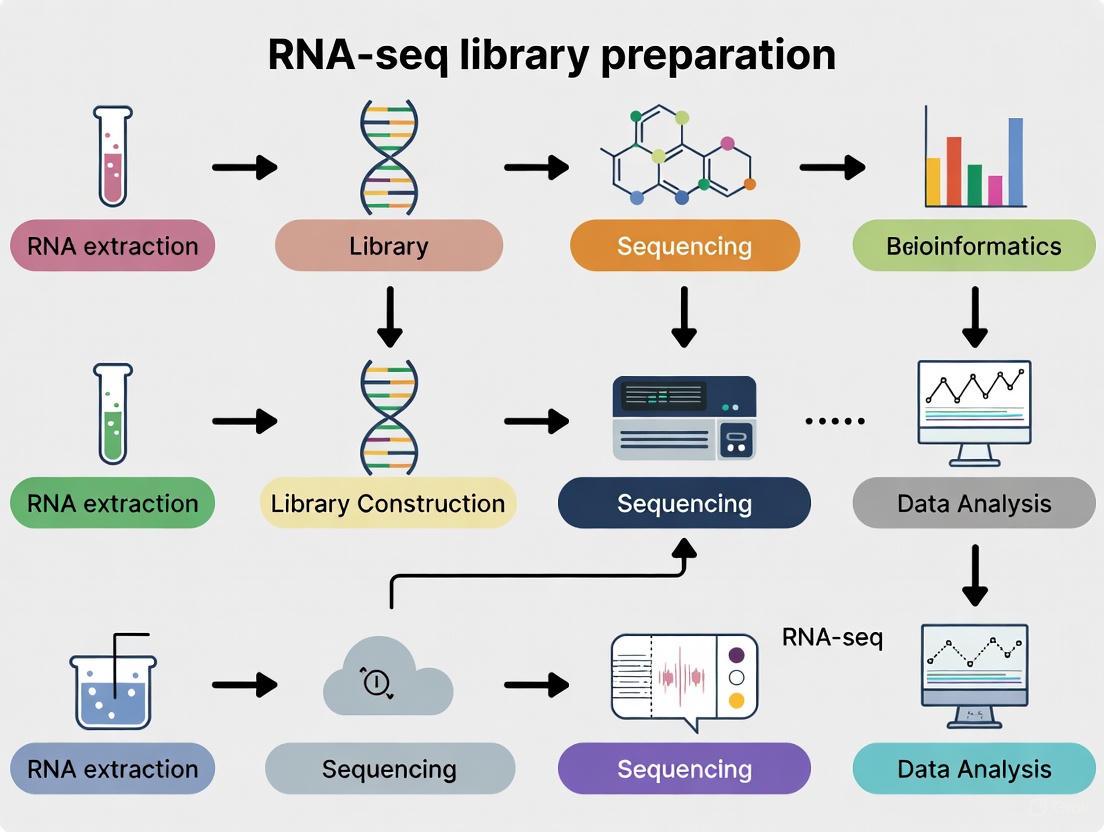
This article provides a comprehensive guide to RNA sequencing library preparation, a critical step that profoundly impacts data quality and biological interpretation.
RNA-seq Library Preparation Protocols: A Comprehensive Guide for Biomedical Researchers
Abstract
This article provides a comprehensive guide to RNA sequencing library preparation, a critical step that profoundly impacts data quality and biological interpretation. Covering foundational principles to advanced applications, it details key considerations for experimental design, compares mainstream and specialized methodological approaches, and offers practical troubleshooting strategies. By synthesizing evidence from recent comparative studies, this guide empowers researchers and drug development professionals to select optimal protocols, mitigate technical biases, and generate robust, reproducible transcriptomic data for both basic research and clinical applications.
Core Principles and Strategic Planning for RNA-seq Success
Defining the Biological Question and Experimental Design
In RNA sequencing (RNA-seq) research, a meticulously crafted biological question and robust experimental design are paramount for generating meaningful, interpretable, and reproducible data. This is especially critical in applied fields like drug discovery, where conclusions directly influence research trajectories and resource allocation [1]. A well-defined hypothesis dictates every subsequent choice, from the selection of the model system to the library preparation protocol and the required depth of bioinformatic analysis [2] [1]. This document outlines a structured framework for defining the research question and designing an RNA-seq experiment within the broader context of investigating library preparation protocols, providing detailed methodologies and resources to guide researchers and drug development professionals.
Framing the Biological Question and Hypothesis
The initial stage of any RNA-seq study must be the formulation of a clear, focused biological question and a testable hypothesis. This foundational step ensures the entire project remains targeted and efficiently uses resources.
Core Considerations for Question Definition
- Objective Specificity: A vague question leads to uninterpretable data. The objective should be precise, for example, "Does inhibition of Target X by compound Y alter the expression of genes in Pathway Z in a specific cell model?" rather than a broad "What happens to the transcriptome after treatment?" [1].
- Expected Outcomes and Variation: Consider what you expect to find and the potential sources of variation. This foresight helps in designing controls and determining the level of replication needed to separate genuine biological signals from inherent variability [1].
- Data Requirements: The biological question directly informs the type of data required. A study focused solely on gene expression quantification from large sample sets (e.g., a drug screen) has different requirements than one aimed at discovering novel isoforms, gene fusions, or non-coding RNAs, which influences the choice of library preparation method [1].
Application in Drug Discovery
In drug discovery, RNA-seq is applied at multiple stages, and the hypothesis should be tailored accordingly [1]:
- Target Identification: Profiling expression patterns in disease vs. healthy states.
- Mode-of-Action Studies: Understanding the primary and secondary effects of drug candidates on transcriptional networks.
- Biomarker Discovery: Identifying gene expression signatures that predict drug response or resistance.
- Dose-Response and Combination Studies: Quantifying transcriptional changes across a range of concentrations or drug pairs.
Principles of RNA-seq Experimental Design
A powerful experimental design controls for variability, minimizes bias, and ensures the results are statistically robust and capable of answering the biological question.
Replication: Biological vs. Technical
Replication is non-negotiable for robust statistical inference. Biological and technical replicates address fundamentally different sources of variation, and their roles must be clearly understood [3] [1].
Table 1: Comparison of Replicate Types in RNA-seq Experiments
| Replicate Type | Definition | Purpose | Example | Recommendation |
|---|---|---|---|---|
| Biological Replicate | Independent biological samples (e.g., different individuals, animals, or cell cultures) [1]. | To measure natural biological variation and ensure findings are generalizable [1]. | 3 different animals or independently cultured cell samples per treatment group. | Essential. A minimum of 3 per condition is typical, but 4-8 are recommended for increased reliability, especially when biological variability is high [3] [1]. |
| Technical Replicate | Multiple measurements of the same biological sample [1]. | To assess variation introduced by the technical workflow (e.g., library prep, sequencing run) [1]. | splitting one RNA sample for 3 separate library preparations and sequencing runs. | Less critical than biological replication. Can be used to troubleshoot specific technical steps but should not be substituted for biological replicates [3]. |
The consensus from multiple studies is that power to detect differential expression is gained more effectively through increasing biological replication than through increasing sequencing depth or technical replication [3].
Sample Size, Power, and Sequencing Depth
The number of biological replicates (sample size) and the amount of sequencing data per sample (depth) are key determinants of an experiment's cost and statistical power.
- Sample Size and Power: Statistical power is the likelihood of correctly identifying a genuinely differentially expressed gene. For reliable results, consulting a bioinformatician to perform a power analysis is highly beneficial, particularly when working with precious samples like patient biopsies [1]. Pilot studies using a subset of samples are an excellent way to estimate variability and inform sample size decisions for the main experiment [1].
- Sequencing Depth: This refers to the number of sequenced reads per sample. While deeper sequencing can detect lowly expressed transcripts, its benefits diminish after a certain point. Studies have shown that the power gained from adding more biological replicates far outweighs that from increasing sequencing depth, which can often be reduced to 15-25% of typical levels without a substantial loss in power for differential expression analysis [3]. The optimal depth depends on the organism, transcriptome complexity, and the goal (e.g., quantifying low-abundance transcripts requires greater depth).
Controlling for Batch Effects
Batch effects are systematic technical variations introduced when samples are processed in different groups (e.g., on different days, by different personnel, or across different sequencing lanes) [2]. These non-biological differences can confound results and lead to false conclusions.
Strategies to Mitigate Batch Effects:
- Randomization: Distribute samples from all experimental groups across processing batches. For example, do not process all control samples on one day and all treatment samples on another [2].
- Blocking: If randomization is not fully possible, record the batch information so it can be included as a covariate in the statistical model during data analysis [2].
- Balanced Design: Ensure the plate or library preparation layout is balanced across conditions to facilitate statistical batch correction later [1].
Detailed Experimental Protocols
Below is a generalized protocol for a bulk RNA-seq experiment, from sample collection to library preparation, highlighting key decision points.
Protocol: Sample Collection and RNA Isolation
This protocol is critical for preserving RNA integrity, the quality of which is a major factor in the success of the sequencing experiment.
Key Resources:
- RNase-free work area and consumables [4]
- RNaseZap or similar decontamination solution [4]
- Tissue or cell samples
- RNA isolation kit (e.g., PicoPure RNA Isolation Kit, Trizol-based methods, or column-based kits) [2] [5]
- DNase I enzyme for genomic DNA digestion [4]
- Magnetic beads for RNA purification (e.g., VAHTS RNA Clean Beads) [4]
- Instruments: Spectrophotometer (NanoDrop), fluorometer (Qubit), and bioanalyzer (e.g., Agilent 2100/TapeStation) [2] [5]
Procedure:
- Sample Collection: Use aseptic techniques. For tissues, snap-freeze in liquid nitrogen. For cells, pellet immediately and lyse or freeze at -80°C in a stabilizing buffer. Minimize freeze-thaw cycles [5].
- RNA Isolation: Follow manufacturer guidelines for your chosen kit. For cells, this typically involves lysis and binding of RNA to a silica membrane. For tissues, a homogenization step is required first [5].
- Genomic DNA Digestion: Perform an on-column or in-solution DNase I treatment to remove contaminating genomic DNA, which can produce false positives in sequencing [4]. A typical reaction uses 1 μg RNA, 1 μL RQ1 RNase-Free DNase (0.2 U/μL), and 1 μL 10x Reaction Buffer, incubated at 37°C for 30 minutes, followed by inactivation with Stop Solution and heat [4].
- RNA Purification and Quality Control:
- Purify RNA using magnetic beads at a ratio of 1.8x beads to sample volume. Incubate, place on a magnet, discard supernatant, and wash twice with 80% ethanol. Air-dry and elute in nuclease-free water [4].
- Quantify RNA concentration using a spectrophotometer or fluorometer.
- Assess RNA Integrity Number (RIN) or equivalent using a bioanalyzer. An RIN > 7 is generally considered acceptable for standard library prep, though degraded samples from FFPE may require specialized protocols [2] [6].
Protocol: Library Preparation for Whole Transcriptome Analysis
This protocol describes a common ligation-based method for stranded total RNA sequencing, which is widely applicable for coding and non-coding RNA analysis.
Key Resources:
- Stranded Total RNA Library Prep Kit (e.g., Illumina Stranded Total RNA Prep) [6]
- rRNA depletion reagents (often included in kit) [6]
- Nuclease-free water and PCR tubes
- Thermal cycler
- Magnetic beads (e.g., SPRIselect)
- Equipment for library QC (Bioanalyzer) [5]
Procedure:
- rRNA Depletion: Starting with 10-1000 ng of high-quality total RNA, perform enzymatic or probe-based ribosomal RNA depletion to enrich for mRNA and other non-ribosomal RNAs. This step increases the informational content of the sequencing data [6].
- RNA Fragmentation and Reverse Transcription: Fragment the purified RNA using metal ions at elevated temperature to produce fragments of desired size (e.g., 200-300 bp). Then, perform reverse transcription using random hexamers and reverse transcriptase to generate first-strand cDNA [5].
- Second-Strand Synthesis: Synthesize the second cDNA strand, incorporating dUTP in place of dTTP. This marks the second strand and allows for strand specificity during subsequent amplification [6].
- End Repair and Adaptor Ligation: Convert the cDNA fragments to blunt ends. Then, ligate Illumina sequencing adapters, which contain the index sequences for sample multiplexing, to the ends of the cDNA fragments [5] [6].
- Library Amplification and Clean-up: Perform a limited-cycle PCR to enrich for adapter-ligated fragments. The dUTP-marked second strand is not amplified, preserving strand information. Purify the final library using magnetic beads to remove primers and enzymes and select for the desired fragment size range [5].
- Library Quality Control:
- Quantify the final library concentration using qPCR for accurate results.
- Assess the library size distribution and profile using a bioanalyzer or TapeStation. A sharp peak in the 300-600 bp range is typical [5].
The Scientist's Toolkit: Essential Research Reagents and Materials
Table 2: Key Reagent Solutions for RNA-seq Library Preparation
| Item | Function/Description | Example Products/Notes |
|---|---|---|
| RNA Stabilization Reagent | Prevents degradation of RNA in cells or tissues immediately after collection. | RNAlater, TRIzol, proprietary lysis buffers from kit systems. |
| RNA Isolation Kit | Purifies total RNA from a variety of sample types, removing contaminants. | PicoPure RNA Isolation Kit, Zymo Research kits, Qiagen RNeasy kits. |
| DNase I Enzyme | Digests contaminating genomic DNA to prevent false positives in sequencing. | RQ1 RNase-Free DNase, Turbo DNase; often included in isolation kits. |
| RNA Integrity Assessment | Provides a quantitative measure (RIN) of RNA quality. Critical for downstream success. | Agilent 2100 Bioanalyzer, Agilent TapeStation, Qsep100. |
| rRNA Depletion Kit | Removes abundant ribosomal RNA to increase sequencing efficiency on informative transcripts. | Illumina Stranded Total RNA Prep (integrated enzymatic depletion), Ribo-Zero Plus. |
| Library Prep Kit | A complete set of reagents for converting RNA into a sequence-ready NGS library. | Illumina Stranded mRNA Prep, Illumina Stranded Total RNA Prep, NEBNext Ultra II RNA Kit. |
| Magnetic Beads | Used for versatile and efficient clean-up and size selection steps throughout the protocol. | SPRIselect, VAHTS RNA Clean Beads. |
| Unique Dual Indexes (UDIs) | Molecular barcodes added during library prep to allow multiplexing of many samples and prevent index hopping errors. | Illumina CD Indexes, IDT for Illumina UDIs. |
| Spike-in Control RNAs | Exogenous RNA added to the sample to monitor technical performance, normalization, and sensitivity. | ERCC (External RNA Controls Consortium) RNA Spike-In Mix, SIRVs [1]. |
Workflow and Relationship Visualizations
The following diagrams summarize the key logical and procedural relationships in designing an RNA-seq experiment.
Diagram 1: RNA-seq experimental design and workflow. This chart outlines the sequential steps, emphasizing the foundational role of the biological question and critical early design decisions.
Ribonucleic acid (RNA) sequencing has become an indispensable tool for profiling transcriptomes, but a critical first step in any RNA-seq experiment is selecting the target RNA biotype. The fundamental choice lies between focusing on protein-coding messenger RNA (mRNA) or encompassing the diverse world of non-coding RNAs (ncRNAs), each with distinct biological functions and technical requirements [7]. This decision profoundly impacts all subsequent experimental phases, from library preparation to data analysis, and ultimately determines the biological insights that can be gained.
While mRNA has been the traditional focus as the template for protein synthesis, the importance of ncRNAs—particularly long non-coding RNAs (lncRNAs) in gene regulation—is now firmly established [8] [9]. The selection between these RNA classes is not merely technical; it dictates whether research captures the complete regulatory landscape or focuses specifically on the coding transcriptome. This application note provides a structured framework for this decision-making process, supported by experimental data and detailed protocols.
Fundamental Characteristics
RNA molecules are categorized based on their protein-coding potential and size. Messenger RNA (mRNA) serves as the template for protein synthesis and is characterized by a 5' cap, splicing, and a 3' poly(A) tail that facilitates its enrichment [10] [7]. Non-coding RNAs (ncRNAs), which lack protein-coding capacity, are broadly divided into housekeeping ncRNAs (e.g., rRNA, tRNA) and regulatory ncRNAs. Regulatory ncRNAs are further classified by size: small ncRNAs (<200 nucleotides, e.g., miRNAs) and long non-coding RNAs (lncRNAs, >200 nucleotides) [7] [9].
The distinction between coding and non-coding has become increasingly blurred. Some transcripts, once classified as non-coding, can express functional peptides, and many lncRNAs share structural features with mRNAs, such as 5' capping, splicing, and polyadenylation [9]. However, key differences remain: lncRNAs generally exhibit lower expression levels and stronger tissue specificity compared to mRNAs [8]. Furthermore, a significant portion (approximately 40%) of lncRNA transcripts are non-polyadenylated [10], making them inaccessible to standard poly(A) enrichment methods.
Comparative Analysis of mRNA and lncRNA
Table 1: Key Characteristics of mRNA and Long Non-coding RNA (lncRNA)
| Feature | mRNA | Long Non-coding RNA (lncRNA) |
|---|---|---|
| Protein-coding function | Template for protein synthesis [7] | Lack protein-coding capacity [11] [9] |
| Primary structural features | 5' cap, exons/introns, poly(A) tail [10] | Structurally heterogeneous; may be polyadenylated or non-polyadenylated [10] [9] |
| Expression level | Generally high [8] | Generally lower than mRNA [8] |
| Expression specificity | Varies | Stronger tissue and cell-type specificity [8] |
| Poly(A) tail status | Universally polyadenylated | ~60% are polyadenylated; ~40% are non-polyadenylated [10] |
Library Preparation Strategies: A Technical Comparison
The choice of RNA biotype directly determines the appropriate library preparation method. The two primary approaches are poly(A) enrichment for mRNA and rRNA depletion for total RNA (which includes ncRNAs).
Methodological Principles
- Poly(A) Enrichment: This method uses magnetic beads coated with poly(T) oligonucleotides to selectively capture RNA molecules with poly(A) tails. It is highly efficient for enriching polyadenylated mRNA and is the standard for eukaryotic mRNA sequencing [6] [7]. However, it systematically excludes non-polyadenylated RNAs, including a substantial fraction of lncRNAs and other ncRNAs [10].
- rRNA Depletion (Total RNA-seq): This method removes abundant ribosomal RNA (rRNA) from total RNA, retaining both polyadenylated and non-polyadenylated transcripts. It is the preferred method for comprehensive transcriptome analysis, including lncRNAs, and is essential for sequencing RNA from prokaryotes, which lack poly(A) tails [6] [7] [12].
Performance and Outcome Comparison
Experimental comparisons of these two methods reveal significant differences in output and content.
Table 2: Experimental Comparison of RNA Library Types (Based on Breast Cancer Cell Line Data)
| Performance Metric | Poly(A) Library | Total RNA Library |
|---|---|---|
| Proportion of reads mapping to lncRNA | 0.85% - 1.02% [10] | 3.23% - 3.62% [10] |
| Proportion of reads mapping to protein-coding RNA | 95.38% - 96.34% [10] | 92.47% - 93.45% [10] |
| Ability to capture non-polyadenylated RNAs | No [10] | Yes [10] |
| Correlation of gene expression with other method (Pearson's r for protein-coding RNA) | r = 0.92 [10] | r = 0.92 [10] |
| Relative cost | Lower [10] | Higher [10] |
The data shows that while gene expression measurements for overlapping transcripts are highly correlated between methods, the total RNA library captures a significantly higher proportion of lncRNAs. It also identifies specific classes of protein-coding RNAs that are poorly captured by poly(A) enrichment, such as histone-encoding genes which lack poly(A) tails [10].
Diagram 1: A workflow to guide the selection of an RNA sequencing library preparation method based on research goals and sample type. The path culminates in the recommendation of one of three primary strategies: Poly(A) Enrichment, Total RNA Library preparation, or Targeted RNA-Seq.
Experimental Protocols
Protocol A: Stranded mRNA Library Prep with Poly(A) Enrichment
This protocol is optimized for generating stranded mRNA sequencing libraries from intact eukaryotic total RNA in under 5 hours [13].
- Principle: Poly(A)-tailed mRNA is selectively captured from total RNA using magnetic beads with poly(T) oligonucleotides. The purified mRNA is then fragmented and reverse-transcribed into cDNA. Strand specificity is maintained during second-strand synthesis, followed by adapter ligation and PCR amplification [13].
- Sample Requirements: 2.5 ng–1 µg of intact total RNA (RIN >7), suspended in RNase-free water and free of contaminants [13].
- Detailed Workflow:
- Poly(A) Selection: Incubate total RNA with mRNA Capture Beads. Wash with Capture Buffer and Final Wash Buffer to remove non-polyadenylated RNA. Elute the purified mRNA [13].
- FFPE Treatment (if needed): For potentially fragmented RNA, incubate with FFPE Treatment Buffer. Note: This kit is not designed for degraded FFPE samples; a dedicated kit is required for such inputs [13].
- Fragmentation & Priming: Add Frag & Prime Buffer to eluted mRNA to fragment and prime the RNA.
- First-Strand Synthesis: Add 1st Strand Buffer and 1st Strand Enzyme to synthesize cDNA. A novel reverse transcriptase improves sensitivity and complexity, especially for low-input samples (2.5 ng) [13].
- Second-Strand Synthesis: Add 2nd Strand Enzyme and Buffer to create double-stranded cDNA, incorporating dUTP to preserve strand information.
- Adapter Ligation: Ligate Illumina-compatible adapters with a 3'T overhang to the cDNA using Ligation Enzyme and Buffer.
- Library Amplification: Amplify the library with Equinox Library Amplification Master Mix and P5/P7 Primer Mix. The Equinox polymerase provides uniform coverage across GC-rich regions [13].
- Applications: Ideal for gene expression analysis, isoform detection, gene fusion discovery, and SNV detection from eukaryotic samples [13].
- Limitations: Not suitable for non-polyadenylated RNAs, prokaryotic RNA, or degraded FFPE samples without specialized kit versions [13].
Protocol B: Total RNA Library Prep with rRNA Depletion
This protocol is designed for comprehensive transcriptome analysis, including coding and non-coding RNAs, by removing ribosomal RNA.
- Principle: Total RNA is treated with probes to remove abundant ribosomal RNA (rRNA). The remaining RNA, enriched for mRNA, lncRNA, and other non-rRNA species, is then used to construct a sequencing library. The Twist Biosciences protocol, for example, uses a single-step second strand synthesis and A-tailing to reduce hands-on time [12].
- Sample Requirements: 1–1000 ng of standard quality total RNA; as little as 10 ng for FFPE and other degraded samples [6] [12].
- Detailed Workflow (Based on Twist RNA Library Prep [12]):
- Ribosomal and Globin Depletion: Treat total RNA with the Twist rRNA & Globin Depletion Kit. This step is crucial for maximizing sequencing economy by removing >99% of unwanted ribosomal and globin mRNAs [12].
- RNA Fragmentation: Fragment the depleted RNA.
- Reverse Transcription: Synthesize first-strand cDNA.
- Second-Strand Synthesis: Perform a single-step second-strand synthesis and A-tailing reaction. This streamlined approach saves time and reduces procedural losses [12].
- Adapter Ligation: Ligate unique dual index (UDI) adapters to the cDNA fragments. UDIs improve demultiplexing accuracy and identify cross-talk between samples.
- Library Amplification: Amplify the final library with PCR.
- Applications: Whole transcriptome sequencing to measure mRNA, lncRNA, and other RNA species from a wide range of sample types, including fresh, frozen, and FFPE tissues [12].
- Performance Note: Total RNA libraries map a higher proportion of reads to lncRNAs (3.23–3.62%) compared to poly(A) libraries (0.85–1.02%), confirming their superior ability to capture this biotype [10].
Diagram 2: A generalized workflow for Total RNA Library Preparation. This process begins with ribosomal RNA depletion to enrich for informative transcripts, followed by fragmentation, cDNA synthesis, and library construction to create a final sequencing-ready product.
The Scientist's Toolkit: Essential Reagents and Kits
Selecting the right commercial kits is fundamental to success. The following table summarizes key solutions for different RNA-seq strategies.
Table 3: Research Reagent Solutions for RNA Library Preparation
| Product Name | Function / Application | Key Features / Benefits |
|---|---|---|
| Watchmaker mRNA Library Prep Kit [13] | Stranded mRNA sequencing from eukaryotic RNA. | < 5 hr hands-on time; wide input range (2.5 ng–1 µg); maintains strand info; automatable. |
| Twist RNA Library Prep Kit [12] | Whole transcriptome library prep for mRNA and lncRNA. | Integrates with rRNA depletion; fast workflow (~5 hrs); compatible with FFPE and low-input samples. |
| Twist rRNA & Globin Depletion Kit [12] | Removes ribosomal and globin RNA from total RNA. | Enables whole transcriptome sequencing; improves sequencing economy; >99% rRNA depletion. |
| Illumina Stranded Total RNA Prep [6] | Total RNA sequencing for comprehensive transcriptome analysis. | Integrated enzymatic rRNA depletion; single-tube for multiple species; works with low-quality/FFPE samples. |
| Lexogen SENSE Total RNA-Seq Kit [14] | Total RNA sequencing, including non-polyadenylated RNA. | Fragmentation-free; ultra strand-specific; fast 3-hour protocol; reduces bias. |
The decision to target mRNA or include non-coding RNA is foundational to experimental design in transcriptomics. Poly(A) enrichment provides a cost-effective and focused approach for studying polyadenylated protein-coding transcripts, ideal for standard gene expression analysis in eukaryotes. In contrast, total RNA sequencing with rRNA depletion is essential for comprehensive discovery, enabling the study of non-polyadenylated mRNAs, diverse lncRNAs, and other ncRNAs, which is critical for uncovering novel regulatory mechanisms [10].
Researchers must align their choice with their primary biological question. If the goal is to understand the coding transcriptome with maximum sequencing economy, mRNA sequencing is sufficient. However, if the objective is to explore the full complexity of the transcriptome, including the rapidly expanding world of non-coding RNAs with their profound regulatory roles, then total RNA sequencing is the unequivocal and necessary choice [8] [9]. This strategic selection ensures that the resulting data will be capable of answering the specific research questions at hand.
The success of any RNA sequencing (RNA-Seq) experiment is fundamentally determined by the quality, quantity, and integrity of the input RNA. For researchers and drug development professionals, proper assessment and optimization of these input parameters are critical for generating reliable, reproducible transcriptomic data that can inform biological discovery and therapeutic development. Suboptimal RNA input can introduce significant biases, reduce statistical power, and compromise the validity of downstream analyses, ultimately wasting valuable resources and experimental time. This application note details the essential considerations and methodologies for evaluating and ensuring RNA sample suitability within the broader context of RNA-seq library preparation protocols, providing a structured framework for robust experimental planning.
Assessing RNA Integrity
The Critical Role of RNA Integrity
RNA integrity is the cornerstone of a successful sequencing experiment. Degraded RNA can lead to substantial biases in transcript representation and quantification. In particular, protocols that rely on oligo(dT) priming for messenger RNA (mRNA) selection are exceptionally vulnerable to RNA degradation, as they require intact polyadenylated tails for efficient capture [15]. The presence of intact ribosomal RNA (rRNA) bands provides a reliable proxy for the overall health of the cellular RNA.
Methodologies for Integrity Assessment
Two principal methods are commonly employed to evaluate RNA integrity:
Agarose Gel Electrophoresis: The traditional method involves running RNA on a denaturing agarose gel stained with ethidium bromide. Intact total RNA from eukaryotic samples displays sharp, clear 28S and 18S rRNA bands, with the 28S band approximately twice as intense as the 18S band (a 2:1 ratio). Degraded RNA appears as a smeared lower molecular weight fraction or fails to show the characteristic 2:1 ratio [16]. While this method is accessible, its main limitation is sensitivity, typically requiring at least 200 ng of RNA for clear visualization. Alternative stains like SYBR Gold or SYBR Green II can enhance sensitivity, allowing detection of as little as 1-2 ng of RNA [16].
Microfluidics-Based Analysis: Instruments like the Agilent 2100 Bioanalyzer provide a more advanced and quantitative assessment. This system uses microfluidics chips to generate an electrophoretogram and computes an RNA Integrity Number (RIN), a quantitative score that considers the entire electrophoretic trace [17] [16]. The RIN scale ranges from 1 (completely degraded) to 10 (perfectly intact). This method is highly sensitive, requires only 1 µL of sample (as little as 5 ng total), and simultaneously provides data on RNA concentration and purity [16]. A RIN value greater than 7 is generally considered the minimum threshold for high-quality sequencing, though this can vary based on sample type [15].
Table 1: Comparison of RNA Integrity Assessment Methods
| Method | Principle | Sample Requirement | Key Output | Advantages | Limitations |
|---|---|---|---|---|---|
| Agarose Gel Electrophoresis | Size separation on denaturing gel | ~200 ng (with EtBr stain) | Visual 28S:18S band ratio (2:1 ideal) | Low cost, widely available | Semi-quantitative, lower sensitivity, requires more RNA |
| Bioanalyzer/TapeStation | Microfluidics and capillary electrophoresis | As little as 5 ng | RNA Integrity Number (RIN) | Quantitative, high sensitivity, low sample consumption | Higher instrument cost, specialized chips/reagents |
The following diagram illustrates the recommended workflow for RNA integrity assessment and subsequent library preparation pathway selection based on the results:
Determining RNA Quantity and Purity
Quantitative and Purity Metrics
Accurate quantification of RNA concentration is essential for loading the correct amount into library preparation reactions. Spectrophotometric methods using instruments like NanoDrop measure absorbance at 260 nm (A260) to determine concentration, while the A260/A280 and A260/A230 ratios assess purity. Ideal purity ratios are approximately 1.8-2.0 for A260/A280 (indicating minimal protein contamination) and greater than 2.0 for A260/A230 (indicating minimal organic compound or salt contamination) [18]. Fluorometric methods using dyes like Qubit RNA HS Assay offer greater specificity for RNA quantification, as they are less affected by contaminants.
Addressing Genomic DNA Contamination
Genomic DNA (gDNA) contamination can interfere with RNA-seq library preparation, leading to false positives and misalignment of sequencing reads. A standard solution is to incorporate a DNase digestion step during RNA purification. In fact, implementing a secondary DNase treatment has been shown to significantly reduce gDNA contamination, as evidenced by lower intergenic read alignment in sequencing data [19]. For library preparation protocols like SHERRY, which involves direct tagmentation of RNA/cDNA hybrids, a DNase digestion step is crucial to prevent tagging and amplification of gDNA [4].
Table 2: RNA Quantity and Quality Benchmarks for Common Applications
| Application / Protocol | Recommended Input | Minimum Input | Critical Quality Metrics | Compatible with Degraded RNA? |
|---|---|---|---|---|
| Standard Poly(A) RNA-Seq | 100 ng - 1 µg total RNA | 10-25 ng | RIN > 8, Clear 28S:18S bands | Poor |
| Whole Transcriptome (with rRNA depletion) | 100 ng - 1 µg total RNA | 10-100 ng | RIN > 7 | Moderate |
| 3' mRNA-Seq (e.g., QuantSeq) | 50-500 ng total RNA | 5-10 ng | RIN > 7 (less critical) | Good |
| SHERRY Protocol | 200 ng total RNA | Not specified | Passes DNase treatment QC | Not specified [4] |
| Challenging Samples (FFPE, sperm) | Species/protocol dependent | Varies | May lack 28S/18S peaks; focus on mRNA fragments | Excellent for 3' mRNA-Seq [18] [20] |
Experimental Protocols for Quality Control
Protocol: DNase Treatment and RNA Purification
This protocol is adapted from the SHERRY library preparation method and is critical for removing gDNA contamination prior to sequencing [4].
Summary: This protocol describes a method for DNase digestion and subsequent purification of total RNA using solid-phase reversible immobilization (SPRI) beads, ensuring the removal of genomic DNA contaminants that can interfere with downstream library preparation.
Reagents and Equipment:
- RQ1 RNase-Free DNase (or equivalent)
- 10x Reaction Buffer
- RQ1 DNase Stop Solution (20 mM EGTA)
- VAHTS RNA Clean Beads (or equivalent SPRI beads)
- Nuclease-free water
- Magnetic rack
- Thermocycler or water bath
Procedure:
- DNase Digestion: Set up a 10 µL reaction on ice:
- 1 µg total RNA (X µL)
- 1 µL 10x Reaction Buffer
- 1 µL RQ1 RNase-Free DNase
- Nuclease-free water to 10 µL
- Incubate at 37°C for 30 minutes.
- Stop Reaction by adding 1 µL of RQ1 DNase Stop Solution. Mix by pipetting.
- Inactivate DNase by incubating at 65°C for 10 minutes.
- Bead-Based Purification:
- Add 1.8 volumes (18 µL) of RNA Clean Beads to the sample. Mix thoroughly by pipetting.
- Incubate at 25°C for 5 minutes.
- Place tube on a magnetic rack until the supernatant is clear (~2-3 minutes). Discard supernatant.
- With the tube on the magnet, wash beads twice with 200 µL of freshly prepared 80% ethanol. Incubate 30 seconds per wash before removing supernatant.
- Air-dry beads until they appear matte (do not over-dry).
- Elute RNA in 10 µL nuclease-free water. Incubate 1 minute at 25°C, then place on magnet. Transfer cleared supernatant to a new tube.
- QC Check: Measure RNA concentration (e.g., NanoDrop). Expect a 20-30% loss from the initial 1 µg input. Assess integrity by gel electrophoresis or Bioanalyzer.
Protocol: Optimized RNA Extraction from Challenging Samples
For difficult samples like spermatozoa, standard RNA extraction kits often yield poor results. An optimized method combining TRIzol and column-based purification significantly improves yield and purity [18].
Summary: This protocol uses dithiothreitol (DTT) for chromatin disruption and TRIzol for effective RNA isolation, followed by column-based purification to clean up the extract, making it suitable for low-concentration, highly compacted RNA sources.
Reagents and Equipment:
- NucleoSpin RNA II kit (Macherey-Nagel)
- TRIzol reagent
- Dithiothreitol (DTT)
- RA1 lysis buffer (from kit)
- Ethanol
- Microcentrifuge
Procedure:
- Pretreatment: Add DTT to RA1 lysis buffer at a recommended concentration.
- Lysis: Lyse pre-purified sperm cells in the DTT-supplemented RA1 buffer.
- TRIzol Extraction: Add an appropriate volume of TRIzol reagent to the lysate. Mix thoroughly and incubate.
- Phase Separation: Add chloroform, shake vigorously, and centrifuge. Transfer the aqueous phase.
- RNA Precipitation: Precipitate RNA with isopropanol. Wash pellet with ethanol.
- Column Purification: Dissolve the pellet and apply to NucleoSpin RNA II column. Complete the purification following manufacturer's instructions including the on-column DNase digestion step.
- Elution: Elute RNA in nuclease-free water.
- QC Check: Measure concentration and purity. The optimized method demonstrates a dramatic increase in yield and optimal A260/A280 ratios (~1.8-2.1) compared to the standard method [18].
The Scientist's Toolkit: Research Reagent Solutions
Table 3: Essential Reagents and Kits for RNA Quality Control and Library Preparation
| Reagent / Kit | Function | Specific Application Notes |
|---|---|---|
| Agilent 2100 Bioanalyzer with RNA 6000 LabChip | Integrated RNA quantification, integrity (RIN), and purity assessment. | Industry standard for QC; requires minimal sample (5 ng) [16]. |
| RNase-Free DNase (e.g., RQ1 DNase) | Digests genomic DNA contamination in RNA samples. | Critical for protocols like SHERRY; secondary treatment reduces intergenic reads [4] [19]. |
| RNA Clean Beads (SPRI beads) | Solid-phase reversible immobilization for RNA purification and size selection. | Used for post-DNase clean-up; bead-to-sample ratio is critical [4]. |
| TRIzol Reagent | Monophasic solution of phenol and guanidine isothiocyanate for simultaneous liquid-phase separation of RNA, DNA, and proteins. | Effective for challenging samples; often combined with column purification for higher purity [18]. |
| NucleoSpin RNA II Kit | Silica-membrane based column for total RNA extraction. | Standard method; can be optimized with DTT/TRIzol pretreatment for difficult samples [18]. |
| rRNA Depletion Kits (e.g., RNase H-based) | Removes abundant ribosomal RNA to increase sequencing depth of mRNA and non-coding RNA. | Preferred for whole transcriptome sequencing of non-polyA RNAs; more reproducible than probe-based precipitation [15]. |
| Oligo(dT) Beads | Selects for polyadenylated RNA molecules. | Standard for mRNA enrichment; requires high RNA integrity (RIN > 7) [15] [20]. |
| Tn5 Transposase | Enzyme that catalyzes the fragmentation and tagging of DNA in library prep protocols. | Core enzyme in tagmentation-based methods like SHERRY; can be pre-loaded with adapters [4]. |
Strategic Selection of Library Preparation Methods
The choice of RNA-seq library preparation method must be guided by the quality and quantity of the input RNA, as well as the specific research goals. The following diagram outlines the decision-making process for selecting the most appropriate protocol:
As illustrated, Whole Transcriptome Sequencing is appropriate for discovering alternative splicing, novel isoforms, or fusion genes, but requires high-quality RNA and deeper sequencing [20]. In contrast, 3' mRNA-Seq protocols like QuantSeq are more tolerant of partially degraded RNA (common in FFPE or sperm samples) and are ideal for cost-effective, high-throughput gene expression quantification, as they generate one fragment per transcript from the 3' end [18] [20]. For studies focusing on non-coding RNAs that lack poly(A) tails, rRNA-depleted Total RNA-Seq is the mandatory choice [15] [20].
Meticulous attention to RNA quality, quantity, and integrity is a non-negotiable prerequisite for generating scientifically valid and reproducible RNA-seq data. By implementing the rigorous QC frameworks, standardized protocols, and strategic selection criteria outlined in this application note, researchers and drug development professionals can significantly enhance the reliability of their transcriptomic studies. A robust, quality-first approach to RNA input assessment ultimately ensures that downstream investments in sequencing and analysis yield biologically meaningful insights, thereby accelerating discovery and therapeutic development.
The decision to utilize stranded or unstranded library preparation protocols is a critical, upfront choice in RNA-sequencing (RNA-seq) experimental design with profound and lasting implications for data accuracy and biological interpretation. Stranded RNA-seq, which preserves the original orientation of transcripts, has emerged as a superior approach for precise transcriptome profiling. This application note delineates the quantitative and qualitative advantages of stranded protocols, demonstrates how mis-specified strandedness parameters can severely compromise downstream analyses, and provides a robust methodology for determining strand-specificity in existing datasets. Furthermore, we present a detailed experimental protocol for stranded RNA-seq library preparation and a curated toolkit of essential reagents and bioinformatics resources to empower researchers in making informed decisions that enhance the reproducibility and reliability of their transcriptomic studies.
RNA-sequencing has become the de facto gold standard for comprehensive transcriptome analysis, enabling investigations into differential gene expression, transcript structure, and the identification of novel splice variants [21]. A fundamental distinction in RNA-seq library preparation lies in the choice between stranded (strand-specific) and unstranded (non-strand-specific) protocols. Unstranded libraries, the first-generation approach, do not preserve information about the original transcript's orientation during cDNA synthesis and adapter ligation. In contrast, stranded protocols deliberately retain this strand-of-origin information through molecular techniques such as adapter design or chemical marking [22].
The implications of this choice are far-reaching. Without strand information, it becomes difficult or impossible to accurately quantify gene expression for the substantial proportion of genomic loci where both DNA strands encode distinct genes [23]. Studies have estimated that approximately 19% (about 11,000) of annotated genes in Gencode Release 19 overlap with genes transcribed from the opposite strand [23]. Consequently, the inability to resolve this ambiguity can lead to misassignment of reads, inflated false positive and negative rates in differential expression analysis, and the obscuring of biologically important antisense transcription [21] [22]. As RNA-seq continues to drive discoveries in basic research, drug development, and precision medicine, ensuring the accuracy of its foundational data through appropriate library construction and parameter specification is paramount.
Quantitative Impact of Strandedness on Data Accuracy
Comparative Analysis of Stranded vs. Unstranded RNA-seq
The empirical advantages of stranded RNA-seq are substantial and measurable. A direct comparison of stranded and non-stranded protocols using the same Universal Human Reference RNA (UHRR) samples revealed striking differences in data quality and interpretation.
Table 1: Key Performance Metrics from an Experimental Comparison of Stranded vs. Unstranded RNA-seq [23]
| Metric | Unstranded RNA-seq | Stranded RNA-seq | Implication of Stranded Protocol |
|---|---|---|---|
| Ambiguous Reads | ~6.1% | ~2.94% | ~3.1% drop in ambiguity; more accurate read assignment |
| Differentially Expressed Genes (DEGs)* | 1,751 genes identified as DEGs | Baseline | Strandedness itself causes false DEG calls in unstranded data |
| False Positives in DEG Analysis | >10% | Baseline | Stranded data reduces false positives |
| False Negatives in DEG Analysis | >6% | Baseline | Stranded data reduces false negatives |
| Read Loss (Incorrect Parameter) | >95% | Baseline | Correct strandedness parameter is critical for mapping |
Note: *DEGs were identified in a comparison between stranded and un-stranded data from the same sample, highlighting the technical artifact introduced by the library type.
The reduction in ambiguous reads is particularly significant. This ~3.1% drop directly corresponds to the resolution of reads originating from overlapping genes on opposite strands, allowing for their correct assignment and quantification [23]. Furthermore, the enrichment of antisense RNAs and pseudogenes among the falsely identified DEGs underscores that unstranded protocols are especially problematic for these important regulatory genomic elements [23].
Consequences of Incorrect Strandedness Specification
The strandedness decision impacts not only wet-lab protocol selection but also the mandatory specification of this parameter in downstream bioinformatics tools. Incorrectly specifying this parameter during read alignment or transcript quantification can have catastrophic effects on data integrity.
As demonstrated in Table 1, setting the incorrect strand direction can result in the loss of >95% of reads during mapping to a reference [21] [24]. Furthermore, analyzing data from a stranded library with an unstranded parameter can introduce over 10% false positives and over 6% false negatives in subsequent differential expression analyses [21]. This level of inaccuracy is unacceptable in most research and clinical contexts, particularly in biomarker discovery and drug development where decisions hinge on reliable gene expression data.
Determining Strandedness in Existing Data
Given that strandedness information is frequently unavailable in public repository metadata (only 56% of a surveyed set of ENA studies had it stated) [21], a reliable method for its determination is essential for the re-analysis of existing datasets.
Protocol: Determining Strandedness withhow_are_we_stranded_here
The how_are_we_stranded_here Python library provides a rapid and user-friendly solution for inferring the strandedness of paired-end RNA-Seq data [21] [24]. The following workflow outlines the procedure.
Diagram 1: Workflow for determining RNA-seq strandedness using the how_are_we_stranded_here tool.
Procedure:
Installation: Install the tool and its dependencies using Conda for simplicity.
Input Data: Prepare paired-end RNA-seq data in FASTQ format. The tool requires a reference transcriptome (FASTA) and its corresponding annotation file (GTF) for the species.
Execution: Run the tool on the paired FASTQ files. The most time-consuming step is the creation of the Kallisto index (approx. 6-7 minutes for human), but this is a one-time requirement per species and can be reused [21] [24].
Interpretation: The tool outputs a "stranded proportion."
- A proportion > 0.9 indicates stranded data and reports the specific layout (FR or RF).
- A proportion < 0.6 indicates unstranded data.
- Proportions between 0.6 and 0.9 may indicate issues like sample contamination and warrant further investigation [21].
Validation: This method has been validated on simulated and real data, requiring a minimum of 200,000 reads to call strandedness within a 0.5% margin of error (3σ) [24]. It is significantly faster than full alignment-based methods, completing in under 45 seconds for a human sample [21].
Experimental Protocol: Stranded RNA-seq Library Preparation
This protocol details the construction of strand-specific RNA-seq libraries using the widely adopted dUTP second-strand marking method, which was identified as a leading protocol in a comprehensive evaluation by researchers at the Broad Institute [23] [25].
Reagent Solutions and Materials
Table 2: Essential Research Reagents for Stranded RNA-seq Library Prep
| Reagent / Kit | Function / Application | Key Characteristics |
|---|---|---|
| Illumina TruSeq Stranded mRNA Kit | De facto standard for bulk stranded RNA-seq. | Uses dUTP method; poly-A selection; input: ≥100 ng total RNA [25]. |
| Swift / Swift Rapid RNA Kits (IDT) | Rapid stranded library prep for low inputs. | Uses Adaptase technology; workflow: 3.5-4.5 hrs; input: 10-200 ng total RNA [25]. |
| NEBNext Ultra II Directional RNA Library Prep Kit | Alternative high-performance stranded prep. | dUTP-based method; compatible with poly-A or rRNA depletion. |
| Oligo(dT) Magnetic Beads | mRNA Enrichment | Selects for polyadenylated RNA molecules. Critical for mRNA-seq [23] [26]. |
| Ribo-depletion Reagents | rRNA Removal | Alternative to poly-A selection; allows capture of non-polyadenylated RNAs (e.g., some lncRNAs). |
| dUTP (Deoxyuridine Triphosphate) | Strand Marking | Incorporated during second-strand synthesis instead of dTTP, enabling subsequent enzymatic degradation [23]. |
| Uracil-DNA Glycosylase (UDG) | Strand Degradation | Enzymatically degrades the dUTP-marked second strand, ensuring only the first strand is amplified [22] [23]. |
Step-by-Step Workflow
The core of the dUTP method involves creating a marked second cDNA strand that can later be destroyed, preventing it from being sequenced.
Diagram 2: The dUTP second-strand marking method for stranded RNA-seq library preparation.
Detailed Protocol Steps:
RNA Quality Control (QC):
- Begin with high-quality, DNA-free total RNA. Assess integrity using an Agilent Bioanalyzer; an RNA Integrity Number (RIN) > 7 is recommended [26]. Intact eukaryotic RNA should show sharp 28S and 18S ribosomal RNA bands with a 2:1 intensity ratio.
mRNA Enrichment:
- Use oligo(dT) magnetic beads to selectively isolate polyadenylated mRNA from total RNA. This is the standard for most transcriptome studies focusing on protein-coding genes [23].
mRNA Fragmentation:
- Fragment the purified mRNA using divalent cations under elevated temperature to generate fragments of an appropriate size for sequencing (e.g., 200-300 bp) [26].
First-Strand cDNA Synthesis:
- Reverse transcribe the fragmented mRNA using random hexamer primers and reverse transcriptase to produce first-strand cDNA. This strand is complementary to the original RNA template.
Second-Strand cDNA Synthesis (Strand Marking):
- Synthesize the second strand using a DNA polymerase and a nucleotide mix where dUTP replaces dTTP. This creates a "marked" second strand that is complementary to the first strand [23].
End Repair, dA-Tailing, and Adaptor Ligation:
- Convert the double-stranded cDNA fragments to blunt ends, add a single 'A' nucleotide to the 3' ends, and ligate platform-specific sequencing adaptors [26].
Strand Degradation:
Library Amplification and QC:
- Amplify the remaining strand-specific library via a limited-cycle PCR reaction with index primers to enable sample multiplexing. Quantify the final library by qPCR and validate its size distribution using a Bioanalyzer before sequencing.
The Scientist's Toolkit for Stranded RNA-seq
Successful implementation of a stranded RNA-seq workflow relies on a combination of wet-lab reagents and dry-lab bioinformatics resources.
Table 3: Essential Tools and Resources for Stranded RNA-seq
| Category | Tool / Resource | Specific Application in Stranded RNA-seq |
|---|---|---|
| Library Prep Kits | Illumina TruSeq Stranded mRNA | Robust, well-validated kit using the dUTP method for standard inputs [25]. |
| IDT Swift RNA Kits | Faster workflow (Adaptase tech.) suitable for low-input samples (10 ng) [25]. | |
| Strandedness QC | how_are_we_stranded_here |
Quickly infers strandedness from FASTQ files; critical for QC and analyzing public data [21]. |
| Read Alignment | STAR, HISAT2 | Splice-aware aligners that require specification of strandedness parameter (e.g., --outSAMstrandField). |
| Quantification | featureCounts, HTSeq | Read counting tools that use strandedness info to correctly assign reads to features [23]. |
| Transcript Assembly | Cufflinks, StringTie | Strand-guided assembly improves accuracy of reconstructed transcripts. |
The decision to employ a stranded RNA-seq protocol is no longer a niche consideration but a foundational element of rigorous transcriptomic study design. The evidence is clear: stranded data provides a more accurate estimate of transcript expression by resolving ambiguity in overlapping genomic features, leading to more reliable differential expression results and enabling the discovery of strand-specific regulatory mechanisms [23]. While the choice of protocol has cost and workflow implications, streamlined commercial kits have made stranded library preparation accessible and routine. Researchers must prioritize this decision, correctly specify strandedness in all downstream software, and utilize tools like how_are_we_stranded_here for quality control. Adopting stranded RNA-seq as the standard practice, particularly for complex eukaryotic transcriptomes, is essential for advancing reproducible and biologically insightful research in both academic and drug development settings.
Ribosomal RNA (rRNA) depletion is a critical preliminary step in RNA sequencing (RNA-seq) workflows, enabling researchers to focus sequencing resources on biologically informative transcripts. In a typical cell, rRNA constitutes 70–90% of the total RNA content, while messenger RNA (mRNA) represents only 2–5% [27] [28]. Without effective rRNA removal, the overwhelming abundance of rRNA sequences would dominate sequencing reads, dramatically reducing the coverage of target transcripts and increasing sequencing costs [29].
This application note examines the principal strategies for rRNA depletion, providing a comparative analysis of their methodologies, performance metrics, and suitability for different research contexts. Within the broader framework of RNA-seq library preparation research, selecting the appropriate depletion strategy is fundamental to achieving accurate gene expression quantification, comprehensive transcriptome annotation, and reliable detection of novel features such as gene fusions and non-coding RNAs [6].
Principal rRNA Depletion Strategies
The two primary approaches for managing rRNA in RNA-seq library preparation are RNA Depletion (specifically targeting and removing rRNA) and mRNA Enrichment (selectively capturing desired mRNA molecules). The following diagram illustrates the fundamental workflows for the key methods discussed in this document.
RNA Depletion Methods
Probe Hybridization and Magnetic Bead Capture
This method utilizes biotinylated DNA or LNA (Locked Nucleic Acid) probes complementary to rRNA sequences. After hybridization, the probe-rRNA complexes are removed using streptavidin-coated magnetic beads [29]. This approach preserves both polyadenylated and non-polyadenylated transcripts, making it suitable for comprehensive transcriptome analysis. The former RiboZero kit (Illumina) employed this methodology and was widely regarded for its high efficiency [29]. Current commercial kits utilizing this principle include RiboMinus and custom-designed approaches like biotinylated probes (BP) [29].
Enzymatic Digestion (RNase H-based)
This strategy employs single-stranded DNA probes that hybridize to rRNA targets. The resulting DNA-RNA hybrids are then degraded using RNase H, an enzyme that specifically cleaves the RNA strand in such duplexes [30] [31]. This method is noted for its cost-effectiveness and has been successfully adapted for specific model organisms, such as Drosophila melanogaster, achieving rRNA depletion efficiencies of up to 97% [30]. Commercial kits employing this principle include NEBNext rRNA Depletion Kits and Takara Bio's RiboGone - Mammalian kit [31] [32].
CRISPR/Cas9-Based Depletion (DASH/scDASH)
The DASH (Depletion of Abundant Sequences by Hybridization) protocol represents a more recent innovation. It utilizes the CRISPR-Cas9 system with guide RNAs (sgRNAs) designed to target rRNA sequences within already-prepared cDNA libraries [27]. Cas9 induction creates double-strand breaks in the rRNA-derived cDNA fragments, which are then selectively amplified. A significant advantage of this method is that depletion occurs after library synthesis and amplification, circumventing the low input RNA challenges typical of single-cell applications. The adapted scDASH protocol has proven effective for single-cell total RNA-seq, depleting rRNAs from inputs as low as 1 ng of pooled cDNA libraries [27].
mRNA Enrichment Method
Oligo(dT) Magnetic Bead Capture
This approach enriches for polyadenylated mRNA by leveraging the poly(A) tails present on most eukaryotic mRNAs. Oligo(dT) probes immobilized on magnetic beads bind to these poly(A) tails, allowing non-polyadenylated RNA (including rRNA and tRNA) to be washed away. The purified mRNA is then eluted [31] [28]. While simple and effective, a key limitation is that it excludes non-polyadenylated transcripts, such as many long non-coding RNAs (lncRNAs) and histone mRNAs, potentially introducing bias [27] [32]. Recent optimization work for yeast RNA demonstrated that performing two rounds of Oligo(dT) enrichment or significantly increasing the beads-to-RNA ratio can reduce residual rRNA content to below 10% [28].
Comparative Analysis of Depletion Methods
Performance Metrics of Commercial Kits
The table below summarizes key performance characteristics of various commercial rRNA depletion and mRNA enrichment kits, as reported by manufacturers and independent studies.
Table 1. Performance Comparison of rRNA Depletion and mRNA Enrichment Methods
| Method / Kit | Principle | Input Range | Hands-on Time | rRNA Depletion Efficiency | Key Advantages |
|---|---|---|---|---|---|
| Illumina Stranded Total RNA Prep [6] | Enzymatic Depletion (Probe & RNase H) | 1–1000 ng | < 3 hours | High (Manufacturer data) | Integrated enzymatic rRNA & globin mRNA removal; works with degraded/FFPE samples. |
| NEBNext rRNA Depletion Kits [31] | Enzymatic Depletion (Probe & RNase H) | Varies by kit | Not Specified | High (Manufacturer data) | Species-specific (Human/Mouse/Rat/Bacteria); core reagent set allows custom probe design. |
| RiboGone - Mammalian [32] | Enzymatic Depletion (Probe & RNase H) | 10–100 ng | Not Specified | ~1% rRNA reads post-depletion (HBRR/HURR data) | Effective for low-input mammalian samples; preserves non-coding RNAs. |
| Oligo(dT)25 Beads [28] | Poly(A) Enrichment | 2–75 µg | ~2 hours | ~50% (1 round), <10% (2 rounds optimized) | Cost-effective; ideal for poly(A)+ studies only. Excludes non-polyadenylated RNA. |
| RiboMinus Kit [29] [28] | Probe Hybridization & Bead Capture | 10 µg (per [28]) | Not Specified | ~50% rRNA remaining post-depletion (Yeast data) | Pan-prokaryotic probes; preserves non-polyadenylated transcripts. |
| Biotinylated Probes (BP) [29] | Probe Hybridization & Bead Capture | Not Specified | Not Specified | Similar to former RiboZero; increases mRNA reads | Customizable, species-specific; high efficiency comparable to best commercial kits. |
| scDASH [27] | CRISPR/Cas9 Digestion (post-library) | As low as 1 ng (cDNA) | Not Specified | Effective cytoplasmic rRNA depletion | Unique post-library depletion; ideal for single-cell total RNA-seq; minimal off-target effects. |
Strategic Trade-offs and Selection Guidelines
Choosing the appropriate rRNA depletion strategy involves balancing multiple factors, including sample type, RNA integrity, and research objectives.
- Sample Origin and Quality: For bacterial samples, where mRNAs lack poly(A) tails, rRNA depletion is mandatory. Probe-based methods (e.g., riboPOOLs, self-made biotinylated probes) have shown efficiencies comparable to the discontinued RiboZero kit [29]. For degraded samples like FFPE tissues, ligation-based library prep methods combined with enzymatic rRNA depletion (e.g., Illumina Stranded Total RNA Prep) are often more robust, as they are less dependent on RNA integrity [6].
- Target Transcriptome: If the research goal is to capture only protein-coding mRNAs, Oligo(dT) enrichment is a straightforward and effective choice [31] [28]. However, for comprehensive analysis including non-polyadenylated transcripts (e.g., lncRNAs, pre-processed RNAs, bacterial mRNAs), rRNA depletion methods are essential [27] [32].
- Input Material: Standard depletion kits typically require 10–1000 ng of total RNA [6] [32]. For samples with extremely low RNA content, such as in single-cell RNA-seq, the scDASH method is particularly advantageous because it depletes rRNA from amplified cDNA libraries rather than from minimal RNA input [27].
- Cost and Customization: While commercial kits offer convenience, custom-designed probe sets combined with enzymatic (RNase H) or bead-based depletion provide a cost-effective and highly specific alternative, especially for non-standard model organisms [30] [29].
Detailed Experimental Protocols
Protocol: Enzymatic rRNA Depletion Using Custom DNA Probes and RNase H
This protocol, adapted from Koppaka et al. and NEB workflows, describes a cost-effective method for species-specific ribosomal RNA depletion [30] [31].
Research Reagent Solutions
Table 2. Essential Reagents for Custom Enzymatic rRNA Depletion
| Item | Function / Description |
|---|---|
| Single-stranded DNA Probes | Designed to be complementary to the target rRNA sequences (e.g., 5S, 16S, 23S in bacteria). |
| RNase H Enzyme | Specifically degrades the RNA strand of an RNA-DNA hybrid. |
| Hybridization Buffer | Provides optimal ionic strength and pH for specific probe-rRNA hybridization. |
| Magnetic Beads (e.g., Oligo(dT)) | For post-depletion cleanup of the RNA sample (optional, depending on workflow). |
| Nuclease-free Water | To ensure an RNase-free environment throughout the procedure. |
Step-by-Step Procedure
- Probe Design and Synthesis: Design single-stranded DNA probes (~20-30 nt in length) to achieve comprehensive coverage of all rRNA species (5S, 16S, 18S, 28S, etc.) targeted for depletion. For Drosophila melanogaster, this approach achieved ~97% rRNA depletion [30].
- Hybridization: Combine 10–1000 ng of total RNA with a molar excess of DNA probes in hybridization buffer. Denature at 65°C for 10 minutes to remove RNA secondary structure, then incubate at a defined hybridization temperature (e.g., 45–55°C for 30 minutes) to allow probe-rRNA complex formation [30] [31].
- Enzymatic Digestion: Add RNase H enzyme to the hybridization mixture and incubate at 37°C for 30 minutes. This step selectively degrades rRNA molecules hybridized to the DNA probes.
- Cleanup: Purify the rRNA-depleted RNA using a standard RNA clean-up protocol, such as magnetic beads or column-based purification, to remove enzymes, probes, and degraded RNA fragments.
- Quality Control: Assess the efficiency of rRNA depletion using capillary electrophoresis (e.g., TapeStation, Bioanalyzer) or qPCR assays targeting rRNA. The resulting RNA is ready for downstream RNA-seq library construction.
Protocol: Oligo(dT) mRNA Enrichment with Optimization for High rRNA Content
This protocol, based on standard commercial kits and optimization data from Scientific Reports [28], is enhanced for organisms with challenging RNA compositions, such as yeast.
Research Reagent Solutions
Table 3. Essential Reagents for Optimized Oligo(dT) Enrichment
| Item | Function / Description |
|---|---|
| Oligo(dT) Magnetic Beads | Beads with covalently attached oligo(dT) sequences for binding poly(A) tail of mRNA. |
| Binding Buffer | High-salt buffer (often containing Li⁺) that promotes hybridization between poly(A) and oligo(dT). |
| Wash Buffer | Low-salt buffer to remove non-specifically bound RNAs without eluting poly(A)+ mRNA. |
| Nuclease-free Water (pre-heated) | Low-salt, RNase-free solution used to elute the purified poly(A)+ mRNA from the beads. |
Step-by-Step Procedure
- RNA Denaturation: Dilute ≤ 5 µg of total RNA in nuclease-free water. Heat the mixture at 65°C for 5 minutes to disrupt secondary structures, then immediately place on ice.
- Binding: Combine the denatured RNA with Oligo(dT) Magnetic Beads in binding buffer. For significantly improved efficiency, use a high beads-to-RNA ratio (50:1). Incubate the mixture for 5–15 minutes at room temperature with gentle agitation to allow poly(A)+ RNA binding [28].
- Washing: Place the tube on a magnetic stand to separate beads from the supernatant. Discard the supernatant containing non-polyadenylated RNA (rRNA, tRNA). Wash the bead-bound complex twice with wash buffer to remove residual contaminants.
- Elution: Elute the purified mRNA from the beads by resuspending them in 10–20 µL of nuclease-free water (pre-heated to 65–80°C). Incubate for 2 minutes, then immediately separate the supernatant containing the mRNA from the beads on a magnetic stand.
- Optional Second Round (for maximal purity): For samples with very high rRNA content, repeat steps 1–4 with the eluate from the first round. This double enrichment can reduce residual rRNA to less than 10% [28].
- Quality Control: Quantify the yield using a fluorescence-based method (e.g., Qubit) and assess purity by capillary electrophoresis.
The workflow for this optimized procedure is summarized below.
Effective ribosomal RNA depletion is a cornerstone of a successful and cost-efficient RNA-seq experiment. The choice between mRNA enrichment and rRNA depletion strategies carries significant implications for transcriptome coverage and data interpretation. As sequencing technologies advance and research questions grow more complex—encompassing single-cell analysis, degraded clinical samples, and non-model organisms—the strategic selection and continuous optimization of rRNA depletion methods remain paramount. By understanding the trade-offs outlined in this document, researchers can make informed decisions that align with their specific experimental goals, ensuring maximal biological insight from their sequencing data.
A Practical Guide to Mainstream and Specialized Library Prep Kits
Comparative Analysis of Commercially Available Workflows
Ribonucleic acid sequencing (RNA-seq) has become a cornerstone technology in molecular biology, enabling researchers to analyze gene expression with high precision and comprehensiveness. [33] The effectiveness of any RNA-seq study is fundamentally dictated by the initial library preparation step, a procedure that transforms RNA molecules into a form suitable for high-throughput sequencing. [5] With a rapidly evolving market of commercial kits and protocols, selecting an optimal workflow is a critical decision influenced by factors such as sample type, RNA integrity, target transcriptome, and project scale. [34] [20] This application note provides a comparative analysis of commercially available RNA-seq library preparation workflows. It synthesizes recent experimental data to guide researchers, scientists, and drug development professionals in selecting protocols that ensure data quality, cost-effectiveness, and biological relevance for their specific applications, from biomarker discovery to clinical diagnostics.
Results & Comparative Analysis
Performance Evaluation of Total RNA-seq Kits for FFPE Samples
Archival formalin-fixed paraffin-embedded (FFPE) tissues are invaluable for clinical and translational research but present significant challenges due to RNA fragmentation and degradation. [34] A direct comparison of two stranded total RNA-seq kits—TaKaRa SMARTer Stranded Total RNA-Seq Kit v2 (Kit A) and Illumina Stranded Total RNA Prep Ligation with Ribo-Zero Plus (Kit B)—revealed distinct performance trade-offs. [34]
Table 1: Performance Comparison of Total RNA-Seq Kits on FFPE Samples
| Performance Metric | Kit A (TaKaRa SMARTer) | Kit B (Illumina) |
|---|---|---|
| Minimum RNA Input | 20-fold lower (Comparable performance with 20x less input) [34] | Standard input requirement |
| rRNA Depletion Efficiency | 17.45% rRNA content [34] | 0.1% rRNA content [34] |
| Alignment Performance | Lower percentage of uniquely mapped reads [34] | Higher percentage of uniquely mapped reads [34] |
| Intronic Mapping | 35.18% reads mapped to introns [34] | 61.65% reads mapped to introns [34] |
| Duplication Rate | 28.48% [34] | 10.73% [34] |
| Key Advantage | Superior for limited samples [34] | Robust rRNA depletion and mapping efficiency [34] |
Despite these technical differences, both kits generated highly concordant biological data. Principal Component Analysis showed samples clustering by biological origin rather than by kit used. [34] Differential expression and pathway enrichment analyses (KEGG) showed a high degree of overlap (83.6% - 91.7% for genes, 16/20 upregulated and 14/20 downregulated pathways common in top 20), demonstrating that both workflows can lead to similar biological conclusions. [34]
Small RNA-Seq Kit Performance in Salivary Biomarker Discovery
MicroRNA (miRNA) profiling from biofluids like saliva offers tremendous potential for non-invasive diagnostics, but library preparation can introduce significant quantification biases. [35] A 2025 study compared four commercial small RNA library prep kits using synthetic reference samples (miRXplore Universal Reference) and biological samples from saliva and plasma. [35]
Table 2: Performance Comparison of Small RNA-Seq Kits
| Kit Name | Adapter Ligation Strategy | Key Differentiating Feature | miRNA Detected (from 998) | Coefficient of Variation (CV) |
|---|---|---|---|---|
| QIASeq (Qiagen) | Two adapters (3' and 5') | Chemically optimized reaction; two-sided size selection [35] | 306 [35] | ~1.4 [35] |
| RealSeq (Somagenics) | Single adapter, circularization | Circularized miRNA-adapter construct [35] | 304 [35] | ~1.6 [35] |
| NEBNext (NEB) | Two adapters (3' and 5') | RT primer hybridization to avoid adapter dimers [35] | 300 [35] | ~2.5 [35] |
| Small RNA-Seq (Lexogen) | Two adapters (3' and 5') | Column-based size selection [35] | Excluded (low counts) [35] | N/A [35] |
The QIASeq kit demonstrated superior performance with the highest number of miRNAs detected, the lowest technical variation (CV), and minimal adapter dimer formation, making it particularly suited for profiling low-input samples like cell-free saliva and saliva-derived extracellular vesicles. [35]
Strategic Selection: Whole Transcriptome vs. 3' mRNA-Seq
A fundamental strategic choice lies between whole transcriptome sequencing (WTS) and 3' mRNA sequencing (3' mRNA-Seq). The decision hinges on the research objectives and should be guided by the required data type and application. [20]
Table 3: Choosing Between Whole Transcriptome and 3' mRNA-Seq
| Application Needs | Recommended Protocol | Rationale | Ideal Sequencing Depth |
|---|---|---|---|
| Isoform resolution, novel splice variants, fusion genes, non-coding RNA | Whole Transcriptome (WTS) | Random priming provides full transcript coverage [20] | Higher depth required for full-length coverage [20] |
| Focused, cost-effective gene expression quantification, high-throughput screening | 3' mRNA-Seq | Reads localized to 3' end enable accurate counting of transcripts [20] | 1 - 5 million reads/sample [20] |
| Degraded samples (e.g., FFPE) | 3' mRNA-Seq | More robust when RNA integrity is low [20] | 1 - 5 million reads/sample [20] |
Comparative studies show that while WTS detects more differentially expressed genes due to full-length coverage, 3' mRNA-Seq reliably captures the majority of key biological signals and leads to highly similar conclusions in pathway and enrichment analyses. [20]
Experimental Protocols
Detailed Protocol: Total RNA-Seq Library Preparation from FFPE Tissue
This protocol is adapted from the comparative study of Kit A and Kit B for FFPE-derived RNA. [34]
I. Pathologist-Assisted Macrodissection and RNA Extraction
- Tissue Sectioning: Cut 5 μm thick sections from the FFPE block and mount on slides.
- Macrodissection: Perform pathologist-assisted macrodissection to precisely isolate regions of interest (e.g., tumor microenvironment, excluding non-target tissues). [34]
- RNA Extraction: Extract total RNA using a commercial kit suitable for FFPE tissues (e.g., miRNeasy Serum/Plasma Advanced Kit or equivalent). [35]
- Quality Assessment:
- Quantification: Use a fluorometer (e.g., Qubit) for accurate RNA concentration measurement. [5]
- Integrity: Assess RNA integrity via capillary electrophoresis (e.g., Bioanalyzer). Calculate the DV200 value (percentage of RNA fragments > 200 nucleotides). Proceed only if DV200 > 30%. [34] The average RNA yield from a single 5 μm FFPE section is approximately 127 ng/μL, but this can range from 25 ng/μL to 374 ng/μL. [34]
II. Library Preparation (Core Steps) The following steps are kit-specific but generalize the key stages. Always follow the manufacturer's instructions for reagents and incubation times.
- rRNA Depletion: Remove ribosomal RNA using enzymatic probes (e.g., Ribo-Zero Plus in Kit B) or combine with the cDNA synthesis step (e.g., in Kit A). [34]
- RNA Fragmentation & First-Strand cDNA Synthesis:
- For Illumina Stranded Total RNA Prep (Kit B): Fragment purified RNA and synthesize first-strand cDNA using reverse transcriptase and random primers. [6] [5]
- For TaKaRa SMARTer Kit (Kit A): The proprietary SMART (Switching Mechanism at 5' end of RNA Template) technology is used, which is particularly efficient for low-input and degraded RNA, allowing for cDNA synthesis from as little as 1 ng of total RNA. [34]
- Second-Strand cDNA Synthesis: Synthesize the second strand, incorporating dUTP to preserve strand information. [6]
- Adapter Ligation: Ligate unique dual index (UDI) adapters to the blunt-ended, double-stranded cDNA fragments. [6] [5] This enables multiplexing of up to 384 samples. [6]
- Library Amplification: Perform PCR amplification to enrich for adapter-ligated fragments. Use a high-fidelity polymerase and optimize cycle number to avoid over-amplification and bias. [5]
- Library Clean-up: Purify the amplified library using magnetic beads. Perform size selection to remove primer dimers and overly large fragments. [35] [5]
III. Library Quality Control and Sequencing
- Quantification: Quantify the final library using fluorometric methods (e.g., Qubit). [5]
- Size Distribution Analysis: Validate library size distribution and integrity using capillary electrophoresis (e.g., Bioanalyzer or Fragment Analyzer). The ideal library size for Illumina sequencing is typically 200-500 bp. [5]
- Pooling and Sequencing: Pool libraries in equimolar ratios and sequence on an appropriate Illumina platform (e.g., NovaSeq) using a paired-end read strategy (e.g., 2x150 bp). [34]
Detailed Protocol: Small RNA Library Preparation for Biomarker Discovery
This protocol is based on the comparative analysis of small RNA kits, highlighting the QIASeq workflow. [35]
I. Sample Preparation and RNA Isolation
- Biofluid Collection: Collect saliva or plasma using standardized, non-invasive methods.
- EV Enrichment (Optional): For extracellular vesicle (EV) analysis, isolate EVs from cell-free biofluid via ultracentrifugation or precipitation kits.
- RNA Isolation: Extract total RNA, including small RNAs, using a specialized kit (e.g., miRNeasy Serum/Plasma Advanced Kit). [35] Use DNase treatment to remove genomic DNA contamination. [5]
II. Library Preparation (QIASeq Workflow)
- 3' Adapter Ligation: Ligate a specially designed 3' adapter to the miRNA molecules using a chemically optimized reaction that minimizes bias. [35]
- 5' Adapter Ligation: Ligate a unique 5' adapter. The use of modified oligonucleotides in the QIASeq kit effectively prevents adapter-dimer formation. [35]
- Reverse Transcription (RT): Perform universal RT to convert the adapter-ligated RNA into cDNA.
- PCR Amplification: Amplify the cDNA using primers containing unique molecular indices (UMIs) and Illumina sequencing motifs. [6] [35] The UMIs enable error correction and accurate quantification by correcting for PCR duplicates.
- Library Clean-up and Size Selection: Perform a stringent, two-sided size selection using magnetic beads to remove both unused adapters/adapter dimers (small fragments) and longer non-target RNA fragments. [35] For QIASeq, the final library peak is ~180 bp, while adapter dimers peak at ~160 bp. [35]
III. Quality Control and Sequencing
- QC Assessment: Analyze the library on a Fragment Analyzer or Bioanalyzer. A sharp peak at the expected size (~150-160 bp for most kits, ~180 bp for QIASeq) indicates a successful preparation. [35]
- Quantification: Precisely quantify the library by qPCR for optimal cluster density on the sequencer.
- Sequencing: Pool multiplexed libraries and sequence on an Illumina platform (e.g., NextSeq 2000) with single-end reads of sufficient length (e.g., 75 bp) to cover the short miRNA sequences. [6]
Workflow Visualization
RNA-seq Library Preparation and Analysis Workflow
Decision Pathway for RNA-seq Protocol Selection
The Scientist's Toolkit: Essential Research Reagents and Materials
Table 4: Key Reagents and Tools for RNA-seq Library Preparation
| Item | Function/Description | Example Products/Brands |
|---|---|---|
| RNA Extraction Kits | Isolate total or small RNA from various sample matrices; critical for FFPE and biofluids. | miRNeasy Serum/Plasma Advanced Kit (Qiagen) [35] |
| Stranded Total RNA-Seq Kits | Prepare libraries from total RNA; include rRNA depletion and preserve strand orientation. | Illumina Stranded Total RNA Prep, TaKaRa SMARTer Stranded Total RNA-Seq Kit [34] |
| Small RNA-Seq Kits | Specifically designed for profiling miRNAs and other small RNAs; optimized to handle ligation bias. | QIASeq miRNA Library Kit, NEBNext Multiplex Small RNA Kit [35] |
| 3' mRNA-Seq Kits | Focused, cost-effective gene expression profiling; ideal for high-throughput and degraded RNA. | Lexogen QuantSeq [20] |
| RNA Integrity Assessment | Measures RNA quality; essential for FFPE and low-quality samples via the DV200 metric. | Bioanalyzer (Agilent), Fragment Analyzer (Agilent) [34] [5] |
| Fluorometers | Accurately quantifies RNA and final library concentration, more precise than spectrophotometry. | Qubit (Thermo Fisher Scientific) [5] |
| Unique Dual Indexes (UDIs) | Barcodes for multiplexing many samples; unique dual indexes correct for index hopping. | Illumina UDI Adapters [6] |
| Unique Molecular Identifiers (UMIs) | Random nucleotide tags incorporated during cDNA synthesis to correct for PCR duplication bias. | Included in QIASeq and other advanced kits [6] [35] |
In the broader context of RNA-sequencing (RNA-Seq) research, the selection of a library preparation protocol is a pivotal decision that fundamentally influences the quality, reliability, and interpretability of the resulting transcriptomic data [36]. These protocols determine key parameters such as strand specificity, sensitivity for detecting rare transcripts, coverage uniformity, and compatibility with varying sample types and input quantities [37] [38]. Among the most established methods are those designed for "standard input" quantities of high-quality RNA, which balance robust performance with practical workflow requirements. This application note focuses on detailing these standard-input protocols, with particular emphasis on the widely adopted Illumina TruSeq methods and comparable alternatives, providing researchers and drug development professionals with a clear framework for their experimental design.
Comparative Analysis of Standard-Input RNA-Seq Kits
A comprehensive understanding of available kits and their performance characteristics is essential for selecting the appropriate tool for a given research question. The table below summarizes the core specifications of several prominent standard-input RNA library preparation kits.
Table 1: Key Specifications of Standard-Input RNA Library Preparation Kits
| Kit Name | Input Requirement | Strand Specificity | rRNA Depletion Method | Key Applications | Assay Time (Hours) |
|---|---|---|---|---|---|
| TruSeq RNA Library Prep Kit v2 [39] | 0.1 - 1 µg total RNA | Non-stranded [39] | Poly-A Selection [39] | Coding transcriptome analysis, SNP and fusion detection [39] | ~10.5 |
| TruSeq Stranded mRNA Kit [38] | 0.1 - 1 µg total RNA (typical) | Stranded [37] | Poly-A Selection | Precise strand-specific coding analysis, novel transcript discovery | Not explicitly stated |
| TruSeq Stranded Total RNA Kit [40] [38] | 100 ng - 1 µg total RNA [40] | Stranded [40] | Ribosomal RNA depletion (Ribo-Zero) [40] | Whole-transcriptome analysis, including non-coding RNA [38] | Not explicitly stated |
| SMARTer Ultra Low RNA Kit v3 [38] | Standard and Low Input | Non-stranded [37] | Not explicitly stated | Studies with limited starting material [38] | Not explicitly stated |
Performance comparisons reveal that while different kits can produce concordant results at the level of pathway enrichment, significant differences can be observed in raw data metrics and specific gene lists [37] [38]. For instance, one study noted that the Takara Bio Pico kit, designed for low input and strand specificity, resulted in 55% fewer differentially expressed genes compared to the standard TruSeq kit, despite ultimately revealing similar enriched biological pathways [37]. Furthermore, the method of ribosomal RNA handling is a major source of bias; poly-A selection kits like TruSeq mRNA excel at capturing protein-coding genes but miss non-polyadenylated transcripts, whereas rRNA depletion kits like TruSeq Total RNA provide a more complete picture of the transcriptome, including long non-coding RNAs (lncRNAs) [38].
Detailed Experimental Protocol: TruSeq Stranded mRNA Sample Preparation
The following section provides a generalized methodology for the TruSeq Stranded mRNA protocol, which utilizes a poly-A selection-based approach and incorporates dUTP marking for strand specificity [41].
The following diagram illustrates the key stages of the TruSeq Stranded mRNA library preparation workflow.
Step-by-Step Methodology
mRNA Purification and Fragmentation:
- Use magnetic oligo(dT) beads to isolate polyadenylated mRNA from total RNA input.
- Elute the purified mRNA from the beads and fragment it using divalent cations at an elevated temperature (e.g., 94°C for several minutes). This yields fragments of optimal size for sequencing.
cDNA Synthesis and Strand Marking:
- Synthesize first-strand cDNA using random hexamer primers and reverse transcriptase. The reaction mix includes dUTP in place of dTTP.
- Synthesize the second strand using DNA Polymerase I and RNase H. The resulting double-stranded cDNA incorporates dUTP in the second strand, which serves as a molecular tag.
Library Construction and Amplification:
- Perform end-repair on the double-stranded cDNA fragments to generate blunt ends.
- Add a single 'A' nucleotide to the 3' ends to facilitate ligation with indexing adapters.
- Ligate dual-indexed adapters to the fragments. These adapters contain the sequences necessary for binding to the flow cell and the unique barcodes for sample multiplexing.
- Perform a limited-cycle PCR to enrich for adapter-ligated fragments. The enzyme used in this PCR reaction is sensitive to uracil and will not amplify through the dUTP-marked strand, ensuring that only the first strand (the original RNA strand equivalent) is amplified, thus preserving strand information [41].
Library QC and Normalization:
- Purify the final PCR product using magnetic beads.
- Assess library quality and concentration using an instrument such as an Agilent Bioanalyzer/TapeStation and a fluorometric method like Qubit.
- Normalize libraries to an equimolar concentration (e.g., 20 pM) before pooling for multiplexed sequencing [40].
The Scientist's Toolkit: Essential Research Reagent Solutions
Successful execution of RNA-Seq experiments relies on a suite of specialized reagents and tools. The following table outlines key solutions used in the field.
Table 2: Key Research Reagent Solutions for RNA-Seq Library Preparation
| Item | Function | Example Kits/Products |
|---|---|---|
| Poly-A Selection Beads | Magnetic bead-based isolation of polyadenylated mRNA from total RNA, enriching for the coding transcriptome. | Included in TruSeq mRNA Prep kits [39] |
| Ribosomal Depletion Probes | Probes that hybridize to and remove abundant ribosomal RNA (rRNA), allowing sequencing of both coding and non-coding RNA. | Ribo-Zero Gold (in TruSeq Stranded Total RNA kit) [40] |
| Unique Dual Indexes (UDIs) | Molecular barcodes (indices) ligated to samples during library prep, enabling multiplexing of hundreds of samples and accurate demultiplexing post-sequencing. | Illumina Stranded mRNA Prep (up to 384 UDIs) [39] |
| Strand-Specific Enzymes | Enzyme mixes that preserve strand-of-origin information, often via dUTP incorporation. Critical for accurate annotation of antisense transcription. | dUTP-based Second Strand Marking Module [41] |
| Library Quantification Kits | Fluorometric assays for accurate quantification of library concentration prior to pooling and sequencing, essential for balanced data output. | Qubit dsDNA HS Assay Kit |
Data Analysis Pathway
Following sequencing, raw data must be processed through a standardized bioinformatics pipeline to yield biologically interpretable results. The generalized pathway for RNA-Seq data analysis is illustrated below.
The analysis typically begins with quality assessment of raw sequencing reads (FASTQ files) using tools like FastQC, followed by adapter and quality trimming [40]. The cleaned reads are then aligned to a reference genome using splice-aware aligners such as STAR [42] [40]. Following alignment, gene-level or transcript-level abundances are estimated using tools like RSEM to generate count or TPM (Transcripts Per Million) values [40]. These quantitative values form the basis for downstream statistical analyses to identify differentially expressed genes (DEGs) between experimental conditions using packages like DESeq2 or edgeR. Finally, DEG lists are interpreted through functional enrichment analysis using databases such as Gene Ontology (GO) and KEGG to extract meaningful biological insights [37].
The choice of an RNA-seq library preparation protocol for standard input is a critical step that directly shapes the scope and resolution of a transcriptomic study. As evidenced by comparative evaluations, while kits like the Illumina TruSeq series offer robust and reliable performance, their inherent design differences—particularly regarding strand specificity and rRNA removal strategy—lead to distinct experimental outcomes [37] [38]. Researchers must therefore align their protocol selection with their specific biological questions, whether the goal is a focused analysis of the coding transcriptome or a comprehensive exploration of the whole transcriptome. A thorough understanding of these detailed methodologies and their associated reagent toolkits empowers scientists to design more effective experiments, thereby generating high-quality data that can reliably inform drug discovery and broader biological research.
RNA sequencing (RNA-seq) has become the cornerstone of modern transcriptome analysis, yet its successful application is often challenged by two common practical constraints: low-input RNA quantities and sample degradation. These challenges are particularly prevalent in valuable clinical specimens, rare cell types, and samples collected from fieldwork where optimal preservation is not immediately possible. The integrity and quantity of starting RNA directly influence library complexity, sequencing accuracy, and ultimately, biological interpretation [43] [44]. When standard protocols designed for high-quality, abundant RNA are applied to suboptimal samples, they can introduce substantial biases including 3' end capture bias, reduced library complexity, inaccurate gene expression quantification, and ultimately, erroneous biological conclusions [43] [44] [45].
Recognizing these challenges, significant methodological innovations have emerged. This application note synthesizes current protocols and solutions for generating robust RNA-seq data from low-input and degraded samples, providing researchers with a practical framework for navigating these common yet complex scenarios. We present a systematic comparison of available strategies, detailed protocols for key methodologies, and a comprehensive toolkit to guide experimental design, ensuring that sample limitations no longer preclude reliable transcriptomic analysis.
Understanding the Effects of Degradation and Low Input on RNA-seq
RNA degradation is not a uniform process across all transcripts. In dying tissues or isolated RNA, different mRNAs degrade at different rates based on factors such as AU-rich sequences, transcript length, GC content, and secondary structures [45]. This transcript-specific degradation introduces a major source of variation in RNA-seq data because the technique assumes that every nucleotide of a transcript has an equal chance of being sequenced [45]. The consequences are profound: Principal Component Analysis (PCA) often shows that RNA quality (as measured by RNA Integrity Number, RIN) can account for a substantial proportion (up to 28.9% in one study) of variation in gene expression data, sometimes even overshadowing biological signals of interest [44].
For low-input samples, the primary challenges include:
- Reduced library complexity, leading to fewer unique molecules being sequenced [43]
- Amplification biases becoming more pronounced as PCR duplicates dominate the library [43] [46]
- Increased technical variation that can mask true biological differences [25]
Traditional quality metrics like RIN, which heavily relies on ribosomal RNA ratios, may not accurately reflect mRNA integrity—the actual component being sequenced [45]. The Transcript Integrity Number (TIN) has been developed as a more sensitive alternative that measures RNA degradation directly from RNA-seq data at the transcript level, showing stronger correlation with actual RNA fragment sizes than RIN, especially in severely degraded samples [45].
Table 1: Comparison of RNA Quality Assessment Methods
| Metric | Description | Advantages | Limitations |
|---|---|---|---|
| RIN | Algorithms based on rRNA ratios (28S/18S) from electrophoregrams | Standardized, pre-sequencing assessment | Poor correlation with mRNA integrity in degraded samples [45] |
| DV200 | Percentage of RNA fragments >200 nucleotides | Recommended for FFPE samples by Illumina | Global measurement, not transcript-specific [45] |
| TIN | Transcript integrity number from RNA-seq data | Transcript-level measurement, more sensitive for degraded samples | Requires sequencing data, computational calculation [45] |
Strategic Approaches and Protocol Selection
The optimal library preparation strategy depends on both RNA quality and quantity. Different methods employ distinct mechanisms to cope with these challenges, each with particular strengths and limitations.
mRNA Enrichment Strategies
For degraded samples, the standard poly(A) enrichment method performs poorly because it relies on intact 3' poly(A) tails. As RNA fragments become shorter during degradation, oligo(dT) selection can only isolate the most 3' portion of the transcript, leading to strong 3' bias in coverage [45] [47]. In such cases, ribosomal RNA depletion methods (e.g., Ribo-Zero) demonstrate clear advantages as they do not depend on the presence of poly(A) tails [47]. For severely degraded samples, such as those from FFPE tissues, exon capture methods (e.g., RNA Access) show superior performance because they use DNA probes to target specific exonic regions, effectively enriching for coding RNAs even in highly fragmented samples [47].
Protocol Comparisons for Challenging Samples
Recent systematic comparisons have evaluated various commercial kits across a spectrum of input amounts and degradation levels. One comprehensive study tested TruSeq Stranded mRNA (polyA+ enrichment), TruSeq Ribo-Zero (rRNA depletion), and TruSeq RNA Access (exon capture) on human reference RNA samples across input amounts from 100 ng down to 1 ng and across three degradation levels (intact, degraded, and highly degraded) [47].
Table 2: Performance of Library Prep Methods Across Sample Types
| Method Type | Representative Kit | Optimal Input | Performance with Degraded RNA | Performance with Low Input |
|---|---|---|---|---|
| Poly(A) Enrichment | TruSeq Stranded mRNA | 100 ng (intact) | Poor with degradation; strong 3' bias | Accurate at ≥10 ng with intact RNA [47] |
| rRNA Depletion | TruSeq Ribo-Zero | 10-100 ng | Good with degraded samples; accurate even at 1-2 ng [47] | Excellent down to 1 ng with degraded RNA [47] |
| Exon Capture | TruSeq RNA Access | 10-20 ng | Best with highly degraded samples; reliable at 5 ng [47] | Good sensitivity at low inputs [47] |
| Template-Switching | SMART-Seq mRNA LR | 10 pg-100 ng | Compatible with degraded samples; full-length coverage [48] | Excellent for ultralow inputs; single-cell compatible [48] |
For low-input samples, template-switching methods such as SMART (Switching Mechanism at 5' end of RNA Template) technology offer particularly sensitive options. The SMART-Seq mRNA Long Read kit, for example, can generate libraries from as little as 10 pg of total RNA or single cells, enabling full-length transcript sequencing without fragmentation [48]. This method uses a template-switching oligonucleotide (TSO) that allows reverse transcriptase to add additional sequences to the end of first-strand cDNA, facilitating subsequent amplification even from minimal starting material [48].
Figure 1: Decision Framework for RNA-seq Protocol Selection
Detailed Protocols for Challenging Samples
SHERRY Protocol for Low-Input RNA-seq
The SHERRY (Sequencing HEteRo RNA-DNA-hYbrid) protocol is particularly suited for low-input samples (200 ng total RNA) and offers a robust, economical method for gene expression quantification [4]. This method profiles polyadenylated RNAs by direct tagging of RNA/DNA hybrids, eliminating the need for second-strand synthesis and reducing possible biases introduced during cDNA amplification [4].
Key Steps:
- DNA Digestion and RNA Purification: For RNA extracted using TRIzol or kits without genomic DNA elimination, DNase pretreatment is crucial.
Reverse Transcription: Use oligo-dT primer to capture polyadenylated transcripts.
Hybrid Tagmentation: Use assembled Tn5 transposome with S5 and S7 adapters for direct tagmentation of RNA/cDNA hybrids.
Library Generation: PCR amplification with indexing primers.
This protocol's innovation lies in bypassing second-strand synthesis, reducing time and potential biases. Expected outcomes include 20-30% RNA loss after DNase treatment and bead purification, yielding concentrations of 70-80 ng/μL from 1 μg starting material [4].
Single-Nucleus RNA-seq from Frozen Tissues
For long-term frozen tissues where whole-cell RNA is severely compromised, single-nucleus RNA-seq (snRNA-seq) offers a powerful alternative. This approach is particularly valuable for brain tumors and neurological tissues that are difficult to dissociate into viable single cells [49].
Optimized Nucleus Isolation Protocol:
- Tissue Preparation: Cut 20-50 mg frozen tissue in ice-cold lysis buffer with a scalpel.
Homogenization: Dounce tissue to open cell walls while preserving nuclear integrity.
Filtration: Pass homogenate through appropriate filters to remove cell debris.
Washing: Wash nuclei 2-3 times with lysis buffer without detergent to remove debris and free RNA.
Resuspension: Suspend in storage buffer for immediate use or short-term freezing (-80°C, 2-3 days maximum) [49].
This fast (under 30 minutes), low-cost protocol yields intact nuclei with minimal mitochondrial reads (typically under 1%), enabling snRNA-seq on droplet-based (10X Genomics, Drop-seq) or plate-based (Fluidigm C1) platforms [49].
Figure 2: Workflow Comparison of Specialized RNA-seq Protocols
The Scientist's Toolkit: Essential Reagents and Materials
Successful RNA-seq with challenging samples requires careful selection of reagents and materials throughout the workflow. The following table outlines key solutions for working with low-input and degraded RNA samples.
Table 3: Research Reagent Solutions for Challenging RNA Samples
| Reagent/Material | Function | Application Notes | Example Products |
|---|---|---|---|
| DNase Treatment Kit | Digests genomic DNA contaminants | Critical for samples without prior DNA elimination; prevents gDNA tagging and amplification [4] | RQ1 RNase-Free DNase [4] |
| RNA Clean Beads | RNA purification and size selection | 1.8× ratio recommended for SHERRY protocol; avoid over-drying beads [4] [46] | VAHTS RNA Clean Beads [4] |
| Tn5 Transposase | Tagmentation enzyme for library prep | Enables direct tagging of RNA/DNA hybrids; can be assembled in-house or purchased pre-loaded [4] | In-house purified or commercial (Illumina) [4] |
| Template-Switching Reverse Transcriptase | cDNA synthesis with additional 5' sequence | Enables full-length cDNA capture from minimal input; essential for SMART-based protocols [48] | SMART-Seq mRNA LR Kit [48] |
| rRNA Depletion Probes | Removal of ribosomal RNA | Superior to poly(A) selection for degraded samples; maintains coverage across transcript length [47] | Ribo-Zero probes [47] |
| Exon Capture Probes | Enrichment of exonic regions | Best performance for highly degraded samples (e.g., FFPE); targets specific coding regions [47] | RNA Access Library Prep Kit [47] |
| ERCC Spike-in Controls | RNA quantification standards | Assess technical variation and quantification accuracy across samples [48] [49] | ERCC RNA Spike-In Mix [48] |
Quality Control and Troubleshooting
Quality Assessment Throughout the Workflow
Robust quality control is essential when working with challenging samples. The following metrics should be monitored:
- RNA Quality: For degraded samples, DV200 (percentage of fragments >200 nucleotides) often provides more meaningful information than RIN [45]. For severely degraded clinical samples, TIN calculated from preliminary sequencing data offers the most accurate assessment of usable material [45].
- Library Quality: Check for adapter dimers (sharp peaks at ~70-90 bp in Bioanalyzer traces) and appropriate size distributions [46].
- Sequencing Metrics: Monitor alignment rates, ribosomal RNA content, and 3' bias (indicative of degradation) [44] [47].
Troubleshooting Common Issues
Table 4: Troubleshooting Common Problems with Challenging Samples
| Problem | Potential Causes | Solutions |
|---|---|---|
| Low library yield | Input RNA degradation, contaminants, suboptimal adapter ligation [46] | Re-purify input RNA, titrate adapter:insert ratios, use high-fidelity polymerases [46] |
| High duplicate rates | Insufficient starting material, overamplification [46] | Reduce PCR cycles, increase input if possible, use unique molecular identifiers (UMIs) |
| 3' bias in coverage | RNA degradation, poly(A) selection with degraded RNA [45] | Switch to rRNA depletion, use exon capture for FFPE samples [47] |
| Adapter dimer contamination | Overloaded beads, inefficient ligation, improper size selection [46] | Optimize bead clean-up ratios, use double-sided size selection, titrate adapter concentrations [46] |
| Low alignment rates | Sample contaminants, ribosomal RNA contamination [47] | Improve RNA purification, increase rRNA depletion incubation time |
The advancing methodologies for handling low-input and degraded RNA samples have significantly expanded the possibilities for transcriptomic studies involving valuable clinical specimens, rare cell populations, and challenging tissue types. By matching the appropriate library preparation strategy to sample characteristics—whether poly(A) selection for intact RNA, rRNA depletion for moderately degraded samples, or exon capture for severely compromised material—researchers can generate reliable data even from suboptimal starting materials.
The protocols and guidelines presented here provide a framework for navigating the technical challenges associated with these samples. As RNA-seq continues to evolve toward even more sensitive methods and automated workflows, the integration of appropriate quality controls and analytical corrections remains essential for extracting biologically meaningful insights from technically challenging samples.
Tailored Approaches for Small RNA and miRNA Sequencing
Small RNA sequencing, particularly microRNA (miRNA) sequencing, has become an indispensable tool in modern biomedical research for understanding gene regulation and its implications in health and disease. These tiny RNA molecules, typically ~22 nucleotides long, regulate the expression of protein-coding genes and have emerged as promising biomarkers for various conditions, including cancer, neurodegenerative disorders, and cardiovascular diseases [50]. The global miRNA sequencing and assays market, valued at $379 million in 2024, is projected to reach $763.1 million by 2030, reflecting a compound annual growth rate of 12.4% [51]. This growth is driven by rising cancer prevalence, advancements in next-generation sequencing (NGS) technologies, and increasing demand for personalized medicine [51].
However, small RNA sequencing presents unique technical challenges compared to standard RNA-seq protocols. The accurate capture of the true diversity of small RNA species has been historically hampered by significant sequencing bias, primarily caused by unpredictable differences in ligation efficiency for small RNAs [52]. Additional challenges include adapter dimer formation, inconsistent results with low-input samples, and the need for specialized protocols to handle the unique properties of these molecules [53] [54]. This application note examines tailored approaches that address these challenges, providing researchers with optimized methodologies for generating high-quality small RNA sequencing data within the broader context of RNA-seq library preparation protocol research.
Key Commercial Solutions for Small RNA Library Preparation
The market offers several specialized kits designed to overcome the specific challenges of small RNA library preparation. These solutions vary in their technology, workflow efficiency, and bias reduction capabilities. The table below summarizes the key characteristics of major commercial small RNA library prep kits:
Table 1: Comparison of Major Commercial Small RNA Library Preparation Kits
| Kit Name | Manufacturer | Key Technology | Workflow Time | Key Advantages | Input RNA Flexibility |
|---|---|---|---|---|---|
| NEBNext Low-bias Small RNA Library Prep Kit | New England Biolabs | Novel splint adaptor | ~3.5 hours | Unprecedented low bias, 18-month shelf life, broad input range | Standard and 2´-O-methylated samples [52] |
| miRVEL Profiling Small RNA-Seq Kit | Lexogen | Adapter blocking technology | <7 hours | Minimal adapter dimers, bead-based purification (no gel) | Robust across input amounts [53] |
| QIAseq miRNA UDI Library Kit | QIAGEN | Unique Molecular Indices (UMIs) | Protocol-specific | Reduces PCR bias, optimized for low inputs, high miRNA diversity | Specific protocols for 1 ng to 500 ng [54] |
| Illumina miRNA Prep | Illumina | Proprietary adapter design | Protocol-specific | Native compatibility with Illumina sequencing platforms | Standardized input recommendations [55] |
These specialized kits employ various strategies to mitigate the common pitfalls of small RNA sequencing. The NEBNext Low-bias kit utilizes a novel splint adaptor that increases the diversity of interactions, facilitating ligation and increasing sensitivity [52]. Lexogen's miRVEL kit incorporates state-of-the-art adapter blocking that eliminates adapter dimer formation and removes the need for gel-based size selection [53]. The QIAseq kit incorporates unique molecular indices (UMIs) into each cDNA molecule, allowing for post-library production correction of PCR bias, which is particularly valuable for low-input samples [54].
Table 2: Performance Metrics and Applications of Small RNA Sequencing Kits
| Kit Name | Multiplexing Capacity | Best-suited Applications | Unique Features | Protocol Streamlining |
|---|---|---|---|---|
| NEBNext Low-bias Small RNA Library Prep Kit | Up to 480 UDI primer pairs | Comprehensive small RNA discovery, differential expression | Broad input range, handles modified RNAs | Streamlined, simplified protocol [52] |
| miRVEL Profiling Small RNA-Seq Kit | Built-in 8 nt UDIs | RNA interference studies, host-defense mechanisms, plant sRNA research | Single bead-based purification | Ready-to-sequence libraries in under 7 hours [53] |
| QIAseq miRNA UDI Library Kit | UDI-based multiplexing | Liquid biopsies, biomarker discovery, low-input samples | Highest miRNA diversity, closest correlation with RT-qPCR | Specific reagent ratios for different input ranges [54] |
| Custom Academic Protocol | Dual indexing | Large-scale biomarker studies, cost-sensitive projects | Off-the-shelf reagents, economical for large sample numbers | Pooling before gel purification [50] |
Optimized Experimental Protocol for Low-Input Samples
Working with challenging samples such as paediatric plasma, liquid biopsies, or limited cell numbers requires specialized optimization of standard protocols. These samples are characterized by low RNA concentration and small volumes, presenting significant challenges for successful library preparation [54]. The following optimized protocol is adapted from published research on paediatric plasma samples and can be applied to other low-input scenarios.
RNA Extraction and Quality Control
Kit Selection: For plasma/serum samples, use biofluid-specific RNA extraction kits such as the miRNeasy Serum/Plasma Kit (QIAGEN) or MagMAX miRVana Total Isolation Kit (Thermo Fisher Scientific) [54]. These kits are specifically designed to handle the low concentrations and high inhibitor content typical of biofluids.
Input Volume: When working with plasma, studies show that increasing input volume from 100μL to 200μL demonstrates no significant differences in yield, suggesting that optimization of the library preparation protocol is more critical than simply increasing sample volume [54].
Quality Assessment: After extraction, assess RNA quality using appropriate methods. For low-concentration samples, use sensitive fluorescence-based assays rather than spectrophotometry. Spike-in controls such as UniSp6 can help identify inhibitor interference, which manifests as high Ct values and wide variation in qPCR assays [54].
Library Preparation Optimizations for Low-Input Samples
Adapter Ligation Optimization: For protocols like the QIAseq miRNA UDI Library Kit, adjust reagent ratios specifically for low RNA concentrations rather than using the standard manufacturer's protocol. This may involve increasing adapter concentrations or modifying reaction times to improve efficiency [54].
PCR Amplification Adjustments: Carefully optimize the number of PCR amplification cycles. While too few cycles result in low yield, excessive cycles can amplify background noise and adapter dimers. For the QIAseq kit with paediatric plasma samples, this optimization improved yields from an average of 0.027-0.301 ng/μL to an average of 5.6 ng/μL, with maximum yields reaching 24.3 ng/μL [54].
Size Selection Modifications: Consider pooling libraries prior to gel purification to select a narrow size range while minimizing sample variation, as demonstrated in protocols from Lund University Cancer Center [50]. This approach enhances consistency across samples and reduces hands-on time.
UMI Incorporation: Prioritize kits that incorporate Unique Molecular Indices (UMIs), such as the QIAseq miRNA UDI Library Kit, as these enable computational correction of PCR amplification biases, which is particularly valuable for low-input samples where amplification is necessary [54].
Quality Control and Sequencing
Library QC: Use fragment analyzers to assess library concentration and purity. Look for a distinct peak at ~200 bp representing the miRNA library and minimal signal at 50-60 bp, which indicates unbound adaptors and incomplete reactions [54].
Sequencing Parameters: For small RNA sequencing, 50 bp single-end reads are typically sufficient to capture miRNA sequences [56]. Plan for appropriate sequencing depth based on your experimental goals—typically 5-20 million reads per sample for miRNA expression profiling.
The following workflow diagram illustrates the optimized protocol for small RNA library preparation from challenging samples:
The Scientist's Toolkit: Essential Research Reagent Solutions
Successful small RNA sequencing requires careful selection of specialized reagents and kits tailored to specific sample types and research goals. The following table provides a comprehensive overview of essential research reagent solutions for small RNA sequencing workflows:
Table 3: Essential Research Reagent Solutions for Small RNA Sequencing
| Reagent/Kit | Manufacturer | Primary Function | Key Features/Benefits | Suitable Sample Types |
|---|---|---|---|---|
| NEBNext Low-bias Small RNA Library Prep Kit | New England Biolabs | Library preparation | Novel splint adaptor for reduced bias, fast workflow (~3.5 hrs) | Standard and 2´-O-methylated samples [52] |
| miRNeasy Serum/Plasma Kit | QIAGEN | RNA extraction from biofluids | Specialized for low-concentration samples, removes inhibitors | Plasma, serum, other biofluids [54] |
| MagMAX miRVana Total Isolation Kit | Thermo Fisher Scientific | RNA extraction with magnetic beads | Scalable to any sample volume, reduced processing time | Whole blood, plasma, serum [54] |
| QIAseq miRNA UDI Library Kit | QIAGEN | Library preparation with UMIs | Reduces PCR bias, optimized for low inputs | Low-input samples, biofluids [54] |
| miRVEL Profiling Small RNA-Seq Kit | Lexogen | Library preparation | Minimal adapter dimers, bead-based purification | Various sample types, high-throughput applications [53] |
| NEBNext Poly(A) mRNA Magnetic Isolation Kit | New England Biolabs | mRNA enrichment for RNA-seq | Poly(A) selection for mRNA sequencing | Total RNA samples [2] |
| NEBNext Ultra DNA Library Prep Kit | New England Biolabs | Standard RNA-seq library prep | Compatible with poly(A)-selected RNA | mRNA sequencing [2] |
Analysis Considerations for Small RNA Sequencing Data
The analysis of small RNA sequencing data requires specialized approaches distinct from standard RNA-seq analysis. Following sequencing, several key steps ensure accurate interpretation of results:
Read Processing and Alignment: After demultiplexing, raw reads should be adapter-trimmed and aligned to the reference genome using tools specifically optimized for short reads. For miRNA analysis, alignment to both the genome and mature miRNA databases is recommended [56] [2].
UMI Processing: For protocols incorporating Unique Molecular Indices, computational correction is essential to account for PCR amplification biases. This involves collapsing reads with identical UMIs before quantification, providing more accurate counts of original RNA molecules [54].
Quality Assessment: Evaluate sample quality based on metrics such as the percentage of reads mapping to miRNAs, distribution of RNA species, and library complexity. Be aware that biofluid samples typically yield lower mapping rates to miRNAs compared to cellular samples [54].
Differential Expression Analysis: Use statistical methods designed for count data, such as the negative binomial models implemented in edgeR or DESeq2. For small RNA data, consider tools specifically developed for miRNA analysis that account for their unique characteristics [56] [2].
Bias Evaluation: Assess potential technical biases by examining sequence content of underrepresented miRNAs and comparing with spike-in controls if used. Newer low-bias kits significantly mitigate but may not completely eliminate these biases [52] [54].
The following diagram illustrates the complete small RNA sequencing workflow from sample preparation to data analysis:
Tailored approaches for small RNA and miRNA sequencing have significantly advanced in recent years, addressing previous limitations in bias, sensitivity, and applicability to challenging sample types. The development of novel technologies such as splinted adapters, UMIs, and adapter blocking chemistries has enabled researchers to capture the true diversity of small RNA populations with unprecedented accuracy [52] [53] [54]. These advancements are particularly crucial for clinical applications where sample volumes are often limited, such as in paediatric studies or liquid biopsies [54].
When designing small RNA sequencing experiments, researchers should carefully consider their specific sample types, research questions, and available resources to select the most appropriate methodology. For large-scale biomarker studies with limited budgets, customized protocols using dual indexing and sample pooling before size selection offer cost-effective solutions [50]. For clinical applications requiring the highest accuracy, especially with low-input samples, commercially available kits with UMIs and optimized biofluid protocols provide robust performance [54]. As the field continues to evolve, integration of artificial intelligence and machine learning in data analysis, along with further refinements in library preparation chemistry, will likely enhance the precision and efficiency of small RNA sequencing, solidifying its role in both basic research and clinical applications [51] [57].
Next-Generation Sequencing (NGS) has revolutionized genomic research, with RNA sequencing (RNA-seq) becoming indispensable for understanding gene expression patterns in diverse biological contexts. However, the accuracy and success of RNA-seq studies critically depend on selecting appropriate library preparation workflows tailored to specific sample types and research objectives. This application note details optimized protocols for three major application areas: degraded or limited samples such as Formalin-Fixed Paraffin-Embedded (FFPE) tissues, single-cell transcriptomics, and targeted RNA sequencing. With the global NGS library preparation market expanding rapidly—projected to grow from USD 2.07 billion in 2025 to approximately USD 6.44 billion by 2034—mastering these application-specific workflows has become increasingly important for researchers and drug development professionals [58]. We present comparative performance data, detailed methodologies, and strategic recommendations to guide experimental design within the broader context of RNA-seq library preparation protocol research.
FFPE RNA-seq Workflows
Challenges and Considerations
Formalin-Fixed Paraffin-Embedded (FFPE) tissues represent over 90% of clinical pathology specimens but present significant challenges for RNA-seq due to RNA fragmentation, chemical modifications, and general degradation [34] [59]. These artifacts can compromise sequencing quality and impact the reliability of gene expression analysis. Precise macrodissection is often crucial to ensure high tumor content for DNA extraction and proper infiltrated tumor microenvironment regions for transcriptomic analysis [34]. While samples with DV200 values (percentage of RNA fragments >200 nucleotides) below 30% are generally considered too degraded, samples with DV200 values ranging from 37% to 70% can still yield usable data with optimized protocols [34].
Comparative Kit Performance
A direct comparison of two FFPE-compatible stranded RNA-seq library preparation kits reveals distinct performance characteristics suitable for different research scenarios [34] [60].
Table 1: Performance Comparison of FFPE-Compatible RNA-seq Kits
| Parameter | TaKaRa SMARTer Stranded Total RNA-Seq Kit v2 (Kit A) | Illumina Stranded Total RNA Prep Ligation with Ribo-Zero Plus (Kit B) |
|---|---|---|
| Required RNA Input | 20-fold lower input requirement | Standard input requirements |
| Sequencing Depth | Requires increased sequencing depth | Standard sequencing depth |
| rRNA Depletion | Higher ribosomal RNA content (17.45%) | Superior rRNA depletion (0.1% rRNA content) |
| Duplicate Rate | Higher duplication rate (28.48%) | Lower duplication rate (10.73%) |
| Intronic Mapping | Lower proportion of reads mapping to introns (35.18%) | Higher proportion of reads mapping to intronic regions (61.65%) |
| Exonic Performance | Comparable reads mapping to exonic regions (8.73%) | Comparable reads mapping to exonic regions (8.98%) |
| Gene Detection | Comparable number of genes covered by ≥3 or ≥30 reads | Comparable number of genes covered by ≥3 or ≥30 reads |
| Expression Concordance | 83.6-91.7% overlap in differentially expressed genes | 83.6-91.7% overlap in differentially expressed genes |
| Pathway Analysis | 16/20 upregulated and 14/20 downregulated pathways overlapping | 16/20 upregulated and 14/20 downregulated pathways overlapping |
The Takara kit (Kit A) achieves comparable gene expression quantification to the Illumina kit (Kit B) despite requiring 20-fold less RNA input, making it particularly advantageous for limited samples [34]. Both kits generate highly concordant gene expression profiles, with 83.6-91.7% overlap in differentially expressed genes and similar pathway enrichment results, demonstrating that both are suitable for reliable transcriptomic analysis of FFPE samples [34].
Recommended FFPE Protocol
Pathologist-Assisted Macrodissection and Nucleic Acid Extraction:
- Perform precise macrodissection to exclude unwanted tissue regions (e.g., lymph node parenchyma in melanoma samples) [34].
- Prioritize high tumor content regions for DNA extraction and infiltrated tumor microenvironment regions for transcriptomic analysis [34].
- Extract RNA from 5μm thick FFPE sections, expecting yields ranging from 25 ng/μL to 374 ng/μL with DV200 values typically between 37-70% [34].
Library Preparation with Takara SMARTer Kit (for low-input samples):
- Use 20-fold less RNA input compared to standard protocols [34].
- Follow manufacturer's instructions for strand-specific library construction.
- Increase sequencing depth to compensate for lower starting material [34].
Library Preparation with Illumina Stranded Total RNA Prep (for standard-input samples):
- Use standard RNA input quantities following manufacturer's guidelines.
- Benefit from more efficient rRNA depletion (0.1% rRNA content vs. 17.45% for Takara) [34].
- Expect lower duplicate rates (10.73% vs. 28.48% for Takara) and better intronic region coverage [34].
Quality Control and Sequencing:
- Verify library quality using fragment analyzer systems.
- Sequence on Illumina platforms with appropriate depth adjustment based on the kit used.
- Perform principal component analysis to confirm samples cluster by biological characteristics rather than library preparation method [34].
FFPE RNA-seq Workflow Decision Tree
Single-Cell RNA-seq Workflows
Sample Preparation Fundamentals
The success of single-cell RNA-seq (scRNA-seq) critically depends on the quality of the initial single-cell or single-nucleus suspension [61]. Key considerations include:
- Cell Viability: Maintain viability exceeding 95% whenever possible. Low viability reduces cell capture efficiency and increases background RNA from dead/lysed cells [61].
- Cell Concentration: Optimize concentration to 1,000-1,600 cells/μL for most 10X Genomics assays [61].
- RNase Protection: Include RNase inhibitors in wash and resuspension buffers, especially for RNase-rich cells (granulocytes, pancreas, lung, spleen) and all nuclear preparations [61].
- Aggregate Prevention: Use gentle pipetting with wide-bore tips and filter through 40μm strainers when necessary to minimize cell clumping [61].
Recommended Single-Cell Protocol
Cell Dissociation and Preparation:
- Dissociate cells or tissues using appropriate enzymes (e.g., Accutase for iPSC-derived cells, 15 minutes at 37°C) [62].
- Filter dissociated cell suspensions through 40μm filters [62] [61].
- Resuspend filtered cells in PBS containing 0.04% BSA at 1,000 cells/μL concentration [62].
- Assess viability and count cells using AO/PI staining or similar methods [61].
Library Preparation Using 10X Genomics Platform:
- Generate scRNA-seq libraries using the 10X Chromium Next GEM Single Cell 3' Reagent Kit v3.1 following manufacturer's instructions [62].
- For nuclei preparations, always include RNase inhibitor in wash/resuspension buffers [61].
- For fixed cells, use dedicated fixation kits (10X Genomics Flex or Parse Evercode); avoid "homebrew" fixation protocols [61].
Sequencing and Data Generation:
- Pool libraries appropriately based on sample index and cell recovery.
- Perform paired-end sequencing on Illumina platforms (e.g., NovaSeq 6000) with a recommended sequencing depth of 300 million reads per library [62].
- Distribute data to appropriate repositories (e.g., GEO under accession number GSE274289) [62].
Table 2: Essential Reagents for Single-Cell RNA-seq
| Reagent/Consumable | Function | Application Notes |
|---|---|---|
| Accutase | Cell dissociation | Gentle enzymatic dissociation for sensitive cells; 15min at 37°C [62] |
| 40μm Filters | Aggregate removal | Critical step to prevent channel clogging in microfluidic systems [62] [61] |
| PBS with 0.04% BSA | Cell resuspension buffer | Ideal buffer for maintaining cell health and compatibility with partitioning chemistry [61] |
| RNase Inhibitors | RNA degradation prevention | Essential for nuclei prep and RNase-rich cell types [61] |
| 10X Chromium Kit | Library preparation | Includes reagents for barcoding, RT, and cDNA amplification [62] |
| Viability Dyes (AO/PI, DAPI) | Cell quality assessment | Critical for assessing sample quality pre-fixation [61] |
| Dead Cell Removal Kit | Sample cleanup | Magnetic bead-based cleanup for samples with low viability [61] |
Targeted RNA-seq Workflows
Applications and Advantages
Targeted RNA sequencing focuses on specific genomic regions of interest, offering several advantages over whole transcriptome approaches. It provides deeper sequencing coverage for the regions of interest, lower cost per sample, faster turnaround times, and enhanced sensitivity for detecting rare variants and low-abundance transcripts [63]. These characteristics make targeted RNA-seq particularly valuable for clinical research applications, including biomarker validation, infectious disease detection, and oncology testing [63] [58].
Imaging Spatial Transcriptomics (iST) for Targeted Analysis
Imaging-based spatial transcriptomics (iST) platforms represent an advanced form of targeted RNA-seq that preserves spatial context in tissue sections. Recent benchmarking of three commercial FFPE-compatible iST platforms revealed distinct performance characteristics [59]:
Table 3: Performance Comparison of Imaging Spatial Transcriptomics Platforms
| Platform | Transcript Count | Sensitivity & Specificity | Cell Segmentation | Probe Design & Chemistry |
|---|---|---|---|---|
| 10X Xenium | High transcript counts per gene | High specificity without sacrificing sensitivity | Slightly more clusters than MERSCOPE | Padlock probes with rolling circle amplification |
| Nanostring CosMx | High transcript counts | Concordance with scRNA-seq data | Slightly more clusters than MERSCOPE | Low number of probes with branch chain hybridization |
| Vizgen MERSCOPE | Lower transcript counts compared to others | Lower overall detection sensitivity | Fewer clusters than Xenium and CosMx | Direct probe hybridization with transcript tiling |
All three platforms can perform spatially resolved cell typing with varying sub-clustering capabilities, with Xenium and CosMx generally detecting slightly more clusters than MERSCOPE [59]. The choice between platforms depends on specific research needs, including panel size requirements, desired resolution, and sample quality considerations.
Clinical Application for Rare Disorders
Targeted RNA-seq has proven particularly valuable for diagnosing rare genetic disorders. A recently developed minimally invasive protocol uses short-term cultured peripheral blood mononuclear cells (PBMCs) with and without cycloheximide (CHX) treatment to detect transcripts subject to nonsense-mediated decay (NMD) [64]. This approach is especially suitable for neurodevelopmental disorders, as up to 80% of genes in intellectual disability and epilepsy panels are expressed in PBMCs [64].
PBMC Processing and NMD Inhibition Protocol:
- Isolate PBMCs from blood samples using standard Ficoll gradient centrifugation.
- Culture cells short-term with and without cycloheximide (CHX) treatment to inhibit NMD [64].
- Use SRSF2 transcripts as an internal control for NMD inhibition effectiveness [64].
- Extract RNA and proceed with targeted library preparation focusing on relevant gene panels.
Analytical Considerations:
- Targeted RNA-seq outperforms in silico prediction tools and targeted cDNA analysis in capturing complex splicing events [64].
- Implement specialized bioinformatics tools like FRASER and OUTRIDER for detecting aberrant splicing and outlier expression [64].
- Apply rigorous variant classification frameworks following ACMG guidelines.
Targeted RNA-seq for Clinical Diagnostics
Selecting the appropriate RNA-seq workflow requires careful consideration of sample type, research objectives, and practical constraints. FFPE-compatible kits like Takara SMARTer and Illumina Stranded Total RNA Prep enable reliable transcriptomic analysis from challenging archival samples, with the former offering distinct advantages for low-input scenarios. Single-cell RNA-seq demands meticulous attention to cell viability and preparation techniques to ensure high-quality data. Targeted approaches, including emerging spatial transcriptomics platforms and clinically oriented PBMC protocols, provide cost-effective solutions for focused research questions and diagnostic applications. As the NGS library preparation market continues to evolve—projected to reach USD 6.44 billion by 2034—researchers can anticipate continued advancements in automation, sensitivity, and application-specific solutions [58]. By applying the optimized protocols and comparative analyses presented here, researchers can make informed decisions to maximize the success of their transcriptomic studies across diverse sample types and experimental paradigms.
Identifying and Resolving Common Library Prep Challenges
Diagnosing and Remedying Low Library Yield
Low library yield is a pervasive challenge in RNA sequencing (RNA-seq) workflows, capable of derailing experiments, consuming valuable resources, and compromising data quality. Within the broader research context of optimizing RNA-seq library preparation protocols, this application note synthesizes current methodologies to provide a systematic framework for diagnosing and remedying the root causes of insufficient yield. This guide is designed to equip researchers and drug development professionals with actionable strategies to salvage precious samples, particularly those derived from low-input or degraded sources, thereby enhancing the robustness and reproducibility of transcriptomic studies.
Diagnosing the Causes of Low Yield
A systematic diagnostic approach is foundational to resolving low library yield. The failure signals observed in quality control metrics can be traced to specific procedural errors. The following table categorizes the primary problem areas, their failure signals, and underlying causes.
Table 1: Root Cause Analysis for Low Library Yield
| Problem Category | Typical Failure Signals | Common Root Causes |
|---|---|---|
| Sample Input & Quality | Low starting yield; smear in electropherogram; low library complexity [46] | Degraded DNA/RNA; sample contaminants (phenol, salts); inaccurate quantification [46] |
| Fragmentation & Ligation | Unexpected fragment size; inefficient ligation; prominent adapter-dimer peaks [46] | Over- or under-shearing; improper buffer conditions; suboptimal adapter-to-insert ratio [65] [46] |
| Amplification & PCR | Overamplification artifacts; high duplicate rate; bias [46] | Too many PCR cycles; inefficient polymerase or inhibitors; primer exhaustion [65] [46] |
| Purification & Cleanup | Incomplete removal of adapter dimers; significant sample loss; carryover of salts [46] | Incorrect bead-to-sample ratio; bead over-drying; inefficient washing [46] |
The diagnostic workflow begins with a thorough quality control assessment. For RNA samples, traditional RIN scores are insufficient for miRNA analysis; instead, inspection of a small RNA trace on a LabChip is recommended [65]. Quantitative reverse-transcription PCR (RT-qPCR) of a well-expressed miRNA (e.g., miR-16-5p) can serve as a functional test, where a Cq value ≤ 30 is associated with successful library construction, while Cq ≥ 33 predicts low ligation efficiency [65]. Quantification should be cross-validated using fluorometric methods (e.g., Qubit) instead of relying solely on UV absorbance, which can overestimate usable material [46].
Diagram 1: A systematic workflow for diagnosing the root cause of low library yield.
Experimental Protocols for Yield Remediation
Protocol 1: Small RNA-Seq from Challenging Samples
This protocol is optimized for low-input (as little as 1 ng total RNA) or degraded samples, such as those from FFPE tissue or biofluids, and incorporates dimer-reduction strategies [65].
- Step 1: Sample Preservation and Input Maximization. Use single-use RNA aliquots to prevent freeze-thaw degradation. Maximize the input quantity into the library prep. For the NEXTFLEX v4 kit, aliquot 4 µL or 5 µL of RNA depending on the inclusion of T/Y RNA blockers prior to storage at -80°C [65].
- Step 2: RNA Extraction and QC. Co-purify total RNA without small RNA enrichment to avoid sample loss. Column-based kits with proteinase K are superior for cross-linked or oxidized samples. For yields below 50 ng, add carriers like linear acrylamide or GlycoBlue during precipitation to prevent pellet loss [65]. Assess quality via a small RNA LabChip trace, looking for the 20–40 nt peak, and confirm suitability with RT-qPCR for a control miRNA (Cq ≤ 30 is ideal) [65].
- Step 3: Adapter Ligation with Dimer Suppression. Dilute the 3' adenylated and 5' adapters 1:4 with nuclease-free water to reduce adapter-dimer formation by favoring the adapter-to-insert ratio [65].
- Step 4: Titrated PCR Amplification. Empirically determine the optimal PCR cycle number for each sample. When input RNA is heavily degraded, adding 1-2 extra cycles over the baseline protocol can offset ligation losses and achieve the desired library concentration [65].
- Step 5: Post-Sequencing Analysis. Trim adapters before mapping. Align reads stringently and hierarchically (e.g., first to miRBase, then to tRNAs and Y-RNAs). For heavily degraded samples, consider a low-pass sequencing run first to evaluate the percentage of miRNA mapping reads [65]. A sequencing depth of 5-10 million reads per library typically recovers >500 unique human miRNAs from poor-quality inputs [65].
Protocol 2: Ultralow Input RNA-Seq for Sensitive Gene Detection
This protocol, based on SMART technology, is designed for ultralow input (down to 0.5 pg total RNA) and enhances the detection of low-abundance genes, which is critical for single-cell or subcellular sequencing [66].
- Step 1: Critical Reagent Selection.
- Reverse Transcriptase: Use Maxima H Minus Reverse Transcriptase. It has been shown to produce higher cDNA yields and detect more genes at sub-picogram input levels compared to other MMLV reverse transcriptases [66].
- Template-Switching Oligo (TSO): Employ TSO with rN modifications. This, combined with an m7G-capped RNA template, improves sequencing sensitivity and the detection of low-abundance genes [66].
- Step 2: Library Construction and Validation. Construct libraries from serial dilutions of total RNA (e.g., 5 pg, 2 pg, 1 pg, 0.5 pg). Using Maxima H Minus, one can detect over 11,000 genes from 5 pg of input RNA and achieve a high mapping rate to known cell marker genes (64.65% for 5 pg input) [66].
- Step 3: Sensitivity and Precision Assessment. Compare the results to a 1 ng RNA input reference. This protocol maintains robust precision while significantly improving sensitivity, enabling the detection of lower abundance genes (FPKM 0–5) [66].
Protocol 3: Salvaging Libraries from Highly Degraded RNA
This approach is beneficial when the input RNA is heavily degraded and contains a significant proportion of short, phosphorylated fragments (<16 nt) that are difficult to map [65].
- Option A: Pre-library Cleanup. Use an upstream kit, such as the Monarch Spin RNA Cleanup kit (NEB) or the RNA Clean & Concentrator kit (Zymo), to remove RNA fragments shorter than 16 nucleotides before beginning library preparation [65].
- Option B: Gel Purification. Perform polyacrylamide gel electrophoresis (PAGE) to separate intact small RNA from other fragments, followed by excision and purification of the desired gel band [65].
The Scientist's Toolkit: Key Research Reagent Solutions
The following reagents and kits are essential for implementing the remediation protocols described above.
Table 2: Essential Reagents for Optimizing Library Yield
| Reagent / Kit | Function / Application | Key Feature / Benefit |
|---|---|---|
| NEXTFLEX Small RNA-Seq v4 Kit [65] | Small RNA library preparation | Tolerates inputs as low as 1 ng total RNA; proprietary dimer-reduction strategy. |
| Maxima H Minus Reverse Transcriptase [66] | cDNA synthesis for ultralow input RNA | High sensitivity and gene detection for inputs below 2 pg. |
| rN-modified TSO [66] | Template-switching in SMART-based protocols | Improves sequencing sensitivity and low-abundance gene detection. |
| Watchmaker RNA Library Prep with Polaris Depletion [67] | RNA-seq library preparation | Reduces duplication rates, improves mapping rates, and detects more genes. |
| Monarch Spin RNA Cleanup Kit / RNA Clean & Concentrator [65] | Pre-library cleanup of degraded RNA | Removes short RNA fragments (<16 nt) that complicate mapping. |
| Linear Acrylamide / GlycoBlue [65] | Carrier for precipitation | Prevents pellet loss during low-input RNA precipitation steps. |
Diagram 2: An optimized library preparation workflow highlighting key remediation steps.
Successfully diagnosing and remedying low library yield requires a methodical approach that integrates rigorous quality control, targeted protocol adjustments, and strategic reagent selection. By understanding the root causes—from sample degradation and contaminants to suboptimal ligation and amplification—researchers can effectively troubleshoot their workflows. The protocols detailed herein, ranging from small RNA-seq for challenging samples to ultralow input transcriptome analysis, provide a robust framework for recovering yields and generating high-quality sequencing data. Implementing these best practices ensures the maximal utilization of valuable clinical and research samples, ultimately bolstering the reliability and discovery potential of RNA-seq in translational research and drug development.
Minimizing PCR Duplicates and Amplification Bias
Within the broader context of optimizing RNA-seq library preparation protocols, managing artifacts introduced by polymerase chain reaction (PCR) is a fundamental challenge. PCR amplification is a critical step in most next-generation sequencing workflows, necessary for generating sufficient material for sequencing [68] [43]. However, this process is not perfectly neutral; it can stochastically overrepresent certain molecules, creating PCR duplicates, and amplify different molecules with unequal efficiency, leading to amplification bias [68] [69]. These artifacts compromise the quantitative accuracy of RNA-seq data, potentially leading to erroneous biological interpretations in research and drug development. This application note details the sources of these issues and presents robust, validated protocols to minimize their impact, ensuring the generation of highly reliable transcriptomic data.
Understanding PCR Duplicates and Amplification Bias
Defining the Problems
- PCR Duplicates: These are sequencing reads that originate from a single original cDNA molecule via PCR amplification [68] [69]. Conventional bioinformatics methods often attempt to identify them based solely on their mapping coordinates to the genome, but this approach is flawed. It can misclassify biologically meaningful reads from different molecules that happen to map to the same location as technical duplicates, thereby introducing substantial bias into data analysis [68] [69].
- Amplification Bias: This refers to the unequal probability with which different cDNA molecules are amplified during PCR [68] [43]. Factors such as GC content, fragment length, and sequence-specific features can cause certain transcripts to be overrepresented, thereby skewing the apparent transcript abundance [43].
Key Contributing Factors
The frequency of PCR duplicates is not driven by a single factor but by the interplay of several experimental parameters. A common misconception is that increasing the number of PCR cycles is the primary cause of duplicate reads. While influential, recent evidence suggests that the amount of starting material and the sequencing depth are more determinative [68] [69]. High PCR cycle numbers are often a consequence of scarce starting material, which itself is a major contributor to low library complexity and high duplicate rates [70] [69]. The table below summarizes the impact of key factors as established by recent studies.
Table 1: Impact of Experimental Factors on PCR Duplicates
| Factor | Impact on PCR Duplicates | Key Findings |
|---|---|---|
| Starting RNA Amount | High Impact | For inputs below 125 ng, 34–96% of reads can be PCR duplicates, with frequency increasing as input decreases [70]. |
| Sequencing Depth | High Impact | Higher sequencing throughput increases the chance of sampling both true duplicates and identical-but-distinct molecules [68]. |
| Number of PCR Cycles | Modulate Impact | The number of PCR cycles can modulate duplicate rates, particularly for low input amounts, but is often confounded with starting material effects [68] [70]. Higher cycles also introduce UMI errors [71]. |
| Library Complexity | Fundamental Driver | Low input amounts directly lead to reduced read diversity, making the library more susceptible to amplification artifacts [70]. |
Experimental Strategies and Protocols
A multi-faceted approach is required to effectively mitigate amplification artifacts, combining strategic library design with optimized laboratory protocols.
Incorporation of Unique Molecular Identifiers (UMIs)
UMIs are short random oligonucleotide sequences that are incorporated into each molecule during library construction, prior to PCR amplification [68]. This provides a unique "barcode" for every original molecule, allowing for unambiguous identification and computational collapse of reads that share both the same genomic mapping coordinates and the same UMI—true PCR duplicates [68] [70].
Protocol: Incorporating UMIs in RNA-seq Library Preparation
This protocol is adapted from a published, strand-specific method that modifies standard adapters to include UMIs [68] [69].
- Adapter Design: Modify Illumina-compatible Y-shaped DNA adapters by inserting a five-nucleotide random UMI sequence at the appropriate position. This design results in each cDNA fragment being ligated to an adapter with a UMI at each end.
- UMI Locator: To anchor and unambiguously identify the UMI sequence during analysis, incorporate a pre-defined trinucleotide sequence (e.g.,
ATC) immediately 3' to the UMI, creating a structure like5′-NNNNNATC-3′[68]. - Enhancing Sequence Diversity: To overcome low-quality base-calling on Illumina platforms (e.g., NextSeq) caused by low sequence diversity in initial cycles, pool adapters containing two or three different UMI locator sequences at equimolar amounts [68] [69].
- Library Construction and Sequencing: Proceed with the standard RNA-seq workflow, including reverse transcription, adapter ligation, and PCR amplification. The initial sequencing cycles are configured to read the UMI and locator sequences first, providing the necessary diversity for accurate cluster identification [68].
Diagram: Workflow for UMI-Adopted RNA-seq Library Preparation
Advanced UMI Design: Error-Correcting Homotrimeric UMIs
A significant innovation in UMI technology is the use of homotrimeric nucleotides to synthesize UMIs, which mitigates PCR-induced errors in the UMI sequences themselves [71]. These errors can lead to inaccurate molecule counting if an erroneous UMI is mistaken for a new, unique molecule.
Protocol: Implementing Homotrimeric UMIs
- UMI Synthesis: Synthesize UMIs using homotrimer nucleotide blocks (e.g.,
[AAA],[TTT],[GGG],[CCC]). - Error Correction Principle: During data processing, the UMI sequence is processed in blocks of three nucleotides. If a sequencing or PCR error occurs within a trimer block, the "majority vote" (the most frequent nucleotide in that position) is used to correct the error [71].
- Experimental Setup: This approach is compatible with bulk and single-cell RNA-seq on Illumina, PacBio, and Oxford Nanopore Technologies (ONT) platforms. It is particularly valuable in protocols involving high numbers of PCR cycles, where error rates are elevated [71].
Optimization of Input RNA and PCR Cycling
The most effective strategy is to minimize the need for excessive amplification by optimizing input material and PCR conditions.
Table 2: Optimizing Key Parameters to Reduce Bias
| Parameter | Challenge | Recommended Solution |
|---|---|---|
| Input RNA | Low input amounts (< 125 ng) drastically increase duplicate rates and reduce gene detection [70]. | Use the highest input RNA quantity that your protocol and sample allow. For very low-input work, UMIs are essential [70]. |
| PCR Cycles | Each cycle introduces potential bias and UMI errors [71]. | Minimize the number of PCR cycles. Use high-fidelity polymerases (e.g., Kapa HiFi) and validate the minimum cycle number required for sufficient library yield [43] [70]. |
| Library Conversion | Converting Illumina libraries for other platforms (e.g., AVITI, G4) adds PCR cycles [70]. | Account for the additional bias introduced by these extra cycles during data analysis and interpretation [70]. |
The Scientist's Toolkit: Essential Reagents and Materials
The following table details key reagents and their critical functions in preparing bias-controlled RNA-seq libraries.
Table 3: Research Reagent Solutions for Minimizing Amplification Bias
| Reagent / Material | Function | Protocol Considerations |
|---|---|---|
| UMI Adapters | Tags each original molecule with a unique barcode before PCR. | Use adapters with sufficient random nucleotide length (e.g., 5-10nt) to ensure a diverse UMI pool [68] [69]. |
| High-Fidelity Polymerase | Amplifies library with reduced error rates and sequence bias. | Enzymes like Kapa HiFi are preferred over standard Taq for lower bias [43]. |
| RNA Purification Kit | Isolates high-quality, intact RNA. | Kits like mirVana can provide higher yields and quality for non-coding RNAs compared to TRIzol [43]. |
| Homotrimer UMI Reagents | Provides error-correcting capability for accurate molecular counting. | Essential for experiments involving high PCR cycle numbers or requiring absolute molecular quantification [71]. |
| Size Selection Beads | Removes adapter dimers and fragments outside the optimal size range. | Critical for cleaning the final library, improving sequencing efficiency, and reducing artifactual reads [70] [72]. |
Data Analysis and Workflow
Proper computational processing is the final critical step in leveraging these experimental designs.
- Preprocessing: Begin with standard quality control (e.g., FastQC) and adapter trimming.
- UMI Extraction and Correction: Extract UMI sequences from read headers. For homotrimer UMIs, apply the majority-vote correction algorithm [71]. For standard UMIs, tools like UMI-tools can be used for error correction based on network methods and Hamming distance [71].
- Deduplication: Identify reads that align to the same genomic position and share the same (corrected) UMI. Retain only one read from each such group as the representative of the original molecule [68] [70].
- Downstream Analysis: The deduplicated read count matrix can then be used for accurate transcript quantification and differential expression analysis.
Diagram: Computational Workflow for UMI-Processed Data
Minimizing PCR duplicates and amplification bias is not achieved by a single technique but through a holistic strategy. The integration of Unique Molecular Identifiers is the most robust method for accurately identifying and removing PCR duplicates, while the innovative homotrimeric UMI design further enhances accuracy by correcting PCR-induced errors. The foundational practice of optimizing input RNA and minimizing PCR cycles remains critical for maintaining library complexity. By adopting the detailed protocols and reagent solutions outlined in this document, researchers and drug development professionals can significantly improve the quantitative fidelity of their RNA-seq data, leading to more reliable biological insights and bolstering confidence in downstream conclusions.
Optimizing rRNA Depletion and Managing On-Target Rate
Ribosomal RNA (rRNA) constitutes over 80% of total RNA in most cells, presenting a significant challenge in RNA sequencing (RNA-seq) experiments where it can drastically reduce sequencing coverage of informative transcripts. Effective rRNA depletion is therefore a critical determinant of RNA-seq cost-efficiency and data quality, directly impacting the on-target rate—the percentage of sequencing reads mapping to non-ribosomal transcriptomic features. Within the broader context of RNA-seq library preparation protocol research, optimization of rRNA removal strategies represents a pivotal step toward maximizing experimental output while minimizing resource expenditure. This application note provides a comprehensive framework for evaluating and optimizing rRNA depletion protocols, incorporating systematic methodologies for assessing protocol performance and managing critical trade-offs in experimental design. We present detailed protocols and analytical frameworks that enable researchers to quantitatively compare depletion efficiency across commercial systems, implement statistical optimization approaches, and select appropriate strategies based on specific research objectives and sample characteristics.
rRNA Depletion Methods: Comparative Performance Analysis
The selection of an appropriate rRNA depletion method represents a fundamental decision point in RNA-seq experimental design, with significant implications for library complexity, transcriptome coverage, and cost efficiency. Commercial rRNA depletion methods primarily employ either enzymatic digestion or probe-based hybridization capture, each with distinct performance characteristics and experimental requirements.
Table 1: Comparative Analysis of rRNA Depletion Methods in RNA-seq Library Preparation
| Depletion Method | Principle | Recommended Input RNA | Hands-on Time | Compatibility | Key Advantages |
|---|---|---|---|---|---|
| Enzymatic Depletion | Enzyme-based degradation of rRNA | 1-1000 ng (standard quality); 10 ng (FFPE) [73] | < 3 hours [73] | Human, mouse, rat, bacterial samples [73] | Single-tube reaction; rapid protocol; works with degraded samples [73] |
| Probe-based Hybridization | Sequence-specific probe hybridization and removal | Varies by specific kit | Varies by specific kit | Species-specific probe sets required | High specificity; customizable for non-model organisms |
| Poly(A) Enrichment | Oligo(dT) capture of polyadenylated transcripts | 25-1000 ng [73] | < 3 hours [73] | Eukaryotic mRNA with poly(A) tails | Specifically enriches for mRNA; reduces non-coding RNA background |
The performance characteristics of different depletion strategies have been systematically evaluated across multiple studies. Research comparing Illumina TruSeq Stranded Total RNA (with ribosomal depletion), Illumina TruSeq Stranded mRNA (with polyA selection), and modified NuGEN Ovation v2 protocols demonstrated that each method exhibits distinct biases and strengths [74]. The TruSeq Stranded Total RNA protocol with ribosomal depletion effectively captures both coding and non-coding RNA species, while polyA selection methods specifically enrich for mature messenger RNA with polyadenylated tails, consequently excluding many non-coding RNA forms [74]. Importantly, studies have confirmed that ribosomal RNA depletion methods generally demonstrate superior performance for capturing structural and non-coding RNAs, whereas polyA enrichment methods provide more comprehensive coverage of full-length mRNA transcripts [74].
Table 2: Performance Metrics Across RNA-seq Library Preparation Kits
| Performance Metric | TruSeq Stranded Total RNA | TruSeq Stranded mRNA | Modified NuGEN Ovation v2 | SMARTer Ultra Low RNA |
|---|---|---|---|---|
| rRNA Removal Efficiency | High | High (for polyA+ RNA) | Moderate | Varies with input |
| Exonic Mapping Rate | High | High | Moderate | Lower than TruSeq at standard input [74] |
| Intronic Signal Capture | Yes | Minimal | Yes | Yes |
| Non-coding RNA Recovery | Excellent | Limited | Good | Good |
| Recommended Application | Whole transcriptome studies | mRNA-focused studies | Studies requiring amplification | Low-input applications |
The choice between these methods should be guided by experimental priorities. For comprehensive transcriptome analysis including non-coding RNAs, ribosomal depletion methods are generally preferred. For focused mRNA expression studies, particularly with high-quality eukaryotic RNA, polyA selection provides a targeted approach. For low-input or degraded samples, specialized kits with optimized depletion chemistries are recommended [74].
Statistical Design of Experiments for Protocol Optimization
Traditional one-factor-at-a-time (OFAT) approaches to protocol optimization are inefficient for understanding complex interactions between multiple protocol parameters. Statistical Design of Experiments (DOE) provides a systematic framework for optimizing rRNA depletion protocols while simultaneously evaluating the effects of multiple factors and their interactions. Researchers at the University of Illinois Urbana-Champaign successfully applied DOE to enhance an rRNA depletion protocol, identifying critical factor interactions that maximized rRNA removal while minimizing reagent usage and cost [75].
Response Surface Methodology Framework
Response Surface Methodology (RSM) represents a powerful approach for protocol optimization, implemented through three sequential stages:
Multi-factorial Experimental Design: Selection of an appropriate experimental design that efficiently explores the parameter space. A 3-factor rotatable central composite design (CCD) is often optimal for assessing first-order, two-way interaction, and quadratic effects [75]. The CCD combines a factorial core for mapping first-order and interaction effects with center and axial points for measuring quadratic effects.
Model Fitting: Conducting the designed experiment, measuring response variables (e.g., rRNA depletion efficiency, on-target rate), and fitting mathematical models to the response surface.
Optimization: Using the fitted models to identify factor settings that achieve optimal performance, often visualized through response surface plots.
This approach enabled complete protocol optimization through only 36 experiments while identifying two significant interactions among three protocol factors that would not have been apparent through OFAT experimentation [75].
Experimental Protocol: DOE for rRNA Depletion Optimization
Materials:
- Total RNA samples (quality and integrity should be consistent across experiments)
- rRNA depletion kit (components may be varied according to experimental design)
- Reagents for potential factor modifications (e.g., buffer concentrations, enzyme volumes)
- RNA quantification system (e.g., Qubit fluorometer, Bioanalyzer)
- Library preparation kit compatible with depleted RNA
- Sequencing platform
Methodology:
- Identify Critical Factors: Select 3-4 key factors for optimization (e.g., hybridization temperature, incubation time, probe:RNA ratio, magnetic bead binding time).
Define Response Variables: Establish quantitative metrics for evaluation, including:
- rRNA depletion efficiency (% rRNA reads remaining)
- On-target rate (% non-rRNA reads)
- Library complexity (unique molecular identifiers)
- Gene detection sensitivity
- 5'-3' coverage uniformity
- Cost per sample
Experimental Design:
- Implement a Central Composite Design (CCD) for 3 factors, comprising:
- Factorial points: 8 runs (2^3)
- Axial points: 6 runs (2 × 3)
- Center points: 6 replicates
- Total experiments: 20 runs
- Randomize run order to minimize confounding from external factors.
- Implement a Central Composite Design (CCD) for 3 factors, comprising:
Protocol Execution:
- Perform rRNA depletion according to experimental design specifications.
- Prepare sequencing libraries using consistent methods across samples.
- Sequence libraries on appropriate platform with sufficient depth.
- Quantify response variables through bioinformatic analysis.
Data Analysis:
- Fit response surface models to experimental data.
- Identify significant factors and factor interactions.
- Generate optimization plots to visualize factor relationships.
- Establish optimal protocol parameters through desirability functions.
Validation:
- Confirm optimized protocol performance through independent replication.
- Compare optimized protocol against standard methods using statistical testing.
Quality Control and Bioinformatics Assessment
Rigorous quality control assessment is essential for evaluating rRNA depletion efficiency and on-target rates. Both wet-lab metrics and bioinformatic analyses provide complementary insights into protocol performance.
Wet-Lab Quality Control Protocol
Materials:
- Agilent 2100 Bioanalyzer or TapeStation system
- RNA quantification fluorometer (e.g., Qubit)
- Spectrophotometer (e.g., NanoDrop)
- qPCR system with rRNA-specific assays
Methodology:
- RNA Integrity Assessment:
- Evaluate RNA integrity using RNA Integrity Number (RIN) or similar metrics via capillary electrophoresis.
- Proceed with samples demonstrating RIN > 7.0 for optimal results, though specialized protocols exist for degraded samples.
Pre-depletion rRNA Quantification:
- Quantify total RNA using fluorometric methods for accuracy.
- Assess rRNA ratio via Bioanalyzer electrophoregram peak analysis.
Post-depletion QC:
- Quantify recovered RNA after depletion using fluorometric methods.
- Assess depletion efficiency via Bioanalyzer trace showing reduction of characteristic rRNA peaks.
Library QC:
- Evaluate final library size distribution (optimal range: 200-500 bp) [5].
- Quantify library concentration using qPCR methods for accuracy.
- Verify absence of rRNA adapter-ligated products through capillary electrophoresis.
Bioinformatics Assessment Protocol
Comprehensive bioinformatic analysis provides quantitative assessment of rRNA depletion efficiency and on-target rates. The following workflow enables systematic evaluation:
Materials:
- High-performance computing environment
- FASTQ files from RNA sequencing
- Reference genome and annotation files
- rRNA sequence database
Software Requirements:
- FastQC for quality control
- Cutadapt, Trimmomatic, or BBDuk for adapter trimming [76]
- STAR, HISAT2, or Salmon for alignment/pseudoalignment [76] [77]
- featureCounts or similar tools for read quantification [77]
- R or Python environment for statistical analysis
Methodology:
- Quality Control and Trimming:
rRNA Read Quantification:
- Align reads to a comprehensive rRNA sequence database.
- Calculate rRNA proportion: (rRNA-mapped reads / total reads) × 100.
- Target threshold: < 5% rRNA reads indicates efficient depletion.
On-Target Rate Calculation:
- Align non-rRNA reads to reference transcriptome.
- Calculate on-target rate: (exonic + intronic mapped reads / total reads) × 100.
- For polyA-enriched libraries: target > 70% on-target rate.
- For total RNA libraries: target > 60% on-target rate.
Advanced Metrics:
- Evaluate 5'-3' coverage uniformity using RSeQC or similar tools.
- Assess library complexity via unique molecular identifiers (UMIs) if available.
- Quantify gene body coverage to identify potential biases.
The Scientist's Toolkit: Essential Research Reagents and Materials
Table 3: Essential Research Reagents for rRNA Depletion and RNA-seq Library Preparation
| Reagent Category | Specific Examples | Function and Application Notes |
|---|---|---|
| RNA Extraction Kits | RNeasy Plus Mini Kit (QIAGEN) [76] | High-quality RNA isolation with genomic DNA removal; critical for input RNA integrity |
| rRNA Depletion Kits | Illumina Stranded Total RNA Prep [73] | Integrated enzymatic rRNA depletion; compatible with human, mouse, rat, and bacterial samples |
| Library Preparation Kits | TruSeq Stranded mRNA Prep, SMARTer Ultra Low RNA Kit [74] | Convert RNA to sequence-ready libraries; selection depends on input amount and study goals |
| RNA QC Instruments | Agilent 2100 Bioanalyzer, Qubit Fluorometer [5] [76] | Assess RNA integrity (RIN), concentration, and fragment size distribution |
| Unique Dual Indexes | Illumina UDIs [73] | Enable sample multiplexing; reduce index hopping in high-throughput sequencing |
| Unique Molecular Identifiers | UMIs in various commercial kits [73] | Enable PCR duplicate removal; improve quantification accuracy |
| Spike-in Controls | ERCC RNA Spike-in Mix [74] | Monitor technical variation; enable normalization across samples |
Optimizing rRNA depletion represents a critical component of RNA-seq library preparation that directly impacts data quality, experimental costs, and biological insights. This application note has outlined comprehensive strategies for evaluating, selecting, and optimizing rRNA depletion methods to maximize on-target rates in sequencing experiments. The systematic comparison of depletion methods reveals that protocol selection must align with experimental objectives, with ribosomal depletion methods favoring comprehensive transcriptome analysis and polyA selection providing targeted mRNA enrichment. The integration of Statistical Design of Experiments approaches enables efficient protocol optimization beyond manufacturer specifications, potentially yielding significant improvements in depletion efficiency and cost-effectiveness. Implementation of the detailed quality control protocols and bioinformatic assessments described herein provides researchers with robust frameworks for evaluating protocol performance and ensuring data quality. As RNA-seq technologies continue to evolve, these foundational principles for rRNA depletion optimization will remain essential for generating high-quality transcriptomic data across diverse research applications.
Preventing and Removing Adapter Dimer Contamination
Adapter dimers are a prevalent technical challenge in next-generation sequencing (NGS) library preparation, particularly for RNA sequencing (RNA-seq). These artifacts are formed when library preparation adapters ligate to each other without an RNA insert in between [78] [79]. Adapter dimer contamination can severely compromise sequencing data quality by consuming a significant portion of sequencing reads, thereby reducing read depth for the intended library fragments [80]. In severe cases, high levels of adapter dimers can cause sequencing runs to stop prematurely [80]. This application note details the causes of adapter dimer formation, outlines strategies for its prevention, and provides validated protocols for its removal, framed within the broader context of optimizing RNA-seq library preparation protocols.
Understanding Adapter Dimers
What Are Adapter Dimers?
Adapter dimers are short, artifactual by-products of the library construction process, typically observed as a peak between 120 and 170 bp on capillary electrophoresis instruments such as the BioAnalyzer [80]. They consist of a 5' adapter directly ligated to a 3' adapter, containing the complete adapter sequences required for cluster generation on the flow cell [80] [78]. It is crucial to distinguish them from primer dimers, which lack complete adapter sequences and are therefore unable to cluster or sequence [80]. Due to their small size, adapter dimers amplify with high efficiency during library PCR and can dominate the final library if not adequately controlled [78].
Consequences in Sequencing Data
The presence of adapter dimers in a sequenced library has direct and detrimental effects on data output and quality. Their high clustering efficiency means they can account for a substantial proportion of sequencing reads, effectively wasting sequencing capacity and reducing coverage for the biological targets of interest [80] [78]. This can lead to the loss of detection for lowly expressed genes, resulting in false negative data [78].
During sequencing, adapter dimers produce a characteristic signature in the percent base (%base) plot, which includes regions of low sequence diversity, the index region, and a nucleotide "overcall" (often an 'A' or 'G') where the sequencing read runs into the flow cell surface [80]. Illumina recommends limiting adapter dimers to ≤ 0.5% for patterned flow cells and ≤ 5% for non-patterned flow cells to ensure optimal run performance [80].
Causes and Prevention Strategies
Primary Causes of Adapter Dimer Formation
Several factors during library preparation can predispose a protocol to adapter dimer formation. Understanding these is the first step toward prevention.
- Insufficient Input Material: Using RNA quantities below the recommended range for a given workflow is a major cause. Low input means fewer RNA molecules are available for adapter ligation, increasing the probability of adapters ligating to each other [80] [78].
- Poor RNA Quality: Degraded or fragmented RNA, commonly encountered with FFPE samples or low-quality extracts, provides fewer viable ligation substrates, similarly promoting adapter-adapter ligation [80] [34].
- Inefficient Bead Clean-up: Size-selection clean-up steps using magnetic beads (e.g., AMPure XP) are critical for removing adapter dimers after ligation and PCR. Improper bead handling or suboptimal bead-to-sample ratios can lead to inefficient removal of these artifacts [80].
- Excess Adapter Concentration: Using too high a concentration of adapters in the ligation reaction increases the likelihood of adapter dimer formation [81].
Strategic Prevention During Library Prep
Preventing adapter dimer formation is more effective than removing it later. The following strategic approaches can be integrated into experimental design.
- Accurate RNA Quantification and Quality Control: Use fluorometric-based methods (e.g., Qubit) for accurate RNA quantification rather than spectrophotometry. Assess RNA integrity using tools like the BioAnalyzer to ensure the starting material is of sufficient quality [80] [5].
- Kit and Adapter Design Selection: The choice of library prep kit significantly influences adapter dimer formation. Some kits employ innovative adapter designs to suppress dimerization.
- Chemically Modified Adapters: Kits like the TriLink CleanTag use adapters with chemical modifications that prevent the 5' adapter from ligating to the 3' adapter, thereby specifically suppressing dimer formation [79].
- Single-Adapter and Circularization: The RealSeq kit uses a single-adapter construct that circularizes, a design that inherently blocks adapter dimerization [35].
- Ligation Efficiency Enhancements: The QIASeq kit uses a chemically optimized ligation reaction to improve RNA-adapter ligation efficiency, reducing the pool of free adapters available for dimerization [35].
- Optimized Ligation and Clean-up Workflows: Certain kits, like the Lexogen Small RNA-seq kit, incorporate steps to remove excess 3' adapter before the 5' adapter ligation, thereby reducing the substrate for dimer formation [35]. The NEBNext kit adds a reverse transcription primer after the first ligation to hybridize to the 3' adapter, blocking its ligation to the 5' adapter [35].
Table 1: Commercial Library Preparation Kits and Their Adapter Dimer Suppression Strategies
| Kit Name | Manufacturer | Primary Dimer Suppression Strategy | Key Feature |
|---|---|---|---|
| CleanTag Small RNA Library Prep | TriLink BioTechnologies | Chemically modified adapters | Prevents 5'-to-3' adapter ligation; enables automation [79] |
| QIASeq miRNA Library Kit | Qiagen | Chemically optimized ligation reaction | Improves ligation efficiency to RNA; two-sided bead size selection [35] |
| RealSeq-Biofluids miRNA Kit | Somagenics | Single-adapter circularization | Blocks dimerization prior to circularization [35] |
| Small RNA-seq Library Prep | Lexogen | Removal of excess 3' adapter | Reduces substrate for dimer formation before 5' adapter ligation [35] |
| NEBNext Multiplex Small RNA Prep | New England BioLabs | RT primer hybridization | RT primer binds 3' adapter, preventing ligation to 5' adapter [35] |
The following diagram illustrates the core mechanism of adapter dimer formation and two key strategies for its prevention.
Experimental Protocols for Removal and Clean-up
Despite best prevention efforts, adapter dimers may still be present post-amplification. The following protocols describe effective methods for their removal.
Bead-Based Size Selection
Magnetic bead clean-up is the most common method for removing adapter dimers. This protocol uses AMPure XP (SPRI) beads, but other similar magnetic beads can be used with optimized ratios.
Principle: Beads are used to bind nucleic acids in a size-dependent manner. A specific concentration of polyethylene glycol (PEG) and salt is established by the bead ratio, which determines the minimum size of fragment that will bind. A lower bead ratio binds smaller fragments less efficiently, allowing for the exclusion of adapter dimers.
Materials:
- AMPure XP or SPRIselect magnetic beads
- Freshly prepared 80% Ethanol
- Nuclease-free water or TE buffer (10 mM Tris-HCl, pH 8.0-8.5)
- Magnetic stand
- Low-retention microcentrifuge tubes
Procedure:
- Bring Beads to Room Temperature: Ensure the AMPure XP beads are thoroughly equilibrated to room temperature (approximately 30 minutes) and vortex well before use [81].
- Add Beads to Library: Transfer the completed PCR-amplified library to a fresh tube. Add a calculated volume of resuspended AMPure XP beads to achieve a bead ratio of 0.8X to 1.0X [80]. For example, for a 50 µL library, add 40-50 µL of beads. A ratio of 0.8X is more stringent for dimer removal but may yield lower final library concentration.
- Mix Thoroughly: Pipette mix the entire volume at least 10 times to ensure homogeneity. Alternatively, vortex thoroughly. Incomplete mixing is a common source of low and variable recovery [81].
- Incubate: Incubate at room temperature for 5-15 minutes to allow DNA binding.
- Capture Beads: Place the tube on a magnetic stand and wait until the supernatant clears (approximately 2-5 minutes).
- Wash Beads: While the tube is on the magnet, carefully remove and discard the supernatant without disturbing the bead pellet. Add 200 µL of freshly prepared 80% ethanol to the tube without disturbing the pellet. Incubate at room temperature for 30 seconds, then carefully remove and discard the ethanol.
- Repeat Wash: Perform a second 80% ethanol wash.
- Dry Beads: Briefly spin the tube and return it to the magnet. Use a low-volume pipette tip to remove any residual ethanol. Air-dry the bead pellet for 3-5 minutes at room temperature. Avoid over-drying, as this can make elution difficult and reduce yield [81].
- Elute DNA: Remove the tube from the magnetic stand. Elute the DNA in the appropriate volume of nuclease-free water or TE buffer (e.g., 20-30 µL). Pipette mix thoroughly.
- Capture Eluate: Return the tube to the magnetic stand. After the solution clears, transfer the purified library (containing the eluted DNA) to a new tube.
Gel Purification Protocol
Gel purification offers a high-resolution method for size selection but is more labor-intensive and can result in lower yields than bead-based methods.
Principle: Library fragments are separated by size via gel electrophoresis. The band corresponding to the desired library fragments is excised from the gel, and the DNA is extracted.
Materials:
- Agarose (High-resolution agarose, e.g., 4%)
- DNA stain (e.g., SYBR Safe, GelGreen)
- DNA ladder (e.g., Low Range Ladder)
- Gel extraction kit (e.g., QIAquick Gel Extraction Kit)
- UV transilluminator or blue light illuminator
Procedure:
- Cast and Run Gel: Prepare a high-percentage agarose gel (e.g., 4%) in 1X TAE or TBE buffer with an appropriate DNA stain. Load the library alongside a suitable low-range DNA ladder. Run the gel at a low voltage for optimal separation.
- Visualize and Excise: Visualize the gel under UV or blue light. The valid library will appear as a diffuse band above the sharp adapter dimer band (~120-130 bp for standard adapters; ~160 bp for QIASeq adapter dimers) [35]. Precisely excise the gel slice containing the library fragment using a clean scalpel or razor blade.
- Extract DNA: Weigh the gel slice and proceed with DNA extraction using a commercial gel extraction kit, following the manufacturer's instructions.
- Elute: Elute the purified library in the recommended elution buffer.
Table 2: Comparison of Adapter Dimer Removal Methods
| Parameter | Bead-Based Clean-up | Gel Purification |
|---|---|---|
| Principle | Size-selective binding to magnetic beads | Physical separation by electrophoresis & excision |
| Throughput | High (amenable to automation) | Low (manual and time-consuming) |
| Yield Recovery | Moderate to High | Often Lower |
| Resolution | Good | Excellent |
| Recommended Bead Ratio | 0.8X - 1.0X [80] | N/A |
| Best For | Routine high-throughput removal of dimers | Critical applications requiring high-purity library or when dimers are abundant |
The Scientist's Toolkit: Research Reagent Solutions
The following table lists key reagents and kits essential for preventing and managing adapter dimer contamination.
Table 3: Essential Reagents for Managing Adapter Dimers
| Reagent / Kit | Function & Utility |
|---|---|
| Fluorometric Quantification Kits(e.g., Qubit dsDNA HS/RNA HS Assays) | Provides accurate quantification of nucleic acid concentration, crucial for using optimal input amounts to prevent dimer formation [80] [5]. |
| Capillary Electrophoresis Instruments(e.g., Agilent BioAnalyzer, Fragment Analyzer) | Essential for quality control (QC); visualizes library size profile and quantifies the percentage of adapter dimer peaks (e.g., ~120-130 bp) before sequencing [80] [35]. |
| Magnetic Beads for Clean-up(e.g., AMPure XP, SPRIselect, KAPA Pure Beads) | Workhorse reagent for post-ligation and post-PCR size selection. A 0.8X ratio is typically used to remove adapter dimers [80] [81]. |
| Specialized Small RNA Library Kits(e.g., TriLink CleanTag, QIASeq, RealSeq) | Kits with built-in dimer suppression technologies (modified adapters, circularization, optimized workflows) are superior for challenging samples like plasma EVs and saliva [35] [79]. |
| Gel Extraction Kits(e.g., QIAquick Gel Extraction Kit) | Provides a high-purity method for size selection when bead-based clean-up is insufficient to remove high levels of adapter dimers. |
Adapter dimer contamination represents a significant obstacle in RNA-seq library preparation that can derail sequencing projects and compromise data integrity. A proactive, two-pronged approach is most effective: prioritizing prevention through careful quality control, optimal input amounts, and the selection of library kits with advanced dimer suppression technologies, followed by vigilant monitoring and removal using bead-based or gel purification methods when necessary. Integrating these strategies into standard RNA-seq workflows, as part of a comprehensive thesis on library preparation optimization, is fundamental to generating robust, high-quality sequencing data, particularly when working with precious or low-input samples such as those derived from biofluids or FFPE tissues.
Quality Control Checkpoints Throughout the Workflow
RNA sequencing (RNA-Seq) has revolutionized transcriptome analysis, but its accuracy is entirely dependent on rigorous quality control (QC) at every stage of the experimental workflow. Effective QC checkpoints are critical for generating reliable, reproducible data, especially in translational research and drug development where conclusions directly impact scientific and clinical decisions. This application note provides a detailed protocol for implementing a comprehensive QC framework throughout the RNA-seq workflow, from sample extraction to data analysis, ensuring the integrity of library preparation and subsequent sequencing results.
Pre-Library Preparation QC
RNA Sample Quality Assessment
The foundation of a successful RNA-seq experiment is high-quality starting material. RNA integrity must be verified after extraction and before proceeding to library preparation.
Protocol: Assessing RNA Integrity and Purity
Quantification and Purity Measurement: Using a spectrophotometer (e.g., NanoDrop), measure the absorbance of the RNA sample at 260 nm and 280 nm.
- The A260/A280 ratio should be approximately 2.0 for pure RNA. Significant deviation may indicate protein or other contamination [82].
- The A260/A230 ratio should generally be greater than 2.0, as lower values may suggest residual guanidine salts or phenol from the extraction process.
RNA Integrity Number (RIN) Determination: Assess RNA degradation using an electrophoresis-based system (e.g., Agilent Bioanalyzer or TapeStation).
- Load 1 µL of the RNA sample onto the appropriate chip or tape.
- The instrument software will calculate an RIN score ranging from 1 (completely degraded) to 10 (perfectly intact).
- Acceptance Criterion: A RIN of ≥ 8 is typically recommended for standard RNA-seq protocols. For challenging samples like FFPE tissues, RIN values may be lower (2-5), and success depends on factors like storage time and fixation conditions [83].
Table 1: Pre-Library Preparation QC Metrics and Standards
| QC Metric | Assessment Method | Acceptance Criteria | Implications of Failure |
|---|---|---|---|
| RNA Concentration | Spectrophotometry (NanoDrop) or fluorometry (Qubit) | Sufficient for library prep kit requirements | Inadequate yield for library construction |
| RNA Purity (A260/A280) | Spectrophotometry | ~2.0 | Contamination can inhibit enzymatic reactions |
| RNA Integrity (RIN) | Capillary Electrophoresis (Bioanalyzer) | ≥ 8.0 (for standard samples) | 3' bias in sequencing; loss of full-length transcript information |
The following workflow diagram outlines the key decision points in the initial quality control phase.
Library Preparation QC
Post-Library Construction Analysis
After the sequencing library is constructed, it is crucial to determine its concentration, size distribution, and the presence of unwanted by-products like adapter dimers before pooling and sequencing.
Protocol: Library QC using Microcapillary Electrophoresis and qPCR
Library Profile and Size Distribution:
- Dilute 1 µL of the final library according to the manufacturer's instructions for systems like the Agilent Bioanalyzer, Fragment Analyzer, or TapeStation.
- The resulting electrophoretogram will show the library's size distribution profile. The main peak should correspond to the expected insert size (typically 200-500 bp for Illumina platforms) [84] [5].
- Acceptance Criterion: Inspect the trace for by-products. If adapter dimers or other substantial by-products (e.g., primer dimers) account for > 3% of the total profile, re-purify the library using bead-based clean-up to remove them [84].
Accurate Quantification of Amplifiable Fragments:
- Use a qPCR-based assay with primers targeting the adapter sequences (e.g., Kapa Library Quantification Kit for Illumina platforms).
- This method quantifies only fully functional, amplifiable library molecules, providing a more accurate molarity for clustering on the sequencer than fluorescence-based methods alone [84].
- Acceptance Criterion: The qPCR standard curve must have a defined linear range and high efficiency. Normalize the calculated library molarity based on the average fragment size determined by electrophoresis [84].
Table 2: Post-Library Preparation QC Metrics
| QC Metric | Assessment Method | Acceptance Criteria | Impact on Sequencing |
|---|---|---|---|
| Library Concentration | Fluorometry (Qubit) / qPCR | Within sequencer's loading range | Under-clustering or over-clustering on flow cell |
| Library Size Distribution | Microcapillary Electrophoresis | Sharp peak in expected size range (e.g., 200-500 bp) | Affects read length and data yield |
| Adapter Dimer/By-products | Microcapillary Electrophoresis | < 3% of total profile | Wasted sequencing capacity on non-informative fragments |
| Functional Library Titer | qPCR (Adapter-specific) | Accurate nM for pooling | Critical for achieving target read depth per sample |
The following diagram summarizes the library preparation and its associated QC steps.
Sequencing and Data Analysis QC
Raw Read Data Quality Control
Once sequencing is complete, the raw data (in FASTQ format) must be evaluated for quality before alignment and quantification.
Protocol: Raw Read QC and Trimming
Initial Quality Assessment:
- Use FastQC to generate a quality report for the raw FASTQ files. Key plots to examine include:
- Per Base Sequence Quality: Quality scores (Q-score) should be above 20 for the majority of bases. A Q30 score (99.9% base call accuracy) is generally desirable [85] [82].
- Adapter Content: Determine the level of adapter sequence contamination in the reads.
- Per Sequence GC Content: The distribution should be unimodal and consistent with the expected GC content for the organism.
- Use FastQC to generate a quality report for the raw FASTQ files. Key plots to examine include:
Read Trimming and Filtering:
- If the FastQC report indicates adapter contamination or poor quality bases at the read ends, use trimming tools like Trimmomatic, Cutadapt, or fastp.
- Parameters typically include: removing adapter sequences, sliding window trimming (e.g., cutting when the average quality falls below 20 in a 4-base window), and dropping reads shorter than a minimum length (e.g., 40 bp) [85] [86] [82].
- After trimming, re-run FastQC to confirm improved data quality.
Alignment and Quantification QC
After read cleaning, the next step is to align them to a reference genome/transcriptome and quantify gene expression.
Protocol: Post-Alignment QC
Alignment Metrics:
- Use aligners like STAR or HISAT2 to map reads to the reference.
- Use tools like SAMtools or Qualimap to calculate key metrics:
- Mapping Rate: The percentage of total reads that uniquely align to the reference. A low rate may indicate contamination or poor-quality libraries [85] [83].
- Strand Specificity: For strand-specific protocols, confirm the expected ratio of reads aligning to the correct strand.
- Read Distribution across Features: Determine the percentage of reads mapping to exons, introns, and intergenic regions. A high exon mapping rate is expected for poly(A)-selected libraries [83].
Gene Expression Quantification and Sample-Level QC:
- Use tools like featureCounts or HTSeq to generate a raw count matrix of reads per gene for each sample.
- Perform sample-level QC using the count matrix:
- Principal Component Analysis (PCA): To identify batch effects or sample outliers.
- Clustering Analysis: To confirm that biological replicates group together.
- Library Size and Gene Detection: Check for samples with unusually low total counts or few detected genes, which may indicate technical failure [85] [83].
Table 3: Sequencing and Data Analysis QC Metrics
| Analysis Stage | QC Metric | Tool Examples | Goal |
|---|---|---|---|
| Raw Reads | Per Base Quality, Adapter Content | FastQC, multiQC | Identify need for trimming/filtering |
| Alignment | Mapping Rate, Insert Size | STAR, HISAT2, SAMtools | Assess efficiency and specificity of alignment |
| Quantification | Count Distribution, Library Size | featureCounts, HTSeq | Generate raw count matrix for DGE |
| Sample-Level | Outlier Detection, Batch Effects | PCA, Clustering (DESeq2, edgeR) | Ensure sample comparability for DGE analysis |
Research Reagent Solutions
The following table details key reagents and kits essential for executing the QC protocols described above.
Table 4: Essential Research Reagents for RNA-seq QC
| Reagent / Kit | Function | Example Use Case in QC |
|---|---|---|
| Agilent Bioanalyzer/ TapeStation | Microcapillary electrophoresis for sizing and quantifying nucleic acids. | Assessing RNA integrity (RIN) and final library size distribution [84] [82]. |
| Qubit dsDNA HS Assay Kit | Fluorometric quantification of double-stranded DNA. | Accurate measurement of library concentration, more specific than spectrophotometry [84]. |
| Library Quantification Kit (qPCR-based) | Absolute quantification of amplifiable library molecules via qPCR. | Determining precise nM concentration of final library for pooling and sequencer loading [84]. |
| RNase H-based Depletion Kit | Removal of ribosomal RNA (rRNA) from total RNA. | Enabling RNA-seq from samples where poly(A) selection is not suitable (e.g., degraded RNA, prokaryotes) [6] [87]. |
| FastQC Software | Quality control tool for high-throughput sequencing raw data. | Providing initial assessment of base quality, GC content, and adapter contamination in FASTQ files [85] [82]. |
| Trimmomatic / Cutadapt | Read trimming tools for adapter removal and quality filtering. | Cleaning raw reads by removing adapter sequences and low-quality bases prior to alignment [85] [86]. |
Benchmarking Protocol Performance and Ensuring Data Reliability
Metrics for Evaluating Library Quality and Technical Performance
Within the broader scope of research on RNA-seq library preparation protocols, the rigorous assessment of library quality is a critical determinant of experimental success. High-quality sequencing libraries are foundational for generating data that accurately reflects the biological transcriptome, enabling reliable downstream analyses in both basic research and drug development applications [88] [89]. The process of evaluating library quality involves monitoring a series of specific, quantitative metrics derived from both the laboratory preparation and the subsequent bioinformatic processing [90] [89]. This document outlines the essential metrics, provides protocols for their assessment, and offers guidance for interpreting results within the context of a comprehensive RNA-seq quality control framework, providing researchers with a practical toolkit for ensuring data integrity.
Critical Quality Metrics and Their Interpretation
A multi-faceted approach to quality control is necessary to fully characterize an RNA-seq library. The most informative metrics span the entire workflow, from initial sample handling to final sequence alignment [89]. These metrics can be broadly categorized into those related to sequencing efficiency, library complexity, and sample integrity.
Table 1: Key Post-Sequencing QC Metrics for RNA-seq Libraries
| Metric Category | Specific Metric | Optimal Range / Target | Biological / Technical Interpretation |
|---|---|---|---|
| Sequencing & Alignment | Total Reads [90] | Experiment-dependent (e.g., 20-50 million) | Ensures sufficient depth for transcript detection and quantification. |
| Mapping Rate [90] | >70-80% | Percentage of reads aligning to the reference; low rates suggest contamination or poor library construction. | |
| Uniquely Mapped Reads [89] | High Percentage | Reads mapping to a single genomic location; preferred for accurate quantification. | |
| % rRNA Reads [90] | <1-10% (depletion); <0.1% (poly-A) | Indicates efficiency of ribosomal RNA removal. High levels waste sequencing depth. | |
| Library Complexity | Duplicate Reads [90] [67] | As low as possible | High levels indicate low library complexity, potentially from PCR over-amplification or low input. |
| Number of Genes Detected [90] [67] | Higher is better; depends on tissue | Indicates transcriptome richness and library complexity. A key measure of success. | |
| Number of Unique Transcripts [90] | Higher is better | Reflects detection of splice variants and isoform diversity. | |
| Sequence & Coverage | % Exonic/Intronic Reads [90] | Exonic: High (Poly-A); Intronic: Higher (rRNA-depleted) | Reveals the RNA species captured. Poly-A selects mature mRNA; rRNA depletion captures pre-mRNA. |
| Gene Body Coverage (AUC-GBC) [89] | Uniform 3' to 5' coverage | A novel metric quantifying RNA integrity; degraded RNA shows 3' bias. | |
| Phred Quality Score (Q30+) [34] | >90% of bases > Q30 | Measures base-calling accuracy. Essential for reliable variant detection and expression calls. |
Special Considerations for Challenging Sample Types
The evaluation metrics must be interpreted in the context of the sample type. For example, formalin-fixed paraffin-embedded (FFPE) tissues often yield degraded RNA, which can lead to elevated duplication rates and non-uniform gene body coverage [34]. In such cases, protocols utilizing ribosomal RNA depletion and random priming may be more successful than poly-A enrichment, which requires intact mRNA [88] [34]. Similarly, for whole blood samples, specific depletion of globin RNA is often necessary to increase the detection of other transcripts of interest [88] [67]. When working with low-input samples, some reduction in library complexity and an increase in duplicate rates are expected, and metrics should be judged against positive controls prepared with the same method [74].
Experimental Protocols for Quality Assessment
Protocol: Assessment of RNA Sample Quality Prior to Library Preparation
Introduction: The quality of the input RNA is the single most critical factor affecting the success of an RNA-seq experiment. Degraded RNA cannot be rectified during library preparation and will lead to biased and incomplete data [88] [91]. This protocol outlines the steps for quantifying and qualifying RNA samples.
Materials:
- RNA Sample: Extracted using a validated method (e.g., commercial kit) with DNase treatment.
- Instrument for QC: Agilent Bioanalyzer or TapeStation.
- Consumables: Appropriate RNA chips or tapes for the instrument.
- Quantification Tool: Fluorometer (e.g., Qubit) or spectrophotometer (e.g., NanoDrop).
Procedure:
- Quantification: Precisely determine the RNA concentration using a fluorescence-based method (e.g., Qubit), which is more accurate for RNA than absorbance (A260) [91].
- Purity Check: Measure the absorbance ratios A260/A280 and A260/A230. Ideal ratios are ~2.0 and >2.0, respectively, indicating minimal protein or chemical contamination [88].
- Integrity Analysis:
- Use the Agilent Bioanalyzer or TapeStation according to the manufacturer's instructions.
- Load 1 µL of the RNA sample onto the appropriate RNA Nano chip.
- Run the analysis to generate an electrophoregram and calculated metrics.
- Data Interpretation:
- RNA Integrity Number (RIN): A value greater than 7 is generally recommended for high-quality sequencing, though this may be lower for FFPE samples [88] [89].
- DV200 for FFPE: For degraded samples, the percentage of RNA fragments >200 nucleotides (DV200) is a more suitable metric. A DV200 > 30% is often the minimum threshold for proceeding with specialized FFPE protocols [34].
- Electropherogram: Visually inspect for distinct ribosomal RNA peaks (28S and 18S in eukaryotes) with a 2:1 ratio, indicating intact RNA [91].
Troubleshooting: If the RIN is low or the electropherogram shows a smear, the sample should not be used for standard poly-A selected libraries. Consider using an rRNA depletion protocol or re-extracting RNA from the original source with greater attention to RNase-free conditions and rapid processing.
Protocol: Computational Workflow for Post-Sequencing QC Metrics
Introduction: Once sequencing is complete, a bioinformatic pipeline is used to extract the quality metrics that reflect the technical performance of the library. The following workflow describes a standard pipeline for this purpose.
Materials:
- Raw Sequencing Data: FASTQ files from the sequencing facility.
- Computational Resources: Access to a high-performance computing cluster or server with adequate storage and memory.
- Software Tools: The following tools should be installed and configured:
- FastQC: For initial quality checks on FASTQ files.
- Trimmomatic or BBDuk: For adapter trimming and quality filtering.
- STAR or HISAT2: For splicing-aware alignment to a reference genome.
- SAMtools: For processing alignment (BAM) files.
- featureCounts or HTSeq: For read quantification per gene.
- RSeQC or similar: for calculating gene body coverage and other RNA-specific metrics [89].
- Reference Files: A curated reference genome (FASTA) and gene annotation (GTF) for the organism of interest.
Procedure:
- Raw Read QC (FastQC): Run FastQC on the raw FASTQ files to assess per-base sequence quality, sequence duplication levels, adapter content, and overrepresented sequences.
- Trimming (Trimmomatic/BBDuk): Trim sequencing adapters and low-quality bases from the reads. The stringency of trimming can be adjusted based on the FastQC report.
- Alignment (STAR/HISAT2): Map the trimmed reads to the reference genome. Generate a BAM file sorted by coordinate.
- Alignment QC (SAMtools, RSeQC):
- Use
samtools flagstatto calculate the overall mapping rate and percentage of properly paired reads. - Use RSeQC's
read_distribution.pyto determine the percentage of reads mapping to exons, introns, and intergenic regions. - Use RSeQC's
geneBody_coverage.pyto plot the coverage uniformity across gene bodies, which is a sensitive measure of RNA integrity [89].
- Use
- Quantification (featureCounts): Count the number of reads overlapping exonic features of each gene. This output is used for differential expression analysis.
- Metric Aggregation:
- From the alignment files, calculate the total number of uniquely mapped reads.
- From the quantification output, determine the number of genes detected (e.g., with at least 5-10 reads).
- Calculate the percentage of rRNA reads by aligning a subset of reads to an rRNA sequence database or by examining the read distribution from RSeQC.
- Use tools like
picard MarkDuplicatesto estimate the PCR duplication rate.
Troubleshooting: If the % rRNA reads is high (>15-20% for a depletion protocol), the rRNA removal step during library prep may need optimization. If the duplication rate is very high (>50%) and the number of detected genes is low, this suggests low library complexity, potentially from insufficient RNA input or over-amplification during PCR.
Diagram: Bioinformatics workflow for RNA-seq quality control, showing the sequence of processing steps and the key metrics generated at each stage.
Performance Comparison of Library Preparation Methods
The choice of library preparation kit and strategy profoundly influences the resulting QC metrics and the biological conclusions that can be drawn [74]. Different kits are optimized for different sample types, input amounts, and research questions. The following table synthesizes data from comparative studies to guide researchers in selecting an appropriate protocol.
Table 2: Performance Comparison of RNA-seq Library Preparation Methods
| Library Prep Method / Kit | Recommended Input | Key Strengths | Key Limitations | Ideal Use Case |
|---|---|---|---|---|
| Poly-A Selection [88] [74] | 100 ng - 1 µg (High Quality RNA) | • Very low rRNA % (<0.1%) [34].• High exonic mapping rate.• Focus on protein-coding mRNA. | • Requires intact RNA (RIN >7).• Misses non-polyadenylated RNAs. | Standard gene expression profiling with high-quality RNA from cells or fresh tissue. |
| Ribosomal RNA Depletion [88] [74] | 100 ng - 1 µg | • Works with partially degraded RNA.• Captures non-coding & pre-mRNA.• Better for FFPE/blood. | • Higher residual rRNA (1-10%) [88].• Higher intronic mapping. | Whole transcriptome analysis, degraded samples (FFPE), non-coding RNA discovery. |
| SMARTer Ultra Low RNA Kit [74] | 1 ng - 10 ng (Low Input) | • Effective with very low input.• Maintains strand specificity. | • Inferior rRNA removal vs. standard kits.• Potential GC bias. | Studies with extremely limited material (e.g., rare cells, micro-dissected samples). |
| Watchmaker w/ Polaris Depletion [67] | Not Specified | • Fast protocol (4 hrs).• Low duplication rates.• High gene detection (+30%).• Efficient globin/rRNA removal. | • Commercial platform. | High-throughput clinical studies, whole blood transcriptomics, FFPE samples. |
| 3'-Seq (e.g., QuantSeq) [1] | Direct from lysate possible | • Fast, cost-effective.• Can omit RNA extraction.• Ideal for large sample numbers. | • 3' bias in coverage.• No isoform-level analysis. | High-throughput drug screening, large cohort gene expression studies. |
The Scientist's Toolkit: Essential Reagents and Materials
Successful RNA-seq library preparation and quality control rely on a suite of specialized reagents and instruments. The following table details key solutions used in the featured experiments and the broader field.
Table 3: Essential Research Reagent Solutions for RNA-seq QC
| Item | Function / Application | Example Use in Protocol |
|---|---|---|
| Agilent Bioanalyzer/TapeStation | Assesses RNA Integrity (RIN) and library fragment size distribution. | Used in Protocol 3.1 to qualify input RNA and final library [88] [89]. |
| Fluorometer (Qubit) | Accurately quantifies RNA and library DNA concentration using fluorescent dyes. | Preferred over NanoDrop for precise quantification prior to library prep and sequencing [5] [91]. |
| Ribosomal Depletion Kit | Removes abundant ribosomal RNA to increase informative sequencing reads. | Critical for working with degraded samples or for whole transcriptome analysis [88] [34]. |
| DNase I (RNase-free) | Digests and removes genomic DNA contamination from RNA samples. | Used during RNA extraction to prevent false positives and background in sequencing [5]. |
| RNA Spike-in Controls (e.g., ERCC, SIRVs) | Adds synthetic RNA at known concentrations to monitor technical performance and normalization. | Included in library prep to assess dynamic range, sensitivity, and quantification accuracy [1] [74]. |
| Solid Phase Reversible Immobilization (SPRI) Beads | Purifies and size-selects nucleic acids (cDNA, final library); used in clean-up steps. | Used in protocols for post-fragmentation, adaptor ligation, and PCR clean-up [92] [5]. |
| Stranded Library Prep Kit | Preserves the information about the original RNA strand, enhancing transcript annotation. | Standard for modern RNA-seq to correctly assign reads to sense/antisense transcripts [88] [91]. |
Diagram: A decision workflow for selecting an appropriate RNA-seq library preparation method based on sample quality, experimental goal, and input amount, leading to different expected metric profiles.
Evaluating RNA-seq library quality is not a single checkpoint but an integrated process spanning wet-lab and computational phases. No single metric is sufficient to define quality; rather, a holistic view that considers the correlation between metrics like % rRNA reads, number of detected genes, duplicate rate, and gene body coverage is essential [89]. For robust experimental design, especially in drug discovery, researchers should:
- Pilot Studies: Conduct a small-scale pilot study to test library prep protocols and establish baseline QC metrics for their specific biological system [1].
- Batch Control: Plan the experiment layout to minimize and account for batch effects, which can be corrected bioinformatically if the design allows for it [1].
- Integrated Analysis: Use software tools like MultiQC or the newly proposed QC-DR to visualize and compare multiple QC metrics across all samples simultaneously, facilitating the identification of outliers [89].
By adhering to these detailed protocols and interpreting the resulting metrics within the context of their experimental goals and sample limitations, researchers can ensure the generation of high-quality, reliable RNA-seq data capable of driving meaningful biological insights and supporting critical decision-making in drug development.
Comparative Analysis of Gene Expression Quantification
RNA sequencing (RNA-seq) has become the predominant method for genome-wide transcriptome analysis, offering a high-resolution, sensitive, and accurate tool for gene expression quantification. Its broad dynamic range and ability to capture both known and novel transcriptomic features without predesigned probes have positioned it as a cornerstone of modern molecular biology and clinical research [93]. The reliability of any RNA-seq study, however, is fundamentally contingent upon the initial library preparation protocol. This step, where RNA is converted into a sequenceable library, can introduce significant technical variation, influencing downstream gene detection, quantification accuracy, and ultimately, biological interpretation [34] [35]. Within the context of a broader thesis on RNA-seq library preparation, this application note provides a systematic comparison of mainstream library preparation strategies. We focus on their performance in gene expression quantification, offering detailed protocols and data-driven recommendations to guide researchers and drug development professionals in selecting optimal methodologies for their specific experimental constraints and research objectives.
Key RNA-seq Library Preparation Strategies and Their Performance
The choice of library preparation method dictates the type of RNA species captured, the required input amount, and the nature of the resulting expression data. The main strategic divisions lie between whole transcriptome and 3' mRNA-seq approaches, as well as between short-read and emerging long-read technologies.
Whole-transcriptome sequencing (WTS) aims to capture a global view of the transcriptome. In WTS, cDNA synthesis is typically initiated with random primers, distributing sequencing reads across the entire length of transcripts. To prevent the wasteful sequencing of highly abundant ribosomal RNA (rRNA), protocols must include either poly(A) selection to enrich for messenger RNAs or specific rRNA depletion, which also retains non-polyadenylated RNAs [20]. This method is ideal for applications requiring qualitative data, such as the identification of alternative splicing events, novel isoforms, fusion genes, and non-coding RNAs [20] [93].
In contrast, 3' mRNA-seq (e.g., QuantSeq) is designed for efficient, quantitative gene expression profiling. This approach uses an initial oligo(dT) primer to synthesize cDNA from the 3' end of polyadenylated RNAs, generating one fragment per transcript. This streamlined workflow omits several steps required for WTS, resulting in a more robust protocol that is less expensive and faster, both in library preparation and data analysis [20]. Since reads are localized to the 3' untranslated region (UTR), which is less diverse than the entire transcript, 3' mRNA-seq requires significantly lower sequencing depth (1–5 million reads per sample) to achieve accurate gene-level counts [20].
Long-read RNA-seq (lrRNA-seq) technologies, such as those from PacBio and Oxford Nanopore Technologies, have emerged as powerful tools for direct sequencing of RNA or full-length cDNA molecules without fragmentation. A recent large-scale consortium study, the Long-read RNA-Seq Genome Annotation Assessment Project (LRGASP), demonstrated that lrRNA-seq excels in transcript isoform detection and de novo transcriptome assembly for genomes lacking high-quality references [94]. The study found that libraries yielding longer, more accurate sequences produced more accurate transcript models than those with increased read depth alone, whereas greater read depth was more critical for improving quantification accuracy [94]. However, bioinformatics tools for quantifying transcripts from long-read data still lag behind their short-read counterparts in terms of throughput and accuracy [94].
Table 1: Comparison of Major RNA-Seq Library Preparation Strategies
| Feature | Whole Transcriptome (WTS) | 3' mRNA-Seq | Long-Read RNA-Seq |
|---|---|---|---|
| Primary Application | Transcript discovery, isoform analysis, fusion genes, non-coding RNA [20] [93] | Quantitative gene expression profiling, high-throughput screening [20] | Full-length isoform identification, de novo transcript assembly, resolving complex loci [94] |
| Typical Read Depth | High (30-60M+ reads) for isoform resolution [20] | Low (1-5M reads) sufficient for gene counts [20] | Varies; depth critical for quantification, read length for isoform discovery [94] |
| Workflow Complexity | Higher (requires rRNA depletion/polyA selection) [20] | Lower (direct in-prep polyA selection) [20] | Varies by platform (cDNA vs. direct RNA) |
| Optimal for Degraded/FFPE RNA | Possible with specialized kits [34] | Excellent due to 3' bias of degradation [20] | Challenging, depends on RNA integrity |
| Data Analysis | Complex (alignment, normalization, isoform quantification) [20] | Simplified (read counting per gene) [20] | Complex; specialized tools for isoform reconstruction and quantification [94] |
| Relative Cost per Sample | Higher | Lower | Highest |
Direct Comparative Studies of Library Kits and Platforms
Performance of FFPE-Compatible Stranded Total RNA Kits
Archival formalin-fixed paraffin-embedded (FFPE) tissues represent a vast and clinically invaluable resource, but their degraded and chemically modified RNA poses significant challenges. A 2025 direct comparison of two FFPE-compatible stranded RNA-seq kits provides critical insights for such demanding samples [34].
The study evaluated the TaKaRa SMARTer Stranded Total RNA-Seq Kit v2 (Kit A) and the Illumina Stranded Total RNA Prep Ligation with Ribo-Zero Plus (Kit B). Both kits generated high-quality data, but with distinct trade-offs [34]. Kit A's most significant advantage was its ability to achieve comparable gene expression quantification to Kit B while requiring a 20-fold lower RNA input, a crucial feature for limited samples like biopsies. However, this advantage came at the cost of a higher sequencing depth requirement, a substantially higher ribosomal RNA (rRNA) content (17.45% vs. 0.1%), and an increased duplication rate (28.48% vs. 10.73%), indicating less efficient rRNA depletion and more redundant sequencing [34]. Kit B demonstrated superior library preparation efficiency, better alignment rates, and markedly more reads mapping to intronic regions, which can be beneficial for studying nascent transcription or unprocessed RNAs [34].
Despite these technical differences, the biological conclusions were highly consistent. Differential expression and pathway enrichment analyses (KEGG) showed a high degree of overlap (83.6-91.7% for genes, 14-16 out of top 20 pathways), confirming that both kits can robustly identify biologically relevant signals from FFPE material [34].
Whole Transcriptome vs. 3' mRNA-Seq for Expression Analysis
A common question in experimental design is whether the additional cost and complexity of WTS are justified for standard differential expression analysis. A comparative study using murine liver samples from mice fed a normal or high-iron diet addressed this question directly [20].
As expected, the whole transcriptome method (KAPA Stranded mRNA-Seq) detected a larger number of differentially expressed genes (DEGs) and assigned more reads to longer transcripts, necessitating careful length normalization. The 3' method (Lexogen QuantSeq) detected fewer DEGs but was more effective at capturing short transcripts [20]. Crucially, however, when the results were interpreted in the context of biological pathways, the conclusions were nearly identical. Gene set enrichment analysis (GSEA) of the top 15 upregulated pathways showed that 3' mRNA-seq robustly captured all the key pathways identified by WTS, with only minor shifts in the ranking of less significant pathways [20]. This demonstrates that for the purpose of understanding the systemic biological response to a perturbation like a drug treatment, 3' mRNA-seq provides a highly reliable and cost-effective alternative to WTS.
Microarray vs. RNA-seq in a Regulatory Context
While RNA-seq has largely superseded microarrays, the latter remains a viable tool in specific contexts, such as quantitative toxicogenomics. A 2025 benchmark concentration (BMC) study comparing the two platforms using two cannabinoids (CBC and CBN) found that they yielded highly similar transcriptomic points of departure (tPoD), a critical metric for regulatory risk assessment [95]. RNA-seq identified more DEGs with a wider dynamic range and detected various non-coding RNAs. However, pathway enrichment analysis revealed equivalent functional insights from both platforms [95]. This suggests that for well-defined applications like mechanistic pathway identification and concentration-response modeling, where a predefined set of genes is analyzed, the lower cost, smaller data size, and mature analysis pipelines of microarrays can still be advantageous [95].
Small RNA-Seq and Single-Cell RNA-seq Considerations
Specialized RNA-seq applications require tailored protocols. For small RNA sequencing, particularly for biomarker discovery from biofluids like saliva and plasma, the library preparation kit has a profound impact on miRNA detection and quantification bias [35]. A 2025 study comparing four commercial kits found that the QIASeq miRNA library kit outperformed others by demonstrating the highest miRNA mapping rates, minimal adapter dimer formation, and the broadest detection of miRNAs, especially from challenging saliva samples [35]. Key differentiators included the use of modified oligonucleotides to prevent adapter dimerization and a sophisticated two-sided size selection to purify the final library [35].
For single-cell RNA-seq (scRNA-seq), the method must be chosen based on cell type sensitivity and clinical practicality. A 2025 evaluation of methods for profiling neutrophil transcriptomes in clinical samples found that while methods from 10x Genomics (Flex), PARSE Biosciences (Evercode), and HIVE all captured neutrophil transcriptomes, the Flex platform offered a simplified sample collection protocol that was particularly suitable for implementation at clinical sites, balancing data quality with practical workflow needs [96].
Table 2: Performance Metrics from Comparative RNA-Seq Kit Studies
| Study & Kits Compared | Key Quantitative Metric 1 | Key Quantitative Metric 2 | Key Quantitative Metric 3 | Concordance / Outcome |
|---|---|---|---|---|
| FFPE Kits [34]Kit A (TaKaRa) vs. Kit B (Illumina) | rRNA Content: Kit A: 17.45%Kit B: 0.1% | Duplication Rate: Kit A: 28.48%Kit B: 10.73% | Input Requirement: Kit A: 20-fold lower | ~88% Gene Overlap; Highly similar pathway enrichment |
| WTS vs. 3' mRNA-Seq [20]KAPA (WTS) vs. QuantSeq (3') | DEG Detection: WTS detected more DEGs | Read Distribution: WTS biased towards long transcripts | Sequencing Depth: 3' Seq requires 1-5M reads | Highly similar pathway results; 3' Seq is sufficient for pathway analysis |
| Small RNA Kits [35]QIASeq vs. RealSeq vs. NEBNext | miRNAs Detected (from 998): QIASeq: 306RealSeq: 304NEBNext: 300 | Coefficient of Variation (lower=better): QIASeq: ~1.4RealSeq: ~1.6NEBNext: ~2.5 | Adapter Dimer Formation: QIASeq: Minimal | QIASeq showed highest sensitivity and lowest bias |
| Platform: RNA-seq vs. Microarray [95] | Dynamic Range: RNA-seq: Wider | DEG Count: RNA-seq: More | tPoD Values: Equivalent | Equivalent performance for pathway ID and concentration-response modeling |
Detailed Experimental Protocol for Comparative Analysis
This protocol outlines a standardized workflow for comparing the performance of two RNA-seq library preparation kits, adapted from referenced studies [34] [35] [95]. The objective is to generate comparable data on key metrics such as sensitivity, specificity, and technical robustness.
Sample Preparation and RNA Extraction
- Sample Selection: Use a common RNA source to minimize biological variation. This can be a commercially available reference RNA (e.g., from a well-characterized cell line) or a set of patient-derived samples (e.g., FFPE blocks) [34] [95]. For FFPE samples, pathologist-assisted macrodissection is recommended to ensure high tumor content or specific regional isolation [34].
- Nucleic Acid Extraction: Extract total RNA using a kit appropriate for the sample type (e.g., miRNeasy kit for biofluids to retain small RNAs, or specialized kits for FFPE) [35]. Include a DNase digestion step to remove genomic DNA contamination [95].
- Quality Control (QC): Quantify RNA using a fluorometric method (e.g., Qubit). Assess RNA integrity using an instrument such as the Agilent Bioanalyzer or TapeStation. Record the RNA Integrity Number (RIN) or the DV200 value (percentage of RNA fragments >200 nucleotides), the latter being particularly relevant for FFPE samples. Only proceed with samples passing predefined QC thresholds (e.g., DV200 > 30% for FFPE) [34] [95].
Library Preparation
- Parallel Library Construction: For each kit under evaluation (e.g., Kit A and Kit B), prepare libraries from the same RNA aliquots according to the manufacturers' protocols. Include all recommended purification and size-selection steps.
- Input Normalization: If comparing kits with different input requirements, use the same mass of input RNA where possible. For kits designed for very low input, note the required starting material as a key differentiator [34].
- Replication and Controls: Perform all library preparations in technical duplicate or triplicate to assess technical variability. Consider using a synthetic RNA spike-in control (e.g., miRXplore Universal Reference for small RNA or ERCC RNA mixes for mRNA) to evaluate detection dynamics and quantification accuracy [35] [1].
- Final Library QC: Quantify the final libraries using a qPCR-based method for accuracy. Assess library size distribution and check for adapter-dimer contamination using a high-sensitivity fragment analyzer (e.g., Agilent Bioanalyzer or Fragment Analyzer) [35].
Sequencing and Data Analysis
- Sequencing: Pool all libraries in equimolar ratios and sequence on the same Illumina sequencing flow cell (e.g., NextSeq 500 or NovaSeq) using a standard paired-end run (e.g., 2x75 bp or 2x150 bp) to avoid batch effects [34] [2].
- Primary Data Processing:
- Read Alignment and Quantification:
- Alignment: Map the cleaned reads to the appropriate reference genome (e.g., GRCh38 for human) using a splice-aware aligner such as STAR or HISAT2 [2] [85].
- Gene-level Quantification: Generate a raw count matrix by assigning aligned reads to genomic features (genes) using featureCounts or HTSeq-count [2] [85].
- Performance Metric Calculation: Calculate the following metrics from the processed data for each kit and replicate:
- Alignment Metrics: Total reads, uniquely mapped reads (%)
- Library Complexity: Duplication rate (%)
- rRNA Content: Percentage of reads mapping to ribosomal RNA
- Gene Body Coverage: Uniformity of read coverage across gene models
- Spike-in Recovery: Correlation between input spike-in concentration and measured read counts.
The following workflow diagram summarizes the key steps in this comparative protocol.
The Scientist's Toolkit: Essential Reagents and Materials
The following table lists key reagents and kits cited in the comparative studies, providing researchers with a starting point for their own experimental setups.
Table 3: Research Reagent Solutions for RNA-Seq Library Preparation
| Product Name | Vendor / Provider | Primary Function | Key Feature / Application Note |
|---|---|---|---|
| SMARTer Stranded Total RNA-Seq Kit v2 | TaKaRa | Stranded total RNA-seq library prep | Ultra-low input requirement; suitable for degraded/FFPE samples [34]. |
| Stranded Total RNA Prep Ligation with Ribo-Zero Plus | Illumina | Stranded total RNA-seq library prep | Highly efficient rRNA depletion; robust performance with standard inputs [34]. |
| QuantSeq 3' mRNA-Seq Library Prep Kit | Lexogen | 3' mRNA sequencing for gene expression | Focused on 3' ends; cost-effective for high-throughput gene expression studies [20]. |
| QIASeq miRNA Library Kit | Qiagen | Small RNA (miRNA) library prep | Minimizes bias and adapter dimers; optimal for biofluids (saliva/plasma) [35]. |
| NEBNext Multiplex Small RNA Library Prep Set | New England BioLabs | Small RNA (miRNA) library prep | Widely used kit for small RNA profiling; includes index primers for multiplexing [35]. |
| Illumina Stranded mRNA Prep | Illumina | PolyA-selected mRNA library prep | Standard for whole transcriptome mRNA sequencing; used in platform comparisons [95]. |
| miRNeasy Serum/Plasma Advanced Kit | Qiagen | Total RNA isolation from biofluids | Retains small RNA species (e.g., miRNA) from low-volume samples like saliva and plasma [35]. |
| miRXplore Universal Reference | Miltenyi Biotec | Synthetic miRNA reference standard | Contains 998 equimolar miRNAs; used for evaluating kit performance and bias [35]. |
The optimal RNA-seq library preparation protocol is not a one-size-fits-all solution but must be strategically selected based on the research question, sample type, and resource constraints. The following decision pathway synthesizes the findings from the comparative studies to guide this selection.
Based on the evidence presented in this application note, specific recommendations can be made for different scenarios in drug discovery and clinical research:
- For large-scale transcriptomic profiling and biomarker screening, especially with hundreds of samples, 3' mRNA-seq provides the most cost-effective and streamlined solution, delivering highly concordant pathway-level insights compared to whole transcriptome methods [20] [1].
- For precious and limited clinical samples, such as small biopsies or pathologist-dissected FFPE regions, kits like the TaKaRa SMARTer system are recommended due to their demonstrated capability to work with nanogram quantities of input RNA while maintaining data quality comparable to higher-input methods [34].
- For projects requiring maximum biological insight, such as target identification and mode-of-action studies where discovering novel isoforms, fusion genes, or non-coding RNAs is critical, whole transcriptome sequencing remains the undisputed gold standard [20] [93] [1].
- For small RNA biomarker discovery from non-invasive biofluids like saliva or plasma, the QIASeq miRNA library kit has been shown to minimize bias and maximize detection sensitivity, making it an optimal choice for developing diagnostic assays [35].
In conclusion, a deep understanding of the strengths and limitations of each library preparation method empowers researchers to design more robust and efficient studies. By aligning the technical capabilities of each platform with the specific biological and clinical questions at hand, scientists can ensure that their gene expression quantification is both accurate and biologically meaningful.
Impact on Differential Expression and Splice Variant Detection
RNA sequencing (RNA-seq) has become an indispensable tool in functional genomics, providing unprecedented insights into transcriptome-wide changes in gene expression and RNA splicing. The detection of differential expression and splice variants is critically dependent on the initial library preparation protocol, which can influence everything from transcript coverage to the ability to detect novel splicing events. Within the broader research on RNA-seq library preparation, understanding this impact is essential for researchers, particularly in drug development, where accurately identifying biomarkers and therapeutic targets can depend on the sensitivity and specificity of the RNA-seq assay. This application note details how different library preparation choices affect these analyses and provides validated protocols for reliable detection.
The Critical Role of Library Preparation in Detection Sensitivity
The choice of RNA-seq library preparation protocol directly dictates the nature and quality of the data that can be obtained, thereby influencing the power to detect differential expression and splicing variations. Key considerations include the selection of poly(A) enrichment versus rRNA depletion, the decision between strand-specific and non-strand-specific protocols, and the choice of 3' end counting versus full-length transcript protocols [97].
For differential expression analysis in well-annotated organisms, poly(A) selection is often preferred as it provides a high fraction of reads mapping to known exons. However, for degraded samples (such as FFPE tissues) or for organisms without polyadenylated mRNA, rRNA depletion is the only viable option [97]. Furthermore, strand-specific libraries are crucial for accurately quantifying antisense transcripts and resolving overlapping gene models, which reduces false positives in differential expression calls [97].
When investigating splice variants, the protocol's transcript coverage is paramount. Full-length transcript protocols (e.g., Smart-Seq2) excel in detecting isoform usage, allelic expression, and RNA editing due to comprehensive coverage. In contrast, 3' end counting methods (e.g., Drop-Seq, inDrop) are optimized for high-throughput cell population analysis but provide limited splicing information [36]. The implementation of Unique Molecular Identifiers (UMIs) is another critical factor, as they help mitigate amplification bias, leading to more accurate quantitative results for both gene expression and splice variant analysis [36].
Table 1: Comparison of RNA-seq Library Types and Their Impact on Detection
| Library Type | Best for Differential Expression? | Best for Splice Variant Detection? | Key Advantages | Key Limitations |
|---|---|---|---|---|
| Poly(A) Selection | Yes (for intact RNA) | Good (with full-length protocols) | High coding RNA fraction; clean data | Requires high-quality RNA; misses non-polyA RNAs |
| rRNA Depletion | Yes (for degraded RNA) | Good | Works with degraded RNA; retains non-coding RNA | Higher cost; more complex data analysis |
| 3' End Counting | Yes (high-throughput) | Poor | Cost-effective; high cell throughput | No isoform-level information |
| Full-Length | Yes | Excellent | Identifies novel isoforms; complete splice data | Lower throughput; higher cost per cell |
Quantitative Impact on Variant Detection and Diagnosis
Robust RNA-seq protocols significantly enhance diagnostic yield by enabling the experimental validation of splicing defects predicted from DNA sequencing. A study implementing an RNA-seq pipeline from dried blood spots (DBS)—a minimally invasive sample type—analyzed 113 reported splicing variants and confirmed an abnormal splicing effect in 64 variants (57%). A significant portion (34 variants, 30%) remained inconclusive primarily due to insufficient sample quality or low read coverage, highlighting the impact of both sample input and sequencing depth on successful detection [98].
The distribution of aberrant splicing events provides insight into the molecular pathology that effective protocols must capture. In the DBS study, the most common event was exon skipping (48%), followed by the usage of cryptic donor/acceptor sites (39%), and less frequent events like intron retention (6%) [98]. Another study on hematologic malignancies demonstrated that specialized bioinformatics tools like SpliceChaser and BreakChaser, applied to targeted RNA-seq data, achieved a 98% positive percentage agreement and a 91% positive predictive value for detecting clinically relevant splice-altering variants, paving the way for improved diagnostics [99].
Table 2: Experimentally Confirmed Splicing Events from RNA-seq Studies
| Study / Focus | Total Variants Analyzed | Variants with Abnormal Splicing Confirmed | Most Common Aberrant Event | Key Outcome |
|---|---|---|---|---|
| DBS Multiomic Approach [98] | 113 | 64 (57%) | Exon Skipping (48%) | Implementation of a robust RNA-seq pipeline from DBS |
| Neurodevelopmental Disorders [64] | 9 | 6 (67%) | Complex Splicing Events | RNA-seq outperformed targeted cDNA analysis |
| Hematologic Malignancies [99] | >1400 samples | 98% PPA* | Atypical Splice Junctions | High PPV for clinical variant detection |
PPA: Positive Percentage Agreement; *PPV: Positive Predictive Value*
Recommended Experimental Protocols
Protocol 1: RNA-seq from Dried Blood Spots (DBS) for Splicing Validation
This protocol is designed for a multiomic approach using the same DBS sample provided for DNA analysis, making it ideal for rare genetic disease diagnostics [98].
RNA Extraction:
- Cut two full spots from the DBS filter card and transfer to a 2 ml tube.
- Perform RNA extraction using the Zymo Quick-RNA Miniprep Kit with an in-house developed protocol.
- Assess RNA integrity number (RIN) with Agilent 4200 Tapestation System and quantity with Qubit RNA High Sensitivity Assay.
Library Preparation:
- Use 50 ng total RNA as input.
- Isolate poly(A) mRNA using oligo(dT) magnetic beads (e.g., Poly(A) RNA Selection Kit, Lexogen).
- Deplete globin mRNA using a depletion kit (e.g., Watchmaker Polaris Depletion Kit).
- Proceed with library prep (e.g., Watchmaker RNA Library Prep Kit), optimizing fragmentation time and PCR cycles.
- Purify libraries with AMPure XP beads and assess quality with Agilent Tapestation.
Sequencing:
- Pool libraries equimolarly.
- Sequence on an Illumina NextSeq 500 or NovaSeq 6000 using a 150 bp paired-end protocol.
Bioinformatic Analysis:
- Align raw data using STAR v.2.7.6a in two-pass mode against the appropriate reference genome (e.g., hg19).
- Mark duplicates using Picard tools.
- Quantify reads and calculate normalized expression levels (TPM, RPKM) with StringTie.
- Inspect splicing in genes of interest using IGV, comparing against at least three unaffected control samples.
Protocol 2: Targeted RNA-seq for Splice Variant Detection in Hematologic Malignancies
This protocol utilizes targeted capture to enhance detection of clinically relevant splice-altering variants in challenging samples like blood cancers [99].
Sample and Library Preparation:
- Use total RNA from patient samples.
- Perform hybridization capture using a custom probe panel targeting exons of genes associated with hematologic malignancies, plus intronic regions to capture cryptic splice sites.
- Prepare sequencing libraries following standard protocols for the selected platform.
Sequencing:
- Sequence to an appropriate depth to ensure coverage of targeted regions.
Bioinformatic Analysis with SpliceChaser/BreakChaser:
- SpliceChaser: Analyze read length diversity within flanking sequences of mapped reads around splice junctions to identify clinically relevant atypical splicing and filter out false positives.
- BreakChaser: Process soft-clipped sequences and alignment anomalies to enhance detection of targeted deletion breakpoints associated with atypical splice isoforms.
Workflow Visualization: Integrated RNA-seq Analysis for Splicing Detection
The following diagram illustrates the general workflow for an RNA-seq experiment designed to detect differential expression and splice variants, incorporating elements from the protocols above.
Analytical Tools and Best Practices for Detection
The analysis of RNA-seq data for splicing requires specialized tools that can handle the complexity of the transcriptome. Methods like MntJULiP and MAJIQ v2 have been developed to address the challenges of large, heterogeneous datasets.
MntJULiP uses a novel statistical framework to detect both changes in intron splicing ratios (DSR) and changes in absolute splicing abundance (DSA). It operates at the intron level, capturing most types of splicing variation while avoiding the pitfalls of transcript assembly. In benchmark tests on simulated data, MntJULiP (DSR) achieved a sensitivity of 74.5% and a precision of 97.4%, outperforming other tools like LeafCutter and rMATS. Its DSA model achieved even higher sensitivity (97.9%) and precision (95.3%) [100].
MAJIQ v2 quantifies splicing in units of Local Splicing Variations (LSVs), which can capture complex variations and unannotated (de novo) splice junctions. Its MAJIQ HET extension applies robust rank-based test statistics, which increases power and reproducibility in heterogeneous datasets. MAJIQ v2's incremental splicegraph builder allows for efficient addition of new samples to an existing analysis, a key feature for large, evolving projects [101].
Best practices for the analysis include:
- Replicates: Include at least 3-4 biological replicates per condition to account for natural variation and ensure robust statistical power [102] [1].
- Sequencing Depth: Aim for 10-20 million paired-end reads for mRNA libraries focusing on coding RNA, and 25-60 million for total RNA libraries that include non-coding RNA or are used for splice variant detection [102].
- Quality Control: Apply quality checks at every stage, from raw read quality (FastQC) and adapter trimming (Trimmomatic) to alignment metrics (Picard, RSeQC) and expression biases [97].
The Scientist's Toolkit: Essential Research Reagents and Materials
Table 3: Key Reagents and Tools for RNA-seq Studies
| Item | Function/Application | Example Products/Citations |
|---|---|---|
| Dried Blood Spot (DBS) Cards | Minimally invasive sample collection & storage for DNA/RNA | CentoCard [98] |
| RNA Extraction Kit | Isolation of high-quality RNA from various sample types | Zymo Quick-RNA Miniprep Kit [98] |
| Poly(A) Selection Kit | Enrichment for polyadenylated mRNA from total RNA | Poly(A) RNA Selection Kit (Lexogen) [98] |
| Globin/RNA Depletion Kit | Removal of highly abundant transcripts (e.g., globin, rRNA) to improve detection of other targets | Watchmaker Polaris Depletion Kit [98] |
| Stranded Library Prep Kit | Construction of RNA-seq libraries that preserve strand-of-origin information | Watchmaker RNA Library Prep Kit [98] |
| Spike-in RNA Controls | Internal standards for normalization and quality control across samples | SIRVs (Spike-in RNA Variant Mix) [1] |
| NMD Inhibitor | Block nonsense-mediated decay to reveal transcripts with PTCs for splicing analysis | Cycloheximide (CHX) [64] |
| Splicing Analysis Software | Detection and quantification of differential splicing from RNA-seq data | MntJULiP [100], MAJIQ v2 [101], FRASER [64] |
Assessing Reproducibility and Concordance Across Platforms
Within the broader research on RNA sequencing (RNA-seq) library preparation protocols, assessing the reproducibility and concordance of data generated across different technological platforms is a cornerstone of reliable transcriptomic analysis. As RNA-seq continues to transform cancer research and clinical practice, the rapid evolution of library preparation techniques and the emergence of targeted sequencing platforms necessitate ongoing, rigorous evaluations to ensure that data from different sources are comparable and biologically meaningful [34]. Challenges such as working with degraded RNA from formalin-fixed paraffin-embedded (FFPE) tissues or the need for low-input protocols further complicate this landscape, making standardized comparisons between kits and platforms essential for robust scientific discovery [34] [103]. This application note details key experimental methodologies and findings from recent studies that directly address these challenges, providing researchers with clear protocols and quantitative frameworks for evaluating reproducibility and concordance in their own work. The following sections present a structured comparison of library preparation kits, an analysis of a targeted versus whole transcriptome platform, and a novel low-volume protocol, complete with detailed workflows and data interpretation guidelines.
Comparative Analysis of FFPE-Compatible Stranded RNA-Seq Kits
Experimental Protocol: Library Preparation and Sequencing
This protocol is adapted from a direct comparison of two FFPE-compatible stranded RNA-seq library preparation kits: the TaKaRa SMARTer Stranded Total RNA-Seq Kit v2 (denoted herein as Kit A) and the Illumina Stranded Total RNA Prep Ligation with Ribo-Zero Plus (denoted herein as Kit B) [34].
- Sample Preparation and RNA Extraction: The evaluation used RNA isolated from six FFPE melanoma tissue samples. A critical preliminary step was pathologist-assisted macrodissection to precisely isolate regions of interest (ROI), such as high tumor content areas or specific tumor microenvironment regions, from FFPE sections [34]. RNA was extracted, and quality was assessed using the DV200 metric (percentage of RNA fragments > 200 nucleotides). Samples with DV200 values below 30% were excluded, while the tested samples had DV200 values ranging from 37% to 70% [34].
- Library Preparation:
- Kit A (TaKaRa SMARTer): This kit employs a switch mechanism at the 5' end of the RNA template, allowing for cDNA synthesis and strand switching, which is particularly advantageous for degraded or low-input samples. The protocol includes rRNA depletion and was performed according to the manufacturer's instructions. A key noted advantage is its lower RNA input requirement [34].
- Kit B (Illumina Stranded Prep with Ribo-Zero Plus): This kit utilizes a ligation-based workflow. It involves rRNA depletion using Ribo-Zero Plus probes, followed by reverse transcription, cDNA fragmentation, adapter ligation, and PCR amplification. The protocol was followed as per the manufacturer's guidelines [34].
- Sequencing and Data Analysis: Libraries from both kits were sequenced on a high-throughput platform. The resulting raw sequencing data (FASTQ files) were processed through a standard bioinformatic pipeline: reads were demultiplexed, quality-checked, and aligned to the reference genome. Gene expression was quantified, and downstream analyses, including differential expression and pathway analysis, were performed [34].
Key Findings and Data Comparison
The study generated a comprehensive set of quantitative metrics, summarized in the table below, which highlight the trade-offs and concordance between the two kits.
Table 1: Performance Metrics for Kit A and Kit B in FFPE RNA-Seq [34]
| Metric | Kit A (TaKaRa SMARTer) | Kit B (Illumina) |
|---|---|---|
| Required RNA Input | Low (20-fold less than Kit B) | Standard |
| rRNA Depletion Efficiency | 17.45% rRNA content | 0.1% rRNA content |
| Read Alignment Performance | Lower percentage of uniquely mapped reads | Higher percentage of uniquely mapped reads |
| Reads Mapping to Intronic Regions | 35.18% | 61.65% |
| Reads Mapping to Exonic Regions | 8.73% | 8.98% |
| Duplicate Read Rate | 28.48% | 10.73% |
| Gene Detection | Comparable number of genes covered | Comparable number of genes covered |
| Differential Expression Concordance | 83.6% - 91.7% overlap with Kit B | 83.6% - 91.7% overlap with Kit A |
| Pathway Analysis Concordance | 16/20 top up-regulated pathways overlapped | 14/20 top down-regulated pathways overlapped |
Despite technical differences in performance metrics, the biological conclusions were highly consistent. Principal Component Analysis (PCA) showed that samples clustered by biological origin rather than by the kit used for preparation [34]. Furthermore, differential gene expression (DGE) analysis revealed an 83.6% to 91.7% overlap in identified genes, and enrichment analysis using the KEGG database showed a high degree of concordance in the top significantly enriched or depleted pathways [34]. This demonstrates that while the kits have different technical strengths, they yield highly reproducible biological interpretations.
Workflow Diagram: FFPE RNA-Seq Comparison
The following diagram visualizes the comparative experimental workflow and the key convergent and divergent outcomes.
Concordance Evaluation: TempO-seq vs. RNA-seq
Experimental Protocol: Cross-Platform Comparison
This section outlines the methodology for a study designed to evaluate the concordance of gene expression data between TempO-seq, a targeted sequencing platform, and traditional whole transcriptome RNA-seq [104].
- Sample Source and Design: The analysis utilized 39 human cell lines. To ensure a robust comparison, the study first assessed the intra-platform reproducibility of TempO-seq by analyzing two datasets generated from the same six cell lines at different times and sequencing depths [104].
- Platform-Specific Methods:
- TempO-seq: This technology uses detector oligos (DOs) that hybridize to specific mRNA sequences, enabling targeted amplification and sequencing directly from cell lysates, thereby bypassing the need for RNA purification. The TempO-seq data were processed by aligning sequencing reads directly to the probe manifest [104].
- RNA-seq: This represents the traditional whole transcriptome approach. It involved RNA purification, library preparation (typically involving poly-A enrichment), and sequencing. The resulting data were processed using a standard alignment-based pipeline (e.g., aligning to a reference transcriptome) [104].
- Data Normalization and Analysis: A critical step for cross-platform comparison was data normalization. The study used log2-transformed normalized counts for initial correlation analysis. To better account for platform-specific biases and isolate biological signal, researchers also calculated the Relative Log2 Expression (RLE), which is the expression of a gene in a sample relative to the average expression of that gene across all cell lines within the same platform. Concordance was measured using Pearson correlation and PCA [104].
Key Findings and Data Comparison
The study provided quantitative evidence of strong correlation and reproducibility between the two technologies.
Table 2: Concordance Metrics for TempO-seq and RNA-Seq [104]
| Metric | TempO-seq (Intra-platform) | TempO-seq vs. RNA-seq (Raw log2) | TempO-seq vs. RNA-seq (RLE) |
|---|---|---|---|
| Pearson Correlation | 0.93 (95% CI: 0.90–0.96) | 0.77 (95% CI: 0.76–0.78) | Highly Improved |
| Data Reproducibility | Highly reproducible across runs | N/A | N/A |
| Gene Concordance | N/A | 80% of genes (15,480/19,290) | N/A |
| Principal Component Analysis | Combined datasets clustered by cell line | Initial separation by platform | Platform divergence resolved |
The high intra-platform correlation for TempO-seq confirmed its technical reproducibility. When comparing TempO-seq to RNA-seq, the raw expression values showed a strong overall correlation, with the majority of genes (80%) exhibiting concordant expression levels [104]. PCA initially showed a separation of data by platform, but this technical batch effect was effectively mitigated by using RLE values, allowing the data to cluster by biological source (cell line) rather than by technology [104]. Gene ontology analysis revealed that genes with discordant expression were often associated with histone and ribosomal functions, while genes with concordant expression were linked to core cellular structure functions [104].
Workflow Diagram: Cross-Platform Comparison
The diagram below illustrates the process of comparing these two distinct sequencing platforms and the key analytical step to achieve concordance.
Research Reagent Solutions
The following table catalogs key reagents and kits essential for executing the protocols and comparisons described in this application note.
Table 3: Essential Research Reagents for RNA-Seq Library Preparation and Analysis
| Item | Function/Application | Specific Example(s) |
|---|---|---|
| Stranded Total RNA-Seq Kit (Low-Input) | Library prep from degraded or limited RNA; uses switch mechanism for high sensitivity. | TaKaRa SMARTer Stranded Total RNA-Seq Kit v2 [34] |
| Stranded Total RNA-Seq Kit (Ligation) | Standard, high-efficiency library prep; involves rRNA depletion and ligation of adapters. | Illumina Stranded Total RNA Prep Ligation with Ribo-Zero Plus [34] |
| RNA Extraction Kit (FFPE) | Isolation of fragmented RNA from archival FFPE tissue samples. | (Implied in protocol, specific product not named) [34] |
| TempO-seq Platform | Targeted RNA-seq from cell lysates; uses detector oligos for specific gene expression profiling. | TempO-seq Assay [104] |
| Poly-A mRNA Magnetic Isolation Kit | Enrichment of messenger RNA from total RNA for library preparation. | NEBNext Poly(A) mRNA Magnetic Isolation Kit [2] |
| Hybrid Tagmentation Kit | Low-volume library prep via direct tagmentation of RNA/cDNA hybrids. | SHERRY Kit [103] |
| Bioinformatic Tools | For read alignment, gene quantification, and differential expression analysis. | HISAT2, TopHat2, HTSeq, edgeR, limma [2] [105] |
The collective findings from these comparative studies underscore a central tenet for modern transcriptomics: while different RNA-seq platforms and library preparation kits exhibit distinct technical performance metrics—such as input requirements, depletion efficiency, and mapping rates—they can yield highly reproducible and concordant biological insights when appropriate experimental design and analytical methods are employed. The high overlap in differentially expressed genes and pathway enrichment results between FFPE-compatible kits, and the strong correlation between whole transcriptome and targeted TempO-seq data after normalization, provide strong confidence to the research community. This enables researchers to select protocols based on practical considerations like sample availability and cost, assured that the core biological signals can be reliably detected. For drug development professionals, these findings validate the use of diverse RNA-seq data sources in building robust transcriptional biomarkers and mode-of-action analyses, thereby accelerating the pipeline from basic research to clinical application.
RNA sequencing (RNA-seq) has become the cornerstone of modern transcriptomics, enabling the discovery of differentially expressed genes (DEGs) and the biological pathways they modulate. A critical, yet often underestimated, decision in any RNA-seq experiment is the selection of the library preparation protocol. This choice is influenced by multiple factors, including sample type, RNA quality and quantity, and the specific biological questions being addressed. While it is well-documented that different protocols can introduce technical biases and alter the resulting list of DEGs, a pivotal question for researchers remains: do these technical differences fundamentally change the biological conclusions drawn from pathway and functional analyses? This Application Note addresses this question by synthesizing recent comparative studies, providing structured data and protocols to guide researchers in making informed decisions that ensure the biological fidelity of their functional genomics research.
Comparative Analysis of RNA-seq Kits and Pathway Concordance
Key Performance Metrics Across Library Prep Kits
Different RNA-seq library preparation kits employ distinct strategies for RNA capture, amplification, and ribosomal RNA depletion, leading to variations in performance metrics that can influence downstream data. The table below summarizes a comparative evaluation of three commercially available kits: the Illumina TruSeq stranded mRNA kit (ideal for high-quality, abundant RNA), the Takara Bio SMART-Seq v4 Ultra Low Input RNA kit (for minute input amounts but non-stranded), and the Takara Bio SMARTer Stranded Total RNA-Seq Kit v2 - Pico Input Mammalian (which combines low input and strand specificity) [106].
Table 1: Performance comparison of RNA-seq library preparation kits
| Kit Name | Starting RNA Input | Strand Specificity | rRNA Retention | Key Findings from DE Analysis |
|---|---|---|---|---|
| Illumina TruSeq | 200 ng | Yes | ~7% | Considered the benchmark for standard inputs; detects a high number of DEGs. |
| Takara SMART-Seq v4 (V4) | 0.8-1.3 ng | No | Low (similar to TruSeq) | Suitable for low input, but loses antisense information. |
| Takara SMARTer Pico (Pico) | 1.7-2.6 ng | Yes | 40-50% | Resulted in ~55% fewer DEGs than TruSeq, but showed high pathway-level concordance. |
The data reveals significant technical differences. For instance, the Pico kit, while enabling stranded sequencing from low inputs, retains a substantially higher percentage of ribosomal RNA (rRNA) and exhibits a higher PCR duplication rate compared to the TruSeq kit [106]. Another independent study comparing the TaKaRa SMARTer Stranded Total RNA-Seq Kit v2 (Kit A) and the Illumina Stranded Total RNA Prep Ligation with Ribo-Zero Plus (Kit B) also noted important trade-offs, such as Kit A's ability to work with 20-fold less RNA input but with a higher ribosomal RNA content and duplication rate [34].
Concordance of Pathway Enrichment Despite Technical Variability
Despite the marked differences in technical performance and the resulting lists of differentially expressed genes, the overarching biological conclusions often remain robust. Research demonstrates that while the specific genes identified as differentially expressed can vary between protocols, the pathways and gene sets enriched in these gene lists show significant overlap.
A direct comparison of the Pico and TruSeq kits found that although the Pico kit identified 55% fewer differentially expressed genes, the agreement at the level of enriched pathways was high [106]. The study analyzed the top 20 upregulated and downregulated pathways and found a strong consensus, suggesting that the core biological mechanisms were consistently identified.
Similarly, a study comparing whole transcriptome sequencing (WTS) and 3' mRNA-Seq (e.g., QuantSeq) reached a parallel conclusion. While WTS typically detects more differentially expressed genes, 3' mRNA-Seq reliably captures the majority of key DEGs and provides highly similar results at the level of enriched gene sets and differentially regulated pathways [20]. The biological conclusions regarding affected pathways and functions were consistent between the two methods, even though the strength of association for non-top gene sets could differ [20].
Table 2: Pathway analysis concordance between different RNA-seq methods
| Comparison | Level of Discordance | Level of Concordance | Implication for Research |
|---|---|---|---|
| Pico vs. TruSeq Kits | Significant at the individual DEG level (55% fewer DEGs with Pico). | High for top enriched pathways (e.g., 16/20 upregulated pathways overlapped in one analysis). | Functional interpretation is reliable despite technical choice. |
| WTS vs. 3' mRNA-Seq | WTS detects more DEGs; 3' mRNA-Seq is less sensitive for genes with low expression. | Highly similar gene set enrichment and pathway activation results. | 3' mRNA-Seq is sufficient for large-scale screening of pathway activity. |
| Kit A vs. Kit B (FFPE focus) | Differences in rRNA content, duplication rates, and alignment metrics. | >83% overlap in DEGs; >90% concordance in pathway analysis. | Both kits produce reproducible expression patterns and pathway signals. |
This pattern of technical divergence but biological concordance was further validated in an analysis of FFPE-derived RNA. When comparing Kit A and Kit B, researchers observed a high degree of overlapping significantly differentially expressed genes (83.6% - 91.7%) and, crucially, a strong concordance in enriched KEGG pathways, with 16 out of 20 top upregulated and 14 out of 20 top downregulated pathways being common [34]. This indicates that the biological signal is robust enough to be detected above the technical noise introduced by different protocols.
Figure 1: From Protocol Choice to Biological Insight. Different RNA-seq library preparation protocols generate distinct lists of differentially expressed genes (DEGs), but the resulting pathway enrichment analyses consistently lead to the same core biological conclusions.
Detailed Experimental Protocol for Comparative Kit Evaluation
To systematically evaluate how library preparation choice impacts pathway analysis, the following protocol outlines a head-to-head comparison using the same set of biological samples.
Sample Preparation and RNA Extraction
- Sample Selection: Use a well-established model system with a known, robust transcriptional response (e.g., cell lines treated with a cytokine like IL-1β versus control, or tissue from a disease model) [106]. This provides a ground truth for expected pathway activation.
- RNA Extraction: Isolate total RNA using a standardized, high-yield kit (e.g., miRNeasy, PicoPure) [2] [35]. For FFPE samples, incorporate a pathologist-assisted macrodissection step to ensure high tumor content and region-specific analysis [34].
- Quality Control (QC): Assess RNA integrity and quantity using an Agilent TapeStation or Bioanalyzer. Record the RNA Integrity Number (RIN) or DV200 values (percentage of RNA fragments >200 nucleotides). Samples with DV200 > 30% are generally suitable for FFPE-RNA-seq protocols [34].
Library Preparation and Sequencing
This protocol phase involves parallel processing of aliquots from the same RNA sample.
- Kit Selection: Choose kits representing different trade-offs (e.g., high-input vs. low-input, polyA-selection vs. rRNA depletion). Examples include:
- Illumina Stranded Total RNA Prep Ligation with Ribo-Zero Plus (Requires 100-1000 ng total RNA, rRNA depletion) [34].
- Takara SMARTer Stranded Total RNA-Seq Kit v2 - Pico Input Mammalian (Requires 1-10 ng total RNA, rRNA depletion) [34] [106].
- Lexogen QuantSeq 3' mRNA-Seq Kit (Requires 10-100 ng total RNA, polyA selection) [20].
- Library Construction: Precisely follow the manufacturer's instructions for each kit. Include all recommended purification, adapter ligation, and amplification steps. Use a unique dual index strategy for each sample-to-kit combination to enable multiplexing.
- Library QC and Sequencing: Quantify final libraries using a fluorometric method (e.g., Qubit). Assess library size distribution using a High Sensitivity D1000 ScreenTape or Bioanalyzer. Pool libraries in equimolar ratios and sequence on an Illumina platform (NextSeq 500, NovaSeq) to a minimum depth of 20-30 million paired-end reads per sample [34] [2].
Bioinformatic Analysis for Pathway Concordance
- Preprocessing and Alignment: Quality-trim raw reads using
fastp[86] orTrim Galore. Align reads to the appropriate reference genome (e.g., GRCh38, mm10) using a splice-aware aligner likeSTAR[107]. - Quantification and Differential Expression: Generate gene-level read counts using
featureCountsorHTSeq[2]. Perform differential expression analysis withedgeRorDESeq2[2] [106], comparing treated vs. control samples within each kit's dataset separately. - Pathway Enrichment Analysis: Input the ranked list of DEGs (based on p-value and log2 fold change) from each kit into a functional enrichment tool such as
clusterProfilerusing the KEGG or GO databases [34] [108]. - Concordance Assessment: Compare the top 20 enriched pathways from each kit's analysis. Calculate the overlap and assess the consistency of the biological narrative (e.g., "Inflammation and NF-κB signaling are activated") [34] [20].
The Scientist's Toolkit: Essential Reagents and Software
Table 3: Key research reagents and software solutions for RNA-seq studies
| Item Name | Supplier/Provider | Function in Workflow |
|---|---|---|
| VAHTS RNA Clean Beads | Vazyme | Magnetic beads for post-reaction clean-up and size selection. |
| RNaseZAP | Ambion | Surface decontaminant to eliminate RNases from the work environment. |
| RQ1 RNase-Free DNase | Promega | Digests genomic DNA contamination in RNA samples. |
| Tn5 Transposase | Illumina or in-house | Enzyme for tagmentation-based library prep (e.g., in SHERRY protocol). |
| MiRNeasy Serum/Plasma Advanced Kit | Qiagen | Isulates total RNA, including miRNAs, from biofluids. |
| edgeR / DESeq2 | Bioconductor | Statistical software packages for differential expression analysis. |
| clusterProfiler | Bioconductor | Tool for functional enrichment and pathway analysis of gene lists. |
| STAR Aligner | N/A | Spliced Transcripts Alignment to a Reference; fast and accurate RNA-seq read mapper. |
| fastp | N/A | A tool for fast and comprehensive quality control and preprocessing of sequencing data. |
The collective evidence demonstrates that while the choice of RNA-seq library preparation protocol significantly influences technical metrics and the specific list of differentially expressed genes, the core biological conclusions derived from pathway and functional analysis remain remarkably consistent. The robust biological signal often transcends technical noise. Therefore, researchers can select protocols based on their specific sample constraints (e.g., input quantity, RNA integrity) with confidence that the main functional insights will be reliable. For the highest rigor, especially when working with novel biological systems or subtle phenotypes, employing a primary protocol that best suits the sample type and confirming key findings with an orthogonal method is a powerful strategy. Ultimately, understanding the inherent biases of each kit and rigorously controlling for batch effects during sample processing are the most critical factors for ensuring the validity of biological interpretations.
Conclusion
The choice of RNA-seq library preparation protocol is not merely a technical step but a fundamental determinant of experimental success, directly influencing cost, data quality, and biological conclusions. No single method is universally superior; the optimal choice hinges on a careful balance of sample type, input quantity, RNA integrity, and specific research objectives. Foundational planning ensures the experimental design is sound, while a deep understanding of methodological options allows for matching the right kit to the sample's challenges. Vigilant troubleshooting preserves data integrity, and rigorous validation guarantees that the resulting biological insights are reliable. As RNA-seq continues to bridge discovery research and clinical diagnostics, future developments will likely focus on standardizing best practices, further improving low-input and degraded sample protocols, and enhancing the reproducibility required for translational medicine, ultimately solidifying RNA-seq's role in personalized oncology and biomarker discovery.
References
- 1. RNA-Seq Experimental Design Guide for Drug Discovery [https://www.lexogen.com/blog/planning-for-success-a-strategic-design-guide-for-rna-seq-experiments-in-drug-discovery/]
- 2. A Beginner's Guide to Analysis of RNA Sequencing Data [https://pmc.ncbi.nlm.nih.gov/articles/PMC6096346/]
- 3. Efficient experimental design and analysis strategies for the ... [https://bmcgenomics.biomedcentral.com/articles/10.1186/1471-2164-13-484]
- 4. Protocol for RNA-seq library preparation from low-volume ... [https://pmc.ncbi.nlm.nih.gov/articles/PMC12630345/]
- 5. Deciphering RNA-seq Library Preparation: From Principles ... [https://www.cd-genomics.com/resouce-rna-seq-library-preparation-principles-protocol.html]
- 6. RNA Library Preparation [https://www.illumina.com/techniques/sequencing/ngs-library-prep/rna.html]
- 7. Because Not All RNA Is the Same - Differences in RNA ... [https://cegat.com/because-not-all-rna-is-the-same-differences-in-rna-sequencing-approaches/]
- 8. Tissue Expression Difference between mRNAs and lncRNAs [https://pmc.ncbi.nlm.nih.gov/articles/PMC6274976/]
- 9. Coding, or non-coding, that is the question | Cell Research [https://www.nature.com/articles/s41422-024-00975-8]
- 10. RNAseq by Total RNA Library Identifies Additional RNAs ... [https://pmc.ncbi.nlm.nih.gov/articles/PMC4620295/]
- 11. RNA-Seq Comprehensive Analysis Reveals the Long ... [https://pmc.ncbi.nlm.nih.gov/articles/PMC9403536/]
- 12. Twist RNA Sequencing Workflow Solutions [https://www.twistbioscience.com/products/ngs/rna-sequencing-solutions]
- 13. Watchmaker mRNA Library Prep Kits [https://www.watchmakergenomics.com/rna-ngs-solutions/mrna-library-prep.html]
- 14. Unique fragmentation-free RNA-Seq library prep is now ... [https://www.rna-seqblog.com/unique-fragmentation-free-rna-seq-library-prep-is-now-available-also-for-non-coding-rna/]
- 15. Commentary: a review of technical considerations for planning ... [https://bmcgenomics.biomedcentral.com/articles/10.1186/s12864-025-12094-8]
- 16. Is Your RNA Intact? Methods to Check RNA Integrity [https://www.thermofisher.com/us/en/home/references/ambion-tech-support/rna-isolation/tech-notes/is-your-rna-intact.html]
- 17. Assessing the RNA integrity in dry seeds collected from ... [https://www.frontiersin.org/journals/plant-science/articles/10.3389/fpls.2025.1585631/full]
- 18. Development and Optimization of an RNA-Isolating ... [https://pmc.ncbi.nlm.nih.gov/articles/PMC12652690/]
- 19. Development of an End-to-End Total RNA Sequencing Quality ... [https://pubmed.ncbi.nlm.nih.gov/40578551/]
- 20. Whole Transcriptome vs 3' mRNA-Seq: How to Choose ... [https://www.lexogen.com/blog/choosing-between-whole-transcriptome-total-rna-seq-and-3-mrna-seq/]
- 21. how_are_we_stranded_here: quick determination of RNA-Seq strandedness - PMC [https://pmc.ncbi.nlm.nih.gov/articles/PMC8783475/]
- 22. Strand-Specific RNA-Seq: Accurate Transcriptomics [https://www.revvity.com/blog/strand-specific-rna-seq-accurate-transcriptomics]
- 23. Comparison of stranded and non-stranded RNA-seq ... [https://bmcgenomics.biomedcentral.com/articles/10.1186/s12864-015-1876-7]
- 24. how_are_we_stranded_here: quick determination of RNA-Seq strandedness | BMC Bioinformatics | Full Text [https://bmcbioinformatics.biomedcentral.com/articles/10.1186/s12859-022-04572-7]
- 25. Systematic comparative analysis of strand-specific RNA ... [https://www.nature.com/articles/s41598-021-04583-z]
- 26. Getting Started with RNA-Sequencing (RNA-Seq) [https://www.neb.com/en-us/tools-and-resources/usage-guidelines/getting-started-with-rna-seq?srsltid=AfmBOooRQ6134uZo-OKL_tjdvrykp5s-3UYMtBSoD6PW0LTnWZt8rBtQ]
- 27. Effective ribosomal RNA depletion for single-cell total ... [https://peerj.com/articles/10717/]
- 28. A comparative analysis of mRNA enrichment strategies ... [https://www.nature.com/articles/s41598-025-02082-z]
- 29. Comparison of rRNA depletion methods for efficient ... [https://www.nature.com/articles/s41598-022-09710-y]
- 30. EFFICIENT RIBOSOMAL RNA DEPLETION FROM ... [https://pubmed.ncbi.nlm.nih.gov/40454261/]
- 31. RNA Depletion & mRNA Enrichment [https://www.neb.com/en-us/products/next-generation-sequencing-library-preparation/rna-depletion-and-mrna-enrichment?srsltid=AfmBOoo9i3jRf87i32A9mfKVDX8WPsfpPP0U7x9wpxrjD8n18GwszxX4]
- 32. A complete kit for stranded RNA-seq library preparation [https://www.takarabio.com/learning-centers/next-generation-sequencing/rna-seq/technotes/stranded-libraries-from-100-pg-100-ng-total-rna?srsltid=AfmBOoq_MJlHRFcT9JBlzRoVZtkRALpz1myVhg7EIYyPExc4Aox0R9xM]
- 33. RNA Sequencing Library Preparation And Construction [https://www.biotechniques.com/molecular-biology/roche_rna-rna-sequencing-library-preparation-and-construction/]
- 34. Comparative analysis of library preparation approaches for ... [https://www.nature.com/articles/s41598-025-12992-7]
- 35. Optimizing Small RNA Sequencing for Salivary Biomarker ... [https://www.mdpi.com/1422-0067/26/23/11437]
- 36. Navigating single-cell RNA-sequencing: protocols, tools ... [https://pmc.ncbi.nlm.nih.gov/articles/PMC12085826/]
- 37. Comparative evaluation of RNA-Seq library preparation ... [https://www.nature.com/articles/s41598-019-49889-1]
- 38. Systematic evaluation of RNA-Seq preparation protocol ... [https://pmc.ncbi.nlm.nih.gov/articles/PMC6625085/]
- 39. TruSeq RNA Library Prep Kit v2 [https://www.illumina.com/products/by-type/sequencing-kits/library-prep-kits/truseq-rna-v2.html]
- 40. Comparison of Two Illumina Whole Transcriptome RNA ... [https://pmc.ncbi.nlm.nih.gov/articles/PMC8832632/]
- 41. A simple strand-specific RNA-Seq library preparation ... [https://pubmed.ncbi.nlm.nih.gov/22609201/]
- 42. A Tale of Two RNA Library Preparation Kits [https://www.illumina.com/science/customer-stories/icommunity-customer-interviews-case-studies/a-tale-of-two-rna-library-preparation-kits.html]
- 43. Bias in RNA-seq Library Preparation: Current Challenges and Solutions - PMC [https://pmc.ncbi.nlm.nih.gov/articles/PMC8079181/]
- 44. RNA-seq: impact of RNA degradation on transcript quantification [https://pmc.ncbi.nlm.nih.gov/articles/PMC4071332/]
- 45. Measure transcript integrity using RNA-seq data [https://bmcbioinformatics.biomedcentral.com/articles/10.1186/s12859-016-0922-z]
- 46. How to Troubleshoot Sequencing Preparation Errors (NGS ... [https://www.cd-genomics.com/resource-sequencing-preparation-troubleshooting.html]
- 47. A comprehensive assessment of RNA-seq protocols for degraded and low-quantity samples | BMC Genomics | Full Text [https://bmcgenomics.biomedcentral.com/articles/10.1186/s12864-017-3827-y]
- 48. Enabling long-read RNA sequencing from low-input samples [https://www.takarabio.com/learning-centers/next-generation-sequencing/rna-seq/technotes/enabling-long-read-rna-sequencing-from-low-input-samples?srsltid=AfmBOopAUBEHKne4dsRYATpnbbE0Uk3KVpYsF51C2bZ0PhBpTU-A30Si]
- 49. A simplified preparation method for single-nucleus RNA ... [https://www.nature.com/articles/s41598-025-97053-9]
- 50. Preparation of highly multiplexed small RNA sequencing ... [https://www.rna-seqblog.com/preparation-of-highly-multiplexed-small-rna-sequencing-libraries/]
- 51. miRNA Sequencing and Assays Market Research Report ... [https://finance.yahoo.com/news/mirna-sequencing-assays-market-research-085600131.html]
- 52. New England Biolabs® launches NEBNext® Low-bias ... [https://www.neb.com/en-us/about-neb/news-and-press-releases/new-england-biolabs-launches-nebnext-low-bias-small-rna-library-prep-kit-presenting-a-new-method-for-capturing-the-true-diversity-of-rna-samples?srsltid=AfmBOopWcVayTfLcdQEkkkYxU7PBu2otU8FDp2kSauz_7ZDm19k3utZg]
- 53. Lexogen Launches miRVEL Profiling Small RNA-Seq Kit ... [https://www.lexogen.com/blog/lexogen-launches-mirvel-profiling-small-rna-seq-kit/]
- 54. miRNA Library Preparation Optimisation for Low- ... [https://pmc.ncbi.nlm.nih.gov/articles/PMC11858269/]
- 55. Illumina miRNA Prep Documentation [https://support.illumina.com/sequencing/sequencing_kits/ilmn-mirna-prep/documentation.html]
- 56. miRNA Library Preparation and Sequencing [https://bio-protocol.org/exchange/minidetail?id=8587790&type=30]
- 57. Micro-RNA Sequencing and Assay Market by Application [https://www.linkedin.com/pulse/micro-rna-sequencing-assay-market-application-2025-hpkwc/]
- 58. Next-generation Sequencing Library Preparation Market ... [https://www.precedenceresearch.com/next-generation-sequencing-library-preparation-market]
- 59. Systematic benchmarking of imaging spatial ... [https://www.nature.com/articles/s41467-025-64990-y]
- 60. Comparative analysis of library preparation approaches for ... [https://pubmed.ncbi.nlm.nih.gov/40796588/]
- 61. Sample Prep for Single Cell/Nuclei RNA-seq [https://biotech.wisc.edu/sample-prep-for-single-cell-nuclei-rna-seq/]
- 62. Single-cell transcriptome library preparation [https://www.protocols.io/view/single-cell-transcriptome-library-preparation-dsfe6bje.html]
- 63. U.S. Next-generation Sequencing Library Preparation ... [https://www.biospace.com/press-releases/u-s-next-generation-sequencing-library-preparation-market-size-to-surpass-usd-2-237-13-million-by-2034]
- 64. Cracking rare disorders: a new minimally invasive RNA- ... [https://www.nature.com/articles/s41525-025-00502-7]
- 65. Small RNA-seq best practices for challenging samples. [https://www.revvity.com/blog/small-rna-seq-best-practices-challenging-samples]
- 66. Optimization of library preparation based on SMART for ... [https://bmcgenomics.biomedcentral.com/articles/10.1186/s12864-021-08132-w]
- 67. Improving RNA-Seq Library Preparation for Accuracy [https://cellcarta.com/science-hub/rna-seq-library-preparation-watchmaker-workflow/]
- 68. Elimination of PCR duplicates in RNA-seq and small ... [https://pmc.ncbi.nlm.nih.gov/articles/PMC6044086/]
- 69. Elimination of PCR duplicates in RNA-seq and small RNA-seq ... [https://bmcgenomics.biomedcentral.com/articles/10.1186/s12864-018-4933-1]
- 70. The impact of PCR duplication on RNAseq data generated ... [https://pmc.ncbi.nlm.nih.gov/articles/PMC12117910/]
- 71. Correcting PCR amplification errors in unique molecular ... [https://www.nature.com/articles/s41592-024-02168-y]
- 72. NGS Library Preparation [https://www.cd-genomics.com/resource-library-preparation-for-ngs.html]
- 73. RNA Library Preparation [https://emea.illumina.com/techniques/sequencing/ngs-library-prep/rna.html]
- 74. Systematic evaluation of RNA-Seq preparation protocol ... [https://bmcgenomics.biomedcentral.com/articles/10.1186/s12864-019-5953-1]
- 75. Improving an rRNA depletion protocol with statistical ... [https://www.rna-seqblog.com/improving-an-rrna-depletion-protocol-with-statistical-design-of-experiments/]
- 76. Systematic comparison and assessment of RNA-seq ... [https://www.nature.com/articles/s41598-020-76881-x]
- 77. Protocol for analysis of RNA-sequencing and proteome ... [https://pmc.ncbi.nlm.nih.gov/articles/PMC9133752/]
- 78. Adapter dimer contamination in sRNA‐sequencing ... [https://pmc.ncbi.nlm.nih.gov/articles/PMC11080836/]
- 79. Small RNA Library Preparation Method for Next-Generation ... [https://journals.plos.org/plosone/article?id=10.1371/journal.pone.0167009]
- 80. Adapter dimers causes, effects, and how to remove them [https://knowledge.illumina.com/library-preparation/general/library-preparation-general-troubleshooting-list/000001911]
- 81. RNA Library Prep [https://www.protocols.io/view/rna-library-prep-bd5gi83w.html]
- 82. How-to: NGS Quality Control [https://frontlinegenomics.com/how-to-ngs-quality-control/]
- 83. RNA Sequencing Quality Control [https://rna.cd-genomics.com/resource/rna-sequencing-quality-control.html]
- 84. Library Preparation Quality Control and Quantification [https://www.lexogen.com/blog/rna-lexicon-library-preparation-quality-control-and-quantification/]
- 85. a practical guide to RNA sequencing data analysis [https://pmc.ncbi.nlm.nih.gov/articles/PMC12599993/]
- 86. A comprehensive workflow for optimizing RNA-seq data analysis [https://bmcgenomics.biomedcentral.com/articles/10.1186/s12864-024-10414-y]
- 87. RNA-Seq methods for transcriptome analysis - PMC [https://pmc.ncbi.nlm.nih.gov/articles/PMC5717752/]
- 88. Commentary: a review of technical considerations for ... [https://pmc.ncbi.nlm.nih.gov/articles/PMC12522984/]
- 89. Integration of Bulk RNA-seq Pipeline Metrics for Assessing ... [https://pmc.ncbi.nlm.nih.gov/articles/PMC12236924/]
- 90. Essential RNA-seq Metrics: Part 1 [https://www.rna-seqblog.com/essential-rna-seq-metrics-part-1/]
- 91. Getting Started with RNA-Sequencing (RNA-Seq) [https://www.neb.com/en-us/tools-and-resources/usage-guidelines/getting-started-with-rna-seq?srsltid=AfmBOoqZnXh2HNV8evwW9KmYr_dpUz2kkVcS_eOeIq9-nrS8FgDPfrLA]
- 92. MPRA RNA-seq and DNA-seq library preparation [https://www.protocols.io/view/mpra-rna-seq-and-dna-seq-library-preparation-g4dabys2f.html]
- 93. RNA Sequencing | RNA-Seq methods & workflows [https://www.illumina.com/techniques/sequencing/rna-sequencing.html]
- 94. Systematic assessment of long-read RNA-seq methods for ... [https://www.nature.com/articles/s41592-024-02298-3]
- 95. An updated comparison of microarray and RNA-seq for ... [https://bmcgenomics.biomedcentral.com/articles/10.1186/s12864-025-11548-3]
- 96. Comparison of single-cell RNA-seq methods to enable ... [https://www.sciencedirect.com/science/article/pii/S2667237525002097]
- 97. A survey of best practices for RNA-seq data analysis [https://genomebiology.biomedcentral.com/articles/10.1186/s13059-016-0881-8]
- 98. using RNA-seq from dried blood spots to unlock the clinical ... [https://pmc.ncbi.nlm.nih.gov/articles/PMC12048715/]
- 99. Enhanced detection of splice altering variants in ... [https://www.sciencedirect.com/science/article/abs/pii/S1525157825002387]
- 100. Comprehensive and scalable quantification of splicing ... [https://pmc.ncbi.nlm.nih.gov/articles/PMC9472403/]
- 101. RNA splicing analysis using heterogeneous and large ... [https://www.nature.com/articles/s41467-023-36585-y]
- 102. Experimental Design: Best Practices - Bioinformatics [https://bioinformatics.ccr.cancer.gov/ccbr/project-support/experimental-design-best-practices/]
- 103. Protocol for RNA-seq library preparation from low-volume ... [https://pubmed.ncbi.nlm.nih.gov/41187055/]
- 104. TempO-seq and RNA-seq gene expression levels are highly ... [https://journals.plos.org/plosone/article?id=10.1371/journal.pone.0320862]
- 105. How to Analyze RNAseq Data for Absolute Beginners Part 3 [https://ngs101.com/how-to-analyze-rnaseq-data-for-absolute-beginners-part-3-from-count-table-to-degs-best-practices/]
- 106. Comparative evaluation of RNA-Seq library preparation ... [https://pmc.ncbi.nlm.nih.gov/articles/PMC6748930/]
- 107. Holistic optimization of an RNA-seq workflow for multi- ... [https://pmc.ncbi.nlm.nih.gov/articles/PMC6792127/]
- 108. RNA-Seq Normalization: Methods and Stages [https://bigomics.ch/blog/why-how-normalize-rna-seq-data/]