Stranded RNA-Seq Library Preparation: A Comprehensive Guide to Protocols, Optimization, and Comparative Analysis
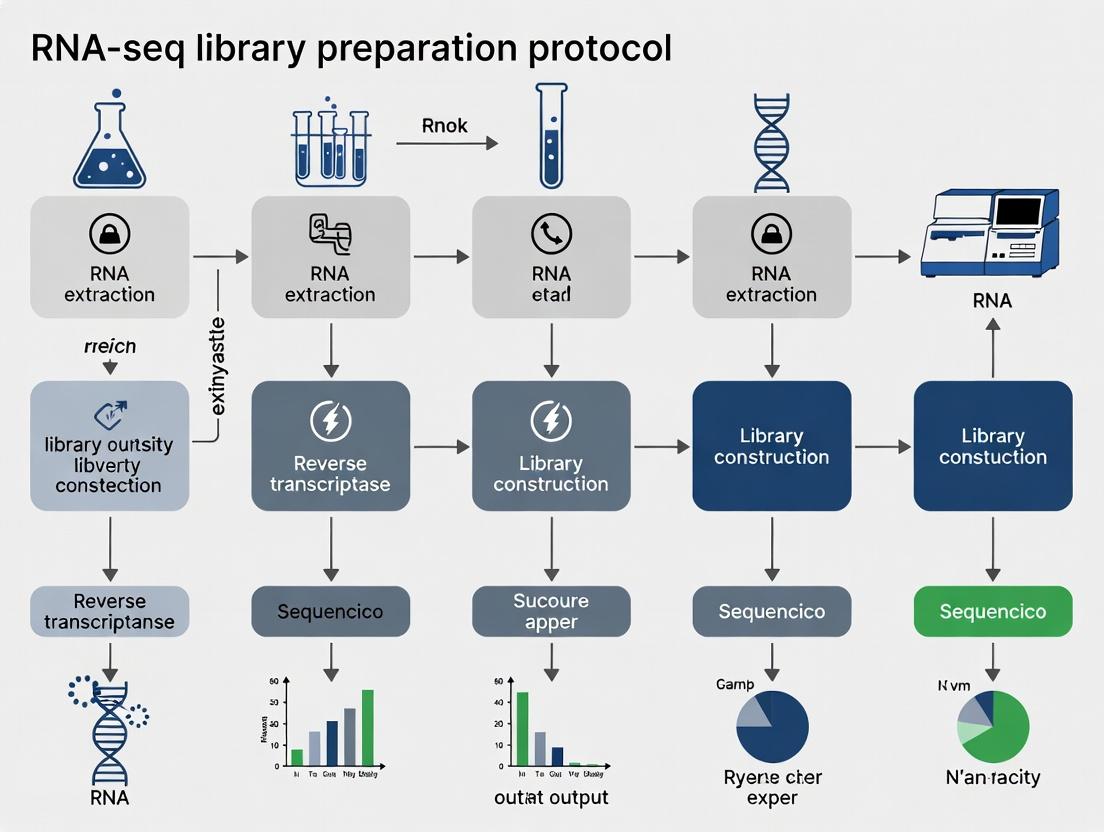
This article provides researchers, scientists, and drug development professionals with a detailed examination of stranded RNA-seq library preparation.
Stranded RNA-Seq Library Preparation: A Comprehensive Guide to Protocols, Optimization, and Comparative Analysis
Abstract
This article provides researchers, scientists, and drug development professionals with a detailed examination of stranded RNA-seq library preparation. It covers foundational principles explaining the critical importance of strand specificity for accurate transcriptomics, step-by-step methodological protocols for various sample types, practical troubleshooting and optimization strategies, and a systematic validation and comparison of leading commercial and academic methods. The synthesis of current best practices aims to enhance the accuracy, reproducibility, and biological insight of gene expression studies.
Foundations of Stranded RNA-Seq: Unlocking Accurate Transcriptome Interpretation
This document serves as an application note for a thesis investigating improvements in stranded RNA-seq library preparation protocols. The primary objective is to compare the efficiency, bias, and informational yield of standard (non-stranded) versus strand-specific protocols, with the goal of optimizing workflows for transcriptional regulation studies, novel isoform discovery, and accurate gene expression quantification in drug development research.
Core Protocol Comparison: Standard vs. Strand-Specific RNA-Seq
The fundamental difference lies in the preservation of the original RNA strand orientation during cDNA library construction.
Table 1: Comparison of Standard and Strand-Specific RNA-Seq Protocols
| Feature | Standard (Non-Stranded) Protocol | Strand-Specific (Stranded) Protocol |
|---|---|---|
| Strand Information | Lost. Reads cannot be assigned to sense or antisense strand. | Preserved. Reads are mapped to their strand of origin. |
| Library Prep Method | Primarily dUTP-based or ligation-based. | Major methods: dUTP second strand marking, ligation of adapters to RNA, or chemical labeling. |
| Key Advantage | Simpler, often lower cost, sufficient for basic expression profiling. | Discerns overlapping genes on opposite strands, identifies antisense transcription, accurate novel transcript annotation. |
| Complexity/Cost | Generally lower. | Generally 10-25% higher in reagent cost and hands-on time. |
| Data Utility | Quantification of gene-level expression. | Essential for annotating genomes, studying antisense RNA, precise isoform quantification. |
| Typical Protocol | Illumina TruSeq Standard (legacy) | Illumina TruSeq Stranded, NEBNext Ultra II Directional, SMARTer Stranded |
Detailed Experimental Protocols
Protocol A: Standard RNA-Seq Library Prep (Poly-A Selection, Non-Stranded)
This protocol is based on the legacy Illumina TruSeq RNA Sample Prep Kit.
Materials:
- Purified total RNA (RIN > 8 recommended).
- Oligo(dT) magnetic beads.
- Fragmentation buffer (divalent cations, elevated temperature).
- First-strand synthesis: Random hexamers, Reverse Transcriptase, dNTPs.
- Second-strand synthesis: DNA Polymerase I, RNase H, dNTPs.
- End repair, A-tailing, and adapter ligation reagents.
- PCR amplification primers and enzyme.
- SPRI size selection beads.
Methodology:
- Poly-A Selection: Bind polyadenylated RNA to oligo(dT) beads. Wash and elute mRNA.
- Fragmentation: Eluted mRNA is fragmented using divalent cations at 94°C for specific time (e.g., 8 min) to yield ~200-300 bp fragments.
- First-Strand cDNA Synthesis: Use random hexamer primers and reverse transcriptase.
- Second-Strand cDNA Synthesis: RNA template is removed (RNase H) and replaced with DNA (DNA Pol I). This creates blunt-ended, double-stranded cDNA.
- Library Construction: Perform end repair (blunting), add a single 'A' nucleotide to 3' ends, and ligate indexed sequencing adapters.
- Purification & Amplification: Clean up with SPRI beads. Amplify library via PCR (typically 15 cycles).
- Quality Control: Quantify by qPCR and assess size distribution (e.g., Bioanalyzer).
Protocol B: Strand-Specific Library Prep (dUTP Second Strand Marking)
This is the most common method (e.g., Illumina TruSeq Stranded).
Materials:
- Purified total RNA.
- Oligo(dT) or random priming beads/primers.
- Reverse Transcriptase, dNTPs.
- dUTP (instead of dTTP for second strand synthesis).
- End repair, A-tailing, adapter ligation reagents.
- USER Enzyme (Uracil-Specific Excision Reagent): Mix of Uracil DNA glycosylase (UDG) and DNA glycosylase-lyase Endonuclease VIII.
- PCR amplification primers and enzyme.
Methodology:
- Poly-A Selection & Fragmentation: Identical to Protocol A.
- First-Strand cDNA Synthesis: Use random hexamers for fragmentation-based kits or oligo(dT) primer for standard workflow. Synthesize cDNA with dNTPs.
- Second-Strand cDNA Synthesis: Synthesize using dATP, dCTP, dGTP, and dUTP (not dTTP). This incorporates uracil into the second strand.
- Library Construction: Perform end repair, A-tailing, and adapter ligation to create a double-stranded library where the second strand is dUTP-marked.
- Strand Discrimination: Treat with USER Enzyme. It cleaves the DNA backbone at the uracil residues, degrading the second strand. The PCR step then only amplifies the first strand, preserving its original orientation.
- PCR Amplification: The remaining single-stranded library is amplified. The adapters are asymmetrical, ensuring the final sequence read corresponds to the original RNA strand.
- Quality Control: As in Protocol A.
The Scientist's Toolkit: Key Research Reagent Solutions
Table 2: Essential Materials for Stranded RNA-Seq Protocols
| Item | Function & Rationale |
|---|---|
| RNA Integrity Number (RIN) > 8 RNA | High-quality input is critical for full-length transcript representation and minimal bias. |
| Poly(A) Selection or rRNA Depletion Kits | Enriches for mRNA by removing ribosomal RNA, increasing informative reads. Stranded kits are compatible with both. |
| dUTP Nucleotide | The key reagent for strand marking. Incorporated during second-strand synthesis to label it for enzymatic removal. |
| USER Enzyme (or Equivalent) | Enzymatically degrades the dUTP-containing second strand, ensuring only the first cDNA strand is amplified. |
| Stranded Adapters (Dual-Indexed) | Contain defined molecular identifiers for multiplexing. Their design is integral to maintaining strand orientation in the final read. |
| SPRI (Solid Phase Reversible Immobilization) Beads | Enable efficient size selection and purification between enzymatic steps, critical for library yield and insert size distribution. |
| High-Fidelity PCR Polymerase | For minimal-bias amplification of the final library. Essential for maintaining quantitative representation. |
Table 3: Performance Metrics of RNA-Seq Protocol Types (Thesis Research Context)
| Metric | Standard Protocol | Strand-Specific Protocol | Measurement Method & Notes |
|---|---|---|---|
| Protocol Hands-on Time | ~6-7 hours | ~7-8.5 hours | Estimated for 8 samples by experienced technician. |
| Cost per Sample (Reagents) | $XX - $YY | ~1.2x to 1.3x Standard Cost | Commercial kit list prices (2023-2024). |
| Percentage of Reads Mapping to Genome | 85-95% | 80-92% | Slight decrease in stranded due to non-polyA reads. |
| Strand Specificity Rate | ~50% (Random) | >90% (for dUTP method) | Percentage of reads aligning to correct genomic strand. Critical Q/C metric. |
| Antisense Transcript Detection | Not possible | Enabled | Allows identification of natural antisense transcripts (NATs). |
| Differential Expression Consistency | High for simple models | Superior in complex/overlapping loci | Stranded data reduces false positives in dense genomic regions. |
| Required Sequencing Depth | 1X | 1.1-1.3X | Stranded may require slightly higher depth for same gene coverage due to strand-splitting. |
Visualized Workflows and Pathways
Diagram 1: Standard RNA-seq workflow.
Diagram 2: Stranded RNA-seq (dUTP) workflow.
Diagram 3: Protocol selection guide.
Within the broader thesis on advancing stranded RNA-sequencing protocols, understanding the biochemical principles that enable strand-specific information retention is foundational. Stranded library preparation is a critical methodological framework that preserves the original orientation of RNA transcripts during conversion to sequencing-ready cDNA libraries. This allows researchers to accurately determine which genomic strand served as the template for transcription, a key factor in annotating genes, identifying antisense transcripts, and quantifying expression in overlapping genomic regions. The core mechanism involves the incorporation of non-biological markers or adapters during cDNA synthesis, which are subsequently used to differentiate the original RNA strand from its cDNA complement during data analysis.
Key Mechanisms for Strand Orientation Preservation
The following table summarizes the primary biochemical strategies used in stranded protocols to preserve transcript orientation.
Table 1: Core Biochemical Strategies for Stranded RNA-seq
| Strategy | Key Principle | Common Implementation | Orientation Information Encoded Via |
|---|---|---|---|
| dUTP Second Strand | Incorporation of deoxyuridine triphosphate (dUTP) in place of dTTP during second-strand cDNA synthesis. | Illumina’s TruSeq Stranded, NEBNext Ultra II | Enzymatic digestion of the dUTP-containing second strand. |
| Adaptor Ligation | Use of asymmetric adaptors that are directionally ligated to the RNA or first-strand cDNA, marking the original 5' and 3' ends. | Illumina Small RNA, some SMARTer-based protocols | The inherent asymmetry and order of adapter ligation. |
| Template Switching | Utilizing the terminal transferase activity of reverse transcriptase to add non-templated nucleotides, enabling binding of a strand-switching oligonucleotide. | Clontech SMARTer, Nugen Ovation | The incorporation of a unique oligonucleotide sequence at the 5' end of the first strand. |
Detailed Protocol: dUTP-Based Stranded mRNA-Seq
This protocol, central to the thesis research, details the widely adopted dUTP second-strand marking method.
Materials & Reagents Table 2: Research Reagent Solutions - Key Materials
| Reagent / Kit | Function in Protocol |
|---|---|
| Poly(A) Selection Beads | Isolates messenger RNA via poly-A tail binding, removing ribosomal RNA. |
| Fragmentation Buffer | Chemically or thermally shears mRNA into uniform fragments optimal for sequencing. |
| Random Hexamer / Oligo-dT Primers | Initiates first-strand cDNA synthesis by annealing to the RNA template. |
| Actinomycin D or RNase Inhibitor | Suppresses spurious DNA-dependent synthesis during reverse transcription, improving strand specificity. |
| dNTP/dUTP Mix | Nucleotide mix containing dUTP instead of dTTP for second-strand synthesis, enabling subsequent strand marking. |
| USER Enzyme | A combination of Uracil DNA Glycosylase (UDG) and Endonuclease VIII, enzymatically removes the dUTP-containing second strand. |
| Strand-Specific Indexing Adapters | Double-stranded adapters with unique molecular barcodes, ligated to purified cDNA for multiplexing. |
Procedure
- RNA Isolation & Poly(A) Selection: Purify total RNA and isolate mRNA using oligo(dT)-coupled magnetic beads.
- mRNA Fragmentation: Fragment approximately 100-300 ng of purified mRNA using divalent cations at elevated temperature (e.g., 94°C for 5-8 minutes) to yield fragments of 200-300 nucleotides.
- First-Strand cDNA Synthesis: Synthesize first-strand cDNA using reverse transcriptase, random hexamers or oligo(dT) primers, and dNTPs. Include Actinomycin D to inhibit DNA-dependent synthesis.
- Second-Strand cDNA Synthesis: Synthesize the second strand using DNA Polymerase I, RNase H, and a nucleotide mix where dTTP is replaced by dUTP. This yields a double-stranded cDNA product where the second strand is uracil-containing and biologically marked.
- End Repair & A-Tailing: Blunt the cDNA fragments and add a single 'A' nucleotide to the 3' ends, preparing them for adapter ligation.
- Adapter Ligation: Ligate double-stranded, index-sequencing adapters to the 'A'-tailed cDNA ends.
- USER Enzyme Digestion (Strand Selection): Treat the adapter-ligated library with USER Enzyme. This cleaves the backbone at sites containing uracil, specifically and quantitatively digesting the dUTP-marked second strand. The final library is thus constructed solely from the first-strand cDNA, which represents the original RNA strand orientation.
- Library Amplification: Perform a limited-cycle PCR to enrich for adapter-ligated fragments.
- Quality Control & Sequencing: Validate library size distribution and concentration via bioanalyzer/qPCR before sequencing.
Data Interpretation
Preservation of strand information is confirmed during bioinformatic analysis. Aligners (e.g., STAR, HISAT2) can be run in stranded mode (--outSAMstrandField). The expected outcome is that >95% of reads from a properly stranded library map to the genomic sense strand for known positive-sense mRNA transcripts. Non-stranded libraries typically show a near 50/50 distribution.
Table 3: Expected Read Alignment Distribution
| Transcript Type | Stranded Library (Read 1) | Non-stranded Library | Interpretation |
|---|---|---|---|
| Positive Sense mRNA | >95% map to + strand | ~50% map to each strand | Strand orientation has been successfully preserved. |
| Negative Sense lncRNA | >95% map to - strand | ~50% map to each strand | Allows unambiguous identification of antisense transcription. |
Visualizing the Core dUTP Workflow
Title: dUTP Stranded RNA-seq Core Workflow
Signaling Pathway: Strand Information Flow in Analysis
Title: Stranded Read Assignment Logic
Application Notes
The accurate characterization of transcriptomes is foundational to modern genomics, yet it is fundamentally complicated by the pervasive nature of overlapping transcriptional units and antisense transcription. Within the context of advancing stranded RNA-seq library preparation protocols, resolving these features is not merely an incremental improvement but a critical necessity. Overlapping genes on opposite strands generate antisense RNA molecules that can regulate sense transcription through epigenetic silencing, transcriptional interference, or the generation of double-stranded RNA. In drug development, misannotation of these features can lead to erroneous target identification and off-target effects.
Current standard RNA-seq methods that are non-stranded lose the strand-of-origin information, conflating sense and antisense signals. This results in inaccurate quantification, erroneous gene fusion detection, and the complete obscuration of antisense regulatory mechanisms. Stranded protocols are therefore essential, but their efficacy varies based on their biochemical strategies to preserve strand information. The choice of protocol directly impacts the detection fidelity of overlapping genes, non-coding antisense transcripts, and pathogenic viral integrations within host genomes.
Table 1: Comparison of Stranded RNA-seq Kit Performance in Resolving Antisense Transcription
| Kit/Method | Stranding Chemistry | Antisense Detection Sensitivity (%) | Overlap Resolution Accuracy (%) | Input RNA Requirement (ng) | Protocol Duration (hrs) |
|---|---|---|---|---|---|
| Illumina Stranded Total RNA | dUTP Second Strand Marking | 99.2 | 98.5 | 10-100 | 6.5 |
| NEBNext Ultra II Directional | dUTP Second Strand Marking | 98.7 | 97.8 | 1-1000 | 5.5 |
| Takara SMARTer Stranded | Template-Switching & Ligation | 95.4 | 92.1 | 1-10 | 9.0 |
| Agilent SureSelect Strand-Specific | rRNA Depletion & dUTP | 99.0 | 98.2 | 10-100 | 8.0 |
Table 2: Impact of Stranded vs. Non-Stranded Sequencing on Gene Quantification
| Metric | Non-Stranded Protocol | Stranded Protocol (dUTP-based) | Improvement Factor |
|---|---|---|---|
| Misassigned Reads in Overlap Regions | 35-60% | <3% | >12x |
| False Positive Fusion Calls | 15-25% | <2% | >10x |
| Antisense lncRNA Detection | <10% of known loci | >95% of known loci | >9x |
| Required Sequencing Depth for Equivalent Accuracy | 100% (Baseline) | ~70% | 1.4x Efficiency Gain |
Detailed Protocols
Protocol 1: High-Resolution Stranded Total RNA-seq Library Preparation (dUTP Method)
Objective: To generate stranded RNA-seq libraries from total RNA with high fidelity for resolving overlapping sense-antisense transcripts.
Materials: See "Research Reagent Solutions" below.
Procedure:
- RNA Integrity Verification: Assess RNA using an Agilent Bioanalyzer. Use only samples with RIN > 8.0.
- rRNA Depletion: Use the RiboZero Plus kit. Combine 100 ng total RNA with depletion probes. Incubate at 68°C for 10 min, then 37°C for 15 min. Clean up with RNAClean XP beads.
- First Strand cDNA Synthesis: Fragment purified RNA by divalent cation hydrolysis at 94°C for 8 min. Synthesize first strand using reverse transcriptase, random primers, and dNTPs (Incubate: 25°C 10 min, 42°C 50 min, 70°C 15 min).
- Second Strand Synthesis (Strand Marking): Add Second Strand Synthesis Buffer, dUTP mix (dATP, dCTP, dGTP, dUTP), E. coli DNA Polymerase I, and RNase H. Incubate at 16°C for 1 hour. CRITICAL STEP: The incorporation of dUTP instead of dTTP marks the second strand.
- Dual-Size Selection & End Repair: Clean up double-stranded cDNA with AMPure XP beads (0.8x ratio). Perform end-repair and A-tailing per manufacturer's instructions.
- Adapter Ligation: Ligate unique dual-indexed adapters to the A-tailed cDNA. Use a 15:1 molar adapter-to-insert ratio. Incubate at 20°C for 15 min.
- Uracil Digestion (Strand Specificity): Treat with Uracil-Specific Excision Reagent (USER) enzyme at 37°C for 15 min. This degrades the dUTP-marked second strand, ensuring only the first strand (complementary to the original RNA) is amplified.
- Library Amplification: Amplify the library with PCR (12-15 cycles) using P5 and P7 primers. Perform final cleanup with AMPure XP beads (0.9x ratio).
- Quality Control: Quantify library by Qubit and profile size distribution by Bioanalyzer. Pool equimolar amounts for sequencing on an Illumina platform (2x150 bp recommended).
Protocol 2: Validation of Antisense Transcription via RT-qPCR with Strand-Specific Primers
Objective: To experimentally validate antisense transcripts identified from stranded RNA-seq data.
Procedure:
- Strand-Specific cDNA Synthesis: Set up two separate reverse transcription (RT) reactions for each RNA sample.
- Sense cDNA Reaction: Use a gene-specific primer complementary to the antisense RNA strand to generate cDNA for the sense transcript.
- Antisense cDNA Reaction: Use a gene-specific primer complementary to the sense RNA strand to generate cDNA for the antisense transcript.
- Include a no-RT control for each primer set. Use 500 ng total RNA, Superscript IV, and protocol: 55°C for 10 min, 80°C for 10 min.
- qPCR Analysis: Design qPCR assays spanning exon-exon junctions unique to the sense or antisense transcript. Use SYBR Green master mix. Run on a real-time cycler with cycling: 95°C 3 min, then 40 cycles of (95°C 15 sec, 60°C 30 sec, 72°C 30 sec).
- Data Analysis: Calculate ΔΔCt relative to a stable housekeeping gene and a control sample. Confirm strand specificity by the absence of signal in the opposite RT reaction and no-RT controls.
Visualizations
Title: Stranded RNA-seq Workflow with dUTP Marking
Title: Overlapping Gene Transcription Creates Regulatory Conflict
The Scientist's Toolkit: Research Reagent Solutions
Table 3: Essential Materials for Stranded RNA-seq Studies
| Item & Example Product | Function in Protocol | Critical for Overlap Resolution? |
|---|---|---|
| RiboZero Plus rRNA Depletion Kit | Removes abundant ribosomal RNA, enriching for mRNA, lncRNA, and antisense transcripts. | Yes - Enables detection of non-polyadenylated antisense RNA. |
| NEBNext Ultra II Directional RNA Library Prep Kit | Provides optimized enzymes and buffers for the dUTP-based stranded protocol. | Yes - Core chemistry for strand marking. |
| Uracil-Specific Excision Reagent (USER) Enzyme | Enzymatically digests the dUTP-marked second strand, ensuring strand specificity. | Absolutely Critical - Enforces directional information. |
| RNAClean & AMPure XP Beads | Solid-phase reversible immobilization (SPRI) beads for nucleic acid clean-up and size selection. | Yes - Reduces adapter dimer and controls insert size. |
| Superscript IV Reverse Transcriptase | High-temperature, robust RT for efficient first-strand synthesis from complex RNA. | Yes - Improves yield from structured RNA regions. |
| Unique Dual Index (UDI) Adapters | Adapters with unique molecular barcodes for sample multiplexing and error correction. | Indirectly - Reduces index hopping cross-talk, improving sample-specific accuracy. |
| Agilent Bioanalyzer / TapeStation | Microfluidic system for assessing RNA Integrity Number (RIN) and final library size distribution. | Yes - Quality control is essential for interpretable data. |
| Strand-Specific Primers | Custom primers designed for RT-qPCR validation of antisense transcripts. | Yes - Required for orthogonal validation of strand-specific sequencing results. |
Within the broader thesis investigating stranded RNA-seq library preparation protocols, this application note addresses a critical downstream analytical challenge: the consequences of using unstranded RNA-seq data. While unstranded protocols are historically simpler and less costly, they generate data where the transcriptional strand-of-origin information is lost. This loss propagates through analysis, leading to significant errors in interpretation, including false positives in expression calls, false negatives in detecting overlapping transcription, and systematic misannotation of genetic features. This document outlines the experimental and bioinformatic protocols for quantifying these errors and provides visual guides to the underlying molecular confusion.
The following tables summarize key quantitative findings on the impact of strandedness on RNA-seq analysis, compiled from recent literature and benchmark studies.
Table 1: Error Rates in Gene Expression Quantification (Simulated Data)
| Gene Context | Unstranded Data (FP Rate) | Stranded Data (FP Rate) | Notes |
|---|---|---|---|
| Overlapping sense genes | 15-22% | 1-3% | False positives (FP) arise from misassigned reads. |
| Antisense transcription | 30-40% (FN Rate) | 5-8% (FN Rate) | False negatives (FN) due to signal cancellation. |
| Bidirectional promoters | High ambiguity | Clear resolution | Strand resolution is essential for accurate TSS calling. |
| Overall DE precision | Reduced by 18-25% | Baseline | In complex genomes with dense transcription. |
Table 2: Impact on Novel Transcript Discovery & Annotation
| Analysis Task | Consequence with Unstranded Data | Key Metric |
|---|---|---|
| Novel isoform discovery | Fused transcripts from overlapping genes | 35% of novel "isoforms" may be artifacts. |
| lncRNA annotation | Misassignment of strand, incorrect exonic structure | Strand error >50% for intragenic lncRNAs. |
| UTR annotation | Inflated or inaccurate 5'/3' UTR boundaries | Boundary predictions unreliable without strand. |
| Fusion gene detection | High false positive rate in gene-dense regions | Specificity decreases by ~30%. |
Experimental Protocols
Protocol 1: Benchmarking Strand-Specificity Using Synthetic RNA Spikes
Objective: To empirically quantify the rate of misassignment of reads to the incorrect strand in an unstranded library prep protocol.
Materials: ERCC RNA Spike-In Mix (Thermo Fisher), Strand-Specific RNA Spike-In controls (e.g., Arabidopsis thaliana RNAs for cross-species mapping), Stranded and Unstranded Library Prep Kits.
Procedure:
- Spike-in Preparation: Create a control RNA mix containing known ratios of sense and antisense synthetic transcripts. Include exogenous, strand-specific spikes at defined concentrations.
- Parallel Library Construction: Using the same total RNA sample (e.g., human cell line RNA), prepare two libraries: a. A library using a standard unstranded protocol (e.g., dUTP-based or Illumina TruSeq Non-Stranded). b. A library using a stranded protocol (e.g., Illumina TruSeq Stranded, dUTP second strand marking with actinomycin D).
- Sequencing & Alignment: Sequence both libraries on the same flow cell lane to minimize batch effects. Align reads to a combined reference genome (host + spike sequences) using a splice-aware aligner (e.g., STAR, HISAT2) in unstranded mode for both datasets.
- Quantification & Analysis: For the spike-in sequences only: a. Count reads aligning to the sense and antisense genomic positions of each spike-in transcript. b. Calculate the "Strand Invasion Rate" for the unstranded library: (Reads on incorrect strand) / (Total reads mapping to spike-in locus) * 100%. c. Compare this to the near-zero rate expected from the stranded library control.
Protocol 2: Assessing False Positives in Differential Expression (DE)
Objective: To measure the false positive rate in DE analysis caused by overlapping genes when using unstranded data.
Procedure:
- In Silico Simulation: Use a tool like
PolyesterorBEERSto simulate RNA-seq reads from a synthetic genome with designed, overlapping gene pairs (sense-sense and sense-antisense).- Simulate a ground truth where only Gene A is differentially expressed (2-fold up), while its overlapping neighbor Gene B is not.
- Read Analysis Pipeline:
a. Map the simulated reads to the reference genome using standard parameters.
b. Perform read counting at the gene level using unstranded counting (e.g.,
featureCounts -s 0orhtseq-count --stranded=no). c. Perform DE analysis (e.g., using DESeq2) on the resulting count matrix. - Evaluation: A false positive DE call for Gene B indicates misattribution of reads from the truly differential Gene A. The FP rate is calculated across many simulated overlapping pairs and compared to the rate obtained from stranded counting (
-s 1or--stranded=yes).
Visualization of Key Concepts
Title: Analytical Consequences of Unstranded Data
Title: Stranded vs. Unstranded Read Assignment
The Scientist's Toolkit: Research Reagent Solutions
| Item / Reagent | Function & Rationale |
|---|---|
| dUTP / ActD Stranded Kit (e.g., TruSeq Stranded, NEBNext Ultra II) | Incorporates dUTP into second strand cDNA, which is then enzymatically degraded prior to PCR, preserving only first strand (sense) information. The gold standard for strand specificity. |
| SMARTer Stranded Total RNA Seq Kit | Utilizes template-switching and adaptor tagging at the cDNA synthesis step to preserve strand information, effective for degraded/low-input samples. |
| RNA Spike-In Controls (e.g., External RNA Controls Consortium (ERCC) mixes) | Synthetic RNAs at known concentrations and sequences added to samples pre-library prep to monitor technical performance, including strand specificity when designed appropriately. |
| Ribosomal RNA Depletion Kits (e.g., Ribo-Zero Plus, ANYA) | Selective removal of cytoplasmic and mitochondrial rRNA, crucial for maintaining strand integrity of non-polyA transcripts (e.g., lncRNAs, antisense RNA) which are most vulnerable to misannotation. |
| UMI (Unique Molecular Identifier) Adapters | Short random nucleotide sequences added to each molecule before amplification, allowing bioinformatic correction for PCR duplicates. Essential for accurate quantitation when assessing differential expression. |
| Bioanalyzer / TapeStation (Agilent) | Microfluidic capillary electrophoresis for precise assessment of RNA Integrity Number (RIN) and final library fragment size distribution. High-quality input RNA is critical for interpretable stranded data. |
| Strand-Aware Aligners (e.g., STAR, HISAT2, TopHat2) | Bioinformatics tools capable of using the XS or TS strand attribute tag in BAM files to correctly assign reads to features during downstream counting. |
Feature Counting with Strand Option (e.g., featureCounts -s 1, htseq-count --stranded=yes) |
Critical step in quantification that must match the library type. Using the wrong -s parameter is a common source of error equivalent to analyzing stranded data as unstranded. |
Within the broader thesis investigating stranded RNA-seq library preparation protocols, a critical biological understanding emerges: the strandedness of sequencing data is non-negotiable for accurate long non-coding RNA (lncRNA) annotation, the elucidation of their regulatory mechanisms, and the subsequent discovery of disease associations. Unstranded protocols lose transcript orientation, obscuring antisense lncRNAs, overlapping gene models, and precise strand-specific regulatory interactions. This application note details the protocols and insights enabled by rigorously stranded approaches.
Key Insights & Quantitative Data
Table 1: Impact of Strandedness on lncRNA Discovery and Annotation
| Metric | Unstranded RNA-seq Data | Stranded RNA-seq Data | Experimental Support & Citation |
|---|---|---|---|
| Antisense lncRNA Identification | Severely compromised; cannot distinguish from sense transcription. | Robust; enables precise mapping of antisense transcripts. | [Guttman et al., Nature 2009] identified thousands of lincRNAs, dependent on strand. |
| Gene Boundary Definition | Ambiguous for overlapping genes on opposite strands. | Precise; resolves overlapping transcription units. | ENCODE Consortium demonstrated stranded data is essential for accurate transcriptomes. |
| Expression Quantification Accuracy | Inflated or erroneous for bidirectional promoters/overlaps. | Accurate per-strand read assignment reduces false positives. | Studies show ~20-30% of reads misassigned in complex loci without strandedness. |
| Regulatory Mechanism Inference | Limited; cannot correlate expression with strand-specific cis elements. | Enables linking lncRNAs to nearby strand-specific regulatory functions. | [Engreitz et al., Nature 2016] used stranded data to elucidate cis-regulatory mechanisms. |
| Disease-Associated Variant Mapping | Variants may be incorrectly assigned to wrong gene/sense. | Correctly associates non-coding variants with the implicated lncRNA strand. | GWAS SNPs in lncRNA loci require stranded annotation for interpretation. |
Table 2: Strand-Dependent lncRNA Roles in Disease Pathways
| Disease Context | lncRNA (Strand-Dependent) | Strand-Specific Regulatory Role | Key Insight |
|---|---|---|---|
| Cancer (e.g., Prostate) | SCHLAP1 (Antisense) | Antisense to SWI/SNF complex genes; promotes invasion. | Strandedness identifies it as a distinct antisense unit, not noise from sense gene. |
| Neurological (e.g., Alzheimer's) | BACE1-AS (Antisense) | Stabilizes BACE1 mRNA sense transcript; upregulates protease. | Discovery entirely dependent on detecting antisense orientation. |
| Cardiovascular | ANRIL (Antisense at INK4b/ARF/INK4a locus) | Regulates epigenetic silencing in cis. | Stranded data crucial for linking polymorphisms to this specific non-coding transcript. |
| Autoimmune | lincRNA-Cox2 (Sense) | Regulates immune gene expression in trans. | Accurate quantification requires distinguishing it from nearby opposite-strand genes. |
Experimental Protocols
Protocol 3.1: Stranded Total RNA-Seq Library Preparation for lncRNA Analysis
Principle: This protocol preserves the strand information of original transcripts during cDNA library construction, typically using dUTP second-strand marking or adaptor-ligation methods.
Reagents & Equipment:
- See "Research Reagent Solutions" table.
- RNase inhibitor.
- SuperScript II/IV Reverse Transcriptase.
- dNTP mix (including dUTP for dUTP method).
- USER enzyme (for dUTP method).
- High-fidelity DNA polymerase.
- Magnetic bead-based size selector and cleaner.
- Qubit fluorometer, Bioanalyzer/TapeStation.
Procedure:
- RNA Integrity Check: Verify RIN > 8.5 (Agilent Bioanalyzer).
- Ribosomal RNA Depletion: Use Ribo-Zero Gold or similar to deplete cytoplasmic and mitochondrial rRNA. Do not use poly-A selection, as it biases against many lncRNAs.
- Fragmentation: Fragment purified RNA (e.g., ~200 ng) using divalent cations at elevated temperature (e.g., 94°C for 5-8 min) to ~200-300 bp.
- First-Strand cDNA Synthesis: Use random hexamers and reverse transcriptase.
- Second-Strand Synthesis (Strand Marking):
- dUTP Method (Common): Synthesize second strand using dTTP replaced by dUTP. The resulting double-stranded cDNA incorporates dUTP in the second strand.
- End Repair, A-Tailing, and Adapter Ligation: Perform standard blunt-end repair, add 'A' tail, and ligate dual-indexed sequencing adapters.
- Strand Selection: For dUTP method, treat with USER enzyme (Uracil-Specific Excision Reagent) to digest the dUTP-containing second strand. PCR amplification then proceeds only from the first-strand template, preserving orientation.
- Library Amplification & Clean-up: Perform limited-cycle PCR. Clean and size-select (e.g., 200-500 bp insert) using magnetic beads.
- Quality Control & Quantification: Use Qubit (dsDNA HS assay) and Bioanalyzer (High Sensitivity DNA kit) to confirm library size and concentration.
- Sequencing: Pool libraries and sequence on Illumina platform (≥75 bp paired-end recommended).
Protocol 3.2: Validation of lncRNA Expression and Strand-Specificity via RT-qPCR
Principle: Design strand-specific primers to validate expression and orientation of lncRNAs identified from stranded RNA-seq data.
Procedure:
- DNase Treatment: Treat total RNA with DNase I.
- Strand-Specific cDNA Synthesis:
- Set up two separate reactions for each RNA sample.
- For Sense Transcript Detection: Use a gene-specific reverse primer (GSP-reverse) for reverse transcription.
- For Antisense Transcript Detection: Use a GSP-forward primer.
- Include no-reverse-transcriptase (-RT) controls.
- qPCR Amplification:
- Use SYBR Green master mix.
- For cDNA from sense GSP, use sense primer pair for qPCR to detect antisense transcript (and vice-versa), confirming strand-origin.
- Run in triplicate. Use a stable reference gene (e.g., GAPDH, ACTB) for normalization.
- Data Analysis: Calculate ΔΔCt values. Confirm stranded RNA-seq expression trends and verify antisense specificity.
Visualizations
Diagram 1: Stranded vs Unstranded RNA-seq Outcomes
Diagram 2: Strand-Specific lncRNA Regulatory Mechanism
The Scientist's Toolkit: Research Reagent Solutions
| Item | Function in Stranded lncRNA Research | Example Product/Brand |
|---|---|---|
| Stranded RNA-seq Library Prep Kit | Provides optimized reagents for strand marking (dUTP or other) and library construction. | Illumina Stranded Total RNA Prep, NEBNext Ultra II Directional RNA Library Prep. |
| Ribosomal RNA Depletion Kit | Removes abundant rRNA without 3' bias, crucial for capturing full-length lncRNAs. | Illumina Ribo-Zero Plus, QIAseq FastSelect, NEBNext rRNA Depletion. |
| RNase Inhibitor | Protects RNA integrity during library prep, especially critical during fragmentation and RT. | Murine RNase Inhibitor, Recombinant RNase Inhibitor. |
| dUTP Mix | Key component for strand marking in dUTP-based protocols; replaces dTTP in second strand. | dNTP mix including dUTP. |
| USER Enzyme | Enzymatically removes the dUTP-containing second strand, enabling strand selection. | NEB USER Enzyme. |
| High-Sensitivity DNA Analysis Kit | Validates final library fragment size distribution and quality. | Agilent High Sensitivity DNA Kit, Fragment Analyzer. |
| Strand-Specific RT Primers | For validating lncRNA orientation and expression via RT-qPCR. | Custom DNA Oligos, designed with stringent specificity checks. |
Methodologies in Practice: Protocols and Kits for Stranded RNA-Seq Library Construction
This application note details three dominant chemistries—dUTP marking, directional ligation, and tagmentation—for generating strand-specific (stranded) RNA sequencing libraries. The evaluation of these methods is a core component of a broader thesis research project aimed at optimizing a robust, cost-effective, and high-fidelity stranded RNA-seq protocol for diverse sample types, including low-input and degraded clinical specimens. The primary objective is to compare their performance in preserving strand-of-origin information, library complexity, and bias, which are critical for accurate transcriptome analysis in basic research and drug development.
Table 1: Comparison of Dominant Stranded RNA-seq Chemistries
| Feature | dUTP Marking (Illumina) | Directional Ligation (Illumina TruSeq, NEB) | Tagmentation (Nextera) |
|---|---|---|---|
| Core Principle | 2nd strand cDNA synthesis incorporates dUTP; USER enzyme degrades U-containing strand prior to PCR. | Use of adapters with blocked 3' ends or asymmetrical designs ensures directional ligation to cDNA. | Transposase simultaneously fragments cDNA and adds sequencing adapters in a strand-specific manner. |
| Typified By | Illumina TruSeq Stranded mRNA, SMARTer Stranded kits. | NEBNext Ultra II Directional RNA, Illumina TruSeq Stranded Total RNA. | Illumina Stranded mRNA Prep, Ligation. |
| Strand Specificity | High (>99%) through enzymatic removal of unwanted strand. | High (>99%) through adapter design and ligation specificity. | High (>99%) encoded during tagmentation and PCR enrichment. |
| Input RNA Range | 10 ng – 1 μg (standard); down to 100 pg (low-input variants). | 1 ng – 1 μg (standard); down to 500 pg for ultra-low input. | 10 ng – 100 ng (optimized for tagmentation efficiency). |
| Hands-on Time | ~5-7 hours (fragmentation, cDNA synthesis, ligation, cleanup). | ~4-6 hours (similar workflow to dUTP but without USER step). | ~3.5 hours (significantly reduced due to integrated fragmentation/adapter addition). |
| Protocol Length | ~2 days (including overnight steps optional). | ~1.5-2 days. | ~1 day. |
| GC Bias | Low to moderate, standard for PCR-based libraries. | Low to moderate. | Can be higher due to Tn5 transposase sequence preference. |
| Duplication Rate | Lower, due to fragmentation prior to cDNA synthesis. | Lower. | Potentially higher, especially with low-input samples. |
| Primary Advantage | Robust, widely validated, high complexity. | Efficient, avoids uracil incorporation/cleavage step. | Fastest workflow, minimal hands-on time. |
| Primary Disadvantage | Longer protocol; USER enzyme step adds cost. | Requires precise adapter stoichiometry and ligation control. | More sensitive to input quality/quantity; potential for bias. |
Detailed Experimental Protocols
Protocol 3.1: Stranded Library Prep via dUTP Marking
Objective: Generate strand-specific RNA-seq libraries by incorporating dUTP during second-strand cDNA synthesis and subsequent enzymatic removal. Materials: Poly(A) selection beads, fragmentation buffer, reverse transcriptase, RNase H, DNA polymerase I, dNTP mix including dUTP, USER enzyme, ligation reagents, index adapters, PCR master mix. Procedure:
- RNA Isolation & Selection: Purify total RNA and isolate poly(A)+ mRNA using oligo(dT) magnetic beads.
- Fragmentation: Elute mRNA and fragment using divalent cations (e.g., Mg2+) at 94°C for 2-8 minutes to yield ~200-300 bp fragments.
- First-Strand cDNA Synthesis: Use random hexamers and reverse transcriptase to synthesize cDNA. Purify.
- Second-Strand Synthesis: Synthesize the second strand using DNA Polymerase I, RNase H, and a dNTP mix containing dUTP instead of dTTP. Purify double-stranded cDNA.
- End Repair & A-Tailing: Perform standard end-repair and 3' adenylation reactions. Purify.
- Adapter Ligation: Ligate indexed sequencing adapters to the A-tailed cDNA ends. Purify.
- dUTP Strand Digestion (Key Step): Treat with USER Enzyme (Uracil-Specific Excision Reagent), which cleaves the uracil-containing second strand. This leaves the first strand (representing the original RNA orientation) intact for PCR amplification.
- PCR Enrichment: Amplify the adapter-ligated library using primers complementary to the adapter sequences for 10-15 cycles. Purify final library.
- QC & Sequencing: Assess library size distribution (Bioanalyzer) and quantify (qPCR) before pooling and sequencing.
Protocol 3.2: Stranded Library Prep via Directional Ligation
Objective: Generate strand-specific libraries using adapters designed to ligate directionally to the ends of cDNA. Materials: Fragmentation reagents, reverse transcriptase, actinomycin D (optional), NEBNext Second Strand Synthesis Buffer/Enzyme, directional adapters (with 3' blocking group), ligase, PCR master mix. Procedure:
- RNA Fragmentation & First-Strand Synthesis: Fragment mRNA as in 3.1. Synthesize first-strand cDNA using random hexamers and reverse transcriptase, optionally in the presence of actinomycin D to suppress spurious second-strand synthesis.
- Second-Strand Synthesis: Synthesize the second strand using dTTP (not dUTP) and standard enzymes (Pol I/RNase H). Purify ds cDNA.
- End Prep: Perform end repair and A-tailing. Purify.
- Directional Adapter Ligation (Key Step): Ligate proprietary "directional" adapters. These adapters have a blocked 3' end (preventing self-ligation and concatemerization) and are designed so that only the correct strand (complementary to the adapter's single-stranded overhang) is ligated. This inherently encodes strand information.
- Purification & Size Selection: Purify ligation product and perform bead-based size selection.
- PCR Enrichment: Amplify with universal and index primers for 8-12 cycles. Purify final library.
- QC & Sequencing: As in 3.1.
Protocol 3.3: Stranded Library Prep via Tagmentation
Objective: Generate strand-specific libraries using a transposase to simultaneously fragment and tag cDNA with adapters. Materials: cDNA synthesis reagents, bead-linked oligo(dT) (optional), tagmentation enzyme loaded with sequencing adapters ("Tagmentation Buffer"), neutralization buffer, PCR master mix with strand-switching primers. Procedure:
- First-Strand cDNA Synthesis: Synthesize first-strand cDNA from RNA using a reverse transcriptase primer containing a "handle" sequence (e.g., P5) and a template-switching oligo (TSO) to add a second handle (e.g., P7) to the 3' end. This creates full-length cDNA flanked by known sequences.
- PCR Amplification (Optional): For low-input samples, amplify full-length cDNA for 8-12 cycles using primers complementary to the handle sequences.
- Tagmentation (Key Step): Incubate the cDNA with a loaded Tn5 transposase. The enzyme simultaneously fragments the DNA and ligates pre-loaded sequencing adapters to the ends. The adapter loading chemistry is designed to preserve strand information.
- Neutralization & Purification: Add neutralizing buffer to stop tagmentation. Purify tagmented DNA.
- PCR Enrichment: Perform limited-cycle (5-12 cycles) PCR with primers containing sample indexes and flow cell binding sites. This step also completes the adapter sequences.
- Bead Cleanup & QC: Purify and size-select using magnetic beads. Assess library quality and quantity as before.
Visualized Workflows
Title: dUTP Marking Stranded RNA-seq Workflow
Title: Directional Ligation Stranded RNA-seq Workflow
Title: Tagmentation Stranded RNA-seq Workflow
The Scientist's Toolkit: Research Reagent Solutions
Table 2: Key Reagents for Stranded RNA-seq Protocols
| Reagent / Solution | Primary Function | Example Product/Chemistry |
|---|---|---|
| Poly(A) Selection Beads | Isolate messenger RNA from total RNA by binding polyadenylated tails. | Oligo(dT) magnetic beads (e.g., NEBNext Poly(A) mRNA Magnetic, Dynabeads). |
| RNA Fragmentation Buffer | Chemically break RNA into optimal lengths for sequencing via heat and divalent cations. | Alkaline or metal cation-based buffers (e.g., Tris-Acetate with Zn2+ or Mg2+). |
| Reverse Transcriptase | Synthesize complementary DNA (cDNA) from RNA template; high processivity and fidelity are key. | Moloney Murine Leukemia Virus (M-MLV) RT or engineered variants (e.g., SuperScript IV). |
| dNTP Mix with dUTP | Provides nucleotides for DNA synthesis; substitution of dTTP with dUTP enables later strand marking. | Standard dATP/dCTP/dGTP mixed with dUTP (for dUTP marking protocol). |
| USER Enzyme | Enzyme mixture (Uracil DNA Glycosylase + DNA Glycosylase-Lyase) that cleaves DNA at uracil residues. | NEB USER Enzyme, used to degrade the dUTP-marked second strand. |
| Directional Adapters | Y-shaped or forked adapters with a blocked 3' end to ensure correct orientation during ligation. | Illumina TruSeq UDI adapters, NEBNext Multiplex Oligos. |
| DNA Ligase | Catalyzes the formation of a phosphodiester bond between adapter and cDNA ends. | T4 DNA Ligase. |
| Loaded Transposase | Tn5 transposase pre-bound to sequencing adapter oligonucleotides for integrated fragmentation/tagging. | Illumina Tagmentation Enzyme, Nextera Transposase. |
| Strand-Switching/Oligos | Specialized primers for template switching during RT or PCR to add universal sequences. | Template Switching Oligo (TSO), SMART oligonucleotides. |
| Size Selection Beads | Paramagnetic beads used to purify and select DNA fragments by size via adjusted PEG/NaCl ratios. | SPRselect/AMPure XP beads. |
Within the broader thesis on advancing stranded RNA-seq library preparation, a central challenge is the reliable analysis of low-input and degraded samples, such as those from clinical biopsies or single cells. The SHERRY method (SHERRY: Second-strand Hybridization-mediated Extension and RNA-RNA Yeasting) represents a significant innovation in this domain. It is a Tn5 transposase-based, strand-specific protocol that eliminates the need for rRNA depletion, poly-A selection, or ligation steps. This application note details the SHERRY protocol optimized for 200 ng total RNA, a critical input level bridging standard and ultra-low-input workflows, and evaluates its performance within the systematic comparison of modern library prep strategies.
Experimental Protocols
Key Protocol: SHERRY Library Preparation from 200 ng Total RNA
Principle: SHERRY uses a Tn5 transposase pre-loaded with a DNA oligo (R1) to simultaneously fragment RNA/DNA hybrids and tag the 5' ends. After reverse transcription, a template-switching oligonucleotide (TSO) enables cDNA extension and addition of the R2 sequence, all while preserving strand information.
Detailed Workflow:
- First-Strand Synthesis & Hybridization:
- Combine 200 ng total RNA, 2.5 µM Strand-Specific Template Switch Oligo (TSO), and dNTPs.
- Heat at 72°C for 3 min, then immediately hold at 42°C.
- Add First-Strand Synthesis Mix (Reverse Transcriptase, RNase Inhibitor, DTT, buffer). Incubate at 42°C for 90 min.
Tn5 Transposase Tagmentation:
- Add pre-assembled Tn5 transposomes loaded with the R1 transposon sequence directly to the first-strand reaction.
- Incubate at 55°C for 10 minutes. The Tn5 complex fragments the RNA/cDNA hybrid and inserts the R1 sequence at the 5' end of the nascent cDNA.
Extension & Yeasting (RNA Removal):
- Add Extension Mix (DNA Polymerase I, RNase H, buffer). The RNase H degrades the RNA template, and DNA Polymerase I performs second-strand synthesis, using the overhang from the Tn5-inserted R1 sequence as a primer. This step incorporates the complementary R1 sequence, completing the adapter tagging.
- Incubate at 37°C for 30 min.
Library Amplification:
- Add PCR mix containing primers complementary to the full R1 and R2 (from the TSO) adapter sequences and a high-fidelity DNA polymerase.
- Perform PCR (typically 12-15 cycles): 98°C for 30 sec; cycle of 98°C for 10 sec, 60°C for 30 sec, 72°C for 30 sec; final extension at 72°C for 5 min.
- Purify the final library using SPRI beads.
Cited Validation Experiment: Performance Benchmarking
Objective: To compare SHERRY against established protocols (e.g., TruSeq Stranded mRNA, SMART-Seq v4) using 200 ng of Universal Human Reference RNA (UHRR).
Methodology:
- Library Preparation: Prepare triplicate libraries from 200 ng UHRR using SHERRY and two comparison protocols.
- Sequencing: Pool libraries at equimolar ratios and sequence on an Illumina platform (e.g., NovaSeq, 2x150 bp).
- Bioinformatic Analysis:
- Alignment: Map reads to the human reference genome (e.g., GRCh38) using a splice-aware aligner (STAR).
- Strand Specificity: Calculate the percentage of reads mapping to the correct genomic strand.
- Gene Body Coverage: Assess 5'-3' uniformity of read coverage across annotated genes.
- Differential Expression Concordance: Perform pairwise DE analysis between sample groups; measure the correlation of log2 fold changes with a gold-standard dataset (e.g., from high-input TruSeq).
Data Presentation
Table 1: Performance Metrics of SHERRY vs. Comparison Protocols (200 ng Total RNA Input)
| Metric | SHERRY Protocol | Protocol A (TruSeq Stranded mRNA) | Protocol B (SMART-Seq v4) |
|---|---|---|---|
| Library Conversion Efficiency | 12.5% ± 1.8% | 8.2% ± 0.9%* | 15.5% ± 2.1% |
| Duplication Rate | 18.3% ± 3.2% | 25.7% ± 4.5% | 35.6% ± 5.8% |
| Strand Specificity | 94.5% ± 0.7% | 99.1% ± 0.2% | Not Stranded |
| Genes Detected (TPM ≥1) | 16,842 ± 312 | 15,921 ± 278* | 17,501 ± 401 |
| 5'-3' Gene Body Coverage Bias | Low | Moderate | High |
| rRNA Read Content | < 5% | < 0.1% | 60-80% |
| DE Concordance (R² with Gold Standard) | 0.985 | 0.991 | 0.972 |
Requires poly-A selection, leading to 3' bias and lower detection of non-polyadenylated transcripts. *Due to poly-A enrichment step.
Mandatory Visualization
Diagram Title: SHERRY Method Workflow for Stranded Library Prep
Diagram Title: Strand Specificity Mechanism in SHERRY
The Scientist's Toolkit
Table 2: Key Research Reagent Solutions for the SHERRY Protocol
| Reagent / Material | Function in the Protocol | Critical Notes |
|---|---|---|
| Strand-Specific TSO | Template-switching oligonucleotide; primes second-strand synthesis and introduces the R2 adapter sequence. Its modified base prevents incorporation during PCR, ensuring strand specificity. | The 3' end block (e.g., methyl-dC) is essential. |
| Pre-loaded Tn5 Transposase (R1) | Engineered transposase complex pre-loaded with the R1 transposon. Simultaneously fragments the RNA/cDNA hybrid and ligates the R1 adapter to the 5' ends. | Commercial or homemade loaded Tn5 can be used; activity must be titrated. |
| RNase H | Ribonuclease H; specifically degrades the RNA strand in an RNA/DNA hybrid. This "yeasting" step removes the original RNA template after tagmentation. | Combined with DNA Polymerase I in the extension step. |
| DNA Polymerase I | Performs second-strand synthesis during the extension step. Uses the overhang created by Tn5 as a primer to synthesize the complementary strand, completing the double-stranded library construct. | Must lack strand-displacement activity to maintain defined fragment ends. |
| High-Fidelity PCR Mix | Amplifies the final adapter-ligated library. Contains primers specific to the full R1 and R2 sequences. | Low cycle number (12-15) is recommended to minimize duplication artifacts and bias. |
| SPRI Magnetic Beads | Used for post-reaction clean-up and final library size selection. Enables removal of enzymes, nucleotides, and short fragments. | Crucial for adjusting the final library size distribution and removing adapter dimers. |
This application note is framed within a broader thesis research project investigating stranded RNA-seq library preparation protocols. The objective is to provide a comparative analysis of three prominent commercial kits—Illumina TruSeq Stranded Total RNA, Swift Biosciences Accel-NGS 2S Plus, and Swift Biosciences Accel-NGS 2S Rapid—focusing on workflow efficiency, protocol details, and performance metrics to inform protocol selection for genomics research and drug development.
Table 1: Key Workflow Parameters and Performance Metrics
| Parameter | Illumina TruSeq Stranded Total RNA | Swift Biosciences Accel-NGS 2S Plus | Swift Biosciences Accel-NGS 2S Rapid |
|---|---|---|---|
| Total Hands-on Time | ~5.5 - 6.5 hours | ~2.5 hours | ~1.5 hours |
| Total Protocol Time | ~12 - 15 hours (overnight) | ~4.5 hours | ~3.5 hours |
| Input RNA Range | 100 ng - 1 µg | 1 - 1000 ng | 1 - 1000 ng |
| Ribodepletion | Yes (Ribo-Zero) | Yes (proprietary) | Yes (proprietary) |
| PCR Cycles | 15 | 11-13 | 11-13 |
| Dual Indexes | Yes (384 combos) | Yes (384 combos) | Yes (384 combos) |
| Strand Specificity | Yes | Yes | Yes |
| Key Feature | Gold standard, high complexity | Low input, fast workflow | Ultra-fast, low input |
Detailed Experimental Protocols
Protocol 1: Illumina TruSeq Stranded Total RNA Library Prep (Abridged)
Principle: rRNA depletion followed by fragmentation, cDNA synthesis, and strand marking via dUTP incorporation.
- Ribosomal RNA Depletion: Incubate 100 ng – 1 µg total RNA with Ribo-Zero beads. Purify.
- RNA Fragmentation & Priming: Eluted RNA is fragmented and primed with random hexamers in a thermocycler (94°C for 8 min).
- First-Strand cDNA Synthesis: Add SuperScript II Reverse Transcriptase and incubate (25°C for 10 min, 42°C for 50 min).
- Second-Strand cDNA Synthesis: Add Second Strand Marking Master Mix (containing dUTP). Incubate (16°C for 1 hour). Purify with beads.
- A-Tailing & Adapter Ligation: Perform 3' adenylation. Ligate TruSeq RNA UD Indexed Adapters. Purify.
- PCR Amplification: Perform 15-cycle PCR to enrich for adapter-ligated fragments. Purify final library. Validate on Bioanalyzer.
Protocol 2: Swift Accel-NGS 2S Plus Dual Indexed Library Kit (Abridged)
Principle: Simultaneous ribosomal RNA depletion and fragmentation, followed by a single-tube, post-ligation PCR protocol.
- RNA Normalization & Setup: Dilute 1-1000 ng input RNA in nuclease-free water to a common volume.
- Depletion-Fragmentation Synthesis (DFS): Combine RNA with DFS Master Mix. Incubate in a thermocycler (4°C for 1 min, 55°C for 10 min, 4°C hold). This step depletes rRNA and fragments mRNA/dsRNA simultaneously.
- Ligation: Add Ligation Master Mix and unique Dual Index Adaptors to the same well. Incubate (30°C for 15 min).
- Cleanup & PCR Setup: Add Post-Ligation Cleanup Beads directly to the ligation reaction. After brief incubation, transfer supernatant directly to a new well containing PCR Master Mix.
- PCR Amplification: Perform 11-13 cycles of PCR. Purify with beads. Elute and validate library.
Protocol 3: Swift Accel-NGS 2S Rapid Dual Indexed Library Kit (Abridged)
Principle: Ultra-fast, single-tube protocol integrating depletion, fragmentation, and cDNA synthesis prior to ligation.
- Rapid Depletion-Fragmentation Synthesis: Combine 1-1000 ng RNA with Rapid DFS Master Mix. Incubate in a thermocycler (55°C for 5 min, 4°C hold).
- Rapid Ligation: Add Rapid Ligation Master Mix and Dual Index Adaptors directly to the same well. Incubate (30°C for 7.5 min).
- Single-Tube Cleanup & PCR: Add Rapid Cleanup Beads to the well. After bead separation on a magnet, add Rapid PCR Master Mix directly to the bead-bound DNA.
- On-Bead PCR Amplification: Perform 11-13 cycles of PCR with beads present. Separate beads and recover supernatant containing the final library. Validate.
Visualized Workflows
Title: Illumina TruSeq Stranded Total RNA Workflow
Title: Swift 2S Plus Integrated Workflow
Title: Swift 2S Rapid Ultra-Fast Workflow
The Scientist's Toolkit: Key Research Reagent Solutions
Table 2: Essential Materials and Reagents
| Item | Function in Workflow | Key Consideration |
|---|---|---|
| Ribosomal Depletion Reagents | Selectively removes abundant rRNA to increase sequencing depth of mRNA and other RNA species. | Choice between bead-linked probes (Ribo-Zero) and enzymatic (DSN/RNase H) methods impacts yield and bias. |
| RNase Inhibitors | Protects RNA templates from degradation during enzymatic steps. | Critical for low-input and long protocols. |
| Second-Strand Marking Mix (dUTP) | Incorporates dUTP in place of dTTP during second-strand synthesis, enabling strand specificity. | Basis for enzymatic (USER) or purification-based strand selection. |
| Dual Index Adapters | Contain unique molecular barcodes for sample multiplexing and sequencing primers. | Index design impacts multiplexing capacity and demultiplexing accuracy. |
| Magnetic SPRI Beads | Size-selective purification and cleanup of nucleic acids between steps. | Bead-to-sample ratio controls size selection cutoff; crucial for library profile. |
| High-Fidelity DNA Polymerase | Amplifies adapter-ligated fragments with minimal bias and errors. | Low cycle number preserves complexity; enzyme mastery critical for GC-rich regions. |
| Fragment Analyzer/Bioanalyzer | Quality control assessment of library size distribution and concentration. | Essential for accurate library quantification and optimal cluster generation on sequencer. |
This application note, framed within a broader thesis research on stranded RNA-seq library preparation protocols, details specialized methodologies for library construction from Total RNA and mRNA, and targeted enrichment strategies. These approaches are critical for differential gene expression analysis, variant detection, and fusion gene identification in basic research and drug development.
Key Methodologies & Comparative Analysis
Total RNA vs. Poly(A) mRNA Selection Strategies
The choice between using total RNA or enriched mRNA as input material fundamentally impacts data output, cost, and experimental focus.
Table 1: Comparison of Total RNA-seq and mRNA-seq Approaches
| Parameter | Total RNA-seq (rRNA depleted) | Poly(A) mRNA-seq |
|---|---|---|
| Primary Input | Total RNA (100ng-1µg) | Total RNA (10ng-1µg) |
| Key Selection Method | Ribosomal RNA (rRNA) depletion | Poly(A)+ tail selection |
| Typified By | Ribo-Zero Plus, RNase H | Oligo-dT magnetic beads |
| Transcript Coverage | Coding & non-coding RNA | Primarily mature mRNA |
| Data Complexity | High, includes ncRNA | Lower, focused on coding |
| Optimal for Degraded Samples (e.g., FFPE) | More suitable (does not require intact poly-A tail) | Less suitable |
| Typical Cost per Sample | Higher | Lower |
| Key Applications | Whole transcriptome analysis, lncRNA, miRNA studies | Standard gene expression, isoform analysis |
Targeted RNA Enrichment Strategies
For focused studies on specific gene panels (e.g., oncogenic pathways, pharmacogenetics), targeted enrichment is employed post-library preparation.
Table 2: Comparison of Targeted RNA Enrichment Methods
| Method | Principle | Advantages | Limitations |
|---|---|---|---|
| Hybrid Capture-Based | Biotinylated DNA baits hybridize to complementary cDNA sequences. | High uniformity, custom panels, captures novel fusions | Requires more input, longer protocol |
| Amplicon-Based | PCR primers flank regions of interest. | Fast, low input, cost-effective | Limited to known targets/primer regions, fusion artifacts possible |
| Molecular Inversion Probes | Padlock probes circularize upon target hybridization and are amplified. | High specificity, detects SNPs/alleles | Complex design, lower multiplexing capability |
Table 3: Representative Yield and Coverage Metrics (Typical Values)
| Protocol Step | Total RNA-seq (Ribo-depletion) | mRNA-seq | Targeted Enrichment (Hybrid Capture) |
|---|---|---|---|
| Recommended Input | 100 ng – 1 µg total RNA | 10 – 100 ng total RNA | 10 – 100 ng cDNA library |
| Average Library Size (bp) | 200 – 500 | 200 – 500 | 200 – 400 |
| Post-Enrichment % On-Target Reads | N/A | N/A | 60% – 80% |
| Recommended Sequencing Depth | 30-100M reads | 20-50M reads | 5-10M reads |
Detailed Protocols
Protocol 3.1: Stranded Total RNA-seq Library Prep with Ribo-depletion
This protocol is optimized for the study of both coding and non-coding RNA species.
A. RNA Quality Control & Input Preparation
- Assess RNA integrity using an Agilent Bioanalyzer or TapeStation. Acceptable RIN/RQN > 7 for most applications.
- Dilute high-quality total RNA to 100 ng/µL in nuclease-free water. Use 5 µL (500 ng) as input. For FFPE samples, use 100-200 ng.
- Add RNA fragmentation buffer (e.g., Magnesium-based) and incubate at 94°C for 5-8 minutes to generate fragments of ~200 nucleotides. Immediately place on ice.
B. rRNA Depletion and cDNA Synthesis
- rRNA Depletion: Use a kit such as Illumina’s Ribo-Zero Plus. Hybridize rRNA removal probes to the fragmented RNA. Remove probe:rRNA complexes using magnetic beads. Recover the supernatant containing rRNA-depleted RNA.
- First-Strand cDNA Synthesis: To the depleted RNA, add random hexamer primers, dNTPs, and a strand-marking dUTP mix. Add reverse transcriptase and incubate at 25°C for 10 min, then 42°C for 50 min.
- Second-Strand cDNA Synthesis: Add Second Strand Synthesis Buffer, E. coli DNA Polymerase I, RNase H, and dNTPs (with dTTP, not dUTP). Incubate at 16°C for 1 hour. Purify double-stranded cDNA using SPRI beads.
C. Stranded Library Construction
- End Repair & A-tailing: Perform standard end-repair and add a single ‘A’ nucleotide to the 3’ ends using a polymerase.
- Adapter Ligation: Ligate indexed, truncated adapters with a 3’ ‘T’ overhang to the A-tailed cDNA. Purify ligation product.
- Uracil Digestion (Strand Selection): Treat the library with Uracil-Specific Excision Reagent (USER) enzyme to digest the second strand containing dUTP, preserving only the first strand information.
- PCR Amplification: Amplify the library for 10-15 cycles using a high-fidelity polymerase and PCR primers complementary to the adapter sequences. Purify final library.
Protocol 3.2: Targeted RNA Enrichment via Hybrid Capture
Follow this protocol after completing a standard stranded total RNA or mRNA-seq library prep (Protocol 3.1 steps A-C).
Biotinylated Probe Hybridization:
- Pool up to 8 uniquely indexed libraries in equimolar amounts (total mass: 200-500 ng).
- Add the pooled library to a hybridization buffer containing biotinylated DNA or RNA baits (e.g., Twist Bioscience Pan-Cancer or custom panel).
- Denature at 95°C for 5 min and incubate at 65°C for 16-24 hours in a thermal cycler with a heated lid.
Capture & Wash:
- Add streptavidin-coated magnetic beads to the hybridization mix and incubate at 65°C for 45 min to bind biotinylated probe:target complexes.
- Place tube on a magnet. Discard supernatant.
- Perform a series of stringent washes at 65°C (using SSC and SDS-containing buffers) to remove non-specifically bound DNA.
Elution & Post-Capture Amplification:
- Elute captured DNA from beads in NaOH or nuclease-free water.
- Neutralize if necessary.
- Perform a final, limited-cycle (8-12 cycles) PCR amplification to enrich the captured targets and add full-length adapters for sequencing.
- Purify the final enriched library using SPRI beads and quantify via qPCR.
Visualized Workflows & Pathways
Total RNA-seq with Ribo-depletion Workflow
Targeted RNA Enrichment by Hybrid Capture
RNA-seq Application Selection Decision Tree
The Scientist's Toolkit: Research Reagent Solutions
Table 4: Essential Reagents & Kits for Stranded RNA-seq and Enrichment
| Reagent/Kits | Provider Examples | Primary Function |
|---|---|---|
| Ribo-Zero Plus rRNA Depletion | Illumina | Removes cytoplasmic and mitochondrial rRNA from total RNA to enrich for other RNAs. |
| NEBNext Ultra II Directional RNA Library Prep Kit | NEB | Integrated kit for stranded RNA-seq from either poly(A) or rRNA-depleted RNA. |
| Dynabeads mRNA DIRECT Purification Kit | Thermo Fisher | Magnetic oligo(dT) beads for purification of poly(A)+ mRNA from total RNA. |
| KAPA HyperPrep Kit | Roche | Flexible library preparation kit compatible with RNA inputs post-cDNA synthesis. |
| Twist Pan-Cancer RNA Panel | Twist Biosciences | Biotinylated probe pool for hybrid capture enrichment of ~1,300 cancer-related genes. |
| xGen Hybridization and Wash Kit | IDT | Optimized buffers and beads for performing hybrid capture enrichment. |
| AMPure XP/SPRI Beads | Beckman Coulter / homemade | Magnetic solid-phase reversible immobilization (SPRI) beads for nucleic acid size selection and purification. |
| USER Enzyme | NEB | Uracil-Specific Excision Reagent; digests the dUTP-marked strand for strandedness. |
| High-Fidelity PCR Master Mix | Q5 (NEB), KAPA HiFi (Roche) | Low-error-rate polymerase for final library amplification to minimize duplicates. |
Within the context of a broader thesis on stranded RNA-seq library preparation protocol research, the integration of automated liquid handling (LH) systems is a critical step toward achieving high reproducibility, scalability, and throughput. Manual library preparation is labor-intensive, variable, and a bottleneck in large-scale genomic studies and drug development pipelines. This application note details the methodology and benefits of translating a manual stranded RNA-seq protocol to an automated LH platform, enabling robust, walk-away processing of 96 samples in parallel.
Key Quantitative Benefits of Automation
The transition from manual to automated protocols for stranded RNA-seq library preparation yields significant improvements in key metrics, as summarized below.
Table 1: Comparison of Manual vs. Automated Stranded RNA-seq Workflow
| Metric | Manual Protocol (Single Technician) | Automated Protocol (LH System) | Improvement Factor |
|---|---|---|---|
| Sample Throughput | 8 libraries per 8-hour day | 96 libraries per 8-hour run | 12x |
| Hands-On Time | ~6 hours | ~1 hour (setup only) | 85% reduction |
| Reagent Cost per Library | $X.XX | $(X.XX * 0.85) | 15% savings |
| Inter-sample CV (Yield) | 15-25% | 5-10% | ~2.5x more consistent |
| Cross-contamination Risk | Moderate (pipetting error) | Very Low (disposable tips) | Significant reduction |
Automated Protocol for Stranded RNA-Seq Library Prep
Platform Used: Beckman Coulter Biomek i7 with a 96-channel head and Temperature Control Module. Core Reagent Kit: Illumina Stranded Total RNA Prep with Ribo-Zero Plus.
Protocol Workflow & Integration
The automated protocol mirrors the key stages of the manual kit but consolidates and optimizes them for automation.
Diagram Title: Automated Stranded RNA-seq Workflow & Deck Layout
Detailed Method: Automated Bead Cleanup
The most frequently automated sub-protocol is SPRI bead-based cleanup. The following method is executed at positions E, G, and I in the workflow.
Binding (Deck Position 4 - Magnetic Separator OFF):
- The LH system transfers a calculated volume of room-temperature SPRIselect beads to the entire 96-well reaction plate.
- It then mixes the bead-reagent solution by aspirating and dispensing 10 times at a customized flow rate to avoid splashing.
- The plate is incubated at room temperature for 5 minutes.
Washing (Magnetic Separator ENGAGED):
- The plate is transferred to the magnetic separator. After a 2-minute pause for bead pelleting, the LH system carefully aspirates and discards the supernatant from each well without disturbing the bead pellet.
- With the plate still on the magnet, the system adds 150 µL of freshly prepared 80% ethanol to each well. After a 30-second incubation, the ethanol is aspirated and discarded. This step is repeated for a total of two washes.
- The system then ensures any residual ethanol is removed by performing a low-volume aspiration from the bottom of each well.
Elution (Magnetic Separator DISENGAGED):
- The plate is moved off the magnet. The LH system adds the appropriate elution buffer (e.g., nuclease-free water or Tris buffer) to each well.
- It mixes thoroughly by pipetting to resuspend the beads and then incubates the plate at room temperature for 2 minutes.
- The plate is returned to the magnet. After 1 minute, the clarified eluate (containing purified DNA/RNA) is transferred by the LH system to a fresh output plate or used in the subsequent reaction.
The Scientist's Toolkit: Research Reagent Solutions
Table 2: Essential Materials for Automated RNA-seq Library Prep
| Item | Function in Automated Workflow | Key Consideration for Automation |
|---|---|---|
| Stranded Total RNA Prep Kit | Provides all enzymes, buffers, and adapters for library construction. | Pre-aliquoting into deep-well reservoirs or troughs minimizes deck moves. |
| SPRIselect Beads | Performs size selection and purification during cleanups. | Viscosity requires calibrated pipetting speeds for accurate dispensing. |
| PCR Plate, LoBind | Reaction vessel for all steps. | Plate geometry must be compatible with the LH system's gripper and modules. |
| Disposable Tip Boxes | Eliminates cross-contamination; critical for RNA work. | Ensure compatibility with the LH system's tip head (e.g., 96-tip array). |
| Liquid Handler | Executes all fluid transfers, mixing, and deck movements. | Must integrate a magnetic separator and thermal cycler for full walk-away. |
| Bioanalyzer/TapeStation | Quality control of input RNA and final libraries. | Automated data analysis scripts can be triggered post-run for streamlined QC. |
Critical Integration & Validation Considerations
- Liquid Class Optimization: Each reagent (enzymes, beads, ethanol) has unique viscosity and surface tension. Custom liquid classes must be defined and validated for accurate aspiration and dispensing.
- Error Handling: The protocol must include error-checking routines (e.g., tip integrity check, volume detection) and pause points for manual intervention if needed (e.g., reagent refill).
- Validation Design: Initial runs must compare automated vs. manual libraries from the same RNA batch using QC metrics: DV200, library yield, size distribution, and sequencing metrics (complexity, strand specificity, alignment rates).
Diagram Title: Protocol Integration & Validation Logic Flow
Automating the stranded RNA-seq library preparation protocol on a liquid handling system transforms it from a rate-limiting, skill-dependent process into a scalable, reproducible, and high-throughput pipeline. This is essential for the demands of modern genomics research and drug development, where large, consistent datasets are required for robust biological insights. Successful integration hinges on meticulous translation of manual steps, optimization of fluid handling parameters, and rigorous validation against the gold-standard manual method.
Troubleshooting and Optimizing Your Stranded RNA-Seq Workflow
Within a comprehensive thesis investigating stranded RNA-seq library preparation, the quality and purity of input RNA are foundational variables that can critically confound downstream interpretation. This application note details the systematic assessment of RNA integrity and the detection of genomic DNA (gDNA) contamination. We present standardized protocols and quantitative benchmarks to ensure nucleic acid inputs meet the stringent requirements of modern, strand-specific transcriptomic workflows.
Stranded RNA-seq library preparation protocols, such as those utilizing dUTP second strand marking or adaptor-ligation methods, are designed to preserve the original orientation of transcripts. However, these sophisticated protocols are highly sensitive to pre-analytical variables. Degraded RNA can lead to biased gene expression estimates, loss of long transcripts, and unreliable alternative splicing analysis. gDNA contamination poses a more insidious threat, as it can be non-uniformly amplified, generating background reads that mis-map to exonic regions and obscure true strand-of-origin information. This necessitates rigorous, quantitative pre-protocol QC.
Quantitative Assessment of RNA Integrity
The RNA Integrity Number (RIN) and Related Metrics
Automated electrophoresis systems (e.g., Agilent Bioanalyzer/Tapestation, Bio-Rad Experion) generate an RNA Integrity Number (RIN) or analogous score (e.g., RQN, DIN) by algorithmically analyzing the entire electrophoretic trace.
Table 1: Interpretation of RNA Integrity Metrics for Stranded RNA-seq
| Metric (System) | Optimal Range (Mammalian Total RNA) | Caution Range | Unsuitable Range | Primary Indicator |
|---|---|---|---|---|
| RIN (Agilent) | 8.0 – 10.0 | 7.0 – 7.9 | < 7.0 | Ratio of 28S:18S rRNA peaks and background. |
| RQN (Tapestation) | 8.0 – 10.0 | 7.0 – 7.9 | < 7.0 | Similar to RIN, adapted for tape-based system. |
| DIN (Tapestation) | 8.0 – 10.0 | 7.0 – 7.9 | < 7.0 | A discrete integer metric of degradation. |
| 28S:18S Ratio | 1.8 – 2.2 (species-dependent) | 1.5 – 1.7 | < 1.5 | Specific ribosomal peak height ratio. |
Note: For non-mammalian or rRNA-depleted samples, the "Region of Interest" analysis focusing on the mRNA smear is preferred over ribosomal ratios.
Detailed Protocol: RNA QC Using Capillary Electrophoresis
Principle: Sample separation via microfluidic capillaries and fluorescence detection (intercalating dye).
Materials:
- Agilent RNA 6000 Nano Kit or equivalent.
- Bioanalyzer 2100, Tapestation 4200, or similar instrument.
- RNase-free tubes and pipette tips.
Procedure:
- Chip/Tape Preparation: Load the gel-dye mix into the appropriate well of a RNA Nano chip or screen tape.
- Sample Preparation: Dilute 1 µL of RNA sample in RNase-free water or elution buffer to a total volume of 5 µL. Heat at 70°C for 2 minutes to denature secondary structure, then immediately place on ice.
- Loading: Pipette 5 µL of the denatured sample into the designated sample well. Include one well for the ladder.
- Run: Place the chip/tape in the instrument and run the "RNA Nano" assay.
- Analysis: The software automatically calculates the RIN/RQN/DIN and generates an electrophoretogram. Visually inspect the trace for a smooth mRNA smear, sharp ribosomal peaks (if present), and low fluorescence in the low nucleotide region (degradation indicator).
Detection and Quantification of gDNA Contamination
qPCR-Based Assay for gDNA
The most sensitive method involves quantitative PCR using primers that span an exon-exon junction (detecting spliced cDNA) and a primer set within a single exon or intron (detecting gDNA).
Table 2: qPCR Assay for gDNA Contamination
| Target Type | Primer Design | Ideal Cq Value (for 10-100 ng input) | Indication of gDNA Contamination |
|---|---|---|---|
| No-RT Control (Intron/Exon) | Primers within a single exon or spanning an intron. | Cq > 35 or undetected (40 cycles) | Acceptable. A low Cq (<30) indicates significant gDNA. |
| +RT Sample (Exon-Exon Junction) | Primers spanning a constitutive exon-exon junction. | Cq 20-28 (depends on gene expression) | Positive control for cDNA. |
| ΔCq Calculation | ΔCq = Cq(No-RT, Intron) - Cq(+RT, Junction) | ΔCq > 10 | Suggests minimal gDNA contribution (<0.1%). |
Detailed Protocol: gDNA Detection by qPCR
Principle: Amplification of a genomic target in RNA samples that have not been reverse transcribed.
Materials:
- qPCR instrument (e.g., Applied Biosystems, Bio-Rad).
- SYBR Green or TaqMan Master Mix.
- Gene-specific primers (Intron-spanning and Exon-Exon junction sets).
- RNase-free DNase I (optional, for remediation).
Procedure:
- Sample Division: Split each RNA sample (~100 ng/µL) into two aliquots.
- Reverse Transcription: Treat one aliquot with a reverse transcriptase (RT+) according to a standard protocol. Treat the other with water or buffer only (No-RT control). Use no-RT master mix for the No-RT control.
- qPCR Setup: Prepare two qPCR reactions for each RNA sample:
- Reaction A (No-RT): Use No-RT control as template with intron-specific primers.
- Reaction B (+RT): Use RT+ product as template with exon-exon junction primers.
- Include a no-template control (NTC) for each primer set.
- qPCR Run: Use standard cycling conditions (e.g., 95°C for 10 min, 40 cycles of 95°C for 15 sec, 60°C for 1 min).
- Analysis: Calculate Cq values. A detectable signal (Cq < 35) in the No-RT control with intronic primers indicates gDNA contamination. The ΔCq (No-RT Cq - +RT Cq) should be >10 cycles.
Remediation: If gDNA is detected, treat the RNA sample with RNase-free DNase I, followed by re-purification or heat-inactivation (if compatible with the enzyme used).
The Scientist's Toolkit: Essential Research Reagents & Materials
Table 3: Key Reagents for RNA QC in Stranded RNA-seq Workflows
| Item | Function & Rationale |
|---|---|
| Agilent Bioanalyzer RNA 6000 Nano Kit | Provides all consumables for capillary electrophoresis-based RNA integrity and quantitation. Essential for RIN assignment. |
| RNase-free DNase I (e.g., Turbo DNase) | Enzymatically degrades contaminating gDNA in RNA preparations. Critical for samples with high nuclear content or difficult lysis. |
| SYBR Green qPCR Master Mix | Sensitive, cost-effective dye for qPCR-based gDNA detection assays. Allows for melt-curve analysis to verify amplicon specificity. |
| Exon-Exon Junction & Intron-Specific Primer Pairs | Validated qPCR assays (e.g., for ACTB or GAPDH) to differentially amplify cDNA vs. gDNA. Must be designed for the organism of interest. |
| High Sensitivity Fluorometric Assay (e.g., Qubit RNA HS) | Accurate, dye-based quantitation of RNA concentration. Unlike UV absorbance (Nanodrop), it is not affected by contaminants like nucleotides or free bases. |
| RNA Stabilization Reagent (e.g., RNAlater) | Preserves RNA integrity in tissues or cells immediately post-collection, preventing degradation-driven bias before extraction. |
Visual Workflows
Title: Comprehensive RNA Quality Control Workflow for Stranded RNA-seq
Title: gDNA Contamination Detection by No-RT qPCR Logic
This application note is framed within a broader thesis research project aimed at optimizing stranded RNA-seq library preparation protocols for differential gene expression analysis in low-input and degraded clinical samples. The critical challenges encountered during protocol development—specifically low yields, amplification bias, and adapter dimerization—directly impact data quality, quantitative accuracy, and cost-effectiveness. This document consolidates current strategies and provides detailed protocols to mitigate these issues, ensuring reliable next-generation sequencing (NGS) data for researchers and drug development professionals.
Table 1: Common Causes and Impacts of Library Prep Challenges
| Challenge | Primary Causes | Typical Impact on Data | Frequency in Low-Input RNA (<10 ng) |
|---|---|---|---|
| Low Yields | RNA degradation, inefficient reverse transcription, bead loss, suboptimal PCR | Insufficient library for sequencing; over-amplification required | 60-80% of attempts |
| Amplification Bias | Unefficient GC-rich amplification, polymerase dropout, over-cycling | Skewed gene expression profiles, loss of low-abundance transcripts | 30-50% of libraries |
| Adapter Dimerization | Excessive adapter concentration, inadequate cleanup, non-specific ligation | High % of non-informative reads, reduced library complexity | 15-40% of libraries, post-cleanup |
Table 2: Performance Metrics of Mitigation Strategies
| Strategy | Target Challenge | Typical Yield Improvement | Adapter Dimer Reduction | Key Metric Change |
|---|---|---|---|---|
| rRNA/Globin Depletion | Low Yields | 2-5x increase in unique reads | N/A | >70% unique reads |
| Dual-Size Selection | Adapter Dimerization | Minimal direct impact | 90-99% reduction | <1% dimer in final pool |
| Modified Polymerase (e.g., HiFi) | Amplification Bias | 10-20% yield increase | N/A | GC bias reduction >50% |
| Template Switching Oligos | Low Yields / Bias | 3-8x yield from low-input | Can increase if uncontrolled | Improved 5' coverage |
| Reduced Cycle PCR | Amplification Bias / Dimers | May decrease | 60% reduction | Improved library complexity |
Detailed Experimental Protocols
Protocol 3.1: Dual-Size Selection for Adapter Dimer Elimination
Objective: To effectively remove adapter dimers (<~120 bp) and select for optimal cDNA insert libraries. Materials: SPRselect or AMPure XP beads, fresh 80% ethanol, elution buffer (10 mM Tris-HCl, pH 8.5), magnetic stand. Procedure:
- First Selection (High Cut-Off): Bring final library to 50 µL with water. Add 0.8x volume of beads (40 µL). Mix thoroughly and incubate 5 min at RT.
- Place on magnet until clear. Transfer supernatant (containing fragments smaller than cut-off) to a new tube. Discard beads.
- Second Selection (Low Cut-Off): To supernatant, add 0.15x original volume of beads (7.5 µL from a 50 µL start). Mix and incubate 5 min.
- Place on magnet. Discard supernatant. Wash beads twice with 200 µL 80% ethanol.
- Dry beads and elute in 17 µL elution buffer. The retained material is now size-selected (typically >150 bp). Note: Bead ratios are sample and kit-dependent and must be optimized.
Protocol 3.2: qPCR-Based Amplification Cycle Determination
Objective: To determine the optimal number of PCR cycles to minimize bias and dimer formation. Materials: SYBR Green qPCR master mix, library sample, primer mix, thermal cycler. Procedure:
- Dilute a 2 µL aliquot of pre-amplified library 1:1000.
- Set up qPCR reactions in triplicate: 5 µL SYBR Green, 2 µL primers, 1 µL diluted library, 2 µL water.
- Run standard cycling: 95°C 2 min; (95°C 15s, 60°C 30s, 72°C 30s) x 40 cycles.
- Determine the Cq value. Calculate optimal cycles: Optimal Cycles = Cq + (3 to 4). Do not exceed 12-15 total cycles for standard inputs.
- Use this cycle number for the main amplification reaction.
Protocol 3.3: RNA Integrity and Input Normalization for Yield Optimization
Objective: To pre-assess RNA quality and adjust protocol for degraded/low-input samples. Materials: Bioanalyzer/TapeStation, fluorescent RNA assay (e.g., Qubit RNA HS Assay). Procedure:
- Quantify total RNA using a fluorescence-based assay. Note concentration.
- Assess integrity via RINe or DV200 (percentage of fragments >200 nucleotides). For DV200 < 30%, use a protocol specifically designed for degraded RNA.
- For inputs below 100 ng, consider incorporating RNA spike-in controls (e.g., ERCC) to monitor technical variation.
- If yield is consistently low, implement a carrier RNA strategy (using unrelated, non-polyadenylated RNA) during reverse transcription, followed by selective amplification.
Visualizations
Diagram 1: Stranded RNA-seq Workflow with Critical Control Points
Diagram 2: Adapter Dimer Formation and Mitigation Pathways
The Scientist's Toolkit
Table 3: Key Research Reagent Solutions
| Item | Function/Benefit | Example Product/Brand |
|---|---|---|
| RNA Clean-up Beads | Selective binding of nucleic acids by size; crucial for dual-size selection. | AMPure XP, SPRselect |
| Strand-Specific RT Kit | Incorporates dUTP into second strand, enabling enzymatic degradation to preserve strand info. | NEBNext Ultra II Directional |
| High-Fidelity Polymerase | Reduces amplification bias, especially in GC-rich regions. | Q5 Hot Start, KAPA HiFi |
| Dual-Indexed Adapters | Enables high-plex pooling, reduces index hopping, and allows precise sample tracking. | IDT for Illumina, TruSeq |
| RNase Inhibitor | Protects RNA templates from degradation during library prep. | Recombinant RNase Inhibitor |
| Low-Binding Tips & Tubes | Minimizes sample loss, critical for low-input workflows. | LoBind (Eppendorf) |
| Magnetic Stand | For efficient bead separations during clean-up steps. | 96-well or single-tube stands |
| Spike-in RNA Controls | Distinguishes technical artifacts from biological variation. | ERCC ExFold RNA Spike-in Mix |
| Fluorometric Quant Kits | Accurate quantification of library yield and adapter dimer presence. | Qubit dsDNA HS Assay |
1. Introduction and Thesis Context
Within the scope of a broader thesis investigating robust stranded RNA-seq library preparation protocols, stringent pre-sequencing quality control (QC) is not merely a recommendation but a critical determinant of experimental success and data integrity. The synthesis of cDNA libraries is prone to introducing artifacts such as adapter dimers, primer contamination, and suboptimal fragment size distributions, which directly compromise sequencing efficiency, data yield, and quantification accuracy. This application note details the essential QC triad—Library QC, Fragment Analysis, and Quantification—providing standardized protocols and analytical frameworks to ensure that only libraries meeting stringent criteria proceed to sequencing, thereby safeguarding the validity of downstream transcriptional and differential expression analyses central to drug development research.
2. Quantitative Data Summary
Table 1: Key QC Metrics and Acceptance Criteria for Stranded RNA-Seq Libraries
| QC Metric | Method/Tool | Ideal Range / Target | Failure Consequence |
|---|---|---|---|
| Library Concentration | Fluorometry (Qubit dsDNA HS) | ≥ 2 nM (for dilution) | Insufficient cluster density on flow cell. |
| Adapter Dimer Presence | Fragment Analyzer/Bioanalyzer | ≤ 5% of total signal in main peak area | Wasted sequencing reads; poor data quality. |
| Average Fragment Size | Fragment Analyzer/Bioanalyzer | Targeted insert + adapters (e.g., ~300-500 bp) | Biased sequencing; off-target size selection. |
| Molarity (Library Yield) | qPCR (KAPA SYBR FAST) | ≥ 10 nM typical for clustering | Failed or low-yield sequencing run. |
| Purity (A260/A280) | Spectrophotometry (NanoDrop) | 1.8 - 2.0 | Inhibitors present affecting enzymatic steps. |
Table 2: Comparison of Quantification Methods
| Method | Principle | What it Measures | Advantages | Disadvantages |
|---|---|---|---|---|
| Fluorometry (Qubit) | Dye binding to dsDNA | Mass concentration (ng/µL) of dsDNA | Specific to dsDNA; insensitive to contaminants. | Does not measure amplifiability. |
| qPCR (KAPA Library Quant) | Amplification of library adapters | Concentration of amplifiable library fragments (nM) | Most accurate for sequencing yield prediction. | More time-consuming; requires standards. |
| UV-Vis (NanoDrop) | Absorbance at 260 nm | Mass concentration of all nucleic acids and some contaminants | Very fast; requires minimal sample. | Overestimates if contaminants/ssDNA present. |
3. Detailed Experimental Protocols
Protocol 3.1: Fragment Analysis using Capillary Electrophoresis
Purpose: To assess library fragment size distribution and detect adapter-dimer contamination. Materials: Agilent High Sensitivity DNA Kit (or equivalent), Fragment Analyzer/Bioanalyzer instrument, thermal cycler.
- Preparation: Thaw reagents and prepare the gel-dye mix as per kit instructions. Vortex and centrifuge.
- Priming: Load the gel into the appropriate well. Place the priming station. Press plunger and hold for 60 seconds. Release and wait 5 seconds before releasing the plunger arm.
- Loading Samples: Pipette 5 µL of marker into ladder and sample wells. Load 1 µL of sample (diluted 1:10 in nuclease-free water or buffer) into subsequent wells.
- Run: Place the chip in the instrument and run the "High Sensitivity DNA" program (≈30 minutes).
- Analysis: Examine the electropherogram. The main peak should correspond to the expected library size (insert + adapters). A peak at ~100-150 bp indicates adapter dimers. Quantify the percentage of adapter dimer area under the curve (AUC).
Protocol 3.2: Accurate Library Quantification via qPCR
Purpose: To determine the precise molar concentration of amplifiable library fragments for optimal cluster generation. Materials: KAPA SYBR FAST qPCR Master Mix, Library Quantification Standards/Plate, optical qPCR plates, real-time PCR instrument.
- Library Dilution: Perform a preliminary 1:10,000 dilution of the library in 10 mM Tris-HCl, pH 8.0.
- Standard Curve Preparation: Serially dilute the provided DNA standards (e.g., from 20 pM to 0.02 pM) in the same buffer.
- Reaction Setup: In triplicate, combine 12 µL of KAPA SYBR FAST master mix, 2 µL of primer premix, and 10 µL of each diluted standard or library sample per well (25 µL total).
- qPCR Run: Use the cycling conditions: 95°C for 5 min; 35 cycles of 95°C for 30 sec, 60°C for 45 sec (data acquisition).
- Data Analysis: The instrument software will generate a standard curve. Use the Ct values of the library dilutions to interpolate the concentration (nM) from the curve, factoring in all dilution factors.
4. Visualizations
Diagram 1: Pre-Sequencing Library QC Workflow
Diagram 2: Data Integration for Library Pooling
5. The Scientist's Toolkit: Research Reagent Solutions
Table 3: Essential Materials for Stranded RNA-Seq Library QC
| Item | Function / Rationale |
|---|---|
| Qubit dsDNA High Sensitivity (HS) Assay Kit | Fluorometric assay for specific, accurate mass concentration measurement of dsDNA libraries, free from RNA or contaminant interference. |
| Agilent High Sensitivity DNA Kit | Provides all reagents for capillary electrophoresis on Bioanalyzer/Fragment Analyzer systems to visualize size distribution. |
| KAPA Library Quantification Kit (Illumina) | qPCR-based kit with optimized primers for universal Illumina adapters, providing the gold standard for amplifiable library concentration. |
| Low-EDTA TE Buffer (10 mM Tris, pH 8.0) | Recommended dilution buffer for libraries; low EDTA prevents interference with subsequent enzymatic clustering reactions on the sequencer. |
| Nuclease-Free Water | Essential for all dilutions to prevent degradation of libraries by environmental RNases/DNases. |
| SPRIselect Beads (Beckman Coulter) | Used for post-QC clean-up or size selection if adapter dimer removal is required before sequencing. |
Within the broader thesis research on optimizing stranded RNA-seq library preparation protocols, verifying the fidelity of strand-specific information is a critical quality control step. Protocols such as dUTP, ACT, and adapters with specific chemistry (e.g., Illumina) aim to preserve strand-of-origin data, which is essential for accurate transcript annotation, antisense transcript detection, and gene fusion discovery in drug development research. This application note details protocols and tools for empirically verifying strandedness.
Core Bioinformatics Tools and Quantitative Performance Metrics
The primary tool discussed is how_are_we_stranded_here, a Snakemake pipeline that assesses strandedness by aligning a subset of reads to a reference and inferring the library type from the alignment patterns relative to known gene annotations. Other complementary tools include RSeQC, Picard CollectRnaSeqMetrics, and infer_experiment.py.
Table 1: Key Bioinformatics Tools for Strandedness Verification
| Tool Name | Primary Function | Key Output Metric | Typical Runtime* |
|---|---|---|---|
how_are_we_stranded_here |
Automated pipeline for strandedness inference | Library type (e.g., FR, RF, unstranded) and confidence. | 15-30 min |
RSeQC infer_experiment |
Samples alignments to determine strand rule | Fraction of reads mapping to sense/antisense strands. | 5-10 min |
Picard CollectRnaSeqMetrics |
Collects comprehensive RNA-seq metrics | Percentage of bases in specific genomic regions. | 10-20 min |
Salmon |
Alignment-free quantification with library type inference | Inferred library type during quantification. | 10-15 min |
*Runtime estimated for a 10M read subset on a standard 8-core server.
Table 2: Expected Output Patterns for Common Library Types
| Library Prep Method | Expected infer_experiment Result |
Read1 Strand | how_are_we_stranded_here Inference |
|---|---|---|---|
| Standard dUTP (Illumina) | ++: --, +-: -+, FR | Reverse | reverse (FR) |
| NEBNext Ultra II | ++: --, +-: -+, FR | Reverse | reverse (FR) |
| TruSeq Standard | ++: --, +-: -+, FR | Forward | forward (RF) |
| Non-stranded | ++: +-, --: -+ ~0.5 each | N/A | unstranded |
*++/: Read 1 maps to positive strand, Read 2 maps to positive strand. +-: Read 1 positive, Read 2 negative.
Detailed Experimental Protocol: Strandedness Verification Workflow
Protocol 3.1: Rapid Verification usinghow_are_we_stranded_here
Objective: Determine the library strandedness type from raw FASTQ files. Input: Paired-end RNA-seq FASTQ files (R1, R2), reference genome/transcriptome. Software: Conda, Snakemake, Bowtie2, SAMtools.
Environment Setup:
Configuration: Edit the
config.yamlfile.Execution: Execute the pipeline. The
--coresflag specifies the number of threads.Interpretation: The primary result is in
results/library_type.txt. A result of "reverse" indicates a FR (dUTP) library, "forward" indicates RF, and "none" indicates unstranded.
Protocol 3.2: Corroborative Analysis with RSeQC
Objective: Manually calculate strand-specific alignment fractions.
Input: BAM file aligned to the reference genome (coordinate-sorted).
Software: RSeQC (infer_experiment.py).
Run
infer_experiment.py:The
-sparameter specifies the number of reads to sample.Output Analysis: The console output will show:
A value >0.75 for the first fraction indicates a "reverse" (FR) stranded library. A value >0.75 for the second indicates "forward" (RF).
Visualization of Workflows and Strand Mapping
Strandedness Verification Tool Workflow
FR vs RF Stranded Library Read Mapping
The Scientist's Toolkit: Essential Research Reagents & Materials
Table 3: Key Research Reagent Solutions for Stranded RNA-seq QC
| Reagent / Material | Function in Protocol | Critical Notes for Thesis Research |
|---|---|---|
| Stranded RNA-seq Kit(e.g., Illumina TruSeq Stranded Total RNA, NEBNext Ultra II) | Generates the library with preserved strand information. | Kit chemistry dictates expected strand rule (FR or RF). Must be documented for verification. |
| RNA Integrity Number (RIN) Analyzer(e.g., Agilent Bioanalyzer RNA Nano Kit) | Assesses input RNA quality. | High RIN (>8) is critical for efficient strand-specific library prep and minimal artifactual signals. |
| High-Fidelity Reverse Transcriptase(e.g., SuperScript IV) | Synthesizes first-strand cDNA. | Enzyme fidelity and processivity impact library complexity and strand specificity. |
| dUTP / UDG Solution | Key for dUTP second-strand marking and degradation. | The core of the dUTP method. UDG efficiency must be validated to ensure complete 2nd strand digestion. |
| Dual-Indexed Adapters | Allows sample multiplexing and contains strand information. | Index sequences must be unique and balanced to prevent sample cross-talk, which confounds analysis. |
| SPRIselect Beads(e.g., Beckman Coulter) | For size selection and clean-up. | Critical ratio optimization (e.g., 0.8x-1.0x) removes adapter dimers and selects optimal insert size. |
| qPCR Quantification Kit(e.g., KAPA Library Quant) | Accurately measures library concentration. | Essential for pooling multiplexed libraries at equimolar ratios, ensuring even sequencing coverage. |
| PhiX Control v3 | Sequencing run quality control. | Provides a known, unmixed strand control spike-in (1%) for run monitoring and base calling calibration. |
Within the broader thesis on advancing stranded RNA-seq library preparation protocols, this application note addresses the critical need to robustly handle the most challenging RNA samples. Formalin-Fixed Paraffin-Embedded (FFPE) tissues, degraded RNAs, and ultra-low input materials are invaluable in clinical and translational research but present significant obstacles for high-quality sequencing data generation. This document details optimized protocols and solutions to overcome these challenges, enabling reliable gene expression and fusion detection analysis.
Key Challenges & Optimization Strategies
Table 1: Summary of Sample Challenges and Corresponding Optimizations
| Sample Type | Primary Challenge | Key Optimization Strategy | Typical Input Range | Expected Yield (Post-capture) |
|---|---|---|---|---|
| FFPE RNA | Crosslinking-induced fragmentation, base modifications | High-temperature reverse transcription, DNA damage repair enzymes | 10-100 ng | 20-40 nM |
| Degraded RNA (e.g., RIN < 3) | Lack of intact full-length transcripts | Random primer-based library prep, 3’ bias-aware analysis | 1-100 ng | 10-30 nM |
| Ultra-Low Input RNA (e.g., single-cell) | Stochastic loss, amplification bias | Whole transcriptome amplification, UMIs, reduced purification steps | 1 pg - 10 ng | 15-50 nM |
Detailed Experimental Protocols
Protocol 1: Stranded RNA-seq for FFPE-Derived RNA
Objective: To generate stranded RNA-seq libraries from FFPE RNA extracts with high duplex yield and minimal bias.
Materials: See "The Scientist's Toolkit" below.
- RNA Repair and DNase Treatment:
- Combine up to 100 ng of FFPE RNA with 2 µl of RNA Repair Buffer and 1 µl of RNA Repair Enzyme in a 10 µl reaction.
- Incubate at 20°C for 20 minutes, then 4°C hold.
- Purify using RNA Clean Beads (1.8x ratio). Elute in 10.5 µl nuclease-free water.
- Add 1 µl of DNase I and 1.5 µl of DNase Buffer. Incubate at 37°C for 15 minutes.
- RiboDepletion and Fragmentation:
- Perform ribodepletion using a species-specific probe set (e.g., Human/Mouse/Rat). Hybridize probes, digest with RNase H, and purify (1.8x beads).
- Fragment RNA in 8 µl Fragmentation Buffer at 94°C for 3-5 minutes. Place immediately on ice.
- First-Strand cDNA Synthesis:
- Use random primers and a high-temperature reverse transcriptase (e.g., thermostable group II intron-derived RT). Incubate at 50°C for 15 min, then 70°C for 15 min.
- Second-Strand Synthesis and Library Construction:
- Perform second-strand synthesis with dUTP incorporation for strand marking.
- Purify double-stranded cDNA (1x beads). Proceed with standard end-repair, A-tailing, and adapter ligation steps.
- Pre-capture PCR and Hybridization Capture:
- Amplify libraries with 10-12 cycles of PCR. Quantify by qPCR.
- For exome/transcriptome panels, hybridize with biotinylated probes for 16 hours, capture with streptavidin beads, and perform post-capture PCR (12-14 cycles).
Diagram 1: FFPE RNA-seq Workflow with Key Optimizations
Protocol 2: Ultra-Low Input and Degraded RNA Protocol
Objective: To construct RNA-seq libraries from low-quantity and/or highly degraded samples while mitigating bias.
Materials: See "The Scientist's Toolkit" below.
- Template Priming and Reverse Transcription:
- For degraded samples, use random hexamers. For ultra-low input, add ERCC RNA spike-in controls (1:100,000 dilution).
- Combine RNA with primer and dNTPs, denature at 72°C for 3 min, then chill on ice.
- Perform first-strand synthesis with a template-switching reverse transcriptase. Include Unique Molecular Identifiers (UMIs) in the template-switching oligo.
- cDNA Amplification and Purification:
- Amplify full-length cDNA via PCR (12-18 cycles, depending on input) using a high-fidelity polymerase.
- Purify with 0.8x ratio of SPRI beads to remove short fragments and reagents.
- Library Construction via Tagmentation:
- Quantify cDNA by fluorometry. Use 50-100 pg of amplified cDNA as input for a tagmentation-based library prep kit.
- Tagment DNA, then amplify libraries with indexed primers for 10-12 cycles.
- Size Selection and QC:
- Perform double-sided SPRI bead cleanup (e.g., 0.5x followed by 0.8x ratio) to select fragments in the 200-500 bp range.
- Assess library quality via Bioanalyzer/TapeStation and quantify by qPCR.
Diagram 2: UMI-Based Low-Input Workflow for Strandedness
The Scientist's Toolkit: Key Research Reagent Solutions
Table 2: Essential Materials for Challenging RNA-seq
| Item | Function | Key Feature for Challenge |
|---|---|---|
| RNA Repair Enzyme Mix | Reverses formalin-induced base modifications and nicks. | Critical for FFPE RNA to improve reverse transcription efficiency. |
| Thermostable Reverse Transcriptase | Synthesizes cDNA at elevated temperatures. | Melts secondary structures in fragmented FFPE/degraded RNA. |
| Template-Switching RT Enzyme | Adds a universal sequence to the 5' end of cDNA. | Enables whole-transcript amplification from ultra-low input; facilitates UMI integration. |
| Unique Molecular Index (UMI) Adapters | Provides a unique molecular barcode for each original RNA molecule. | Allows bioinformatic correction of PCR duplication bias, essential for low-input workflows. |
| Single-Stranded DNA Ligase | Ligates adapters directly to single-stranded cDNA/RNA. | Avoids second-strand synthesis bias, beneficial for degraded samples. |
| Dual Indexed UMI Adapter Kits | Provides sample multiplexing and strand information. | Maintains strand-of-origin information while incorporating UMIs for duplex sequencing. |
| High-Fidelity PCR Polymerase | Amplifies library fragments with low error rates. | Minimizes introduction of mutations during necessary amplification steps. |
| Magnetic SPRI Beads | Size-selects and purifies nucleic acids. | Flexible size selection to retain short fragments from degraded samples; reduces hands-on time. |
| ERCC ExFold RNA Spike-Ins | Exogenous RNA controls of known concentration and fold-change. | Quantifies technical sensitivity, accuracy, and dynamic range in low-input experiments. |
Data Analysis Considerations
- FFPE Data: Align with splice-aware aligners but expect lower alignment rates to exon junctions. Use tools designed for FFPE (e.g., accounting for read clipping). Increased depth (>80M reads) may be required.
- Degraded RNA Data: Focus on 3' bias using gene body coverage plots. For 3'-biased libraries, consider 3' counting methods (e.g., Salmon alignment-free mode).
- Ultra-Low Input Data: Mandatory UMI deduplication (e.g., using
UMI-toolsorfgbio). Normalize using spike-in controls (e.g., ERCCs) for accurate differential expression.
Optimized protocols for challenging RNA samples require integrated solutions spanning biochemistry, molecular biology, and bioinformatics. The strategies outlined herein—targeted enzymatic repair, high-temperature reverse transcription, UMI incorporation, and minimized, bead-based cleanups—form a robust foundation within the thesis framework for generating reliable stranded RNA-seq data from suboptimal samples, thereby unlocking their immense research and diagnostic potential.
Validation and Benchmarking: A Comparative Analysis of Stranded RNA-Seq Methods
Within the broader thesis investigating stranded RNA-seq library preparation protocols, the need for a standardized framework to evaluate protocol performance is paramount. This framework focuses on three critical metrics: Strand Specificity, which measures a protocol's ability to correctly assign reads to their original transcriptional strand; Library Complexity, which assesses the diversity of unique molecules sequenced; and Coverage Uniformity, which evaluates the evenness of read distribution across transcripts. These metrics collectively determine the reliability of downstream analyses such as differential gene expression, novel transcript discovery, and allele-specific expression.
Quantitative Metrics Table
Table 1: Core Metrics for Protocol Evaluation
| Metric | Definition | Calculation Method | Optimal Range | Impact on Analysis |
|---|---|---|---|---|
| Strand Specificity | Percentage of reads mapped to the correct genomic strand. | (Correct Strand Reads / Total Mapped Reads) * 100. | >90% for poly-A+; >80% for total RNA. | Essential for accurate annotation of antisense transcription and overlapping genes. |
| Library Complexity | Number of distinct, uniquely mapped fragments. | Estimated via non-redundant fraction of reads or using unique molecular identifiers (UMIs). | Higher is better. Measured by the complexity curve. | Low complexity inflates expression estimates and reduces statistical power. |
| Coverage Uniformity | Evenness of read distribution along transcript length. | Calculated via 5'->3' coverage bias or coefficient of variation of coverage across bins. | CV < 0.5; 5'/3' ratio near 1. | Bias confounds isoform quantification and variant detection. |
Detailed Application Notes & Protocols
Application Note 1: Measuring Strand Specificity
Objective: Quantify the rate of "sense" strand assignment for a known, strand-specific transcriptome. Background: Protocols using dUTP second strand marking or adaptor ligation methods should yield high strand specificity. Failure indicates incomplete second strand digestion or RNA degradation. Required Input: Aligned BAM file from a stranded library, reference annotation (GTF).
Protocol:
- Alignment: Align reads using a splice-aware aligner (e.g., STAR, HISAT2) with the
--outSAMstrandField intronMotifor--rf/--frlibrary type settings appropriate for your protocol. - Strand Assignment: Using tools like
infer_experiment.pyfrom RSeQC orfeatureCounts(from Subread), determine reads overlapping known strand-specific features (e.g., protein-coding genes). - Calculation:
- Run:
infer_experiment.py -r <bed_file_of_exons> -i <aligned.bam> - The output reports the fraction of reads mapping to the sense strand of features.
- Run:
- Interpretation: A result of "0.95" indicates 95% strand specificity.
Application Note 2: Assessing Library Complexity
Objective: Estimate the number of unique cDNA molecules in the library. Background: PCR amplification duplicates fragments, reducing complexity. Low complexity wastes sequencing depth. Protocol A (Without UMIs):
- Mark Duplicates: Use Picard Tools'
MarkDuplicateson aligned BAM files. - Plot Complexity: Use the
estimate_library_complexitymetrics from Picard or preseq'slc_extrapto model the library complexity curve. - Analysis: A sharp plateau in the curve indicates low complexity.
Protocol B (With UMIs):
- Preprocessing: Use tools like
umisorfgbioto correct PCR errors in UMIs and extract unique molecular tags. - Deduplication: Collapse reads with the same alignment coordinates and UMI into a single fragment count.
- Calculation: The final count of unique (coordinate, UMI) pairs is the true complexity.
Application Note 3: Evaluating Coverage Uniformity
Objective: Detect systematic biases in read distribution across transcripts. Background: Protocols with random priming or fragmentation should show uniform coverage. rRNA depletion kits can sometimes introduce 3' bias. Protocol:
- Generate Coverage Profile: Use RSeQC's
geneBody_coverage.pyon aligned BAM files. - Visualization: The script outputs a plot of coverage from 5' to 3' end (aggregated across genes).
- Quantification: Calculate the coefficient of variation (CV) of coverage across 100 bins. Lower CV indicates greater uniformity. Alternatively, calculate the ratio of average coverage in the 5' most 10% to the 3' most 10% of transcripts.
Experimental Workflow Diagram
Diagram 1: Stranded RNA-seq protocol and evaluation workflow.
The Scientist's Toolkit: Research Reagent Solutions
Table 2: Essential Reagents for Stranded RNA-seq Protocols
| Reagent / Kit | Function in Protocol | Key Consideration |
|---|---|---|
| RiboCop rRNA Depletion Kit | Removes cytoplasmic and mitochondrial rRNA from total RNA. | Preserves non-coding RNA and degraded samples better than poly-A selection. |
| NEBNext Ultra II Directional RNA Library Prep Kit | Integrated protocol for stranded library prep using dUTP second strand marking. | Industry standard for high strand specificity and reproducibility. |
| Illumina Stranded mRNA Prep | Uses actinomycin D during first-strand synthesis to block spurious second strand initiation. | Streamlined workflow on bead-based poly-A selection. |
| SMARTer Stranded Total RNA-Seq Kit | Uses template switching and adaptor ligation for strand specificity. | Effective for low-input and degraded samples (e.g., FFPE). |
| Unique Molecular Identifiers (UMIs) | Short random barcodes added to each cDNA molecule before amplification. | Enables precise deduplication and true complexity measurement. |
| RNase H | Enzyme used in some protocols to degrade the RNA strand in RNA:DNA hybrids. | Critical for clean removal of original RNA template after first strand synthesis. |
| dUTP (vs. dTTP) | Incorporated during second strand synthesis, later cleaved by USER enzyme to prevent amplification. | The core biochemical method for achieving strand specificity in many protocols. |
1. Introduction This application note is part of a broader thesis research initiative to benchmark stranded RNA-seq library preparation protocols. The performance of three dominant strategies—dUTP second-strand marking, ligation-based, and tagmentation-based methods—is critically evaluated across a range of input quantities (1 µg to 10 ng total RNA). The selection of an optimal protocol is paramount for projects with limited or precious samples, such as in clinical trial biopsies or single-cell sequencing, where efficiency, strand specificity, and bias directly impact downstream drug target identification.
2. Research Reagent Solutions Toolkit
| Item | Function in Experiment |
|---|---|
| Poly(A) Magnetic Beads | Isolate polyadenylated mRNA from total RNA inputs; critical for input normalization and purity. |
| Fragmentation Buffer (Mg2+ based) | Chemically or enzymatically cleave RNA to optimal insert size (~200-300 bp) for sequencing. |
| RNase Inhibitor | Prevent sample degradation during lengthy library preparation steps, especially at low inputs. |
| Second-Strand Synthesis Mix (with dUTP) | Generates cDNA with dUTP incorporated in the second strand, enabling strand-specific degradation prior to PCR. |
| T4 DNA Ligase & Adaptors | Enzymatically ligates sequencing adaptors to blunt-ended, repaired cDNA fragments (Ligation method). |
| Tn5 Transposase (Loaded) | Simultaneously fragments cDNA and adds sequencing adaptors via a "tagmentation" reaction (Tagmentation method). |
| Uracil-Specific Excision Enzyme (USER) | Enzymatically degrades the dUTP-containing second strand, preserving only the first-strand for amplification. |
| High-Fidelity PCR Mix | Amplifies the final library with minimal bias and adds full-length sequencing adaptors and sample indices. |
| SPRIselect Beads | Perform size selection and cleanup of libraries, removing primers, adaptor dimers, and large fragments. |
3. Experimental Protocols
3.1. General Input Normalization and mRNA Isolation
- Quantify total RNA using a fluorometric assay (e.g., Qubit RNA HS Assay).
- For each input level (1 µg, 100 ng, 10 ng), dilute RNA in nuclease-free water.
- Isolate polyadenylated mRNA using poly(A) magnetic beads according to manufacturer's guidelines. Adjust bead:RNA ratio for inputs below 100 ng.
- Elute mRNA in a defined volume of Tris buffer.
3.2. Core Protocol Variations
- dUTP Protocol (e.g., NEBNext Ultra II Directional):
- Synthesize first-strand cDNA using random hexamers and reverse transcriptase.
- Synthesize second-strand cDNA using a mix containing dUTP in place of dTTP.
- Perform end repair, dA-tailing, and adapter ligation.
- Treat with USER enzyme to degrade the second strand.
- Perform PCR amplification (12-15 cycles).
- Ligation Protocol (e.g., Illumina TruSeq Stranded Total RNA):
- Fragment purified mRNA using divalent cations at elevated temperature.
- Synthesize double-stranded cDNA using random priming.
- Repair ends to generate blunt, 5'-phosphorylated fragments.
- Ligate indexed adapters using T4 DNA ligase.
- Perform PCR amplification (10-12 cycles).
- Tagmentation Protocol (e.g., Illumina Stranded mRNA Prep):
- Synthesize first-strand cDNA.
- Add a tagmentation adapter during second-strand synthesis.
- Perform tagmentation with loaded Tn5 transposase, which simultaneously fragments and tags the cDNA with sequencing adapters.
- Perform a limited-cycle PCR (12 cycles) to complete adapter sequences and add indices.
3.3. Common Downstream Steps
- Purify all final PCR reactions using SPRIselect beads (0.9x ratio).
- Assess library quality and size distribution using a Bioanalyzer or TapeStation.
- Quantify libraries via qPCR for accurate sequencing pool normalization.
- Sequence on an Illumina platform (e.g., NovaSeq 6000, 2x150 bp).
4. Performance Data Summary
Table 1: Library Yield and Complexity
| Input RNA | Method | Avg. Yield (nM) | % Useful Reads* | Duplicate Rate | Genes Detected (Mouse Brain) |
|---|---|---|---|---|---|
| 1 µg | dUTP | 48.5 | 92.5% | 8.2% | 22,450 |
| Ligation | 52.1 | 95.1% | 6.8% | 23,110 | |
| Tagmentation | 45.8 | 90.3% | 10.5% | 21,890 | |
| 100 ng | dUTP | 18.2 | 88.7% | 15.1% | 21,100 |
| Ligation | 20.5 | 91.2% | 12.4% | 21,950 | |
| Tagmentation | 22.5 | 89.5% | 18.3% | 20,850 | |
| 10 ng | dUTP | 5.1 | 75.4% | 35.5% | 16,220 |
| Ligation | 4.8 | 78.9% | 32.8% | 17,100 | |
| Tagmentation | 7.5 | 82.1% | 40.2% | 18,050 |
*Reads passing filter, uniquely mapped, and properly paired.
Table 2: Strand Specificity and Bias Metrics
| Input RNA | Method | Strand Specificity* | 5'/3' Bias (GAPDH) | Insert Size CV |
|---|---|---|---|---|
| 1 µg | dUTP | 99.2% | 1.05 | 18% |
| Ligation | 99.8% | 1.12 | 15% | |
| Tagmentation | 98.5% | 1.35 | 22% | |
| 100 ng | dUTP | 98.5% | 1.15 | 20% |
| Ligation | 99.5% | 1.18 | 17% | |
| Tagmentation | 97.8% | 1.45 | 25% | |
| 10 ng | dUTP | 95.1% | 1.40 | 28% |
| Ligation | 97.2% | 1.32 | 23% | |
| Tagmentation | 96.0% | 1.65 | 30% |
Percentage of reads aligning to the correct genomic strand. *Coefficient of Variation of insert size distribution.
5. Visualized Workflows and Relationships
Title: Three Stranded RNA-seq Library Prep Workflows
Title: Method Performance Profile Across Key Metrics
Within the broader research on optimizing stranded RNA-seq library preparation protocols, the use of well-characterized reference standards is critical for assessing protocol performance, ensuring reproducibility, and enabling cross-study comparisons. The Universal Human Reference RNA (UHRR), a pooled RNA resource derived from multiple human cell lines, serves as a premier tool for this validation. This application note details the protocols for employing UHRR to benchmark key quality parameters in stranded RNA-seq workflows, including library complexity, strand specificity, transcript quantification accuracy, and detection of diagnostic transcripts.
Key Research Reagent Solutions
The following table lists essential materials for performing validation experiments with UHRR.
| Research Reagent / Material | Function in Validation |
|---|---|
| Universal Human Reference RNA (UHRR) | A well-characterized, complex RNA standard providing a known transcriptome profile for benchmarking sensitivity, accuracy, and dynamic range. |
| External RNA Controls Consortium (ERCC) Spike-In Mix | A set of synthetic RNA transcripts at known concentrations spiked into UHRR to assess quantitative accuracy, linearity, and limit of detection. |
| Ribo-Zero Gold / rRNA Depletion Kits | For removal of ribosomal RNA, critical for assessing the efficiency of ribodepletion in stranded total RNA protocols. |
| Stranded RNA-seq Library Prep Kit | The protocol under investigation (e.g., Illumina TruSeq Stranded Total RNA, NEBNext Ultra II Directional). |
| High Sensitivity DNA/RNA Analysis Kits | For fragment analyzers or bioanalyzers to assess RNA integrity (RIN) and final library size distribution. |
| High-Fidelity DNA Polymerase | For library amplification with minimal bias. |
| Nuclease-free Water | Diluent for RNA and reagent preparation. |
| PCR Tubes/Plates and Thermal Cycler | For conducting cDNA synthesis, adapter ligation, and library amplification steps. |
Experimental Protocols
Protocol A: Assessment of Strand Specificity Using UHRR
Objective: To quantify the degree of strand-specificity achieved by the library preparation protocol.
Detailed Methodology:
- Input Material: Use 100 ng of intact UHRR (RIN > 9.0).
- Spike-in Addition: Spike in 1 µL of ERCC ExFold RNA Spike-In Mix 1 or 2 (Thermo Fisher) to differentiate sense and antisense artifacts.
- Library Preparation: Perform the stranded RNA-seq library preparation protocol exactly as prescribed, including rRNA depletion, fragmentation, reverse transcription with dUTP incorporation (or other strand-marking method), second-strand synthesis, adapter ligation, and PCR amplification (12-15 cycles).
- Sequencing: Pool and sequence libraries on an appropriate Illumina platform to achieve a minimum of 30 million paired-end 2x150bp reads per replicate.
- Data Analysis:
- Align reads to a combined reference (human transcriptome + ERCC sequences) using a splice-aware aligner (e.g., STAR) with parameters set to count reads aligning to each strand separately.
- Using gene annotation (GTF file), calculate the percentage of reads mapping to the correct (annotated) genomic strand for a set of high-confidence, protein-coding genes.
- For ERCC spike-ins, calculate the percentage of reads aligning to the expected (sense) strand. Strand specificity (%) is calculated as: (Reads on correct strand) / (Reads on correct strand + Reads on incorrect strand) * 100.
Protocol B: Validation of Quantitative Performance and Dynamic Range
Objective: To evaluate the accuracy, linearity, and dynamic range of transcript abundance measurement.
Detailed Methodology:
- Dilution Series: Create a 5-point serial dilution of UHRR (e.g., 1000 ng, 100 ng, 10 ng, 1 ng, 0.1 ng) in nuclease-free water. Each point should include the same volume/concentration of ERCC spike-ins.
- Library Preparation & Sequencing: Process each dilution point in triplicate through the full stranded library prep protocol. Sequence all libraries under identical conditions.
- Data Analysis:
- Align reads and generate gene/transcript counts (e.g., using featureCounts or Salmon).
- For UHRR endogenous transcripts: Correlate measured FPKM/TPM values across replicates (assessing reproducibility) and across the input dilution series (assessing linearity). Calculate the coefficient of variation (CV) for replicate measurements.
- For ERCC spike-ins: Plot the log2(observed read count) versus log2(expected input concentration). Perform linear regression to assess the R² value (linearity) and the slope (accuracy; ideal slope = 1).
Data Presentation
Table 1: Strand Specificity Performance Metrics Using UHRR + ERCC Spike-Ins
| Library Prep Protocol | Input RNA (ng) | % Correct Strand (Endogenous Genes) | % Correct Strand (ERCC Spike-Ins) | Mean Insert Size (bp) |
|---|---|---|---|---|
| Protocol X (dUTP-based) | 100 | 99.2 ± 0.3 | 99.8 ± 0.1 | 285 ± 15 |
| Protocol Y (Ligation-based) | 100 | 97.5 ± 0.5 | 98.1 ± 0.4 | 260 ± 20 |
| Non-stranded (Control) | 100 | 52.1 ± 2.1 | 52.5 ± 1.8 | 275 ± 18 |
Table 2: Quantitative Accuracy Across UHRR Input Dilution Series
| Input RNA Mass (ng) | Mean Mapping Rate (%) | Genes Detected (TPM ≥ 1) | Correlation (R²) to 1000ng Reference | ERCC Spike-in Linearity (R²) |
|---|---|---|---|---|
| 1000 | 92.5 ± 0.5 | 58,200 ± 450 | 0.99 | 0.998 |
| 100 | 91.8 ± 0.7 | 57,850 ± 600 | 0.98 | 0.995 |
| 10 | 89.2 ± 1.2 | 55,100 ± 1200 | 0.95 | 0.990 |
| 1 | 80.5 ± 2.5 | 48,300 ± 2500 | 0.85 | 0.975 |
| 0.1 | 65.3 ± 5.1 | 25,400 ± 4000 | 0.62 | 0.920 |
Visualization of Workflows and Relationships
Title: UHRR Validation Workflow for Stranded RNA-Seq
Title: Factors and Metrics in Protocol Validation
Application Notes
The accuracy of stranded RNA-seq library preparation directly determines the fidelity of downstream bioinformatics analyses. This protocol is framed within a broader thesis investigating optimization strategies for stranded RNA-seq to improve differential expression analysis and transcriptome assembly.
1. Key Impact on Downstream Analysis:
- Expression Quantification: Strand-specific information prevents misassignment of reads originating from overlapping transcripts on opposite strands, crucial for accurate gene-level and isoform-level quantification. This is particularly vital in genomes with high degrees of antisense transcription.
- Transcript Assembly: Stranded data provides the directional template necessary for de novo transcriptome assembly algorithms to correctly resolve overlapping genes and define transcript boundaries, directly improving precision in identifying novel isoforms and reducing false-positive fusion transcript calls.
- Differential Analysis: Increased accuracy in quantification leads to reduced variance and improved statistical power in detecting differentially expressed genes (DEGs), especially for low-abundance transcripts.
2. Quantitative Data Summary:
Table 1: Comparison of Stranded vs. Non-stranded RNA-seq on Downstream Metrics[citation:2,8]
| Downstream Metric | Non-stranded Protocol | Stranded Protocol | Impact/Improvement |
|---|---|---|---|
| Read Misassignment Rate | 15-30% (in regions of overlap) | < 5% | >80% reduction in misassignment |
| False Positive Novel Isoforms | High (Est. 25% of calls) | Low (Est. < 8% of calls) | ~70% reduction in false discoveries |
| Sensitivity for DEGs (Low Abundance) | Moderate | High | 20-35% increase in detection power |
| Transcript Assembly Precision (Precision-Recall F1 Score) | 0.65 - 0.78 | 0.85 - 0.92 | Significant improvement in accuracy |
| Required Sequencing Depth for Equivalent Power | Baseline (1x) | 0.6x - 0.75x | ~25-40% efficiency gain |
Table 2: Recommended QC Metrics for Library Assessment Prior to Downstream Analysis
| QC Metric | Target Value | Tool for Assessment | Consequence of Deviation |
|---|---|---|---|
| Strand Specificity | > 90% | infer_experiment.py (RSeQC) |
High misassignment rates, compromised DEG lists. |
| Mapping Rate to Genome | > 80% | STAR, HISAT2 | Potential sample or adapter contamination. |
| Exonic vs. Intronic Reads | Exonic > 60% | read_distribution.py (RSeQC) |
High intronic rate suggests genomic DNA contamination. |
| 5'->3' Coverage Uniformity | Even gene body coverage | geneBody_coverage.py (RSeQC) |
Bias in quantification, especially for long transcripts. |
Experimental Protocols
Protocol 1: Validating Strand-Specificity and Its Impact on Quantification
Objective: To empirically measure strand specificity and compare gene expression counts from stranded vs. non-stranded libraries.
Materials: See "The Scientist's Toolkit" below. Method:
- Sample Preparation: Split a universal human reference RNA (UHRR) sample into two aliquots.
- Library Construction:
- Aliquot A: Prepare library using a standard non-stranded Illumina TruSeq protocol (depleting rRNA via poly-A selection).
- Aliquot B: Prepare library using a stranded protocol (e.g., Illumina Stranded TruSeq Total RNA with Ribo-Zero depletion).
- Sequencing: Pool libraries at equimolar ratios and sequence on an Illumina platform to achieve a minimum of 30 million paired-end 150bp reads per library.
- Bioinformatics Analysis:
a. Quality Control: Use FastQC for raw read QC. Trim adapters and low-quality bases with Trimmomatic.
b. Alignment: Map reads to the human reference genome (GRCh38) using a splice-aware aligner (STAR) with default parameters.
c. Strand Specificity Assessment:
Protocol 2: Assessing Impact on De Novo Transcript Assembly
Objective: To evaluate the completeness and accuracy of transcriptomes assembled from stranded versus non-stranded data.
Method:
- Input Data: Use the sequencing data from Protocol 1 (Aliquots A and B).
- De Novo Assembly:
- Assemble each library independently using Trinity, specifying strand information for the stranded library.
- Assemble each library independently using Trinity, specifying strand information for the stranded library.
Assembly Evaluation: a. Completeness: Use BUSCO with the mammalian ortholog dataset to assess the percentage of conserved single-copy orthologs recovered in each assembly. b. Accuracy vs. Reference: * Align assembled transcripts to the reference genome (GRCh38) using GMAP. * Use
gffcompareto compare the assembled transcript GTF files to the reference annotation (RefSeq).c. Anti-sense Transcript Detection: Quantify the number of assembled transcripts falling on the antisense strand of known protein-coding genes. Expect a higher, more reliable number in the stranded assembly.
Mandatory Visualizations
Stranded vs Non-Stranded RNA-seq Workflow Comparison
Impact of Stranded Data on Analysis Accuracy
The Scientist's Toolkit: Research Reagent Solutions
Table 3: Essential Materials for Stranded RNA-seq Library Preparation & QC
| Item | Function | Example Product |
|---|---|---|
| Stranded RNA-seq Kit | Converts RNA into a sequencing library while preserving strand-of-origin information. | Illumina Stranded TruSeq Total RNA, NEBNext Ultra II Directional RNA |
| Ribosomal RNA Depletion Probes | Removes abundant ribosomal RNA, enriching for mRNA and non-coding RNA, essential for non-poly-A protocols. | Ribo-Zero Gold (Human/Mouse/Rat), RNase H-based probes |
| RNA Integrity Analyzer | Assesses RNA quality (RINe score) prior to library prep; critical for reproducibility. | Agilent Bioanalyzer RNA Nano Kit, TapeStation |
| High-Fidelity Reverse Transcriptase | Synthesizes first-strand cDNA with high fidelity and processivity, minimizing bias. | SuperScript IV, Maxima H Minus |
| Dual-Indexed Adapters | Allows multiplexing of numerous samples while minimizing index hopping artifacts. | IDT for Illumina UD Indexes, TruSeq CD Indexes |
| Strand-Specificity QC Tool | Bioinformatics package to calculate the empirical strand specificity of the final library. | RSeQC (infer_experiment.py) |
| Universal Human Reference RNA (UHRR) | Well-characterized RNA standard for benchmarking protocol performance and cross-lab comparisons. | Agilent SurePrint Human Reference RNA |
| SPRI Beads | For size selection, cleanup, and buffer exchange during library construction. | Beckman Coulter AMPure XP, KAPA Pure Beads |
Within the broader thesis research on optimizing stranded RNA-seq library preparation protocols, the choice of downstream bioinformatics tools is critical. Specifically, the selection of ribosomal RNA (rRNA) depletion kits during library prep and the alignment algorithms used during analysis directly impact data quality, interpretation, and the validity of biological conclusions. This application note provides a comparative evaluation of current commercial depletion kits and aligners, with detailed protocols for their implementation and assessment in a research pipeline focused on drug development and biomarker discovery.
Evaluation of Ribosomal RNA Depletion Kits
Ribosomal RNA constitutes >80% of total RNA, and its effective removal is essential for enriching mRNA and non-coding RNA signals. The performance of depletion kits varies by species, sample type, and RNA integrity.
Comparative Performance Data (2023-2024)
Table 1: Comparison of Major Commercial rRNA Depletion Kits for Human Total RNA
| Kit Name (Supplier) | Depletion Strategy | Avg. % rRNA Reads Remaining (RIN 8-10) | Coverage of Non-coding RNA | Input RNA Range | Protocol Duration |
|---|---|---|---|---|---|
| Ribo-Zero Plus (Illumina) | Probe-based hybridization & removal | 2-5% | Includes cytoplasmic & mitochondrial rRNA | 100 ng – 1 µg | ~3 hours |
| NEBNext rRNA Depletion (NEB) | RNase H-based digestion | 3-7% | Broad-spectrum rRNA targets | 10 ng – 1 µg | ~2.5 hours |
| QIAseq FastSelect (Qiagen) | Probe-based blocking/ degradation | 5-10% | Focused on major rRNA species | 10 ng – 1 µg | ~1 hour |
| AnyDeplete (Twist Bioscience) | Flexible probe panel | 1-4% | Customizable for specific rRNA targets | 50 ng – 500 ng | ~2 hours |
| FastSelect (Thermo Fisher) | Magnetic bead-based subtraction | 8-12% | Standard cytoplasmic rRNA | 100 ng – 1 µg | ~1.5 hours |
Key Findings: Probe-based kits (e.g., Ribo-Zero Plus, AnyDeplete) generally offer the lowest residual rRNA rates, especially for high-quality RNA. RNase H-based methods offer robust performance with degraded samples (FFPE). Protocol duration and input requirements are key practical considerations.
Protocol: Evaluating Depletion Kit Efficiency
Objective: To empirically determine the percentage of rRNA reads in a sequenced library to evaluate kit performance within a specific sample matrix.
Materials:
- Prepared stranded RNA-seq libraries (using kit under test).
- Appropriate sequencing platform (e.g., Illumina NextSeq 550).
- High-performance computing cluster with bioinformatics software.
Procedure:
- Sequence Test Libraries: Perform shallow sequencing (~5-10 million paired-end reads per library) of depleted and non-depleted control samples.
- Quality Control: Use FastQC v0.12.0 to assess raw read quality.
- Alignment to rRNA Database:
a. Download a curated rRNA sequence database (e.g., from SILVA or RefSeq).
b. Build a Bowtie2 index:
bowtie2-build rRNA.fasta rRNA_indexc. Align reads:bowtie2 -x rRNA_index -1 lib_R1.fq -2 lib_R2.fq --very-sensitive-local -S aligned.sam - Calculate Depletion Efficiency:
a. Count total read pairs:
total_pairs = (total_reads / 2)b. Count read pairs where at least one read aligns to rRNA:rRNA_pairs(usesamtools view -f 1 aligned.bam | cut -f 1 | sort | uniq | wc -l). c. Calculate percentage rRNA:(rRNA_pairs / total_pairs) * 100. - Interpretation: A percentage rRNA below 10% is generally acceptable for most downstream applications. Compare results across kits using the same input RNA.
Evaluation of RNA-seq Aligners
The alignment of sequenced reads to a reference genome is a foundational step. Aligner choice affects speed, accuracy, and the ability to handle spliced transcripts.
Comparative Performance Data (2023-2024)
Table 2: Comparison of Spliced Read Aligners for Stranded RNA-seq
| Aligner | Core Algorithm | Splice Awareness | Speed (Relative to STAR) | Memory Usage | Strandedness Handling | Recommended Use Case |
|---|---|---|---|---|---|---|
| STAR | Seed-and-extend with SJ database | Excellent, uses annotated SJ | 1.0x (baseline) | High (~30GB for human) | Full | Standard, annotated genomes |
| HISAT2 | Hierarchical Graph FM-index | Excellent | ~1.5x faster | Moderate (~10GB) | Full | General purpose, faster runtime |
| Kallisto | Pseudoalignment via k-mer hashing | Not an aligner; quantifies directly | >50x faster | Very Low (~4GB) | Full | Transcript-level quantification only |
| Salmon | Quasi-mapping + EM algorithm | Mapping-based model | >20x faster | Low (~5GB) | Full | Fast, accurate transcript quantification |
| BBMap | Short read aligner with splicing mode | Good | ~0.8x slower | Moderate | Full | Robust to errors, versatile |
Key Findings: For traditional alignment, STAR remains the gold standard for sensitivity but is resource-intensive. HISAT2 offers a strong balance of speed and accuracy. For quantification-focused workflows, Salmon and Kallisto offer extreme speed and accuracy without producing standard BAM files, which may be sufficient for many differential expression analyses.
Protocol: Benchmarking Aligner Performance
Objective: To compare the sensitivity, precision, and resource usage of different aligners on a validated RNA-seq dataset.
Materials:
- Benchmark RNA-seq dataset (e.g., SEQC/MAQC Consortium data from SRA: SRR949078).
- Reference genome (e.g., GRCh38) and annotation (GENCODE v44).
- High-performance computing cluster.
Procedure:
- Data Preparation: a. Download and decompress FASTQ files. b. Index the reference genome for each aligner as per its manual.
- Alignment Execution:
a. Run each aligner (STAR, HISAT2, BBMap) with stranded protocol settings (
--outSAMstrandField intronMotiffor STAR,--rna-strandness RFfor HISAT2,strand=rnafor BBMap). b. Log the wall-clock time and peak memory usage (use/usr/bin/time -v). c. For Salmon, run in mapping-based mode with-l Aand provide a decoy-aware transcriptome. - Accuracy Assessment:
a. Use
RSeQCor a custom script to calculate the alignment rate from each aligner's output. b. Use simulated data with known splice junctions (e.g., fromPolyesterR package) to calculate Sensitivity (TP/(TP+FN)) and Precision (TP/(TP+FP)) for junction detection. - Downstream Consistency Check:
a. Generate gene-level counts from STAR/HISAT2/BBMap BAMs using
featureCounts(stranded setting). b. Obtain gene-level estimates from Salmon usingtximport. c. Perform a correlation analysis (Pearson's R) of gene counts across aligners for the top 5000 expressed genes.
Integrated Analysis Workflow Diagram
Diagram Title: Stranded RNA-seq Analysis Workflow
The Scientist's Toolkit: Essential Research Reagent Solutions
Table 3: Key Reagents and Tools for Stranded RNA-seq Analysis
| Item Name (Supplier) | Category | Primary Function in Protocol |
|---|---|---|
| Ribo-Zero Plus rRNA Depletion Kit (Illumina) | Depletion Kit | Removes cytoplasmic and mitochondrial rRNA via hybridization probes, maximizing informative reads. |
| NEBNext Ultra II Directional RNA Library Prep Kit (NEB) | Library Prep | Integrated kit for stranded RNA-seq, includes fragmentation, cDNA synthesis, and adaptor ligation. |
| Qubit RNA HS Assay Kit (Thermo Fisher) | Quantification | Accurate, dye-based quantification of RNA and library concentration, critical for input normalization. |
| Agilent High Sensitivity DNA Kit (Agilent) | Quality Control | Chip-based analysis to assess library fragment size distribution and detect adapter dimers. |
| TruSeq Dual Indexed Adapters (Illumina) | Library Indexing | Allows multiplexing of up to 384 samples, reducing per-sample sequencing cost. |
| Dynabeads MyOne Streptavidin C1 (Thermo Fisher) | Magnetic Beads | Used in multiple kits for clean-up and size selection steps, replacing column-based methods. |
| RNase Inhibitor (Murine) (NEB) | Enzyme Additive | Protects RNA templates during first-strand cDNA synthesis from degradation. |
| SPRIselect Beads (Beckman Coulter) | Size Selection | Paramagnetic beads for precise library fragment size selection and clean-up. |
| PhiX Control v3 (Illumina) | Sequencing Control | Spiked into runs for calibration, alignment rate monitoring, and error rate estimation. |
| ERCC RNA Spike-In Mix (Thermo Fisher) | Control Mix | Exogenous RNA controls added pre-depletion to evaluate technical performance and sensitivity. |
For thesis research focused on optimizing stranded RNA-seq protocols, the data indicates that pairing a high-efficiency, probe-based depletion kit (e.g., Ribo-Zero Plus or AnyDeplete) with a balanced aligner like HISAT2 provides an optimal combination of data quality and computational efficiency for most experimental designs. For large-scale drug screening studies where quantification speed is paramount, a Salmon-based workflow is strongly recommended. The provided protocols offer a standardized framework for the empirical validation of these tools within any specific research context, ensuring reproducible and high-confidence data analysis.
Conclusion
Stranded RNA-seq library preparation is no longer a niche technique but a fundamental requirement for precise and reproducible transcriptomics. This guide has underscored that understanding the foundational importance of strand specificity is crucial for experimental design, as it directly impacts the ability to detect overlapping transcripts, antisense RNAs, and complex regulatory networks. Methodologically, researchers now have a range of robust protocols and commercial kits, optimized for everything from high-throughput screens to low-input clinical samples, with automation increasingly streamlining the process. Successful implementation hinges on rigorous troubleshooting and quality control, particularly the verification of strandedness itself. Finally, comparative analyses validate that while core chemistries like dUTP and ligation-based methods remain staples, newer tagmentation-based approaches offer compelling benefits in speed and uniformity. Moving forward, the integration of unique molecular identifiers (UMIs), further miniaturization for single-cell and spatial transcriptomics, and the development of standardized benchmarks for emerging kits will be key to advancing biomedical and clinical research, ultimately enabling more accurate biomarker discovery and therapeutic target identification.