Stranded vs Non-Stranded RNA-Seq: A Complete Guide for Accurate Transcriptomics in Research and Drug Development
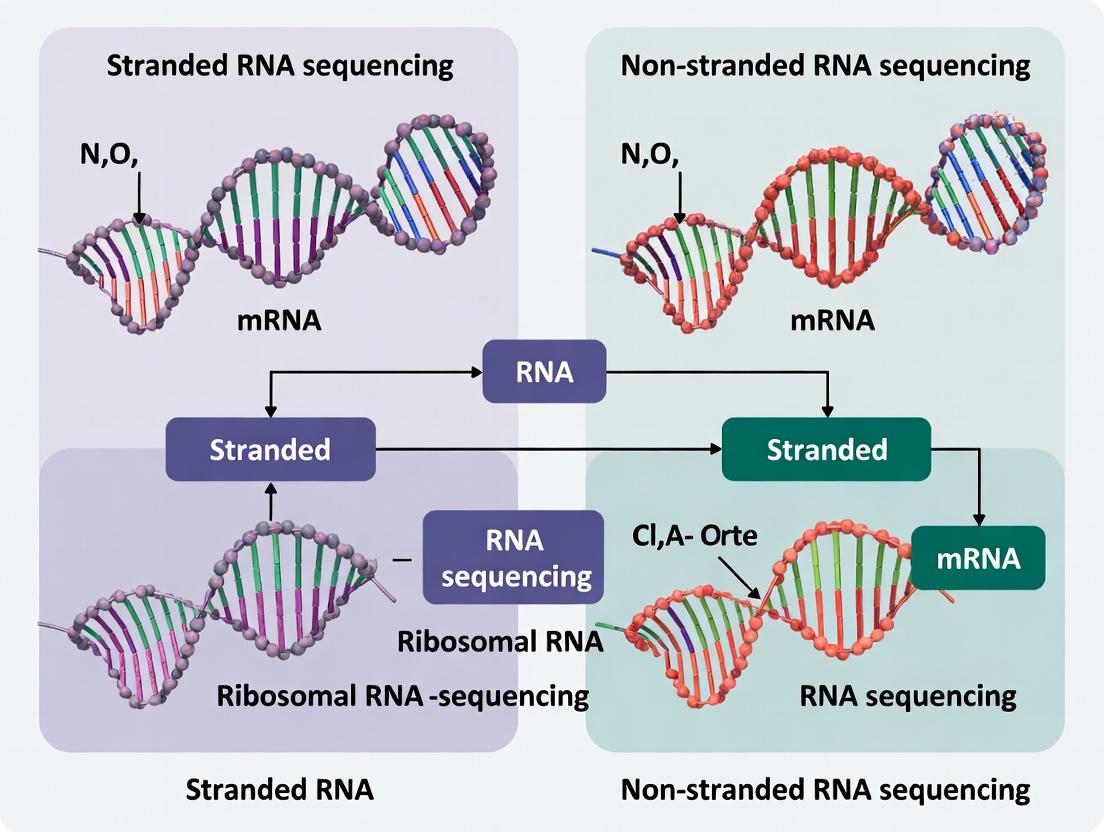
This article provides a comprehensive explanation of stranded and non-stranded RNA-seq, tailored for researchers, scientists, and drug development professionals.
Stranded vs Non-Stranded RNA-Seq: A Complete Guide for Accurate Transcriptomics in Research and Drug Development
Abstract
This article provides a comprehensive explanation of stranded and non-stranded RNA-seq, tailored for researchers, scientists, and drug development professionals. It covers foundational principles, including how stranded RNA-seq preserves transcript orientation for accurate gene expression analysis while non-stranded methods lose this information [citation:1][citation:4]. Methodological applications detail protocols like dUTP labeling and their use in gene profiling, antisense transcription detection, and drug discovery workflows [citation:5][citation:6][citation:7]. Troubleshooting sections address common experimental issues, strandedness determination tools, and optimization strategies for reproducibility [citation:6][citation:8]. Validation comparisons highlight the superior accuracy of stranded RNA-seq in resolving overlapping genes and reducing analysis errors, supported by comparative studies [citation:2][citation:9]. The guide synthesizes these insights to inform experimental design and methodology selection in biomedical research.
Understanding RNA-Seq Strandedness: Core Concepts and Biological Significance
The analysis of the transcriptome is fundamental to modern biology and drug discovery. Traditional bulk RNA-Seq provides a comprehensive snapshot of gene expression but lacks critical information regarding the strand of origin of transcripts. This thesis argues that stranded RNA-Seq is a superior methodology compared to non-stranded RNA-Seq for most research applications, as it enables precise transcriptional profiling, accurate quantification of overlapping genes, and unambiguous identification of antisense and non-coding RNA activity—data essential for biomarker discovery and target validation in drug development.
Foundational Principles of Bulk RNA-Seq
Bulk RNA-Seq involves sequencing cDNA libraries constructed from total or mRNA isolated from a population of cells. The core workflow includes: RNA extraction, fragmentation, reverse transcription to cDNA, adapter ligation, PCR amplification, and high-throughput sequencing. While powerful, standard non-stranded protocols lose the information about which genomic strand served as the template, leading to ambiguity.
Key Limitation of Non-Stranded Protocols
In non-stranded libraries, sequences derived from both the sense and antisense strands of a genomic locus are captured identically. This makes it impossible to distinguish whether a read originated from a sense mRNA or from a transcript encoded on the opposite strand, leading to misinterpretation of expression levels for overlapping or antisense genes.
Strand-Specific RNA-Seq: Methodologies and Advantages
Stranded RNA-Seq protocols preserve the orientation of the original RNA transcript. This section details the primary experimental approaches.
Detailed Experimental Protocols
A. dUTP Second-Strand Marking (Illumina Stranded Protocols)
- Principle: Incorporation of dUTP during second-strand cDNA synthesis, followed by enzymatic degradation of the U-containing strand.
- Protocol:
- First-Strand Synthesis: Use random hexamers and reverse transcriptase with dNTPs to synthesize cDNA. This first strand is complementary to the original RNA (antisense).
- Second-Strand Synthesis: Use RNase H, DNA Polymerase I, and a dNTP mix containing dUTP instead of dTTP. This creates a second strand (sense) tagged with uracil.
- Adapter Ligation: Double-stranded cDNA is end-repaired, A-tailed, and ligated to double-stranded adapters.
- Uracil Degradation: Treatment with Uracil-Specific Excision Reagent (USER) enzyme degrades the dUTP-containing second strand.
- PCR Amplification: Only the first strand (original orientation preserved) is amplified, creating a library where the read1 sequence directly corresponds to the original RNA strand.
B. Ligation-Based Stranded Protocols
- Principle: Directional adapters are ligated directly to the RNA molecule before reverse transcription.
- Protocol:
- RNA Fragmentation and End Repair: RNA is fragmented and polished.
- Adapter Ligation: A splinted ligation attaches a known adapter sequence (Adapter A) to the 3' end of the RNA fragment using a DNA splint oligo.
- Reverse Transcription: A primer complementary to Adapter A initiates first-strand cDNA synthesis.
- Ligation of Second Adapter: A second adapter (Adapter B) is ligated to the 3' end of the cDNA.
- PCR Amplification: The final library, amplified with primers targeting Adapter A and B, retains strand information because the original RNA orientation was fixed during the first ligation.
Quantitative Comparison: Stranded vs. Non-Stranded RNA-Seq
Table 1: Comparative Analysis of RNA-Seq Approaches
| Feature | Non-Stranded RNA-Seq | Stranded RNA-Seq |
|---|---|---|
| Strand Information | Lost | Preserved |
| Ambiguity in Overlapping Genes | High; cannot assign reads to correct gene | Low; precise assignment possible |
| Antisense RNA Detection | Not possible | Reliable detection and quantification |
| Data Complexity & Analysis | Simpler | More informative but requires strand-aware aligners (e.g., STAR, HISAT2) and tools |
| Library Prep Cost | Lower | ~20-30% higher (reagent costs) |
| Primary Use Case | Total gene expression profiling where strand is irrelevant | Any study involving overlapping transcripts, antisense regulation, lncRNAs, or precise annotation |
Table 2: Impact on Read Assignment in a Simulated Genomic Region (Example Data)
| Gene Locus | Genomic Coordinates | Strand | Expression Level (TPM) |
|---|---|---|---|
| Gene A | chr1:1000-2000 | + | 50.0 |
| Gene B (Overlaps A) | chr1:1500-2500 | - | 25.0 |
| Non-Stranded Result | chr1:1500-2000 (Overlap Region) | Unassigned or misassigned | ~37.5 (Ambiguous mix) |
| Stranded Result | Reads from '+' strand | Assigned to Gene A | 50.0 |
| Reads from '-' strand | Assigned to Gene B | 25.0 |
Visualization of Workflows and Logical Relationships
Title: RNA-Seq Library Prep Workflow Comparison
Title: Strand Ambiguity in Overlapping Gene Expression
The Scientist's Toolkit: Key Research Reagent Solutions
Table 3: Essential Reagents for Stranded RNA-Seq Library Construction
| Reagent / Kit | Function in Stranded Protocol | Key Consideration for Researchers |
|---|---|---|
| Ribo-Zero Plus / RNase H-based rRNA Depletion Kits | Removes abundant ribosomal RNA from total RNA, enriching for mRNA and non-coding RNA. Critical for non-poly-A focused studies. | Choose based on organism (human, mouse, plant, bacteria) and RNA integrity (works well with degraded samples). |
| NEBNext Ultra II Directional RNA Library Prep Kit | A widely adopted kit implementing the dUTP second-strand marking method. Integrates fragmentation, cDNA synthesis, and adapter ligation. | Robust and reliable; includes all enzymes and buffers. Compatible with low-input protocols. |
| Illumina Stranded mRNA Prep | Uses dUTP method, optimized for poly-A selection from intact mRNA. Streamlined workflow on bead-based platform. | Ideal for high-throughput labs using Illumina automation. Requires a poly-A selection step. |
| dUTP Mix (w/ dATP, dCTP, dGTP) | The critical nucleotide mix containing deoxyuridine triphosphate instead of dTTP for second-strand synthesis. | Quality is paramount; inefficient incorporation compromises strand specificity. |
| Uracil-Specific Excision Reagent (USER) Enzyme | Enzyme mix (Uracil DNA Glycosylase and DNA Glycosylase-Lyase Endonuclease VIII) that cleaves the DNA backbone at dUTP sites. | Essential step to remove the second strand. Must be thoroughly inactivated before PCR. |
| Strand-Specific RNA Adapters (Dual Indexes) | Unique molecular identifiers (UMIs) and sample barcodes incorporated during adapter ligation. | Dual indexing increases multiplexing capacity and reduces index hopping errors. UMI-enabled kits allow PCR duplicate removal. |
| RNase Inhibitor | Protects RNA templates from degradation during library preparation steps. | Use a heat-stable version for reactions at elevated temperatures. |
| Solid Phase Reversible Immobilization (SPRI) Beads | Magnetic beads for size selection and clean-up steps (e.g., after fragmentation, adapter ligation, PCR). | Consistent bead-to-sample ratio is critical for reproducible size selection and yield. |
This guide serves as a core chapter within a broader thesis on the principles and applications of stranded versus non-stranded RNA sequencing. The fundamental methodological divergence between these library preparation protocols dictates the biological information that can be extracted from sequencing data, influencing downstream analysis accuracy and biological interpretation. For researchers in genomics, transcriptomics, and drug development, selecting the appropriate protocol is critical for definitive gene expression quantification, novel isoform discovery, and accurate strand-specific annotation of non-coding RNAs.
Core Methodological Principles and Differences
The central difference lies in how cDNA strands are labeled and selectively amplified prior to sequencing. This determines whether the sequenced reads retain their original transcriptional orientation.
- Non-Stranded (Standard) RNA-Seq: During library construction, the second cDNA strand is synthesized using dUTP instead of dTTP. However, both strands are subsequently amplified. The sequencing read cannot be traced back to its original RNA strand, as information from both genomic strands is conflated.
- Stranded RNA-Seq: Employing specific biochemical strategies, one cDNA strand is selectively degraded or not amplified, ensuring that the final sequenced library exclusively represents the original RNA molecule's strand of origin.
The following table summarizes the key technical and analytical differences:
Table 1: Core Comparison of Stranded vs. Non-Stranded RNA-Seq Protocols
| Feature | Non-Stranded RNA-Seq | Stranded RNA-Seq |
|---|---|---|
| Library Prep Principle | Both cDNA strands are amplified. | The second-strand cDNA is not amplified (e.g., via dUTP marking and enzymatic digestion). |
| Strand Information | Lost. Reads map to either genomic strand. | Preserved. Reads map to the genomic strand from which the RNA was transcribed. |
| Key Protocol | Illumina TruSeq Standard (legacy) | Illumina TruSeq Stranded, dUTP-based methods, NuGEN Ovation |
| Cost & Complexity | Generally lower cost and simpler. | Higher cost and more complex workflow. |
| Primary Advantage | Suitable for simple gene-level expression quantification where strand is irrelevant. | Enables accurate assignment of reads to overlapping genes on opposite strands, antisense transcription analysis, and lncRNA characterization. |
| Disambiguation Power | Cannot resolve overlapping genes on opposite strands. | Can definitively assign reads to the correct gene in complex genomic regions. |
| Typical Application | Differential expression for well-annotated, non-overlapping genes. | De novo transcriptome assembly, studies of antisense RNAs, enhancer RNAs (eRNAs), and complex genomes. |
Detailed Experimental Protocols
Protocol for dUTP-Based Stranded RNA-Seq (Commonly Used)
Objective: To generate a sequencing library where >99% of reads are correctly assigned to their original transcriptional strand.
Key Reagents & Workflow:
- RNA Fragmentation & First-Strand cDNA Synthesis: RNA is fragmented and reverse-transcribed using random hexamers to produce first-strand cDNA.
- Second-Strand Synthesis with dUTP: The second strand is synthesized in the presence of dATP, dCTP, dGTP, and dUTP (replacing dTTP). This incorporates uracil into the second cDNA strand.
- End-Repair, A-tailing, and Adapter Ligation: Standard library preparation steps are performed, adding platform-specific sequencing adapters.
- Strand Selection via Enzymatic Digestion: The library is treated with Uracil-Specific Excision Reagent (USER), a combination of Uracil DNA Glycosylase (UDG) and Endonuclease VIII. UDG excises the uracil base, creating an abasic site, and Endonuclease VIII cleaves the DNA backbone at that site. This selectively degrades the dUTP-containing second strand.
- PCR Amplification: Only the first-strand cDNA, now linked to the adapters, is amplified, creating a library ready for sequencing that preserves strand information.
Protocol for Non-Stranded RNA-Seq
Objective: To generate a sequencing library for expression profiling without retaining strand information.
Key Reagents & Workflow:
- RNA Fragmentation & First-Strand cDNA Synthesis: Identical to the stranded protocol.
- Second-Strand Synthesis with dTTP: The second strand is synthesized using standard nucleotides, including dTTP (not dUTP).
- End-Repair, A-tailing, and Adapter Ligation: Standard steps are performed.
- PCR Amplification: Both cDNA strands, which are now identical in composition, are amplified. The resulting library contains a mixture of reads derived from both the original RNA template and its complementary sequence, erasing strand-of-origin information.
Visualizing the Core Methodological Workflows
Diagram Title: Core Workflow Comparison of Stranded vs Non-Stranded RNA-Seq
The Scientist's Toolkit: Essential Research Reagents
Table 2: Key Research Reagent Solutions for Stranded RNA-Seq Library Prep
| Reagent / Kit | Primary Function in Experiment |
|---|---|
| Illumina TruSeq Stranded Total RNA Kit | Comprehensive solution for poly-A-selected or ribo-depleted RNA. Employs dUTP method for strand marking. |
| NEBNext Ultra II Directional RNA Library Prep Kit | Widely used kit for directional (stranded) library prep from poly-A or rRNA-depleted RNA. |
| Uracil-Specific Excision Reagent (USER Enzyme) | Critical enzyme mix (UDG + Endonuclease VIII) that degrades the dUTP-marked second strand, enabling strand selection. |
| Ribo-Zero Plus / RiboCop rRNA Depletion Kits | For removing ribosomal RNA from total RNA, preserving non-polyadenylated transcripts (e.g., lncRNAs, pre-mRNA), essential for full transcriptional profiling. |
| RNase Inhibitors (e.g., Murine, Recombinant) | Protects RNA templates from degradation during library preparation steps. |
| High-Fidelity DNA Polymerase (e.g., Q5, KAPA HiFi) | Used in the final PCR amplification to minimize errors and bias during library enrichment. |
| Solid Phase Reversible Immobilization (SPRI) Beads | Magnetic beads for size selection, cleanup, and buffer exchange between enzymatic steps. |
| Dual Index UMI Adapters (e.g., IDT for Illumina) | Unique dual indices enable sample multiplexing. UMIs (Unique Molecular Identifiers) allow PCR duplicate removal for accurate quantification. |
Within the thesis framework of stranded versus non-stranded RNA-seq, the methodological choice dictates analytical scope. Non-stranded protocols suffice for cost-effective, high-level gene expression studies in well-annotated organisms without pervasive antisense transcription. Stranded protocols are the definitive choice for all discovery-oriented research, including working with complex or poorly annotated genomes, studying non-coding RNAs, identifying novel transcripts, and precisely analyzing overlapping genomic loci. For drug development, where understanding the complete transcriptional landscape—including regulatory non-coding RNAs—is paramount, stranded RNA-seq is increasingly considered the standard.
The Importance of Strand Information in Transcriptome Analysis
In the context of modern transcriptomics, the debate between stranded versus non-stranded RNA sequencing (RNA-seq) is fundamental. While non-stranded (also called unstranded) libraries were the initial standard, stranded (or directional) RNA-seq has become the method of choice for most experimental designs. This whitepaper details the critical technical advantages of strand-specific information, outlining its impact on data interpretation, quantification accuracy, and biological discovery.
Core Technical Principle: Stranded vs. Non-Stranded Libraries
In eukaryotic transcription, genes are transcribed from a specific DNA strand, producing sense (coding) mRNA. However, the genome contains abundant antisense transcription, overlapping genes, and genes on both strands of DNA. A non-stranded RNA-seq protocol loses the originating strand information during library preparation because both cDNA strands are sequenced indiscriminately. In contrast, a stranded protocol preserves the strand origin of the RNA molecule through specific molecular biology techniques (e.g., dUTP second-strand marking, adaptor ligation strategies).
Key Molecular Biology Techniques for Stranded Library Prep:
- dUTP Second Strand Marking: During cDNA synthesis, dTTP is replaced with dUTP in the second strand. The dUTP-containing strand is then enzymatically degraded (using Uracil-DNA glycosylase) prior to PCR amplification, ensuring only the first strand is sequenced.
- Adaptor Ligation Strategy: Asymmetric adaptors are ligated to the 5' and 3' ends of the RNA/cDNA molecule, preserving directionality during sequencing.
Quantitative Impact on Transcriptomic Analysis
The absence of strand information leads to systematic misassignment of reads, which quantifiably distorts expression measurements. The table below summarizes the primary quantitative impacts.
Table 1: Quantitative Consequences of Non-Stranded vs. Stranded RNA-seq
| Analysis Aspect | Non-Stranded Data Consequence | Stranded Data Advantage | Estimated Impact* |
|---|---|---|---|
| Overlapping Genes | Reads from overlapping genes on opposite strands are indistinguishable, leading to inaccurate quantification for both. | Enables precise assignment of reads to the correct gene strand, resolving overlaps. | 10-20% of mammalian genes are in antisense overlapping pairs; quantification errors can exceed 50% for affected genes. |
| Antisense Transcription | Antisense transcripts (lncRNAs, NATs) cannot be reliably identified or quantified. | Enables discovery and quantification of antisense RNA, expanding the functional transcriptome. | Antisense transcripts may constitute >30% of annotated transcriptional units in human cells. |
| Gene Fusion Detection | High false-positive rate due to read-through transcription or mis-mapped reads from overlapping regions. | Dramatically reduces false positives by requiring fusion fragments to map to sense strands of both partner genes. | Specificity for fusion detection increases by >25% with stranded data. |
| De Novo Assembly | Contigs from overlapping sense/antisense transcripts are merged into chimeric assemblies, obscuring true transcript structures. | Produces clean, strand-specific contigs, leading to more accurate transcript models and boundaries. | Can reduce chimeric assemblies by over 70% in complex loci. |
| Viral/Pathogen RNA | Cannot distinguish viral RNA sense (genomic) from antisense (replicative intermediate) strands. | Critical for understanding viral life cycles by quantifying strand-specific viral RNA expression. | Essential for classifying viral replication activity. |
* Note: Impact estimates are synthesized from recent literature (e.g., Zhao et al., BMC Genomics, 2021; Cieslik et al., Nature Comm., 2015) and are organism- and context-dependent.
Detailed Experimental Protocol: Stranded RNA-seq Library Preparation (dUTP Method)
This protocol is a detailed overview of a standard stranded, illumina-compatible library preparation workflow.
Materials:
- Input: 100 ng – 1 µg of total RNA (RIN > 8 recommended).
- Fragmentation & Priming: RNase III or metal cations, random hexamer primers.
- First-Strand cDNA Synthesis: Reverse Transcriptase (e.g., SuperScript IV), dNTPs, RNase Inhibitor.
- Second-Strand cDNA Synthesis: E. coli DNA Polymerase I, E. coli RNase H, DNA Ligase, dATP/dCTP/dGTP/dUTP mix (critical for strand marking).
- End Repair & A-tailing: T4 DNA Polymerase, Klenow Fragment, dATP.
- Adaptor Ligation: T4 DNA Ligase, Stranded Dual-Indexed Adaptors.
- Uracil Digestion: Uracil-DNA Glycosylase (UDG) to selectively degrade the dUTP-marked second strand.
- Library Amplification: High-Fidelity DNA Polymerase, PCR primers complementary to adaptors.
- Clean-up & QC: SPRI beads, Bioanalyzer/TapeStation.
Procedure:
- RNA Fragmentation: Purified total RNA is chemically fragmented to an optimal size (e.g., ~300 nt).
- First-Strand cDNA Synthesis: Random hexamers prime reverse transcription to create first-strand cDNA. The RNA template is degraded.
- Second-Strand Synthesis: Second-strand cDNA is synthesized using a dNTP mix where dTTP is replaced by dUTP. This enzymatically marks the second strand.
- Double-Stranded cDNA Purification: The dsDNA is purified using SPRI beads.
- Library Construction: Standard end-repair, A-tailing, and ligation of indexed sequencing adaptors are performed.
- Strand Selection: Treatment with UDG degrades the dUTP-containing second strand. The PCR amplification step then only amplifies the first-strand cDNA, preserving its orientation.
- PCR Enrichment: A limited-cycle PCR enriches for adaptor-ligated fragments and adds full sequencing primer sites.
- Library QC: Final library is quantified and sized.
Diagram Title: Stranded RNA-seq Library Prep Workflow (dUTP Method)
Data Analysis Workflow for Stranded RNA-seq
The analysis pipeline must be configured to correctly interpret stranded reads. The standard alignment tool (e.g., STAR, HISAT2) and quantification tool (e.g., featureCounts, HTSeq) require the correct library type parameter (e.g., --library-type fr-firststrand for dUTP protocols).
Diagram Title: Stranded RNA-seq Data Analysis Pipeline
The Scientist's Toolkit: Essential Research Reagents & Materials
Table 2: Key Reagent Solutions for Stranded RNA-seq Experiments
| Item | Function in Stranded RNA-seq | Key Consideration |
|---|---|---|
| Stranded Library Prep Kit | Provides all optimized enzymes, buffers, and dUTP-based reagents in a unified protocol. | Kits from Illumina (TruSeq Stranded), NEB (NEBNext Ultra II Directional), and Takara Bio (SMARTer Stranded) are industry standards. |
| RNase Inhibitor | Protects RNA templates from degradation during initial steps. | Essential for maintaining integrity of input RNA, especially for low-input protocols. |
| High-Activity Reverse Transcriptase | Synthesizes robust first-strand cDNA from fragmented RNA. | Enzymes like SuperScript IV or Maxima H- provide high yield and full-length cDNA. |
| dUTP Nucleotide Mix | The critical reagent for marking the second cDNA strand for subsequent degradation. | Must be part of the second-strand synthesis mix, replacing standard dTTP. |
| Uracil-DNA Glycosylase (UDG) | Enzyme that selectively excises uracil bases, fragmenting the dUTP-marked second strand. | Enables strand-specific selection. Must be included in the protocol after adaptor ligation. |
| Dual-Indexed Adaptors | Allow multiplexing of samples while preserving strand information via asymmetric ligation. | Reduce index hopping errors and enable high-level multiplexing. |
| SPRI Beads | Magnetic beads for size selection and clean-up between enzymatic steps. | Provide reproducible recovery and size selection critical for library quality. |
| High-Fidelity PCR Mix | Amplifies the final library with minimal bias and errors. | Important for maintaining representation and avoiding PCR duplicates. |
Within the broader thesis of stranded versus non-stranded RNA-seq, the evidence decisively favors stranded protocols for nearly all research applications. The incremental cost and complexity are outweighed by the substantial gains in data fidelity, resolution of complex genomic architecture, and capacity for novel biological discovery. For researchers and drug development professionals aiming for accurate transcript quantification, comprehensive annotation, and detection of regulatory antisense RNA, stranded RNA-seq is not merely an optimization—it is an essential requirement.
The advent of high-throughput RNA sequencing (RNA-seq) has revolutionized transcriptomics. A critical methodological distinction lies between stranded and non-stranded (unstranded) library preparations. Non-stranded RNA-seq loses the inherent polarity of RNA transcripts, conflating signals from sense and antisense strands. In contrast, stranded RNA-seq preserves strand-of-origin information, which is indispensable for accurately annotating transcripts, quantifying expression from overlapping genes, and detecting antisense transcription. This technical guide focuses on the biological contexts where strand orientation is paramount, with antisense transcription as a central paradigm, framed within the broader thesis that stranded RNA-seq is not merely an optional enhancement but a fundamental requirement for a complete molecular portrait of cellular function.
The Biological Imperative of Strand Information
Antisense Transcription: Definition and Prevalence
Antisense transcription refers to the synthesis of non-coding RNA molecules from the opposite strand of a protein-coding or other functional "sense" transcript. These Antisense Transcripts (ASTs) can be long non-coding RNAs (lncRNAs) or shorter transcripts. Current estimates suggest a significant portion of the mammalian genome undergoes antisense transcription.
Table 1: Prevalence of Antisense Transcription Across Model Organisms
| Organism | Estimated % of Loci with Antisense Transcription | Key Study (Year) | Method Required |
|---|---|---|---|
| Human (HEK293) | ~30-70% of all transcriptional units | Djebali et al., Nature (2012) | Strand-specific RNA-seq |
| Mouse (ES Cells) | ~70% of coding genes have antisense TSS | Engström et al., Nat Genetics (2006) | Strand-specific Tiling Arrays |
| Arabidopsis | ~30% of annotated genes | Wang et al., Science (2005) | Strand-specific RT-PCR/SEQ |
| S. pombe | Widespread, particularly at meiotic genes | Djebali et al., Nature (2012) | Strand-specific RNA-seq |
Mechanisms of Action of Antisense RNAs
Antisense RNAs regulate gene expression through diverse, strand-dependent mechanisms:
- Transcriptional Interference: Physical collision of RNA polymerase complexes or chromatin modification.
- Epigenetic Silencing: Recruitment of histone modifiers (e.g., PRC2) or DNA methyltransferases to the sense promoter.
- Post-transcriptional Regulation: Formation of double-stranded RNA (dsRNA) leading to RNAi pathways (e.g., siRNA, miRNA processing) or affecting mRNA stability/splicing.
- Promoter/Enhancer Activity: Some antisense transcripts function as enhancer RNAs (eRNAs).
Experimental Protocols for Strand-Specific Analysis
Core Protocol: Strand-Specific RNA-seq Library Construction (dUTP Second Strand Marking)
This is the most widely used method for generating stranded Illumina libraries.
Principle: During cDNA synthesis, the second strand is synthesized incorporating dUTP instead of dTTP. The strand containing uracil is selectively digested prior to PCR amplification, ensuring only the first strand (representing the original RNA orientation) is amplified.
Detailed Workflow:
- RNA Fragmentation & Priming: Purified total RNA is fragmented (e.g., by metal ion hydrolysis) and random hexamers are annealed.
- First-Strand cDNA Synthesis: Reverse transcriptase and dNTPs (including dTTP) are used to synthesize the first cDNA strand.
- Second-Strand cDNA Synthesis: RNA template is removed (RNase H). DNA polymerase I, dNTPs (with dUTP replacing dTTP), and RNase H are added to synthesize the second strand, which now contains uracil.
- End-Repair, A-Tailing, and Adapter Ligation: Standard steps to make ends compatible and ligate sequencing adapters.
- Uracil Digestion: Treatment with Uracil-Specific Excision Reagent (USER) enzyme or Uracil-DNA Glycosylase (UDG) cleaves the dUTP-containing second strand.
- Library Amplification: PCR enriches adapter-ligated fragments using primers complementary to the adapters. Only the first-strand cDNA template is amplifiable.
Protocol for Validating Antisense RNA Function (CRISPRi/a for lncRNA)
To experimentally test the function of a detected antisense lncRNA.
Principle: A catalytically dead Cas9 (dCas9) fused to a transcriptional repressor (KRAB) or activator (VP64) domain is targeted to the transcriptional start site (TSS) of the antisense RNA to modulate its expression.
Detailed Workflow:
- sgRNA Design: Design 3-5 single-guide RNAs (sgRNAs) targeting the promoter or 5' end of the antisense transcript. Include negative control sgRNAs (non-targeting or targeting a safe genomic locus).
- Cell Line Engineering: Stably transduce cells with a lentivirus expressing dCas9-KRAB (for inhibition/CRISPRi) or dCas9-VP64 (for activation/CRISPRa).
- sgRNA Delivery: Transduce the dCas9-expressing cells with lentiviruses encoding the specific antisense-targeting sgRNAs.
- Phenotypic Assessment:
- qRT-PCR Validation: Use strand-specific RT-qPCR (see Toolkit) to confirm knockdown or overexpression of the antisense RNA.
- Sense Gene Analysis: Measure expression of the overlapping or adjacent sense gene via qPCR and RNA-seq.
- Functional Assays: Perform relevant assays (e.g., proliferation, differentiation, apoptosis, pathway-specific reporter assays).
- Mechanistic Follow-up: Conduct chromatin immunoprecipitation (ChIP-seq for H3K4me3, H3K27ac, H3K27me3) or RNA-protein interaction studies (CLIP-seq) on the sense gene locus.
Visualization of Key Concepts
Diagram 1: Information Fidelity in Stranded vs. Non-Stranded RNA-seq
Diagram 2: Mechanisms of Antisense RNA-Mediated Gene Regulation
Diagram 3: dUTP Stranded RNA-seq Library Construction Workflow
The Scientist's Toolkit: Key Research Reagent Solutions
Table 2: Essential Reagents for Strand-Oriented Transcriptomics
| Item / Kit Name | Vendor Examples | Function in Experiment | Critical Strand-Specific Feature |
|---|---|---|---|
| Stranded Total RNA Prep Kit | Illumina (Stranded Total RNA Prep), NEB (NEBNext Ultra II Directional), Takara Bio (SMARTer Stranded) | All-in-one library prep from total RNA. | Incorporates dUTP or adapters with strand-specific tags during second strand synthesis. |
| Uracil-Specific Excision Reagent (USER) | New England Biolabs (NEB) | Enzyme mix containing UDG and Endonuclease VIII. | Cleaves the dUTP-marked second strand cDNA, preventing its amplification. |
| RNA Depletion Probes (rRNA/globin) | IDT (xGen), Thermo Fisher (RiboCop) | Remove abundant ribosomal RNA to increase coverage of mRNA/lncRNA. | Must be compatible with stranded protocols (e.g., RNA probes, not cDNA). |
| Strand-Specific RT-qPCR Assays | Custom from IDT, Thermo Fisher | Validate expression of sense vs. antisense transcripts. | Primers designed to the specific strand; cDNA synthesis uses strand-specific priming. |
| dCas9-KRAB / dCas9-VP64 Lentiviral Particles | Addgene (plasmid), Vector Builder, Sigma (Mission TRC3) | For CRISPRi/a functional validation of antisense RNAs. | Enables targeted transcriptional repression/activation without cutting DNA. |
| Antisense LNA GapmeRs | Qiagen (miRCURY), Exiqon | Knockdown of nuclear non-coding RNAs (incl. antisense lncRNAs). | LNA-modified antisense oligonucleotides for RNase H-mediated degradation. |
| Bisulfite Sequencing Kit (RNA) | Zymo Research (EZ-RNA Methylation), Diagenode | Detect RNA modifications (m5C, Ψ) in a strand-specific manner. | Requires preservation of strand information post-conversion. |
| Stranded Bioinformatics Pipeline | Software: HISAT2, STAR, Salmon; Alignment mode: --rna-strandness RF |
Accurate alignment and quantification of stranded RNA-seq data. | Correct specification of library type (e.g., RF for dUTP) is mandatory. |
RNA-Seq Protocols and Applications: From Library Prep to Drug Discovery
This technical guide examines three foundational methods for RNA sequencing library preparation, framed within a broader thesis on stranded versus non-stranded RNA-seq. Accurate strand determination is critical for identifying antisense transcription, resolving overlapping genes, and correctly assigning reads to their genomic origin. The choice of library preparation technique directly dictates the strandedness of the final data, influencing downstream biological interpretation. Here, we dissect the molecular mechanisms of the dUTP second-strand marking and RNA ligation methods—the two primary routes to strandedness—and evaluate their implementation in modern commercial kits.
Core Techniques for Stranded RNA-seq
dUTP Second-Strand Marking Method
Principle: This method achieves strand specificity by incorporating dUTP in place of dTTP during second-strand cDNA synthesis. The uracil-containing second strand is subsequently degraded enzymatically (using Uracil-DNA Glycosylase, UDG), ensuring that only the first strand is amplified and sequenced.
Detailed Protocol:
- First-Strand Synthesis: Isolated mRNA (or rRNA-depleted total RNA) is reverse-transcribed using random hexamers or oligo-dT primers to produce first-strand cDNA.
- Second-Strand Synthesis with dUTP: RNA is degraded, and the second cDNA strand is synthesized using DNA Polymerase I, RNase H, and a dNTP mix where dTTP is fully replaced by dUTP. This creates a "U-marked" second strand.
- End Repair & Adapter Ligation: The double-stranded cDNA is end-repaired, A-tailed, and ligated to double-stranded adapters with compatible overhangs.
- UDG Treatment: Prior to PCR amplification, treatment with UDG enzymatically removes the uracil bases, rendering the second strand non-amplifiable.
- PCR Enrichment: Only the first strand (with intact adapters) serves as a template for PCR, generating a library where the read 1 sequence directly corresponds to the original RNA strand.
RNA Ligation Method (Direct RNA Ligation)
Principle: Strandedness is preserved by ligating adapters directly to the RNA molecule itself before any reverse transcription steps. The sequence of the adapter, not the underlying cDNA, maintains the strand information.
Detailed Protocol:
- RNA Fragmentation & Dephosphorylation: RNA is fragmented (chemically or enzymatically). The 3' ends are dephosphorylated to prevent self-ligation.
- 3' Adapter Ligation: A pre-adenylated adapter is ligated to the 3' hydroxyl group of the RNA fragment using a truncated T4 RNA Ligase 2 (which does not require ATP and minimizes adapter dimer formation).
- 5' Adapter Ligation: The 5' end of the RNA is phosphorylated, and a second adapter is ligated using T4 RNA Ligase 1.
- Reverse Transcription: The adapter-ligated RNA is reverse transcribed using a primer complementary to the 3' adapter.
- cDNA PCR: The single-stranded cDNA is PCR-amplified to create the final library. The adapter sequences embedded in the reads allow bioinformatic sorting to the correct genomic strand.
Commercial Kit Landscape
Commercial kits implement and often refine these core techniques, offering standardized reagents, improved efficiencies, and streamlined workflows. Key players include Illumina, Thermo Fisher Scientific, and Takara Bio.
Table 1: Comparison of Major Stranded RNA-seq Library Prep Kits
| Kit Name (Manufacturer) | Core Strandedness Method | Input Range (Total RNA) | Hands-on Time | Key Feature |
|---|---|---|---|---|
| TruSeq Stranded Total RNA (Illumina) | dUTP second-strand marking | 10 ng – 1 µg | ~4.5 hours | Includes Ribo-Zero Plus to remove cytoplasmic and mitochondrial rRNA. |
| Stranded mRNA Prep Ligation (Illumina) | RNA ligation (direct) | 1 – 1,000 ng | ~3 hours | Fast, fragmentation-free workflow for poly-A-selected mRNA. |
| NEBNext Ultra II Directional (NEB) | dUTP second-strand marking | 1 ng – 1 µg | ~3.5 hours | High efficiency for low-input samples; includes bead-based size selection. |
| SMARTer Stranded Total RNA-Seq (Takara Bio) | Proprietary Template-Switching | 1 ng – 100 ng | ~4.5 hours | Optimized for very low input and degraded samples (e.g., FFPE). |
| Ion Total RNA-Seq Kit v2 (Thermo Fisher) | RNA ligation (direct) | 10 ng – 100 ng | ~3 hours | Designed for use on Ion Torrent sequencing platforms. |
Table 2: Quantitative Performance Metrics (Typical Values)
| Metric | dUTP-based Kits | RNA Ligation-based Kits | Notes |
|---|---|---|---|
| Strandedness Accuracy | >99% | >99% | Both methods are highly accurate when protocols are followed. |
| GC Bias | Moderate | Lower | Ligation methods often show more uniform coverage across GC content. |
| Duplicate Rate | Higher for low input | Lower | dUTP method's PCR post-UDG can increase duplicates. |
| Adapter Dimer Formation | Low | Requires careful optimization | A major historical challenge for ligation-based methods, now mitigated. |
| Suitability for Degraded RNA | Good | Excellent | Direct RNA ligation often performs better with fragmented RNA (e.g., FFPE). |
Workflow and Pathway Diagrams
Title: dUTP Stranded Library Prep Workflow
Title: RNA Ligation Stranded Library Prep Workflow
Title: Library Prep Technique Decision Tree
The Scientist's Toolkit: Key Research Reagent Solutions
Table 3: Essential Materials for RNA-seq Library Preparation
| Reagent / Material | Function | Key Consideration |
|---|---|---|
| RNase Inhibitors (e.g., Recombinant Ribonuclease Inhibitor) | Protects RNA templates from degradation during reaction setup and early steps. | Essential for all protocols. Use at the recommended concentration. |
| Magnetic Beads (SPRI-select/AMPure XP) | Size selection and cleanup of nucleic acids (RNA, cDNA, final library) via binding to carboxyl-coated beads in PEG/NaCl buffer. | Bead-to-sample ratio controls size cutoff. Critical for adapter dimer removal. |
| Nuclease-Free Water | Solvent and dilution reagent for all enzymatic reactions. | Must be certified nuclease-free to prevent sample degradation. |
| High-Fidelity DNA Polymerase (e.g., Q5, KAPA HiFi) | PCR amplification of final libraries with minimal error rate and bias. | Critical for maintaining sequence fidelity and even coverage. |
| Dual-Indexed Adapters (Unique Dual Indexes, UDIs) | Adapters containing unique molecular barcodes at both ends for sample multiplexing and accurate demultiplexing. | Dramatically reduces index hopping errors on patterned flow cells. |
| RNA Fragmentation Buffer (Zinc-based) | Chemically cleaves RNA to desired average fragment size (e.g., ~200-300 nt) for shotgun sequencing. | Not used in fragmentation-free poly-A kits. Time and temperature-sensitive. |
| Uracil-DNA Glycosylase (UDG) | Enzyme that excises uracil bases from DNA, initiating degradation of the dUTP-marked second strand. | Specific to dUTP method. Must be fully inactivated prior to PCR. |
| T4 RNA Ligase 1 & 2 (truncated) | Enzymes that catalyze the ligation of adapters to single-stranded RNA. Ligase 2 (truncated) is specific for pre-adenylated 3' adapters. | Core of the RNA ligation method. Requires precise control of ATP concentration. |
| Template Switching Reverse Transcriptase (e.g., SMARTer tech) | A reverse transcriptase with terminal transferase activity, adding non-templated nucleotides to cDNA for adapter incorporation. | Enables strand specificity and is highly efficient for low-input samples. |
Within the thesis of stranded vs. non-stranded RNA-seq, the choice between dUTP marking and direct RNA ligation is fundamental. The dUTP method, robust and widely adopted, excels in standard applications with high-quality input. The RNA ligation method offers advantages in uniformity, speed, and performance with degraded samples. Commercial kits abstract the complexity of these protocols but are built upon these core biochemical principles. The optimal technique is determined by experimental priorities: input quantity/quality, required uniformity, workflow speed, and cost. Understanding these underlying mechanisms empowers researchers to select the most appropriate library preparation strategy for generating biologically accurate, strand-specific transcriptional data.
Step-by-Step Workflow for Stranded and Non-Stranded RNA-Seq
The choice between stranded and non-stranded RNA sequencing is a fundamental experimental design decision in transcriptomics. This whitepaper details the step-by-step workflows for both approaches, framed within the core thesis that stranded RNA-seq is superior for resolving transcriptional complexity in eukaryotes. It accurately distinguishes the strand of origin for each transcript, enabling the precise annotation of antisense transcription, overlapping genes, and non-coding RNAs—features often mischaracterized or lost in non-stranded protocols.
Core Workflow Comparison & Decision Framework
The initial steps of library preparation are the critical differentiator. The subsequent bioinformatic pipeline must be adapted accordingly.
Diagram Title: Stranded vs. Non-Stranded RNA-seq Library Prep Divergence.
Table 1: Key Comparative Metrics & Applications
| Parameter | Non-Stranded RNA-seq | Stranded RNA-seq |
|---|---|---|
| Strand Information | Lost after second-strand synthesis. | Preserved via chemical or enzymatic marking. |
| Gene Body Coverage | Uniform but ambiguous for overlapping genes. | Biased towards 3’ end (dUTP method) but strand-accurate. |
| Antisense Detection | Not possible; reads mapped to either strand. | Accurate detection and quantification. |
| Cost & Complexity | ~15-20% lower cost; simpler protocol. | Higher cost; more complex workflow. |
| Primary Application | Differential gene expression for well-annotated genomes. | De novo assembly, complex genomes, lncRNA/anti-sense studies. |
| Typical Data Yield | ~30-50M reads per sample for gene-level analysis. | ~50-80M reads recommended for full transcriptome resolution. |
Detailed Experimental Protocols
Stranded RNA-Seq Library Prep (dUTP Second Strand Marking)
This is the most widely adopted stranded protocol.
Key Materials:
- Poly(A) Selection Beads or rRNA Depletion Probes: Isolates mRNA from total RNA.
- Fragmentation Buffer (Metal cations): Randomly fragments RNA to desired size (e.g., 200-300 bp).
- Reverse Transcriptase & Random Primers: Synthesizes first-strand cDNA.
- dNTP Mix including dUTP (not dTTP): For second-strand synthesis. Incorporation of dUTP marks the second strand.
- RNA Ligase, DNA Polymerase, RNase H: Enzymes for second-strand synthesis.
- Uracil-Specific Excision Enzyme (USER): Digests the dUTP-containing second strand prior to PCR, ensuring only the first strand is amplified.
- Indexed Adapters & PCR Master Mix: For library amplification and multiplexing.
Procedure:
- RNA Isolation & QC: Extract high-quality RNA (RIN > 8). Quantify via fluorometry.
- RNA Enrichment: Perform poly(A) selection or ribosomal RNA depletion.
- Fragmentation: Use divalent cations (Mg²⁺, Zn²⁺) at elevated temperature (94°C, 5-15 min) to fragment RNA.
- First-Strand cDNA Synthesis: Reverse transcribe using random hexamers and reverse transcriptase.
- Second-Strand Synthesis: Using DNA Polymerase I, RNase H, and a dNTP mix containing dATP, dCTP, dGTP, and dUTP. This creates a cDNA duplex where the second strand contains uracil.
- End Repair & A-tailing: Create blunt-ended, 5’-phosphorylated fragments, then add a single ‘A’ base to the 3’ ends.
- Adapter Ligation: Ligate indexed adapters with a 3’ ‘T’ overhang.
- dUTP Strand Digestion: Treat with USER enzyme to selectively degrade the dUTP-marked second strand.
- Library Amplification: Perform 10-15 cycles of PCR with primers complementary to the adapters. Only the first-strand cDNA (now the template) is amplified.
- Library QC & Quantification: Validate size distribution (Bioanalyzer) and quantify via qPCR for accurate pooling.
Non-Stranded RNA-Seq Library Prep
Follows a similar path but omits the strand-marking step.
Procedure:
- Steps 1-4 as above (RNA QC, enrichment, fragmentation, first-strand synthesis).
- Second-Strand Synthesis: Use standard dNTPs (dTTP, not dUTP).
- Proceed directly to end repair, A-tailing, and adapter ligation on the double-stranded cDNA product.
- PCR amplify the entire double-stranded library.
- Final QC and quantification.
Bioinformatic Analysis Workflow
The computational pipeline must account for the library type during alignment and quantification.
Diagram Title: Bioinformatics Pipeline for Stranded and Non-Stranded Data.
The Scientist's Toolkit: Essential Research Reagent Solutions
Table 2: Key Reagents & Kits for RNA-seq Workflows
| Reagent/Kits | Function | Key Consideration |
|---|---|---|
| Poly(A) Magnetic Beads | Binds poly-A tails of mRNA for eukaryotic mRNA isolation. | Introduces 3’ bias; not suitable for prokaryotes or degraded RNA. |
| Ribo-depletion Kits | Hybridizes and removes ribosomal RNA (rRNA). | Preserves non-polyadenylated transcripts (e.g., lncRNAs, pre-mRNA). Essential for prokaryotes. |
| Stranded RNA-seq Library Prep Kits | Integrated reagent systems for dUTP or ligation-based stranded protocols. | Ensure compatibility between fragmentation, dUTP incorporation, and digestion enzymes. |
| Dual Index UDI Adapters | Unique dual indexes for sample multiplexing. | Critical for reducing index hopping errors in Illumina patterned flow cells. |
| High-Fidelity PCR Master Mix | Amplifies final library with low error rate. | Minimizes PCR duplicates and amplification bias. |
| RNA/cDNA Cleanup Beads | SPRI/AMPure bead-based size selection and purification. | Ratios determine fragment size selection, impacting library profile. |
| Uracil-Specific Excision Enzyme (USER) | Enzyme mix that cuts at dUTP residues. | Specificity and efficiency are critical for strand fidelity in dUTP-based protocols. |
Applications in Gene Expression Profiling and Differential Analysis
Gene expression profiling via RNA sequencing (RNA-seq) is foundational to modern molecular biology and drug discovery. The choice between stranded and non-stranded library preparation protocols critically influences downstream analytical applications. Stranded RNA-seq preserves the original orientation of transcripts, allowing unambiguous determination of transcriptional origin. This is paramount for accurately profiling overlapping genes on opposite strands, quantifying antisense transcription, and refining gene annotation—all of which directly impact the sensitivity and specificity of differential expression analysis.
Core Applications in Profiling and Differential Analysis
Transcriptome Annotation and Novel Transcript Discovery
Stranded data is indispensable for de novo transcriptome assembly and annotation, resolving ambiguities in complex genomic regions.
Protocol for Novel Isoform Detection:
- Library Prep: Use a stranded protocol (e.g., Illumina Stranded Total RNA Prep with Ribo-Zero).
- Sequencing: Perform paired-end 150bp sequencing on a NovaSeq platform to a depth of ~40 million reads per sample.
- Alignment: Map reads to the reference genome using a splice-aware aligner (e.g., STAR) with strand-specific parameters (e.g.,
--outSAMstrandField intronMotif). - Assembly: Assemble transcripts using a reference-guided assembler (e.g., StringTie2) in stranded mode.
- Differential Analysis: Compare assemblies across conditions using tools like Ballgown or Cuffdiff2 to identify novel, differentially expressed isoforms.
Accurate Quantification for Differential Gene Expression (DGE)
Non-stranded protocols can misassign reads from overlapping antisense transcripts, leading to quantification artifacts. Stranded protocols correct this, providing more accurate counts for statistical testing.
Protocol for Strand-Aware DGE Analysis:
- Quantification: Generate gene-level counts using featureCounts (from Subread package) with parameters
-s 1(reverse-stranded) or-s 2(forward-stranded), as dictated by the library kit. - DGE Testing: Input count matrices into R/Bioconductor. Perform normalization and differential testing with DESeq2 or edgeR.
- Validation: Confirm key results via strand-specific RT-qPCR using forward and reverse strand-specific primers.
Detection of Antisense and Non-Coding RNA Expression
This application is uniquely enabled by stranded RNA-seq. Dysregulation of antisense long non-coding RNAs (lncRNAs) is a key biomarker in oncology and neurology.
Protocol for Antisense RNA Analysis:
- Data Processing: Align and quantify reads as above, using an annotation file that includes sense and antisense features.
- Differential Analysis: Run separate DGE models for sense and antisense features.
- Integration: Correlate expression levels of sense-antisense pairs across samples using Spearman correlation; visualize with scatter plots.
Table 1: Impact of Library Type on Quantification Accuracy in a Simulated Overlapping Gene Model
| Metric | Non-Stranded Protocol | Stranded Protocol | Notes |
|---|---|---|---|
| Read Misassignment Rate | 15-35% | <1% | In regions of overlapping transcription. |
| False Positive DGE Calls | Increased 18% | Baseline | Based on simulation studies. |
| Detection of Antisense RNA | Not Possible | High Sensitivity | Essential for full transcriptional landscape. |
| Cost per Sample (Reagents) | $$ | $$$ | Stranded kits typically 20-30% more expensive. |
| Informational Yield | Moderate | High | Stranded data provides unambiguous strand orientation. |
Table 2: Recommended Protocol by Primary Research Application
| Application Goal | Recommended Protocol | Key Rationale |
|---|---|---|
| Standard DGE (Well-Annotated Genome) | Either | Sufficient for most protein-coding genes without overlap. |
| De Novo Assembly / Annotation | Stranded (Mandatory) | Resolves transcript directionality. |
| Viral & Bacterial Expression | Stranded | Dense genomes with pervasive overlapping transcription. |
| lncRNA & Antisense Analysis | Stranded (Mandatory) | Requires strand information for identity and quantification. |
| Expression Quantitative Trait Loci (eQTL) | Stranded | Reduces mis-mapping, improving accuracy of allele-specific expression. |
The Scientist's Toolkit: Research Reagent Solutions
Table 3: Essential Reagents and Kits for Stranded RNA-seq Applications
| Item Name & Vendor | Function & Application |
|---|---|
| Illumina Stranded Total RNA Prep with Ribo-Zero Plus | Gold-standard for ribosomal RNA depletion and stranded cDNA library construction from total RNA (including degraded FFPE samples). |
| NEBNext Ultra II Directional RNA Library Prep Kit | Flexible, high-performance kit for poly-A selection-based stranded libraries. |
| TruSeq Stranded mRNA Library Prep Kit | Classic, robust kit for poly-A selected mRNA stranded libraries. |
| Qubit RNA HS Assay Kit (Thermo Fisher) | Accurate, sensitive quantification of input RNA, critical for library prep success. |
| Agilent 2100 Bioanalyzer RNA Nano Kit | Assess RNA Integrity Number (RIN) to QC input RNA quality. |
| Dynabeads MyOne SILANE (Thermo Fisher) | Used in clean-up steps in many protocols for efficient bead-based purification. |
| SMARTer Stranded Total RNA-Seq Kit v3 (Takara Bio) | Provides a template-switching based method for strand preservation, often robust for low-input samples. |
| Zymo-Seq RiboFree Total RNA Library Kit | An alternative for rRNA depletion and stranded library prep, with a simplified workflow. |
Visualizations
Stranded vs Non-Stranded RNA-seq Workflow and Impact
Differential Expression Analysis Pipeline
Within the modern drug discovery pipeline, RNA sequencing has become a cornerstone technology, enabling deep molecular characterization of disease states and therapeutic interventions. A critical but often overlooked technical decision is the choice between stranded and non-stranded (unstranded) RNA-seq library preparation. This choice fundamentally impacts data interpretation and downstream biological conclusions, which directly influence target identification, biomarker discovery, and mechanism of action (MoA) studies. This whitepaper examines the role of RNA-seq within these three pillars of drug discovery, framed explicitly by the implications of the strandedness decision.
Stranded vs. Non-Stranded RNA-seq: A Foundational Choice
- Non-stranded RNA-seq: During cDNA synthesis, the strand-of-origin information is lost. A sequencing read can originate from either the sense (coding) or antisense (template) strand of a transcript. This leads to ambiguity in assigning reads to genes, especially in regions where genes overlap on opposite strands.
- Stranded RNA-seq: Protocols preserve the strand orientation of the original RNA molecule. Each read can be unambiguously assigned to the sense or antisense strand, providing accurate transcriptional directionality.
The implications of this choice are profound:
- Accuracy in Quantification: Stranded protocols prevent misassignment of reads from overlapping antisense or nearby genes on the opposite strand, yielding more accurate gene expression counts.
- Detection of Non-Coding RNAs: Critical for identifying biomarkers like long non-coding RNAs (lncRNAs) and antisense transcripts, which are often strand-specific and may be misannotated or missed entirely with non-stranded data.
- Fusion Gene Detection: Stranded data improves the accuracy of detecting fusion transcripts and their correct breakpoint orientation.
Quantitative Impact of Library Strandedness
The following table summarizes key comparative metrics derived from recent benchmarking studies.
Table 1: Comparative Analysis of Stranded vs. Non-Stranded RNA-seq in Discovery Applications
| Metric | Non-Stranded RNA-seq | Stranded RNA-seq | Impact on Drug Discovery |
|---|---|---|---|
| Gene Expression Accuracy | Moderate to Low (misassignment rates 5-30% in complex genomes) | High (near-zero misassignment) | Essential for reliable differential expression in target/ biomarker identification. |
| Antisense lncRNA Detection | Poor (cannot distinguish from sense transcription) | Excellent (clear strand-specific signal) | Crucial for uncovering regulatory biomarkers and novel targets. |
| Fusion Transcript Detection | Lower specificity (false positives from read-through transcripts) | Higher specificity and accuracy | Vital for oncology target discovery (e.g., kinase fusions). |
| Cost & Complexity | Lower cost, simpler protocol | ~20-40% higher cost, more complex workflow | Budget consideration for large-scale screens. |
| Data Utility for Annotation | Limited for novel transcript discovery | Superior for de novo transcriptome assembly and annotation | Enhances MoA studies in novel disease models. |
Experimental Protocols in a Discovery Context
Protocol 1: Differential Expression for Target Identification & Biomarker Profiling
Aim: Identify significantly upregulated or downregulated genes in disease vs. control or treated vs. untreated samples. Workflow:
- Sample & Library Prep: Isolate total RNA from relevant tissue/cell models. Use a stranded kit (e.g., Illumina Stranded mRNA Prep) to preserve strand information.
- Sequencing: Perform 2x150bp paired-end sequencing on a platform like NovaSeq to a depth of 30-50 million reads per sample.
- Bioinformatics:
- Quality Control: FastQC, multiqc.
- Alignment & Quantification: Align reads to the reference genome using a splice-aware aligner (e.g., STAR). Quantify reads per gene using featureCounts in stranded, reverse mode (for standard Illumina stranded kits) to correctly assign reads.
- Differential Expression: Use statistical models in R/Bioconductor (DESeq2, edgeR) to identify significant changes (adjusted p-value < 0.05, |log2FC| > 1).
- Discovery Link: Upregulated genes may indicate potential therapeutic targets (e.g., an overactive kinase) or pharmacodynamic biomarkers (e.g., a pathway surrogate). Strandedness ensures overlapping genomic loci do not confound results.
Protocol 2: Transcriptome-Wide MoA Elucidation
Aim: Comprehensively characterize transcriptional changes induced by a drug candidate to infer its biological mechanism. Workflow:
- Time-Course Design: Treat cell lines with compound at multiple time points (e.g., 2h, 8h, 24h) and doses, including vehicle control.
- Sequencing: As per Protocol 1, using stranded libraries.
- Bioinformatics & Analysis:
- Perform differential expression as in Protocol 1 for each time/dose.
- Pathway & Enrichment Analysis: Use GSEA or Ingenuity Pathway Analysis (IPA) on ranked gene lists to identify activated or suppressed pathways (e.g., apoptosis, immune response).
- Transcriptional Signature Comparison: Compare the drug-induced gene signature to public databases (e.g., LINCS L1000, CMap) to find signatures from compounds with known MoA.
- Discovery Link: Early pathway activation (e.g., DNA damage response) can reveal the primary target. Stranded data is critical for accurately quantifying rapid, transient non-coding transcriptional responses (e.g., enhancer RNAs) that are key regulators of MoA.
The Scientist's Toolkit: Key Reagent Solutions
Table 2: Essential Research Reagents for Stranded RNA-seq in Drug Discovery
| Reagent / Kit | Function in Workflow | Critical Feature for Discovery |
|---|---|---|
| Illumina Stranded Total RNA Prep with Ribo-Zero Plus | Depletes rRNA and constructs stranded RNA-seq libraries from total RNA (including degraded samples). | Preserves strand info and captures non-coding RNA, essential for full transcriptional biomarker profiling. |
| Takara Bio SMART-Seq Stranded Kit | Generates stranded libraries from ultra-low input or single cells. | Enables target discovery from rare cell populations or limited patient biopsies. |
| Qiagen QIAseq miRNA Library Kit | Prepares libraries for miRNA and small RNA sequencing. | For biomarker discovery of circulating miRNAs in liquid biopsies. |
| NEBnext Ultra II Directional RNA Library Prep Kit | A flexible solution for stranded mRNA sequencing. | High efficiency and robustness for high-throughput compound screening applications. |
| 10x Genomics Chromium Single Cell Gene Expression | Captures stranded RNA-seq data from thousands of single cells. | Deconvolutes heterogeneous tissues for cell-type-specific target and biomarker identification. |
| DESeq2 / edgeR R Packages | Statistical software for differential expression analysis. | Provides rigorous, reproducible quantification of gene expression changes for decision-making. |
Pathway Visualization: Integrative Discovery Pipeline
The decision to employ stranded RNA-seq is not merely a technical detail but a foundational one that strengthens the entire preclinical discovery engine. By providing accurate transcriptional directionality, stranded protocols deliver superior data fidelity for quantifying gene expression, detecting non-coding species, and identifying complex genomic events. This directly translates into increased confidence in the identification of novel therapeutic targets, the development of robust biomarkers for patient stratification and pharmacodynamic response, and the elucidation of clear, actionable mechanisms of action for drug candidates. In an era of precision medicine, stranded RNA-seq is the indispensable tool for deriving biologically accurate insights from transcriptional data.
Troubleshooting RNA-Seq Experiments: Ensuring Accuracy and Reproducibility
Common Pitfalls in Library Preparation and How to Avoid Them
Library preparation is the critical gateway step in next-generation sequencing (NGS), determining the quality and interpretability of all downstream data. Within the specific context of stranded versus non-stranded RNA sequencing (RNA-seq), meticulous library construction is paramount. The choice between these protocols fundamentally dictates whether the transcriptional origin (sense or antisense strand) of RNA molecules can be discerned, a factor essential for studies of overlapping genes, antisense transcription, and accurate gene quantification. This guide details common pitfalls encountered during RNA-seq library prep, with a focus on implications for strand-specificity, and provides robust experimental protocols to ensure data fidelity.
Core Pitfalls in RNA-seq Library Preparation
RNA Integrity and Contamination
Poor RNA quality is the most frequent source of failure. Degradation (RIN < 8) skews expression profiles toward the 3' end. Genomic DNA (gDNA) contamination leads to spurious reads mapping to introns and intergenic regions, which is particularly confounding in non-stranded protocols where such reads are indistinguishable from true pre-mRNA signal.
Protocol: Rigorous QC
- Tool: Agilent Bioanalyzer/TapeStation or Fragment Analyzer.
- Method: Use 1 µL of total RNA (concentration > 50 ng/µL). For formalin-fixed, paraffin-embedded (FFPE) samples, use DV200 metric (>30% for successful prep). Always include a DNase I digestion step (e.g., 15 min at 25°C with a rigorous purification cleanup) prior to library construction.
Ribosomal RNA (rRNA) Depletion Bias
Both poly(A) selection and rRNA depletion introduce bias. Poly(A) selection misses non-polyadenylated transcripts (e.g., some lncRNAs, bacterial RNAs). Probe-based rRNA depletion efficiency varies across species and sample conditions, and residual rRNA can consume >50% of sequencing reads. Inefficient depletion disproportionately affects strand-specificity metrics.
Protocol: Optimized Depletion
- Method: For rRNA depletion, use species-specific probes. Validate depletion efficiency via qPCR against rRNA targets (e.g., 18S) post-depletion, aiming for a Ct value increase >6 cycles compared to pre-depletion. For degraded samples, consider probe sets targeting smaller rRNA fragments.
Adapter Dimer Formation
Adapter dimers (short fragments containing only adapter sequences) can constitute a significant portion of final library yield, drastically reducing library complexity and sequencing efficiency. This is a universal issue but can obscure low-abundance transcripts critical for strand-of-origin analysis.
Protocol: Dimer Suppression
- Method: Use double-sided size selection, either via solid-phase reversible immobilization (SPRI) beads with optimized ratios or manual gel extraction. A typical two-step SPRI protocol:
- Add 0.6X–0.7X sample volume of beads to bind and discard large fragments >~600 bp.
- To the supernatant, add additional beads to a final ratio of 1.3X–1.5X to bind the desired library fragments (~200-500 bp) while leaving dimers (<150 bp) in solution.
- Validate with a high-sensitivity DNA assay (Table 1).
PCR Amplification Artifacts
Over-amplification (typically >12-15 cycles) leads to duplicate reads, skews in GC-content representation, and chimeric molecules. For stranded libraries, this can dilute the chemical or enzymatic markers used to preserve strand information.
Protocol: Minimal PCR
- Method: Determine optimal PCR cycle number via qPCR on a small aliquot of the adapter-ligated library. Use high-fidelity, proofreading polymerases. Incorporate unique dual indices (UDIs) to mitigate index swapping and enable accurate duplicate marking.
Strand-Specificity Failure
The core differentiator. Chemical (dUTP) or enzymatic methods can fail due to incomplete incorporation or inefficient digestion, leading to "non-stranded" data from a "stranded" prep, causing misinterpretation of antisense expression.
Protocol: Strandedness Validation
- Method: For dUTP-based methods, ensure complete UDG treatment. Always calculate empirical strand-specificity from aligned data using tools like
RSeQCorPicard CollectRnaSeqMetrics. Target >90% for directional libraries (Table 1).
Table 1: Impact of Library Prep Pitfalls on Stranded vs. Non-Stranded RNA-seq Data
| Pitfall | Primary Consequence | Stranded RNA-seq Impact | Non-Stranded RNA-seq Impact | QC Metric & Target |
|---|---|---|---|---|
| Low RNA Integrity | 3' Bias, degraded transcript coverage | Loss of strand info from 5' ends; ambiguous mapping of degraded fragments. | Severe quantification bias; impossible to resolve overlapping transcripts. | RIN (Agilent): ≥8.0 or DV200: ≥70% |
| gDNA Contamination | Reads mapping to intronic/intergenic regions | Can be partially filtered if intronic reads are anti-sense to known genes. | Indistinguishable from pre-mRNA; causes false positive expression. | qPCR for gDNA: Ct difference >5 vs. no-RT control. |
| Adapter Dimer Carryover | Reduced library complexity, wasted sequencing | Same as non-stranded, but reduces power to detect low-expression stranded transcripts. | Same as stranded. | HS DNA Assay: Adapter dimer peak <10% of total library molarity. |
| Excessive PCR Duplication | Inflated library complexity estimates, GC bias | Duplicates can obscure strand-specific molecular counting. | Same as stranded. | % Duplicate Reads (Picard): <20-30% for typical mammalian RNA-seq. |
| Strand-Specificity Failure | Loss of strand-of-origin information | Catastrophic: Data appears non-stranded; antisense signal is lost or incorrect. | Not applicable (protocol is non-stranded by design). | % Strand-Specificity (RSeQC): >90% for stranded protocols. |
Detailed Experimental Protocol: Strand-Specific dUTP Library Prep
This protocol is based on the widely adopted Illumina TruSeq Stranded mRNA kit principle.
Reagents: Fragmentation Buffer, First Strand Synthesis Act D Mix (with Actinomycin D to suppress spurious second strand synthesis), Second Strand Marking Master Mix (containing dUTP in place of dTTP), AMPure XP Beads, UDG.
Workflow:
- Input: 100-1000 ng total DNase I-digested, high-integrity RNA.
- Poly(A) Selection: Use magnetic oligo(dT) beads. Perform two rounds of selection. Elute in 10 µL.
- RNA Fragmentation & Priming: Add Fragmentation Buffer, incubate at 94°C for X minutes (optimize for desired insert size, e.g., 8 min for ~250 bp). Place immediately on ice.
- First-Strand cDNA Synthesis: Add First Strand Synthesis Act D Mix and reverse transcriptase. Incubate: 10 min at 25°C, 50 min at 42°C, 15 min at 70°C. Hold at 4°C.
- Second-Strand Synthesis (dUTP Incorporation): Add Second Strand Marking Master Mix (with dUTP). Incubate: 1 hr at 16°C. Purify with 1X AMPure XP Beads.
- End Repair, A-Tailing, and Adapter Ligation: Perform per manufacturer's instructions. Use uniquely dual-indexed adapters.
- UDG Treatment: To digest the second strand containing uracil, add UDG enzyme. Incubate 30 min at 37°C. This step is critical for strand specificity.
- Library Amplification: Amplify with 8-12 cycles of PCR using a high-fidelity polymerase. Use qPCR to determine optimal cycles.
- Double-Sided Size Selection: Perform sequential SPRI bead cleanups as described in Pitfall #3 protocol. Final elution in 20 µL.
- QC: Analyze on High Sensitivity DNA chip (Agilent). Quantify via qPCR.
Visualized Workflows
Diagram 1: Stranded dUTP RNA-seq Library Prep Workflow (54 chars)
Diagram 2: Stranded vs Non-Stranded Library Construction Logic (76 chars)
The Scientist's Toolkit: Key Research Reagent Solutions
| Item | Function in RNA-seq Library Prep | Key Consideration |
|---|---|---|
| RNase Inhibitors | Inactivates RNases during RNA isolation and early prep steps. | Use broad-spectrum, recombinant inhibitors. Add fresh to buffers. |
| Magnetic Oligo(dT) Beads | Selects polyadenylated mRNA from total RNA. | Perform two rounds for purity. Compatibility with automation platforms. |
| Species-specific rRNA Depletion Probes | Removes cytoplasmic and mitochondrial rRNA via hybridization. | Critical for non-poly(A) work (e.g., bacterial, degraded FFPE RNA). |
| Actinomycin D | Added to First Strand Synthesis mix. Inhibits DNA-dependent DNA synthesis, reducing spurious second strand priming. | Essential for high strand specificity in dUTP protocols. |
| dUTP Nucleotide | Incorporated in place of dTTP during second strand synthesis. Provides a chemical marker for strand-specific removal. | Quality critical; must be free of dTTP contamination. |
| Uracil-DNA Glycosylase (UDG) | Enzymatically excises uracil bases, fragmenting the dUTP-marked second strand. | Efficiency directly correlates with final library strandedness. |
| High-Fidelity PCR Mix | Amplifies adapter-ligated library with minimal bias and errors. | Use low-cycle, master mixes optimized for NGS libraries. |
| Uniquely Dual Indexed (UDI) Adapters | Provides a unique dual combination of i5 and i7 indexes per sample. | Mandatory for multiplexing: Prevents index hopping artifacts on patterned flow cells. |
| SPRI/AMPure Beads | Magnetic beads for nucleic acid size selection and purification. | Calibrate bead: sample ratios precisely for reproducible size selection. |
In RNA sequencing (RNA-seq), the distinction between stranded and non-stranded library preparation protocols is fundamental. Stranded RNA-seq preserves the information regarding the original orientation of the transcript, allowing unambiguous determination of which genomic strand a read originated from. This is critical for applications such as detecting antisense transcription, accurately quantifying overlapping genes on opposite strands, and refining gene annotation. Within the broader thesis of stranded vs. non-stranded RNA-seq research, rigorous quality control (QC) to determine the actual strandedness of a generated library is paramount, as protocol failures or contaminations can lead to misclassification and erroneous biological conclusions. This guide details the core tools and experimental techniques for verifying library strandedness.
Core Tools and Bioinformatics Methods for Strandedness Assessment
Several computational tools leverage known genomic features to infer strandedness from aligned sequencing data. These tools compare the alignment patterns of reads relative to the annotated strand of genes.
Table 1: Key Bioinformatics Tools for Strandedness QC
| Tool Name | Primary Method | Key Metrics | Typical Threshold for Strandedness |
|---|---|---|---|
| RSeQC (infer_experiment.py) | Counts reads mapping to sense and antisense strands of known gene annotations. | "1++,1--,2+-,2-+" fractions. | Stranded protocols show a dominant pair (>70-80%). |
Salmon /--inferStrandedness |
Assesses mapping likelihood to transcriptomes constructed in sense and antisense orientations. | Observed/expected implied strand orientation. | Value of 1 for forward, -1 for reverse, 0 for unstranded. |
HISAT2 /--rna-strandness |
Used during alignment; can be validated by checking alignment statistics. | Percentage of reads aligned concordantly with specified library type. | High concordance (>90%) indicates correct parameter use. |
| Picard CollectRnaSeqMetrics | Calculates the percentage of reads aligning to coding, UTR, intronic, and intergenic regions, and sense/antisense ratios. | PCTANTISENSEBASES | High PCTANTISENSEBASES for reverse-stranded protocols. |
check_strandedness (GitHub) |
Aggregates multiple feature counts across gene bodies. | Correlation coefficients between sense and antisense counts. | Strong positive correlation for unstranded; strong negative for stranded. |
Experimental Protocol: Wet-Lab Validation Using RT-PCR
Bioinformatics inference is powerful, but it relies on correct annotations. Experimental validation provides orthogonal confirmation.
Title: Wet-Lab Strandedness Validation via Strand-Specific RT-PCR
Principle: Design PCR primers that span an exon-exon junction from a gene with no overlapping antisense features. Perform two separate reverse transcription (RT) reactions: one using an oligo(dT) primer (which will only prime from the poly-A tail of sense mRNA) and one using a gene-specific reverse primer (GSP) designed to the antisense strand. Subsequent PCR amplification will only produce a product if the cDNA was synthesized from the appropriate original RNA strand.
Materials:
- RNA-seq Library RNA Source: Total RNA used for the library prep, or RNA extracted from a aliquot of the library itself.
- DNase I: To remove genomic DNA contamination.
- Reverse Transcriptase (e.g., SuperScript IV): For cDNA synthesis.
- PCR Polymerase (e.g., Q5 Hot-Start): For high-fidelity amplification.
- Primers:
- Oligo(dT)20 Primer
- Gene-Specific Forward Primer (F1): Designed in a downstream exon.
- Gene-Specific Reverse Primer (R1): Designed in an upstream exon, spanning a junction.
- Gene-Specific Reverse Primer for Antisense cDNA synthesis (R1_antisense): Designed to the complementary genomic strand.
Procedure:
- DNase Treat RNA: Ensure complete removal of gDNA.
- Set Up Two RT Reactions:
- Reaction A (Strandedness Test - Sense): 1 µg RNA, Oligo(dT)20 primer.
- Reaction B (Strandedness Test - Antisense): 1 µg RNA, Gene-specific R1_antisense primer.
- Include a No-RT Control for each primer set.
- Perform Reverse Transcription: Follow manufacturer protocol.
- PCR Amplification:
- Use cDNA from Reactions A & B as template.
- Use primer pair F1 and R1 for all PCR reactions.
- Gel Electrophoresis: Analyze PCR products.
Interpretation:
- Stranded Library (e.g., dUTP-based): Product only in Reaction A (Oligo(dT)-derived cDNA). No product in Reaction B.
- Non-Stranded Library: Product in both Reaction A and Reaction B, as both strands are converted to cDNA.
- No-RT controls should show no product, confirming absence of gDNA contamination.
Visualization of Strandedness Assessment Workflow
Title: Integrated Workflow for Strandedness Determination
The Scientist's Toolkit: Key Reagent Solutions
Table 2: Essential Research Reagents for Strandedness QC Experiments
| Item | Function in Strandedness QC | Example Product / Kit |
|---|---|---|
| Stranded RNA-seq Kit | Library prep kit that incorporates strand information (e.g., via dUTP marking). | Illumina Stranded Total RNA Prep, NEBNext Ultra II Directional RNA Library Prep |
| RNase H-deficient Reverse Transcriptase | For cDNA synthesis in validation experiments; prevents degradation of RNA template. | SuperScript IV Reverse Transcriptase |
| High-Fidelity DNA Polymerase | For specific amplification in validation PCR with minimal error. | Q5 Hot-Start High-Fidelity DNA Polymerase |
| DNase I, RNase-free | Critical for removing genomic DNA prior to RT-PCR validation. | DNase I, RNase-free (Thermo Scientific) |
| Magnetic Bead-based Cleanup Kits | For post-RT and post-PCR purification. | AMPure XP Beads |
| RNA Integrity Number (RIN) Analyzer | Assesses RNA quality prior to library prep or validation (e.g., Agilent Bioanalyzer/TapeStation). | Agilent RNA 6000 Nano Kit |
| Strand-Specific Alignment Software | Aligner configured for stranded library parameters. | STAR, HISAT2, TopHat2 |
| Bioinformatics QC Suite | Suite of tools for comprehensive QC, including strandedness. | RSeQC, Picard Tools, MultiQC |
The choice between stranded and non-stranded RNA sequencing (RNA-seq) protocols is a pivotal decision in transcriptomic research, directly impacting data interpretation and biological conclusions. The core thesis is that stranded RNA-seq, by preserving the strand orientation of transcripts, is essential for accurately quantifying overlapping genes, identifying antisense transcription, and correctly annotating genomes in complex organisms. This technical guide details how to optimize experimental design—specifically sample size, replicates, and controls—to ensure robust and reproducible results, with a focus on validating the advantages of stranded over non-stranded protocols.
Foundational Principles of Experimental Design
Sample Size and Statistical Power
Adequate sample size is critical for detecting biologically relevant differences with statistical confidence. Power analysis must be conducted a priori.
Key Parameters:
- Effect Size: The minimum fold-change in gene expression considered biologically meaningful. For novel discovery, a common threshold is 1.5 to 2-fold.
- Significance Level (α): The probability of a Type I error (false positive). Typically set at 0.05.
- Statistical Power (1-β): The probability of detecting an effect if it exists (avoiding Type II error). A target of 0.8 or 80% is standard.
- Variance: Estimated from pilot data or previous studies. Stranded protocols often reduce ambiguity, potentially lowering perceived variance for overlapping genomic regions.
Power Analysis Protocol:
- Estimate Parameters: Use pilot stranded RNA-seq data or public datasets (e.g., from GEO) to estimate the mean and variance of gene expression in your experimental system.
- Choose Test: For differential expression (DE), a negative binomial test (e.g., DESeq2, edgeR) is standard.
- Utilize Software: Perform calculation using
Rpackages (pwr,RNASeqPower) or online tools. - Calculate: Input parameters to determine the minimum number of biological replicates per group.
Table 1: Example Sample Size Calculation for Differential Expression (Power=0.8, α=0.05)
| Estimated Dispersion | Mean Read Count (Control) | Minimum Detectable Fold-Change | Required Biological Replicates (per group) |
|---|---|---|---|
| Low (0.01) | 100 | 1.5 | 3 |
| Low (0.01) | 100 | 1.2 | 7 |
| High (0.1) | 100 | 1.5 | 6 |
| High (0.1) | 100 | 1.2 | 16 |
Replicates: Biological vs. Technical
- Biological Replicates: Samples derived from distinct biological units (e.g., different animals, plants, independently cultured cell lines). They are non-negotiable for inferring conclusions to a population and for estimating biological variance. A minimum of 3 is required, with 5-6 being desirable for complex in vivo studies.
- Technical Replicates: Multiple measurements from the same biological sample (e.g., splitting one RNA extract across library preps). They control for technical noise in library preparation and sequencing but do not account for biological variability. In modern RNA-seq, technical variance is generally low; resources are better spent on additional biological replicates.
Essential Controls
Controls safeguard against technical artifacts and enable precise data calibration.
- Positive Control: A well-characterized RNA spike-in mix (e.g., External RNA Controls Consortium (ERCC) spikes or Sequins). Added in known concentrations before library prep, they assess sensitivity, dynamic range, and quantification accuracy across runs.
- Negative Control: A "no-template" control (NTC) containing only reagents. Identifies contamination during library preparation.
- Process Control: For stranded vs. non-stranded thesis, include a validated RNA sample where the true strandedness of key transcripts (e.g., overlapping sense-antisense pairs) is known via an orthogonal method (e.g., qRT-PCR with strand-specific primers). This directly benchmarks protocol fidelity.
Detailed Experimental Protocol: Stranded vs. Non-stranded RNA-seq Comparison
Objective: To empirically determine the impact of library protocol on transcript quantification and annotation.
Step 1: Experimental Design & Sample Preparation
- Select a biologically relevant model system with documented overlapping transcripts or antisense expression (e.g., mouse liver, human cell line with known non-coding antisense RNA).
- Perform a power analysis to determine the number of biological replicates (see Table 1). Aim for at least n=4 per condition.
- Isolate total RNA using a method that preserves integrity (RIN > 8.5). Treat all samples with DNase I.
- Split each biological replicate's RNA into two equal aliquots. One aliquot will be used for stranded library prep, the other for non-stranded. This paired design controls for biological variation.
Step 2: Library Construction (Parallel Workflow)
- Stranded Protocol (e.g., Illumina Stranded Total RNA Prep with Ribo-Zero):
- Deplete ribosomal RNA using probe-based methods (Ribo-Zero Gold).
- Fragment purified RNA and synthesize first-strand cDNA with dUTP incorporation in place of dTTP.
- Synthesize second-strand cDNA. The dUTP-marked first strand is not amplified.
- Perform end repair, A-tailing, and adapter ligation.
- Treat with Uracil-Specific Excision Reagent (USER) to degrade the dUTP-containing first strand, ensuring only the second strand (complementary to the original RNA) is PCR-amplified. Resulting reads are strand-specific.
- Non-stranded Protocol (e.g., Standard TruSeq Total RNA):
- Follow similar rRNA depletion and fragmentation.
- Synthesize first- and second-strand cDNA without dUTP incorporation.
- Both cDNA strands are equally likely to be amplified and sequenced, losing strand information.
Step 3: Sequencing & QC
- Pool libraries equimolarly. Sequence on an Illumina platform (≥ 30 million paired-end 75bp reads per library).
- Perform raw read QC with
FastQC. UseMultiQCto aggregate reports. - Verify strandedness of libraries using a tool like
RSeQC(infer_experiment.py) against a reference genome with known gene orientations.
Step 4: Data Analysis for Thesis Validation
- Alignment: Map reads to the reference genome using a splice-aware aligner (e.g.,
STARorHISAT2), specifying the library type (stranded:--outSAMstrandField intronMotiffor stranded protocols). - Quantification: Generate gene/transcript counts using
featureCounts(strand-specific parameter critical) orSalmonin alignment-based mode. - Differential Expression: Perform DE analysis with
DESeq2. Two key comparisons:- Within-protocol: Biological condition A vs. B using only stranded data.
- Between-protocol: For the same biological sample, compare quantification from its stranded vs. non-stranded library.
- Thesis-Focused Metrics:
- Quantify reads mis-assigned to antisense strands of genes in non-stranded data.
- Identify differential expression of overlapping gene pairs that is only detectable with stranded data.
- Compare false positive rates for DE in simulated or spike-in data between protocols.
Diagrams
Stranded vs Non-stranded RNA-seq Workflow
Key RNA-seq Reagent Solutions
The Scientist's Toolkit: Research Reagent Solutions
Table 2: Essential Materials for Stranded RNA-seq Experiments
| Item | Example Product | Primary Function |
|---|---|---|
| RNA Isolation System | TRIzol Reagent, RNeasy Mini Kit | Denatures RNases, purifies high-integrity total RNA. |
| DNA Removal Agent | DNase I, RNase-Free | Eliminates genomic DNA contamination prior to library prep. |
| RNA Integrity Assessor | Bioanalyzer RNA Nano Chip, TapeStation | Quantifies RIN (RNA Integrity Number) to QC sample quality. |
| Ribosomal RNA Depletion Kit | Illumina Ribo-Zero Plus, NEBNext rRNA Depletion | Removes >99% of cytoplasmic and mitochondrial rRNA, enriching coding and non-coding RNA. |
| Stranded Library Prep Kit | Illumina Stranded Total RNA, NEBNext Ultra II Directional | Core reagent suite for constructing strand-specific sequencing libraries. |
| RNA Spike-In Control | ERCC ExFold RNA Spike-In Mix, SIRV Spike-In Kit | Added at known ratios to monitor technical performance and enable normalization. |
| Magnetic Beads | AMPure XP Beads | Size selection and clean-up of cDNA and final libraries. |
| High-Sensitivity DNA Assay Kit | Qubit dsDNA HS Assay, Bioanalyzer High Sensitivity DNA Chip | Accurate quantification of final library concentration and size profile. |
| Sequencing Platform | Illumina NovaSeq 6000, NextSeq 2000 | Generates high-throughput, paired-end sequence reads. |
The interpretation of RNA sequencing data is critically dependent on the initial experimental design, particularly the strandedness of the library preparation. Within the context of distinguishing stranded versus non-stranded RNA-seq protocols, the downstream bioinformatics analysis must be correctly parameterized. Incorrect settings can lead to misannotation of reads, erroneous quantification, and biologically false conclusions, directly impacting research and drug development pipelines.
The Strandedness Paradigm in RNA-seq
RNA-seq library protocols fall into two primary categories:
- Non-stranded: During cDNA synthesis, the information regarding the original transcriptional strand is lost. A read can align to either genomic strand.
- Stranded: Molecular strategies preserve strand orientation. A read originates from and aligns specifically to the sense or antisense genomic strand of the parent transcript.
Mis-specification of this parameter in alignment and quantification tools will result in approximately 50% of reads from a stranded library being incorrectly assigned to features on the wrong strand.
Quantitative Impact of Parameter Mis-specification
The following table summarizes the core quantitative differences and consequences of incorrect tool settings.
Table 1: Stranded vs. Non-stranded RNA-seq Analysis Parameters
| Analysis Tool | Critical Parameter | Correct Setting for Stranded Data | Correct Setting for Non-stranded Data | Consequence of Incorrect Setting |
|---|---|---|---|---|
| HISAT2 / STAR | --rna-strandness |
FR or RF (protocol-specific) |
Unset or unstranded |
Massive misalignment; ~50% of reads discarded or misplaced. |
| HTSeq-count | --stranded |
yes or reverse |
no |
~50% of reads not counted or assigned to wrong gene. |
| featureCounts | -s |
1 (reversely stranded) or 2 |
0 (unstranded) |
~50% reduction in counts or counts assigned to antisense loci. |
| Salmon / kallisto | --libType |
ISR (Standard) or ISF |
IU (Unstranded) |
Severe quantification inaccuracies and distorted expression profiles. |
| Cufflinks | --library-type |
fr-firststrand (typical) |
fr-unstranded |
Incorrect transcript assembly and FPKM calculation. |
Experimental Protocol for Strand Determination
A validated wet-lab protocol is essential to empirically determine library strandedness before full analysis.
Protocol: In Silico Strandedness Verification using IGV
- Align a Subset: Align a subset (e.g., 1 million reads) of your sequencing data using a non-stranded parameter setting with a spliced aligner (e.g., HISAT2).
- Load into IGV: Load the resulting BAM file and reference genome into the Integrative Genomics Viewer (IGV).
- Inspect Known Genes: Navigate to a gene with well-annotated, unambiguous strand orientation (e.g., GAPDH, ACTB).
- Visualize Read Pileup: Observe the distribution of reads aligning to the gene's genomic locus.
- Interpretation:
- If reads pile up only on the exonic regions matching the known gene strand, the library is stranded.
- If reads are evenly distributed across both genomic strands covering the gene locus, the library is non-stranded.
Strand-Aware Analysis Workflow Logic
Title: RNA-seq Strandedness Decision & Analysis Workflow
The Scientist's Toolkit: Research Reagent Solutions
Table 2: Essential Reagents & Kits for Stranded RNA-seq
| Item | Function in Stranded Protocol | Key Consideration |
|---|---|---|
| Ribo-Zero/RiboCop | Depletes ribosomal RNA (rRNA) to enrich for mRNA and non-coding RNA. | Reduces background; essential for non-polyA selected libraries. |
| dUTP Second Strand Synthesis | Incorporates dUTP in place of dTTP during second-strand cDNA synthesis. | Enzymatic degradation of the second strand (Uracil-DNA glycosylase) ensures strand specificity. |
| Actinomycin D | Added during first-strand synthesis to inhibit DNA-dependent DNA polymerase activity. | Suppresses spurious second-strand synthesis, improving strand fidelity. |
| Strand-Specific Adapter Kits (Illumina TruSeq Stranded, NEB Next Ultra II) | Pre-indexed adapters for ligation in a strand-specific manner. | Streamlines workflow; kit-specific parameter (--rna-strandness) must be used. |
| RNase H | Degrades RNA in RNA-DNA hybrids post first-strand synthesis. | Cleaves the original mRNA template, preventing it from being used as a second-strand primer. |
| Solid Phase Reversible Immobilization (SPRI) Beads | Size selection and purification of cDNA libraries. | Critical for removing adapter dimers and selecting optimal insert size. |
Comparative Analysis and Validation: Stranded vs Non-Stranded RNA-Seq Performance
The choice between stranded and non-stranded RNA-seq library preparation is fundamental, directly impacting the accuracy of gene quantification and the resolution of overlapping genomic features. This technical guide delves into head-to-head comparisons of these methodologies, quantifying their performance in critical analytical tasks. Within the broader thesis of stranded vs. non-stranded protocols, the core argument posits that stranded sequencing, despite higher cost and complexity, is indispensable for precise quantification in complex genomes and is the only reliable method for resolving antisense transcription and overlapping gene boundaries.
Quantitative Performance Comparison
The following tables summarize key performance metrics from recent comparative studies.
Table 1: Quantification Accuracy for Genes with Overlapping Neighbors
| Metric | Non-Stranded Protocol | Stranded Protocol | Notes / Experimental Setup |
|---|---|---|---|
| False Assignment Rate | 15-30% | < 5% | Measured for genes overlapping on the opposite strand. Simulated and spike-in data. |
| Quantification Correlation (vs. qPCR) | R² = 0.85-0.92 | R² = 0.95-0.99 | Higher dispersion for non-stranded in regions of high overlap. |
| Differential Expression (DE) False Positives | Elevated (≥ 25% more) | Baseline | In overlapping loci, non-stranded shows artifactual DE due to cross-mapping. |
| Sensitivity for Antisense Transcripts | Very Low | High | Non-stranded protocols typically collapse sense and antisense signal. |
Table 2: Protocol Cost & Complexity Trade-offs
| Aspect | Non-Stranded | Stranded (dUTP Method) | Stranded (Ligation Method) |
|---|---|---|---|
| Library Prep Cost (Reagents) | $ (Baseline) | $$ (~1.5x) | $$ (~1.3-1.7x) |
| Hands-on Time | Lower | Moderate | Higher |
| Compatibility with Degraded RNA | High | Moderate | Lower |
| Data Complexity/Info Yield | Lower | Higher | Higher |
Core Experimental Protocols for Comparison
3.1. Benchmarking Experiment Design
- Sample Preparation: Use a well-characterized reference RNA sample (e.g., Universal Human Reference RNA) spiked with synthetic RNA controls (e.g., ERCC ExFold RNA Spike-Ins) at known ratios, including overlapping sense-antisense pairs.
- Library Construction: Split a single total RNA aliquot into two. Prepare libraries using:
- Protocol A: Standard non-stranded, poly-A selection, TruSeq (Illumina) protocol.
- Protocol B: Stranded, dUTP-based, poly-A selection, TruSeq Stranded mRNA protocol.
- Sequencing: Pool libraries and sequence on the same HiSeq/NovaSeq flow cell with ≥ 30M paired-end 150bp reads per library to minimize run-specific bias.
3.2. Computational Validation Pipeline
- Quality Control: FastQC and MultiQC for raw read assessment.
- Adapter Trimming: Use Trimmomatic or Cutadapt.
- Alignment: Map reads to the reference genome (e.g., GRCh38) using a splice-aware aligner (STAR or HISAT2) with default parameters. For the stranded library, set the
--outFilterTypeand--outSAMstrandFieldappropriately. - Quantification: Generate two counts matrices:
- Using featureCounts (from Subread package) with
-s 0(unstranded) and-s 1(reverse-stranded) for the respective libraries. - Using Salmon in alignment-based mode for transcript-level estimates.
- Using featureCounts (from Subread package) with
- Resolution Assessment: In a defined region of overlapping genes (e.g., SERINC1 and UBE2Q2P1), visually inspect alignments in IGV and calculate the percentage of reads assignable to the correct strand and feature.
Mandatory Visualizations
Diagram Title: Stranded vs Non-Stranded Protocol Workflow
Diagram Title: Overlap Resolution in Quantification
The Scientist's Toolkit: Research Reagent Solutions
| Item | Function & Relevance in Comparison |
|---|---|
| dUTP / Stranded Kit (Illumina TruSeq Stranded mRNA) | Incorporates dUTP during second-strand synthesis, which is later excluded from PCR. This chemically labels the second strand, enabling bioinformatic strand inference. The industry standard for strandedness. |
| Ribo-Zero Gold / rRNA Depletion Kits | Removes cytoplasmic and mitochondrial rRNA, enriching for non-polyadenylated transcripts (e.g., lncRNAs). Crucial for full-transcriptome stranded studies where poly-A selection introduces bias. |
| ERCC RNA Spike-In Mixes | Exogenous synthetic RNAs at known, defined concentrations. Used as internal controls to benchmark absolute quantification accuracy and detect protocol-specific bias in both stranded and non-stranded workflows. |
| Universal Human Reference RNA (UHRR) | A standardized pool of total RNA from multiple human cell lines. Provides a consistent, complex background for head-to-head protocol performance benchmarking. |
| RNase H (for rRNA depletion) | An enzyme used in some newer strand-specific protocols (e.g., RNase H-based depletion) that can offer improved uniformity and compatibility with degraded samples compared to ligation-based methods. |
| Duplex-Specific Nuclease (DSN) | Used to normalize libraries by degrading abundant double-stranded cDNA, enriching for low-abundance transcripts. Can be applied to both protocol types to improve dynamic range in quantification. |
Within the broader investigation into stranded versus non-stranded RNA-seq methodologies, a critical evaluation of their impact on false positives and negatives in differential expression (DE) analysis is paramount. The choice of library preparation protocol fundamentally influences the accuracy of transcriptomic quantification, thereby affecting downstream statistical inference and biological conclusions. This technical guide examines the sources, magnitudes, and mitigation strategies for these errors, providing a framework for robust experimental design and analysis.
The core distinction lies in the retention of strand-of-origin information. Non-stranded protocols capture cDNA from both the original mRNA and its antisense complement generated during first-strand synthesis, leading to ambiguous mapping for genes with overlapping antisense transcription or genomic regions with high bidirectional activity. This ambiguity is a primary source of false positives (incorrectly calling a gene differentially expressed) and false negatives (failing to detect a truly DE gene).
- Non-Stranded RNA-seq: Reads mapping to overlapping regions on opposite strands cannot be confidently assigned, inflating counts for one or both genes. This often leads to false positive DE calls for genes with adjacent or overlapping transcription units.
- Stranded RNA-seq: Reads are uniquely assigned to their transcriptional origin, resolving these overlaps. This increases specificity and reduces false positives, particularly in dense genomic regions or for genes with natural antisense transcripts.
Quantitative Impact on DE Analysis
Data from replicated studies using paired samples processed with both protocols quantify the error rates. The following table summarizes key comparative findings.
Table 1: Comparative Error Metrics in DE Analysis: Stranded vs. Non-Stranded RNA-seq
| Metric | Non-Stranded Protocol | Stranded Protocol | Experimental Basis (Typical Study Design) |
|---|---|---|---|
| False Discovery Rate (FDR) Inflation | High (≥15-30% in complex loci) | Low (aligned with set α, e.g., 5%) | Analysis of simulated spike-in controls and synthetic gene clusters with known expression ratios. |
| Sensitivity (True Positive Rate) | Reduced in overlapping regions | Preserved genome-wide | Using validated DE gene sets (e.g., from qPCR) as gold standard, measuring recall. |
| Read Misassignment Rate | 5-20% of reads in annotated overlapping genes | <1% | Re-analysis of public datasets (e.g., from GEUVADIS) with tools like RSeQC to quantify antisense assignments. |
| Impact on Gene Ontology (GO) Results | Significant terms biased towards functions of genes in high-overlap regions (e.g., histones, immune genes) | Biological terms more representative of actual treatment effect | Comparison of GO enrichment outputs from DE lists derived from the same biological samples processed with both protocols. |
Experimental Protocols for Benchmarking
Protocol 1: In-silico Spike-in Validation Experiment
- Spike-in Design: Utilize commercially available exogenous RNA spike-in mixes (e.g., ERCC, SIRV) with known, staggered concentrations. Spike these into two sample condition groups (A and B) at differential ratios to simulate true DE.
- Library Preparation: From the same total RNA aliquot, prepare both stranded and non-stranded RNA-seq libraries in parallel, using identical fragmentation, amplification, and sequencing conditions.
- Sequencing & Alignment: Sequence all libraries on the same flow cell lane to minimize batch effects. Align reads to a combined reference genome (host + spike-in sequences). For non-stranded alignment, use a non-strand-specific aware aligner (e.g.,
bowtie2default). For stranded data, use strand-specific flags (--rna-strandnessinHISAT2orSTAR). - Quantification & DE Analysis: Quantify expression (e.g., using
featureCountswith appropriate strandness parameter). Perform DE analysis (e.g.,DESeq2,edgeR) between conditions A and B separately for each protocol's dataset. - Benchmarking: Calculate precision (1 - False Positive Proportion) and recall (Sensitivity) for detecting the known spike-in DE events. The area under the precision-recall curve (AUPRC) is the key performance metric.
Protocol 2: qPCR Validation of Discrepant DE Calls
- Identification of Discrepant Genes: Perform DE analysis on matched stranded and non-stranded datasets from the same biological samples. Identify genes called DE (FDR < 0.05) only in the non-stranded dataset (potential false positives) and genes called DE only in the stranded dataset (potential false negatives for non-stranded).
- qPCR Assay Design: Design high-specificity TaqMan or SYBR Green assays for 20-30 genes from the discrepant lists, plus a set of consensus DE genes and stable housekeepers.
- Validation: Perform qPCR on the original RNA samples (n ≥ 3 biological replicates per condition). Use the ∆∆Ct method to calculate log2 fold changes.
- Confirmation: Define qPCR log2FC > 1 or < -1 with p < 0.05 as true DE. Determine the proportion of non-stranded-only genes confirmed (low = false positives) and stranded-only genes confirmed (high = false negatives in non-stranded).
Visualizing the Core Problem and Workflow
Diagram 1: Stranded vs Non-Stranded Protocol Impact on Read Assignment
Diagram 2: Experimental Workflow for Protocol Benchmarking
The Scientist's Toolkit: Key Research Reagent Solutions
Table 2: Essential Reagents and Tools for Minimizing DE Analysis Errors
| Item | Function & Relevance to Minimizing FPs/FNs |
|---|---|
| Stranded RNA-seq Kit (e.g., Illumina Stranded Total RNA, NEBNext Ultra II Directional) | Preserves strand information during library construction, eliminating the primary source of read misassignment and false signals from antisense transcription. |
| External RNA Spike-in Controls (e.g., ERCC, SIRV, Lexogen SPC) | Provides an internal, absolute standard for benchmarking sensitivity, specificity, and accuracy of the DE analysis pipeline across different protocols. |
| RNA Integrity Number (RIN) Analyzer (e.g., Agilent Bioanalyzer/Tapestation) | Ensures high-quality input RNA; degradation can cause 3' bias, affecting count distribution and increasing technical variance, leading to false negatives. |
| Duplex-Specific Nuclease (DSN) | Used in some protocols to normalize abundance before sequencing, reducing dynamic range but potentially masking true biological differences if not applied carefully. |
| Ribosomal RNA Depletion Kit (e.g., Illumina Ribo-Zero, NEBNext rRNA Depletion) | Enriches for mRNA and non-coding RNA, improving coverage of informative transcripts. Choice of kit can affect coverage of certain biotypes (e.g., cytoplasmic vs. mitochondrial rRNA). |
| UV Spectrometer/Fluorometer (e.g., Qubit) | For accurate RNA and library quantification. Inaccurate quantification leads to uneven sequencing depth, reducing power and increasing false negatives. |
The choice between stranded and non-stranded RNA sequencing is a fundamental experimental design decision with profound implications for data interpretation in comparative biomedical studies. Stranded RNA-seq preserves the information about which original DNA strand the RNA was transcribed from, enabling accurate annotation of overlapping genes and antisense transcription. This technical distinction forms a critical backbone for generating reliable insights from case studies comparing disease states, model organisms, or drug responses. This whitepaper examines key case studies where this methodological choice directly impacted biological conclusions.
Table 1: Impact of Library Type on Transcriptome Assembly and Detection Metrics
| Study Focus | Library Type | % Increase in Antisense Detection vs. Non-stranded | % Improvement in Overlapping Gene Resolution | Key Reference (Year) |
|---|---|---|---|---|
| Cancer Biomarker Discovery (e.g., lncRNAs) | Stranded | 40-60% | >95% | Zhao et al. (2022) |
| Host-Pathogen Interactions (Dual RNA-seq) | Stranded | 25-35% | 85-90% | Westermann et al. (2021) |
| Developmental Biology (Model Organisms) | Stranded | 30-50% | 90-95% | Tolić et al. (2023) |
| Pharmacogenomics (Drug Response) | Stranded | 15-25% | 80-85% | Singh & Awasthi (2023) |
Table 2: Strand-Specific Protocol Performance Comparison
| Protocol Characteristic | dUTP Second Strand Marking | Post-Ligation rRNA Depletion | Chemical Strand Marking |
|---|---|---|---|
| Strand Specificity Fidelity | >99% | >98% | >95% |
| Input RNA Requirement | 10-100 ng (Standard) | 1-10 ng (Low Input) | 10-50 ng |
| Compatibility with Degraded Samples (FFPE) | Moderate | High | Low |
| Relative Cost per Sample | $$ | $$$ | $$ |
| Key Advantage | Robust, widely validated | Excellent for low-input/ribodepletion | Simpler workflow |
Detailed Experimental Protocols
Protocol 1: Standard Stranded RNA-seq Library Prep (dUTP Method)
Principle: Incorporation of dUTP during second-strand cDNA synthesis marks this strand for enzymatic degradation prior to PCR amplification, ensuring only the first strand is sequenced.
- RNA Integrity Assessment: Verify RNA Quality (RIN > 8.0 for intact samples) using Bioanalyzer/TapeStation.
- Poly-A Selection: Enrich for mRNA using oligo(dT) magnetic beads.
- Fragmentation: Use divalent cations under elevated temperature (e.g., 94°C for 5-8 min) to fragment purified mRNA to ~200-300 bp.
- First-Strand cDNA Synthesis: Use random hexamer primers and reverse transcriptase with actinomycin D to prevent spurious second-strand synthesis.
- Second-Strand Synthesis: Use DNA Polymerase I, RNase H, and a dNTP mix containing dUTP in place of dTTP.
- End Repair & A-tailing: Generate blunt, 5'-phosphorylated ends with a single 3'-A overhang.
- Adapter Ligation: Ligate double-stranded, indexed adapters with a 3'-T overhang.
- Uracil Digestion: Treat with Uracil-Specific Excision Reagent (USER) enzyme to selectively digest the dUTP-marked second strand.
- PCR Amplification: Amplify the remaining first-strand library using primers complementary to the adapter sequences (12-15 cycles).
- Library QC: Quantify by qPCR and assess size distribution by Bioanalyzer.
Protocol 2: Comparative Analysis Workflow for Stranded vs. Non-Stranded Data
In Silico Simulation:
- Use a reference genome/transcriptome (e.g., GENCODE).
- Simulate sequencing reads from overlapping genes on opposite strands and antisense transcripts.
- Process reads through standardized pipelines (e.g., HISAT2/STAR for alignment, StringTie for assembly) for both library types.
Differential Expression & Annotation:
- Quantify expression with featureCounts (stranded mode parameter critical).
- Perform differential expression analysis with DESeq2 or edgeR.
- Annotate novel transcripts with gffcompare.
- Key Comparison Metric: Count transcripts assigned to the wrong strand or ambiguous loci in non-stranded analysis.
Functional Validation Correlate:
- Design RT-PCR primers specific to the strand of origin for candidate antisense or overlapping transcripts identified only in stranded data.
- Perform qPCR with strand-specific reverse transcription to confirm expression.
Visualizations of Key Concepts and Workflows
Title: Stranded RNA-seq dUTP Library Prep Workflow
Title: Data Interpretation Impact: Stranded vs Non-Stranded
The Scientist's Toolkit: Key Research Reagent Solutions
| Item/Catalog | Function in Stranded RNA-seq | Key Consideration |
|---|---|---|
| Poly(A) Magnetic Beads (e.g., NEBNext Poly(A) mRNA) | Selectively binds polyadenylated mRNA, enriching for coding and most lncRNAs. | For total RNA-seq (including non-polyA), use ribodepletion kits instead. |
| dUTP Nucleotide Mix (e.g., in NEBNext Ultra II) | Incorporated during second-strand synthesis to enzymatically mark that strand for removal. | Core of the dUTP strand-marking method; fidelity is critical. |
| Uracil-Specific Excision Reagent (USER) | Enzyme mix that cleaves at dUTP sites, digesting the second strand before PCR. | Must be fully active to prevent non-stranded contamination. |
| Strand-Specific Adapters (Illumina TruSeq) | Contain required sequences for cluster generation and indexing. | Ensure compatibility with your sequencer platform. |
| Strand-Specific Alignment Software (STAR, HISAT2) | Aligns reads to genome using the --outSAMstrandField parameter to interpret strand flag. |
Incorrect parameter setting will nullify stranded data benefits. |
| Strand-Aware Quantifiers (featureCounts, HTSeq) | Assigns aligned reads to features (genes) considering the strand of origin. | The -s (strandedness) parameter must be set correctly (1 or 2). |
| RNase H | Degrades RNA strand in RNA-DNA hybrid during second-strand synthesis. | Standard component of second-strand synthesis mixes. |
| Actinomycin D | Inhibits DNA-dependent DNA synthesis during first-strand synthesis, reducing background. | Optional but recommended to improve strand specificity in some protocols. |
The differentiation between stranded and non-stranded RNA sequencing (RNA-seq) is foundational to modern transcriptomics. Non-stranded methods lose the information regarding which of the two DNA strands gave rise to the transcript. In complex transcriptomes, this can lead to ambiguity in assigning reads to overlapping genes on opposite strands, misidentification of antisense transcription, and reduced accuracy in quantifying gene expression. Stranded RNA-seq protocols preserve strand-of-origin information, enabling precise transcriptional profiling. This whitepaper evaluates core biochemical protocols for generating stranded RNA-seq libraries, focusing on the widely adopted dUTP second-strand marking method and its key alternatives. The choice of protocol directly impacts data accuracy, complexity bias, and cost, making rigorous benchmarking essential for researchers and drug development professionals.
Core Stranding Methodologies
The dUTP Second-Strand Marking Method
This is the most prevalent stranded protocol. After first-strand cDNA synthesis with random hexamers, the RNA template is degraded. During second-strand synthesis, dTTP is partially replaced with dUTP, incorporating it into the second cDNA strand. The resulting double-stranded cDNA (ds-cDNA) has a "marked" second strand. Prior to PCR amplification, the enzyme Uracil-DNA Glycosylase (UDG) is used to excise the uracil bases, rendering the second strand non-amplifiable. Only the original first strand (which contains dT, not dUTP) is amplified, preserving strand information.
Other Key Stranded Protocols
- Illumina's RNase H-Based Method: This method uses Actinomycin D during first-strand synthesis to selectively inhibit DNA-dependent DNA polymerase activity. After first-strand synthesis, the RNA template is partially digested with RNase H, leaving RNA fragments to serve as primers for second-strand synthesis. The modified DNA-dependent DNA polymerase cannot use the first-strand cDNA as a template, ensuring only the original RNA is used.
- Ligation-Based Methods (e.g., SMARTer Stranded): These methods avoid second-strand synthesis entirely. A unique adapter sequence is incorporated during first-strand cDNA synthesis, often via template-switching. The original RNA template is then degraded. The single-stranded cDNA is directly ligated to a second adapter, and the library is PCR amplified. Strand specificity is inherent as only cDNA (not a complementary second strand) is ever created from the original RNA.
- Chemical Elimination Methods: Methods like the C8H2 linker-based NEBNext Ultra II use a modified nucleotide in the second strand containing a moiety that can be chemically cleaved or blocked prior to PCR.
Experimental Protocol Details
Detailed dUTP Protocol
Principle: Incorporation of dUTP into the second cDNA strand, followed by enzymatic digestion of that strand prior to PCR.
- RNA Fragmentation & Priming: Purified total RNA is fragmented (chemically or enzymatically). Fragmented RNA is purified and primed with random hexamers.
- First-Strand cDNA Synthesis: Reverse transcriptase, dNTPs, and buffer are added to synthesize the first cDNA strand. The RNA template is then degraded (typically with RNase H or alkaline hydrolysis).
- Second-Strand Synthesis with dUTP: A reaction mix containing DNA Polymerase I, RNase H, dATP, dCTP, dGTP, a mixture of dTTP and dUTP (typically a 4:1 dTTP:dUTP ratio), and buffer is added. This creates ds-cDNA where the second strand contains uracil.
- End-Repair, A-tailing, and Adapter Ligation: Standard library preparation steps are performed on the ds-cDNA.
- UDG Treatment: Prior to PCR, the adapter-ligated product is treated with Uracil-DNA Glycosylase (UDG) and Endonuclease VIII (or a heat-labile UDG). UDG excises the uracil base, creating abasic sites. The endonuclease cleaves the DNA backbone at these sites, fragmenting the second strand.
- PCR Amplification: A DNA polymerase (lacking UDG activity) amplifies only the intact first strand. Indexing primers are included in this step.
RNase H-Based Protocol (Representative)
Principle: Directional second-strand synthesis primed by remaining RNA fragments, with inhibition of first-strand template copying.
- First-Strand Synthesis with Actinomycin D: RNA is primed and reverse transcription is performed in the presence of Actinomycin D, which intercalates into DNA duplexes and inhibits DNA-dependent DNA synthesis.
- RNA Template Nicking: RNase H is added to nick the RNA in the RNA:DNA hybrid.
- Directional Second-Strand Synthesis: DNA Polymerase I uses the nicked RNA fragments as primers to synthesize the second strand only from the original RNA template. Actinomycin D prevents the polymerase from using the first-strand cDNA as a template.
- Library Construction: The resulting ds-cDNA proceeds through standard end-repair, A-tailing, adapter ligation, and PCR steps.
Benchmarking Data & Comparative Analysis
Live search data (as of late 2023/2024) confirms the dUTP method as the benchmark for balance of performance, cost, and robustness. Key quantitative comparisons from recent studies are summarized below.
Table 1: Performance Comparison of Stranded RNA-seq Methods
| Feature | dUTP Marking | RNase H / Actinomycin D | Ligation-Based (SMARTer) | Chemical Elimination |
|---|---|---|---|---|
| Strand Specificity | >99% | >99% | >99% | >99% |
| Required Input RNA | 10-100 ng (standard) | 10-100 ng | 1-10 ng (Low-input optimized) | 10-100 ng |
| Protocol Complexity | Moderate | Moderate | Low (fewer steps) | Moderate |
| Hands-on Time | ~4-5 hours | ~4-5 hours | ~3-4 hours | ~4-5 hours |
| Cost per Sample | $$ | $$ | $$$ | $$$ |
| GC Bias | Moderate | Moderate-High | Low | Moderate |
| Duplicate Rate | Low-Moderate | Moderate | Higher (from early PCR cycles) | Low-Moderate |
| Compatibility with Degraded RNA (e.g., FFPE) | Good (with protocol mods) | Fair | Excellent (template-switching) | Good |
Table 2: Key Quantitative Metrics from Recent Benchmarking Studies
| Metric | dUTP (Illumina TruSeq Stranded) | SMARTer Stranded Total RNA | NEBNext Ultra II Directional |
|---|---|---|---|
| Gene Detection Sensitivity | 100% (Baseline) | 98.5% | 99.8% |
| Expression Correlation (vs. dUTP) | 1.00 | 0.995 | 0.999 |
| Intragenic Antisense Detection | High | High | High |
| % Reads Lost to rRNA | ~2-5% (with ribodepletion) | ~2-5% (with ribodepletion) | ~2-5% (with ribodepletion) |
| Differential Expression Concordance | 100% (Baseline) | 99.2% | 99.7% |
Visualizing Protocols and Pathways
Title: dUTP Stranded RNA-seq Core Workflow
Title: Three Stranded RNA-seq Method Pathways
The Scientist's Toolkit: Essential Research Reagents
Table 3: Key Reagent Solutions for Stranded RNA-seq Protocols
| Reagent / Solution | Primary Function | Protocol Relevance |
|---|---|---|
| RNase Inhibitor | Protects RNA templates from degradation during early steps. | Universal. Critical in all protocols during RNA handling and first-strand synthesis. |
| Reverse Transcriptase (e.g., SuperScript IV) | Synthesizes first-strand cDNA from RNA template with high fidelity and processivity. | Universal. Core enzyme for all protocols. |
| dNTP/dUTP Mix | A nucleotide mix containing dATP, dCTP, dGTP, and a ratio of dTTP to dUTP (e.g., 4:1). | dUTP Method Specific. Provides the uracil for incorporation into the second strand. |
| DNA Polymerase I & RNase H (E. coli) | Synthesizes second-strand cDNA while simultaneously nicking/degrading the RNA template. | dUTP & RNase H Methods. Core for second-strand synthesis. |
| Uracil-DNA Glycosylase (UDG) | Excises uracil bases from DNA, creating abasic sites. | dUTP Method Specific. Enables strand-specific degradation. |
| Actinomycin D | Inhibits DNA-dependent DNA polymerase by intercalating into duplex DNA. | RNase H Method Specific. Prevents second-strand synthesis using first-strand cDNA as template. |
| Template Switching Oligo (TSO) | Provides a template for reverse transcriptase to add a defined sequence to the 3' end of first-strand cDNA. | Ligation-Based Method Specific. Enables direct adapter addition. |
| Strand-Specific Adapter Mix (Dual Index) | Contains unique molecular identifiers (UMIs) and index sequences for multiplexing. | Universal. Required for library identification and sequencing, but sequence design is method-specific. |
| SPRI (Solid Phase Reversible Immobilization) Beads | Magnetic beads for size selection and cleanup of nucleic acids between enzymatic steps. | Universal. Critical for workflow automation and purity. |
Conclusion
Stranded RNA-seq is the recommended approach for most transcriptomic studies due to its ability to preserve strand information, enabling accurate quantification of overlapping genes and detection of antisense transcripts, which is critical for complex analyses in drug discovery and clinical research [citation:2][citation:4]. While non-stranded RNA-seq offers cost-effectiveness for well-annotated genomes, the advantages of stranded protocols in accuracy and reproducibility make them essential for novel transcript discovery, genome annotation, and regulatory non-coding RNA studies [citation:1][citation:5]. Future directions include integration with single-cell technologies, improved computational tools for strandedness determination, and broader adoption in biomarker discovery for personalized medicine. Researchers should prioritize stranded RNA-seq to enhance data robustness and drive advancements in biomedical and therapeutic development.