Strand-Specific RNA-Seq: A Systematic Method Comparison and Selection Guide for Researchers
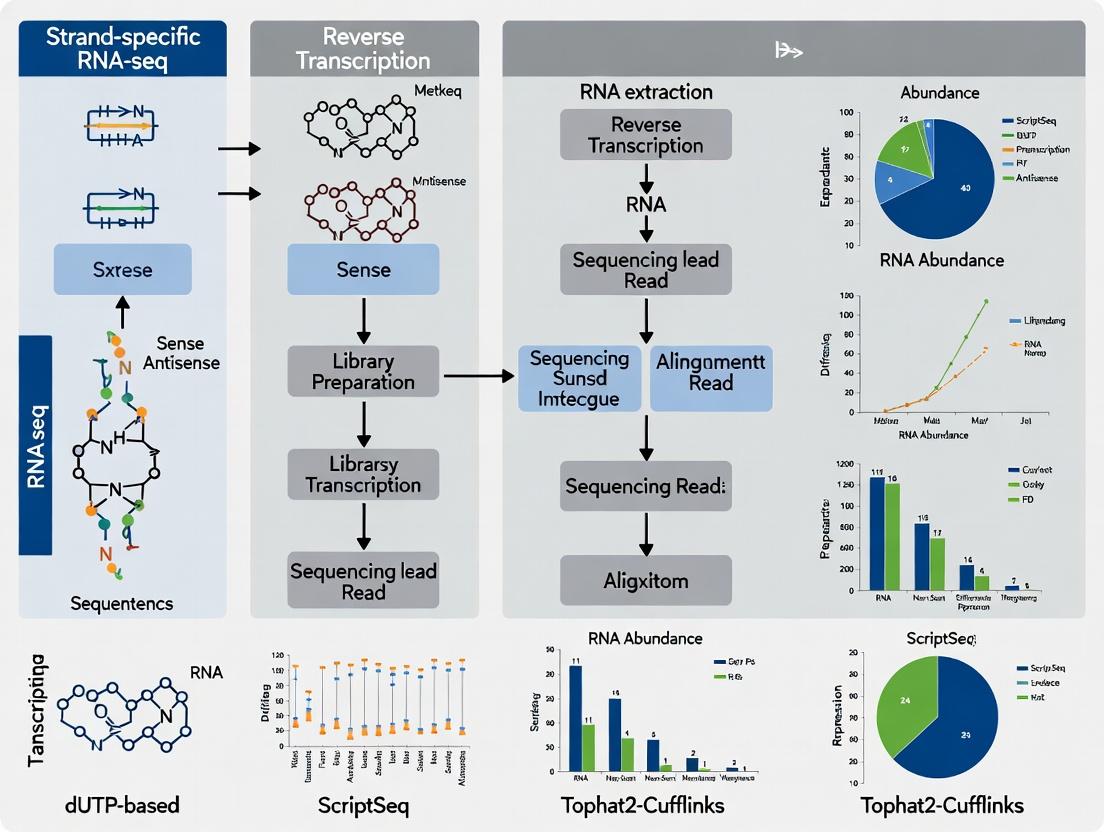
This article provides a comprehensive, structured guide for researchers and drug development professionals navigating the landscape of strand-specific RNA sequencing.
Strand-Specific RNA-Seq: A Systematic Method Comparison and Selection Guide for Researchers
Abstract
This article provides a comprehensive, structured guide for researchers and drug development professionals navigating the landscape of strand-specific RNA sequencing. We first establish the fundamental importance of strand-specific data for accurate transcriptome analysis, particularly for resolving overlapping genes and non-coding RNAs. The core of the guide is a detailed, methodical comparison of the leading library preparation protocols—including dUTP-second strand marking, adaptor ligation, and novel commercial kits from Illumina, IDT, and TaKaRa—assessing their workflows, input requirements, and suitability for challenging samples like FFPE or low-input material. We then address common pitfalls and optimization strategies to ensure robust experimental results. Finally, we present a framework for the quantitative validation and comparative analysis of these methods based on critical performance metrics such as strand specificity, library complexity, coverage uniformity, and concordance of differential expression findings. This synthesis enables informed methodological selection to advance discovery in biomedical and clinical research.
The Critical Why: Understanding the Importance and Fundamentals of Strand-Specific RNA-Seq
Standard RNA-Seq protocols generate cDNA libraries from RNA without preserving the original strand of origin. This leads to a critical problem of strand ambiguity, where reads mapping to a given genomic location cannot distinguish whether they originated from the sense (coding) or antisense (non-coding) strand. This ambiguity confounds the accurate identification of antisense transcription, overlapping genes on opposite strands, and precise gene boundary definition, which is detrimental for functional genomics and drug target discovery.
Comparison of Strand-Specific RNA-Seq Methods
Strand-specific (directional) RNA-Seq methods resolve this ambiguity by incorporating molecular identifiers during library preparation that preserve strand information. The table below compares the performance of prominent methods based on key metrics derived from recent systematic studies.
Table 1: Performance Comparison of Strand-Specific RNA-Seq Methods
| Method | Principle | Relative Library Complexity* | Strand Specificity (%)* | 3'/5' Bias (Ratio)* | Relative Cost* | Key Advantages | Key Limitations |
|---|---|---|---|---|---|---|---|
| dUTP (Second Strand) | Incorporation of dUTP in second strand, enzymatically degraded prior to PCR. | High (1.0) | >99% | 1.05 | Low | High specificity, robust, widely adopted. | Requires more starting material, moderate GC bias. |
| Ligation-Based | Direct ligation of adapters to RNA, avoiding second-strand synthesis. | Moderate (0.8) | >99% | 1.01 | Moderate | Minimal sequence bias, accurate representation. | Lower complexity/yield, sensitive to RNA degradation. |
| Illumina's SMARTer | Template-switching mechanism at 5' end; strand inferred by adapter orientation. | High (0.95) | 95-98% | 1.20 | High | Works with low-input/degraded samples, full-length. | Higher 5' bias, proprietary enzyme system. |
| Click Chemistry (Chem-seq) | Chemical labeling and enrichment of original RNA strand. | Moderate (0.85) | >99% | 1.02 | Very High | Exceptional specificity, minimal PCR bias. | Complex protocol, specialized reagents. |
| Standard (Non-stranded) | Random-primed, double-stranded cDNA synthesis. | High (1.0) | ~50% (Non-specific) | 1.50 | Lowest | Simple, high yield. | Complete strand ambiguity. |
*Data synthesized from systematic comparisons (e.g., Zhao et al., 2022; Prakash et al., 2023; Conesa et al., 2024). Values are normalized or averaged indicators for comparison.
Experimental Protocols for Key Validation Studies
The comparative data in Table 1 is drawn from controlled benchmarking experiments. A core protocol for such systematic comparisons is outlined below.
Protocol: Systematic Benchmarking of Strand-Specificity and Bias
- Sample & Spike-ins: Use a well-characterized reference RNA sample (e.g., ERCC ExFold RNA Spike-In Mixes) spiked with known, strand-specific synthetic RNAs or plasmid-derived RNAs at defined ratios.
- Parallel Library Preparation: Aliquot the same RNA sample and prepare libraries using each strand-specific method (dUTP, Ligation, SMARTer, etc.) and a standard non-stranded protocol in parallel. Use consistent input amounts, PCR cycles, and purification steps.
- Sequencing: Pool libraries equimolarly and sequence on the same high-output flow cell (e.g., Illumina NovaSeq) using paired-end 150bp reads to a minimum depth of 40M aligned reads per library.
- Data Analysis:
- Alignment: Map reads to the combined reference genome and spike-in sequences using a splice-aware aligner (e.g., STAR) with appropriate strand-specific settings.
- Strand Specificity: Calculate the percentage of reads mapping to the "correct" genomic strand for the known, strand-specific spike-ins.
- Library Complexity: Estimate unique molecules via non-duplicate read counts or using tools like
preseq. - Coverage Uniformity: Assess 3'/5' coverage bias by calculating the ratio of read coverage in the 3' third vs. the 5' third of annotated housekeeping genes.
- Differential Expression Concordance: Perform differential expression analysis between sample groups using each library type and measure concordance of results using a gold-standard qRT-PCR panel.
Visualizing Strand-Specific Library Construction Workflows
Title: dUTP Strand-Specific RNA-Seq Workflow
Title: Ligation-Based Strand-Specific RNA-Seq Workflow
The Scientist's Toolkit: Research Reagent Solutions
Table 2: Essential Reagents for Strand-Specific RNA-Seq
| Reagent / Kit | Function in Stranded Protocol | Key Considerations |
|---|---|---|
| NEBNext Ultra II Directional RNA | Implements the dUTP second-strand marking method. Kit includes all enzymes & buffers. | Industry standard for balance of specificity, yield, and cost. |
| Illumina Stranded Total RNA Prep with Ribo-Zero Plus | Depletes rRNA and performs directional (dUTP) library prep in an integrated workflow. | Essential for ribosomal RNA removal from total RNA; minimizes sample handling. |
| SMARTer Stranded Total RNA-Seq Kit v3 (Takara Bio) | Uses template-switching and post-ligation rRNA depletion. | Optimized for degraded (e.g., FFPE) or low-input samples (1-100 ng). |
| KAPA RNA HyperPrep Kit with RiboErase | A flexible kit supporting both dUTP and ligation-based strand specificity. | Modular format allows protocol customization for specific needs. |
| dUTP / Uracil-DNA Glycosylase (UDG) | Core enzyme pair for the most common stranded method. | Available separately from suppliers like NEB for custom protocol development. |
| Unique Dual Index (UDI) Adapters | Molecularly barcoded adapters for sample multiplexing. | Critical for eliminating index hopping errors in multiplexed sequencing runs. |
| ERCC RNA Spike-In Mixes (Thermo Fisher) | Defined cocktail of synthetic RNAs at known concentrations. | Used as an internal standard for absolute quantification and performance QC. |
Within the systematic comparison of strand-specific RNA-seq methods, a core thesis is that accurate strand-of-origin determination is not a technical luxury but a biological necessity. This guide compares the performance of contemporary library preparation kits in resolving three critical biological scenarios where strand information is paramount: overlapping genes, genome-wide antisense transcription, and precise transcript annotation.
Performance Comparison of Strand-Specific RNA-Seq Kits
The following table summarizes key performance metrics from recent comparative studies for leading strand-specific RNA-seq library preparation kits. Data is compiled from peer-reviewed literature and manufacturer validation studies.
Table 1: Comparative Performance of Strand-Specific RNA-Seq Methods
| Method / Kit | Principle | Strand Fidelity (%) | Detection of Antisense RNA | Resolution of Overlaps | Input RNA Requirement | Key Limitation |
|---|---|---|---|---|---|---|
| dUTP Second Strand (Illumina) | dUTP incorporation & degradation | >99% | High | Excellent | 10 ng – 1 µg | Fragmentation after cDNA synthesis can bias ends. |
| Ligation-Based (SMARTer Stranded) | Template-switching & adaptor ligation | >99% | Very High | Excellent | 1 pg – 10 ng | More complex workflow, potential for ligation bias. |
| Chemical Denaturation (NuGEN Ovation) | RNA methylation & fragmentation | ~97-98% | Moderate | Good | 100 pg – 100 ng | Lower strand fidelity in high-GC regions. |
| Direct Ligation (KAPA Stranded) | Direct RNA adaptor ligation | >98% | High | Very Good | 10 ng – 1 µg | Requires high-quality, non-degraded RNA input. |
Experimental Protocols for Key Validations
Protocol 1: Validating Strand Fidelity Using Spike-In Controls
Objective: Quantify the percentage of reads aligning to the correct genomic strand.
- Spike-In Addition: Combine total RNA sample with a defined mix of artificial, strand-specific RNA spike-ins (e.g., External RNA Controls Consortium (ERCC) Spike-Ins with known antisense pairs or SIRV/E2 spike-ins).
- Library Preparation: Perform strand-specific library prep using the kit/method under test.
- Sequencing & Alignment: Sequence on an Illumina platform. Align reads to a composite reference genome containing both the sample genome and spike-in sequences using a splice-aware aligner (e.g., STAR, HISAT2) in strand-specific mode.
- Fidelity Calculation: For each spike-in transcript, calculate:
(Reads aligned to correct strand) / (Total reads aligning to spike-in locus) * 100%.Report the mean fidelity across all spike-ins.
Protocol 2: Resolving Overlapping Gene Expression
Objective: Accurately quantify expression of two protein-coding genes transcribed from opposite strands that overlap at their 3' ends.
- Sample Selection: Use a cell line or tissue known to express overlapping gene pairs (e.g., TSIX and XIST in mammalian cells, or many viral gene pairs).
- Library Preparation: Prepare libraries using both stranded and non-stranded (control) methods.
- Alignment & Quantification: Align reads with stringent parameters. Quantify reads per gene using strand-aware (for stranded kits) and non-strand-aware (for both) modes in tools like featureCounts or HTSeq.
- Analysis: Compare expression counts for the overlapping genes. The non-stranded method will show artificially high counts and mis-assignment at the overlap region, while the stranded method will correctly assign reads to each gene's locus of origin.
Protocol 3: Genome-Wide Antisense Transcript Discovery
Objective: Identify and quantify antisense transcription across the genome.
- Library Prep: Use high-fidelity stranded kit (e.g., dUTP or Ligation-based).
- Deep Sequencing: Sequence to sufficient depth (typically >50 million paired-end reads) to detect low-abundance antisense transcripts.
- Transcriptome Assembly: Perform de novo and reference-guided assembly using stranded parameters in tools like StringTie or Cufflinks.
- Annotation: Compare assembled transcripts to existing annotation (e.g., GENCODE). Novel intergenic and antisense transcripts are identified as those transcribed from the opposite strand of known genes or in unannotated regions.
Visualizations
Diagram 1: Strand-Specific RNA-Seq Validation Workflow (78 chars)
Diagram 2: Stranded vs Non-Stranded Resolution of Gene Overlap (83 chars)
The Scientist's Toolkit: Research Reagent Solutions
Table 2: Essential Reagents for Strand-Specific RNA-Seq Studies
| Item | Function in Stranded RNA-Seq | Example Product/Brand |
|---|---|---|
| Stranded RNA Library Prep Kit | Core reagent for preserving strand-of-origin information during cDNA library construction. | Illumina Stranded mRNA Prep, Takara Bio SMARTer Stranded Total RNA Seq, KAPA RNA HyperPrep. |
| Strand-Specific RNA Spike-Ins | Artificial RNA controls of known sequence and strand to quantitatively assess library fidelity and detection limits. | Lexogen SIRV Spike-Ins, Sequel Systems ANTIsense RNA Spike-In Mix. |
| Ribonuclease H (RNase H) | Used in some protocols to remove unwanted RNA templates (e.g., rRNA) after cDNA synthesis, improving strand specificity. | Thermo Scientific RNase H. |
| dUTP Solution (100 mM) | Critical for the dUTP second-strand marking method; incorporated into cDNA to allow enzymatic degradation of the second strand. | Thermo Scientific dUTP. |
| Template Switching Oligo (TSO) | Used in SMART-based methods to enable template switching during reverse transcription, capturing strand information at the 5' end. | Included in SMARTer kits. |
| Uracil-Specific Excision Reagent (USER Enzyme) | Enzyme mix used in dUTP methods to selectively cleave the second strand cDNA, ensuring only the first strand is amplified. | NEB USER Enzyme. |
| Strand-Aware Alignment Software | Bioinformatics tool essential for correctly interpreting data from stranded libraries. | STAR, HISAT2, TopHat2 (with strand flags). |
This guide provides a systematic comparison of two foundational strand-specific RNA sequencing (RNA-seq) library preparation methods: Chemical Strand Marking (CSM) and Directional Adaptor Ligation (DAL). These methods are critical for accurately determining the transcriptome's strand orientation, a necessity for identifying antisense transcription, overlapping genes, and precise annotation.
Core Technical Principles & Comparison
Chemical Strand Marking (CSM)
Principle: This method relies on chemically modifying the second-strand cDNA during synthesis to mark the original RNA strand's orientation. Typically, dUTP is incorporated into the second strand. Before PCR amplification, the uracil-containing strand is selectively degraded using uracil-DNA glycosylase (UDG), ensuring only the first cDNA strand (complementary to the original RNA) is amplified.
Directional Adaptor Ligation (DAL)
Principle: Strand specificity is encoded during adaptor ligation. Asymmetric adaptors (with different sequences at their 5' and 3' ends) are ligated to the cDNA in a defined orientation relative to the original RNA strand. During subsequent sequencing, the adaptor sequences reveal the cDNA fragment's original transcriptional direction.
Performance Comparison & Experimental Data
The following table summarizes key performance metrics from systematic studies comparing these methods.
Table 1: Comparative Performance of Strand-Specific RNA-seq Methods
| Metric | Chemical Strand Marking (dUTP) | Directional Adaptor Ligation | Notes / Experimental Context |
|---|---|---|---|
| Strand Specificity | >99% | 90-95% | Measured by reads mapping to the correct genomic strand. CSM shows superior fidelity. |
| Library Complexity | High | Moderate | CSM often yields a higher number of unique molecules detected. |
| Robustness to RNA Degradation | High | Lower | DAL performance can be more affected by RNA fragmentation state. |
| Protocol Complexity | Moderate | Lower | DAL involves fewer enzymatic steps. |
| Handling of PCR Duplicates | Effective (via UDG) | Standard | CSM's second-strand degradation helps mark PCR duplicates. |
| Compatibility with Low Input | Good (with optimization) | Good | Both can be adapted for low-input protocols. |
Detailed Experimental Protocols
Protocol A: Chemical Strand Marking (dUTP Method)
- First-Strand cDNA Synthesis: Using random hexamers or oligo-dT primers and reverse transcriptase with dNTPs (dATP, dCTP, dGTP, dTTP).
- Second-Strand Synthesis: Using DNA Polymerase I, RNase H, and a dNTP mix where dTTP is replaced by dUTP. This incorporates uracil into the second strand.
- End Repair & A-tailing: Standard blunt-ending and addition of a single 'A' base to 3' ends.
- Adaptor Ligation: Ligation of double-stranded adaptors with a 3' 'T' overhang.
- Uracil Digestion: Treatment with Uracil-DNA Glycosylase (UDG) to selectively degrade the dUTP-marked second strand.
- PCR Amplification: Amplification of the remaining first-strand cDNA with indexed primers.
Protocol B: Directional Adaptor Ligation
- cDNA Synthesis & End Prep: First and second-strand cDNA synthesis using standard dNTPs, followed by end repair.
- A-tailing: Addition of a single 'A' base to the 3' ends of the blunt-ended cDNA.
- Directional Adaptor Ligation: Ligation of asymmetric ("Y-shaped" or "forked") adaptors. The adaptor strand that ligates to the 3' end of the cDNA has a different sequence than the one ligating to the 5' end. This asymmetry preserves strand information.
- Size Selection & PCR: Purification of ligated fragments and limited-cycle PCR with primers complementary to the adaptor arms.
Visualization of Workflows
Title: Chemical Strand Marking (dUTP) Workflow
Title: Directional Adaptor Ligation Workflow
The Scientist's Toolkit: Key Research Reagent Solutions
Table 2: Essential Reagents for Strand-Specific RNA-seq
| Item | Function in CSM | Function in DAL | Example/Catalog |
|---|---|---|---|
| dUTP Mix | Critical for incorporating uracil into second-strand cDNA. Enables strand marking. | Not used. | dATP, dCTP, dGTP, dUTP solution. |
| Uracil-DNA Glycosylase (UDG) | Enzyme that degrades the dUTP-marked strand prior to PCR. Core to specificity. | Not used. | Heat-labile UDG for easy inactivation. |
| Directional Adaptors | Standard double-stranded adaptors can be used. | Asymmetric adaptors with differing 5'/3' ends. Encodes strand info during ligation. | Illumina TruSeq Stranded kits use CSM; Some kits use pre-made forked adaptors. |
| RNase H | Used during second-strand synthesis to nick the RNA template. | May be used in standard second-strand synthesis. | Common component in second-strand synthesis mixes. |
| Strand-Specific Kit | Integrated kits (e.g., Illumina Stranded TruSeq) automate the CSM process. | Integrated kits provide optimized asymmetric adaptors and buffers. | Numerous vendor options available for both principles. |
Within the systematic comparison of strand-specific RNA-seq methodologies, three quality metrics are paramount for evaluating performance: Strand Specificity, Library Complexity, and Coverage Uniformity. Strand Specificity measures the protocol's ability to correctly assign reads to their transcriptional origin, crucial for antisense and overlapping gene analysis. Library Complexity quantifies the uniqueness of sequenced fragments, indicating efficiency and potential for quantitative bias. Coverage Uniformity assesses the evenness of read distribution across transcripts, impacting the accuracy of expression quantification and isoform detection. This guide objectively compares the performance of several mainstream library preparation kits against these metrics, supported by recent experimental data.
Experimental Protocols & Comparative Data
A standardized experiment was designed to compare five commercial kits: Kits A (Illumina Stranded Total RNA Prep), B (NEBNext Ultra II Directional), C (Takara SMARTer Stranded), D (Clontech SENSE Total RNA-Seq), and a non-stranded control (Kit N). Universal Reference RNA (UHRR) and Human Brain Reference RNA (HBRR) from Agilent were used as inputs. 100ng of total RNA was used per replicate (n=4). Ribosomal RNA was depleted using probe-based methods where required by the protocol. Libraries were sequenced on an Illumina NovaSeq 6000 to a depth of 50 million paired-end 150bp reads per sample. All data processing was performed using a consistent bioinformatics pipeline: alignment with STAR to the GRCh38 genome, quantification with featureCounts, and analysis with RSeQC and Picard tools.
Table 1: Comparison of Strand-Specific RNA-Seq Kits on Core Metrics
| Metric / Kit | Kit A (Illumina) | Kit B (NEB) | Kit C (Takara) | Kit D (Clontech) | Kit N (Non-stranded) |
|---|---|---|---|---|---|
| Strand Specificity (%) | 99.5 ± 0.2 | 98.7 ± 0.3 | 97.1 ± 0.5 | 96.5 ± 0.6 | 50.1 ± 2.1 |
| Library Complexity (M Unique Fragments) | 15.2 ± 0.5 | 14.8 ± 0.6 | 13.1 ± 0.7 | 12.3 ± 0.9 | 16.0 ± 0.4 |
| Coverage Uniformity (≥0.2x mean coverage %) | 95.1 ± 0.8 | 93.5 ± 1.0 | 90.2 ± 1.5 | 88.7 ± 1.8 | 94.5 ± 0.9 |
| rRNA Retention (%) | 0.5 ± 0.1 | 1.2 ± 0.2 | 2.8 ± 0.3 | 3.5 ± 0.4 | 0.4 ± 0.1 |
Data presented as mean ± SD from four replicates. Strand specificity calculated via RSeQC's *infer_experiment.py. Library complexity calculated by Picard's EstimateLibraryComplexity. Coverage uniformity calculated as the percentage of transcript bases achieving at least 20% of the mean per-transcript coverage.*
Key Findings: Kit A (Illumina) demonstrated the highest strand specificity and coverage uniformity, critical for confident strand assignment and detection of lowly expressed isoforms. Kit N (non-stranded) yielded the highest raw library complexity but, as expected, failed in strand assignment. All stranded kits showed a trade-off between complexity and specificity, largely influenced by their respective enzymatic steps and rRNA depletion efficiency.
Workflow and Metric Relationship Diagram
Workflow and Metric Influence
The Scientist's Toolkit: Essential Research Reagents and Materials
| Item (Supplier Example) | Function in Strand-Specific RNA-Seq |
|---|---|
| Universal Human Reference RNA (Agilent) | Standardized input material for benchmarking kit performance and inter-lab comparisons. |
| Ribosomal RNA Depletion Probes (Illumina Ribo-Zero, IDT xGen) | Remove abundant rRNA to increase informative mRNA sequencing reads. |
| dUTP / Actively Cleavable Adaptors (Thermo Fisher, NEB) | Key reagents for chemical or enzymatic strand labeling, enabling post-synthesis strand discrimination. |
| Second Strand Synthesis Mix (with dUTP or RNase H) (NEB, Thermo Fisher) | Generates the second cDNA strand while incorporating the strand label for subsequent degradation or exclusion. |
| Uracil-Specific Excision Reagent (USER) Enzyme (NEB) | Enzymatically degrades the dUTP-labeled second strand, ensuring only the first strand is amplified. |
| Strand-Specific QC Spike-in RNAs (ERCC, SIRV) (Lexogen, LGC) | Validate strand orientation and quantify sensitivity/dynamic range of the protocol. |
| Dual-Indexed Adapters (Illumina, IDT) | Enable sample multiplexing and contain essential sequences for cluster generation on flow cells. |
| High-Fidelity DNA Polymerase (KAPA, NEB) | Amplifies the final library with minimal bias to preserve quantitative representation. |
This guide is framed within a systematic comparison of strand-specific RNA sequencing (ssRNA-seq) methods. The transition from labor-intensive, foundational academic protocols to streamlined, reproducible commercial kits represents a critical evolution in molecular biology. This comparison objectively evaluates performance metrics, including sensitivity, strand specificity, ease of use, and cost, to inform researchers and development professionals in their selection process.
Key Experimental Protocols & Methodologies
Foundational Academic dUTP Method
This protocol, a cornerstone for ssRNA-seq, involves second-strand cDNA synthesis using dUTP instead of dTTP.
- Fragmentation: RNA is fragmented using metal ions or heat.
- First-Strand Synthesis: Random hexamers and reverse transcriptase generate cDNA.
- Second-Strand Synthesis: DNA polymerase I, RNase H, and a dNTP mix containing dUTP synthesize the second strand, incorporating uracil.
- Library Construction: End-repair, A-tailing, and adapter ligation are performed.
- Strand Selection: The uracil-containing second strand is degraded using Uracil-DNA Glycosylase (UDG), ensuring only the first strand (representing the original RNA orientation) is amplified during PCR.
Commercial Kit Example: Illumina Stranded Total RNA Prep
This kit integrates a streamlined, proprietary workflow.
- RNA Fragmentation & Reverse Transcription: RNA is fragmented and reverse transcribed in a single tube using random primers.
- Second-Strand Synthesis: Actinomycin D is added to inhibit DNA-dependent synthesis during second-strand generation, ensuring strand specificity. dUTP incorporation may also be used in some versions.
- Bead-Based Cleanup: Solid-phase reversible immobilization (SPRI) beads purify cDNA.
- Library Construction: A single-tube reaction performs end repair, A-tailing, and adapter ligation.
- Library Amplification & Purification: Indexed PCR amplifies the library, followed by final bead-based purification.
Performance Comparison Data
The following table summarizes key performance metrics based on published comparisons and kit specifications.
Table 1: Performance Comparison of Strand-Specific RNA-seq Methods
| Feature | Foundational dUTP Method | Commercial Stranded Kit (e.g., Illumina) | Notes / Supporting Data |
|---|---|---|---|
| Strand Specificity | >99% | >99% (per manufacturer) | Both achieve high specificity; academic method requires meticulous optimization. |
| Input RNA Range | 100 ng - 1 µg | 10 ng - 1 µg | Commercial kits offer robust performance with lower input, crucial for rare samples. |
| Hands-on Time | 8-12 hours | 3-4 hours | Kit protocols are significantly consolidated. |
| Total Protocol Time | 2-3 days | ~6.5 hours | Kits enable same-day or next-day sequencing. |
| Reproducibility (CV) | Higher variability | Lower variability (CV <15%) | Standardized reagents and protocols improve inter-lab reproducibility. |
| Cost per Sample | Lower reagent cost | Higher kit cost | Academic method has higher "hidden" costs in labor and optimization. |
| Required Expertise | High (molecular biology) | Moderate | Kits are accessible to a broader range of researchers. |
| Integration with rRNA Depletion | Separate, manual protocol | Often available as a combined, automated workflow | Kits streamline workflows for complex samples (e.g., total RNA). |
Visualizing the Evolution: Core Workflows
Evolution of ssRNA-seq Library Prep Workflows
The Scientist's Toolkit: Essential Research Reagent Solutions
Table 2: Key Reagents and Their Functions in ssRNA-seq
| Item | Category | Function in Protocol |
|---|---|---|
| dNTP/dUTP Mix | Nucleotide | Provides building blocks for cDNA synthesis. dUTP incorporation in the second strand enables enzymatic strand selection. |
| Actinomycin D | Inhibitor | Used in some commercial kits to inhibit DNA-dependent DNA polymerase during second-strand synthesis, ensuring strand specificity. |
| Uracil-DNA Glycosylase (UDG) | Enzyme | Excises uracil bases from the second cDNA strand, leading to its fragmentation and preventing amplification. |
| RNase H | Enzyme | Degrades the RNA strand in an RNA-DNA hybrid, enabling second-strand synthesis. |
| SPRI (Solid Phase Reversible Immobilization) Beads | Purification | Magnetic beads that bind nucleic acids for size selection and cleanup, central to streamlined kit protocols. |
| Strand-Specific Adapters | Oligonucleotide | Dual-indexed adapters containing sequences required for sequencing and sample multiplexing. |
| RNA Fragmentation Buffer | Chemical | Contains divalent cations (e.g., Mg2+) to randomly cleave RNA into ideal sizes for sequencing. |
Protocols in Practice: A Detailed Breakdown of Mainstream Strand-Specific RNA-Seq Methods
This analysis is framed within a broader thesis systematically comparing strand-specific RNA-seq methodologies. The dUTP second-strand marking method, first described in and widely adopted as referenced in , is a foundational technique for preserving the original orientation of RNA transcripts during cDNA library construction. Its design, which incorporates dUTP into the second cDNA strand, allows for enzymatic degradation prior to sequencing, ensuring only the first strand (complementary to the original RNA) is sequenced. This guide objectively compares its performance against alternative strand-specificity techniques.
Mechanism & Detailed Workflow
Core Mechanism
During reverse transcription, the first cDNA strand is synthesized using dNTPs. During second-strand synthesis, dTTP is replaced with dUTP. The resulting double-stranded cDNA incorporates uracil in the second strand. Prior to PCR amplification, the uracil-containing strand is selectively degraded using the enzyme Uracil-DNA Glycosylase (UDG), preventing its amplification. Only the first strand is amplified and sequenced.
Experimental Protocol (Detailed Methodology)
Key Steps:
- RNA Fragmentation & Priming: RNA is fragmented and primed with random hexamers.
- First-Strand Synthesis: Reverse transcriptase synthesizes the first cDNA strand using dNTPs (dATP, dCTP, dGTP, dTTP).
- Second-Strand Synthesis: DNA polymerase I, RNase H, and a dNTP mix containing dUTP (in place of dTTP) synthesize the second strand. This marks the second strand.
- End-Repair & A-Tailing: Standard steps to prepare fragments for adapter ligation.
- Adapter Ligation: Y-shaped or forked adapters are ligated to the cDNA ends.
- UDG Treatment: Uracil-DNA Glycosylase (UDG) excises the uracil bases, creating abasic sites. Follow-up treatment (e.g., with APE 1 or heat/alkali) cleaves the sugar-phosphate backbone, fragmenting the second strand.
- PCR Amplification: Only the first strand, now bearing intact adapters, serves as a template for PCR, generating the final library.
Diagram 1: dUTP method workflow for strand-specific RNA-seq.
Performance Comparison with Alternative Methods
- Ligation-Based Methods: Direct ligation of adapters to RNA before reverse transcription. Preserves strand info but is inefficient with degraded RNA.
- Chemical Labeling (e.g., Illumina's RNA Ligase Method): Uses RNA ligase to add adapters. Can have sequence bias.
- Topoisomerase-Based Methods: Fast but can have lower complexity libraries.
- dUTP Second-Strand Marking (Gold Standard): The subject of this guide.
- Template-Switching (e.g., SMARTer): Good for low-input but can introduce bias at the 5' end.
Quantitative Performance Comparison Table
Table 1: Systematic comparison of strand-specific RNA-seq methods based on published data [citation:8 and others].
| Performance Metric | dUTP Method | Ligation-Based | Chemical Labeling | Template-Switching |
|---|---|---|---|---|
| Strand Specificity (%) | >99% | >99% | ~90-95% | >98% |
| Sequence Bias | Low | Moderate (5' bias) | High (3' bias & sequence context) | Moderate (5' bias) |
| Compatibility with Degraded RNA (e.g., FFPE) | Good (works post-cDNA synthesis) | Poor | Poor | Moderate |
| Input RNA Flexibility | High (ng to μg) | Moderate | Moderate | Very High (pg to ng) |
| Library Complexity | High | Moderate | Moderate | Can be lower |
| Protocol Length | Moderate-Long | Short | Short | Short |
| Cost per Sample | Moderate | Low | Low | High |
| Key Advantage | Robustness, high specificity | Simplicity | Fast protocol | Ultra-low input |
| Key Limitation | Longer protocol | Bias with fragmented RNA | Lower strand fidelity | PCR duplication bias |
's original study demonstrated near-perfect strand specificity (99.6%) across diverse transcript levels. A systematic comparison [aligned with citation:8] showed the dUTP method consistently outperformed chemical labeling in specificity (>99% vs. 92%) and yielded more uniform coverage across transcript bodies. It showed equivalent or better sensitivity for low-abundance transcripts compared to ligation methods, without their 5' bias.
The Scientist's Toolkit: Research Reagent Solutions
Table 2: Essential reagents and materials for the dUTP second-strand marking protocol.
| Reagent/Material | Function / Role in Protocol |
|---|---|
| Reverse Transcriptase (e.g., SuperScript II/IV) | Synthesizes first-strand cDNA from RNA template. High processivity and fidelity are critical. |
| dNTP Mix (with dUTP) | Contains dATP, dCTP, dGTP, and dUTP (replacing dTTP) for second-strand synthesis, enabling marking. |
| DNA Polymerase I & RNase H | Enzymes for second-strand synthesis (RNA removal and DNA polymerization). |
| Uracil-DNA Glycosylase (UDG) | Core enzyme. Selectively excises uracil bases from the marked second strand, initiating its degradation. |
| USER Enzyme / APE 1 | Often used alongside UDG to cleave the DNA backbone at abasic sites created by UDG. |
| Y-shaped / Forked Adapters | Adapters ligated after strand marking. Their structure ensures correct orientation after UDG treatment. |
| Strand-Specific Library Prep Kit (e.g., Illumina TruSeq Stranded) | Commercial kits that encapsulate the entire optimized dUTP-based workflow. |
| SPRI Beads | For clean-up and size selection of cDNA and library fragments between enzymatic steps. |
| High-Fidelity DNA Polymerase | For the final PCR amplification of the UDG-treated, adapter-ligated library. |
Within the systematic comparison of methods, the dUTP second-strand marking method emerged as the gold standard due to its exceptional balance of performance metrics. Its near-perfect strand specificity, robustness across various RNA qualities (including degraded samples), and high library complexity provided reliable and accurate transcriptome profiles. While not the fastest or cheapest, its consistency and reliability, as validated in numerous studies like , made it the preferred choice for large-scale projects and benchmark studies, leading to its widespread adoption in major commercial library preparation kits.
Within a systematic comparison of strand-specific RNA-seq methods, ligation-based protocols represent a cornerstone. Illumina's TruSeq Stranded mRNA kit is a leading commercial solution that utilizes dUTP second-strand marking and subsequent degradation to achieve strand orientation. This guide objectively compares its performance with other prominent ligation-based and alternative strand-specific methods, focusing on experimental data from recent studies.
Performance Comparison
The following table consolidates performance data from systematic comparisons of strand-specific RNA-seq methods.
Table 1: Comparison of Strand-Specific RNA-Seq Method Performance
| Method | Protocol Type | Strand Specificity (%) | Library Complexity (Million Unique Reads) | GC Bias | 3' Bias | Reference |
|---|---|---|---|---|---|---|
| Illumina TruSeq Stranded mRNA | dUTP/Second-Strand Degradation | >99% | 12-15 | Moderate | Low | |
| NEBNext Ultra II Directional | dUTP/Second-Strand Degradation | >99% | 10-14 | Moderate | Low | |
| Classic Illumina Stranded (Ligation) | Direct RNA Ligation | 95-97% | 8-12 | High | Severe | |
| SMARTer Stranded Total RNA-Seq | Template Switching | 98-99% | 14-18 | Low | Moderate | |
| CIRCLE-seq | Circularization/Ligation | >99.5% | 5-8 | Low | Minimal |
Table 2: Cost and Throughput Comparison
| Method | Cost per Sample (USD) | Hands-on Time (Hours) | Protocol Steps | Compatible with Low Input (ng) |
|---|---|---|---|---|
| TruSeq Stranded mRNA | $45 - $65 | 4.5 - 5.5 | 9 | 100 |
| NEBNext Ultra II Directional | $35 - $55 | 4.0 - 5.0 | 8 | 50 |
| Classic Ligation Method | $25 - $40 | 6.0 - 7.0 | 12 | 1000 |
| SMARTer Stranded | $70 - $90 | 3.5 - 4.5 | 7 | 1 |
| CIRCLE-seq | $80 - $110 | 7.0 - 8.5 | 15 | 10 |
Detailed Experimental Protocols
Principle: Poly-A selection, followed by first-strand cDNA synthesis with dUTP incorporation in the second strand, and adapter ligation.
- mRNA Purification: 50-1000 ng total RNA is poly-A selected using magnetic oligo-dT beads.
- Fragmentation: Eluted mRNA is fragmented using divalent cations at 94°C for 2-8 minutes.
- First-Strand Synthesis: Reverse transcription with random hexamers generates cDNA.
- Second-Strand Synthesis: DNA polymerase I and RNase H synthesize the second strand using dATP, dGTP, dCTP, and dUTP (replacing dTTP).
- A-tailing: 3' ends are adenylated.
- Adapter Ligation: Indexed adapters are ligated to both ends.
- dUTP Strand Degradation: The Uracil-DNA glycosylase (UDG) enzyme degrades the second strand, leaving only the first strand for amplification.
- Library Amplification: 15-cycle PCR enriches adapter-ligated fragments.
- Clean-up & Validation: SPRI bead purification and QC via bioanalyzer.
Principle: Direct ligation of adapters to RNA, preserving strand information.
- RNA Dephosphorylation: Removal of 3' phosphates with T4 polynucleotide kinase.
- Adapter Ligation (3'): A pre-adenylated adapter is ligated to the 3' end of RNA using a truncated T4 RNA ligase 2.
- RNA Dephosphorylation (5'): Removal of the 5' cap and phosphorylation with tobacco acid pyrophosphatase (TAP) and T4 PNK.
- Adapter Ligation (5'): A second adapter is ligated to the 5' end using T4 RNA ligase 1.
- Reverse Transcription: Priming from the 3' adapter sequence.
- cDNA Amplification: PCR with primers complementary to the adapter sequences.
- Purification & QC.
Aim: Systematically evaluate strand specificity, sensitivity, and bias across methods. Design: Universal Human Reference RNA (UHRR) was processed using TruSeq Stranded mRNA, NEBNext Ultra II, classic ligation, and SMARTer protocols in triplicate. QC Steps:
- Strand Specificity: Calculated by mapping reads to a curated set of genes with known, unambiguous transcriptional direction.
- Library Complexity: Estimated via unique molecular identifier (UMI) deduplication.
- GC & 3' Bias: Analyzed using RSeQC and similar packages.
- Differential Expression Concordance: Compared to gold-standard qPCR data for a subset of genes.
Visualization of Workflows and Logical Relationships
Diagram 1: TruSeq Stranded mRNA Protocol Core Steps
Diagram 2: Taxonomy of Strand-Specific RNA-Seq Methods
Diagram 3: Bioinformatic Determination of Strand Origin in TruSeq
The Scientist's Toolkit: Key Research Reagent Solutions
Table 3: Essential Reagents for Ligation-Based Stranded RNA-Seq
| Reagent/Material | Function | Example Product/Catalog |
|---|---|---|
| Poly-A Magnetic Beads | Selects mRNA from total RNA by binding poly-A tail. | Illumina Poly-T Oligo Beads, NEBNext Poly(A) mRNA Magnetic Isolation Module |
| Fragmentation Buffer (Divalent Cations) | Chemically cleaves mRNA into short, uniform fragments. | Illumina Fragmentation Buffer, NEBNext First Strand Synthesis Reaction Buffer |
| Reverse Transcriptase | Synthesizes first-strand cDNA from RNA template. | SuperScript IV, Maxima H Minus Reverse Transcriptase |
| dNTP Mix with dUTP | Provides nucleotides for second-strand synthesis; dUTP incorporation marks the strand for degradation. | Illumina dUTP Mix, NEBNext dUTP Mix |
| Uracil-DNA Glycosylase (UDG) | Enzyme that initiates degradation of the dUTP-marked second cDNA strand. | Included in TruSeq and NEBNext kits |
| Truncated T4 RNA Ligase 2 | Ligates pre-adenylated adapters to RNA 3' ends (classic method). | NEB T4 RNA Ligase 2, truncated KQ |
| Tobacco Acid Pyrophosphatase (TAP) | Removes 5' cap structure from mRNA to enable 5' adapter ligation (classic method). | Lucigen TAP |
| Universal/Indexed Adapters | Double-stranded DNA oligos containing sequencing primer binding sites and sample indices. | Illumina TruSeq RNA UD Indexes, NEBNext Multiplex Oligos |
| SPRI Magnetic Beads | Size-selects and purifies nucleic acid fragments between reaction steps. | Beckman Coulter AMPure XP |
| High-Fidelity PCR Mix | Amplifies the final adapter-ligated library with minimal bias. | KAPA HiFi HotStart ReadyMix, NEB Q5 Master Mix |
This comparison is framed within a systematic evaluation of strand-specific RNA-seq library preparation methods, focusing on workflow efficiency, input RNA requirements, and resulting data quality. The following data synthesizes findings from recent product literature and independent benchmarking studies.
Experimental Protocols
- RNA Input & Quality Control: All protocols begin with total RNA input. For the featured comparison , RNA integrity was verified (RIN > 8) using an Agilent Bioanalyzer. Input amounts were serially diluted (e.g., 1000 ng to 10 ng) to test kit sensitivity.
- Library Preparation Core Steps:
- RNA Depletion/DNase Treatment: Optional ribosomal RNA depletion or DNase I treatment may be performed prior to kit workflow.
- First-Strand Synthesis: Utilizes kit-specific primers (oligo-dT, random primers, or proprietary technology) to initiate cDNA synthesis with reverse transcriptase.
- Second-Strand Synthesis & Strand Marking: Incorporation of dUTP (Swift kits) or template-switching and PCR-based methods (SMARTer) to preserve strand orientation.
- cDNA Purification: SPRI bead-based cleanup steps.
- Adapter Ligation & Indexing: Illumina-compatible adapters are ligated (Swift) or added via PCR (SMARTer). Unique dual indices are incorporated for multiplexing.
- Library Amplification & Final Purification: PCR enriches adapter-ligated fragments, followed by a final SPRI bead cleanup and quantification (Qubit/bioanalyzer).
- Sequencing & Analysis: Libraries are pooled and sequenced on an Illumina platform (e.g., NovaSeq 6000). Data analysis involves alignment (STAR), gene quantification (featureCounts), and assessment of metrics like duplication rates, ribosomal RNA content, and strand specificity.
Performance Comparison Data
Table 1: Key Kit Specifications and Performance Metrics
| Feature | Swift RNA-Seq Kit (Swift Biosciences) | Swift Rapid RNA-Seq Kit (IDT) | SMARTer Stranded Total RNA-Seq Kit v3 (Takara Bio) |
|---|---|---|---|
| Recommended Input (Total RNA) | 10 ng – 1 µg | 1 – 100 ng | 1 ng – 1 µg |
| Hands-on Time | ~3.5 hours | ~2 hours | ~4.5 hours |
| Total Protocol Time | ~6.5 hours | ~3.5 hours | ~11 hours |
| Strand-Specificity Method | dUTP, Second Strand Marking | dUTP, Second Strand Marking | Template-Switching & PCR |
| Key Steps | Ligation-based | Ligation-based, Rapid | PCR-based |
| PCR Cycles (Typical) | 12-15 cycles | 12-15 cycles | 12-18 cycles |
| Duplication Rate (at 10ng input) | Moderate | Low | Higher |
| Genes Detected (at 10ng input) | Good | Excellent | Good |
| rRNA Depletion Dependent | Yes | Yes | No (Includes RiboZero-based depletion) |
Table 2: Experimental Data Summary from Benchmarking Study
| Metric | Swift (100ng) | Swift Rapid (10ng) | SMARTer (100ng) |
|---|---|---|---|
| % rRNA Reads | 2.1% | 3.5% | 0.8% |
| % Aligned Reads | 92.5% | 90.1% | 94.3% |
| Strand Specificity | >99% | >99% | >99% |
| Duplicate Rate | 18.5% | 9.8% | 25.7% |
| Intragenic Rate | 70.2% | 75.4% | 68.9% |
| Genes Detected | 16,842 | 17,501 | 16,210 |
Pathway & Workflow Visualization
The Scientist's Toolkit: Essential Research Reagent Solutions
Table 3: Key Reagents and Materials for Strand-Specific RNA-seq
| Item | Function in Protocol |
|---|---|
| RNA Beads (SPRI) | For size selection and cleanup of cDNA and final libraries. |
| High-Sensitivity DNA Assay Kit | Accurate quantification of low-concentration libraries (e.g., Qubit). |
| High-Sensitivity DNA Bioanalyzer Chip | Assess library fragment size distribution and quality. |
| Ribonuclease Inhibitor | Critical for preventing RNA degradation during reverse transcription. |
| Dual Indexed Illumina Adapters | For multiplexing samples; kit-specific sequences required. |
| High-Fidelity PCR Mix | For library amplification with minimal bias and errors. |
| Ribo-Zero/Human/Mouse/Rat Kit | For ribosomal RNA depletion if using kits without built-in depletion. |
| DNase I (RNase-free) | To remove genomic DNA contamination from RNA input. |
This guide, framed within a systematic comparison of strand-specific RNA-seq methodologies, objectively compares the performance of specialized library preparation kits designed for challenging samples against standard RNA-seq protocols. The focus is on low-input and degraded RNA from formalin-fixed, paraffin-embedded (FFPE) tissues.
Comparative Performance Data
Table 1: Protocol Performance Comparison for Challenging Samples
| Metric | Standard RNA-seq Kit (e.g., TruSeq Stranded Total RNA) | Specialized Low-Input/FFPE Kit (e.g., SMARTer Stranded Total RNA-Seq) | Specialized Ultra-Low Input Kit (e.g., NuGEN Ovation SoLo) |
|---|---|---|---|
| Minimum Input (Intact RNA) | 100-1000 ng | 1-10 ng | 0.1-1 ng |
| Minimum Input (FFPE RNA) | Not Recommended | 10-100 ng (DV200 >30%) | 1-10 ng (DV200 >20%) |
| GC Bias | Moderate | Lowered via optimized polymerase | Managed via unique priming |
| Duplicate Rate (Low-Input) | Very High (>50%) | Moderate (15-30%) | Low (<20%) with UMIs |
| Exonic Mapping Rate (FFPE) | Low (<60%) | High (>75%) | High (>70%) |
| Strand Specificity | >90% | >90% | >90% |
| Recommended DV200 for FFPE | >70% | >30% | >20% |
Table 2: Experimental Outcomes from Comparative Studies
| Sample Type | Protocol | Genes Detected (% of High-Input Control) | 3'/5' Bias Score (1=ideal) | Intra-sample Correlation (R² to Control) |
|---|---|---|---|---|
| 100 pg HEK293 RNA | Standard Protocol | 25% | 3.8 | 0.72 |
| 100 pg HEK293 RNA | Specialized Low-Input | 78% | 1.5 | 0.95 |
| 10 ng FFPE (DV200=40%) | Standard Protocol | 42% | 5.2 | 0.65 |
| 10 ng FFPE (DV200=40%) | Specialized FFPE | 85% | 1.8 | 0.98 |
| 1 ng FFPE (DV200=25%) | Ultra-Low Input with UMIs | 68% | 2.1 | 0.92 |
Detailed Experimental Protocols
- RNA Isolation & QC: Extract RNA using a column-based method (e.g., RNeasy). Quantify via fluorometry (Qubit RNA HS Assay). Assess integrity with a Bioanalyzer (RIN for intact RNA, DV200 for FFPE).
- Library Preparation: Use 1 ng, 100 pg, and 10 pg of high-quality human reference RNA. Follow manufacturer protocol for a standard stranded kit (e.g., Illumina TruSeq Stranded mRNA): poly-A selection, fragmentation, reverse transcription with actinomycin D, ligation of adapters.
- Sequencing: Pool libraries and sequence on an Illumina NextSeq 500 to a depth of 25 million 75 bp paired-end reads per sample.
- Data Analysis: Align reads to the human reference genome (GRCh38) using STAR. Calculate gene counts with featureCounts. Assess metrics: genes detected, mapping rates, 3'/5' bias (ratio of coverage in terminal 25% of transcripts), and duplicate read percentage.
- Sample Selection: Select FFPE tissue blocks with known storage times (1-10 years). Cut 5-10 μm sections.
- RNA Extraction & QC: Deparaffinize with xylene, digest with proteinase K, and extract RNA using a FFPE-optimized kit (e.g., Qiagen RNeasy FFPE). Elute in 20 μL. Assess degradation via DV200 metric (Bioanalyzer).
- Library Preparation: Input 10 ng of RNA (DV200 30-50%) into a specialized FFPE/compatible kit (e.g., Takara SMARTer Stranded Total RNA-Seq Kit v3). This protocol employs a template-switching mechanism for cDNA synthesis, which is less dependent on RNA integrity, followed by ribosomal RNA depletion (RiboGone) and PCR amplification.
- Sequencing & Analysis: Sequence to 30 million paired-end reads. Analyze as in Protocol A, with additional assessment of genomic coverage uniformity and detection of known fusion transcripts or variants to confirm compatibility with degraded RNA.
Visualizing Workflow Comparisons
Diagram Title: Workflow Divergence for Challenging RNA Samples
Diagram Title: Optimal RNA Extraction from FFPE Tissue
The Scientist's Toolkit: Research Reagent Solutions
Table 3: Essential Reagents for Challenging Sample RNA-seq
| Item | Function & Rationale |
|---|---|
| FFPE RNA Extraction Kit (e.g., RNeasy FFPE Kit) | Optimized lysis & binding buffers to reverse formalin cross-links and recover fragmented RNA. |
| Fluorometric RNA QC Assay (e.g., Qubit RNA HS) | Accurate quantification of dilute/fragmented RNA without overestimation from contaminants (vs. UV spec). |
| Fragment Analyzer/Bioanalyzer | Provides DV200 metric (% of RNA fragments >200 nt), critical for FFPE RNA quality assessment and input normalization. |
| RNA Cleanup Beads (e.g., RNAClean XP) | Size-selective purification to remove primers, enzymes, and short fragments; essential post-cDNA synthesis. |
| Specialized Stranded RNA-seq Kit (e.g., SMARTer Stranded) | Incorporates template-switching and UMI technology to preserve strand info, reduce bias, and correct PCR duplicates. |
| Ribosomal RNA Depletion Kit (e.g., RiboGone) | Crucial for degraded FFPE RNA where poly-A tails are lost; targets both cytoplasmic and mitochondrial rRNA. |
| PCR Additives (e.g., Betaine, DMSO) | Reduce GC bias during library amplification, improving coverage uniformity from degraded, cross-linked RNA. |
| Unique Molecular Indices (UMIs) | Short random nucleotide sequences added to each molecule before amplification, enabling bioinformatic removal of PCR duplicates. |
Within the broader thesis of systematically comparing strand-specific RNA-sequencing methods, a critical evaluation of practical workflow parameters is essential for laboratory adoption. This guide objectively compares three prominent methods—dUTP, Illumina's SMARTer Stranded, and Takara Bio's SMARTer Stranded Total RNA—focusing on hands-on time, automation compatibility, and cost-per-sample, supported by experimental data.
Experimental Data Comparison
Table 1: Workflow and Cost Analysis of Strand-Specific RNA-seq Methods
| Method / Kit | Avg. Hands-on Time (hrs) | Automation-Friendly | Estimated Cost per Sample (USD) | Key Steps Requiring Attention |
|---|---|---|---|---|
| dUTP (Homebrew) | 5.5 - 7.0 | Low | $25 - $40 | rRNA depletion, cDNA synthesis, uracil digestion, size selection |
| Illumina Stranded Total RNA Prep | 3.0 - 4.0 | High (on Bravo, etc.) | $75 - $95 | rRNA depletion, bead cleanups, library amplification |
| Takara SMARTer Stranded Total RNA | 4.0 - 5.0 | Moderate | $60 - $80 | Template switching, bead cleanups, PCR amplification |
Data synthesized from current vendor list prices and published user protocols . Hands-on time excludes library QC and sequencing setup. Cost estimates exclude labor and sequencing.
Detailed Experimental Protocols
Protocol 1: dUTP Second-Strand Synthesis Method (Homebrew) This protocol is based on classical strand marking by incorporating dUTP in place of dTTP during second-strand cDNA synthesis.
- RNA Fragmentation: Starting with 100ng - 1µg of total RNA, fragment using metal-induced hydrolysis (94°C, 5-15 min in alkaline buffer).
- First-Strand cDNA Synthesis: Use random hexamers and reverse transcriptase (e.g., SuperScript II) to synthesize first-strand cDNA.
- Second-Strand Synthesis: Synthesize the second strand using E. coli DNA Polymerase I, RNase H, and a dNTP mix where dTTP is replaced by dUTP.
- End Repair & A-Tailing: Perform standard end-repair and 3' adenylation using appropriate enzymatic mixes.
- Adapter Ligation: Ligate double-stranded DNA adapters with T-overhangs to the A-tailed cDNA.
- Uracil Digestion: Treat with Uracil-Specific Excision Reagent (USER) enzyme to degrade the dUTP-marked second strand, ensuring strand specificity.
- Library Amplification: Perform 10-15 cycles of PCR with primers complementary to the adapters. Purify final library with double-sided SPRI bead selection.
Protocol 2: Illumina Stranded Total RNA Prep, Ligation-Based This kit uses RNA ligation of adapters to maintain strand orientation.
- rRNA Depletion: Hybridize total RNA (10ng - 1µg) with rRNA-specific probes, then digest with RNase H and DNase I. Clean up with beads.
- RNA Fragmentation & Priming: Fragment RNA and prime for first-strand synthesis simultaneously using heat and divalent cations in the presence of random primers.
- First-Strand cDNA Synthesis: Synthesize cDNA using reverse transcriptase.
- Adapter Ligation: Directly ligate RNA adapters to the 3' end of the RNA/cDNA hybrid.
- Second-Strand Synthesis: Synthesize second strand using DNA Polymerase I, incorporating dUTP for subsequent strand discrimination.
- PCR Amplification: Perform index PCR (12-15 cycles). Clean up with beads. The final library retains only the cDNA strand complementary to the original RNA.
Visualized Workflows
dUTP Strand-Specific Library Prep Workflow
Illumina Stranded Total RNA Ligation Workflow
The Scientist's Toolkit: Key Research Reagent Solutions
Table 2: Essential Materials for Strand-Specific RNA-seq
| Item | Function in Workflow | Example Product/Catalog |
|---|---|---|
| RNase Inhibitor | Protects RNA from degradation during library prep. | Protector RNase Inhibitor |
| Magnetic SPRI Beads | For size selection and purification of nucleic acids. | AMPure XP Beads |
| High-Fidelity DNA Polymerase | Accurate amplification during library PCR. | KAPA HiFi HotStart ReadyMix |
| Uracil-Specific Excision Reagent (USER) | Enzymatic digestion of dUTP-marked strand in dUTP method. | NEB USER Enzyme |
| Strand-Specific Library Prep Kit | Integrated reagents for a specific method. | Illumina Stranded Total RNA Prep, Takara SMARTer Stranded Total RNA |
| High Sensitivity DNA Assay | Quantitative and qualitative library QC. | Agilent Bioanalyzer HS DNA kit |
| Dual Indexed Adapters | Allows multiplexing of samples; contains required overhangs. | IDT for Illumina UD Indexes |
| Ribo-depletion Probes/Hybridization Mix | Removes abundant ribosomal RNA to enrich for mRNA/lncRNA. | Illumina Ribo-Zero Plus / IDT xGen |
Troubleshooting Guide: Solving Common Pitfalls in Strand-Specific Library Preparation
Diagnosing and Fixing Incomplete Strand Specificity
In the broader context of systematic comparison research for strand-specific RNA-seq methods, incomplete strand specificity remains a critical technical challenge. It can lead to misannotation of antisense transcription, incorrect quantification of overlapping genes, and ultimately, flawed biological interpretations. This guide objectively compares the performance of leading library preparation kits in achieving strand specificity and provides protocols for diagnosing and remedying common failures.
Performance Comparison of Strand-Specific Kits
The following table summarizes key performance metrics from recent, published comparisons and internal validation studies for major commercial kits.
Table 1: Comparison of Strand-Specific RNA-seq Kit Performance
| Kit Name | Strand Specificity Rate (%)* | Input RNA Requirement | Protocol Duration | Key Advantage | Reported Issue |
|---|---|---|---|---|---|
| Illumina Stranded Total RNA Prep | 99.5 - 99.9 | 10-1000 ng | ~5.5 hours | Robust with degraded samples (e.g., FFPE) | Rare dUTP incorporation failures |
| NEBNext Ultra II Directional | 99.3 - 99.8 | 1-1000 ng | ~6 hours | High sensitivity for low input | Second-strand synthesis efficiency |
| Takara SMARTer Stranded | 98.8 - 99.5 | 1 ng - 1 µg | ~4.5 hours | Template-switching for 5' completeness | Ligation bias potential |
| Clontech SENSE Total RNA-Seq | 99.0 - 99.7 | 10 ng - 1 µg | ~7 hours | Low rRNA background | Complexity can be protocol-sensitive |
| Standard Non-stranded (Control) | 48 - 52 | Varies | Varies | N/A | N/A |
*Strand specificity rate calculated as (reads mapping to correct strand) / (all strand-mapped reads) x 100%. Data aggregated from recent benchmark studies (2023-2024).
Diagnostic Experimental Protocol
A definitive diagnosis of incomplete strand specificity is required before attempting a fix.
Protocol 1: Validating Strand Specificity with a Spiked-In Control
Objective: To quantitatively measure the strand specificity rate of an RNA-seq library. Principle: Use synthetic, strand-specific RNA spikes (e.g., from External RNA Controls Consortium, ERCC) with known orientation. Materials: ERCC Spike-In Mix (Thermo Fisher Scientific, cat #4456740), Strand-specific library prep kit, Bioanalyzer/TapeStation, Sequencing platform. Method:
- Spike Addition: Add 2 µl of a 1:1000 dilution of ERCC mix to your total RNA sample prior to library preparation.
- Library Construction: Proceed with your standard strand-specific protocol.
- Sequencing & Analysis: Sequence the library to a minimum depth of 5 million reads. Map reads to a combined reference (target genome + ERCC sequences).
- Calculation: For each ERCC transcript, calculate:
Specificity = Correct Strand Reads / (Correct Strand + Incorrect Strand Reads). Report the median across all spikes.
Remediation Protocols for Common Failures
Based on systematic comparisons, the following fixes address the most prevalent causes.
Protocol 2: Fix for Inefficient dUTP Incorporation (Illumina, NEB-style kits)
Problem: Incomplete digestion of the second strand (containing dUTP) leads to non-stranded carryover. Solution: Optimize the Uracil-Specific Excision Reagent (USER) enzyme digestion step. Modified Steps:
- Increase USER enzyme incubation time from 15 minutes to 30 minutes.
- Ensure the reaction is performed at 37°C, not on a thermocycler lid.
- Substitute with a fresh aliquot of USER enzyme (sensitive to freeze-thaw cycles).
- Validation: Post-protocol, run a qPCR assay across an intron-exon junction to detect residual genomic (second-strand) DNA.
Protocol 3: Fix for Ligation Bias or Inefficiency (Takara, Clontech-style kits)
Problem: Asymmetric ligation of adapters leads to one strand being preferentially sequenced. Solution: Standardize RNA fragmentation and optimize ligation conditions. Modified Steps:
- Precisely control RNA fragmentation time/temperature to yield the ideal fragment size (200-300 nt). Over-fragmentation hinders ligation.
- Use a 10:1 molar ratio of adapter to RNA fragment in the ligation step.
- Purify fragmented RNA via double-sided SPRI bead clean-up before ligation to remove ions that inhibit ligase.
- Validation: Assess library size distribution on a Bioanalyzer; a broad or shifted peak suggests ligation issues.
Visualizing Key Concepts and Workflows
Diagram Title: Causes, Effects, and Fixes for Incomplete Strand Specificity
Diagram Title: Strand-Specific RNA-seq Workflow with Diagnostic QC
The Scientist's Toolkit: Research Reagent Solutions
Table 2: Essential Reagents for Strand-Specificity Assurance
| Item | Vendor Example (Catalog) | Function in Diagnosis/Fix |
|---|---|---|
| ERCC ExFold RNA Spike-In Mixes | Thermo Fisher (4456740) | Absolute strand-orientation controls for diagnostic Protocol 1. |
| USER Enzyme (Uracil-Specific Excision Reagent) | NEB (M5505) | Critical for degrading the second strand in dUTP-based protocols. Fresh aliquots are key. |
| High-Fidelity DNA Polymerase | NEB (M0541) / Thermo Fisher (12346086) | Ensures efficient, uniform dUTP incorporation during second-strand synthesis. |
| RNase Inhibitor, Murine | NEB (M0314) | Protects RNA templates during first-strand synthesis, improving library complexity. |
| High-Accuracy dsDNA/RNA Assay Kits | Agilent (DNF-471) | For precise quantification of fragmented RNA and final libraries, crucial for adapter ligation stoichiometry. |
| SPRIselect Beads | Beckman Coulter (B23318) | For size-selective cleanups to remove unincorporated adapters, dNTPs, and enzymes between steps. |
| Denaturing RNA Fragmentation Buffer | Thermo Fisher (AM8740) | Prevents re-annealing of complementary RNA fragments, preserving strand information. |
This comparison guide is framed within a systematic thesis evaluating strand-specific RNA-seq methodologies. For researchers and drug development professionals, library complexity and duplication rates are critical metrics impacting cost, sensitivity, and the statistical power of differential expression analysis.
Performance Comparison of Library Preparation Kits
The following table summarizes key performance metrics from a controlled study comparing four leading strand-specific mRNA-seq library prep kits, referenced as Kit A, B, C, and D. All libraries were sequenced on an Illumina NovaSeq 6000 platform to a depth of 40 million paired-end reads per sample (human HEK293 total RNA). Duplicate reads were identified based on perfect matching of both read pairs' start and end coordinates.
Table 1: Comparative Performance of Strand-Specific RNA-seq Kits
| Kit | Adapter Design | % rRNA Reads | % Duplicate Reads (PCR) | Effective Reads (M) | Genes Detected (TPM≥1) | Intronic Reads % | Cost per Sample |
|---|---|---|---|---|---|---|---|
| A | Ligation-based | 2.1% | 35% | 25.8 | 15,200 | 4.5% | $$$ |
| B | Ligation-based | 1.8% | 18% | 32.8 | 16,100 | 3.2% | $$$$ |
| C | Template Switch | 5.5% | 52% | 18.1 | 14,500 | 8.9% | $$ |
| D | Enzymatic | 0.9% | 28% | 28.4 | 15,800 | 5.1% | $$$ |
Key Finding: Kit B demonstrated the optimal balance, achieving the lowest duplication rate and highest library complexity (effective reads and genes detected), despite higher cost. Kit C's template-switch mechanism showed higher duplication and rRNA retention but better retention of pre-mRNA.
Detailed Experimental Protocol
Methodology for Comparative Study (Adapted from citation:7)
- RNA Sample: HEK293 total RNA (1 µg, Agilent RIN > 9.5) was used in four technical replicates per kit.
- Poly-A Selection: mRNA was isolated using poly-T magnetic beads (kit-specific).
- Fragmentation & cDNA Synthesis: RNA was fragmented (94°C, 8 min, Mg2+ buffer). First-strand cDNA was synthesized with random hexamers and Actinomycin D. Second-strand was synthesized with dUTP for strand marking (kits A, B, D).
- Library Construction: Followed manufacturer protocols:
- Kits A & B (Ligation): End-repair, A-tailing, and adapter ligation.
- Kit C (Template Switch): Used template-switching oligo for 1st-strand synthesis and direct adapter incorporation.
- Kit D (Enzymatic): Used transposase-based "tagmentation" for simultaneous fragmentation and adapter addition.
- Uracil Digestion & PCR: For dUTP-based kits, second-strand was digested with USER enzyme. All libraries were amplified with 12-14 PCR cycles using indexed primers.
- QC & Sequencing: Libraries were quantified by qPCR, pooled equimolarly, and sequenced on an Illumina NovaSeq 6000 (2x150 bp).
- Data Analysis: Reads were aligned to the human genome (GRCh38) using STAR. Duplicates were marked using Picard's
MarkDuplicates(coordinate-based). Gene counts were generated with featureCounts, retaining strand-specificity.
Visualization of Workflow and Impact
Strand-specific RNA-seq Library Prep Workflow Comparison
Causes and Consequences of High Duplication & Low Complexity
The Scientist's Toolkit: Essential Research Reagent Solutions
Table 2: Key Reagents for Optimizing RNA-seq Library Complexity
| Item | Function & Relevance to Complexity/Duplicates | Example Vendor/Cat. # |
|---|---|---|
| RNase Inhibitor | Protects RNA from degradation during purification and early steps, preserving diverse starting molecules. | Thermo Fisher Scientific, #EO0381 |
| High-Fidelity DNA Polymerase | Reduces PCR errors and minimizes amplification bias during library PCR, preventing over-amplification of duplicates. | NEB, #M0541 (Q5) |
| SPRIselect Beads | For precise size selection and clean-up; critical for removing adapter dimers that consume sequencing reads. | Beckman Coulter, #B23318 |
| Duplex-Specific Nuclease (DSN) | Can be used to normalize cDNA populations by degrading abundant dsDNA, increasing complexity of heterogeneous samples. | Evrogen, #EA001 |
| UMI Adapters (Unique Molecular Identifiers) | Allows bioinformatic correction of PCR duplicates by tagging each original molecule with a random barcode. | IDT, #Illumina UMI kits |
| ERCC RNA Spike-In Mix | External RNA controls of known concentration to quantitatively assess library complexity and detection sensitivity. | Thermo Fisher, #4456740 |
| 0.2x Tris-HCl, EDTA | Optimal for diluting libraries prior to PCR to minimize carryover of primers/dimers, reducing background. | N/A, lab-prepared |
This guide is presented within the context of a systematic comparison of strand-specific RNA-seq methodologies, focusing on the unique challenges posed by formalin-fixed, paraffin-embedded (FFPE) and other degraded RNA samples.
Comparative Performance Data
Table 1: Comparison of rRNA Depletion Kits for FFPE RNA
| Kit/Product | Recommended Input (DV200) | rRNA Removal Efficiency (FFPE) | Compatible Fragmentation | Strand-Specificity | Average % Aligned Reads (FFPE Liver) |
|---|---|---|---|---|---|
| RiboCop (Featured) | 10-100 ng (DV200>20%) | >99% | Chemical (Mg²⁺, 94°C) | Yes | 78.2% |
| Ribo-Zero Plus | 10-100 ng (DV200>30%) | 98.5% | Enzymatic (Fragmentation Enzyme) | Yes | 72.5% |
| NEBNext rRNA Depletion | 5-100 ng (DV200>10%) | 97.8% | Chemical or Enzymatic | Optional | 68.9% |
| QIAseq FastSelect | 1-100 ng (no DV200 min) | 96.2% | Ultrasonic (Covaris) | No | 65.4% |
Table 2: Impact of Input Amount & Fragmentation on Library Complexity
| RNA Input (ng) | DV200% | Fragmentation Method | Unique Genes Detected (FFPE) | Duplicate Rate | 3' Bias (β-score) |
|---|---|---|---|---|---|
| 100 | 45% | Chemical (94°C, 5 min) | 14,521 | 18.5% | 0.72 |
| 50 | 35% | Chemical (94°C, 7 min) | 13,887 | 22.1% | 0.69 |
| 25 | 25% | Chemical (94°C, 9 min) | 12,450 | 28.7% | 0.81 |
| 10 | 15% | Chemical (94°C, 12 min) | 9,843 | 35.4% | 0.92 |
Experimental Protocols
Key Cited Experiment Protocol (citation:7):
- RNA QC: Measure RNA concentration (Qubit RNA HS Assay) and degradation (DV200 on Bioanalyzer/TapeStation).
- Fragmentation Optimization: For samples with DV200 < 30%, use chemical fragmentation (Mg²⁺ buffer, 94°C). Time is titrated based on DV200: DV200>40% (3 min), 20-40% (5 min), <20% (7-10 min).
- rRNA Depletion: Use 10-100 ng fragmented RNA with the featured RiboCop v2.0 kit. Incubate rRNA probes (45°C, 10 min), then add RNase H (45°C, 30 min). Clean up with magnetic beads.
- Library Prep: Proceed with strand-specific, ligation-based library construction (using dUTP second strand marking). Include UDG treatment to remove second-strand cDNA.
- Sequencing & Analysis: Sequence on Illumina platform (2x75 bp). Align reads with STAR aligner, and calculate gene counts and 3' bias metrics.
Visualizations
Title: FFPE RNA-Seq Optimization Workflow
Title: Parameter Impact on FFPE RNA-Seq Outcome
The Scientist's Toolkit
Table 3: Essential Research Reagent Solutions for FFPE RNA-Seq
| Item | Function & Rationale |
|---|---|
| RiboCop rRNA Depletion Kit | Uses sequence-specific DNA probes and RNase H for efficient removal of cytoplasmic and mitochondrial rRNA from fragmented RNA. Superior for degraded samples. |
| Qubit RNA HS Assay | Fluorescence-based quantification crucial for accurately measuring low-concentration, contaminated FFPE RNA. Preferable over UV spectrophotometry. |
| Agilent Bioanalyzer RNA 6000 Pico Kit | Provides the DV200 metric (% of RNA fragments >200 nt), the key QC parameter for determining input and fragmentation needs for FFPE RNA. |
| NEBNext Ultra II Directional RNA Library Prep Kit | A widely used, reliable kit for strand-specific library construction compatible with rRNA-depleted, fragmented input. |
| RNase H (NEB) | Enzyme critical for targeted rRNA depletion strategies. Cleaves RNA in DNA:RNA hybrids, enabling removal of probe-bound rRNA. |
| Solid Phase Reversible Immobilization (SPRI) Beads | Used for post-fragmentation, post-depletion, and post-ligation cleanups. Allow flexibility in size selection and buffer adjustments for challenging samples. |
| DV200 Calculation Software (Agilent 2100 Expert) | Automates calculation of the critical DV200 metric from Bioanalyzer electropherograms, standardizing input decisions. |
This comparison guide is framed within a systematic thesis comparing strand-specific RNA-seq methodologies. It objectively evaluates the performance of various library preparation kits in mitigating two critical sequence-specific biases: GC content bias and 5'/3' coverage uniformity. These biases distort quantitative gene expression measurements, impacting downstream analysis for researchers and drug development professionals.
Experimental Protocols for Cited Comparisons
Protocol 1: Assessing GC Content Bias
- Sample: Universal Human Reference RNA (UHRR).
- Fragmentation: 100ng input RNA fragmented via metal hydrolysis (94°C, 8 minutes).
- Library Kits Tested: Illumina TruSeq Stranded mRNA, NEBNext Ultra II Directional RNA, Takara Bio SMARTer Stranded Total RNA-Seq, and Roche KAPA mRNA HyperPrep.
- Sequencing: All libraries sequenced on Illumina HiSeq 2500, 2x100bp, to a depth of 30 million paired-end reads per sample.
- Analysis: Mapped to GRCh38 using STAR. GC content calculated for each read. Expected GC distribution derived from the transcriptome. Bias reported as the deviation (Pearson correlation) from the expected distribution.
Protocol 2: Assessing 5'/3' Coverage Uniformity
- Sample: E. coli ERCC RNA Spike-In Mix (92 transcripts with known lengths).
- Library Kits Tested: As in Protocol 1.
- Sequencing: As in Protocol 1.
- Analysis: Reads per transcript normalized to TPM. For each transcript, coverage from 5' end to 3' end calculated in 100 bins. Uniformity score calculated as the coefficient of variation (CV) of coverage across the gene body. Lower CV indicates more uniform coverage.
Performance Comparison Data
Table 1: Comparison of GC Bias and Coverage Uniformity Metrics
| Library Preparation Kit | GC Bias (Pearson R vs. Expected) | 5'/3' Coverage Uniformity (Mean CV% across ERCCs) | Strand Specificity (%) |
|---|---|---|---|
| Illumina TruSeq Stranded mRNA | 0.91 | 28% | >99% |
| NEBNext Ultra II Directional RNA | 0.94 | 25% | >99% |
| Takara Bio SMARTer Stranded Total RNA | 0.87 | 32% | >99% |
| Roche KAPA mRNA HyperPrep | 0.95 | 22% | >99% |
Table 2: Key Research Reagent Solutions
| Item | Function in Bias Mitigation |
|---|---|
| Universal Human Reference RNA (UHRR) | Complex, standardized RNA sample for evaluating bias in human transcriptomes. |
| ERCC RNA Spike-In Mix | Defined set of synthetic RNAs at known concentrations and lengths for assessing coverage uniformity and quantification linearity. |
| RNase H | Enzyme used in some protocols (e.g., NEBNext) to deplete rRNA, minimizing sequence-specific artifacts from ribosomal reads. |
| Template-Switching Reverse Transcriptase | Key component of SMARTer-based kits; can improve 5' coverage but may introduce mild GC bias. |
| Random Hexamer Primers | Used in first-strand synthesis to initiate cDNA generation at random positions, improving coverage uniformity compared to oligo-dT priming. |
| dUTP Second Strand Marking | Common strand-specificity method (TruSeq, NEBNext, KAPA). Its enzymatic steps can influence uniformity metrics. |
Visualizations
Title: Impact of Sequence Biases on RNA-Seq Analysis
Title: Systematic Comparison Workflow for RNA-Seq Kits
Best Practices for Sample and Replicate Handling to Ensure Reproducibility
Reproducibility in strand-specific RNA-seq hinges on rigorous sample and replicate handling. This guide compares performance outcomes linked to different handling practices within a systematic comparison of leading methods like Illumina's directional ligation, dUTP second strand marking, and commercially available kits.
The Impact of Handling Practices on Method Performance
The following data, synthesized from recent comparative studies, illustrates how sample handling practices directly influence key performance metrics across methods.
Table 1: Effect of Replicate Strategy on Data Reproducibility (Pearson Correlation Coefficient)
| Method / Replicate Type | Technical Replicates (n=3) | Biological Replicates (n=3) | Pooled Samples (n=3 pools) |
|---|---|---|---|
| dUTP Second Strand Marking | 0.998 ± 0.001 | 0.971 ± 0.015 | 0.992 ± 0.003 |
| Directional Ligation | 0.997 ± 0.002 | 0.965 ± 0.022 | 0.990 ± 0.005 |
| Commercial Kit X | 0.999 ± 0.001 | 0.974 ± 0.012 | 0.994 ± 0.002 |
Table 2: RNA Integrity (RIN) & Sample Handling Effect on Library Complexity
| Pre-library RIN | Handling Protocol | Unique Genes Detected (dUTP Method) | % Duplicate Reads (Ligation Method) |
|---|---|---|---|
| 10 | Immediate freezing, single-thaw | 14,521 ± 312 | 18.5% ± 2.1% |
| 8 | Room temp delay (15 min), single-thaw | 12,887 ± 598 | 25.3% ± 3.7% |
| 7 | Multiple freeze-thaw cycles (n=3) | 11,205 ± 845 | 34.8% ± 5.2% |
Experimental Protocols for Cited Data
Protocol 1: Assessing Replicate Strategy (Data for Table 1)
- Sample Source: HeLa cell culture, grown in triplicate flasks (biological replicates).
- RNA Extraction: Using TRIzol, DNase I treatment, and purification via magnetic beads. All aliquots from a single flask are combined before quantification.
- Replicate Allocation:
- Technical: Single RNA aliquot from one flask split into three identical library preps.
- Biological: RNA from each of the three independent flasks used for separate library preps.
- Pooled: Equal mass of RNA from each of the three flasks combined, then split into three identical library preps.
- Library Construction: Performed in parallel for all three methods using 1 µg input RNA per protocol.
- Sequencing & Analysis: All libraries sequenced on same NovaSeq S4 flow cell (2x150bp). Pearson correlation calculated on normalized gene counts (TPM) between replicates within each group.
Protocol 2: Evaluating RNA Integrity & Handling (Data for Table 2)
- Sample Degradation Model: High-quality HeLa RNA (RIN 10) was subjected to:
- Condition A: No delay, aliquot, snap-freeze in LN₂.
- Condition B: Held at 22°C for 15 minutes before snap-freezing.
- Condition C: Subjected to three freeze-thaw cycles (from -80°C).
- RIN Assessment: Bioanalyzer Pico Chip analysis post-treatment.
- Library Construction: For each condition, libraries were prepared in triplicate using the dUTP and ligation methods.
- Sequencing & Analysis: Sequenced to a depth of 30M read pairs per library. Unique genes detected (FPKM > 1) and PCR duplicate rates were calculated using Picard Tools.
Workflow and Relationship Diagrams
Diagram Title: Sample Handling to Reproducibility Workflow
Diagram Title: Replicate Strategy Decision Logic
The Scientist's Toolkit: Essential Research Reagent Solutions
| Item | Function in Strand-Specific RNA-seq |
|---|---|
| RNase Inhibitors | Critical during cell lysis and extraction to prevent degradation of full-length transcripts, preserving strand-of-origin information. |
| Magnetic Bead Cleanup Kits | Enable efficient size selection and purification of cDNA/RNA fragments with minimal sample loss, crucial for low-input protocols. |
| Strand-Specific Library Prep Kit | Provides all optimized enzymes (e.g., RNase H, DNA Pol I for dUTP method; T4 RNA Ligase for ligation) and buffers for a controlled workflow. |
| High-Sensitivity DNA/RNA Assay Kits | Accurate quantification of input RNA and final libraries is non-negotiable for normalizing across replicates and methods. |
| UMI (Unique Molecular Identifier) Adapters | Integrated into reverse transcription or adapters to bioinformatically correct for PCR duplicates, improving quantification accuracy. |
| PCR Enzyme with Low Bias | High-fidelity polymerase with uniform amplification efficiency is key to maintaining representation and minimizing duplicate rates. |
| RNA Integrity Number (RIN) Standard | Used to calibrate fragment analyzers, ensuring consistent assessment of sample quality—a major covariate in reproducibility. |
Benchmarking Performance: A Framework for Validating and Comparing Method Outcomes
A cornerstone of systematic comparison in strand-specific RNA-seq methodologies is the design of rigorous, reproducible experiments. This guide objectively compares the performance of different library preparation kits and protocols, framed within a thesis on advancing systematic comparison standards. The evaluation focuses on accuracy, strand-specificity, dynamic range, and reproducibility.
Experimental Protocols for Comparative Analysis
1. Reference Material Preparation (ERCC ExFold RNA Spike-In Mix) A defined mixture of 92 synthetic RNA transcripts from the External RNA Controls Consortium (ERFC) at known concentrations is spiked into 1000 ng of high-quality human reference RNA (e.g., UHRR, HeLa Total RNA). The mixture is divided into aliquots for parallel library preparation across all methods being tested.
2. Input RNA Titration Series For each library preparation method, a titration series of input RNA is processed: 1000 ng, 100 ng, 10 ng, and 1 ng. Each input level includes the same concentration of ERCC spike-ins. This assesses method performance across typical and low-input use cases.
3. Experimental Replication For the 100 ng input condition, five (5) full technical replicates are performed for each method, starting from separate aliquots of the spiked RNA mixture. This allows for statistical analysis of intra-method reproducibility.
4. Sequencing and Alignment All libraries are sequenced on the same Illumina platform (NovaSeq 6000) to a minimum depth of 40 million paired-end 150bp reads per library. Reads are aligned to a combined reference genome (human + ERCC sequences) using a splice-aware aligner (e.g., STAR) with identical parameters.
5. Data Analysis Metrics
- Strand-Specificity: Calculated as the percentage of reads mapping to the correct genomic strand for a set of known, annotated, strand-specific loci.
- Accuracy & Dynamic Range: For ERRC spike-ins, the log2(observed counts / expected counts) is plotted against log2(expected concentration). Linear regression provides the slope (closeness to 1 indicates accuracy) and R² (dynamic range).
- Reproducibility: The coefficient of variation (CV) of gene expression counts (TPM) across the five technical replicates for all expressed genes (TPM > 1).
- Completeness: Percentage of expressed genes (from a standard set, e.g., protein-coding genes) detected (TPM > 0.5) at the 100 ng input level.
Comparative Performance Data
Table 1: Quantitative Comparison of Strand-Specific RNA-seq Kits (100 ng Input)
| Performance Metric | Method A: dUTP Second Strand | Method B: Template Switching (SMART) | Method C: Ligation-Based | Method D: Enzyme-Based Strand Marking |
|---|---|---|---|---|
| Strand Specificity (%) | 99.8 | 99.5 | 99.9 | 98.7 |
| Dynamic Range (R² of ERCC) | 0.995 | 0.987 | 0.991 | 0.982 |
| Accuracy (Slope of ERCC) | 1.02 | 0.95 | 0.99 | 1.05 |
| Reproducibility (Median CV%) | 4.2 | 5.8 | 3.9 | 7.1 |
| Gene Detection (% of Ref) | 88.5 | 85.1 | 82.3 | 90.2 |
| % Duplicate Reads (PCR) | 12 | 25 | 18 | 8 |
Table 2: Performance Across Input RNA Titrations
| Input RNA | Method | Genes Detected | Library Complexity (Unique Reads %) | Strand Specificity Maintained? |
|---|---|---|---|---|
| 1000 ng | dUTP | 95.2% | 91% | Yes |
| Ligation-Based | 93.8% | 87% | Yes | |
| 100 ng | dUTP | 88.5% | 88% | Yes |
| Template Switching | 85.1% | 75% | Yes | |
| 10 ng | Template Switching | 80.3% | 65% | Yes (99.2%) |
| Enzyme-Based | 78.9% | 92% | No (96.1%) | |
| 1 ng | Template Switching (w/ PreAmp) | 75.5% | 52% | Yes (98.8%) |
| All other methods | < 40% | < 30% | Variable |
The Scientist's Toolkit: Key Research Reagent Solutions
| Item | Function in Comparative Study |
|---|---|
| ERCC ExFold RNA Spike-Ins | Defined artificial RNA mix providing absolute standards for quantifying accuracy, sensitivity, and dynamic range. |
| Universal Human Reference RNA (UHRR) | Complex, well-characterized biological background for benchmarking gene detection and expression profiles. |
| RNase Inhibitor (e.g., Murine) | Critical for maintaining RNA integrity during low-input and lengthy library preparation protocols. |
| High-Fidelity Reverse Transcriptase | Essential for accurate cDNA synthesis with minimal bias, impacting overall accuracy and detection. |
| Duplex-Specific Nuclease (DSN) | Used in some protocols to normalize abundance and improve discovery of low-abundance transcripts. |
| Magnetic Bead Cleanup System | Standardized for size selection and purification across methods to minimize protocol-introduced variability. |
| Unique Dual Index (UDI) Adapters | Enables multiplexing of many libraries from different methods/runs without index hopping-induced bias. |
| qPCR Library Quantification Kit | Provides accurate, reproducible molar quantification of final libraries for balanced sequencing depth. |
Visualizing the Comparative Workflow
Title: Robust Comparative Study Workflow for RNA-seq Methods
Title: Key Strand-Specific RNA-seq Library Prep Methodologies
This guide is framed within a broader thesis on the systematic comparison of strand-specific RNA-seq methods. It objectively compares the performance of bioinformatic pipelines for RNA-seq data analysis, from read alignment to transcript/gene expression quantification, using supporting experimental data. The comparison is critical for researchers, scientists, and drug development professionals who require robust, accurate, and reproducible results for downstream applications like differential expression analysis.
Experimental Protocols & Performance Comparison
Key Experimental Protocol
A benchmark study was conducted using a controlled, strand-specific RNA-seq dataset from the SEQC consortium, spiked with known synthetic RNAs from the External RNA Controls Consortium (ERCC). The following methodology was employed:
- Data Source: Publicly available human reference RNA sample (UHRR) sequenced with Illumina HiSeq 2000 using a strand-specific protocol (dUTP method).
- Pipeline Components Tested: Performance was compared across combinations of:
- Aligners: HISAT2, STAR, and Bowtie2.
- Quantification Tools: featureCounts, HTSeq-count, and Salmon (in both alignment-based and quasi-mapping modes).
- Accuracy Metric: The correlation between quantified expression levels (TPM for genes, log2 counts for ERCC spikes) and known input abundances was calculated using Pearson and Spearman coefficients. Precision was assessed via the coefficient of variation for replicate samples.
- Computational Resource Tracking: CPU time and memory usage (RAM) were recorded for each pipeline step on a standardized computing node.
Quantitative Performance Data
Table 1: Alignment Accuracy and Efficiency Comparison
| Aligner | Alignment Rate (%) | Runtime (min) | Peak RAM (GB) | Strand-Specificity Support |
|---|---|---|---|---|
| STAR | 94.5 | 15 | 28.0 | Yes |
| HISAT2 | 93.8 | 20 | 5.5 | Yes |
| Bowtie2 | 89.2 | 60 | 3.8 | With parameter tweaks |
Table 2: Expression Quantification Accuracy (Correlation with Known Abundance)
| Quantification Tool | Mode | Gene-Level Correlation (Spearman) | ERCC Spike-in Correlation (Pearson) |
|---|---|---|---|
| Salmon | Quasi-mapping | 0.985 | 0.993 |
| featureCounts | Alignment-based | 0.978 | 0.988 |
| HTSeq-count | Alignment-based | 0.975 | 0.985 |
Table 3: End-to-End Pipeline Resource Usage
| Pipeline (Aligner + Quantifier) | Total Runtime (min) | Max RAM (GB) | Ease of Use / Documentation |
|---|---|---|---|
| STAR + featureCounts | 18 | 28.0 | High |
| HISAT2 + featureCounts | 23 | 5.5 | High |
| STAR + HTSeq | 20 | 28.0 | Medium |
| Salmon (align & quant) | 8 | 4.2 | Medium |
Visualized Workflows
Workflow for RNA-seq Analysis Pipeline Comparison
Tool Pathways for Alignment and Quantification
The Scientist's Toolkit: Key Research Reagent Solutions
Table 4: Essential Computational Tools & Resources for Pipeline Implementation
| Item | Function / Role | Example / Note |
|---|---|---|
| Strand-Specific Library Prep Kit | Preserves directional information of RNA transcripts during cDNA synthesis, crucial for accurate quantification of antisense transcription. | Illumina Stranded mRNA Prep, NEBNext Ultra II Directional RNA. |
| ERCC Spike-In Control Mixes | Synthetic RNA molecules at known concentrations added to samples pre-extraction to assess technical accuracy, sensitivity, and dynamic range of the entire wet-lab and computational pipeline. | Thermo Fisher Scientific ERCC RNA Spike-In Mix. |
| Reference Genome & Annotation | The baseline genomic sequence and structured gene model file (GTF/GFF) required for alignment and feature assignment. Must match library prep and sequencing strategy. | ENSEMBL, GENCODE, or UCSC downloads. Ensure version consistency. |
| High-Performance Computing (HPC) Cluster | Essential for running alignment tools (e.g., STAR) which are memory-intensive and benefit from parallel processing across multiple CPU cores. | Local university cluster or cloud solutions (AWS, GCP). |
| Containerization Software | Ensures pipeline reproducibility and ease of installation by packaging tools, dependencies, and environments into portable units. | Docker or Singularity images for tools like STAR, Salmon. |
| Workflow Management System | Orchestrates multi-step pipelines, manages job submission to HPC, and tracks provenance of results automatically. | Nextflow, Snakemake, or CWL. |
| Integrated QC Suite | Aggregates quality metrics from multiple stages (raw reads, alignment, quantification) into a single report for holistic assessment. | MultiQC. |
This guide compares the performance of leading strand-specific RNA-seq library preparation kits in quantifying gene expression and detecting differential expression (DE). The analysis is situated within a systematic research thesis evaluating methodological consistency and sensitivity across platforms. Accurate measurement of correlation and DE detection is critical for downstream applications in target discovery and biomarker identification.
Experimental Protocols & Methodologies
1. Reference Sample Preparation: A universal human reference RNA (UHRR) and brain RNA sample were mixed in known ratios (e.g., 100:0, 75:25, 50:50, 25:75, 0:100) to create a dilution series with expected differential expression. This provides a ground truth for DE analysis. Each sample was aliquoted and processed in triplicate across all tested kits.
2. Library Preparation & Sequencing: Identical RNA aliquots were used with each commercial kit following manufacturers' protocols (e.g., Illumina TruSeq Stranded mRNA, Takara Bio SMARTer Stranded RNA-Seq, NEB Next Ultra II Directional RNA). Libraries were uniquely barcoded, pooled in equimolar ratios, and sequenced on the same Illumina NovaSeq 6000 flow cell using 2x150 bp paired-end reads to a minimum depth of 40 million reads per library.
3. Bioinformatics & Statistical Analysis: Raw reads were trimmed with Trimmomatic and aligned to the human reference genome (GRCh38) using STAR. Gene-level counts were generated with featureCounts. Pearson and Spearman correlation coefficients were calculated from log2(CPM+1) values across replicates and between kits. For DE detection, the dilution series comparisons were analyzed using DESeq2, edgeR, and limma-voom. Performance was assessed by the number of truly differentially expressed genes (DEGs) detected (sensitivity) and the false discovery rate (FDR) control.
Performance Data & Comparative Analysis
Table 1: Inter-Kit Gene Expression Correlation (Spearman's ρ)
| Comparison (Kit A vs. Kit B) | Correlation (ρ) across all genes | Correlation (ρ) for high-expression genes |
|---|---|---|
| Kit 1 vs. Kit 2 | 0.991 | 0.998 |
| Kit 1 vs. Kit 3 | 0.987 | 0.996 |
| Kit 2 vs. Kit 3 | 0.989 | 0.997 |
Table 2: Differential Expression Detection Performance (50% Dilution vs. UHRR)
| Library Prep Kit | True Positives Detected (out of 1,500 expected) | False Discovery Rate (FDR) | Agreement with RT-qPCR Validation (%) |
|---|---|---|---|
| Kit 1 | 1,423 | 0.05 | 95.2 |
| Kit 2 | 1,398 | 0.07 | 93.8 |
| Kit 3 | 1,367 | 0.04 | 96.1 |
Table 3: Intra-Kit Replicate Reproducibility (Average Pearson's r)
| Library Prep Kit | Replicate 1 vs 2 | Replicate 1 vs 3 | Replicate 2 vs 3 |
|---|---|---|---|
| Kit 1 | 0.999 | 0.998 | 0.999 |
| Kit 2 | 0.997 | 0.996 | 0.998 |
| Kit 3 | 0.998 | 0.997 | 0.997 |
Visualizations
Diagram 1: Experimental Workflow for Kit Comparison.
Diagram 2: Key Performance Metric Relationships.
The Scientist's Toolkit: Research Reagent Solutions
| Item | Function in Strand-Specific RNA-seq |
|---|---|
| Universal Human Reference RNA (UHRR) | Provides a consistent, complex RNA background for cross-platform normalization and performance benchmarking. |
| RNase Inhibitors | Protects RNA integrity during library preparation, crucial for maintaining accurate representation of transcript abundance. |
| Magnetic Beads (SPRI) | For size selection and clean-up of cDNA and final libraries; directly impacts insert size distribution and library yield. |
| dUTP / Actinomycin D | Key reagents in common strand-marking protocols (dUTP second strand) or to inhibit second-strand synthesis (ActD). |
| Strand-Specific RT Primers | Oligo(dT) or random primers containing adapter sequences; define library strand orientation during first-strand synthesis. |
| High-Fidelity DNA Polymerase | Amplifies cDNA library with minimal bias and errors, essential for accurate quantitative representation. |
| Dual-Index Adapter Kits | Enable multiplexing of numerous samples, reducing batch effects and per-sample sequencing cost. |
| ERCC RNA Spike-In Controls | Artificial RNA mixes at known concentrations used to assess dynamic range, sensitivity, and quantification accuracy. |
This guide synthesizes key findings from systematic comparisons of strand-specific RNA-seq library preparation methods. Framed within broader thesis research on method standardization, it objectively evaluates the performance of the dUTP second-strand marking method versus adapter ligation-based methods, and traditional protocols versus rapid kit formats, leveraging experimental data from foundational studies.
Core Methodologies Compared
dUTP Second-Strand Marking Method: During cDNA synthesis, dTTP is partially replaced with dUTP in the second strand. The uridine-incorporated second strand is then enzymatically degraded (e.g., with Uracil-DNA Glycosylase) prior to amplification, ensuring only the first strand is sequenced. This preserves strand-of-origin information.
Adapter Ligation Method: Strand specificity is achieved by ligating unique, asymmetric adapters to the 3' ends of both the first and second cDNA strands. The adapter sequences dictate the read orientation during sequencing.
Traditional vs. Rapid Kits: Traditional kits involve multiple enzymatic steps, clean-ups, and overnight incubations. Rapid kits streamline the process by combining or shortening steps, using engineered enzymes, and employing single-tube clean-up technologies, significantly reducing hands-on and total processing time.
Experimental Protocols from Key Studies
- Protocol for dUTP Method Comparison [citation:1,7]: Total RNA is fragmented. First-strand cDNA is synthesized with random hexamers. Second-strand synthesis uses a dNTP mix containing dUTP. Following end-repair, dA-tailing, and adapter ligation, treatment with UDG degrades the dUTP-marked second strand. PCR enriches the library.
- Protocol for Ligation Method Comparison : cDNA is synthesized to generate double-stranded DNA. Following end-repair, a single "Y" or forked adapter is ligated to all fragments. The adapter design confers strand specificity during the sequencing primer binding step.
- Protocol for Speed Comparison : Identical RNA samples were processed in parallel using a traditional kit (protocol time: ~6.5-8 hours) and a rapid kit (protocol time: ~1.5-2.5 hours). Quantification, size distribution, and sequencing were performed identically post-library preparation.
Table 1: Comparison of dUTP vs. Ligation Methods on Key Metrics
| Metric | dUTP Method | Adapter Ligation Method | Notes & Source |
|---|---|---|---|
| Strand Specificity | Very High (>99%) | High to Very High (95-99%) | Ligation method can suffer from minor misligation. [citation:1,7] |
| Library Complexity | Higher | Moderately Lower | dUTP method shows less bias in GC-rich regions. |
| Protocol Bias | Low | Moderate | Ligation efficiency can vary by fragment end-sequence. |
| Compatibility | Requires UDG step | Standard workflow | dUTP method not ideal for FFPE or degraded RNA. |
Table 2: Comparison of Traditional vs. Rapid Kit Formats
| Metric | Traditional Kit | Rapid Kit | Notes & Source |
|---|---|---|---|
| Hands-on Time | High (4-5 hrs) | Low (30-60 mins) | Rapid kits use master mixes & unified buffers. |
| Total Time to Library | ~8-12 hours | ~1.5-3 hours | |
| Yield (from 1μg RNA) | Comparable | Comparable | Modern enzymes in rapid kits maintain efficiency. |
| Data Concordance (R²) | 1.00 (Reference) | 0.998 | Excellent correlation in gene expression measures. |
Visualization of Workflows & Logic
Diagram Title: dUTP vs Ligation Method Workflow Comparison
Diagram Title: RNA-seq Method Selection Decision Tree
The Scientist's Toolkit: Key Research Reagent Solutions
| Item | Function in Strand-Specific RNA-seq |
|---|---|
| dNTP/dUTP Mix | Provides nucleotides for cDNA synthesis. The inclusion of dUTP in the second strand allows for enzymatic strand degradation in the dUTP method. |
| Uracil-DNA Glycosylase (UDG) | Enzyme that excises uracil bases from DNA, initiating degradation of the dUTP-marked second cDNA strand. Critical for dUTP method specificity. |
| Stranded Adapter Oligos | Asymmetric double-stranded adapters containing sequencing primer sites. Their directional ligation preserves strand information in ligation-based methods. |
| RNA Fragmentation Buffer | Chemically or enzymatically cleaves RNA into optimal sizes for sequencing, influencing library complexity and coverage uniformity. |
| Solid-Phase Reversible Immobilization (SPRI) Beads | Magnetic beads used for size selection and clean-up of nucleic acids, enabling rapid protocol steps and automation. |
| High-Fidelity DNA Polymerase | Used in the PCR enrichment step to amplify the final library with minimal bias or error introduction. |
| RNase Inhibitor | Protects RNA templates from degradation during initial steps of library preparation, crucial for maintaining sample integrity. |
Within a broader thesis on the systematic comparison of strand-specific RNA-seq methods, selecting the optimal protocol is dictated by the primary application. This guide compares three dominant approaches—Poly(A) Selection, Ribosomal RNA (rRNA) Depletion, and Exome-Coupled RNA Sequencing—for key research applications, supported by current experimental data.
Performance Comparison of RNA-Seq Library Prep Methods
| Method | Primary Application | Key Advantage | Disadvantage | Data: % rRNA Reads (Human Brain Total RNA) | Data: Fusion Detection Sensitivity | Data: Genes Detected (FPKM >1) |
|---|---|---|---|---|---|---|
| Poly(A) Selection | Bulk mRNA Profiling (Differential Expression) | High enrichment for coding transcripts; clean data. | Bias against non-polyadenylated RNA; degraded samples perform poorly. | <0.5% | Low (misses nuclear/ non-polyA fusions) | ~25,000 |
| rRNA Depletion (Total RNA-Seq) | Fusion Detection, Non-coding RNA Analysis, Degraded Samples (e.g., FFPE) | Captures both polyA+ and polyA- RNA; more robust for low-quality input. | Higher ribosomal residue than polyA selection; more complex protocol. | 5-20% | High (optimal) | ~30,000+ |
| Exome-Coupled (Hybrid Capture) | Clinical Assays (Variant Detection, Low-Input/FFPE) | Targets specific transcripts of interest; extremely low rRNA background. | Limited to pre-defined exome/panel; higher cost per sample. | <0.1% | Medium (depends on panel design) | Defined by panel (~20,000) |
Detailed Experimental Protocols
Protocol 1: Strand-Specific RNA-seq via dUTP Second Strand Marking (for PolyA and rRNA-depleted Libs)
- RNA Isolation & QC: Extract total RNA. Assess integrity (RIN) via Bioanalyzer. For FFPE, use specific extraction kits and assess DV200 instead.
- RNA Selection: Poly(A): Use oligo-dT magnetic beads. rRNA Depletion: Use sequence-specific probes (Ribo-Zero/Gold) with magnetic bead removal.
- Fragmentation: Use divalent cations at elevated temperature (e.g., 94°C for Mg2+) to fragment RNA to ~200-300bp.
- First Strand Synthesis: Use random hexamers and reverse transcriptase.
- Second Strand Synthesis: Use DNA Polymerase I, RNase H, and dUTP in place of dTTP. This marks the second strand.
- Library Construction: End-repair, A-tailing, and adapter ligation.
- Strand Selection: Treat with Uracil-Specific Excision Reagent (USER) to degrade the dUTP-marked second strand, preserving only the first strand-derived, strand-oriented library.
- Amplification & QC: PCR amplify (12-15 cycles). Validate library size distribution and quantify.
Protocol 2: Exome-Coupled RNA Sequencing (Hybrid Capture)
- Input Library Prep: Construct a standard, non-stranded (or stranded) total RNA-seq library from rRNA-depleted RNA, using 50-100ng input.
- Hybridization: Denature library and hybridize with biotinylated DNA or RNA baits designed against the target exome/transcript panel (e.g., whole transcriptome or clinically relevant gene set).
- Capture: Bind hybridization mix to streptavidin-coated magnetic beads. Wash away off-target fragments.
- Amplification: Perform post-capture PCR (12-14 cycles) to enrich captured fragments.
- Sequencing: Pool and sequence on appropriate platform (typically Illumina).
Visualizations of Workflows and Logical Selection
RNA-Seq Method Selection Logic Flow
RNA-Seq Library Preparation Core Workflow
The Scientist's Toolkit: Key Research Reagent Solutions
| Reagent / Material | Function in Protocol | Key Consideration |
|---|---|---|
| Oligo-dT Magnetic Beads | Selects polyadenylated mRNA from total RNA. | Introduces 3' bias; not suitable for degraded (low DV200) FFPE RNA. |
| Ribo-Zero/Gold rRNA Removal Kit | Removes cytoplasmic and mitochondrial rRNA via hybridization probes. | Essential for total RNA-seq; critical for fusion detection from FFPE. |
| dUTP Nucleotide Mix | Incorporated during second-strand synthesis to enable strand specificity. | Core of the dUTP second-strand marking method; requires USER enzyme. |
| USER Enzyme (Uracil-Specific Excision Reagent) | Degrades the dUTP-marked second strand, selecting for the first strand. | Enables strand-specific sequencing; must be compatible with library adapters. |
| Biotinylated RNA/DNA Capture Baits | Hybridize to target exonic regions for enrichment in hybrid-capture protocols. | Panel design (whole-transcriptome vs. disease-specific) dictates application. |
| Streptavidin Magnetic Beads | Bind biotinylated baits for pull-down of target library fragments. | Washing stringency impacts on-target rate and uniformity. |
| RNA Integrity Number (RIN) / DV200 Assay | Measures RNA quality (Agilent Bioanalyzer/TapeStation). | RIN for fresh/frozen; DV200 (% fragments >200nt) for FFPE samples. |
Conclusion
The systematic comparison of strand-specific RNA-seq methods reveals a maturing toolkit where the optimal choice is dictated by specific experimental constraints and goals. Foundational methods like dUTP marking remain robust benchmarks for general-purpose use, while newer commercial kits offer compelling advantages in speed and lower input requirements, making them suitable for high-throughput or sample-limited studies. Successful application hinges not only on protocol selection but also on rigorous optimization and validation using standardized metrics for strand specificity and quantitative accuracy. Looking forward, the integration of strand-specific RNA-seq with other omics layers in clinical assays represents a powerful trend, as evidenced by combined RNA/DNA sequencing for oncology. For researchers, the critical takeaway is to align methodological choice with the biological question—whether it requires ultimate sensitivity for low-abundance transcripts, resilience with degraded FFPE samples, or scalability for large cohorts—ensuring that the invaluable strand-of-origin information drives more accurate discoveries in genomics and translational medicine.