Strand-Specific vs. Non-Strand-Specific RNA-Seq: A Complete Guide for Accurate Transcriptome Analysis
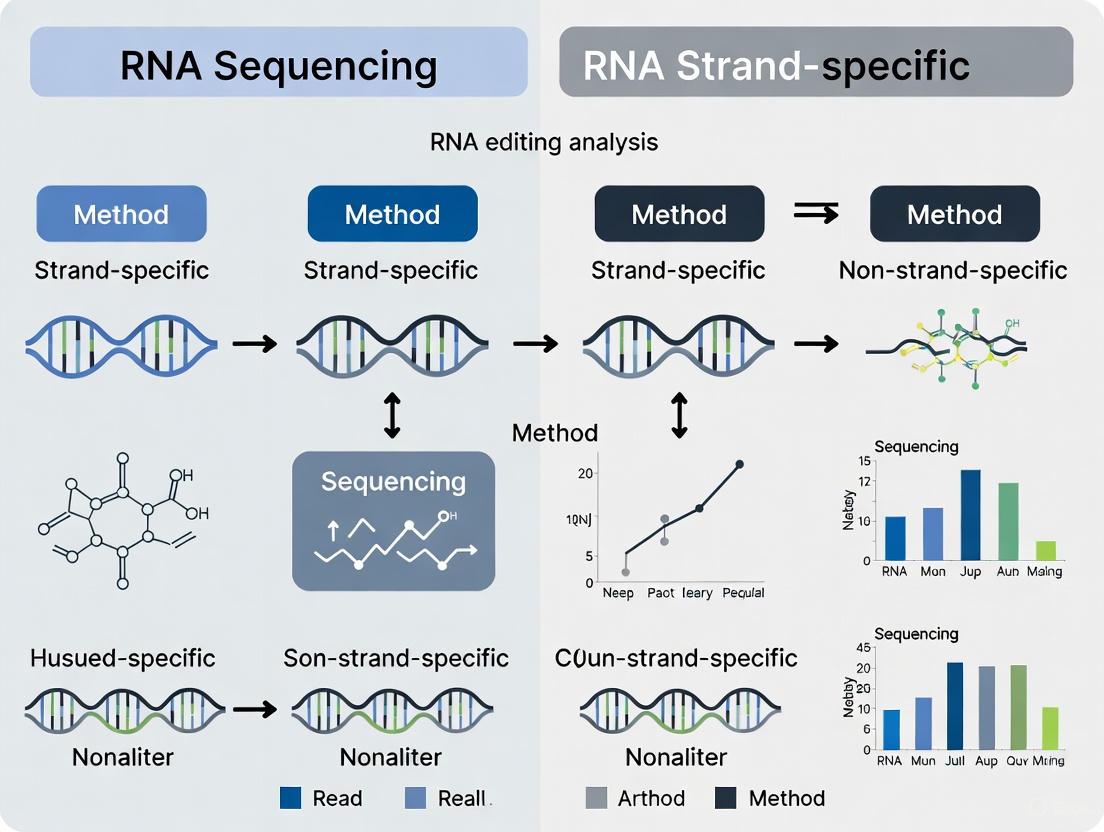
This article provides a comprehensive comparison between strand-specific and non-strand-specific RNA sequencing for researchers and drug development professionals.
Strand-Specific vs. Non-Strand-Specific RNA-Seq: A Complete Guide for Accurate Transcriptome Analysis
Abstract
This article provides a comprehensive comparison between strand-specific and non-strand-specific RNA sequencing for researchers and drug development professionals. It covers the foundational principles of how both protocols work, detailing the critical limitations of non-stranded approaches in distinguishing overlapping antisense transcripts. The guide explores leading methodological protocols like the dUTP second-strand marking method and their specific applications in complex transcriptome analysis, novel transcript discovery, and rare disease diagnostics. It further delivers practical troubleshooting and optimization strategies for library preparation and data analysis, supported by validation data demonstrating the superior accuracy of stranded RNA-seq for gene expression quantification. This resource is designed to inform experimental design and ensure biologically meaningful results in transcriptomics studies.
The Core Problem: Why Strand Information is Critical in Transcriptomics
How Non-Strand-Specific Protocols Lose Transcript Directionality
In transcriptomics research, the choice between strand-specific and non-strand-specific RNA sequencing protocols fundamentally impacts data interpretation and biological insights. Non-strand-specific protocols, while simpler and more cost-effective, suffer from a critical limitation: the loss of information regarding the original transcriptional strand. This article explores the mechanistic basis for this loss and its consequences for gene expression analysis, providing experimental evidence to guide researchers in selecting appropriate methodologies for their studies.
The Biochemical Basis of Strand Information Loss
Non-strand-specific RNA-seq protocols lose strand information during library preparation through their treatment of cDNA strands. In these protocols, double-stranded cDNA is synthesized from RNA templates using random primers without mechanisms to distinguish between the original RNA strand and its complement [1] [2]. During sequencing adapter ligation and amplification, sequences from both strands are treated identically, making it impossible to determine whether a sequenced fragment originated from the sense or antisense transcriptional strand [2].
Table 1: Key Differences in Library Preparation Between Non-Stranded and Stranded Protocols
| Preparation Step | Non-Stranded Protocol | Stranded Protocol |
|---|---|---|
| cDNA Synthesis | Random priming without strand marking | dUTP incorporation or directional adapters |
| Strand Discrimination | No mechanism for strand identification | Chemical or adapter-based strand marking |
| Amplification | Both strands amplified equally | Selective amplification of first strand |
| Result | Strand information lost | Strand information preserved |
Experimental Evidence: Impact on Gene Expression Analysis
Comparative studies demonstrate substantial impacts of strand information loss on transcriptome profiling. Research comparing stranded and non-stranded RNA-seq using whole blood RNA samples identified 1,751 genes in Gencode Release 19 as differentially expressed between the two approaches [3]. This significant discrepancy primarily affects specific gene categories:
- Antisense genes and pseudogenes showed significant enrichment in differential expression analyses [3]
- Overlapping genes transcribed from opposite strands are particularly vulnerable to misquantification
- An estimated 19% (approximately 11,000) of annotated genes in Gencode Release 19 overlap with genes on opposite strands [3]
Table 2: Quantitative Comparison of Read Ambiguity in Stranded vs. Non-Stranded RNA-seq
| Metric | Non-Stranded RNA-seq | Stranded RNA-seq | Difference |
|---|---|---|---|
| Ambiguous Reads | 6.1% (average) | 2.94% (average) | ~3.16% reduction |
| Opposite Strand Overlap | 3.1% of bases | Resolved | Complete resolution |
| Same Strand Overlap | 2.94% of bases | 2.94% of bases | No change |
| Uniquely Mapped Reads | 87-91% | 87-91% | Comparable |
The ambiguity in non-stranded protocols arises because reads mapping to overlapping genomic regions cannot be assigned to their correct transcriptional strand. In practical experiments, this manifested as a 116% average increase in ambiguous reads in non-stranded data compared to strand-specific approaches [4]. This ambiguity directly translates to inaccuracies in expression quantification for affected genes.
Methodological Approaches: Experimental Protocols
Non-Stranded Library Preparation Protocol
Standard non-stranded RNA-seq follows this methodology [5] [2]:
- RNA Fragmentation: RNA is fragmented to appropriate sizes for sequencing
- cDNA Synthesis: First-strand synthesis using random primers, followed by second-strand synthesis with standard dNTPs (including dTTP)
- Adapter Ligation: Sequencing adapters are ligated to double-stranded cDNA fragments
- PCR Amplification: Library amplification without strand discrimination
- Sequencing: Standard sequencing without strand information preservation
Stranded Library Preparation Protocol
The dominant stranded approach uses dUTP labeling [3] [2]:
- RNA Fragmentation: Initial RNA fragmentation
- First-Strand Synthesis: cDNA synthesis with random primers
- Second-Strand Synthesis: Incorporation of dUTP instead of dTTP, creating marked second strands
- Adapter Ligation: Addition of sequencing adapters
- Strand Degradation: Enzymatic degradation of uracil-containing second strands
- Amplification: PCR amplification of only the first strand
- Sequencing: Production of strand-specific reads
Diagram 1: Biochemical Pathways in Stranded vs. Non-Stranded Protocols
Consequences for Biological Interpretation
The loss of strand information in non-stranded protocols has demonstrable effects on functional analysis. Studies comparing gene ontology enrichment between stranded and non-stranded approaches found striking differences in the top 20 GO terms, with as little as 40% concordance with results from stranded data [4]. This suggests that biological conclusions drawn from non-stranded data may be substantially different from those based on more accurate stranded data.
False positives and false negatives in differential expression analysis average approximately 5% when using non-stranded protocols compared to stranded approaches [4]. These inaccuracies are particularly problematic for:
- Antisense transcription analysis, where strand information is essential
- Overlapping gene regulation, common in complex genomes
- Novel transcript discovery, where strand orientation aids annotation
- Accurate quantitation in genomic regions with bidirectional transcription
The Scientist's Toolkit: Essential Research Reagents
Table 3: Key Reagents for Strand-Specific RNA Sequencing
| Reagent/Kit | Function | Protocol Type |
|---|---|---|
| dUTP Nucleotides | Marks second strand for degradation | Stranded |
| Uracil-DNA Glycosylase | Degrades uracil-containing strands | Stranded |
| TruSeq Stranded Kit | Commercial library preparation | Stranded |
| Oligo(dT) Primers | mRNA enrichment | Both |
| Random Hexamer Primers | cDNA synthesis initiation | Both |
| rRNA Depletion Kits | Remove ribosomal RNA | Both |
| Strand-Specific Aligners | Data analysis with strand information | Stranded |
Non-strand-specific RNA-seq protocols lose transcript directionality due to fundamental biochemical limitations in their library preparation methods. The inability to distinguish between sense and antisense strands leads to quantifiable inaccuracies in gene expression measurement, particularly for antisense genes, pseudogenes, and overlapping transcriptional units. While non-stranded approaches remain cost-effective for certain applications, stranded protocols provide superior data quality and biological accuracy, making them the recommended choice for most contemporary transcriptomic studies, particularly those investigating complex regulatory mechanisms or working with poorly annotated genomes.
The Challenge of Overlapping Genes and Antisense Transcription
In transcriptome analysis, a significant challenge arises from the complex architecture of genomes, where a substantial proportion of genes are arranged in overlapping configurations on opposite DNA strands. Conventional non-strand-specific RNA-seq protocols lose the strand of origin information during library preparation, making it difficult to accurately quantify gene expression for these overlapping genes [3]. This limitation has profound implications for transcriptome profiling, particularly as research reveals the extensive role of antisense transcription in gene regulation [6]. Strand-specific RNA-seq (also called stranded RNA-seq) was developed to preserve strand information, providing researchers with a powerful tool to resolve transcriptional ambiguity and uncover previously hidden layers of gene regulation [1]. This guide objectively compares the performance of these two approaches, with particular focus on their ability to address the challenges posed by overlapping genes and antisense transcription.
Understanding the Technical Differences
Fundamental Protocol Distinctions
The core difference between stranded and non-stranded RNA-seq lies in library preparation. In non-stranded protocols, the double-stranded cDNA synthesis severs the connection between the original RNA transcript and its strand of origin [1]. Consequently, sequences from both the sense and antisense strands are obtained without information about which strand the original transcript came from. This is analogous to having two jigsaw puzzles where pieces from one puzzle also fit the other, making it impossible to correctly assign reads to their true transcriptional origin [1].
Stranded RNA-seq protocols employ specific strategies to retain strand information. The most common method is the dUTP second-strand marking technique, where dUTPs are incorporated during second-strand cDNA synthesis instead of dTTPs [3]. Prior to PCR amplification, the second strand (containing uracils) is enzymatically degraded using uracil-N-glycosylase, ensuring only the first strand is amplified [3]. Alternative approaches include ligating different adapters to the 5' and 3' ends of RNA fragments in a known orientation [1]. While these methods add complexity to library preparation, they preserve the critical strand information necessary for accurate transcript assignment.
Visualizing Library Preparation Workflows
The following diagram illustrates the key technical differences in library preparation between non-stranded and stranded RNA-seq methods:
Quantitative Performance Comparison
Resolution of Overlapping Genes
Experimental comparisons reveal substantial differences in how stranded and non-stranded RNA-seq handle overlapping genomic regions. In the human genome, approximately 19% of annotated genes (about 11,000 genes in Gencode Release 19) overlap with genes on the opposite strand [3] [7]. This prevalence makes accurate strand assignment crucial for correct gene expression quantification.
Table 1: Comparison of Ambiguous Read Mapping Between Protocols
| Metric | Non-Stranded RNA-seq | Stranded RNA-seq | Experimental Context |
|---|---|---|---|
| Total ambiguous reads | 6.1% | 2.94% | Whole blood mRNA-seq [3] |
| Opposite strand ambiguity | ~3.1% | 0% (resolved) | Whole blood mRNA-seq [3] |
| Same strand ambiguity | ~3.0% | ~2.94% | Whole blood mRNA-seq [3] |
| Genes with antisense transcription | Underestimated | Accurate detection | Multiple tissues [6] [8] |
Impact on Gene Expression Measurements
The inability to resolve strand origin in non-stranded protocols directly impacts gene expression measurements. When comparing stranded and non-stranded RNA-seq on identical whole blood samples, researchers identified 1,751 genes as differentially expressed between the protocols simply due to methodological differences [3] [7]. Antisense genes and pseudogenes were significantly enriched among these differentially expressed genes, highlighting the particular vulnerability of these transcript categories to misquantification in non-stranded approaches [7].
Table 2: Detection Capabilities for Different Transcript Types
| Transcript Type | Non-Stranded RNA-seq | Stranded RNA-seq | Biological Significance |
|---|---|---|---|
| Cis-natural antisense transcripts (cis-NATs) | Misassigned to sense strand | Accurately quantified | Regulatory roles in gene expression [9] |
| Protein-coding sense transcripts | Generally accurate | Accurate | Standard gene expression analysis |
| Antisense non-coding RNAs | Largely undetectable | Precisely quantified | Gene regulation, chromatin modification [6] |
| Transcripts from overlapping loci | Ambiguous assignment | Unambiguous assignment | Common in complex genomes [3] |
Experimental Evidence and Case Studies
Detection of Natural Antisense Transcripts
Stranded RNA-seq enables comprehensive profiling of natural antisense transcripts (NATs), which play crucial regulatory roles. In a study profiling Arabidopsis root transcriptomes, researchers developed a specialized computational method for identifying cis-NATs using stranded RNA-seq data [9]. This approach confirmed most known cis-NAT pairs and identified 918 additional cis-NAT pairs, with validation through polyadenylation data, alternative splicing patterns, and RT-PCR [9]. The study further discovered that 209 cis-NAT pairs showed opposite expression patterns in neighboring cell types, suggesting cell-type-specific regulatory functions [9].
Impact on Differential Expression Analysis
The choice between stranded and non-stranded protocols significantly influences downstream differential expression analysis. In a comparative study of library preparation kits, the Takara Bio SMARTer Stranded Total RNA-Seq Kit (Pico) exhibited 55% fewer differentially expressed genes compared to the Illumina TruSeq stranded mRNA kit, despite both being stranded protocols [8]. This highlights that even within stranded methods, protocol differences can substantially impact results. The same study found that the Pico kit detected approximately 20% more genes with antisense expression despite having lower overall read depth [8].
Visualizing the Advantage in Overlapping Gene Resolution
The following diagram illustrates how stranded RNA-seq resolves ambiguity in overlapping genomic regions:
The Scientist's Toolkit: Essential Research Reagents and Solutions
Successful implementation of stranded RNA-seq requires specific reagents and methodologies optimized for preserving strand information. The following table outlines key solutions for researchers designing experiments to address overlapping genes and antisense transcription:
Table 3: Research Reagent Solutions for Strand-Specific RNA-seq
| Reagent/Kits | Primary Function | Stranded Application | Protocol Notes |
|---|---|---|---|
| dUTP-based Library Prep Kits (e.g., Illumina TruSeq Stranded) | Incorporates dUTP in second strand, enabling enzymatic degradation | Preserves strand information by selective amplification | Leading protocol; superior strand specificity and library complexity [3] [9] |
| Adapter Ligation-Based Kits (e.g., FRT-seq) | Attaches distinct adapters to 5' and 3' ends in known orientation | Maintains strand orientation through adapter specificity | On-flowcell reverse transcription; effective for low-input samples [1] |
| rRNA Depletion Reagents | Removes abundant ribosomal RNA without polyA selection | Preserves non-polyadenylated antisense transcripts | Essential for total RNA analysis including non-coding RNAs [8] |
| Strand-Specific Bioinformatics Tools | Alignment and quantification with strand awareness | Correctly assigns reads to sense/antisense strands | Critical for accurate data interpretation [3] |
| Low-Input Stranded Protocols (e.g., SMARTer Stranded Total RNA-Seq) | Maintains strand specificity with minute RNA inputs | Enables stranded transcriptomics from limited samples | Combines strand specificity with low input requirements (~1-10ng) [8] |
The evidence from multiple comparative studies consistently demonstrates that stranded RNA-seq provides superior performance for transcriptome profiling, especially in contexts involving overlapping genes and antisense transcription. The ability to accurately resolve strand origin reduces ambiguous read mapping by approximately 3.1% [3], enables detection of regulatory antisense transcripts [9] [6], and provides more accurate quantification of gene expression levels, particularly for the estimated 19% of genes that overlap with transcripts on the opposite strand [3] [7].
For most contemporary studies investigating complex transcriptomes, characterizing regulatory mechanisms involving antisense transcription, or working with genomes with high gene density, stranded RNA-seq is the recommended approach despite its slightly higher cost and complexity [3] [5]. Non-stranded protocols may remain suitable for large-scale expression profiling studies focused solely on abundant protein-coding genes where strand information is not critical [5]. However, as the field continues to recognize the importance of antisense transcription and comprehensive transcriptome characterization, stranded RNA-seq increasingly represents the standard for rigorous transcriptome analysis.
In the evolving field of transcriptomics, the choice between stranded (strand-specific) and non-stranded (unstranded) RNA sequencing protocols represents a fundamental methodological decision with profound implications for data accuracy and biological interpretation. Strand-specific RNA-Seq is a powerful sequencing approach that preserves the orientation of the original transcript, enabling researchers to precisely determine whether sequences originate from the sense (coding) or antisense (non-coding) DNA strand [2] [5]. This preservation of strand-of-origin information is particularly crucial for investigating complex regulatory mechanisms such as antisense transcription and RNA editing, where distinguishing the directional nature of transcripts is essential for accurate biological insight [6].
As pharmaceutical research increasingly focuses on targeted therapies and understanding precise molecular mechanisms, the ability to resolve transcriptomic complexity through strand-specific sequencing has become indispensable for drug discovery and development [10] [11]. This guide provides an objective comparison of stranded versus non-stranded RNA-Seq methodologies, examining their experimental protocols, performance characteristics, and applications in editing research and therapeutic development.
Methodological Foundations: How Stranded and Non-Stranded Protocols Work
Non-Stranded RNA Sequencing Protocol
Non-stranded RNA-Seq (also called unstranded or standard RNA-Seq) follows a relatively straightforward workflow that does not preserve strand information:
- RNA Fragmentation: RNA molecules are fragmented after poly(A) selection or ribosomal depletion [2] [5]
- cDNA Synthesis: Random primers are used for first- and second-strand synthesis of cDNA [2]
- Library Preparation: The ends of double-stranded cDNA are processed, sequencing adapters are added, and fragments are amplified [2]
- Sequencing: The resulting sequencing products lose all information about the directionality of the original transcript [2]
The critical limitation of this approach is that sequencing reads from antisense transcripts become indistinguishable from those derived from sense transcripts, as both generate identical sequencing products during the library preparation process [2] [1].
Stranded RNA Sequencing Protocol
Strand-specific RNA-Seq employs specialized techniques to maintain strand information throughout library preparation. The most common method utilizes dUTP labeling:
- RNA Fragmentation: RNA is fragmented similarly to non-stranded protocols [2] [5]
- First-Strand cDNA Synthesis: First-strand cDNA synthesis incorporates standard nucleotides [2]
- Second-Strand Labeling: Second-strand synthesis incorporates dUTP (uracil) instead of dTTP (thymine), effectively labeling the second strand [2]
- Selective Amplification: Before PCR amplification, uracil-specific digestion or DNA polymerases that cannot amplify uracil-containing templates prevent amplification of the second strand [2]
- Sequencing: Only the first strand is amplified and sequenced, preserving the original transcript orientation [2]
An alternative approach uses different adapters ligated to the 5' and 3' ends of each RNA molecule prior to cDNA synthesis, enabling bioinformatic reconstruction of strand origin during data analysis [12] [1].
Figure 1: Workflow comparison of non-stranded and stranded RNA-Seq protocols. Stranded methods incorporate specific labeling and selective amplification to preserve strand information.
Comparative Performance: Stranded vs. Non-Stranded RNA-Seq
Technical and Analytical Differences
The preservation of strand information in stranded protocols fundamentally changes how sequencing data is interpreted and analyzed:
Table 1: Key methodological differences between stranded and non-stranded RNA-Seq approaches
| Parameter | Stranded RNA-Seq | Non-Stranded RNA-Seq |
|---|---|---|
| Strand Information | Preserved throughout protocol | Lost during cDNA synthesis |
| Library Complexity | Higher complexity | Lower complexity |
| Protocol Complexity | More steps, technically challenging | Fewer steps, simpler execution |
| Cost Considerations | Generally higher cost | More cost-effective [2] [5] |
| Data Analysis | Requires strand-aware algorithms | Standard analysis tools sufficient |
| Ambiguous Mapping | Significantly reduced | Higher rates of ambiguous assignments [13] |
| Antisense Detection | Accurate identification possible | Cannot distinguish sense/antisense [6] |
Quantitative Performance Metrics
Experimental comparisons reveal significant differences in data quality and reliability between the two approaches:
Table 2: Performance comparison based on experimental data from mammalian RNA-Seq studies
| Performance Metric | Stranded RNA-Seq | Non-Stranded RNA-Seq | Impact on Data Quality |
|---|---|---|---|
| Ambiguous Read Rate | Lower (baseline) | 40-200% higher [13] | More accurate feature assignment |
| Multimapped Reads | Lower (baseline) | ~20% higher in SE data [13] | Improved mapping precision |
| False Positive DEGs | Fewer (baseline) | ~5% higher [13] | More reliable differential expression |
| False Negative DEGs | Fewer (baseline) | ~5% higher [13] | Comprehensive transcript detection |
| Antisense Transcription | Accurate quantification | Cannot be reliably determined [6] | Complete regulatory insight |
Applications in Editing Research and Drug Discovery
Resolving RNA Editing Events
In RNA editing research, particularly for viral transcriptomes like SARS-CoV-2, strand-specific RNA-Seq provides critical advantages for distinguishing genuine RNA editing events from single nucleotide polymorphisms (SNPs) or replication errors [14]. The symmetrical variation profile problem - where A-to-I RNA editing events appear as both A-to-G variations in the sense strand and T-to-C variations in the opposite strand - is resolved through strand-specific protocols that directly reflect the sequence of the RNA [14].
When studying RNA viruses in host cells, strand-specific sequencing enables researchers to:
- Distinguish between RNA editing and SNPs through strand-specific variation patterns [14]
- Validate authentic RNA editing events through linkage analysis in RNA-Seq reads [14]
- Apply hyperediting pipelines to enrich legitimate RNA editing signals [14]
- Accurately characterize ADAR-mediated editing motifs without antisense interference [14]
Drug Discovery Applications
In pharmaceutical research, the precision of stranded RNA-Seq enables more accurate:
- Target Identification: Precise mapping of drug-induced transcriptional changes [10] [11]
- Mechanism of Action Studies: Accurate characterization of antisense transcripts and non-coding RNAs that regulate drug response [6] [11]
- Biomarker Discovery: Identification of strand-specific biomarkers for patient stratification [10]
- Drug Resistance Research: Detection of antisense transcripts and regulatory RNAs involved in resistance mechanisms [11]
High-throughput adaptations like DRUG-seq demonstrate how strand-specific principles can be implemented in pharmaceutical screening environments to group compounds by mechanism of action while maintaining cost-effectiveness [15].
Experimental Design Considerations
Choosing the Appropriate Protocol
The decision between stranded and non-stranded approaches should be guided by research objectives, biological context, and available resources:
Figure 2: Decision framework for selecting between stranded and non-stranded RNA-Seq protocols based on research goals and constraints.
Impact on Functional Analysis
The choice of protocol significantly influences downstream biological interpretation. Comparative studies demonstrate that gene ontology (GO) functional enrichment analysis of differentially expressed genes shows striking differences between stranded and non-stranded approaches, with as little as 40% concordance in top GO terms [13]. This discrepancy highlights how strand ambiguity can lead to fundamentally different biological conclusions.
The Scientist's Toolkit: Essential Research Reagents and Solutions
Table 3: Key research reagents and solutions for strand-specific RNA-Seq applications
| Reagent/Solution | Function in Stranded RNA-Seq | Application Context |
|---|---|---|
| dUTP Nucleotides | Labels second cDNA strand for selective amplification | Library preparation for strand marking [2] |
| Uracil-DNA Glycosylase | Digests dUTP-labeled second strand before amplification | Strand-specific library construction [2] |
| Template Switching Oligos | Adds defined adapter sequences during reverse transcription | 3'-counting methods like DRUG-seq [15] |
| Strand-Specific Adapters | Directional ligation to preserve 5'/3' orientation | Alternative strand preservation method [1] |
| UMI RT Primers | Unique Molecular Identifiers for quantification accuracy | High-throughput applications like DRUG-seq [15] |
| Phusion-like Polymerases | Enzymes unable to amplify uracil-containing templates | Selective amplification in dUTP protocols [2] |
Strand-specific RNA-Seq represents a significant advancement in transcriptome profiling, providing researchers with the critical ability to preserve strand-of-origin information that is essential for accurate biological interpretation. While non-stranded protocols remain suitable for basic gene expression studies in well-annotated organisms with budget constraints, stranded approaches are unequivocally superior for investigating complex transcriptional regulation, antisense transcription, RNA editing, and overlapping gene features [14] [6] [13].
The additional complexity and cost of stranded protocols are justified by their ability to reduce ambiguous mappings, minimize false positives in differential expression analysis, and enable detection of biologically relevant antisense transcripts and non-coding RNAs [13]. As drug discovery increasingly focuses on precise transcriptional mechanisms and regulatory networks, strand-specific RNA-Seq has transitioned from a specialized technique to a standard best practice for rigorous transcriptomic analysis in therapeutic development [10] [11].
Impact on Gene Expression Quantification and Accuracy
In the field of transcriptomics, RNA sequencing (RNA-seq) has become a foundational technology for profiling gene expression. A critical choice in designing an RNA-seq experiment is whether to use a strand-specific (stranded) or non-strand-specific (unstranded) library preparation protocol [16]. This decision profoundly influences the accuracy of gene quantification, especially in complex genomes where genes overlap on opposite DNA strands. For research focused on precise expression profiling and editing events, such as RNA editing studies, understanding the distinction and impact of these protocols is paramount. This guide objectively compares the performance of stranded and non-stranded RNA-seq, supported by experimental data, to inform researchers and drug development professionals.
Protocol Fundamentals: A Technical Comparison
The core difference between these protocols lies in whether they preserve the information about the original strand of origin of an RNA transcript during the conversion of RNA to a sequencing-ready cDNA library.
Non-Strand-Specific (Unstranded) RNA-seq
In a non-stranded protocol, the inherent strand information is lost during cDNA synthesis [1] [2]. Following fragmentation, the first and second cDNA strands are synthesized without any strand labeling. The resulting double-stranded cDNA library is a mixture of sequences representing both the original mRNA and its complementary strand. Consequently, during sequencing, it is impossible to determine from which genomic strand a read originated based on the sequence data alone [1]. This leads to significant ambiguity when mapping reads to the reference genome, particularly for genes located on opposite strands that share overlapping genomic regions.
Strand-Specific (Stranded) RNA-seq
Stranded protocols employ specific biochemical strategies to retain the strand information. Two dominant methods are widely used:
- dUTP Second-Strand Marking Method: This is one of the leading and most validated protocols [3] [17]. During second-strand cDNA synthesis, dTTP is replaced with dUTP, thereby labeling the second strand. Before PCR amplification, the uracil-containing second strand is selectively degraded using the enzyme uracil-DNA glycosylase (UDG). This ensures that only the first strand, which is complementary to the original RNA, is amplified and sequenced [3] [2]. The sequenced read is thus reverse-complementary to the original mRNA.
- Directional Adapter Ligation: This strategy uses asymmetric adapters ligated to the 5' and 3' ends of the RNA or first-strand cDNA in a known orientation [1] [17]. The subsequent reverse transcription and amplification create a library where the orientation of the adapters relative to the original mRNA is preserved, allowing for bioinformatic inference of the strand of origin during read mapping.
The following workflow diagrams illustrate the key procedural differences and how they lead to the retention or loss of strand information.
Quantitative Performance and Accuracy Assessment
Experimental comparisons between stranded and non-stranded RNA-seq consistently demonstrate that stranded protocols provide a more accurate quantification of gene expression. The primary advantage is the resolution of ambiguous reads, which arise from overlapping genes on opposite strands.
Resolving Read Ambiguity
In the human genome, a significant proportion of genes overlap. In Gencode Release 19, an estimated 19% (about 11,000 genes) are overlapping genes transcribed from opposite strands [3]. In a non-stranded RNA-seq experiment, a read originating from such a region can map equally well to either the sense or antisense gene, forcing analysis tools to make an arbitrary assignment or discard the read.
A key study sequencing whole blood samples found that stranded RNA-seq reduced the percentage of ambiguous reads by approximately 3.1% compared to non-stranded RNA-seq. Specifically, the ambiguous read rate dropped from 6.1% in non-stranded libraries to 2.94% in stranded libraries [3]. This 3.1% reduction directly corresponds to the fraction of reads that could be correctly reassigned to their true strand of origin, dramatically improving quantification accuracy for thousands of genes.
Impact on Differential Expression Analysis
Misassignment of reads in non-stranded protocols can lead to false conclusions in differential expression analysis. Research shows that when comparing stranded and non-stranded data from the same sample, as many as 1,751 genes were falsely identified as differentially expressed simply due to the protocol used [3]. These falsely significant genes were significantly enriched for antisense genes and pseudogenes, which are often crucial regulatory elements. Stranded RNA-seq eliminates this systematic bias, ensuring that observed expression changes reflect true biology rather than technical artifacts.
Table 1: Quantitative Comparison of Stranded vs. Non-Stranded RNA-seq Performance
| Performance Metric | Non-Stranded RNA-seq | Stranded RNA-seq | Experimental Context |
|---|---|---|---|
| Ambiguous Read Rate | 6.1% | 2.94% | Whole blood RNA-seq [3] |
| Opposite-Strand Gene Overlap | ~3.6% (theoretical) | Resolved | Human genome (Gencode R19) [3] |
| False Differential Expression | 1,751 genes identified | Accurate baseline | Same sample, different protocols [3] |
| Read Reassignment | Up to 28% of ambiguous reads can be misassigned | Correctly assigned | Human fibroblast benchmark [16] |
Experimental Protocols and Methodologies
The superior performance of stranded RNA-seq is grounded in robust, well-evaluated experimental protocols. Below is a detailed methodology for the leading dUTP method, which has been ranked as a top-performing protocol in comparative evaluations [3] [17].
Detailed Protocol: dUTP Second-Strand Marking
- RNA Preparation and Fragmentation: Isolate high-quality total RNA. For mRNA sequencing, enrich for polyadenylated RNA using oligo(dT) beads. Alternatively, remove ribosomal RNA (rRNA) using hybridization-based capture methods. The purified RNA is then fragmented using heat and divalent cations to an optimal size for sequencing.
- First-Strand cDNA Synthesis: Reverse transcribe the fragmented RNA using random hexamer primers or oligo(dT) primers and reverse transcriptase. This produces the first-strand cDNA, which is complementary to the original RNA template.
- Second-Strand Synthesis with dUTP Incorporation: Synthesize the second strand of cDNA using DNA Polymerase I and a nucleotide mix where dTTP is fully replaced by dUTP. This creates a second strand that is functionally identical to a standard cDNA strand but is biochemically labeled.
- dUTP Strand Degradation: Prior to PCR amplification, the double-stranded cDNA is treated with uracil-DNA glycosylase (UDG). This enzyme excises the uracil bases, breaking the backbone of the second strand. Further treatment with endonucleases (e.g., APE 1) cleaves the DNA at the abasic sites, fully degrading the second strand.
- Library Construction and Sequencing: Ligate sequencing adapters to the ends of the remaining first-strand cDNA. Amplify the library via PCR and sequence on the desired NGS platform. Because the second strand was degraded, every sequenced read is derived from the first strand, preserving the strand-of-origin information. The resulting reads are reverse-complementary to the original mRNA transcript.
The Scientist's Toolkit: Essential Reagents and Kits
Successful implementation of a stranded RNA-seq protocol requires specific reagents and enzymatic tools. The following table details key solutions and their functions in the experimental workflow.
Table 2: Research Reagent Solutions for Stranded RNA-seq
| Reagent / Solution | Function in the Protocol | Key Characteristics |
|---|---|---|
| dNTP/dUTP Mix | A nucleotide mix containing dATP, dCTP, dGTP, and dUTP for second-strand synthesis. | High-purity nucleotides; absence of dTTP is critical for specific strand labeling. |
| Uracil-DNA Glycosylase (UDG) | Enzymatically degrades the dUTP-labeled second cDNA strand. | High specificity and activity to ensure complete strand removal and minimal background. |
| Reverse Transcriptase | Synthesizes the first-strand cDNA from the RNA template. | High processivity and fidelity; reduced RNase H activity is often preferred. |
| Stranded RNA-seq Library Prep Kit | Commercial kits that provide optimized, validated reagents for the entire workflow. | Often based on the dUTP method; includes buffers, enzymes, and adapters in a single system. |
| Ribonuclease Inhibitor | Protects RNA templates from degradation during the initial steps of library preparation. | Essential for maintaining RNA integrity and ensuring high library complexity. |
Applications in Editing and Complex Transcriptome Research
The accuracy of stranded RNA-seq is not just beneficial but essential for specific research areas, particularly the study of RNA editing and complex regulatory mechanisms.
Critical Role in RNA Editing Detection
RNA editing, such as Adenosine-to-Inosine (A-to-I) deamination, is a post-transcriptional modification that alters the RNA sequence. Detecting these events from RNA-seq data requires distinguishing true editing signals from sequencing errors and single-nucleotide polymorphisms (SNPs). Stranded RNA-seq is uniquely powerful for this task [14].
In a non-stranded library, an A-to-I edit (which appears as an A-to-G change in the cDNA) on the sense strand will also manifest as a T-to-C change on the antisense strand due to the random orientation of sequenced fragments. This "symmetry" in the variation profile makes it impossible to distinguish RNA editing from genomic T-to-C SNPs or replication errors [14]. In contrast, strand-specific sequencing directly reflects the sequence of the RNA. A true A-to-I editing event will appear exclusively as an A-to-G variation in reads derived from the sense strand, dramatically improving the signal-to-noise ratio and the confidence of edit identification [14].
Unveiling Complex Transcriptomes
Stranded RNA-seq is the definitive choice for:
- Identifying Antisense Transcription: It allows for the direct discovery and quantification of natural antisense transcripts (NATs) and long non-coding RNAs (lncRNAs), which are key regulators of gene expression [1] [16].
- Accurate Genome Annotation: It is indispensable for de novo transcriptome assembly and genome annotation, as it correctly determines the orientation of novel transcripts, preventing the misannotation of overlapping genes [2].
- Studying Overlapping Genes: It provides the only reliable way to accurately quantify the expression of genes with convergent or overlapping genomic loci, a common feature in complex eukaryotic genomes [3] [5].
The following diagram illustrates the critical advantage of stranded RNA-seq in resolving overlapping genes and its application in detecting strand-specific signals like RNA editing.
The choice between stranded and non-stranded RNA-seq has a direct and measurable impact on the accuracy of gene expression quantification. While non-stranded protocols may be sufficient for simple expression profiling in well-annotated organisms with minimal gene overlap, the wealth of evidence now strongly advocates for stranded RNA-seq as the default for rigorous transcriptome analysis.
The ability to resolve ambiguous reads from overlapping genes, avoid false differential expression calls, and enable confident detection of RNA editing events makes stranded RNA-seq a more powerful and reliable tool. The additional cost and complexity associated with stranded protocols are overwhelmingly justified by the significant gain in biological accuracy, making it the recommended approach for future studies, particularly in editing research and the investigation of complex transcriptomes.
Protocols in Practice: Implementing Stranded RNA-Seq for Advanced Applications
In RNA sequencing, the ability to distinguish which DNA strand originally transcribed a RNA molecule—known as strand-specificity—has emerged as a crucial methodological consideration. While early RNA-seq protocols discarded this information, the scientific community now recognizes that strand-specific RNA-seq provides substantially more accurate transcriptome profiling [3]. This advancement is particularly vital for drug discovery and development research, where precise gene expression quantification can illuminate novel therapeutic targets and disease mechanisms [18] [11].
Among various strand-specific methods, the dUTP second-strand marking protocol has been extensively validated as a leading approach, balancing high performance with practical implementation [19] [20]. This guide objectively compares the dUTP method against alternative RNA-seq approaches, providing researchers with experimental data and methodological insights to inform their transcriptomic studies.
Understanding Strand Specificity: Why Methodology Matters
The Fundamental Challenge
In conventional non-strand-specific RNA-seq, information about the originating DNA strand is lost during cDNA synthesis and library preparation [3]. This creates substantial interpretive challenges for approximately 11,000 annotated genes in the human genome that overlap with other genes on opposite strands [3]. Without strand information, reads originating from such overlapping regions cannot be unambiguously assigned to their correct transcript, leading to potentially erroneous gene expression quantification [1].
The Biological Significance of Strand Information
The transcriptional landscape is complex, with both DNA strands actively producing coding and non-coding RNAs with biological functions [6]. Antisense transcripts, in particular, have gained recognition as important regulators of gene expression, playing roles in transcriptional interference, RNA masking, and chromatin modification [6]. In mammalian genomes, antisense transcription is not an anomaly but a pervasive feature, with many known antisense transcripts associated with human disorders [6]. Capturing this dimension of transcriptional activity requires methodological approaches that preserve strand-of-origin information.
Comparative Analysis of Strand-Specific RNA-seq Methods
Method Categories and Principles
Strand-specific RNA-seq methods generally fall into two broad categories:
- Ligation-based approaches: Utilize different adapters ligated in a known orientation to the 5' and 3' ends of RNA transcripts [1]
- Chemical marking/degradation approaches: Employ chemical modifications to label one strand, followed by selective degradation [1] [17]
The dUTP method represents a chemical marking approach that has been systematically evaluated against multiple alternatives.
The dUTP Protocol: Workflow and Mechanism
The dUTP second-strand marking method employs a series of enzymatic steps to preserve strand information:
- RNA Fragmentation and First-Strand Synthesis: Isolated mRNA is fragmented, and first-strand cDNA is synthesized using random primers [20]
- Second-Strand Marking: Second-strand cDNA synthesis incorporates deoxyuridine triphosphates (dUTP) instead of dTTP, effectively "marking" this strand [20]
- Standard Library Preparation: The double-stranded cDNA undergoes end repair, A-tailing, and adapter ligation following standard protocols [20]
- Strand Degradation: Uracil-DNA-Glycosylase (UDG) enzyme selectively degrades the dUTP-marked second strand prior to PCR amplification [20]
- Library Amplification: Only the first strand (complementary to the original RNA transcript) is amplified to generate the final sequencing library [20]
This workflow ensures that all sequenced fragments derive from the original first-strand cDNA, preserving the relationship between read orientation and transcriptional origin.
Table 1: Key Enzymatic Reagents in the dUTP Strand-Specific Protocol
| Reagent | Function in Protocol | Specific Role in Strand Preservation |
|---|---|---|
| dUTP | Replaces dTTP in second-strand cDNA synthesis | Marks second strand for subsequent degradation |
| Uracil-DNA-Glycosylase (UDG) | Enzyme treatment prior to PCR amplification | Selectively degrades dUTP-containing second strand |
| Random Primers | Initiates first-strand cDNA synthesis | Ensures comprehensive transcript coverage |
| Oligo(dT) Primers | Alternative for mRNA enrichment | Selects for polyadenylated transcripts |
Performance Comparison: Experimental Evidence
Comprehensive Method Evaluation
In a landmark comparative analysis by Levin et al., seven strand-specific RNA-seq methods were systematically evaluated using multiple criteria, including:
- Strand specificity
- Library complexity
- Coverage uniformity
- Agreement with known annotations
- Accuracy of expression profiling [19] [17]
This comprehensive assessment identified the dUTP method as a leading protocol, recommending it as the default choice for RNA-seq applications at the Broad Institute [19]. The method demonstrated superior performance across multiple metrics while maintaining practical feasibility.
Stranded vs. Non-Stranded RNA-seq: Quantitative Differences
Direct comparison of stranded and non-stranded approaches reveals substantial impacts on data interpretation:
Table 2: Quantitative Comparison of Stranded vs. Non-Stranded RNA-seq Performance
| Performance Metric | Non-Stranded RNA-seq | Stranded RNA-seq (dUTP method) | Experimental Reference |
|---|---|---|---|
| Ambiguous Read Percentage | 6.1% | 2.94% | Whole blood transcriptome study [3] |
| Theoretical Opposite-Strand Overlap | 3.6% | Not applicable | Genomic annotation analysis [3] |
| Detected Differentially Expressed Genes | 1751 genes (artifactual) | Accurate quantification | Comparison of same samples [3] |
| Enriched Gene Types in DE Analysis | Antisense and pseudogenes | Appropriate representation | Technical replicate study [3] |
The approximately 3.1% reduction in ambiguous reads with stranded protocols directly corresponds to the theoretical proportion of genomic bases involved in opposite-strand gene overlaps [3]. This quantitative improvement translates to more confident gene expression quantification for thousands of genes.
Diagram 1: dUTP vs Non-Stranded RNA-seq Workflow Comparison. The dUTP method incorporates strategic enzymatic steps (colored green) to preserve strand information, culminating in selective degradation of the second strand. The non-stranded approach (yellow) retains both cDNA strands, losing strand-of-origin information.
Impact on Differential Expression Analysis
When the same RNA samples are processed using both stranded and non-stranded protocols, significant differences emerge in differential expression results. One study identified 1,751 genes that appeared differentially expressed between stranded and non-stranded libraries from identical samples [3]. These artifactual differences predominantly affected antisense genes and pseudogenes, highlighting how non-stranded protocols can generate misleading biological conclusions [3].
Application in Drug Research and Development
Enhancing Target Identification
In pharmaceutical research, accurate transcriptome profiling is essential for identifying promising drug targets and understanding compound mechanisms [18] [11]. Strand-specific RNA-seq provides several advantages in this context:
- Precise quantification of gene expression changes in response to compound treatment
- Identification of antisense transcripts that may regulate disease-associated genes [6]
- Detection of non-coding RNAs with potential therapeutic relevance [18]
- Improved detection of fusion genes in cancer research [11]
The enhanced accuracy of stranded protocols reduces false target identification and provides greater confidence in candidate validation.
Integration with Advanced Gene Editing Technologies
The field of RNA research continues to evolve rapidly, with emerging technologies like CRISPR-Cas systems and base editing revolutionizing therapeutic development [18] [21]. Strand-specific transcriptomics provides essential functional readouts for these approaches, enabling precise assessment of how genetic manipulations alter transcriptional programs [18] [21].
Technical Considerations and Protocol Selection
dUTP Method Performance Characteristics
The dUTP method demonstrates several advantageous technical characteristics:
- High strand specificity: Typically >90% of reads correctly assigned to originating strand [3] [17]
- Uniform coverage: Balanced distribution across transcript 5' and 3' ends [17]
- Library complexity: Comparable to non-stranded approaches [22]
- Reproducibility: High inter-sample consistency [17]
- Compatibility: Works with standard Illumina sequencing platforms [20]
Alternative Strand-Specific Methods
While the dUTP approach performs excellently, other methods offer distinct advantages for specific applications:
- Ligation-based methods (e.g., Illumina's on-flowcell reverse transcription): Suitable for automated workflows [1]
- Template-switching methods (e.g., SMARTer): Advantageous for low-input samples [17]
- Chemical modification approaches: Alternative strategies for strand preservation [17]
Table 3: Strand-Specific Method Comparison Across Application Scenarios
| Method Category | Best Application Context | Key Advantages | Potential Limitations |
|---|---|---|---|
| dUTP Second-Strand Marking | Standard mRNA-seq with sufficient input | High performance across multiple metrics, well-established protocol | Requires optimization for high-throughput automation [19] |
| Ligation-Based Approaches | Automated high-throughput workflows | Simplified workflow, compatible with automation | Potential adapter bias in some implementations [1] |
| Template-Switching Methods | Low-input and difficult samples | Works with minimal RNA input, captures full-length transcripts | May exhibit more 3' bias in coverage [17] |
The dUTP second-strand marking protocol represents a robust, well-validated method for strand-specific RNA-seq that delivers substantial improvements in transcriptome analysis accuracy. Extensive comparative evidence demonstrates its superiority over non-stranded approaches and competitive performance against alternative stranded methods [19] [3] [17].
For the drug development community, adopting strand-specific RNA-seq methodologies like the dUTP protocol provides more reliable gene expression data, reduces misinterpretation of overlapping transcriptional units, and enables detection of biologically relevant antisense transcripts [6] [3]. As RNA-based therapeutics continue to advance—including mRNA vaccines, RNA interference approaches, and CRISPR-based treatments [18]—precise transcriptomic characterization becomes increasingly essential for successful therapeutic development.
While the dUTP method currently represents a leading approach, methodological innovation continues, with emerging protocols addressing challenges such as single-cell sequencing, low-input applications, and integration with multi-omics platforms [22]. Regardless of specific protocol choices, strand-specific RNA-seq has unequivocally demonstrated its value as an essential tool for modern transcriptomics in both basic research and drug development contexts.
In the field of transcriptome research, the ability to accurately determine the strand of origin for RNA transcripts is crucial. Traditional non-strand-specific RNA-seq protocols lose this information, creating ambiguities in data analysis, particularly for genes that overlap on opposite genomic strands. To resolve this, two principal strategies have been developed: adapter ligation-based methods and chemical marking techniques. This guide provides an objective comparison of these strategies, focusing on their performance, underlying protocols, and applications, to inform researchers and drug development professionals in their experimental design.
Understanding Strand Specificity in RNA-seq
A fundamental challenge in transcriptome profiling is accurately assigning sequenced reads to the correct DNA strand. In a non-strand-specific (unstranded) protocol, the information about which original mRNA strand a read came from is lost during the double-stranded cDNA synthesis step [1]. This leads to significant ambiguity when quantifying gene expression, as reads originating from a sense transcript cannot be distinguished from those originating from an overlapping antisense transcript on the opposite strand [1] [3].
The prevalence of such overlapping genes is substantial; in the human genome, an estimated 19% (roughly 11,000 genes) overlap with another gene transcribed from the opposite strand [3]. This can lead to misassignment of reads and biased expression estimates. Strand-specific (stranded) protocols solve this problem by preserving the strand information throughout the library preparation process, enabling unambiguous and more accurate transcript quantification [3].
Direct Comparison of Stranded vs. Non-Stranded RNA-seq
Comparative studies using whole blood RNA samples have quantitatively demonstrated the impact of stranded RNA-seq on data quality and interpretation.
Table 1: Experimental Comparison of Stranded and Non-Stranded RNA-seq
| Metric | Non-Stranded RNA-seq | Stranded RNA-seq | Implication |
|---|---|---|---|
| Ambiguous Reads | ~6.1% of mapped reads [3] | ~2.94% of mapped reads [3] | Stranded protocol reduces ambiguous mappings by ~3.1%, directly reflecting resolution of opposite-strand overlap. |
| Differential Expression | 1,751 genes were identified as differentially expressed when compared directly to stranded data from the same sample [3] | Serves as a more accurate baseline for expression measurement [3] | Non-stranded protocols can produce systematically skewed expression values for thousands of genes. |
| Gene Type Enrichment | Antisense genes and pseudogenes were significantly enriched among the differentially expressed genes [3] | Provides correct expression levels for antisense transcripts and pseudogenes [3] | Non-stranded protocols are particularly unreliable for studying antisense transcription, a key regulatory mechanism. |
| Data Interpretation | Difficult or impossible to accurately quantify expression for genes with overlapping loci on opposite strands [1] | Allows precise assignment of reads to sense or antisense transcripts in overlapping regions [1] [3] | Stranded RNA-seq is essential for studying complex genomic regions and antisense-mediated gene regulation. |
Detailed Experimental Protocols
The following sections detail the methodologies for the two leading strategies for achieving strand specificity.
Adapter Ligation-Based Stranded RNA-seq
This strategy uses distinct sequencing adapters, ligated to the RNA or cDNA in a known orientation, to preserve strand information.
- Principle: Different adapter sequences are attached to the 5' and 3' ends of the RNA transcript. During the sequencing process, the fixed and known relationship between the adapter sequences and the original RNA strand allows for bioinformatic inference of the strand of origin for every read [1].
- Detailed Workflow (e.g., Illumina FRT-seq):
- Poly-A Selection: mRNA is enriched using oligo(dT) beads.
- Fragmentation: RNA is fragmented to an appropriate size for sequencing.
- First-Strand cDNA Synthesis: Reverse transcription is performed using random hexamers.
- Adapter Ligation: A distinct adapter is ligated to the 3' end of the first-strand cDNA.
- On-Flowcell Reverse Transcription: The cDNA is hybridized to a flow cell, and through bridge amplification, the second strand is synthesized, incorporating a different adapter sequence [1].
- Sequencing: The distinct adapters facilitate sequencing and subsequent strand assignment during data analysis.
Chemical Marking-Based Stranded RNA-seq (dUTP Method)
This strategy involves chemically labeling one cDNA strand to allow for its selective degradation before sequencing, ensuring only the original strand is sequenced.
- Principle: During the second-strand cDNA synthesis, dTTP is replaced with dUTP. This incorporates uracil into the newly synthesized second strand. Before PCR amplification, the enzyme uracil-N-glycosylase (UNG) is used to degrade the dUTP-marked strand, ensuring that only the first strand (complementary to the original RNA) is amplified and sequenced [3].
- Detailed Workflow (dUTP Second-Strand Marking):
- First-Strand cDNA Synthesis: Reverse transcription of RNA is performed using random hexamers to create the first cDNA strand.
- Second-Strand Synthesis with dUTP: The second cDNA strand is synthesized using a reaction mix where dTTP is replaced with dUTP, incorporating uracil into this strand.
- Adapter Ligation: Standard sequencing adapters are ligated to both ends of the double-stranded cDNA.
- dUTP Strand Degradation: Treatment with UNG enzymatically degrades the second strand containing dUTP.
- PCR Amplification: Only the first-strand cDNA serves as a template for PCR amplification, resulting in a library where all sequences retain the original strand orientation [3].
The following diagram illustrates the logical workflow and key differentiator of the dUTP method:
The Scientist's Toolkit: Research Reagent Solutions
Successful implementation of stranded RNA-seq protocols requires specific reagents. The following table outlines key solutions for the featured dUTP method.
Table 2: Essential Reagents for dUTP Stranded RNA-seq Protocol
| Research Reagent | Function in the Protocol | Key Consideration |
|---|---|---|
| dUTP Nucleotide | Replaces dTTP during second-strand cDNA synthesis, thereby marking the strand for degradation [3]. | Critical for strand specificity; must be compatible with the DNA polymerase used in the synthesis step. |
| Uracil-N-Glycosylase (UNG) | Enzyme that recognizes and initiates the degradation of the dUTP-containing second cDNA strand [3]. | Efficient degradation is essential to prevent amplification of the wrong strand and ensure high strand specificity. |
| NEBNext Ultra II Modules | Commercial kits often provide optimized, validated modules for end repair, dA-tailing, and ligation steps [23]. | Using validated modules increases reproducibility and reliability, though requires separate DNA shearing [24]. |
| RNA Adapters (Indexed) | Oligonucleotides ligated to cDNA ends, containing sequencing primer sites and sample index barcodes [24]. | Universal, methylated adapter designs with inline indices improve multiplexing efficiency and reduce workflow steps [24]. |
| SPRIselect Beads (e.g., AMPure XP) | Magnetic beads used for size-selective purification and clean-up of the library between reaction steps [23]. | Crucial for removing enzymes, salts, and unwanted adapter dimers that can consume sequencing reads [25]. |
Both adapter ligation and chemical marking strategies effectively enable strand-specific RNA sequencing, which has been demonstrated to provide a more accurate and reliable foundation for transcriptome analysis compared to non-stranded protocols [3]. The choice between them may depend on factors such as protocol simplicity, cost, and compatibility with existing laboratory workflows. For research applications where accurately defining transcriptional units is critical—such as in the discovery of novel transcripts, the annotation of complex genomes, or the investigation of antisense RNA regulation—the adoption of a strand-specific protocol is no longer optional but is considered a best practice. The additional information gained resolves otherwise ambiguous data, making stranded RNA-seq the recommended approach for future mRNA-seq studies, particularly in the context of advanced editing and drug development research [3].
Strand-Specific vs Non-Strand-Specific RNA-seq for Editing Research
In the field of genetic editing research, the accurate characterization of transcriptional outcomes is paramount. A fundamental choice in experimental design—whether to use strand-specific (stranded) or non-strand-specific (unstranded) RNA sequencing (RNA-seq)—can significantly impact the interpretation of results. Stranded RNA-seq preserves the original orientation of transcripts, while unstranded protocols lose this information [1]. This guide provides an objective comparison of these two approaches, focusing on their performance in identifying antisense transcripts and annotating genomes, complete with supporting experimental data and methodologies.
How Stranded and Non-Stranded Protocols Work
The core difference between these protocols lies in whether they retain the information about which genomic strand (sense or antisense) an RNA molecule originated from.
Strand-Specific RNA-seq Protocols
Stranded protocols are designed to preserve the strand information of the original RNA transcript throughout the sequencing process. Two primary strategies are employed:
- Distinct Adapter Ligation: This strategy involves attaching different sequencing adapters to the 5' and 3' ends of the RNA transcript in a known orientation. During subsequent reverse transcription and amplification, the resulting cDNA library is flanked by these distinct adapters, allowing bioinformatic assignment of the read to its correct strand of origin during mapping [1]. A widely used variant for Illumina systems is on-flowcell reverse transcription (FRT-seq) [1].
- Chemical Strand Marking: The second strategy involves chemically marking one strand to facilitate its later degradation. The most common method is the dUTP second-strand marking technique [3]. During second-strand cDNA synthesis, dUTP is incorporated instead of dTTP. Prior to PCR amplification, the enzyme uracil-N-glycosylase degrades this second strand, which contains uracils. Only the first strand is amplified, preserving the original strand information [3].
Non-Strand-Specific RNA-seq Protocols
Traditional, non-stranded protocols do not preserve strand information. They involve synthesizing randomly primed double-stranded cDNA followed by adapter ligation and PCR amplification. The resulting sequencing reads can originate from either the sense or antisense strand of the original mRNA, and this information is lost [1].
The following diagram illustrates the key procedural difference between the dUTP-based stranded method and a standard non-stranded protocol:
Performance Comparison in Key Applications
Stranded RNA-seq provides a decisive advantage in applications where transcriptional directionality is critical. The following experimental data highlights these performance differences.
Quantitative Performance Comparison
| Metric | Strand-Specific RNA-seq | Non-Strand-Specific RNA-seq | Experimental Context & Citation |
|---|---|---|---|
| Read Ambiguity from Opposite Strands | ~0% (theoretically)~3.1% (observed reduction) [3] | ~3.1% (observed) [3] | Whole blood mRNA-seq; ambiguous reads mapped to overlapping genes on opposite strands [3]. |
| Accuracy in Quantifying Overlapping Genes | High. Unambiguously assigns reads to sense or antisense strand [1] [5]. | Low. Cannot resolve origin for genes overlapping on opposite strands, leading to misassignment and quantification bias [1]. | Evaluation of gene overlap in human genome (Gencode R19); ~19% (~11,000) of genes overlap on opposite strands [3]. |
| Identification of Antisense Transcription | Enabled. Directly identifies and quantifies antisense transcripts like NATs [3] [5]. | Not possible. Cannot reliably distinguish antisense transcription from sense transcription [1]. | Investigation of cis-natural antisense transcripts (NATs), a widespread regulatory mechanism [1]. |
| Detection of Differentially Expressed Genes | More accurate. Significant enrichment of antisense and pseudogenes found in DE analysis when compared to non-stranded data [3]. | Less accurate & biased. 1,751 genes were falsely identified as differentially expressed in a direct comparison with stranded data from the same sample [3]. | Side-by-side sequencing of the same whole blood RNA pool using both protocols [3]. |
| Transcriptome Assembly & Genome Annotation | High fidelity. Preserved strand information improves accuracy of transcript boundaries and discovery of novel transcripts [5]. | Lower confidence. Lack of strand information complicates accurate assembly, especially in complex genomic regions [1]. | Used for transcript discovery, genome annotation, and expression profiling [3]. |
Experimental Protocols in Practice
Detailed Methodology: Side-by-Side Comparison
The following workflow is adapted from a study that performed a direct, quantitative comparison of stranded and non-stranded RNA-seq using the same pooled human whole blood RNA samples [3].
Key Experimental Parameters from Zhao et al. (2015) [3]:
- Sample: Total RNA from human whole blood, pooled from five donors.
- Replicates: Four technical replicates for each protocol.
- Sequencing: Illumina, >60 million paired-end reads per library.
- Alignment: STAR aligner to human genome (hg19).
- Gene Quantification: featureCounts, using Gencode Release 19 annotation.
- Analysis: Uniquely mapped reads were used for differential analysis with edgeR and Limma/voom.
The Scientist's Toolkit
Successful execution and analysis of a strand-specific RNA-seq experiment require specific reagents and software tools.
Research Reagent Solutions & Essential Materials
| Item | Function in Stranded RNA-seq |
|---|---|
| dUTP Nucleotides | Incorporated during second-strand cDNA synthesis to selectively mark and enable subsequent enzymatic degradation of this strand, preserving strand-of-origin information [3]. |
| Uracil-N-glycosylase | Enzyme that degrades the dUTP-marked second cDNA strand, preventing its amplification and ensuring only the first strand proceeds to the sequencing library [3]. |
| Strand-Specific Library Prep Kits | Commercial kits (e.g., Illumina's) that incorporate chemical or adapter-ligation methods to maintain strand orientation, streamlining the complex protocol [1] [5]. |
| Oligo(dT) Primers / rRNA Depletion Kits | Used for mRNA enrichment. Poly(A) selection captures coding RNA and some non-coding RNAs, while ribosomal RNA depletion provides a broader view of the transcriptome [3]. |
| STAR Aligner | A widely used splice-aware aligner for fast and accurate mapping of RNA-seq reads to the reference genome, a critical step before quantification [3]. |
| featureCounts | A highly efficient read quantification program that assigns mapped reads to genomic features (e.g., genes), with built-in options to handle strand-specificity [3]. |
| DESeq2 / edgeR | R/Bioconductor packages for statistical analysis of differential gene expression from read count data, the standard for most RNA-seq studies [3] [26]. |
| BEAVR | A browser-based tool built on DESeq2 that provides a graphical interface for differential expression analysis and visualization, lowering the barrier for computational analysis [26]. |
For editing research where precise molecular characterization is non-negotiable, the evidence strongly supports the use of strand-specific RNA-seq. While non-stranded protocols may be adequate for simple gene-level expression surveys in well-annotated genomes, they introduce significant and measurable inaccuracies in the presence of antisense transcription and overlapping genes [3]. The additional complexity and cost of stranded protocols are justified by the substantial gain in data accuracy, making them the recommended approach for investigating complex transcriptional regulation, accurately annotating genomes, and validating the outcomes of genetic edits [3] [5].
Enhancing Rare Disease Diagnostics with Blood RNA-Seq
Despite advancements in exome and genome sequencing (ES/GS), approximately 60% of rare disease cases remain unsolved after DNA-level analysis, creating a significant diagnostic gap [27] [28]. This limitation stems from the inherent challenge of interpreting the functional impact of genetic variants, particularly those affecting RNA splicing and expression. Blood RNA sequencing (RNA-seq) has emerged as a powerful complementary diagnostic tool that can reveal these functional consequences by directly probing the transcriptome. However, the choice between strand-specific (stranded) and non-strand-specific (non-stranded) RNA-seq methodologies carries profound implications for diagnostic accuracy and clinical utility. This comparison guide objectively evaluates the performance of these competing approaches within the context of rare disease diagnostics, providing researchers and clinicians with evidence-based recommendations for implementing blood RNA-seq in their workflows.
The fundamental distinction between these methodologies lies in their ability to preserve strand-of-origin information for sequenced transcripts. Stranded RNA-seq retains this critical information, enabling accurate discrimination between sense and antisense transcripts, while non-stranded approaches lose this information during library preparation [3] [5] [6]. As we demonstrate through comparative analysis of recent clinical study data, this technical difference translates into measurable impacts on diagnostic yield, variant interpretation accuracy, and ultimately, patient outcomes.
Methodological Comparison: Stranded versus Non-Stranded RNA-Seq
Fundamental Technical Differences
The core distinction between stranded and non-stranded RNA-seq protocols lies in the library preparation process, specifically during cDNA synthesis and adapter ligation steps. In non-stranded protocols, randomly primed double-stranded cDNA synthesis followed by adapter addition results in complete loss of information regarding which DNA strand served as the original template [2]. Consequently, sequencing reads from overlapping genes transcribed from opposite strands become indistinguishable, compromising accurate transcript quantification and annotation.
In contrast, stranded RNA-seq protocols preserve strand information through various molecular strategies. The leading method—dUTP second-strand marking—incorporates dUTPs instead of dTTPs during second-strand synthesis [19]. Prior to PCR amplification, the uracil-containing second strand is enzymatically degraded, ensuring that only the first strand is amplified. This process maintains consistent orientation between the original transcript and the final sequencing product, allowing unambiguous determination of transcriptional origin [3] [2].
Quantitative Performance Comparison
Recent research directly compares the analytical performance of stranded versus non-stranded approaches across multiple metrics relevant to rare disease diagnostics:
Table 1: Performance Comparison of Stranded vs. Non-Stranded RNA-Seq
| Performance Metric | Stranded RNA-Seq | Non-Stranded RNA-Seq | Impact on Rare Disease Diagnostics |
|---|---|---|---|
| Ambiguous Read Rate | 2.94% [3] | 6.1% [3] | Higher ambiguity compromises detection of aberrant splicing in overlapping genomic regions |
| Antisense Transcription Detection | Accurate identification possible [6] | Cannot distinguish from sense transcription [5] | Potential missed regulatory mechanisms in rare diseases |
| Transcriptome Assembly Accuracy | Enhanced [5] | Limited [5] | Improved novel transcript discovery for previously uncharacterized disorders |
| Differential Expression Analysis | More accurate for overlapping genes [3] | Potentially confounded [3] | More reliable identification of pathogenic expression outliers |
| Splicing Aberration Detection | High precision [27] | Reduced precision in complex loci [3] | Critical for diagnosing spliceopathies |
The approximately 3.1% reduction in ambiguous reads with stranded protocols directly corresponds to improved mappability in genomic regions where genes overlap on opposite strands [3]. In practical diagnostic terms, this translates to increased confidence in identifying aberrant splicing events and expression outliers in genetically complex regions, which are particularly relevant to rare disease pathogenesis.
Clinical Validation: Diagnostic Utility in Rare Diseases
Evidence from Recent Clinical Studies
A 2025 comparative study specifically evaluated the diagnostic utility of blood RNA-seq in rare diseases, recruiting 128 unrelated probands with suspected Mendelian disorders who remained undiagnosed after ES/GS [27] [28]. The researchers employed a stranded RNA-seq approach on whole blood samples, analyzing aberrant splicing (AS) and aberrant expression (AE) using the DROP pipeline. The findings demonstrate compelling evidence for the clinical value of stranded transcriptomic analysis:
Table 2: Diagnostic Uplift from Blood RNA-Seq in Rare Diseases
| Patient Cohort | Cohort Size | Diagnostic Uplift | Clinical Context |
|---|---|---|---|
| Cases with splicing VUS | 10 | 60% (6/10) [27] [28] | RNA-seq enabled variant reclassification through functional validation |
| Cases without candidate variants | 111 | 2.7% (3/111) [27] [28] | RNA-driven diagnosis identified causal variants missed by DNA sequencing |
| Overall solved cases | 16 | 14/16 cases had target AS/AE events ranked top 8 [27] [28] | Demonstrates feasibility of RNA-first approach in majority of diagnoses |
Notably, the study revealed important limitations of computational prediction tools compared to empirical RNA-seq data. For splicing-related variants of uncertain significance (VUS), SpliceAI predictions matched RNA-seq observations in only 40% of cases [27] [28], highlighting the superior accuracy of direct transcriptome profiling over in silico predictions alone.
Advantages of Stranded Protocol for Diagnostic Applications
The clinical study utilized stranded RNA-seq, which proved particularly advantageous for:
Refining Splicing VUS Interpretation: Stranded sequencing unambiguously determined the molecular consequences of putative splice-altering variants, enabling reclassification of VUS as either pathogenic or benign based on observed transcriptomic effects [28].
Accurate Antisense Transcription Assessment: The strand-specific nature of the data allowed researchers to distinguish genuine antisense transcription, which can have regulatory implications in rare diseases [6].
Precise Transcript Quantification in Complex Loci: For genes with overlapping transcription units or pseudogenes, stranded reads provided accurate quantification without cross-mapping artifacts [3].
The research concluded that an "RNA-complementary approach" following ES/GS represents the preferred strategy for clinical utility, with blood RNA-seq being particularly effective for resolving splicing VUS [27] [28].
Experimental Protocols and Workflows
Blood RNA-Seq Diagnostic Workflow
The following workflow diagram illustrates the optimized stranded RNA-seq protocol implemented in the recent rare disease diagnostic study [27] [28]:
Stranded RNA-Seq Wet-Lab Methodology
Based on the cited studies, the following detailed protocol represents best practices for implementing stranded RNA-seq in rare disease diagnostics:
Sample Collection and RNA Extraction: Collect whole blood into specialized RNA stabilization tubes (PAXgene Blood RNA Tubes or Tempus Blood RNA Tubes) [28] [29]. Extract total RNA using validated kits (e.g., PAXgene Blood RNA kit, Qiagen). Assess RNA quality and integrity using appropriate metrics (RIN >7 recommended) [30].
Library Preparation with Stranded Protocol:
- Deplete ribosomal and globin RNAs using hybridization capture methods (e.g., Ribo-Zero Globin, Illumina) to enhance detection of non-polyadenylated transcripts and reduce highly abundant hemoglobin mRNAs [30].
- Fragment purified RNA to appropriate sizes (200-300 bp).
- Perform first-strand cDNA synthesis using random hexamers.
- Conduct second-strand synthesis incorporating dUTP in place of dTTP [19].
- Ligate sequencing adapters to double-stranded cDNA.
- Digest uracil-containing second strand with uracil-N-glycosylase before PCR amplification to ensure only first-strand templates are amplified [2] [19].
Sequencing and Data Generation: Sequence libraries on Illumina platforms (NovaSeq 6000) to a minimum depth of 100 million paired-end 150bp reads per sample [28]. This depth ensures sufficient coverage for robust splicing and expression analysis.
Decision Framework: Selecting the Appropriate RNA-Seq Method
The following decision pathway provides guidance for selecting between stranded and non-stranded RNA-seq approaches based on specific research or diagnostic objectives:
When to Prioritize Stranded RNA-Seq
Based on the evidence presented, stranded RNA-seq is strongly recommended when:
- Diagnosing rare diseases with suspected splicing defects: The unambiguous identification of aberrant splicing is crucial for variant interpretation [27] [28].
- Investigating diseases with potential antisense regulatory mechanisms: Stranded protocols enable detection of antisense transcripts that may influence disease expression [6].
- Studying genomically complex regions: Genes in close proximity or with overlapping transcription benefit from reduced mapping ambiguity [3].
- Conducting novel transcript discovery: The accurate reconstruction of transcript isoforms is enhanced with strand information [5].
Scenarios Where Non-Stranded RNA-Seq May Suffice
Non-stranded approaches may be considered when:
- Conducting large-scale expression quantitative trait locus (eQTL) studies in well-annotated genomes where strand information provides minimal additional value.
- Working within significant budget constraints that preclude the additional expense of stranded protocols.
- Integrating with existing historical datasets generated using non-stranded methods to maintain consistency.
The Researcher's Toolkit: Essential Reagents and Platforms
Successful implementation of blood RNA-seq for rare disease diagnostics requires specific reagents and platforms optimized for transcriptome analysis from whole blood:
Table 3: Essential Research Reagents and Platforms for Blood RNA-Seq
| Category | Specific Product/Platform | Function in Workflow | Considerations for Rare Disease Diagnostics |
|---|---|---|---|
| Blood Collection System | PAXgene Blood RNA Tubes (BD) [28] | RNA stabilization at collection | Critical for RNA integrity; enables multi-site study designs |
| RNA Extraction Kit | PAXgene Blood RNA Kit (Qiagen) [28] | Total RNA isolation from whole blood | Optimized for stabilized blood samples; consistent yield |
| rRNA/Globin Depletion | Ribo-Zero Globin (Illumina) [30] | Removal of abundant RNAs | Increases sequencing capacity for informative transcripts |
| Stranded Library Prep | dUTP-based kits (Illumina, NEB) [19] | Strand-specific library construction | Gold standard for preserving strand information |
| Sequencing Platform | Illumina NovaSeq 6000 [28] | High-throughput sequencing | Enables 100M+ read depth needed for splicing analysis |
| Bioinformatic Pipeline | DROP (v1.4.0) [28] | Aberrant splicing/expression detection | Specialized for rare disease transcriptome analysis |
The evidence from recent clinical studies firmly establishes blood RNA-seq as a valuable tool for enhancing rare disease diagnostics, with stranded protocols offering superior performance for most diagnostic applications. The documented 60% diagnostic uplift for splicing VUS cases and 2.7% uplift for cases without prior candidates demonstrates the tangible clinical value of this approach [27] [28].
As rare disease diagnostics evolves, the integration of RNA-seq into standard diagnostic workflows represents a paradigm shift from DNA-centric to functional genomics approaches. Stranded RNA-seq particularly excels in its ability to empirically validate the functional consequences of genetic variants, moving beyond computational predictions to direct observation of transcriptomic effects.
Future developments in single-cell RNA-seq, long-read sequencing, and multi-omics integration will further enhance diagnostic capabilities. However, for current clinical implementation, stranded bulk RNA-seq from blood represents the most practical and informative approach for resolving diagnostically challenging rare disease cases. Researchers and clinicians should prioritize stranded protocols when designing studies aimed at maximizing diagnostic yield and biological insight from the blood transcriptome.
Navigating Challenges: From Library Prep to Data Analysis
In the field of transcriptomics, particularly in advanced applications like RNA editing research, the choice between stranded and non-stranded RNA-sequencing protocols represents a fundamental experimental design decision that significantly impacts data quality and biological interpretation. While conventional non-stranded RNA-Seq has served as a workhorse for gene expression profiling, the emergence of strand-specific protocols has unlocked new dimensions of transcriptional complexity. Stranded RNA-Seq preserves the orientation of original transcripts, enabling researchers to distinguish between sense and antisense transcription—a capability crucial for accurately quantifying overlapping genes and identifying regulatory non-coding RNAs [2] [5]. This technical comparison guide examines the performance characteristics of both approaches through experimental data, providing a framework for selecting the optimal protocol based on specific research objectives in editing studies and drug development.
Technical Foundations: How the Protocols Work
Non-Stranded (Unstranded) RNA-Seq
Core Mechanism: Non-stranded RNA-Seq, also referred to as standard or unstranded RNA-Seq, utilizes a library preparation process that loses the strand of origin information for each transcript. The process begins with RNA fragmentation, followed by cDNA synthesis using random primers. During second-strand synthesis, the original RNA template is copied without preserving information about which DNA strand served as the original template. The resulting sequencing products from antisense transcripts originating from the same genomic location are identical and cannot be distinguished when sequenced [2] [1]. Consequently, information about transcript directionality is lost during cDNA synthesis, making it impossible to determine whether a sequencing read originated from the sense or antisense strand of the DNA template [1].
Stranded (Strand-Specific) RNA-Seq
Core Mechanism: Stranded RNA-Seq employs modified library preparation protocols that preserve strand orientation information. Among several available methods, the dUTP second-strand marking method has emerged as a leading protocol [3]. This technique uses dUTPs instead of dTTPs during synthesis of the second cDNA strand. Prior to PCR amplification, the second strand containing uracils is enzymatically degraded using uracil-N-glycosylase. With the second strand degraded, only the first strand is amplified in subsequent PCR [3]. This ensures all sequencing products maintain a consistent orientation relative to the original RNA transcript, allowing unambiguous determination of transcriptional origin [2]. Alternative strategies include attaching different adapters in a known orientation relative to the 5' and 3' ends of the RNA transcript, enabling bioinformatic assignment of strand origin during read mapping [1].
Visualizing the Core Difference
The following diagram illustrates the fundamental methodological difference between non-stranded and stranded library preparation protocols, highlighting how strand information is preserved:
Figure 1: Workflow comparison of non-stranded and stranded RNA-Seq library preparation protocols. The critical difference lies in the incorporation of dUTP during second-strand synthesis and subsequent degradation of that strand, which preserves strand information in the final sequencing library [3] [2].
Performance Comparison: Quantitative Experimental Evidence
Key Metrics from Controlled Studies
Experimental comparisons between stranded and non-stranded RNA-Seq protocols reveal significant differences in data quality and analytical capabilities. The following table summarizes key quantitative findings from controlled studies:
Table 1: Experimental performance comparison between stranded and non-stranded RNA-Seq
| Performance Metric | Non-Stranded RNA-Seq | Stranded RNA-Seq | Experimental Context |
|---|---|---|---|
| Read Ambiguity | 6.1% of mapped reads [3] | 2.94% of mapped reads [3] | Whole blood RNA samples, Gencode Release 19 [3] |
| Differential Expression Accuracy | 1751 genes falsely identified as differentially expressed [3] | Accurate expression quantification [3] | Comparison of same samples with both protocols [3] |
| Antisense & Pseudogene Detection | Compromised due to misassignment [3] | Significantly enriched detection [3] | Gene ontology analysis [3] |
| Overlapping Gene Resolution | Cannot resolve opposite-strand overlaps [3] [1] | Accurately quantifies overlapping genes [3] [5] | Theoretical and practical assessment [3] |
| Protocol Complexity | Simpler, fewer steps [2] [5] | Additional steps for strand preservation [2] [5] | Library preparation workflow [2] |
| Cost Considerations | Generally more economical [2] [5] | ~30-50% higher reagent costs | Commercial kit pricing |
Impact on Gene Expression Quantification
Controlled comparisons using the same RNA samples processed with both protocols demonstrate substantial impacts on gene expression measurements. One comprehensive study analyzing whole blood RNA samples found that 1,751 genes were falsely identified as differentially expressed when comparing stranded versus non-stranded RNA-Seq results from the same biological source [3]. This inaccuracy predominantly affects genes with overlapping genomic loci, where antisense genes and pseudogenes were significantly enriched among the miscalculated expression values [3].
The magnitude of gene overlap in the human genome underscores this problem: approximately 19% (about 11,000) of annotated genes in Gencode Release 19 overlap with genes transcribed from the opposite strand [3]. Experimental data shows that 3.1% of nucleotide bases in transcriptomes originate from such opposite-strand overlaps, precisely accounting for the observed reduction in read ambiguity with stranded protocols (6.1% in non-stranded versus 2.94% in stranded) [3].
Experimental Protocols and Methodologies
Detailed Stranded Protocol: dUTP Method
The dUTP marking method, identified as a leading stranded RNA-Seq protocol, follows these key experimental steps [3]:
RNA Fragmentation and Priming: Isolated RNA is fragmented to appropriate size (typically 200-300 nucleotides), followed by reverse transcription using random primers to produce first-strand cDNA.
Second-Strand Synthesis with dUTP Incorporation: The second cDNA strand is synthesized using a mixture containing dATP, dCTP, dGTP, and dUTP (replacing dTTP), creating a strand-specific mark.
dUTP Strand Degradation: Prior to adapter ligation and PCR amplification, the second strand containing uracils is enzymatically degraded using uracil-N-glycosylase.
Adapter Ligation and Amplification: Sequencing adapters are ligated to the remaining first-strand cDNA, followed by limited-cycle PCR amplification.
Quality Control and Sequencing: Final libraries are quantified and quality-checked before sequencing, typically using paired-end reads (75-150 bp) on Illumina platforms.
This protocol was evaluated as superior in terms of both simplicity and data quality in comparative assessments of multiple stranded methods [3].
Strandedness Verification Workflow
For researchers working with existing datasets or verifying library preparation success, the following workflow enables empirical determination of strandedness:
Figure 2: Strandedness verification workflow for RNA-Seq data. This quality control process uses how_are_we_stranded_here tooling to empirically determine library strandedness, critical for proper downstream analysis parameter settings [31].
Experimental Design Considerations
When planning RNA-Seq experiments, several factors influence protocol selection:
RNA Quality: For degraded samples (RIN<7), ribosomal RNA depletion protocols (typically stranded) are recommended over polyA selection to minimize 3' bias [32].
Sequencing Depth: Stranded protocols typically require 20-30 million reads per sample for standard gene expression studies, while complex applications like RNA editing detection may require higher depth [32].
Sample Multiplexing: Both protocols accommodate sample multiplexing using dual-indexed adapters, though stranded kits may have higher per-sample costs.
Replicate Planning: Biological replicates remain essential regardless of protocol choice, with 3-5 replicates per condition recommended for robust differential expression analysis.
Application to RNA Editing Research
Special Considerations for Editing Studies
RNA editing research, particularly A-to-I editing mediated by ADAR enzymes, presents unique challenges that significantly benefit from stranded library preparation:
Antisense Transcription Identification: ADAR enzymes target double-stranded RNA regions, which often form through sense-antisense transcript pairing. Stranded protocols enable precise mapping of these antisense transcripts, facilitating identification of potential editing substrates [6].
Non-Coding RNA Analysis: The majority of RNA editing sites reside in non-coding regions, including introns and non-coding RNAs [33]. Stranded RNA-Seq provides more accurate quantification of these non-coding RNAs, particularly long non-coding RNAs (lncRNAs) and circular RNAs whose biogenesis can be regulated by RNA editing [33].
Editing Site Validation: Stranded protocols help distinguish true editing events from DNA polymorphisms or sequencing errors by providing more accurate transcript origin information, reducing false positives in editing site calls [33].
Strand-Specific Editing Patterns: Emerging evidence suggests editing frequencies can vary between sense and antisense transcripts from the same genomic locus, a pattern only detectable with stranded sequencing [6].
Impact on Editing Detection Accuracy
Non-stranded protocols can compromise editing detection in genomic regions with overlapping transcription. When sense and antisense transcripts overlap, non-stranded sequencing cannot assign reads to the correct transcript, potentially:
- Miscalculating editing percentages by pooling reads from both strands
- Missing strand-specific editing regulation
- Obscuring editing patterns in antisense non-coding RNAs
Experimental evidence indicates that incorrectly specified strandedness parameters can result in >10% false positives and >6% false negatives in differential expression analyses [31], with likely similar impacts on editing frequency calculations.
Table 2: Key research reagents and computational tools for stranded RNA-Seq studies
| Category | Specific Resource | Function/Application | Protocol Compatibility |
|---|---|---|---|
| Library Prep Kits | Illumina TruSeq Stranded mRNA/Total RNA | Stranded library preparation with dUTP method | Stranded-specific |
| RNA Depletion Kits | QIAGEN QIAseq FastSelect RNA Removal | Globin RNA depletion (blood samples) | Both protocols |
| RNA Quality Assessment | Agilent Bioanalyzer/Tapestation | RNA Integrity Number (RIN) calculation | Both protocols |
| Read Alignment | STAR, HISAT2 | Splice-aware read alignment to genome | Both (strand parameter critical) |
| Expression Quantification | featureCounts, HTSeq | Read counting with strand specificity | Both (strand parameter critical) |
| Strandedness Verification | howarewestrandedhere, RSeQC | Empirical determination of library strandedness | Quality control for both |
| Editing Detection | REDItools, SPRINT | A-to-I RNA editing identification | Both (stranded recommended) |
| Editing Databases | REDIportal, DARNED, RADAR | Reference databases of known editing sites | Both protocols |
The choice between stranded and non-stranded RNA-Seq protocols should be guided by research objectives, sample type, and analytical requirements. Stranded RNA-Seq is strongly recommended for:
- RNA editing studies where accurate strand assignment is crucial for distinguishing true editing events
- Antisense transcription analysis and non-coding RNA characterization
- Complex transcriptomes with extensive overlapping genes
- De novo transcriptome assembly and genome annotation projects
Non-stranded RNA-Seq may be sufficient for:
- Large-scale gene expression profiling of well-annotated organisms
- Studies with severe budget constraints where cost-effectiveness is paramount
- Analysis focusing only on highly-expressed, non-overlapping protein-coding genes
For RNA editing research specifically, the enhanced accuracy and strand resolution provided by stranded protocols justifies the additional complexity and cost, particularly when studying antisense-mediated regulatory mechanisms or editing in non-coding regions. As the field moves toward more comprehensive transcriptomic analyses, stranded RNA-Seq is increasingly becoming the default choice for serious investigative studies, providing a more accurate foundation for understanding the complex landscape of RNA modifications and their functional consequences in development and disease.
Addressing Technical Noise, Batch Effects, and Amplification Bias
Technical noise, batch effects, and amplification bias represent significant challenges in RNA sequencing (RNA-seq) that can compromise data integrity and lead to erroneous biological conclusions. These issues are particularly relevant when comparing strand-specific versus non-strand-specific RNA-seq protocols, each exhibiting distinct vulnerabilities to technical artifacts. Strand-specific RNA-seq preserves the orientation of original transcripts, enabling accurate discrimination between sense and antisense transcription, while non-stranded approaches lose this directional information during library preparation. The growing emphasis on transcriptome complexity in editing research necessitates careful consideration of how these technical variables impact gene expression quantification, especially for overlapping transcripts, antisense regulation, and novel isoform detection. This guide systematically compares the performance of stranded and non-stranded RNA-seq protocols in managing technical confounders, supported by experimental data and detailed methodologies.
Experimental Protocols and Methodologies
Strand-Specific RNA-seq Library Construction
The dUTP second-strand marking method has emerged as a leading protocol for stranded RNA-seq due to its superior strand specificity and data quality [3] [34]. This method employs deliberate chemical labeling to preserve strand orientation information throughout sequencing.
Detailed Protocol:
- RNA Fragmentation and First-Strand Synthesis: Isolated RNA is fragmented, followed by first-strand cDNA synthesis using random primers and reverse transcriptase.
- Second-Strand Labeling: Second-strand synthesis incorporates dUTP instead of dTTP, creating a uracil-labeled complementary strand [3] [2].
- Adapter Ligation: Double-stranded cDNA fragments undergo end-repair and adapter ligation while preserving strand orientation.
- Selective Degradation: Uracil-DNA glycosylase (UDG) enzymatically degrades the second strand containing uracil bases, preventing its amplification [3].
- PCR Amplification: Only the first strand serves as template for PCR amplification, maintaining the original transcriptional orientation in final sequencing libraries [2].
Non-Stranded RNA-seq Library Construction
Standard non-stranded protocols employ a simpler approach without strand preservation mechanisms, making them susceptible to transcriptional ambiguity.
Detailed Protocol:
- RNA Fragmentation: RNA samples are fragmented to appropriate sizes for sequencing.
- cDNA Synthesis: Random primers initiate both first and second-strand cDNA synthesis without strand differentiation [5].
- Adapter Ligation and Amplification: Double-stranded cDNA fragments receive adapters and undergo PCR amplification regardless of original strand orientation, resulting in loss of directional information [2].
Performance Comparison: Quantitative Data Analysis
Table 1: Protocol Performance in Managing Technical Challenges
| Performance Metric | Stranded RNA-seq | Non-Stranded RNA-seq | Experimental Context |
|---|---|---|---|
| Strand Specificity | High (explicitly preserves strand info) [5] | None (loses strand orientation) [1] | Protocol design fundamental [1] [5] |
| Ambiguous Read Mapping | ~2.94% (same-strand overlaps only) [3] | ~6.1% (includes opposite-strand overlaps) [3] | Whole blood mRNA-seq data [3] |
| Expression Quantification Accuracy | More accurate for overlapping genes [3] [5] | Potentially biased for antisense/overlapping genes [1] [3] | Differential expression analysis [3] |
| Impact of Amplification Bias | Moderate (affected by PCR but strand-preserved) | Moderate (affected by PCR, strand information lost) | All protocols require amplification [35] |
| Susceptibility to Batch Effects | Comparable to non-stranded for technical variation | Comparable to stranded for technical variation | Sample processing introduces primary batch effects [36] |
| Cost and Complexity | Higher (additional steps: dUTP incorporation, UDG treatment) [5] | Lower (simpler, faster protocol) [5] [2] | Library preparation workflow [5] |
Table 2: Impact on Gene Expression Studies
| Gene Feature | Stranded RNA-seq Performance | Non-Stranded RNA-seq Performance | Biological Significance |
|---|---|---|---|
| Overlapping Antisense Genes | Correctly assigns reads to sense/antisense origin [1] [3] | Cannot distinguish sense/antisense transcription [1] | Essential for regulating natural antisense transcripts [1] |
| Differential Expression Analysis | 1751 fewer falsely differentially expressed genes in comparison [3] | Significant false positives in antisense and pseudogenes [3] | Whole blood transcriptome analysis [3] |
| Transcriptome Assembly | More accurate annotation and reconstruction [5] | Less accurate for complex regions [5] | Genome annotation projects [5] |
| Novel Transcript Discovery | Enables detection of novel antisense transcripts [5] [2] | Limited capability for antisense discovery [2] | Transcriptome characterization [5] |
Technical Noise and Bias Assessment
Amplification Bias
All RNA-seq protocols require PCR amplification, introducing potential duplication artifacts and quantification inaccuracies. While computational methods exist to identify PCR duplicates based on mapping coordinates, this approach imperfectly distinguishes technical duplicates from biologically independent fragments originating from highly expressed genes [35]. Unique Molecular Identifiers (UMIs) provide a more robust solution by tagging individual RNA molecules before amplification, enabling precise duplicate removal and reduced technical noise [36] [37]. Experimental evidence demonstrates that UMI incorporation improves gene expression estimates, particularly for low to moderately expressed genes where amplification bias exerts stronger effects [37].
Batch Effects
Batch effects introduce substantial technical variation in RNA-seq data, particularly in single-cell applications where each processing batch represents irreproducible experimental conditions [36]. The Fluidigm C1 platform exhibits significant batch-to-batch variation, necessitating multiple technical replicates for reliable biological interpretation [36]. Statistical frameworks like TASC (Toolkit for Analysis of Single Cell RNA-seq) employ empirical Bayes methods to model cell-specific technical parameters using external RNA spike-ins, effectively adjusting for batch-derived confounders in differential expression analysis [37].
Read Mapping Ambiguity
Non-stranded RNA-seq demonstrates approximately twice the rate of ambiguous read mapping compared to stranded approaches (6.1% versus 2.94%) due to inability to resolve overlapping transcripts on opposite strands [3]. This mapping ambiguity directly impacts expression quantification accuracy, particularly for the approximately 11,000 genes (19% of annotated genes) involved in opposite-strand overlaps in the human genome [3].
Visualizing Experimental Workflows and Technical Relationships
Stranded vs. Non-Stranded Library Construction
Technical Noise Relationships in RNA-seq Data
The Scientist's Toolkit: Essential Research Reagents
Table 3: Key Reagents for Managing Technical Challenges
| Reagent/Tool | Function | Application Context |
|---|---|---|
| dUTP Nucleotides | Labels second cDNA strand for selective degradation in stranded protocols [3] | Stranded library construction |
| Uracil-DNA Glycosylase (UDG) | Enzymatically degrades uracil-containing DNA strands [3] | Strand specificity in dUTP method |
| Unique Molecular Identifiers (UMIs) | Tags individual RNA molecules to identify PCR duplicates [36] [37] | Amplification bias correction |
| ERCC Spike-in RNA Controls | External RNA standards of known concentration for normalization [36] [37] | Technical noise quantification and batch effect correction |
| Phusion DNA Polymerase | Polymerase unable to amplify uracil-containing templates [2] | Stranded library amplification |
| Oligo(dT) Primers | Enriches for polyadenylated mRNA molecules [1] | mRNA selection during library prep |
| Ribosomal Depletion Kits | Removes abundant ribosomal RNA [3] | Total RNA sequencing without polyA bias |
Stranded RNA-seq protocols provide superior performance for transcriptome studies requiring accurate resolution of overlapping transcripts, antisense transcription, and complex genomic regions. The dUTP-based stranded method demonstrates significant advantages in reducing mapping ambiguity (approximately 3.1% reduction in ambiguous reads) and improving differential expression accuracy compared to non-stranded approaches. However, both protocol types remain susceptible to technical noise from amplification bias and batch effects, necessitating implementation of UMIs and spike-in controls for precise gene expression quantification. For editing research focused on complete transcriptional landscape characterization, stranded RNA-seq represents the recommended approach despite higher cost and complexity, while non-stranded protocols may suffice for targeted expression profiling in well-annotated genomes where strand information provides limited additional value.
Bioinformatics Considerations for Strand-Specific Data Analysis
In the field of transcriptomics, the choice between strand-specific (stranded) and non-strand-specific (unstranded) RNA sequencing (RNA-Seq) has profound implications for data interpretation and biological discovery. Next-generation sequencing has become a powerful research tool for studying biological macromolecules such as RNA, but conventional non-stranded protocols lose critical information about the original transcriptional orientation [1]. Strand-specific protocols preserve this information, allowing researchers to determine whether a read originated from the sense (plus) strand or the antisense (minus) strand of the DNA template [2]. This distinction is particularly crucial for investigating complex regulatory networks involving antisense transcription, accurately quantifying gene expression in overlapping genomic regions, and advancing research into gene editing mechanisms where precise transcriptional activity must be characterized.
The fundamental difference between these approaches lies in library preparation. In non-stranded protocols, information about the original transcript orientation is lost during cDNA synthesis, making it impossible to distinguish whether a read came from the sense or antisense strand [1]. Stranded protocols overcome this limitation through various molecular techniques that preserve strand information, enabling a more accurate representation of the transcriptome's complexity [1] [3]. As research moves beyond merely cataloging protein-coding genes to understanding intricate regulatory networks, strand-specific RNA-Seq has emerged as the recommended approach for comprehensive transcriptome analysis [3].
Key Differences Between Strand-Specific and Non-Strand-Specific Protocols
Methodological Foundations
The critical divergence between stranded and unstranded RNA-Seq occurs during library preparation. In non-stranded protocols, RNA molecules are fragmented and converted to double-stranded cDNA using random primers without preserving orientation information [5]. The resulting sequencing products from antisense transcripts originating from the same gene are identical and cannot be distinguished, thus losing directionality information [2].
In contrast, strand-specific protocols employ specialized techniques to maintain strand orientation. The most common method utilizes dUTP labeling during second-strand cDNA synthesis, where dUTPs replace dTTPs [3]. Prior to PCR amplification, the second strand (containing uracils) is degraded using uracil-N-glycosylase, ensuring only the first strand is amplified [3]. This preserves the original strand information throughout sequencing. Alternative approaches include attaching different adapters in a known orientation relative to the 5' and 3' ends of RNA transcripts or chemically modifying one strand [1].
Impact on Data Interpretation
The preservation of strand information in stranded RNA-Seq enables researchers to resolve fundamental ambiguities in transcriptome analysis:
- Overlapping Genes: When genes overlap on opposite strands, stranded protocols allow precise assignment of reads to their correct transcriptional origin [3].
- Antisense Transcription: Stranded RNA-Seq accurately identifies antisense transcripts, which are important regulatory elements [6].
- Transcript Assembly: Strand information significantly improves the accuracy of transcript annotation and reconstruction [5].
For non-stranded data, these distinctions are impossible, potentially leading to misinterpretation of gene expression patterns, especially in complex genomic regions with extensive overlapping transcription.
Experimental Evidence: Quantitative Comparisons
Read Mapping and Ambiguity
Comparative studies have demonstrated substantial differences in mapping outcomes between stranded and non-stranded approaches. Research analyzing whole blood RNA samples found that stranded RNA-Seq significantly reduces mapping ambiguity [3].
Table 1: Comparison of Read Mapping Statistics Between Stranded and Non-Stranded RNA-Seq
| Metric | Non-Stranded RNA-Seq | Stranded RNA-Seq | Difference |
|---|---|---|---|
| Uniquely Mapped Reads | 87-91% [3] | 87-91% [3] | Comparable |
| Ambiguous Reads | 6.1% [3] | 2.94% [3] | ~3.16% reduction |
| Ambiguity from Opposite Strands | ~3.1% [3] | 0% [3] | Complete resolution |
| Genes with Differential Expression Calls | 1751 genes falsely identified [3] | Accurate representation [3] | Substantial improvement |
The approximately 3.1% reduction in ambiguous reads with stranded protocols directly corresponds to the resolution of mapping conflicts for genes overlapping on opposite strands [3]. In practical terms, this means stranded RNA-Seq eliminates a significant source of mapping error that could affect thousands of genes in genomic analyses.
Impact on Gene Expression Analysis
The ability to correctly assign reads to their strand of origin has profound implications for differential expression analysis. When comparing stranded and non-stranded RNA-Seq data from the same samples, researchers identified 1,751 genes that appeared differentially expressed simply due to the protocol differences rather than biological variation [3]. Antisense genes and pseudogenes were significantly enriched among these falsely identified genes, highlighting the particular importance of stranded protocols for accurate quantification of these transcript types [3].
Incorrectly specifying strandedness parameters during bioinformatic analysis can lead to severe consequences. One study noted that setting the incorrect strand direction can result in the loss of >95% of reads when mapping to a reference [31]. Similarly, defining a stranded library as unstranded can result in over 10% false positives and over 6% false negatives in downstream differential expression analyses [31].
Bioinformatics Workflows for Strand-Specific Data
Experimental Protocol: dUTP Method
The dUTP second-strand marking method has been identified as a leading stranded protocol due to its performance and ease of use [3]. The detailed methodology consists of:
- RNA Fragmentation and Priming: RNA is fragmented, followed by first-strand cDNA synthesis using random primers.
- Second-Strand Synthesis: Second-strand cDNA is synthesized using dUTP instead of dTTP, effectively labeling this strand.
- Adapter Ligation: Sequencing adapters are ligated to the double-stranded cDNA fragments.
- Strand Degradation: The second strand (containing uracils) is degraded using uracil-N-glycosylase prior to PCR amplification.
- Library Amplification: Only the first strand is amplified, preserving strand orientation information in the final sequencing library [3].
This workflow ensures that all sequencing products from a particular RNA molecule maintain consistent orientation, enabling bioinformatics tools to determine the original transcript direction.
Figure 1: dUTP Stranded RNA-Seq Library Preparation Workflow
Computational Analysis Pipeline
Proper bioinformatic processing of stranded RNA-Seq data requires attention to strand-specific parameters throughout the analysis workflow:
Quality Control and Strandedness Verification: Tools like
how_are_we_stranded_herecan quickly infer strandedness from raw sequencing data, serving as a critical quality check [31]. This Python library uses kallisto pseudoalignment and RSeQC'sinfer_experiment.pyto determine if data follows FR (forward-reverse) or RF (reverse-forward) strandedness and estimates the proportion of stranded reads [31].Alignment and Quantification: When using aligners like STAR, strand-specificity must be properly configured. For stranded data, no special options are typically needed, while unstranded data requires
--outSAMstrandField intronMotiffor proper handling [38]. Read counting tools like featureCounts require correct strand-specificity settings to accurately assign reads to features [3].Differential Expression Analysis: Packages such as edgeR and Limma/voom can then process the strand-aware counts to identify differentially expressed genes with improved accuracy, particularly for antisense transcripts and overlapping genes [3].
Figure 2: Bioinformatics Workflow for Strand-Specific RNA-Seq Data Analysis
Essential Research Reagents and Tools
Table 2: Key Research Reagents and Computational Tools for Strand-Specific RNA-Seq
| Category | Item | Function/Application | Considerations |
|---|---|---|---|
| Library Prep Kits | Illumina TruSeq Stranded mRNA Kit | dUTP-based stranded library preparation | Most common commercial implementation [31] |
| TruSeq RNA Library Prep Kit v2 | Non-stranded alternative | Similar name but different outcome [31] | |
| Enzymes | Uracil-DNA Glycosylase | Degrades second strand in dUTP method | Critical for strand selection [3] |
| DNA Polymerase (non-uracil reading) | Amplifies first strand only | Prevents amplification of uracil-containing strand [2] | |
| Computational Tools | howarewestrandedhere | Determines strandedness from raw data | Python library for quality control [31] |
| RSeQC infer_experiment.py | Infers strand orientation | Requires aligned BAM files [31] | |
| STAR | RNA-Seq read alignment | Requires proper strandedness parameters [38] | |
| featureCounts | Read quantification | Strand-specific counting essential [3] |
Strand-specific RNA-Seq provides substantial advantages over non-stranded approaches for comprehensive transcriptome analysis. The preservation of strand information enables accurate quantification of gene expression, particularly for overlapping genes and antisense transcripts that play crucial regulatory roles [6] [3]. While stranded protocols require more complex library preparation and careful bioinformatic parameter specification, the benefits outweigh the additional effort for most research applications.
For studies focusing on antisense transcription, novel transcript discovery, genome annotation, or complex transcriptomes with extensive overlapping genes, stranded RNA-Seq is strongly recommended and often essential [5] [2]. The dUTP method has emerged as a robust and widely-adopted protocol that balances performance with practical implementation [3]. As the research community moves toward more sophisticated transcriptome analyses, embracing strand-specific methodologies will be crucial for unlocking deeper insights into gene regulation and developing effective therapeutic interventions.
Cost-Benefit Analysis and When Non-Stranded RNA-Seq is Sufficient
RNA sequencing (RNA-Seq) has become a foundational tool for transcriptome analysis, enabling researchers to measure gene expression, discover novel transcripts, and study complex regulatory networks. A critical decision in designing any RNA-Seq experiment is whether to use a stranded (strand-specific) or non-stranded (unstranded) library preparation protocol. This choice carries significant implications for data quality, informational content, and cost. While stranded RNA-Seq is often presented as the superior method, non-stranded protocols remain sufficient and cost-effective for many research applications. This guide provides an objective comparison of these approaches, supported by experimental data, to help researchers make informed decisions based on their specific scientific goals and resource constraints.
Methodological Foundations: How Stranded and Non-Stranded Protocols Work
Non-Stranded RNA-Seq Workflow
Non-stranded RNA-Seq, also known as standard or unstranded RNA-Seq, employs a relatively straightforward protocol that results in the loss of original transcript strand information. The process typically begins with RNA fragmentation, followed by reverse transcription using random primers to create first-strand cDNA. During second-strand cDNA synthesis, standard nucleotides (dNTPs including dTTP) are used, producing double-stranded cDNA. Sequencing adapters are then ligated to these fragments, followed by PCR amplification and sequencing. The critical limitation is that the resulting sequencing reads can originate from either the sense or antisense strand of the original transcript, and this information cannot be distinguished in the final data [1] [2].
Stranded RNA-Seq Workflow
Stranded RNA-Seq protocols incorporate specific modifications to preserve the strand of origin for each transcript. Among several available methods, the dUTP second-strand marking method has been identified as a leading protocol due to its performance and reliability [39] [40]. This approach differs from non-stranded methods by using dUTP instead of dTTP during second-strand cDNA synthesis. The newly synthesized second strand thus contains uracil bases. Prior to PCR amplification, the enzyme uracil-DNA glycosylase (UDG) is used to degrade the uracil-containing second strand. Consequently, only the first strand—which corresponds to the original RNA template orientation—is amplified and sequenced, preserving strand information [3] [41].
Alternative stranded methods include ligation-based approaches that attach distinct adapters to the 5' and 3' ends of RNA fragments in a known orientation [1] [42]. Another method, FRT-seq (on-flowcell reverse transcription), performs reverse transcription directly on the sequencing flowcell after attaching different adapters to mRNA ends [1].
Performance Comparison: Quantitative and Qualitative Assessment
Analytical Advantages of Stranded RNA-Seq
The primary advantage of stranded RNA-Seq lies in its ability to resolve transcriptional ambiguity, particularly for genes with overlapping genomic loci. Experimental data demonstrates that approximately 19% (about 11,000) of annotated genes in Gencode Release 19 overlap with genes transcribed from the opposite strand [3]. In practical terms, stranded RNA-Seq reduces read ambiguity by approximately 3.1% compared to non-stranded approaches, directly corresponding to the fraction of overlapping nucleotide bases from opposite strands [3].
This capability enables several critical applications:
- Accurate identification of antisense transcription: Stranded protocols can distinguish natural antisense transcripts (NATs), which are important regulatory RNAs [1].
- Precise quantification of overlapping genes: When genes on opposite strands overlap, stranded RNA-Seq unambiguously assigns reads to their correct transcript of origin [3] [5].
- Improved genome annotation: The strand information facilitates the discovery and characterization of novel transcripts, including non-coding RNAs [5] [41].
- Enhanced circRNA discovery: Strand specificity improves the accuracy of circular RNA identification and analysis [5].
Performance Metrics from Comparative Studies
A comprehensive comparative analysis of strand-specific RNA sequencing methods evaluated multiple protocols using the well-annotated S. cerevisiae transcriptome as a benchmark [39] [40]. The study assessed libraries based on strand specificity, library complexity, evenness and continuity of coverage, agreement with known annotations, and accuracy for expression profiling. The dUTP method consistently demonstrated excellent performance across these metrics, particularly when paired-end sequencing was employed [39].
Table 1: Quantitative Performance Comparison Between Stranded and Non-Stranded RNA-Seq
| Performance Metric | Non-Stranded RNA-Seq | Stranded RNA-Seq | Experimental Context |
|---|---|---|---|
| Read ambiguity | 6.1% of reads are ambiguous | 2.94% of reads are ambiguous | Analysis of whole blood RNA samples [3] |
| Strand specificity | Cannot determine transcript orientation | >97% of reads map to correct strand | LM-Seq protocol evaluation [42] |
| Gene expression accuracy | Potentially biased for overlapping genes | Accurate quantification for all gene types | Evaluation of 11,000 overlapping genes [3] |
| Library complexity | Varies by protocol | dUTP method showed 84-88% unique paired reads | Comparative analysis of 13 libraries [39] |
| Antisense detection | Limited capability | Enables identification of antisense transcripts | Study of cis-natural antisense transcripts [1] |
Experimental Protocols and Reagent Solutions
Detailed Methodologies: dUTP Stranded Protocol
The dUTP method for stranded RNA-Seq library preparation involves the following key steps, typically requiring 2 days to complete with 9 main steps [41]:
- rRNA Depletion: Using the Ribo-Zero Magnetic Kit (Epicentre) to remove ribosomal RNA from 1-4 μg of total RNA, enabling detection of non-polyadenylated transcripts.
- cDNA Synthesis: Reverse transcribing purified RNA using random hexamer primers and SuperScript III Reverse Transcriptase.
- Second-Strand Synthesis: Creating the second cDNA strand using DNA Polymerase I with dUTP instead of dTTP in the nucleotide mix.
- End Repair and A-Tailing: Processing blunt ends of double-stranded cDNA using T4 DNA Polymerase and Klenow Fragment.
- Adapter Ligation: Ligating Illumina-compatible adapters using T4 DNA Ligase.
- Strand Degradation: Treating with Uracil-DNA Glycosylase (UDG) to selectively degrade the second strand containing uracil.
- Size Selection: Using AMPure XP magnetic beads for size selection instead of gel purification, improving recovery and reducing hands-on time.
- Library Amplification: Performing PCR with barcoded primers to enable multiplex sequencing of multiple samples.
- Quality Control and Quantification: Assessing library quality and concentration before sequencing [41].
Research Reagent Solutions
The following table outlines essential reagents and their functions for implementing the dUTP-based stranded RNA-Seq protocol:
Table 2: Essential Research Reagents for Stranded RNA-Seq (dUTP Method)
| Reagent/Kit | Manufacturer | Function in Protocol |
|---|---|---|
| Ribo-Zero Magnetic Kit | Epicentre | Depletes ribosomal RNA from total RNA samples |
| SuperScript III Reverse Transcriptase | Life Technologies | Synthesizes first-strand cDNA from RNA template |
| DNA Polymerase I | New England Biolabs | Syntforms second-strand cDNA synthesis with dUTP incorporation |
| dUTP | Bio Basic | Replaces dTTP in second-strand synthesis to mark strand for degradation |
| Uracil-DNA Glycosylase (UDG) | New England Biolabs | Enzymatically degrades uracil-containing second cDNA strand |
| AMPure XP Beads | Beckman Coulter | Performs size selection and purification without gel electrophoresis |
| Phusion High-Fidelity DNA Polymerase | New England Biolabs | Amplifies final cDNA libraries with high fidelity for sequencing |
Cost-Benefit Analysis and Decision Framework
Economic Considerations and Protocol Efficiency
The economic differences between stranded and non-stranded RNA-Seq protocols are substantial and represent a key factor in experimental design decisions. Non-stranded protocols generally offer significant cost advantages due to their simpler workflow and reduced reagent requirements. A detailed cost analysis of the LM-Seq stranded protocol demonstrated 3 to 13-fold reduction in reagent costs compared to commercially available stranded kits, bringing the cost per sample as low as $38 [42]. Nevertheless, non-stranded protocols typically remain less expensive due to fewer enzymatic steps and shorter processing times.
The time investment also differs considerably between approaches. A streamlined dUTP-based stranded protocol requires approximately 2 days for library preparation [41], while non-stranded protocols can often be completed in less time. Stranded protocols generally involve more processing steps—9 main steps in optimized protocols versus fewer in non-stranded methods [41]. The technical execution of stranded protocols is also more challenging, requiring careful handling to maintain strand specificity throughout the process [2].
Sample Requirements and Compatibility
For studies with limited starting material, both approaches can be adapted to work with low inputs. The LM-Seq stranded protocol has been successfully used with as little as 10 ng of total RNA, though some loss of library complexity was observed at this level [42]. Non-stranded protocols generally perform better with degraded or low-quality RNA samples, as they are less susceptible to information loss from 3' bias [5].
When working with challenging sample types, non-stranded RNA-Seq offers advantages for:
- Degraded RNA samples (e.g., FFPE tissues) [43]
- Low-quality RNA with partial fragmentation [5]
- Large-scale gene expression profiling studies where cost efficiency is paramount [5]
The choice between stranded and non-stranded RNA-Seq should be guided by research objectives, sample characteristics, and resource constraints. Stranded RNA-Seq provides unequivocal benefits for studies investigating antisense transcription, analyzing complex transcriptomes with extensive gene overlap, performing de novo genome annotation, or discovering novel transcripts. The experimental data clearly demonstrates its superior accuracy for quantifying gene expression in genomic regions with overlapping transcription from both strands.
Non-stranded RNA-Seq remains sufficient and recommended for large-scale gene expression profiling in organisms with well-annotated genomes, studies with significant budget constraints, projects analyzing degraded RNA samples, and experiments requiring direct comparison with existing non-stranded datasets. Its cost-effectiveness, simpler workflow, and compatibility with challenging samples make it a practical choice for these applications.
As RNA-Seq technologies continue to evolve, both approaches will maintain their relevance in the researcher's toolkit. The decision framework presented here enables scientists to make evidence-based selections that optimize informational yield while responsibly managing resources, ultimately supporting robust and reproducible transcriptome research.
Evidence and Outcomes: Data-Driven Comparisons and Diagnostic Uplift
In transcriptome research, the choice between stranded and non-stranded RNA sequencing (RNA-seq) protocols has a direct and measurable impact on data accuracy. A significant challenge in RNA-seq data analysis is the presence of ambiguous reads—sequence reads that map to locations in the genome where multiple genes overlap. This comparison guide provides an objective, data-driven analysis of how stranded and non-stranded protocols perform in managing this ambiguity, with a specific focus on applications in editing research where precise transcript quantification is paramount.
Quantitative Comparison of Ambiguous Reads
Experimental data from direct comparisons reveals a consistent and substantial difference in performance between the two protocols. The following table summarizes key quantitative findings from controlled studies.
Table 1: Experimental Quantification of Ambiguous Reads in RNA-seq Protocols
| Study Description | Non-Stranded Protocol Ambiguous Read Rate | Stranded Protocol Ambiguous Read Rate | Reduction in Ambiguity | Key Finding |
|---|---|---|---|---|
| Whole blood mRNA-seq (4 replicates) [3] | 6.1% (average) | 2.94% (average) | ~3.1% (approx. 50% reduction) | The drop represents the resolution of gene overlap from opposite strands [3]. |
| Analysis of three mammalian RNA-seq experiments [4] | Striking increase (up to 200% more ambiguous reads than stranded) | Baseline (lowest ambiguous reads) | Average of 116% more in non-stranded | Strand-specific protocol resolves ambiguity arising from opposite strands [4]. |
Detailed Experimental Protocols
The quantitative data presented above is derived from carefully controlled experiments. Below, we detail the methodologies used in these key studies.
Protocol 1: Whole Blood Transcriptome Profiling
This study was designed specifically to evaluate the impact of gene overlap on transcriptome profiling [3].
- Sample Preparation: RNA was extracted from whole blood collected from five healthy donors and pooled. Four replicate samples were sequenced using both stranded and non-stranded protocols [3].
- Library Construction:
- Non-stranded: Standard Illumina mRNA-seq library preparation.
- Stranded: Utilized the dUTP second-strand marking method. During second-strand cDNA synthesis, dUTP is incorporated instead of dTTP. Prior to PCR amplification, the second strand is degraded using uracil-N-glycosylase, ensuring only the first strand is amplified and retaining strand-of-origin information [3].
- Sequencing & Data Analysis: All libraries were sequenced as paired-end reads on an Illumina platform. Raw sequence reads were mapped to the human genome (hg19) using STAR aligner. Uniquely mapped reads were assigned to genomic features (genes) using featureCounts from the Subread package, and differential analysis was performed with R/Bioconductor packages edgeR and Limma/voom [3].
Protocol 2: Multi-Experiment Mammalian Study
This research compared the effect of sequencing strategies on identifying differentially expressed genes (DEGs) across multiple experiments [4].
- Sample Preparation: Four independent mammalian RNA-seq experiments (mouse and human) were used, each with three control and three treated biological replicates [4].
- Library Construction: Experiments utilized the Illumina TruSeq Stranded library preparation kit. To compare protocols, the paired-end data was analyzed in two ways: with a strand-specific protocol and by ignoring strand information (non-strand-specific, NS) [4].
- Sequencing & Data Analysis: Sequencing was performed on Illumina HiSeq2000 and NextSeq systems. Reads were mapped to respective genomes using Tophat2. Read loci were then mapped to RNA features using featureCounts (Subread) to count reads assigned to genes, with ambiguous reads tracked [4].
Stranded vs. Non-Stranded RNA-seq Workflow
The core difference between the two protocols lies in the library preparation step, which determines whether strand information is preserved. The following diagram illustrates the key divergence in workflows that leads to the differences in ambiguous read rates.
The Scientist's Toolkit
To implement the experiments cited in this guide, key reagents and software tools are required. The following table lists essential solutions and their functions.
Table 2: Key Research Reagent Solutions for RNA-seq Experiments
| Tool / Reagent | Function in Protocol |
|---|---|
| dUTP Second-Strand Marking Kit | A leading stranded library prep method. Incorporates dUTP during second-strand synthesis, enabling its subsequent degradation to preserve strand information [3]. |
| Illumina TruSeq Stranded Kit | A commercial, widely adopted solution for preparing strand-specific RNA-seq libraries [4]. |
| STAR Aligner | Spliced Transcripts Alignment to a Reference. A fast and accurate aligner for mapping RNA-seq reads to a reference genome [3]. |
| featureCounts | A highly efficient and widely used read summarization program that assigns mapped reads to genomic features (e.g., genes). It counts ambiguous reads, providing the critical metric for this comparison [3] [4]. |
| R/Bioconductor (edgeR, limma) | Statistical analysis packages used for differential expression analysis following read quantification [3] [4]. |
| Tophat2 | A fast splice junction mapper for RNA-seq reads, used in earlier but foundational studies for read alignment [4]. |
The experimental data leaves little room for doubt: stranded RNA-seq protocols provide a definitive advantage in reducing ambiguous read rates, effectively cutting ambiguity by about half compared to non-stranded protocols. This quantitative improvement directly translates to more accurate gene expression quantification, which is a fundamental requirement in editing research where interpreting subtle transcriptomic changes is critical. For any new mRNA-seq study where accuracy is a priority, a stranded protocol is the recommended approach [3] [4].
In transcriptomic research, a significant challenge arises when distinct genes are located on opposite strands of the DNA at overlapping genomic positions. Traditional non-stranded RNA sequencing (non-stranded RNA-seq) loses the information about which original strand a transcript came from, making it impossible to accurately assign sequencing reads to the correct gene in these overlapping regions [3] [1]. Strand-specific RNA sequencing (stranded RNA-seq) resolves this ambiguity by preserving strand of origin information during library preparation [2] [5].
This guide objectively compares the performance of stranded and non-stranded RNA-seq for accurate gene expression quantification in whole blood transcriptome studies, with a specific focus on resolving overlapping genes. We present empirical data and methodological details to inform researchers and drug development professionals in selecting the most appropriate transcriptome profiling approach.
Key Concepts and the Challenge of Gene Overlap
The Fundamental Difference in Protocol Design
The core difference between these methods lies in library preparation. In non-stranded RNA-seq, the process of double-stranded cDNA synthesis and adapter ligation obliterates information regarding the original transcriptional orientation. Consequently, a sequenced read could have originated from either the sense (positive) or antisense (negative) genomic strand [1] [2].
In contrast, stranded RNA-seq employs techniques to preserve this strand information. A leading method involves incorporating dUTP during the second-strand cDNA synthesis, effectively "marking" it. This marked strand is subsequently degraded enzymatically before PCR amplification, ensuring that only the first strand—which is complementary to the original RNA—is amplified and sequenced. This results in reads that consistently map to the opposite genomic strand of the originating transcript [3] [2] [5].
The Problem of Overlapping Genes in Whole Blood
Genes overlapping on opposite strands are not a rare occurrence in the human genome. Empirical data shows this is a widespread phenomenon that directly impacts transcriptome interpretation.
Table 1: Prevalence of Overlapping Genes in the Human Genome
| Metric | Value | Source / Context |
|---|---|---|
| Percentage of annotated genes involved in opposite-strand overlap | 19% (~11,000 genes) | Gencode Release 19 [3] |
| Fraction of overlapping nucleotide bases (same strand) | 2.94% | Empirical data from whole blood mRNA-seq [3] |
| Fraction of overlapping nucleotide bases (opposite strands) | 3.1% | Empirical data from whole blood mRNA-seq [3] |
| Theoretical estimation of base overlap (opposite strands) | 3.6% | Genome annotation-based calculation [3] |
The consequence of this overlap is read ambiguity. In non-stranded protocols, a read originating from an overlapping region cannot be confidently assigned to either the sense or antisense gene. This leads to misquantification of gene expression levels for both genes involved [3] [1]. Stranded RNA-seq resolves this by ensuring each read is assigned to its correct strand of origin.
Empirical Performance Comparison
A direct, side-by-side comparison of stranded and non-stranded RNA-seq performed on the same whole-blood samples provides compelling evidence for the superiority of the stranded approach in accurate gene quantification.
Impact on Read Assignment and Gene Expression
The empirical study sequenced RNA from whole blood (collected in PAXgene tubes) from five healthy donors, creating both stranded and non-stranded libraries from the same pooled sample [3]. The results demonstrate a substantial quantitative impact.
Table 2: Empirical Comparison of Stranded vs. Non-Stranded RNA-seq in Whole Blood
| Performance Metric | Non-Stranded RNA-seq | Stranded RNA-seq | Implication |
|---|---|---|---|
| Ambiguous Reads | ~6.1% | ~2.94% | Stranded RNA-seq reduces ambiguous assignments by ~3.1% [3] |
| Differentially Expressed Genes (DEGs) | 1,751 genes identified as DEGs between protocols | Stranded protocol provides a fundamentally different expression profile [3] | |
| Gene Type Enrichment in DEGs | Significant enrichment of antisense genes and pseudogenes | Confirms stranded protocol's critical value for these gene classes [3] |
Advantages and Disadvantages at a Glance
Table 3: Strategic Comparison of RNA-seq Approaches
| Aspect | Stranded RNA-seq | Non-Stranded RNA-seq |
|---|---|---|
| Primary Advantage | Accurately resolves overlapping genes and antisense transcription [3] [5] | Lower cost and simpler protocol [5] |
| Key Disadvantage | More complex, time-consuming, and expensive library prep [1] [5] | Loses strand information, leading to ambiguous reads [3] [1] |
| Ideal Use Cases | Novel transcript/discovery, genome annotation, studying antisense regulation, complex transcriptomes [2] [5] | Large-scale gene expression profiling where strand info is not critical; degraded RNA samples [5] |
| Compatibility | Requires strand-aware data analysis tools [3] | Compatible with standard analysis tools; easier for comparing with older, non-stranded datasets [2] [5] |
Detailed Experimental Protocols
Whole Blood Sample Collection and RNA Isolation
The empirical data cited was generated from whole blood collected directly into PAXgene Blood RNA Tubes [3] [44]. These tubes contain reagents that immediately stabilize RNA, minimizing degradation and preventing induced changes in the transcriptome at the moment of sampling [44]. Total RNA is subsequently extracted using a dedicated PAXgene Blood RNA Kit. Quality control is critical; samples should have an RNA Integrity Number (RIN) ≥ 7.0 and show clear 18S and 28S ribosomal bands on an Agilent Bioanalyzer trace to be considered suitable for sequencing [44] [45].
Stranded RNA-seq Library Preparation Workflow
The following diagram illustrates the core dUTP second-strand marking method, a leading stranded protocol.
- Poly(A) Selection or rRNA Depletion: The RNA is typically enriched for messenger RNA (mRNA) either by selecting for polyadenylated tails using oligo(dT) beads or by depleting abundant ribosomal RNA (rRNA) [3] [44]. The latter is necessary for capturing non-coding RNAs.
- First-Strand cDNA Synthesis: Using random primers, the single-stranded RNA is reverse-transcribed into complementary DNA (cDNA).
- Second-Strand Synthesis with dUTP: The second cDNA strand is synthesized using a mixture of dATP, dCTP, dGTP, and dUTP (replacing dTTP). This incorporates uracil into the second strand, chemically marking it [3] [2].
- Adapter Ligation and Uracil Digestion: Sequencing adapters are ligated to the double-stranded cDNA. The library is then treated with the enzyme uracil-DNA glycosylase (UDG), which specifically digests the uracil-containing second strand [3] [5].
- PCR Amplification: The PCR amplification step only amplifies the remaining first strand, which is complementary to the original RNA. This ensures all fragments in the final library maintain a consistent orientation relative to the original transcript [2].
Data Analysis Workflow
The analysis of stranded RNA-seq data requires a bioinformatics pipeline that accounts for strand-specificity during read mapping and quantification.
Critical steps include:
- Alignment: Tools like STAR are used to map reads to the reference genome [3].
- Stranded Read Counting: Quantification tools must be informed of the library type (e.g., "--reverse" in featureCounts for dUTP libraries) to correctly assign reads to genes based on their strand orientation [3] [5].
- Differential Expression Analysis: Standard packages like edgeR, Limma/voom, or DESeq2 are used, but with the confidence that counts are accurately assigned, especially for overlapping features [3].
The Scientist's Toolkit: Essential Reagents and Tools
Table 4: Key Research Reagent Solutions for Whole Blood Transcriptomics
| Reagent / Tool | Function | Consideration for Whole Blood Studies |
|---|---|---|
| PAXgene Blood RNA Tube | Stabilizes RNA profile at moment of draw; critical for reproducible results [44] [45]. | Industry standard for clinical transcriptomics; minimizes ex vivo changes. |
| Globin RNA Depletion Kit | Removes high-abundance hemoglobin transcripts (HBB, HBA1/2) from RBCs [45] [46]. | Dramatically increases sequencing depth for informative transcripts. |
| Stranded RNA Library Kit | Prepares sequencing libraries preserving strand info (e.g., dUTP-based) [44] [5]. | The NEBNext Ultra II Directional RNA Kit is an example used in recent studies [44]. |
| RNA Integrity Analyzer | Measures RNA quality (RIN) [44] [45]. | Essential QC; RIN ≥ 7.0 is a common threshold for library prep. |
| Alignment & Quantification Software | Maps reads and assigns them to genes (STAR, featureCounts) [3]. | Must be configured for strandedness for accurate results. |
Empirical data from whole blood transcriptomes provides a clear verdict: stranded RNA-seq is the method of choice for any study where accurate gene-level quantification is paramount. The reduction of ambiguous reads from 6.1% to 2.94% and the resolution of expression for the ~11,000 genes involved in antisense overlaps provide a level of accuracy that non-stranded protocols cannot achieve [3]. While the non-stranded approach retains a cost advantage for purely exploratory or large-scale expression surveys, the stranded protocol's ability to resolve the complex landscape of overlapping transcription makes it the recommended and increasingly standard approach for rigorous transcriptome research and biomarker discovery in whole blood.
Measuring Diagnostic Uplift in Clinical RNA-Seq Studies
In the field of rare genetic disease diagnostics, a significant diagnostic gap persists despite the widespread adoption of exome and genome sequencing, with over half of all cases remaining unresolved [47] [28]. RNA sequencing (RNA-seq) has emerged as a powerful complementary tool that bridges this gap by functionally assessing the transcriptional consequences of genetic variants, leading to substantial improvements in diagnostic yield. The strategic implementation of strand-specific RNA-seq has proven particularly valuable, providing critical advantages over non-stranded approaches for accurate transcriptome annotation and functional analysis [6] [3] [5].
This guide objectively compares the performance of stranded versus non-stranded RNA-seq methodologies within clinical diagnostics, focusing on their differential capacity to generate diagnostic uplift—the percentage of previously undiagnosed cases that receive a molecular diagnosis through transcriptomic analysis. We present consolidated quantitative evidence from recent studies, detailed experimental protocols, and essential reagent solutions to inform researchers, scientists, and drug development professionals in optimizing their diagnostic RNA-seq pipelines.
Performance Comparison: Diagnostic Uplift Across Methodologies
Diagnostic Yield Achievements in Clinical Studies
Table 1: Diagnostic uplift achieved through RNA-seq across multiple studies
| Study & Population | Cohort Size | Prior DNA Testing | Tissue Source | Overall Diagnostic Uplift |
|---|---|---|---|---|
| Jaramillo Oquendo et al. (2023) - Heterogeneous rare diseases [48] | 87 patients | WES/WGS uninformative | Blood | 26% (validated splicing defects in 18/48 VUS cases + 4 new diagnoses + 1 from skewed X-inactivation) |
| Kremer et al. (2022) - Suspected mitochondrial disorders [47] | 303 individuals | WES inconclusive | Skin fibroblasts | 16% of 205 WES-inconclusive cases |
| Recent Blood RNA-seq Study (2025) - Heterogeneous rare diseases [28] | 121 patients (test cohort) | ES/GS uninformative | Blood | 7.4% (6/10 in "splicing VUS" cohort + 3/111 in "no candidate" cohort) |
| Clinical Validation Study (2025) [49] | 40 positive samples | Undiagnosed Diseases Network | Blood & Fibroblasts | Validation of outlier-based pipeline for clinical RNA-seq |
Technical Performance: Stranded vs. Non-Stranded RNA-seq
Table 2: Technical comparison between stranded and non-stranded RNA-seq approaches
| Performance Metric | Non-Stranded RNA-seq | Stranded RNA-seq | Impact on Diagnostic Accuracy |
|---|---|---|---|
| Strand Information | Lost during library prep [6] [3] | Preserved through specialized protocols [41] [5] | Enables detection of antisense transcription and accurate assignment of overlapping genes |
| Read Ambiguity | Higher (~6.1% ambiguous reads) [3] | Lower (~2.94% ambiguous reads) [3] | Reduces misassignment of reads to incorrect genes |
| Transcriptome Assembly | Limited accuracy for complex regions [5] | Enhanced accuracy for annotation [5] [50] | Improves novel transcript discovery and isoform quantification |
| Antisense Transcription Detection | Not possible [6] | Accurately identified [6] [50] | Reveals additional regulatory mechanisms |
| Expression Quantification | Inaccurate for overlapping genes [3] | Precise even for opposed transcripts [3] | Provides more reliable expression outliers for diagnosis |
| Protocol Complexity | Simpler, cost-effective [5] | Additional steps (e.g., dUTP marking) [41] | Increases workflow complexity but delivers superior data |
Experimental Protocols for Diagnostic RNA-seq
Strand-Specific Library Preparation: The dUTP Method
The dUTP second-strand marking method represents one of the leading approaches for stranded RNA-seq library preparation, validated through extensive clinical studies [3] [41]. This protocol preserves strand orientation through specific enzymatic steps:
- RNA Fragmentation and First-Strand Synthesis: Total RNA (1-4 μg) is fragmented, followed by first-strand cDNA synthesis using random hexamers and reverse transcriptase [41].
- Second-Strand Synthesis with dUTP Incorporation: The second cDNA strand is synthesized using a master mix containing dATP, dCTP, dGTP, and dUTP (instead of dTTP), effectively marking this strand [41].
- Library Preparation and UDG Treatment: Following adapter ligation, the uracil-containing second strand is degraded using Uracil-DNA Glycosylase (UDG), ensuring only the first strand is amplified in subsequent PCR cycles [41].
- Library Amplification with Barcoding: Final PCR amplification incorporates sample-specific barcodes, enabling multiplexed sequencing while preserving strand information [41].
Diagnostic Analysis Workflows
Clinical RNA-seq analysis employs specialized pipelines for detecting aberrant splicing and expression outliers:
- Aberrant Splicing Detection: Multiple tools (rMATS-turbo, MAJIQ, LeafCutter) are used to identify abnormal alternative splicing events, with results validated against RT-PCR [48]. Splice junctions with ≥15 supporting reads or |Δψ|≥0.2 with nominal p-value <0.05 are considered significant [28].
- Expression Outlier Analysis: The DROP pipeline and OUTRIDER algorithm detect significant expression deviations (Z-score > |2|) after normalization, enabling identification of haploinsufficiency and nonsense-mediated decay [47] [28].
- Visualization and Validation: The Integrative Genomics Viewer (IGV) enables manual inspection of splicing patterns, while sashimi plots visualize junction reads for candidate variants [48] [28].
Diagram 1: Clinical RNA-seq diagnostic workflow
The Scientist's Toolkit: Essential Research Reagent Solutions
Table 3: Key reagents and tools for implementing diagnostic RNA-seq
| Reagent/Tool | Function | Example Products/Alternatives |
|---|---|---|
| RNA Stabilization Tubes | Preserves RNA integrity in blood samples during collection and transport | PAXgene Blood RNA Tubes (BD Biosciences) [48] [28] |
| RNA Extraction Kits | Isolves high-quality total RNA from clinical samples | PAXgene Blood RNA Kit (Qiagen), RNeasy Mini Kit (Qiagen) [48] [47] |
| rRNA Depletion Kits | Removes abundant ribosomal RNAs to enrich for mRNA and non-coding RNAs | NEBNext rRNA Depletion Kit, Ribo-Zero Magnetic Kit (Epicentre) [48] [41] |
| Stranded Library Prep Kits | Prepares sequencing libraries while preserving strand information | NEBNext Ultra Directional RNA Library Prep Kit, TruSeq Stranded mRNA Kit [48] [47] |
| dNTP/dUTP Mixes | Enables strand marking in dUTP-based protocols | dATP, dCTP, dGTP, dUTP mixtures [41] |
| Enzymatic Mixes | Various enzymes for cDNA synthesis, degradation, and amplification | SuperScript III RT, Uracil-DNA Glycosylase (UDG), Phusion High-Fidelity DNA Polymerase [41] |
| Bioinformatic Tools | Detects splicing and expression outliers in clinical samples | DROP pipeline, OUTRIDER, rMATS-turbo, MAJIQ, LeafCutter [48] [47] [28] |
Diagram 2: Stranded vs. non-stranded RNA-seq trade-offs
The consolidated evidence demonstrates that strand-specific RNA-seq provides substantial advantages for clinical diagnostics through its ability to accurately resolve complex transcriptional events, particularly in genomic regions with overlapping genes and pervasive antisense transcription [6] [3] [5]. While non-stranded approaches retain utility for cost-effective expression profiling in straightforward diagnostic scenarios, the superior analytical precision of stranded methodologies makes them particularly valuable for resolving diagnostically challenging cases [47] [28].
The documented diagnostic uplift ranging from 7.4% to 26% across heterogeneous rare disease cohorts underscores the transformative potential of RNA-seq in clinical genetics [48] [47] [28]. This yield is highly dependent on appropriate tissue selection, sequencing depth, and analytical stringency. For optimal implementation, clinical laboratories should prioritize stranded protocols, establish robust expression and splicing benchmarks, and integrate RNA-seq findings with DNA-level variants through interdisciplinary review. As standardization improves and costs decrease, strand-specific RNA-seq is poised to become an indispensable component of comprehensive genomic medicine, finally delivering answers for a significant portion of previously undiagnosed rare disease patients.
Accuracy in Transcriptome Assembly and Novel Isoform Discovery
The selection of an appropriate RNA sequencing (RNA-seq) methodology is a critical determinant of success in transcriptome research, particularly for applications aimed at discovering novel transcript isoforms and achieving precise genome annotation. This guide provides a comparative analysis of strand-specific and non-strand-specific RNA-seq, focusing on their performance in transcriptome assembly and novel isoform discovery. The ability to accurately determine the originating strand of a transcript is not merely a technical detail but a fundamental feature that profoundly impacts the resolution and reliability of the resulting transcriptomic landscape. With the advent of long-read sequencing technologies, which are particularly adept at spanning full-length transcripts, the advantages of stranded protocols become even more pronounced for resolving complex genomic regions and identifying new isoforms with high confidence.
Fundamental Concepts: Stranded vs. Non-Stranded RNA-seq
At its core, the distinction between stranded and non-stranded RNA-seq lies in the preservation of information regarding the original orientation of the RNA transcript. In a standard non-stranded (or unstranded) protocol, the process of double-stranded cDNA synthesis and adapter ligation results in the loss of information about which DNA strand was originally transcribed [2]. Consequently, a sequencing read could have originated from either the sense or the antisense strand of a genomic locus, and this ambiguity must be resolved computationally, often with reference to existing annotations.
In contrast, stranded (strand-specific) RNA-seq protocols incorporate molecular techniques to preserve the strand of origin. One leading method, the dUTP second-strand marking technique, uses dUTPs instead of dTTPs during second-strand cDNA synthesis [39] [3]. Prior to PCR amplification, the second strand, which now contains uracils, is enzymatically degraded. This ensures that only the first strand is amplified, preserving a consistent and known relationship between the sequenced read and the original RNA molecule [3]. This capability to directly discern the transcript's orientation is invaluable for accurately interpreting the transcriptome.
Impact on Transcriptome Assembly and Isoform Discovery: A Quantitative Comparison
The choice between stranded and non-stranded methodologies has a measurable and significant impact on the quality of transcriptome assembly and the accuracy of gene expression quantification, especially in complex genomes.
Resolving Read Ambiguity in Complex Genomes
A primary advantage of stranded RNA-seq is its ability to resolve ambiguity in genomic regions where genes overlap on opposite strands. In the human genome, it is estimated that approximately 19% (about 11,000) of annotated genes overlap with a gene on the opposite strand [3]. In such cases, a sequencing read from a non-stranded library is impossible to assign correctly without inference, leading to misquantification of both genes.
Experimental data from a whole blood mRNA-seq study quantifies this effect. The analysis revealed that in stranded RNA-seq, the percentage of reads that were ambiguous due to overlapping genes was only about 2.94%. For non-stranded RNA-seq, this figure was 6.1%—more than double [3]. The difference of approximately 3.1% represents the magnitude of reads that could be misassigned without strand information, directly impacting the accuracy of expression estimates for thousands of genes.
Enhancing Novel Transcript and Antisense RNA Discovery
The accurate identification of novel transcripts, including non-coding antisense RNAs, is a task for which stranded RNA-seq is fundamentally superior. Antisense transcription is a pervasive feature of the mammalian transcriptome, and these transcripts often play crucial regulatory roles in processes such as chromatin modification, transcription modulation, and post-transcriptional regulation [6].
Without strand specificity, it is challenging to distinguish a genuine antisense transcript from spurious transcription or noise. Stranded protocols allow researchers to confidently discover and quantify these regulatory elements. Furthermore, for novel isoform discovery—a key application of long-read sequencing—stranded data provides an immediate and accurate determination of the transcript's polarity, which is essential for correct annotation and for distinguishing functional isoforms from artifacts [51] [52]. Studies utilizing long-read sequencing have successfully identified thousands of novel isoforms in human tissues, a process that is greatly aided by stranded information [51] [53].
Table 1: Key Performance Differences Between Stranded and Non-Stranded RNA-seq
| Metric | Stranded RNA-seq | Non-Stranded RNA-seq | Implication |
|---|---|---|---|
| Read Ambiguity | ~2.94% [3] | ~6.1% [3] | Stranded data drastically reduces misassigned reads. |
| Strand Specificity | Preserved via protocol (e.g., dUTP) [39] | Lost during library prep [2] | Enables direct detection of antisense/overlapping genes. |
| Gene Expression Accuracy | High, especially for overlapping loci [3] | Compromised for antisense/overlapping genes [3] | More reliable differential expression results. |
| Novel Isoform Discovery | Essential for accurate annotation of strand [51] | Challenging; strand must be inferred [5] | Critical for defining correct transcript structure. |
| Protocol Complexity & Cost | More steps, higher cost [5] [2] | Simpler, more cost-effective [5] [2] | Non-stranded may suffice for simple expression studies. |
Experimental Protocols and Workflows
Core Library Preparation Methods
The divergence in data quality originates from the laboratory protocols used to construct the sequencing libraries.
- Non-Stranded RNA-seq Protocol: Following RNA fragmentation, first-strand cDNA synthesis is primed randomly. During second-strand synthesis, dTTPs are used normally, resulting in a standard double-stranded cDNA molecule. After adapter ligation, this molecule is amplified indifferently, erasing the memory of the original RNA strand [2].
- Stranded RNA-seq (dUTP Method): This widely-adopted protocol begins with RNA fragmentation and first-strand synthesis. Crucially, during second-strand synthesis, dUTP is incorporated in place of dTTP. Before PCR amplification, the enzyme uracil-N-glycosylase is used to degrade the uracil-containing second strand. This ensures that only the first strand is amplified, preserving the strand information in the final sequencing library [39] [3]. Research has identified this method as a leading protocol due to its high strand-specificity and compatibility with paired-end sequencing [39].
Workflow for Novel Isoform Discovery with Long Reads
The process of discovering novel isoforms, particularly with long-read technologies, involves a multi-step workflow where strand-specificity adds a critical layer of accuracy. The following diagram illustrates a generalized workflow that integrates stranded RNA-seq with downstream computational analysis for robust novel isoform identification and validation.
The Scientist's Toolkit: Essential Reagents and Computational Tools
Successful transcriptome assembly and novel isoform discovery rely on a suite of wet-lab reagents and sophisticated bioinformatic software.
Table 2: Essential Research Reagent Solutions and Computational Tools
| Item Name | Function/Application | Relevance to Stranded Research |
|---|---|---|
| dUTP Stranded Kit | Library prep reagent for strand-specific RNA-seq. | Enables the dUTP second-strand marking method, a leading protocol for preserving strand information [39] [3]. |
| PolyA Selection Beads | Enriches for polyadenylated RNA transcripts. | Standard for mRNA-seq; reduces ribosomal RNA background. Essential for focusing on coding and polyadenylated non-coding RNAs [3]. |
| Ribo-Depletion Reagents | Removes ribosomal RNA via hybridization capture. | Alternative to polyA selection; allows inclusion of non-polyadenylated RNAs in stranded analysis [3]. |
| ONT/PacBio Kits | Prepares RNA or cDNA for long-read sequencing. | Captures full-length transcript information, which is crucial for unambiguous isoform discovery [51] [52]. |
| SQANTI3 | Quality control, curation, and annotation of long-read transcript models. | Critical for classifying novel isoforms (e.g., NNC, NIC), filtering artifacts, and assessing 5'/3' end reliability using orthogonal data [52]. |
| Bambu | Reference-based transcript assembly and quantification from long-read RNA-seq data. | Used in recent studies to discover and quantify novel transcriptional isoforms in human brain tissues [51]. |
| NIFFLR | Novel IsoForm Finder using Long Reads; assembles transcripts by aligning reference exons to reads. | An emerging tool that avoids spliced alignment to improve accuracy in identifying splice junctions from noisy long reads [53]. |
The comparative analysis unequivocally demonstrates that strand-specific RNA-seq provides a superior foundation for transcriptome assembly and novel isoform discovery. Its key advantage lies in the resolution of ambiguity, leading to more accurate gene quantification, confident identification of antisense RNAs, and reliable annotation of novel isoforms in complex genomic regions. While non-stranded protocols retain a place in cost-conscious, large-scale gene expression profiling of well-annotated organisms where strand information is less critical, the research objectives of discerning the full complexity of the transcriptome are best served by a stranded approach. The integration of stranded library preparation with powerful long-read technologies and sophisticated computational curation tools like SQANTI3 represents the current state-of-the-art for building a comprehensive and accurate transcriptome landscape.
Conclusion
Strand-specific RNA-seq has firmly established itself as the superior method for comprehensive transcriptome analysis, providing critical strand-of-origin information that is irretrievably lost in non-stranded protocols. The evidence consistently demonstrates its necessity for accurately quantifying gene expression in genomic regions with overlapping transcripts, identifying antisense RNAs, and discovering novel transcripts. While non-stranded protocols remain a cost-effective option for simple gene expression studies in well-annotated organisms, the stranded approach is indispensable for complex transcriptomes, genome annotation, and clinical diagnostics—where it provides significant diagnostic uplift. As transcriptomic analysis continues to evolve toward more complex applications and clinical integration, strand-specific RNA-seq will become the standard, enabling deeper insights into gene regulation, disease mechanisms, and therapeutic development. Future directions will likely focus on streamlining these protocols for single-cell and low-input samples, further expanding their utility in biomedical research.
References
- 1. How do strand sequencing protocols work? specific [https://www.ecseq.com/support/ngs/how-do-strand-specific-sequencing-protocols-work]
- 2. Stranded vs Non-Stranded RNA-Seq [https://blog.genewiz.com/stranded-vs-non-stranded-rna-seq]
- 3. Comparison of stranded and non - stranded - RNA transcriptome... seq [https://bmcgenomics.biomedcentral.com/articles/10.1186/s12864-015-1876-7]
- 4. Differentially expressed genes from RNA - Seq and functional... [https://pmc.ncbi.nlm.nih.gov/articles/PMC5442695/]
- 5. of Stranded and Comparison - Non Sequencing - CD... Stranded RNA [https://rna.cd-genomics.com/resource/stranded-and-non-stranded-rna-sequencing.html]
- 6. Strand-Specific RNA-Seq Provides Greater Resolution of Transcriptome Profiling - PMC [https://pmc.ncbi.nlm.nih.gov/articles/PMC3664467/]
- 7. of Comparison and stranded - non - stranded transcriptome... RNA seq [https://pubmed.ncbi.nlm.nih.gov/26334759/]
- 8. Comparative evaluation of RNA-Seq library preparation methods for strand-specificity and low input | Scientific Reports [https://www.nature.com/articles/s41598-019-49889-1]
- 9. Integrated detection of natural antisense using... transcripts [https://pubmed.ncbi.nlm.nih.gov/23816784/]
- 10. High-Throughput Transcriptome Profiling in Drug and Biomarker Discovery - PMC [https://pmc.ncbi.nlm.nih.gov/articles/PMC7013098/]
- 11. RNA Sequencing in Drug Research and Development [https://rna.cd-genomics.com/resource-rna-sequencing-in-drug-research-and-development-introduction-advantages-and-applications.html]
- 12. bioinformatics - Difference between strand - specific and not... [https://biology.stackexchange.com/questions/1958/difference-between-strand-specific-and-not-strand-specific-rna-seq-data]
- 13. Differentially expressed genes from RNA - Seq and functional... [https://bmcgenomics.biomedcentral.com/articles/10.1186/s12864-017-3797-0]
- 14. In silico and experimental approaches for validating RNA ... editing [https://pmc.ncbi.nlm.nih.gov/articles/PMC11591476/]
- 15. DRUG-seq for miniaturized high-throughput transcriptome profiling in drug discovery | Nature Communications [https://www.nature.com/articles/s41467-018-06500-x]
- 16. Strand-Specific RNA-Seq: Accurate Transcriptomics | Revvity [https://www.revvity.com/blog/strand-specific-rna-seq-accurate-transcriptomics]
- 17. Overview of Strand-Specific RNA-Seq Library - CD Genomics [https://rna.cd-genomics.com/resource/strand-specific-rna-seq-library.html]
- 18. RNA research for drug discovery: Recent advances and critical insight - ScienceDirect [https://www.sciencedirect.com/science/article/abs/pii/S0378111925001301]
- 19. RNA-seq: Comparing strand -specific RNA sequencing... | Broad Institute [https://www.broadinstitute.org/news/rna-seq-comparing-strand-specific-rna-sequencing-techniques]
- 20. A strand -specific library preparation protocol for RNA sequencing [https://pubmed.ncbi.nlm.nih.gov/21943893/]
- 21. Frontiers | Breaking genetic shackles: The advance of base editing in genetic disorder treatment [https://www.frontiersin.org/journals/pharmacology/articles/10.3389/fphar.2024.1364135/full]
- 22. Systematic comparative analysis of strand - specific - RNA library... seq [https://www.nature.com/articles/s41598-021-04583-z?error=cookies_not_supported&code=2db5364a-9eef-45ee-9155-bd9079b8678b]
- 23. sequencing gDNA - Native Barcoding Kit 24 V14... Ligation [https://nanoporetech.com/document/ligation-sequencing-gdna-native-barcoding-v14-sqk-nbd114-24]
- 24. technology | Flexibility for many study designs Adapter Ligation [https://emea.illumina.com/techniques/sequencing/ngs-library-prep/ligation.html]
- 25. Improved TGIRT-seq methods for comprehensive transcriptome profiling with decreased adapter dimer formation and bias correction | Scientific Reports [https://www.nature.com/articles/s41598-019-44457-z]
- 26. BEAVR: a browser-based tool for the exploration and visualization of RNA-seq data | BMC Bioinformatics | Full Text [https://bmcbioinformatics.biomedcentral.com/articles/10.1186/s12859-020-03549-8]
- 27. Blood RNA - seq in rare : a comparative study of... disease diagnostics [https://pubmed.ncbi.nlm.nih.gov/40420094/]
- 28. Blood RNA-seq in rare disease diagnostics: a comparative study of cases with and without candidate variants | Journal of Translational Medicine | Full Text [https://translational-medicine.biomedcentral.com/articles/10.1186/s12967-025-06609-w]
- 29. Whole Blood RNA-seq [https://apps.allenimmunology.org/aifi/insights/dynamics-imm-health-age/downloads/bulk-rna/]
- 30. RNA-Seq of human whole blood: Evaluation of globin RNA depletion on Ribo-Zero library method | Scientific Reports [https://www.nature.com/articles/s41598-020-62801-6]
- 31. how_are_we_stranded_here: quick determination of RNA-Seq strandedness | BMC Bioinformatics | Full Text [https://bmcbioinformatics.biomedcentral.com/articles/10.1186/s12859-022-04572-7]
- 32. RNA-Sequencing | Medical Genomics | Service Cores | IU School of Medicine [https://medicine.iu.edu/service-cores/facilities/medical-genomics/faq/rna-sequencing]
- 33. A-to-I RNA in Cancer: From Evaluating the Editing Level to... Editing [https://pmc.ncbi.nlm.nih.gov/articles/PMC7905090/]
- 34. Comprehensive comparative analysis of strand - specific ... RNA [https://www.nature.com/articles/nmeth.1491?error=cookies_not_supported]
- 35. The impact of amplification on differential expression analyses by RNA-seq - PubMed [https://pubmed.ncbi.nlm.nih.gov/27156886/]
- 36. Batch effects and the effective design of single-cell gene expression studies | Scientific Reports [https://www.nature.com/articles/srep39921]
- 37. Accounting for technical noise in differential expression analysis of single-cell RNA sequencing data - PMC [https://www.ncbi.nlm.nih.gov/pmc/articles/PMC5737676/]
- 38. Strand-specific vs. non-strand-specific RNAseq [https://www.biostars.org/p/113679/]
- 39. Comprehensive comparative analysis of strand-specific RNA sequencing methods - PMC [https://pmc.ncbi.nlm.nih.gov/articles/PMC3005310/]
- 40. Comprehensive comparative analysis of strand-specific RNA sequencing methods | Nature Methods [https://www.nature.com/articles/nmeth.1491]
- 41. Strand-specific libraries for high throughput RNA sequencing (RNA-Seq) prepared without poly(A) selection - PMC [https://pmc.ncbi.nlm.nih.gov/articles/PMC3552703/]
- 42. A cost-effective RNA sequencing protocol for large-scale gene expression studies | Scientific Reports [https://www.nature.com/articles/srep09570]
- 43. Comprehensive comparative analysis of RNA sequencing methods for degraded or low input samples - PMC [https://pmc.ncbi.nlm.nih.gov/articles/PMC3821180/]
- 44. Genome-wide whole-blood transcriptome profiling across inherited bone marrow failure subtypes - PMC [https://www.ncbi.nlm.nih.gov/pmc/articles/PMC9153011/]
- 45. Multi-year whole-blood transcriptome data for the study of onset and progression of Parkinson’s Disease | Scientific Data [https://www.nature.com/articles/s41597-019-0022-9]
- 46. What Is Whole Blood Transcriptome? [https://alitheagenomics.com/blog/what-is-whole-blood-transcriptome]
- 47. Clinical implementation of RNA sequencing for Mendelian disease diagnostics | Genome Medicine | Full Text [https://genomemedicine.biomedcentral.com/articles/10.1186/s13073-022-01019-9]
- 48. sequencing RNA rate in undiagnosed... | medRxiv uplifts diagnostic [https://www.medrxiv.org/content/10.1101/2023.07.05.23292254v1.full]
- 49. Clinical validation of RNA sequencing for Mendelian disorder diagnostics - PubMed [https://pubmed.ncbi.nlm.nih.gov/40043707/]
- 50. Strand-Specific RNA-Seq Used to Study Gene Function and Pathogenic Mechanisms - CD Genomics [https://www.cd-genomics.com/case-strand-specific-rna-seq-pathogenic]
- 51. of Discovery Protein-Coding and Long Non-coding Transcripts... Novel [https://pmc.ncbi.nlm.nih.gov/articles/PMC11885362/]
- 52. SQANTI3: curation of long-read transcriptomes for accurate ... [https://www.nature.com/articles/s41592-024-02229-2?error=cookies_not_supported&code=781c898f-e7ef-4f36-9ce9-898f494c6ec3]
- 53. and quantification of transcripts from... | F1000Research Assembly [https://f1000research.com/articles/14-608]