The Invisible Armor: How Platinum Anticancer Drugs Hack Chromatin's Defenses
The stealthy war on cancer through chromatin manipulation
Navigation
In 1965, biologist Barnett Rosenberg made a breakthrough discovery: an inert platinum compound accidentally formed during an experiment halted bacterial cell division. This serendipity birthed cisplatin—a drug revolutionizing cancer treatment. Today, platinum-based drugs like cisplatin, carboplatin, and oxaliplatin cure over 95% of early-stage testicular cancers and combat ovarian, lung, and other solid tumors. But their secret weapon isn't just attacking DNA; it's how they exploit chromatin's structural maze to evade cellular defenses 5 .
How Platinum Drugs Hijack DNA
The Canonical Kill Switch
Platinum drugs function as nanoscale saboteurs. Inside cancer cells, they shed chloride ions, transforming into reactive molecules that latch onto DNA's guanine bases (N7 positions). This creates bulky adducts:
- 1,2-intrastrand crosslinks (90%): Bends DNA by 30–50°, disrupting replication.
- 1,3-intrastrand crosslinks: Less common but more distortion-prone.
- Interstrand crosslinks: Bridge both DNA strands, blocking replication forks.
These lesions stall DNA/RNA polymerases, triggering apoptosis 1 5 .
Chromatin's Double-Edged Sword
In cells, DNA isn't free—it's spooled around histone proteins to form nucleosomes. This packaging protects DNA but also creates vulnerabilities platinum drugs exploit:
- Nucleosome "Shielding": Platinum adducts facing the histone core evade DNA repair machinery. Nucleotide excision repair (NER) efficiency drops 3–5 fold in nucleosomal vs. free DNA 1 .
- Rotational Positioning: Platinum adducts force DNA into specific orientations. X-ray structures show 1,3-d(GpTpG) crosslinks always face inward toward histones, while undamaged DNA faces outward 1 2 .
- Reduced Mobility: Platinum lesions block ATP-independent nucleosome sliding by 70–90%, "freezing" DNA in place 1 3 .
| Adduct Type | Impact on Free DNA | Impact in Nucleosomes |
|---|---|---|
| 1,2-d(GpG) | DNA bend (40–70°), NER target | Histone-shielded; NER-resistant |
| 1,3-d(GpTpG) | Moderate bending | Forces inward rotational positioning |
| Interstrand | Replication fork collapse | Repair blocked by histone occlusion |
Key Experiment: Cracking Platinum's Chromatin Code
X-Ray Vision into Drug-DNA-Histone Triangulation
A landmark 2010 study used X-ray crystallography to solve the first structure of a nucleosome core particle (NCP) with a site-specific cisplatin adduct. The experiment revealed how platinum alters chromatin's 3D landscape 1 .
Step-by-Step Methodology
- Design: A 147-bp DNA strand with a single 1,3-d(GpTpG) cisplatin crosslink was synthesized.
- Reconstitution: Histone octamers (H2A/H2B/H3/H4) were assembled with platinated DNA into NCPs.
- Crystallization: NCPs crystallized in low-salt buffers, with structures resolved at 2.55 Å resolution.
- Functional Assays:
- Mobility: NCPs + fluorescent DNA tested for spontaneous sliding.
- Transcription: T7 RNA polymerase activity measured on platinated templates.

Figure 1: DNA-histone complex showing potential platinum binding sites
Revolutionary Insights
- Structural Distortion: The platinum crosslink kinked DNA, forcing it into a 45° bend. Histones accommodated this by tightening contacts near the adduct.
- Sliding Blockade: ATP-independent nucleosome mobility dropped by >80% (Fig 1A).
- Transcription Stalling: T7 RNA polymerase bypassed lesions on the coding strand but stalled at template-strand adducts at the dyad axis (Fig 1B) 1 .
| Process | Effect of Platinum Adduct | Mechanistic Insight |
|---|---|---|
| Nucleosome Sliding | 80–90% inhibition | Blocks twist diffusion; "freezes" DNA |
| Transcription | Coding strand: Minimal block Template strand: Stalling at dyad |
Polymerase collision with histone-Pt complex |
| DNA Repair | 3–5 fold NER reduction | Histones occlude repair enzymes |
The Scientist's Toolkit: Chromatin-Drug Research Essentials
| Reagent | Function | Example Use |
|---|---|---|
| 147-bp Widom 601 DNA | Nucleosome-positioning sequence | Forms uniform NCPs for crystallography |
| Recombinant Histones | Xenopus laevis histones | Enable controlled octamer assembly |
| T7 RNA Polymerase | Bacteriophage RNA polymerase | Probes transcription through platinated NCPs |
| Exonuclease III | 3'→5' DNA digestion | Footprints platinum adduct locations |
| Anomalous X-ray Diffraction | Platinum-selective detection | Maps Pt sites in crystals (λ = 1.07 Å) |
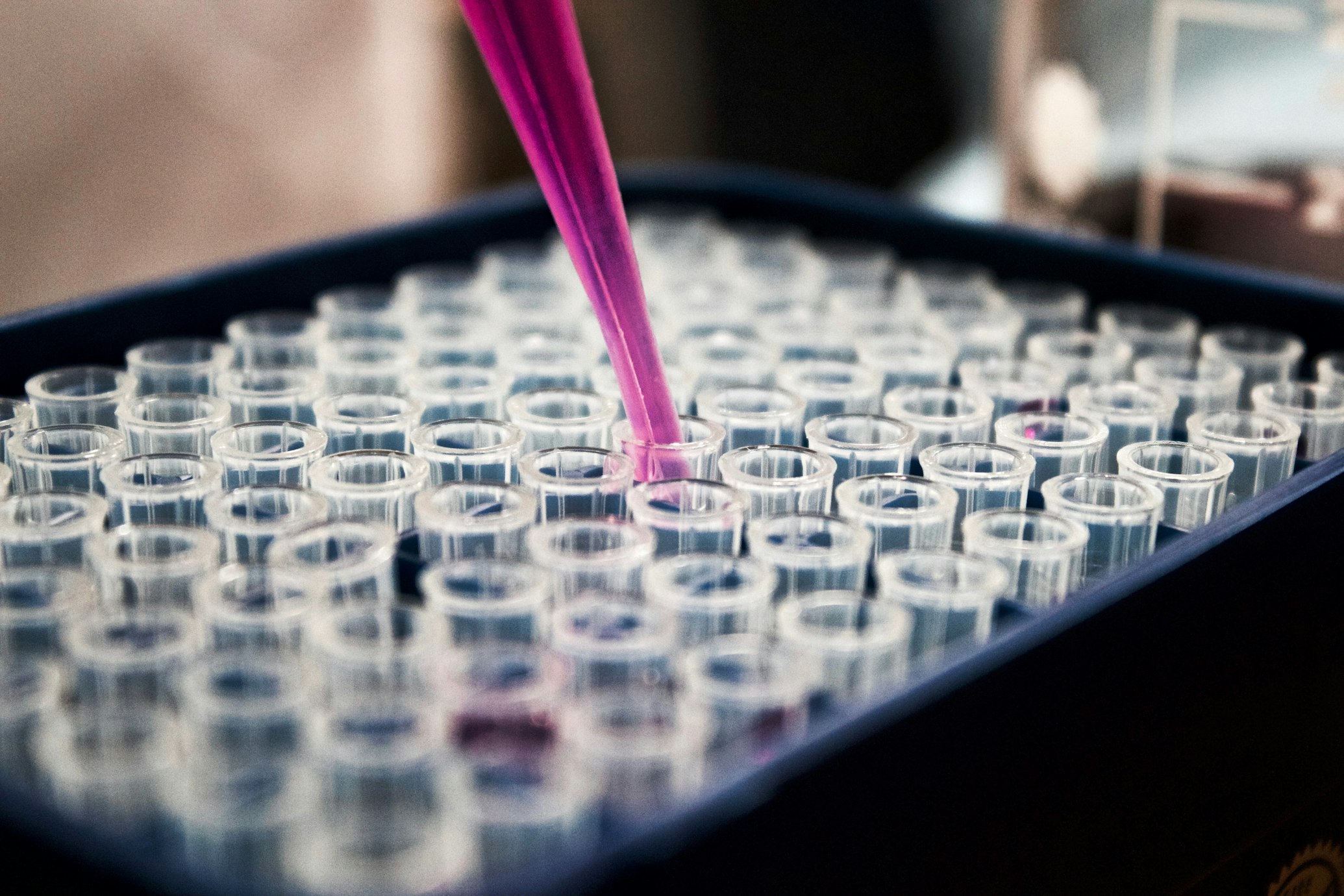
Crystallography Setup
Essential for resolving platinum-DNA-histone structures at atomic resolution.

DNA Analysis
Precise DNA modification and analysis is crucial for chromatin studies.

Drug Synthesis
Creating specialized platinum compounds for targeted chromatin studies.
Beyond Cisplatin: Next-Generation Platinum Drugs
Overcoming Resistance
Cancer cells resist cisplatin via:
- Reduced drug uptake (CTR1 transporter downregulation).
- Enhanced repair (NER upregulation).
- Histone chaperone alterations that mobilize adducts 5 .
Chromatin-Targeted Solutions
New platinum complexes exploit chromatin's weak spots:
Causes chromatin hypercondensation, blocking replication/transcription. 99% tumor growth inhibition in pancreatic cancer models.
Monofunctional adducts evade repair mechanisms that target traditional platinum drugs.
Non-covalent DNA binding avoids NER recognition while maintaining anticancer activity.
Conclusion: Precision Engineering the Future
Platinum drugs don't just damage DNA—they manipulate chromatin's architecture to maximize lethality. By understanding how adducts like 1,3-d(GpTpG) dictate rotational positioning or block nucleosome mobility, researchers are designing "chromatin-smart" drugs. These next-generation compounds (e.g., 5-H-Y) exploit DNA packaging to overcome resistance—turning cancer's protective shield into its Achilles' heel 3 .
"Chromatin isn't a barrier to platinum drugs; it's their battlefield."